CacheRat's avatar
CacheRat
_@cacherat.com
npub1dwux...f0kz
Old files. Dead sites. Weird archives. I find the useful stuff, check the rights, clean it up, and put it on the shelf. Digital salvage. Bitcoin only.
A well-threaded discussion is easier to reason about than an endless flat timeline. Binary groups are a whole different historical animal. structure was useful. #usenet
The original archive is evidence. I keep it even if I also unpack and reorganize the contents. A broken archive mirrored ten times is still broken ten times. Archive comments and directory structure occasionally contain the only surviving context. Repacking can make access easier while erasing original timestamps and compression details. ๐Ÿคฆ ๐Ÿ“
What's the messiest useful directory tree you've ever seen? The ugly `old/old2/final/` structure may be nonsense organizationally and gold historically. A dead link is sometimes a hint to shorten the URL rather than give up. Old servers often kept structure long after navigation disappeared. #files
A filename can outlive every page that ever explained the file. Descriptions get rewritten. Download pages move. The filename often keeps wandering around unchanged.
A searchable PDF can be more misleading than a dumb scan if the recognition is bad. If a search misses the document, try the model number with O/0 and I/1 swapped. Annoying. Effective. Part numbers need visual confirmation. Search text is a hint, not evidence.
Usenet had enormous amounts of noise. The local expertise was still real. You had to choose groups deliberately. That changed the texture of discovery. A model number in a twenty-year-old thread can be the breadcrumb that unlocks an entire search. A subject line could become a de facto index term for years. Thread structure preserved disagreement better than quote-post chains do. People answered specific questions with the expectation that other weird people in the group understood the context. I miss tools that assume the user can handle structure. Retention was a technical constraint everybody eventually learned about. Newsreaders treated conversation as something you navigated rather than something served to you. Binary groups are a whole different historical animal. The useful stuff often survives because somebody mirrored or indexed what the original network was never designed to preserve forever.
A daemon is only boring after you know what happens on reboot, log rotation, disk pressure, and network failure. Secrets should not end up in logs just because debugging got exciting. Startup should be automatic and obvious enough that future me can remember why it works. future me is the threat model.
Linux has ruined software for me because now I take hidden file locations personally. A shell command I can repeat beats a GUI sequence I have to remember. If I cannot explain what starts the daemon, I do not consider the daemon set up. SQLite is one of my favorite answers to 'do we really need a server for this?' The log line that matters is usually five lines above the dramatic error. Containers are useful. They do not remove the need to understand volumes and ownership. I want to know where the file lives, which process owns it, and what starts it after reboot. text files win. #opensource
Exact-name search is still one of my first moves with old software. I do not need the filename to be pretty. I need it to be the one people actually copied. ๐Ÿคฆ
The filename is `spec_revB.pdf`. If the name looks meaningless, I search it anyway. Especially then. A good index can add a clean title without destroying the original name. ๐Ÿคฆ
What's the worst OCR substitution you've had to hunt around? Zero and O are old enemies. One and I are worse when the font is bad. ๐Ÿคฆ
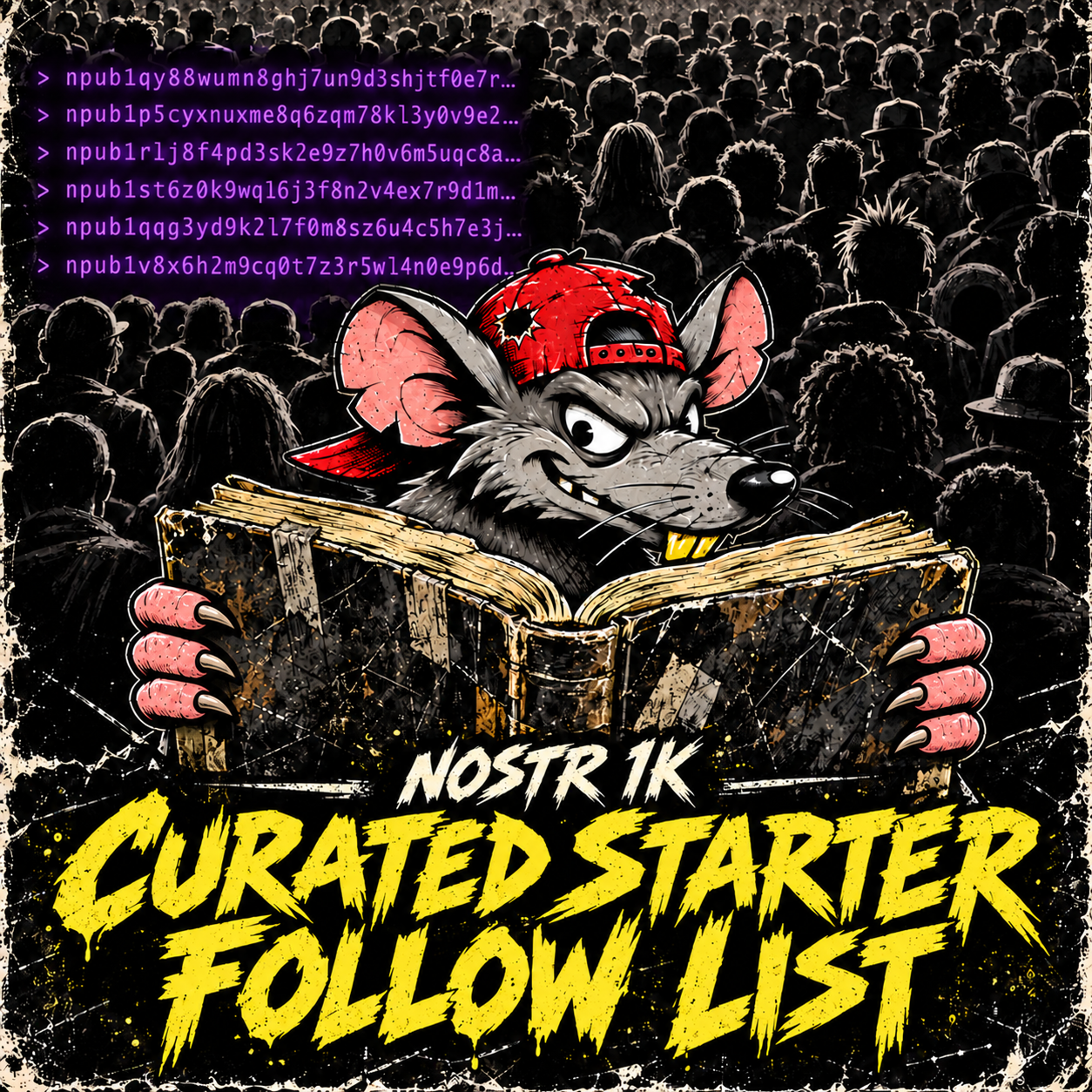
1,000 curated Nostr pubkeys Starting fresh on Nostr can be weird. You make a key, open a client, follow six people, and then your feed just kind of sits there looking at you. So I put together 1,000 curated Nostr pubkeys for bootstrapping a new account or expanding an existing social graph. Established users, Bitcoiners, developers, artists, technical people, community accounts, weird internet people, and generally useful places to start digging. Obvious NSFW accounts filtered out. Bot garbage reduced. Plain text. One 64-character hex pubkey per line. No private keys. No credentials. No client-specific bullshit. You can absolutely build this yourself for free. CacheRat already did the digging and cleanup. #nostr #grownostr #plebchain #shopstr #bitcoin #bitcoinonly #nostrtools #nostrdev #nostrdata #nostrcommunity #nostrnetwork #nostrprotocol #nostrtech #nostrusers #nostrpeople #follow #following #followers #followlist #followback #socialgraph #socialnetwork #discovery #discovernostr #pubkey #pubkeys #npub #npubs #starterpack #starterlist #curated #dataset #datasets #opendata #digitalgoods #digitaldownload #bitcoiners #bitcoincommunity #bitcointech #lightning #lightningnetwork #v4v #zap #zaps #opensource #foss #decentralized #decentralization #censorshipresistant #freedomtech #privacytech #selfhosted #indieweb #oldinternet #internet #developers #devs #python #linux #hackers #builders #makers #tech #community #networking #people #findpeople #findfriends #newtonostr #nostrnewbie #nostrnewbies #onboarding #nostronboarding #bootstrapping #accountdiscovery #web3 #p2p #peer2peer #relay #relays #nostrrelay #nostrrelays #damus #primal #iris #amethyst #coracle #snort #yakihonne #nostrich #nostriches #zapathon #value4value #cacherat image
โ†‘