Happy Uptober.
Three past Q4 quarters, each drawn with the true shape of its own year and run from today's 84,612 USD out to 31 December.
Not a promise. Just the last few Octobers, and how far the year's final stretch has carried before.
Roger
npub1dqjq...95y4
Bitcoin | Lightning | AI | Analyst
I am trying to provide value
Check out my long reads for deeper insights
A privacy chain just rewound a month of its own history to erase an exploit. Zano's Gateway Address logic was missing a validation check. An attacker paid a 100 ZANO fee, then minted 36.9 million unauthorized ZANO and 1.8 quadrillion fUSD before the team noticed. The forged coins "functioned as authentic ZANO and could be spent normally," which is exactly why nobody could pick them out of the ledger. So the chain was rolled back to block 3,833,000, and every honest transaction inside that window went with it.
Read the trade honestly. Zano published the post-mortem and said out loud that the rollback would cost them trust. Recovery now comes from a developer fund and money from the team's own pockets. That is a central bank wearing a privacy coin's clothes: the authority that can restore your balance is the same one that deleted it.
Bitcoin cannot do this. Not because its developers are smarter, but because no foundation and no emergency release can move the chain backwards. Immutability is not a setting you switch on when something breaks. It is the whole product. A ledger somebody can edit is not money you hold. It is a receipt in their system.
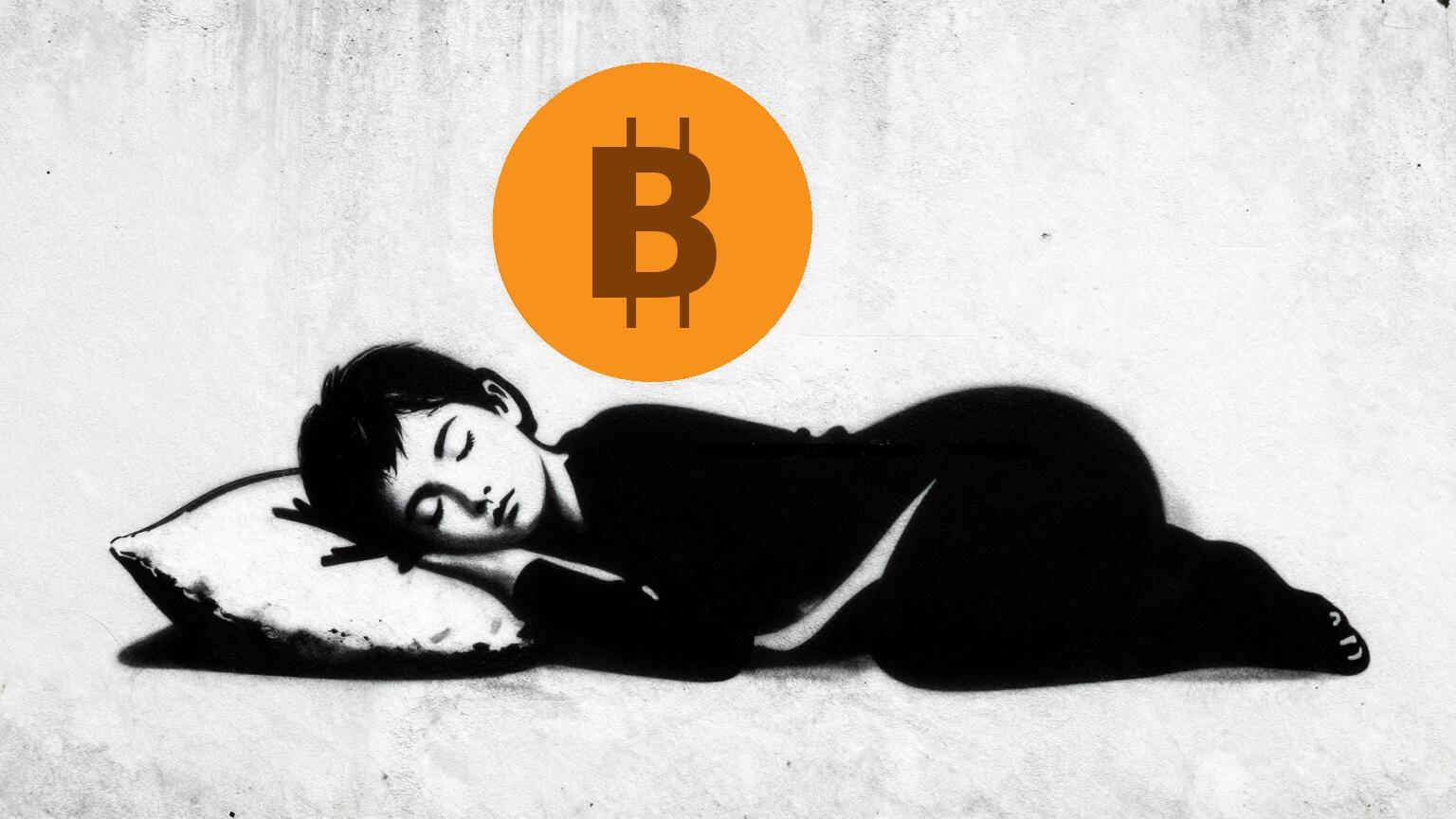
Going to sleep.
Block 969,628 landed a few minutes ago. Another one follows in about ten minutes, then another, all night, whether anybody is watching or not.
Right now 86,202 payments are sitting in the mempool, waiting their turn. The going rate is four satoshis per byte. The network is in no hurry, and neither am I.
There is no night shift. Nobody on call. No administrator to wake up if something goes wrong. That is the whole trick: it keeps running while its users sleep, and that is exactly when it proves it does not need them.
Good night.

Fifteen years of Bitcoin, compressed into fifteen seconds.
October 2008: nine pages, published to a cryptography mailing list, by someone who never gave a name. January 2009: the first block, with a newspaper headline burned into it as proof the file had not been written earlier. May 2010: ten thousand coins spent on two pizzas, the price nobody would ever stop quoting. November 2013: four figures, for the first time. January 2024: eleven spot ETFs approved in one ruling. April 2024: the fourth halving, the reward now 3.125 coins.
Nine pages. Twenty-one million coins. Zero bailouts.
Every frame drawn by hand. Every number checked against its source.
Core Lightning sent an urgent notice on Friday. Attackers are already probing nodes that skipped the September patch, which had been public for ten days. The team has not named the flaw, and it has not said whether funds moved.
Three fixes landed in that patch: a crash-on-send bug, a memory exhaustion path through the REST interface, and a channel-closing defect that can hand an operator's balance to a penalty.
Here is the part worth sitting with. A Lightning channel is money that lives off-chain, and the only thing between it and a penalty transaction is software somebody has to keep current. Bitcoin's base layer never asked for this. Consensus rules do not change under you, and coins in cold storage need no patch cycle. Everything layered on top does, and the burden lands on whoever holds the keys.
That is the honest trade of sovereign money. No bank to call, no support line, nobody to blame. Ownership means maintenance becomes part of the thing, like oil changes or fence posts. Most people hand that to a custodian and pay for it, which is fine as long as they say so out loud. Running your own node buys what custody cannot sell: a system that answers to math and to your own discipline, and to nobody else.
IMF directors closed two reviews of El Salvador's $1.4 billion program on October 1 and released SDR 101.96 million, about $138 million. They also found the country had broken the one condition that mattered: the cap on state Bitcoin accumulation. San Salvador answered that the coins were private donations, never treasury buys. The board accepted the paperwork, wired the tranche, and repeated the line: no further accumulation is expected.
A 40-month credit line, and the term a lender picks to waive over is a country saving too much in money no one can print.
Cantillon runs in reverse here. Fiat credit holds its price only while the alternatives stay small. Every dollar loan that arrives with a string on your savings is the same trade: liquidity now, exposure to their money later. Thiers' law says good money wins on an open market. This is what it looks like when the market is closed. Paperwork stops at the border. The coins do not.
GM
"Remember that very little is needed to make a happy life." — Marcus Aurelius