Flix's avatar
Flix
flix@primal.net
npub1vxz5...78px
Bitcoin, Nostr, history, sci-fi, FOSS, P2P...
Flix's avatar
flix 1 year ago
#timeline #history work in progress... 20 image
Flix's avatar
flix 1 year ago
#timeline #history work in progress... image
Flix's avatar
flix 1 year ago
#timeline #history work in progress... image
Flix's avatar
flix 1 year ago
How would the online Allthing work? Many science fiction works explore the idea of an online parliament with a high degree of citizen participation, be it via direct democracy or some kind of liquid representative democracy that allows citizens to delegate their voting power in real time. The best known example is the Allthing from Hyperion, itself based on the Althing from medieval Iceland. We now have the tech to do this. Both from the communications side, thanks to the Internet, and more importantly from the security side thanks to encryption. This is something that will certainly be explored in social media in the coming years. But what would it actually look like in practice? Let’s explore a relatively simple possibility, one which does not change the basics of parliamentary practice or representative democracy, but simply leverages existing tech to make it a bit more interactive. The first easy innovation is taking the swiss direct democracy system that forces the government to call a referendum vote on citizen initiatives that gather a sufficient number of signatures (with quite a low threshold) and bringing it online. Have citizens be able to sign referendum proposals online with good crypto signatures. If 1% of the electorate demands a vote on a proposal, then that proposal will get put to a referendum within the next period. Another easy way to increase participation would be in the budget approval process. Allow citizens line item votes on the top 100 spending chapters. If a majority does not approve spending tax money on a particular item, the democratic principles should establish that funding is frozen for that purpose until its proponents can convince a majority to approve it. Taxation should similarly be regularly voted on directly by all citizens, but of course to keep some logical consistency between taxation and spending vote results there should be some mechanism to connect these two. For example if you vote for 100 in tax, you cannot vote for more than 100 in spending. Vote delegation should be very easy and fluid. Not everyone will have the time and interest to read the budget or discuss taxation, but they should be able to assign their voting power to their representative and change it in real time during the debates. Every budget debate or law approval would in fact be an election, with politicians asking for votes from all citizens in support of their proposals. For constitutional issues that affect fundamental rights or the basic rules of the system, a significant supermajority of voters would be required. Even so, to protect individuals and minorities from the tyranny of the majority - the proverbial two wolves and one sheep voting on who’s for dinner - the right of secession should be guaranteed to even small communities. Liechtenstein has that rigth constitutionally established at the municipal level. Of course political reform is extremely slow, but we might see some of these ideas experimented with elsewhere very soon. Massive online games, social media platforms, private companies, DAOs, FOSS projects all could decide to try some of these ideas out. I expect that they will in the next few years.
Flix's avatar
flix 1 year ago
FIRST THEY IGNORE YOU… …then they laugh at you, then they fight you, then you win. I’ve always thought that to understand the mindset of a publication you just have to look at the advertising that it carries. Follow the money. That more than anything will tell you not only what hot-button issues a certain editor will care about (and his bias), but also who his readers are and what they might be interested in.If this is true, there is no other publication that represents the international mainstream economics establishment better than The Economist. Nowhere else will you find a higher concentration of ads and job listings for and from international institutions, executive MBAs, sovereign wealth funds, development banks and economic think tanks. When Washington’s IMF, Paris’ OECD or the WTO need new staff, you’ll probably see some of these positions advertised in The Economist’s pages.Thus it is hardly surprising that their editorial line reflects the Keynesian-monetarist mainstream consensus, with an added dose of central banker and international bureaucrat hero-worship. Their default position is to dismiss and abhor any kind of non-state voluntary money and defend our currently dominant fiat money system like rabid dogs. Their disparagement of gold and their dismissal of Bitcoin over the past few years has rivalled with Paul Krugman’s in bile and viciousness.Therefore when The Economist dedicates not one, but two full page pieces to Bitcoin in a day, and when these articles seem to be a little less dismissive than usual, we should really pay attention. The old guard is watching and worried. The fact that they no longer make the usual ignorant “Bitcoin can be hacked” or similar claims, also shows that they have been studying it in earnest.In Mining Digital Gold the attack is fairly obvious: Bitcoin is Napster. “Just like Napster, Bitcoin may crash but leave a lasting legacy. “ Savvy investors and users should be looking to the next generation and view Bitcoin as an interesting and enlightening precursor, but not really waste too much time and effort on it. Litecoin and Ripple get a mention. I’m surprised the author didn’t mention Freicoin, after all if they are so scared of “hyperdeflation” they must love Gesell’s demurrage fee.They fail to fully understand network effects and the first-mover advantage. They also fail to understand the power of open source projects and how they can evolve, especially if there is large and vibrant community of thousands of motivated individuals continually working on it. They also forget that Bitcoin had many failed precursors who could more accurately be called the Napster of voluntary internet currencies: DigiCash, e-gold and a score of other failed digital gold currencies, but also the original idea behind Paypal, before the PayPal Wars turned it into what it is today. Perhaps a proliferation of other cryptocurrencies will even help Bitcoin grow.Neither is A New Specie much more subtle: “The Bitcoin tribe is still a small one, and consists mainly of computer geeks, drug-dealers, gold bugs and libertarians. But wild fluctuations in the value of a Bitcoin, from under $20 at the start of the year to over $200 at one point this week.” …and of course never forget to add a taste of insult, guilt by association and other assorted smears.What I found particularly interesting was this: “There is a limit to how far digital currencies like Bitcoin can spread. Long-term demand for the dollar is guaranteed by the fact that American citizens must pay taxes in dollars. Governments will never confer the status of legal tender on a private currency.” It is not only historically wrong, as even the US government has recognised as legal tender not only private monies but also foreign money (read Edwin Vieira’s excellent book “Pieces of Eight : The Monetary Powers and Disabilities of the United States Constitution” or George Selgin’s “Good Money”), but it is also irrelevant. The citizens of Argentina and Venezuela care little for their local legal tender laws when they transact in US dollars. The people of Zimbabwe ignored Robert Mugabe’s and Gideon Gono’s ban on the use of dollars, euros, rand and gold as an alternative to the Zimbabwean dollar that they had destroyed. Similarly, the citizens of the World Wide Web will pay very little attention to the lack of a government seal of approval. Bitcoins can’t be used to pay for taxes? That’s a feature, not a bug.Finally this made me laugh: “Bitcoin might end up like MySpace, the now moribund precursor to Facebook.” In a sense the Bitcoin community is still relatively small. My estimate, based on the number of downloads of the original client and the statistics published by some online wallets, is between 1.5-2 million users at present (if someone has more precise numbers, I’d be delighted to see them!).This is just a small sample (many thanks to blockchain.info for its transparency) Image placeholder title At its peak MySpace claimed 100 million users. If and when we get there, I’ll be happy to buy The Economist Group for a couple of bitcoins.The fact that even establishment mouthpieces like The Economist, Paul Krugman (this is just silly Paul, although I like the video game reference) or even this Georgetown clown see the need to comment on, and attack Bitcoin is a good sign. It is also a symptom that money talks, and that Bitcoin’s market cap is pretty loud at this point. Publicists say that all press is good press. However, in my humble opinion, Bitcoin is past the point where it needs much more press. What we need now is critical mass. Once we get to 10 million users growth could become exponential.Bitcoin’s ultimate success is far from guaranteed. There are still many dangers, both internal and external. A lot of work needs to be done, on scalability, exchanges and many other weak points. However we have the best odds in a hundred years of returning money to the free markets.We are winning.
Flix's avatar
flix 1 year ago
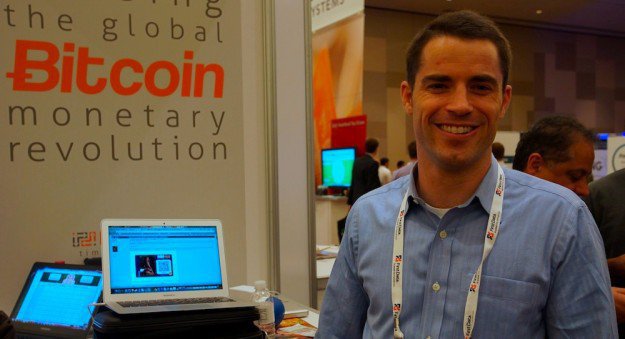
ROGER VER: “FOR THE FIRST TIME IN HISTORY, ANYONE CAN TRANSACT WITH ANYONE ELSE, ANYWHERE IN THE WORLD” Roger Ver is an entrepreneur, investor and Bitcoin Pioneer. He has bet a lot of intellectual and monetary capital on the Bitcoin revolution, which he supports not just because it is a technological advance in our financial infrastructure, but also because of the new hope for human liberty that it represents. Bitcoin Magazine:How and when did you first hear about Bitcoin? Roger Ver: I first heard about Bitcoin in late 2010 on the www.freetalklive.com radio show / podcast. BM:Why is Bitcoin important? Why is it different? RV: Bitcoin is different from any other payment form in the history of mankind.For the first time in history, anyone can transact with anyone else, anywhere in the world, and it is impossible for a 3rd party to interfere in any way. BM:What makes you think that it will catch on? RV: All throughout history, people (thieves, kings, tax collectors) not directly involved in a transaction, have forcibly interfered in other people's transactions. Bitcoin now gives everyone on the planet the option of removing themselves from the arbitrary control of others. BM:What makes you think that it will last? Is it really that resilient? RV: The only reason Bitcoin wouldn't last would be because something even better comes along, so all the proponents of individual liberty still win. If Bittorrent is any example, the Bitcoin network really is that resilient. BM:Is Bitcoin really censorship-resistant? Can it thrive in, for example, China? Argentina? RV: It can thrive anywhere in the world with the internet. That currently includes China and Argentina. Even non-Bitcoin users would be rioting in the street if a government tried to cut them off from the internet. BM:Can Bitcoin scale? What will it need to support 100 million users? RV: Bitcoin can scale, but will surely experience some growing pains along the way. As it scales, there will be more and more people with a vested interest to help fix any issues that arise. BM:How will Bitcoin change the world? Describe your best-case scenario for Bitcoin 10-20 years from now. RV: Governments currently pay for their actions through theft (taxation), and counterfeiting (inflation). Bitcoin will make taxation much more difficult, and inflation impossible. More people were killed in the 20th century by their own governments than by all wars combined. The odds of you being murdered by a government, not including wars, is higher than your chance of dying from diabetes, alcohol, tobacco, traffic accidents, homicides, and just about all other single medical illnesses.In my ideal world, Bitcoin will bring an end to the nation state, allowing people across the world to deal with each other on a voluntary basis. BM:Do you consider Property a Natural Right (like Free Speech)? Or is it just an artificial legal construct? What about IP? RV: I believe that property is a natural right that stems from each individual's ownership of their own body. People own property when they mix their labor with something that was previously unowned, or voluntarily trade with others for existing property. I was persuaded by Murray Rothbard's arguments regarding IP. Patents are an illegitimate grant of monopoly privilege by the state. Copyright is a perfectly valid contractual agreement. BM:Medium of Exchange or Store of Value? If you had to choose just one of these two functions, which would you rather have Bitcoin be optimized for? RV: In most circumstances these have traditionally been two sides of the same coin. Bitcoin is currently better as a medium of exchange, but with time, I believe it will also become a store of value. BM:Are you worried about competition? Do you think that Bitcoin will be replaced by something better? RV: I hope Bitcoin is replaced by something even better for the same reason I hope my computer will be replaced by a better model in the future. Things being replaced by something better is what makes the world a better place. BM:What do you think will be the first big Bitcoin fork that really divides the community? Which side will you choose? RV: I don't know what will cause the first big fork, but I am sure that I will take the side that supports individual rights. BM:Can Bitcoin be hijacked and mutate into Fedcoin? Can it be centrally controlled? RV: I think this is unlikely since people can now voluntarily chose to use whatever crypto currency they want. BM:What Bitcoin projects are you currently involved in? RV: I've invested over $1M USD of my own money into over a dozen Bitcoin related startups.The most well known would be Bitcoinstore.com, Bitinstant.com, Bitpay.com, Blockchain.info, Coinlab.com, Bitcoinfoundation.org. If you have a great Bitcoin related idea that needs funding, please contact me!
Flix's avatar
flix 1 year ago
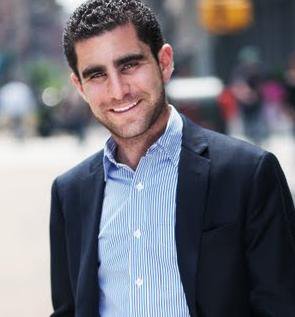
CHARLIE SHREM: BITCOIN IS CASH WITH WINGS Charlie Shrem is 23 years old and one of the leading Bitcoin entrepreneurs, having founded BitInstant in 2011. One of the early “Bitcoin millionaires” he exemplifies the world of opportunity and adventure that Bitcoin has opened up to anyone willing to knuckle-down and start building the infrastructure that will make Bitcoin accessible to millions. He is also Vice-Chairman and co-founder of the Bitcoin Foundation. Bitcoin Magazine: How and when did you learn about Bitcoin and what caught your eye at first? Charlie Shrem: I got involved in the Bitcoin community really early on. I was an econ grad in college and obviously interested in the space. The more I learned about Bitcoin the more I had to learn. I had never even heard of the Austrian theory of economics (it was all Keynes this and Keynes that in college). The idea – save money if you want to grow the economy was so foreign, I thought, hey maybe this could work. And from there I just really dove into it. BM: What pushed you into setting up a Bitcoin business? CS: Gareth Nelson reached out to me in 2011 via the Bitcoin forums. We had never met but respected each other’s reputation. He had a great idea and really saw a pain in the Bitcoin ecosystem – moving money quickly. I recognized the opportunity and given my previous successful startup jumped at the opportunity to be more involved in Bitcoin. He handled the tech and I handled the business, it’s a perfect partnership. BM: What would you say to encourage all those potential Bitcoin entrepreneurs out there? CS: Bitcoin is such a young experiment, there’s so much opportunity for anyone with a great idea and the ability to execute it. I’d definitely suggest putting your idea to paper, researching the marketplace and really exploring all the challenges you might face. Build a team of people you can really trust who will get things done. If you can put together a prototype, great, do it. Then start reaching out to friends and family for some initial investment. The more money you get from angels, the more of the company you can keep for yourself. BM: What are the online businesses that would benefit most from Bitcoin adoption and what are they waiting for? CS: All of them. Bitcoin makes so much sense for online transactions more than anything. Traditional banking infrastructure was never really designed for the online world and it’s fraught with issues, the worst of which are ridiculous fees and security concerns. Bitcoin solves these problems – transactions can be executed and verified for a fraction of the cost of the older payment methods and the security is unbelievable. BM: Beyond being a better payment system, Bitcoin brings financial freedom to the masses. Why is this important? How will it change the world? CS: There are a lot of people who are politically motivated by Bitcoin and very vocal about how it can solve the world’s problems. The phrase “Bitcoin will bring freedom to money like the Internet brought freedom to information” is really true. Whether or not Bitcoin (or another digital currency) ever replaces fiat is an open question. But even if it doesn’t, it’s disruptive. If it makes even a little impact (and I think it will) it really forces traditional payment systems to become more efficient, reduce friction and fees and increase security. Even these little changes when considered across trillions of dollars worth of transactions start to make a meaningful difference. If Bitcoin’s existence can force online money transfer fees to be reduced by even 2 just think of how much money is saved and can go to improving the world in real ways (instead of losing that $10 to a big bank you could donate it at your local soup kitchen)! BM: Will established players and industries in the payment, banking (and central banking) world resist Bitcoin, or adopt it as an improvement on their current technology? How would you convince to embrace it instead of fighting it? CS: We’ve already seen some signs that more traditional payment systems are starting to look at Bitcoin. You can be sure they’re talking about it behind closed doors and wishing they had thought to implement something like it themselves. I think we’ll see Bitcoin serving as a catalyst to push existing banking to take a hard look in on itself and really try to reduce the inefficiencies. The market will demand it – if Bitcoin is widely adopted and people understand how low the fees are, they’re going to look at the same types of transactions taking place via banks and wire transfers and ask the hard questions “Why does it take 5 to 10 percent to send my money overseas? Why does it take three days to move money between accounts when it’s an instant digital request?” These questions are going to spark changes to the traditional banking systems – how they choose to address them is anyone’s guess. BM: Why is privacy important online? Is it just for porn, gambling and fraud? Is privacy a human right? CS: Since its inception, Bitcoin has obviously really struggled with definitions of privacy and anonymity. There’s a big difference between regular, law-abiding people seeking privacy and those who seek to be anonymous for illicit activities. I believe that the right to privacy is fundamental. What exactly does it mean though? You should be able to buy legal items without it being tracked somewhere in a government database. Historically cash has provided this privacy. You could walk into a drugstore and buy medications for health problems that might be embarrassing and pay cash. Now, with credit cards everything is electronic and tracked. Bitcoin gives you some of the privacy back. I like to call it “cash with wings.” This basically means that it has all the conveniences of cash but you can use it over huge distances. People like to say “Oh, you could by drugs with Bitcoin!” You can buy drugs with cash. You’re not stopping people from doing the things they’re going to do but you shouldn’t penalize the people who are legitimately using a tool like Bitcoin to do things more efficiently in our modern world. At BitInstant we understand the need for financial regulations and have gone out of our way to be compliant – we know our customers. We’re working to make government officials and naysayers understand that Bitcoin adopters are just visionaries who understand the need for a fundamental shift in the way we think about money. BM: Having your account blocked is a major problem with some online payment systems, and even bank accounts, as Cypriots learned to their misfortune. How does anyone put up with this now that you can use Bitcoin? CS: Even though Bitcoin is gaining in popularity it’s still flying under most people’s radar. It’s still in a stage where people don’t understand it and aren’t aware of its benefits. There’s also mistrust that we have to overcome. People are more willing to continue with the status quo than trust a new system. It won’t be until more people are directly hurt by the current banking systems that they start to move away from it and look for alternatives. In the meantime, the early adopters (like me) will be here building the infrastructure and trust that ensures that Bitcoin will be here as an alternative to the pitfalls of the traditional banking structure. BM: If the US-based Bitcoin Foundation is ever co-opted by regulators to undermine the thingsthat make Bitcoin so liberating… will you denounce it? When there is a major Bitcoin fork, what principles will you fight for? CS: There’s an awful lot of speculation in that question. Right now we’re all (both Foundation members and the general Bitcoin community) doing our best to carve out a place for Bitcoin in the current regulatory climate. There are a lot of us who want to do things the right way and make sure Bitcoin is seen as legitimate. Speculating about the Foundation’s future run-ins with regulators doesn’t really get us anywhere. Right now the best we can do is to use the Foundation to promote Bitcoin, help protect the existing community and put it in front of people for more widespread adoption. As far as a fork goes, I don’t like to say. I’ve made my general opinions pretty clear in presentations and panels. But categorically stating my opinion about a forking situation that hasn’t come up yet is just silly. Things change all the time. That’s the beauty of Bitcoin. It’s not controlled by a central power and everyone has more of a say in what happens to the technology. My opinion changes based on a lot of things – like regulation, trust, the support of the community, improvements in technology – so I’ll cross bridges as I come to them. BM: Bitinstant has made buying Bitcoin with fiat extremely easy in the US and several other countries. What are your expansion plans? When are you going to partner up with some major airport money changers? CS: BitInstant is committed to growth and helping more people in more places around the world acquire Bitcoin. But we’re only interested in growth the right way. We could move fast and enter new markets and new countries…but we won’t do it until we’re sure that it’s sustainable and we don’t get shut down. That means having the right partners and making sure we’re within local regulations with what we’re doing. We’ve heard a lot of interest from people in the UK, Australia, Cyprus, Greece…the list is almost endless. And we’re going to add the countries to our list, do our due diligence and make sure we’re on solid ground in each country we move into. BM: What other part of the Bitcoin infrastructure is in urgent need of building? What major problems need solving for Bitcoin to grow? CS: One of the challenges that we’re facing at BitInstant is an information problem. Just making more people aware of Bitcoin and separating it from some of its more radical roots and supporters. We believe that Bitcoin has value for everyone, regardless of politics. So making sure that we’re doing our part to make the currency more accessible to the people it can really help the most is huge.
Flix's avatar
flix 1 year ago
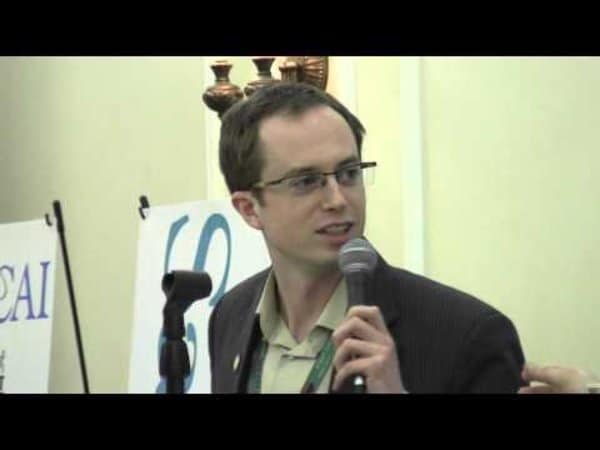
JEREMIAS KANGAS: BITCOIN CAN’T BE SHUT DOWN Jeremias Kangas is the CEO and founder of localbitcoins.com, as well as several other Bitcoin ventures. He is a software developer from Finland and one half of the Kangas bros team. He irradiates optimism about Bitcoin and the endless possibilities it brings, he also understands its resilience and expects it to thrive despite the many attacks that it will probably suffer from the old order that it disrupts and will displace. Bitcoin Magazine: Why, when and how did you become interested in Bitcoin? Jeremias Kangas: I just spotted an article about it on hacker news, and instantly started thinking how awesome it would be. At first I was mostly excited by the "money as a protocol" thing - startups and small companies can avoid fees and innovate on top of Bitcoin easily. Then slowly I started to get a larger grasp on the socio-economic implications of Bitcoin. Currently I'm mostly excited about the possibilities for 3rd world countries. The countries without a stable and cost-effective financial infrastructure or lousy national currencies can benefit the most. BM: Why did you decide to create localbitcoins.com? Why are P2P exchanges important for Bitcoin? Isn't Localbitcoins.com already a de-facto decentralized exchange? JK: There were plenty of sites that listed local Bitcoin exchangers, but in my opinion they all sucked. Therefore I started doing my own, and hired my brother to help me. At first it was a really simple location-based list, with no user accounts and URL-based identifying. From there we iterated and improved the concept based on customer feedback, and nowadays localbitcoins.com is vastly different from the initial prototype.P2P exchanges are more resilient than centralized exchanges, therefore I believe that in long run decentralized exchanges will win over the centralized ones. I also believe that decentralized exchanges can make Bitcoin spread much faster - if done right. Localbitcoins.com isn't a real decentralized exchange, as we still rely on central server. However as with anonymity, decentralization is a floating variable, not a boolean. Localbitcoins.com is less centralized than many others, and we have plans to develop our infrastructure to make it even more resilient. BM: Localbitcoins has an extremely broad and global base; however centralized exchanges still have more depth and volume. Any plans to encourage larger volume ads? JK: We will have volume-based discounts in the near future. I definitely agree that the depth and liquidity is a problem with de-centralized exchange model. We have some other ideas to overcome those problems in the longer run. BM: How many users does Localbitcoins have? What BTC volume is currently being offered through your ads? Will you increase the number of statistics publicly available or offer more charts? Would you like prices set by (volume-averaged) localbitcoins transactions to be a market reference like the Mt.Gox price is currently? JK: We currently have 44k users, and just today about 300 new user accounts were opened. Lately we've had around 250 new users/day. Our volume is usually in the 400-900 BTC/day range.We want to offer the charts and statistics through our website, but we haven't had yet time and resources to do this yet. Also an API for external developers is on the roadmap. BM: As long as you run a P2P ad service in which you don't actually buy and sell bitcoins yourself, you don't have to register as a MSB or comply with all the burdensome regulations of exchangers. Does that make your life easier? JK: Yes. Of course we will still have to adhere to any regulation which might be coming for bitcoin services. BM: Are you planning to add more security, escrow and reputation features? JK: We will be improving the security issues with multiple methods. We will be improving the reputation system and feedback loop heavily in the coming months, so that it is more useful. We are also researching different identification methods, which would add credibility to users. Currently we have SMS based identification, which sellers can require from trading partners. We will try to keep these as optional as possible, so that individual traders can check which kind of identifications or security measurements they require. Currently traders can specify limits which depend on volumes of trading counterparties. We will add more options which allows different limits for differently reputated traders. Bitcoin-security wise I'm mostly excited about Bitcoin Trezor. If those guys manage to ship it, we could order a localbitcoins.com - branded batch and give them out to our active traders and sell and market to other users. BM: Users can now price their BTC in XAU (ounces of gold) and XAG (ounces of silver) at Localbitcoins. Do you expect goldbugs to wake up to the fact that they can now easily buy and sell bitcoins for gold? JK: I'm not a gold-bug myself, so I don't fully understand the hype around it. However I realize that there exist many goldbugs in the Bitcoin community. Thus, I have myself bought minuscule amounts of precious metals. At some point I'll try to trade them on LocalBitcoins.com, and see how we can make metal-trading easier there, or if there exists demand for it. BM: Localbitcoins.com now has users buying and selling bitcoins in over 140 countries around the world. What are your plans for the future? JK: We currently have 142 countries and 1700 cities, but that most definitely isn't enough. We want to expand to at least 170.000 cities, and have LocalBitcoins.com-branded franchise exchange shops popping up here and there. Global world domination is our goal! BM: Can Bitcoin be shut down by unfriendly regulators or governments? How could the Cuban or North Korean government stop me from buying and selling bitcoins? Are you worried about censorship? JK: Bitcoin can't be shut down, and I'm sure that people will continue using it, whatever happens. Services like LocalBitcoins.com can be shut down, but we have plans how to make our infrastructure more resilient in a way that shutting the service down will be more difficult. I guess also other bitcoin services are designing their technology in a resilient way. BM: You are also involved in several other Bitcoin sites, like Easywallet.org and Acceptbit.com. Do you have any new projects in the works?JK: Currently I believe that we have the most impact with LocalBitcoins.com. Our team is focusing all of our efforts towards developing it.There are tons of great ideas around Bitcoin. I won't be having any free-time from localbitcoins.com in the short-term future. I hope in year or two, I can start some cool hobby side project. Meanwhile, localbitcoins.com's a company will try to provide bounties for open source projects in the future, so at least that way we can participate in some cool open source projects.
Flix's avatar
flix 1 year ago
ERIK VOORHEES: “BITCOIN IS THE NEW FRONTIER” Erik Voorhees is one of the foremost Bitcoin entrepreneurs and has helped build some critical parts of the Bitcoin business ecosystem, as well as being a loud advocate for a free, decentralised and voluntary currency. When the history of Bitcoin is written, he will be remembered as one of the brave few explorers ready to set out into the unknown and risk life and fortune to create a new world. Bitcoin Magazine: You discovered Bitcoin in May 2011... how? where? Erik Voorhees: It was fairly innocuous, but had profound consequences! I was cruising Facebook and saw a friend’s post that mentioned some weird currency that had appreciated by a gazillion percent since the prior October. I clicked the link, read about this thing called Bitcoin, and dismissed it outright as preposterous. Fake internet money didn’t appeal to me. Then I read more, and more, and I found an elegant answer to each skeptical question that popped into my mind. After a couple hours, I was utterly hooked, and realized it would change the world and I better figure out what the hell it’s all about. That day was one of the most important days of my life. It was like discovering some great truth, like seeing the future. I quit everything I was doing and jumped down the rabbit hole. BM: What is the most important feature of Bitcoin in your opinion? EV: This is a very good question. The most important feature is the fact that Bitcoin is decentralized, that it does not have any person or group of people who control it. It is from this feature that all the societal ramifications can occur, because a monetary system without a company or group of people behind it cannot be shut off. There is no office to raid, no server farm to close. Bitcoin is thus politically neutral. It excludes nobody, it has no geographical restrictions, it doesn’t make judgments on its usage. It has no terms of service. Bitcoin is a pure technological tool which will necessarily revolutionize society and finally separate money and state. The decentralized nature is what enables all this magic. BM: Many people have problems trusting a decentralised system founded by an anonymous programmer… can you explain the significance of Bitcoin being an open source project? EV: Yeah that’s easy… open source means you don’t need to trust anyone. Just go read the code. Thus the creator of Bitcoin is irrelevant, there is no need to care what his intentions were or what kind of person he was. There is no need to fear some secret scam is occurring. You mention that some people have problems trusting a decentralized system, but why? Because there is nobody in charge? Because there is no person who dictates the rules? This is precisely why you CAN trust it. It’s often quoted that a nation should be based on laws and not on men, because men can be corrupted, are fallible, and are often unpredictable. Bitcoin is this principle applied to money: it is a money of laws – mathematical laws – and not of men. This is why it has earned, rightly, the trust of some many enthusiasts. BM: Miners, gamblers, hackers and smugglers… is Bitcoin the Wild West online? Will it become boring once it goes mainstream? EV: Bitcoin is absolutely the Wild West of finance, and thank goodness. It represents a whole legion of adventurers and entrepreneurs, of risk takers, inventors, and problem solvers. It is the frontier. Huge amounts of wealth will be created and destroyed as this new landscape is mapped out. I believe the effects of this adventure will be profound, for while the “Wild West” was a uniquely American phenomenon, Bitcoin is a global one. Will a mainstream Bitcoin be boring? Perhaps by definition it will be, just as electricity is boring to us today, while at the turn of the last century it was hugely exciting. And of course, just as electricity, which is now boring, enabled the creation of unlimited new, exciting projects (including Bitcoin!), so too will Bitcoin enable a world of new innovation for many years to come. BM: What first gave you the idea to create SatoshiDice? How would you describe your experience running the site this past year? EV: I didn’t create SatoshiDice, but I am involved with it. To be honest, my experience has not been as pleasant as it should have been, for being an American citizen is a huge liability, and I worry constantly that the US Government will harm me in some way. The past year has shown me that America is not the land of free markets and free people that it was advertised to be in Government schools when I was growing up. America’s government has grown into an abhorrent apparatus that steals, harms, and imprisons people who have harmed nobody. At best, it seizes half the wealth you earn or makes you dependent on the wealth it has seized from others, and at worst, it ruins or ends your life. The amount I’ve spent on lawyers just trying to navigate the absurd legal system is enough to feed hundreds of families in a third world country on a continual basis. In short, my experience as an entrepreneur in “the land of the free and home of the brave,” both regarding SatoshiDice and in my other projects, has taught me that America is a lie. It has become a pathetic fiefdom, and I wish Americans would wake the hell up and see what’s happening. BM: Some people criticise SatoshiDice for “spamming” the network… what would you say to them? If Bitcoin is to scale, shouldn’t it be able to take this traffic and more? EV: Yes there is a number of people who hate me and hate SatoshiDice because it has caused so many transactions on the network. They call it spam because they believe their transactions are more legitimate than mine, and thus mine are spam. Apparently it’s okay to send “some” Bitcoin transactions, but if you send “too many” then that’s a no-no. “Too many” has never been defined, of course. Further, SatoshiDice pays the standard Bitcoin fee for every single transaction, and in this way has paid more to support the mining network than everyone else, combined. Critics retort that there are other externalities caused by SatoshiDice. Well that is true, and Bitcoin better fix that problem, and it will. I’ve offered non-trivial sums of money to people to work on and figure out good solutions, but this stuff takes time. In the end, haters gonna hate. BM: You hold Bitcoins, but also gold and silver. Is it fair to call Bitcoin a gold standard for the Internet? EV: I do love gold and silver as money, because I know why they make excellent money (tl;dr it’s because of their specific properties). Bitcoin’s specific properties similarly make it an amazing money. And while Bitcoin is certainly new and hasn’t withstood the test of time (like gold), some of its properties are far superior to metals in terms of monetary usage. Primarily, one cannot send gold instantly anywhere, period. This makes it very poor for modern commerce. While it’s true that a digital gold-backed currency could exist, the fact is that introduces severe counter-party risk on the part of the backer. E-gold is the perfect example of this, because as soon as the government gets angry about how e-gold is used, it shuts it off and arrests the owners (land of the free). So while precious metals make excellent money, they do have some problems. Bitcoin has problems also, of course. Neither are perfect, but in general gold and Bitcoin highly complement each others’ weaknesses. Anyone who believes in free and open markets and individual rights should have a very warm disposition toward both precious metals and Bitcoin. BM: Can Bitcoin be divorced from its political implications? Can it be “just a payment system”? EV: Interesting question. I think while the Bitcoin system, as a technology, is “apolitical,” its ramifications cannot be divorced from politics or society at large. And while a socialist might rightly hail Bitcoin as an equalizing force (it is), the truth is that it equals out peoples’ rights, not the result of their behavior. In other words, Bitcoin is highly individualistic, and robs power away from collectives and puts it in the hand of each person who cares to hold it. Beyond this, if Bitcoin succeeds it will inevitably cede power from governments, because much of a government’s power comes from its ability to print and control the currency that its subjects use. I think it would be hard to argue that Bitcoin would pull society away from individual liberty, and as such it is very much a libertarian technology. Socialists have every right to use it of course, but they may find that by doing so they enable everyone else to use their own money in the way that they personally see fit. This is the antithesis of collectivism, and will hugely undermine the coercive power of the State. BM: When will we see the first major government attacks on Bitcoin? How much damage can they really do? EV: I think governments see Bitcoin as a problem in terms of money laundering, drugs, tax evasion, etc. For this, they will try to regulate it more closely. They will not try to downright attack Bitcoin for these offenses. What they will attack it for is when they realize that those offenses are just a distraction… for the real power of Bitcoin is that it will increasingly compete with government fiat currency. Bitcoin will pull in more and more business and incrementally the actors using it will discover less and less need for dollars or euros or yen. This happens gradually. At some point, however, the government will realize that this made-up magic internet money is wresting power away from their anointed currencies and they will then come down hard. When will this happen? I have no idea, but I imagine it will be too late, because it probably already is. It’s also important to remember that not all governments will act in tandem. It’s possible that one regime will assault Bitcoin while others will be agnostic and others may even encourage it. Those regimes that clamp down hardest will simply squeeze an increasing amount of commerce over to those regimes that are friendly. Profits seek the path of least resistance and digital, frictionless currency is that path. Governments which attempt to abort this process will hamstring their competitiveness, and I fully expect some of them to be this foolish. BM: How many Bitcoin users are there right now in your estimation? When do you think that we will reach 10 million users, and what will it take to get us there? EV: My guess here is pretty anectodal and unscientific, but I’d say there are a few million people who have used Bitcoin in some way. Then maybe 500k-1m who use it occasionally, and maybe a couple hundred thousand who use it frequently. Ten million “occasional” users will likely be reached within two years and that’s probably about one order of magnitude higher than today. What will it take to get us there? More of the same. More businesses, easier tools, better security, and a sprinkling of time and luck. BM: What is the most urgent infrastructure that the Bitcoin ecosystem needs right now? EV: Bitcoin needs better ways to buy and sell Bitcoins quickly. In the US, BitInstant and CoinBase do a reasonable job, but it needs to be better and more specifically faster. And while the US is in the “reasonable” category, elsewhere in the world needs much better ways to buy and sell quickly. The ability to move in and out of Bitcoin in a frictionless manner is what allows the magic to happen – it’s what lends utility to the payment system aspect, and the payment system is what gives the currency its value.
Flix's avatar
flix 1 year ago
Content by itself will never pay the bills for 99.9% of creators. However content marketing associated to another business model does work even at much smaller scale. I've seen several of these business models work sustainably: -Content marketing + consulting -content marketing + financial services -content marketing + merchandise shop -content marketing + lifestyle products -content marketing + niche products -content marketing + porn -content marketing + video game keys ...and a million more. I think the challenge is having the entire business model on Nostr + LN... but social media as the first step in a larger marketing funnel does work wonders. Creating content also has other advantages: -Meet interesting people and grow a network of business contacts for the future. -Learn while teaching. Discover new things and put in effort to understand them enough to be able to teach others. -Keep up with new tech - it's hard to do when you are focused on just one area, but content creators are all about novelty. -Builds your profile... a few years from now you will have a lot of open doors because people remember you. But yeah, if you want to put out a video and make a million bucks like Mr. Beast, you better have 250 million subscribers and average 70m+ views per video. Alternatively have very niche content and have 1000 very loyal subscribers willing to pay $10 per month. Both are very hard work with a LOT of competition. There is a lot of free content out there. Even highly paid information services like Reuters, Bloomberg don't really command high values for the information itself. Companies don't pay $2000 per month for a BBG terminal for the data feed alone. They are paying for access to clients on BBG chat, secure messaging, legal proof of orders, etc... network effects + other services are what allow BBG to command such a high price. So if not even BBG can make money just from content... what chances does an individual creator have? There are only 3 business models in media since the time of Dickens: -Propaganda "get paid to print something" -Blackmail "get paid to not print something" -Sensationalism "if it bleeds, it leads" That means that if you want to be independent, say the truth, not sell out, not try to appeal to the lowest common denominator... you have to have another source of income. Alternatively embrace the marketing aspect of it and be as honest a salesman as you can, keeping your independence by selling multiple competing products and giving your honest opinion about each. Or, a reasonable compromise, choose what you think is the best, most positive thing to sell and then sell that. Explain to your viewers that you could make more money selling X shit, but you think that Y shit is better. Long term what you gain in loyalty and respect for your honesty can compensate giving up on the quick buck.
Flix's avatar
flix 1 year ago
#WWI #WWIII Blackadder, the sanest man in the trenches...
Flix's avatar
flix 1 year ago
After the US Tiktok refugee wave, now get ready for the Spanish Telegram migration...