deSign_r's avatar
deSign_r
deSign_r@stacker.news
npub12lg6...ac9c
it's like r/ #Design but we pay you #Bitcoin for your #posts ⚡️𝙻𝚒𝚐𝚑𝚝𝚗𝚒𝚗𝚐? 𝑆𝑢𝑟𝑒! deSign_r@coinos.io 🔮 𝚗𝚘𝚜𝚝𝚛? 𝑌𝑒𝑠!... deSign_r@iris.to
deSign_r's avatar
deSign_r 2 weeks ago
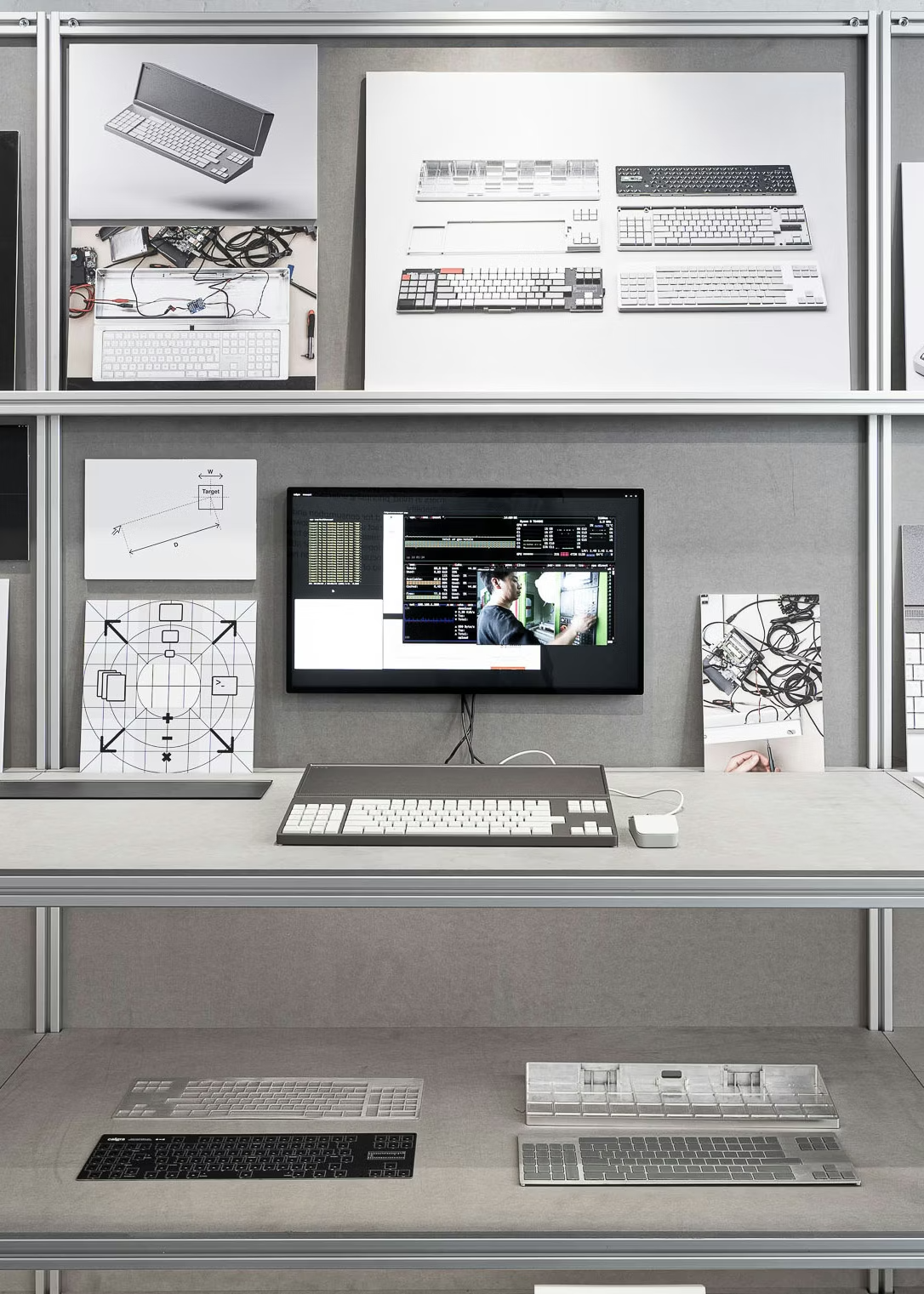
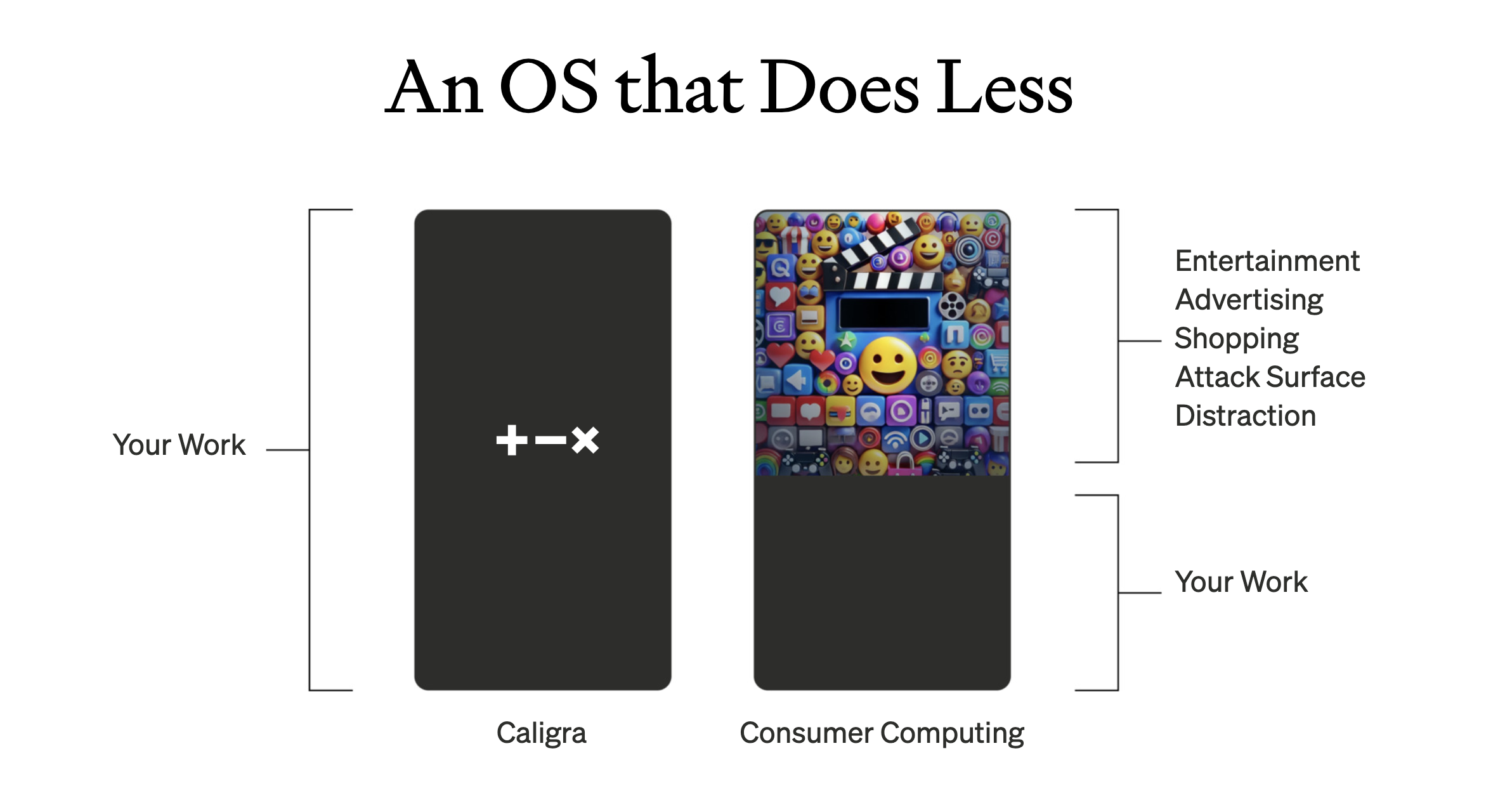
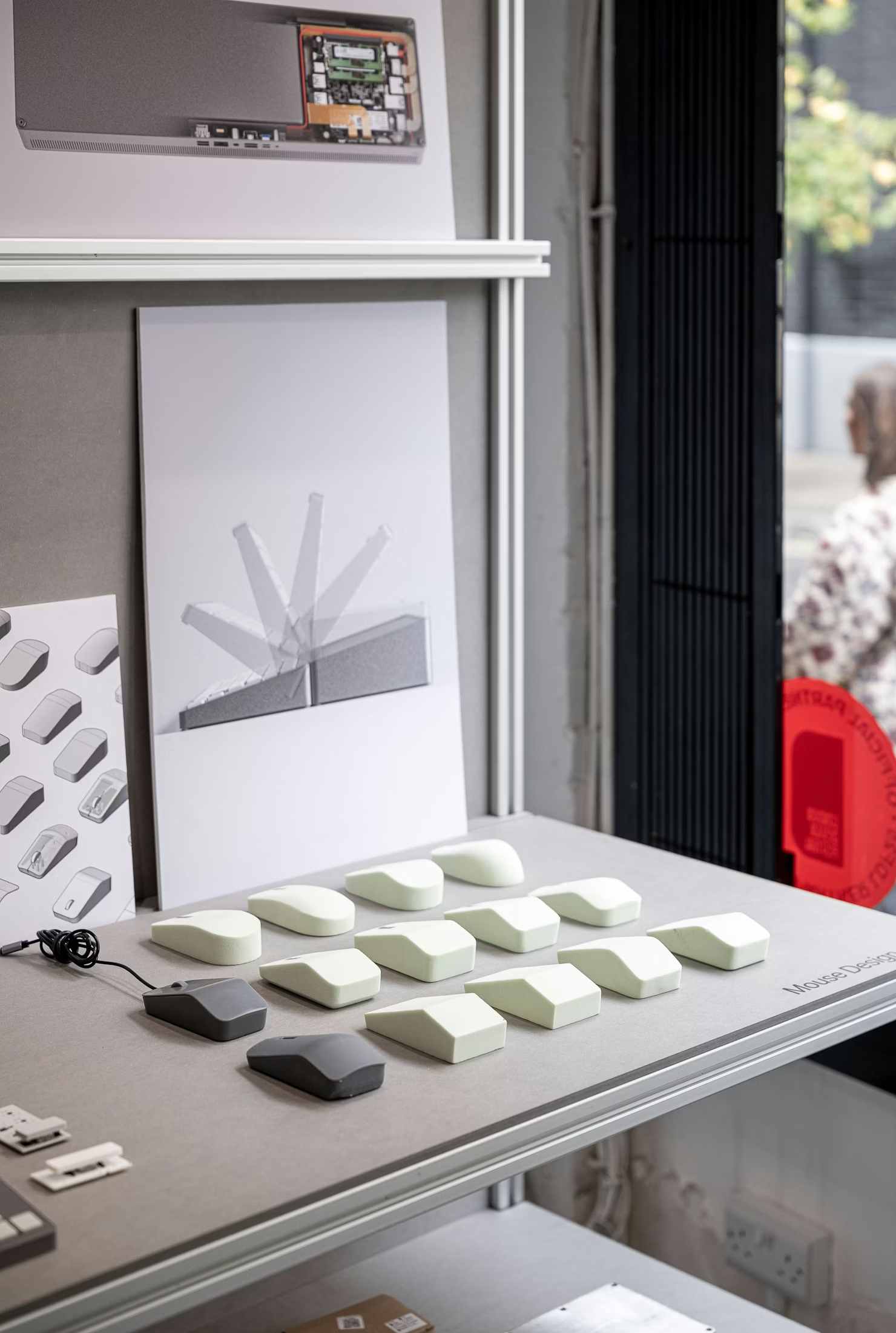
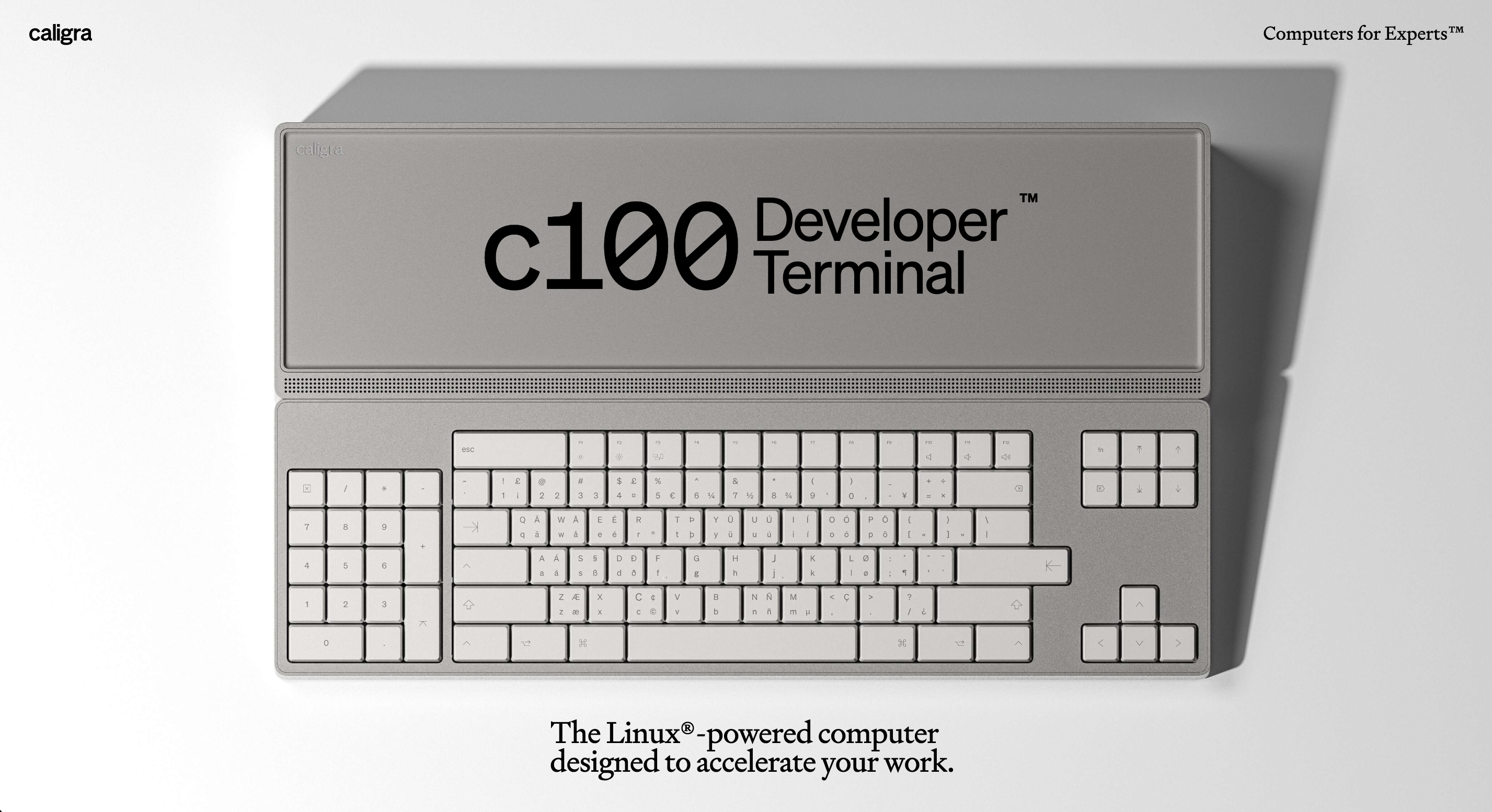
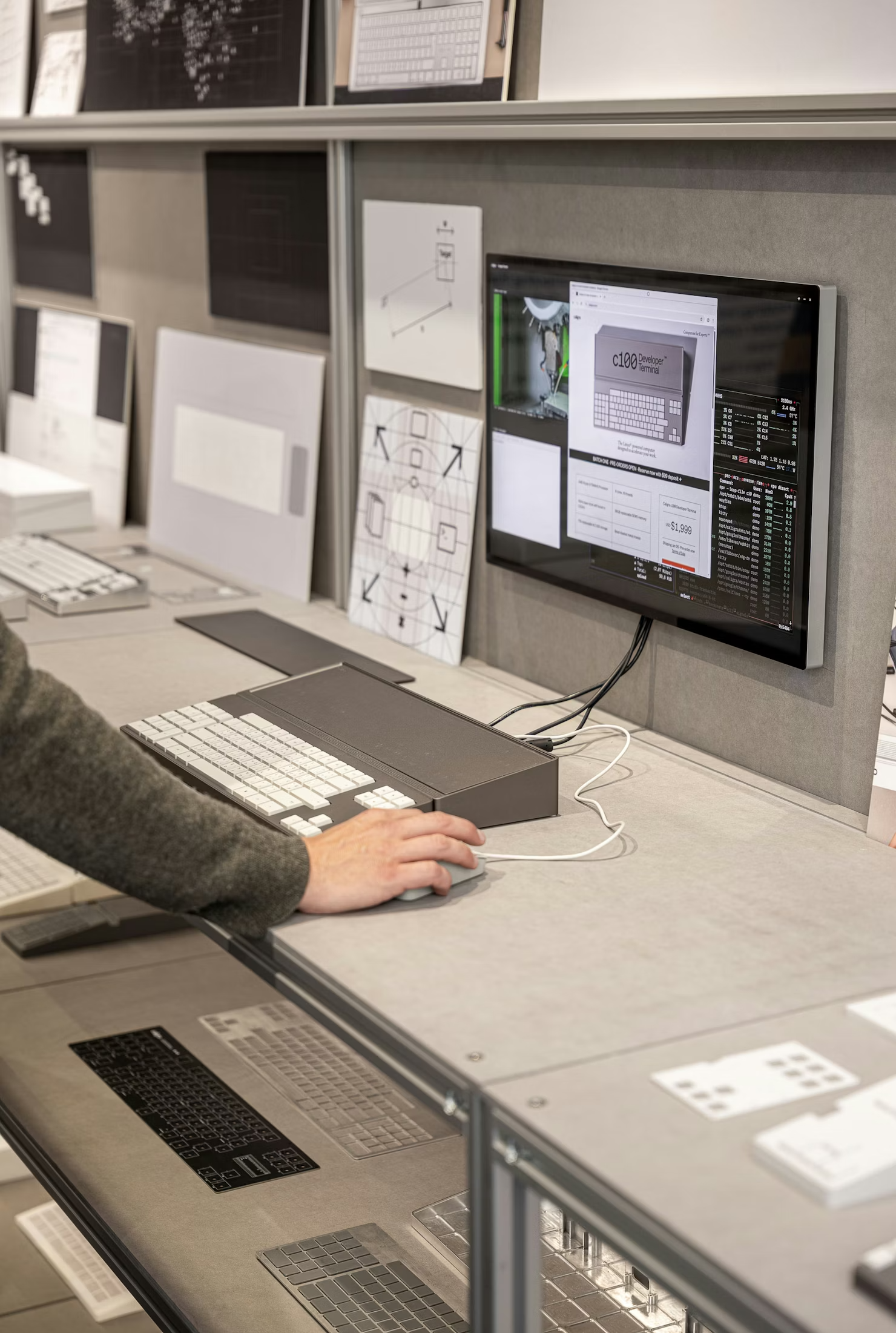
Caligra: The Linux®-powered computer designed to accelerate Experts' work. ![](https://m.stacker.news/120752) ![](https://m.stacker.news/120755) ![](https://m.stacker.news/120756) # Made for Making _Focus, control, privacy, and performance._ Caligra makes tools for technical environments. Situations where people depend on the results of your work. Where attention is important, and the flow state is precious. Where getting things done is what matters most. It’s a computer, built with a different set of principles. For whatever you’re making—we work for you. c100 runs Workbench, a Linux-based operating system built for technical work. It’s designed to get out of your way, so your team can deliver more. # Computers for experts Most people don’t write code or manage data, and consumer devices are designed accordingly. But change isn’t made by most people. Progress comes from the people whose work improves our understanding and ability. Scientists and artists. Engineers and designers. Hackers and painters. We think the world needs a brand of computing that stands behind creative technical work, dedicated to creating instead of consuming. Caligra is a new computer company. Our goal is to help you make the future. ![](https://m.stacker.news/120758) ![](https://m.stacker.news/120753) # We’ve removed the distractions, so it’s just you and your ideas. A clear space for deep thought. With a focus unlike anything available from big tech, Workbench is entirely dedicated to accelerating your work. ![](https://m.stacker.news/120754) ![](https://m.stacker.news/120757) Read more on [Pentagram](https://www.pentagram.com/work/caligra-c100-developer-terminal) and [Wallpaper*](https://www.wallpaper.com/tech/caligra-c100-developer-terminal) websites.
deSign_r's avatar
deSign_r 2 weeks ago
Caligra: The Linux®-powered computer designed to accelerate Experts' work. ![](https://m.stacker.news/120752) # Made for Making _Focus, control, privacy, and performance._ Caligra makes tools for technical environments. Situations where people depend on the results of your work. Where attention is important, and the flow state is precious. Where getting things done is what matters most. It’s a computer, built with a different set of principles. For whatever you’re making—we work for you. c100 runs Workbench, a Linux-based operating system built for technical work. It’s designed to get out of your way, so your team can deliver more. # Computers for experts Most people don’t write code or manage data, and consumer devices are designed accordingly. But change isn’t made by most people. Progress comes from the people whose work improves our understanding and ability. Scientists and artists. Engineers and designers. Hackers and painters. We think the world needs a brand of computing that stands behind creative technical work, dedicated to creating instead of consuming. Caligra is a new computer company. Our goal is to help you make the future. ![](https://m.stacker.news/120753) # We’ve removed the distractions, so it’s just you and your ideas. A clear space for deep thought. With a focus unlike anything available from big tech, Workbench is entirely dedicated to accelerating your work. ![](https://m.stacker.news/120754) Read more on [Pentagram](https://www.pentagram.com/work/caligra-c100-developer-terminal) and [Wallpaper*](https://www.wallpaper.com/tech/caligra-c100-developer-terminal) websites.

deSign_r's avatar
deSign_r 3 weeks ago
Durable Consumables - On building for permanence in an age of obsolescence ![](https://m.stacker.news/120325) > Economists distinguish between an asset's physical life and its economic life. The physical life is how long something can function. The economic life is how long it remains useful relative to alternatives. Technology products increasingly have economic lives far shorter than their physical lives. The thing still works. It's just been obsoleted. ... > The frontier keeps moving. Progress keeps accelerating. The rational response is shorter time horizons, faster replacement cycles, less investment in permanence. I understand the logic. I just wonder what we lose when fewer objects around us are built with the assumption that they'll still be here, still working, still ours, decades from now.
deSign_r's avatar
deSign_r 3 weeks ago
Systems, Stables and Stars ![](https://m.stacker.news/120324) # You can’t make everyone a star performer. I really wanted to believe I could. The instinct is to think “I’ll just coach everyone up to that level.” But the people who can operate in high ambiguity, synthesize across domains, make sound judgment calls under pressure, they’re fundamentally sparse. That’s what makes them exceptional. The goal isn’t to make your entire team interchangeable at the highest level. It’s to accept that star talent will always be non-fungible, and build accordingly. That means two things: First, you need these people on your team. Not later, not “once we can afford it.” If you’re facing problems that could reshape your trajectory and you don’t have anyone who can operate at that level, you’re hoping for luck. Second, you need to use them deliberately. They’re scarce. Burning them out on routine problems is waste. Failing to deploy them on the unprecedented stuff is also waste.
deSign_r's avatar
deSign_r 3 weeks ago
Critique • On elevating craft through critical thinking. ![](https://m.stacker.news/120323) > “The trouble with most of us is that we'd rather be ruined by praise than saved by criticism.” > `➪ Norman Vincent Peale` ## A tool to improve design effectiveness A design critique is a structured, collaborative session where designers, peers, and stakeholders evaluate a design artifact to provide constructive feedback and improve the design's effectiveness, quality, and alignment with user needs and business objectives. A good design critique is never about personal taste and should always strive to be as objective as possible. ## Critiques as necessary collisions A critique is not a governance mechanism, nor is it a group brainstorming session. It's a necessary collision. It’s the intentional application of adversarial thought to something that isn't finished yet. Its sole purpose is to pressure-test the underlying assumptions. Ultimately, critiques are about injecting constructive doubt into a designer's premature certainty before they build too much or go too far.
deSign_r's avatar
deSign_r 3 weeks ago
Feedback doesn't scale ![Feedback doesn't scale - Listening is always hard, and it only gets harder at scale.](https://m.stacker.news/120155) When you're leading a team of five or 10 people, feedback is pretty easy. It's not even really "feedback”: you’re just talking. You may have hired everyone yourself. You might sit near them (or at least sit near them virtually). Maybe you have lunch with them regularly. You know their kids' names, their coffee preferences, and what they're reading. So when someone has a concern about the direction you're taking things, they just... tell you. You trust them. They trust you. It's just friends talking. You know where they're coming from. At twenty people, things begin to shift a little. You’re probably starting to build up a second layer of leadership and there are multiple teams under you, but you're still fairly close to everyone. The relationships are there, they just may be a bit weaker than before. When someone has a pointed question about your strategy, you probably mostly know their story, their perspective, and what motivates them. The context is fuzzy, but it’s still there.
deSign_r's avatar
deSign_r 3 weeks ago
Chromatic - A Colorful Daily Puzzle Game ![](https://m.stacker.news/120153) ## How to Play Move the tiles until the gradient is seamless and all the colors flow perfectly into one another. Locked Tiles are in the correct spot. Use them as reference points to help sort the gradient. Use Rotate Hues if you are having trouble seeing the different between colors. ![](https://m.stacker.news/120154)
deSign_r's avatar
deSign_r 3 weeks ago
"Disagree and commit" is disingenuous. This is a better idea. ![This feels emotionally honest and an idea I can get behind, as an alternative to the popular “disagree and commit”:](https://m.stacker.news/120152) > _“Disagree and let’s see” allows you to stay aligned with the team without forcing you to pretend you had conviction you didn’t have. It lets you walk into a room with your team and be honest:_ > > _“Here’s the path that was chosen. It wasn’t my first pick, but here’s the experiment we’re running, and here’s what we’re trying to learn.”_ Committing to something you disagree with is an emotional contortion that is hard to do in practice. But the work of every team is a series of experiments at its heart, and by changing the onus from “let’s commit to this thing we don’t all agree with” to “let’s try it and see what happens”, we move from steamrollering dissent to mutually agreeing on an experimental hypothesis and testing it. You’re learning based on agreed criteria. That’s much harder to argue with — and at the end, there’s no “I told you so” or winners and losers. There’s just a “here’s what we learned” and an implied set of next steps. Bliss.
deSign_r's avatar
deSign_r 3 weeks ago
"Disagree and commit" is disingenuous. This is a better idea. ![](https://m.stacker.news/120152) > _“Disagree and let’s see” allows you to stay aligned with the team without forcing you to pretend you had conviction you didn’t have. It lets you walk into a room with your team and be honest:_ > > _“Here’s the path that was chosen. It wasn’t my first pick, but here’s the experiment we’re running, and here’s what we’re trying to learn.”_ Committing to something you disagree with is an emotional contortion that is hard to do in practice. But the work of every team is a series of experiments at its heart, and by changing the onus from “let’s commit to this thing we don’t all agree with” to “let’s try it and see what happens”, we move from steamrollering dissent to mutually agreeing on an experimental hypothesis and testing it. You’re learning based on agreed criteria. That’s much harder to argue with — and at the end, there’s no “I told you so” or winners and losers. There’s just a “here’s what we learned” and an implied set of next steps. Bliss.
deSign_r's avatar
deSign_r 3 weeks ago
Disagree and Let’s See ![](https://m.stacker.news/120152) > _“Disagree and let’s see” allows you to stay aligned with the team without forcing you to pretend you had conviction you didn’t have. It lets you walk into a room with your team and be honest:_ > > _“Here’s the path that was chosen. It wasn’t my first pick, but here’s the experiment we’re running, and here’s what we’re trying to learn.”_ Committing to something you disagree with is an emotional contortion that is hard to do in practice. But the work of every team is a series of experiments at its heart, and by changing the onus from “let’s commit to this thing we don’t all agree with” to “let’s try it and see what happens”, we move from steamrollering dissent to mutually agreeing on an experimental hypothesis and testing it. You’re learning based on agreed criteria. That’s much harder to argue with — and at the end, there’s no “I told you so” or winners and losers. There’s just a “here’s what we learned” and an implied set of next steps. Bliss.
deSign_r's avatar
deSign_r 3 weeks ago
Why great ideas die young—and how leaders can save them https://www.fastcompany.com/91443699/why-great-ideas-die-young-and-how-leaders-can-save-them ![](https://m.stacker.news/120036) One of the most overlooked but essential tools for idea nurturing is what I call “Indicate Behavior.” It’s the act of clearly signaling whether a brainstorming session or meeting is meant for expansive thinking (idea generation) or reductive thinking (evaluation and refinement). Trying to brainstorm and critique simultaneously is like mixing oil and water. People either freeze up or default to safe, surface-level ideas. These cues break critical thinking patterns and invite curiosity, fostering psychological safety by telling the brain, “It’s OK to imagine here.” # THE BENEFITS OF DESIGNING ENVIRONMENTS WHERE RISK FEELS SAFE Ideas don’t grow in fear. They grow in environments where risk-taking feels shared. A 2024 study showed that group-based play increases psychological safety by shifting the perceived risk of speaking up from the individual to the group. When people engage in playful, low-stakes interactions, they’re more willing to take creative risks and support each other’s thinking.