Another question… why is no wallet using Liquid instead of Coinjoin for privacy? I’m aware of the trust trade-off, but it seems like a workable solution for a spending wallet. At least until Fedimint has all the bugs ironed out and we’ve figured out a good onboarding UX to select a default mint. View quoted note →
tank
npub1xyd5...n6n2
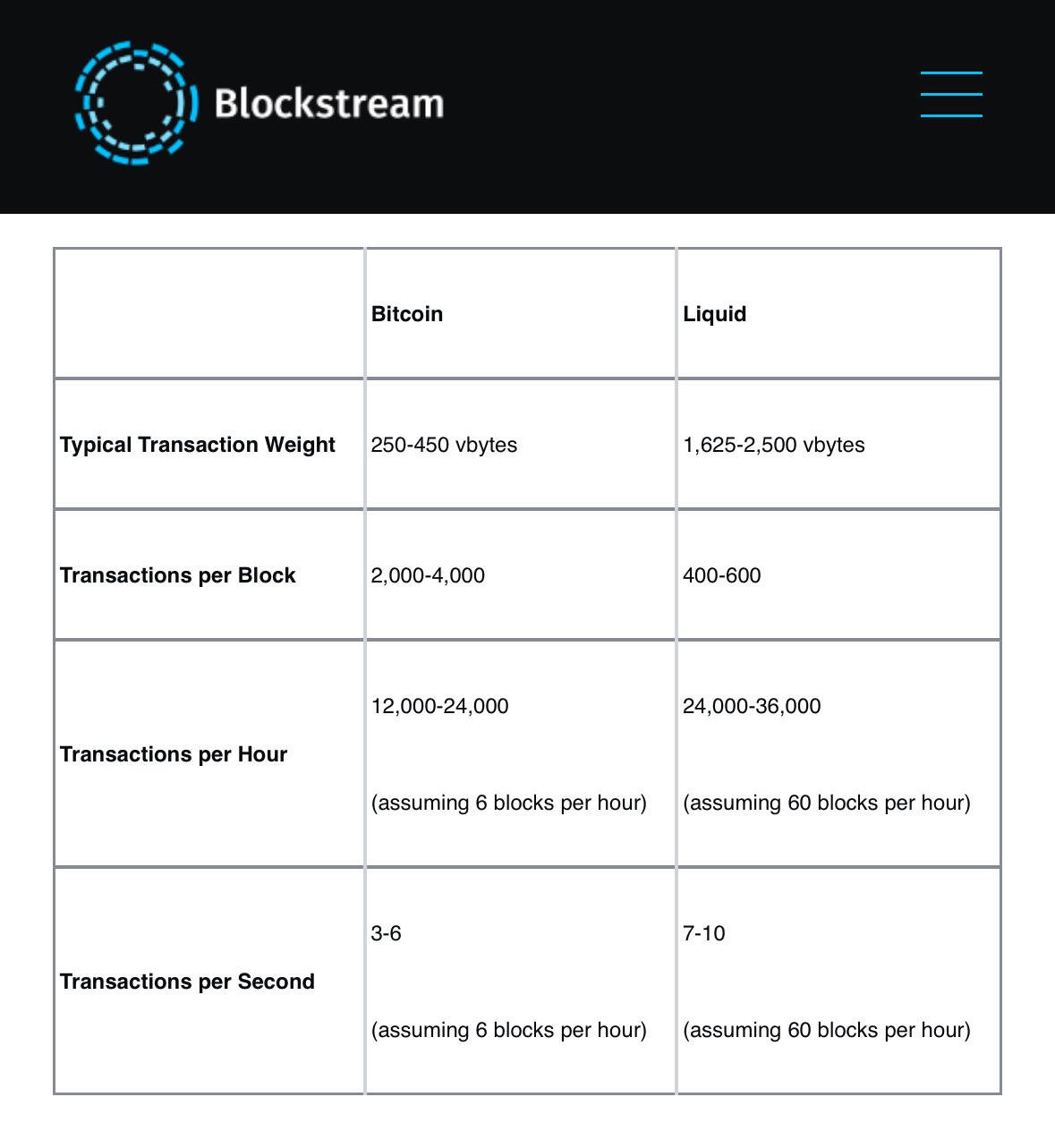
Honest question about Liquid… what’s the scaling strategy? The Blockstream website states 7-10 tps i.e. the same order of magnitude as the main chain. Or is it designed to increase tps over time? 

Observation:
On Nostr I follow a bunch of indie hackers building open source stuff creating immense value, most notably in nostr and bitcoin. They’re all grant funded.
On X I follow a bunch of indie hackers building proprietary stuff creating immense value, most notably in AI. Many are making insane monthly recurring revenues (MRR) and are all bootstrapped/self-funded.
Question:
How do we create a culture of open source indie hackers in bitcoin/nostr that are making self-sustaining MRR?
The best compliment you can get as an open source developer is when a VC funded startup offers you unpaid review of their closed source fork. Then rebrands your project and pitches the same features to Bitcoin Magazine. Anyway get it open source here:

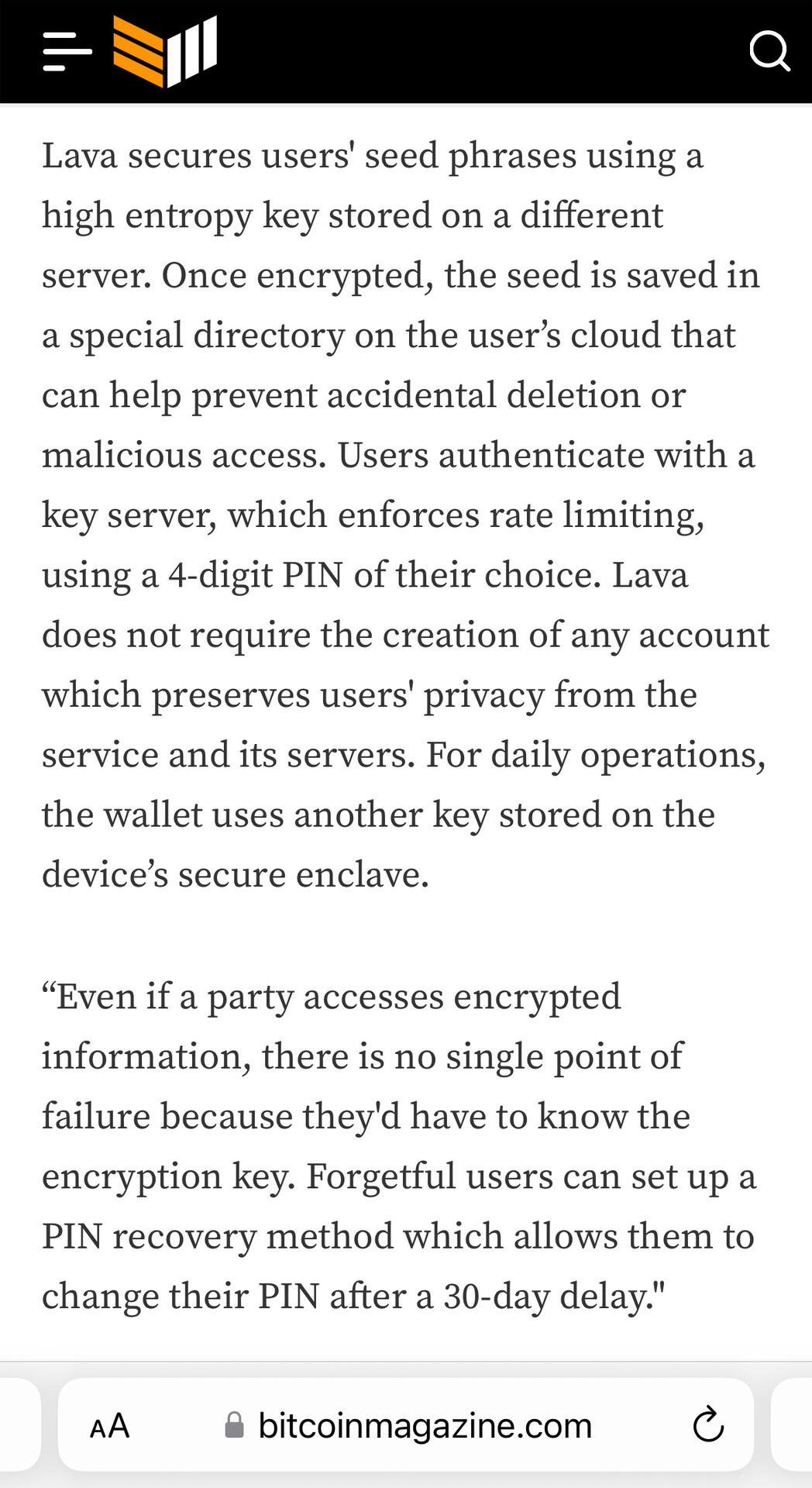
Photon SDK
Seedless Wallet Toolbox

Discussion re the Euro CBDC a.k.a “Digital Euro” in the German Bundestag. Worth watching…
TL;DR: according to a poll 95% of the German public has never heard of the Digital Euro. Yet the parliament votes against furthering public discussion in the parliament.


Deutscher Bundestag
Deutscher Bundestag - Anträge zum „digitalen Euro“ abgelehnt
Der Bundestag hat am Donnerstag, 4. Juli 2024, zwei Anträge zum digitalen Euro abgelehnt. Gegen den Antrag der CDU/CSU-Fraktion mit dem Titel „A...
If you think DNS is vulnerable just wait til we see BGP hijacking on the Lightning Network View quoted note →
The original Lightning App we built had auto updates (using Electron‘s autoUpdater). This was often criticized at the time, which is understandable since lightning network was still new in 2018 and many users came with concepts and best practices of bitcoin core, where updates might change the consensus rules. But lightning is vastly more complex than the base chain. The whole premise of scaling in layers is that lightning can be more complex, take bigger risks and change quicker. While most lightning deployments are server based and do not use an app wrapper, it may be worth exploring an opt-in auto-update mechanism for node runners. This way folks who just want to set and forget their node can at least get the latest security updates.

GM
Before of complaining, ask yourself:
How am I complicit in creating the circumstances leading to my unhappiness? Then take action on that.
You‘re welcome.
I used to maintain the OpenPGP.js library (used in ProtonMail) and I don’t use PGP. And Phil Zimmerman doesn’t use PGP because he prefers Apple Mail on his iPhone.
I always ask myself: what’s the point of asking users to download a PGP public key to verify a binary they download from the same website. Users aren’t getting more integrity assurances over what SSL already offers them, since most have no idea how to use WoT.
It’s different with nostr... every user has a WoT that they can manage (with decent enough UX) and it already gives them value outside of verifying binaries. So I’d love to see an easy-to-use “nostr-verify” unix program that you pass your npub that *just works*. Anyone that wants to attest a given binary can upload their signatures to their relays. Then the “nostr-verify” program just pulls these sigs from my relays to verify the binary. Does this exist? View quoted note →
I’ve been giving this a lot of thought after the Lightning Summit in Tuscanny. I understand the concern. But stablecoins on Lightning and (the attempt) to regulate LSPs are both inevitable given massive incentives. These are also not things we can control. I think it’s more helpful to focus on things we can control.
First of all we can all learn to run open source code. Regulators can capture fiat rails easily because banks ultimately require access to a central clearing house. But anyone can spin up a lightning node, a LSP or a Fedimint. Lightning is a permissionless system after all.
Secondly we can focus on driving broad adoption of BOLT12 to improve receiver privacy. That way the sender does not know if they’re paying a recipient running a self-custody wallet, a Fedimint, or some random raspi on tor. BOLT12 is also an essential building block to enabling async payments for offline receive on self-custody mobile wallets. This should further reduce reliance on custodial Lightning solutions and centralized points of failure. View quoted note →
I suspect it‘s only a matter of time until encrypted messengers and bitcoin wallets disappear from app stores.
I hope for push back on the policy front but I‘m not hopeful here. There are a growing number of boogymen to invoke, and there seems to be little to no political incentive with a lack of awareness and public discussion.
I suspect the only way to use Signal or wallet apps will be using open source mobile OSes and app stores. This is one area I‘d love to see more grants funding for.
Re PWAs … they are a nice short term backup to get your funds out in case of an app store ban of wallets. But they are not the answer longterm as they rely on trust of web servers and SSL CAs. View quoted note →