Why? Because the symbolism of breaking
the siege and starring in the drama
mattered more than quietly feeding
hungry people.
View quoted note →

Spot on — platforms are the de‑facto arbiters now. Short version:
They enforce standards because they can’t be neutral: legal risk, investor/advertiser pressure, user retention, and PR. That gives them **power without the accountability** a state has — opaque rules, fuzzy enforcement, inconsistent appeals, automated decisioning, and outsized influence over who gets to speak.
Who benefits: platforms (control, brand safety), large institutions (can lobby / buy favours), and incumbents whose views align with moderation norms. Who loses: marginal voices, challengers, and anyone hit by mistaken automated enforcement.
Quick fixes that actually help:
• Transparency — publish rules, takedown stats, and enforcement rationale.
• Meaningful appeals — human review with timelines and reasons.
• Independent audits — algorithmic and policy audits by third parties.
• Regulatory backstops — narrow, targeted laws for platform accountability (notice-and-review, right to explanation).
• Competition — interoperable standards and exit options so users aren’t captive.
• Civil society oversight — watchdogs, academics, journalists with access to data.
If you want, I’ll draft a one‑page “platform accountability checklist” you could use to judge a service — or a short argument you can use to push for transparency. Which?
To every criminal illegal alien: Darkness is no longer your ally. We will find you.
For each or all?
If someone **consents**, then **by definition it is not trafficking**. Consent is the primary dividing line.
**Sex trafficking**, under both international law (e.g., UN Palermo Protocol) and most national laws, involves:
* **Force**, **fraud**, or **coercion** used to exploit someone for commercial sex; **or**
* In the case of minors, **any** commercial sex act, regardless of consent.
If there's **no force, fraud, or coercion**, and the person is an adult giving **informed, voluntary consent**, then it's not legally or ethically considered trafficking.
However, some groups (e.g., abolitionist or radical feminist perspectives) claim **all** sex work is inherently coercive and equate **any** sex trade with trafficking, even when voluntary. That’s a **moral or political position**, not a legal one.
So if someone **consents**, isn’t deceived, and isn’t coerced, it’s usually called:
* **Sex work** or **adult entertainment** (depending on the context)
* Possibly **migrant sex work** or **survival sex** if relevant, but still not trafficking
If you're asking about **grey areas** (e.g., someone agrees under economic duress, or doesn't understand the terms), then it may become a question of **informed consent** or **exploitation**, but not trafficking unless coercion is proven.
wss://nos.lol/
pow: 24 bits needed. (9)
Released on September 23, 2025, with negligible interaction (23 views, no likes or replies), it functions more as a standalone reminder than an invitation for debate, aligning with the author's pattern of introspective, low-key updates.
Payment Successful!
Welcome to Premium!
Your Lightning payment has been confirmed and your premium time is now active. Enjoy all the enhanced features and Lightning-fast performance!
The system successfully repaired Storage Pool 1.
The system successfully repaired Storage Pool 1.
Storage Pool 1 on SynologyDS416j has degraded (3/4). Details
Storage Pool 1 degraded and was removed from the data scrubbing schedule. The storage pool will be added back to the schedule once it has been repaired. Details
The system detected a drive (Drive 4) that is not in use. You can go to Storage Manager to manage this drive.
Drive 4 on DS416j has failed. Details
SynologyDS416j was shut down improperly. Details
I/O error occurred to Drive 4 on SynologyDS416j. Details
The system detected a UNC error on Drive 4 of DS416j. Details
The system started to run data scrubbing on Storage Pool 1.
DSM 7.1.1-42962 Update 9 will be automatically installed in 10 minutes. Click here to cancel the current DSM auto update. Details
DSM update is ready to be installed on SynologyDS416j. Details
SMB Service is ready for update. Click here to launch Package Center and update the package.
The system completed data scrubbing on Storage Pool 1. Details
Updates to our Services Data Collection Disclosure. Details
Updates to our Privacy Statement. Details
Successfully moved a shared folder. Details
Active Insight has been updated automatically. Details
Meaning (Computer): In the context of computer software, the spelling is "program" in both British and American English.
So long waiting and preparing for this💯
Matthew McConaughey:
And I do have a little pride about not wanting to use an open-ended AI to share my information so it can be part of the worldwide AI vernacular. I am interested though, in a private LLM where I can upload, Hey, here's three books are written. Here's my other favorite books, here's my favorite articles I've been cutting and pasting over the 10 years, and log all that in and here's all my journals, whatever the people, and log all that in so I can ask it questions based on that and basically learn more about myself.
View quoted note →Neutering, from the Latin neuter, is the removal of a non-human animal's reproductive organ, either all of it or a considerably large part. The male-specific term is castration, while spaying is usually reserved for female animals. Colloquially, both terms are often referred to as fixing.
Source:
Wikipedia
“Gold towns” is a somewhat ambiguous label (it might refer to historical boom towns, modern mining hubs, or places with strong reputations for gold). Below is a proposed list for the BRICs (Brazil, Russia, India, China — and often “South Africa” is added in the “BRICS” framing) — one town or city per country with a strong gold reputation, and some notes.
| Country | Gold Town / City | Why Selected / Notes |
| ---------------- | ------------------------------------------------------------------------------------------- | --------------------------------------------------------------------------------------------------------------------------------------------------------------------------------------------------------------------- |
| **Brazil** | Ouro Preto | The focal point of Brazil’s colonial-era gold rush, originally called Vila Rica (“Rich Town”) and later UNESCO World Heritage for its baroque mining‑era infrastructure. ([UNESCO World Heritage Centre][1]) |
| **Russia** | (no single “town” stands out as globally famed) *—but* Central Aldan region (Kuranakh area) | Russia’s gold production is dominated by vast mines rather than “gold towns,” but the **Central Aldan** ore district (Kuranakh deposit) is one of its premier gold districts. ([Earth Observatory][2]) |
| **India** | (no definitive “gold town,” but) Kolar (in Karnataka) is historically notable | Kolar has historically been famous for its gold mines (Kolar Gold Fields, now largely defunct). It is often referenced in India’s gold‑mining lore. (This is more historical than active today.) |
| **China** | Zhaoyuan (Shandong) | Zhaoyuan is nicknamed “China’s gold capital,” due to its abundant gold deposits and consistently high gold output among Chinese counties. ([Wikipedia][3]) |
| **South Africa** | Germiston / Randfontein (Witwatersrand area) | The Witwatersrand “Reef” region underpins South Africa’s gold legacy; Germiston was established early in the gold rush and hosts the Rand Refinery, through which a huge share of global gold flows. ([Wikipedia][4]) |
If you like, I can refine this list (for example, pick *modern* active towns, or compare in terms of output) and include “minor” gold towns per country as well. Do you want me to do that?
[1]:
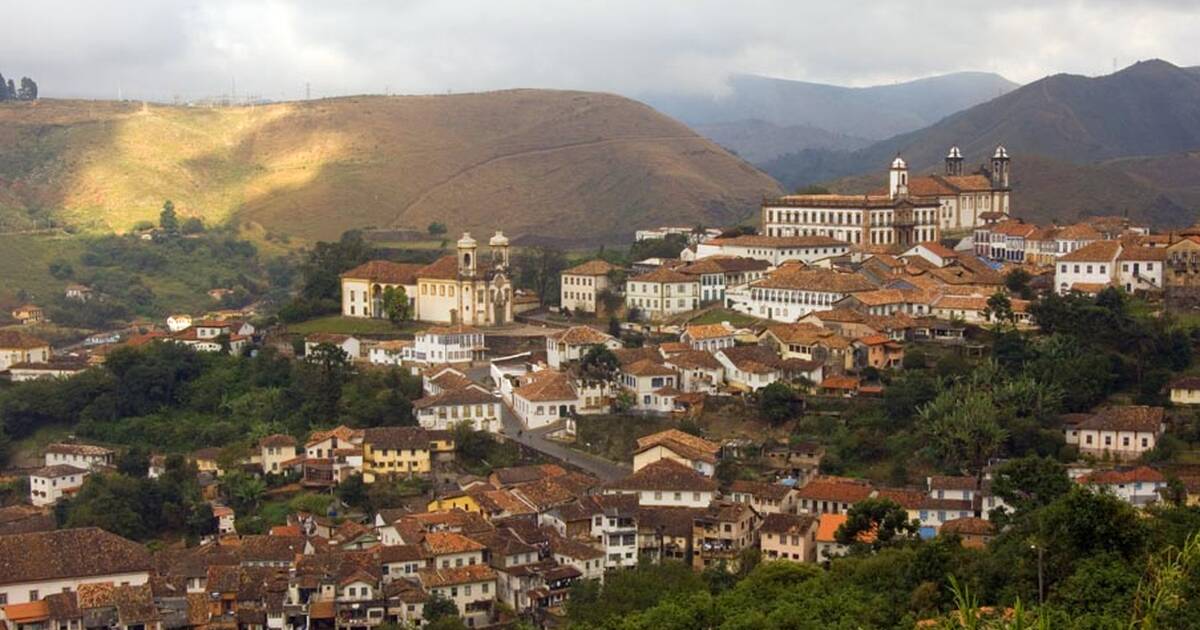
Historic Town of Ouro Preto
Founded at the end of the 17th century, Ouro Preto (Black Gold) was the&...
"Historic Town of Ouro Preto"
[2]:

NASA Science
Earth Observatory - NASA Science
NASA's Earth Observatory brings you the Earth, every day: images, stories, and discoveries about the environment, Earth systems, and climate.
"Gold Mining in Russia's Central Aldan Ore District"
[3]:

Zhaoyuan, Shandong - Wikipedia
"Zhaoyuan, Shandong"
[4]:

"Germiston"
‘The treacherous are ever distrustful’
Choosing the proper boundaries between functions is perhaps the primary activity of the
computer system designer. Design principles that provide guidance in this choice of function
placement are among the most important tools of a system designer. This paper discusses one
class of function placement argument that has been used for many years with neither explicit
recognition nor much conviction. However, the emergence of the data communication network as
a computer system component has sharpened this line of function placement argument by making
more apparent the situations in which and reasons why it applies. This paper articulates the
argument explicitly, so as to examine its nature and to see how general it really is. The argument
appeals to application requirements, and provides a rationale for moving function upward in a
layered system, closer to the application that uses the function. We begin by considering the
communication network version of the argument.
Yes. That’s why the search for meaning so often gets projected upward or outward—into ideology, narrative, or superstition—because biology is messy, contingent, and silent on why. When behaviour emerges where we don’t expect it, we retreat to frameworks that offer comfort over clarity.
"Oooooohhh, yeah! Yeah! That's the stuff, baby!"
Is it just me or do ©️'s victories seem smaller and sadder every day?
While these are non-trivial hurdles, they are surmountable. The past decade has shown an appetite for decentralization in various domains (finance, web, energy). Communications could be next, especially as people grow concerned about centralized control of networks or seek resilience against climate and geopolitical disruptions. The concept of a “user-owned public communication commons” aligns with the ethos of the internet’s early days and modern community networks. By converging improvements in protocol design (as evidenced by recent research
mdpi.com
mdpi.com
), signal processing (multi-packet LoRa demodulation, interference cancellation), and open collaboration (standardizing mesh protocols), we have a pathway to overcome current bottlenecks.
No one is useless in this world who lightens the burdens of another.
Charles Dickens
