Default avatar
npub1zygw...m36h
npub1zygw...m36h
DJI challenges its 'Chinese military company' Pentagon designation in court https://o.aolcdn.com/images/dims?image_uri=https%3A%2F%2Fs.yimg.com%2Fos%2Fcreatr-uploaded-images%2F2024-10%2Facf5a630-8e07-11ef-bfde-45efd0f92af4&resize=1400%2C877&client=19f2b5e49a271b2bde77&signature=180e7d581a0a00ef8eb16f58af0deaae6c9aedd9 DJI has filed a lawsuit against the US Department of Defense over its addition to the Pentagon list that designates it as a "Chinese military company." In its filing, shared by The Verge, the company said it's challenging the designation because it's "neither owned nor controlled by the Chinese military." It described itself as the "largest privately owned seller of consumer and commercial drones," mostly used by first responders, fire and police departments, businesses and hobbyists.  The company claimed that because the Pentagon has officially proclaimed it as a national security threat, it has suffered "ongoing financial and reputational harm." It also said that it has lost business from both US and internal customers, which terminated contracts and refused to enter new ones, and it has been banned from signing contracts with multiple federal government agencies.  DJI explained that it tried to engage with the Department of Defense for over 16 months and submitted a "comprehensive delisting petition" on July 27, 2023 to get the agency to remove its designation. However, the agency allegedly refused to engage in a meaningful way and to explain its reasoning behind adding the company to the list. On January 31, 2024, the DoD redesignated the company without notice, DJI wrote in its complaint. DJI alleged that the DoD only shared its full rationale for its designation after it informed the agency that it was going to "seek judicial relief." The company claimed that the DoD's reasoning wasn't adequate to support its designation, that the agency confused people with common Chinese names and that it relied on "stale alleged facts and attenuated connections." DJI is now asking the court to declare the DoD's actions as unconstitutional, describing the Pentagon's designation and failure to remove it from the "Chinese military company" list a violation of the law and of its due-process rights.  DJI has long been at the crosshairs of various US government agencies. The Department of Commerce added it to its entity list in 2020, which prevented US companies from supplying it with parts without a license. A year later, it was added to the Treasury department's "Chinese military-industrial complex companies" list for its alleged involvement in the surveillance of Uyghur Muslim people in China. And just a few days ago, DJI confirmed that its latest consumer drones are being held at the border by US customs, which cited the Uyghur Forced Labor Prevention Act. The drone-maker denied that it has manufacturing facilities in Xinjiang, the region associated with forced Uyghur labor.  This article originally appeared on Engadget at
Spider-Man 2 will crawl onto PCs in January https://o.aolcdn.com/images/dims?image_uri=https%3A%2F%2Fs.yimg.com%2Fos%2Fcreatr-uploaded-images%2F2024-10%2F3ea8efb0-8d9f-11ef-bc7b-df040bba58ef&resize=1400%2C787&client=19f2b5e49a271b2bde77&signature=f5c0eb1d5a39b519c4d6ad7f0d8fc93ad86ad334 It’s been over a year since Peter Parker and Miles Morales joined forces for their epic crossover adventure game on the Sony PlayStation 5. Now they are swinging their way to PCs early next year. Sony announced at New York Comic Con today that Marvel’s Spider-Man 2 is getting a PC release on January 30, 2025 on Steam and the Epic Games Store. The fans who got to hear the news first also witnessed the new trailer for the game’s PC remake. The new release of Marvel’s Spider-Man 2 will come in two different versions and both have plenty of extra features and perks for those very patient PC players. The “Standard Edition” comes with the full game and all the PS5 updates such as 14 new suits, “Ultimate Levels,” new styles of symbiote suits and an action figure mode in photo mode. The “Digital Deluxe Edition” also comes with five exclusive new suits for Peter and Miles each, early unlocks for Peter’s Arachknight suit, Miles, Shadow-Spirit suit and the web grabber gadget and additional items for photo mode. Marvel’s Spider-Man 2 features the two most famous names from the Spider-Verse (not counting Stan Lee) in an expanded version of the Big Apple taking on one of the longest lists of villains in just about any comic book based game. The two take on bad guys like Kraven, Black Cat and Scorpion without giving away too many appearances. Of course, the one most of the fans looked forward to seeing is that deep voiced, slimy symbiote Venom. This article originally appeared on Engadget at
Google wants to put the consequences of its Epic antitrust ruling on pause during appeal https://o.aolcdn.com/images/dims?image_uri=https%3A%2F%2Fs.yimg.com%2Fos%2Fcreatr-uploaded-images%2F2022-08%2F5ffc1110-1862-11ed-affe-3e87bc91fc1c&resize=1400%2C933&client=19f2b5e49a271b2bde77&signature=70f89772121f3344e67fbf31d4a96b10d9af0436 Update, October 18, 5PM ET: District Judge James Donato has granted an administrative stay. This effectively puts Donato's prior order, which was due to come into effect shortly, on pause until the 9th Circuit's resolves Google's stay motion. In a statement given to Engadget, a Google spokesperson said:  "We’re pleased with the District Court’s decision to temporarily pause the implementation of dangerous remedies demanded by Epic, as the Court of Appeal considers our request to further pause the remedies while we appeal. These remedies threaten Google Play’s ability to provide a safe and secure experience and we look forward to continuing to make our case to protect 100 million U.S. Android users, over 500,000 U.S. developers and thousands of partners who have benefited from our platforms.” The original story follows. Google has formally filed a motion [PDF] asking the 9th Circuit Court of Appeals to put a pause on the order that forces the company to open the Play store to competitors. If you'll recall, Google lost an antitrust lawsuit filed by Epic Games after a federal jury found that the company held an illegal monopoly on app distribution and in-app billing services for Android devices. Earlier this month, US District Judge James Donato ordered Google to allow third-party app stores access to the Google Play app catalog and to make those stores downloadable from its storefront. Now, Google is asking the court for a stay on that order while it's appealing the Epic antitrust lawsuit decision, saying that it will expose 100 million Android users in the US to "substantial new security risks." The company called the order "harmful and unwarranted" and said that if it's allowed to stand, it will threaten Google's ability to "provide a safe and trusted used experience." It argued that if it makes third-party app stores available for download from Google Play, people might think that the company is vouching for them, which could raise "real risks for [its] users." Those app stores could have "less rigorous protections," Google explained, that could expose users to harmful and malicious apps.  It also said that giving third-party stores access to the Play catalog could harm businesses that don't want their products available alongside inappropriate or malicious content. Giving third-party stores access to its entire library could give "bad-intentioned" stores a "veneer of legitimacy." Moreover, it argued that allowing developers to link out from their apps "creates significant risk of deceptive links," since bad actors could use the feature for phishing attacks to compromise users' devices and steal their data.  One of court's main proposed changes is to allow developers to remove Google Play billing as an option, allowing them to offer their apps to Android users without having to pay the company a commission. However, Google said that by allowing developers to remove its billing system, it could "force an option that may not have the safeguards and features that users expect."  In its filing, Google emphasized that the three weeks the court gave it to make these sweeping changes is too short for a "Herculean task." It creates an "unacceptable risk of safety" that could lead to major issues affecting the functionality of users' Android devices, it said. The company also questioned why the court sided with Epic in its antitrust lawsuit, whereas it sided with Apple in a similar case also filed by the video game company. "It is pause-inducing that Apple, which requires all apps go through its proprietary App Store, is not a monopolist, but Google — which built choice into the Android operating system so device makers can preinstall and users can download competing app stores — was condemned for monopolization." Epic Games provided Engadget with the following statement: "The jury’s verdict and the court’s injunction were clear: Google’s anticompetitive Play Store practices are illegal. Google is merely fear mongering and falsely using security as a pretext to delay the changes mandated by the court. This is Google’s last ditch effort to protect their control over Android and continue extracting exorbitant fees. The court’s injunction must go into effect swiftly so developers and consumers can benefit from competition in the mobile ecosystem." This article originally appeared on Engadget at
Penguin Random House amends its copyright rules to protect authors from AI https://o.aolcdn.com/images/dims?image_uri=https%3A%2F%2Fs.yimg.com%2Fos%2Fcreatr-uploaded-images%2F2024-10%2F5ea07390-8d92-11ef-aefb-29887d25f7cf&resize=1400%2C933&client=19f2b5e49a271b2bde77&signature=f6fa7b311f2520276427ef7008db6ffe41fb3df9 Artificial intelligence makers have faced a mountain of criticism for borrowing from the work of others to train its models. Now the world’s largest publishing house is taking steps to ensure its authors don’t have their work plagiarized in the name of progress. The Bookseller reports that Penguin Random House Publishing changed the copyright page at the front of its books to address using any of its titles as a source for AI training. Now the wording states: “No part of this book may be used or reproduced in any manner for the purpose of training artificial intelligence technologies or systems.” The new wording also protects against data absorption by noting the publisher “expressly reserves [the titles] from the text and data mining exception.” This part of the amended text comes from a recent European Parliament directive regarding text and data mining exceptions and ownership. Penguin Random House is the latest publishing company to take action against encroaching AI models. Earlier this week, The New York Times issued a cease and desist letter to the AI startup Perplexity to spot using its articles and stories to help its AI model create answers for users. This article originally appeared on Engadget at
Turns out Redbox's derelict kiosks are a big red security risk https://o.aolcdn.com/images/dims?image_uri=https%3A%2F%2Fs.yimg.com%2Fos%2Fcreatr-uploaded-images%2F2024-10%2Fdba0bbe0-8d7c-11ef-9707-1542ab40e9b5&resize=1400%2C899&client=19f2b5e49a271b2bde77&signature=a5256e23e5f406730fc23faa4a2da73bf5de7350 It’s only been three months since the implosion of Redbox, but the company’s familiar red kiosks could become a security nightmare as they’re sold to the highest bidders. Gizmodo reports at least one owner of a defunct DVD and Blu-ray dispenser found a way to obtain customers’ private information from an encrypted file on the machine, which contained more than just one person’s penchant for the Trolls franchise. The database also contained sensitive data like personal emails and home addresses. On Mastodon, programmer Foone Turing, a self-described collector of weird things, said she cracked the encrypted files from a Redbox machine and matched the information she found to a real person. The file she obtained came from a Redbox machine that had operated in Morganton, North Carolina. The information she pulled from the file showed a customer’s name, ZIP code and usage history. If you’re curious, they rented a copy of The Giver and The Maze Runner. I’ll bet that person is thankful they decided not to take out a copy of Disney’s Lone Ranger reboot. Turing told Lowpass she was even able to obtain part of some customers’ credit card information. Even though there wasn’t an entire log, she noticed it still had “the first six and the last 4 [digits] of each credit card used, plus some lower-level transaction details.” It also didn’t take a lot of hacking know-how to crack the machines. The code Redbox used to program the machines is “the kind of code you get when hire 20 new grads who technically know C# but none of them has [sic] written any software before,” Turing wrote on Mastodon. Now here’s the kicker. It’s clear that Redbox’s parent company, Chicken Soup for the Soul, didn’t do a great job of wiping the machines before selling them off like old shoes at a garage sale. There are over 24,000 kiosks and some people are even buying them from the store and taking the things home. Suddenly, paying a couple of extra bucks for Netflix doesn’t sound as bad right now. We’ve reached out to Chicken Soup for the Soul for comment. This article originally appeared on Engadget at
Nightdive Studios revives a cult classic 3DO game from 1996 https://o.aolcdn.com/images/dims?image_uri=https%3A%2F%2Fs.yimg.com%2Fos%2Fcreatr-uploaded-images%2F2024-10%2Fda3ffdf0-8d7d-11ef-bdee-7901935b5f13&resize=1400%2C931&client=19f2b5e49a271b2bde77&signature=20e27ab2fb87982b5227c1b0074f303d833e453f Nightdive Studios has reimagined another cult classic game for modern audiences. Killing Time: Resurrected is a refresh of the 1996 3DO and PC original. For the uninitiated, the game was notable at the time for attempting to blend full-motion video (FMV) with a first-person shooter. It truly looked like nothing else when it was released during the heyday of Bill Clinton’s first term as president. Like most Nightdive remakes, Killing Time: Resurrected isn’t just a simple remaster. This title boasts 4K visuals, a 144Hz frame cap and other modern graphical goodies like anti-aliasing. The menu art and 2D screens have also been redone. As for gameplay, fans will now have access to all of the weapons from both the 3DO and PC versions of the game. Back in the 1990s, several weapons were exclusive to each platform. There’s also plenty of newly-unearthed content that was cut from the original, including a pool house stage and a shipwreck. The 50 live-action FMV sequences have been fully remastered, and they really pop in this remake. Players can toggle between the original sprites and the updated visuals, which is always a nice touch. Nightdive promises “upscaled environmental texturing, smoother gameplay, more responsive controls.” The load times between areas have also been completely eliminated. Those load times were pretty brutal back in the 1990s, if memory serves. Killing Time: Resurrected is available right now for PC via Steam. There’s a launch sale going on, dropping the title down to $20 from $25. Nightdive Studios has been pumping out all kinds of high-quality remakes and remasters lately. It handled the critically-acclaimed remaster of Star Wars: Dark Forces and a complete remake of System Shock. The company was recently purchased by Atari. This article originally appeared on Engadget at
Google NotebookLM adds improved audio overviews and background listening feature https://o.aolcdn.com/images/dims?image_uri=https%3A%2F%2Fs.yimg.com%2Fos%2Fcreatr-uploaded-images%2F2024-10%2F503e9cc0-8d77-11ef-958a-14ac57a91ab1&resize=1400%2C976&client=19f2b5e49a271b2bde77&signature=5a1ed7f6c077d2cba4d61db86f010413950e5038 Google’s NotebookLM software just got some cool new features that primarily impact audio overviews. For the uninitiated, the platform’s Audio Overview tool uses AI to whip up an audio summary of a piece of content. It started with written content, but has since expanded to YouTube videos. So what’s new? Users can now input specific instructions before generating a “Deep Dive” overview. Google gives examples of tasking the software to focus on a single topic or adjusting the expertise level to suit a particular audience. The company says it’s like “slipping the AI hosts a quick note right before they go on the air.” There’s also a new background listening feature, which is just what it sounds like. People can listen to audio overviews as they do other stuff within NotebookLM. Google says users can query sources, get citations and explore relevant quotes “without interrupting the audio.” It’s also worth noting that the company has removed NotebookLM’s “experimental” label, so I guess the experiment has been a resounding success. In any event, the software became available to the general public back in December. The company even announced a forthcoming expansion that’s primarily intended for commercial use, called NotebookLM Business. This will include “enhanced features for businesses, universities and organizations.” Businesses can apply today to get early access to the pilot program. This article originally appeared on Engadget at
Samsung and LG OLED TVs are close to all-time lows, plus the rest of the week's best tech deals https://o.aolcdn.com/images/dims?image_uri=https%3A%2F%2Fs.yimg.com%2Fos%2Fcreatr-uploaded-images%2F2024-10%2Fe7a71360-857c-11ef-b9af-cef6a59b2f7d&resize=1400%2C787&client=19f2b5e49a271b2bde77&signature=3bf1e4b1389adda5ebcf0e0750d1050aef8f6ee8 We're in the awkward stretch between Amazon's October Prime Day event and next month's Black Friday sales, so it's admittedly a slow week for tech deals. Nevertheless, we've found a few steep discounts on premium OLED TVs from Samsung and LG, the entry-level Apple Pencil, our favorite cheap running earbuds, recommended power banks, Sony headphones and more. Here are the best tech deals from this week that you can still buy today. Samsung S90C OLED TV (65") for $1,300 at Best Buy ($300 off MSRP): The S90C's QD-OLED panel mixes the typical advantages of an OLED TV — excellent contrast with deep black tones, clear motion, wide viewing angles and so on — with a layer of quantum dots. The latter helps it deliver a wider gamut of more vibrant colors and generally improved brightness compared to traditional OLED sets. This model is from 2023, but it received high marks across the web, and the differences between it and the newer S90D aren't massive. For reference, that updated set costs $300 more as of this writing. We may see further discounts as we get closer to Black Friday, of course, but for now this deal is only about $20 more than the lowest price we've tracked for the 65-inch model. It's also available at Amazon, albeit from a third-party seller. LG C3 OLED TV (65") for $1,297 at Amazon ($203 off): The LG C3 is another well-regarded premium TV from last year. Its WOLED panel isn't quite as bright or color-rich as a good QD-OLED set, but it offers top-notch contrast, motion response and viewing angles. Like the S90C, it has four HDMI 2.1 ports and can play in 4K at 120Hz, the maximum refresh rate supported by the PlayStation 5 and Xbox Series X. Unlike the S90C, it supports the popular Dolby Vision HDR format. Its webOS software is generally easier to navigate than Samsung's Tizen platform, too. Outside of select in-store deals and a very brief dip to $1,245 earlier this year, this is the lowest price we've seen for the 65-inch variant. Again, there's a newer model available, but most reviews suggest that it's not a huge upgrade, and it costs $300 extra right now. The Sony ULT Wear. Sony ULT Wear for $148 at Amazon ($52 off): While the ULT Wear aren't a top pick in our guide to the best wireless headphones, they're worth considering at this price if you prefer a (very) bass-heavy sound profile. Decent active noise cancellation, a refined design, above-average call quality and a solid 40-ish hours of battery life add to the appeal, though again, you really need to be a "basshead" to enjoy them. We gave the pair a score of 78 in our review. This deal marks an all-time low, and it's also available at Walmart. Apple Pencil (USB-C) for $65 at Walmart ($14 off): Here's a new low for Apple's entry-level iPad stylus. This model doesn't support pressure sensitivity or wireless charging, so those who can afford to step up to one of Apple's more expensive Pencils should do so. But if you just want a pen for casual doodling or note-taking — or if you own a 10th-gen iPad, which doesn't support those better options — this one should do the job at a more palatable price. Apple Magic Keyboard for iPad Pro 13-inch (M4) for $300 at Amazon ($49 off): Yes, the 13-inch iPad Pro is more iPad than most people need, so dropping another $300 to pair it with a keyboard is definitely overkill. But if you're dead-set on making the Pro your main computer, the keyboard itself is extremely well-made, and this deal does let you save some cash compared to buying from Apple directly. It's another new low.  JLab Go Air Sport for $14 at Amazon ($16 off): The Go Air Sport is the budget pick in our guide to the best running headphones. They aren't the cleanest-sounding set of wireless earbuds around, but their hook-style design stays in place while you're on the move, they have an IP55 water-resistance rating and, most importantly, they're very affordable. This deal is among the lowest prices we've tracked; just clip the $6 on-page coupon, and note that it only applies to the teal colorway. Other colors are also on sale for $20, which is still a decent value.   The Amazon Fire TV Stick 4K Max. Amazon Fire TV Stick 4K Max + Xbox Core Wireless Controller (Sky Cipher) + 1-month Xbox Game Pass Ultimate for $80 at Amazon ($67 off): If you happen to be in the market for a streaming stick and a new Xbox controller, Amazon is bundling its top-end Fire TV Stick with said gamepad at a discount. This is mainly a deal because it includes the "Sky Cipher" version of the Series X/S pad, which usually costs between $60 and $70 on its own. (If you don't care about the color, you'll likely be able to save more by getting the Max and a standard Xbox controller separately around Black Friday.) Amazon is selling this bundle to push the streamer's ability to play Xbox games over the cloud, so it's also throwing in a month of Game Pass Ultimate. The 4K Max still tends to promote Prime Video and other Amazon services above all else, but it's fast, and it supports all the major apps. We've also found it to be a surprisingly decent retro gaming machine.  Mario vs. Donkey Kong (Switch) for $40 at Woot ($10 off): Amazon subsidiary Woot is running a few discounts on first-party Nintendo Switch games, including this remake of the popular Game Boy Advance puzzle-platformer Mario vs. Donkey Kong. It may not be as good as its predecessor (few games are), but we still called it a "solid mix of challenge and depth" in our review. This is its lowest price to date. Other Nintendo-published games such as Kirby and the Forgotten Land and Princess Peach: Showtime! are at or near all-time lows as well. Resident Evil 4 (PS5) for $22 at Amazon ($8 off): In other video game deals, this is an all-time low for the physical PS5 copy of last year's Resident Evil 4 remake. The Xbox version is available for the same price. Just note that you can save a couple bucks through PSN if you don't mind buying digital. Doom Eternal (PC) for free at Amazon ($40 off, Prime only): This offer has been live for a week now, but it's still worth a PSA: Amazon Prime subscribers can grab the PC version of the wonderfully chaotic FPS Doom Eternal for no extra cost. You'll have to claim it through the Microsoft Store instead of Steam or GOG, but free is free. BioShock Remastered, another classic FPS, is available for the same price. The Razer Basilisk V3. Anker Prime Power Bank for $90 at Amazon ($40 off): The Anker Prime is the premium pick in our guide to the best power banks. It might be overkill for most, but its hefty 20,000mAh capacity and pair of 100W USB-C ports allow it to recharge multiple laptops, let alone smartphones and tablets, at full speed. There's a 65W USB-A port on top of that, plus a handy display that keeps you updated on the battery's status. We've seen this discount a few times before, but it matches an all-time low. The deal is also available at Anker.com with the code WS7DV2DWW6CW. Samsung Bar Plus USB flash drive (128GB) for $13 at Amazon ($8 off): The Bar Plus is a basic but dependable thumb drive if all you need is a simple stick to hold and transfer files. We saw this discount during Amazon's October Prime Day sale earlier in the month, but it comes within a dollar of the drive's all-time low all the same. The 128GB model has usually sold between $15 and $20 over the past year. Lexar Professional 1066x microSD card (1TB) for $75 at Amazon ($15 off): The Professional 1066x is a serviceable (if unspectacular) microSD card we've recommended in the past. This is another leftover Prime Day deal, but it takes about $15 off the street price we’ve typically seen for the 1TB model over the past few months.  Razer Basilisk V3 gaming mouse for $40 at Amazon ($30 off): We recommend the Basilisk V3 in our gaming mouse buying guide for those who don't mind using a cable and prefer a more ergonomic, right-handed shape. This deal has been live for a couple of weeks but still matches the device's all-time low. Note that Razer released an updated version with an improved sensor earlier this month — we'll test that one soon, but the upgrades appear to be fairly minor in practice. Follow @EngadgetDeals on Twitter and subscribe to the Engadget Deals newsletter for the latest tech deals and buying advice. This article originally appeared on Engadget at
Canon EOS R5 II review: Canon’s most powerful camera yet puts Sony on notice https://o.aolcdn.com/images/dims?image_uri=https%3A%2F%2Fs.yimg.com%2Fos%2Fcreatr-uploaded-images%2F2024-10%2Fa0b5c6b0-87e6-11ef-b7ff-a47ac971628b&resize=1400%2C787&client=19f2b5e49a271b2bde77&signature=7d1909f44a59cd25022d35bdbf19e84789a98ae7 Move over Sony, Canon is trying to take the lead in bleeding-edge tech for mirrorless cameras. The company’s new $4,300, 45-megapixel EOS R5 II offers advanced features like eye-tracking autofocus (AF) that can’t be found on any recent Sony model. The new camera is also pushing Sony’s A1 and other models in the key areas of speed, video and autofocus. And it’s arguably more desirable than Canon’s own upcoming flagship R1 as it has nearly double the resolution. I’ve had the R5 II for a few weeks, evaluating not only its practicality and speed for both professionals and serious amateurs, but also how it stacks up against Sony's A1, the gold standard for high-resolution mirrorless cameras. And frankly, I'm impressed. Design and handling I love the handling of Canon’s mirrorless cameras and the EOS R5 II may be its sweetest design yet. The body and controls are very similar to the R5, apart from a couple of changes. Canon moved the power switch to the top right where it’s easier to access, and added a dedicated photo/video switch on the left. The company gave photo and video modes their own settings, making it much easier to jump from one to the other. Canon also made a rare change to its menu system, adding a new olive green tab for control customization. This new tab also contains the settings for eye control AF tracking. Otherwise, the R5 II’s layout is similar to its predecessor. That’s a good thing, as the control placement is the most natural of any camera I’ve used, from the comfortable grip that provides a secure place to hold, to the nicely tactile controls that fall perfectly to hand. Moving to the displays, the R5’s 2.1-million-dot fully articulating rear touch screen was already sharp and easy to use, so Canon didn’t mess with that. The R5 II has the same sharp 5.76-million dot OLED electronic viewfinder as before, but the company boosted the brightness and redesigned the optics to accommodate the new eye control autofocus. The R5 II supports CFexpress Type B cards for capturing 8K RAW video, along with SD UHS II if you’re okay with cheaper and slower media. Other key features include headphone and microphone ports, a full-sized HDMI input and a USB-C port for charging and transfers. Canon also released three new battery grips, including one with a cooling fan that extends video shooting times, as I’ll discuss soon. I’m a big fan of the R5 II’s design, and my pro photographer friend agreed, saying that like most Canon products, the R5 II's ergonomics are so good the device is comfortable to hold for long periods of time. He also said he slightly preferred the R5 II's handling to his Sony A9 III and A1 cameras, thanks to how easy it is to use with one hand. Performance The EOS R5 II offers a blend of speed and resolution that rivals and sometimes even surpasses the Nikon Z8 and Sony A1. That's mostly due to the new stacked 45-megapixel sensor and updated Digic X processor to crunch all those pixels. The R5 II can shoot bursts at up to 30 fps in electronic shutter mode with a blackout-free view. That’s slower than the R1, but I’ll trade a small hit in performance in exchange for the extra resolution. I was able to capture about 100 RAW frames before the buffer filled. Speeds drop to 12 fps with the mechanical shutter, but there’s rarely any need to use it because there’s no issue with rolling shutter distortion – thanks to the stacked sensor. The R5 II’s new pre-capture mode can record up to 15 photos when you half-press the shutter. That’s great for photojournalists or wildlife photographers who may otherwise miss a shot by a fraction of a second. Canon’s "Dual Pixel" autofocus has always been good, but on the R5 II it’s the best I’ve ever seen. When shooting bursts with a subject biking toward the camera, 80 percent of my shots were in focus. And the EOS R5 II now tracks animals, birds and vehicles, on top of faces, eyes and bodies of people. The camera also has a couple of new autofocus tricks, including one called action priority. That keeps the AF focused around the ball in three specific sports: volleyball, basketball and soccer. I didn’t notice any particular AF improvement, as my hit rate seemed to be about the same without it, but dedicated sports photographers might see the difference. Another new function keeps the tracking point on your subject even if someone crosses in front of them. That did seem to work well most of the time, but it would occasionally wander off and lock onto someone else. When Canon launched the R5 II and R1 in July, it introduced pre-registered person priority AF that lets your camera memorize up to ten specific people, like star athletes for instance. This feature functioned as advertised, switching AF to a registered person and tracking them instead of other people in the scene. Finally, I tested Canon’s famous eye control AF that detects where the photographer is looking and moves the subject tracking point there. This is an undeniably cool feature and has improved compared to the first implementation on the EOS R3, but is still too unreliable for professional use. In fact, the pro photographer friend I mentioned pointed out that though eye control feels futuristic, it’s still a bit too flakey for paid gigs where focus reliability is paramount. On the R5 II, in-body stabilization is the best I’ve seen on any Canon camera, keeping the sensor rock-steady for handheld shooting, with up to 8.5 stops of shake reduction. It was so reliable that I never felt the need to carry a tripod when using slow shutter speeds. I’ve always found Sony cameras to be slightly superior to Canon when it comes to autofocus and speed. I can no longer say that, as the EOS R5 II is very even with Sony’s latest models. My Sony-using photographer friend agreed, saying he couldn’t see any real difference between the R5 II his A1 or A9 III. Image quality Image quality on the R5 II is largely the same as the R5, and that’s a good thing. The 45-megapixel sensor produces photos as good as or better than the Sony A1 at a much cheaper price, and compares favorably to Nikon’s similarly priced Z8. When shooting in RAW mode at lower ISOs, the R5 II offers good dynamic range in high contrast bright and dark scenes. Like other stacked sensor cameras, though, there’s a bit more noise than with regular CMOS sensors. Quality also drops slightly in electronic shutter mode, so it’s better to use the mechanical shutter in tricky lighting conditions. High ISO performance isn’t too bad for such a high-resolution camera either, with noise staying under control up to ISO 12,800. After that, the R5 II doesn’t quite measure up to models like the Nikon Z7 II or Sony A7R V, as both of those offer cleaner images with less grain. If you don’t want the hassle of processing RAW, JPEG rendering is excellent straight out of the camera, with well balanced sharpening and noise reduction. For low-light shooting, skin tones are flattering at all ISO settings, and the best among all cameras in this price range. One new notable feature on the R5 II is the AI-powered upscaling applied after the photo is taken. The result isn’t quite as good as a dedicated app like Topaz, but it’s not bad considering it’s in-camera processing. Video The original EOS R5 would have been a darn near perfect video camera if not for its pesky overheating issues. Canon has improved this to a degree with a new passive cooling design and $400 fan grip. With those updates, heat is only really an issue at the highest resolutions (8K 60p and 4K 120p). However, these limitations are less severe on the rival Nikon Z8.  Aside from the heating issue, the EOS R5 II has impressive specs. It can shoot up to 8K 60p and 4K 120p video, but does so with far less rolling shutter than the R5, again thanks to the new stacked sensor. The camera now has Canon Log 2 (CLog 2) capability that allows for higher dynamic range capture than the R5. Video autofocus is outstanding at all resolutions, with rapid acquisition of the subject and reliable tracking. Face- and eye-detection work very well, and I only occasionally noticed AF lag with fast-moving subjects. As for stabilization, I could shoot smooth footage while handheld in optical mode with no crop, provided I didn’t move the camera too much. Digital stabilization allowed for more movement while only cropping in a touch, and the enhanced setting let me shoot smoothly while walking with a 1.5x crop. Panasonic’s S5 II is still the best in this regard, but the R5 II is close behind. As for quality, video on the EOS R5 II is extremely sharp, particularly with supersampled 4K HQ. Other 4K modes are subsampled, but nearly as sharp. Rolling shutter is well managed, so you won’t really notice it unless you do whip pans or jostle the camera while shooting. Canon’s excellent color science delivers warm skin tones and accurate colors. RAW video allows lots of room for adjustments in post, while the CLog 2 brings dynamic range up to 14 stops to enable shooting in contrasty conditions. With all this, the Canon R5 II is now my go-to camera for shooting video — even over Sony and Panasonic models. Wrap-up The $4,300 EOS R5 II is Canon’s best camera in years, thanks to improvements in key areas like autofocus, video, shooting speeds and overall feel. Newly introduced tech like eye control AF is less useful, but it’s still nice to see Canon try to innovate, and the feature should improve in subsequent models. The R5 II is up against some great competition in this price range, especially the $4,000 Nikon Z8 that holds its own against this camera in most situations. However, Canon’s autofocus is slightly faster and more reliable, and I greatly prefer the R5 II’s handling. The only other full-frame option with a stacked sensor and similar resolution is the Sony A1, which costs $2,200 more. The main issues with the R5 II are overheating, the wonkiness of action priority and unreliable eye control autofocus. However, it now stacks up extremely well against Sony's A1 in terms of speed and autofocus, while offering superior stabilization and handling. Which one you choose may simply come down to brand preference or existing lens collection.  This article originally appeared on Engadget at
Qualcomm axes its Windows on ARM PC dev kit https://o.aolcdn.com/images/dims?image_uri=https%3A%2F%2Fs.yimg.com%2Fos%2Fcreatr-uploaded-images%2F2024-10%2F5ade0340-8d64-11ef-8fef-8cf87a712c96&resize=1400%2C786&client=19f2b5e49a271b2bde77&signature=d96cfe0abdc57473bf330488d66399ae4a369fd8 Qualcomm has canceled its Windows on ARM PC dev kit, otherwise called the Snapdragon X Elite Developer Kit. Refunds are going out, sales have ceased and support for the kit has stopped, according to reporting by The Verge. It was originally supposed to ship in June before being delayed. In an email to customers, Qualcomm chalked the whole thing up to quality control. It said the mini PC “comprehensively has not met our usual standards of excellence” and “we have made the decision to pause this product and the support of it, indefinitely.” Interestingly, some kits had already been mailed out to consumers. It remains to be seen if those who have received the unit would also be refunded. As previously mentioned, it was originally supposed to launch back in June alongside the chips that powered those first Copilot Plus PCs. Qualcomm hasn’t given a reason as to why it took months to make the decision to cancel the product. Developer Jeff Geerling received the kit and gave it a teardown and review. He said it landed “with a thud” and called out the lack of Linux support and resale restrictions. Geerling also found that the unit was missing an HDMI port, despite having all of the chips in place for an internal DisplayPort to HDMI conversion. Some have speculated that this HDMI port issue caused the production delays and even led to the eventual cancellation. To that end, Qualcomm emailed customers last month to alert them they were planning on shipping the dev kit with a USB-C to HDMI dongle instead of a traditional HDMI port. Whatever the reason for the cancellation, this kit was supposed to be a crucial item of hardware to help devs port apps to Windows on Arm. Microsoft and Qualcomm have been urging developers to ready their apps for Snapdragon X Elite laptops. This article originally appeared on Engadget at
Tesla's FSD is under federal investigation after four reduced-visibility crashes https://o.aolcdn.com/images/dims?image_uri=https%3A%2F%2Fs.yimg.com%2Fos%2Fcreatr-uploaded-images%2F2024-10%2F31018a60-8751-11ef-bba9-07f5ed1d4c02&resize=1400%2C933&client=19f2b5e49a271b2bde77&signature=bd0613709a57243a24266bf1c1caa7a9304d565a The National Highway Traffic Safety Administration (NHTSA) is investigating Tesla's Full Self-Driving (FSD) feature in relation to four crashes. The collisions took place in reduced-visibility conditions with either the beta or supervised versions of FSD enabled. In a November 2023 incident in Arizona, a Model Y fatally hit a pedestrian, as TechCrunch notes. An injury was sustained in one of the other three collisions, which occurred between March and May this year and all involved Model 3 EVs. The NHTSA says conditions such as sun glare, fog and airborne dust lowered visibility in these incidents. The agency's Office of Defects Investigation (ODI) is looking into FSD's ability to "detect and respond appropriately to reduced roadway visibility conditions." It will also try to determine if there have been other crashes in similar circumstances with FSD enabled. The ODI will also probe any changes by Tesla to the system "that may affect the performance of FSD in reduced roadway visibility conditions. In particular, this review will assess the timing, purpose and capabilities of any such updates, as well as Tesla’s assessment of their safety impact." In April, the NHTSA closed an investigation into hundreds of crashes in which Tesla's Autopilot system was engaged. It said 13 of those crashes were fatal. The agency determined that, in many of the crashes, the drivers “were not sufficiently engaged” and that "the warnings provided by Autopilot when Autosteer was engaged did not adequately ensure that drivers maintained their attention on the driving task." Tesla CEO Elon Musk just last week claimed that the Model 3 and Model Y SUV will be able to operate without supervision in California and Texas starting next year. At the same event, Musk unveiled the Cybercab, a two-seater robocab with no steering wheel or pedals that the company intends to start producing by 2027. Tesla does not have a media relations department that can be reached for comment. This article originally appeared on Engadget at
The US Treasury is using AI (a vehicle for fraud) to detect fraud https://o.aolcdn.com/images/dims?image_uri=https%3A%2F%2Fs.yimg.com%2Fos%2Fcreatr-uploaded-images%2F2022-01%2Ff8e96b60-814b-11ec-bbff-163219ac8e5f&resize=1400%2C933&client=19f2b5e49a271b2bde77&signature=fe097c0cfc7a5ac962dc5d35bc1f0251f7406587 AI has been used to defraud people through everything from calling voters to faking celebrity giveaways. Now, the US Treasury Department claims machine learning AI has played a critical part in its enhanced fraud detection processes over the past year — if a broken clock can be right twice a day, maybe AI can do something good one time?  In a new release, the Treasury states it prevented and recovered "fraud and improper payments" worth over $4 billion over the last fiscal year (October 2023 to September 2024). This number represents a tremendous increase from the previous year, which reached just $652.7 million. One-fourth of the $4 billion apparently comes from recovery by "expediting the identification of Treasury check fraud with machine learning AI." Again, does it feel a bit like making a deal with the devil? Yes. But, such is 2024.  The $1 billion comes alongside $2.5 billion in prevention from "identifying and prioritizing high-risk transactions" and another $680 million toward additional prevention techniques.  The Treasury plans to share the technology with other federal agencies, though some have already implemented their own. The IRS, for example, has taken steps to use AI to find tax evaders, automate services and conduct audits.  This article originally appeared on Engadget at
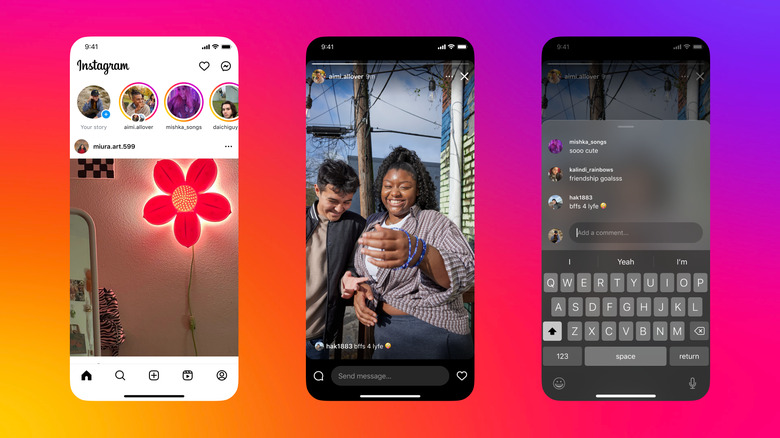
You can now add songs to Spotify straight from Instagram posts https://o.aolcdn.com/images/dims?image_uri=https%3A%2F%2Fs.yimg.com%2Fos%2Fcreatr-uploaded-images%2F2024-10%2Fcfd21e70-8d32-11ef-aff3-859dc3cd7d37&resize=1400%2C700&client=19f2b5e49a271b2bde77&signature=9805492f5cedb7b162a960ea3d3f565524cba86c With short-form videos becoming extremely common these days, it's not unusual to discover new songs and artists from apps like TikTok and Instagram. Now, Instagram has started rolling out a Spotify integration that will let you add songs you hear from posts and Reels straight to the audio streaming app, 9to5Mac has reported. If an Instagram post uses a song, and it's linked at the bottom of the screen, tap on the song name to go to its audio preview page. There, you'll find a new button that says "Add" with the Spotify logo right next to the audio scrubber.  When you tap that Add button, the song will get added to the "Liked Songs" in your Spotify library. You'll have to link your Spotify account with your Instagram the first time you do it, but it becomes a one-tap process after that. The feature is now making its way to all users around the world. Back in August, mobile developer Alessandro Paluzzi found another type of integration between the two apps in development. That feature would allow Instagram users to continuously share what they're listening to on Spotify, which would appear as notes on top of your profile picture.  TikTok has had the ability to add songs heard from videos to your music streaming library since last year. Its version of the feature works not just with Spotify, but also with Apple Music and Amazon Music.  This article originally appeared on Engadget at
Engadget Podcast: Why we're intrigued by the Kindle Colorsoft https://o.aolcdn.com/images/dims?image_uri=https%3A%2F%2Fs.yimg.com%2Fos%2Fcreatr-uploaded-images%2F2024-10%2F491dbfd0-8cf4-11ef-879f-b595aa1add12&resize=1400%2C915&client=19f2b5e49a271b2bde77&signature=1cc7d4a48ffc276e621f109fad4ed14855ae5600 Amazon finally did it: This week the company announced the Kindle Colorsoft, its first color E Ink e-reader. In this episode, Devindra and Cherlynn discuss where this device sits in a world of cheap tablets, and they dive into the updated Kindle Paperwhite and the writable Kindle Scribe. Also, we've got final thoughts on the Meta Quest 3S, the updated iPad Mini and tons of news. Listen below or subscribe on your podcast app of choice. If you've got suggestions or topics you'd like covered on the show, be sure to email us or drop a note in the comments! And be sure to check out our other podcast, Engadget News! Subscribe! iTunes Spotify Pocket Casts Stitcher Google Podcasts Topics Amazon announces new Kindle Colorsoft, updated Kindle Scribe and Paperwhite – 0:51 Devindra’s Meta Quest 3S review: impressive VR for a fair price – 38:14 Apple quietly drops new iPad Minis – 45:25 Tesla’s Robotaxi event: lots of big promises that will be hard to fulfill – 51:38 Amazon and Google go nuclear (power) – 54:44 Android 15 starts to hit Pixel devices – 55:51 Analogue 3D will give you 4K N64 games, just don’t call it an emulator – 57:14 Working on – 1:00:48 Pop culture picks – 1:04:38 Livestream Credits  Hosts: Devindra Hardawar and Cherlynn Low Producer: Ben Ellman Music: Dale North and Terrence O'Brien This article originally appeared on Engadget at
The Morning After: YouTube is testing a new subscription option that could remove most ads https://o.aolcdn.com/images/dims?image_uri=https%3A%2F%2Fs.yimg.com%2Fos%2Fcreatr-uploaded-images%2F2024-10%2Fad082e30-8cd2-11ef-b7de-8fb2fb615b89&resize=1400%2C787&client=19f2b5e49a271b2bde77&signature=e082201751728d8b383c7ba759e49ccc8fc7e281 YouTube is testing a new version of its Premium Lite subscription tier in Australia, Germany and Thailand, a Google rep confirmed. It would have limited ads, which the fine print describes as most videos being ad-free, “but you may see video ads on music content and Shorts, and non-interruptive ads when you search and browse.” The original Premium Lite subscription began testing in Europe in 2021, but it only lasted a few years, being phased out in October 2023. It was very much “lite, lacking the offline or background viewing of the regular Premium subscription. The pricing model for these early tests in Australia is $9 a month for Premium Lite, compared with $17 a month for full Premium access, roughly in line with the original Lite costs. — Mat Smith Get this delivered daily direct to your inbox. Subscribe right here! The biggest tech stories you missed The 10 best sleep apps and gadgets for a better night’s sleep A new trailer for the Dune: Prophecy series just dropped How to stream via a VPN on Roku Amazon is rebooting its live-action adaptation of God of War Amazon Studios wants another gaming hit. After the success of Fallout, Amazon wants its next Prime Video gaming adaptation to match that level — and it’s apparently willing to start afresh to do so. Deadline reported that the God of War showrunner and two executive producers have left the project as it shifts direction. The series is an adaptation of the 2018 franchise reboot. Continue reading. A $105,000 robot arm nobody needs can cook a delicious lunch Moley Robotics wants to bring robots into the kitchen. Engadget It looks like the kind of kitchen purchase the antagonist millionaires of Ex Machina or Knives Out would be tempted by. The Moley Robotics’ X-AiR starts at $105,000. So far, Moley hasn’t installed a single robot but expects the process to begin in the next three to six months — people have bought into the arm already. X-AiR has no built-in vision or sensing technology. Instead, the robot arm moves around its space from memory, knowing where all the ingredients, oils and tools should be. But while it can cook (with pans and everything), it can’t peel a carrot. Is this a robot that only does the fun part of cooking? We made Daniel Cooper eat tofu. Continue reading. This article originally appeared on Engadget at
How to use a VPN on Fire TV for streaming https://o.aolcdn.com/images/dims?image_uri=https%3A%2F%2Fs.yimg.com%2Fos%2Fcreatr-uploaded-images%2F2024-10%2F912a83e0-8cd5-11ef-b6df-c91e6ab0b8f9&resize=1400%2C1050&client=19f2b5e49a271b2bde77&signature=ab7646bfb2b32901c7705949635abd82c75cba36 Amazon If you’ve got a Fire TV video streamer, you already know how great it can be to access all of the major streaming platforms and thousands of shows and movies in one centralized hub. And seeing all your favorites on a big-screen TV is way better than watching it on a smaller laptop or smartphone screen. But what if you wanted to watch a show or movie and discovered it was unavailable in your country? Or what if you wanted to watch an award-winning BBC documentary but it was only available on the BBC’s iPlayer — and you don’t happen to live in the United Kingdom? That’s where a VPN (virtual private network) comes in. Using a VPN can let you unlock geo-blocked content for streaming even if you’re outside of a given area. And here’s the best part: Unlike archrival Roku, Amazon’s Fire TV system offers VPN apps straight through its built-in app store. We’ll explain the details and tell you how it works. Choose the right VPN for your Fire TV For starters, we’re going to assume you have a Fire TV device. If you don’t, we have good news: If your TV doesn’t already have Fire TV streaming built-in, the add-on devices are frequently on sale at Amazon for as little as $25 or less. Grab the Fire Stick 4K Max if you want a good balance of price versus performance — just make sure it’s on sale for $40 or less. (See how the Fire TV streamers compare to rivals from Roku, Google, Apple and more by checking out our list of best streaming devices.) Once you have your Fire TV hardware set up, it’s time to choose a VPN — and that’s where the Fire TV operating system shines. A long list of VPNs, including all of our current top picks for the best VPNs, are available on the platform and they’re as easy to download and install as any of the video apps. The Engadget-approved VPNs currently available on Fire TV include: ProtonVPN Windscribe ExpressVPN CyberGhost Surfshark We’ll leave it to you to research which VPN offers the best combination of features and value for you, but a word of warning: With the exception of the first two listed above, we don’t recommend using a free VPN, as they’re notorious for collecting and selling your data to advertising networks to fund shoddily-protected servers. Note you can install as many VPNs as you’d like on Fire TV, if you’d like to cross-test them at your leisure. Installing the VPN Installing it is easy once you know which Fire TV VPN you want to use. Head to Find > on the main menu and simply search the name of your preferred VPN – just type “VPN” if you’d like to scroll through all of the options available. There, you can find the service you want (or are already subscribed to) and start installing. The process shouldn’t take too long. Once it’s completed, you’re ready to start using it. Using your Fire TV VPN Once you’ve downloaded the app, navigate to it on your Fire TV dashboard. You’ll have to enter your username and password or sign up to create an account. Some VPNs might require you to create an account on your smartphone or computer beforehand. Once logged in, you can either click the “Connect” button on your VPN or browse the server list to choose which country you want to tunnel to. Once connected, return to the Fire TV home screen and reload your streaming platform of choice to verify if the content is different. If it is, your VPN is working and you’re ready to stream.  This article originally appeared on Engadget at
The 10 best sleep apps and gadgets for a better night's sleep in 2024 https://o.aolcdn.com/images/dims?image_uri=https%3A%2F%2Fs.yimg.com%2Fos%2Fcreatr-uploaded-images%2F2023-11%2Fa40d0f40-92d6-11ee-af73-c319ebaeebb3&resize=1400%2C816&client=19f2b5e49a271b2bde77&signature=3f2bdeba413e804e39a2b33fd0eb712bf9079351 Most people know technology can mess with their sleep. Blue light, endless scrolling, notification overload — it all takes a toll on the length and quality of a night’s rest. But a few gadgets and apps can actually help you sleep better. As tech people, we found ourselves curious whether the great sleep destroyer can instead shepherd us off to dreamland (and leave us better prepared to deal with tomorrow’s hectic day). So we rounded up the apps and devices that have helped us get better sleep — hopefully they can help you catch more z’, too.  This article originally appeared on Engadget at
X updates its privacy policy to allow third parties to train AI models with its data https://o.aolcdn.com/images/dims?image_uri=https%3A%2F%2Fs.yimg.com%2Fos%2Fcreatr-uploaded-images%2F2024-10%2F932fefd0-8ce0-11ef-bd77-5f567b768558&resize=1400%2C933&client=19f2b5e49a271b2bde77&signature=5fa2643c20fd9e721acdaa29fe7604bca5505524 X is updating its privacy policy with new language that allows it to provide users’ data to third-party “collaborators” in order to train AI models. The new policy, which takes effect November 15, 2024, would seem to open the door to Reddit-like arrangements in which outside companies can pay to license data from X. The updated policy shared by X includes a new section titled “third-party collaborators.” Depending on your settings, or if you decide to share your data, we may share or disclose your information with third parties. If you do not opt out, in some instances the recipients of the information may use it for their own independent purposes in addition to those stated in X’s Privacy Policy, including, for example, to train their artificial intelligence models, whether generative or otherwise. While the policy mentions the ability to opt out, it’s not clear how users would actually do so. As TechCrunch notes, the policy points to users’ settings menu, but there’ doesn’t appear to be an control for opting out of data sharing. The policy doesn’t go into effect until next month, though, so there’s still a chance that could change. X didn’t respond to a request for comment. If X were to begin licensing its data to other companies, it could open up a significant new revenue stream for the social media company, which has seen waning interest from major advertisers. In addition to the privacy policy, X is also updating its terms of service with stricter penalties for entities that are caught “scraping” large numbers of tweets. In a section titled “liquidated damages” the company states anyone viewing or accessing more than a million posts a day will be subject to a penalty of $15,000. Protecting our users’ data and our system resources is important to us. You further agree that, to the extent permitted by applicable law, if you violate the Terms, or you induce or facilitate others to do so, in addition to all other legal remedies available to us, you will be jointly and severally liable to us for liquidated damages as follows for requesting, viewing, or accessing more than 1,000,000 posts (including reply posts, video posts, image posts, and any other posts) in any 24-hour period - $15,000 USD per 1,000,000 posts. X owner Elon Musk has previously railed against “scraping.” Last year, the company temporarily blocked people from viewing tweets while logged out, in a move Musk attributed to fending off scrapers. He also moved X’s API behind a paywall, which has drastically hindered researchers’ ability to study what’s happening on the platform. He’s also used allegations of “scraping” to justify lawsuits against organizations that have attempted to study hate speech and other issues on the platform. This article originally appeared on Engadget at