
🌊 SURF 'N TURF 🏝️
-THE BORACAY ISLAND LIFE-
 Seneca.
"We become wiser by adversity; prosperity destroys our appreciation of the right."
"Seneca, (born c. 4 BCE, Corduba, Spain—died 65 CE, Rome), Roman philosopher, statesman, and playwright.
He was trained as an orator and began a career in politics and law in Rome c. 31 CE. While banished to Corsica for adultery (41–49), he wrote the philosophical treatises Consolationes.
He later became tutor to the future emperor Nero and from 54 to 62 was a leading intellectual figure in Rome.
An adherent of Stoicism, he wrote other philosophical works, including Moral Letters, a collection of essays on moral problems. He also left a series of verse tragedies marked by violence and bloodshed, including Thyestes and Medea.
His plays influenced the development of Elizabethan drama during the Renaissance, notably William Shakespeare’s Titus Andronicus (1593–94) and John Webster’s The Duchess of Malfi (c. 1613)." (Britannica)
"Epistolæ Ad Lucilium" by Marcus Fabius Quintilianus as reported in "Hoyt's New Cyclopedia Of Practical Quotations" by Jehiel Keeler Hoyt, p. 878-82., 1922.
"Pure signal, no noise"
Credits Goes to the respective
Author ✍️/ Photographer📸
🐇 🕳️
Seneca.
"We become wiser by adversity; prosperity destroys our appreciation of the right."
"Seneca, (born c. 4 BCE, Corduba, Spain—died 65 CE, Rome), Roman philosopher, statesman, and playwright.
He was trained as an orator and began a career in politics and law in Rome c. 31 CE. While banished to Corsica for adultery (41–49), he wrote the philosophical treatises Consolationes.
He later became tutor to the future emperor Nero and from 54 to 62 was a leading intellectual figure in Rome.
An adherent of Stoicism, he wrote other philosophical works, including Moral Letters, a collection of essays on moral problems. He also left a series of verse tragedies marked by violence and bloodshed, including Thyestes and Medea.
His plays influenced the development of Elizabethan drama during the Renaissance, notably William Shakespeare’s Titus Andronicus (1593–94) and John Webster’s The Duchess of Malfi (c. 1613)." (Britannica)
"Epistolæ Ad Lucilium" by Marcus Fabius Quintilianus as reported in "Hoyt's New Cyclopedia Of Practical Quotations" by Jehiel Keeler Hoyt, p. 878-82., 1922.
"Pure signal, no noise"
Credits Goes to the respective
Author ✍️/ Photographer📸
🐇 🕳️
Seneca.
"We become wiser by adversity; prosperity destroys our appreciation of the right."
"Seneca, (born c. 4 BCE, Corduba, Spain—died 65 CE, Rome), Roman philosopher, statesman, and playwright.
He was trained as an orator and began a career in politics and law in Rome c. 31 CE. While banished to Corsica for adultery (41–49), he wrote the philosophical treatises Consolationes.
He later became tutor to the future emperor Nero and from 54 to 62 was a leading intellectual figure in Rome.
An adherent of Stoicism, he wrote other philosophical works, including Moral Letters, a collection of essays on moral problems. He also left a series of verse tragedies marked by violence and bloodshed, including Thyestes and Medea.
His plays influenced the development of Elizabethan drama during the Renaissance, notably William Shakespeare’s Titus Andronicus (1593–94) and John Webster’s The Duchess of Malfi (c. 1613)." (Britannica)
"Epistolæ Ad Lucilium" by Marcus Fabius Quintilianus as reported in "Hoyt's New Cyclopedia Of Practical Quotations" by Jehiel Keeler Hoyt, p. 878-82., 1922.
"Pure signal, no noise"
Credits Goes to the respective
Author ✍️/ Photographer📸
🐇 🕳️ Glorious Victories - Between Myth and History -
In October 2020; National Archaeological Museum (NAM) Athens, celebrates the 2500 year anniversary of the Battle of Thermopylae and the Naval Battle of Salamis.
The celebration exhibition includes 105 ancient works and a model of Athenian trireme of 5th Century BC, which are related to and bring to fore aspects of victorious struggle of Greeks against Persians, assembled both from National Archaeological Museum as from other museums of Greece, such as Archaeological Museums of Astros, Thebes, Olympia, as well as from Konstantinos Kotsanas Museum of Ancient Greek Technology.
Especially emblematic for historical anniversary is display of bust of Themistocles, Roman copy of an original work of 5th Century BC, from Archaeological Museum of Ostia (Parco Archeologico di Ostia Antica).
Persian wars mark a turning point in ancient Greek history, since for first time Greeks defended their freedom united and in full consciousness of their national identity. Historical facts that are recorded in the course of successive expeditions of Persian empire in Greek region (490-479 BC) reflect fierce clash of two rival political systems and confrontation between two different worldviews. On one side stands mysticism of the East that ignores human essence and on other side anthropocentric intellectual principle of Greek World.
Historical events relating to glorious battles, protagonists, legends and beliefs and mainly religion and divine that intervenes and punishes all kinds of conceit and arrogance, are masterfully recounted in tragedy, poetry and historiography. Museological narrative tries to remain close to descriptions of ancient writers, without following stereotypes of historical representations of battles. Choice of ancient works that are directly or indirectly associated with period, focuses on sentiment of spectator, imagination and mainly memories that emerge about the moments that people lived through back then. These moments determined their lives, ideas and beliefs, which were subsequently passed on to modern western culture.
Exhibition consists of eight units in total. First six units deal with different episodes and battles of Persian Wars. Material testimonies that show military attire of Greek hoplites and of Persians, dedications of winners in large sanctuaries of antiquity, among which helmet of Miltiades, arrowheads from battlefield of Thermopylae, fragments of vases with traces of fire from the burning of Athens by Persians, and inscriptions that recall to mind known and unknown protagonists of historical events, are some of works that visitors will come across in exhibition. At the same time, figures of gods and mythical heroes enhance the historical narrative and interlink it with mythical beliefs, according to which gods and mortals joined forces to achieve overall victory, based on the value system of the ancient Greek world. Exhibition narrative culminates in the two concluding units which present resonance of Persian Wars in pictorial art ancient and modern and their ideological significance.
The exhibition is enhanced by digital projections that contribute to the creation of a scenic ambience, in order for the visitors to perceive the dramatic atmosphere of the events and the inspiring meaning of Nike (Victory), offering also in some cases complementary interpretive material.
Finally, exhibition is accompanied by a scholarly catalogue of 512 pages, published by the Archaeological Resources Fund. The anniversary volume includes 18 essays of eminent researchers in the domain of archaeology and art history, which elucidate the ways in which the Glorious Victories of the Persian Wars influenced political life, society and the arts.
Ancient Greek Shield and Armor; displayed alongside Persian arrowheads from the Battle of Thermopylae, 480 BC.
"Pure signal, no noise"
Credits Goes to the respective
Author ✍️/ Photographer📸
🐇 🕳️
Glorious Victories - Between Myth and History -
In October 2020; National Archaeological Museum (NAM) Athens, celebrates the 2500 year anniversary of the Battle of Thermopylae and the Naval Battle of Salamis.
The celebration exhibition includes 105 ancient works and a model of Athenian trireme of 5th Century BC, which are related to and bring to fore aspects of victorious struggle of Greeks against Persians, assembled both from National Archaeological Museum as from other museums of Greece, such as Archaeological Museums of Astros, Thebes, Olympia, as well as from Konstantinos Kotsanas Museum of Ancient Greek Technology.
Especially emblematic for historical anniversary is display of bust of Themistocles, Roman copy of an original work of 5th Century BC, from Archaeological Museum of Ostia (Parco Archeologico di Ostia Antica).
Persian wars mark a turning point in ancient Greek history, since for first time Greeks defended their freedom united and in full consciousness of their national identity. Historical facts that are recorded in the course of successive expeditions of Persian empire in Greek region (490-479 BC) reflect fierce clash of two rival political systems and confrontation between two different worldviews. On one side stands mysticism of the East that ignores human essence and on other side anthropocentric intellectual principle of Greek World.
Historical events relating to glorious battles, protagonists, legends and beliefs and mainly religion and divine that intervenes and punishes all kinds of conceit and arrogance, are masterfully recounted in tragedy, poetry and historiography. Museological narrative tries to remain close to descriptions of ancient writers, without following stereotypes of historical representations of battles. Choice of ancient works that are directly or indirectly associated with period, focuses on sentiment of spectator, imagination and mainly memories that emerge about the moments that people lived through back then. These moments determined their lives, ideas and beliefs, which were subsequently passed on to modern western culture.
Exhibition consists of eight units in total. First six units deal with different episodes and battles of Persian Wars. Material testimonies that show military attire of Greek hoplites and of Persians, dedications of winners in large sanctuaries of antiquity, among which helmet of Miltiades, arrowheads from battlefield of Thermopylae, fragments of vases with traces of fire from the burning of Athens by Persians, and inscriptions that recall to mind known and unknown protagonists of historical events, are some of works that visitors will come across in exhibition. At the same time, figures of gods and mythical heroes enhance the historical narrative and interlink it with mythical beliefs, according to which gods and mortals joined forces to achieve overall victory, based on the value system of the ancient Greek world. Exhibition narrative culminates in the two concluding units which present resonance of Persian Wars in pictorial art ancient and modern and their ideological significance.
The exhibition is enhanced by digital projections that contribute to the creation of a scenic ambience, in order for the visitors to perceive the dramatic atmosphere of the events and the inspiring meaning of Nike (Victory), offering also in some cases complementary interpretive material.
Finally, exhibition is accompanied by a scholarly catalogue of 512 pages, published by the Archaeological Resources Fund. The anniversary volume includes 18 essays of eminent researchers in the domain of archaeology and art history, which elucidate the ways in which the Glorious Victories of the Persian Wars influenced political life, society and the arts.
Ancient Greek Shield and Armor; displayed alongside Persian arrowheads from the Battle of Thermopylae, 480 BC.
"Pure signal, no noise"
Credits Goes to the respective
Author ✍️/ Photographer📸
🐇 🕳️
 On this day in 1979, the Pretenders self-titled debut LP was #1 on the UK Albums Chart (February 9)
The album was a first-up hit for the Pretenders, anchored by the stunning “Brass in Pocket” which was a #1 hit in the UK and a handful of other countries, and Top 10 in a heap more.
“Pretenders” debuted at #1 on the UK Albums Chart in the week of its release and stayed there for four consecutive weeks.
It also went to #2 in New Zealand and Sweden, #6 in Australia, #9 in the US, and #14 in the Netherlands.
In 1989, Rolling Stone ranked “Pretenders” the 20th best album of the 1980s, and in 2020, Rolling Stone ranked the album at #152 on its list of the 500 greatest albums of all time.
#pretenders, #chrissiehynde, #newwave, #newwavemusic, #petefarndon, #70smusic, #brassinpocket, #rockhistory, #debutalbum, #thisdayinrock, #dailyrockhistory, #thisdayinmusic, #onthisday
"Pure signal, no noise"
Credits Goes to the respective
Author ✍️/ Photographer📸
🐇 🕳️
On this day in 1979, the Pretenders self-titled debut LP was #1 on the UK Albums Chart (February 9)
The album was a first-up hit for the Pretenders, anchored by the stunning “Brass in Pocket” which was a #1 hit in the UK and a handful of other countries, and Top 10 in a heap more.
“Pretenders” debuted at #1 on the UK Albums Chart in the week of its release and stayed there for four consecutive weeks.
It also went to #2 in New Zealand and Sweden, #6 in Australia, #9 in the US, and #14 in the Netherlands.
In 1989, Rolling Stone ranked “Pretenders” the 20th best album of the 1980s, and in 2020, Rolling Stone ranked the album at #152 on its list of the 500 greatest albums of all time.
#pretenders, #chrissiehynde, #newwave, #newwavemusic, #petefarndon, #70smusic, #brassinpocket, #rockhistory, #debutalbum, #thisdayinrock, #dailyrockhistory, #thisdayinmusic, #onthisday
"Pure signal, no noise"
Credits Goes to the respective
Author ✍️/ Photographer📸
🐇 🕳️ Jaime Brocal Remohí was a Spanish comics artist (1936 – 2002), characterized by the baroque style of his drawings and regarded as the foremost exponent of heroic fantasy in his country. ✍️
 He worked internationally for the British and French markets (Katán, 1960; Ögan, 1962–1972), later collaborating with Warren Publishing (1971–1974) on horror comics like The Mummy Walks.


 "Pure signal, no noise"
Credits Goes to the respective
Author ✍️/ Photographer📸
🐇 🕳️
"Pure signal, no noise"
Credits Goes to the respective
Author ✍️/ Photographer📸
🐇 🕳️ ♦️Inventions of Medieval Times✍️
How the Middle Ages quietly changed the future of the world:
The medieval period is often misunderstood as an age of darkness and stagnation. In reality, it was a time of slow but powerful innovation. While medieval people did not invent machines for comfort or luxury, they invented tools for discipline, learning, war, agriculture and time itself.
These inventions shaped daily life, literature, religion, warfare, thought and many became the foundation of the modern world.
1️⃣. Mechanical Clock:
"When time stopped belonging to nature"
Background:
Before the mechanical clock, time was measured using:
🔹Sun dials
🔹Water clocks
🔹Church bells (approximate hours)
🔹Time depended on sunlight and seasons not precision.
Invention:
🔹Appeared in late 13th–early 14th century
🔹First used in monasteries and churches
🔹Powered by weights and gears not electricity
Why it mattered:
🔹Divided the day into exact hours
🔹Changed how people worked, prayed and lived
🔹Time became strict and measurable not natural
Impact on society:
🔹Monks followed prayer schedules precisely
🔹Town life became organized
🔹Work became disciplined and regulated
📌 Unknown fact:
Medieval people began saying “time is running” only after clocks appeared.
2️⃣. Eyeglasses:
"The invention that saved scholars from silence"
Background:
Reading manuscripts was:
♦️Done in dim candlelight
♦️Written in tiny letters
♦️Extremely demanding on eyes
♦️Scholars often lost their sight early.
Invention:
♦️Invented in late 13th century Italy
Early glasses were:
♦️Convex lenses
♦️Hand-held or balanced on the nose
♦️No temples (arms) like modern glasses
Why it mattered:
♦️Allowed scholars to read and write longer
♦️Extended intellectual life
♦️Increased production of books and learning
Impact on literature:
♦️Scholars, monks and scribes worked longer
♦️Knowledge expanded
♦️Universities benefited enormously
📌 Unknown fact:
Eyeglasses were once called “miracles of glass.”
3️⃣. Windmills:
"When nature became a servant of man"
Background:
Grinding grain and pumping water required:
🔶 Human labor
🔶 Animal power
🔶 Both were slow and exhausting.
Invention:
🔶 Introduced in Europe around 12th century
🔶 Inspired partly by Islamic wind technology
Widely used in:
🔶 England
🔶 France
🔶 The Netherlands
Uses:
🔶 Grinding grain
🔶 Pumping water
🔶 Cutting wood
🔶 Crushing seeds
Why it mattered:
🔶 Reduced human labor
🔶 Increased food production
🔶 Supported feudal economy
📌 Unknown fact:
Some medieval villages owned windmills collectively and peasants paid to use them.
4️⃣. Gunpowder (via the East):
"The invention that killed the medieval knight"
Background:
🔹Gunpowder was invented in China
Traveled west through:
🔹Arab traders
🔹Mongol invasions
Arrival in Europe:
🔹Around 13th century
First used in:
🔹Cannons
🔹Simple firearms
🔹Impact on warfare
🔹Castles became vulnerable
🔹Knights lost dominance
🔹Feudal military power declined
Historical importance:
🔹Changed warfare forever
🔹Helped end the feudal system
🔹Paved way for modern armies
📌 Unknown fact:
Early guns were so loud that soldiers believed they summoned demons.
5️⃣. Paper (Spread from Arabs):
"The silent revolution of knowledge"
Background:
Before paper, books were written on:
♦️Parchment (animal skin)
♦️Extremely expensive
♦️Rare and limited
Origin:
♦️Paper invented in China
Spread through:
♦️Islamic world
♦️Arab scholars
♦️Spain and Sicily
Arrival in Europe:
♦️Around 12th century
♦️Paper mills developed in:
♦️Spain
♦️Italy
Why it mattered:
♦️Books became cheaper
♦️Learning spread beyond clergy
♦️Literacy slowly increased
Impact on literature:
♦️More texts copied
♦️Education expanded
♦️Printing press later became possible
📌 Unknown fact:
Many medieval books were made from recycled paper and cloth.
🔴 Overall Impact of Medieval Inventions:
These inventions:
🔹Organized time
🔹Preserved knowledge
🔹Transformed warfare
🔹Supported education
🔹Prepared Europe for the Renaissance
The Middle Ages did not shout progress, they whispered it.
🔶 The Middle Ages did not invent comfort but they invented control over time, knowledge, labor and power.
#medievalhistory #medievaltimes #englishliterature #englishliteraturestudent
"Pure signal, no noise"
Credits Goes to the respective
Author ✍️/ Photographer📸
🐇 🕳️
♦️Inventions of Medieval Times✍️
How the Middle Ages quietly changed the future of the world:
The medieval period is often misunderstood as an age of darkness and stagnation. In reality, it was a time of slow but powerful innovation. While medieval people did not invent machines for comfort or luxury, they invented tools for discipline, learning, war, agriculture and time itself.
These inventions shaped daily life, literature, religion, warfare, thought and many became the foundation of the modern world.
1️⃣. Mechanical Clock:
"When time stopped belonging to nature"
Background:
Before the mechanical clock, time was measured using:
🔹Sun dials
🔹Water clocks
🔹Church bells (approximate hours)
🔹Time depended on sunlight and seasons not precision.
Invention:
🔹Appeared in late 13th–early 14th century
🔹First used in monasteries and churches
🔹Powered by weights and gears not electricity
Why it mattered:
🔹Divided the day into exact hours
🔹Changed how people worked, prayed and lived
🔹Time became strict and measurable not natural
Impact on society:
🔹Monks followed prayer schedules precisely
🔹Town life became organized
🔹Work became disciplined and regulated
📌 Unknown fact:
Medieval people began saying “time is running” only after clocks appeared.
2️⃣. Eyeglasses:
"The invention that saved scholars from silence"
Background:
Reading manuscripts was:
♦️Done in dim candlelight
♦️Written in tiny letters
♦️Extremely demanding on eyes
♦️Scholars often lost their sight early.
Invention:
♦️Invented in late 13th century Italy
Early glasses were:
♦️Convex lenses
♦️Hand-held or balanced on the nose
♦️No temples (arms) like modern glasses
Why it mattered:
♦️Allowed scholars to read and write longer
♦️Extended intellectual life
♦️Increased production of books and learning
Impact on literature:
♦️Scholars, monks and scribes worked longer
♦️Knowledge expanded
♦️Universities benefited enormously
📌 Unknown fact:
Eyeglasses were once called “miracles of glass.”
3️⃣. Windmills:
"When nature became a servant of man"
Background:
Grinding grain and pumping water required:
🔶 Human labor
🔶 Animal power
🔶 Both were slow and exhausting.
Invention:
🔶 Introduced in Europe around 12th century
🔶 Inspired partly by Islamic wind technology
Widely used in:
🔶 England
🔶 France
🔶 The Netherlands
Uses:
🔶 Grinding grain
🔶 Pumping water
🔶 Cutting wood
🔶 Crushing seeds
Why it mattered:
🔶 Reduced human labor
🔶 Increased food production
🔶 Supported feudal economy
📌 Unknown fact:
Some medieval villages owned windmills collectively and peasants paid to use them.
4️⃣. Gunpowder (via the East):
"The invention that killed the medieval knight"
Background:
🔹Gunpowder was invented in China
Traveled west through:
🔹Arab traders
🔹Mongol invasions
Arrival in Europe:
🔹Around 13th century
First used in:
🔹Cannons
🔹Simple firearms
🔹Impact on warfare
🔹Castles became vulnerable
🔹Knights lost dominance
🔹Feudal military power declined
Historical importance:
🔹Changed warfare forever
🔹Helped end the feudal system
🔹Paved way for modern armies
📌 Unknown fact:
Early guns were so loud that soldiers believed they summoned demons.
5️⃣. Paper (Spread from Arabs):
"The silent revolution of knowledge"
Background:
Before paper, books were written on:
♦️Parchment (animal skin)
♦️Extremely expensive
♦️Rare and limited
Origin:
♦️Paper invented in China
Spread through:
♦️Islamic world
♦️Arab scholars
♦️Spain and Sicily
Arrival in Europe:
♦️Around 12th century
♦️Paper mills developed in:
♦️Spain
♦️Italy
Why it mattered:
♦️Books became cheaper
♦️Learning spread beyond clergy
♦️Literacy slowly increased
Impact on literature:
♦️More texts copied
♦️Education expanded
♦️Printing press later became possible
📌 Unknown fact:
Many medieval books were made from recycled paper and cloth.
🔴 Overall Impact of Medieval Inventions:
These inventions:
🔹Organized time
🔹Preserved knowledge
🔹Transformed warfare
🔹Supported education
🔹Prepared Europe for the Renaissance
The Middle Ages did not shout progress, they whispered it.
🔶 The Middle Ages did not invent comfort but they invented control over time, knowledge, labor and power.
#medievalhistory #medievaltimes #englishliterature #englishliteraturestudent
"Pure signal, no noise"
Credits Goes to the respective
Author ✍️/ Photographer📸
🐇 🕳️ Alfonso Font (Barcelona, 1946) is one of the great Spanish comic artists of European comics.
 He began his career in the 1960s and worked for publishers in Spain, the United Kingdom, the United States, France, and Italy.
 ✨ Alfonso Font Art


 Among his most important works are Cuentos de un futuro imperfecto, El prisionero de las estrellas, Historias negras, and Taxi.
 He also drew for international series such as Tex and Dylan Dog. ✍️
 #alfonsofont #art #comicart #comics #comicartist
"Pure signal, no noise"
Credits Goes to the respective
Author ✍️/ Photographer📸
🐇 🕳️
#alfonsofont #art #comicart #comics #comicartist
"Pure signal, no noise"
Credits Goes to the respective
Author ✍️/ Photographer📸
🐇 🕳️ A 1,500-year-old Byzantine bathtub discovered in ancient Sufetula, known today as Sbeitla, Tunisia.
This well-preserved artifact offers insight into the sophisticated bathing culture of the Byzantine period in North Africa.
"Pure signal, no noise"
Credits Goes to the respective
Author ✍️/ Photographer📸
🐇 🕳️
A 1,500-year-old Byzantine bathtub discovered in ancient Sufetula, known today as Sbeitla, Tunisia.
This well-preserved artifact offers insight into the sophisticated bathing culture of the Byzantine period in North Africa.
"Pure signal, no noise"
Credits Goes to the respective
Author ✍️/ Photographer📸
🐇 🕳️ 20 Best Rated Apples in the World
Apples act as a natural slow-release energy bar because their dense fiber locks away the sugar, forcing your body to digest it gradually and keeping you alert without the crash.
Thanks to opposing hemispheres, the season never really ends; when orchards in the North go dormant, trees in New Zealand and Chile are just waking up to keep the world in a perpetual harvest.
Explore more: tasteatlas.com/apple-varieties
"Pure signal, no noise"
Credits Goes to the respective
Author ✍️/ Photographer📸
🐇 🕳️
20 Best Rated Apples in the World
Apples act as a natural slow-release energy bar because their dense fiber locks away the sugar, forcing your body to digest it gradually and keeping you alert without the crash.
Thanks to opposing hemispheres, the season never really ends; when orchards in the North go dormant, trees in New Zealand and Chile are just waking up to keep the world in a perpetual harvest.
Explore more: tasteatlas.com/apple-varieties
"Pure signal, no noise"
Credits Goes to the respective
Author ✍️/ Photographer📸
🐇 🕳️ February 14, 2026 Boracay Island,
 Philippines 🏝️🇵🇭


 "Pure signal, no noise"
Credits Goes to the respective
Author ✍️/ Photographer📸
🐇 🕳️
"Pure signal, no noise"
Credits Goes to the respective
Author ✍️/ Photographer📸
🐇 🕳️ The statue in the image is part of the former Tempelhof Airport Roof Eagle sculpture in Berlin, Germany.
 The eagle head was part of a 4.5-meter (about 15 feet) high cast iron Reichsadler (Imperial Eagle) sculpture created by Wilhelm Lemke in 1940, based on a design by Ernst Sagebiel.
The original statue, which held a globe in its claws, was intended to symbolize the Nazis' claim to power.
After World War II, the airport was ceded to the US Army.
American troops "denazified" the statue by painting the head white and covering the swastika with an American coat of arms, transforming it into a bald eagle, the US national emblem.
The eagle head was part of a 4.5-meter (about 15 feet) high cast iron Reichsadler (Imperial Eagle) sculpture created by Wilhelm Lemke in 1940, based on a design by Ernst Sagebiel.
The original statue, which held a globe in its claws, was intended to symbolize the Nazis' claim to power.
After World War II, the airport was ceded to the US Army.
American troops "denazified" the statue by painting the head white and covering the swastika with an American coat of arms, transforming it into a bald eagle, the US national emblem.
 The full statue was removed from the airport's rooftop in 1962 to make room for a radar system.
The severed head was sent to the museum of the US Military Academy at West Point, New York, as a trophy and a gift from the people of Berlin.
The full statue was removed from the airport's rooftop in 1962 to make room for a radar system.
The severed head was sent to the museum of the US Military Academy at West Point, New York, as a trophy and a gift from the people of Berlin.
 In 1985, the head was returned to Berlin as a gesture of German-American friendship and placed on a pedestal in "Eagle Square" (Platz der Luftbrücke) in front of the airport's main entrance, where it remains today.
"Pure signal, no noise"
Credits Goes to the respective
Author ✍️/ Photographer📸
🐇 🕳️
In 1985, the head was returned to Berlin as a gesture of German-American friendship and placed on a pedestal in "Eagle Square" (Platz der Luftbrücke) in front of the airport's main entrance, where it remains today.
"Pure signal, no noise"
Credits Goes to the respective
Author ✍️/ Photographer📸
🐇 🕳️ An 8-step guide for a full life restart, focusing on mindset, habits, and actions for personal transformation::
Let Go of Who You Were: This step emphasizes the necessity of releasing past pain and identities to create a new future. A new narrative cannot be written while still loyal to previous negative experiences.
Rewire Your Brain for a New You: This concept involves changing one's internal operating system by repeatedly installing new, positive beliefs to facilitate lasting change.
Build a Restart Routine: The guide suggests controlling the first and last hour of the day to effectively shape one's life and establish a foundation for transformation.
Stay Positive Towards Your Goals: This step involves reframing problems as tests and celebrating small progress to maintain momentum and a positive outlook on the journey.
Keep Yourself Happy: Reclaiming personal joy is presented as an individual responsibility, not dependent on external outcomes or circumstances.
Trust the Bigger Plan: This concept encourages individuals to do their part and then trust that delays or rejections may serve as protection or redirection toward a better path.
Talk Less, Do More: Real transformation is said to happen through silent, focused action, letting results and actions speak louder than words.
Read for 15 Minutes Daily: Feeding the mind with new ideas daily is recommended to build the mental world and foundation for one's future self.
"Pure signal, no noise"
Credits Goes to the respective
Author ✍️/ Photographer📸
🐇 🕳️
An 8-step guide for a full life restart, focusing on mindset, habits, and actions for personal transformation::
Let Go of Who You Were: This step emphasizes the necessity of releasing past pain and identities to create a new future. A new narrative cannot be written while still loyal to previous negative experiences.
Rewire Your Brain for a New You: This concept involves changing one's internal operating system by repeatedly installing new, positive beliefs to facilitate lasting change.
Build a Restart Routine: The guide suggests controlling the first and last hour of the day to effectively shape one's life and establish a foundation for transformation.
Stay Positive Towards Your Goals: This step involves reframing problems as tests and celebrating small progress to maintain momentum and a positive outlook on the journey.
Keep Yourself Happy: Reclaiming personal joy is presented as an individual responsibility, not dependent on external outcomes or circumstances.
Trust the Bigger Plan: This concept encourages individuals to do their part and then trust that delays or rejections may serve as protection or redirection toward a better path.
Talk Less, Do More: Real transformation is said to happen through silent, focused action, letting results and actions speak louder than words.
Read for 15 Minutes Daily: Feeding the mind with new ideas daily is recommended to build the mental world and foundation for one's future self.
"Pure signal, no noise"
Credits Goes to the respective
Author ✍️/ Photographer📸
🐇 🕳️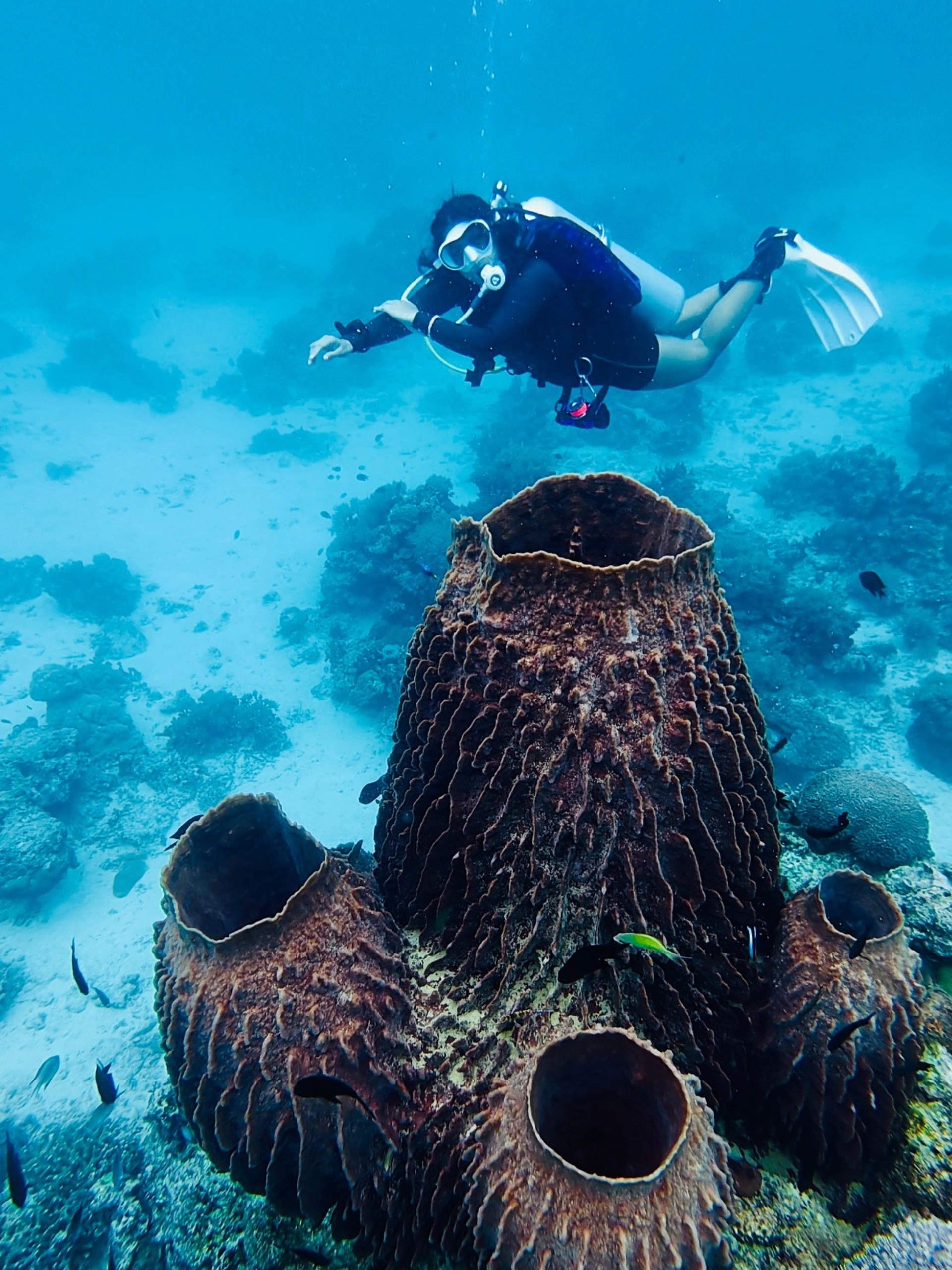


 "It's a good day to dive". 🤿
 Pura Vida 🏝️
 #akuana gear #scubadiving#cavediving #naui #techdiver #scubadivingaddicts #scubagirls #scubarevolution #scubaworld #scubagear #scubadivinglife #scubadivers #wetsuit#ccr#rebreather#divingtrip #shoredive
"Pure signal,no noise"
Credits Goes to the respective
Author ✍️/ Photographer📸
🐇 🕳️
#akuana gear #scubadiving#cavediving #naui #techdiver #scubadivingaddicts #scubagirls #scubarevolution #scubaworld #scubagear #scubadivinglife #scubadivers #wetsuit#ccr#rebreather#divingtrip #shoredive
"Pure signal,no noise"
Credits Goes to the respective
Author ✍️/ Photographer📸
🐇 🕳️ On this day in 1987, the Bon Jovi single “Livin’ on a Prayer” went to #1 on the US Billboard Hot 100 (February 14)
Interestingly, Jon Bon Jovi didn’t actually like the original recording of this song, which can be found as a hidden track on the 2004 box set “100,000,000 Bon Jovi Fans Can't Be Wrong”.
Lead guitarist Richie Sambora, however, convinced him the song had potential, and they reworked it with a new bassline (recorded by Hugh McDonald uncredited), different drum fills and the use of a talk box to include it on “Slippery When Wet”.
The song went all the way to #1 in the US, Canada, Norway and New Zealand, and went Top 5 in Australia, the UK, South Africa, the Netherlands, Ireland, Sweden, Belgium and Scotland.
The story of Tommy and Gina and their struggle to make it, is still a massive song to this day, with the official music video, an MTV favourite, chalking up over 882 million views on YouTube as of February 2022.
#livinonaprayer, #bonjovi, #jonbonjovi, #slipperywhenwet, #80smusic, #80srock, #dailyrockhistory, #thisdayinrock, #rockhistory, #thisdayinmusic, #on this day
"Pure signal, no noise"
Credits Goes to the respective
Author ✍️/ Photographer📸
🐇 🕳️
On this day in 1987, the Bon Jovi single “Livin’ on a Prayer” went to #1 on the US Billboard Hot 100 (February 14)
Interestingly, Jon Bon Jovi didn’t actually like the original recording of this song, which can be found as a hidden track on the 2004 box set “100,000,000 Bon Jovi Fans Can't Be Wrong”.
Lead guitarist Richie Sambora, however, convinced him the song had potential, and they reworked it with a new bassline (recorded by Hugh McDonald uncredited), different drum fills and the use of a talk box to include it on “Slippery When Wet”.
The song went all the way to #1 in the US, Canada, Norway and New Zealand, and went Top 5 in Australia, the UK, South Africa, the Netherlands, Ireland, Sweden, Belgium and Scotland.
The story of Tommy and Gina and their struggle to make it, is still a massive song to this day, with the official music video, an MTV favourite, chalking up over 882 million views on YouTube as of February 2022.
#livinonaprayer, #bonjovi, #jonbonjovi, #slipperywhenwet, #80smusic, #80srock, #dailyrockhistory, #thisdayinrock, #rockhistory, #thisdayinmusic, #on this day
"Pure signal, no noise"
Credits Goes to the respective
Author ✍️/ Photographer📸
🐇 🕳️ Local street art on the island.
 Pura Vida 🏝️
 "Pure signal, no noise"
Credits Goes to the respective
Author ✍️/ Photographer📸
🐇 🕳️
"Pure signal, no noise"
Credits Goes to the respective
Author ✍️/ Photographer📸
🐇 🕳️ The garden is 'in bloom'.


 The image shows the Rocca Calascio fortress located in the Abruzzo region of Italy.
"Pure signal, no noise"
Credits Goes to the respective
Author ✍️/ Photographer📸
🐇 🕳️
The image shows the Rocca Calascio fortress located in the Abruzzo region of Italy.
"Pure signal, no noise"
Credits Goes to the respective
Author ✍️/ Photographer📸
🐇 🕳️ TasteAtlas Eat Local. Eat Seasonal.
"Pure signal, no noise"
Credits Goes to the respective
Author ✍️/ Photographer📸
🐇 🕳️
TasteAtlas Eat Local. Eat Seasonal.
"Pure signal, no noise"
Credits Goes to the respective
Author ✍️/ Photographer📸
🐇 🕳️


