
A stereo vision board was built using the Rockchip RV1103, a 1.1 GHz ARM Cortex-A7 SoC with 64 MB DDR2 RAM and a MIPI CSI-2 bus. The device supports Linux via Buildroot, enabling image capture and depth processing with integrated hardware accelerators like the Rockchip Video Engine, which facilitates sum of absolute differences (SAD) processing for stereoscopic vision. The board outputs data over serial or USB-C Ethernet and is designed for robotics applications such as obstacle avoidance. The design uses a four-layer PCB with controlled impedance traces. Software involves kernel drivers, V4L2 nodes for camera control, and proprietary librve.a to interface with hardware accelerators. Depth is calculated by comparing two camera images using stereo block matching based on SAD, correlating pixel shifts to object distance. The creator plans to sell limited units if sufficient interest is shown and intends to improve software with features like SLAM and YOLO for further robotics integration.
Source: 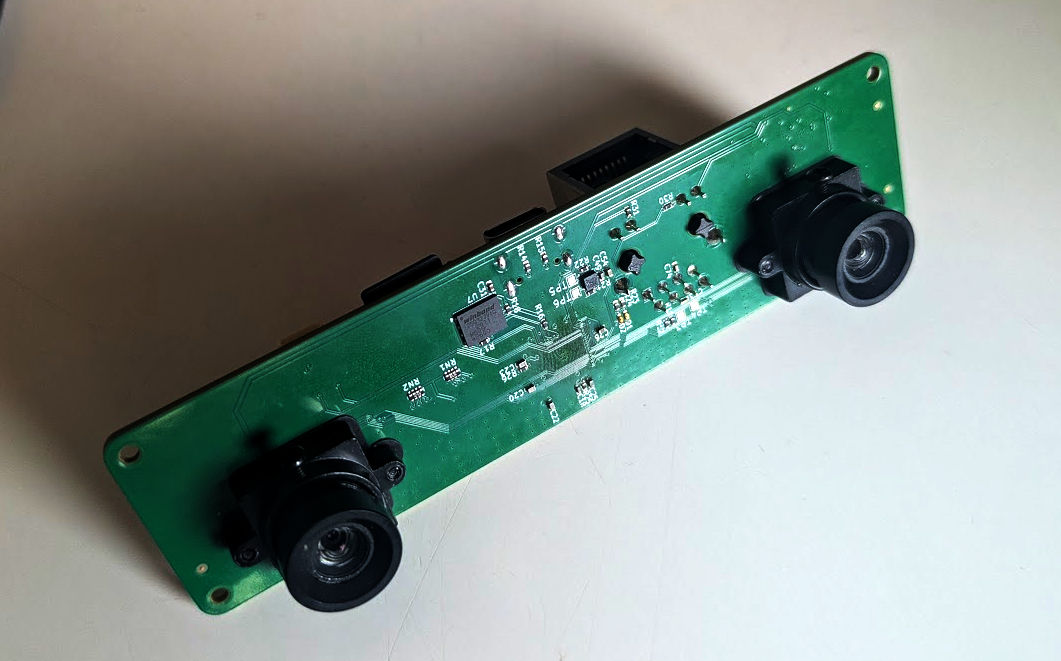 #news_en #stereovision #hardwarehacking #robotics #rootkitlabs_com
Rootkit Labs Blog
I Built a Stereo Vision Board for Hardware Hackers
This article was written entirely by a human, for humans.
I tend to get excited about certain chips. This time, it was a microprocessor: The Rockch...
#news_en #stereovision #hardwarehacking #robotics #rootkitlabs_com