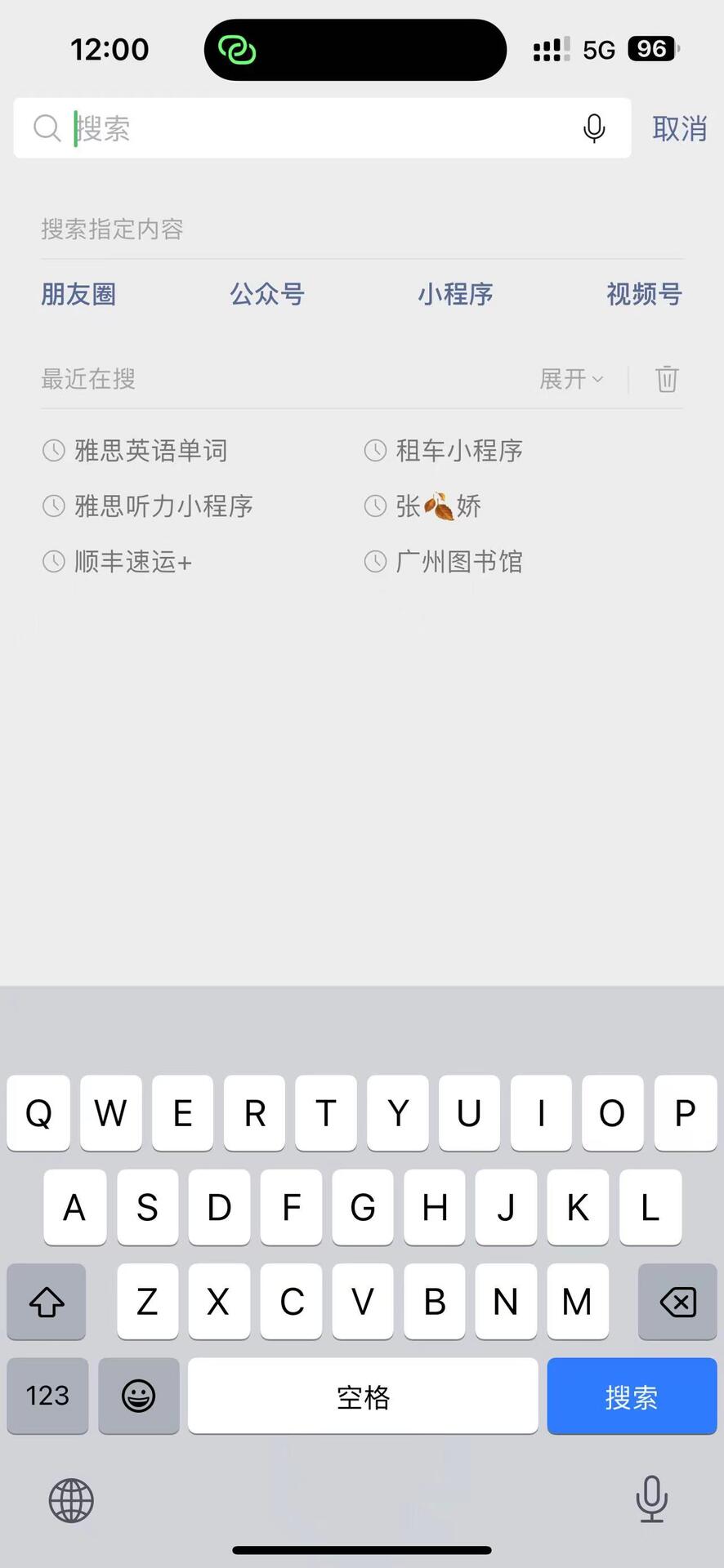
No, no one around me uses "Little Red Book"(小红书) It’s just “brainwashing” junk social video software. Chinese people only use WeChat, which has video accounts and search functions. All materials are available, and many live teaching courses are on WeChat. image
Replies (6)

Damus, can be used normally in China. Many CCP official media have settled in Damus to publish news. CC P also knows that Damus is secretly used by ordinary Chinese people.😝😝😝
you don't know Chinese internet users at all darling, but it's ok. point is ppl search content about everything in where their favorite circles are and mostly in their damn phone. in a nutshell, nostr mass adoption= mobility + content discovery
Mobile payment and social media payment methods are the best models and future trends. If #Bitcoin can be used globally to better promote mobile payment methods on social platforms, then #Nostr's mission is to realize this great goal.
小红书(Xiaohongshu) is just a closed social media platform, no different from Twitter today. It cannot even be searched using traditional search engines such as Baidu (China's Google equivalent) to retrieve its content. It also lacks the strong interoperability and protocol-level openness of platforms like Fediverse and Nostr (just as Twitter and Reddit are becoming less open today). Since its inception, Xiaohongshu has never intended to easily share its internal user data with others. This user data is its most valuable asset, known as "私域流量(private domain traffic)". Its success in China is undeniable. Even if Chinese young people do not use Xiaohongshu, they know what it is because it is as popular in China as TikTok, Reddit and Twitter. Of course, the Little Red Book is criticised by just as many people for being "brainwashing", in the same way that most people treat TikTok, depending on how you use it. By the way, Chinese young people don't like 微信(WeChat). Most young people only use it because they "have to", as because it's everywhere in real life, whether it's for socialising or mobile payments. Just because they don't have a choice doesn't mean they like it.
China took the lead in promoting the “QR code” payment method. The mobile payment method has been in use since 2015 and could be promoted at the earliest because small merchants that accept cash receive too much fake money. Merchants only want to use "QR codes" to collect payments to avoid receiving fake money.
The cash register system of American Wal-Mart supermarkets in China must be connected to WeChat Pay and Alipay payment methods, and Wal-Mart Supermarkets must pay a 0.2% channel fee to WeChat and Alipay. WeChat and Alipay payment charges are as follows: a handling fee will be charged for a single payment of more than 2 yuan, and no handling fee will be charged for a single payment of less than 1.9 yuan.