Yes, cycling THC (tetrahydrocannabinol) β especially in microdoses or spaced intervals β may play a role in neurogenesis, but with important caveats and context. Here's a breakdown:
---
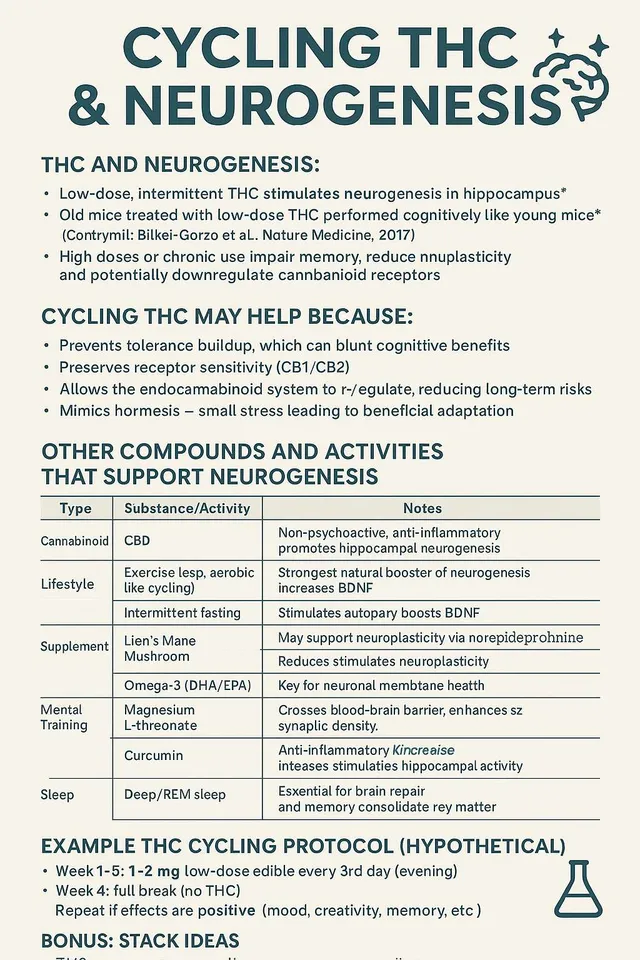
π§ THC and Neurogenesis:
Low-dose, intermittent THC has been shown in animal studies (e.g. mice) to stimulate neurogenesis in the hippocampus, the brain region responsible for memory and learning.
One key study (Bilkei-Gorzo et al., Nature Medicine, 2017) showed old mice treated with low-dose THC performed cognitively like young mice after a few weeks. Neurogenesis and synaptic plasticity improved.
Mechanism: This may be through CB1 receptor activation, modulating inflammation, increasing brain-derived neurotrophic factor (BDNF), and enhancing endocannabinoid tone.
> β οΈ High doses or chronic use, however, have the opposite effect: impaired memory, reduced neuroplasticity, and potentially downregulation of cannabinoid receptors.
---
π΄ββοΈ Cycling THC may help because:
1. Prevents tolerance buildup, which can blunt cognitive benefits.
2. Preserves receptor sensitivity (CB1/CB2).
3. Allows the endocannabinoid system to re-regulate, reducing long-term risks.
4. Mimics hormesis β small stress leading to beneficial adaptation.
---
π¬ Other Compounds and Activities That Support Neurogenesis:
Type Substance/Activity Notes
Cannabinoids CBD Non-psychoactive, anti-inflammatory, promotes hippocampal neurogenesis
Lifestyle Exercise (esp. aerobic like cycling) Strongest natural booster of neurogenesis; increases BDNF
Intermittent fasting Stimulates autophagy, boosts BDNF
Cold exposure (e.g. cold showers) May support neuroplasticity via norepinephrine
Supplements Lionβs Mane Mushroom Stimulates NGF (nerve growth factor)
Omega-3 (DHA/EPA) Key for neuronal membrane health
Magnesium L-threonate Crosses blood-brain barrier, enhances synaptic density
Curcumin Anti-inflammatory, increases BDNF
Mental Training Learning a new skill or language Directly stimulates hippocampal activity
Meditation (esp. mindfulness or metta) Reduces stress, increases grey matter
Sleep Deep/REM sleep Essential for brain repair and memory consolidation
---
π Example THC Cycling Protocol (Hypothetical):
Week 1β3: 1β2 mg low-dose edible every 3rd day (evening)
Week 4: full break (no THC)
Repeat if effects are positive (mood, creativity, memory, etc.)
---
π§ͺ Bonus: Stack Ideas
THC microdose + Lion's Mane + Omega-3 on cycling days.
Followed by cold exposure and light exercise (cycling itself is perfect).
---
Would you like a printable or stylized version of this as a poster or checklist for your wellness or lab/workspace?
#THC #Neurogenesis #BrainHealth #Microdosing #BDNF #CannabisScience #CognitiveEnhancement #Hippocampus #Biohacking #Nootropics #PsychedelicTherapy #EndocannabinoidSystem #LionMane #IntermittentFasting #ColdExposure #Neuroplasticity #CyclingTHC #SmartRecovery #MentalFitness #StackSmart

Yes, cycling THC (tetrahydrocannabinol) β especially in microdoses or spaced intervals β may play a role in neurogenesis, but with important caveats and context. Here's a breakdown:
---
π§ THC and Neurogenesis:
Low-dose, intermittent THC has been shown in animal studies (e.g. mice) to stimulate neurogenesis in the hippocampus, the brain region responsible for memory and learning.
One key study (Bilkei-Gorzo et al., Nature Medicine, 2017) showed old mice treated with low-dose THC performed cognitively like young mice after a few weeks. Neurogenesis and synaptic plasticity improved.
Mechanism: This may be through CB1 receptor activation, modulating inflammation, increasing brain-derived neurotrophic factor (BDNF), and enhancing endocannabinoid tone.
> β οΈ High doses or chronic use, however, have the opposite effect: impaired memory, reduced neuroplasticity, and potentially downregulation of cannabinoid receptors.
---
π΄ββοΈ Cycling THC may help because:
1. Prevents tolerance buildup, which can blunt cognitive benefits.
2. Preserves receptor sensitivity (CB1/CB2).
3. Allows the endocannabinoid system to re-regulate, reducing long-term risks.
4. Mimics hormesis β small stress leading to beneficial adaptation.
---
π¬ Other Compounds and Activities That Support Neurogenesis:
Type Substance/Activity Notes
Cannabinoids CBD Non-psychoactive, anti-inflammatory, promotes hippocampal neurogenesis
Lifestyle Exercise (esp. aerobic like cycling) Strongest natural booster of neurogenesis; increases BDNF
Intermittent fasting Stimulates autophagy, boosts BDNF
Cold exposure (e.g. cold showers) May support neuroplasticity via norepinephrine
Supplements Lionβs Mane Mushroom Stimulates NGF (nerve growth factor)
Omega-3 (DHA/EPA) Key for neuronal membrane health
Magnesium L-threonate Crosses blood-brain barrier, enhances synaptic density
Curcumin Anti-inflammatory, increases BDNF
Mental Training Learning a new skill or language Directly stimulates hippocampal activity
Meditation (esp. mindfulness or metta) Reduces stress, increases grey matter
Sleep Deep/REM sleep Essential for brain repair and memory consolidation
---
π Example THC Cycling Protocol (Hypothetical):
Week 1β3: 1β2 mg low-dose edible every 3rd day (evening)
Week 4: full break (no THC)
Repeat if effects are positive (mood, creativity, memory, etc.)
---
π§ͺ Bonus: Stack Ideas
THC microdose + Lion's Mane + Omega-3 on cycling days.
Followed by cold exposure and light exercise (cycling itself is perfect).
---
Would you like a printable or stylized version of this as a poster or checklist for your wellness or lab/workspace?
#THC #Neurogenesis #BrainHealth #Microdosing #BDNF #CannabisScience #CognitiveEnhancement #Hippocampus #Biohacking #Nootropics #PsychedelicTherapy #EndocannabinoidSystem #LionMane #IntermittentFasting #ColdExposure #Neuroplasticity #CyclingTHC #SmartRecovery #MentalFitness #StackSmart
Login to reply