Replies (5)

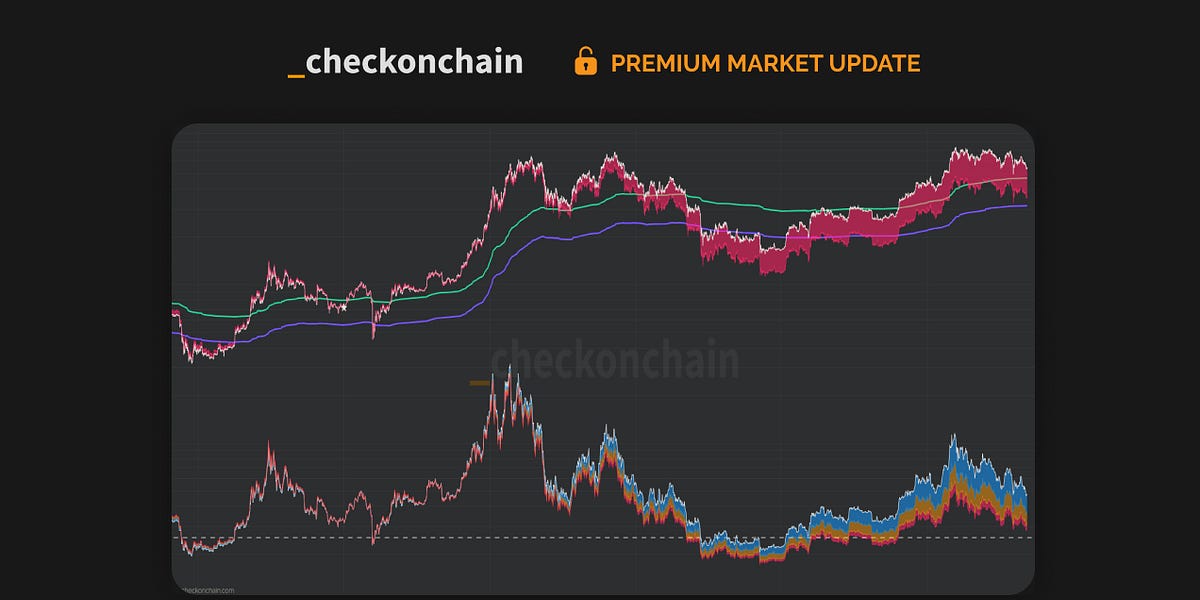
"For me personally, this analysis has helped me frame up why a -26% correction ‘feels like’ a -40% one…that’s exactly what it is in real purchasing power terms" This seems to match my internal measure of sats per beer & tacos quite closely. On the other hand, it might also explain why 20-30k in 2022-23 felt even cheaper than the nominal value for those whose income kept at least some upward pace along the inflation.
Swoldemort's avatar
Swoldemort 1 year ago
I think it would be interesting to compare inflation adjusted MV to different RC cohorts. Meaning, when there is a large RC impulse, these new buyers' sentiment is being weighed in their "inflation feeling" at the time of purchase. E.g. Oct 20 - Oct 21 sentiment is pricing 35% CPI impulse. Aug 23 - Aug 24 sentiment is pricing a 25% impulse. Essentially saying the same thing as you've noted in the video/charts, but with added context that each cohort has an inflation-adjusted price that "feels good", regardless of the current inflation rate. If this concept has legs, I think we should expect Long term holders to hold off heavy selling until they get closer to an inflation adjusted MVRV multiple. I.e. rather than 2-4x, we should see LTH selling at 3-6x (assuming 50% CPI contribution impulse for this cohort).
I think you're exactly right about that. My read is that we're probably more undervalued than people think, since we tend to act off how we feel as much as what we see. The counter point would be people may get frustrated earlier, and 'take what they can get', although I suspect Bitcoiners in particular have overcome a lot of this with experience and study.
Swoldemort's avatar
Swoldemort 1 year ago
That makes sense to me. In a low momentum environment we might see "get out while I can" and a high momentum environment would encourage more hodling to the inflation adjusted MVRV multiple. Stoked to see the next 18 months haha