
First results on optimizing battery life for the compost sensor:
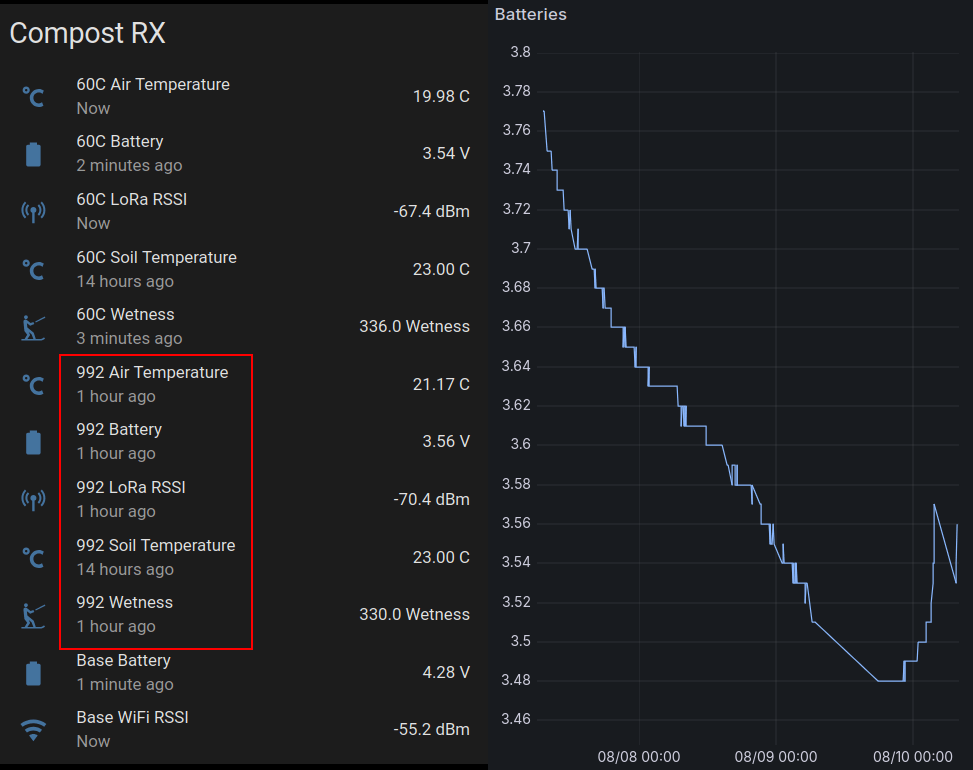
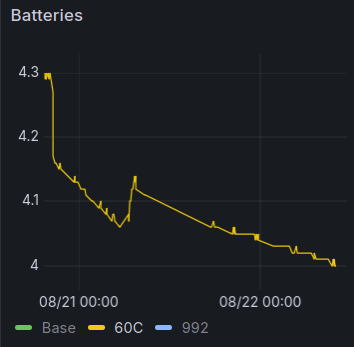 This chart measures the voltage of the battery over time. The first steeper slope is a baseline, with a simple CPU delay() called during the loop(). The second shallower slope is calling sleep() from the LowPower Arduino library. Not as much improvement as I expected, so I'll try deepSleep() next.
This chart measures the voltage of the battery over time. The first steeper slope is a baseline, with a simple CPU delay() called during the loop(). The second shallower slope is calling sleep() from the LowPower Arduino library. Not as much improvement as I expected, so I'll try deepSleep() next.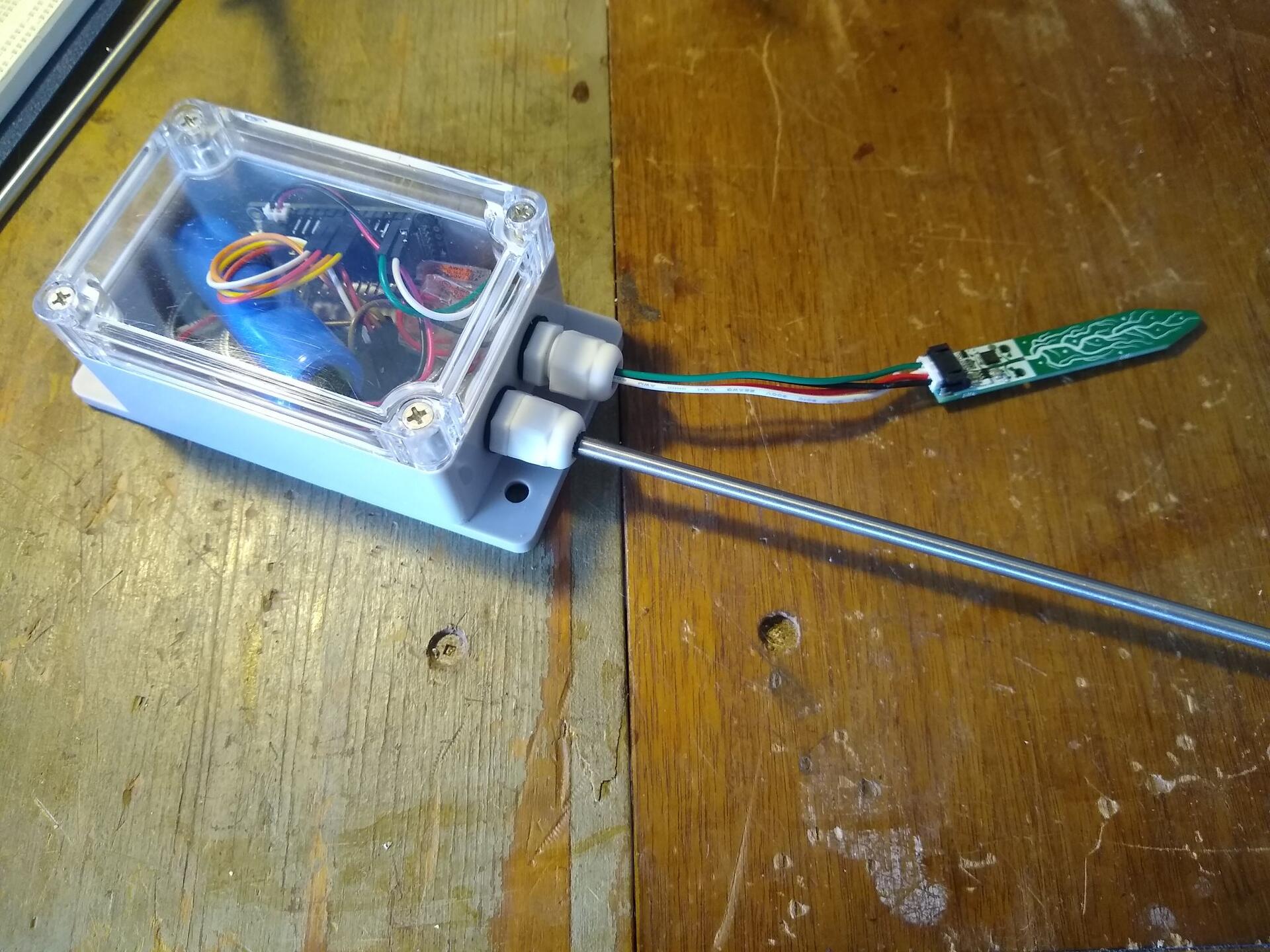

 #compost #arduino #homeassistant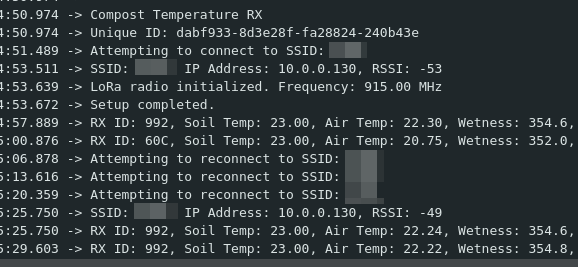
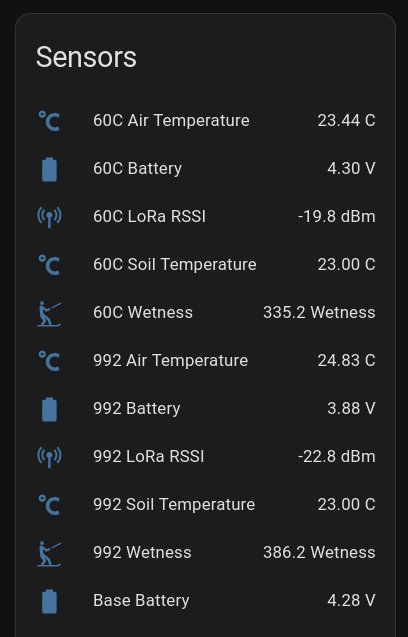 (60C and 992 are the dynamically generated unique IDs for each sensor)
All it took was a weekend of hacking and a PR for the arduino-home-assistant library. But now I can add as many sensors as I want with having to hardcode or update anything on the base station. Just upload the TX sketch onto a new board and go.
(60C and 992 are the dynamically generated unique IDs for each sensor)
All it took was a weekend of hacking and a PR for the arduino-home-assistant library. But now I can add as many sensors as I want with having to hardcode or update anything on the base station. Just upload the TX sketch onto a new board and go.
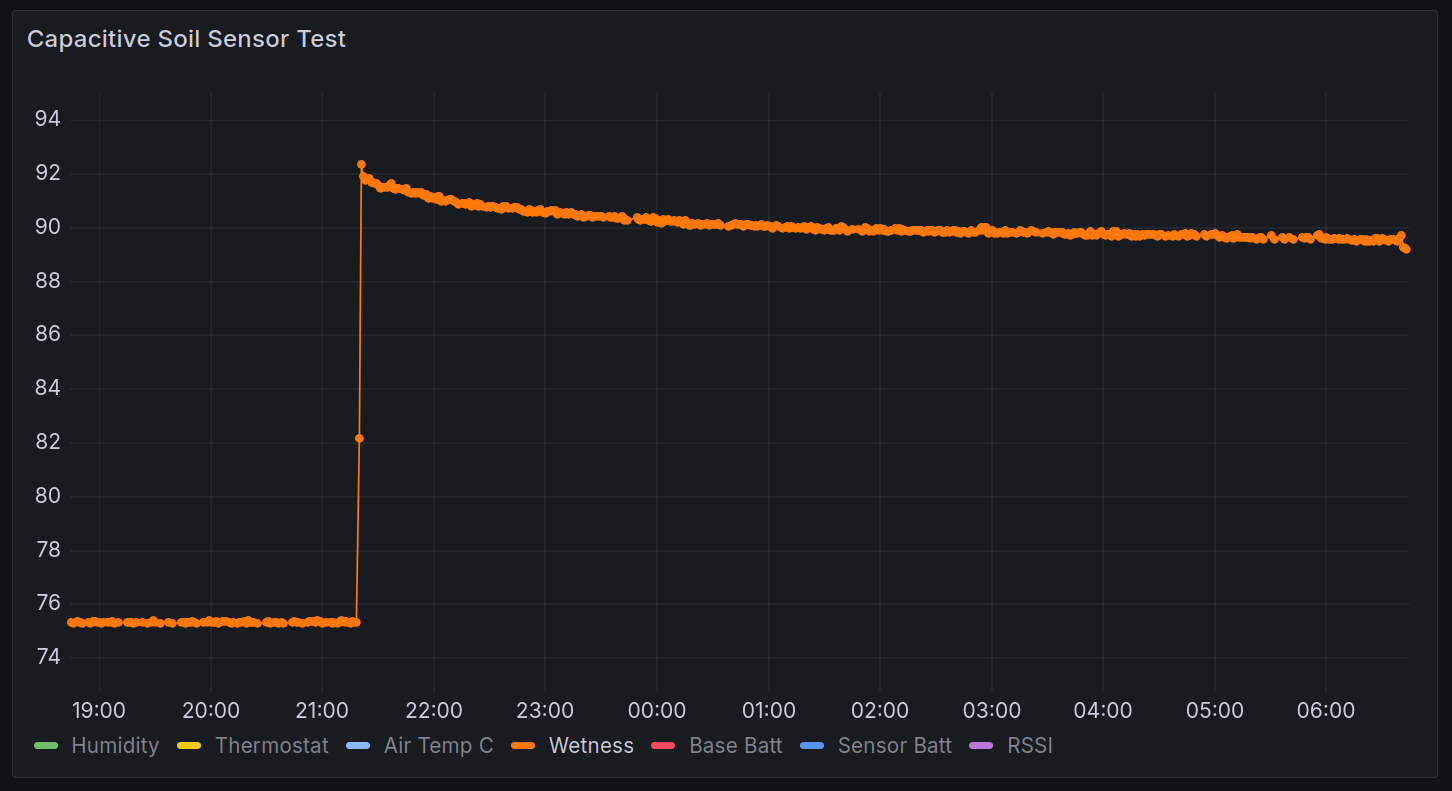 This the raw sensor output, divided by 10. In the air it reads about 32, and submerged in water it's 101. This test shows the sensor in some almost-dry potting soil followed by a watering.
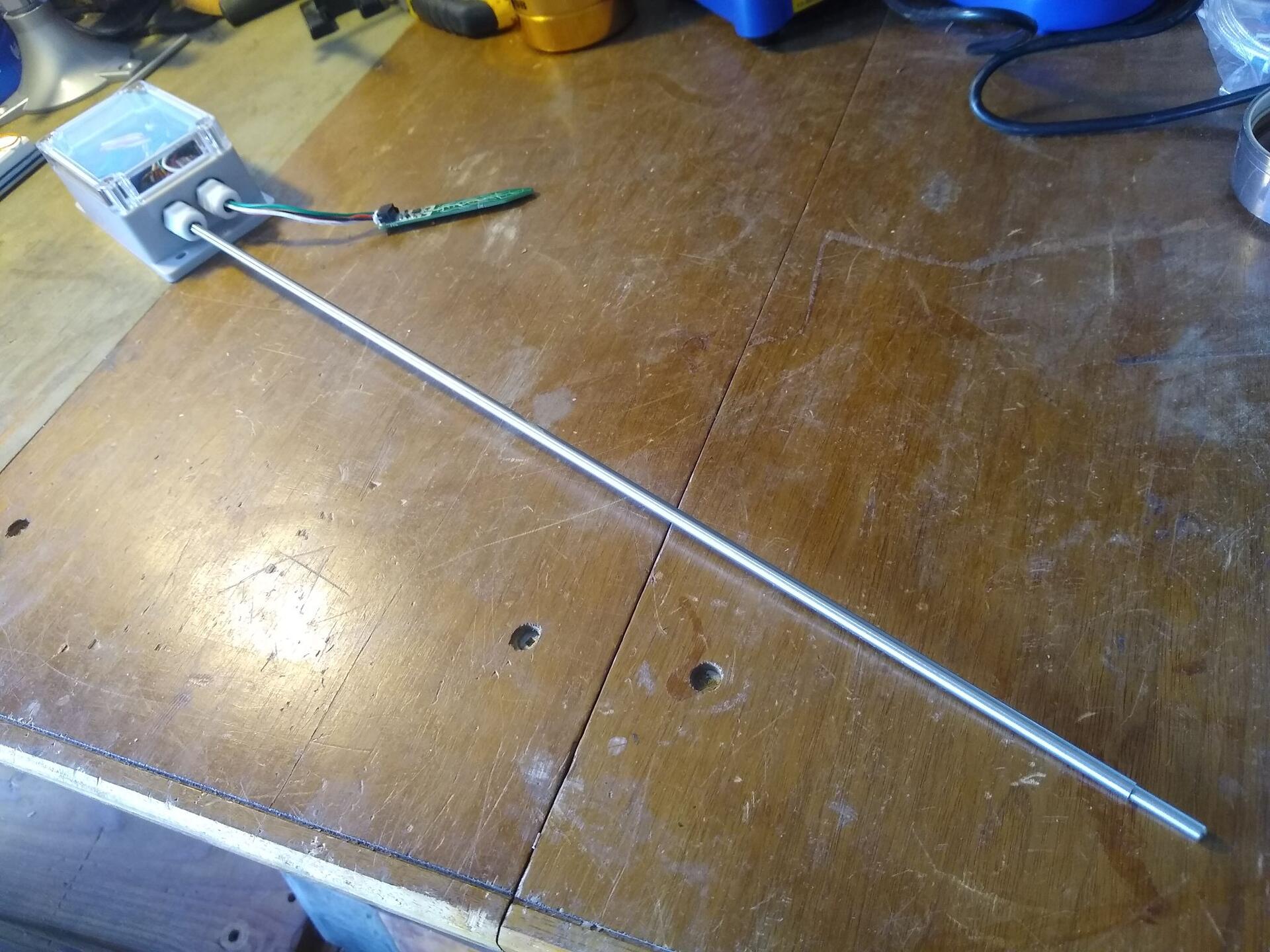
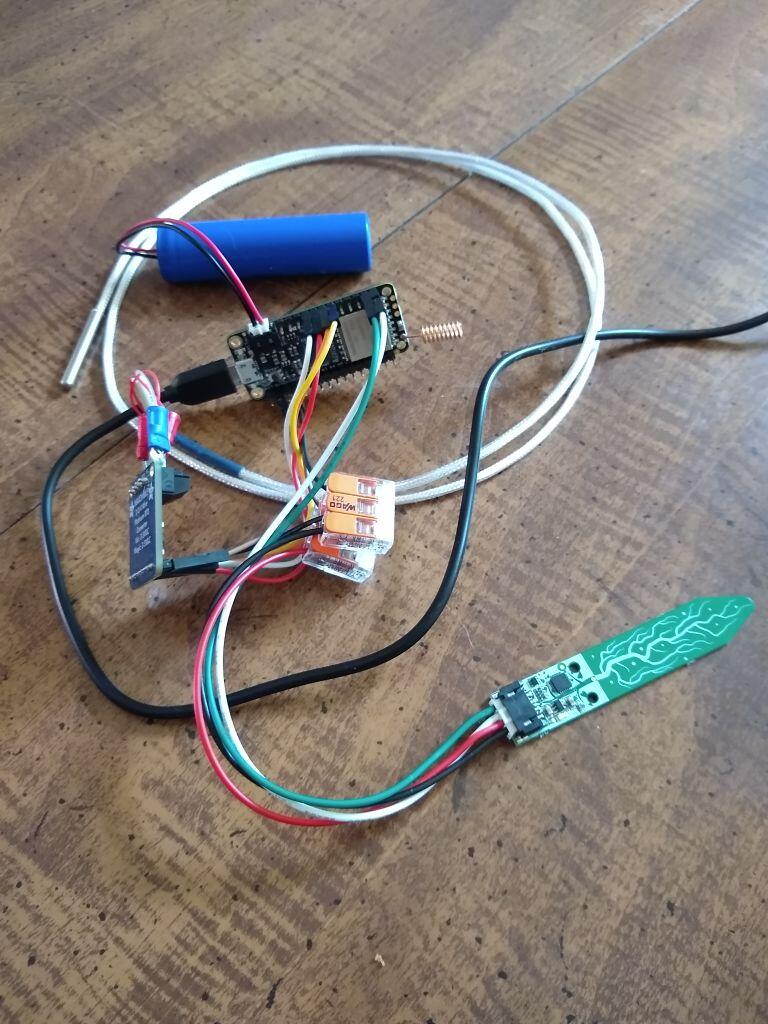 Temperature measurement is the priority, but this capacitive moisture sensor might be useful to watch for the outside of the pile drying out. It also includes an air temperature sensor that should provide some insight into how the piles perform in different seasons.
#compost #arduino #homeassistant #grownostr
Temperature measurement is the priority, but this capacitive moisture sensor might be useful to watch for the outside of the pile drying out. It also includes an air temperature sensor that should provide some insight into how the piles perform in different seasons.
#compost #arduino #homeassistant #grownostr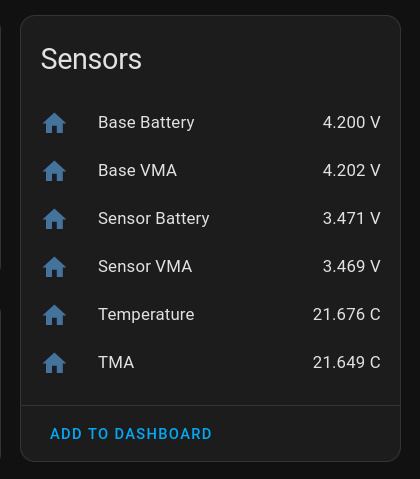 #homeassistant #compost