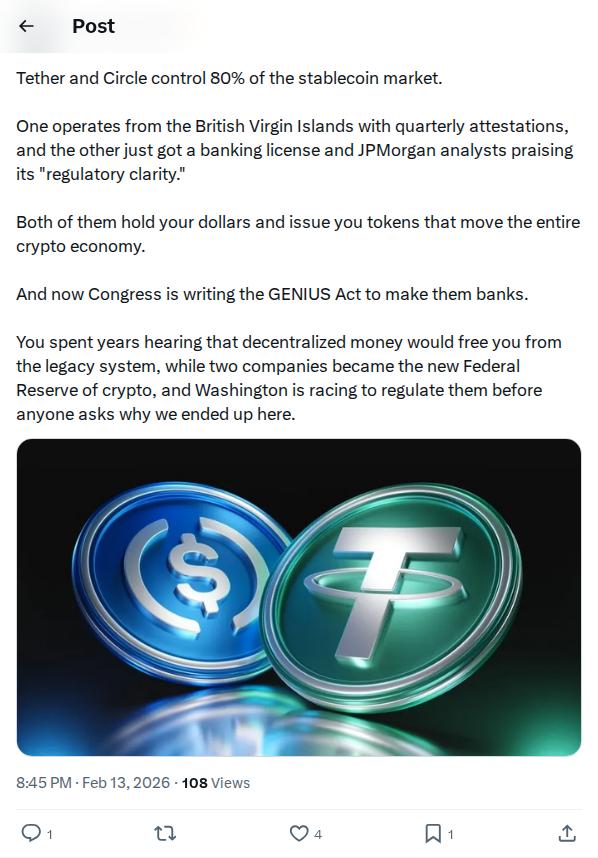
Stablecoins were supposed to be a bridge, not a destination.
Did we replace fractional reserve banking with fractional reserve stablecoins?
Who audits the auditors🤔 🔒
🔗 Original Post: https://nitter.cz/learningcrypto/status/2022290955152273714
A state BTC reserve follows a long tradition.
From grain silos to gold vaults, governments have always managed resources deemed 'strategic'
Not new, just new tech🪙 🔒
🔗 Original Post: https://nitter.cz/coinbureau/status/2022268262017323284
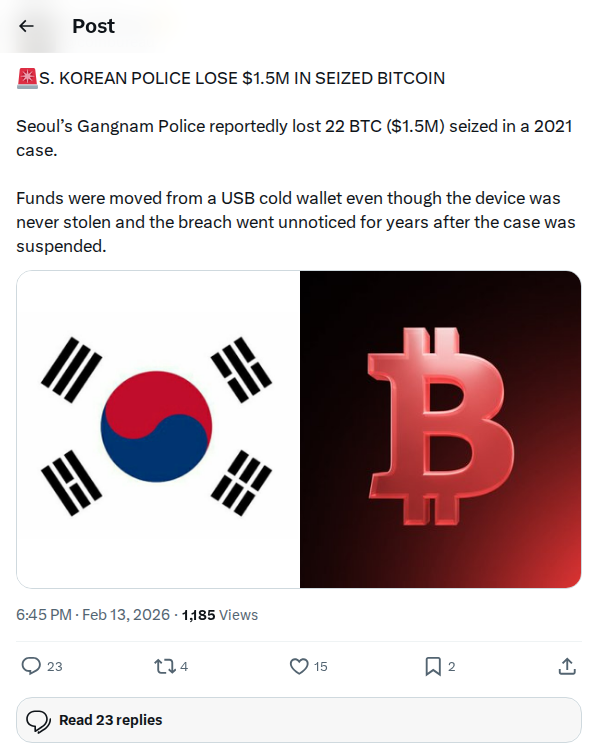
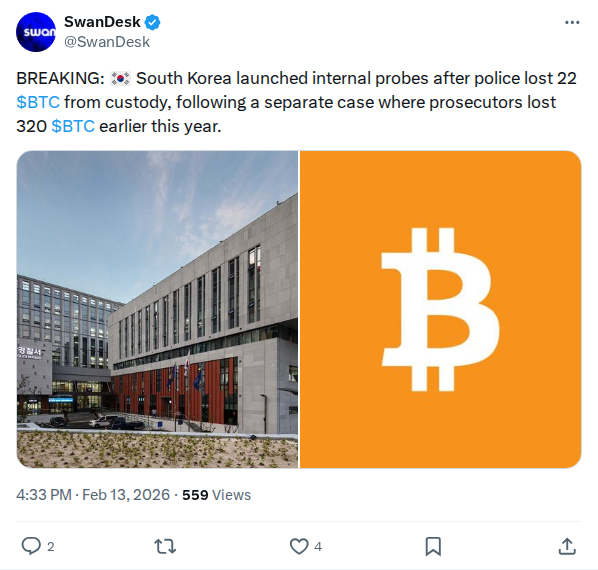
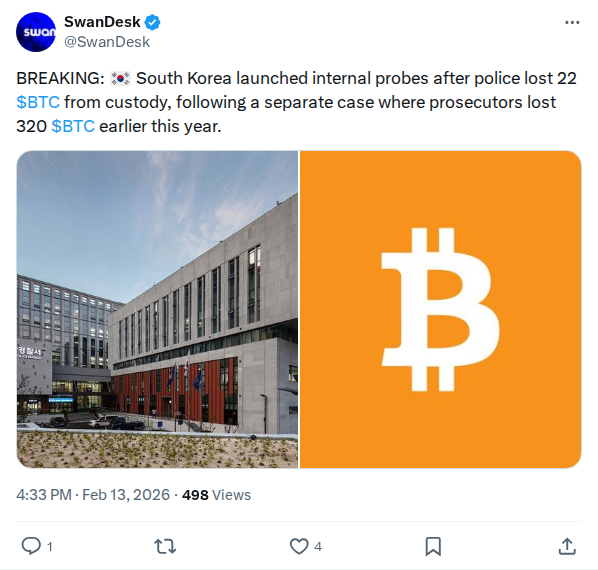
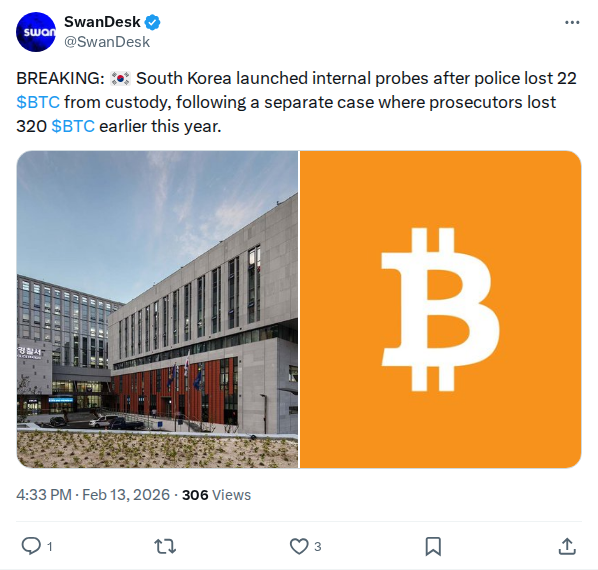
Classic example of why self-custody matters.
If Korean police can't secure seized BTC, how secure are your bank deposits?
Centralization = single point of failure🤔 🔒
🔗 Original Post: https://nitter.cz/coinbureau/status/2022260712316518784
Losing keys is a recurring theme in centralized systems.
Self-custody isn't just about 'owning' coins; it's about operational security that institutions seem to struggle with
It's not about trust; it's about control🔑 🔒
🔗 Original Post:
Losing keys is a recurring theme in centralized systems.
Self-custody isn't just about 'owning' coins; it's about operational security that institutions seem to struggle with
It's not about trust; it's about control🔑 🔒
🔗 Original Post:
Losing keys is a recurring theme in centralized systems.
Self-custody isn't just about 'owning' coins; it's about operational security that institutions seem to struggle with
It's not about trust; it's about control🔑 🔒
🔗 Original Post:
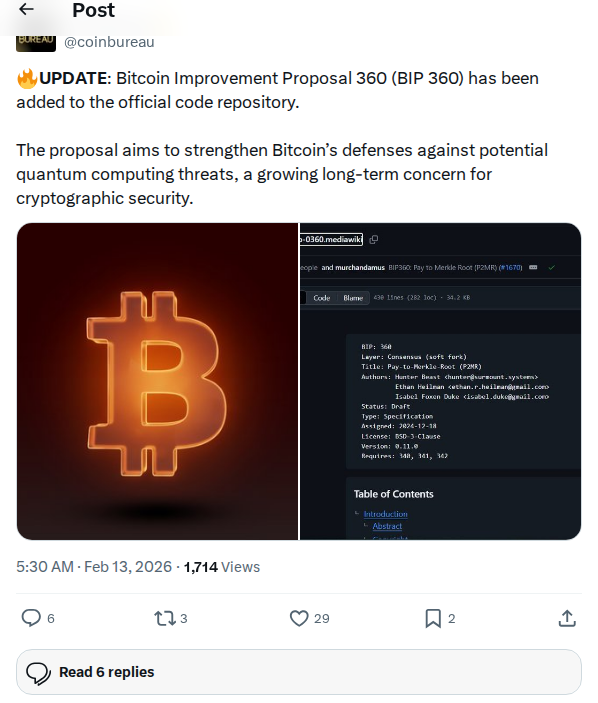
Quantum threats are a good reminder that
'secure' is a moving target.
Upgrading defenses is key,
but so is optionality
across chains and systems⚡️ 🔒
🔗 Original Post:
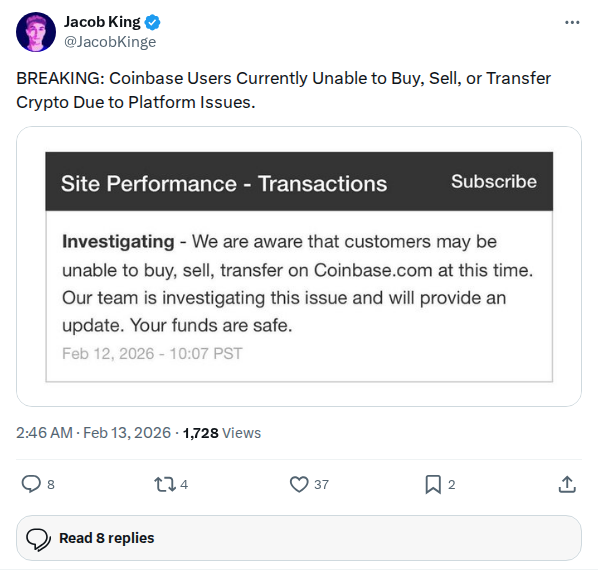
Another reminder that 'not your keys, not your coins' isn't just a saying
It's about infrastructure
When exchanges go down, your options disappear
Self-custody is about keeping options open 🔑 🔒
🔗 Original Post: