What does Oppenheimer teach us about CBDCs?
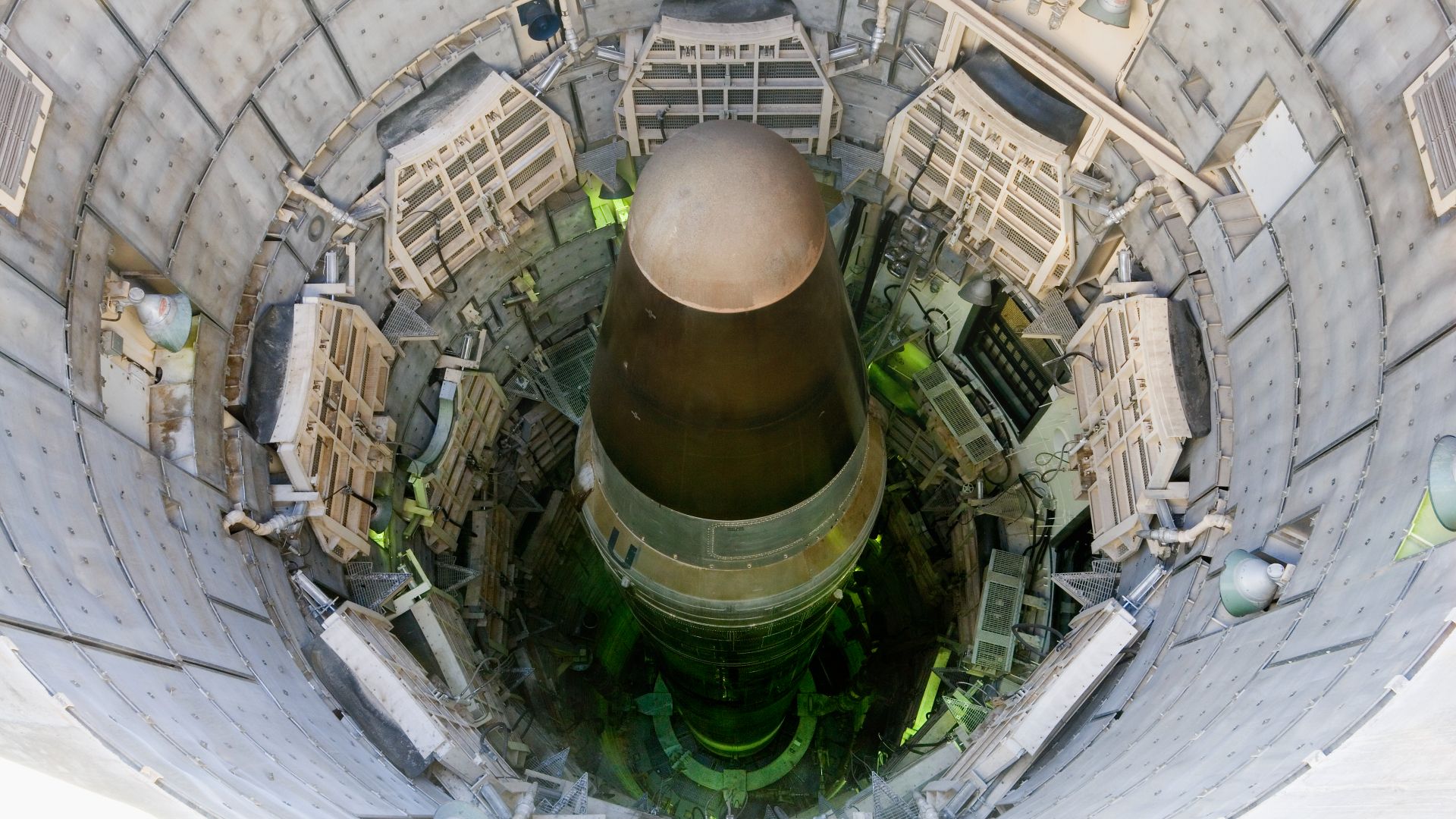
Do you remember where you were when you first heard the acronym MAD? I first heard it when I was a teenager on a trip to the air force academy and we were afforded a tour of NORAD1. My memory is a little hazy on the details, but the most interesting part was when an instructor came out and explained a nuclear war scenario to us. He gave us a vague idea of where all the US nukes were, then a vague idea of where all the Soviet nukes were. After this, he told us what he’d do to confirm the Soviet nukes were in the air before launching ours to all of their major cities. The end.
Hands went up. We wanted to know what would happen next. How would they shoot down the enemy nukes? How long would the war last after the first shots were fired? Why target civilians? This was when he told us about Mutually Assured Destruction (MAD)2. Nuclear attack in the Cold War era wasn’t about winning or losing. It was about making the consequences of war unbearably devastating for all parties. The logic went that reasonable actors would therefor avoid kinetic war altogether. For the first time in my life, I understood the
true reasoning behind the nuclear race in the cold war. Of course, the biggest catch in the system was that all parties with this power need to be assumed to be reasonable...forever.
Oppenheimer3, this summer’s blockbuster biopic about the enigmatic physicist behind the atomic bomb, explores his moral concerns with continued nuclear arms research after WWII. The film dramatizes both his personal and political life and the ethical questions surrounding each of them. The most interesting theme for this writer was the paradox concerning Oppenheimer’s devotion to creating a weapon of mass destruction for one war, and then trying to stuff the genie back in the bottle before the the next one broke out. Fortunately, that hot war hasn’t come yet, but Oppenheimer didn’t accomplish his latter goal and we’ve since developed nukes that make the a-bomb’s mushroom clouds look like the mushrooms from Super Mario Bros4.
The film highlights Oppenheimer’s Jewish heritage and his personal convictions concerning the rise of Nazism. With all of the other moral ambiguity, it portrays him as having deep integrity in this regard. However, once that threat had been neutralized, he begins to see more clearly the significance of this new category of weapon. Oppenheimer, or at least the Oppenheimer of the movie, grows to understand acutely the immense burden that now lays on all future generations. Each new nation or other entity that developed nuclear weapons was another trigger-finger on a potential apocalypse. Of course, this could also usher in a new era of threat-induced peace so long as all parties remain reasonable...forever.
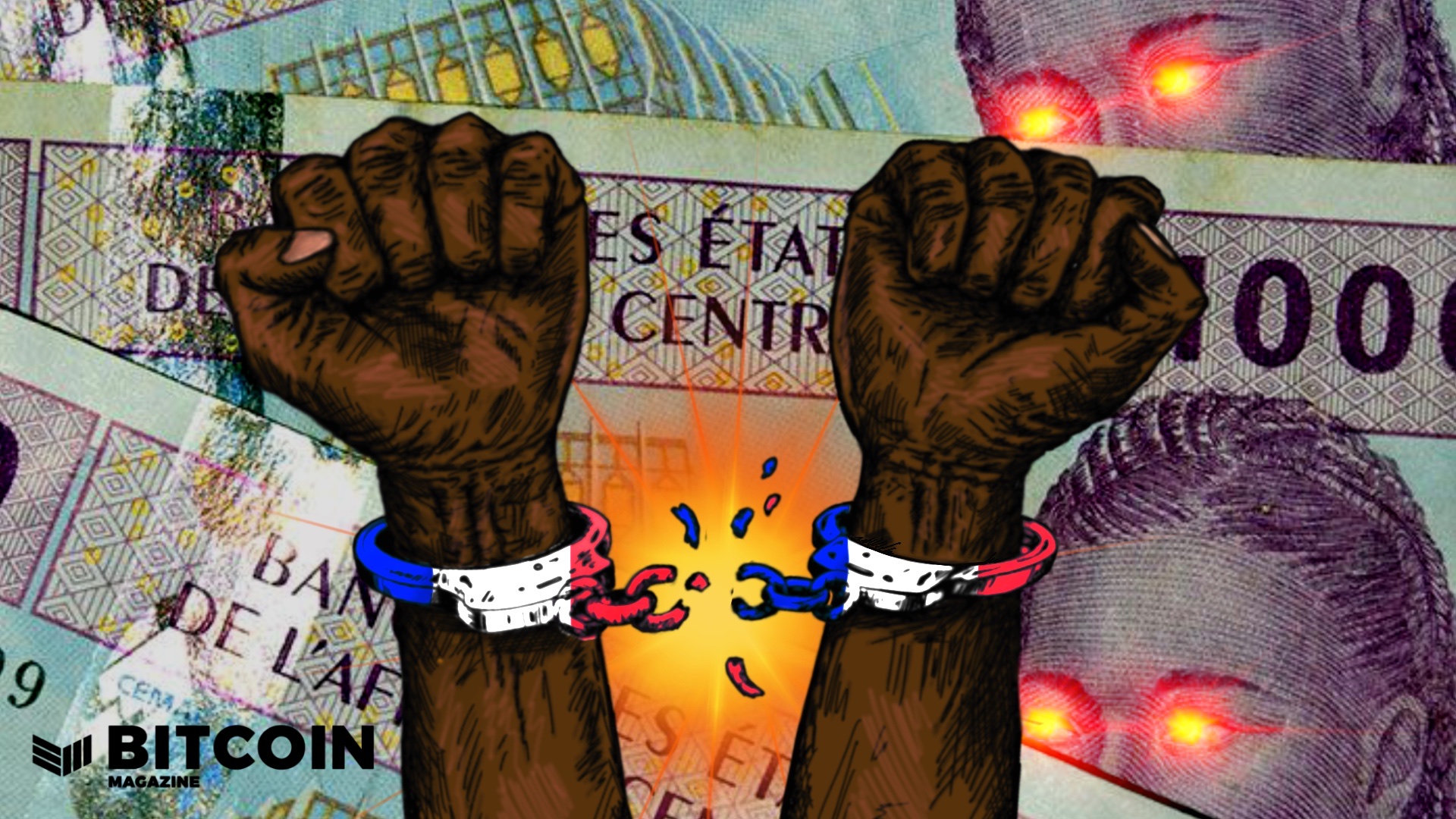
The dropping of the two atom bombs was horrific. Even so, the weaponization and bureaucratic manipulation of money that exists around the globe today produces more death than the combined total of these two bombings5. Millions of central and western Africans have been robbed through the debasement of the CFA franc by the French government6. The physical violence this has inspired is incalculable. Thousands died in the Arab Spring. The violence was itself inspired by economic hardship in the region, partially a result of the 2008 bank bailouts7. Local inflation in countries like Venezuela8, Zimbabwe9, Turkey10, and Argentina11 results not just in poverty, but in a significant drop in health care and education and a corresponding rise in violence. The weaponization of money and resulting inflation after WWI is even seen by most scholars as a large contributing factor to the rise of Nazism for which Oppenheimer was working against12. Using this same inflation, the richest and most powerful are able to actually able to further enrich themselves through the Cantillon Effect13. More overt weaponization exists in political sanctions, sinister a way to declare war on the civilian population of a country without declaring war on their military. Sometimes, as in the current case in Myanmar, these sanctions hurt the opposition groups more than the actual government that is being opposed14.
With all of this in mind, adopting a currency that the government, a corporation, or a single individual can control by the click of a button is arguably one of the most dangerous threats to humanity’s thriving. Whoever held this power could decide who is allowed access to food and who is not. They could decide how long or how much you were allowed to save before it was deleted. They could monitor everything you bought and everywhere you bought it. I’m talking about a Central Bank Digital Currency15 (CBDC).
Proponents argue that these concerns about abuse won’t be problems so long as we can trust those with the power. Basically, they are counting on either their allies to remain in power, or their detractors to be ethical enough to refrain from the previously described activities. So with a CBDC, “democracy” can only exist with a uni-party system or the ability to elect perfectly morally upstanding leaders...without a single exception...forever.
Bitcoin fixes this16. Unlike nuclear bombs, a CBDC can’t function without widespread adoption. You and I will ultimately determine if this technology has any power. Fortunately, we have an alternative. Bitcoin does not have the power to stop you from buying groceries. No one can debase it’s value from a foreign or domestic state. It requires no extra fees for cross-border payments. While weaponized money may currently be responsible for more death and suffering than nuclear war, we now actually have an armor to protect against it. I only hope that by the time they make the movie about it, we have chosen the happy ending.
1
https://www.norad.mil/About-NORAD/
2
Live Science
What is mutual assured destruction?
Mutual assured destruction, often abbreviated as MAD, it is part of the military strategy of deterrence.
3

Oppenheimer (film) - Wikipedia
4
5
https://www.newsweek.com/how-many-people-died-hiroshima-nagasaki-japan-second- world-war-1522276
6
Bitcoin Magazine
Fighting Monetary Colonialism With Open-Source Code
France still uses monetary colonialism to exploit 15 African nations. Could Bitcoin be a way out?
7
https://www.aljazeera.com/news/2020/12/17/bread-and-gas-economic-boost-needed-after- arab-spring
8

Venezuela: All you need to know about the crisis in nine charts
Discontent fuelled by hyperinflation, power cuts and food and medicine shortages have led to a political crisis in Venezuela. What's going on?
9
https://www.voanews.com/a/africa_its-nightmare-zimbabwe-struggles-hyperinflation/ 6177373.html
10
https://www.economist.com/leaders/2022/07/21/lessons-from-turkey-on-the-evils-of-high- inflation
11

Argentina inflation soars past 100% mark
Inflation hits triple digits for the first time since the period of hyperinflation in the early 1990s.
12

Encyclopedia Britannica
Walter Simons | German Lawyer, Constitutional Scholar | Britannica
Walter Simons was a German jurist who served as interim president of the Weimar Republic, from March to May 1925. After serving in the German forei...
13

Adam Smith Institute
The Cantillion Effect — Adam Smith Institute
The conventional history of economics usually starts with Adam Smith, David Ricardo and J. S. Mill. But there is one who came before, who might des...
14
Bitcoin Magazine
In The Absence Of International Support, Myanmar’s Exiled Government Should Explore A Bitcoin Bond
Myanmar’s exiled National Unity Government is struggling to secure international support, making the case for a bitcoin-focused bond offering.
strategy
15
https://www.cnn.com/2022/03/11/tech/us-digital-dollar-cbdc/index.html 16

Bitcoin builds a better world.
Bitcoin is a misunderstood technology that is building a better world. Bitcoin has protected human rights, saved people from high inflation, suppor...