
**Astronomy Picture of the Day**
09 December 2025
**The Heart of the Soul Nebula**
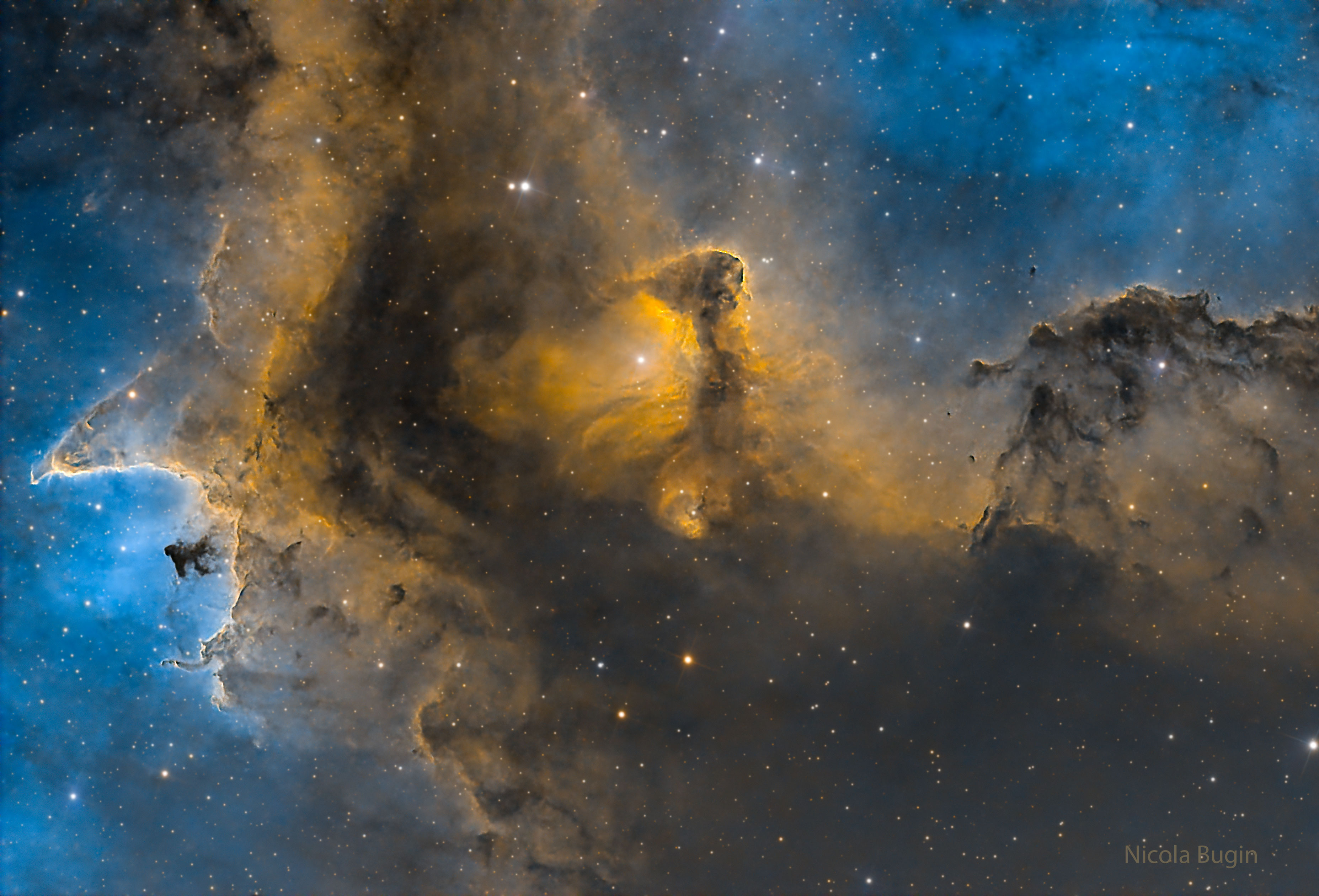 Image Credit & Copyright:
Nicola Bugin
This cosmic close-up looks deep inside the Soul Nebula. The dark and brooding dust clouds outlined by bright ridges of glowing gas are cataloged as IC 1871. About 25 light-years across, the telescopic field of view spans only a small part of the much larger Heart and Soul nebulae. At an estimated distance of 6,500 light-years, the star-forming complex lies within the Perseus spiral arm of the Milky Way, seen in planet Earth's skies toward the constellation of the Queen of Aethiopia (Cassiopeia). An example of triggered star formation, the dense star-forming clouds of IC 1871 are themselves sculpted by the intense winds and radiation of the region's massive young stars. This color image adopts a palette made popular in Hubble images of star-forming regions.
#APOD #Exoplanets #Astronauts #GalaxyExploration #Astrophoto
Image Credit & Copyright:
Nicola Bugin
This cosmic close-up looks deep inside the Soul Nebula. The dark and brooding dust clouds outlined by bright ridges of glowing gas are cataloged as IC 1871. About 25 light-years across, the telescopic field of view spans only a small part of the much larger Heart and Soul nebulae. At an estimated distance of 6,500 light-years, the star-forming complex lies within the Perseus spiral arm of the Milky Way, seen in planet Earth's skies toward the constellation of the Queen of Aethiopia (Cassiopeia). An example of triggered star formation, the dense star-forming clouds of IC 1871 are themselves sculpted by the intense winds and radiation of the region's massive young stars. This color image adopts a palette made popular in Hubble images of star-forming regions.
#APOD #Exoplanets #Astronauts #GalaxyExploration #Astrophoto
Image Credit & Copyright:
Nicola Bugin
This cosmic close-up looks deep inside the Soul Nebula. The dark and brooding dust clouds outlined by bright ridges of glowing gas are cataloged as IC 1871. About 25 light-years across, the telescopic field of view spans only a small part of the much larger Heart and Soul nebulae. At an estimated distance of 6,500 light-years, the star-forming complex lies within the Perseus spiral arm of the Milky Way, seen in planet Earth's skies toward the constellation of the Queen of Aethiopia (Cassiopeia). An example of triggered star formation, the dense star-forming clouds of IC 1871 are themselves sculpted by the intense winds and radiation of the region's massive young stars. This color image adopts a palette made popular in Hubble images of star-forming regions.
#APOD #Exoplanets #Astronauts #GalaxyExploration #Astrophoto
APOD: 2025 December 9 – The Heart of the Soul Nebula
A different astronomy and space science
related image is featured each day, along with a brief explanation.
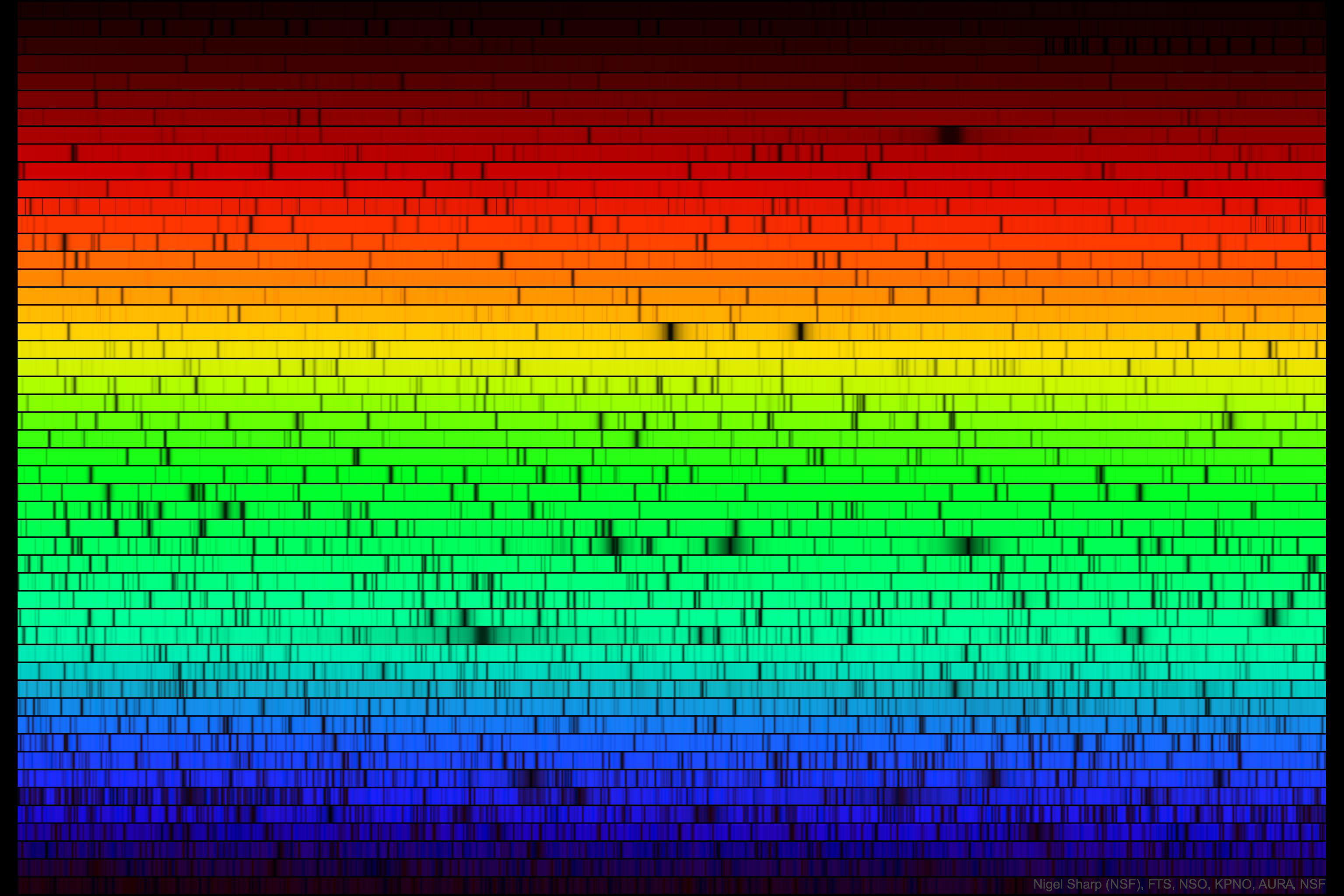 *Image creditor details unavailable via API. Visit linked page below for full info.*
It is still not known why the Sun's light is missing some colors. Here are all the visible colors of the Sun, produced by passing the Sun's light through a prism-like device. The spectrum was created at the McMath-Pierce Solar Observatory and shows, first off, that although our white-appearing Sun emits light of nearly every color, it appears brightest in yellow-green light. The dark patches in the featured spectrum arise from gas at or above the Sun's surface absorbing sunlight emitted below. Since different types of gas absorb different colors of light, it is possible to determine what gasses compose the Sun. Helium, for example, was first discovered in 1868 on a solar spectrum and only later found here on Earth. Today, the majority of spectral absorption lines have been identified - but not all. Free APOD Lecture in Phoenix: Wednesday, December 10 at 7 pm
#APOD #SpaceObservatory #Astroengineering #AstronomyFacts #Research
*Image creditor details unavailable via API. Visit linked page below for full info.*
It is still not known why the Sun's light is missing some colors. Here are all the visible colors of the Sun, produced by passing the Sun's light through a prism-like device. The spectrum was created at the McMath-Pierce Solar Observatory and shows, first off, that although our white-appearing Sun emits light of nearly every color, it appears brightest in yellow-green light. The dark patches in the featured spectrum arise from gas at or above the Sun's surface absorbing sunlight emitted below. Since different types of gas absorb different colors of light, it is possible to determine what gasses compose the Sun. Helium, for example, was first discovered in 1868 on a solar spectrum and only later found here on Earth. Today, the majority of spectral absorption lines have been identified - but not all. Free APOD Lecture in Phoenix: Wednesday, December 10 at 7 pm
#APOD #SpaceObservatory #Astroengineering #AstronomyFacts #Research
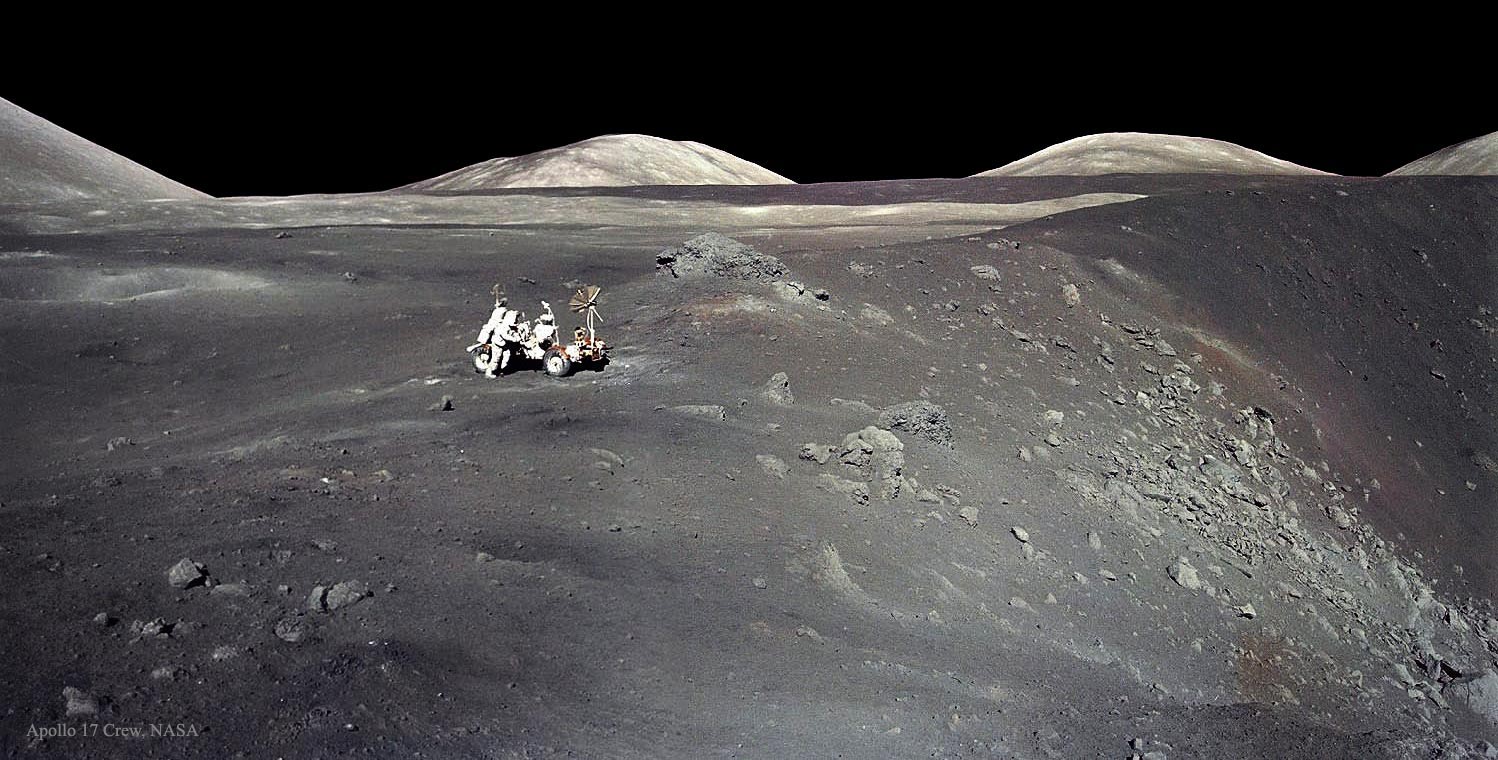 *Image creditor details unavailable via API. Visit linked page below for full info.*
Fifty three years ago, in December of 1972, Apollo 17 astronauts Eugene Cernan and Harrison Schmitt spent about 75 hours on the Moon exploring the Taurus-Littrow valley, while colleague Ronald Evans orbited overhead. This snapshot from another world was taken by Cernan as he and Schmitt roamed the lunar valley's floor. The image shows Schmitt next to the lunar rover parked at the southeast rim of Shorty Crater. That location is near the spot where geologist Schmitt discovered orange lunar soil. The Apollo 17 crew returned with 110 kilograms of rock and soil samples, more than was returned from any of the other lunar landing sites. And for now, Cernan and Schmitt are the last to walk on the Moon.
#APOD #Astronomy #SpaceExploration #SpaceWeather #SpaceExploration
*Image creditor details unavailable via API. Visit linked page below for full info.*
Fifty three years ago, in December of 1972, Apollo 17 astronauts Eugene Cernan and Harrison Schmitt spent about 75 hours on the Moon exploring the Taurus-Littrow valley, while colleague Ronald Evans orbited overhead. This snapshot from another world was taken by Cernan as he and Schmitt roamed the lunar valley's floor. The image shows Schmitt next to the lunar rover parked at the southeast rim of Shorty Crater. That location is near the spot where geologist Schmitt discovered orange lunar soil. The Apollo 17 crew returned with 110 kilograms of rock and soil samples, more than was returned from any of the other lunar landing sites. And for now, Cernan and Schmitt are the last to walk on the Moon.
#APOD #Astronomy #SpaceExploration #SpaceWeather #SpaceExploration
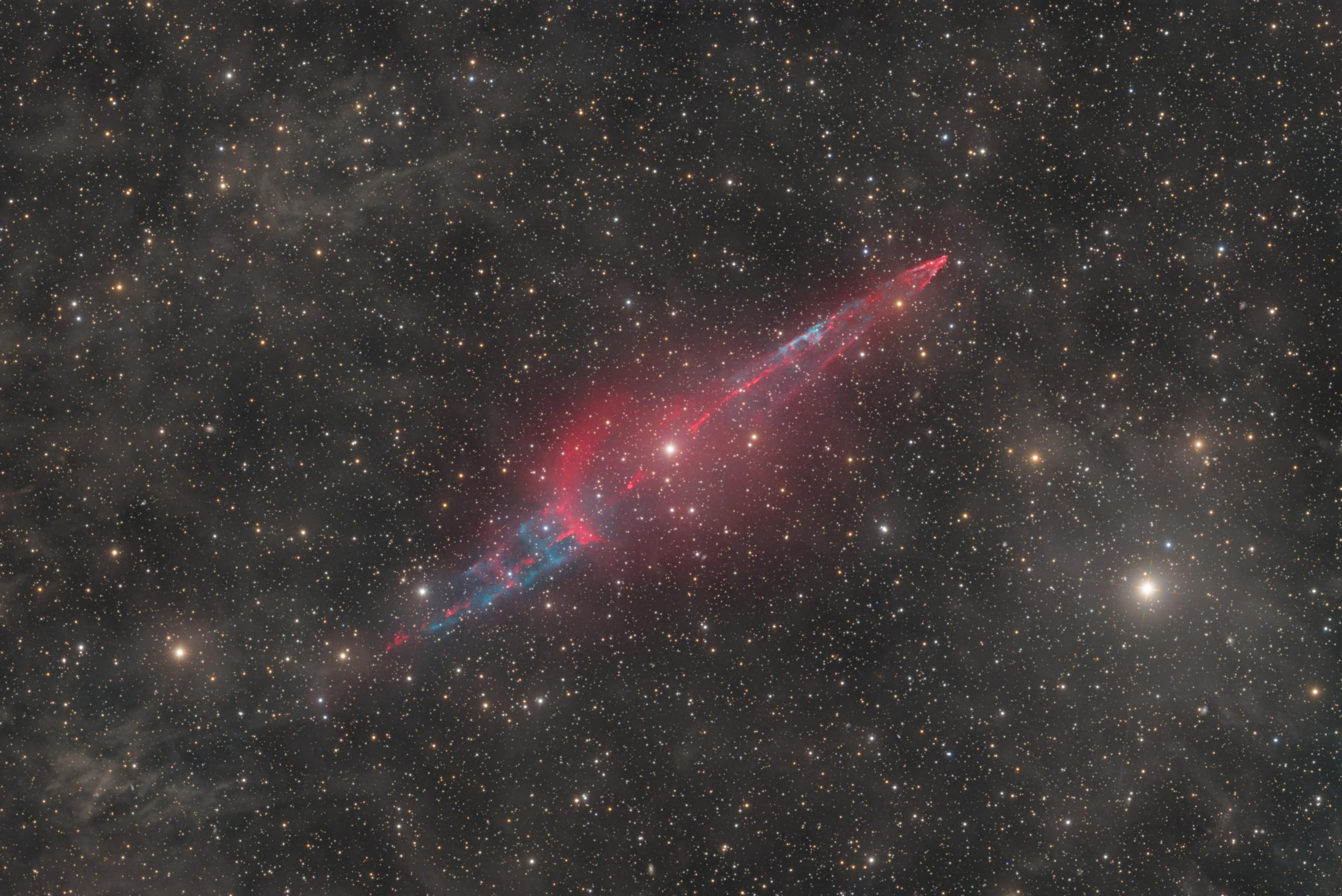 Image Credit & Copyright: Tim Schaeffer
Blasting outward from variable star KX Andromedae, these stunning bipolar jets are 19 light-years long. Recently discovered, they are revealed in unprecedented detail in this deep telescopic image centered on KX And and composed from over 692 hours of combined image data. In fact, KX And is spectroscopically found to be an interacting binary star system consisting of a bright, hot B-type star with a swollen cool giant star as its co-orbiting, close companion. The stellar material from the cool giant star is likely being transferred to the hot B-type star through an accretion disk, with spectacular symmetric jets driven outward perpendicular to the disk itself. The known distance to KX And of 2,500 light-years, angular size of the jets, and estimated inclination of the accretion disk lead to the size estimate for each jet of an astonishing 19 light-years. Free APOD Lecture in Phoenix: Wednesday, December 10 at 7 pm
#APOD #Astrobiology #Astrophoto #Astrotheory #SpaceDiscovery
Image Credit & Copyright: Tim Schaeffer
Blasting outward from variable star KX Andromedae, these stunning bipolar jets are 19 light-years long. Recently discovered, they are revealed in unprecedented detail in this deep telescopic image centered on KX And and composed from over 692 hours of combined image data. In fact, KX And is spectroscopically found to be an interacting binary star system consisting of a bright, hot B-type star with a swollen cool giant star as its co-orbiting, close companion. The stellar material from the cool giant star is likely being transferred to the hot B-type star through an accretion disk, with spectacular symmetric jets driven outward perpendicular to the disk itself. The known distance to KX And of 2,500 light-years, angular size of the jets, and estimated inclination of the accretion disk lead to the size estimate for each jet of an astonishing 19 light-years. Free APOD Lecture in Phoenix: Wednesday, December 10 at 7 pm
#APOD #Astrobiology #Astrophoto #Astrotheory #SpaceDiscovery
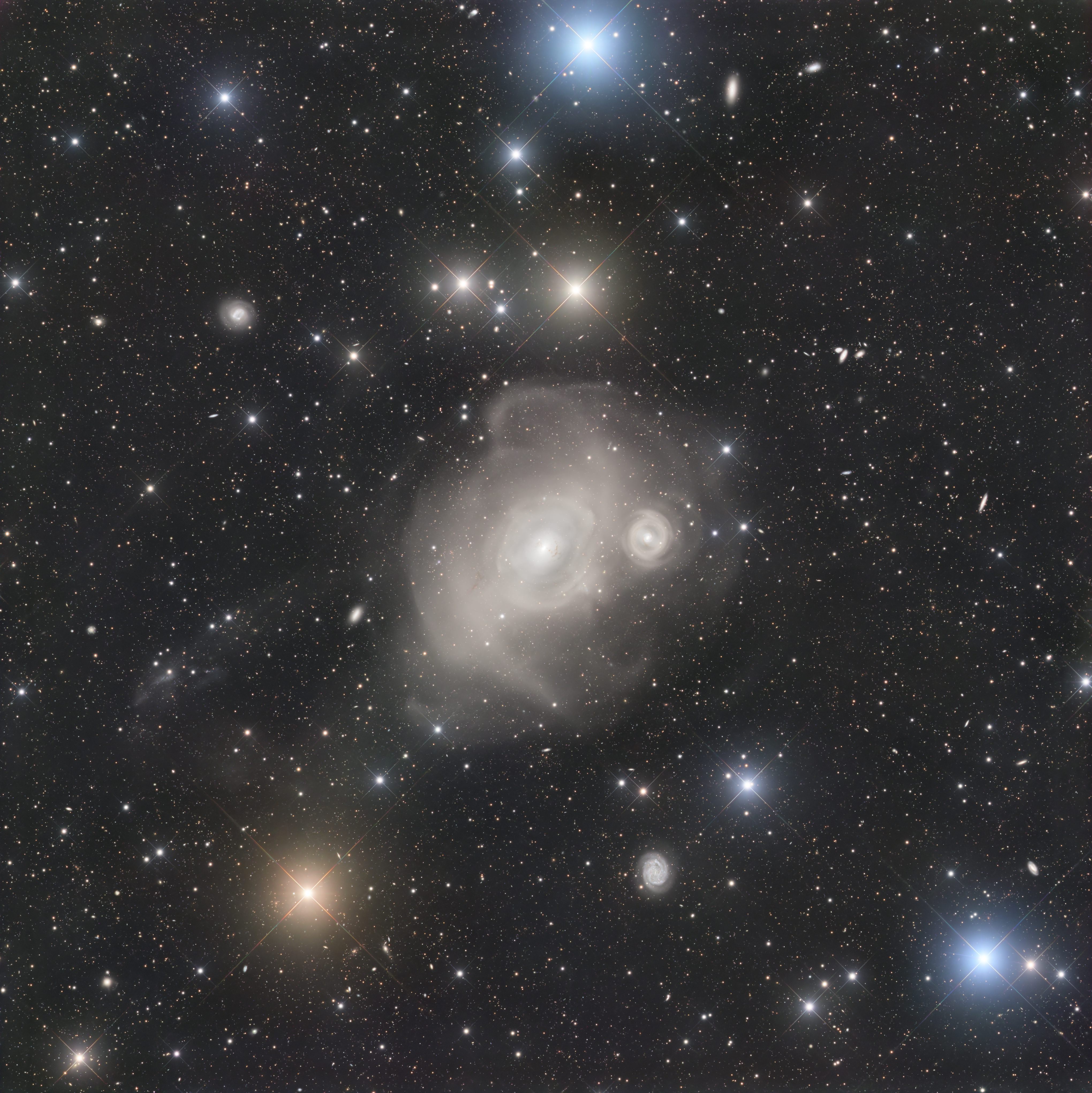 Image Credit & Copyright: Simone Curzi
An example of violence on a cosmic scale, enormous elliptical galaxy NGC 1316 lies about 75 million light-years away toward Fornax, the southern constellation of the Furnace. Investigating the startling sight, astronomers suspect the giant galaxy of colliding with smaller neighbor NGC 1317 seen just right of the large galaxy's center, producing far flung star streams in loops and shells. Light from their close encounter would have reached Earth some 100 million years ago. In the sharp telescopic image, the central regions of NGC 1316 and NGC 1317 appear separated by over 100,000 light-years. Complex dust lanes visible within also indicate that NGC 1316 is itself the result of a merger of galaxies in the distant past. Found on the outskirts of the Fornax galaxy cluster, NGC 1316 is known as Fornax A. One of the visually brightest of the Fornax cluster galaxies it is one of the strongest and largest celestial radio sources with radio emission extending well beyond this one degree wide field-of-view.
#APOD #Astrozone #SpaceExploration #SpaceObservatory #Cosmology
Image Credit & Copyright: Simone Curzi
An example of violence on a cosmic scale, enormous elliptical galaxy NGC 1316 lies about 75 million light-years away toward Fornax, the southern constellation of the Furnace. Investigating the startling sight, astronomers suspect the giant galaxy of colliding with smaller neighbor NGC 1317 seen just right of the large galaxy's center, producing far flung star streams in loops and shells. Light from their close encounter would have reached Earth some 100 million years ago. In the sharp telescopic image, the central regions of NGC 1316 and NGC 1317 appear separated by over 100,000 light-years. Complex dust lanes visible within also indicate that NGC 1316 is itself the result of a merger of galaxies in the distant past. Found on the outskirts of the Fornax galaxy cluster, NGC 1316 is known as Fornax A. One of the visually brightest of the Fornax cluster galaxies it is one of the strongest and largest celestial radio sources with radio emission extending well beyond this one degree wide field-of-view.
#APOD #Astrozone #SpaceExploration #SpaceObservatory #Cosmology
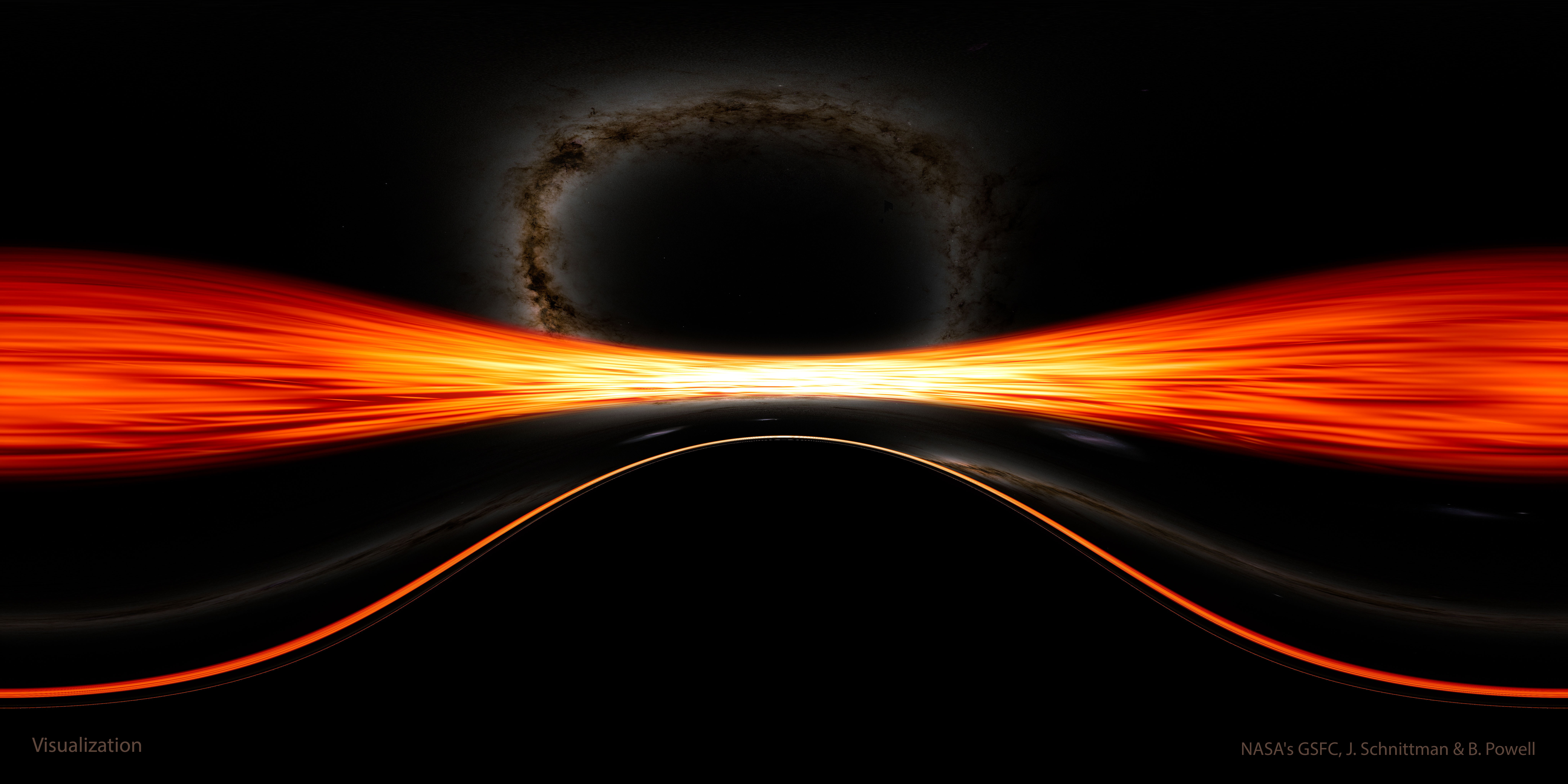 *Image creditor details unavailable via API. Visit linked page below for full info.*
What would it look like to plunge into a monster black hole? This image from a supercomputer visualization shows the entire sky as seen from a simulated camera plunging toward a 4-million-solar-mass black hole, similar to the one at the center of our galaxy. The camera lies about 16 million kilometers from the black hole’s event horizon and is moving inward at 62% the speed of light. Thanks to gravity’s funhouse effects, the starry band of the Milky Way appears both as a compact loop at the top of this view and as a secondary image stretching across the bottom. Move the cursor over the image for additional explanations. Visualizations like this allow astronomers to explore black holes in ways not otherwise possible.
#APOD #SpaceTravel #BlackHoleDiscovery #Planets #NASAInspires
*Image creditor details unavailable via API. Visit linked page below for full info.*
What would it look like to plunge into a monster black hole? This image from a supercomputer visualization shows the entire sky as seen from a simulated camera plunging toward a 4-million-solar-mass black hole, similar to the one at the center of our galaxy. The camera lies about 16 million kilometers from the black hole’s event horizon and is moving inward at 62% the speed of light. Thanks to gravity’s funhouse effects, the starry band of the Milky Way appears both as a compact loop at the top of this view and as a secondary image stretching across the bottom. Move the cursor over the image for additional explanations. Visualizations like this allow astronomers to explore black holes in ways not otherwise possible.
#APOD #SpaceTravel #BlackHoleDiscovery #Planets #NASAInspires
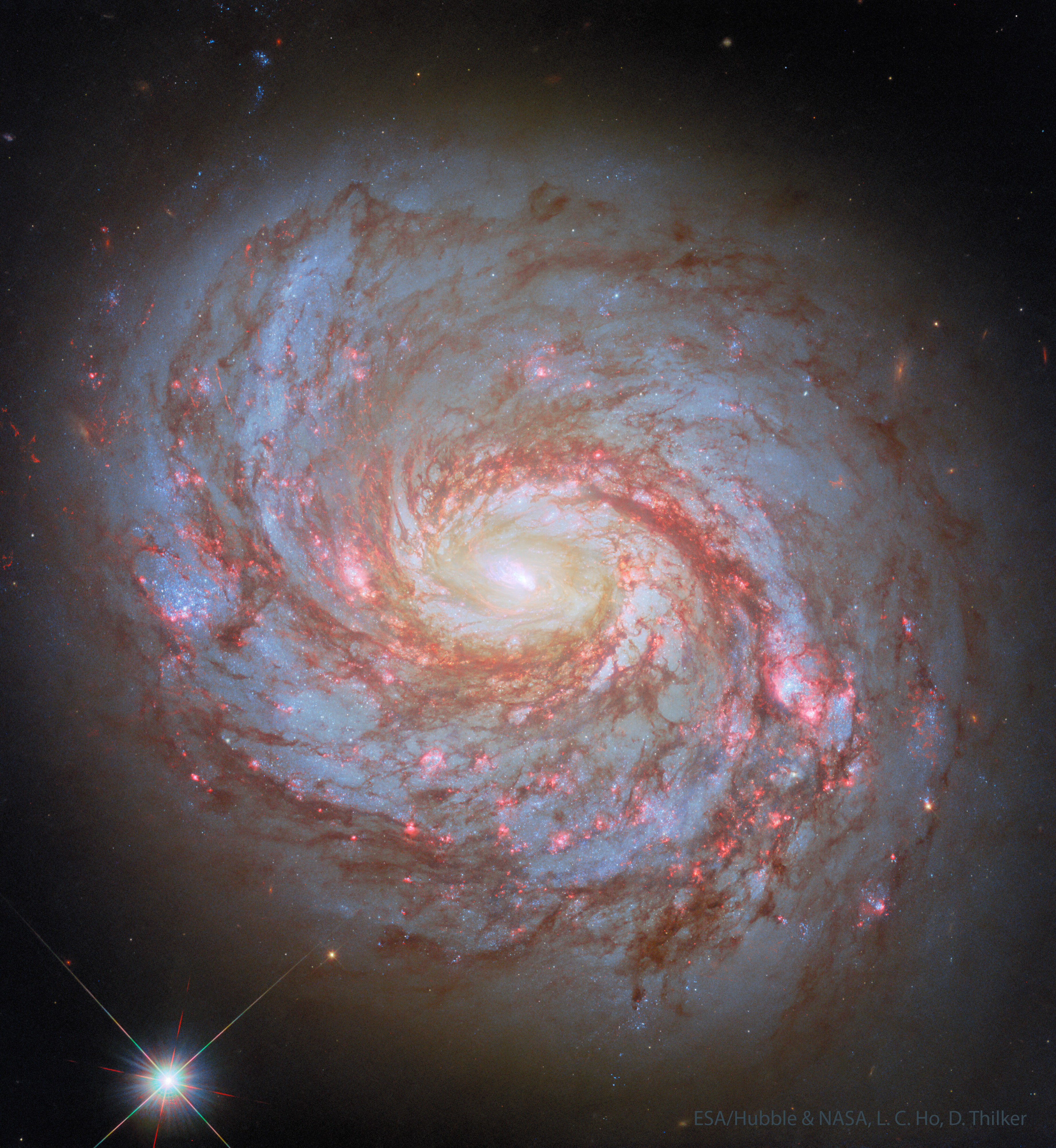 *Image creditor details unavailable via API. Visit linked page below for full info.*
What's happening in the center of nearby spiral galaxy M77? The face-on galaxy lies a mere 47 million light-years away toward the constellation of the Sea Monster (Cetus). At that estimated distance, this gorgeous island universe is about 100 thousand light-years across. Also known as NGC 1068, its compact and very bright core is well studied by astronomers exploring the mysteries of supermassive black holes in active Seyfert galaxies. M77's active core glows bright at x-ray, ultraviolet, visible, infrared, and radio wavelengths. The featured sharp image of M77 was taken by the Hubble Space Telescope. The image shows details of the spiral's winding spiral arms as traced by obscuring red dust clouds and blue star clusters, all circling the galaxy's bright white luminous center. Free APOD Lecture in Phoenix: Wednesday, December 10 at 7 pm
#APOD #Astroknowledge #Astroinformatics #NASAInspires #Universe
*Image creditor details unavailable via API. Visit linked page below for full info.*
What's happening in the center of nearby spiral galaxy M77? The face-on galaxy lies a mere 47 million light-years away toward the constellation of the Sea Monster (Cetus). At that estimated distance, this gorgeous island universe is about 100 thousand light-years across. Also known as NGC 1068, its compact and very bright core is well studied by astronomers exploring the mysteries of supermassive black holes in active Seyfert galaxies. M77's active core glows bright at x-ray, ultraviolet, visible, infrared, and radio wavelengths. The featured sharp image of M77 was taken by the Hubble Space Telescope. The image shows details of the spiral's winding spiral arms as traced by obscuring red dust clouds and blue star clusters, all circling the galaxy's bright white luminous center. Free APOD Lecture in Phoenix: Wednesday, December 10 at 7 pm
#APOD #Astroknowledge #Astroinformatics #NASAInspires #Universe
 Image Credit & Copyright:
Victor Sabet &
Julien De Winter
How typical is our Solar System? Studying 3I/ATLAS, a comet just passing through, is providing clues. Confirmed previous interstellar visitors include an asteroid, a comet, a meteor, and a gas wind dominated by hydrogen and helium. Comet 3I/ATLAS appears relatively normal when compared to Solar System comets, therefore providing more evidence that our Solar System is a somewhat typical star system. For example, Comet 3I/ATLAS has a broadly similar chemical composition and ejected dust. The featured image was captured last week from Texas and shows a green coma, a wandering blue-tinted ion tail likely deflected by our Sun's wind, and a slight anti-tail, all typical cometary attributes. The comet, visible with a telescope, passed its closest to the Sun in late October and will pass its closest to the Earth in mid-December, after which it will return to interstellar space and never return. Explore the Universe: Random APOD Generator
#APOD #Celestial #Galaxy #Astrotheory #Astrogeology
Image Credit & Copyright:
Victor Sabet &
Julien De Winter
How typical is our Solar System? Studying 3I/ATLAS, a comet just passing through, is providing clues. Confirmed previous interstellar visitors include an asteroid, a comet, a meteor, and a gas wind dominated by hydrogen and helium. Comet 3I/ATLAS appears relatively normal when compared to Solar System comets, therefore providing more evidence that our Solar System is a somewhat typical star system. For example, Comet 3I/ATLAS has a broadly similar chemical composition and ejected dust. The featured image was captured last week from Texas and shows a green coma, a wandering blue-tinted ion tail likely deflected by our Sun's wind, and a slight anti-tail, all typical cometary attributes. The comet, visible with a telescope, passed its closest to the Sun in late October and will pass its closest to the Earth in mid-December, after which it will return to interstellar space and never return. Explore the Universe: Random APOD Generator
#APOD #Celestial #Galaxy #Astrotheory #Astrogeology
 *Image creditor details unavailable via API. Visit linked page below for full info.*
If you could stand on Titan -- what would you see? The featured color view from Titan gazes across an unfamiliar and distant landscape on Saturn's largest moon. The scene was recorded by ESA's Huygens probe in 2005 after a 2.5-hour descent through a thick atmosphere of nitrogen laced with methane. Bathed in an eerie orange light at ground level, rocks strewn about the scene could well be composed of water and hydrocarbons frozen solid at an inhospitable temperature of negative 179 degrees C. The large light-toned rock below and left of center is only about 15 centimeters across and lies 85 centimeters away. The saucer-shaped spacecraft is believed to have penetrated about 15 centimeters into a place on Titan's surface that had the consistency of wet sand or clay. Huygen's batteries enabled the probe to take and transmit data for more than 90 minutes after landing. Titan's bizarre chemical environment may bear similarities to planet Earth's before life evolved.
#APOD #AstronomyLovers #SpaceMissions #Meteorology #SpaceMission
*Image creditor details unavailable via API. Visit linked page below for full info.*
If you could stand on Titan -- what would you see? The featured color view from Titan gazes across an unfamiliar and distant landscape on Saturn's largest moon. The scene was recorded by ESA's Huygens probe in 2005 after a 2.5-hour descent through a thick atmosphere of nitrogen laced with methane. Bathed in an eerie orange light at ground level, rocks strewn about the scene could well be composed of water and hydrocarbons frozen solid at an inhospitable temperature of negative 179 degrees C. The large light-toned rock below and left of center is only about 15 centimeters across and lies 85 centimeters away. The saucer-shaped spacecraft is believed to have penetrated about 15 centimeters into a place on Titan's surface that had the consistency of wet sand or clay. Huygen's batteries enabled the probe to take and transmit data for more than 90 minutes after landing. Titan's bizarre chemical environment may bear similarities to planet Earth's before life evolved.
#APOD #AstronomyLovers #SpaceMissions #Meteorology #SpaceMission
 Image Credit & Copyright: Giorgia Hofer
This is not a screen from a video game. Nestled below the tree-line, the small mountain church does look like it might be hiding from Moon though. In the well-composed telephoto snapshot, taken on November 23, the church walls are partly reflecting light from terrestrial flood lights. Of course, the Moon is reflecting light from the Sun. At any given time the Sun illuminates fully half of the Moon's surface, also known as the lunar dayside, but on that night only a sliver of its sunlit surface was visible. About three days after New Moon, the Moon was in a waxing crescent phase. The single exposure was captured shortly after sunset in skies near Danta di Cadore, northern Italy, planet Earth.
#APOD #Astroinformatics #Cosmos #Astrozone #NASA
Image Credit & Copyright: Giorgia Hofer
This is not a screen from a video game. Nestled below the tree-line, the small mountain church does look like it might be hiding from Moon though. In the well-composed telephoto snapshot, taken on November 23, the church walls are partly reflecting light from terrestrial flood lights. Of course, the Moon is reflecting light from the Sun. At any given time the Sun illuminates fully half of the Moon's surface, also known as the lunar dayside, but on that night only a sliver of its sunlit surface was visible. About three days after New Moon, the Moon was in a waxing crescent phase. The single exposure was captured shortly after sunset in skies near Danta di Cadore, northern Italy, planet Earth.
#APOD #Astroinformatics #Cosmos #Astrozone #NASA
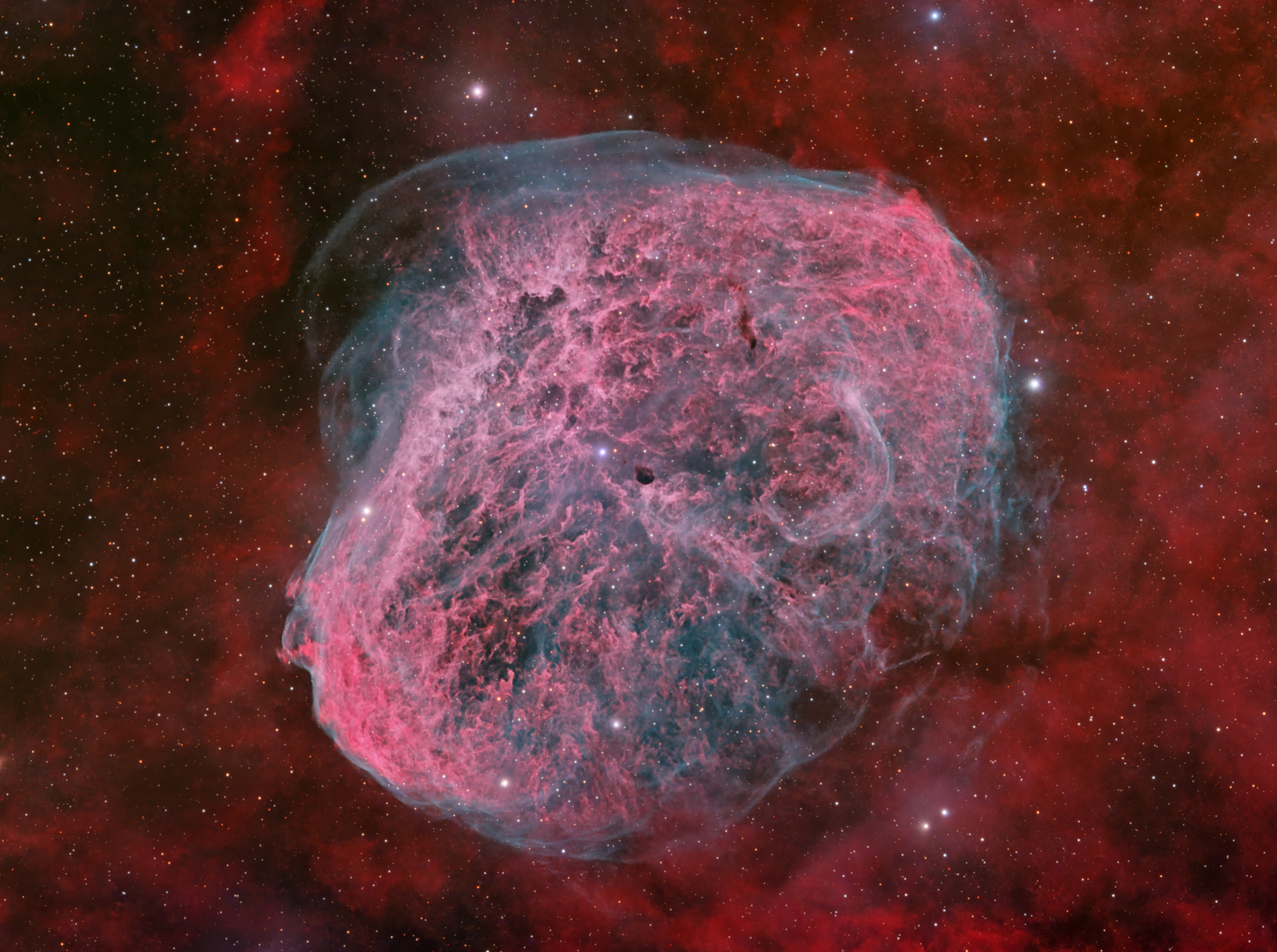 Image Credit & Copyright: Greg Bass
NGC 6888, also known as the Crescent Nebula, is a about 25 light-years across, a cosmic bubble blown by winds from its central, massive star. This deep telescopic image includes narrowband image data, to isolate light from hydrogen and oxygen atoms. The oxygen atoms produce the blue-green hue that seems to enshroud the nebula's detailed folds and filaments. Visible within the nebula, NGC 6888's central star is classified as a Wolf-Rayet star (WR 136). The star is shedding its outer envelope in a strong stellar wind, ejecting the equivalent of the Sun's mass every 10,000 years. In fact, the Crescent Nebula's complex structures are likely the result of this strong wind interacting with material ejected in an earlier phase. Burning fuel at a prodigious rate and near the end of its stellar life, this star should ultimately go out with a bang in a spectacular supernova explosion. Found in the nebula rich constellation Cygnus, NGC 6888 is about 5,000 light-years away.
#APOD #NASAInspires #Planetarium #PlanetaryScience #RocketLaunch
Image Credit & Copyright: Greg Bass
NGC 6888, also known as the Crescent Nebula, is a about 25 light-years across, a cosmic bubble blown by winds from its central, massive star. This deep telescopic image includes narrowband image data, to isolate light from hydrogen and oxygen atoms. The oxygen atoms produce the blue-green hue that seems to enshroud the nebula's detailed folds and filaments. Visible within the nebula, NGC 6888's central star is classified as a Wolf-Rayet star (WR 136). The star is shedding its outer envelope in a strong stellar wind, ejecting the equivalent of the Sun's mass every 10,000 years. In fact, the Crescent Nebula's complex structures are likely the result of this strong wind interacting with material ejected in an earlier phase. Burning fuel at a prodigious rate and near the end of its stellar life, this star should ultimately go out with a bang in a spectacular supernova explosion. Found in the nebula rich constellation Cygnus, NGC 6888 is about 5,000 light-years away.
#APOD #NASAInspires #Planetarium #PlanetaryScience #RocketLaunch
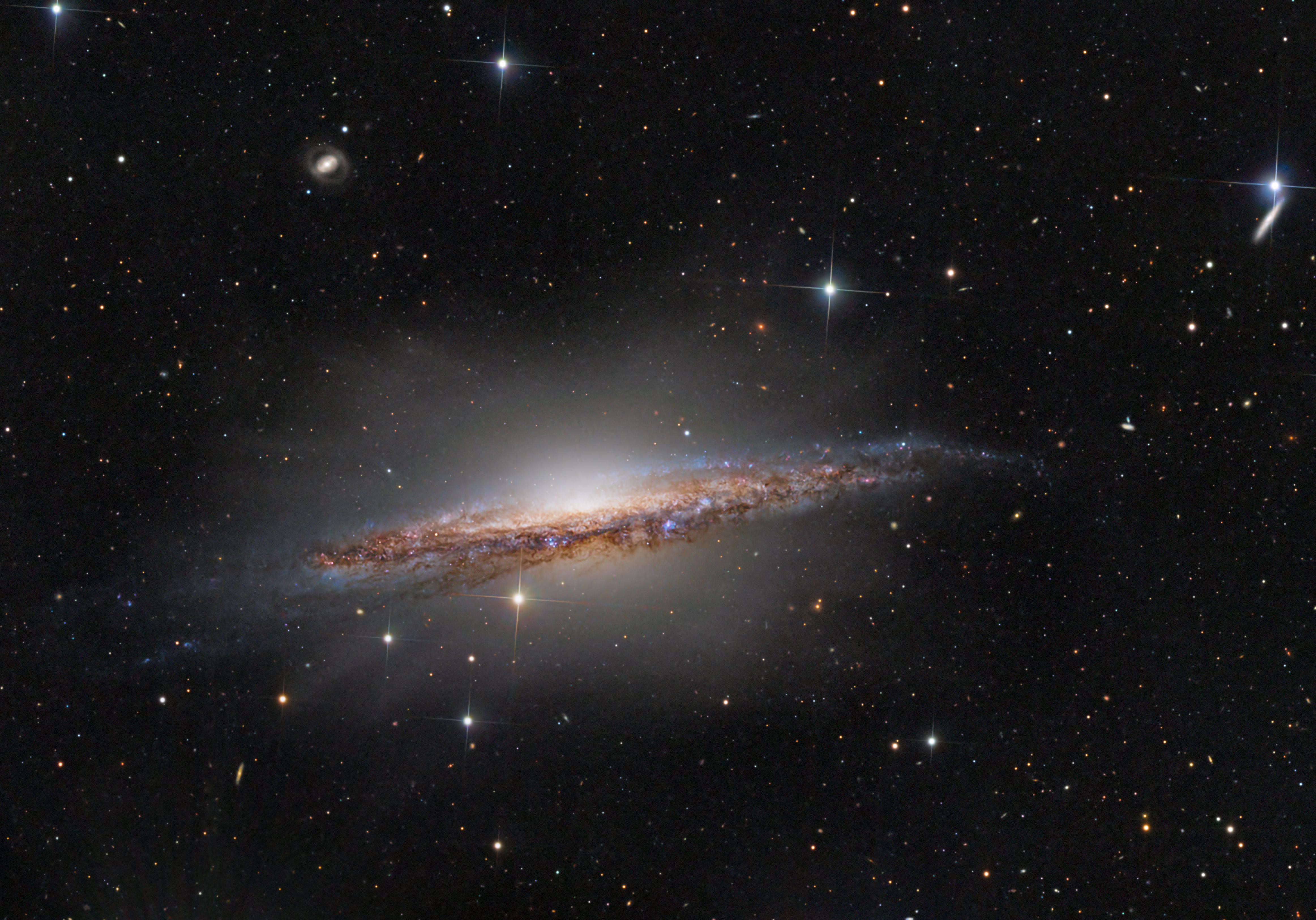 Image Credit & Copyright: John Hayes
Big, beautiful spiral galaxy NGC 1055 is a dominant member of a small galaxy group a mere 60 million light-years away toward the aquatically intimidating constellation Cetus. Seen edge-on, the island universe spans over 100,000 light-years, a little larger than our own Milky Way galaxy. The colorful, spiky stars decorating this cosmic portrait of NGC 1055 are in the foreground, well within the Milky Way. But telltale pinkish star forming regions and young blue star clusters are scattered through winding dust lanes along the distant galaxy's thin disk. With a smattering of even more distant background galaxies, the deep image also reveals a boxy halo that extends far above and below the central bulge and disk of NGC 1055. The halo itself is laced with faint, narrow structures, and could represent the mixed and spread out debris from a satellite galaxy disrupted by the larger spiral some 10 billion years ago.
#APOD #SpaceWeather #SpaceTechnology #Astrospace #StarCluster
Image Credit & Copyright: John Hayes
Big, beautiful spiral galaxy NGC 1055 is a dominant member of a small galaxy group a mere 60 million light-years away toward the aquatically intimidating constellation Cetus. Seen edge-on, the island universe spans over 100,000 light-years, a little larger than our own Milky Way galaxy. The colorful, spiky stars decorating this cosmic portrait of NGC 1055 are in the foreground, well within the Milky Way. But telltale pinkish star forming regions and young blue star clusters are scattered through winding dust lanes along the distant galaxy's thin disk. With a smattering of even more distant background galaxies, the deep image also reveals a boxy halo that extends far above and below the central bulge and disk of NGC 1055. The halo itself is laced with faint, narrow structures, and could represent the mixed and spread out debris from a satellite galaxy disrupted by the larger spiral some 10 billion years ago.
#APOD #SpaceWeather #SpaceTechnology #Astrospace #StarCluster
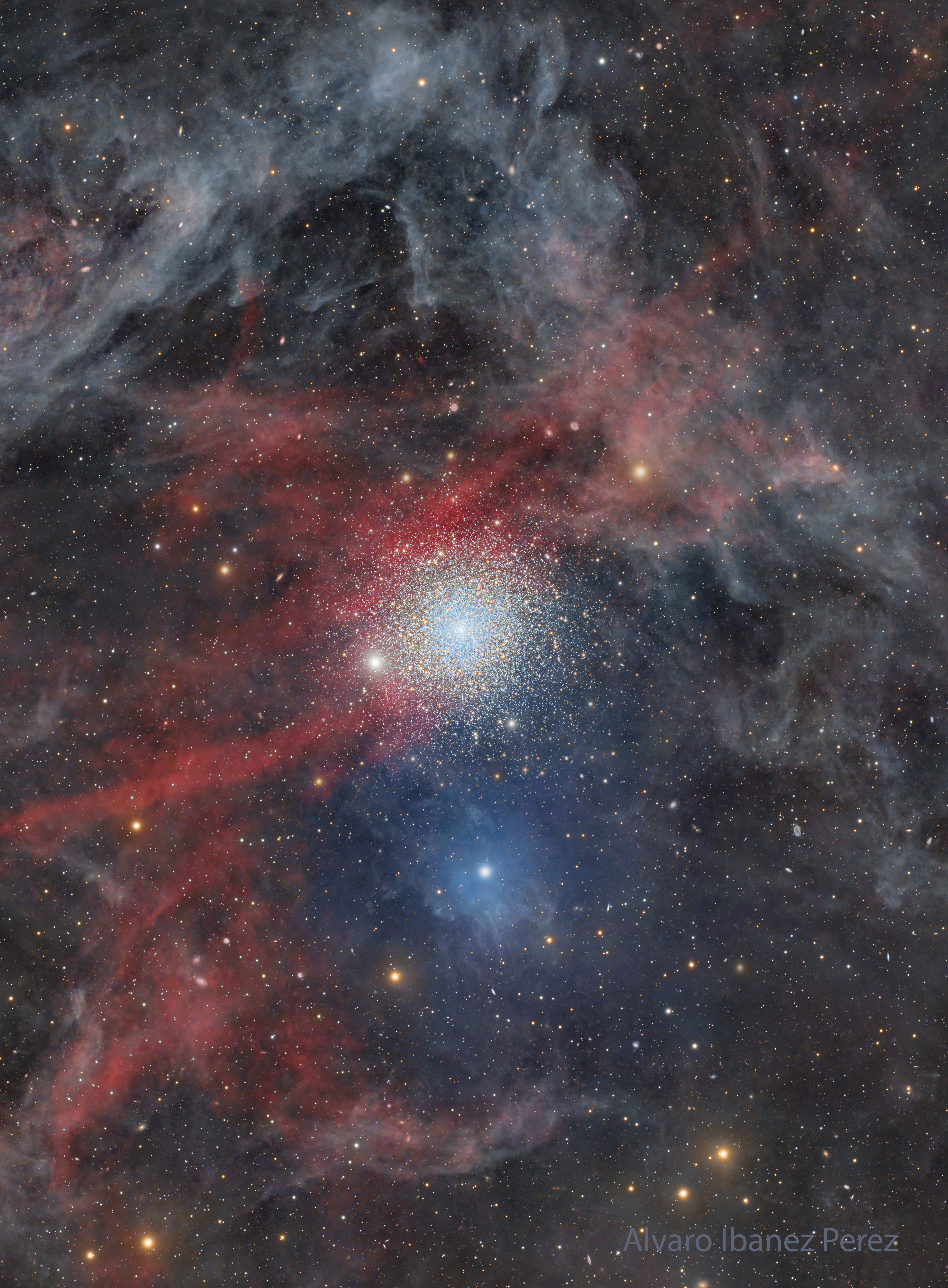 Image Credit & Copyright:
Alvaro Ibanez Perez
Stars, like bees, swarm around the center of bright globular cluster M15. The central ball of over 100,000 stars is a relic from the early years of our Galaxy, and continues to orbit the Milky Way's center. M15, one of about 150 globular clusters remaining, is noted for being easily visible with only binoculars, having at its center one of the densest concentrations of stars known, and containing a high abundance of variable stars and pulsars. The featured image of M15 was taken by combining very long exposures -- 122 hours in all -- and so brings up faint wisps of gas and dust in front of the giant ball of stars. M15 lies about 35,000 light years away toward the constellation of the Winged Horse (Pegasus). Almost Hyperspace: Random APOD Generator
#APOD #Science #Astrophoto #Galaxy #SpaceDiscovery
Image Credit & Copyright:
Alvaro Ibanez Perez
Stars, like bees, swarm around the center of bright globular cluster M15. The central ball of over 100,000 stars is a relic from the early years of our Galaxy, and continues to orbit the Milky Way's center. M15, one of about 150 globular clusters remaining, is noted for being easily visible with only binoculars, having at its center one of the densest concentrations of stars known, and containing a high abundance of variable stars and pulsars. The featured image of M15 was taken by combining very long exposures -- 122 hours in all -- and so brings up faint wisps of gas and dust in front of the giant ball of stars. M15 lies about 35,000 light years away toward the constellation of the Winged Horse (Pegasus). Almost Hyperspace: Random APOD Generator
#APOD #Science #Astrophoto #Galaxy #SpaceDiscovery
 Image Credit & Copyright:
Lin Zixuan
(Tsinghua U.)
What did Comet Lemmon look like when it was at its best? One example is pictured here, featuring three celestial spectacles all at different distances. The closest spectacle is the snowcapped Meili Mountains, part of the Himalayas in China. The middle marvel is Comet Lemmon near its picturesque best early this month, showing not only a white dust tail trailing off to the right but its blue solar wind-distorted ion tail trailing off to the left. Far in the distance on the left is the magnificent central plane of our Milky Way Galaxy, featuring dark dust, red nebula, and including billions of Sun-like stars. Comet C/2025 A6 (Lemmon) is already fading as it heads back into the outer Solar System, while the Himalayan mountains will gradually erode over the next billion years. The Milky Way Galaxy, though, will live on -- forming new mountains and comets -- for many billions of years into the future.
#APOD #Universe #SpaceFacts #Celestial #Astroengineering
Image Credit & Copyright:
Lin Zixuan
(Tsinghua U.)
What did Comet Lemmon look like when it was at its best? One example is pictured here, featuring three celestial spectacles all at different distances. The closest spectacle is the snowcapped Meili Mountains, part of the Himalayas in China. The middle marvel is Comet Lemmon near its picturesque best early this month, showing not only a white dust tail trailing off to the right but its blue solar wind-distorted ion tail trailing off to the left. Far in the distance on the left is the magnificent central plane of our Milky Way Galaxy, featuring dark dust, red nebula, and including billions of Sun-like stars. Comet C/2025 A6 (Lemmon) is already fading as it heads back into the outer Solar System, while the Himalayan mountains will gradually erode over the next billion years. The Milky Way Galaxy, though, will live on -- forming new mountains and comets -- for many billions of years into the future.
#APOD #Universe #SpaceFacts #Celestial #Astroengineering
 *Image creditor details unavailable via API. Visit linked page below for full info.*
What created this unusual space sculpture? Stars. This unusual system of swirls and shells, known as Apep, was observed in unprecedented detail by NASA’s James Webb Space Telescope in infrared light in 2024. Observations indicate that the unusual shape originates from two massive Wolf-Rayet stars orbiting each other every 190 years with each close passes causing a new shell of dust and gas to be expelled. Holes in these shells are thought to be caused by a third orbiting star. This stellar dust dance will likely continue for hundreds of thousands of years, possibly ending only when one of the massive stars runs out of internal nuclear fuel and explodes in a supernova punctuated by a burst of gamma-rays. Build your own star system: Astronomy Puzzle of the Day
#APOD #SpaceTechnology #SpaceTravel #SpaceInnovation #Astroengineering
*Image creditor details unavailable via API. Visit linked page below for full info.*
What created this unusual space sculpture? Stars. This unusual system of swirls and shells, known as Apep, was observed in unprecedented detail by NASA’s James Webb Space Telescope in infrared light in 2024. Observations indicate that the unusual shape originates from two massive Wolf-Rayet stars orbiting each other every 190 years with each close passes causing a new shell of dust and gas to be expelled. Holes in these shells are thought to be caused by a third orbiting star. This stellar dust dance will likely continue for hundreds of thousands of years, possibly ending only when one of the massive stars runs out of internal nuclear fuel and explodes in a supernova punctuated by a burst of gamma-rays. Build your own star system: Astronomy Puzzle of the Day
#APOD #SpaceTechnology #SpaceTravel #SpaceInnovation #Astroengineering
 *Image creditor details unavailable via API. Visit linked page below for full info.*
How far can you see? Everything you can see, and everything you could possibly see, right now, assuming your eyes could detect all types of radiations around you -- is the observable universe. In light, the farthest we can see comes from the cosmic microwave background, a time 13.8 billion years ago when the universe was opaque like thick fog. Some neutrinos and gravitational waves that surround us come from even farther out, but humanity does not yet have the technology to detect them. The featured image illustrates the observable universe on an increasingly compact scale, with the Earth and Sun at the center surrounded by our Solar System, nearby stars, nearby galaxies, distant galaxies, filaments of early matter, and the cosmic microwave background. Cosmologists typically assume that our observable universe is just the nearby part of a greater entity known as "the universe" where the same physics applies. However, there are several lines of popular but speculative reasoning that assert that even our universe is part of a greater multiverse where either different physical constants occur, different physical laws apply, higher dimensions operate, or slightly different-by-chance versions of our standard universe exist. Explore the Observable Universe: Random APOD Generator
#APOD #MilkyWay #Astrogeek #Cosmological #Astronauts
*Image creditor details unavailable via API. Visit linked page below for full info.*
How far can you see? Everything you can see, and everything you could possibly see, right now, assuming your eyes could detect all types of radiations around you -- is the observable universe. In light, the farthest we can see comes from the cosmic microwave background, a time 13.8 billion years ago when the universe was opaque like thick fog. Some neutrinos and gravitational waves that surround us come from even farther out, but humanity does not yet have the technology to detect them. The featured image illustrates the observable universe on an increasingly compact scale, with the Earth and Sun at the center surrounded by our Solar System, nearby stars, nearby galaxies, distant galaxies, filaments of early matter, and the cosmic microwave background. Cosmologists typically assume that our observable universe is just the nearby part of a greater entity known as "the universe" where the same physics applies. However, there are several lines of popular but speculative reasoning that assert that even our universe is part of a greater multiverse where either different physical constants occur, different physical laws apply, higher dimensions operate, or slightly different-by-chance versions of our standard universe exist. Explore the Observable Universe: Random APOD Generator
#APOD #MilkyWay #Astrogeek #Cosmological #Astronauts
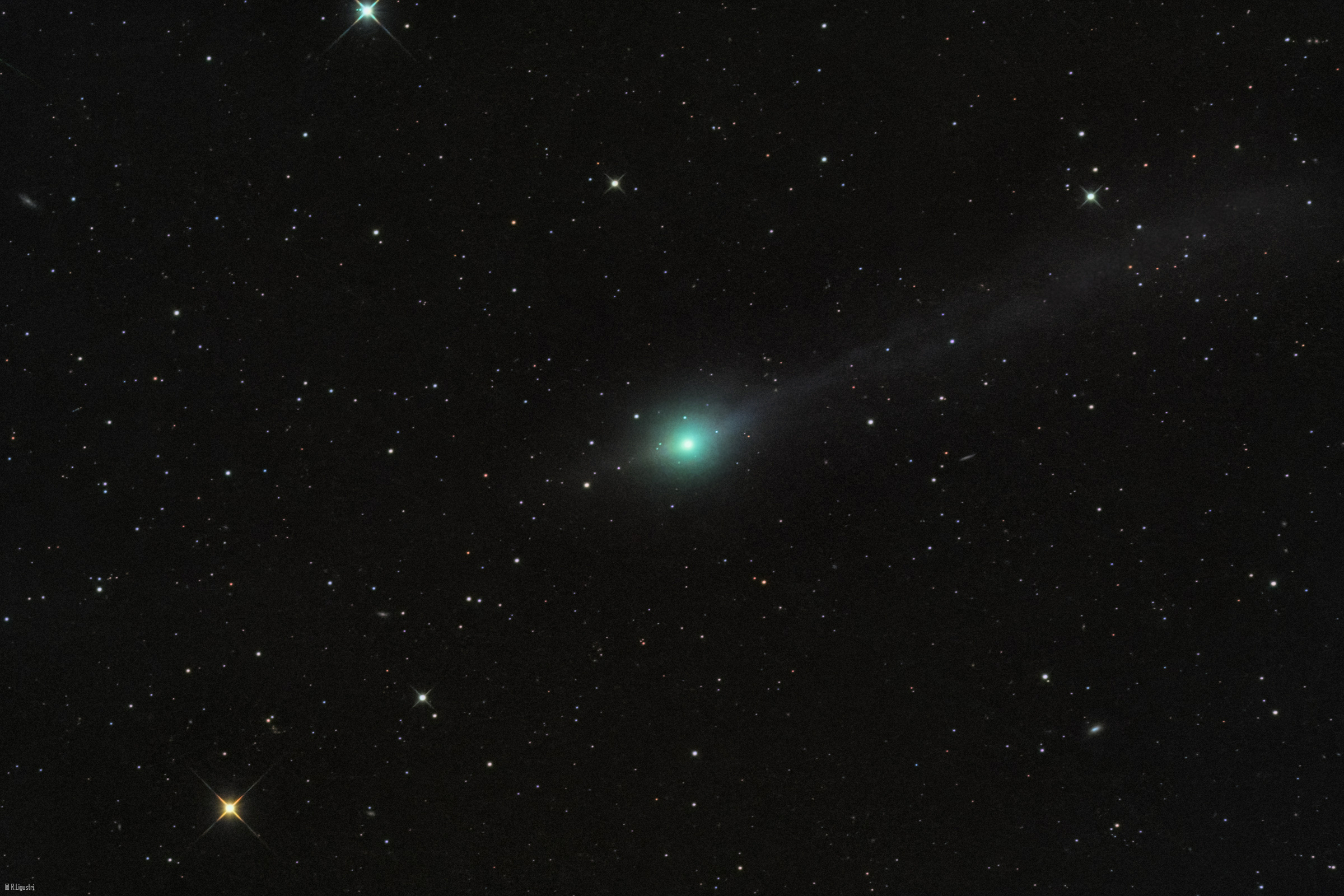 Image Credit & Copyright: Rolando Ligustri
Now outbound after its perihelion or closest approach to the Sun on October 29, Comet 3I/ATLAS is only the third known interstellar object to pass through our fair Solar System. Its greenish coma and faint tails are seen against a background of stars in the constellation Virgo in this view from planet Earth, recorded with a small telescope on November 14. But this interstellar interloper is the subject of an on-going, unprecedented Solar System-wide observing campaign involving spacecraft and space telescopes from Earth orbit to the surface of Mars and beyond. And while the comet from another star-system has recently grown brighter, you'll still need a telescope if you want to see 3I/ATLAS from planet Earth. It's now above the horizon in November morning skies and will make its closest approach to Earth, a comfortable 270 million kilometers distant, around December 19.
#APOD #SpaceTechnology #Galactic #Planets #Cosmology
Image Credit & Copyright: Rolando Ligustri
Now outbound after its perihelion or closest approach to the Sun on October 29, Comet 3I/ATLAS is only the third known interstellar object to pass through our fair Solar System. Its greenish coma and faint tails are seen against a background of stars in the constellation Virgo in this view from planet Earth, recorded with a small telescope on November 14. But this interstellar interloper is the subject of an on-going, unprecedented Solar System-wide observing campaign involving spacecraft and space telescopes from Earth orbit to the surface of Mars and beyond. And while the comet from another star-system has recently grown brighter, you'll still need a telescope if you want to see 3I/ATLAS from planet Earth. It's now above the horizon in November morning skies and will make its closest approach to Earth, a comfortable 270 million kilometers distant, around December 19.
#APOD #SpaceTechnology #Galactic #Planets #Cosmology
 Image Credit & Copyright: Aygen Erkaslan
Alnitak, Alnilam, and Mintaka are the bright bluish stars from east to west (upper right to lower left) along the diagonal in this cosmic vista. Otherwise known as the Belt of Orion, these three blue supergiant stars are hotter and much more massive than the Sun. They lie from 700 to 2,000 light-years away, born of Orion's well-studied interstellar clouds. In fact, clouds of gas and dust adrift in this region have some surprisingly familiar shapes, including the dark Horsehead Nebula and Flame Nebula near Alnitak at the upper right. The famous Orion Nebula itself is off the right edge of this colorful starfield. The telescopic frame spans almost 4 degrees on the sky.
#APOD #NASA #Astrobiology #Astrotheory #SpaceTravel
Image Credit & Copyright: Aygen Erkaslan
Alnitak, Alnilam, and Mintaka are the bright bluish stars from east to west (upper right to lower left) along the diagonal in this cosmic vista. Otherwise known as the Belt of Orion, these three blue supergiant stars are hotter and much more massive than the Sun. They lie from 700 to 2,000 light-years away, born of Orion's well-studied interstellar clouds. In fact, clouds of gas and dust adrift in this region have some surprisingly familiar shapes, including the dark Horsehead Nebula and Flame Nebula near Alnitak at the upper right. The famous Orion Nebula itself is off the right edge of this colorful starfield. The telescopic frame spans almost 4 degrees on the sky.
#APOD #NASA #Astrobiology #Astrotheory #SpaceTravel