Paulo Sacramento's avatar
Paulo Sacramento
psacramento@primal.net
npub1uesc...7chm
Creative thinker with bias for action. Building HashImpact: a project that channels home Bitcoin miners’ hashrate to support social impact initiatives in underprivileged regions.
Paulo Sacramento's avatar
psacramento 7 months ago
So, Electrs should work fine with a pruned node in Umbrel, right?
Paulo Sacramento's avatar
psacramento 8 months ago
After testing several hyped AI tools for a crawling task at work, I found that the best solution was a $150 Windows application made by an obscure Indian developer. It’s saving me a whole week of tedious, repetitive work. Lesson learned: ignore the hype and take the time to test different tools, even if they don’t look polished at first glance.
Paulo Sacramento's avatar
psacramento 10 months ago
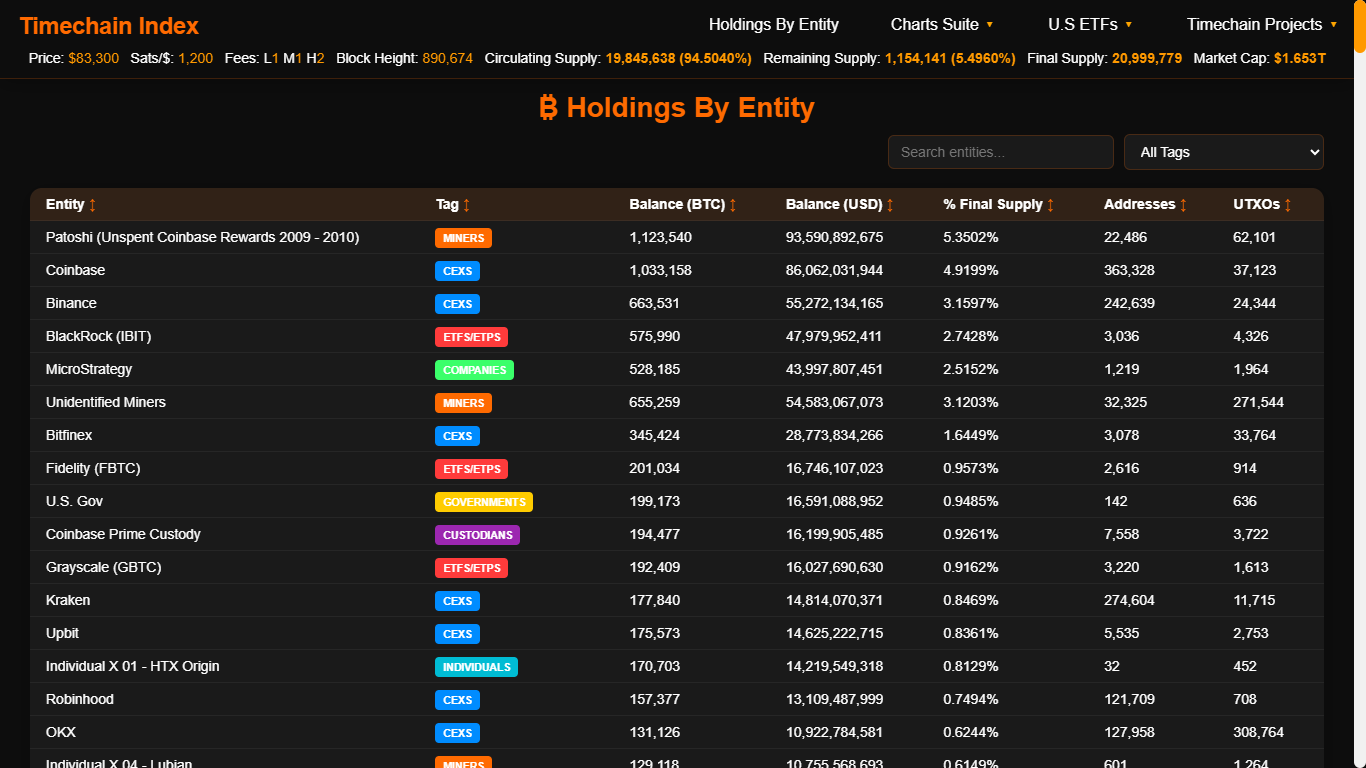
Here are some insights based on the latest SEC Form 13F filings aggregated by @Sani | TimechainIndex.com on 1. Overview of the Data The dataset lists institutional Bitcoin ETF holdings as reported in 13F filings. It includes the names of the institutions, their locations, and the corresponding values of their Bitcoin ETF shares in USD. The data spans a wide range of institutions—from major global hedge funds and trading firms to regional investment managers. 2. Key Insights A. Concentration of Holdings • Top Institutions Lead the Market: The largest holders—Jane Street Group, LLC ($2.79B), Millennium Management LLC ($2.62B), and Susquehanna International Group, LLP ($1.72B)—collectively account for a significant portion of the overall value. This indicates a market where a few major players are highly influential. • Wide Distribution: While the top few have holdings in the billions, many institutions hold amounts ranging from a few hundred million down to sub-$100 million levels. This suggests a stratified market where exposure varies considerably across firms. B. Geographic Concentration • Dominance of New York: A large number of these institutions are headquartered in New York. This reinforces New York’s role as a global financial hub and indicates that many of the largest players in Bitcoin ETF markets are based there. • Global Presence: Despite the heavy New York bias, there is notable international participation—with firms based in London, Hong Kong, Abu Dhabi, Toronto, and even Sydney. This geographic diversity shows that institutional interest in Bitcoin ETFs isn’t limited to a single region. C. Types of Institutions • Hedge Funds and Trading Firms: Many of the top names (such as Jane Street, Millennium, Citadel Advisors, and D. E. Shaw) are well-known hedge funds and quantitative trading firms. Their large positions could indicate a strategy focused on liquidity, arbitrage, or risk hedging within the crypto space. • Investment Banks and Wealth Management Firms: Firms like Morgan Stanley and various wealth management companies also appear, suggesting that institutional involvement isn’t limited to hedge funds alone. This diversity may imply that Bitcoin ETFs are viewed as a viable asset class for different investment strategies, including long-term wealth management and short-term trading. D. Implications for Market Trends • Institutional Confidence: The significant holdings by these firms might indicate a growing institutional confidence in Bitcoin ETFs. This could further drive adoption and liquidity in the cryptocurrency market. • Risk Management and Diversification: The varied exposure among institutions—from those with multi-billion-dollar holdings to smaller players—suggests that Bitcoin ETFs are becoming part of broader portfolio diversification strategies. Firms are likely using these instruments both as a speculative asset and as a hedge against broader market movements. • Potential for Regulatory Impact: With so many major institutions involved, any regulatory changes affecting Bitcoin ETFs could have wide-reaching implications. Institutions with heavy exposure may influence policy discussions or adjust their strategies in response to evolving regulatory landscapes. 3. Recommendations for Further Analysis • Trend Analysis Over Time: Compare current holdings with historical data to determine whether institutional allocations to Bitcoin ETFs are increasing, decreasing, or stabilizing. • Risk Assessment: Evaluate how the concentration of holdings (both by institution and by geography) might affect market volatility, particularly during market corrections or regulatory shifts. • Correlation with Market Movements: Assess whether the investment strategies of these top institutions correlate with Bitcoin price movements or broader market trends. Understanding this relationship could offer insights into market sentiment and future price trends. • Cross-Asset Exposure: Analyze whether institutions with high Bitcoin ETF holdings also have significant exposure in other cryptocurrency-related assets. This could indicate a broader strategy in digital asset investments. 4. Final Thoughts This dataset offers a snapshot of the diverse institutional landscape investing in Bitcoin ETFs. The concentration among top players, coupled with a strong geographic cluster in New York and notable international participation, points to a maturing market that balances high-stakes trading with broader asset diversification. Keeping an eye on how these positions evolve over time will be key for anyone monitoring the institutional impact on cryptocurrency markets. This analysis is intended to provide valuable insights that can support strategic decision-making or further research into institutional behaviors in the Bitcoin ETF market.
Paulo Sacramento's avatar
psacramento 10 months ago
In this cycle, the BTC maxis have a new enemy: prophetic dreams!
Paulo Sacramento's avatar
psacramento 1 year ago
“Willow’s performance on this benchmark is astonishing: It performed a computation in under five minutes that would take one of today’s fastest supercomputers 1025 or 10 septillion years. If you want to write it out, it’s 10,000,000,000,000,000,000,000,000 years. This mind-boggling number exceeds known timescales in physics and vastly exceeds the age of the universe. It lends credence to the notion that quantum computation occurs in many parallel universes, in line with the idea that we live in a multiverse, a prediction first made by David Deutsch.”
Paulo Sacramento's avatar
psacramento 1 year ago
🥊 Who is going to win: Tyson or Jake Paul?
Paulo Sacramento's avatar
psacramento 1 year ago
NotebookLM has been updated! “Get more out of your Audio Overviews We’ve been delighted with the reception of Audio Overviews so far, and we’re introducing a pair of new features today: - Guide the conversation: Now you can provide instructions before you generate a "Deep Dive" Audio Overview. For example, you can focus on specific topics or adjust the expertise level to suit your audience. Think of it like slipping the AI hosts a quick note right before they go on the air, which will change how they cover your material. - Background listening: You can also listen to Audio Overviews while continuing to work within NotebookLM. Query your sources, get citations, and explore relevant quotes without interrupting the audio.”
Paulo Sacramento's avatar
psacramento 1 year ago
So, I basically stopped using Google recently. Perplexity is just so much better. If you want to learn more, here’s a 3 hour long talk on the subject:
Paulo Sacramento's avatar
psacramento 1 year ago
Conflicts between WordPress and WP Engine The main conflicts between WordPress and WP Engine stem from accusations that WP Engine profits from WordPress's open-source code without contributing enough back to the project, and that WP Engine misuses the WordPress trademark, confusing users. These conflicts have deeply impacted the WordPress community, leading to legal battles, bans, and heated debates about the ethics of open-source software and the power dynamics within the WordPress ecosystem. - Mullenweg, the founder of WordPress and CEO of Automattic, publicly criticized WP Engine, calling it a “cancer” to the WordPress community. - He argued that WP Engine, controlled by private equity firm Silver Lake, prioritizes profits over open-source ideals. - Mullenweg specifically pointed to WP Engine's limited contributions to the WordPress.org open-source project, despite the hosting service building its business on WordPress's free code. - He also accused WP Engine of misleading customers by using the "WP" abbreviation and offering a modified version of WordPress, thereby benefiting from brand confusion. These accusations escalated into legal threats and actions: - WP Engine sent a cease-and-desist letter to Automattic, claiming Mullenweg had threatened a “scorched earth nuclear approach” unless WP Engine paid Automattic a significant portion of its revenue. - Automattic responded with its own cease-and-desist, alleging WP Engine breached WordPress and WooCommerce trademark usage rules. - The WordPress Foundation, which owns the WordPress trademark, updated its policy to explicitly call out WP Engine's use of the "WP" abbreviation as potentially confusing to users. - Mullenweg then temporarily banned WP Engine from accessing resources on WordPress.org, impacting WP Engine customers' ability to update plugins and themes. This action sparked outrage within the community, with many criticizing Mullenweg for using his control over WordPress to harm WP Engine's business and inconvenience its customers. - WP Engine ultimately sued Automattic and Mullenweg for abuse of power, accusing them of extortion and threatening the open-source principles of WordPress. The conflict has exposed deep divisions and anxieties within the WordPress community: - Concerns over open-source sustainability: The conflict has reignited discussions about the responsibilities of companies that profit from open-source software. Many support Mullenweg's call for WP Engine to contribute more to WordPress. However, others argue that WP Engine is operating within the terms of the open-source license and that demanding payment could set a dangerous precedent. - Criticisms of Mullenweg's leadership: Some criticize Mullenweg for his aggressive approach and accuse him of abusing his power over WordPress.org and WordPress.com to benefit his company, Automattic. They believe his actions could damage the open-source nature of WordPress and discourage contributions. - Fears of trademark enforcement: The WordPress Foundation's trademark policy updates and actions against WP Engine have created uncertainty among developers and hosting providers who use "WP" in their branding. They worry about potential legal action and restrictions on their use of the term. The situation remains tense: - Automattic claims that WP Engine's lawsuit is baseless and that they are simply trying to protect the WordPress trademark and ensure fair contributions to the open-source project. - WP Engine maintains that Mullenweg is attempting to extort money from them and that his actions threaten the entire WordPress ecosystem. The conflict highlights the complexities of balancing commercial interests with the ideals of open-source software. It raises critical questions about power dynamics, trademark usage, and the future of the WordPress community. The long-term impact on the WordPress ecosystem and the broader open-source world remains to be seen.