The week ending October 25, 2025, captured a market completely disconnected from economic fundamentals.
The S&P 500 closed at a record high of 6,791.69 on Thursday, rallying 0.79% despite a backdrop of escalating chaos across multiple fronts.
This euphoria persisted even as consumer sentiment crashed to 53.6—the lowest reading in five months and down 24% year-over-year.
The University of Michigan's final October reading revealed collapsing consumer expectations at 50.3, down 32% from a year ago, with inflation and high prices dominating concerns. Yet markets ignored the warning.
The Federal Reserve prepares to cut rates Tuesday and Wednesday, October 28-29, despite inflation running at 3.1%—well above the 2% target—and without access to current economic data due to the government shutdown now in its fourth week.
Policymakers will make monetary policy decisions using six-week-old September data while flying blind through October's actual conditions.
China's Fourth Plenum concluded with vague promises of "technological self-sufficiency" but zero concrete GDP targets, spending commitments, or quantified stimulus—leaving markets to rally on hope rather than policy substance.
Trump abruptly terminated all trade negotiations with Canada over a television commercial, creating fresh uncertainty for the $2.6 trillion bilateral trade relationship.
Through it all, stocks climbed. The Dow notched its 12th record close of 2025. Tech stocks powered gains even after Netflix missed earnings and Tesla's margins collapsed to multi-year lows. Asian markets rallied Friday on optimism about the upcoming Trump-Xi APEC meeting, choosing hope over observable reality.
The gap between market euphoria and economic deterioration has never been wider. Consumer confidence at five-month lows. Inflation accelerating.
Trade relationships fracturing. Government dysfunctional. Corporate margins compressing. Yet equities hit all-time highs.
Something gives eventually—either economic data miraculously improves to justify these valuations, or markets correct violently to reflect reality. Given falling consumer sentiment, persistent inflation above target, and escalating policy chaos, the latter outcome appears far more likely.
The only remaining question is timing.
#Market

Henrik Ekenberg
hekenberg@iris.to
npub1uh0f...ehtg
Trader // Small cap investor Sweden
Notes (20)
What hasn't been sufficiently covered is how Trump's erratic communication style creates operational paralysis for multinational corporations and supply chain managers who need 18-24 month planning horizons to make capital allocation decisions.
Trump's late-night Truth Social post terminating all trade talks with Canada was riddled with typos and fragmented sentences—"TRADE NEGATIONS WITHADA AREEBYATED" and "TFFS VERY IMPORTANT THE NATIONAL AND EOMY"—suggesting it was an impulsive reaction rather than coordinated policy.
The trigger? An Ontario government TV ad featuring a 1987 Ronald Reagan radio address warning that "high tariffs inevitably lead to retaliation" and "millions of people lose their jobs".
This pattern is familiar. Trump threatened 35% universal tariffs on Canada in February, then exempted 85% of Canada-U.S. trade days later when Prime Minister Mark Carney negotiated.
He's threatened to dissolve Great Lakes water-sharing agreements, remove Canada from Five Eyes intelligence sharing, and annex Canada as the 51st state—then walked back or never followed through.
Canadian officials initially treated the annexation threats as jokes before realizing Trump might be serious about destabilizing the relationship.
But Carney's office has learned to wait out the volatile threats, expecting Trump to quietly restart talks within days.
For businesses, this creates an impossible environment. Companies making decisions about cross-border manufacturing, inventory positioning, supplier contracts, and capital investments need stable trade rules.
When the president can terminate negotiations via typo-filled social media posts at 11 PM over a $75,000 TV ad, rational planning becomes impossible.
More than C$3.6 billion in Canadian goods cross the border daily. Auto manufacturers, steel producers, lumber suppliers, and tech companies operate integrated North American supply chains built around the USMCA trade agreement that Trump himself negotiated.
Now he's threatening to blow it up over an advertisement.
The erratic pattern doesn't just create uncertainty—it destroys institutional credibility.
If trade policy can reverse within hours based on emotional reactions to TV ads, long-term commitments become unhedgeable risks. Companies can't price that volatility into contracts or feasibility studies.
Canada might simply ignore this latest outburst and wait for Trump to restart talks quietly next week, as he's done before.
But each cycle of threat-backdown-restart erodes the foundation for the $2.6 trillion bilateral trade relationship. Businesses need predictability. Trump's communication style makes that structurally impossible.
#Market #Trump #Canada
The Tide, the Wave, and the Life Raft: Understanding Market Cycles to Survive and Thrive
https://youtu.be/80Dzz8M0NJk
#Trendfollowing #trading
Trading success isn't about winning every trade—it's about making the right decisions over and over again, no matter the result.
Most traders jump straight into live trading without testing their system. Then they wonder why they blow up their accounts. 💸 Backtesting isn't optional—it's the foundation of profitable trading. Learn how to validate your edge before risking real money:
https://youtu.be/nUoymYDczhI
#Backtesting #TradingSystem #RiskManagement #TradingEducation #SmartTrading
The popular image of Thomas Edison as a lone genius is a damaging myth for startup founders. True success comes not from solitary breakthroughs but from effective teamwork and leadership, which is how Edison actually worked.
The "Lone Genius" Myth 💡
Many startup founders are encouraged to be the "Edison of their industry." This narrative sells a compelling story of a solitary inventor having sudden flashes of brilliance. Founders often internalize this myth, pushing themselves through endless nights of solo work and believing their singular vision is all that matters. They try to be the hero who does it all.
The Harmful Reality 🔥
This "lone genius" approach creates serious problems in growing companies.
Founder Burnout: When a founder tries to control every detail, burnout is inevitable.
Silenced Teams: Junior employees quickly learn not to share their ideas if only the founder's "vision" is valued.
Flawed Products: Valuable feedback, such as marketing input, gets ignored. Products are launched with obvious errors that a team could have easily caught.
This model contributes to significant dysfunction, which may explain why one in three startups reports serious team problems within their first year.
The Real Edison: A Master Manager 👨🔬
The historical truth about Edison is quite different. He wasn't a lone wolf; he was an expert project manager. His famous Menlo Park lab was a collaborative invention factory that employed around 40 full-time staff members.
His team's success, like the light bulb, was a result of systematic teamwork, not a single "aha!" moment. For instance, they methodically tested over 1,200 bamboo samples to find the ideal filament. Edison's true talent was in setting clear goals, documenting every failure, and hiring experts to solve problems collaboratively.
The Honest Question for Founders 🤔
If you're a founder working endless hours alone, ask yourself this: Are you truly working like Edison, or are you just struggling to lead a team effectively? Praising the myth of the solo hero causes countless good ideas to fail, while valuing teamwork is what actually builds success.
The popular image of Thomas Edison as a lone genius is a damaging myth for startup founders. True success comes not from solitary breakthroughs but from effective teamwork and leadership, which is how Edison actually worked.
The "Lone Genius" Myth 💡
Many startup founders are encouraged to be the "Edison of their industry." This narrative sells a compelling story of a solitary inventor having sudden flashes of brilliance. Founders often internalize this myth, pushing themselves through endless nights of solo work and believing their singular vision is all that matters. They try to be the hero who does it all.
The Harmful Reality 🔥
This "lone genius" approach creates serious problems in growing companies.
Founder Burnout: When a founder tries to control every detail, burnout is inevitable.
Silenced Teams: Junior employees quickly learn not to share their ideas if only the founder's "vision" is valued.
Flawed Products: Valuable feedback, such as marketing input, gets ignored. Products are launched with obvious errors that a team could have easily caught.
This model contributes to significant dysfunction, which may explain why one in three startups reports serious team problems within their first year.
The Real Edison: A Master Manager 👨🔬
The historical truth about Edison is quite different. He wasn't a lone wolf; he was an expert project manager. His famous Menlo Park lab was a collaborative invention factory that employed around 40 full-time staff members.
His team's success, like the light bulb, was a result of systematic teamwork, not a single "aha!" moment. For instance, they methodically tested over 1,200 bamboo samples to find the ideal filament. Edison's true talent was in setting clear goals, documenting every failure, and hiring experts to solve problems collaboratively.
The Honest Question for Founders 🤔
If you're a founder working endless hours alone, ask yourself this: Are you truly working like Edison, or are you just struggling to lead a team effectively? Praising the myth of the solo hero causes countless good ideas to fail, while valuing teamwork is what actually builds success.
My friends often tell me the news feels like a scheduled appointment with despair. They say it’s more fun to scroll through endless photos of other people’s holidays on Instagram. I understand the feeling completely. You look at your phone for two minutes and learn about five new global problems. Your brain can start to feel like it’s full of anxious static instead of thoughts.
I am not a fan of my brain turning to mush. So I decided to run a small experiment. I built myself a "good flow." This is just a simple way to filter the information I see every day. I pick topics I actually want to learn about. Then my flow searches for the latest good news and useful articles on them. Think of it as hiring a tiny, polite bouncer for your mind. Only the interesting stuff gets past the velvet rope.
For example, I'm trying to get better at trading. My flow brings me fresh information about how to do that. It skips all the screaming headlines. I also have a casual interest in how old clocks work. So I might get an article about mechanical gears. I do not get an article about celebrity arguments. I have effectively traded outrage for actual knowledge. It seems like a fair deal.
After two months of this, something strange happened. I realized my knowledge was starting to form a T shape. The vertical bar of the T is deep expertise in one or two subjects. For me, that was trading. I was getting a steady stream of detailed information, so my understanding went deeper.
The horizontal bar of the T is a broad knowledge of many different topics. All those little side interests, like the clocks or maybe sustainable farming, started building out that top bar. My T shape got a lot bigger. I now have a much stronger grasp of my main topics. I have a wider understanding of other things too.
This has some unusual side effects. You might find yourself at a dinner party explaining how the logistics of the global coffee bean supply can influence a market trend you read about that morning. Your friends will either think you are brilliant or a complete weirdo. I am aiming for brilliant, but I will accept weirdo.
This little project has worked well for me. It helped me learn without feeling overwhelmed. It also made me curious about other people. So I have a question for you. What topics do you read about to improve your own knowledge? What are you using to build your T shape, or what would you want to learn about if you could tune out all the noise?
You made it ! No picture and you came to the end ....
So what is your answer?
Mark Minervini's #1 signal for spotting a super-performing stock?
The 'calm before the breakout.'
It's a specific pattern of tightening price and shrinking volume that signals institutional buying. I break down his entire VCP method in my new video.
https://www.youtube.com/watch?v=xzEtRs7eEGI
Some reading for you :
The Trader’s Superpower: Mastering Drawdown
Control to Survive and Thrive in Any Market
https://www.filemail.com/d/zgvqwhsqeslpixo
If you keep seeing losses or losing streaks as something "bad," you’ll never reach consistency.
That mindset leads to twisting your rules, abandoning your strategy, and calling it “learning.”
You tell yourself it’s an improvement. But it’s not.
It’s just your fear of losing, dressed up as growth.
📉 There is no way to avoid losses.
And as long as you react to short-term pain, you’ll stay trapped in a loop — constantly adjusting, constantly chasing, and never stable.
Your real enemy is within: the part of you that believes it’s “doing the right thing,”
when it’s actually just sabotaging consistency with misguided good intentions.
🎲 Randomness influences short-term results.
So any “adjustment” you make based on short-term outcomes?
That’s not an improvement — that’s being manipulated by randomness.
The answer?
👉 Zoom out.
👉 Think long-term.
👉 Build a strategy you trust — and stick to it over a large sample size.
Market not in panic mode. Futures have small drop and vix future is falling.
Read the tape.

A pilot doesn't abandon the flight plan mid-journey just because the skies are quiet. Are you navigating the markets with your proven route, or are you just flying by the seat of your pants?
(New Metaphors)
Regard your trading strategy as that immutable flight plan—a route that has been rigorously tested and calculated for the highest probability of a safe arrival. You are the pilot in the cockpit. Your critical role is not to invent a new destination on a whim, but to execute the established plan, trusting your instruments to guide you through any weather.
Don't deviate into uncharted airspace just because you've hit a stretch of calm and feel impatient. That is the quickest path into a storm. A pilot who ignores their flight plan becomes the single greatest danger to the journey, inviting a catastrophic crash. For a trader, that crash is your account hitting zero. Trust your instruments, follow the plan, and navigate with discipline
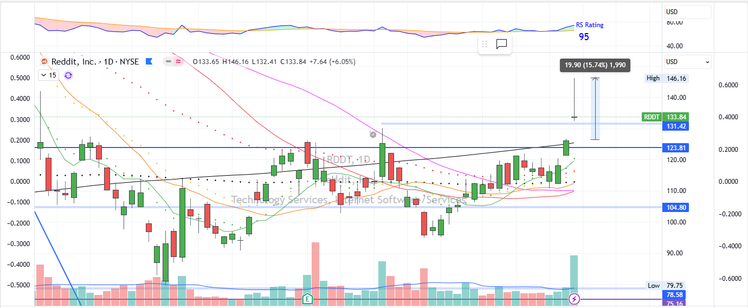 Let's call yesterday what it was: RDDT was a textbook institutional distribution day. A massive gap up on a surge of volume that gets sold into all day, closing near the low?
That's not a dip to buy. That's a giant red flag.
The professionals used the excitement and the strength of the gap to unload their shares onto amateurs who were chasing the "good move."
The stock is now guilty until proven innocent. The breakout has failed, and the chart is damaged.
Here is your new task: Go find a chart of a stock that had a similar powerful reversal day.
Analyze what it did over the next two months.
Did it collapse? Did it chop sideways for weeks before setting up again? Study the price action of failure.
You learn more from autopsies than you do from success stories.
Stop looking for your next trade and start building a model book based on what price action is actually telling you.
Want feedback on your charts?
Feel free to send me your graphs via private message — I’ll be happy to share my perspective.
Let's call yesterday what it was: RDDT was a textbook institutional distribution day. A massive gap up on a surge of volume that gets sold into all day, closing near the low?
That's not a dip to buy. That's a giant red flag.
The professionals used the excitement and the strength of the gap to unload their shares onto amateurs who were chasing the "good move."
The stock is now guilty until proven innocent. The breakout has failed, and the chart is damaged.
Here is your new task: Go find a chart of a stock that had a similar powerful reversal day.
Analyze what it did over the next two months.
Did it collapse? Did it chop sideways for weeks before setting up again? Study the price action of failure.
You learn more from autopsies than you do from success stories.
Stop looking for your next trade and start building a model book based on what price action is actually telling you.
Want feedback on your charts?
Feel free to send me your graphs via private message — I’ll be happy to share my perspective.As organizations grow in size and complexity, there is a natural tendency to manage through proxies—indirect measures that stand in for actual results.
This is a subtle but dangerous "Day 2" behavior. The most common and insidious proxy is process.
Good process exists to serve customers, but if an organization is not vigilant, the process can become "the thing".
The focus shifts from achieving a desired outcome to correctly following the prescribed steps
#Northvolt failed on this
https://youtu.be/-XjqWdD-zhI
For the vast majority of market participants, the weekend represents a period of rest, a welcome respite from the relentless flow of quotes and news that defines the trading week. For the elite market professional, however, the weekend is transformed. It is not downtime; it is the most critical phase of preparation, where the foundation for the coming week’s success is meticulously laid
https://youtu.be/vvFsrHvEhOs
Trading or Betting?
Right now, market conditions are so unstable that opening a trade feels more like placing a bet than making a calculated move.
When volatility is high and direction unclear, discipline matters more than action.
You don’t need to be in a trade every day. Sitting on your hands can be a strategy too.
📌 Reminder: Trade only when your edge is present — not just because the market is open.
Working link to audio : https://nostrrelay.cloud/52b88141217358254443e136c240cc89a60c8d026b72c227c9e320be955dd53b.mp4
nostr:nevent1qvzqqqqqqypzpew7nyhy6rva9qvuznjfv2nq4ru7dax5f83xyfkpjn7wva9ftmu9qyvhwumn8ghj7un9d3shjtnndehhyapwwdhkx6tpdshsz9thwden5te0wfjkccte9ejxzmt4wvhxjme0qqs0qmqj8w2u0vuk6p5ajrlu5mv9e28grg0a9vkq2a2dfq3klj52tfqcpl25p
The eruption of direct military conflict between Israel and Iran on June 13, 2025, presented global financial markets with a severe geopolitical shock. Intuition suggests that such a significant escalation of hostilities in a critical region should trigger a sustained downturn in risk assets. However, the market's reaction proved to be far more complex and, on the surface, paradoxical. After an initial, sharp sell-off across global indices, U.S. stock futures—including the Dow Jones Industrial Average, S&P 500, and Nasdaq 100—rebounded and were trading in positive territory by the following Monday, June 16. This report provides an exhaustive, multi-layered explanation for this seemingly contradictory market behavior
https://nostrrelay.cloud/52b88141217358254443e136c240cc89a60c8d026b72c227c9e320be955dd53b.mp4
The eruption of direct military conflict between Israel and Iran on June 13, 2025, presented global financial markets with a severe geopolitical shock. Intuition suggests that such a significant escalation of hostilities in a critical region should trigger a sustained downturn in risk assets. However, the market's reaction proved to be far more complex and, on the surface, paradoxical. After an initial, sharp sell-off across global indices, U.S. stock futures—including the Dow Jones Industrial Average, S&P 500, and Nasdaq 100—rebounded and were trading in positive territory by the following Monday, June 16. This report provides an exhaustive, multi-layered explanation for this seemingly contradictory market behavior
https://youtu.be/WMDcISCXniU