Why did Socrates dislike democracy?
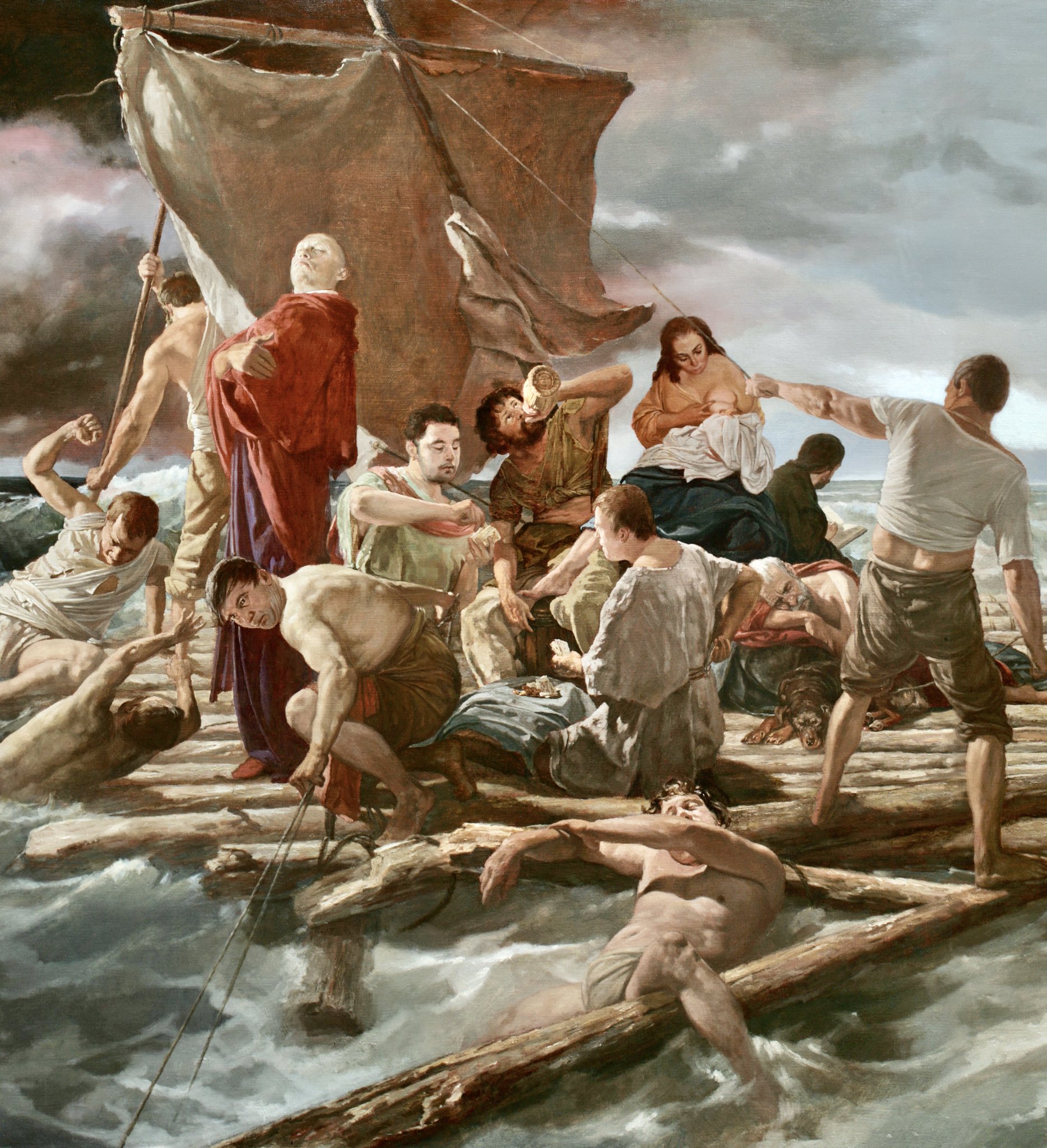
He likened the state to a ship — the uneducated voting in elections is like a ship taken over by a crew with no knowledge of sailing.
Democracies, he thought, are doomed to fail
Socrates warns what happens if you put just anybody in charge of selecting a ship's captain:
"The sailors are quarrelling with one another about the steering — everyone is of opinion that he has a right to steer, though he has never learned the art of navigation."
Without knowledge of seafaring, the crew is easily swayed by whoever is best at rhetoric and persuasion — not the person most skilled in navigation.
So, why let just anybody select the leader of a state?
Does this mean Socrates wanted a form of totalitarianism?
Not exactly. Rather than a privileged class of voters, he wanted everyone to think rationally enough to become worthy of participating.
He went around Athens trying to make this happen: challenging people in dialogue to interrogate their beliefs with logic.
This made him somewhat unpopular (especially with political elites) because he made people look foolish.
His point was that a democracy is only as good as the education system surrounding it. Jefferson said much the same:
"If a nation expects to be ignorant & free, in a state of civilisation, it expects what never was & never will be".
Nobody felt the consequence of mob rule more than Socrates. He was put on trial in 399 BC for corrupting the youth of Athens — by teaching them to think for themselves.
A democratic vote of 500 people sentenced him to death...
Socrates' most famous quote at the trial was this:
"The unexamined life is not worth living."
The core of his philosophy was that knowledge was the most fundamental "good", and that life should be lived in constant pursuit of it.
So then, who should choose the captain, if not the unwashed masses?
Plato's answer? The aristocracy...
It comes down to division of labor. If voting is seen as a skill or profession like any other, only those with expertise should participate.
Those with the knowledge of good — the philosophers — were the most logical rulers.
Ultimately, Plato thought, democracies were doomed to fail.
In his 5 forms of governments, democracy ranks only above tyranny, which it will inevitably slip into...
Democracies, in which freedom and equality are maximized, lead people to focus on pursuing selfish pleasures, not the common good.
In fact, they succumb to the idea that all pleasures have equal value. Freedom, in this sense, leads them further from truth.
When votes are cast based not on what is good, but what is desired by the masses, demagogues emerge. He with the best rhetoric (not expertise) plays on their selfish interests, appealing to emotion and not reason.
Once in charge, he creates a system of dependancy:
"He is always stirring up some war so that the people may be in need of a leader... being impoverished by war-taxes they may have to devote themselves to their daily business and be less likely to plot against him..."
It all leads to only one thing, wrote Plato:
"Out of the highest freedom, I believe, comes the most widespread and savage slavery."
#grownostr #freedom
X (formerly Twitter)
The Culturist (@the_culturist_) on X
Why did Socrates dislike democracy?
He likened the state to a ship — the uneducated voting in elections is like a ship taken over by a crew with...


