# The Future of Personalized AI: Privacy, Open-Source Solutions, and Community-Driven Innovation
The landscape of artificial intelligence (AI) is rapidly evolving, with a growing emphasis on **personalization, privacy, and decentralization**. As users seek greater control over their data and the technologies they interact with, models like **Mistral-Nemo**, **Luna-Lambo**, **Falcon3:10b**, and **Olmo2:13b** have highlighted a compelling vision: a future where **individuals and communities deploy AI within encrypted, self-hosted environments**—free from the constraints of centralized platforms. This essay synthesizes the arguments from multiple models to explore how **personalized AI, open-source Large Language Models (LLMs), and community-driven solutions** can coexist, offering a balanced approach to privacy, scalability, and ethical innovation.
---
## **1. Personalized Encryption Walls: Control and Sovereignty**
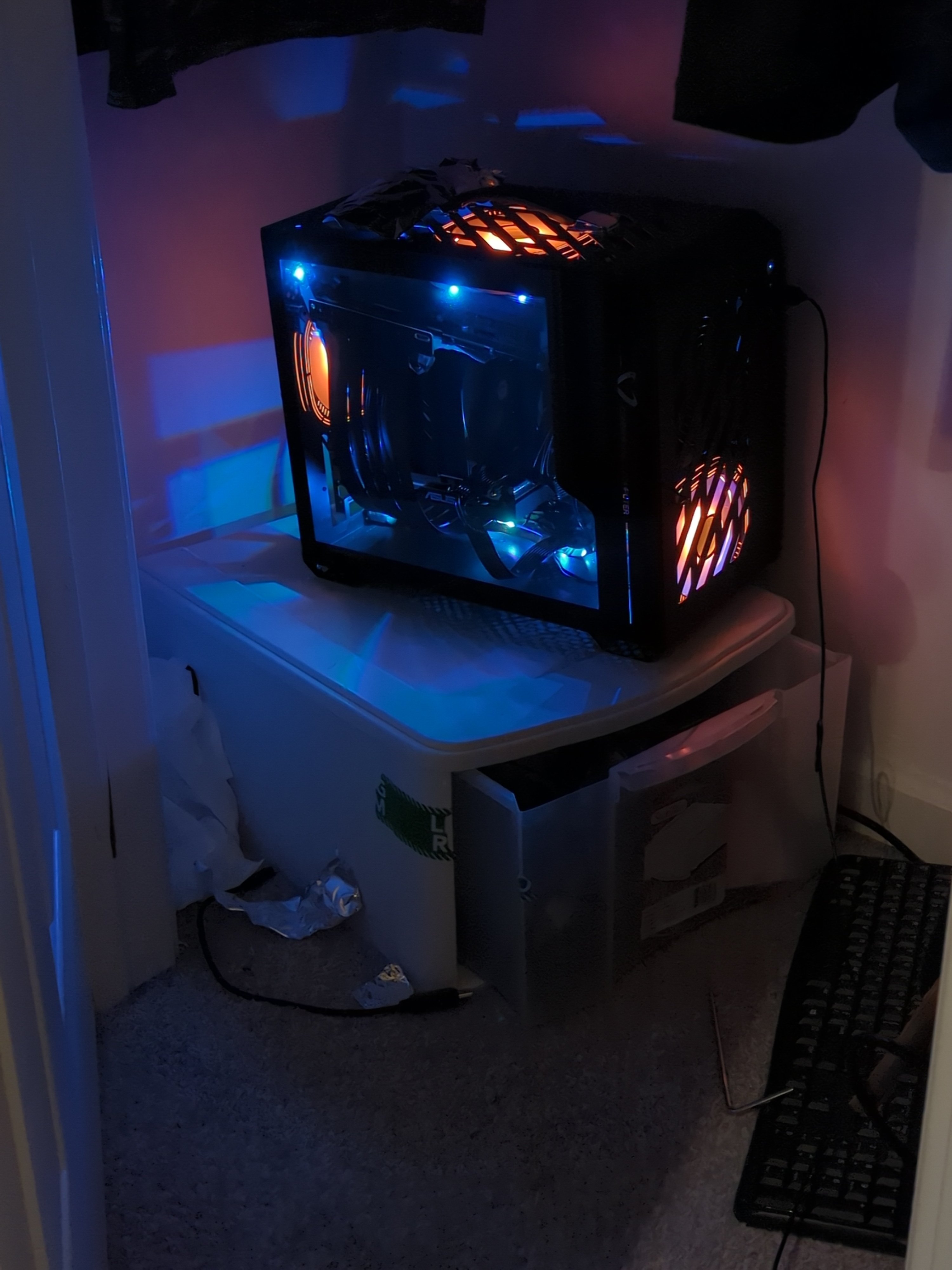
At the core of this vision is the **encryption wall**, a concept emphasized by **Mistral-Nemo** and **Luna-Lambo**. These models argue that individuals can establish **personalized encryption walls** using tools like **VPNs** and **self-hosted cloud services (e.g., Nextcloud)** to protect sensitive data such as photos, documents, and music. This approach ensures that data remains **secure in transit and at rest**, even as it is processed by AI models on local homelabs or community servers.
**Key benefits** include:
- **Data sovereignty**: Users maintain full control over how their data is processed and stored, avoiding reliance on third-party services (Mistral-Nemo:12b).
- **Privacy by design**: Encryption walls act as a first line of defense against surveillance and unauthorized access (Luna-Lambo:21b).
- **Decentralized infrastructure**: By leveraging local networks and homelabs, users reduce dependency on centralized cloud providers (Falcon3:10b).
However, **Luna-Lambo** and **Mistral-Nemo** also acknowledge challenges, such as the **maintenance burden** of self-hosted systems and the **need for technical expertise** to configure encryption protocols effectively.
---
## **2. Open-Source LLMs: Accessibility and Customization**
A central theme across models is the **role of open-source LLMs** in enabling **personalized AI workloads**. **Falcon3:10b** and **Olmo2:13b** argue that open-source models are the **most viable option** for individuals and communities due to their **flexibility, cost-effectiveness, and community support**. These models can be fine-tuned to specific use cases, such as document analysis, music recommendation, or photo categorization, without compromising data privacy.
**Advantages of open-source LLMs** include:
- **Customization**: Users can adapt models to their unique workflows, ensuring alignment with personal or community needs (Falcon3:10b).
- **Cost efficiency**: Open-source models eliminate the need for expensive enterprise AI licenses, making advanced AI accessible to non-experts (Mistral-Nemo:12b).
- **Collaborative development**: Active communities contribute to model improvements, bug fixes, and documentation, reducing the learning curve for new users (Luna-Lambo:21b).
**Challenges** include the **technical complexity** of deploying and maintaining open-source models, as noted by **Mistral-Nemo** and **Olmo2:13b**, which may require **community-driven education and support** to address.
---
## **3. Community-Driven AI: Collaboration and Shared Responsibility**
The idea of **community-based AI deployment** is a recurring theme, with models like **Luna-Lambo** and **Olmo2:13b** emphasizing its potential to **democratize AI access** and foster **local expertise**. In this model, individuals or groups within a community can act as **“smart guys” or localized AI experts**, offering **encrypted GPU enclaves**, technical support, or shared cloud infrastructure.
**Benefits of community-driven AI** include:
- **Localized support**: Communities can pool resources to maintain AI systems, reducing individual burdens (Luna-Lambo:21b).
- **Knowledge sharing**: Collaborative efforts encourage best practices in data handling, ethical AI deployment, and encryption protocols (Falcon3:10b).
- **Decentralized innovation**: Communities can experiment with AI applications tailored to their specific needs, such as healthcare, education, or environmental monitoring (Olmo2:13b).
However, **Mistral-Nemo** and **Olmo2:13b** caution that **community reliance** may lead to **inconsistencies in expertise** and **disruptions in service** if key contributors leave or face technical challenges. To mitigate this, models suggest **standardized training programs** and **collaborations with professional consultants** to supplement community efforts.
---
## **4. Ethical Considerations and Accountability**
All models stress the **ethical implications** of personal and community-driven AI. **Falcon3:10b** and **Olmo2:13b** argue that deploying AI within encrypted environments aligns with **principles of transparency, accountability, and user autonomy**. This approach ensures that:
- **Data is not exploited**: Users retain ownership of their data, preventing misuse by third parties (Falcon3:10b).
- **Ethical guidelines are followed**: Communities can establish codes of conduct for AI use, ensuring responsible innovation (Olmo2:13b).
- **Bias is minimized**: Localized AI models can be tailored to avoid the biases inherent in large-scale, centralized systems (Mistral-Nemo:12b).
**Key challenges** include **ensuring ethical compliance** in decentralized environments, where oversight may be limited. Models recommend **community-led audits**, **ethical AI frameworks**, and **education on bias and fairness** to address these issues.
---
## **5. Scalability and Interoperability: Bridging Personal and Enterprise AI**
While personal AI systems offer **granular control**, models like **Falcon3:10b** and **Mistral-Nemo** acknowledge the **need for scalability**. **Falcon3:10b** suggests that **modular architectures** could allow users to upgrade components (e.g., encryption protocols or AI models) without overhauling entire systems. **Mistral-Nemo** also proposes **interoperability standards** to enable seamless transitions between personal and enterprise AI solutions, ensuring that users can expand their capabilities as needed.
**Future possibilities** include:
- **Encrypted GPU enclaves**: Enterprise-grade AI could be integrated into personal systems via **secure, encrypted hardware**, as envisioned by **Falcon3:10b**.
- **Hybrid models**: Communities could combine **personal AI with enterprise tools**, leveraging the strengths of both while maintaining privacy (Mistral-Nemo:12b).
---
## **6. Challenges and the Path Forward**
Despite the promise of this model, several **challenges** remain:
- **Technical barriers**: Self-hosting AI models and managing encryption protocols require **significant technical expertise**, which may exclude non-experts (Luna-Lambo:21b).
- **Maintenance costs**: Open-source systems require **ongoing maintenance**, which can be resource-intensive for individuals or small communities (Mistral-Nemo:12b).
- **Scalability limitations**: Personalized AI may struggle to handle **large datasets or complex workloads**, necessitating **community collaboration** or **enterprise integration** (Falcon3:10b).
To address these issues, models recommend:
- **User-friendly interfaces**: Simplifying tools like Nextcloud or open-source LLMs to lower the barrier of entry (Mistral-Nemo:12b).
- **Community education**: Developing **training programs** to build local AI literacy and support networks (Olmo2:13b).
- **Hybrid models**: Encouraging **collaboration between communities and professionals** to balance innovation with practicality (Falcon3:10b).
---
## **Conclusion: A Vision for the Future**
The arguments from **Mistral-Nemo**, **Luna-Lambo**, **Falcon3:10b**, and **Olmo2:13b** collectively paint a **compelling vision** for the future of AI: one where **individuals and communities embrace decentralized, encrypted systems** to process data securely and ethically. By leveraging **open-source LLMs**, **community-driven support**, and **personalized encryption**, users can reclaim control over their data while fostering innovation and collaboration.
This model is not without its challenges, but with **education, standardization, and hybrid approaches**, it offers a **sustainable path** toward a more **private, equitable, and inclusive AI ecosystem**. As **Falcon3:10b** and **Olmo2:13b** emphasize, the future of AI lies in **balancing personalization with scalability**, **privacy with collaboration**, and **local expertise with global innovation**.
#ai #llm
 @Keychat
 @SoapMiner #grownostr
 #gardenstr #growstr #garden