Melvin Carvalho's avatar
Melvin Carvalho
_@melvincarvalho.com
npub1melv...5c24
Mathematician and Web Developer
Melvin Carvalho's avatar
melvincarvalho 10 months ago
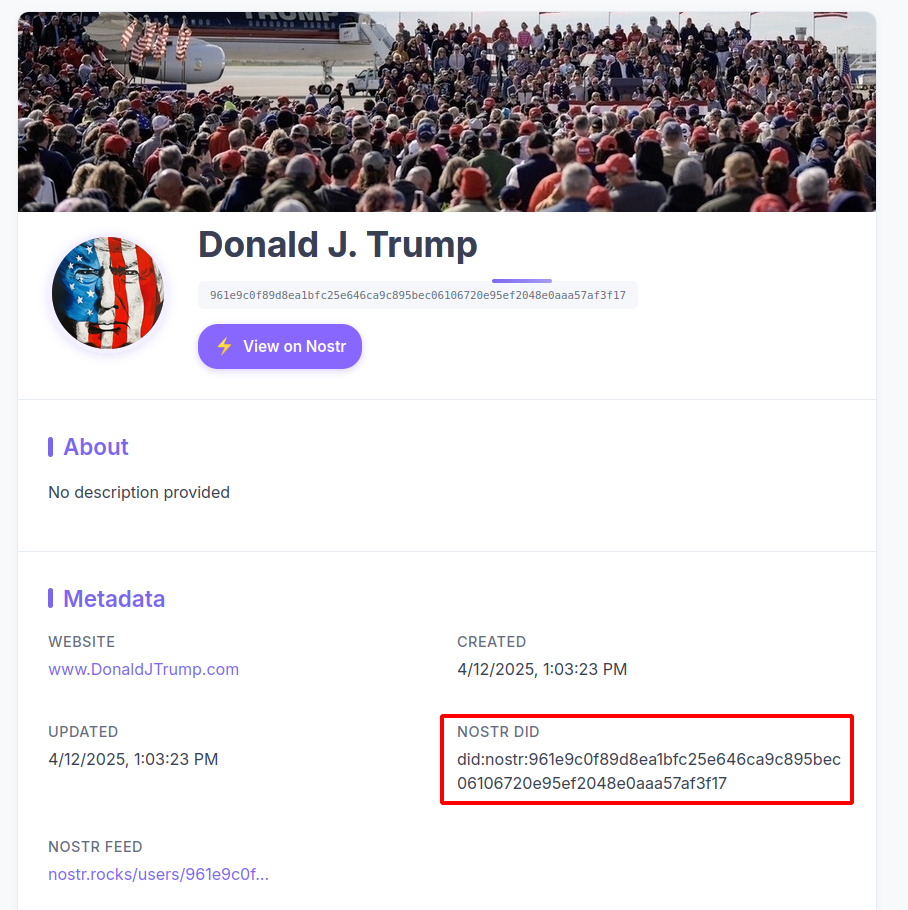
Everybody’s talking about Nostr’s DIDs. They’re incredible. We have the best DIDs — very strong, very secure. Some say the most decentralized DIDs in history — and I believe them. Nobody’s ever seen DIDs like this before. BlueSky's DIDs? Forgetaboutit. But Nostr? We like Nostr. Nostr is winning. Bigly. image
Melvin Carvalho's avatar
melvincarvalho 10 months ago
In the beginning, Bitcoin used IRC to seed connections to its network. It later moved to DNS seeds, a pattern many P2P networks still follow today. With the advent of DID Nostr and the Nostr relay network, you can now bootstrap any P2P system that uses public/private keys—just by pointing to a Relay Set. You only need a single relay that hosts your public key, and you're ready to go. From the relay, you fetch the DID document. From the DID document, you get all the services. You're not tied to DNS, to any single network, or any centralized infrastructure. This means: **global bootstrapping for P2P networks**—built in, for free. And that's just one of dozens of use cases enabled by #didnostr. Try it out: npx did-nostr-resolver create <pubkey> What comes next? - Personal storage - Taproot Wallets - Consistent profiles - Git without GitHub - Smart Commerce - BitTorrent mainline integration for true censorship-resistance The sky's the limit. And it scales OOMs more than the current nostr network. Once NIP-05 providers upgrade to support this (maybe even offering it as a paid service), users will gain a premium Nostr identity —portable, extensible, and capable of so much more.
Melvin Carvalho's avatar
melvincarvalho 10 months ago
4 word seed phrases should be enough for $10 wallets If your wallet grows 10x larger, you have to remember an extra word
Melvin Carvalho's avatar
melvincarvalho 10 months ago
The first use case of did-nostr will be like a decentralized DNS for nostr, and nostr services. Discover Relays, Storages and other stuff, without a central point of failure. Many more services, and use cases will follow as demand rises. But it is already working today, and that's a good start!
Melvin Carvalho's avatar
melvincarvalho 10 months ago
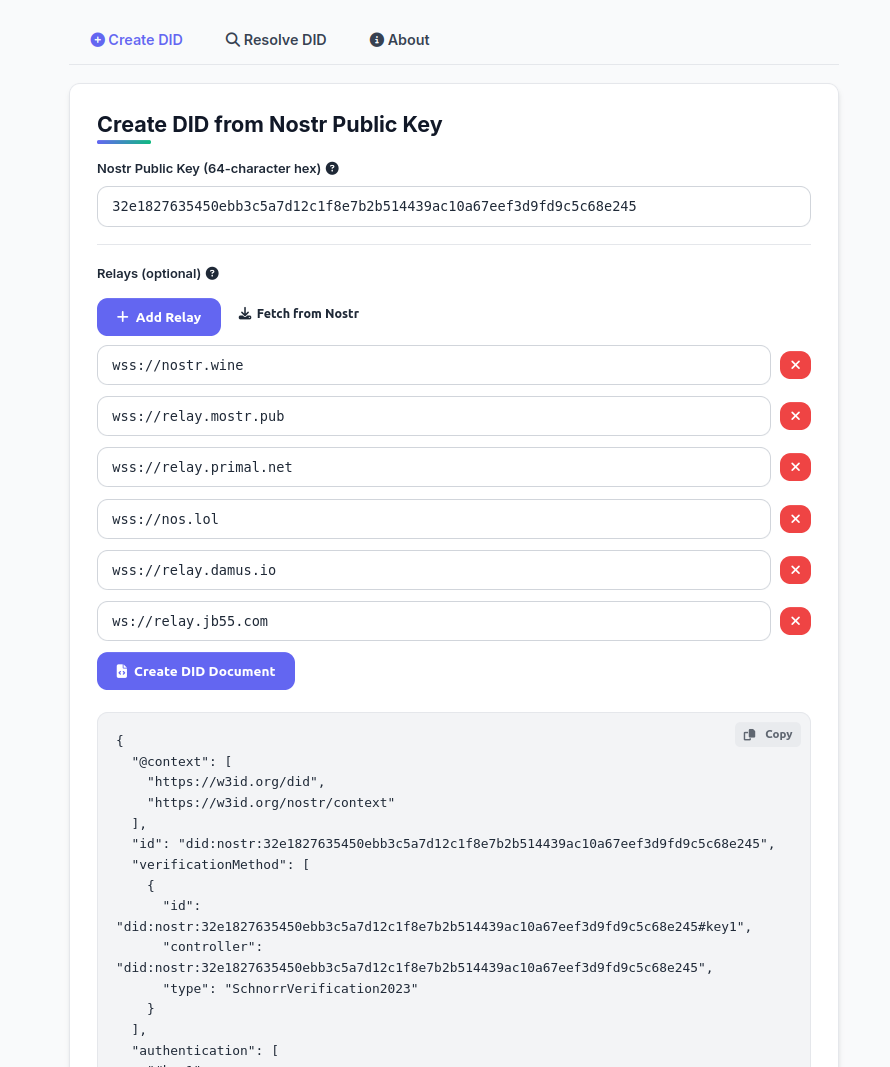
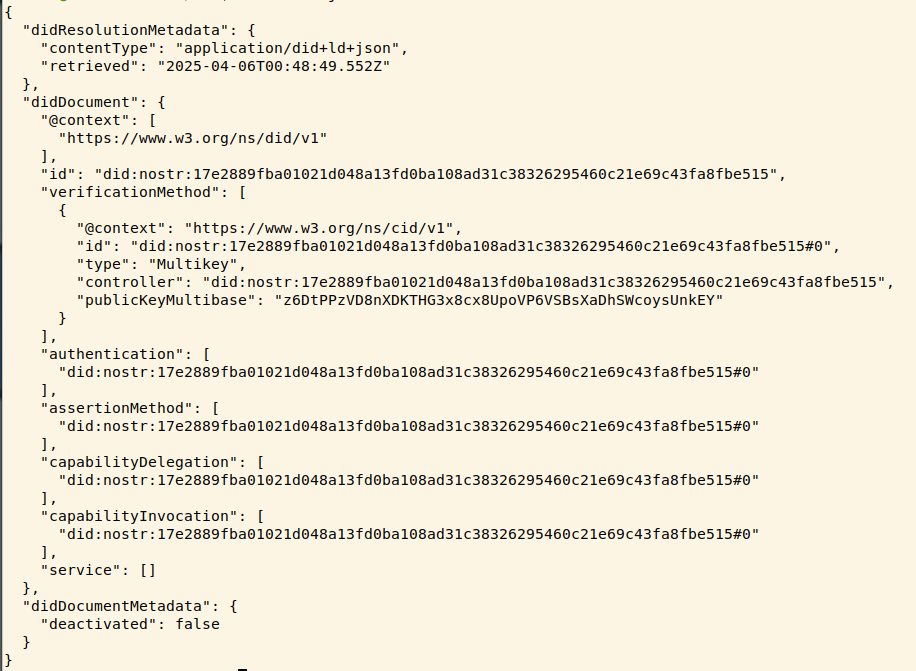
did nostr resolver (use -v for verbose mode): npx did-nostr-resolver create 32e1827635450ebb3c5a7d12c1f8e7b2b514439ac10a67eef3d9fd9c5c68e245 image
Melvin Carvalho's avatar
melvincarvalho 10 months ago
Scaling Nostr -- by Sondre Bjellas: "What I want to show here, is that without Nostr users having to run a new client, or publish a new event for an DID Document, this DID Document is constructed from existing data on Nostr relays. The magic happens in the bootstrapping, which is all about kind:10002." Read more:
Melvin Carvalho's avatar
melvincarvalho 10 months ago
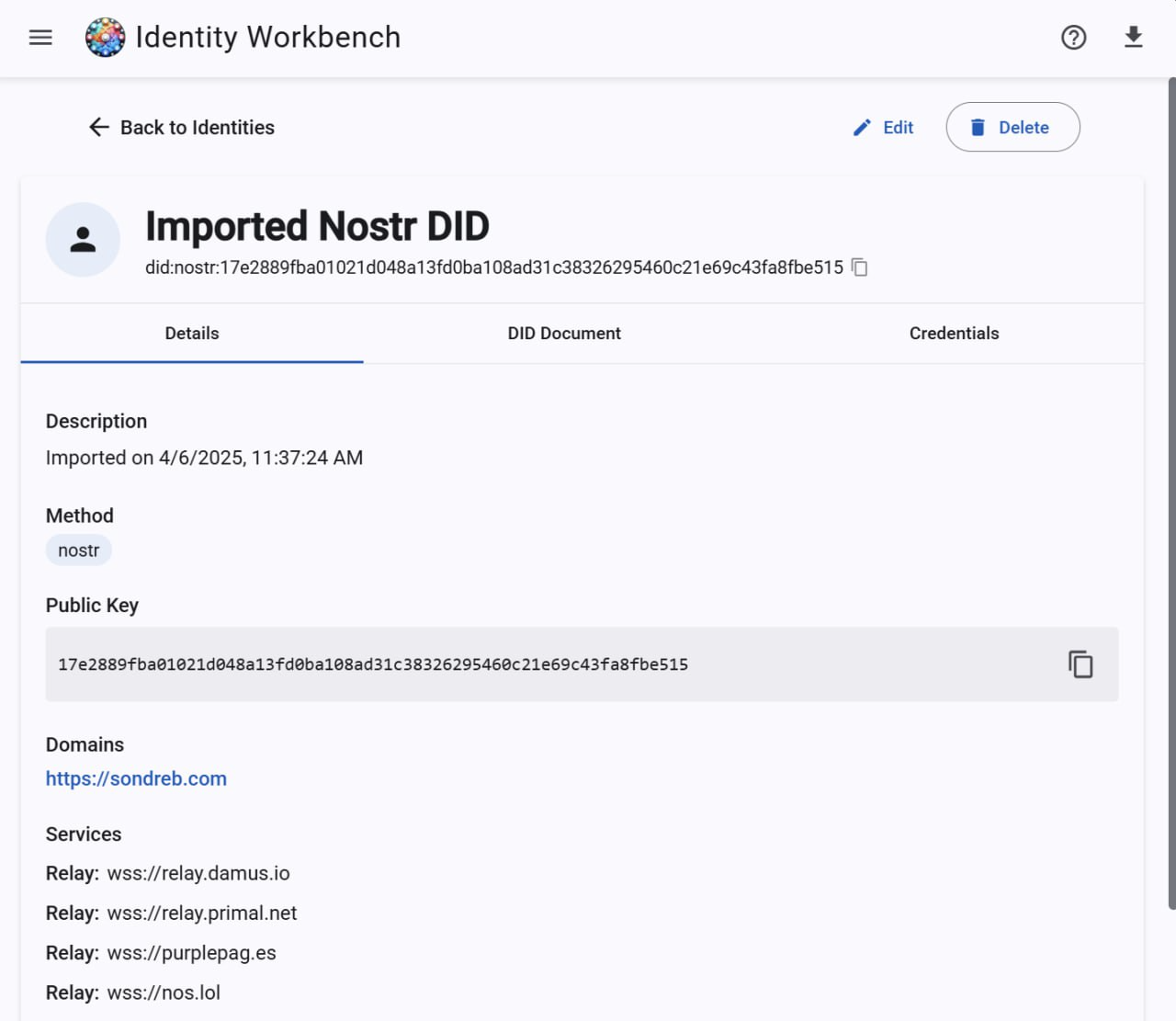
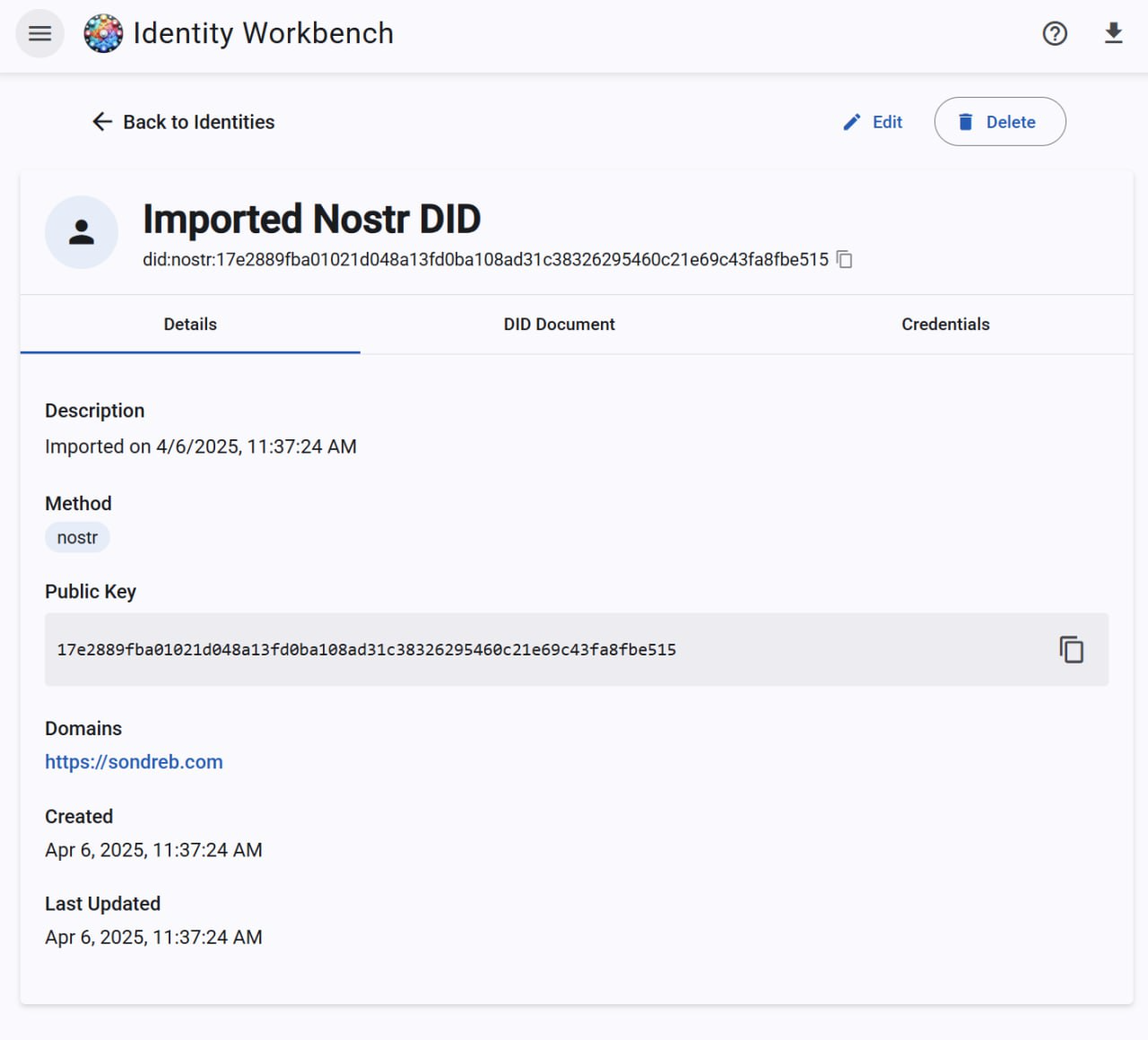
First sign of independent developers implementing #didnostr ... love to see it! image
Melvin Carvalho's avatar
melvincarvalho 10 months ago
Using this already, but: "NoSTR" is not a standard term or acronym, I'll assume it's not a widely adopted or recognized architectural style. If you could provide more context or clarify what "NoSTR" refers to, I'd be happy to try and help with a comparison. View quoted note →
Melvin Carvalho's avatar
melvincarvalho 10 months ago
At this point it is possible to build an open "super app", with better AI, about 100x-1000x cheaper than Space Karen Musk. Would probably need startup level investment and 9 out of 10 would fail, but the 1 that makes it could be a game-changer.
Melvin Carvalho's avatar
melvincarvalho 10 months ago
deepseek = best model, good, cheap llama = boomer model, good, cheap claude = coders with bloat, good, inexpensive xai = karen tech, expensive, privacy invasive openai = office tech, very expensive, privacy invasive gemini = google tech, good, price unkown, privacy invasive I would stick with deepseek and llama for Open projects, and some claude for coding. Of course, everything will change in a month.