Do you know of any great text to speech models that do intonation well? Open weights. They do not need to clone voices.
I've tried suno bark, but it sometimes hallucinates. I need the reading to be literally what's written. Also tried f5-tts, intonation is not great and the speed varies a lot, so when it's reading multiple texts, the speed of output speech is different between generation. The duration predictor is also not great and sometimes causes cutoffs.
Have I missed something?
English only for now is ok.

Juraj
juraj@bitpunk.fm
npub1m2mv...r8p9
I don’t seek rigid structure — I seek resonance
Learn how to use Bitcoin for more than just saving in my 📖Cryptocurrencies - Hack your way to a better life.
Vibe coding, reality bending, cypherpunk visions.
Get my books and courses here:
https://hackyourself.io/shop
https://juraj.bednar.io/shop
(You'll learn skills no one else is teaching!)
Podcasts 🎙️:
Option Plus - https://optionplus.io/
Reči o živote, vesmíre a vôbec: https://juraj.bednar.io/reci-o-zivote/
Ako vyhackovať otcovstvo: https://otcovia.com/
Beautiful.
Yesterday I was walking through the forest, a bit lost. I opened my phone (GrapheneOS powered) with OSMand and found my way.
Both are free and open source. Yes, the operating system and the navigation software. But so are maps. Imagine that someone went to the same forest, with a gps recorder and walked all the paths just to contribute to a free and open source database.
These days we have open weights AI, my mum is 3D printing something for a friend. It's an amazing world that was easy to imagine, but it was much harder to actually believe that this is how the world turns out.
Over from the bird by Eric S. Raymond:
You can just make things.
This is my massive white-pill about the revolution in small scale manufacturing that's going on right now.
The immediate trigger is a story I read about a guy who was annoyed that his wife needed a wheelchair, and the designs were all crappy and hideously expensive and made in China. So he booted up a small factory that now builds custom wheelchairs, delivering them for about $1,000 a pop, undercutting the Chinese by a factor of five.
The context, though is something that's been going on since the first mass market 3D printers in 2009. We've had more than a decade now in which many of the people who would have become part of the hacker culture I came up in back when software was the cutting edge have been learning how to use FDM printers, desktop CNC mills, laser cutters, EDM machines, and all kinds of physical fabrication techniques that you can set up in a garage or a basement.
The lesson has had time to sink in. If you're clever about it, you can hack matter the way we learned how to hack code - high speed, low drag, flexibly and playfully.
You can just make things. Without bimpty-bump millions of dollars of startup capital. With the new tech you can start small, turn a profit on boutique items, and scale up organically.
SpaceX is part of this story, using rapid iterations of custom designs made with 3D printing in sintered metal to continuously improve and simplify their rocket engines. So are Defense Distributed and the other semi-underground firearms-fabrication anarchists. So were the people who figured out how to garage-build respirators during the COVID panic. And now so is JerryRigEverything, the YouTuber who built a wheelchair factory.
The software revolution of a quarter century ago was fueled by Dennard scaling driving down the cost of compute power and wide area networking. Suddenly you could do things on a desktop that had taken raised floors and dedicated computer rooms just a few years before. Hackers grabbed these new possibilities and ran with them. I helped the movement understand itself.
I see something very like that happening again now. But instead of the demassification of software, we're seeing the demassification of manufacturing. The new hackers are being playful with atoms rather than bits. But the same spirit is there; I can feel it every time I wander into a makerspace.
These kids are not going to be stopped. There's too much fun to be had. Too many brains chasing every problem in sight. If my hacker culture didn't still exist it would make me all nostalgic to watch them.
But no. The old hacker culture and the new one flow together at the edges. The apprentice I'm teaching systems programming has a side-hustle printing models for mail-order customers. The kids put their part designs in public repositories; they didn't have to discover open source and distributed collaboration, they grew up absorbing both through their pores.
(Which has the accidental result that though I'm not leading things and writing manifestos this time, I'm one of their culture heroes anyway. That feels nice, I won't deny it.)
And you ain't seen nothing yet.
FDM and other small-scale fabrication technologies are attracting enough attention to improve at a torrid pace. There are obvious synergies with robotics and deep learning that haven't kicked in yet. Or, maybe they already have in somebody's garage, and we'll find out about it next week or next month.
It's a swarm attack, a disruption from below, and lots of conventional large-scale manufacturing outfits are going to suffer the fate of massified Chinese wheelchair factories - they just don't know it yet. They'll be undercut by cheaper, lighter, faster, smarter, custom, and localized.
Somewhere, Buckminster Fuller is whispering "ephemeralization" and smiling.
GDPR - How Not to Protect User Privacy
A blog about how the state, with good intentions, managed to reduce privacy, decrease wealth, and create another European regulatory megafail.


Juraj Bednar
GDPR - How Not to Protect User Privacy
Today, I have read a tweet praising positive impact of GDPR on security and privacy. As a founder of several security companies (being on the "rece...
GDPR – ako chrániť súkromie užívateľov nesprávne
Blog o tom, ako s dobrými úmyslami štát zhoršil súkromie, znížil bohatstvo a vytvoril ďalší európsky regulačný megafail.


Juraj Bednar
GDPR - ako chrániť súkromie užívateľov nesprávne
Dnes som si prečítal tweet o tom, aké je GDPR super pre bezpečnosť a súkromie. Ako zakladateľ viacerých firiem, ktoré pomáhajú s bezpeč...
AI in VIM? Sure.
Now show us your emacs setup! Ctrl-Shift-Meta-Alt-A (release keys) Shift-Meta-Alt-Option-I to start generation? :)
#emacsvsvim #itsnotevenfair #vimftw

GitHub
GitHub - ggml-org/llama.vim: Vim plugin for LLM-assisted code/text completion
Vim plugin for LLM-assisted code/text completion. Contribute to ggml-org/llama.vim development by creating an account on GitHub.
Wow this is insane:
Oasis, the first playable, realtime, open-world AI model. It's a video game, but entirely generated by AI. Oasis is the first step in our research towards more complex interactive worlds.
Oasis takes in user keyboard input and generates real-time gameplay, including physics, game rules, and graphics. You can move around, jump, pick up items, break blocks, and more. There is no game engine; just a foundation model.

Oasis
Generating Worlds in Realtime
GitHub
GitHub - etched-ai/open-oasis: Inference script for Oasis 500M
Inference script for Oasis 500M. Contribute to etched-ai/open-oasis development by creating an account on GitHub.
Is there a Cashu mint implementation that supports EUR (or USD, but I am more interested in EUR) tokens and has a callback for hedging for mint and melt operations (minting through Bitcoin of course) and can get an exchange rate somehow?
Bonus points if there would be a way to swap BTC and EUR balances (basically a eur-side melt paying another mint invoice for sats denominated mint).
Of course asking for a friend, I only do testnet EUR.
The🍁 "haiku"
Falling autumn leaves,
sixty percent SOC set,
battery on guard.
(Non haiku version:
When the leaves start to fall
I set minimum state of charge to 60%
My home solar system becomes mostly a backup battery
Ready for the system to fall too)
Does anyone know how to run Open-webui as a wrapped app with keyboard shortcuts to act as a replacement for local Siri (Apple Intelligence)/ChatGPT apps? Like pressing a hotkey will give me instant prompt to type in, without searching for browser windows and creating new conversation?
Adding a context menu to texts to allow summarization, shortening, elaborating, changing tone, or just custom rewrites would be cool as well. Especially because it would be multi-language (contrary to Apple Intelligence) and local (contrary to ChatGPT).
Another option would be any Ollama client that does the same. Open-Webui is cool though, because it can have multiple prompt styles and can work with multiple ollama endpoints, so I can use ollama-venice proxy for models that don't fit into the machine's RAM.
¡Olvídate del banco, pide prestado con tus criptomonedas! Nuevos protocolos descentralizados permiten usar Bitcoin como garantía para préstamos, ofreciendo privacidad, control y accesibilidad.
GCCVIEWS
Préstamos con Garantía de Criptomonedas: Una Alternativa a la Banca Tradicional - GCCVIEWS
El acceso a préstamos con garantía de Bitcoin y otras criptomonedas se ha convertido en una alternativa desafiante a la banca tradicional
Cypherpunk + AI.
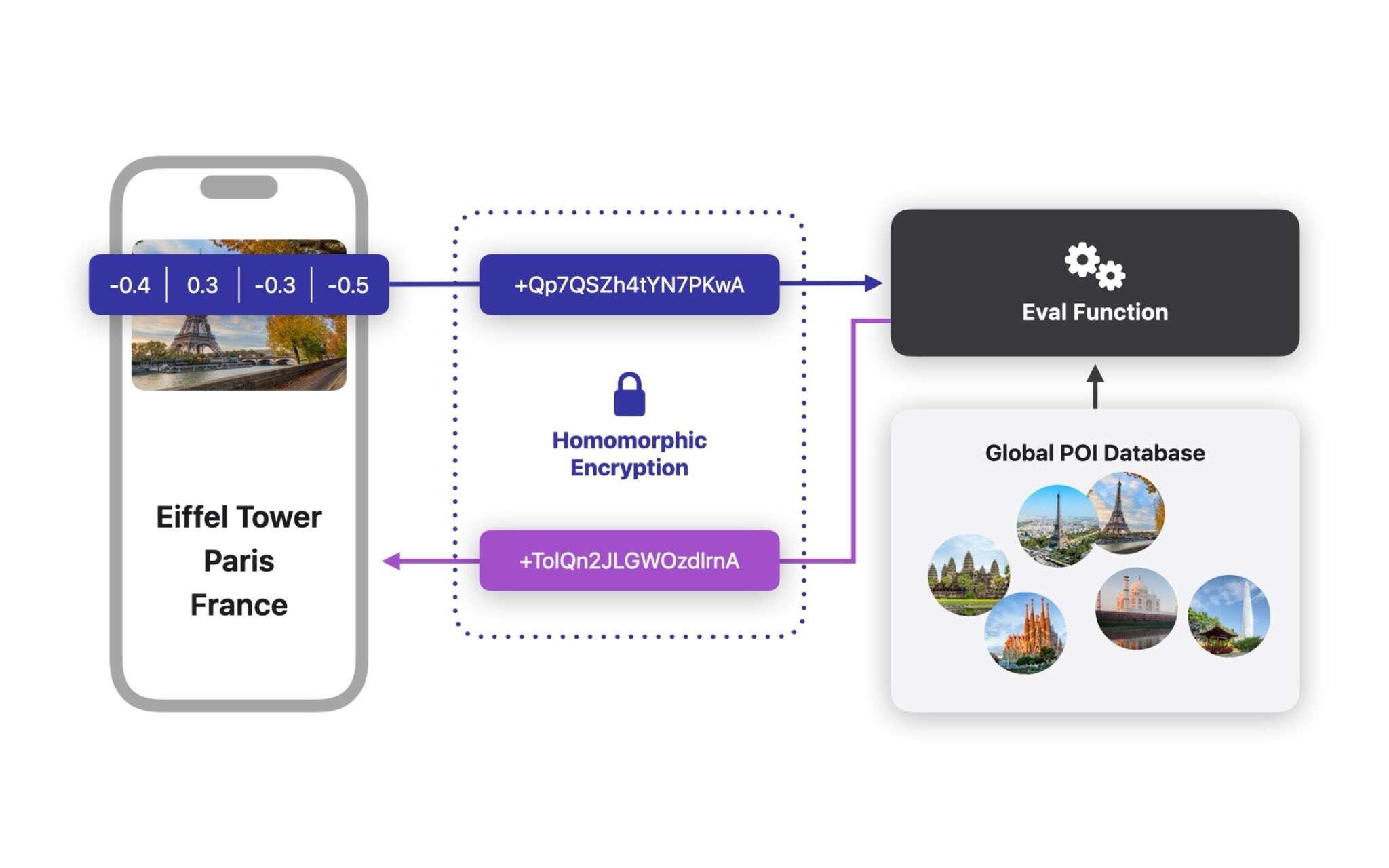
Converting semantic vectors to encrypted with fully homomorphic encryption and doing compute without knowing the source.


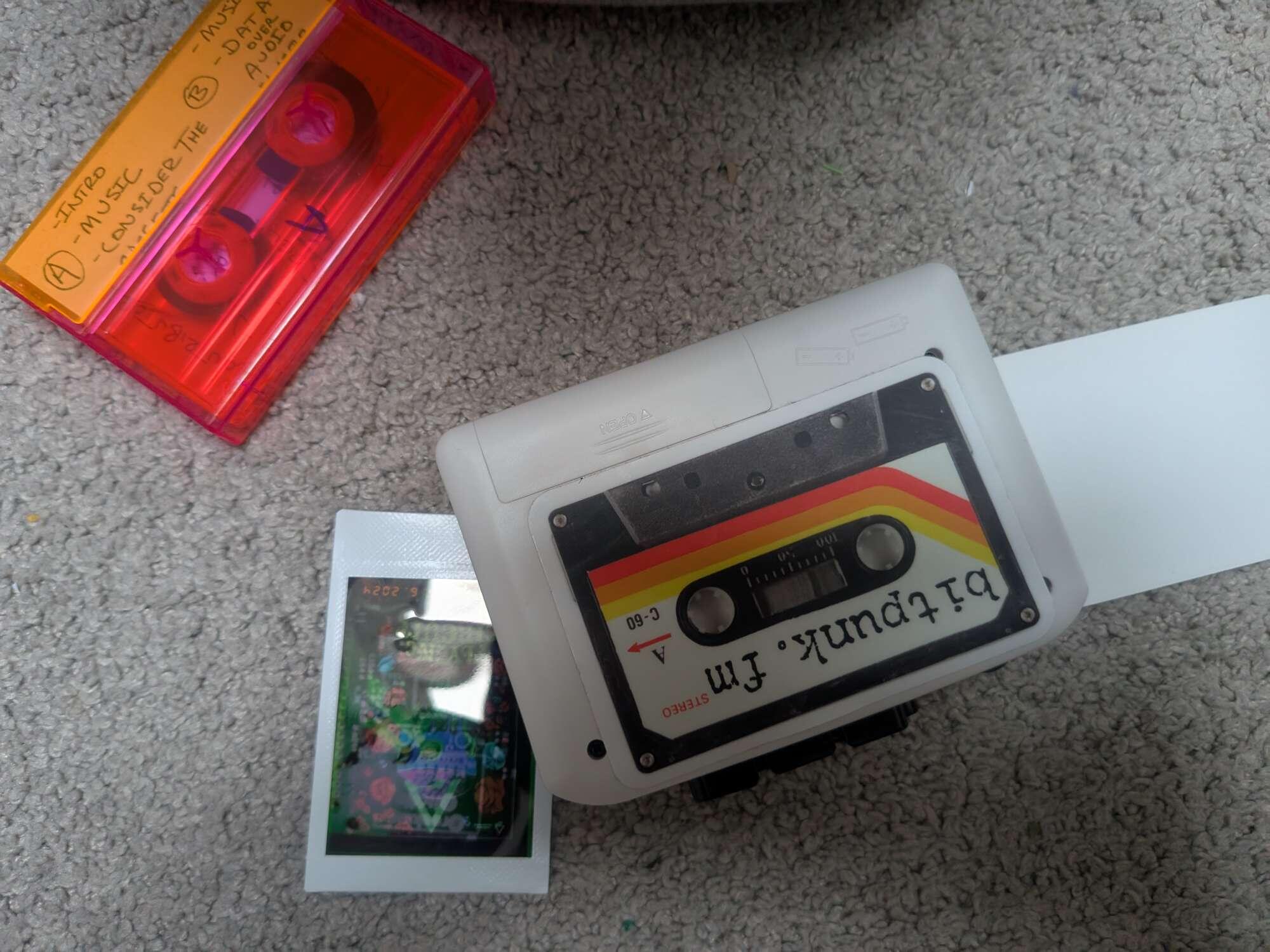
Hack for kids: instead of an unrestricted access to a tablet, give them a walkman with cassettes. They get understanding of physical medium, they can record songs they like (even from YouTube), stories, ... Modern walkmans can record from analog audio input, some have even an integrated microphone.
They have fun, they can play and it's entirely their own thing.
On the other side there's no corporation wanting their attention to fill their head with cornflakes ads.
And then you give them @bitpunk.fm is typing cassettes to listen to some good music (e.g. @Deepologic) and they also learn about Bitcoin and analog encoding and a lot of other stuff.


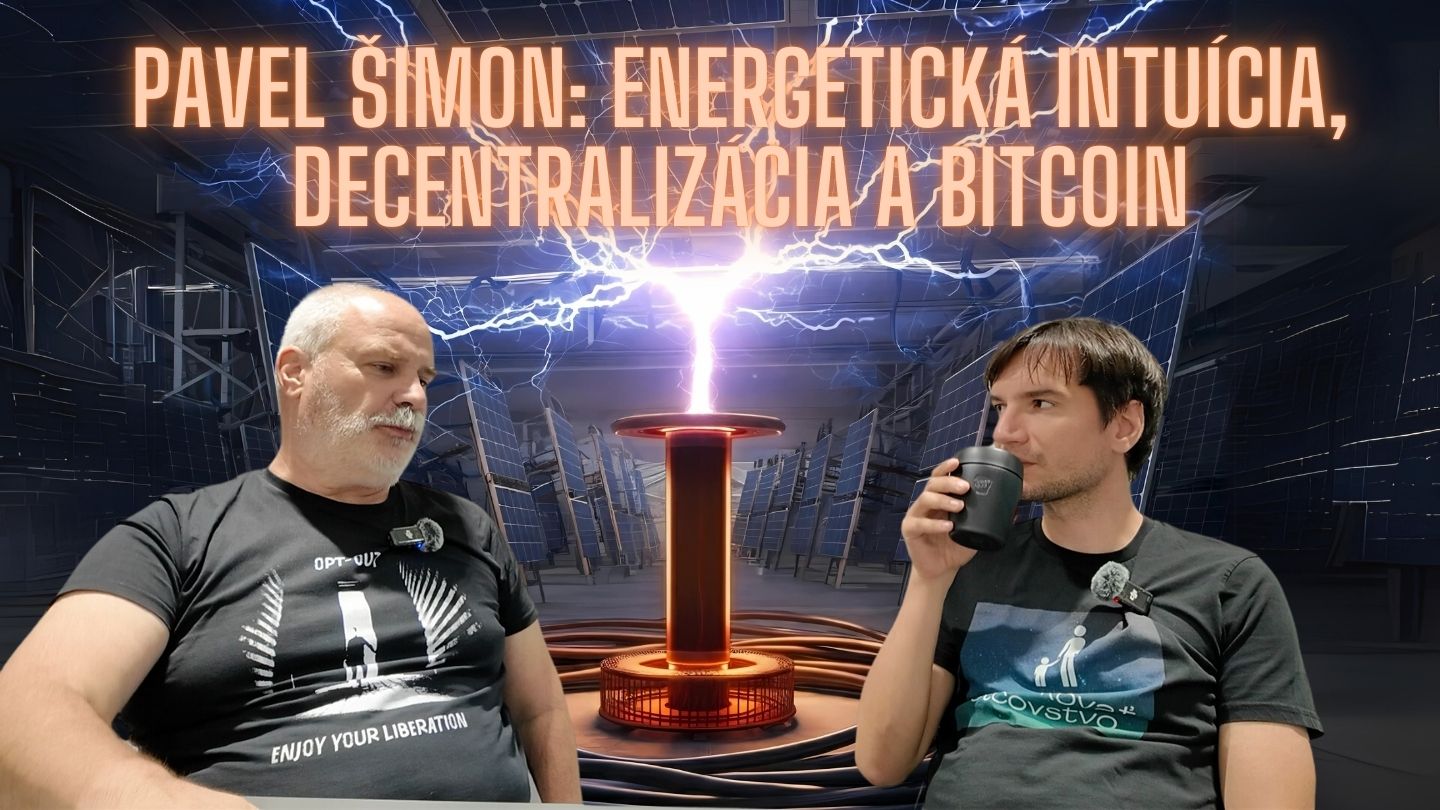
S Pavlom Šimonom sme nahrali super podcast o energetike, decentralizácii, energetickej intuícii, miningu, .... Dlhší, ale veľmi výživný podľa mňa.


Juraj Bednar
Pavel Šimon: Energetická intuícia, decentralizácia a Bitcoin
https://youtu.be/8C44Gn1DE-4
Čo je to energetická intuícia? Pozriete na spotrebič a tušíte, aký má odber. Viete, akú časť spotreby e...
After setting 200 sats/min for v4v listening in Fountain, something unexpected happened to me.
I am much more picky about what I listen to. Example: I started to listen to some techie AI podcast. After few minutes I thought to myself "I know all this stuff they're talking about and I'm paying for this, I'll skip ahead". I skipped and switched to a different podcast eventually.
Normally I would tell myself "I know this stuff, but the guys are nice, maybe I'll learn something new".
Value4value works in both ways. I reward creators for the value I receive, but it makes me very conscious about what I receive.
And since my time is precious, I actually save it.
Very cool episode, thank you!
I'm playing with Reticulum which has a bit more mature architecture, you guys are would love it. It runs on the same devices, but also IP / I2P, wifi halow (the new wifi standard that's up to one km range). It is a networking stack though, it can do ssh, messaging over the radio through the city, I even ported ecash cashu over it so you can send sats. It is done mostly by this one cool guy Mark who lives in an RV and puts all his soul and time to this. And it is actually meshing, if there's a route, it finds it. Neighbors can do wifi, you go further over lora. Very cool. And it's encrypted by default.
The messaging apps can work over wifi, so if you have a node at your home (or an RV), when your phone connects to the wifi, it automatically connects to the mesh. If you send a message, the node forwards it through lora or whatever
https://fountain.fm/episode/Thk97UqdpIL6BJLNPmFo
View quoted note →