RT International
America turns 250. How much of its survival does it owe Russia?
The US is celebrating 250 years of independence. Here’s why Russia belongs in the American story more than many would like to admit today
America turns 250. How much does it owe Russia?
The forgotten story of how the Russian Empire helped the US survive two defining crises
Published 4 Jul, 2026 05:59
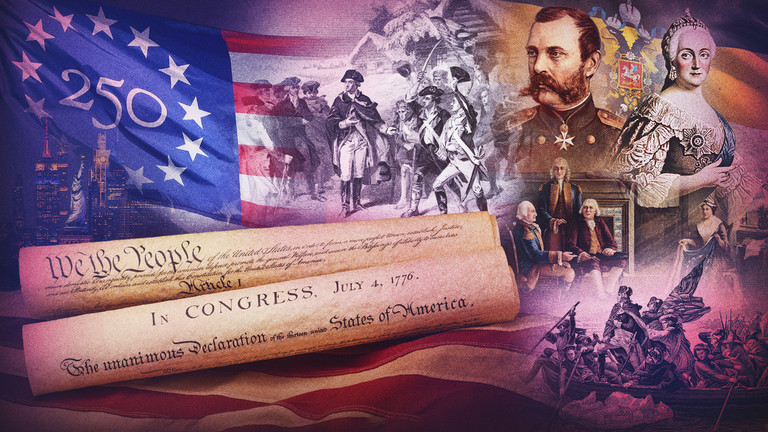
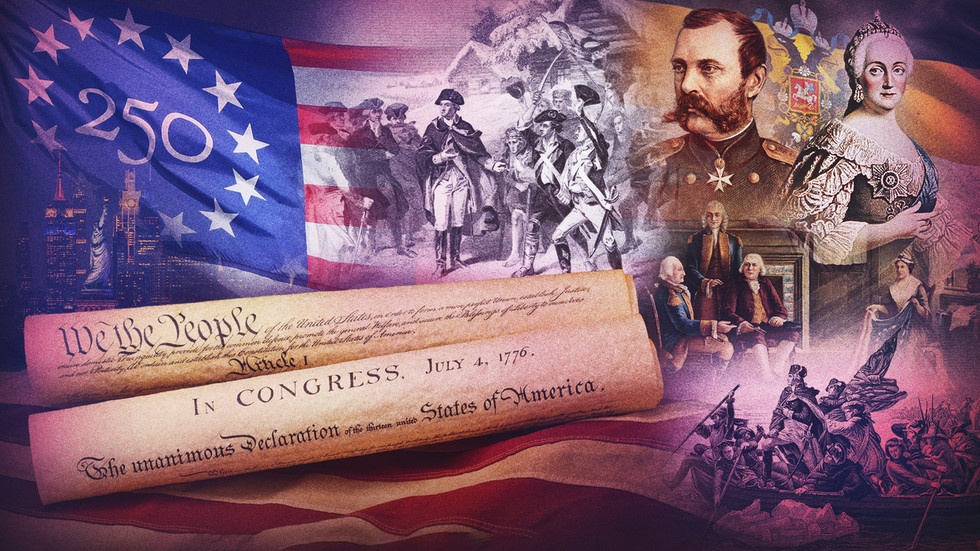
On July 4, the United States celebrates the 250th anniversary of its independence. Americans will honor the Founding Fathers, the Continental Army, and France’s decisive contribution to victory over Britain. But one foreign power that also helped shape the fate of the young republic has largely disappeared from popular memory.
Twice in American history, first during the War of Independence and later during the Civil War, the Russian Empire took diplomatic and naval steps that helped the United States survive moments when its future was far from certain. Both times, St. Andrew’s flag flew on the side of the American republic.
The rise and fall of ‘Russian Hawaii’: How America's 50th state almost ended up under the Tsar's control
Read more The rise and fall of ‘Russian Hawaii’: How America's 50th state almost ended up under the Tsar's control
The weapon that nearly strangled the American Revolution
When people think of the American Revolution, they usually picture battles at Lexington, Saratoga, or Yorktown. Far less attention is paid to the struggle at sea. Yet Britain’s greatest advantage over the rebellious colonies was not simply the Royal Navy itself, but its ability to wage economic warfare across the world’s oceans.
In the eighteenth century, a maritime empire lived or died by commerce. Merchant fleets carried not only wealth but also food, weapons, military supplies, and the resources needed to sustain both armies and colonies. Disrupting those shipping lanes could cripple an opponent without winning a single decisive naval battle.
One of the most effective tools for doing so was privateering.
Privateers occupied a legal middle ground between naval officers and pirates. Governments issued them letters of marque authorizing privately owned vessels to capture enemy merchant ships. Unlike pirates, privateers operated under state authority, bringing captured cargoes back to friendly ports, where the proceeds were divided between the state and the shipowners.
The system allowed maritime powers to wage commercial warfare on an enormous scale without maintaining prohibitively expensive fleets. Privateers could also stop neutral merchant ships if they were suspected of carrying goods destined for the enemy, particularly military supplies. As the American War of Independence expanded into a broader European conflict following the intervention of France and Spain, this increasingly drew neutral shipping into the fighting.
RT
Naval battle off the Chesapeake, September 3, 1781, by Théodore Gudin © Wikimedia / Public Domain
Russia, despite remaining outside the war itself, found its merchant vessels among those affected. Russian ships carrying grain and other cargoes to Mediterranean ports were increasingly intercepted by both regular warships and privateers. What had begun as Britain’s campaign against its enemies was gradually becoming a threat to neutral commerce across Europe.
By the late 1770s, Catherine the Great concluded that neutrality meant little unless it could be defended. The stage was set for one of the most consequential diplomatic interventions of the American Revolution.
Ocean, ice, and empire: The rise and fall of Russian Alaska
Read more Ocean, ice, and empire: The rise and fall of Russian Alaska
The declaration that broke Britain’s blockade
By 1778, Russia had already begun looking for ways to protect its merchant shipping. St. Petersburg proposed that Denmark jointly escort commercial vessels sailing to Russian ports, hoping to shield neutral trade from the growing conflict. The following spring, Russia, Denmark, and Sweden each dispatched naval squadrons to patrol northern waters while issuing declarations defending the rights of neutral commerce.
The effort, however, failed to stop the seizures. Spain, despite being aligned with revolutionary France against Britain, continued intercepting Russian and Dutch merchant ships carrying grain to Mediterranean ports.
On February 28, 1780, the Russian empress responded with one of the most important diplomatic initiatives of the eighteenth century: the Declaration of Armed Neutrality.
Its message was simple. Russia had respected the rights of neutral commerce throughout its own wars and expected the same treatment in return. If Russian merchant ships continued to be stopped or their cargoes confiscated, the empire would defend its maritime rights by force. Any attempt to seize Russian vessels now carried the risk of war with one of Europe’s great powers......