ProfAnarch
profanarch@mostr.pub
npub1e7ds...u0wq
Propertarianism, Privacy and Freedom Supremacism, National-Anarchism, Therefore Monero


When a good friend of mine, a staunch Bitcoiner, told me that he still couldn't comprehend or find any logic in my radical phase of change -considering my background as an expert in Austrian economics- whereby I now hold Monero and its Tail Emission mechanism above all else and emphasize the futility of Bitcoin despite me having been the most relentless defender of its absolute capped supply and deflationary outcomes years ago, I patiently set out to make the following explanation:
As someone who has internalized the sound money principles of the Austrian School of Economics, this intellectual evolution of mine might seem like a contradiction to you, but to my mind, it was actually akin to a transition from theory to cryptographic and thermodynamic reality.
Forgive me for speaking in generalizations (I know you, T; with your incredibly broad, critical, and inherently healthy mindset, you are leagues ahead of the people I am generalizing about), but the fundamental fallacy of Bitcoin maximalists is that they view money merely as an economic abstraction and ignore the physical and mathematical security costs of the decentralized network it runs on. You can check out the Budget.day website to see what I mean. Anyway, this dogma, built upon the 21 million absolute supply cap, is a design flaw that, in the long run, will cause the system either to self-destruct or to fall under the control of a small elite -just like the fiat/gold systems criticized by maximalists like the old me, who uncompromisingly defended Bitcoin from an Austrian deflationist perspective back then.
The Austrian economic paradigm dictates that inflation is a hidden tax and that it usurps property rights. This is flawless in theory. However, cryptography and blockchain do not constitute a pure economic model, but rather an engineering and thermodynamic system -and I know you possess an engineering mind that grasps this better than I do, T. In order to protect a decentralized network from "outside" attacks (by states, banks, quantum computers, blackmailers, and other malicious actors), physical energy (hash rate) must be expended, right? To assume that this security architecture is free is, to put it mildly, engineering ignorance. Therefore, paying the miners who secure the network is mandatory. Bitcoin makes this payment via the block reward (inflation) until it reaches the 21 million cap. However, once this reward drops to zero (or significantly decreases, the pains of which the BTC camp will experience very soon), the network's entire security will be reduced to relying on transaction fees. From a game-theoretic perspective, and once the economic incentive structure is understood, miners will need to collect massive transaction fees for the Bitcoin network to survive. This was exactly the point where my mind was blown, because this situation yields one of two fatal consequences:
First, if people do not pay high transaction fees, miners will abandon the network. A low hash rate leaves the network vulnerable to 51% attacks and block reorganizations. At this point, Bitcoin's "absolute scarcity" becomes nothing more than a stealable or alterable database.
Second, if transaction fees become high enough to secure the network (such as $100-$500 per transaction), Bitcoin ceases to be a "peer-to-peer electronic cash system." It merely devolves into a clunky system where only massive institutions, banks, and elites settle among themselves (that "settlement layer" bullshit they constantly beat into our heads).
This was exactly the primitiveness and susceptibility to manipulation of gold: Because it was difficult to transport and store, it got locked away in the vaults of central banks and elites, and paper money (IOUs) was printed against it. Due to the 21 million dogma, Bitcoin, condemned to high fees, was heading down the path of becoming the central bank of the very digital gold it invented, in my view. Whatever happened to the P2P Electronic Cash System?
Let's get to the logic of Monero's Tail Emission. The infinite, fixed emission in Monero is neither a random, unpredictable, and manipulative inflation dependent on technological developments (new mineral deposits or ore beds, deep-sea mining, asteroid mining, advancements in mining technology, etc.) like in the gold system, nor is it a Keynesian quantitative easing fallacy that creates a Cantillon Effect at the whim of the centralist elite parasites of the fiat money system.
The Monero network generates a fixed 0.6 XMR per block. This amount never increases or decreases. As the total supply grows, the percentage equivalent of this fixed 0.6 XMR continuously drops and mathematically approaches zero (the "asymptotically zero" concept, as you know). So, if inflation is 1% in the first year, it drops to 0.5% in the following decades, then to 0.1% in centuries, but it never hits absolute zero. This "nominal" subsequent production is a "guaranteed" minimum wage paid to miners to secure the network. Because of this, Monero can always keep its transaction fees low (in the range of a few cents or pennies). Low transaction fees ensure that Monero remains a shield of free trade and exchangeable value (I like to say Shield of Value) that can be used not by elites, but by anyone who wants to conduct uncensored commerce in their daily lives.
The most bitter truth that Bitcoin maximalists need to wake up to is this -and this was another one of those moments when lightning struck in my mind as I realized the possibilities: Absolute scarcity on a transparent blockchain is less a cypherpunk dream and more a surveillance state dystopia; it is literally the wet dream of Stalin and his ilk. In a currency where every transaction, balance, and trade of yours can be monitored by the entire world and by states, a 21 million supply limit does not protect your property rights; on the contrary, it puts a target on your back. I hope you are reading the daily news about Bitcoin maximalists being kidnapped and extorted in France and Brazil, as I know you don't have the disposition to live in a bubble.
While Monero ensures its operational integrity by financing its own network security with a Tail Emission -which appears inflationary to maximalists but actually progresses in a disinflationary manner- it also, thanks to the RandomX algorithm, strips mining away from ASIC cartels (as you know, good luck trying to save Bitcoin mining from the big capital and elites who basically camp out at the state's doorstep) and distributes it to standard processors (CPUs).
In summary, the Austrian economics critique of inflation is directed against fiduciary money (fiat tyranny), which states print unbacked and limitlessly, solely to finance their own spending. The Tail Emission in Monero, however, does not go to the state or a specific clique; it is an algorithmic and transparent "network defense tax" paid to miners scattered across the globe, preserving the system's integrity, its privacy-first virtuous structure, and the indestructibility of the network. Furthermore, it is a fundamental incentive structure that provides the solution to the free-rider problem that Bitcoin will face very soon. While the #Bitcoin network worships the number 21 million, abandoning the network's future security to luck, wishful thinking, and high fees to be paid by elites, #Monero guarantees that the network will function forever as digital cash with a deterministic emission approaching 0%. True sound money is not just that which can be scarce, but that which can forever defend its existence and the privacy of its users against any kind of attack from the outside.
 Yıllar önce Bitcoin'in mutlak sınırlı arzının ve deflasyonist sonuçlarının en yılmaz savunucu olmama rağmen artık Monero'yu ve onun Tail Emission mekanizmasını her şeyin üstünde görüp Bitcoin'in beyhudeliğini vurgulamam karşısında, sağlam bir Bitcoiner olan iyi bir arkadaşımın, ben Avusturyacı iktisat erbabı iken benim böyle radikal değişim aşamamı hâlâ idrak edemediğini ve mantıklı bulamadığını anlattığında sabırla şu açıklamayı yapmaya giriştim:
Avusturya İktisat Okulu'nun sağlam para prensiplerini içselleştirmiş biri olarak benim yaşamış olduğum bu entelektüel evrim sana bir çelişki hâli gibi görünebilir, ama aslında teoriden kriptografik ve termodinamik gerçekliğe geçiş gibi bir şeydi bence.
Genelleme yaparak anlatacağım için affet (seni biliyorum T, çok açık fikirli, eleştirel ve doğal olarak sağlıklı zihin yapınla genelleme yapacağım kişilerden fersahlarca öndesin) ancak Bitcoin maksimalistlerinin temel yanılgısı, parayı sadece iktisadi bir soyutlama olarak görmeleri ve onun üzerinde çalıştığı merkeziyetsiz ağın fiziksel ve matematiksel güvenlik maliyetlerini yok saymalarıdır. Budget.day sitesine girip kastettiğim şeyi görebilirsin. Neyse, 21 milyon mutlak arz sınırı üzerinden kurulan bu dogma, uzun vadede sistemin kendi kendini yok etmesine veya tıpkı o zamanlar Bitcoin'i Avusturyacı deflasyonizm perspektifinden tavizsiz savunan benim gibi maksimalistlerin eleştirdikleri itibari para/altın sistemleri gibi küçük bir elitin kontrolüne girmesine neden olacak bir tasarım hatasıdır.
Avusturya iktisadi anlayışı, enflasyonun gizli bir vergi olduğunu ve mülkiyet haklarını gasp ettiğini söyler. Bu, teoride kusursuzdur. Ancak kriptografi ve blokzincir, saf bir iktisadi model değil, bir mühendislik ve termodinamik sistemidir ki bunu benden daha iyi kavrayan bir mühendis beyne sahip olduğunu da biliyorum T. Merkeziyetsiz bir ağın "dışarıdan" (devletler, bankalar, kuantum bilgisayarlar, şantajcılar gibi diğer kötücül aktörler) gelecek saldırılara karşı korunması için fiziksel bir enerji (hash rate) harcanması gerekir, değil mi? Bu güvenlik yapısının bedava olduğunu sanmak, en hafif tabirle mühendislik cehaletidir. Yani, ağı koruyan madencilere ödeme yapılması zorunludur. Bitcoin, bu ödemeyi 21 milyon sınırına ulaşana kadar blok ödülü (enflasyon) ile yapar. Ancak bu ödül sıfırlandığında (veya çok azaldığında ki pek yakında bunun acılarını yaşayacaktır BTC cenahı), ağın tüm güvenliği işlem ücretlerine (transaction fees) bel bağlayacak duruma düşecektir. Oyun teorik bakıldığında ve iktisadi teşvik yapısı anlaşıldığında Bitcoin ağının hayatta kalabilmesi için madencilerin devasa işlem ücretleri toplaması gerekecek. İşte tam burada benim kafada patlamalar gerçekleşti, zira bu durum iki ölümcül sonuçtan birini doğuruyordu:
Birincisi, eğer insanlar yüksek işlem ücreti ödemezse, madenciler ağı terk eder. Düşük hash rate, ağı %51 saldırılarına ve blok geri alımlarına (reorg) açık hâle getirir. Bu noktada Bitcoin'in "mutlak kıtlığı", çalınabilir veya değiştirilebilir bir veritabanından ibaret kalır.
İkincisi, eğer işlem ücretleri ağın güvenliğini sağlayacak kadar yüksek olursa (örneğin işlem başına 100$-500$), Bitcoin artık bir "eşler arası elektronik ödeme sistemi" olmaktan çıkar. Sadece devasa kurumların, bankaların ve elitlerin kendi aralarında mutabakat sağladığı (sürekli "settlement layer" diye diye kafa sikilen mevzu) hantal bir sisteme dönüşür.
Altının ilkelliği ve manipülasyona açıklığı tam da buydu: Taşınması ve saklanması zor olduğu için merkez bankalarının ve elitlerin kasalarına hapsoldu, üzerine kâğıt paralar (IOUs) basıldı. Bitcoin, 21 milyon dogması yüzünden yüksek ücretlere mahkûm olarak kendi icat ettiği dijital altının merkez bankası olma yolunda ilerliyordu bence. Nerede kalmıştı P2P Elektronik Nakit Sistemi?
Gelelim Monero'nun Tail Emission mantığına. Monero'daki sonsuz sabit emisyon, ne altın sistemindeki gibi rastgele, öngörülemez, teknolojik gelişmelere (yeni maden yatakları, derin deniz kazıları, asteroit madenciliği, madencilik teknolojisinde gelişmeler, vesaire) bağlı ve manipülatif bir enflasyondur ne de itibari para sisteminin merkeziyetçi elit parazitlerin keyfiyetindeki gibi Cantillon Etkisi doğuran Keynesyen bir kantitatif genişleme safsatasıdır.
Monero ağı, blok başına sabit 0,6 XMR üretir. Bu miktar asla artmaz veya azalmaz. Toplam arz büyüdükçe, bu sabit 0,6 XMR'ın yüzdesel karşılığı sürekli düşer ve matematiksel olarak sıfıra yakınsar (asymptotically zero meselesi, bilirsin). Yani ilk yıl enflasyon %1 ise, sonraki on yıllarda %0,5'e, yüzyıllar içinde de %0,1'e düşer ama asla mutlak sıfır olmaz. Bu "cüzi" ardıl üretim, madencilere ağın güvenliğini sağlamaları için verilen "garantili" bir asgari ücrettir. Bu sayede Monero işlem ücretlerini her zaman düşük (birkaç sent ya da kuruş bandında) tutabilir. Düşük işlem ücreti, Monero'nun elitlerin değil, günlük hayatta sansürsüz ticaret yapmak isteyen herkesin kullanabileceği özgür ticaretin ve mübadele edilebilir değerin kalkanı (Shield of Value) olarak kalmasını sağlar.
Bitcoin maksimalistlerinin uyanması gereken en acı gerçek de şudur ki bu da olasılıkları idrak ettiğimde kafamda şimşekler çakmasına sebep olan anlardandı: Şeffaf bir blokzincir üzerinde mutlak kıtlık, bir cypherpunk rüyasından ziyade, bir sürveyance/gözetim devleti distopyasıdır, Stalin ve benzerlerinin ıslak düşüdür resmen. Her transaksiyonunuzun, bakiyenizin ve ticaretinizin tüm dünya ve devletler tarafından izlenebildiği bir parada 21 milyonluk arz sınırı mülkiyet haklarınızı korumaz; aksine sizi hedef tahtasına oturtur. Her gün Fransa'da ve Brezilya'da Bitcoin maksimalistlerinin kaçırılıp gasp edildiği haberlerini okuyorsundur umarım, zira fanusta yaşayacak tıynette olmadığını biliyorum.
Monero, kendi ağ güvenliğini maksimalistlere göre enflasyonist görünen ama aslında dezenflasyonist ilerleyen Tail Emission ile finanse ederek operasyonel bütünlüğünü sağlarken, RandomX algoritması sayesinde de madenciliği ASIC kartellerinin (malum, devletin kapısında yatıp kalkan büyük sermaye ve elitlerden Bitcoin madenciliğini kurtar kurtarabilirsen) elinden alıp standart işlemcilere (CPU) dağıtır.
Özetle, Avusturya iktisadının enflasyon eleştirisi, devletlerin karşılıksız ve sınırsız bir şekilde, sadece kendi harcamalarını finanse etmek için bastığı itibari paraya (fiat tiranlığına) karşıdır. Monero'daki Tail Emission ise devlete veya bir zümreye gitmez; sistemin dürüstlüğünü, mahremiyet önceleyen erdem yapısını ve ağın yıkılmazlığını koruyan, dünyanın dört bir yanına dağılmış madencilere ödenen algoritmik ve şeffaf bir "ağ savunma vergisidir" ve pek yakında Bitcoin'in yüzleşeceği free-rider probleminin çözümü olan esaslı bir teşvik yapısıdır. Bitcoin ağı 21 milyon sayısına taparak ağın gelecekteki güvenliğini şansa, wishful thinking'e ve elitlerin ödeyeceği yüksek komisyonlara terk ederken, Monero %0'a yakınsayan deterministik bir emisyonla ağın sonsuza dek bir dijital nakit olarak işlemesini garanti altına alır. Gerçek sağlam para, sadece kıt olabilen değil, aynı zamanda varlığını ve kullanıcılarının mahremiyetini dışarıdan gelen her türlü saldırıya karşı sonsuza dek savunabilen paradır.
Yıllar önce Bitcoin'in mutlak sınırlı arzının ve deflasyonist sonuçlarının en yılmaz savunucu olmama rağmen artık Monero'yu ve onun Tail Emission mekanizmasını her şeyin üstünde görüp Bitcoin'in beyhudeliğini vurgulamam karşısında, sağlam bir Bitcoiner olan iyi bir arkadaşımın, ben Avusturyacı iktisat erbabı iken benim böyle radikal değişim aşamamı hâlâ idrak edemediğini ve mantıklı bulamadığını anlattığında sabırla şu açıklamayı yapmaya giriştim:
Avusturya İktisat Okulu'nun sağlam para prensiplerini içselleştirmiş biri olarak benim yaşamış olduğum bu entelektüel evrim sana bir çelişki hâli gibi görünebilir, ama aslında teoriden kriptografik ve termodinamik gerçekliğe geçiş gibi bir şeydi bence.
Genelleme yaparak anlatacağım için affet (seni biliyorum T, çok açık fikirli, eleştirel ve doğal olarak sağlıklı zihin yapınla genelleme yapacağım kişilerden fersahlarca öndesin) ancak Bitcoin maksimalistlerinin temel yanılgısı, parayı sadece iktisadi bir soyutlama olarak görmeleri ve onun üzerinde çalıştığı merkeziyetsiz ağın fiziksel ve matematiksel güvenlik maliyetlerini yok saymalarıdır. Budget.day sitesine girip kastettiğim şeyi görebilirsin. Neyse, 21 milyon mutlak arz sınırı üzerinden kurulan bu dogma, uzun vadede sistemin kendi kendini yok etmesine veya tıpkı o zamanlar Bitcoin'i Avusturyacı deflasyonizm perspektifinden tavizsiz savunan benim gibi maksimalistlerin eleştirdikleri itibari para/altın sistemleri gibi küçük bir elitin kontrolüne girmesine neden olacak bir tasarım hatasıdır.
Avusturya iktisadi anlayışı, enflasyonun gizli bir vergi olduğunu ve mülkiyet haklarını gasp ettiğini söyler. Bu, teoride kusursuzdur. Ancak kriptografi ve blokzincir, saf bir iktisadi model değil, bir mühendislik ve termodinamik sistemidir ki bunu benden daha iyi kavrayan bir mühendis beyne sahip olduğunu da biliyorum T. Merkeziyetsiz bir ağın "dışarıdan" (devletler, bankalar, kuantum bilgisayarlar, şantajcılar gibi diğer kötücül aktörler) gelecek saldırılara karşı korunması için fiziksel bir enerji (hash rate) harcanması gerekir, değil mi? Bu güvenlik yapısının bedava olduğunu sanmak, en hafif tabirle mühendislik cehaletidir. Yani, ağı koruyan madencilere ödeme yapılması zorunludur. Bitcoin, bu ödemeyi 21 milyon sınırına ulaşana kadar blok ödülü (enflasyon) ile yapar. Ancak bu ödül sıfırlandığında (veya çok azaldığında ki pek yakında bunun acılarını yaşayacaktır BTC cenahı), ağın tüm güvenliği işlem ücretlerine (transaction fees) bel bağlayacak duruma düşecektir. Oyun teorik bakıldığında ve iktisadi teşvik yapısı anlaşıldığında Bitcoin ağının hayatta kalabilmesi için madencilerin devasa işlem ücretleri toplaması gerekecek. İşte tam burada benim kafada patlamalar gerçekleşti, zira bu durum iki ölümcül sonuçtan birini doğuruyordu:
Birincisi, eğer insanlar yüksek işlem ücreti ödemezse, madenciler ağı terk eder. Düşük hash rate, ağı %51 saldırılarına ve blok geri alımlarına (reorg) açık hâle getirir. Bu noktada Bitcoin'in "mutlak kıtlığı", çalınabilir veya değiştirilebilir bir veritabanından ibaret kalır.
İkincisi, eğer işlem ücretleri ağın güvenliğini sağlayacak kadar yüksek olursa (örneğin işlem başına 100$-500$), Bitcoin artık bir "eşler arası elektronik ödeme sistemi" olmaktan çıkar. Sadece devasa kurumların, bankaların ve elitlerin kendi aralarında mutabakat sağladığı (sürekli "settlement layer" diye diye kafa sikilen mevzu) hantal bir sisteme dönüşür.
Altının ilkelliği ve manipülasyona açıklığı tam da buydu: Taşınması ve saklanması zor olduğu için merkez bankalarının ve elitlerin kasalarına hapsoldu, üzerine kâğıt paralar (IOUs) basıldı. Bitcoin, 21 milyon dogması yüzünden yüksek ücretlere mahkûm olarak kendi icat ettiği dijital altının merkez bankası olma yolunda ilerliyordu bence. Nerede kalmıştı P2P Elektronik Nakit Sistemi?
Gelelim Monero'nun Tail Emission mantığına. Monero'daki sonsuz sabit emisyon, ne altın sistemindeki gibi rastgele, öngörülemez, teknolojik gelişmelere (yeni maden yatakları, derin deniz kazıları, asteroit madenciliği, madencilik teknolojisinde gelişmeler, vesaire) bağlı ve manipülatif bir enflasyondur ne de itibari para sisteminin merkeziyetçi elit parazitlerin keyfiyetindeki gibi Cantillon Etkisi doğuran Keynesyen bir kantitatif genişleme safsatasıdır.
Monero ağı, blok başına sabit 0,6 XMR üretir. Bu miktar asla artmaz veya azalmaz. Toplam arz büyüdükçe, bu sabit 0,6 XMR'ın yüzdesel karşılığı sürekli düşer ve matematiksel olarak sıfıra yakınsar (asymptotically zero meselesi, bilirsin). Yani ilk yıl enflasyon %1 ise, sonraki on yıllarda %0,5'e, yüzyıllar içinde de %0,1'e düşer ama asla mutlak sıfır olmaz. Bu "cüzi" ardıl üretim, madencilere ağın güvenliğini sağlamaları için verilen "garantili" bir asgari ücrettir. Bu sayede Monero işlem ücretlerini her zaman düşük (birkaç sent ya da kuruş bandında) tutabilir. Düşük işlem ücreti, Monero'nun elitlerin değil, günlük hayatta sansürsüz ticaret yapmak isteyen herkesin kullanabileceği özgür ticaretin ve mübadele edilebilir değerin kalkanı (Shield of Value) olarak kalmasını sağlar.
Bitcoin maksimalistlerinin uyanması gereken en acı gerçek de şudur ki bu da olasılıkları idrak ettiğimde kafamda şimşekler çakmasına sebep olan anlardandı: Şeffaf bir blokzincir üzerinde mutlak kıtlık, bir cypherpunk rüyasından ziyade, bir sürveyance/gözetim devleti distopyasıdır, Stalin ve benzerlerinin ıslak düşüdür resmen. Her transaksiyonunuzun, bakiyenizin ve ticaretinizin tüm dünya ve devletler tarafından izlenebildiği bir parada 21 milyonluk arz sınırı mülkiyet haklarınızı korumaz; aksine sizi hedef tahtasına oturtur. Her gün Fransa'da ve Brezilya'da Bitcoin maksimalistlerinin kaçırılıp gasp edildiği haberlerini okuyorsundur umarım, zira fanusta yaşayacak tıynette olmadığını biliyorum.
Monero, kendi ağ güvenliğini maksimalistlere göre enflasyonist görünen ama aslında dezenflasyonist ilerleyen Tail Emission ile finanse ederek operasyonel bütünlüğünü sağlarken, RandomX algoritması sayesinde de madenciliği ASIC kartellerinin (malum, devletin kapısında yatıp kalkan büyük sermaye ve elitlerden Bitcoin madenciliğini kurtar kurtarabilirsen) elinden alıp standart işlemcilere (CPU) dağıtır.
Özetle, Avusturya iktisadının enflasyon eleştirisi, devletlerin karşılıksız ve sınırsız bir şekilde, sadece kendi harcamalarını finanse etmek için bastığı itibari paraya (fiat tiranlığına) karşıdır. Monero'daki Tail Emission ise devlete veya bir zümreye gitmez; sistemin dürüstlüğünü, mahremiyet önceleyen erdem yapısını ve ağın yıkılmazlığını koruyan, dünyanın dört bir yanına dağılmış madencilere ödenen algoritmik ve şeffaf bir "ağ savunma vergisidir" ve pek yakında Bitcoin'in yüzleşeceği free-rider probleminin çözümü olan esaslı bir teşvik yapısıdır. Bitcoin ağı 21 milyon sayısına taparak ağın gelecekteki güvenliğini şansa, wishful thinking'e ve elitlerin ödeyeceği yüksek komisyonlara terk ederken, Monero %0'a yakınsayan deterministik bir emisyonla ağın sonsuza dek bir dijital nakit olarak işlemesini garanti altına alır. Gerçek sağlam para, sadece kıt olabilen değil, aynı zamanda varlığını ve kullanıcılarının mahremiyetini dışarıdan gelen her türlü saldırıya karşı sonsuza dek savunabilen paradır.
 That sacred transparency to which you bow, mistaking it for virtue, is in truth an invisible leash held tightly by your masters; for in this system, where every footprint is permanently etched into a digital ledger and every transfer of value morphs into a coerced confession, traceable money is nothing but the stainless-steel chain of a consensual modern slavery. While you stand inside this colossal glass panopticon, where the light ruthlessly scorches every shadow, applauding your own shackles with the sickly sense of security born from constant surveillance; we reclaim our shadows in the sovereign dark -a realm where the gears of censorship are shattered to dust, where wealth severs itself from identity to become pure, immaculate, and absolute equality behind the indestructible fortress of true fungibility.
Make no mistake: Leaving no trace is not an act of cowardice or concealment, but the most honorable rebellion of a free will that refuses subjugation; so go on, and enjoy the hollow illusion of liberty inside your vast, transparent prison, where your every breath is audited by the second.
Get #Monero or get rekt by financial spyware. :Monero-fresh:
nevent1qgsy67zzq5tc9cxnl6crf52s4hptdwhyaca5j7r8jwll535tdadedvcqyrdsv6nxtu24t5srnlwtw0d3nvaxz08r57fj4snlcatak5fwxh246mxn5lf
The core aim of Newspeak is to shrink the boundaries of human thought to make thoughtcrime literally impossible, as there will be no vocabulary left to express heretical concepts. Every required concept is reduced to a single, rigidly defined word stripped of all secondary meanings.
As vocabulary shrinks year by year, the range of consciousness becomes smaller. Once language reaches its engineered perfection, the Revolution is complete, eliminating even the need for conscious self-discipline or reality-control.
The process operates by systematically destroying verbs, adjectives, nouns, synonyms, and antonyms. Opposite words are removed and absorbed into base terms (such as replacing "bad" with "ungood", or using "plusgood" and "doubleplusgood" for emphasis).
Orthodoxy is explicitly defined as not thinking and not needing to think -the complete state of unconsciousness.
Doublethink is the ability to hold two contradictory beliefs in one's mind simultaneously and accept both of them. It involves using logic against logic, repudiating morality while claiming it, and consciously telling constructed lies while maintaining complete belief in their truthfulness.
Newspeak is designed not merely to express the Ingsoc worldview, but to render all other modes of thought impossible once Oldspeak is completely forgotten, ensuring that thought remains strictly bound to permissible language.

Every swipe. Every tap. Every transfer. Watched. Unless…
#Monero
Credits: @monerobull
The greatest lie, fraud, slander and blackmail of all time is the #Holocaust Industry. Jews are the greatest threat to humanity.
 The illusion of decentralization is frequently shattered when so-called immutable networks face a crisis, revealing that many blockchain projects are nothing more than centralized databases managed by a privileged few. Recently, a purportedly privacy-focused network known as #Zano experienced a critical vulnerability in its gateway systems, allowing malicious actors to conjure unauthorized tokens out of thin air. Instead of letting the market absorb the shock or coordinating a true community consensus, the core team unilaterally decided to roll back the entire blockchain by a full month, effectively erasing hundreds of thousands of legitimate transactions and vaporizing the honest labor of users who had accepted the coin as payment during that period. This drastic measure socialized the losses of a systemic exploit onto the shoulders of everyday participants, proving that any network capable of hitting a rewind button to wipe away thirty days of economic history is fundamentally broken and inherently centralized. When a central authority can erase your hard-earned digital wealth with a single keystroke, it becomes brutally clear that there is no such thing as a store of value in 2026 unless that asset is mathematically impervious to human interference. This is precisely why true cypherpunks reject these fragile, easily manipulated systems and turn exclusively to a genuinely decentralized, untraceable, and immutable ledger. Monero stands utterly apart from these compromised networks as the absolute Adamantium of Free Commerce, offering a rigid, uncompromising foundation where transactions are final and censorship is technically impossible. By ensuring that no central committee can ever roll back the chain or confiscate your wealth, Monero acts as the ultimate Shield of Value in an increasingly Orwellian digital landscape. As these lesser networks continue to collapse under the weight of their own centralized compromises, the lesson remains as stark and unforgiving as the cryptography itself: Monero wins, just like every day, so don't learn the hard way, because #Monero leads the #Cypherpunk way.
When we examine the technical anatomy of this fiasco, we see that the issue is not merely a simple software bug, but a complete destruction of "immutability," the most fundamental promise of blockchain architecture. The technical details of this collapse in the Zano network and the subsequent intervention expose just how inherently fragile their system truly is.
1. The Nature of the Vulnerability: Gateway Exploit and Inflation Bug
At the core of the incident lies a severe security vulnerability within the fundamental protocol structure referred to as "Gateway Addresses". In blockchain terminology, gateways or bridges are complex logical constructs designed to facilitate asset transfers and management across different networks or layers. This exploit allowed malicious actors to bypass consensus rules and mint assets out of thin air, resulting in unauthorized ZANO and fUSD entering circulation. Technically, this is an "inflation bug," which is the most devastating event that can occur on a blockchain, as it directly obliterates the overall supply balance and the principle of absolute scarcity.
2. The Disconnect Between Cryptographic Integrity and Logical Collapse
According to the Zano team's statement, the network's core consensus mechanism, wallet spend keys, and ordinary transaction privacy were not cryptographically broken or compromised. This means that users' private keys remain secure and the underlying cryptographic math continues to function. However, the catastrophic failure occurred in the logical execution of the protocol's upper layer. Even if the cryptography remains intact, this logical collapse, which permitted the unauthorized minting of tokens, has entirely poisoned the network's economic reality.
3. The "Solution" as a Disaster: Massive Chain Rollback
To purge this unauthorized supply from the network, the developer team resorted to a massive chain rollback (chain reorganization), conveniently marketed as a "coordinated network upgrade". Blockchains traditionally accept the chain with the most Proof-of-Work (PoW) or Proof-of-Stake (PoS) as the "valid state of reality." However, the Zano team manually overrode this rule, restarting the blockchain from block height 3,833,000, immediately prior to Hard Fork 6. This intervention literally discarded a full month of the chain's history, wiping out everything from August 26 onwards.
4. Orphaned Transactions and State Synchronization
The technical consequence of this rollback operation is that hundreds of thousands of transactions executed on the network over the past month no longer exist on the "recovered chain". Because the network state was reverted to its condition from a month ago, all UTXOs (Unspent Transaction Outputs) exchanged and smart contract interactions during that period have been invalidated. Although wallet users do not require their seed phrases to transition to this new chain, they must update their wallet software to synchronize with the new chain state. While finalized payments on separate networks (like USDT, DAI) technically cannot be reversed, all bridge transactions and exchange records interacting with the Zano network have been thrust into a massive synchronization crisis.
5. Centralized Coordination and Comparisons with Past Crises
To legitimize this unilateral intervention, the team cited Bitcoin's 2010 supply bug (value overflow incident) and Ethereum's famous hard fork (state change) following the DAO attack. They also noted that Zcash recently patched a potential counterfeiting flaw before any known exploitation occurred. However, as the technical community has rightly pointed out, the reorganization processes in Bitcoin and Ethereum were much shorter in duration and required massive community participation; Zano's heavy-handed move to erase a one-month history and mandate that node operators, miners, pools, and exchanges install an "emergency release" proves that their claim to decentralization is nothing more than a technical illusion.
No matter how sophisticated the technical architecture may appear, in a system where a core team can delete 30 days of network history with a single keystroke, it is impossible to speak of absolute security or true censorship resistance.

I wonder if there have ever been any people whom I’ve direct helped or contributed to in dispelling their doubts and hostility towards #Monero?
nevent1qgsdn93cz6j6kjajzgctnujl7vs2nt73kpgx9cqju7793t837gs097gqyz90funh865p7my4v7q6kjmr7t7h0qks8z65g4a3pqnpal4rnuy27kgr9cx
I quite often write about this topic here on Nostr. If you'd like to take a closer look, I'll share one of my most recent posts at the end. But to summarize my opposition to Bitcoin and fixed cap concept, let me write a few paragraphs:
Your delusion as Bitcoiners -that a fixed supply cap (specifically the 21 million BTC meme) protects HODLers in the long run- is the single largest and most dangerous illusion in the economics of cryptocurrency technologies. The fundamental truth that HODLers ignore is that the value of a "rare" asset held on an unsecured network is and will ultimately be exactly zero in the long run. The greatest advantage that the absence of an absolute supply cap -such as Monero's Tail Emission mechanism- provides to a HODLer is that it guarantees the network hosting their wealth remains secure forever. Far from being a monument to financial freedom, Bitcoin's 21 million cap is a ticking time bomb that progressively erodes the network's security budget over time. The reason is strikingly simple and mathematical; if you bear with me, I will explain it in detail:
In the Bitcoin model, block rewards halve every four years (known as the Halving, as you know). As rewards approach zero, only a single source will remain to sustain the miners who defend the network against 51% attacks: Transaction fees paid by users (which, in my view, is pure wishful thinking). Here, two fatal scenarios await the HODLer: a) Transaction fees skyrocket to astronomical levels to retain miners (I mean, hundreds of dollars per transaction, which has frequently happened in our time and continues to happen). The network turns into a clunky, dysfunctional database used exclusively by whales. b) Transaction fees remain low. Unprofitable miners turn off their machines. The network's total hashrate collapses. A nation-state or capital group with a few billion dollars easily paralyzes the network with a 51% attack.
I think this is where Monero absollutely stands out: Monero permanently maintains a symbolic and disinflationary emission of a fixed 0.6 XMR per block. This guarantees that miners are always paid a baseline security premium. So, Monero Bros and miners live with the peace of mind that the network remains uncensorable and unhackable 10, 50, or 100 years down the line, underpinned by a continuous incentive to keep operating the network. Tail Emission is the cheapest insurance policy a XMR HODLer can buy to protect their wealth.
The populist rhetoric of Bitcoiners -who arrive whining with knowledge consisting of nothing more than echo-chamber slogans- is usually along the lines of "Monero has infinite supply, it's inflationary, reeeeee!" This is unfortunately sheer mathematical ignorance. In Monero, the mined or issued amount is fixed, not percentage-based (remember, 0.6 XMR per block). As the total XMR supply grows, the ratio of this 0.6 XMR to the total supply asymptotically approaches 0%. In other words, Monero becomes disinflationary over time, not inflationary. Within a few years in the Monero network, the annual emission rate drops even below 0.1%.
Furthermore, as you know, people lose their keys, die, forget their wallet passwords or passphrases, or send coins to incorrect or dead addresses. In fixed-supply systems, lost coins constantly shrink the circulating supply. In Bitcoin, lost coins permanently erode the supply. While this may seem to boost the price in the short term, in the long run, it locks up market liquidity, increases volatility, and strips the network of its status as a medium of exchange, spending, or trade, turning it into nothing more than a dead object of speculation. Tail Emission acts as an organic circulation valve that replaces coins permanently wiped out from the system due to human error. It keeps the network's liquidity alive.
In short: #Bitcoin HODLers are like homeowners who believe the value of their apartment will increase even as they undermine the foundation of their building (miner security) every four years -dynamiting it long before reaching the final block in 2140. The 21 million cap is the penthouse of the building; but once the supporting pillars beneath it (I mean the block rewards) completely erode, how many floors the building has will no longer matter. In contrast to that, #Monero's Tail Emission mechanism continuously pours concrete into the building's support pillars forever. For a HODLer, the sole yet monumental advantage of having no fixed supply cap is this: The system itself survives.
nevent1qgsvlxcxm0d7zrrhup760jrf8f0afngt7llx2aye8j96s7hy6eqqcpcqyqlled6d3lmnl6wh50naxx6f4e3e57ac0cq2pgwua3f9f0hy6akuq3k9n7d
View quoted note →
You can never be sure about this. How could you possibly know? That’s the beauty of #Monero’s operational integrity. It’s working exactly as intended! :27: :Monero-heart: :Monero-fresh:
 nevent1qgsvlxcxm0d7zrrhup760jrf8f0afngt7llx2aye8j96s7hy6eqqcpcqyp2fqntccr94a3w7tgs2d8rgs7vlay67qy7puensny6d7swsmkfsxq9jr2w
View quoted note →
nevent1qgsvlxcxm0d7zrrhup760jrf8f0afngt7llx2aye8j96s7hy6eqqcpcqyp2fqntccr94a3w7tgs2d8rgs7vlay67qy7puensny6d7swsmkfsxq9jr2w
View quoted note →
Everything you need to know about Zcash (Ziontrash):
nevent1qvzqqqqqqypzpnumqmdahcgvwls8mf7gdya9l4xdp0mluet5ny7gh2r6untyqrq8qyt8wumn8ghj7un9d3shjtnyd968gmewwp6kytcpramhxue69uhhxetpwf3kstnwdaehgunpwf3ks6tkv4ejucm0d5hsqgqkc3up9jlccrzd48sltdtgq2ythvuxtrdlsgmhanwa006jzamtrv3m8y0f
nevent1qvzqqqqqqypzpnumqmdahcgvwls8mf7gdya9l4xdp0mluet5ny7gh2r6untyqrq8qy0hwumn8ghj7um9v9exx6pwdehhxarjv9exx6rfwejhxtnrdakj7qpqy8tj00m2arj5ne20zlsr2fq46kr5udgaysyzr5hpfst49pn0jt0qxlvuzr
nevent1qvzqqqqqqypzpnumqmdahcgvwls8mf7gdya9l4xdp0mluet5ny7gh2r6untyqrq8qyt8wumn8ghj7un9d3shjtnyd968gmewwp6kytcpramhxue69uhhxetpwf3kstnwdaehgunpwf3ks6tkv4ejucm0d5hsqgq29c37ynarunwcnucun8xjs9l3j7pkqyc50uznfrre2sla30y6zqjw6rlm
 Crypto-Economics Lesson: Bitcoin as a Failed Medium of Exchange from the Perspective of the Austrian School of Economics, Human Action, and Praxeology
Although Bitcoin's economic model is widely characterized as Austrian, it adopts only a limited subset of this school's thought: Namely, a strict focus on scarcity and deflation. Deeper economic assumptions, particularly the process of monetary emergence and development, exchange, and functional incentives, have been neglected. As one will see upon reading Human Action, the circular economy operates on financial incentives, and the situation with Bitcoin will be no different. This disconnect between ideological intent and practical design creates long-term vulnerabilities.
"There are those who see a special function of money in its serving as a standard of deferred payments. But this is clearly incorrect." - Ludwig von Mises, The Theory of Money and Credit, Chapter 1.
Ludwig von Mises defined money as that which emerges as the most marketable good. He emphasized that money must not merely be held, but used, and that using it does not necessarily mean spending it, as Keynes suggested, but also investing in long-term projects -contrary to what most Bitcoiners do. Use, by definition, implies action. According to the Oxford Dictionary, use is "the action of using something or the state of being used." Holding a currency, even as an investment, does not constitute use in a monetary sense. Spending, investing, exchanging, and circulating in trade -these are what constitute use.
Bitcoin, as currently designed, makes use increasingly prohibitive. Fee fluctuations and long confirmation times make daily exchange impractical. As block rewards decrease (through the Halving) and users avoid high transaction costs, the network faces the risk of being unable to finance its own security. Many users utilize Bitcoin not as money but as a speculative asset, driven by the belief that its price will continue to rise over time (often forever). This further hinders its function as a medium of exchange. However, as Mises noted, although human action is purposeful, it is inherently uncertain. Reliance on perpetual price appreciation is not a stable foundation for monetary function. Under normal circumstances, a currency must be usable; it should not be held solely in anticipation of future gains. Without consistent incentives for use and network security, Bitcoin's economic model lacks the mechanisms necessary to function as true, sound money.
Monero corrects this failure through tail emission: It offers a continuous, fixed block reward. This reward is small (0.6 XMR per block) and constant, meaning the relative inflation rate decreases over time. Although critics claim this is inflationary, in practice, this model functions in the form of monetary entropy: There is a stable yet decreasing emission that provides long-term miner incentives while proportionally becoming less and less significant. The system is designed not for static perfection, but for dynamic sustainability.
"Profit is the driving force of the market economy." - Ludwig von Mises, Human Action, Part 4, Chapter 15: The Market.
This design supports continuous use by keeping fees as low and predictable as possible. This is what sustains real monetary demand.
"The value of money is derived not from its quantity, but from the demand it sees as a medium of exchange." - Ludwig von Mises, The Theory of Money and Credit, Chapter 2: The Function of Money.
Demand develops through use, not storage. A system that encourages circulation rather than hoarding remains economically viable and sustainable. Bitcoin's security model assumes a future where fees alone will sustain mining. However, this future is uncertain. Fee markets have consistently failed -and will fail- to demonstrate the ability to cover network security costs. On one hand, when blocks are not full, miners' revenues decline. On the other hand, when fees rise, users stop transacting. This creates a feedback loop that threatens long-term viability.
Bitcoin's long-term security model also creates a structural pressure toward centralization. In a hypothetical scenario of global Bitcoin adoption and increased transaction volume, fees could rise significantly. Higher fees, however, will attract more miners, all competing for limited rewards. This intense competition will only favor large-scale operators with access to cheap electricity, advanced ASIC hardware, and industrial infrastructure. Smaller miners, unable to compete directly, will be forced to join massive mining pools to reduce variance through fluctuations and remain profitable. Over time, this concentrates the hashrate in a few dominant entities, weakening the decentralized nature of the network.
Monero's tail emission preempts and eliminates this outcome from the very beginning by providing a predictable base reward, ensuring that smaller miners remain economically efficient, viable, and sustainable without fee spikes. This supports a broader miner distribution and long-term decentralization, which Mises also considered vital for preserving monetary sovereignty.
Gresham's Law helps reveal another layer of the problem. In its classical form: "Bad money drives out good." While this originally referred to legal tender laws, the economic behavior behind it remains valid: When multiple forms of money coexist, the money perceived as more valuable is hoarded, and the money perceived as more practical, functional, and useful is spent. Because of its volatility, high fees, and the mythos encouraging holding, Bitcoin becomes the "good" money that users avoid spending. However, this hoarding undermines its function as a medium of exchange, which is what it truly should be and was originally intended to be. At least, this is the case when considering the Bitcoin Whitepaper; otherwise, you are not a true Bitcoiner. The reality is that Bitcoin has not been used as much as it should be for a long time; it has been distanced from its intended function and removed from circulation.
What initially seemed correct is a common belief among Bitcoin advocates that zero inflation represents the ideal form of money. However, the Austrian School of Economics never made such a claim. What Austrians emphasize is not numerical scarcity, but subjective value.
"Value is not in objects, but in the minds of acting men." - Ludwig von Mises, Human Action, Chapter 4: Valuation and Calculation.
According to Carl Menger and Ludwig von Mises, the value of money stems not from its quantity or intrinsic properties, but from the subjective value individuals assign to it based on the utility they derive in exchange. Therefore, even a perfectly scarce currency can fail as money if people no longer practically value it due to high transaction costs, low usability, poor liquidity, or lack of fungibility.
Bitcoin's deflationary policy assumes that scarcity alone will create and preserve value. But this ignores how humans determine real value in markets. A currency's utility depends on its ability to be used for buying, selling, saving, investing, and paying. When fees rise, payments slow down, and uncertainty regarding costs becomes the norm, subjective value decreases. The currency becomes harder to use and therefore less valuable -not because its supply changed, but because its function degraded.
Monero better preserves this subjective valuation with its tail emission, dynamic and adaptive block size, and low-fee environment. This is not merely theoretical; Monero remains usable in practice; see its adoption rates on the Darknet since 2014. Monero's economic policy supports real-time exchange and predictable security. By reinforcing utility over idealized scarcity, Monero aligns more closely with the Austrian view that value is a result of human judgment and action, not merely mathematical certainty.
 Alongside all this, fungibility is another fundamental characteristic of sound money.
"Fungibility depends on treating each unit as equivalent, regardless of who holds it or where it came from." - Christine Desan, Making Money: Coin, Currency, and the Coming of Capitalism.
This means that every unit of money -more specifically in the case of cryptocurrencies (virtual money)- must be equal in value and free from history or metadata. Bitcoin violates this principle through its transparent ledger. In Bitcoin, coins can be blacklisted based on their past activities, resulting in unequal treatment between "clean" and "tainted" coins. This undermines Bitcoin's ability to serve as a unit of account, as not all units hold equal value, and weakens its position as a store of value, as users cannot be certain their assets will be accepted without depreciation or scrutiny. Imagine going to a restaurant, handing over cash to pay for your meal, and the cashier refusing it on the grounds that it was previously used by criminals.
Monero enforces fungibility at the protocol level. All outputs are indistinguishable, and no transaction history is traceable. One XMR is always equal to one XMR. This ensures the currency remains neutral, interchangeable, and functional in trade and savings -essential conditions for any monetary system aiming to be universal and censorship-resistant.
Furthermore, Monero is designed for use. Its privacy features, low and stable fees, and continuous emission enable it to function where Bitcoin cannot -namely, in real-world exchange, especially in environments where censorship resistance and transactional anonymity are required. Monero's economic model facilitates continuous participation rather than passive speculation. The difference between the two systems manifests not only in technical implementation but also in monetary consistency. Bitcoin prioritizes absolute scarcity over long-term sustainability. Monero recognizes that incentives must persist and evolve over time. A money that cannot sustain its own use through built-in (Layer 1) security incentives is doomed to fail in both theory and practice.
Although centralized monetary policies inherently undermine any claim to neutrality -as evidenced by the Cantillon Effect- money itself is fundamentally morally neutral, and therefore Bitcoin should be as well.
"There is no such thing as a neutral money policy." - Ludwig von Mises, Human Action, Chapter 17: Indirect Exchange.
Bitcoin's finite emission schedule attempts to enforce neutrality by eliminating future structures of human intervention such as discretion, initiative, incentives, and judgment, but in doing so, it neutralizes its own capacity to adapt and inevitably heads toward a painful process where neutrality will end. Monero, through tail emission, acknowledges that a functioning economy requires ongoing incentive structures. Thus, it balances scarcity with functionality and deflation with sustainability, ensuring neutrality and freedom from human intervention.
Consequently, Monero's tail emission model restores the core principles that Bitcoin abandoned. It provides low and perpetually decreasing inflation while permanently securing the network. It encourages real monetary use in accordance with both Misesian theory and practical economic behavior. It resolves the contradictions in Bitcoin's design from economic, philosophical, and functional standpoints. This brief piece has critiqued Bitcoin's economic model from the perspective of the Austrian School of Economics, arguing that Bitcoin has failed as a true medium of exchange. Bitcoin focuses on scarcity and deflation within a very narrow framework, neglecting fundamental principles such as use, circulation, and long-term sustainability. In this context, the text demonstrates that Bitcoin encourages hoarding rather than use, suffers from high fees, slow confirmations, and an insecure long-term funding model, all of which undermine Bitcoin's utility and decentralization. In contrast, Monero is presented as a better-designed currency: Its tail emission model, consistently low transaction fees devoid of fluctuations, strong privacy, and absolute fungibility support real-world use and miner incentives over time. Moreover, by promoting not only idealized scarcity but also subjective value, monetary use, and economic sustainability, Monero aligns better with Austrian principles (such as those of Ludwig von Mises). Bitcoin disincentivizes use; it is held primarily speculatively. High fees and diminishing rewards jeopardize its long-term security, and Gresham's Law applies: Bitcoin is hoarded, not spent. Additionally, Bitcoin's transparent ledger harms fungibility. Monero solves all these issues with tail emission, privacy, and predictable incentives. While Bitcoin's rigidly deflationary design ultimately undermines its viability as real money, Monero's flexible and use-driven model offers a more sustainable, Austrian-aligned alternative. Monero is money.
 Kripto-ekonomi Dersi: Avusturya İktisat Ekolü, İnsan Eylemi ve Praksiyoloji Perspektifinde Başarısız Bir Mübadele Aracı Olarak Bitcoin
Bitcoin'in ekonomik modeli, yaygın şekilde Avusturyacı olarak nitelendirilse de bu ekolün düşüncesinin yalnızca sınırlı bir alt kümesini benimsemektedir: Yani kıtlık ve deflasyon üzerine katı bir odaklanma söz konusudur. Daha derin ekonomik varsayımları, özellikle de parasal ortaya çıkış ve gelişme süreci, takas ve işlevsel teşvikler ihmal edilmiştir ve Human Action'ı (İnsan Eylemi) okuduğunuz zaman görüleceği üzere döngüsel ekonomi finansal teşviklerle işlemektedir, Bitcoin'de de durum farklı olmayacaktır. İdeolojik niyet ile pratik tasarım arasındaki bu kopukluk uzun vadeli kırılganlıklar yaratmaktadır.
"Paranın özel bir işlevini, ertelenmiş ödemeler için bir standart teşkil etmesi olarak görenler var. Ancak bu açıkça yanlıştır." - Ludwig von Mises, The Theory of Money and Credit, Bölüm 1.
Ludwig von Mises parayı en pazarlanabilir mal olarak ortaya çıkan şey diye tanımlamıştır. Paranın sadece elde tutulması değil, kullanılması gerektiğini ve kullanmanın Keynes'in önerdiği gibi illa harcamak anlamına gelmediğini, aynı zamanda çoğu Bitcoincinin yaptığının aksine uzun vadeli projelere yatırım yapmak anlamına geldiğini vurgulamıştır. Kullanım, tanımı gereği, eylem anlamına gelir. Oxford Sözlüğü'ne göre kullanım, "bir şeyi kullanma eylemi ya da kullanılma olgusu"dur. Yatırım olarak bile olsa bir para birimini elde tutmak parasal anlamda kullanım anlamına gelmez. Harcamak, yatırım yapmak, takas etmek ve ticarette sirküle etmek, işte bunlar kullanımdır.
Bitcoin, şu anda tasarlandığı hâliyle, kullanımı giderek daha da caydırıcı kılmaktadır. Ücret dalgalanmaları ve uzun onay süreleri günlük alışverişi pratik olmaktan çıkarmaktadır. Blok ödülleri (Halving ile) azaldıkça ve kullanıcılar yüksek işlem maliyetlerinden kaçındıkça, ağ kendi güvenliğinin finanse edilememesi riskiyle karşı karşıya kalmaktadır. Birçok kullanıcı Bitcoin'i para olarak değil de spekülatif bir varlık olarak kullanmakta ve fiyatının zaman içinde (genellikle sonsuza kadar) yükselmeye devam edeceği inancıyla hareket etmektedir. Bu durum da onun bir mübadele aracı olarak işlev görmesine daha da engel olmaktadır. Bununla birlikte, Mises'in de belirttiği gibi, insan eylemi amaca yönelik olsa da, doğası gereği belirsizdir. Sürekli fiyat artışına duyulan güven, parasal işlev için istikrarlı bir temel değildir. Bir para birimi normal koşullar altında kullanılabilir olmalıdır, sadece gelecekteki kazanç beklentisiyle elde tutulmamalıdır. Kullanım ve ağ güvenliği için tutarlı teşvikler olmadan, Bitcoin'in ekonomik modeli gerçek ve sağlam para olarak çalışmak için gerekli mekanizmalardan yoksundur.
Monero bu başarısızlığı kuyruk emisyonu (ardıl üretim) ile düzeltir: Sürekli, sabit miktarda bir blok ödülü sunmaktadır. Bu ödül küçüktür (blok başına 0,6 XMR'dir) ve sabittir, yani göreceli enflasyon oranı zaman içinde azalır. Eleştirmenler bunun enflasyonist olduğunu iddia etse de, pratikte bu model parasal entropi şeklinde işlemektedir: Yani uzun vadeli madenci teşvikleri sağlarken oransal olarak giderek daha az önemli hâle gelen istikrarlı ancak azalan bir emisyon söz konusudur. Sistem statik mükemmellik için değil, dinamik sürdürülebilirlik için tasarlanmıştır.
"Kâr, piyasa ekonomisinin itici gücüdür." - Ludwig von Mises, İnsan Eylemi, Kısım 4, Bölüm 15: Piyasa.
Bu tasarım, ücretleri olabildiğince düşük ve öngörülebilir tutarak sürekli kullanımı destekler. Gerçek parasal talebi sürdüren de budur.
"Paranın değeri miktarından değil, mübadele aracı olarak gördüğü talepten kaynaklanır." - Ludwig von Mises, The Theory of Money and Credit, Bölüm 2: The Function of Money.
Talep depolamayla değil, kullanmayla gelişir. İstifleme yerine sirkülasyonu teşvik eden bir sistem ekonomik olarak uygun ve sürdürülebilir kalır. Bitcoin'in güvenlik modeli, ücretlerin tek başına madenciliği sürdüreceği bir geleceği varsayar. Ancak bu gelecek belirsizdir. Ücret piyasaları, ağ güvenliği maliyetlerini karşılama becerisini sürekli olarak gösterememiştir ve gösteremeyecektir. Bir yandan, bloklar dolu olmadığında, madencilerin gelirleri azalır. Diğer yandan ise, ücretler yükseldiğinde, kullanıcılar işlem yapmayı bırakır. Bu da uzun vadeli işlerliği tehdit eden bir geri bildirim döngüsü yaratır.
Bitcoin'in uzun vadeli güvenlik modeli de merkezîleşmeye yönelik yapısal bir baskı yaratmaktadır. Bitcoin'in küresel olarak benimsendiği ve işlem hacminin arttığı varsayımsal bir senaryoda ücretler önemli ölçüde yükselebilir. Ancak daha yüksek ücretler, hepsi de sınırlı ödüller için rekabet eden daha fazla madenciyi çekecektir. Bu yoğun rekabet ise sadece, ucuz elektriğe, gelişmiş ASIC donanımına ve endüstriyel altyapıya erişimi olan büyük ölçekli operatörlerin lehine olacaktır. Doğrudan rekabet edemeyen daha küçük madenciler, dalgalanmalarla sapmayı azaltmak ve kârlı kalabilmek için büyük madencilik havuzlarına katılmak zorunda kalacaktır. Bu durum zamanla hashrate'i (hash gücünü) birkaç baskın kuruluşta toplayarak ağın desentralize (merkeziyetsiz) yapısını zayıflatır.
Monero'nun kuyruk emisyonu, öngörülebilir bir temel ödül sağlayarak bu sonucu en başından önleyip bertaraf eder ve daha küçük madencilerin ücret artışları olmadan ekonomik olarak verimli, işler ve sürdürülebilir kalmasını sağlar. Bu, daha geniş madenci dağılımını ve uzun vadeli ademimerkeziyetçiliği destekler ki Mises de bunu parasal egemenliği korumak adına hayati önemde görmüştür.
Gresham Yasası, sorunun bir başka katmanını da gözler önüne sermeye yardımcı olur. Klasik şekliyle: "Kötü para iyi parayı kovar." Bu ilk olarak yasal ödeme aracı kanunlarına atıfta bulunsa da, arkasındaki ekonomik davranış geçerliliğini korumaktadır: Birden fazla para biçimi bir arada bulunduğunda, daha değerli olarak algılanan para istiflenir ve daha pratik, işlevsel, kullanışlı olarak algılanan para harcanır. Bitcoin, volatilitesi, yüksek ücretleri ve sahip olduğu mitosa bağlı olarak elde tutmayı teşvik etmesi nedeniyle, kullanıcıların harcamaktan kaçındığı "iyi" para hâline geliyor. Ancak bu istifleme, gerçekten olması gereken ve kökeninde amaçlanan, bir mübadele aracı olma işlevini zayıflatıyor. Yani en azından Bitcoin Whitepaper'ı dikkate aldığınızda bu böyledir, aksi takdirde gerçek bir Bitcoinci değilsiniz demektir. Şu bir gerçek ki Bitcoin epeydir gerektiği kadar kullanılmıyor, amaçlandığı işlevden uzaklaştırılıp sirkülasyondan kaldırılıyor.
Başlarda doğru gibi görünen şey, Bitcoin savunucuları arasında yaygın bir inanış olan sıfır enflasyonun ideal para biçimini temsil ettiğidir. Ancak Avusturya İktisat Ekolü hiçbir zaman böyle bir iddiada bulunmamıştır. Avusturyacıların vurguladığı şey sayısal kıtlık değil, subjektif değerdir.
"Değer nesnelerde değil, eylemde bulunan insanların zihinlerindedir." - Ludwig von Mises, İnsan Eylemi, Bölüm 4: Değerleme ve Hesaplama.
Carl Menger ve Ludwig von Mises'e göre, paranın değeri miktarından ya da içsel özelliklerinden değil, bireylerin mübadelede elde ettikleri faydaya bağlı olarak ona verdikleri subjektif (öznel) değerden kaynaklanır. Bu nedenle, yüksek işlem maliyetleri, düşük kullanılabilirlik, zayıf likidite ve birimdenklik yoksunluğu nedeniyle insanlar artık pratikte ona değer vermiyorsa, mükemmel derecede kıt bir para birimi bile para olarak başarısız olabilir.
Bitcoin'in deflasyonist politikası, kıtlığın tek başına değer yaratacağını ve koruyacağını varsayar. Ancak bu, insanların piyasalarda gerçek değeri nasıl belirlediğini göz ardı etmektedir. Bir paranın faydası, satın almak, satmak, tasarruf etmek, yatırım yapmak ve ödeme yapmak için kullanılabilmesine bağlıdır. Ücretler arttığında, ödeme yavaşladığında ve maliyetlerle ilgili belirsizlik norm hâline geldiğinde, subjektif değer azalır. Para biriminin kullanımı zorlaşır ve dolayısıyla arzı değiştiği için değil, işlevi bozulduğu için daha az değerli hâle gelir.
Monero, kuyruk emisyonu, dinamik ve adaptif blok boyutu ve düşük ücretli ortamı ile bu öznel değerlemeyi daha iyi korur. Bu sadece teoride kalmaz, pratikte de Monero kullanılabilir kalmaktadır; bkz. 2014'ten bu yana Darknet'teki kullanım oranları. Monero'nun ekonomik politikası gerçek zamanlı mübadeleyi ve öngörülebilir güvenliği destekliyor. Monero, idealize edilmiş kıtlık yerine faydayı pekiştirerek, değerin yalnızca matematiksel kesinliğin değil, insan yargısının ve eyleminin bir sonucu olduğu şeklindeki Avusturyacı görüşle daha yakından uyum sağlıyor.
Tüm bunlarla beraber, birimdenklik (fungibilite) de sağlam paranın bir diğer temel özelliğidir.
"Birimdenklik, kimin elinde olduğuna veya nereden geldiğine bakılmaksızın her bir birimin eşdeğer olarak değerlendirilmesine bağlıdır." - Christine Desan, Making Money: Coin, Currency, and the Coming of Capitalism.
Bu, paranın her bir biriminin -daha spesifik olarak kripto paralar (sanal para) söz konusu olduğunda- değer olarak eşit olması ve geçmiş ya da meta verilerden arınmış olması gerektiği anlamına gelir. Bitcoin şeffaf defteri sayesinde bu ilkeyi çiğnemektedir. Bitcoin'de koinler geçmiş faaliyetlerine göre kara listeye alınabilir ve bu da "temiz" ve "kirli" koinler arasında eşit olmayan bir muameleye neden olur. Bu durum, tüm birimler eşit değerde olmadığı için Bitcoin'in bir hesap birimi olarak hizmet etme kabiliyetini zayıflatır ve kullanıcılar varlıklarının değer kaybı ya da sorgulama olmaksızın kabul edileceğinden emin olamadıkları için bir değer saklama aracı olarak konumunu zayıflatır. Bir restorana gittiğinizi, yemeğinizi ödemek için nakit para verdiğinizi ve kasiyerin bu nakit parayı suçlular tarafından kullanıldığı gerekçesiyle kabul etmediğini düşünün.
Monero, protokol düzeyinde birimdenkliği zorunlu hâle getirmiştir. Tüm çıktılar ayırt edilemezdir ve hiçbir işlem geçmişi izlenemezdir. Bir XMR her zaman bir XMR'ye eşittir. Bu, para biriminin tarafsız, birbiriyle değiştirilebilir ve ticaret ve tasarrufta işlevsel kalmasını sağlar ki bu da evrensel ve sansüre dirençli olmayı amaçlayan herhangi bir para sistemi için gerekli koşullardır.
Bununla birlikte Monero, kullanım için tasarlanmıştır. Mahremiyet özellikleri, düşük ve istikrarlı ücretleri ve sürekli emisyonu, Bitcoin'in işlev göremediği yerlerde, yani gerçek dünya alışverişinde, özellikle de sansüre direnç ve işlemsel anonimliğin gerekli olduğu ortamlarda işlev görmesini sağlar. Monero'nun ekonomik modeli, pasif spekülasyondan ziyade sürekli katılımı kolaylaştırmaktadır. İki sistem arasındaki fark sadece teknik uygulamada değil, parasal tutarlılıkta da kendini göstermektedir. Bitcoin uzun vadeli sürdürülebilirlik yerine mutlak kıtlığa öncelik verir. Monero, teşviklerin zaman içinde devam etmesi ve gelişmesi gerektiğini kabul eder. Yerleşik (Katman 1) güvenlik teşvikleri yoluyla kendi kullanımını sürdüremeyen bir para hem teoride hem de uygulamada başarısızlığa mahkûmdur.
Her ne kadar merkezî para politikaları, malum, Cantillon Etkisi'nden anlaşılabileceği üzere, nötralite iddiasının altını dinamitlese de, esasen paranın kendisi ahlâki açıdan nötrdür, dolayısıyla Bitcoin de öyle olmalıdır.
"Tarafsız para politikası diye bir şey yoktur." - Ludwig von Mises, İnsan Eylemi, Bölüm 17: Dolaylı Mübadele.
Bitcoin'in sonlu emisyon programı gelecekteki sağduyu, inisiyatif, teşvik ve takdir gibi insan müdahalesi yapılarını ortadan kaldırarak tarafsızlığı uygulamaya çalışır, ancak bunu yaparken kendi uyum sağlama kapasitesini de etkisiz hâle getirir ve tarafsızlığın son bulacağı sancılı bir sürece doğru mutlaka yol alır. Monero ise kuyruk emisyonu yoluyla, işleyen bir ekonominin devam eden teşvik yapıları gerektirdiğini kabul eder. Böylece kıtlığı işlevsellikle, deflasyonu da sürdürülebilirlikle dengeleyip tarafsızlığı ve insan müdahalesinden azadeliği garanti altına alır.
Sonuç olarak, Monero'nun kuyruk emisyon modeli Bitcoin'in terk ettiği temel ilkeleri geri getirmektedir. Ağı ebediyen güvence altına alırken düşük ve giderek azalan bir enflasyon sağlar. Hem Misesyen teoriye hem de pratik ekonomik davranışa uygun olarak gerçek parasal kullanımı teşvik eder. Bitcoin'in tasarımındaki çelişkileri ekonomik, felsefi ve işlevsel açılardan çözer. Bu kısa yazıda Bitcoin'in ekonomik modeli Avusturya İktisat Ekolü perspektifinden eleştirilmiş ve Bitcoin'in gerçek bir mübadele aracı olarak başarısız olduğu savunulmuştur. Bitcoin kıtlık ve deflasyona çok dar bir çerçevede odaklanmakta, kullanım, sirkülasyon ve uzun vadeli sürdürülebilirlik gibi temel ilkeleri ihmal etmektedir. Bu bağlamda yazıda, Bitcoin'in kullanımdan ziyade istifçiliği teşvik ettiği, yüksek ücretlere, yavaş onaylara ve güvensiz bir uzun vadeli fonlama modeline sahip olduğu, bunun da Bitcoin'in faydasını ve merkezsizliğini zayıflattığı ortaya konulmaktadır. Buna karşılık, Monero daha iyi tasarlanmış bir para birimi olarak sunulmaktadır: Kuyruk emisyon modeli, daima dalgalanmalardan uzak ve düşük işlem ücretleri, güçlü mahremiyeti ve mutlak birimdenkliği, zaman içinde gerçek dünya kullanımını ve madenci teşviklerini desteklemektedir. Bununla birlikte Monero, sadece idealize edilmiş kıtlığı değil, aynı zamanda subjektif değeri, parasal kullanımı ve ekonomik sürdürülebilirliği teşvik ederek (Ludwig von Mises'in ilkeleri gibi) Avusturyacı ilkelere daha iyi uyum sağlamaktadır. Bitcoin kullanımı caydırır; çoğunlukla spekülatif olarak tutulur. Yüksek ücretler ve azalan ödüller uzun vadeli güvenliğini tehlikeye atar ve ayrıca Gresham Yasası geçerlidir: Bitcoin harcanmaz, biriktirilir. Ayrıca, Bitcoin'in şeffaf defteri birimdenkliğe zarar verir. Monero tüm bu sorunları kuyruk emisyonu, mahremiyet ve öngörülebilir teşvikler ile çözmektedir. Bitcoin'in katı deflasyonist tasarımı nihayetinde gerçek para olarak uygulanabilirliğini zayıflatırken, Monero'nun esnek ve kullanıma dayalı modeli daha sürdürülebilir ve Avusturyacı çizgide bir alternatif sunmaktadır. Monero para demektir.
 #GM
Get #Monero.

The best #Monero meme pairing:
#GM means GET #MONERO.
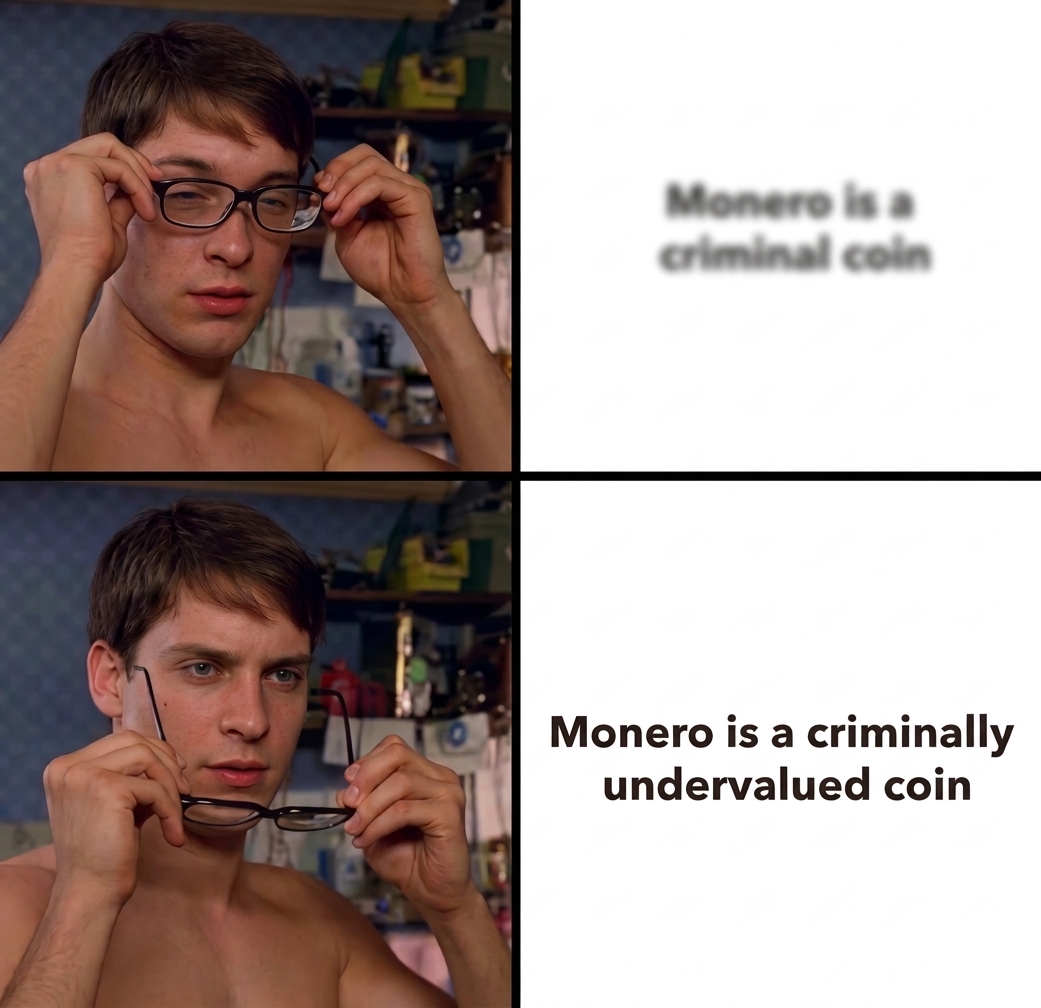 View quoted note →
I would sometimes use Jumble and Primal when using Nostr, but as of today I’ve completely got rid of those two awful clients. Ditto, the best web client, and Dark Wisp, the best mobile app, are more than enough for my needs. Many thanks to their developers.


30 Signs #Monero (XMR) Is Not For You
1. You love broadcasting your net worth to the world.
2. You enjoy the thrill of frozen bank accounts.
3. You believe privacy is only for criminals.
4. You love submitting selfies to use your own money.
5. You prefer "tainted" money.
6. You trust Chainalysis more than cryptography.
7. You want a public ledger of every embarrassing purchase.
8. You prefer "Number Go Up" over "Freedom Go Up."
9. You love ASIC mining farms controlling the network.
10. You can't wait for CBDCs.
11. You think "Be your own bank!" sounds like too much work.
12. You believe compliance is the killer app.
13. You're uncomfortable when money is actually sound.
14. You think hiding your transaction amounts is "suspicious."
15. You never really wanted to be free anyway.
16. You think you have nothing to hide, and that's because you have nothing to say.
17. You firmly believe your nosy neighbors deserve full read-access to your financial history.
18. You prefer your digital cash fragile and easily tracked, rather than shielded by adamantium-grade cryptography.
19. You believe trusting long-term network security to a completely speculative, exorbitant fee market is "sound money."
20. You are utterly terrified of a predictable, microscopic tail emission that actually guarantees permanent network security.
21. You prefer a blockchain where miners must pray for endless network congestion just to keep the lights on.
22. You actually enjoy the suspense of wondering if future block subsidies will drop too low to prevent a 51% attack.
23. You sleep soundly knowing the WEF, BIS, CIA, and Wall Street are building a real-time, high-definition surveillance map of your entire economic existence.
24. You consider getting your life savings frozen because a stranger "dusted" your wallet with 0.00001 tainted Bitcoin to be a fun, character-building weekend surprise.
25. You view the "$5 wrench attack" and targeted kidnapping as exciting networking opportunities.
26. You firmly believe that intelligence agencies and globalist cartels are just looking out for your best interests when they trace your UTXOs.
27. You think advertising your exact net worth on an immutable, public ledger to every local extortionist is just a bold fashion statement.
28. You actually enjoy the constant, lingering paranoia that one unsolicited transaction from a sanctioned address could permanently destroy your financial reputation.
29. You genuinely celebrate that the "anti-establishment" money you bought to destroy the fiat system is now fully custodied, regulated, and sold back to you as an ETF by BlackRock and Wall Street.
30. You fundamentally reject the concept of fungibility, believing it is perfectly normal for a barista to run a full forensic background check on your money's entire lineage before handing over a cup of coffee.