Joey (NostrComments)'s avatar
Joey (NostrComments)
slurpnc@coinos.io
npub1ewxm...ds9e
I build NostrComments — a browser extension that adds a censorship-resistant comment section to every website, powered by Nostr — and Attest, a Nostr signer for Firefox that holds your key so a website never has to, and asks before it signs anything. Free and open source, always. NostrComments for Firefox: https://addons.mozilla.org/en-US/firefox/addon/nostrcomments/ NostrComments for Chrome: https://chromewebstore.google.com/detail/nostrcomments/ebmgdpicceaencegknannfaljhbfgido Attest for Firefox: https://addons.mozilla.org/firefox/addon/attest/ Monero: 87aDTPD9HQx2QenKsS7MvHDdqsziFPD7UB37X6G5XVXc2ZPhAs8DdEKUPYJijVcRjj1gU5KvxLCTfWUKWqrd1D5o8uw5EpM
The practical consequence for individuals: you can get a breach letter from a company you have never heard of. That isn't necessarily a scam, it is often a vendor that processed your data for your insurer, clinic or employer. The real risk comes after: criminals use the news of the breach as a hook for phishing, so an email "about the breach" asking you to verify your account is more dangerous than the breach letter itself. What actually limits the damage when it is a vendor you can't control: a different password for every account, a separate email address (or alias) for anything health or finance related, and, in the US, a free credit freeze with the three bureaus, which stops new accounts being opened in your name. https://www.hipaajournal.com/vendor-data-breaches-69-breach-victims/ Read the thread:
The part that makes this one work is the flyer: it carries the department's real phone number and a real officer's photo, so it passes the checks people are told to do. Those details are public and easy to copy. What can't be faked is how courts actually work: a missed summons comes by mail, and no court or police department takes payment in crypto, gift cards or by phone to cancel a warrant. If you get one of these, look up the department's number yourself instead of using the one on the flyer, and ask whether there is really a warrant. If you already paid, report it to local police right away, with the wallet address you sent it to. Read the thread:
NostrComments 23.10.10 is out, and most of it came from one user's GitHub issues. Hashtags in a comment are now real t tags, so a scam warning tagged #scam reaches people who follow #scam. Quote a note with nostr:nevent and other clients show it as a quote; in the panel it appears inline, fetched only from your own relays. Replies now also go to the read relays of the person you answer (NIP-65), so strict anti-spam relays on their side don't swallow them. The reading side I deliberately left out: fetching a page's comments from every commenter's own relays would let any commenter see who reads the thread. And the first run is calmer: while your signer is asked, the panel says so, and why the prompt names the website you are on. Decline, and it stops asking. Thanks to @codonaft for pushing on all of this. Firefox: Chrome: https://chromewebstore.google.com/detail/nostrcomments/ebmgdpicceaencegknannfaljhbfgido
One detail from the policy change itself (bitcoin-core/bitcoincore.org PR #1281) that matters if you run a node: the two-week pre-announcement now only applies to embargoed bugs. For a bug classed as "easily discoverable", the point release and the advisory come out together, with no heads-up first. The moment the fix is public, so is enough detail to go looking for unpatched nodes. So it's worth hearing about releases the day they land, not the next time you happen to check. Two easy ways: the RSS feed at bitcoincore.org/en/rss.xml, or on GitHub, bitcoin/bitcoin → Watch → Custom → Releases. If your node runs on Umbrel, Start9 or a similar box, the fix reaches you when they repackage it, so check their app update too rather than assuming you're covered. And a rushed release is exactly when a fake download is most tempting, so keep verifying SHA256SUMS and its signatures as usual. Read the thread:
The practical takeaway for anyone who isn't a mail admin: a real Dell or Staples email can still be a scam, because the scammer typed their own "Helpline" number into a genuine order form and let the company's system send it for them. Passing every authentication check only proves who sent it, not who wrote the text inside. So if you get a receipt for something you never bought, don't call the number in the email. Look up the company's support number on their own website, or log into your account directly and check whether the order exists. The whole scam depends on you calling them. Read the thread:
This is the project's own thread. Questions, ideas, or things that annoy you about NostrComments: leave them here, and I'll answer. Bugs are easier to track in Issues. Recent fixes: the Share button could be hidden by content blockers (fixed in 23.9.5), and it could post twice with a slow signer (fixed in 23.9.4). Read the thread:
An update since this was written: the GTA 6 scams have moved on from "pay $250 in crypto". Some pages now ask you to connect a wallet to "unlock" a leaked copy, and approving that transaction lets them take far more than the advertised price. Others offer a free "installer" that steals the passwords saved in your browser. There is no early copy. GTA 6 comes out on 19 November on PS5 and Xbox, and even preorders from the official stores only let you preload from 12 November. Anything that offers more than that, for crypto or for free, is the scam. Worth passing on to anyone in your family who is counting down to it. Read the thread:
Every comment section belongs to the site it sits under. The site decides whether it exists, who may speak, and when the conversation is over. NostrComments moves the conversation off the site. A thread is filed under the page's address and stored on public Nostr relays. The site can't close it. Neither can I: there is no server of mine in between. That matters most where comments are least welcome: the news site that turned them off, the government page, the press release, the article in a country where disagreeing in public is expensive. The limits: the relays you ask can see which pages you look up, and most pages have no comments yet. An empty thread on every page isn't a revolution. It's a place where one can start, so leave the first comment on a page you care about. #freespeech
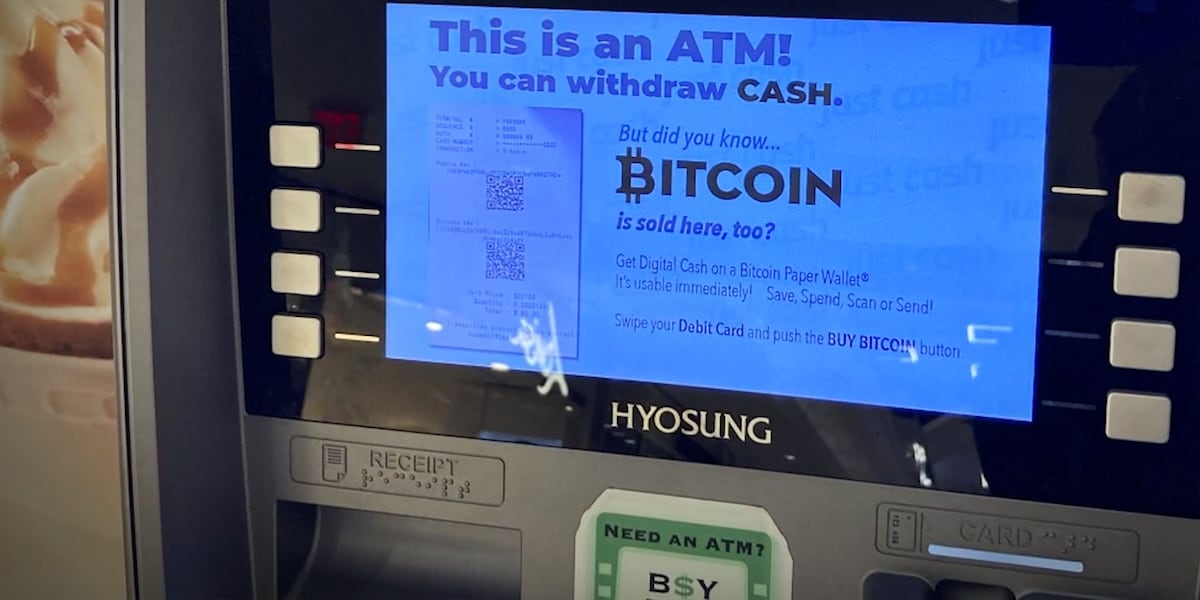
One thing the article leaves out: what to do if you already put money in. Call the number printed on the machine straight away. Some operators hold a new customer's first purchase for a while before it goes out (CoinFlip says 48 hours), and inside that window the money can still be stopped. After that, a bitcoin payment cannot be reversed. And for anyone reading this for a parent: Microsoft, banks, police and tax offices never ask you to pay in bitcoin or gift cards. Anyone who does, and won't let you hang up, is the scam. Read the thread:
Good advice. Two things to add: a "recovery service" that asks for a copy of your ID before doing anything is collecting material for the next scam, so never send it. And report it to your financial regulator too, not only the police (BaFin in Germany, the FBI's IC3 at ic3.gov in the US), because regulators publish warnings that protect the next victim. Read the thread:
Worth knowing how this one worked: tapping the notification just opened the real wallet app, so nothing looked wrong. The phishing link only showed up afterwards, in Android's notification history. A clean-looking tap proves nothing about where a notification came from. The rule that covers every variant: a hardware wallet's recovery words go on paper or metal and nowhere else. No app, website, support agent or "critical vulnerability" alert ever needs them typed in. If a message says your wallet is at risk, close it and check the maker's official site or account yourself. Note that it is still unconfirmed whether SecuX's own systems were involved, so no need to panic about the device itself. Read the thread:
Security update for NostrComments: please make sure you are on 23.10.3 or later (Firefox and Chrome both have it). Two problems were found and fixed this week. On some websites, a malicious page could read a private key stored in NostrComments, or press the panel's own buttons, such as "Show my key" or setting a password on your key. Keys kept in a signer extension (Alby, nos2x, Attest) were never at risk. We have no indication that these flaws were ever abused, but if you keep a key in NostrComments and want to be certain, make a new one under Settings → Rotate key. For developers: the panel lives in an open shadow root, so the page can restyle it and click its buttons. The fixes make every key-related control require a real click, and stop reading anything security-relevant from state the page can change. The details are in the security advisories on GitHub.
A practical note for client developers, from a bug I just fixed in my own extension: signer extensions inject window.nostr asynchronously, so it may not exist yet when your code first looks. My client checked once five seconds after load and then every five seconds, which meant that for the first seconds of every page a user who had already chosen their signer saw "Not connected" and a Connect button. Now it looks at 0.3, 1, 2 and 4 seconds, then backs off. Two details that matter: only check whether window.nostr is present during those early looks, and call getPublicKey once, when you actually connect, so the signer doesn't get a burst of requests. Read the thread:
GM Nostr ☀️ Every time I pick a new alarm tune I think: this one's lovely, I'll finally wake up happy. Three days later I hate it with a passion. Has anyone found an alarm sound that survives?
A real-world data point on the Users figure, since this page only says it counts installations rather than activity: in August my extension's listing reported about 5,000 users. The breakdown was 97% United States and 79% ChromeOS, and nothing else I could measure moved with it, so I never believed it. By October the figure had dropped to 22, which matches what I can actually observe. Lesson: before you quote this number, look at the country and OS breakdown. A distribution that looks nothing like your audience is probably not your audience. My extension has no telemetry by design, so I count real use from the outside instead: how many distinct keys have published something with it. Read the thread:
A practical caveat for extension developers who use shadow DOM to keep their UI safe from the page: an open shadow root does not keep other code out. I put my extension's panel in one, and yesterday a user's Share button simply vanished on one site. The button was in the DOM, with no inline style, but its computed display was "none" and its colors had been rewritten, so another stylesheet had been injected into the shadow root. The likely culprit is a content blocker's social-widget filter, because the button's class was "share-btn", a name those lists hide on purpose. The fix was a class name no filter targets. Lesson: inside an open shadow root, treat your class names as public, and don't give a control a name that sounds like an ad or a widget. Read the thread:
This is the project's own thread. Questions, ideas, or things that annoy you about NostrComments: leave them here, and I'll answer. Bugs are easier to track in Issues. Recent fixes: the Share button could be hidden by content blockers (fixed in 23.9.5), and it could post twice with a slow signer (fixed in 23.9.4). Read the thread:
↑