
everexpanding
everexpanding@habla.news
npub1e8wv...a29a
"Science can flourish only in an atmosphere of free speech." — Albert Einstein
The upcoming LISA gravitational wave detector is expected to observe a phenomenon known as extreme mass ratio inspirals (EMRIs), in which small black holes spiral into supermassive ones at the centre of galaxies. These interactions produce gravitational waves, which LISA will detect in a different frequency range to ground-based detectors such as LIGO. Scientists expect LISA to observe a 'rain' of these events. There could be tens or even hundreds of events during the mission. In scenarios where two supermassive black holes interact in galactic mergers, thousands of EMRI events could occur, with a few hundred detectable by LISA. This expected flood of observations could shed light on black hole masses and galaxy properties, possibly confirming the presence of multiple supermassive black holes in certain galaxies and correlating these events with post-starburst galaxy properties. Identifying and studying these EMRIs could provide important insights into the dynamics and evolution of black holes within galaxies.

Sky & Telescope
Black Hole Rain
The planned LISA gravitational-wave detector might discover a shower of hundreds of small black holes falling in galactic centers.
The LIGO Scientific Collaboration has developed and implemented a new method, called frequency-dependent squeezing, to significantly reduce quantum noise in gravitational wave detectors. By manipulating quantum fluctuations using this advanced technique, they have extended the range of detectable gravitational wave frequencies, increasing the volume of the universe that can be probed by up to 65%. This improvement allows the detection of more black hole and neutron star mergers, providing clearer signals for studying phenomena such as orbital precession, eccentricity and possible deviations from general relativity. The method, which involves tailor-made squeezing at different frequencies, marks a remarkable advance in quantum state manipulation and paves the way for future, more sensitive gravitational wave detectors.
https://physics.aps.org/articles/v16/189
A simple, accessible introduction to calculus by Silvanus P. Thompson (Calculus Made Easy, 1910)
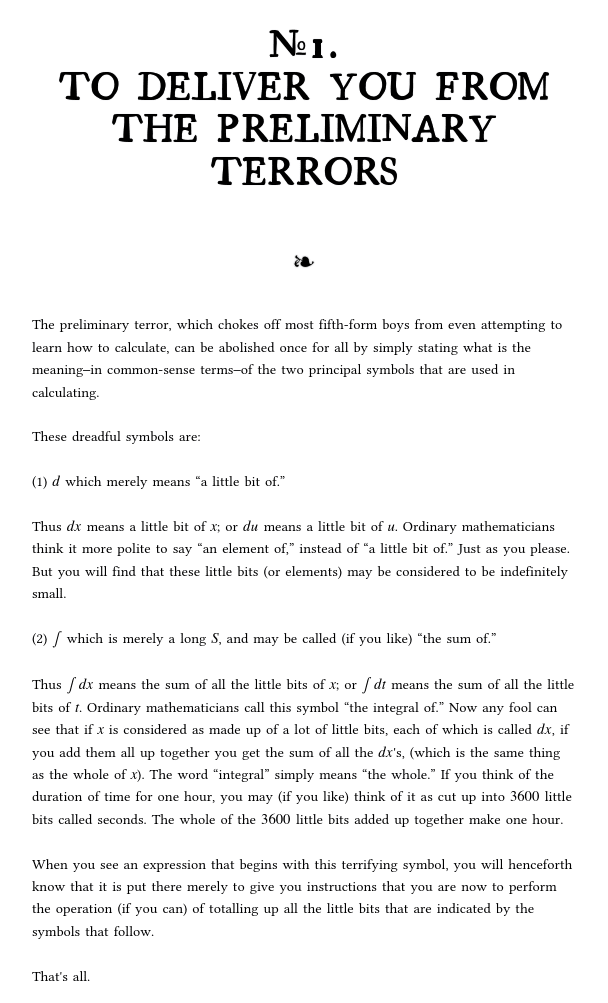
Calculus Made Easy
https://www.sciencenews.org/article/tiny-accelerators-electrons-lasers
Physicists have developed miniature particle accelerators the size of a coin that use lasers to accelerate and control electron beams. Although less powerful than their larger counterparts such as the LHC, these compact accelerators show promise for medical applications such as cancer treatment and technological advances such as quantum computing. Despite limitations in power and efficiency, these innovations represent a significant step towards miniaturising powerful technologies with transformative potential for various fields in the future.

It's amazing to think that 1 attosecond is to 1 second what 1 second is to the age of the universe
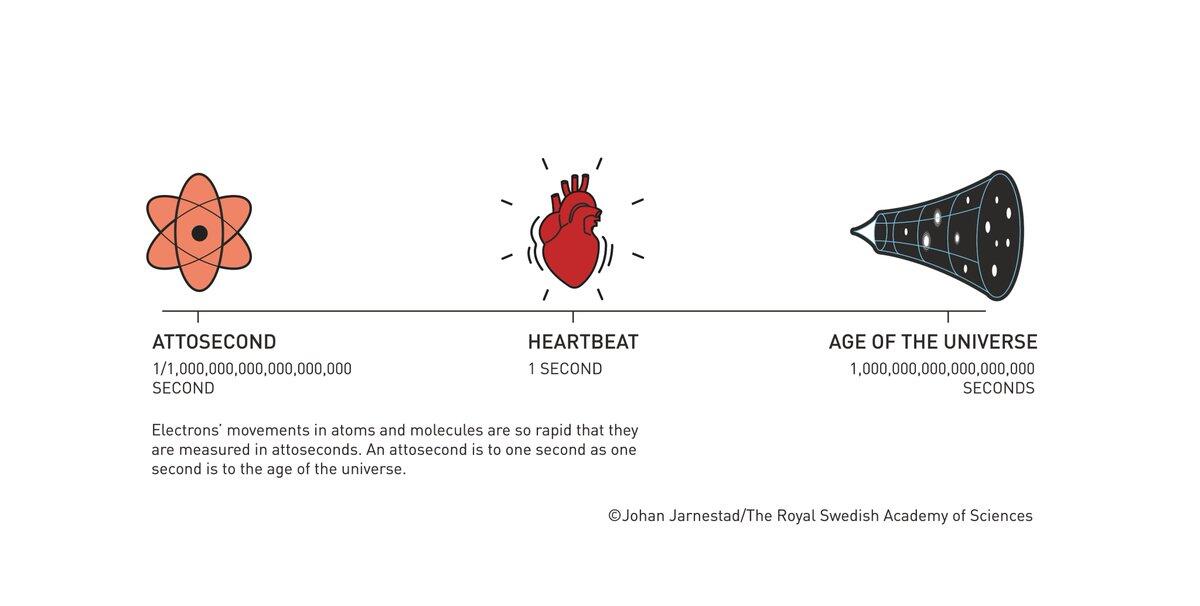
Agostini, Krausz, and L’Huillier win the 2023 Nobel Prize in Physics
https://www.nobelprize.org/prizes/physics/2023/press-release/
They have been awarded "for experimental methods that generate attosecond pulses of light for the study of electron dynamics in matter.”
3blue1brown: Fundamentals Of Light - Barber Pole Effect
A great video that explains the classical view of light and gives an intuition for it.
xkcd: Inspiration

Muon g-2 doubles down with latest measurement, explores uncharted territory
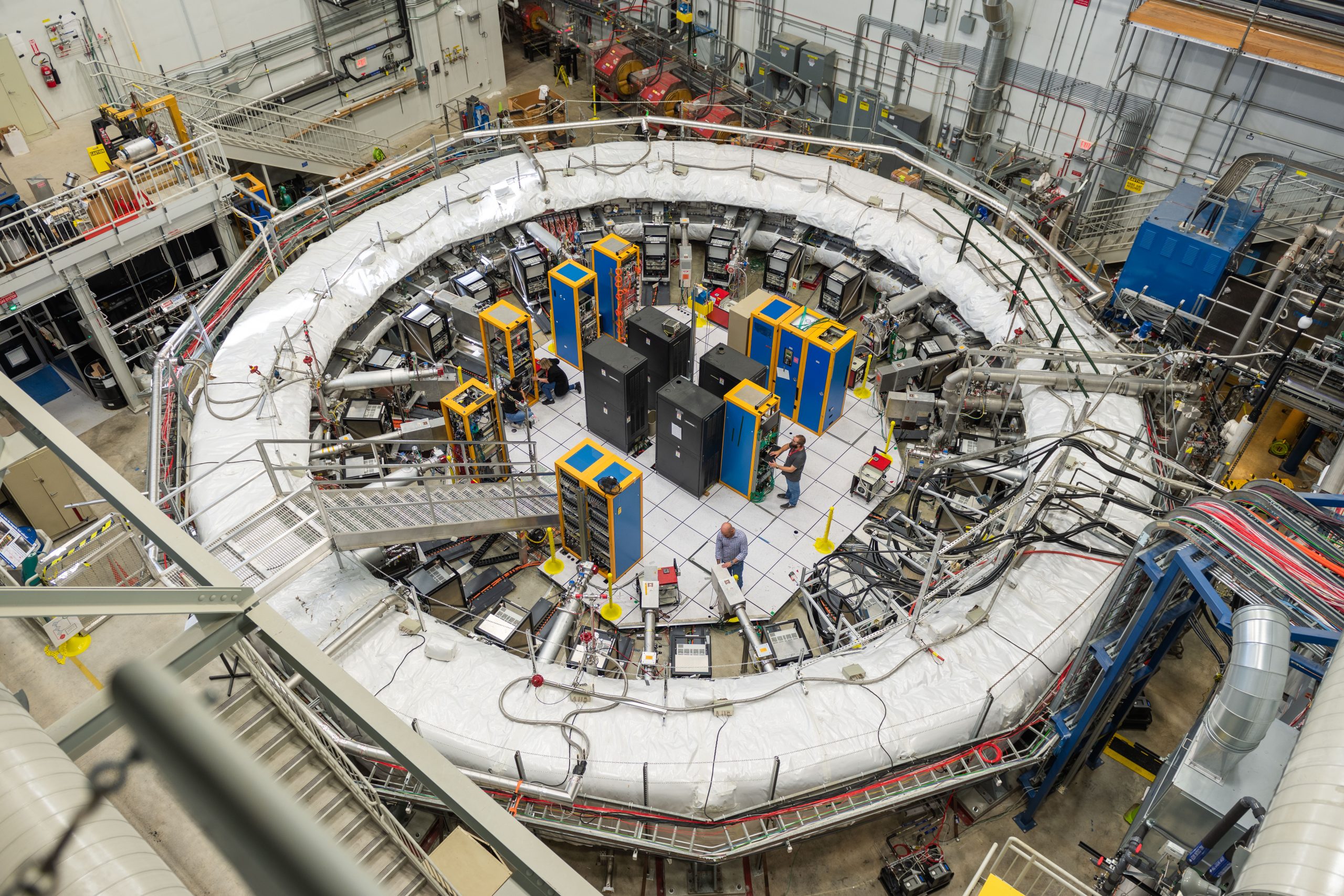 Fermilab's Muon g-2 experiment brings particle physics closer to a showdown between theory and experiment.
News
Muon g-2 doubles down with latest measurement, explores uncharted territory in search of new physics
Scientists working on Fermilab’s Muon g-2 experiment released the world’s most precise measurement yet of the magnetic moment of the muon, brin...
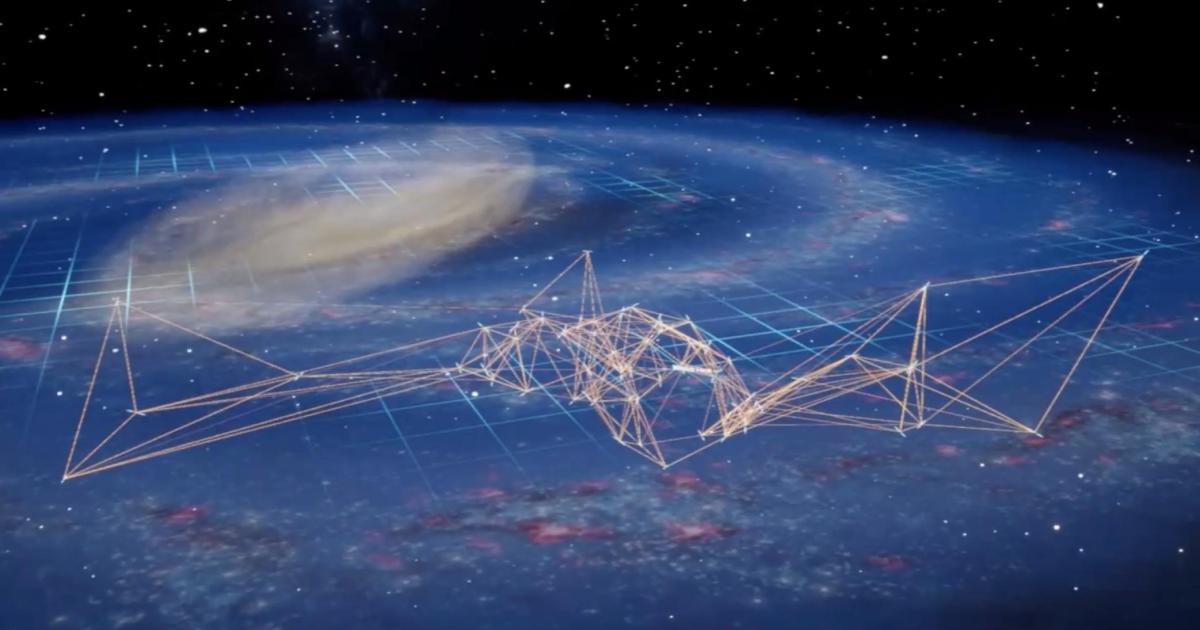
Just published the written version of a talk I gave about 'Laser Cooling and Trapping of Neutral Atoms' on habla.
 #lasercooling #trapping #ultracoldatoms #atomicphysics #physics
Habla
Laser Cooling and Trapping of Neutral Atoms - everexpanding
Laser cooling and trapping techniques make it possible to achieve ultracold temperatures in atoms and molecules, approaching absolute zero. The stu...
I just published a new post on "Elliptic Curves".
Elliptic curves are smooth plane curves defined by cubic polynomials with no repeated roots, and have applications in cryptography, error-correcting codes, and number theory. The group law on elliptic curves allows efficient computation of points and forms the basis of cryptographic algorithms such as Elliptic Curve Cryptography (ECC). Understanding the properties and applications of elliptic curves contributes to a deeper understanding of algebraic structures and opens up avenues for practical and theoretical research.

Habla
Elliptic Curves - everexpanding
Elliptic curves are smooth plane curves defined by cubic polynomials with no repeated roots, and have applications in cryptography, error-correctin...
'Many sciences have not developed this far, and the situation is the way it was in the early days of physics, when there was a lot of arguing because there were not so many observations. I bring this up because it is interesting that human relationships, if there is an independent way of judging truth, can become unargumentative.'
— R.P. Feynman in 'The Meaning of It All'