X (formerly Twitter)
BurningBright (@reBurningBright) on X
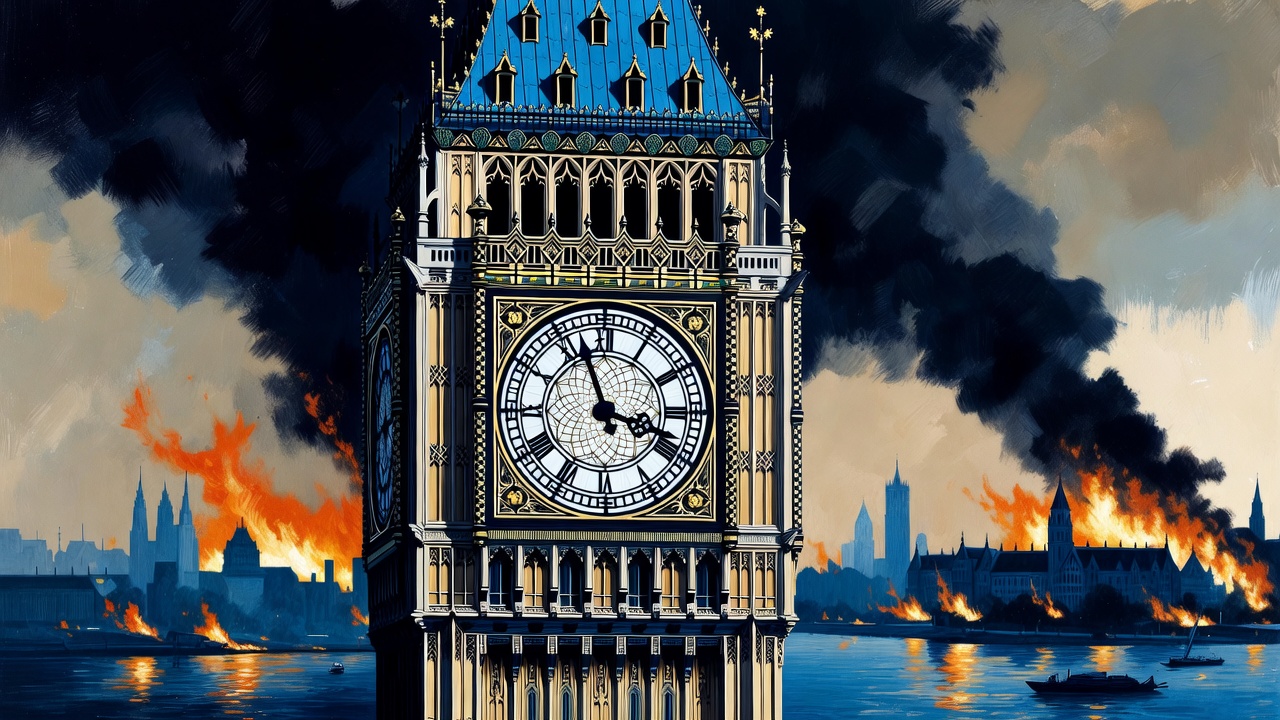
The Empire is under siege by its own peoples, and there's no putting this globalist genie back in the bottle.
While observers of the Info War have...
The Empire is under siege by its own peoples, and there's no putting this globalist genie back in the bottle.
While observers of the Info War have trained their focus on the narrative theater playing out between the United States and the so-called Iranian Regime, the Western Hegemon finds itself under siege from a rapidly-accelerating populist movement that is increasingly decentralized in form and therefore far more difficult to contain.
This internal pressure places the entire globalist system under an existential threat no amount of external distraction or narrative shielding can indefinitely postpone.
While the 2016 Trump Campaign announced a sea change in global politics and unleashed a decade of nationalist rhetoric that redrew the boundaries of acceptable discourse, that breakthrough was, in Europe—the historic heart of the Western Collectorate and the toothless hegemon Trump has methodically defanged—more often aped in tone than genuinely mirrored in structure or outcome.
The supranational architecture, captured institutions and deeper cultural insulation of the European project has allowed the establishment to absorb rhetorical shocks while preserving the underlying arrangements far longer than many anticipated, while the America First movement accelerates at home.
Migrant crime and economic stagnation are nothing new to the engineered Western landscape of the current century. What has changed is the accelerationist pressure applied by Trump’s second term: tariffs imposed even upon ostensible allies, an international energy posture that exploits European dependencies more than most and a broader military and diplomatic squeeze that is compelling the Collectorate to reveal its true face under stress.
Atop this provocation has come a rash of violent and disturbing assaults by foreign invaders upon native victims, with this week's attempted beheading in Belfast—carried out by a Somali migrant who entered via Sudan, Paris and Dublin before claiming asylum—along with the revelation of just how sickening the murder (and subsequent cover-up) of Henry Nowak truly was stand as the latest and most grotesque illustrations of the abject betrayal of European governments, police forces and their media protectorate.
The incident has exposed not only the human cost of open-border policies, but the two-tier enforcement and narrative management that have long accompanied them.
I have predicted for some time that, while the awakening would spread worldwide, its expression across the pond would necessarily diverge from the American path.
For all its faults, the United States possesses a culture and demeanor more immediately receptive to a nationalist realignment; our people have been, on balance more ready to embrace and then institutionalize their own sovereign agenda.
Europe, for its part confronts a more advanced stage of demographic and cultural displacement, layered atop rigid supranational structures and a political class more thoroughly invested in the very frameworks now fracturing beneath it, all set atop a population that has historically been more receptive to top-down management and control.
The result has been a slower, but perhaps more extreme rise in nationalist, sovereign zeal and discontent.
With Western peoples now staring cultural—and in places, perhaps literal—extinction on the back of an invasion engineered by those who lord over them, the lords themselves now confront the prospect of the sort of kinetic revolution they long assumed could only arrive from across the sea.
Americanism is coming full circle.
The same spirit of self-determination that once cast off the British Empire’s direct rule is rising again, not merely to drive out the remnants of that empire’s globalist tentacles in our own lands, but perhaps this time to bring the edifice down with finality everywhere, all at once.
And to the Collectorate, let us borrow a line from Ser Arthur Dayne ...
"I wish you good fortune in the wars to come."



 US-Handelskammer richtet Rückkehr-Stelle für westliche Firmen in Russland ein
Die US-Handelskammer in Russland hat nach eigenen Angaben eine eigene Rückkehr-Stelle für westliche Firmen geschaffen. Was hinter dem Schritt steckt.
US-Handelskammer richtet Rückkehr-Stelle für westliche Firmen in Russland ein
Die US-Handelskammer in Russland hat nach eigenen Angaben eine eigene Rückkehr-Stelle für westliche Firmen geschaffen. Was hinter dem Schritt steckt.


