We are still feeling the adverse consequences of the cash for clunkers program.
Look up to see stars. Look in to see constellations.
Forgot to pick up chocolate gold coins last night, so the leprechaun had to improvise this year. Gold bars it is (Snickers painted with edible gold paint.)
Notice the glitter footprints?
By formalizing the asset forfeiture-to-cold-storage pipeline via the Strategic Bitcoin Reserve, the state is laying the groundwork for a legal 6102-style confiscation—targeting banks, ETFs, and corporate custodians.
There is a tide in the affairs of men.

Husbands, busy yourself so entirely with the task of becoming excellent that you have no inclination to meddle with the failings of those you love and lead. Be too grand for petty fears, too great for grudges, and so full of noble purpose that anger, finding no room within you, must wander elsewhere in search of a home.
My wife’s minor traffic ticket landed her 16 hours of forced "community service." I’ve nicknamed her 24601.

You probably cuss badly.
View article →
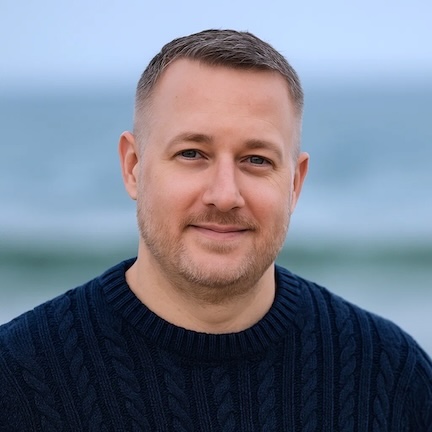
There are men who win power, and there are men who win minds. The former we call politicians, the latter we call prophets. Ron Paul was never meant to be the former, but it is to him that we owe the latter. He did not merely run for office; he ran a revolution. He did not merely campaign; he catechized. And though the world, in its usual dullness, dismissed him as a curiosity, it is his ideas that now stand at the very center of the public square, roaring where once they only whispered.
Before Ron Paul, the state was an inevitability, its sprawling presence accepted like the weather. After Ron Paul, it became a question—a suspicion—a problem to be solved. Before Ron Paul, the only political argument was how best to manage the machine. After Ron Paul, men began to ask whether the machine should exist at all. It was not a matter of electoral success, but of intellectual conquest. He did not seize the presidency, but he shook the very ground upon which presidents stand.
And now, in the great and bizarre theater of history, it is Trump—not the philosopher, not the scholar, not the man of letters—who finds himself wielding the wrecking ball that Paul first hoisted into the air. The appetite for upheaval, the rage against the ruling class, the righteous impatience with bureaucracy—all of it was first kindled by a quiet doctor from Texas, before it was ever shouted by a tycoon from Manhattan. The former planted the flag, the latter carries it forward. And though I am, by habit, skeptical of all things governmental, I cannot deny the fact that we are closer now to the fulfillment of Paul’s vision than at any moment in modern memory.
Governments are still prone to tyranny, power is still prone to corruption, and I have no illusions that this grand movement cannot itself be swallowed by the very forces it opposes. But if the walls of Leviathan are to crumble, let us at least give due thanks to the man who first pointed out that they were made of sand. Thank you, Dr. Paul.
The Man Who Counted True
In days of kings and cloistered scribes,
Where wealth was weight and debt was bribes,
A man stood up with steady hand,
And counted true, despite command.
He was no lord, nor prince, nor knight,
No keeper of the ledger’s right,
Yet numbers danced beneath his gaze,
Unmoved by courts, untouched by praise.
His father taught, as fathers do,
That wealth is not what men construe,
Not writ in ink on royal scrolls,
Nor sealed within the banker’s folds.
A coin is true when hands agree,
A weight is right when scales are free.
No edict makes the tally grow,
No scepter tells the grain to flow.
Yet law had learned a darker art—
To weave the world with paper’s heart.
The king decreed, the bishops swore,
That worth was theirs, and theirs alone.
They taxed the poor, they clipped the scales,
They turned the debts to iron jails,
And any man who dared protest,
Would find his name and home possessed.
But still he counted, still he weighed,
Through shifting laws and debts delayed.
He whispered sums in tavern halls,
And scratched his mark on cellar walls.
They mocked him first, then called him mad,
Then struck him down with verdicts clad.
They took his home, they seized his land,
Yet numbers slipped through every hand.
For in the dark, his work took flight,
It flickered through the silent night.
And every man who held it fast,
Knew wealth was free, and free at last.
The lords declared, "This cannot stand!
The world must kneel to our command!"
But still it moved, from hand to hand,
Beyond the reach of law and land.
They sent their spies, they burned their fires,
They drowned dissent in dungeons dire.
Yet every torch that scorched his name
Lit up a hundred more the same.
And though he fell, as martyrs do,
His numbers lived, his ledgers grew.
No king could break, no thief undo—
The man had taught the world what’s true.
I wish I could teach every new father one lesson my elders failed to teach me:
Defy, with all the fire of your soul, the cowardly lie that caution is wisdom! To tiptoe through life is not to master it—it is to forfeit it, to shrink from its battles, to live half-dead before the grave claims you!
#fatherhood
Some nameless tinkerer lit a spark, and now the whole rotten edifice is smoldering.
The world is full of men who rail against thieves in the alley but bow before thieves in the palace.
For all its power, generative AI does not think—it predicts. It does not reason—it reflects. And it does not discern—it merely magnifies. When fed flawed assumptions, it will not hesitate to scale them into towering mistakes with unshakable confidence.
And that is its greatest gift to us.
Because failure has always been the foundation of wisdom. The slow, stumbling errors of history have cost civilizations centuries. But AI—relentless, unblinking, unburdened by ego—will condense those lessons into mere moments. It will not spare us from mistakes, but it will spare us from making them slowly.
The question is not whether AI will lead us astray. It will. Repeatedly. Spectacularly. But in doing so, it will force us to confront truth faster than ever before. It will demand of us a new agility—not just in innovation, but in correction. The future will belong not to those who avoid mistakes, but to those who recover from them at speed.
This is not the age of blind faith in machines. It is the age of human mastery over them. And the faster we fail, the faster we learn.
#AI #WisdomThroughFailure #HumanIngenuity #TheGreatAcceleration
If Bitcoin fails, I will be forced into the most preposterous position of all: belief in something else. And that, I confess, is an impossibility, for everything else is either the rickety scaffolding of a failing empire or the tinkering of men who mistake their own bureaucratic brilliance for divine intervention.
If Bitcoin fails to maintain its sacred, node-driven decentralization, then we are not merely back to square one—we are back to the Tower of Babel, where every man must once again barter in the dialect of his captors.
For it is not merely that Bitcoin is the best hope—it is the only thing that is not hopeless. Everything else is mere theater: fiat is fraud, altcoins are alchemy, and central banking is that most absurd of superstitions, the belief that printing wealth can make men richer.
So if Bitcoin falls, then there is only one option left: to laugh at the absurdity of civilization, to drink deep from the goblet of irony, and to play the world’s most wretched game—the fiat casino—where the dice are loaded, the house always wins, and the chips are nothing more than elaborate promises from liars.
But I do not think Bitcoin will fail. No, I think it will stand—not because men are wise, but because they are foolish enough to try everything else first.
I will not surrender to this narrowing of the soul. I will be strong because my children depend on it. I will be learned because my ancestors demand it. And I will seek the face of God, not in the dry and dusty corridors of modern theology, but in the wild and wonderful places where He has always dwelt—in the storm on the sea, in the hush of the forest, in the quiet and stubborn faith of a man who refuses to kneel to anything but the Almighty.
What was in the water in Austria in the first quarter of the 20th century?
I do not believe in the modern notion that children are best raised by experts, nor in the even madder notion that education is a thing that happens in fluorescent-lit rooms under the careful supervision of bureaucrats. A child should be raised at his father’s knee, and educated under his mother’s eye, and taught to read not from textbooks but from old, dangerous, wonderful books filled with pirates and poets and saints and soldiers.


