BarbaryChaos  🌊's avatar
BarbaryChaos 🌊
npub1h7ha...xxjk
Navigating chaos, seeking patterns, and quietly looking ahead
I can totally understand how the average person might not grasp the value of Bitcoin. What I can never wrap my head around, though, is how a die-hard gold enthusiast — someone who understands sound money and the importance of preserving wealth — completely overlooks the potential of Bitcoin
Stumbled upon a 3-hour Thinkerview video about #Bitcoin yesterday—super hyped at first! For those who don't know, #Thinkerview is this awesome independent media outlet on YouTube that brings in diverse personalities for deep, unfiltered convos. C’est vraiment top! 🇫🇷 As a Bitcoiner, I was stoked to see two brilliant minds on the panel—Sébastien Gouspillou and Alexandre Stachchenko, both heavyweights in their respective fields. Then, I saw the third guest... tom Benoît. I’d seen some of his takes on finance and macroeconomics before, and... meh. 😑 Was surprised thinkerview invited him, tbh. Spoiler alert: it didn’t disappoint... in being disappointing. Dude completely ruined what could’ve been an epic discussion. 😩 After just 15 minutes (out of 3 hours!), I was so frustrated I went to bed en pleurant What a waste!
Stumbled upon this—thought it perfectly sums up my afternoon ☕💻💥🧠 image
Back in Paris, the City of Lights 🌟—despite a few bumps in the road and changes not all for the better, it remains a timeless beauty. From quiet café corners to the Seine at sunset, this city still knows how to captivate and inspire. ✨ #Home #Paris image
Do you remember Professor Raoult? The eccentric French microbiologist who was cancelled during COVID for his controversial views? Well, he just published a fascinating new book "Homo chaoticus" where he presents a rather advanced post-Darwinian view of evolution. One of the possible conclusions of his theory is that the observed decline in IQ might not be sociological or psychological, but rather infectious. I just watched a long interview with him—it's absolutely captivating. It fills in gaps left by the traditional, almost paradoxically biblical, notion of a common ancestor given by Darwin and provides a compelling explanation of the role of chaos in evolution.
I started reading Michael Crichton’s "State of Fear" this summer. I say “started” rather than “finished” with little pride, but having a one-year-old has slowed my reading speed to about a tenth. Those who've been there will understand. I've enjoyed several film adaptations of Crichton’s books in the past, but this is the first time I’m actually reading one of his novels. It was an intriguing tweet by Hal Finney that got me into it. Interestingly, the tweet is from around the same time he talks about reducing Bitcoin’s CO2 emissions (was he serious?). All these ecological collapse scare stories feel like a constant mix of urgency and contradiction. On the one hand, some of these fears are reinforced yearly (goodbye biodiversity); on the other, discredited by new data. It’s hard to form a definitive opinion, and reading State of Fear doesn’t help much but increases openmindedness even if it is fiction ofc I know. Especially when you read about things like Pakistan’s recent discovery of massive oil reserves (a related topic: peak oil). Here’s the link: In short, the debate is far from settled, and it doesn’t look like it will be anytime soon (at least for me)
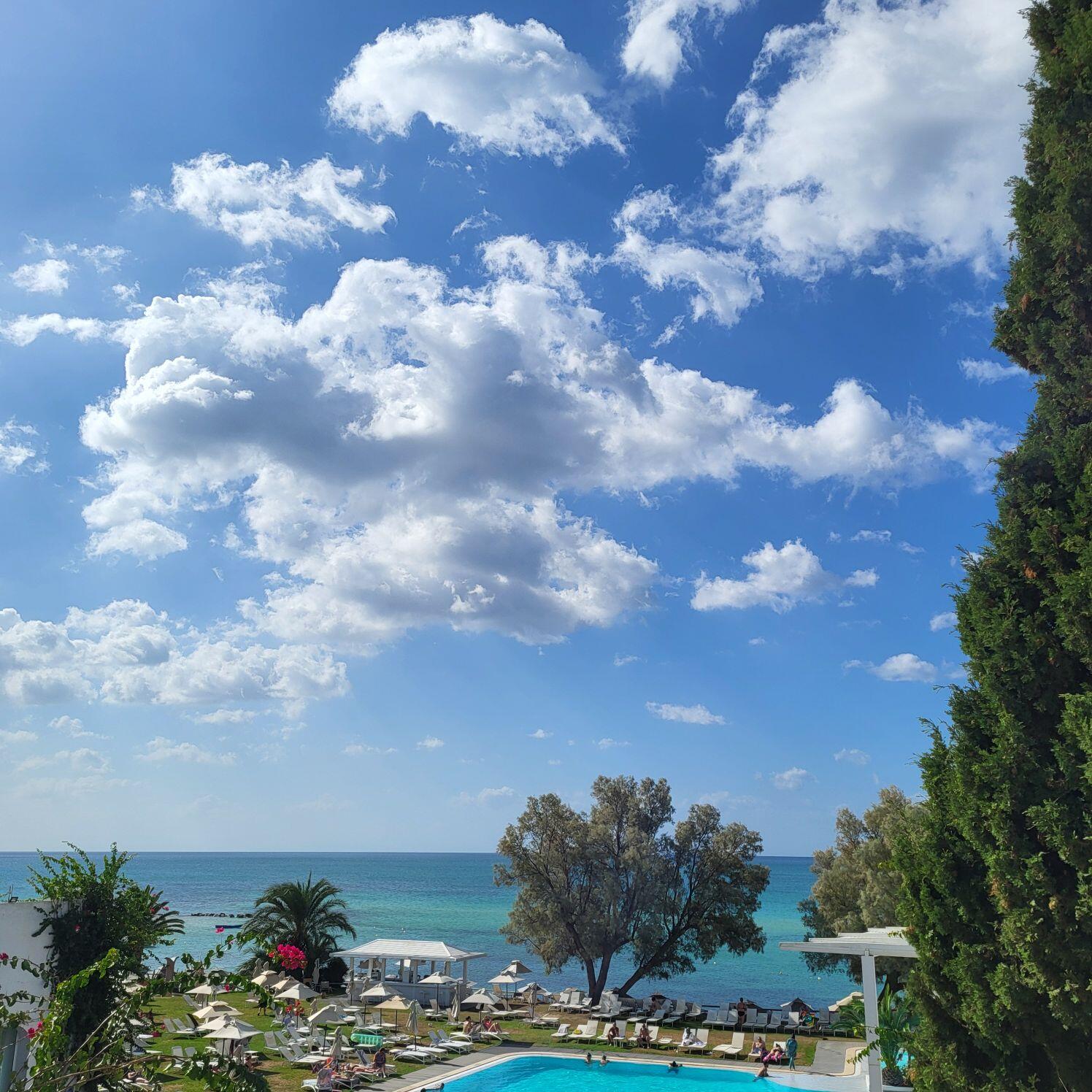
Last days by the Mediterranean, soaking in the sun with family. Recharging for la rentrée, ready to face what's next image
I've been reflecting on Raoul Pal's theory (which I largely agree with) about the world undergoing a massive shift by 2030 due to the exponential rise of AI. Pal is an excellent speaker and a great simplifier of complex ideas. However, his businessman side occasionally makes him seem opportunistic, especially with the promotion of questionable cryptocurrencies. Still, the alpha he delivers elsewhere more than makes up for it. In this context, I often find myself feeling lost regarding my career direction. Is it even sensible for someone in a traditional industry to carry on as usual—holding meetings and making decisions about topics that might soon become irrelevant? As an actuary with an executive role in an insurance company, I now find myself doing things solo in a matter of days with these very recent tools like Cursor or Replit Agent—things that used to take entire teams months to accomplish. So, what to do to hedge against this uncertain future? One approach is to carry on as usual and save as much as possible in the "future currency" of AI interactions (#btc if your still wondering ;) ), or to start adapting now to the coming changes. But what does "adapting" even mean when AI, far smarter and more efficient than any of us, is set to flood both cyberspace and the physical world? That’s the big question, and it’s one that occupies most of my thinking these days. Yet, I haven't been able to draw any clear conclusions. Interestingly, I’ve just learned that @Lyn Alden is venturing into science fiction, and my first reaction is that this might help me explore these questions. Her economic and financial newsletter is outstanding—pragmatic, rooted in a bottom-up engineering approach. This, I believe, holds her back somewhat from diving deep into speculative thought. Yet, her insights on what the world of tomorrow could look like would be fascinating, and what better way to let her intuition about the future flow freely than through science fiction? It might provide valuable clues on how to prepare for what’s coming. That said, I might just be imagining things, and Lyn’s story will end up focusing on some completely unrelated topic, set in a cigar galaxy in the year 6373.
Ah, September—where the market spirits drop BTC just enough to let everyone stack sats and quietly lower the Gini coefficient. Perfect timing for the next wave of FUD about wealth inequality! 📉🍂 #Bitcoin #SeptemberDip #btc
As a keen observer of the Mediterranean world, I've developed this fascinating theory over the past few months: modern Tunisia serves as the canary in the coal mine for major global transformations. I'm convinced that this small North African country is an early indicator of dramatic changes that will later manifest more intensely in the Western world. My theory is based on concrete observations. Tunisia generally feels the symptoms of major upheavals first, albeit less intensely, before they occur in the West. This phenomenon is explained, in my view, by the country's remarkable resilience despite its limited resources. Shocks occur quickly but at low intensity, making it an ideal barometer of emerging global trends. Here are historical examples that support my theory: - Decolonization (1956): Tunisian independence preceded the African decolonization wave. - Women's emancipation (1956-present): Tunisia pioneered women's rights reforms in the Arab world. - Rise of Islamist terrorism (1980s-2000s): Tunisia experienced Islamist violence well before it became a global concern post-9/11. - Arab Spring (2010-2011): The Tunisian revolution triggered a broader movement in the region. - Migration crisis (2011-present): Tunisia faced migration pressures before the 2015 European crisis. - Rise of populism (2019-present): The election of populist president Kais Saied preceded a global wave of populist movements. Factors that I believe contribute to Tunisia's unique role: 1. Its geopolitical position at the crossroads of Africa, the Middle East, and Europe. 2. Its resilience despite limited resources. 3. Its cultural diversity and receptiveness to global trends. 4. Its relatively well-educated and connected population. 5. Its history of political experimentation. Observing recent developments in Tunisia, I predict the following trends for the Western world: 1. Erosion of institutional power: The weakening of Tunisian institutions foreshadows similar trends in Western democracies, manifesting as: - Increased executive overreach - Weakening of checks and balances - Erosion of judicial independence 2. Democratic backsliding: President Saied's power consolidation since 2021 heralds challenges for established democracies. 3. Economic stratification: Growing disparities, especially for less mobile populations, indicate intensifying class divisions coming to the West. 4. Youth disillusionment: High youth unemployment and political disengagement signal imminent frustration with traditional systems. 5. Digital authoritarianism: Tunisia's struggles balancing digital freedoms and state control preview similar Western challenges. 6. Migration: Tunisia's challenges offer insights into future population movements that will affect Western nations. Connecting to the Fourth Turning theory: The erosion of institutional power and societal tensions we're observing in Tunisia signal, I'm convinced, the imminent approach of a Fourth Turning-like period in Western societies. The Fourth Turning, a concept from generational theory, suggests that every 80-100 years, societies undergo a crisis period that reshapes institutions and values. @npub14mcd...frlx has nice podcast episodes about the topic with @Brandon Quittem Tunisia's current struggles with institutional decay, economic hardship, and societal polarization are, in my view, early indicators of a broader cycle of change. If my theory is correct, and I strongly believe it is, we are on the cusp of a significant transformative period in the Western world.
Spent the afternoon brainstorming about combining parametric insurance with Nostr and Zaps. 🤔 Key concept: Using DeFi-style liquidity pools on Nostr for parametric insurance products. Potential benefits: - Instant, automated payouts for policyholders - New investment opportunities for liquidity providers - Leveraging Nostr for transparency and Zaps for efficient payments Still pondering: 1. Technical challenges of integrating Nostr, smart contracts, and Zaps 2. Regulatory implications in different jurisdictions 3. Scalability to various types of insurable events I'll try to ship an mvp #NostrInsurance #Parametric