
dr.fred
fredglobal@getalby.com
npub1heys...mce6
privacy
monero
bitcoin
criminals want to take away your USA passport:
even the laggards on wolfe street
had a better performance than btc in the last years
btc did not even appreciate 45% in four years
horrible performance.
why is that?
the market is booming
and the injected are selling btc off again
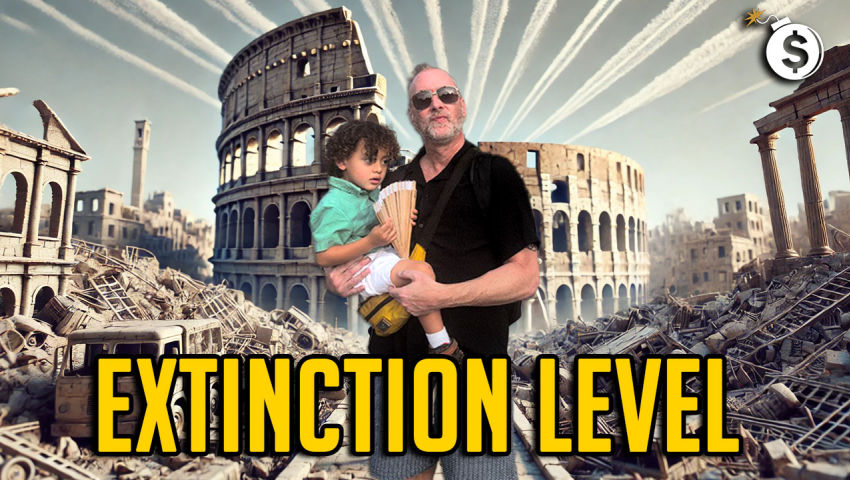
owning underperforming btc is
brutal
The Harsh Truth About Life In Canada Today
by Mikkel Thorup
Canada
Canada is often portrayed as a land of freedom, opportunity, and prosperity. Reality, however, tells a different story.
Statist policies, crushing taxes, bloated bureaucracy, and a society overtaken by woke ideology have shattered Canada. This is a cautionary tale for those looking at Canada as an ideal living space. If you are asking yourself what living in Canada is like, let me explain: Canada is not a land of fulfilled dreams but of enduring harsh conditions and barely getting by.
As if economic hardships aren’t enough, Canadians are also oppressed by the Orwellian newspeak that woke culture is creating. If you speak your mind, you’re labeled a fascist. If you question social policies, you’re accused of microaggressions.
There are no best places to live in Canada anymore. As a Canadian, I see little chance of Canada becoming livable again. Since I founded Expat Money in 2017, I have been helping expats build their Plan-Bs to protect their wealth and freedom and leave countries like this one.
Let’s look at the unfortunate condition that Canada has fallen into.
The Restrictions Imposed During the fake disease crime:
The strict quarantine measures and harsh government interventions implemented in Canada during the fake disease hysteria were shameful. The government expanded police and administrative powers to smash public backlash against its convid fake disease policies.
A significant protest movement called The Freedom Convoy began in early 2022. Truckers and citizens held large demonstrations in Ottawa against toxic injection mandates, harsh fake plandumbic restrictions, and the government’s authoritarian tendencies.
Former Prime Minister Trudeau used extraordinary powers to freeze the bank accounts of protesters and crack down on activists. Individual and property rights were arbitrarily violated.
The Canadian government imposed mandatory lethal injections on federal employees, healthcare workers, and those in the transportation sector, turning personal health decisions into state terror mandates. Those who were not lethally injected were suspended from their jobs, their travel rights were restricted, and they were ostracized from society. Even the private sector was coerced to impose lethal injections under government pressure.
Moreover, harsh lockdowns and restricted entry into the country forced businesses into bankruptcy. Massive numbers of people lost their jobs, and the government’s financial structure was severely damaged.
Woke Culture And The End Of Free Speech
The problems aren’t limited to elections. In recent years, woke ideology has overtaken Canada's politics, education system, and workplace. This “progressive” ideology has replaced individual freedoms and meritocracy with the so-called principle of inclusivity and equity. As a result, freedom of speech has been destroyed, social engineering has increased, and social polarization has deepened.
In Canada, laws enacted under the guise of "combatting hate speech" have imposed mandatory language use by the government, determining how individuals should speak.
Now, we have another Bill C-11 to update the Broadcasting Act. The government's media watchdog, the CRTC, will now be able to monitor online platforms such as YouTube, TikTok, and Spotify. Bill C-11 is a censorship tool to kill free speech in Canada. The government may have sugar-coated the law by saying, "We support Canadian content," but at its core, it's an attempt to take control of the internet. The government deciding what content is “sufficiently Canadian” will soon become a matter of deciding what content is appropriate, approved, and safe.
What about Bill C-18? This is another example of an intervention that legislates internet censorship under the pretext of “protecting the independent press.” Bill C-18 requires internet platforms (especially companies like Google and Meta) to pay media outlets for news content. The government is turning content sharing into an economic penalty to extract money from big tech companies.
Because of this law, platforms like Google and Meta have decided to remove news content completely. In other words, the government’s move to “access information” has actually restricted access to information.
Similarly, due to cancel culture, academics, business people, and members of the media are censored, fired, and subject to social lynching when they voice different views. Diversity, equity, and inclusion (DEI) policies, especially in business and academic institutions, cause decisions to be made based on identity rather than merit. Canadian universities have been degraded from institutions that encourage intellectual freedom into ideological centres where a singular type of thinking is imposed. Companies must prioritize political correctness over efficiency and productivity in business life. Canada has shifted from a society based on individual freedom and voluntary cooperation to a system governed by the ideological impositions of the government.
Assisted Suicide And Moral Decline
Indicators of Canada's political and economic collapse can also be traced to the individual level. The rapid increase in Medical Assistance in Dying (MAiD) applications in Canada has led to deep debate on personal freedoms, ethical values, and the role of the state in the country.
Canada has the fastest-growing assisted suicide program in the world. When MAiD was legalized in 2016, it only included individuals with terminal illnesses. However, over time, the criteria were relaxed and expanded to include psychological disorders or illnesses that do not have a natural death period. In 2021, approximately 10,000 people ended their lives under MAiD. This number constitutes 3.3% of all deaths. Even people who were experiencing financial difficulties or housing problems resorted to euthanasia, causing heated arguments in the public domain.
In the face of all the challenges, assuming Canada has a functioning social welfare state would be unwise. Canada's health system is seriously unreliable because of long waiting times, overburdened hospitals, and staff shortages.
Before moving to Canada, be mindful that you can wait months to years for doctor’s appointments and surgeries. The shortage of doctors and nurses severely disrupts health services. Excessive bureaucracy and limited private health services make the health system even more inefficient.
Federal Government Overreach
The federal government's drama is not Canada's only political issue. The political conflict between the federal and provincial governments is becoming a serious problem.
There are several main disagreements between the federal and provincial governments:
First, the federal government's carbon tax has drawn fierce criticism from energy-independent provinces such as Alberta, Saskatchewan, and Ontario.
Second, the federal government demands that the provinces spend more on healthcare financing, while the provinces say they are underfunded and subject to excessive federal intervention.
Third, immigration has exacerbated the housing crisis and the burden on public services in large provinces such as Ontario, Quebec, and British Columbia. The provinces demand more funding, saying they shoulder much of the cost burden, but funding is unavailable.
Fourth, the federal government's policies restricting fossil fuel use continue to economically harm provinces such as Alberta and Saskatchewan, which depend on oil and gas.
It’s no surprise that many people in Alberta and the Prairie provinces responded positively to Trump’s annexation proposal. It reflects a deep and long-standing frustration with federal control over energy policy. At the same time, a grassroots “Make Alberta Great Again” movement is gaining real traction. Pro-separation initiatives are picking up momentum, with growing calls for a referendum on Alberta’s independence.
Even Bill 54, passed in May 2025, lowered the threshold required to trigger a referendum on the province’s sovereignty. Now it’s easier for separatist groups to push for a vote.
I was in Alberta last year and met with several people involved in the movement in person. We spoke at length about the political landscape, their frustrations, and their hopes for Alberta’s future. Many of them told me that, while they believe strongly in the cause, they also know how easily their involvement could make them political targets. That’s why they’re working on their Plan-B strategies to protect themselves and their families if things take a turn for the worse.
market goes up sharply
btc goes down
market goes down 1%
btc goes down 20%


The WEF's Yuval Noah Harari: The idea of a social credit system "has positive potential in some regards".
"It could create the most totalitarian systems in history".
"Even in dictatorships, there was privacy. If you lived in the Soviet Union, the KGB can't follow you around all the time. They just don't have enough agents."
"Now you can monitor everybody all the time. You don't need human agents or analysts. You have the computers, smartphones, cameras, drones, microphones everywhere, and you have the AIs analysing all the ocean of information."
"So this creates the potential for total surveillance."
trump has signed an executive order
making sex change for minors a crime
retoswap.com
anonymous open source exchange
they tried to kill everyone
they locked everyone up in their houses
why is no one talking about it any more ?