nym's avatar
nym
nym@primal.net
npub1hn4z...htl5
nym's avatar
nym 1 year ago
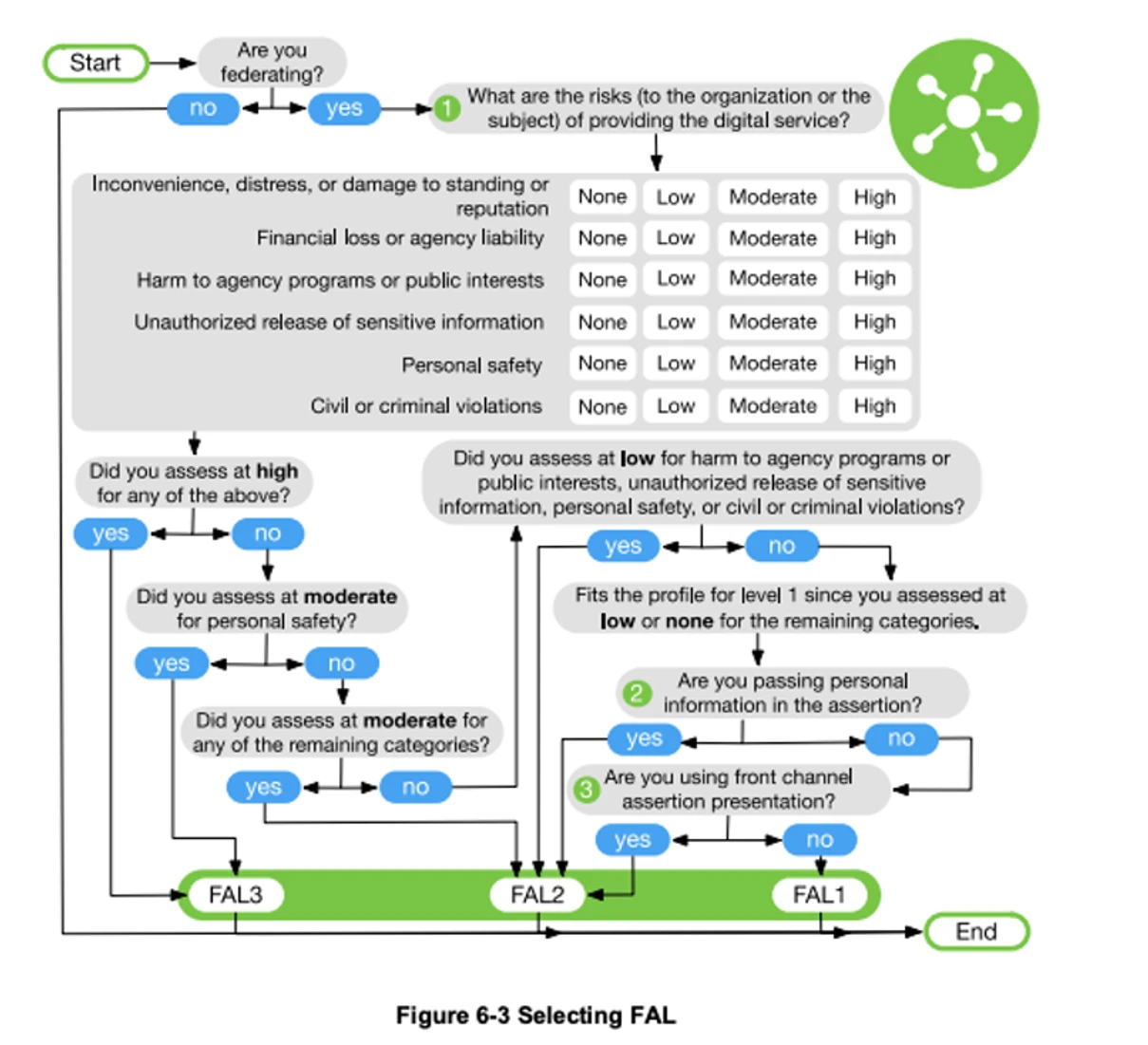
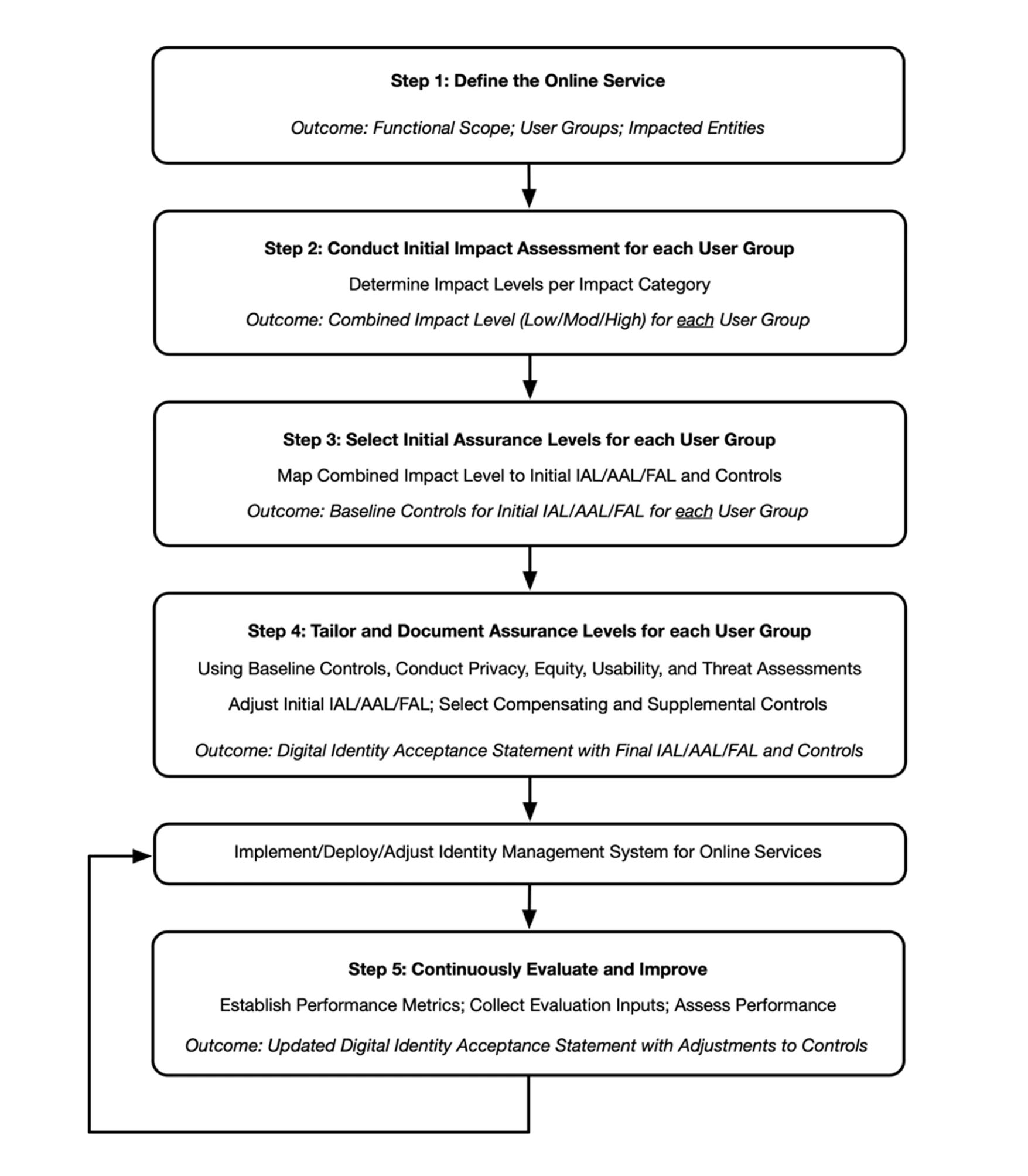
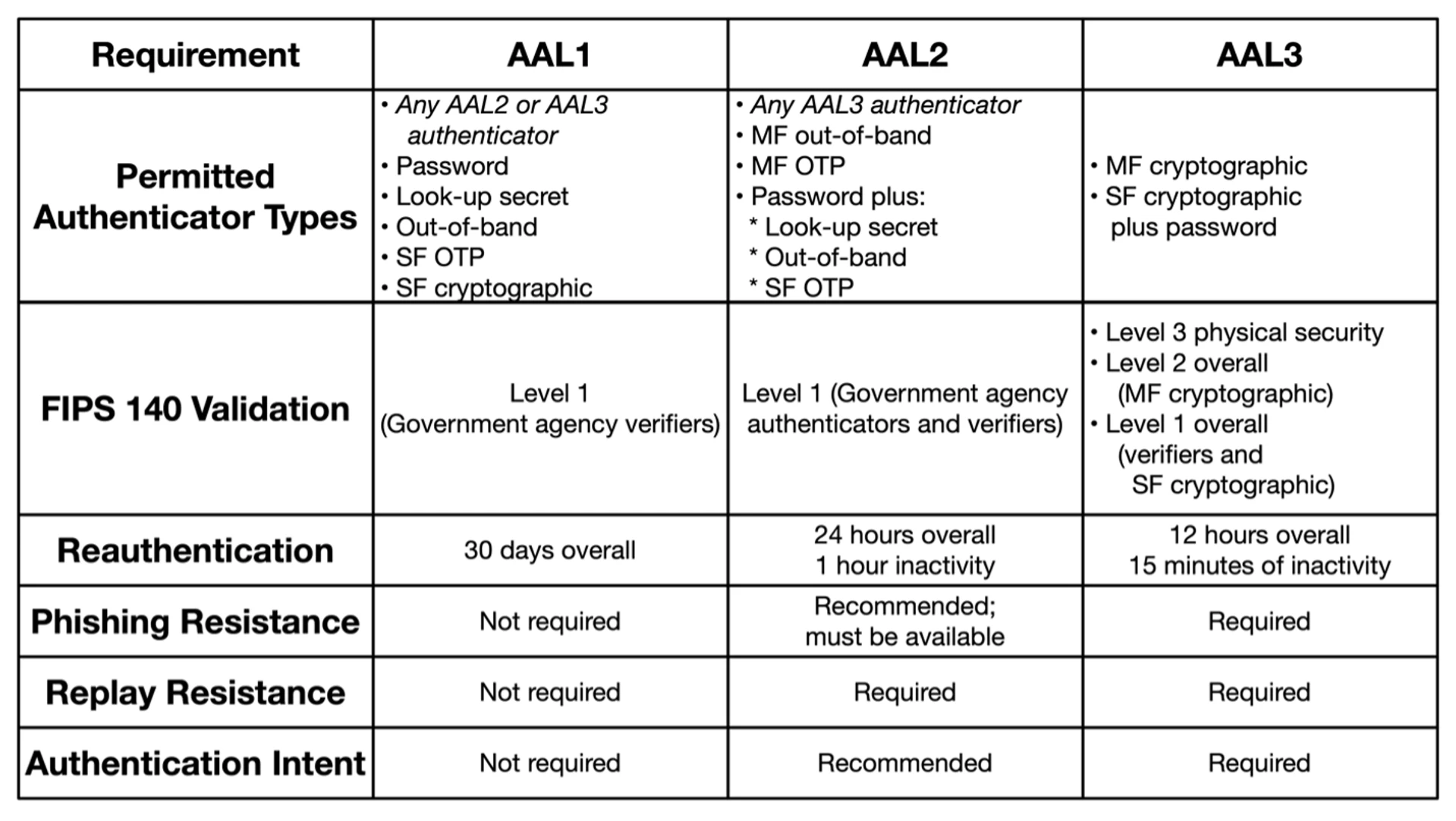
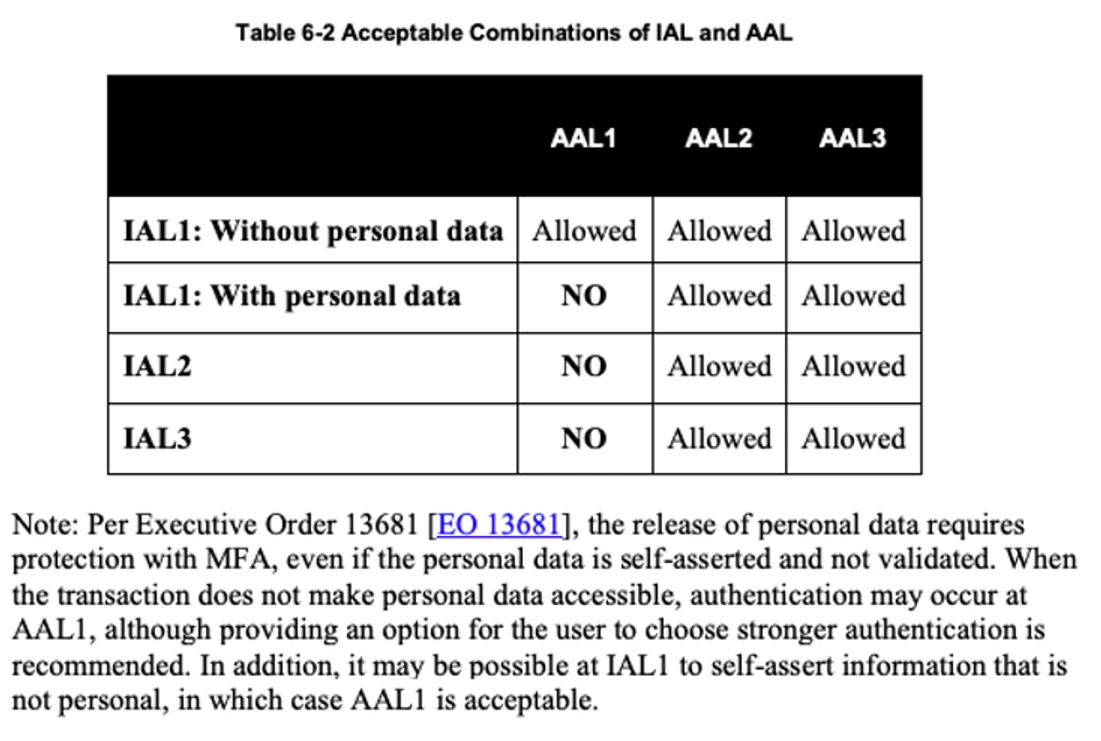
Solving NIST Password Complexities: Guidance From a GRC Perspective Not another password change! Isn’t one (1) extra-long password enough? As a former Incident Response, Identity and Access Control, and Education and Awareness guru, I can attest that password security and complexity requirement discussions occur frequently during National Institute of Standards and Technology (NIST) assessments. Access Control is typically a top finding in most organizations, with the newest misconception being, “NIST just told us we don’t have to change our passwords as often and we don’t need to use MFA or special characters!” This is almost as scary as telling people to put their Post-it notes under the keyboard so they’re not in plain sight. In an article Titled, "NIST-proposes-barring-some-of-the-most-nonsensical-password-rules", it was stated that NIST’s “. . . document is nearly impossible to read all the way through and just as hard to understand fully.” This is leading some in the IT field to reconsider or even change password policies, complexities, and access control guidelines without understanding the full NIST methodology. This blog post will provide an understanding of the context and complexities of the NIST password guidance in addition to helping better guide organizations in safe password implementation guidance and awareness. No one wants to fall victim to unintended security malpractice when it comes to access control. **Understanding the NIST Password Guidance in Context** The buzz around the NIST password guidance is frustrating because everyone seems to zoom right down to the section with the password rules and ignore the rest of the guidelines. The password rules are part of a much larger set of digital identity guidelines, and adopting the password rules without considering their context is counterproductive and potentially dangerous. The Scope and Applicability section of the new NIST guidelines, formally known as NIST Special Publication 800-63 Digital Identity Guidelines (NIST SP 800-63), states “These guidelines primarily focus on organizational services that interact with external users, such as residents accessing public benefits or private-sector partners accessing collaboration spaces.” In plain English: the guidance in NIST SP 800-63 is not intended for internal users’ accounts or sensitive internal systems, and organizations implementing the password rules on their internal systems are misusing the guidance. For organizations that are planning to use this guidance to secure their external-facing service accounts, NIST SP 800-63 spends 26 pages defining a risk-based process for selecting and tailoring appropriate IALs, AALs, and FALs, respectively, for systems, with three (3) assurance levels defined in each of those categories (see NIST SP 800-63 Section 3). It goes on to provide guidance on user identification, authentication, and federation controls appropriate for each assurance level in three (3) additional documents—NIST SP 800-63A, B, and C, respectively. The new password guidance is meant to support the AALs (defined in NIST SP 800-63B). Only AAL1, the lowest of the AALs defined in the guidelines, allows passwords to be used alone and still states that multi-factor options should be available. AAL1 is defined as providing “basic confidence that the claimant controls an authenticator bound to the subscriber account.” Organizations that adjust their rules for passwords to match the NIST guidelines without performing the risk-based analysis and selecting an appropriate AAL are naively implementing what NIST intended only for the most basic protection. This is an inappropriate use of this guidance document, as many systems will present significantly more risk to the organization than AAL1 was designed to address and would be more appropriately protected by AAL2 or AAL3 controls. In short, the NIST SP 800-63 password guidance (when used properly with a risk analysis) is intended and appropriate for external user accounts on public-facing services, e.g., customer accounts on a public portal. However, organizations should think twice before applying it to their own internal systems and users, because that was not its intended purpose. It’s also worth pointing out that, as of this post, the guidance that is making so many headlines is a draft and is subject to change before finalization. **Using the NIST Guidance** The two (2) most frequently asked password questions as auditors or GRC consultants we get at TrustedSec are, “Do we really need Multifactor Authentication (MFA) everywhere?” and “What is the best practice for the implementation of passwords?” For any organization that logs into a network, starting with a framework is a must for successful governance and cybersecurity foundations. Additionally, organizations must adhere to password and access guidelines based on the legal and regulatory requirements they must follow to keep their businesses running. Some examples are various NIST security control frameworks (e.g., CSF or SP 800-171), PCI-DSS, HIPAA, NERC-CIP, ISO 27001, SOX, etc. Many of these frameworks include specific requirements for utilizing complex passwords, rotation of passwords or passphrases, enabling MFA, determining access levels, and performing access reviews appropriate for the types of information and/or systems these frameworks are designed to protect. This NIST SP 800-63 guidance does not in any way override or supersede any of these more specific requirements, so organizations should continue meeting existing framework requirements. You might be asking, “How does this apply to my organization?” Most organizations question if their situation is applicable, due to the term “online service.” In today’s society, when users think of an “online service,” most would think shopping portals or online goods. However, as NIST defines it in the Glossary of SP 800-63, an online service is “A service that is accessed remotely via a network, typically the internet.” This is important to clarify that any organization that has an Internet-facing network is using an online service and can adhere to the digital guidelines and implement best practices for security, based on their risk profile or digital risk in the absence of other compliance requirements. What is digital risk? NIST describes Digital Identity Risk as management flow to help perform the risk assessment or risk impact. As seen with the new release of NIST CSF 2.0, Governance and Risk Assessments are the core to a healthy cybersecurity program. Organizations can begin to perform the risk (impact) assessment, as defined in SP 800-63 Section 3, by defining the scope of the service that they are trying to protect, identifying the risks to the system, and understanding what categories and potential harms the organization possesses. Identifying the baseline controls to use in the risk formula will assist with selecting the appropriate level. Identity Assurance or proofing is about a person proving who they say they are. A useful example: I sign up for a web service and enter an email address and new password—how does the service know I actually control that email? If they're smart, they will send a confirmation email to that address before setting up the account to prove my identity. This gets more complex when a user ID needs to be associated with a specific named individual, e.g., when retrieving medical information from a portal. Authentication is the process of confirming a user’s identity prior to allowing them access to a system or network, such as through a password. Federation is a process that allows access based on identity and authentication across a set of networked systems. Each level will have a severity rating, e.g., Low, Moderate, or High. Starting with the user groups and entities, thinking of people and assets, and then determining a category or categories will help identify harms or risks. Some examples are listed in SP 800-63. Next is evaluating the impact that improper access would have on an organization. This assists in identifying the impact level. Impacts such as reputation, unauthorized access to information, financial loss/liability, or even loss of life or danger to human safety can be included to help determine the impact level for each user group and organizational entity. Using the impact level leads to determining the IAL and then the AAL. When determining the AAL, the intent is to mitigate risk from authentication failures such as tokens, passwords, etc., whereas IAL is aligned with identity proofing and individuals. Certain factors, such as privacy, fraud, or regulatory items, may require a specific AAL. NIST references these in SP 800-63A, SP 800-63B, and SP 800-63C. Once the AAL is established, referencing SP 800-63C can be helpful in the next step for selection of the FAL. This assists in identifying the identity federation, which uses the Low, Moderate, and High impact criteria. Once IAL, AAL, and FAL have been established for each user group or entity, an Initial AAL can be selected. Of course, this will also need to take into consideration baseline controls, compensating controls, or supplemental controls, if needed. Also keep in mind, as with all NIST processes, that continuous evaluation and improvement are critical to staying secure, making this a recurring process. ![](https://m.stacker.news/72372) Now that the calculated AAL has been established, the chart in Section 3.5 of SP 800-63b will help with understanding some of the requirements. ![](https://m.stacker.news/72373) Most systems would be a Level 2 or 3, considering what the organization would be storing, processing, or transmitting. Things like sensitive data such as personally identifiable information (PII) during onboarding, payment card data, and PHI subject to HIPAA for places like hospitals or service providers might help align with each AAL. Instances where Level 1 might be utilized could be a website that would not store payment data but requires a user to log in with a user ID and password. Understand that risk for the website is minimal, and therefore a Level 1 for that specific system may be deemed appropriate. But the organization may have corporate network controls set to Level 2, due to HR or doing business with certain service providers. It’s perfectly fine to have various levels assigned to different groups and assets or entities. A similar process to define the IAL and FAL as noted in NIST’s Digital Identity Guidelines (NIST SP 800-63-3) is depicted below: **IAL:** ![](https://m.stacker.news/72374) **FAL:** ![](https://m.stacker.news/72375) So, after all of this, is one (1) super-long password really enough? It depends on the AAL and what other legal and regulatory requirements an organization is expected to adhere to. The highest level should always be implemented where possible, if the risk is present in the organization. For example, if the organization processes credit card data, PCI-DSS standards would prevail, meaning that passwords pertaining to the CDE must follow all PCI guidance and likely would be considered a Level 3 after performing the risk assessment. The key to the AALs, really, is determining the most sensitive data our organization has and aligning it with that level. Now, let’s put the AAL to use. I always consider Incident Response and Education and Awareness as my lead examples behind why we do security. If an organization becomes compromised, are all passwords and access controls properly aligned with the risk, and do they adhere to all legal and regulatory controls? Lastly, always implement MFA where possible; after all, NIST does strongly suggest it SHOULD be available, even at AAL 1! Be proactive on how to report an incident if your password is suspected to be compromised, change it immediately—even if NIST has a different idea—and communicate it to all users. All users and organizations should understand the risk to their specific organization and be compliant. Security is everyone’s responsibility—don’t let your organization’s password hygiene be the cause of the next big breach. originally posted at https://stacker.news/items/845255

nym's avatar
nym 1 year ago
The Homa network protocol # The Origins and Development of Homa Transport Protocol The origins of the TCP and UDP network protocols can be traced back a full 50 years. Even though networks and their use have changed radically since those protocols were designed, they can still be found behind most networking applications. Unsurprisingly, these protocols are not optimal for all situations, so there is ongoing interest in the development of alternatives. One such is the Homa transport protocol, developed by John Ousterhout (of Tcl/Tk and Raft fame, among other accomplishments), which is aimed at data-center applications. Ousterhout is currently trying to get a minimal Homa implementation into the kernel. Most networking applications are still based on TCP, which was designed for efficient and reliable transport of streams of data across a distributed Internet. Data-center applications, instead, are often dominated by large numbers of small messages between many locally connected hosts. The requirements of TCP, including the establishment of connections and ordering of data, add a lot of overhead to that kind of application. The design of Homa is intended to remove that overhead while taking advantage of what current data-center networking hardware can do, with a focus on minimizing the latency between a request and its response. ## A Quick Homa Overview At its core, Homa is designed for remote procedure call (RPC) applications; every interaction on a Homa network comes down to a request and associated reply. A client will send a request message to a server that includes a unique request ID; the server will send a reply back that quotes that ID. The only state that exists on the server is held between the receipt of the request and the receipt of the response by the client. Much of the key to the performance of this protocol can be found in how these messages are handled. There is no connection setup; instead, the client starts transmitting the request, with no introductory handshake, to the server. There is a limit on how many bytes of this "unscheduled" request data can be sent in this manner, which is determined by the round-trip time of the network; it should be just high enough to keep the request-transmission pipeline full until an initial response can be received from the server side. The figure of about 10,000 bytes appears in some of the Homa papers. The initial request packet includes the length of the full request. If the request does not fit into the size allowed for the unscheduled data, the client will wait for a "grant" response before sending any more. That grant should, if the server is responding quickly, arrive just as the initial request data has finished transmitting, allowing the client to continue sending without a pause. Grants include a maximum amount of data that can be sent and thus function like the TCP receive window. This machinery is intended to get a request to the server as quickly as possible, but without the need for much, if any, buffering in the network path between the two machines. Priority queues are used to manage this traffic, with unscheduled packets normally having the highest priority. Lower priorities are used for granted traffic; the requests with the least amount of data remaining to be received are given the highest priority. Once the server has received the full request and processed it, a response is sent back to the client. Once again, the initial bytes are sent as unscheduled packets, with grants required for the rest if the response is large enough. In the earlier descriptions of the protocol, the server would forget everything it knew about the request immediately after sending the response. That created the possibility that requests could be resent (if the response never arrives) and executed multiple times. More recent publications include an explicit acknowledgment message indicating that a response has been received, with the sender retaining the necessary state to retransmit a reply until that acknowledgment is received. The details of the protocol are, of course, rather more complex than described here. There are, for example, mechanisms for clamping down on the amount of unscheduled data sent if a server is finding itself overloaded. The receiving side of a message can request retransmission if an expected packet does not arrive; unlike TCP and many other protocols, Homa puts the responsibility for detecting lost packets onto the receiving side. There is also a fair amount of thought that has gone into letting systems overcommit their resources by issuing more grants than they can immediately handle; the purpose here is to keep the pipelines full even if some senders do not transmit as quickly as expected. See this [paper](#) for a more complete (and surely more correct) description of the Homa protocol, this [page](#), which reflects some more recent changes, and this [2022 article](#) for more details. ## Homa on Linux The Unix socket interface was designed around streams and is not a perfect fit for Homa, but the implementation sticks with it to the extent it can. A `socket()` call is used to create a socket for communication with any number of other systems; the `IPPROTO_HOMA` protocol type is used. Homa can run over either IPv4 or IPv6. For server systems, a `bind()` call can be used to set up a well-known port to receive requests; clients need not bind to a port. Messages are sent and received, as one might expect, with `sendmsg()` and `recvmsg()`, but there are some Homa-specific aspects that developers must be aware of. When sending a message, an application must include a pointer to this structure in the `msg_control` field of the `msghdr` structure passed to `sendmsg()`: ```c struct homa_sendmsg_args { uint64_t id; uint64_t completion_cookie; }; ``` If a request is being sent, `id` should be set to zero; the protocol implementation will then assign a unique ID to the request (and write it into `id`) before sending it to the server. For a reply message, `id` should be the ID value that arrived with the request being responded to. The `completion_cookie` value, which is only used for requests, will be passed back to the caller with the reply data when it is received. The receive side is a bit more complicated because Homa requires that the buffer space for replies be registered before sending the first request on a socket. To do so, the process should allocate a range of memory, then pass it into the kernel with `SO_HOMA_RCVBUF` `setsockopt()` operation, using this structure: ```c struct homa_rcvbuf_args { void *start; size_t length; }; ``` The start address must be page-aligned. This memory is split into individual buffers, called "bpages," each of which is `HOMA_BPAGE_SIZE` in length; that size is 64KB in the current implementation. Each message will occupy at least one bpage; large messages will be scattered across multiple, not necessarily contiguous, bpages. A message is received by making a call to `recvmsg()` with a pointer to this structure passed in the `msg_control` field of `struct msghdr`: ```c struct homa_recvmsg_args { uint64_t id; uint64_t completion_cookie; uint32_t flags; uint32_t num_bpages; uint32_t bpage_offsets[HOMA_MAX_BPAGES]; }; ``` The `flags` field describes what the caller is willing to receive; it is a bitmask that can include either or both of `HOMA_RECVMSG_REQUEST` (to receive request messages) and `HOMA_RECVMSG_RESPONSE` (to receive responses). If `id` is zero, then `HOMA_RECVMSG_RESPONSE` will cause any response message to be returned; otherwise, only a response corresponding to the provided request ID will be returned. On return, `num_bpages` will indicate the number of bpages in the registered buffer area used to hold the returned message; `bpage_offsets` gives the offset of each one. The bpages returned by this call are owned by the application at this point and will not be used by the kernel until they have been explicitly returned. That is done with a subsequent `recvmsg()` call, where `num_bpages` and `bpage_offsets` will indicate a set of bpages to be given back. This code has been "stripped down to the bare minimum" to be able to actually transmit requests and responses across the net; it is evidently about half of the full set of Homa patches. The intent, of course, is to ease the task of reviewing the work and getting initial support into the kernel; the rest of the work can come later. In its current form, according to the cover letter, its performance "is not very interesting," but that is expected to improve once the rest of the work is merged. See this [paper](#) for more information on the Linux implementation of Homa. ## Prospects The Homa protocol originates at Stanford University, with support from a number of technology companies. Academic work often does not successfully make the transition from interesting prototype into production-quality code that can be accepted into Linux. In this case, though, Ousterhout seems determined to get the code into the mainline and is trying to do the right things to get it there. Thus far, the four postings of the code have yielded some conversations about the protocol but have not yet resulted in a detailed review of the code. That suggests that the initial merge of Homa is not imminent. It does seem likely to happen at some point, though. Then, it will be a matter of whether the operators of large data centers decide that it is worth using. Complicating that question is Ousterhout's assertion (in the above-linked paper) that, even in a kernel with less overhead than Linux, CPUs simply are not fast enough to keep up with the increases in networking speed. The real future for Homa, he suggests, may be inside the networking hardware itself. In that case, the merging into Linux would be an important proof of concept that accelerates further development of the protocol, but its use in real-world deployments might be limited. It does, in any case, show how Linux is firmly at the center of protocol development for modern networks. originally posted at https://stacker.news/items/845197
nym's avatar
nym 1 year ago
A Pixel Parable This is his second lucky break of the weekend. A friend recommended he go to this sci-fi convention; she said it would be good for networking. Mark wouldn’t mind having one of his illustrations on a trading card, or a rule book, or, who knows, one of those fantasy novels he used to read in high school. So he shows up to the convention on Friday. Someone notices his work—his pencil landscapes that look hand-painted—, they invite him to join in the art show, he does, two days later he wins first place. That’s his first lucky break. The second is this guy, Gary, coming over to him, praising his work, asking him to ‘audition’ for a video game job. “Could you come over to the Ranch for an interview?” Gary insists. Mark reads the card again and stops for a second to think what to say next. He needs a job, after all. “I’d be happy to come over to do anything at all there but… I don’t know the first thing about video games. I never even touched a computer.” “That’s alright,” Gary replies, “we’ve had better luck teaching artists how to program than the other way around. I’m not worried about that part.” Driving back home, Mark tries to make sense of what just happened. On his first weekend—on his first serious attempt at becoming a professional illustrator—he’s offered to interview for a role that he didn’t even know existed, but that now sounds like a dream job—one that he’s terribly unqualified for. Later that night, he calls his parents and learns his father has just bought a personal computer. That’s his third lucky break. “What are you doing with this thing, anyway?” Mark is sitting in front of the computer, skimming the manual. The cover reads Atari 520ST. “The school made a deal for us to get them at half price. They say we should get computer-literate if we want to have a job in five years.” The voice comes through the doorway, then his father, leaning on the frame. “I figured I could use it for writing, but they have a different brand at school, so I can’t print my files there. And I’m not buying a printer, so I don’t see the point. You can have it if you want.” “Let’s see if I can get the job, first.” Mark keeps on reading. “It says there should be a drawing program for this. NeoChrome. Let’s try it out.” It takes them about 20 minutes to find the disk and open the program—their first project since his father taught him how to change his oil—then Mark switches to the NeoChrome manual. Another half hour later, he’s dropping little green dots over a blue background. His hand feels like a claw as he holds that little mouse. Whenever a connection sparks between the image on the screen and the image in his brain, he jerks to grab a pencil, a phantom limb of his. This machine won’t let him forget his body. For a few evenings, Mark secludes himself in his old high school bedroom, getting familiar with the computer and its painting program. He puts together a little African hut picture and teaches himself to reproduce it, over and over, from a blank page. He repeats it one last time at Skywalker Ranch, a few days later, to survive his interview. ![](https://m.stacker.news/72197) Mark walks out of the garage and meets Gary on the porch. Gary shows him around the Stable House, introducing everyone in the Games Group, and takes him to his desk. He’ll be sitting next to Gary and across the hall from Ron and David, the programmers. Mark notices there are not one but two different computers on his desk. And neither looks like the Atari he knows. “That’s a Commodore 64,” points Gary, “and that’s a DOS PC. We’ve been transitioning from C64 to DOS. In fact, your first job will be porting the backgrounds of our new game. You’ll notice these are, uh, a bit… clunky, when it comes to graphics. Especially that one,” he points at the PC. Mark feels like throwing up. “I know, it’s a lot,” Gary laughs. “Look, the only thing you need to know about this one is how to run the game. As for this one… You’ll mostly just be using DPaint.” Nobody around here really knows what they are doing, Gary reassures him, not even the programmers. They are all just trying to figure out what it means to tell a story with a computer. What a video game worthy of LucasFilm would be. There are no experts at that. “An artist’s perspective is what we expect you to bring to the table. The tools, you’ll figure out. They change all the time, anyway.” They spend the next hour fiddling with Deluxe Paint II, the drawing program for the PC. It’s like NeoChrome but better, or so Gary says. Mark notes the colors are fewer and uglier than the ones he saw on the Atari. “Oh, yeah. Those are the colors of your nightmares, starting tonight.” After lunch, Ron sits with Mark to play Maniac Mansion, his B-horror adventure game. He shows Mark how to move around, how to talk with other characters, how to solve puzzles to make progress. Maniac Mansion is a blueprint of the kind of work they are trying to do. There’s a new game they’ve been working on, David’s game, Zak MacKracken, but Ron says Maniac Mansion is better for getting started. It’s best if Mark spends a couple of days getting familiar with it. His impostor syndrome kicks in again; he’s no gamer, not even an arcade player. “That’s perfect,” Ron says. “We want to build something that just about anyone can pick up and have fun with.” Mark leaves the office with sore eyes from the computer screen and a headache from all the names and images shoved into his brain. He’s relieved that no one’s around to see him pull his Honda out of the underground garage. He slows down as he drives by the Main House, where they had lunch that day, a new building made to look old—period-specific old. Just like the one they put in the game. He circles by an artificial lake, a barn, a vineyard. This little valley is as otherworldly as any of his fantasy landscapes. As a shot from Star Wars. ![](https://m.stacker.news/72198) His first assignment is to port Zak MacKracken's Commodore64 backgrounds to the EGA PC. David hands him a description of each location in the game. They call them rooms even though some are outdoors—outer space, even. Each one consists of a short description and a list of “hotspots”, the things the player can interact with: objects, doors, that kind of thing. He has to make sure those remain visible on the new backgrounds. Other than the list of rooms, the only design document is a huge chart posted on a wall, a sort of storyboard for programmers. Mark can’t make sense of it—or the game, for that matter. Zak MacKracken is bigger and more ambitious than Maniac Mansion; the work seems more interesting but the game is undecipherable to Mark. At first, he tries working from the original C64 bit pictures, but that complicates things. Both are 16-color systems, but not the same 16 colors, so swapping palettes is pixel Whac-A-Mole. He needs to reproduce them from scratch. He sketches in his notebook, plots a grid in graph paper, and tapes acetate sheets to his monitor—anything to delay the moment when he has to move to the computer, where nothing flows, all so clumsy and rigid and LEGO-like. Then there’s the palette: black, dark gray, light gray, white, dark blue, light blue, cyan, yellow, mustard brown, dark red, poppy red, peach, magenta, acid-hot pink, grass green, and acid-chartreuse. Always the same suffocating 16 colors for anything he needs to draw. He has to ponder carefully what colors to “spend”, an early decision that constraints the rest of his choices: the scene composition, the mood, what’s shown, what’s hinted. There’s no room for impulse or experimentation, everything has to follow a plan. Despite his Digital Artist title, his job doesn’t seem much concerned with art. The only creativity is in subverting the tools, working around them, against them, exploiting their limitations. ![](https://m.stacker.news/72200) “Coppola,” says David. “Coppola, of course,” Gary concurs. “The Rolling Stones.” “Wait, all of them?” “Hmm. Mick Jagger. And the drummer, I guess.” “I missed them. I did see Huey Lewis.” “Yup. We played softball with the band.” It’s Mark’s third week and, for the first time, he catches a glimpse of George Lucas. They usually only see him at the restaurant when he has visits. Gary and David are listing all the famous people they saw at lunch. Today it’s Spielberg. “You’ll understand, of course,” David turns to Mark, “that, while it may seem as if they were right there across the room, we are not breathing the same air. We’re worlds apart.” “Galaxies,” Gary suggests. “Galaxies apart, thank you. They are holograms, like that Leia message on the first one. We can see them but they don’t see us.” “Under no circumstances should we be noticed by Lucas.” “Or one of his guests.” “Or any film-related people.” “And especially not Lucas.” The owner doesn’t care for video games. The existence of the games division is a sort of corporate accident, a spin-off of the Graphics Group prompted by a frustrated collaboration with Atari. And the fact that they got to stay while the Graphics Group—now called Pixar—was sold to Steve Jobs, is another corporate accident. They’re a rounding error, the last hackers standing, the only division totally unrelated to filmmaking—A kind of intruder. So the idea is to make themselves invisible, not to remind George Lucas that they exist, that he still owns this little video game studio, that they are spending his money and, much worse, taking up his precious space. “Our man Steve, on the other hand, is our biggest fan,” David points his fork to Spielberg. “You’ll be seeing a lot of him.” “This is like an amusement park to him. He’s more into it than Lucas, I think.” “He’d probably live here if he wasn’t busy, you know, churning out blockbusters.” “Did you know he used to call Ron for Maniac Mansion hints?” “So yeah, I bet he’ll get involved in one of the games sooner than later.” “An Indy game, most likely.” “When the tech is good enough.” “And when they get back the license.” “Right, when we get the license.” That part Mark already knows, that he learned in his first week: LucasFilm Games doesn’t have the rights to make LucasFilm games. No Indiana Jones, no Star Wars. Some toy company holds the license. Instead, they are expected to come up with original ideas, something that is both a blessing and a curse: they have creative freedom but they must live up to the Lucas name: “Stay small, be the best, don’t lose any money,” Gary proclaims. “And don’t embarrass George.” ![](https://m.stacker.news/72201) The mouse, the pixels, the 16-color palette, the hotspots: those are the constraints he has to work with. One trick he discovered early on—a hack, programmers would say—is that, when he arranges the pixels in a checkerboard pattern, they will bleed and blend as he zooms them out on the screen. Much like the eyes finish the job as one steps back from an impressionist painting, the monitor melts the pixel mosaic into something richer than what that dull EGA palette could ever project. At first, this is just an accidental observation, he doesn’t make much of it. It’s only when he starts working on a new batch of Zak backgrounds that he finds himself thinking about those mixed pixels again. This section of the game takes place on Mars, a location Mark finds very provocative. The acid EGA palette seems strangely fitting there. He owes no loyalty to the muddy C64 backgrounds and he need not abide by reality, either: he’s safely into sci-fi territory. He realizes he can weaponize the pixel-blending artifact and turn this into one of his fantasy landscapes. Drawing from Red Rock and Grand Canyon photos, he easily settles on a composition: a fiery desert, a rocky horizon, and a slightly displaced pale sun. It’s the palette that gives him the most work, hours of trial-and-error. He needs the right color combinations and the right density of interleaved pixels for each figure, each boundary. He wants the image to jump out of the screen; he wants the sky and the sun and the ground to bleed into each other distinctly—the sun to set the sky on fire and the earth to bed the ashes. It’s not the original C64 background, the EGA palette, or the hotspots list that dictates his work. It’s not what he pictured in his head. It’s the braid: each pixel born out of its predecessor, each one birthing the next. Little squares boiling with possibility, with no purpose but to carry his intent. For once, he doesn’t feel constrained by his material. He’s so free that the work becomes free in turn. He tamed it into rebelling and becoming something other than what he set out to produce, something better than what he could have imagined. It’s then, when the work speaks for itself, that he knows. This may not be art, not yet, but it’s better than anything he did and anything he’s seen on a computer screen. There’s the spark. This is the direction, that’s where he needs to go. ![](https://m.stacker.news/72202) Mark walks towards the door, then turns. “I can’t leave yet, I haven’t finished packing.” He looks at his desk. “I should put all this stuff in the box.” He picks up a pile of sketchbooks. “They are labeled by month and year.” He puts the pile of sketchbooks in the box. He picks up a worn-out DPaint 2 manual. “There’s a picture of an Egyptian mask on the cover.” He puts the worn-out DPaint 2 manual in the box. He picks up a set of colored pencils. “I hand-picked these myself, one for each of the 16 EGA colors. I guess I won’t be needing them anymore.” He puts the set of colored pencils in the trash bin. He picks up a Sam & Max issue. “My favorite.” He puts the Sam & Max issue in the box. He picks up an Indiana Jones action figure. “Indy.” He puts the Indiana Jones action figure in the box. He picks up a Chewbacca action figure. “Chewie.” He puts the Chewbacca action figure in the box. He picks up a Sleeping Beauty reference book. “I never bothered returning this to the library.” He puts the Sleeping Beauty reference book in the box. He picks up a signed Loom box. “It’s signed by The Professor. I signed another copy for him.” He puts the signed Loom box in the box. He picks up the box. “This box is too full, I can’t carry it like this.” He puts the box back on the desk. He walks towards the door, then turns. “I can’t leave yet, I haven’t finished packing.” He looks at the desk. “Neat.” He looks at the desk drawer. “Neat.” He opens the desk drawer. He looks at the open desk drawer. “There’s a piece of rope here.” He picks up the piece of rope. “This might come in handy.” He looks at the open desk drawer. “It’s empty.” He uses the piece of rope on the box. “Much better.” He picks up the box. He walks out. ![](https://m.stacker.news/72203) The Honda Civic drives out of the underground garage and turns around the Stable House. Lake Ewok glows like a dithered mirror. The car passes by the barn and the corral then drives away from the security kiosk and onto the main road. A tall tree goes by, followed by two short ones. Then two short trees go by, followed by a tall one. Then two short trees go by, followed by a tall one. Then there are no more trees, just hills and grass and road. The hills smooth down into a plain, Californian unlikely, and the flat darker blue sky grows naked in turn. The Honda proceeds and the road proceeds but then ends abruptly, like an abandoned flooring job. The car rides on over generic green grass for a while, approaching an edge, moving out of the picture. But not all of it. Halfway out, it freezes. I can still make out the trunk and the glass, and the corner of a tire, sitting there, stationary. originally posted at https://stacker.news/items/843863
nym's avatar
nym 1 year ago
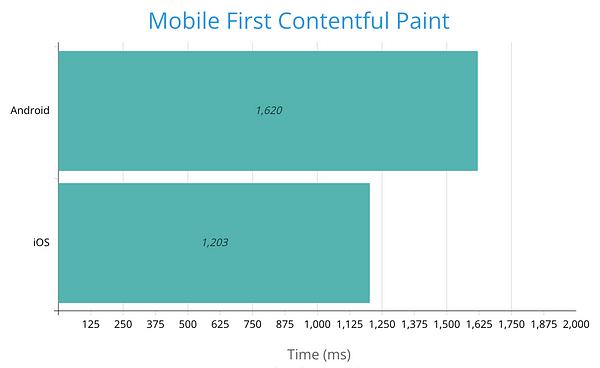
Not every user owns an iPhone As software engineers and technologists its common to have access to some powerful devices and super fast bandwidths. It’s highly likely that you will be developing/testing on a high end Mac (or similar) or pulling out an expensive mobile device such as an iPhone from your pocket. But we need to be careful that this doesn’t lull us into a false sense of reality. We need to take care that we don’t end up sitting in ivory towers thinking performance of our applications is rosy, when in the wild our users are facing a different reality. I’m going to utilise Rum Archive’s fantastic dataset to hopefully paint a picture of why this is important. The following measurements were narrowed to beacons collected from the United Kingdom. Important to highlight that the Rum Archive data is sampled. I will lean on Core Web Vitals a little, but because of the comparison I want to highlight I will also use metrics that are collected from Safari users. Throughout we’ll look at the 75th percentile of users for each metric and we’ll zero in on mobile devices. **First Contentful Paint (FCP)** Let’s start at the beginning of a users experience. The point at which the user can see a change on screen. “Is it happening”*. Contrasting the FCP seen from iOS and Android users. ![](https://m.stacker.news/72179) The 75th percentile for Android users is 400ms slower than that of iOS users, a significant 34% slower. **Time To Interactive (TTI)** Next to look at is Time To Interactive. mPulse describes this as > “The time when the page looks ready to use and is responsive to user input.” I’ve chosen to consider this metric as INP is unavailable for Safari users and I’m seeking a comparative measure of the time it takes for a page to become interactive, i.e. the point at which a page could reliably respond to user interaction such as a click. This metric could provide a good understanding of how our split of users are handling the resources that are delivered as part of the page, i.e. the JavaScript! We see a significant performance gap contrasting iOS and Android users. ![](https://m.stacker.news/72180) The 75th percentile for Android users is 66% percent slower than the iOS equivalent, more than 2 seconds slower! Alex Russell’s Performance equality gap highlights that the Android user base typically will be on lower powered devices compared to those with an iPhone. Devices with less hardware capability, more prone to being overwhelmed by heavy JavaScript execution. **Interaction to Next Paint** So what does the impact of low end devices look like on user interaction? At this point it would be really great if Safari could support Core Web Vitals and in particular INP, but it’s not quite Christmas yet! Instead lets take a closer look at INP measurements for Android users by device model, to see how device capability can impact INP. To give a sense of device capability I’m going to utilise GeekBench’s scores for each device model. GeekBench focuses on the devices CPU performance, so we’ll use this as a measurement for the devices capability. We’ll use GeekBench’s single core score as this is relevant for running applications that are lightly threaded such as web applications. We then plot this data to visualise if there is any correlation between INP times and the devices CPU performance. I’ve taken the top 100(ish) Android devices by beacon count during the period. ![](https://m.stacker.news/72181) Probably not a huge surprise to this audience, we see a correlation. As CPU performance decreases we see an increase in INP times. What is interesting to see is the size of the gap between the high powered and lower end devices, as well as some of the startling measurements! The user experience ranges significantly. **How might an iPhone compare?** How might an iPhone compare to this? Although we haven’t got access to a useful set of INP scores we can contrast the scores collected by GeekBench for CPU performance. The highest score for a Samsung Android device is for the Galaxy S24 Ultra, scoring 2135. ![](https://m.stacker.news/72182) In contrast the highest scoring iOS device currently is the iPhone 16 Pro, clocking up an impressive score of 3423. Thats a 60% increase on CPU performance score compared to the S24 Ultra! ![](https://m.stacker.news/72183) In fact, your looking at the iPhone 12 until you find a previous version of the iPhone that scores less than todays fastest Samsung Android device. To add a little more perspective, this device was first sold over 4 years ago! ![](https://m.stacker.news/72184) Using the correlation from above, we can make an extremely strong assumption that INP performance experienced on our latest iPhone is going to be faster than even the latest, greatest Android device on the market. In fact in many cases even our old iPhone stuck in a drawer somewhere would give the best Android devices a run for their money! **So why should we care about this?** Well, because Android users make up a huge slice of the mobile web audience. In the UK, its the greatest slice, with 52% of the market share according to statcounter. If your working in online retail thats a lot of potential customers. ![](https://m.stacker.news/72185) From the sample of data I looked at, only 43.6% of Android page loads came from device models that score 1000 or above on GeekBench (remember an iPhone purchased within the last 4 years is scoring > 2000). So thats ~29% of overall web users that could at best (and most likely worse) have a mobile device 3x times less powerful than the latest high powered iPhone. How does the experience look to them? Are we considering these users whilst developing and testing the applications we’re responsible for? **What can we do?** First thing we can do is understand the conditions that our users are accessing our web applications from. Have you got Real User Monitoring implemented? Do you have granular insight into your users conditions? - Visibility of attributes such as device type, OS and device model. Something like Akamai’s Device Characteristic header is super useful for this. - Usage of the Navigator API to provide insight into things such as device memory (where supported) and hardware concurrency - Network conditions. Through the Network Information API we can gain insight into areas such as the connection type (4g, 3g etc), the connections round trip time (RTT) and user downlink speeds. Again where supported. What is the CrUX data showing for your application? If you haven’t got RUM running this might be a good place to start. Are you proactively monitoring and utilising this data to understand real user experience and typical user conditions? Are you going beyond measuring a high level p75 and looking at the detail beneath? Using this data you can get an insightful picture of the profiles of your users and have visibility of which of these profiles are common and important. With this knowledge we can ensure our development and testing cycles cover real user conditions. We need to dog food our work in these conditions. Sometimes we need to feel the pain to enact positive change. If an engineer is frustrated at the responsiveness of an ‘Add to cart’ button click during development, then they’re probably more likely to investigate why and resolve it. Chrome allows us to easily throttle CPU and network capability via its Performance tab in developer tools. Low powered devices that match your user profiles can be purchased (cheaply!) or services such as BrowserStack used to test the experience on real devices. Other approaches exist, the important thing is there are ways to achieve this. **Wrapping up** Through the data, we’ve seen the gap in user experience between high powered and low end mobile devices. The population of mobile users on these low spec devices is significant and they should not be ignored. They stand as a group we could be (and probably currently are) alienating and lead to missed opportunities if we continue to provide a poor user experience. As online teams we should proactively be understanding the profiles of our users and what conditions they operate within. Looking beyond what sits on our desk and the comfort of expensive tech. Not everyone is lucky enough to own an iPhone. We need to experience our users reality and build this into our software development processes. This way we can build inclusive web applications, improve for the many and open up missed opportunities. originally posted at https://stacker.news/items/843725
nym's avatar
nym 1 year ago
More Countries to Establish Bitcoin Reserves in 2025, Fidelity Says Financial services giant Fidelity predicts several countries will begin stockpiling Bitcoin this year, bringing about broader adoption of the world's oldest crypto. Several nations could establish strategic Bitcoin reserves in 2025 to hedge against “debilitating inflation, currency debasement, and increasingly crushing financial deficits,” Fidelity wrote in a report on Monday. That’s because global leaders are warming up to the crypto following the U.S.’s touted plans to embrace Bitcoin amid growing institutional investor interest, according to Fidelity Digital Assets analyst Matt Hogan. “We anticipate more nation-states, central banks, sovereign wealth funds, and government treasuries will look to establish strategic positions in Bitcoin,” Hogan said in the report. Crypto-curious countries might model their plans for creating Bitcoin reserves after policies from pro-Bitcoin nations such as Bhutan and El Salvador, where government officials have already notched significant returns. El Salvador's Bitcoin holdings are valued at more than $570 million, while Bhutan holds north of $1.1 billion, on-chain analytics platform Arkham Intelligence's data shows. The U.S. has the most significant Bitcoin stockpile of any world nation, valued at roughly $19.3 billion. It’s followed by China, the UK, and Ukraine, which hold $19.2 billion, $6.2 billion and $4.7 billion of the cryptocurrency, respectively. Those massive holdings do not necessarily translate into massive returns, however. Some countries, such as the U.S., have certain requirements for handling or auctioning off Bitcoin, limiting their ability to count the assets as part of their treasuries. Still, there are plenty of incentives for countries to begin holding Bitcoin, particularly as the asset’s price continues to hover around its all-time-high price of $108,000, the report shows. “We may be entering the dawn of a new era for digital assets, one poised to span multiple years — if not decades,” Hogan said in the report. originally posted at https://stacker.news/items/842925
nym's avatar
nym 1 year ago
Bitcoin Investor Ordered to Reveal Access Codes to $124 Million An early Bitcoin investor sentenced last month to two years in prison for tax fraud related to cryptocurrency sales has been ordered to disclose his secret pass codes so US officials can unlock digital assets now valued at about $124 million. Frank Richard Ahlgren III, who owes the government about $1 million in restitution from the criminal case, must hand over the pass codes and identify any devices used to store them, along with disclosing all his cryptocurrency accounts, US District Judge Robert Pitman ruled Monday in federal court in Austin, Texas. Prosecutors had asked the judge in December to force Ahlgren to disclose the location of at least 1,287 Bitcoin he moved in 2020 through a “mixing” service that jumbled crypto tokens and made them harder to trace. Those tokens, which have more than doubled in value over the past year, are now worth more than $124 million. Ahlgren, who lives in Austin, was the first American convicted of tax crimes tied solely to the sale of cryptoassets. He’s agreed to pay $1 million in restitution to the US to cover tax losses from underreporting capital gains on the sale of $3.7 million in Bitcoin. Prosecutors said he used some of the proceeds to buy a house in Park City, Utah. In their request, prosecutors said Ahlgren’s property “cannot be attached by ordinary physical means.” The government asked “not only to restrain any virtual currency by order of this court, but to obtain the private keys to enable it access so that it cannot be moved by others. Should the private keys be lost or destroyed, the virtual currency is irretrievable.” The judge’s order said that Ahlgren cannot “dissipate,” transfer or sell any property without prior approval of the court, but he can spend on “normal monthly living expenses.” Ahlgren, who pleaded guilty on Sept. 12, was sentenced on Dec. 12. His attorney, Dennis Kainen, said his client will comply with the order. “We will comply with a court directive, or to the extent that we have a question, we will direct it to the court,” Kainen said. “We appreciate the care that Judge Pitman has taken throughout this case.” The case is US v. Ahlgren, 24-cr-00031, US District Court, Western District of Texas (Austin). originally posted at https://stacker.news/items/841618
nym's avatar
nym 1 year ago
Federal Reserve Bank of NY "Doomsday Book" 2022 via FOIA https://www.crisesnotes.com/content/files/2023/12/NYFRB-2006.--Doomsday-Book--Searchable.pdf The "Doomsday Book" is a collection of emergency documentation and memo-randa compiled by the Legal Department of the Federal Reserve Bank of New York. It has two purposes in mind. First, it is a ready reference source, containing template documents that must be prepared quickly, and background material that is likely to be particularly relevant to an emergency situation. Second, because all of its documents are on CD-ROMs, it is an operational mitigant against the risk of lost power or connectivity. The Doomsday Book, however, assumes working computers and printers. originally posted at https://stacker.news/items/840714
nym's avatar
nym 1 year ago
End-to-end encrypted, peer-to-peer VPN tunnels for hackers We are a community driven service for the hackers and the truely paranoid that want to establish multiple peer-to-peer and end-to-end encrypted VPN tunnels between their devices to faciliate secure communication between these, no matter where they are located. We only provide the encrypted transport between your devices, you bring everything else yourself. originally posted at https://stacker.news/items/840616
nym's avatar
nym 1 year ago
Why I'm quitting the Washington Post I’ve worked for the Washington Post since 2008 as an editorial cartoonist. I have had editorial feedback and productive conversations—and some differences—about cartoons I have submitted for publication, but in all that time I’ve never had a cartoon killed because of who or what I chose to aim my pen at. Until now. The cartoon that was killed criticizes the billionaire tech and media chief executives who have been doing their best to curry favor with incoming President-elect Trump. There have been multiple articles recently about these men with lucrative government contracts and an interest in eliminating regulations making their way to Mar-a-lago. The group in the cartoon included Mark Zuckerberg/Facebook & Meta founder and CEO, Sam Altman/AI CEO, Patrick Soon-Shiong/LA Times publisher, the Walt Disney Company/ABC News, and Jeff Bezos/Washington Post owner. While it isn’t uncommon for editorial page editors to object to visual metaphors within a cartoon if it strikes that editor as unclear or isn’t correctly conveying the message intended by the cartoonist, such editorial criticism was not the case regarding this cartoon. To be clear, there have been instances where sketches have been rejected or revisions requested, but never because of the point of view inherent in the cartoon’s commentary. That’s a game changer…and dangerous for a free press. Over the years I have watched my overseas colleagues risk their livelihoods and sometimes even their lives to expose injustices and hold their countries’ leaders accountable. As a member of the Advisory board for the Geneva based Freedom Cartoonists Foundation and a former board member of Cartoonists Rights, I believe that editorial cartoonists are vital for civic debate and have an essential role in journalism. There will be people who say, “Hey, you work for a company and that company has the right to expect employees to adhere to what’s good for the company”. That’s true except we’re talking about news organizations that have public obligations and who are obliged to nurture a free press in a democracy. Owners of such press organizations are responsible for safeguarding that free press— and trying to get in the good graces of an autocrat-in-waiting will only result in undermining that free press. As an editorial cartoonist, my job is to hold powerful people and institutions accountable. For the first time, my editor prevented me from doing that critical job. So I have decided to leave the Post. I doubt my decision will cause much of a stir and that it will be dismissed because I’m just a cartoonist. But I will not stop holding truth to power through my cartooning, because as they say, “Democracy dies in darkness”. originally posted at https://stacker.news/items/835947
nym's avatar
nym 1 year ago
Linux Context Switching Internals: Part 1 - Process State and Memory Context switching is necessary for a high-throughput and responsive system where all processes make progress despite limited execution resources. But, as we discussed in the previous article, it also has performance costs which cascade through various indirect mechanisms, such as cache and TLB eviction. When building performance-critical systems or debugging performance issues due to context switching, it becomes important to understand the internal implementation details to be able to reason through the performance issues and possibly mitigate them. Not only that, it leads you to learn many low-level details about the hardware architecture, and makes you realize why the kernel is so special. At first glance, context switching seems straightforward—save the current process's registers, switch page tables and stacks, and restore the new process's registers. However, the reality is much more complex, involving multiple data structures, hardware state management, and memory organization. To fully grasp context switching, we need to understand few key foundational concepts about the Linux kernel and X86-64 architecture. originally posted at https://stacker.news/items/835427
nym's avatar
nym 1 year ago
Rules for Writing Software Tutorials Most software tutorials are tragically flawed. Tutorials often forget to mention some key detail, preventing readers from replicating the author’s process. Other times, the author brings in hidden assumptions that don’t match their readers’ expectations. The good news is that it’s easier than you think to write an exceptional software tutorial. You can stand out in a sea of mediocre guides by following a few simple rules. originally posted at https://stacker.news/items/834414
nym's avatar
nym 1 year ago
Practical Byzantine fault tolerance algorithm for aggregating node preferences Consensus algorithms play a critical role in maintaining the consistency of blockchain data, directly affecting the system’s security and stability, and are used to determine the binary consensus of whether proposals are correct. With the development of blockchain-related technologies, social choice issues such as Bitcoin scaling and main chain forks, as well as the proliferation of decentralized autonomous organization (DAO) applications based on blockchain technology, require consensus algorithms to reach consensus on a specific proposal among multiple proposals based on node preferences, thereby addressing the multi-value consensus problem. However, existing consensus algorithms, including Practical Byzantine Fault Tolerance (PBFT), do not support nodes expressing preferences. Instead, the proposal to reach consensus is directly decided by specific nodes, with other nodes merely verifying the proposal’s validity, which can easily result in monopolistic or dictatorial outcomes. In response, we proposed the Aggregating Preferences with Practical Byzantine Fault Tolerance (AP-PBFT) consensus algorithm, which allows nodes to express preferences for multiple proposals. AP-PBFT ensures the validity of consensus results through a consensus output protocol and incentivizes nodes to act honestly during the consensus process through an incentive mechanism. First, AP-PBFT leverages Verifiable Random Function to select both consensus nodes and a primary node from the candidates. The primary node gathers proposals, assembles them into a proposal package, and broadcasts it to other consensus nodes. The consensus nodes independently vote to express their preferences for different proposals in the package, execute the consensus output protocol to reach local consensus, and the primary node aggregates these results to form the global consensus. Once the global consensus is finalized, AP-PBFT evaluates node behavior based on the consensus output protocol, penalizes nodes that acted maliciously, and rewards those that adhered to the protocol. Additionally, nodes can interact and adopt different strategies while executing the consensus output protocol, which can influence the consensus outcome. Therefore, we established an evolutionary game model based on hypergraph to analyze these interactions. Theoretical analysis shows that the incentive mechanism in AP-PBFT effectively encourages nodes to honestly follow the consensus output protocol, ensuring that AP-PBFT satisfies the properties of consistency, validity, and termination. Finally, the simulation results demonstrate that the AP-PBFT algorithm possesses good scalability and the capability to handle dynamic changes in nodes, surpassing some mainstream consensus algorithms in terms of transaction throughput and consensus achievement time. Moreover, AP-PBFT can incentivize honest behavior among consensus nodes, thereby enhancing the reliability of consensus and strengthening the security of the network. originally posted at https://stacker.news/items/833765
nym's avatar
nym 1 year ago
Bitcoin's Sharia Legitimacy: Strength and Implications as a Financial Tool https://journal.iain-manado.ac.id/index.php/TJEBI/article/view/3232/1731 Abstract This study reconciles conflicting viewpoints on Bitcoin by offering a Shariah-based perspective. It utilizes contemporary interpretations of Quranic verses, fiqh principles, and hadith to demonstrate Bitcoin's potential as a currency. A qualitative approach, combined with normative analysis, interdisciplinary perspectives (economics and Islamic law), and a descriptive-comparative method based on David Ricardo's theory of comparative advantage, was employed to assess Bitcoin's legitimacy as a medium of exchange in Islamic economic contexts. The findings indicate that Bitcoin shares attributes with gold, such as scarcity, divisibility, mobility, and durability, making it a suitable store of value. While institutions like MUI and LBM NU East Java classify Bitcoin as haram due to ambiguity, harm, and speculation, this study contends that a correct understanding reveals Bitcoin's compliance with fiqh principles. Blockchain transparency reduces dharar (harm) and manipulation, offering an ethical alternative to fiat currency. Bitcoin's intrinsic worth aligns with Islamic financial principles, unlike fiat currency, which is prone to inflation and value depreciation. By understanding Bitcoin's foundations, consumers can minimize gharar (uncertainty), dharar, and speculation. Blockchain technology ensures transparency, prevents manipulation and abuse, and allows for price formation based on supply and demand, akin to traditional currencies. These attributes highlight Bitcoin's potential as a Sharia-compliant medium of exchange that addresses the limitations of fiat currency while providing inflation protection. Introduction In the age of globalization and digitalization, the need for efficient payment systems has spurred financial innovations, including credit cards and cashless societies. The emergence of cryptocurrency, particularly Bitcoin, represents a significant advancement in financial technology. Bitcoin stands out for its ease of use, decentralized system, and independence from intermediaries like banks. Powered by blockchain technology, Bitcoin is a digital currency without a physical form, relying on hashed data blocks for secure and transparent transaction validation. Since its inception in 2009, Bitcoin has experienced remarkable growth, attracting attention from investors, economists, and policymakers. By 2024, Bitcoin ranks ninth among the top ten global financial assets, trailing only gold in market capitalization. Its deflationary tendencies, divisibility, and resistance to centralized control position it as a potential alternative to fiat currencies. However, its adoption remains challenging, particularly in Islamic finance contexts. In Indonesia, the world's most populous Muslim-majority country, concerns about Bitcoin's Sharia legitimacy are especially significant. Divergent legal interpretations, including fatwas from the Indonesian Ulema Council (MUI) and LBM NU East Java, raise concerns about gharar (uncertainty), dharar (damage), and speculative elements in Bitcoin transactions. These issues have created uncertainty among Indonesian Muslims regarding Bitcoin's permissibility as a financial tool. The development of Bitcoin has provoked significant debates within the Indonesian Muslim community, influencing economic, ethical, and religious perspectives. Economically, Bitcoin attracts younger investors and promotes financial inclusion for the unbanked, though its volatility raises concerns about risk-sharing in Islam. Religiously, fatwas declaring Bitcoin haram emphasize issues of gharar, dharar, and speculation, while proponents highlight blockchain's transparency and alignment with Islamic principles. Ethically, Bitcoin challenges perceptions of gambling-like activities while offering opportunities to promote riba-free and inclusive financial practices. Despite being recognized as a commodity in Indonesia, the lack of Islamic banking norms limits its adoption. Bitcoin's impact underscores the need for clear guidance that integrates Islamic principles with modern financial innovations. This study addresses these dissenting views by providing a Sharia-based perspective, utilizing interpretations of Quranic verses, fiqh principles, and hadith. It also examines Bitcoin’s comparative advantages over fiat currencies through David Ricardo’s theory of comparative advantage, which emphasizes economic superiority through unique, hard-to-imitate attributes like innovation and efficiency. Bitcoin's decentralized structure, resistance to inflation, and potential to enhance financial inclusivity exemplify these attributes, making it a subject of significant interest. This study's novelty lies in its focus and interdisciplinary methodology. Previous research often concentrated on Bitcoin's technical aspects, risks, and market volatility, or critiqued its compliance with Sharia principles without offering practical solutions. In contrast, this research combines Islamic jurisprudence, economics, and blockchain technology to evaluate Bitcoin’s legitimacy. Focusing on Indonesia, it analyzes cultural, legal, and religious factors influencing Bitcoin adoption. It explores how blockchain technology can address Islamic finance challenges such as gharar and dharar while assessing Bitcoin’s potential as a Sharia-compliant, inflation-resistant medium of exchange. This study provides a practical Sharia framework for cryptocurrencies in the Indonesian context, contributing uniquely to the fields of Islamic and digital finance. originally posted at https://stacker.news/items/833746
nym's avatar
nym 1 year ago
Influence of US Inflation Rate, Interest Rate, and Bitcoin Towards Gold Price Abstract The purpose of this paper is to investigate the influence of inflation rate and interest rate of The United States towards the gold’s price. Besides that, the movement of Bitcoin and gold has also been examined in this paper. The past 30 years of historical data of the inflation rate, interest rate and the gold’s price has been applied in this study to examine the effect of inflation and interest rate towards the gold price. Other than that, the past 30 months of the Bitcoin’s price has also been applied in the research. Through the research, it has found that the inflation rate and the interest rate have a negative relationship with the gold’s price. In addition, this paper has also shown that the movement of Bitcoin’s price and gold’s price is in a same direction. In other words, the movement of these assets is positively correlated in which when the Bitcoin price’s increase, the price of gold is also increase. Introduction Gold has been one of the best instruments to hedge against inflation. Besides that, the gold is considered as one of the most liquid assets. This is because people are believing that the price of the gold is relatively stable as compared to other assets such as the stocks and cryptocurrency. Back in the days, the United States had adopted a concept in which the United State Dollar (USD) is pegged with the gold. This concept is also known as the Gold Standard. The concept behind is assume that the value of a currency is fixed relatively to gold. However, this concept was abandoned by the U.S. in 1971 due to the U.S would like to control inflation and avoid foreign countries overloading the system by exchanging their dollars for gold. Today, there are many investors still choose gold as the preferable assets to invest because there confident on the dollar is not as high as before when the States is still adopting the gold standard. According to Winters (2022), he had shared the words from Jim Cramer the host for CNBC’s Mad Money and Investing Club. As outlined by Jim Cramer, due to its uniqueness as a commodity and its long history as a reliable medium of exchange, gold has a stable value. Hence, the gold market would also considered as one of the high volatile markets. From the aspect of the foreign currency (FOREX) market, gold is denoted as XAU in the FOREX market, and it is paired with the USD become the pairing called XAU/USD. The XAU/USD is represented the spot gold price in troy ounce digitally because any positionin the market is not trading the physical gold. In the trading of XAU/USD, it usually influenced by the inflation and interest rate in the U.S. Other than that, the relationship between the Bitcoin and XAU/USD is also compared in this research. Bitcoin isone of the largest market caps as compared to the others cryptocurrency. It usually been called as the digital gold due to its scarcity and the difficulties to obtain it is high. The study of the XAU/USD has remained relatively unpopular studied topics as compared to the stock market. This is due to the exposure of the XAU/USD as well as the FOREX market in Malaysia is relatively unpopular among the people. Other than that, there are restrictions for the Malaysians to trade in the FOREX market unless with the authorised dealers such as banks and licensed money changer. However, gold was one of the assets in which people prefer to purchase due to stability of price. Hence, studying the effect of the inflation rate and interest rate towards the XAU/USD is important so that it may reflects the effect caused to the overall gold market. Due to the pandemic of COVID-19, the Fed of the United States had announced the unlimited quantitative easing (QE) in order to stimulate the economics of the U.S. The QE is a monetary policy that lowering down the interest rate on the savings and loans to increase the economics activities in the nation. Hence, it has driven the price of the gold as well as the XAU/USD hikes. This is because the willingness of the people to take money to invest is relatively high as compared to save it in normal saving accounts. Recently, due to the unlimited QE and the conflict between the Russia and Ukraine, it has cause severe inflation in the U.S. Hence, the Fed has started to conduct a move called tapering to control the nation’s inflation. Tapering can be known as the action of contractionary monetary policy in which started to withdraw the monetary stimulus plan that been used to stimulate the economics. Therefore, the Fed has started to hike the interest in the country and causing most of the assets’ price such as stocks and gold as well as the rate of XAU/USD to fall. Up to November, the Fed has hiked the interest rate sixth times consecutively and it has hiked up to 75 basis point for the latest announcement. On the other hand, the so-called digital gold, Bitcoin has also gone to the same direction as the XAU/USD in this event. However, as compared to the XAU/USD, there are other factors that may also affect the price of Bitcoin such as the regulatory problems that has been unsolved until now. Other than that, the collapse of the exchange has also created panic sell on the digital assets. Hence, this study may also study the relationship of Bitcoin with the XAU/USD. In this research, the affection of the changes of the inflation rate and interest rate as well as the movement of Bitcoin towards the XAU/USD will be studied. However, the studied on the relationship between the chosen variables and the XAU/USD are limited. This is due to the data obtained might not provide an accurate result. originally posted at https://stacker.news/items/833721
nym's avatar
nym 1 year ago
6 AI-Related Security Trends to Watch in 2025 https://www.darkreading.com/cyber-risk/6-ai-related-security-trends-watch-2025 # Generative Artificial Intelligence and Security: Key Trends and Concerns Most industry analysts expect organizations will accelerate efforts to harness generative artificial intelligence (GenAI) and large language models (LLMs) in a variety of use cases over the next year. Typical examples include customer support, fraud detection, content creation, data analytics, knowledge management, and, increasingly, software development. A recent survey of 1,700 IT professionals conducted by Centient on behalf of OutSystems had 81% of respondents describing their organizations as currently using GenAI to assist with coding and software development. Nearly three-quarters (74%) plan on building 10 or more apps over the next 12 months using AI-powered development approaches. While such use cases promise to deliver significant efficiency and productivity gains for organizations, they also introduce new privacy, governance, and security risks. Here are six AI-related security issues that industry experts say IT and security leaders should pay attention to in the next 12 months. ## AI Coding Assistants Will Go Mainstream — and So Will Risks Use of AI-based coding assistants, such as GitHub Copilot, Amazon CodeWhisperer, and OpenAI Codex, will go from experimental and early adopter status to mainstream, especially among startup organizations. The touted upsides of such tools include improved developer productivity, automation of repetitive tasks, error reduction, and faster development times. However, as with all new technologies, there are some downsides as well. From a security standpoint these include auto-coding responses like vulnerable code, data exposure, and propagation of insecure coding practices. > "While AI-based code assistants undoubtedly offer strong benefits when it comes to auto-complete, code generation, re-use, and making coding more accessible to a non-engineering audience, it is not without risks," says Derek Holt, CEO of Digital.ai. The biggest is the fact that the AI models are only as good as the code they are trained on. Early users saw coding errors, security anti-patterns, and code sprawl while using AI coding assistants for development, Holt says. > "Enterprises users will continue to be required to scan for known vulnerabilities with [Dynamic Application Security Testing, or DAST; and Static Application Security Testing, or SAST] and harden code against reverse-engineering attempts to ensure negative impacts are limited and productivity gains are driving expect benefits." ## AI to Accelerate Adoption of xOps Practices As more organizations work to embed AI capabilities into their software, expect to see DevSecOps, DataOps, and ModelOps — or the practice of managing and monitoring AI models in production — converge into a broader, all-encompassing xOps management approach, Holt says. The push to AI-enabled software is increasingly blurring the lines between traditional declarative apps that follow predefined rules to achieve specific outcomes, and LLMs and GenAI apps that dynamically generate responses based on patterns learned from training data sets, Holt says. The trend will put new pressures on operations, support, and QA teams, and drive adoption of xOps, he notes. > "xOps is an emerging term that outlines the DevOps requirements when creating applications that leverage in-house or open source models trained on enterprise proprietary data," he says. > "This new approach recognizes that when delivering mobile or web applications that leverage AI models, there is a requirement to integrate and synchronize traditional DevSecOps processes with that of DataOps, MLOps, and ModelOps into an integrated end-to-end life cycle." Holt perceives this emerging set of best practices will become hyper-critical for companies to ensure quality, secure, and supportable AI-enhanced applications. ## Shadow AI: A Bigger Security Headache The easy availability of a wide and rapidly growing range of GenAI tools has fueled unauthorized use of the technologies at many organizations and spawned a new set of challenges for already overburdened security teams. One example is the rapidly proliferating — and often unmanaged — use of AI chatbots among workers for a variety of purposes. The trend has heightened concerns about the inadvertent exposure of sensitive data at many organizations. Security teams can expect to see a spike in the unsanctioned use of such tools in the coming year, predicts Nicole Carignan, vice president of strategic cyber AI at Darktrace. > "We will see an explosion of tools that use AI and generative AI within enterprises and on devices used by employees," leading to a rise in shadow AI, Carignan says. > "If unchecked, this raises serious questions and concerns about data loss prevention as well as compliance concerns as new regulations like the EU AI Act start to take effect," she says. Carignan expects that chief information officers (CIOs) and chief information security officers (CISOs) will come under increasing pressure to implement capabilities for detecting, tracking, and rooting out unsanctioned use of AI tools in their environment. ## AI Will Augment, Not Replace, Human Skills AI excels at processing massive volumes of threat data and identifying patterns in that data. But for some time at least, it remains at best an augmentation tool that is adept at handling repetitive tasks and enabling automation of basic threat detection functions. The most successful security programs over the next year will continue to be ones that combine AI's processing power with human creativity, according to Stephen Kowski, field CTO at SlashNext Email Security+. > "The key is achieving the right balance where AI handles high-volume routine detection while skilled analysts investigate novel attack patterns and determine strategic responses." ## Attackers Will Leverage AI to Exploit Open Source Vulns Venky Raju, field CTO at ColorTokens, expects threat actors will leverage AI tools to exploit vulnerabilities and automatically generate exploit code in open source software. > "Even closed source software is not immune, as AI-based fuzzing tools can identify vulnerabilities without access to the original source code. Such zero-day attacks are a significant concern for the cybersecurity community," Raju says. ## Verification, Human Oversight Will Be Critical Organizations will continue to find it hard to fully and implicitly trust AI to do the right thing. > "Trust in AI will remain a complex balance of benefits versus risks, as current research shows that eliminating bias and hallucinations may be counterproductive and impossible," SlashNext's Kowski says. The practical approach is to implement robust verification systems and maintain human oversight rather than seeking perfect trustworthiness, he says. originally posted at https://stacker.news/items/833647
nym's avatar
nym 1 year ago
Hacking campaign compromised at least 16 Chrome browser extensions Threat actors compromised at least 16 Chrome browser extensions leading to the exposure of data from over 600,000 users. A supply chain attack compromised 16 Chrome browser extensions, exposing over 600,000 users. Threat actors targeted the publishers of the extensions on the Chrome Web Store via phishing messages, then once obtained access to their account inserted a malicious code into the code of the extensions. The malicious code allowed attackers to steal cookies and access tokens. One of the victims of this campaign is the cybersecurity firm Cyberhaven, on December 24 attackers published a malware-laced version of their Chrome extension. “On December 24, a phishing attack compromised a Cyberhaven employee’s credentials to the Google Chrome Web Store. The attacker used these credentials to publish a malicious version of our Chrome extension (version 24.10.4).” reads a post on the incident published by Cyberhaven. “Our security team detected this compromise at 11:54 PM UTC on December 25 and removed the malicious package within 60 minutes.” The phishing email, posing as Google Chrome Web Store Developer Support, warns the employee of the extension removal for policy violations. The message urges the recipient to accept the publishing policy. Once the recipient clicked on the email, the employee unknowingly authorized a malicious OAuth app via Google’s standard authorization flow, despite using MFA and Google Advanced Protection. “The attacker gained requisite permissions via the malicious application (“Privacy Policy Extension”) and uploaded a malicious Chrome extension to the Chrome Web Store. After the customary Chrome Web Store Security review process, the malicious extension was approved for publication.” reads the report published by Cyberhaven. “This malicious extension (24.10.4) was essentially based on a clean prior version of the official Cyberhaven Chrome extension. The attacker made a copy of the clean extension and added some malicious code to create a new malicious extension. This extension was uploaded to the Chrome webstore and replaced the clean official Cyberhaven Chrome extension. The malicious Chrome extension was now available and distributed to a portion of our customer base.” The attackers only compromised version 24.10.4 of the Cyberhaven Chrome extension. Only Chrome-based browsers that auto-updated between 1:32 AM UTC on December 25 and 2:50 AM UTC on December 26 were impacted. The malicious extension used two files: worker.js contacted a hardcoded C&C server to download configuration and executed HTTP calls, and content.js that collected user data from targeted websites and exfiltrated it to a malicious domain specified in the C&C payload. “Based on our initial research so far, this was a non-targeted attack, and part of a wider campaign, aimed at Facebook Ads users. We are working with our customers and an external third-party security response team to help us analyze and investigate further. We will post more updates as we have more findings.” concludes the report published by Cyberhaven. Researchers at security firm Secure Annex further investigated the attack and discovered that other Chrome browser extensions were compromised: - AI Assistant – ChatGPT and Gemini for Chrome - Bard AI Chat - GPT 4 Summary with OpenAI - Search Copilot AI Assistant for Chrome - TinaMInd AI Assistant - Wayin AI - VPNCity - Internxt VPN - Vindoz Flex Video Recorder - VidHelper Video Downloader - Bookmark Favicon Changer - Castorus - Uvoice - Reader Mode - Parrot Talks - Primus - Tackker – online keylogger tool - AI Shop Buddy - Sort by Oldest - Rewards Search Automator - ChatGPT Assistant – Smart Search - Keyboard History Recorder - Email Hunter - Visual Effects for Google Meet - Earny – Up to 20% Cash Back The researchers noticed that the extension “Earny” was last updated on April 5th, 2023 and has been compromised since then. originally posted at https://stacker.news/items/831791
nym's avatar
nym 1 year ago
Here's Your Guide to The Must-See Astronomy Events of 2025 | Date(s) | Event | Description | |-------------------|-------------------------------------------|---------------------------------------------------------------------------------------------------------------------------------------------------------------| | January 3 | **Quadrantid Meteor Shower** | Peaks with up to 120 meteors per hour; favorable viewing conditions expected. | | January 13-14 | **Total Lunar Eclipse (Blood Moon)** | Earth's shadow causes the Moon to appear reddish; visible from various regions. | | February 28 | **Planetary Parade** | All seven other planets align in Earth's sky; a rare visual spectacle. | | March | **Saturn's Rings Disappear** | Saturn's rings appear edge-on from Earth, making them seem to vanish; occurs every 13-16 years. | | March 13-14 | **Total Lunar Eclipse (Blood Moon)** | Second total lunar eclipse of the year; Moon appears reddish due to Earth's shadow. | | July | **Solar Maximum Peak** | Increased solar activity leads to more intense Northern Lights, potentially visible at lower latitudes. | | August 11-12 | **Venus and Jupiter Conjunction** | Venus and Jupiter appear very close in the night sky; visible to the naked eye. | | September 7-8 | **Total Lunar Eclipse (Blood Moon)** | Another opportunity to witness the Moon's reddish hue during Earth's shadow. | | October 7 | **Supermoon** | Full Moon appears larger and brighter; first of three supermoons in 2025. | | November 5 | **Supermoon** | Second supermoon; largest and brightest since 2019. | | December 4 | **Supermoon** | Final supermoon of the year; offers spectacular lunar views. | | December 14 | **Geminids Meteor Shower** | Annual meteor shower peaking with up to 160 meteors per hour; clear skies enhance viewing. | originally posted at https://stacker.news/items/831785
nym's avatar
nym 1 year ago
Vitalik Buterin donates $170K to Tornado Cash developers’ legal fund Ethereum co-founder Vitalik Buterin has made a significant contribution toward a legal defense fund for Tornado Cash developers Roman Storm and Alexey Pertsev. According to a Dec. 31 X post from the Juicebox project Free Pertsev and Storm, Buterin donated 50 Ether (ETH) — roughly $170,000 at the time of publication — to Storm’s and Pertsev’s legal aid. Storm reported that the contribution was roughly 25% of the total $650,000 available to the Tornado Cash developer through JusticeDAO ahead of his trial. In 2022, Dutch authorities arrested and charged Pertsev for his involvement with the cryptocurrency mixing service. In May 2024, he was found guilty of money laundering and sentenced to more than five years in prison, though Pertsev will appeal the verdict. United States prosecutors later charged Storm and fellow developer Roman Semenov with money laundering, sanctions violations, and fraud related to their roles with Tornado Cash. Storm was given bail conditions ahead of his trial, scheduled to begin on April 14, while Semenov remained at large at the time of publication. Many of the criminal charges against the Tornado developers seemed to stem from the US Treasury’s Office of Foreign Assets Control adding the mixer to its Specially Designated Nationals list in August 2022. US officials said at the time that bad actors, including North Korean hackers, had used Tornado Cash to launder more than $7 billion worth of crypto since 2019. The sanctions against the mixer and criminal charges against the developers have drawn outrage from many in the crypto industry. Buterin donated 100 ETH — roughly $240,000 at the time — to the Free Pertsev and Storm Juicebox in October, but GoFundMe shut down a similar fundraising effort in February. The US Treasury Department faces two lawsuits filed by crypto advocacy group Coin Center and a group of Tornado Cash users backed by Coinbase. An appellate court said in November that the Treasury had “overstepped” in sanctioning the crypto mixer’s immutable smart contracts, but the ruling did not appear to have affected the criminal case against Storm. originally posted at https://stacker.news/items/831636
nym's avatar
nym 1 year ago
FBI Found Largest Cache of Homemade Explosives in Its History in Norfolk, VA https://archive.is/8FJX4 A Virginia man was arrested this month with what federal prosecutors described in court papers on Monday as the largest cache of “finished explosive devices” ever found in the F.B.I.’s history. The man, Brad Spafford, was taken into custody at a farm outside Norfolk on Dec. 17 on the basis of a single-count criminal complaint accusing him of illegally possessing an unregistered short-barrel rifle. When investigators searched his 20-acre property, in Isle of Wight County, they found in a detached garage more than 150 explosive devices — mostly pipe bombs, some of them labeled “lethal,” prosecutors said. They found more pipe bombs in a bedroom inside Mr. Spafford’s house, loosely stuffed in a backpack that bore a patch shaped like a hand grenade and a logo reading “#NoLivesMatter,” prosecutors said. No Lives Matter is a nihilistic, far-right ideology that largely exists on encrypted online messaging apps like Telegram. The movement’s adherents promote “targeted attacks, mass killings and criminal activity” and have “historically encouraged members to engage in self-harm and animal abuse,” according to a threat assessment released in August by the New Jersey Office of Homeland Security and Preparedness. Prosecutors in Federal District Court in Norfolk filed the court papers describing Mr. Spafford’s explosives in an effort to keep him in custody as his case moves toward trial. According to the court papers, which were reported earlier by the website Court Watch, the investigation into Mr. Spafford began last year, after a neighbor reached out to the authorities. Mr. Spafford had lost three fingers on his right hand while working with a homemade explosive device, the neighbor said, and he was stockpiling weapons and homemade ammunition. The neighbor reported that Mr. Spafford had told him that he and his friends were “preparing for something” that he “would not be able to do alone,” the court papers said. The neighbor also told investigators that Mr. Spafford sometimes used photographs of President Biden for target practice at a local shooting range and believed that “political assassinations should be brought back.” After the attempt on President-elect Donald J. Trump’s life in Pennsylvania in July, the papers said, Mr. Spafford told his neighbor that he “hoped the shooter doesn’t miss Kamala,” an apparent reference to Vice President Kamala Harris. Mr. Spafford moved to his farm this fall, and the neighbor went to visit him there in October wearing a secret recording device, the papers said. Mr. Spafford told the neighbor that he had various types of explosives at the property and discussed fortifying it with “a 360-degree turret” in which he planned to mount a 50-caliber rifle, according to the papers. No Lives Matter is an offshoot of the broader “accelerationist” movement, which seeks to accelerate radical social change through sabotage and violence. Some scholars of far-right extremism believe it takes its name from a song entitled “No Lives Matter,” by the pro-Trump Canadian rapper Tom MacDonald. originally posted at https://stacker.news/items/831539
nym's avatar
nym 1 year ago
WATCH: Michael Saylor’s Bitcoin $100K Party The moment Bitcoiners around the world have been waiting for is finally here: Bitcoin has hit the monumental $100,000 mark, and Michael Saylor is throwing the Party of the Century to celebrate! What started as a dream and a meme has now become a reality, as Michael Saylor, a legendary advocate for Bitcoin and Executive Chairman of MicroStrategy, is hosting the most epic New Year’s Eve celebration to mark this historic occasion. Bitcoin Magazine is thrilled to announce that we are streaming live from the event in Miami Beach, bringing the excitement of Saylor’s $100K Bitcoin party straight to your screens. From 7:00 PM EST, join us on the Bitcoin Magazine News Desk, hosted by Pete Rizzo. The Party has been hyped for years and is set to deliver on all fronts. Your favourite Bitcoiners and podcasters will attend, including the man of the hour, Michael Saylor, Preston Pysh, American Hodl, Peter McCormack, and other Bitcoin legends. Expect lively and fun discussions as Bitcoiners come together to ring in 2025. This exclusive live stream will give you front-row access to the celebration as we welcome a new year—and a new era for Bitcoin. Catch the Bitcoin Magazine News Desk live stream on X and YouTube starting today, December 31, 2024, at 7:00 PM EST. originally posted at https://stacker.news/items/831472
↑