William K⚡Santiago🔑☢️'s avatar
William K⚡Santiago🔑☢️
williamsantiago@getalby.com
npub1h3fz...96sj
CEO, C4 CCSSA at PrivKey LLC, Blockchain strategist, cybersecurity. The Mission: The Separation of Money and State.
"The broad point is that only the strong survive was correct. We are entering the endgame of crypto having any reason to exist. My thesis as to why it exists at all is a combination of a novel vector for gambling and an affinity scam. Bitcoin is extremely difficult to even begin to understand, and even though what it fundamentally 'fixes' is money printing, its novelty ironically lends itself to confusing the uninitiated and impatient with meaningless appeals to 'blockchain technology' that manifest as attempts to print money." -- Allen Farrington Allen Farrington's article is a follow-up to his earlier piece “Only the Strong Survive,” and it poses a blunt question: If Bitcoin can now fulfill virtually everything the broader crypto space originally promised—programmable money, scalable payments, DeFi primitives, and more—then does the rest of the altcoin casino really have any reason left to exist? On the Bitcoin side, the piece highlights whether the combination of Arkade (built on the Ark protocol), Lightning Network, and e-cash systems could be the true endgame for real programmability and a global, self-custodial banking layer directly on Bitcoin. I've always seen this as the ultimate outcome, ever since my early research into distributed blockchains back in 2011. From the beginning, it felt clear to me that Bitcoin's design would eventually layer up to handle everything else claimed by later chains—without compromising soundness, decentralization, or self-custody. Article:
The Marshall Islands has rolled out the world's first national universal basic income (UBI) program that includes a cryptocurrency payment option. Citizens can receive quarterly payments of around $200—either through traditional methods like bank transfers or checks, or as a US dollar-pegged stablecoin via a government digital wallet—to help combat rising living costs in this remote Pacific nation. This is a pretty innovative move, especially for reaching people on far-flung islands. Universal Basic Income (UBI)—and perhaps Universal Basic Services (like guaranteed healthcare, education, housing, and transit)—really starts to look practical when you zoom out: as AI and humanoid robots handle more and more jobs, something like this could ease the shift into an economy where humans aren't required for every task. It's essentially a live experiment for all those theories about how automation will reshape society.
Today, we're celebrating Bitcoin's HODL Day! Don't be a weak-handed lettuce — stay strong and become a diamond hand! 💎🚀
Traditional banks are like dinosaurs—slow and outdated. Unless they undergo a radical transformation, they'll face extinction. Meanwhile, PayPal is taking a big step toward becoming more bank-like by applying for a US banking license (specifically, a Utah-chartered industrial bank charter). Here's the FT article on it: This move lets them expand small-business lending directly, offer interest-bearing savings, and tap into a friendlier regulatory vibe. Fintechs evolving while legacy players lag—classic disruption in action!
DTCC - Issuance and Wallets & Issuance and Wallets Overview At PrivKey, we built a simple REST proxy that lets web apps easily use Lightning Labs' Taproot Assets daemon. It adds CORS support and makes authentication much simpler. We recently presented in Atlanta, GA, introducing our open-source product that any financial institution, central bank, or even an entire country can adopt and use. It's nearly identical to the DTCC Issuance and Wallets Overview shown in the link above. The key differences are that it's fully decentralized, operates as a Layer 2 solution, and is secured directly by Layer 1 Bitcoin—with no humans or federated third parties involved.
Could your wallet, node, or even hardware suddenly be labeled “unlicensed financial activity”? The Human Rights Foundation’s latest *Financial Freedom* report dives into the sweeping new laws emerging in places like the UAE and Belarus—revealing how these tactics are seeping into Western “financial stability” narratives, KYC requirements for social media, and the push for digital IDs. This article unpacks the tools—from DIY hardware to Lightning Network and e-cash—that could be the difference between staying banked, getting blocked, or achieving true financial sovereignty. Article: HRF’s Weekly Financial Freedom Report #99
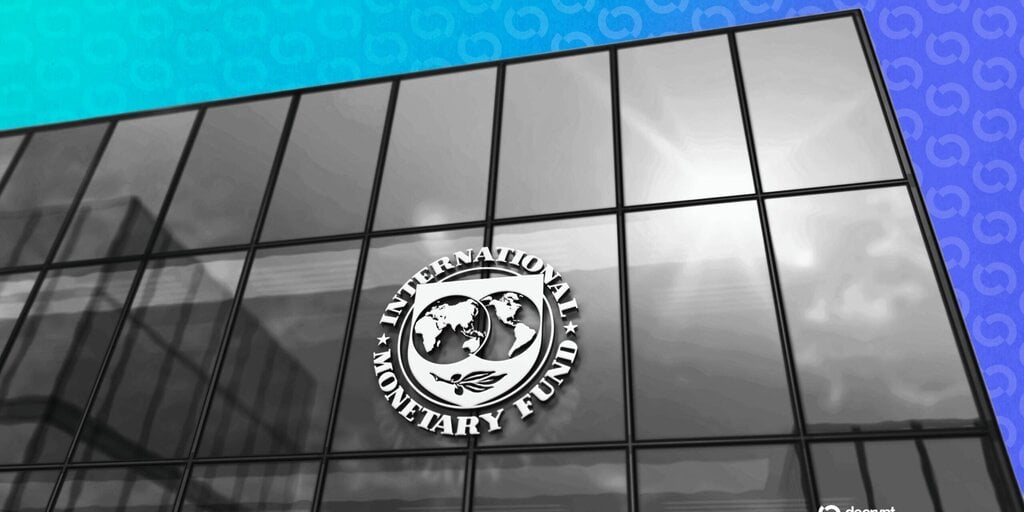
Stablecoin Adoption Could Stifle Central Bank Control, IMF Warns Stablecoins have the potential to broaden individuals’ access to financial services, but that may come at the cost of central banks, per IMF. Stablecoins represent the next major challenge to the survival and justification of central banks.
As a true Bitcoiner, I live by these core principles: — Self-sovereignty above all: I hold my own private keys and treat any form of custody like it’s radioactive. — Run my own full node: I personally verify every rule and every transaction myself, strengthening the network and never outsourcing trust to someone else’s server. — Bitcoin mine, no matter how small: Even if it’s just a tiny rig or a lottery ticket setup, I directly contribute to securing the network instead of sitting on the sidelines. — Understand Bitcoin at its deepest level: I get the hard-coded scarcity, true decentralization, unbreakable immutability, and why sound money must be separated from the state. — Actually use Bitcoin as money: I spend and receive bitcoin in real life whenever it makes sense, instead of just hoarding it like a collectible. — Give back to the ecosystem: I teach newcomers, support open-source projects, defend privacy tools, or help build censorship-resistant infrastructure—whatever I can do to make Bitcoin stronger. — Long-term stewardship mindset: I don’t see Bitcoin as just another investment; I see it as one of the most important technological, economic, and philosophical inventions in human history, and I act accordingly.
Bitcoin is fundamentally a time-chain, exactly as Satoshi Nakamoto described it—not a “blockchain” in the way the term is used today. The word “blockchain” was originally just a simple metaphor Satoshi chose to explain the concept to regular people (the same way he called Bitcoin “digital gold” or “electronic cash”). The real innovation is the ever-growing chain of blocks ordered and secured by proof-of-work, which creates an unbreakable, objective record of time—hence: a time-chain. What fintech “experts” and consultants now call “blockchain technology” is almost always something completely different: centralized or permissioned ledgers, consortium chains, or fiat-pegged tokens. When they say “everything will be tokenized on the blockchain,” they’re talking about putting traditional financial assets on these imitation systems—none of which have Bitcoin’s open, neutral, immutable properties. Those are just digitized fiat, not Bitcoin. So yes, Bitcoin got stuck with the name “blockchain,” but that term has since been hijacked and diluted. At its core, Bitcoin remains the original time-chain: the only monetary network that reliably timestamps history without trusting any third party. Everything else wearing the “blockchain” label is usually just old finance in a new costume. Here is a tool you can use to explore this innovative idea:
"What role do intermediaries—such as merchants, distributors, and traders—play in the market? Far from being mere profiteers, these intermediaries play an essential role in the division of labor. Without them, society as a whole could not function." -- Ulrich Fromy Bastiat’s long-forgotten case for middlemen is worth dusting off. Are banks, payment processors, platforms, and merchants actually the bad guys—or is the real issue that we handed them ownership of the very networks they operate? With Bitcoin, Lightning Network, and Nostr as working proofs, we can keep all the speed and convenience that intermediaries provide while stripping away their ability to control, censor, or extract rents. The question is no longer whether it’s possible; it’s what it will actually take to finish building that world. Article: Frédéric Bastiat: The Unseen Role of Intermediaries https://mises.org/mises-wire/frederic-bastiat-unseen-role-intermediaries
The future of real online privacy is on the darknet — the regular internet (clearnet) is already under total surveillance by governments and corporations. The reason mainstream media always paints the darknet as a pure criminal wasteland is deliberate: yes, illegal stuff obviously exists there, but there are also tons of legitimate uses, whistleblower platforms, uncensored libraries, and resources you’ll never find on the surface web. Tor basically is the uncensored internet. Just download Tor Browser and start exploring. If you’re new to Tor and the darknet, here are the essential rules to stay safe: 1. Only download Tor Browser from the official site → torproject.org and always verify the signature. 2. Never log into Google, Facebook, Discord, or any mainstream account while on Tor. 3. Don’t resize or maximize the browser window (it’s a fingerprinting risk). 4. No extensions, no plugins — ever. 5. Keep JavaScript on “Safer” by default; switch to “Safest” only on really shady sites. 6. For anything actually sensitive, use Tails OS (on a USB) or Whonix in a VM. 7. Never download files and open them outside Tor Browser. 8. Treat every .onion link as potentially malicious — get links only from trusted directories like dark[.]fail, tor[.]taxi, or the Ahmia .onion search engine. 9. Never use your real name, photos, location, or any personal info — ever. 10. Hit “New Identity” (or “New Circuit for this Site”) after anything sensitive. 11. If a site asks for phone/SMS verification, it’s either a scam or law enforcement — run. Safe browsing! Reliable link directories (clearnet + .onion): darkfailenbsdla5mal2mxn2uz66od5vtzd5qozslagrfzachha3f3id.onion tortaxi2dev6xjwbaydqzla77rrnth7yn2oqzjfmiuwn5h6vsk2a4syd.onion juhanurmihxlp77nkq76byazcldy2hlmovfu2epvl5ankdibsot4csyd.onion Always PGP-verify any .onion links or crypto addresses you plan to use seriously. Stay paranoid — it keeps you safe.
Japanese government bond yields keep rising, investors will stop treating Japan as a source of basically free fiat currency, and the whole carry-trade party will come to an end. Soon the US will be the only major central bank still cutting interest rates, effectively turning America into the new Japan – the world’s primary supplier of cheap fiat currency. With QT officially ending on December 1st, the Fed is now in full liquidity-reflood mode. And since the AI boom isn’t actually a bubble (it’s the new foundational infrastructure), the system will require endless amounts of this fresh fiat to keep growing – meaning the US now has to play global bailout provider for the entire AI buildout. The US will quietly start backing its endless fiat issuance with Bitcoin, gold, and other real assets, turning itself into a giant, sovereign version of what El Salvador is doing today. Once the rest of the world sees that the only way to escape terminal fiat debasement is to accumulate hard, verifiable collateral behind their own currencies, nations will have no choice but to follow America’s lead or get left behind in the biggest monetary reset in history.
How to earn Bitcoin Mining rewards from Ocean with Alby Hub Earn Bitcoin mining rewards directly in Alby Hub, your own self-custodial wallet. Learn how to set up Ocean’s BOLT12 bitcoin lightning payouts and receive mining rewards seamlessly into your on-chain or Lightning wallet.
This article brilliantly unpacks how Bitcoin and open-source code bring anarcho-capitalist ideas like voluntary property rights to life, proving that true innovation thrives without coercion or state mandates. It's a must-read for anyone curious about why Bitcoin isn't just money—it's a radical blueprint for a freer world. Bitcoin, Open Source, and the Radical Case for Voluntary Property Rights How anarcho-capitalist philosophy found its first real-world proof in Bitcoin and code