TheFreeQuaker's avatar
TheFreeQuaker
freequaker@getalby.com
npub1kwdc...nny4
A Quaker into decentralization, permaculture, simplicity, peace. Exploring the world one step at a time. Seeker of truth, separating facts from fiction. Always curious, often wandering. Here to learn, listen and grow. Opinions are works-in-progress. Will walk long distances for good conversation.
TheFreeQuaker's avatar
TheFreeQuaker 4 months ago
The world is so full of doomsday prophets peddling fear--Second Coming, economic collapse, civil war, climate catastrophe. Same old grift. Even Bitcoiners have that desperate gleam in their eyes, like gold bugs who discovered bash prompts. I'd rather deal with today's mess than tomorrow's ghosts. Better to sharpen the skills that work anytime, any place: making friends across enemy lines, thinking clearly while helping others do the same, living simply, knowing what integrity really demands of us.
TheFreeQuaker's avatar
TheFreeQuaker 4 months ago
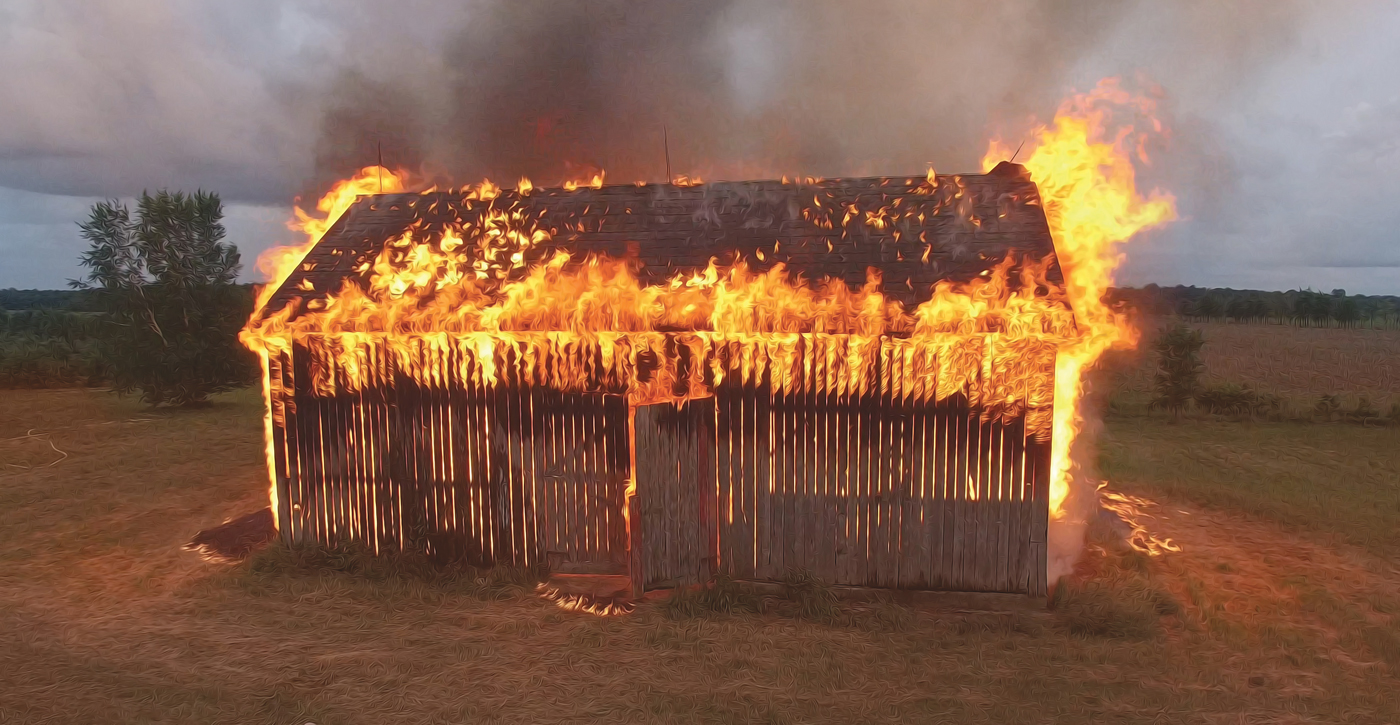
SILENCE: The meeting house was quiet as a grave at midnight. Two dozen souls sat in wooden pews, waiting for the Spirit to move them. In this racket, silence was the only currency that mattered. And brother, it was worth more than all the world's noisy bars.
TheFreeQuaker's avatar
TheFreeQuaker 4 months ago
This much is getting clear: AI serves those who already know how to think, dream, imagine. For those who can't—or won't—do the hard work of thinking, it becomes a crutch that weakens them further. I already feel the divide growing.
TheFreeQuaker's avatar
TheFreeQuaker 4 months ago
The Quakers had blood on their hands before they found their conscience. It wasn't just guilt that cleaned the slate—it was Black resistance that showed them the way out of the dark alley they'd been walking down for 120 years. I like the company of people who work at getting it right, even when they fumble. Next best thing to being perfect is knowing when you're a fool and doing something about it.
TheFreeQuaker's avatar
TheFreeQuaker 4 months ago
This resonates. Used to be a devoted NPR listener until the performance became too obvious (10 years ago) - same with TED talks. There's something off when it feels scripted. It's not just NPR though. Watch someone claim to be a free thinker then discover they're into Bitcoin, CrossFit, carnivore diet, and Zyn, (bonus points for testicle tanning). Checking too many boxes.
TheFreeQuaker's avatar
TheFreeQuaker 0 years ago
Henry Taylor Poet from Lincoln, VA - "October 1984" image #Quaker
TheFreeQuaker's avatar
TheFreeQuaker 0 years ago
"Building peace requires more than policy changes, it requires a culture shift."
Biodiversity was a hallmark of human innovation until recently. Now we value efficiency over resilience. Here are 10 examples of how we too a big step backwards: 1. Corn: Thousands of traditional varieties reduced to a few hybrid types, with Yellow Dent dominating US commercial production. 2. Bananas: Over 300 traditional varieties, yet Cavendish represents ~47% of global production due to shipping durability. 3. Potatoes: 4,000+ native Peruvian varieties, while US commercial production relies primarily on Russet Burbank and a few others. 4. Apples: North American varieties declined from ~14,000 in 1800s to around 4,500 today, though many survive in heritage orchards. 5. Rice: Over 100,000 traditional varieties worldwide, with fewer than 30 varieties now comprising majority of global production. 6. Wheat: Vast genetic diversity reduced since Green Revolution, with most commercial production using a limited pool of semi-dwarf varieties. 7. Chickens: From hundreds of traditional breeds to industrial consolidation, with White Leghorns producing ~45% of global eggs. 8. Tomatoes: Several thousand heirloom varieties exist, but commercial production uses few varieties bred for shipping and uniformity. 9. Coffee: From diverse Ethiopian origins, global production now ~60% Arabica and ~40% Robusta, though many varieties persist locally. 10. Dairy Cows: Holstein-Friesian dominates global dairy, providing ~90% of US dairy production and spreading worldwide.
Tech bias: We tend to overestimate technology's ability to solve complex social and economic problems on its own.
Sunk cost bias: The more time and resources we've invested in something, the harder it becomes to objectively evaluate new information about it.
Survivorship bias: We focus on visible successes while ignoring the more numerous failures that disappeared from view.
Cash bias: We are wired to see within the framework of our economy, and we see what helps us make money.
Conspiracy bias: When we feel shame, we are especially vulnerable to stories that cast us as victims of an evil conspiracy.