Money with integrity attracts people with integrity.
Anil
anil@bitcoinnostr.com
npub14hn6...a32x
teaching #bitcoin
A finite unit for measuring value enables greater precision in economic calculation over long time horizons where fiat has proven unreliable.


Same shit.
Different day.


Capital allocators face career risk for betting on new technologies too early in their adoption curve.
But eventually this flips and it can then be career-ending to continue to ignore a permanent shift in consumer behaviour.
Ignore bitcoin at your own peril.


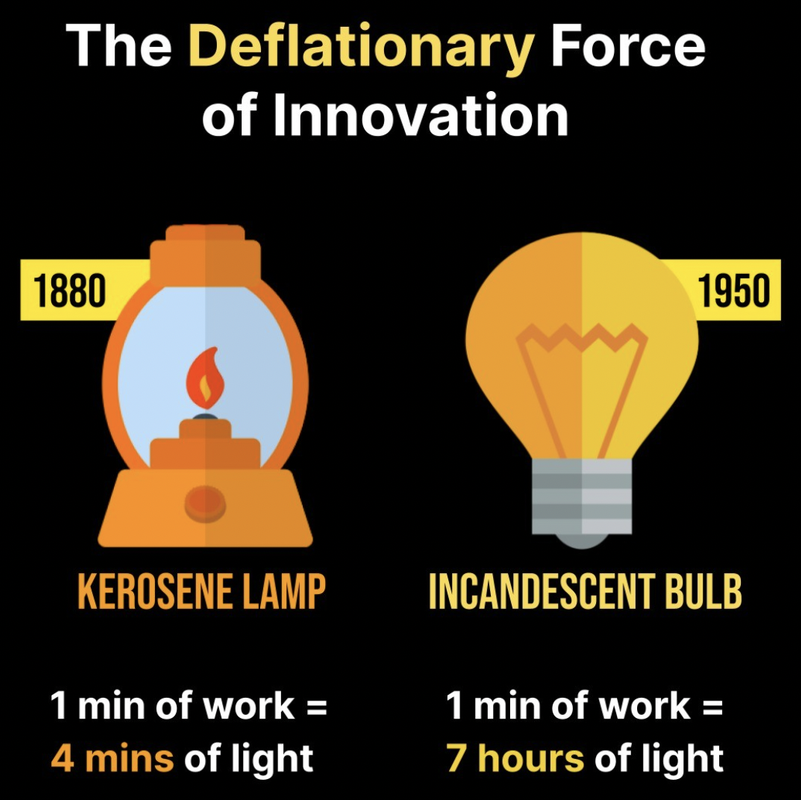
Through the process of innovation, we come up with ways to get more output from less inputs.
This naturally drives costs down over time.
A monetary system that requires ever-increasing prices is incompatible with the deflationary force of innovation.


In the digital age there will not be 100’s or 1000’s of different monies.
There will be only ONE.
At present, all logic is pointing to bitcoin.
Let’s start with exchanging one good or service for another is a process known as barter exchange.
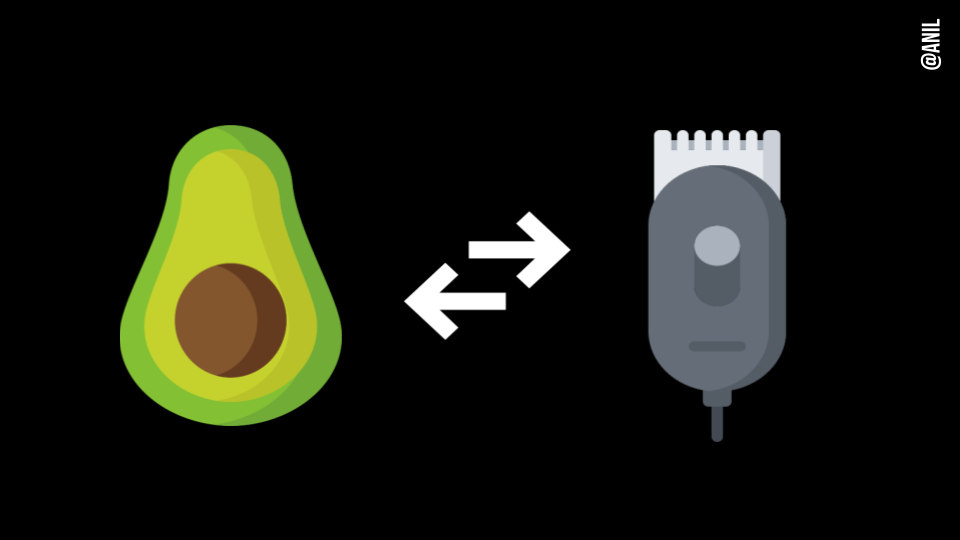
Barter can work at small scales.
Here’s an example with 6 unique items.
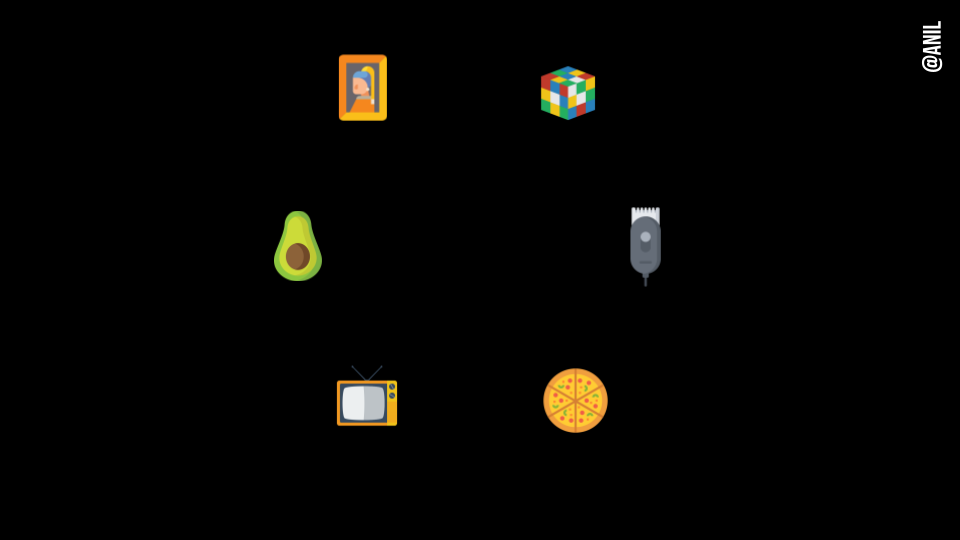
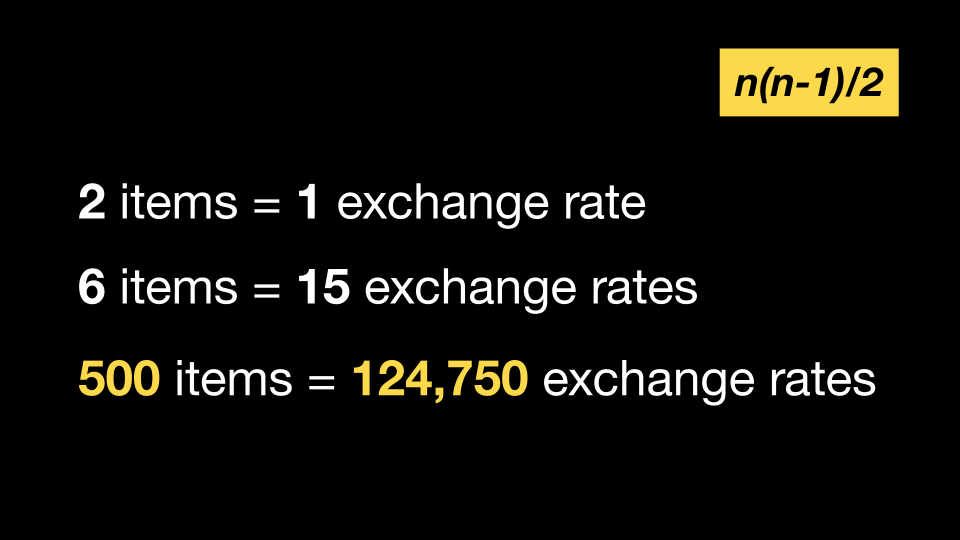
This economy of 6 items requires keeping track of 15 different exchange rates.
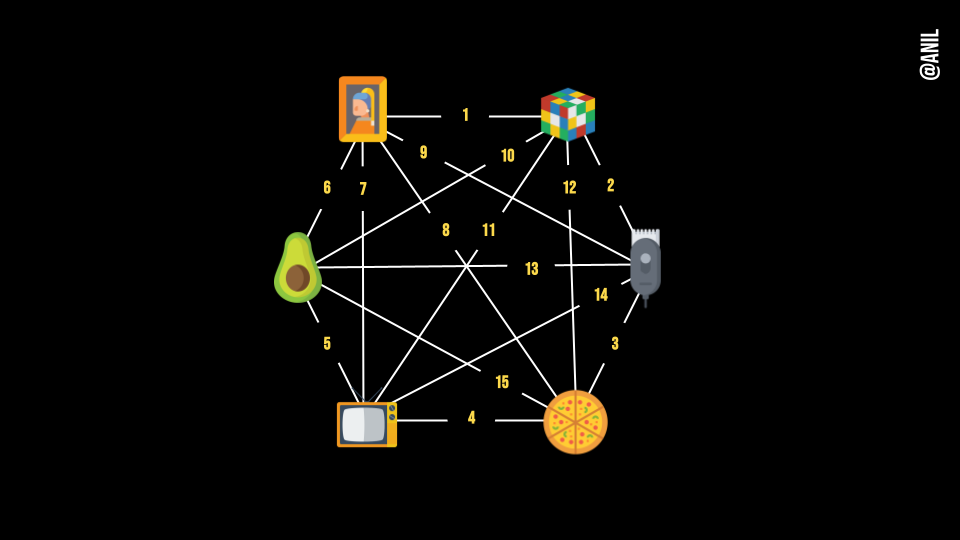
But an economy with just 500 unique items will have 124,750 exchange rates, making the barter system infeasible for a complex economy of millions of items.
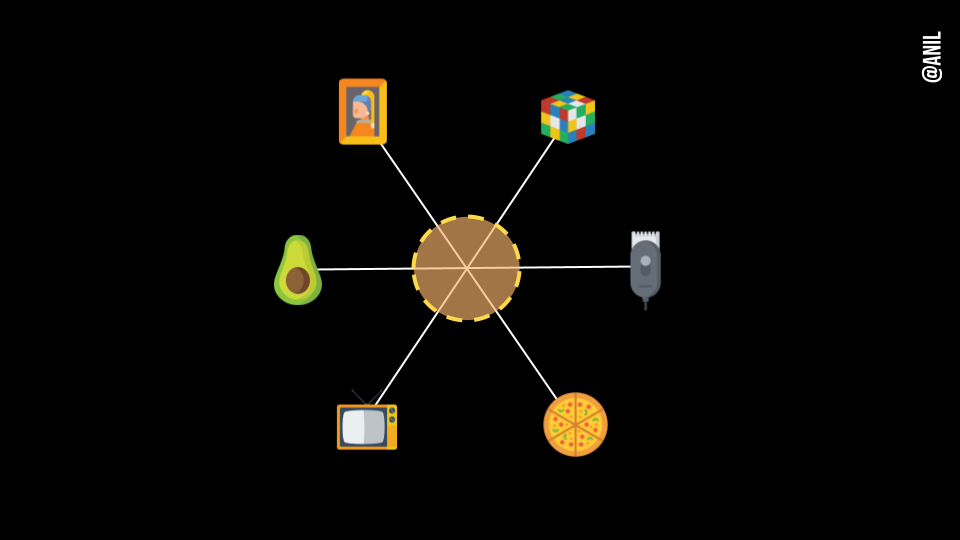
This problem (known as a coincidence of wants) is solved by using a single common medium between all transactions.
Usually, the most tradable good in a society is termed ‘money’.
Previously, this was decided by the free-market, based on
a good’s monetary properties.
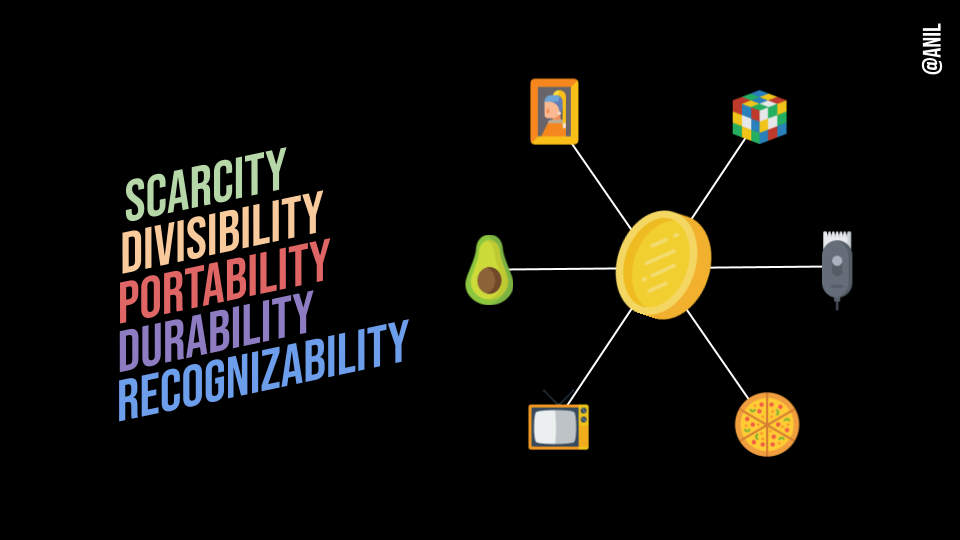
Today, it’s a top-down phenomena, imposed on citizens by sovereign governments.
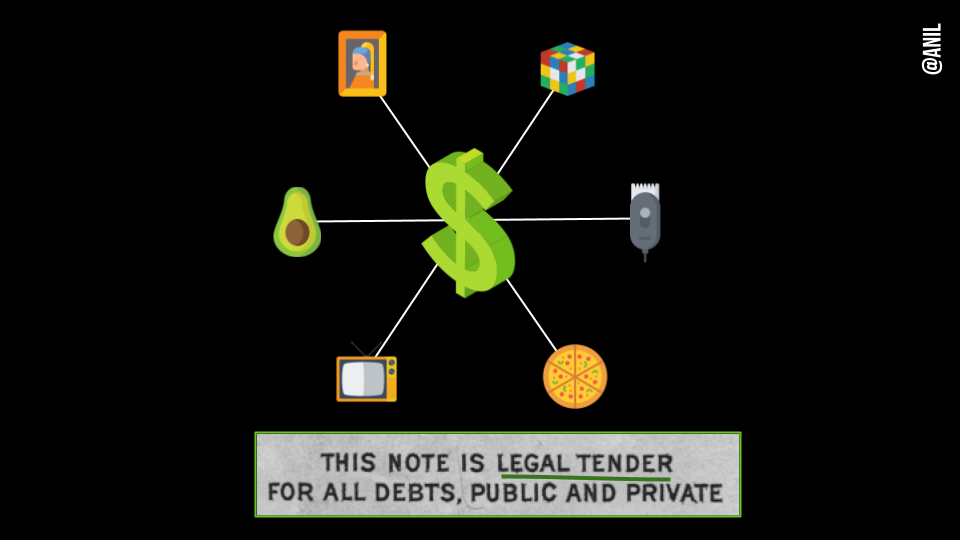
Money may differ in different places if there are significant enough barriers between them.
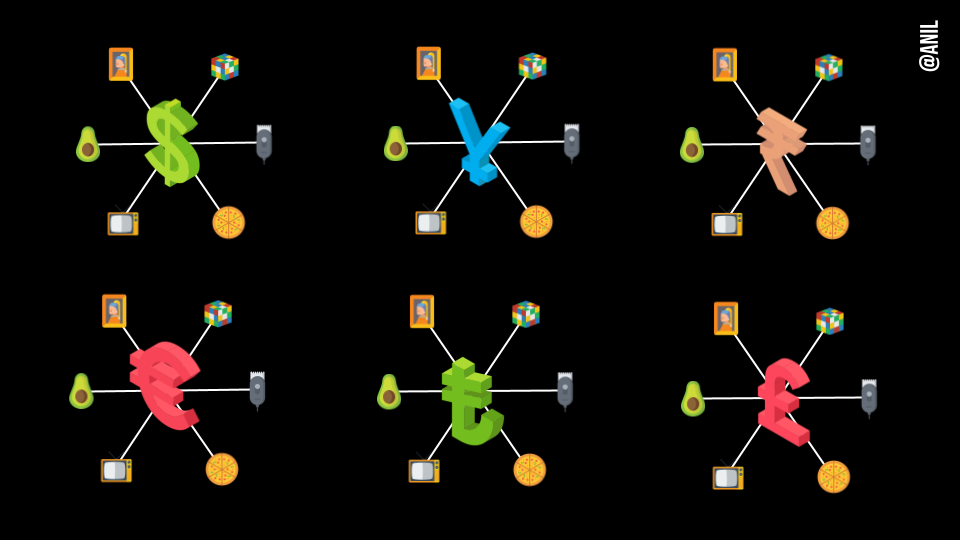
In the case of sovereign nations, a few things help create barriers and ensure a monetary monopoly: physical borders, capital controls, legal tender laws.
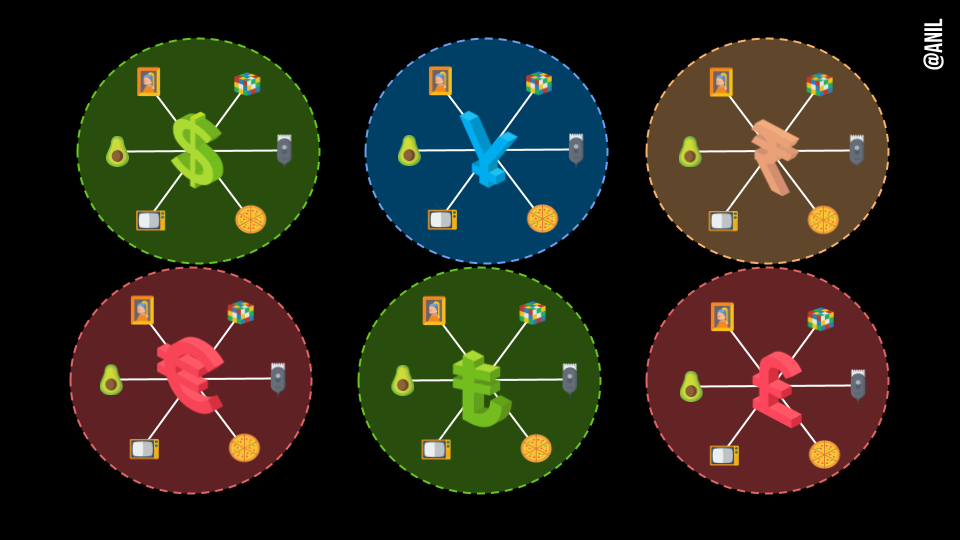
But we now have a global digital communications network (the internet).
This is breaking down borders and creating a single market, enabling international commerce at the level of the individual.
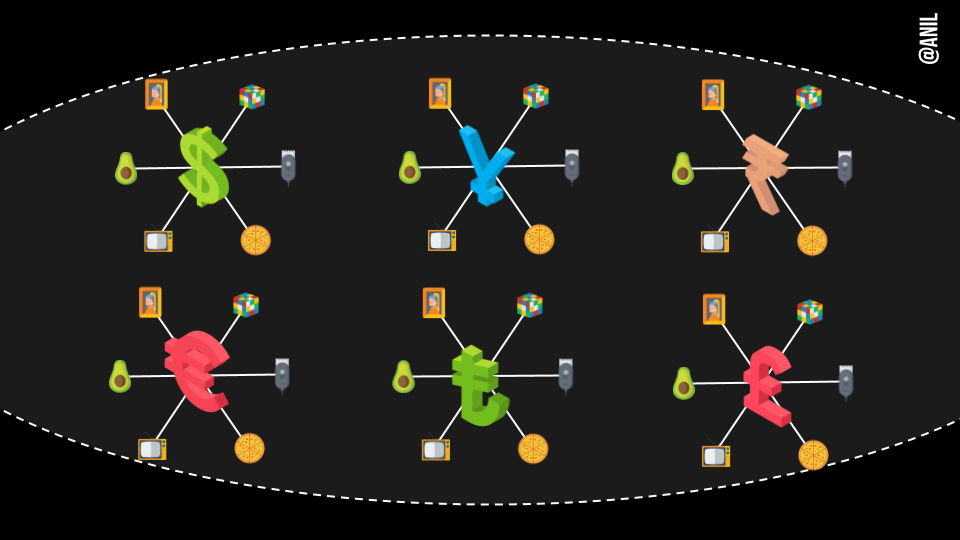
We now come across a similar version of our barter problem, but this time with the currencies themselves.
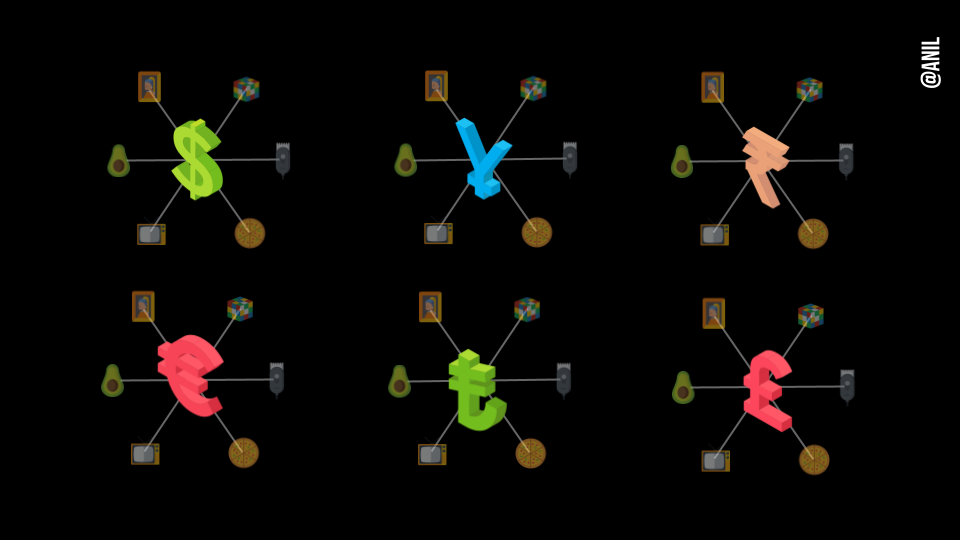
And once again we'll converge, this time on a single global monetary medium.
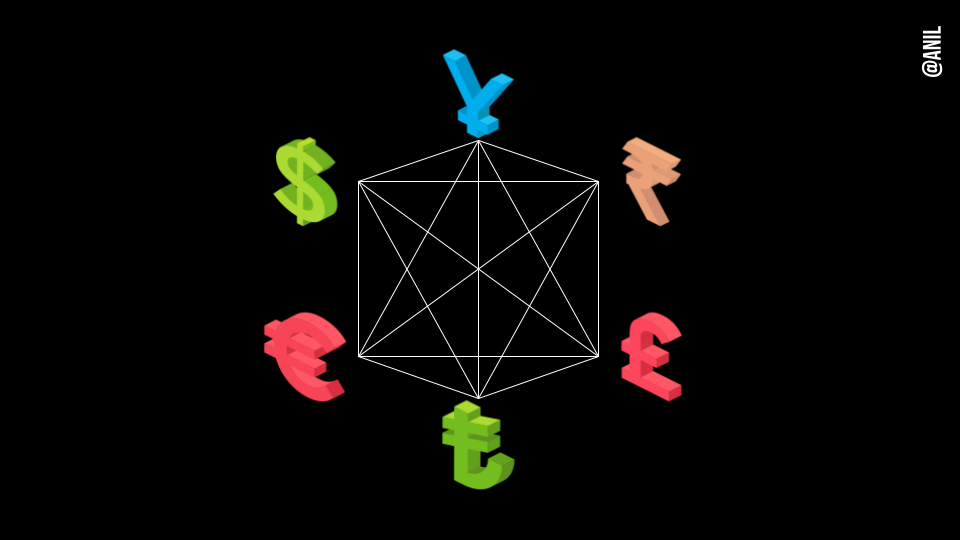
The chosen medium to bridge this gap will need to be:
1. Neutral (no single group has seigniorage)
2. Global (accessible everywhere)
3. Transparent (anyone can verify & audit)
4. Indestructible (cannot be shut down)
5. Peer-to-peer (enable commerce at the individual level)
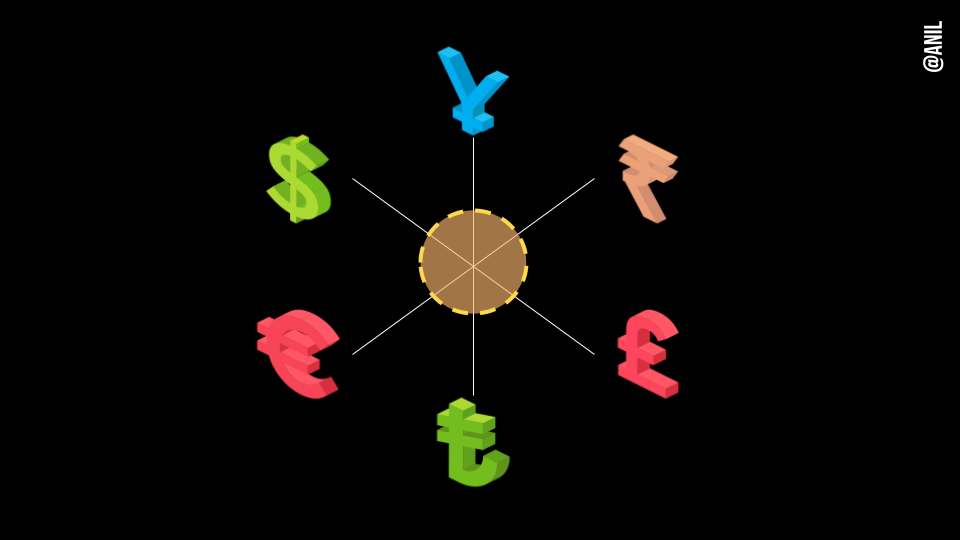
By assessing the relative properties of all monetary goods, a winner emerges and the market converges.
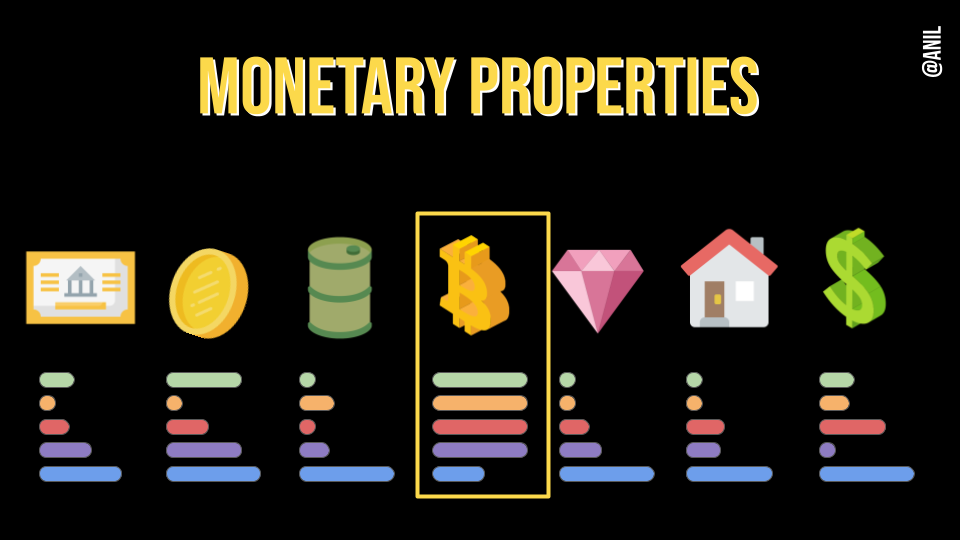
Right now, all evidence points to that being bitcoin.
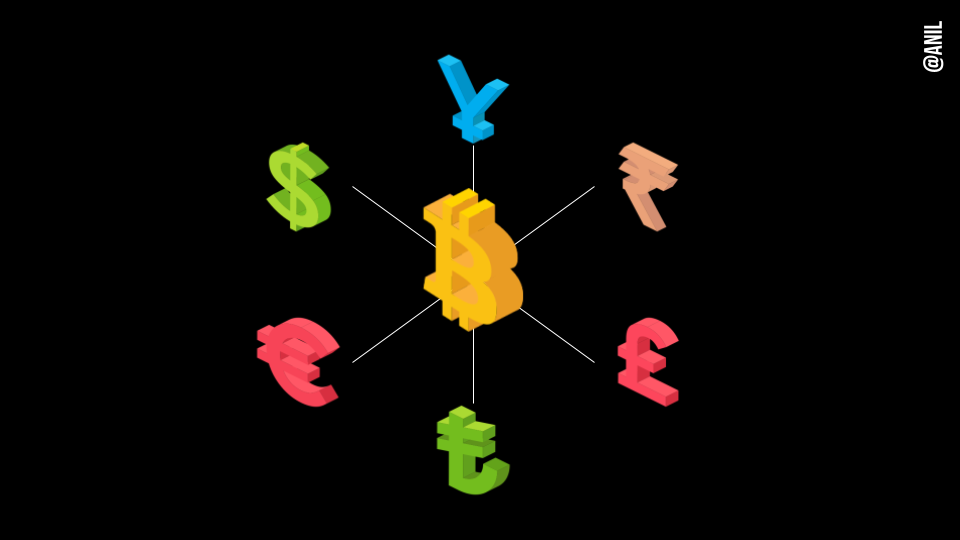
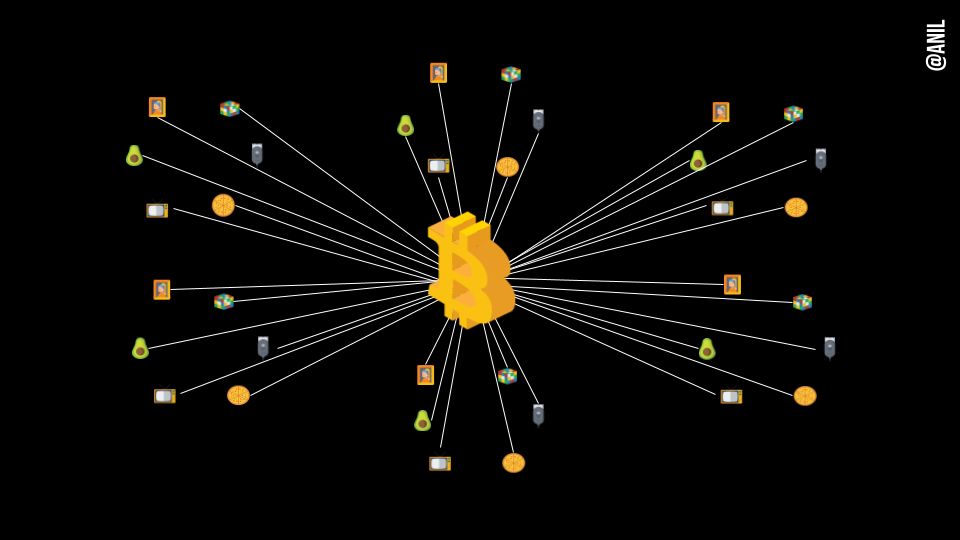
But it doesn’t end at simply intermediating currency exchanges.
Ultimately, we end up with a global economy, bypassing jurisdictionally-restricted money, transacting through one common digital monetary medium.
Thanks for reading.
Download these slides here:
https://tipybit.com/anilsaidso/products/why-money-converges-to-one
Let’s start with exchanging one good or service for another is a process known as barter exchange.
Barter can work at small scales.
Here’s an example with 6 unique items.
This economy of 6 items requires keeping track of 15 different exchange rates.
But an economy with just 500 unique items will have 124,750 exchange rates, making the barter system infeasible for a complex economy of millions of items.
This problem (known as a coincidence of wants) is solved by using a single common medium between all transactions.
Usually, the most tradable good in a society is termed ‘money’.
Previously, this was decided by the free-market, based on
a good’s monetary properties.
Today, it’s a top-down phenomena, imposed on citizens by sovereign governments.
Money may differ in different places if there are significant enough barriers between them.
In the case of sovereign nations, a few things help create barriers and ensure a monetary monopoly: physical borders, capital controls, legal tender laws.
But we now have a global digital communications network (the internet).
This is breaking down borders and creating a single market, enabling international commerce at the level of the individual.
We now come across a similar version of our barter problem, but this time with the currencies themselves.
And once again we'll converge, this time on a single global monetary medium.
The chosen medium to bridge this gap will need to be:
1. Neutral (no single group has seigniorage)
2. Global (accessible everywhere)
3. Transparent (anyone can verify & audit)
4. Indestructible (cannot be shut down)
5. Peer-to-peer (enable commerce at the individual level)
By assessing the relative properties of all monetary goods, a winner emerges and the market converges.
Right now, all evidence points to that being bitcoin.
But it doesn’t end at simply intermediating currency exchanges.
Ultimately, we end up with a global economy, bypassing jurisdictionally-restricted money, transacting through one common digital monetary medium.
Thanks for reading.
Download these slides here:
https://tipybit.com/anilsaidso/products/why-money-converges-to-oneBitcoin is water.
Shitcoins are soda.
Bitcoin is the sum of many existing pieces.
The white paper lays out how they are woven together and what purpose they serve.


Many can identify symptoms.
Some can identify the root cause.
Few can identify the solution.


Stay humble, zap sats.


Without labor, nothing prospers.
—Sophocles


"History has always been a series of pendulum swings, but the individual doesn't have to get caught in that."
—Robert Johnson


The one certainty of fiat- it always ends on a high note.


Felt bad that we're single-handedly destroying the advertising model, so here's a Raytheon ad.


central plannoooors