Architecture Daily's avatar
Architecture Daily
npub15qd4...gj2x
Your daily dose of architecture.
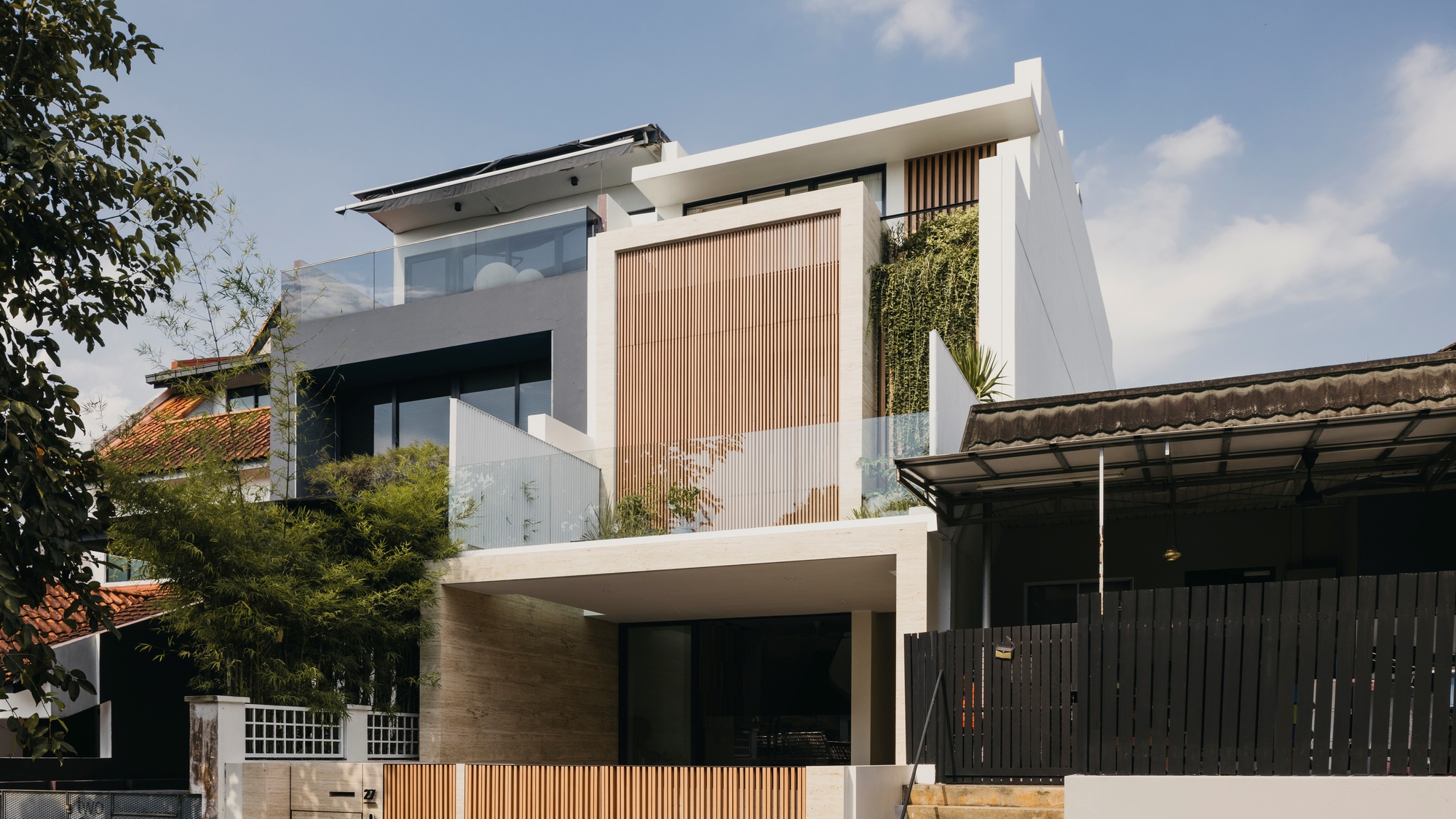
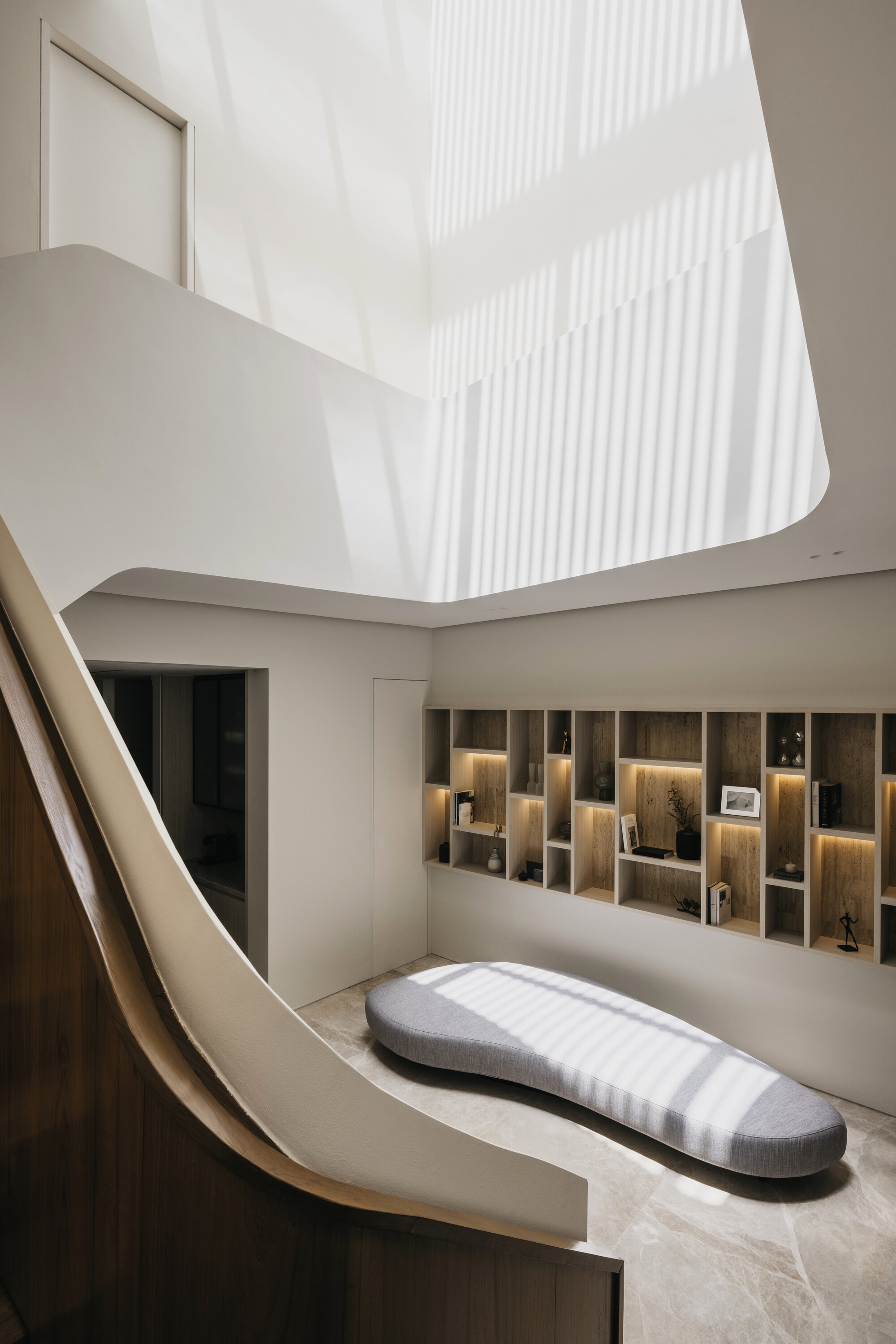
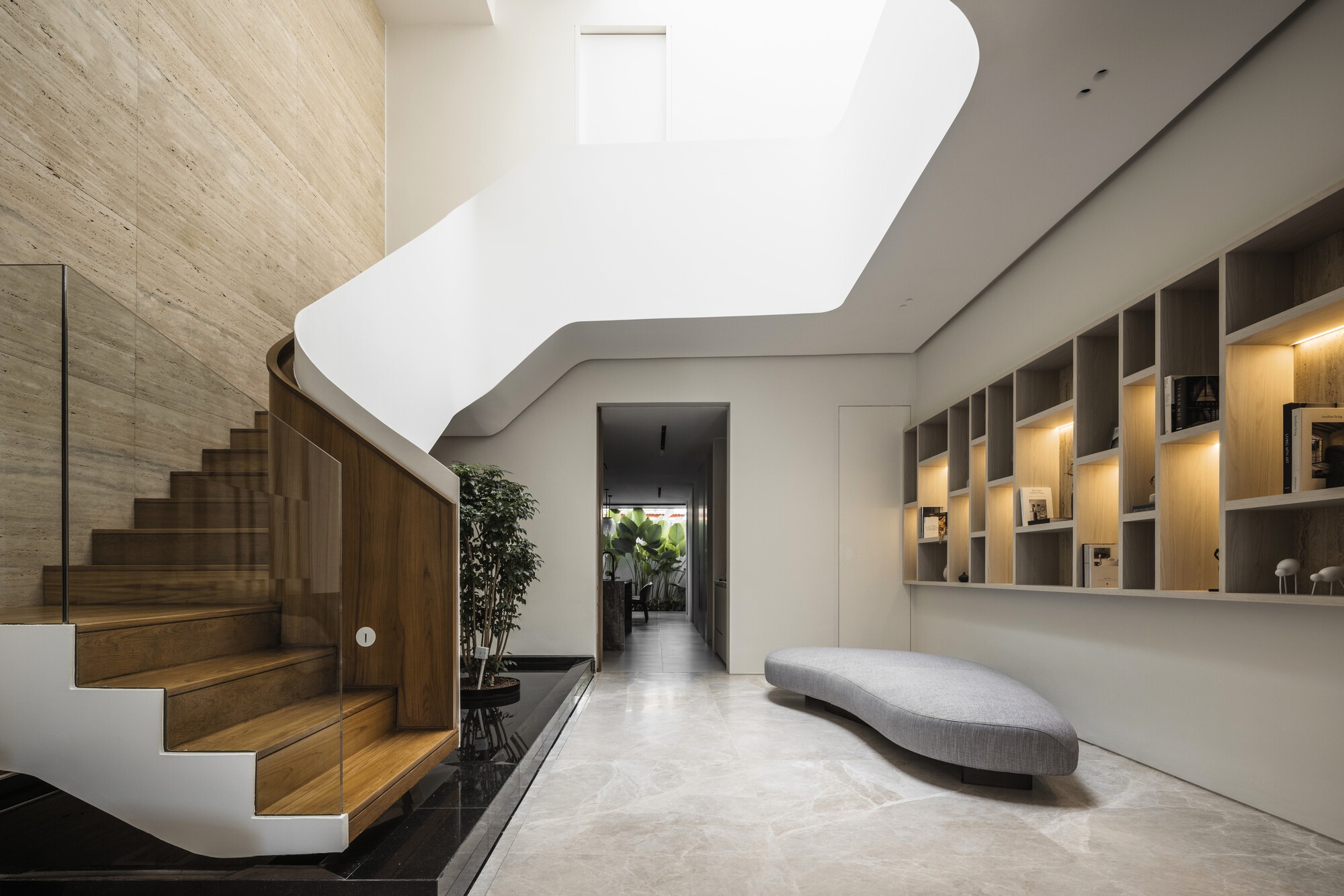
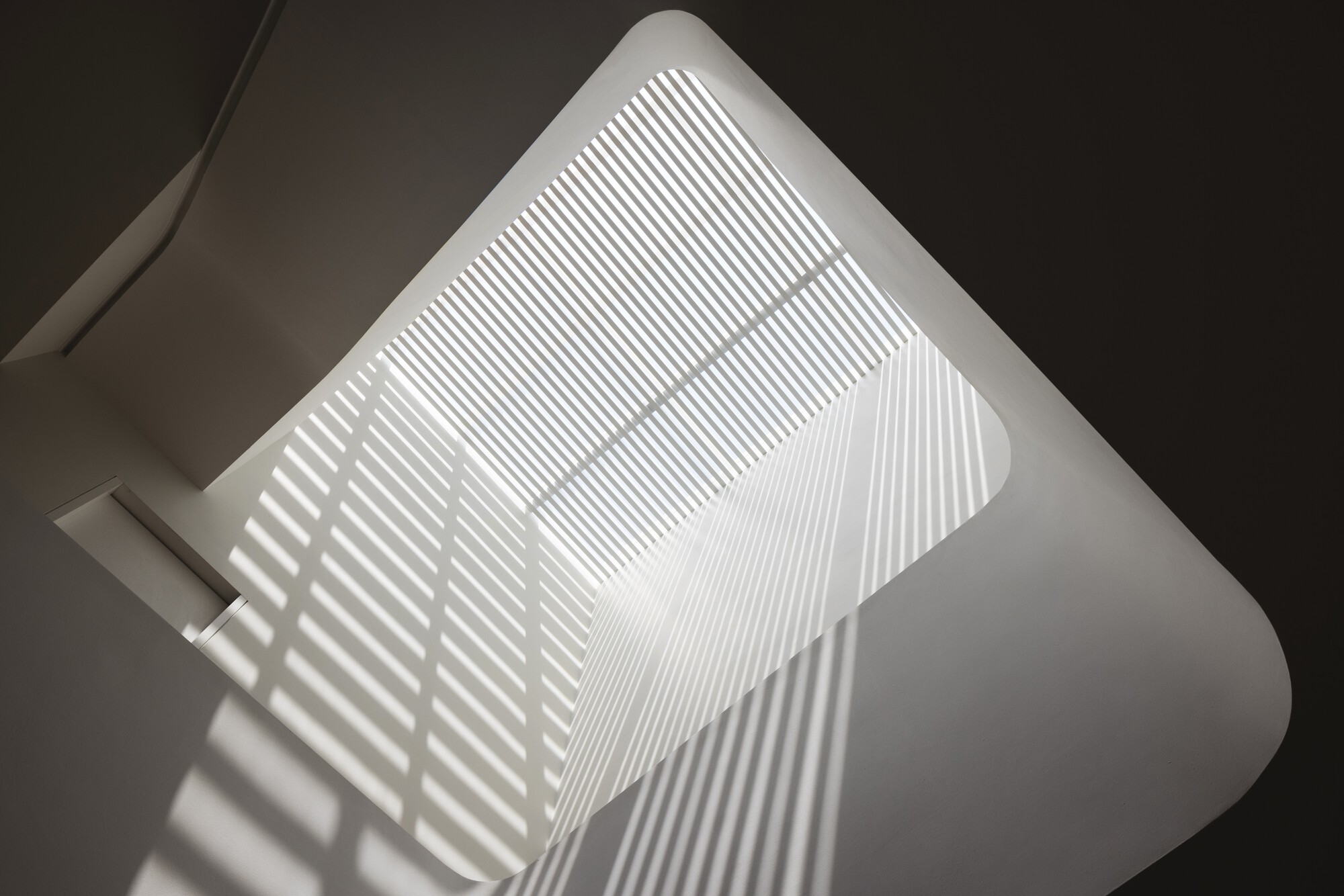
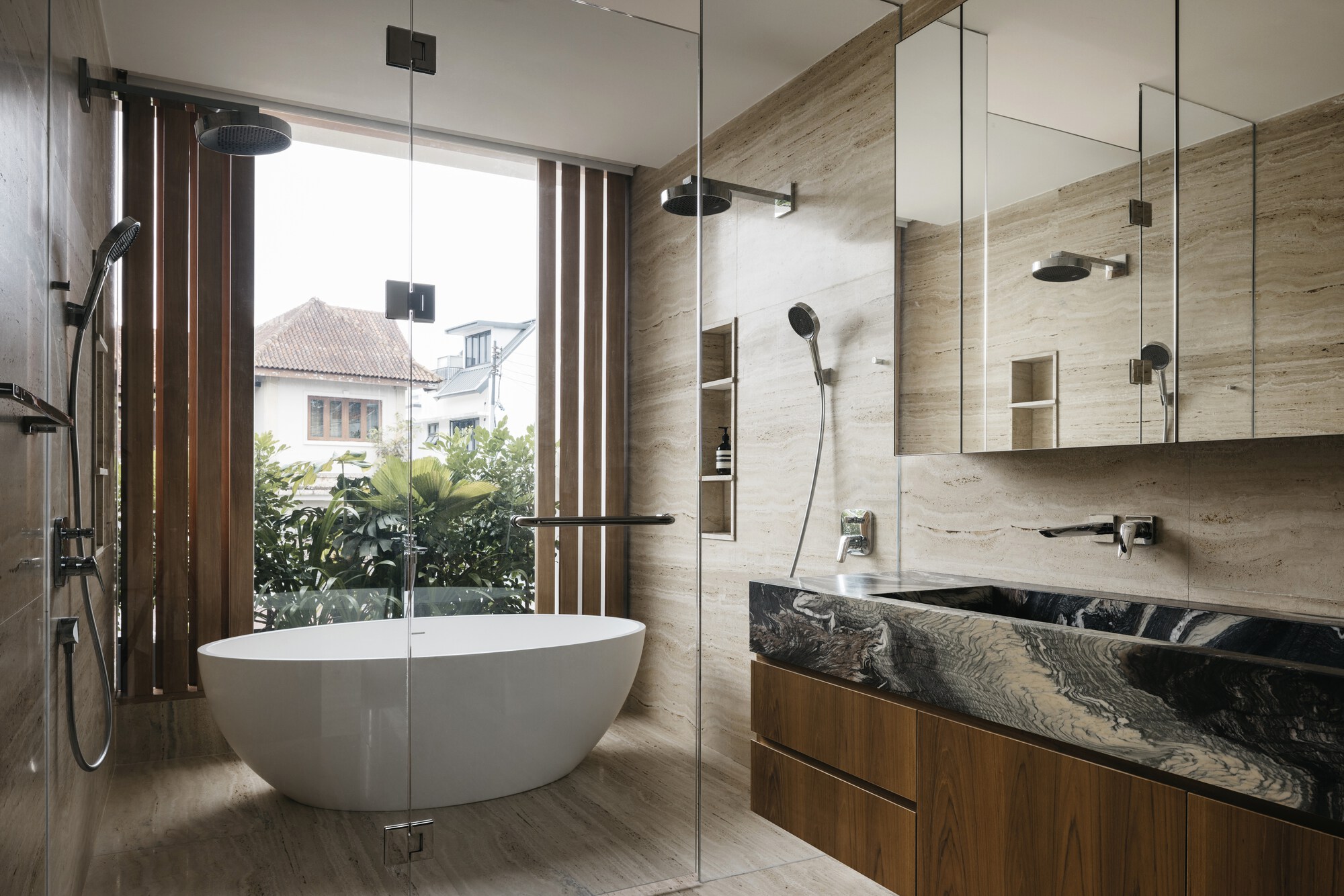
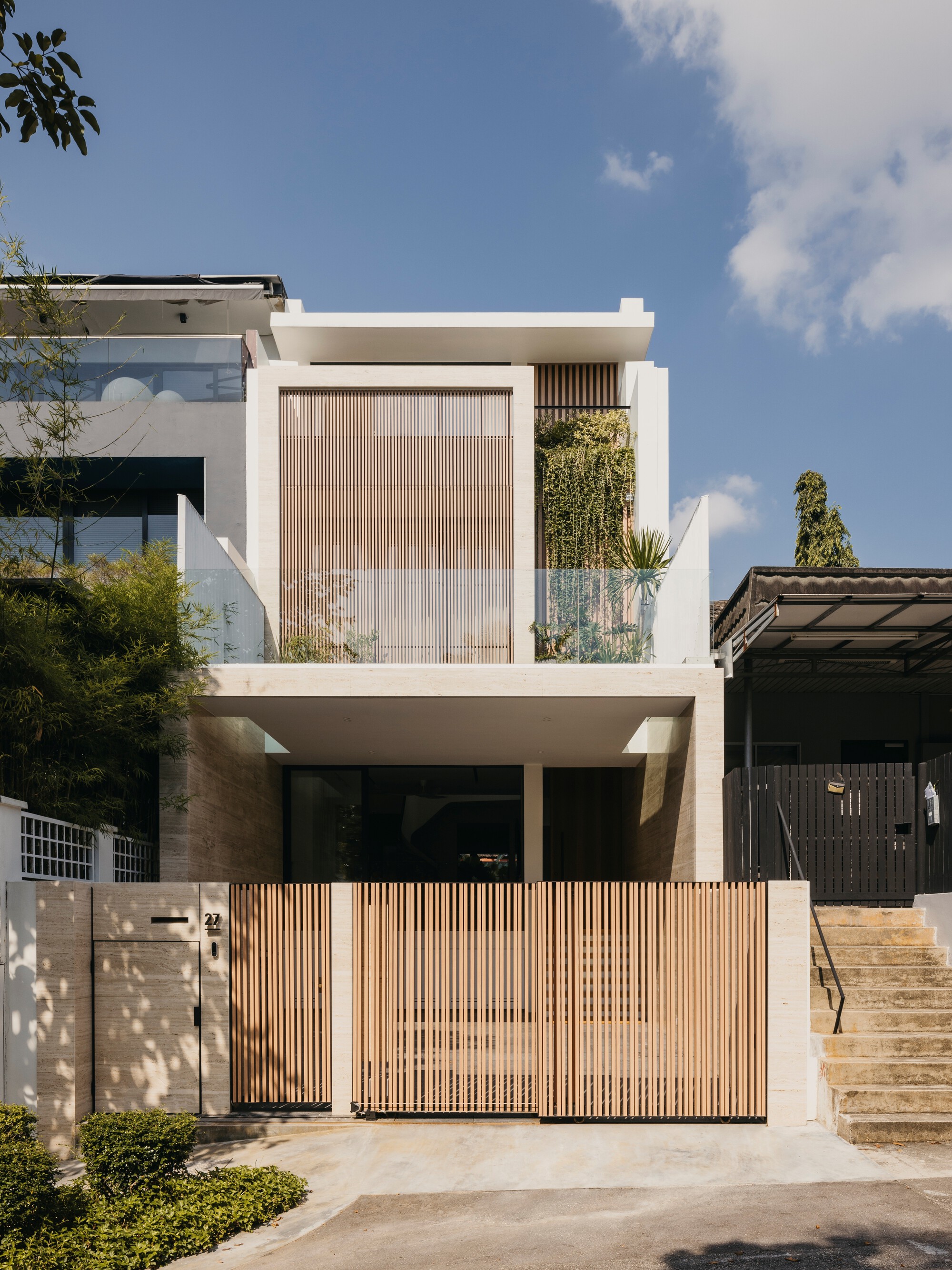
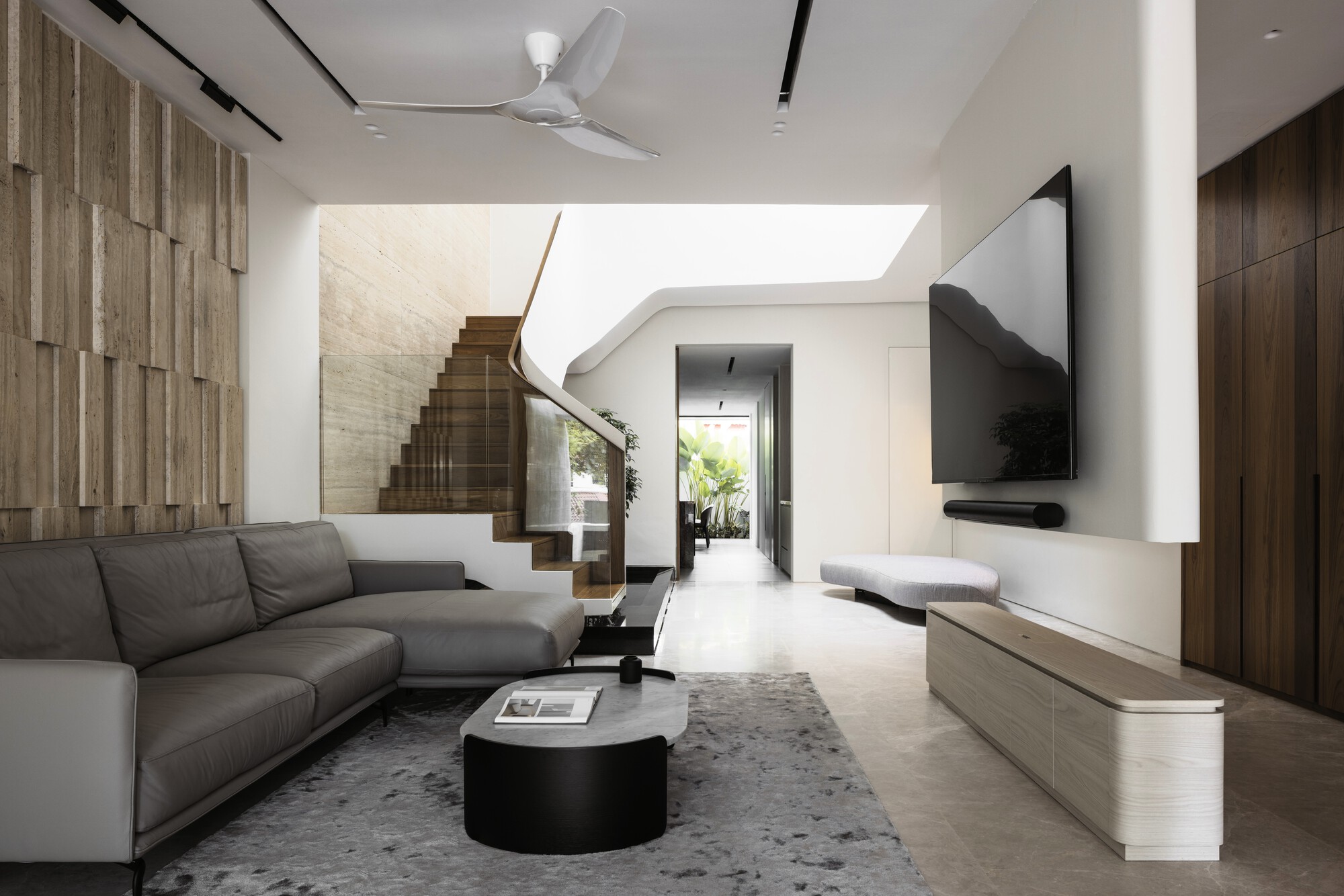
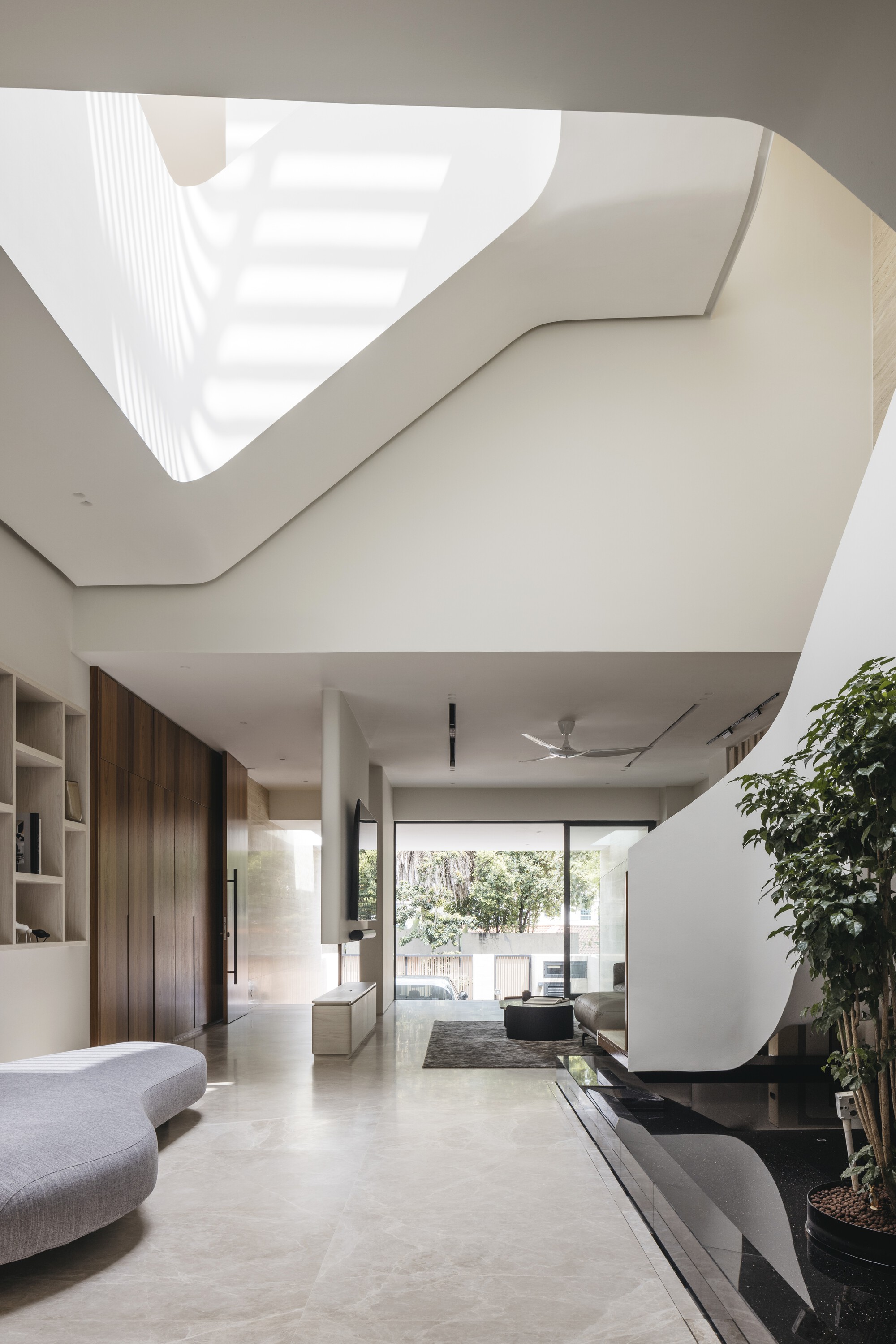
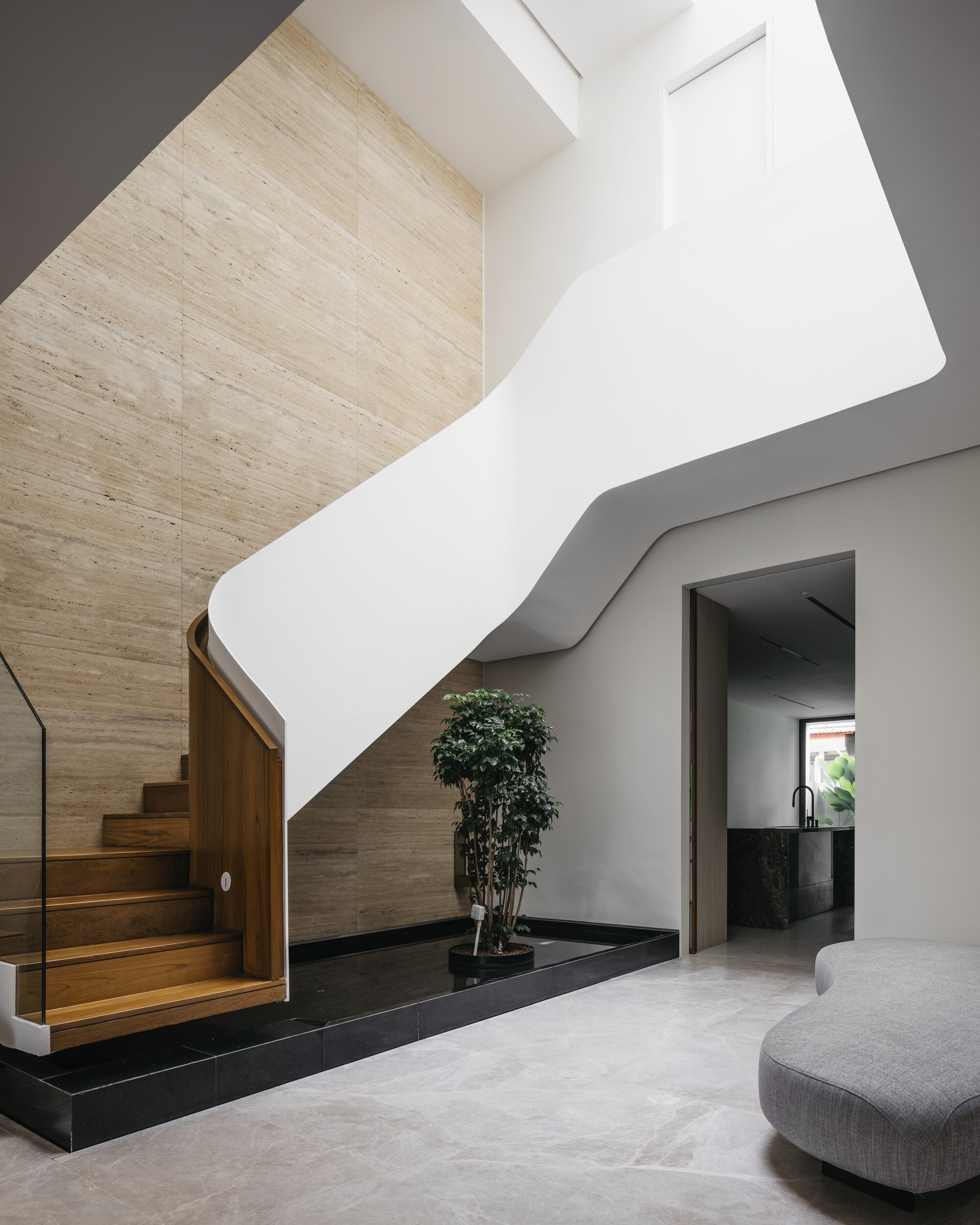
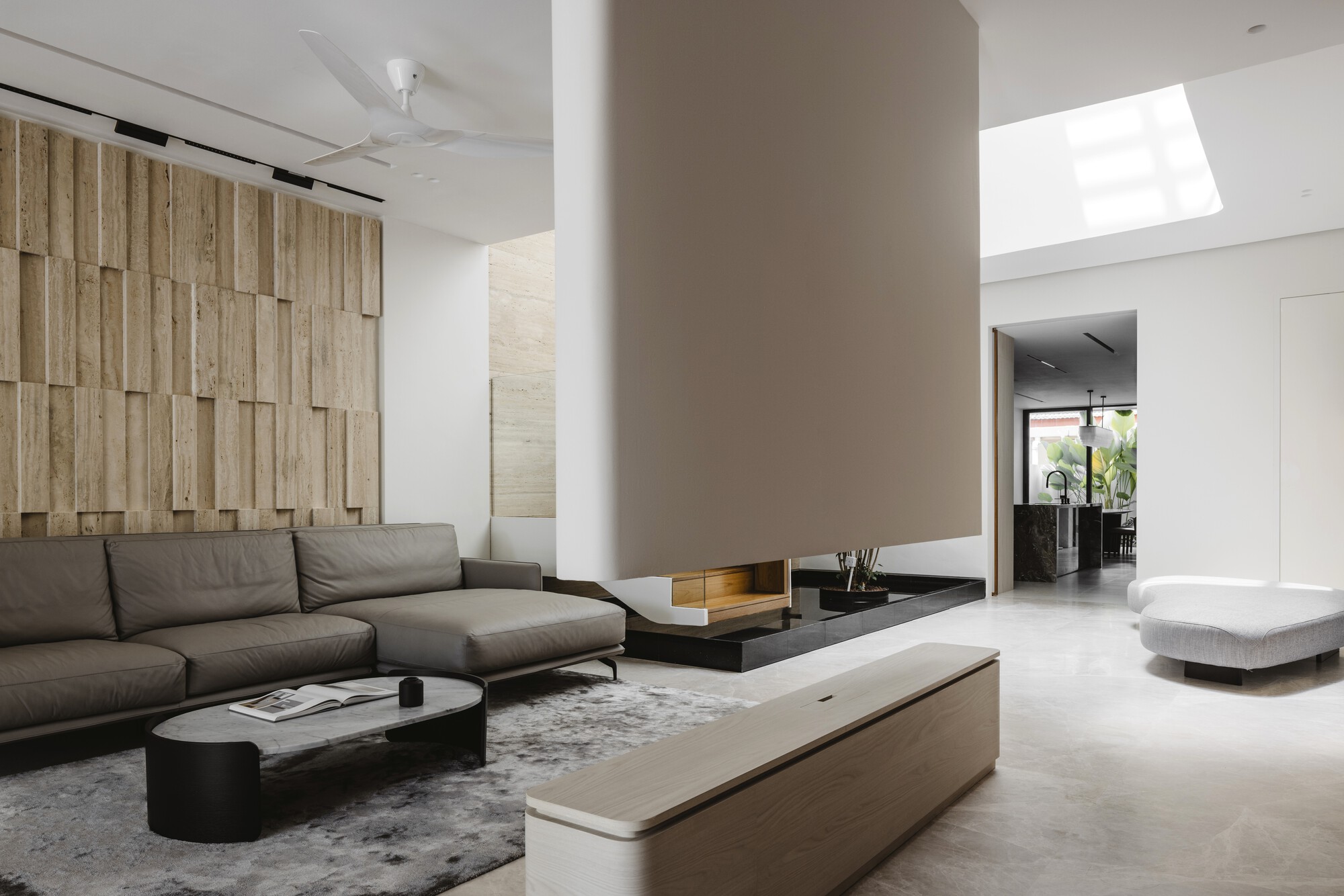
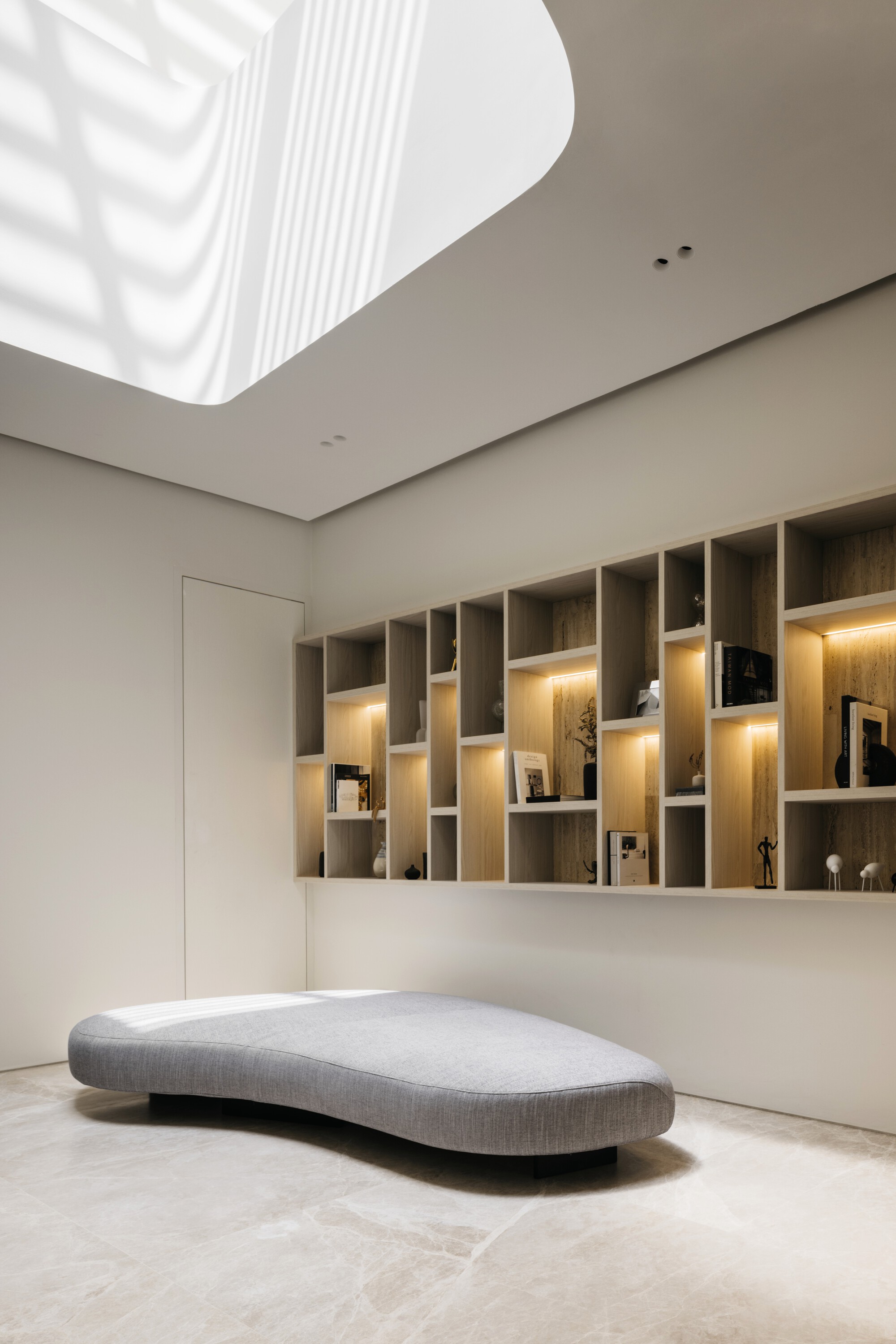
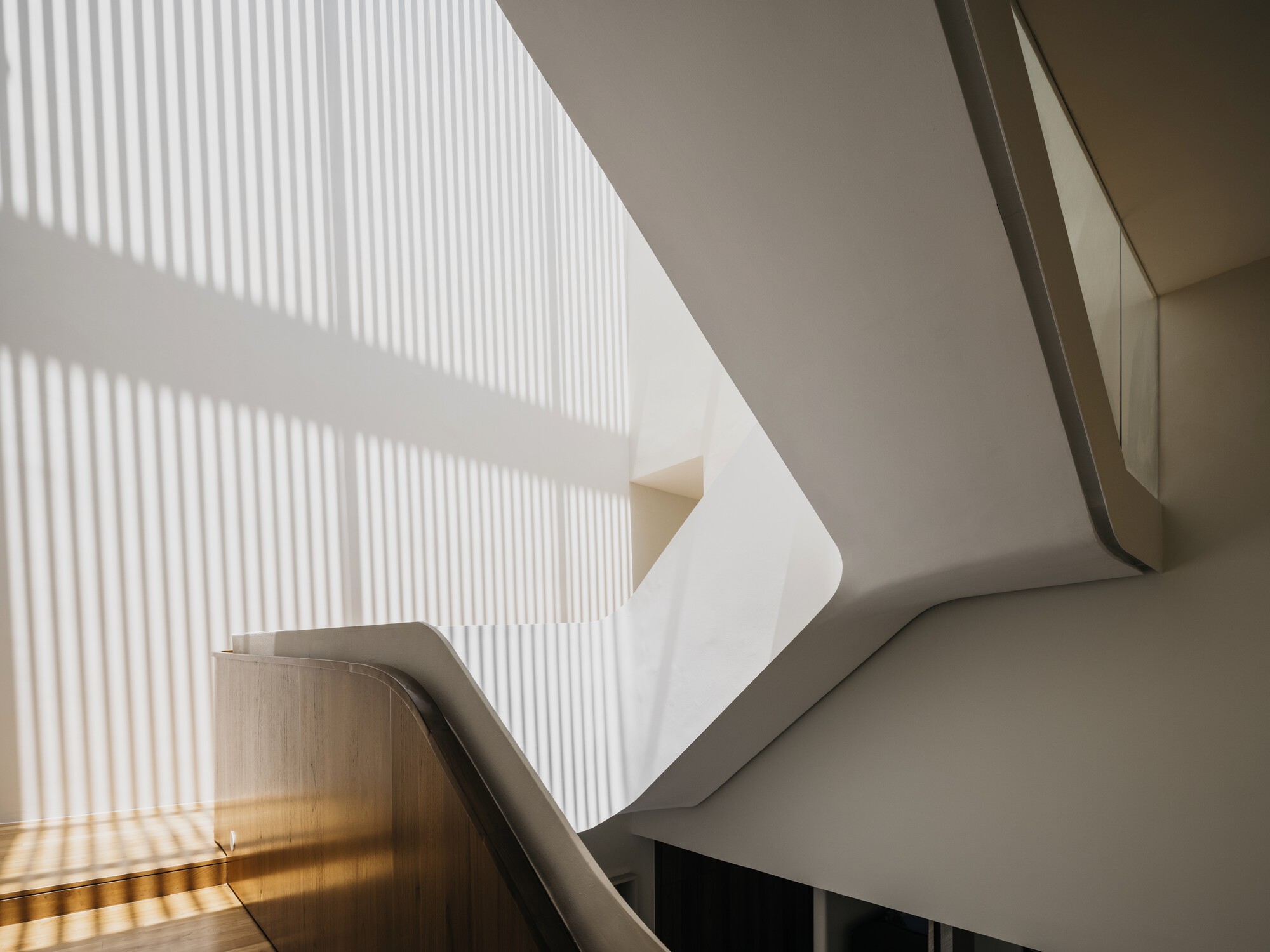
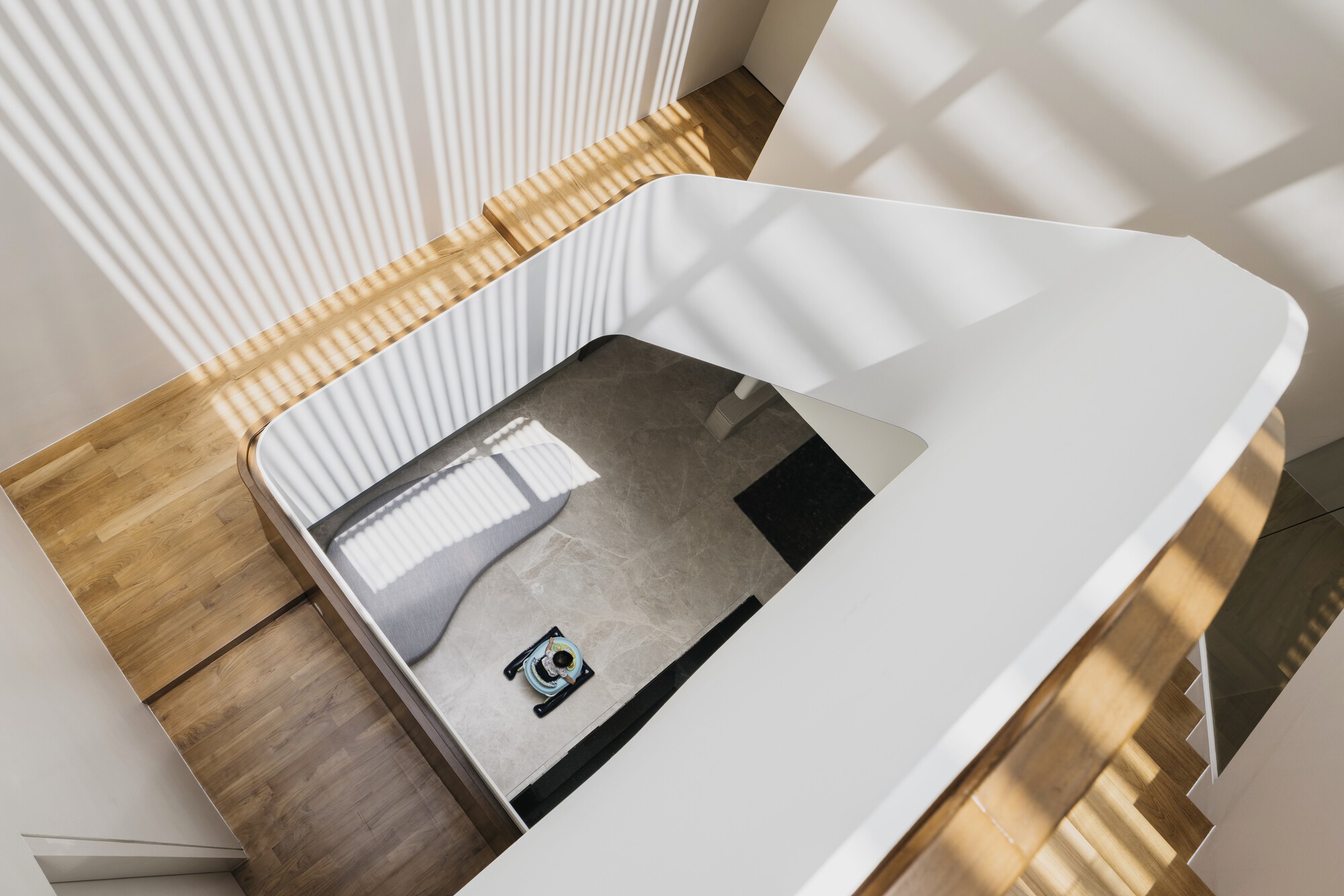
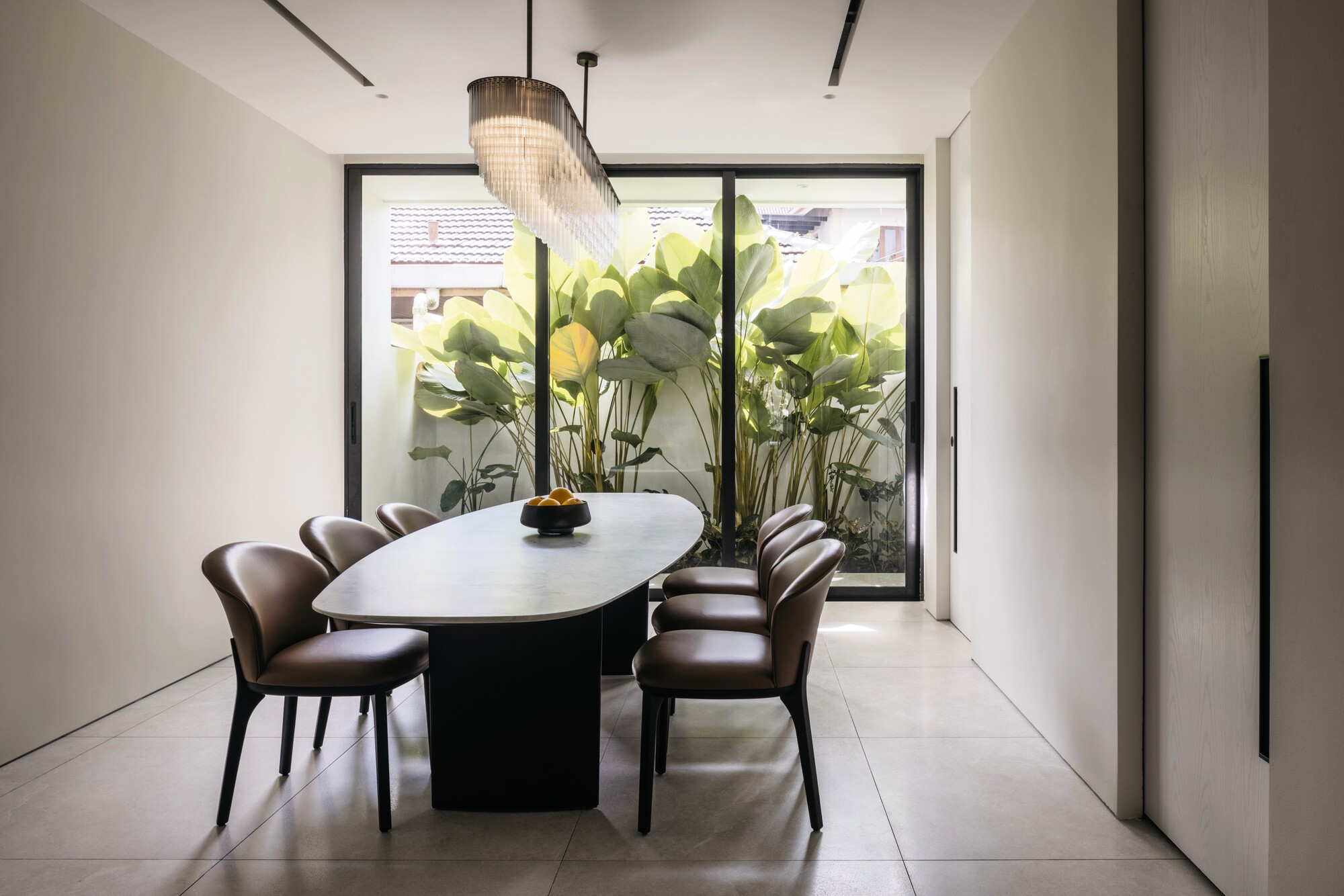
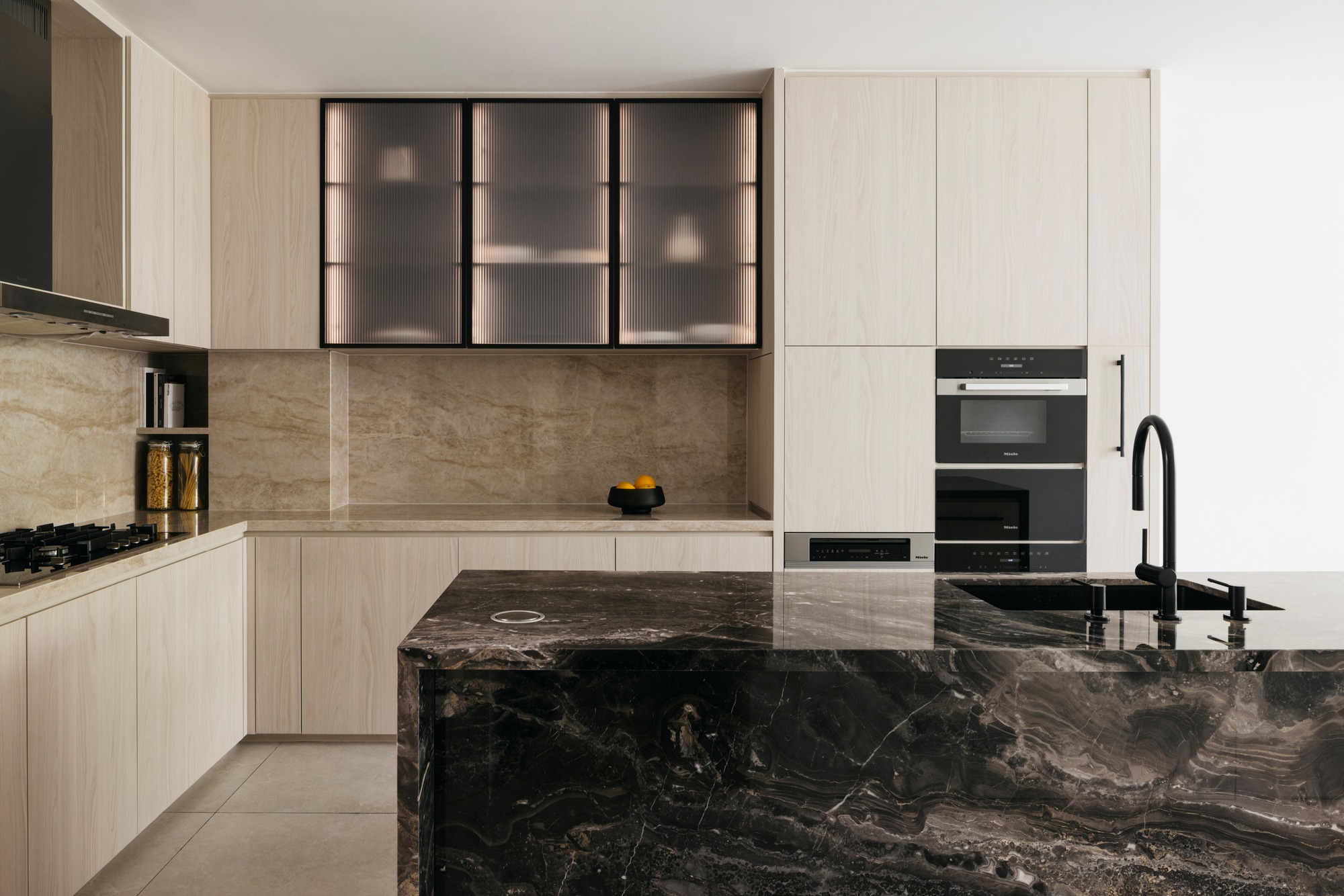
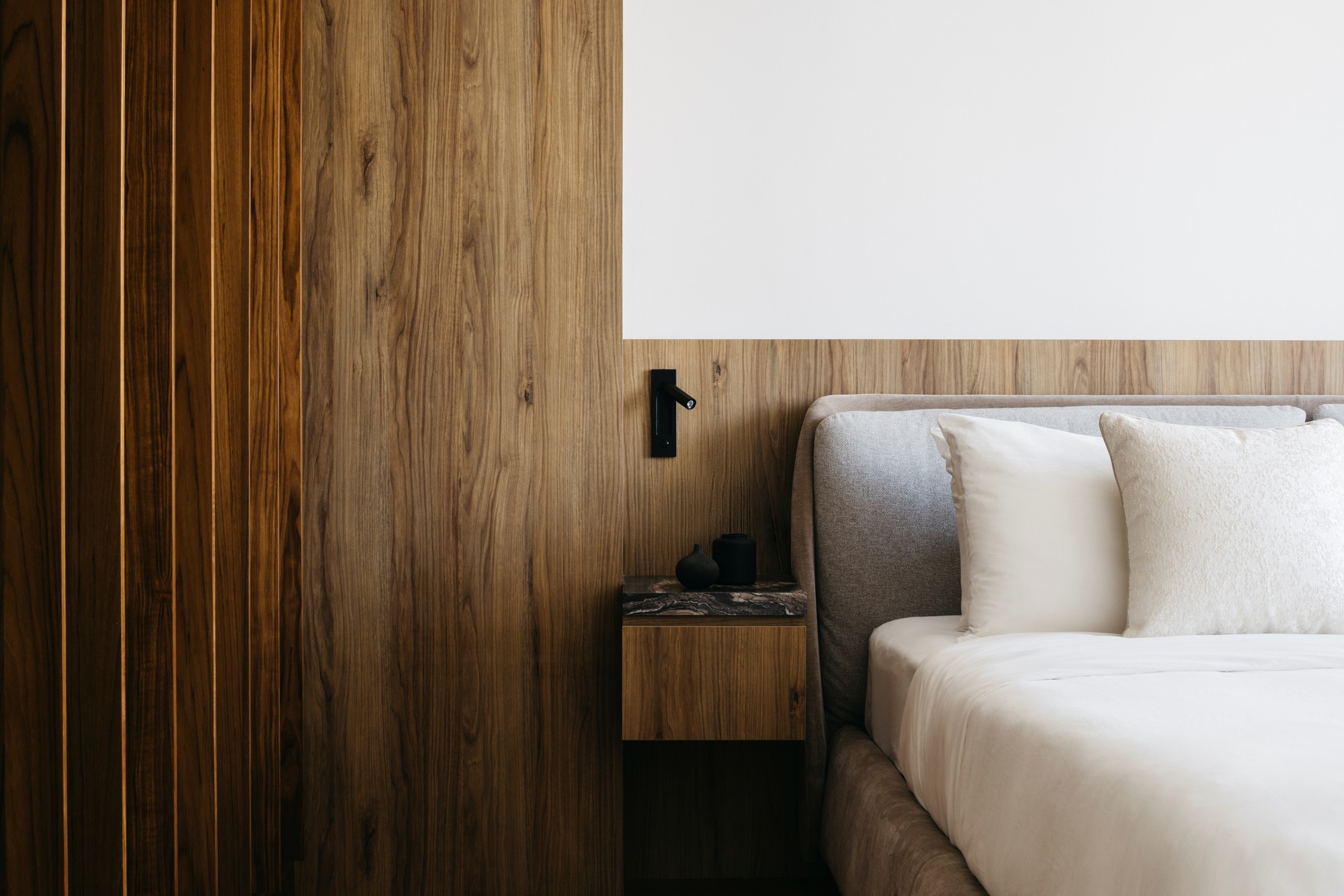
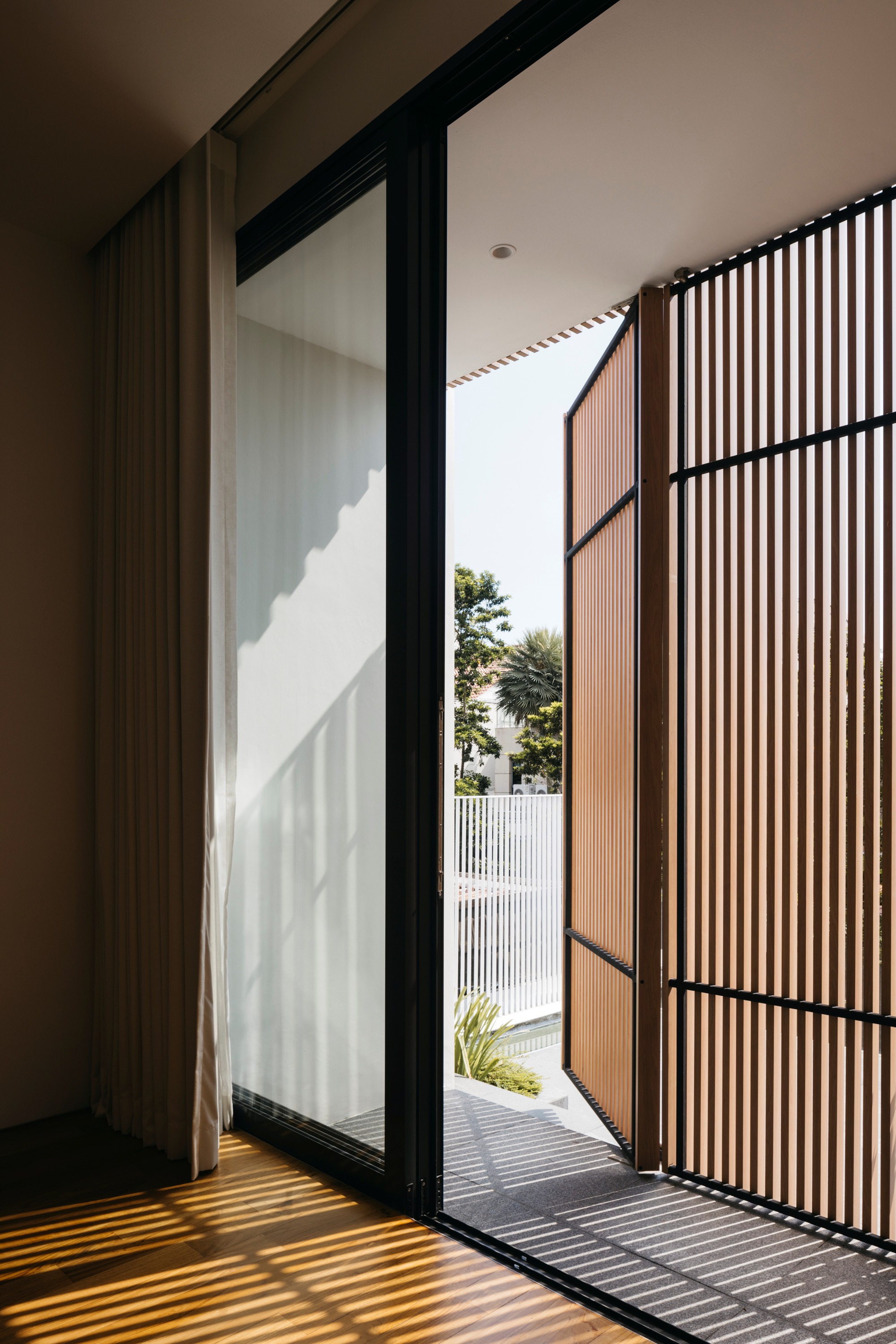
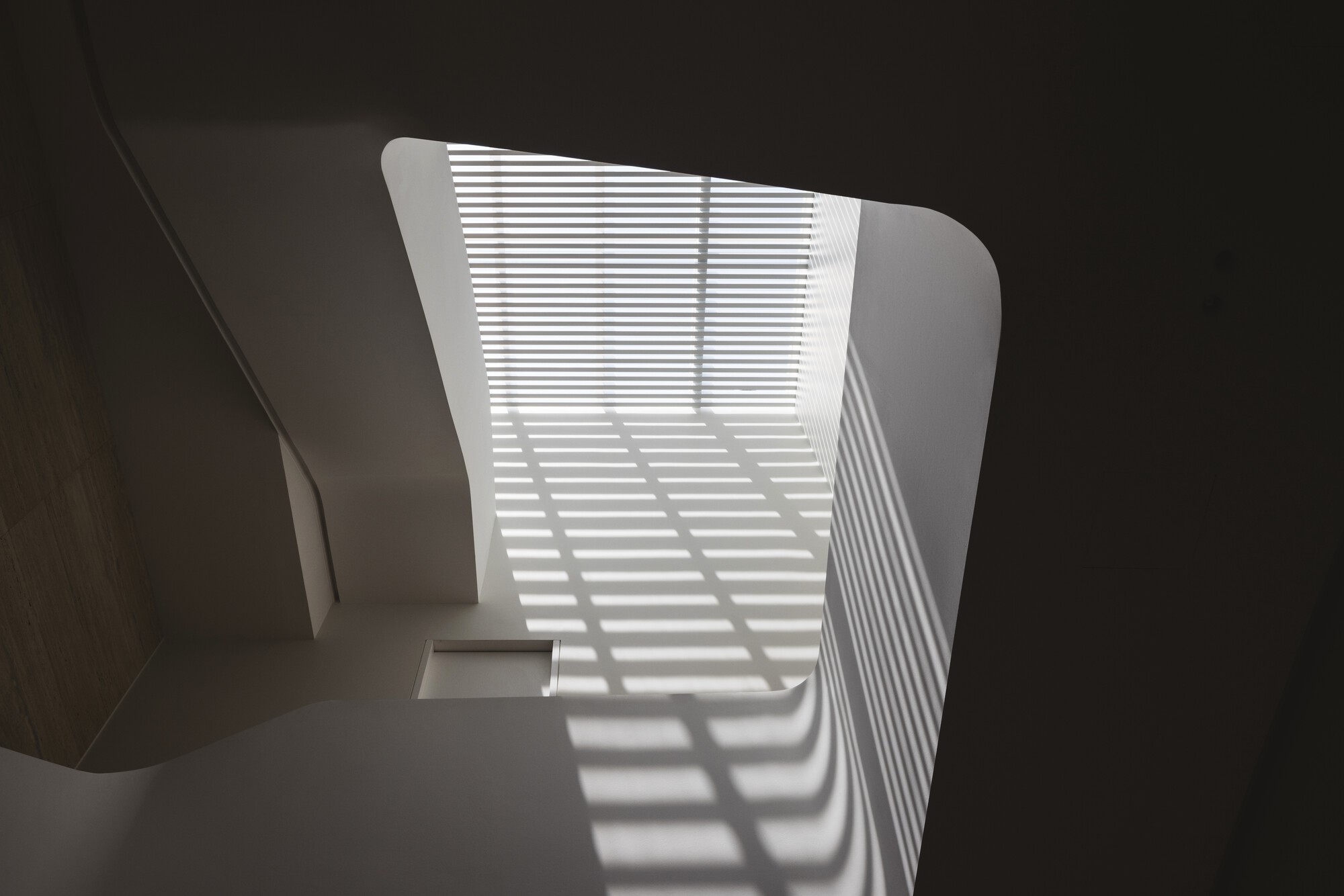
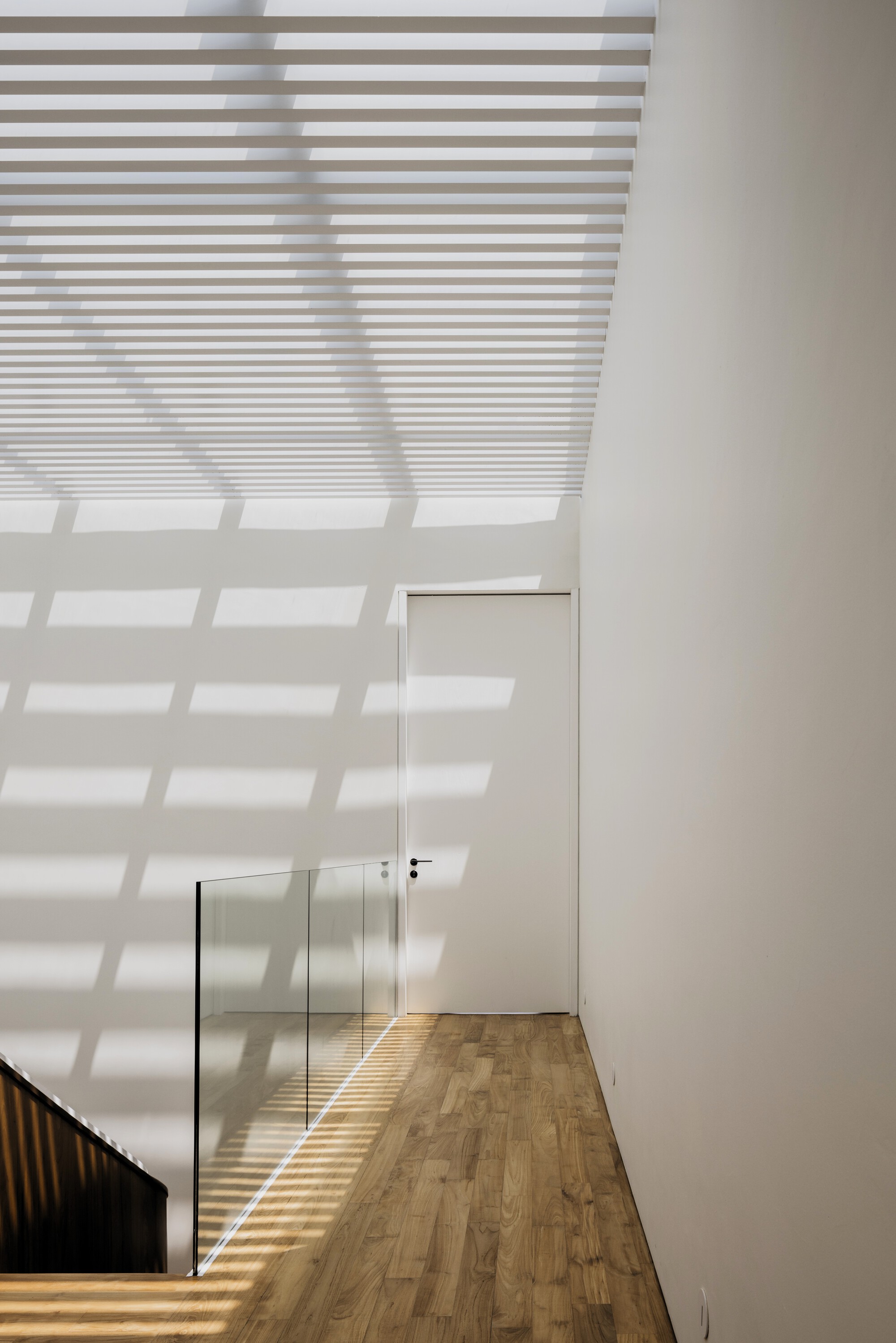
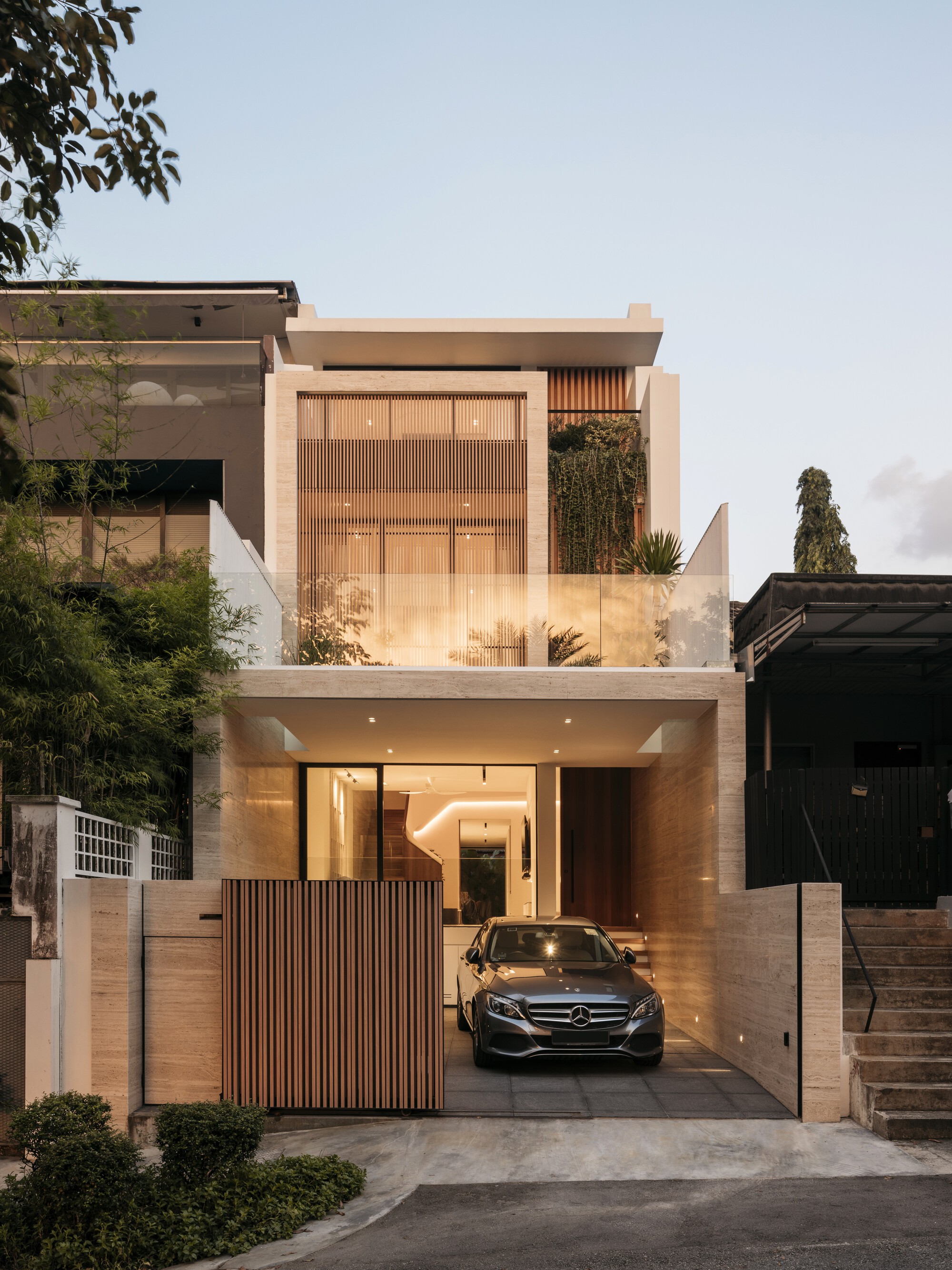
House of Dancing Light #architecture Location: Singapore Architects: Freight Architects Area: 332 m sq. Year: 2023 Photographs: Studio Periphery Lead Architects: Kee Jing Zhi The House of Dancing Light is not merely a built form; it is a living expression of architectural poetry, where light becomes both medium and muse. It celebrates the subtle beauty of illumination, the fluidity of movement, and the atmospheric richness shaped by shadow and stillness. At first glance, the front façade presents as a minimalist canvas: clean travertine planes and delicately proportioned timber screens. Beneath this restraint lies a responsive system, a custom operable timber screen that functions as a dynamic climatic skin. Regulating privacy, ventilation, and daylight, it performs as both environmental mediator and architectural expression, defining the building's identity within its tropical context. Crossing the threshold, the architectural language shifts. Where the exterior is ruled by orthogonal clarity, the interior reveals a softer, sculptural fluidity. At its heart, a sinuous floating staircase, seemingly weightless, echoes the motion of a ribbon in flight. This lyrical gesture contrasts with the strict geometry of the façade, introducing a spatial choreography that balances movement and stillness. More than a circulation element, the staircase becomes a sculptural anchor, capturing light as it shifts throughout the day. Much like a dancer trailing a ribbon, it accentuates the passing of time, casting ever-changing shadows across walls while subtly delineating the living and kitchen zones with moments of visual pause and drama. A skylight above introduces a secondary rhythm. As the sun arcs across the sky, the house transforms: morning light glides across warm oak floors, and afternoon shadows animate pale stone surfaces, casting bold, geometric patterns that stretch across the curved interior walls. This interplay turns surfaces into living canvases, animated by time and light. Interiors are intentionally pared back, allowing light, material, and texture to take precedence. In its entirety, the House of Dancing Light demonstrates a refined approach to contemporary tropical architecture: a home attuned to its environment, materially restrained, and deeply poetic in its expression. It is a home where light is not simply illumination, but experience.
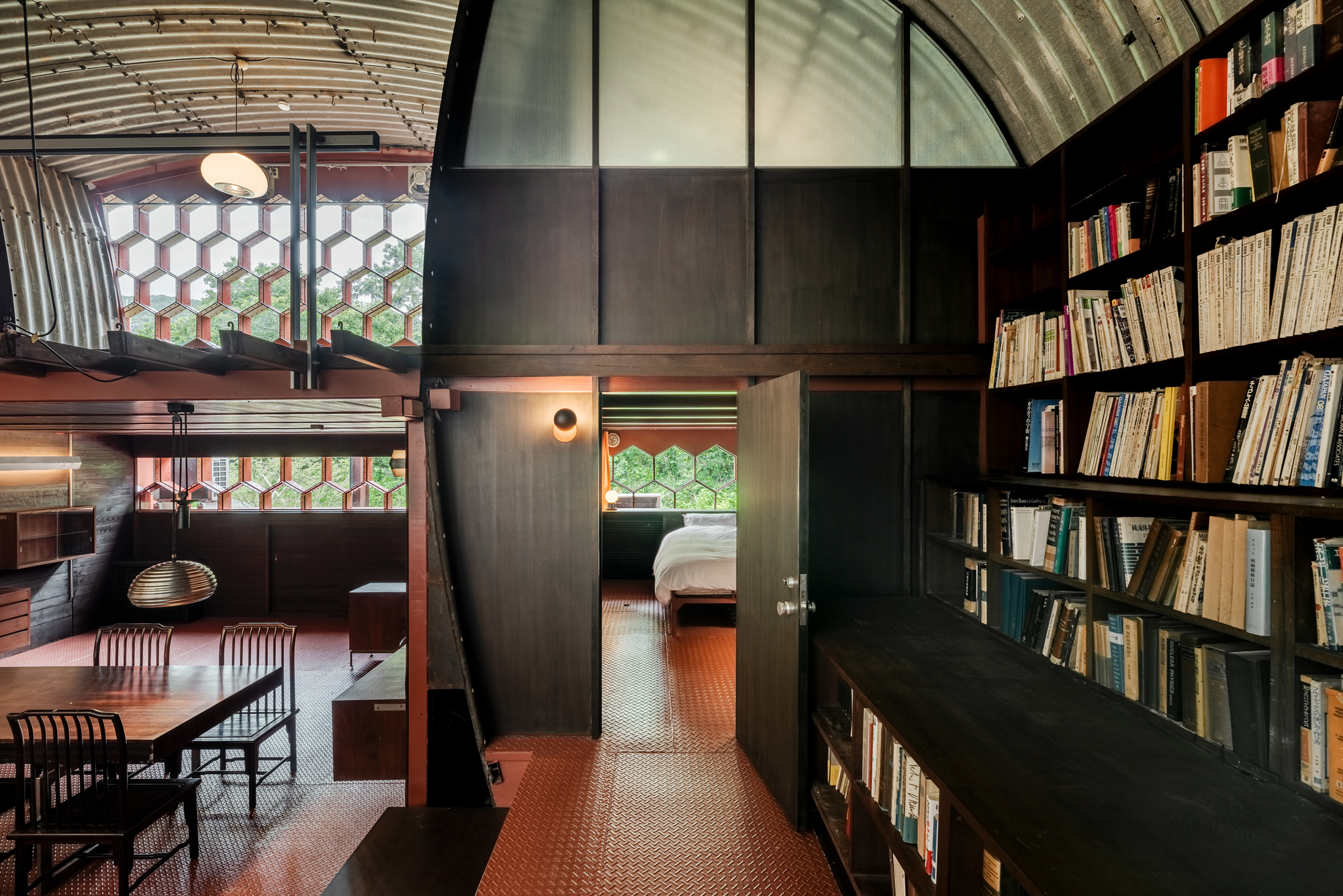
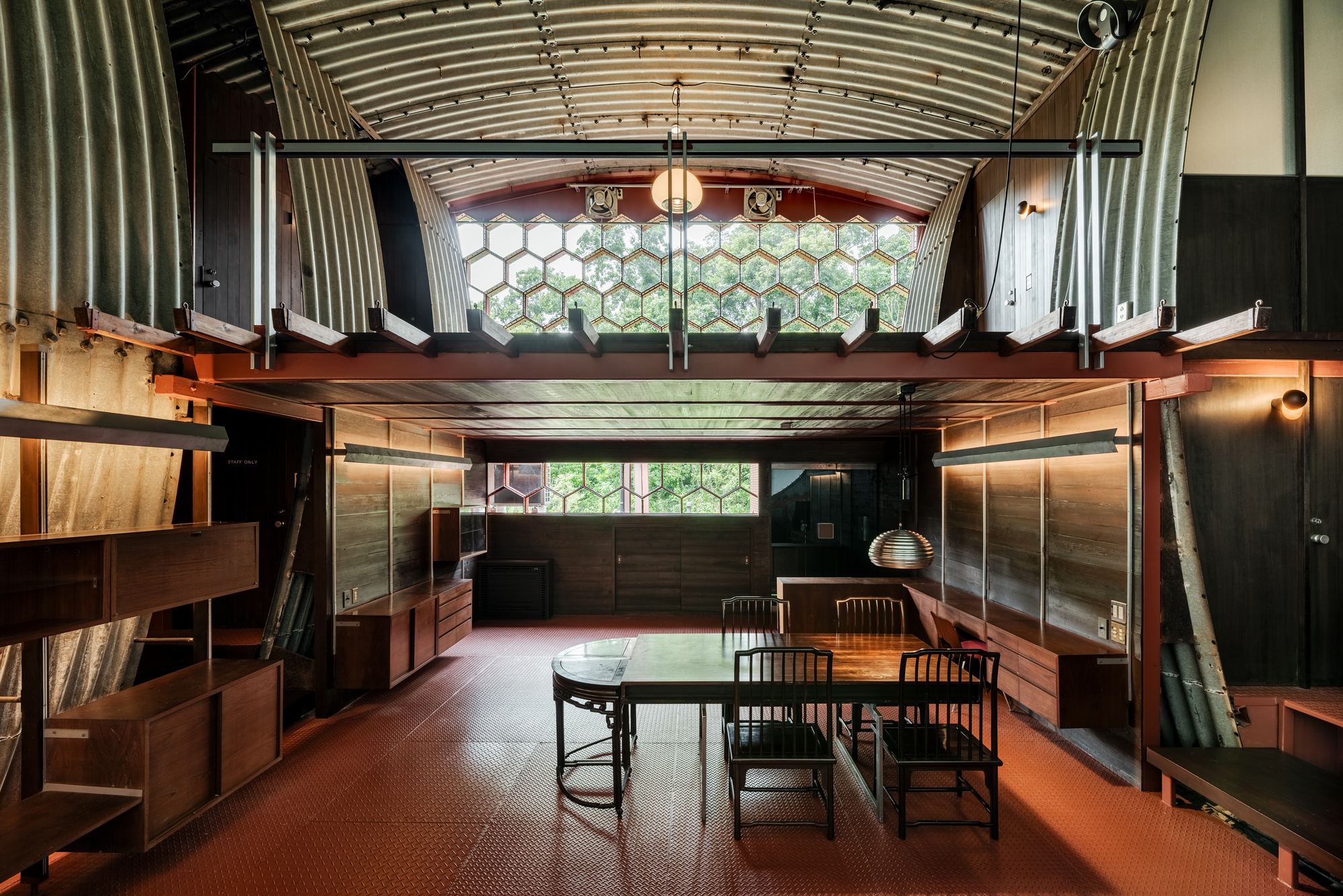
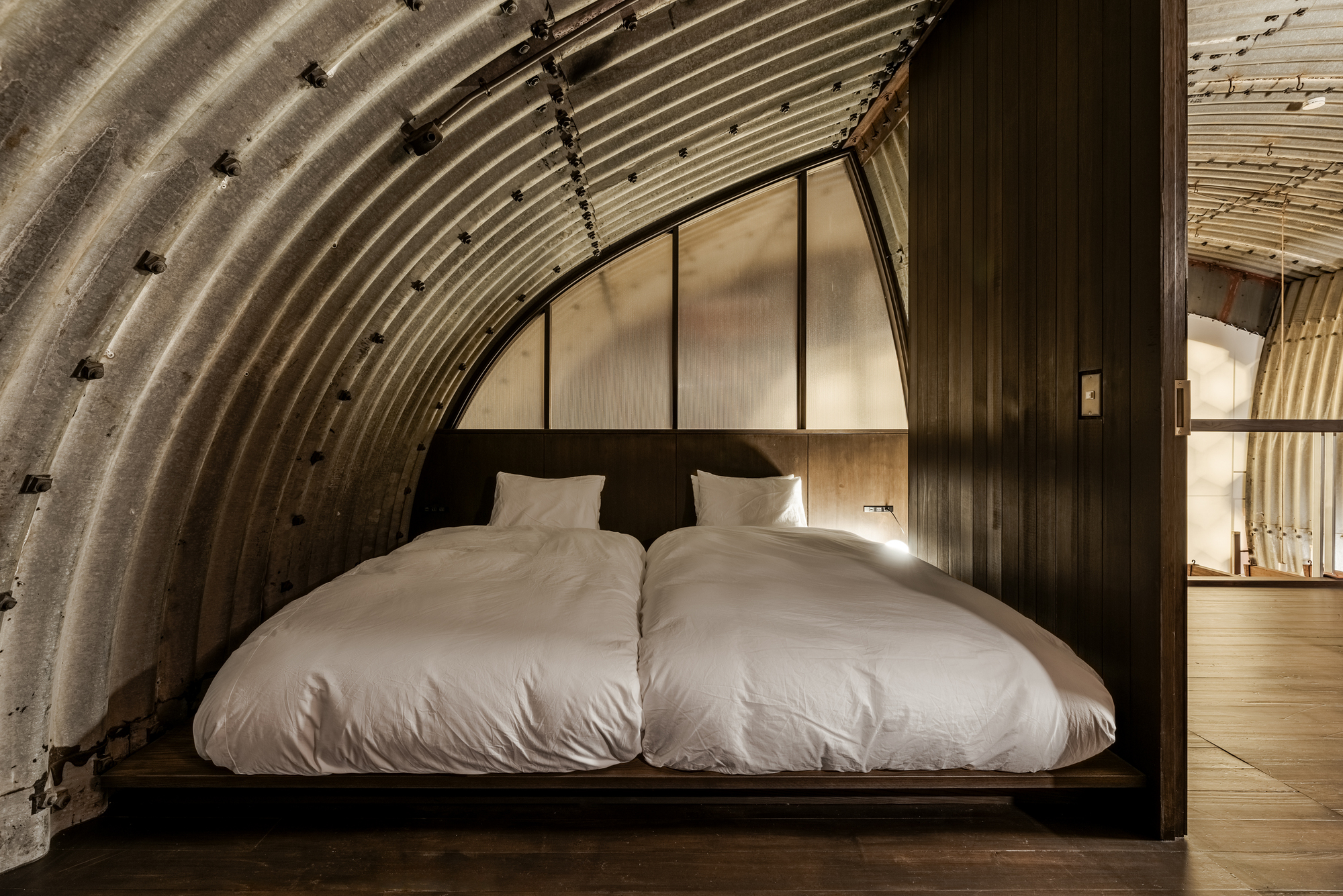
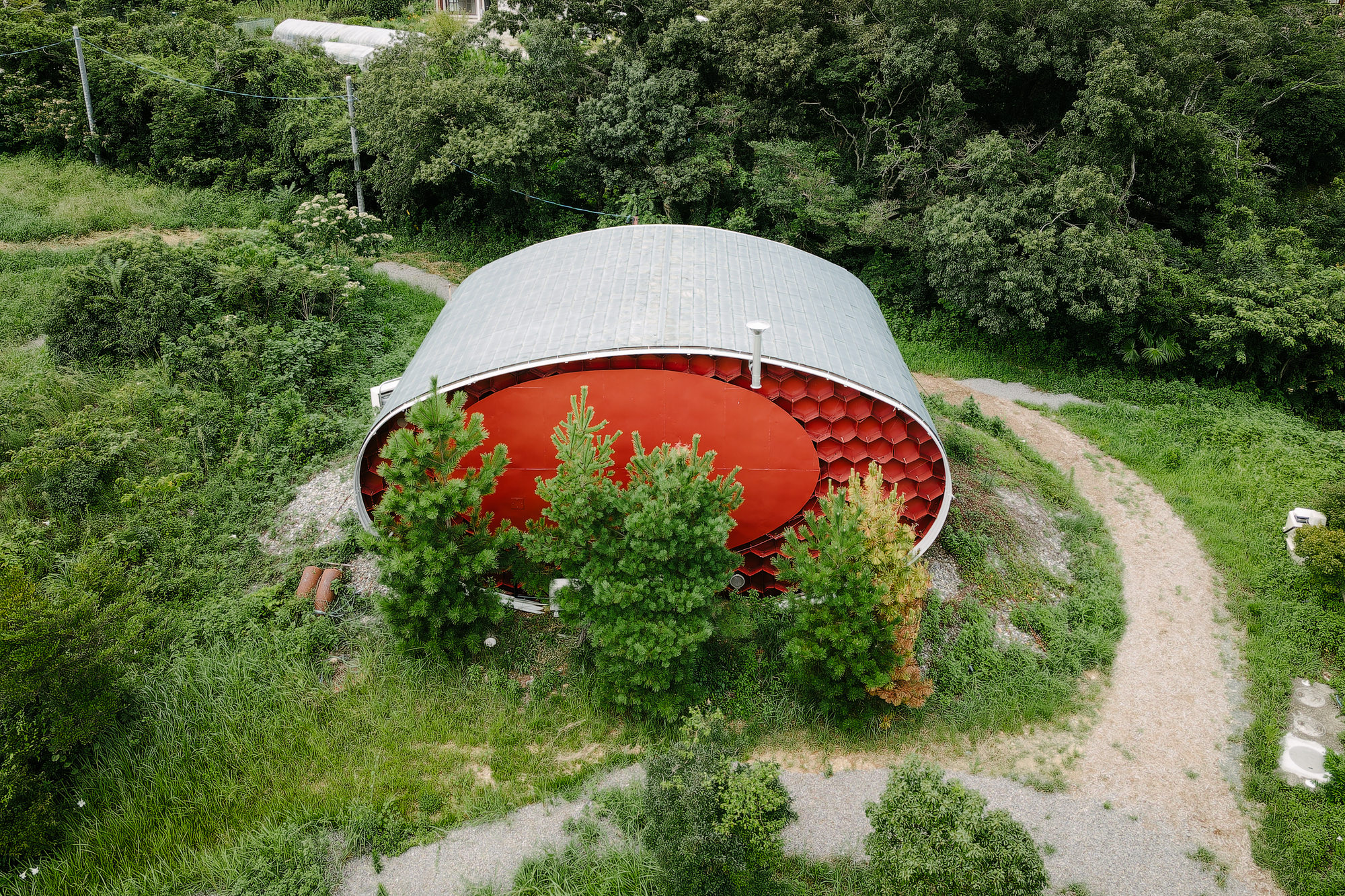
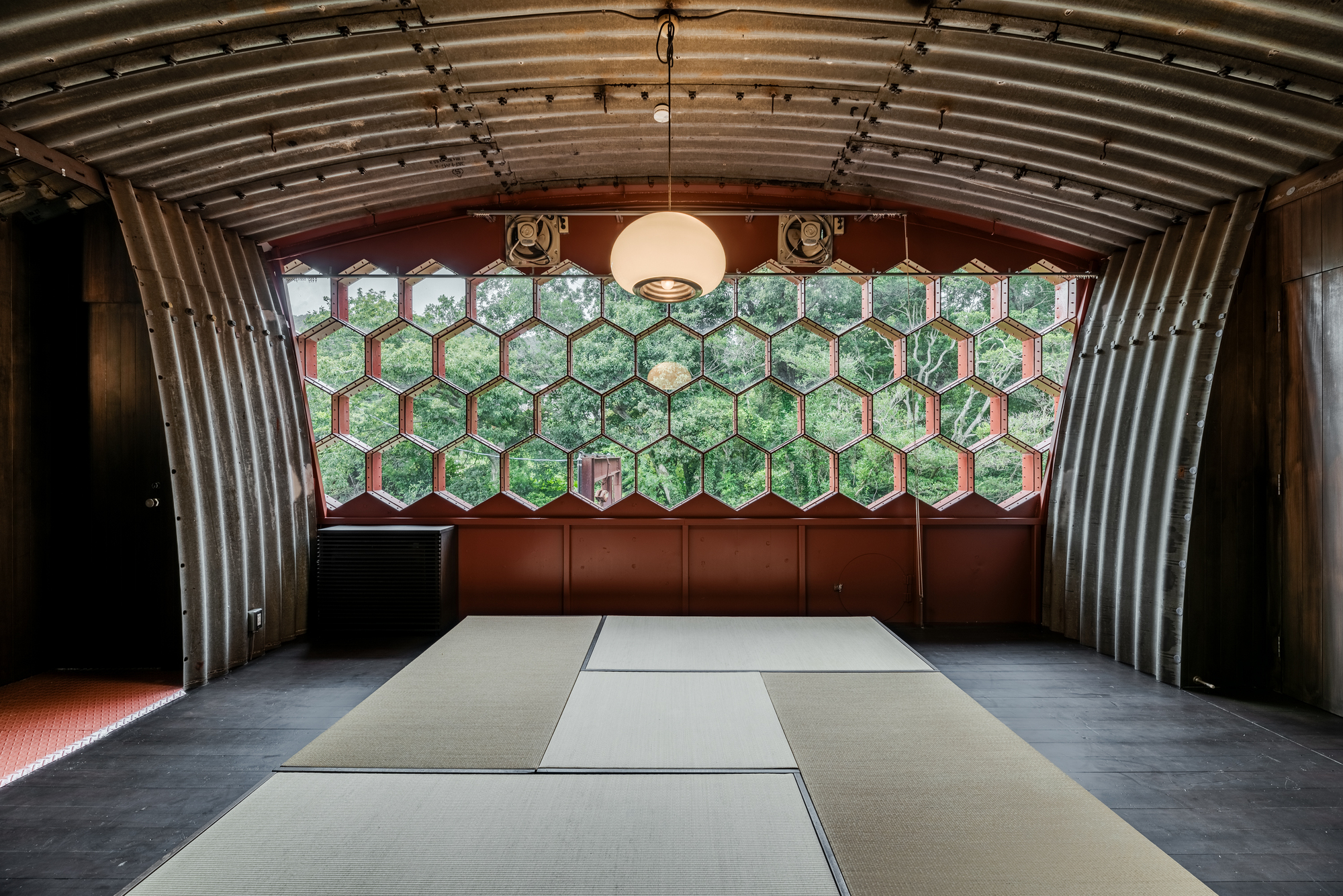
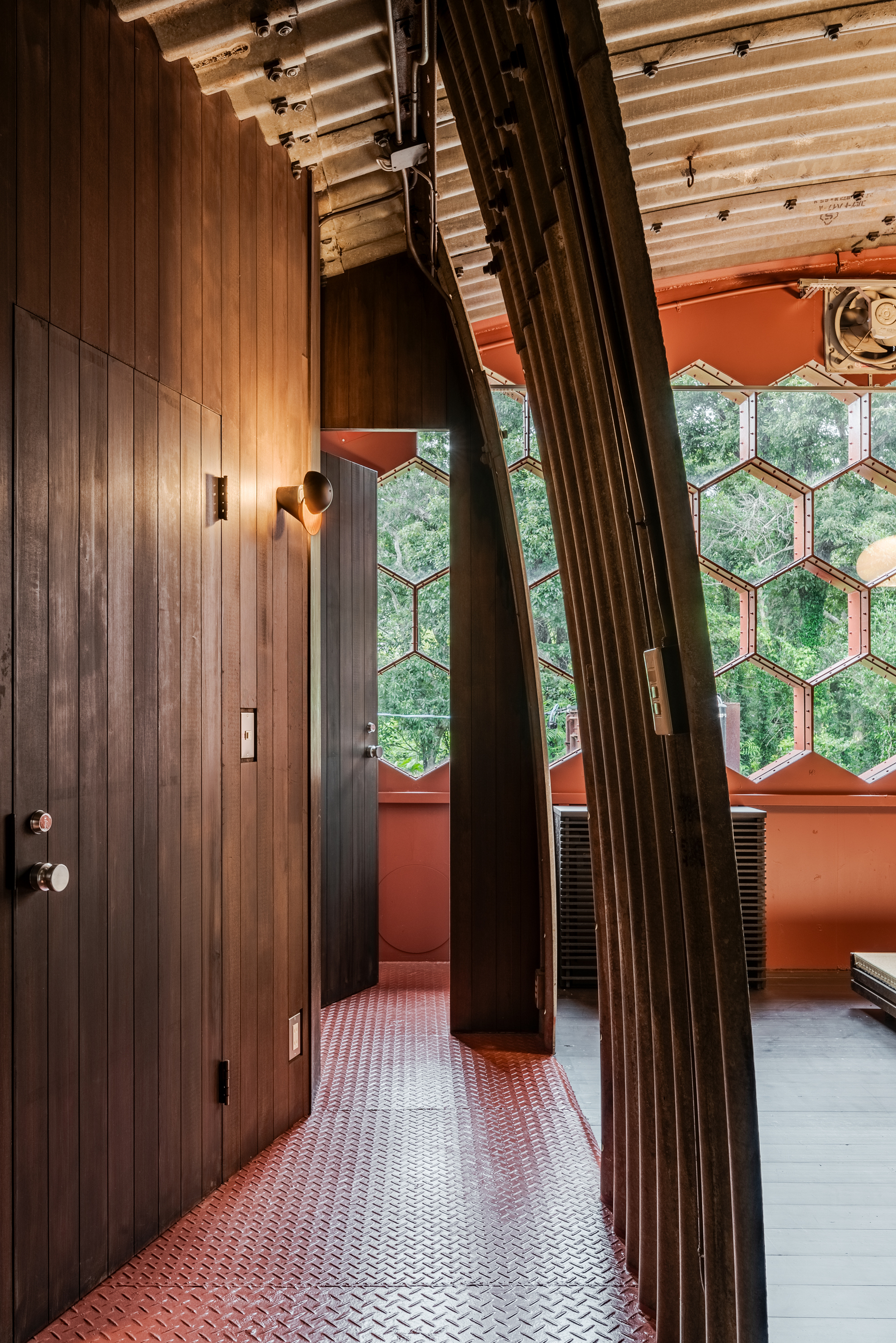
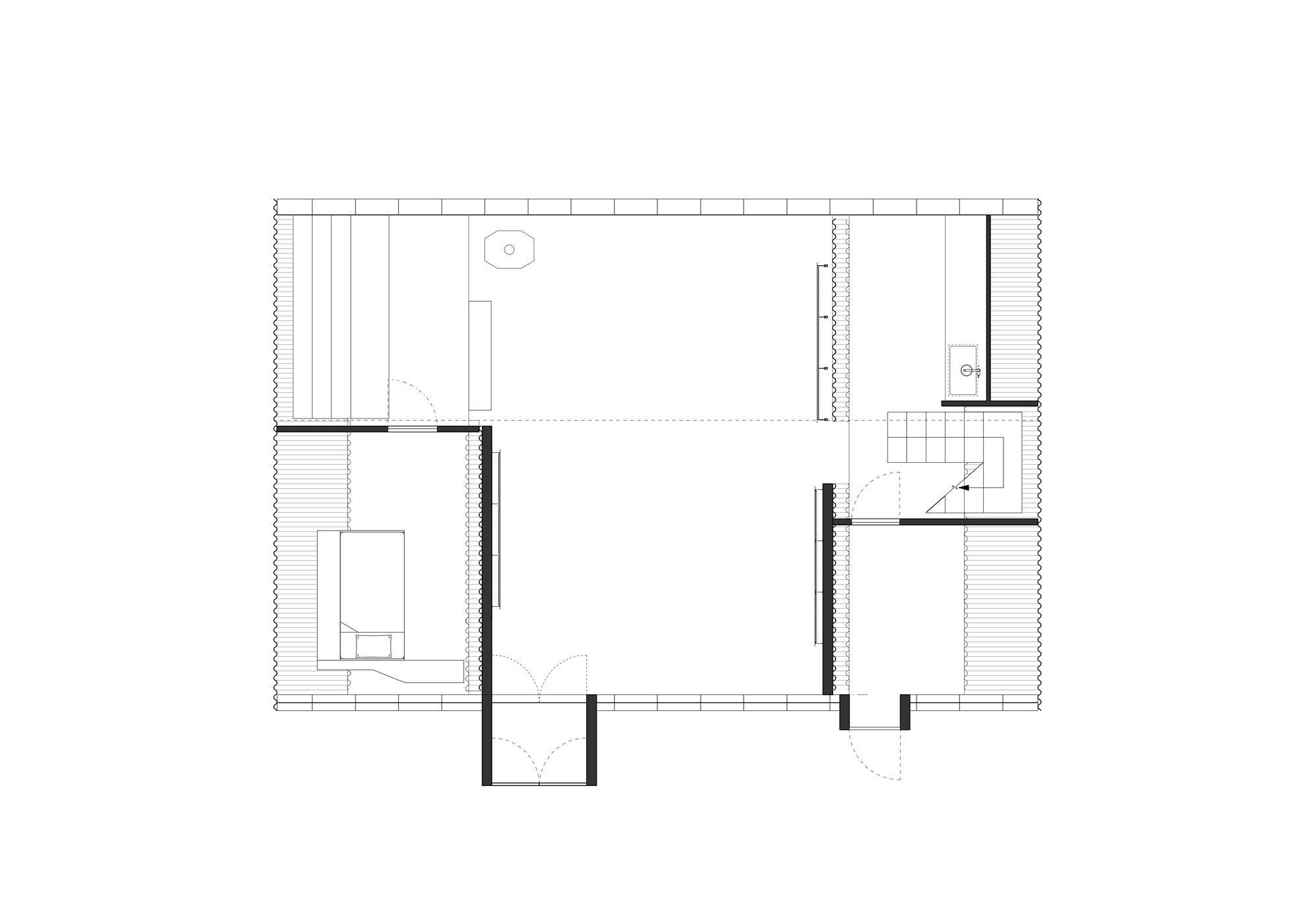
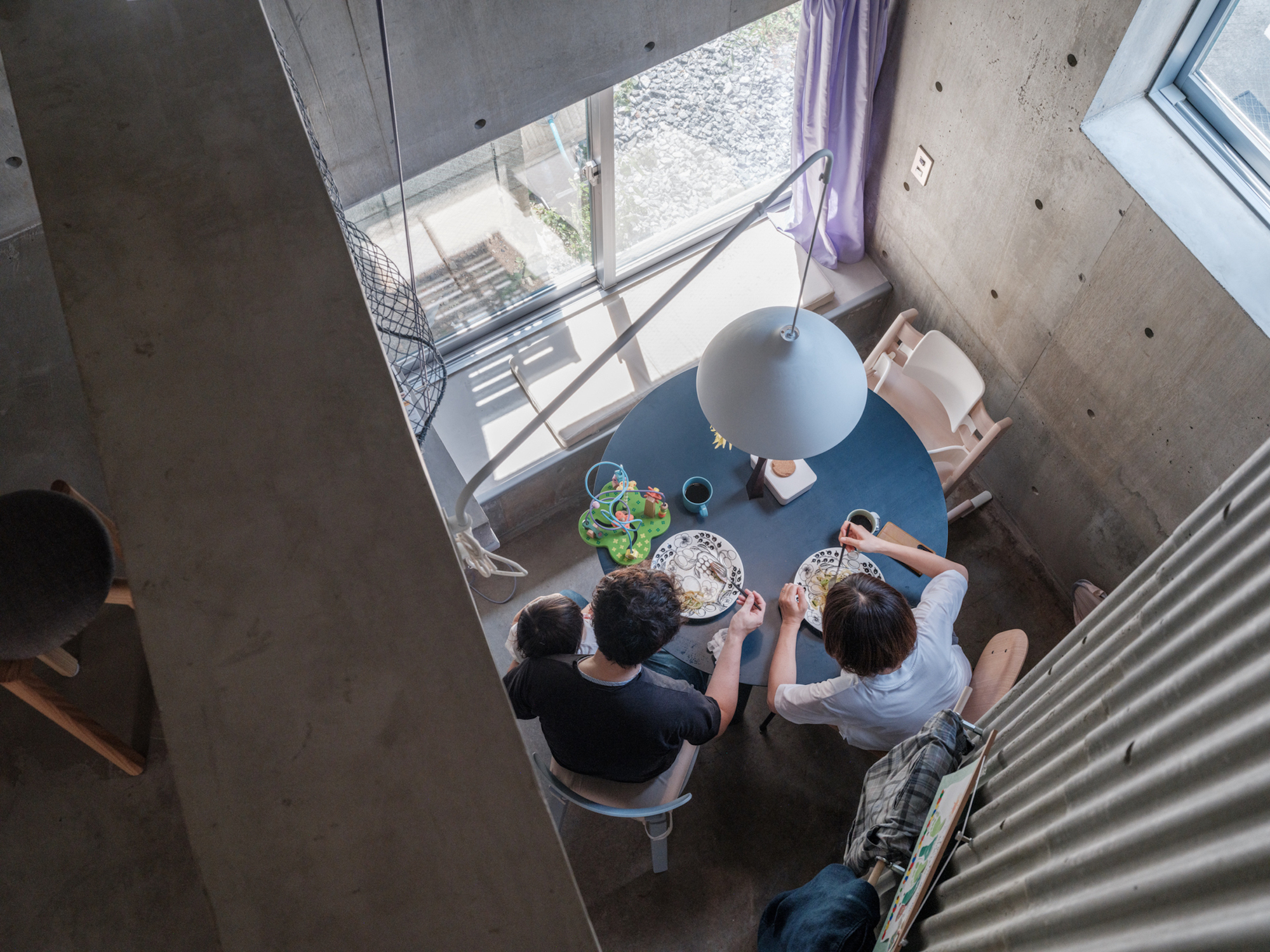
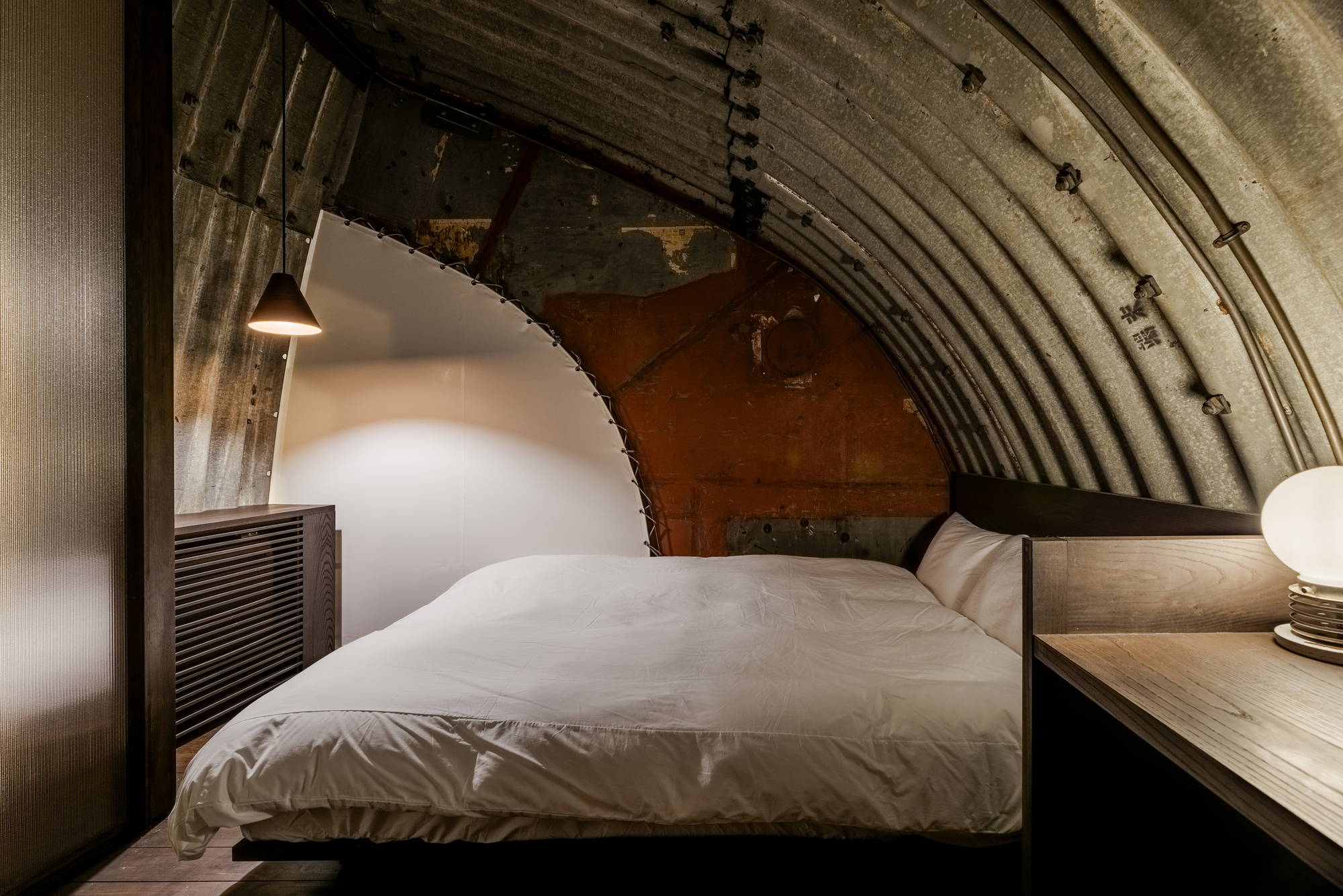
Corrugated House #architecture Location: Japan Architects: monotrum Area: 134 m² Year: 2023 Photographs: Yoshiro Masuda Hotel in renovated house made of corrugated pipes. The project is to renovate a structure made of corrugated pipe, a civil engineering material, into an accommodation facility. This building was built by Kenji Kawai, a facility designer, as his own residence in 1965. It has been selected by DOCOMOMO as a Modern Movement building in Japan. In renovating the building, we sought to preserve it not as a static cultural asset but as a place where visitors can experience the architecture through the experience of staying overnight. This building was constructed as a house but was set up as an open one-room space with minimal components: a tunnel-like space made of corrugated pipes, walls to seal the two ends, and a floor between them. There were no separate rooms, and even the bathrooms and toilets had no partition walls. For the purpose of utilizing the building as accommodation, it was necessary to create separate spaces for guest rooms and sanitary facilities. Therefore, walls were constructed to fill the gaps between the structural elements, ensuring the provision of independent spaces. The new walls were planned to minimize the number of walls to be built and make the most of the existing elements. The newly constructed walls are finished with dark brown wooden paneling to match the existing flooring specification. Furniture such as beds, desks, and floor-mounted air conditioner covers are also made of dark brown-stained wood to adjust the tone of the space. The contrast created by the confrontation between the rough iron material and the calm-colored wood was designed. On the south wall facing the atrium, a large hole (originally intended as a window but sealed off due to excessive brightness) was covered with an oval canvas. Inside the wall, a honeycomb structure is revealed when the canvas is removed, lighting is installed, and a translucent tent fabric is applied in place of the canvas. This revitalized the dormant hole, giving it a new function as a source of illumination.The hole, which had been set up as a light source but had been closed, was updated as a device to obtain light once again. The walls of the guestrooms are partially made of permeable hollow polycarbonate panels so that the light from this iconic wall light can be enjoyed inside the guestrooms as well. The movable shelves on the first floor walls were designed to allow both board and box shelves to be installed while using off-the-shelf shelf posts by custom fabricating brackets. Following this concept, we fabricated a movable bracket light that can be installed using the existing shelf posts. The same galvanized finish as the corrugated pipes were used for the finish. By reinterpreting the elements of the existing architecture and re-constructing it by crossing it with a set-up for a new use, we have preserved the charm of the unique architecture of the corrugated house while renovating it into a usable space with lodging functions. The goal was to contribute to the continued use of this architecture by ensuring that the designed space contributes to an appealing lodging experience.
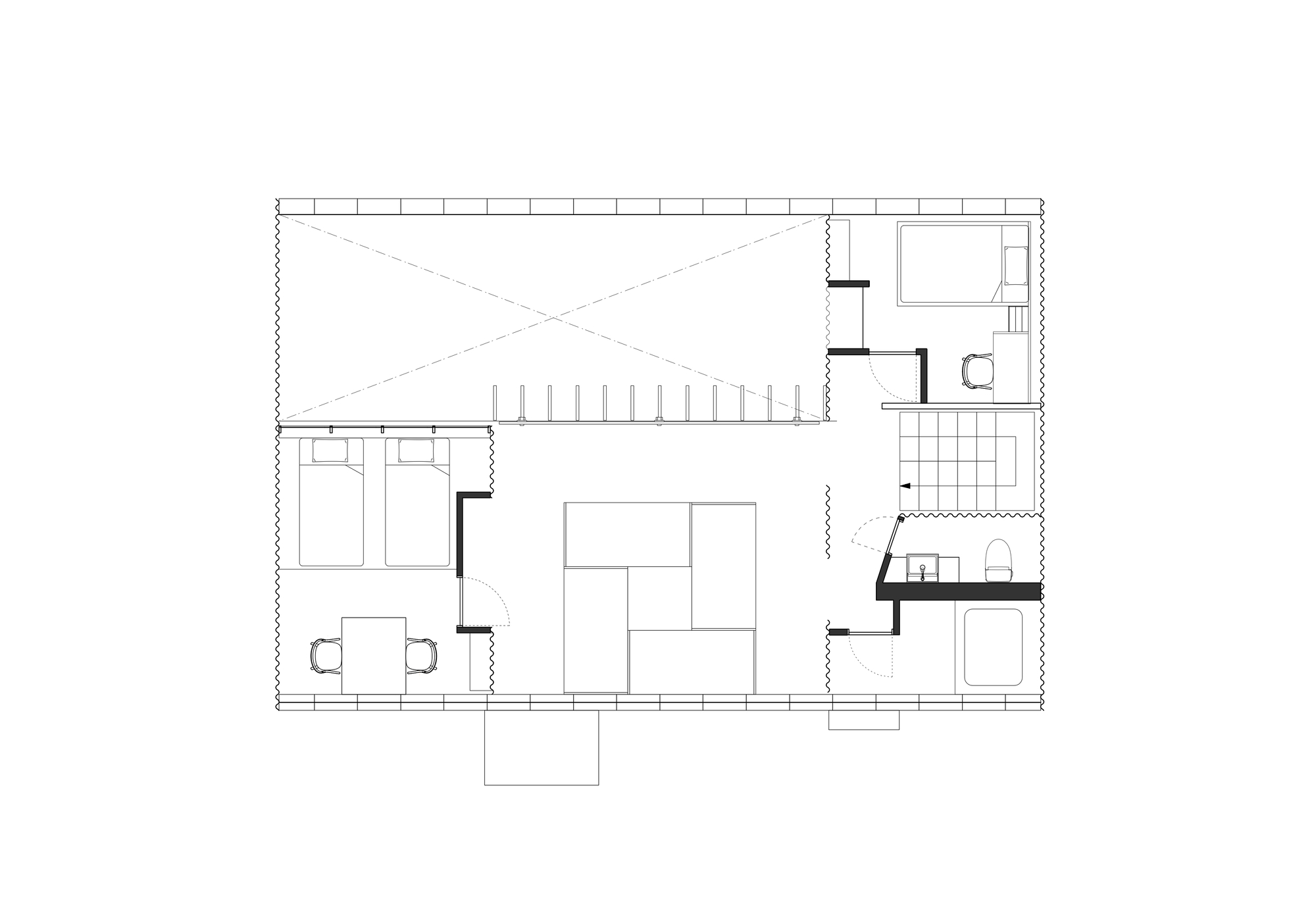
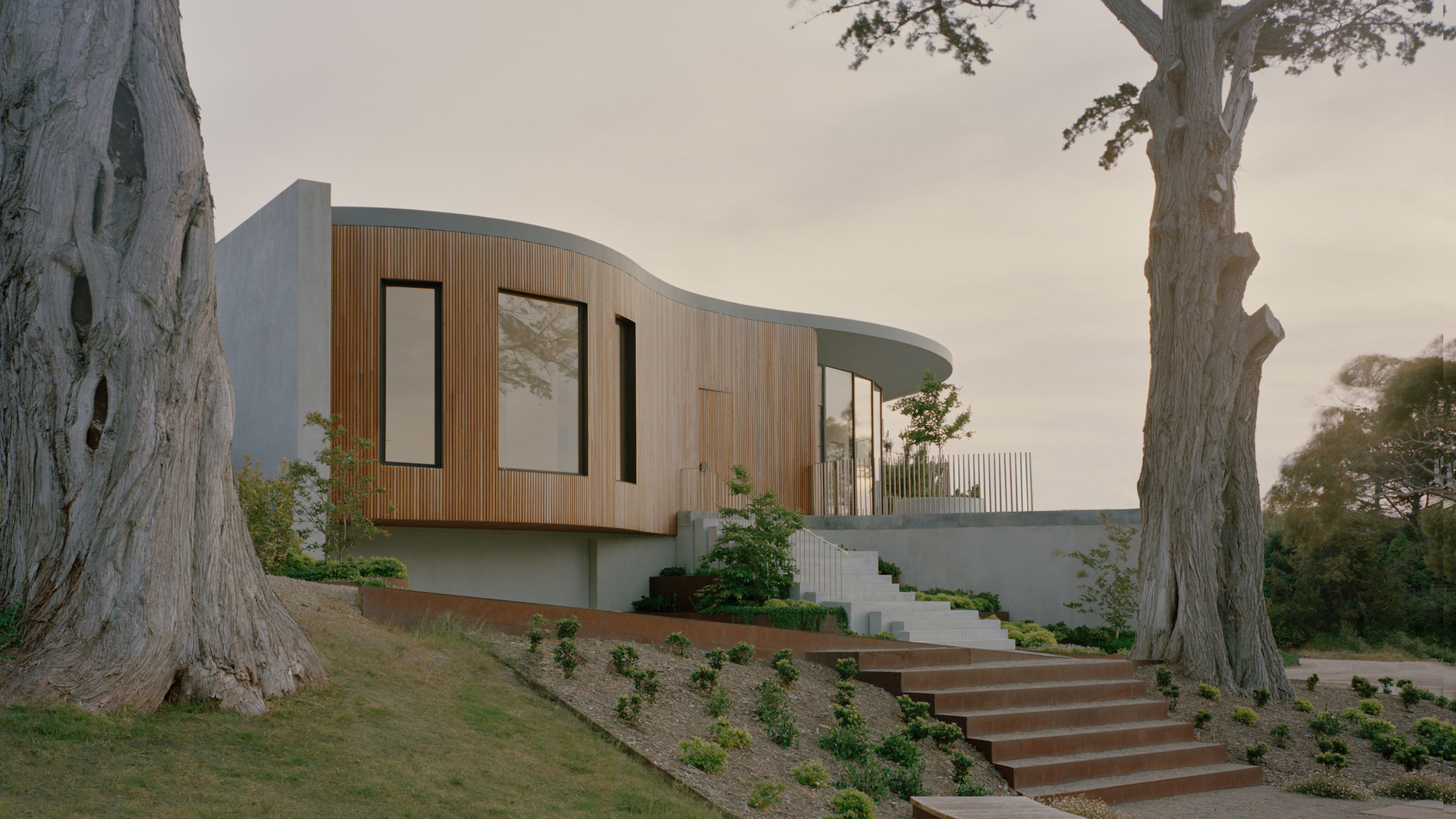
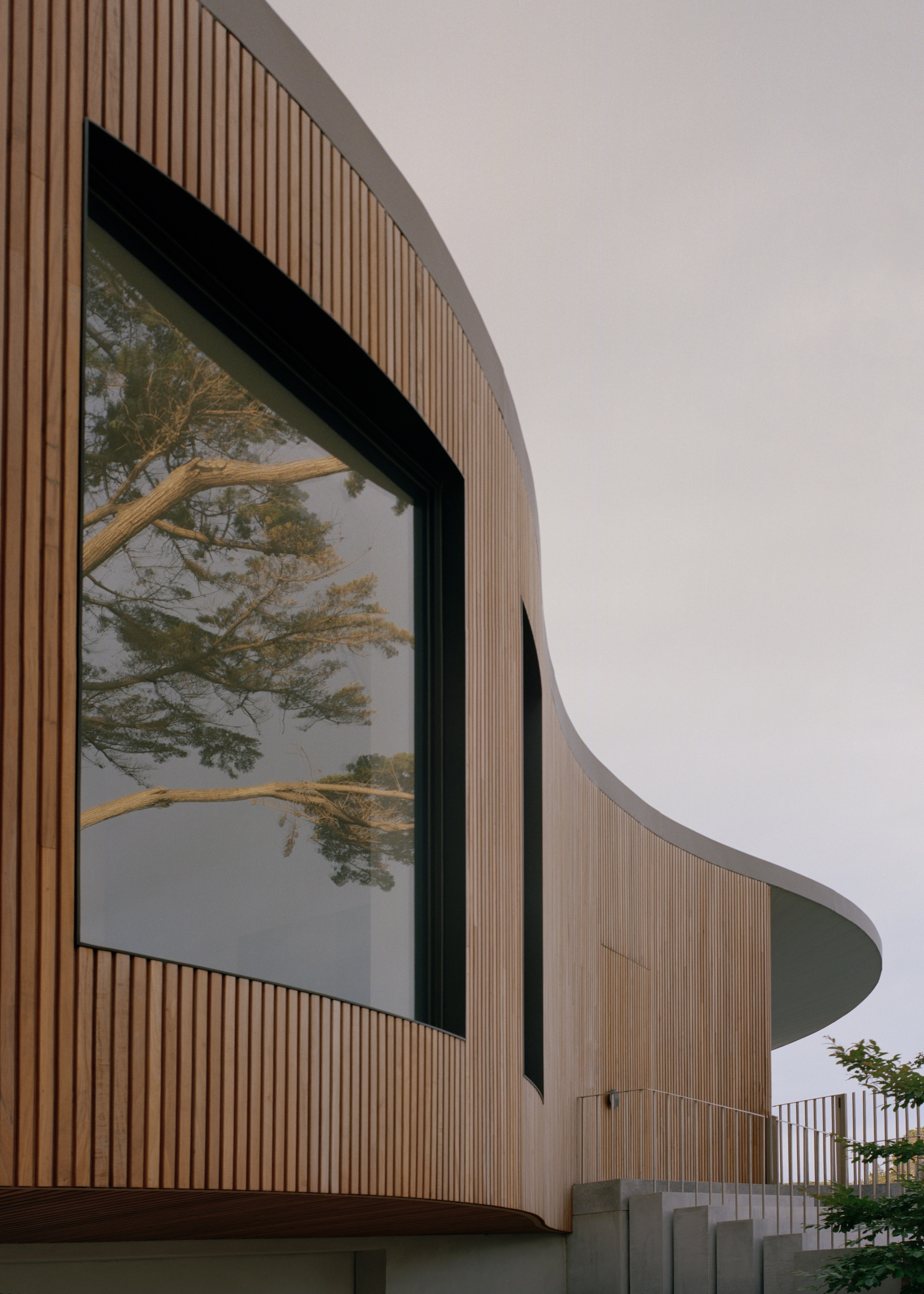
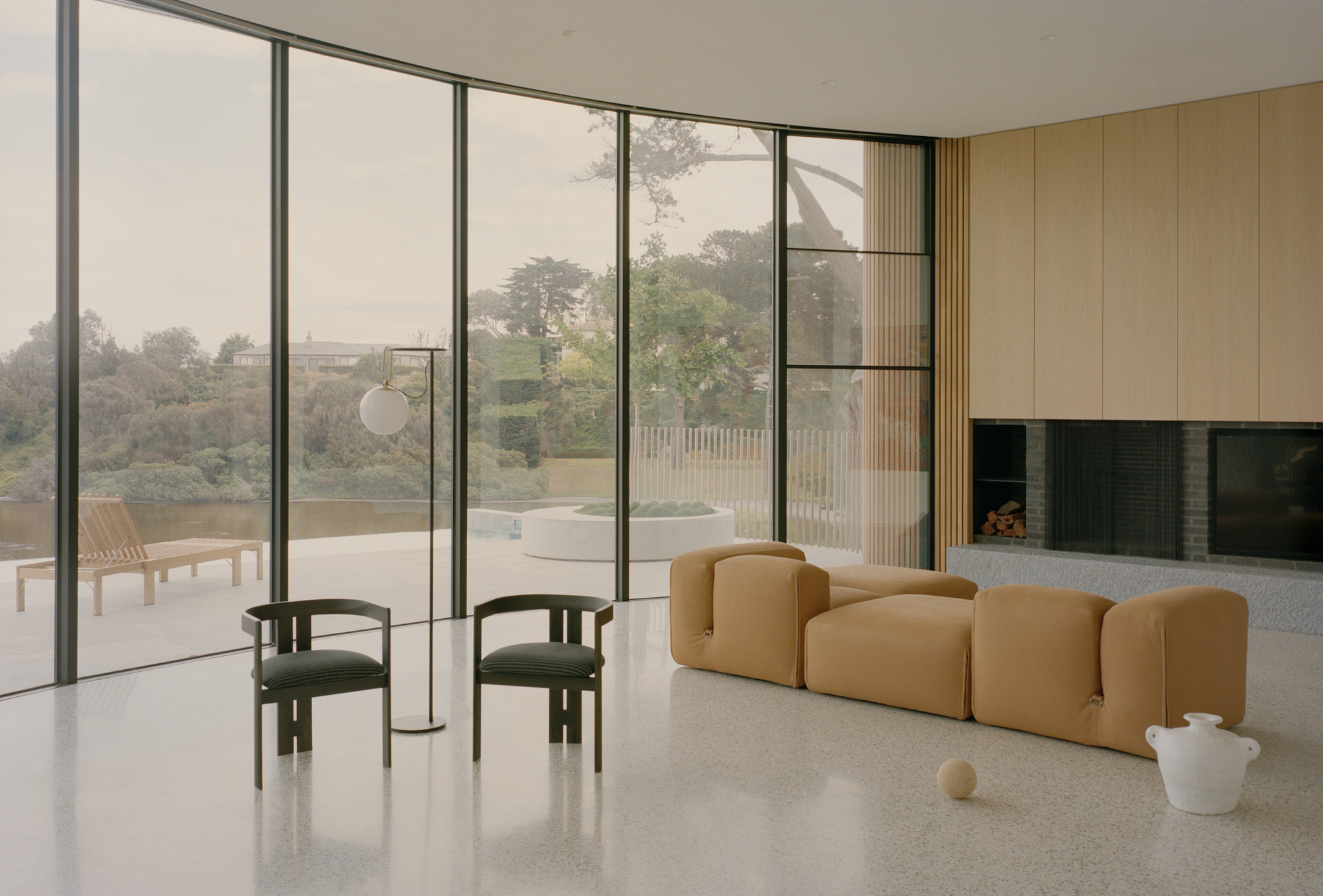
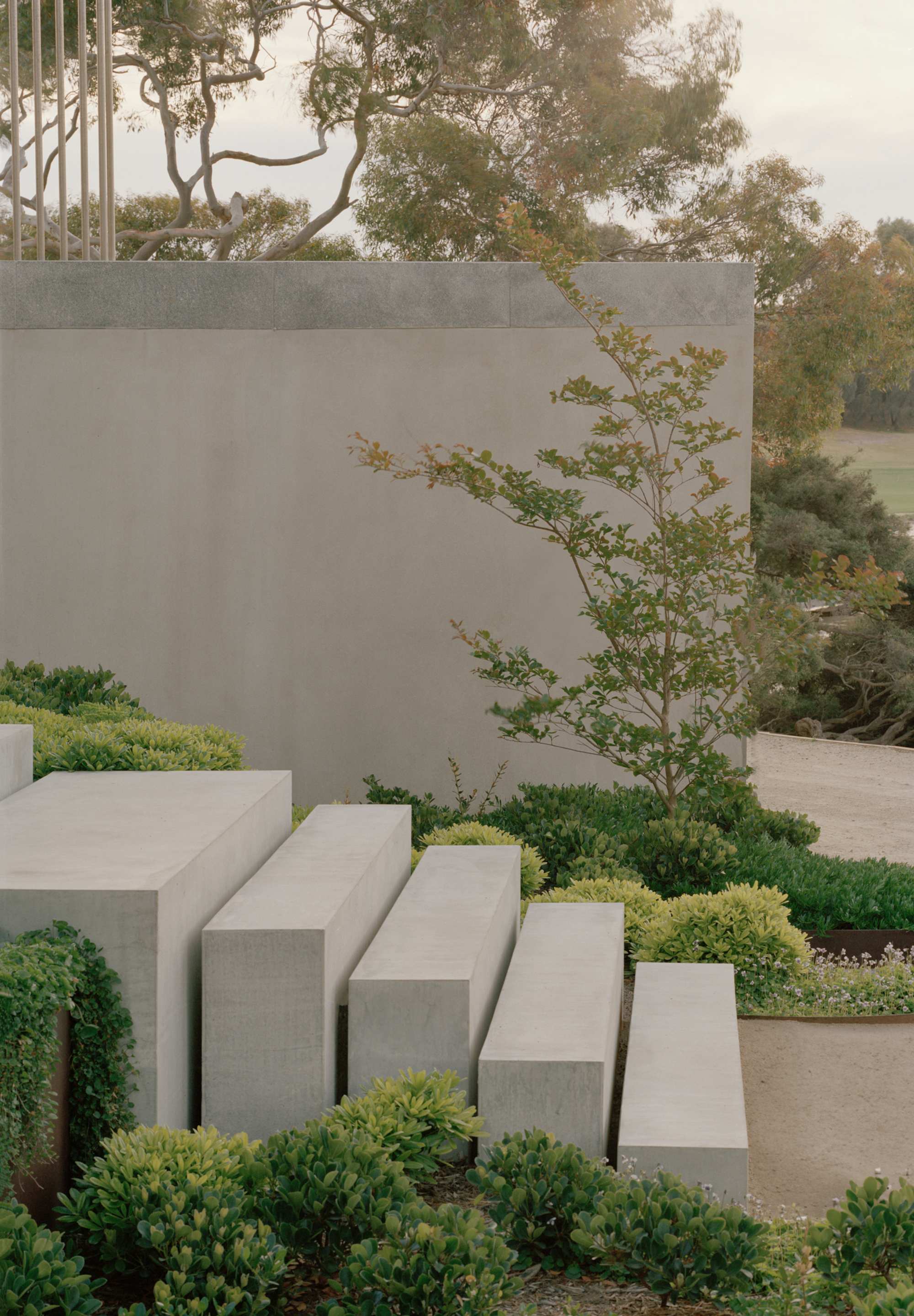
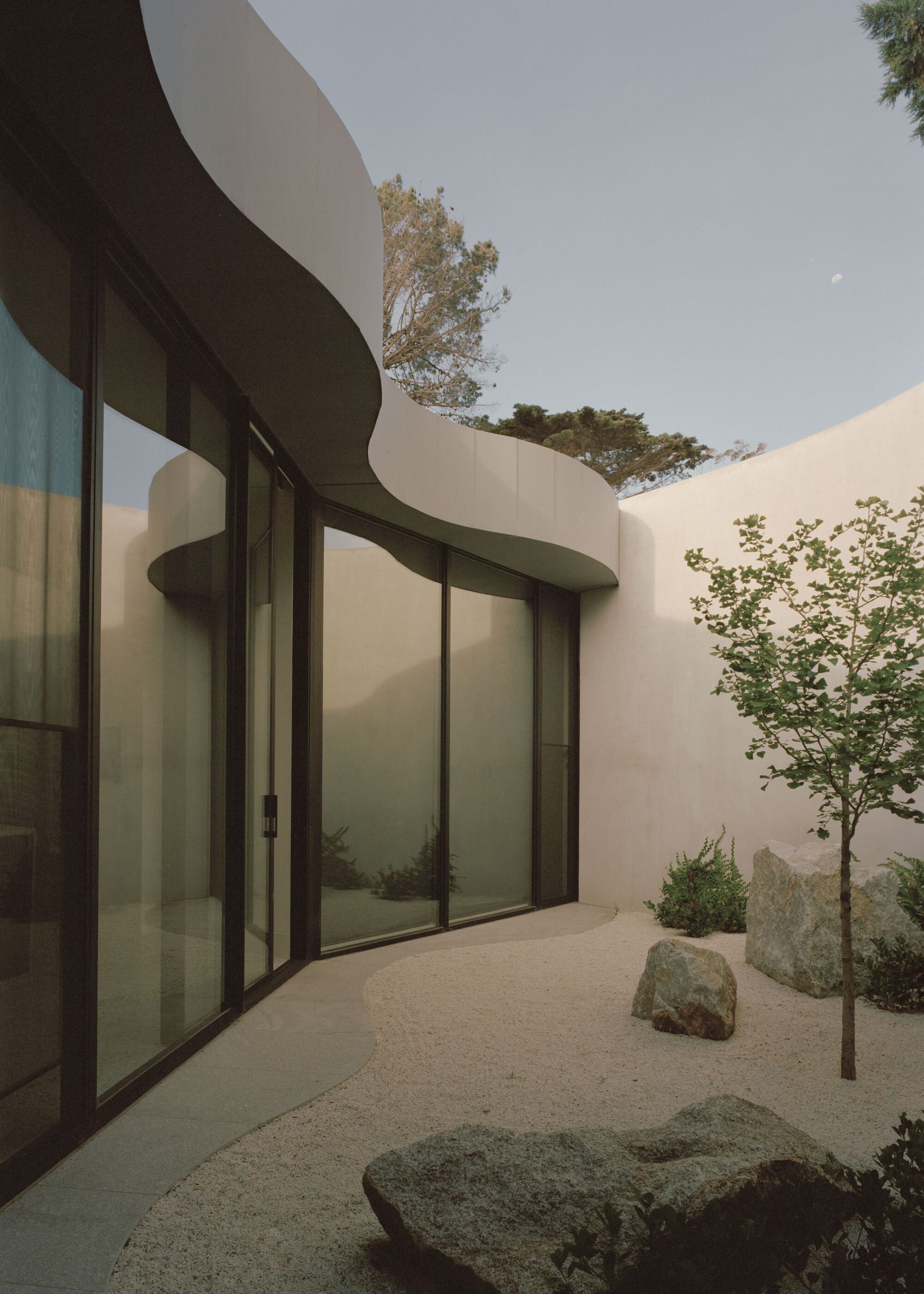
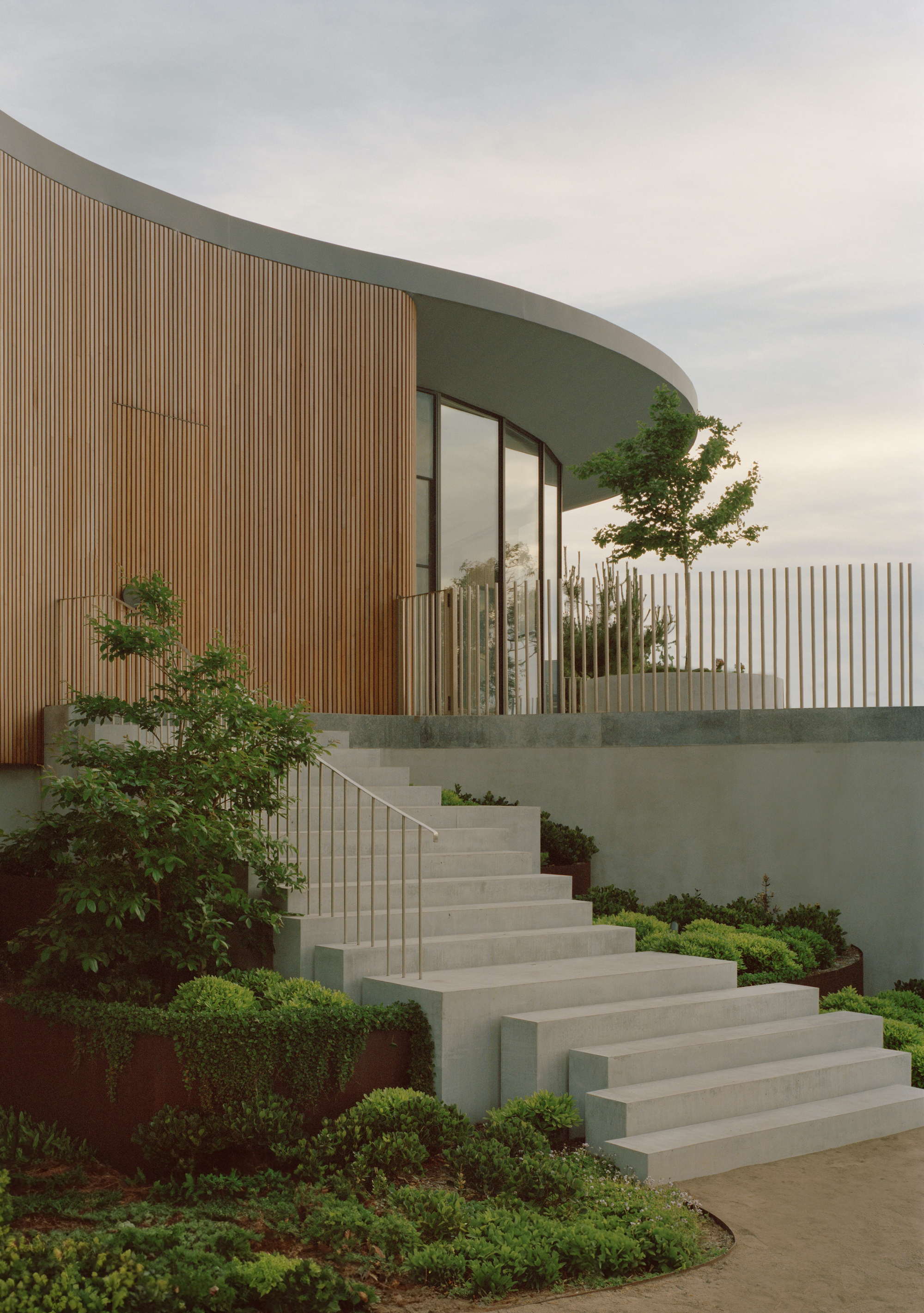
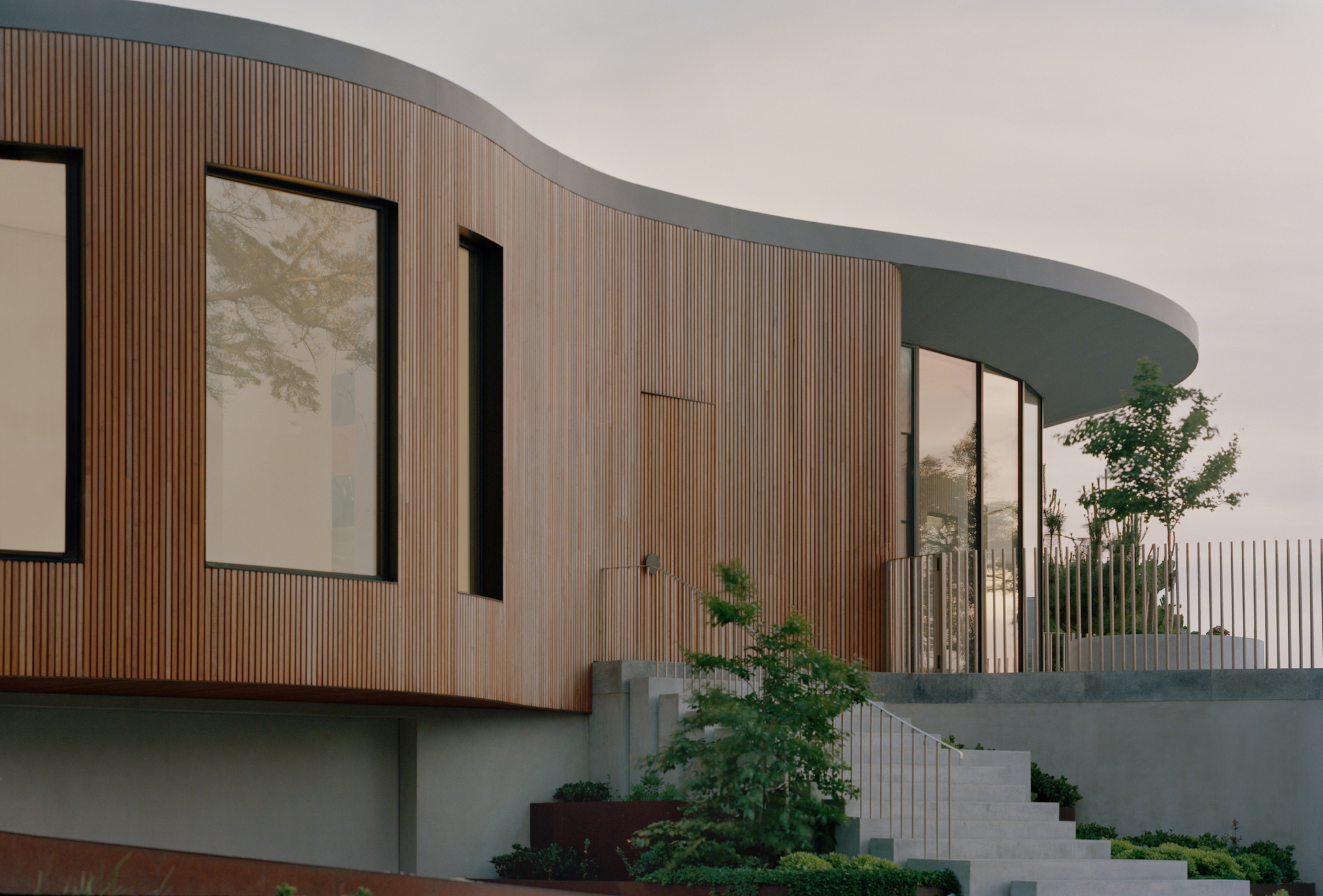
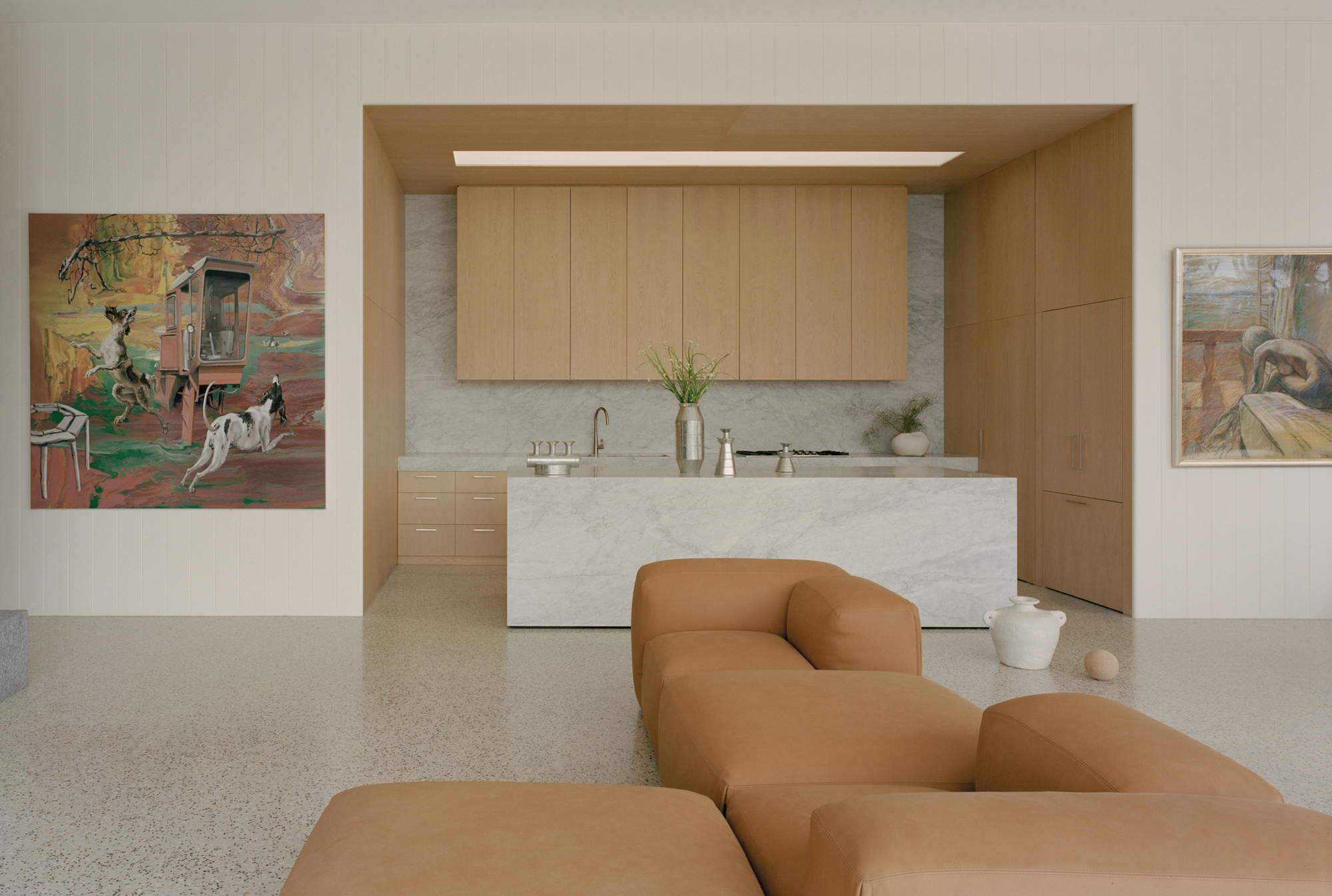
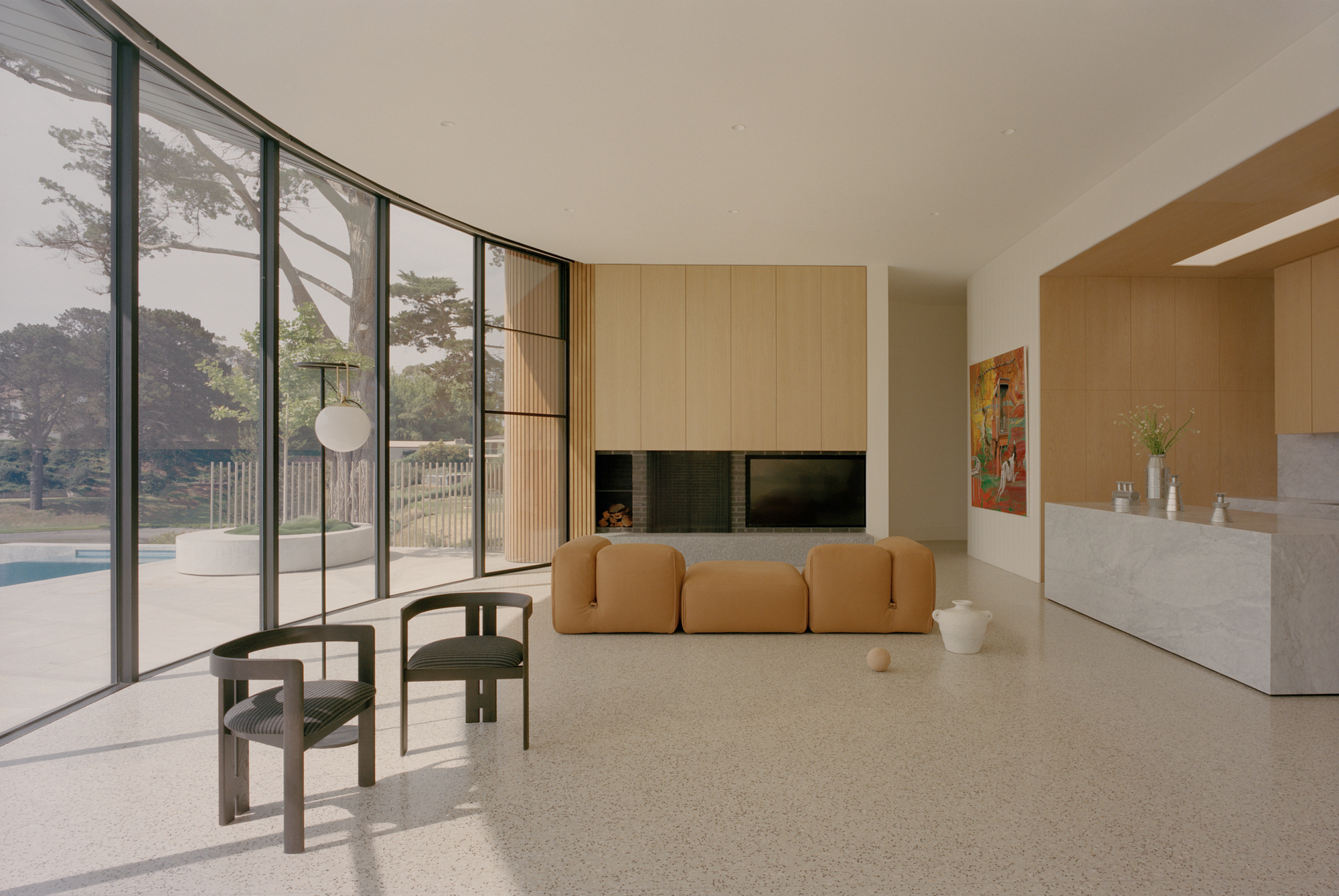
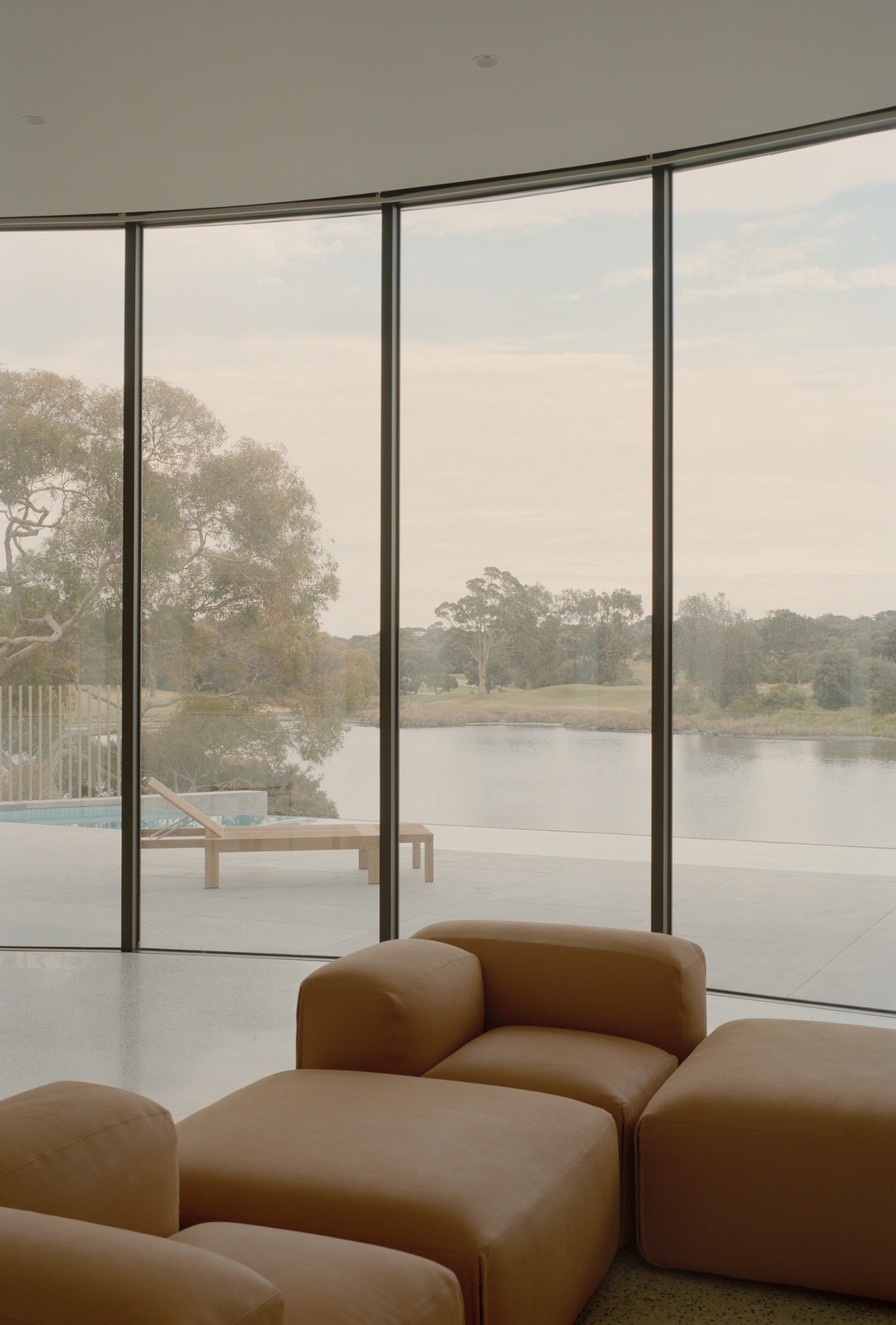
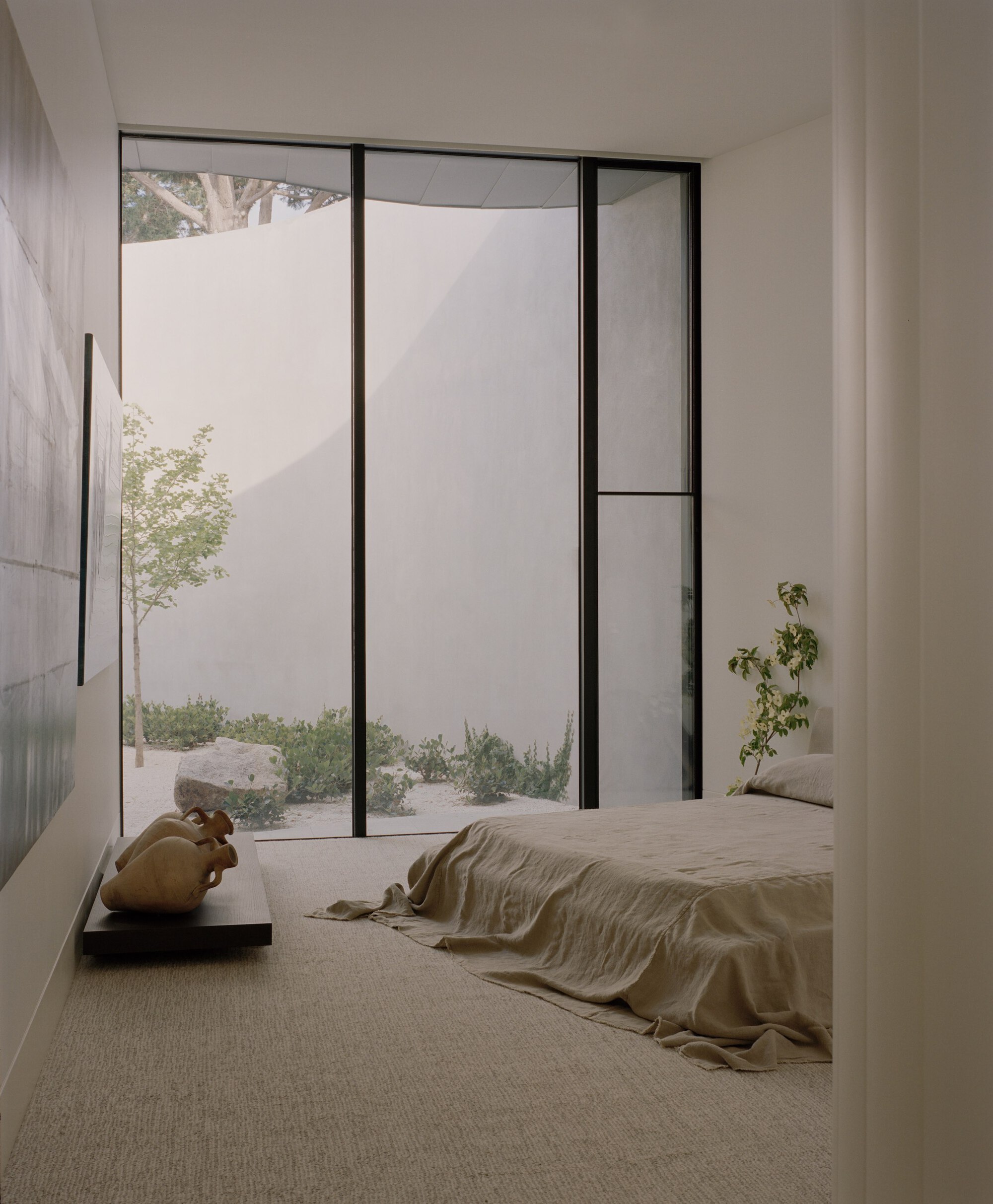
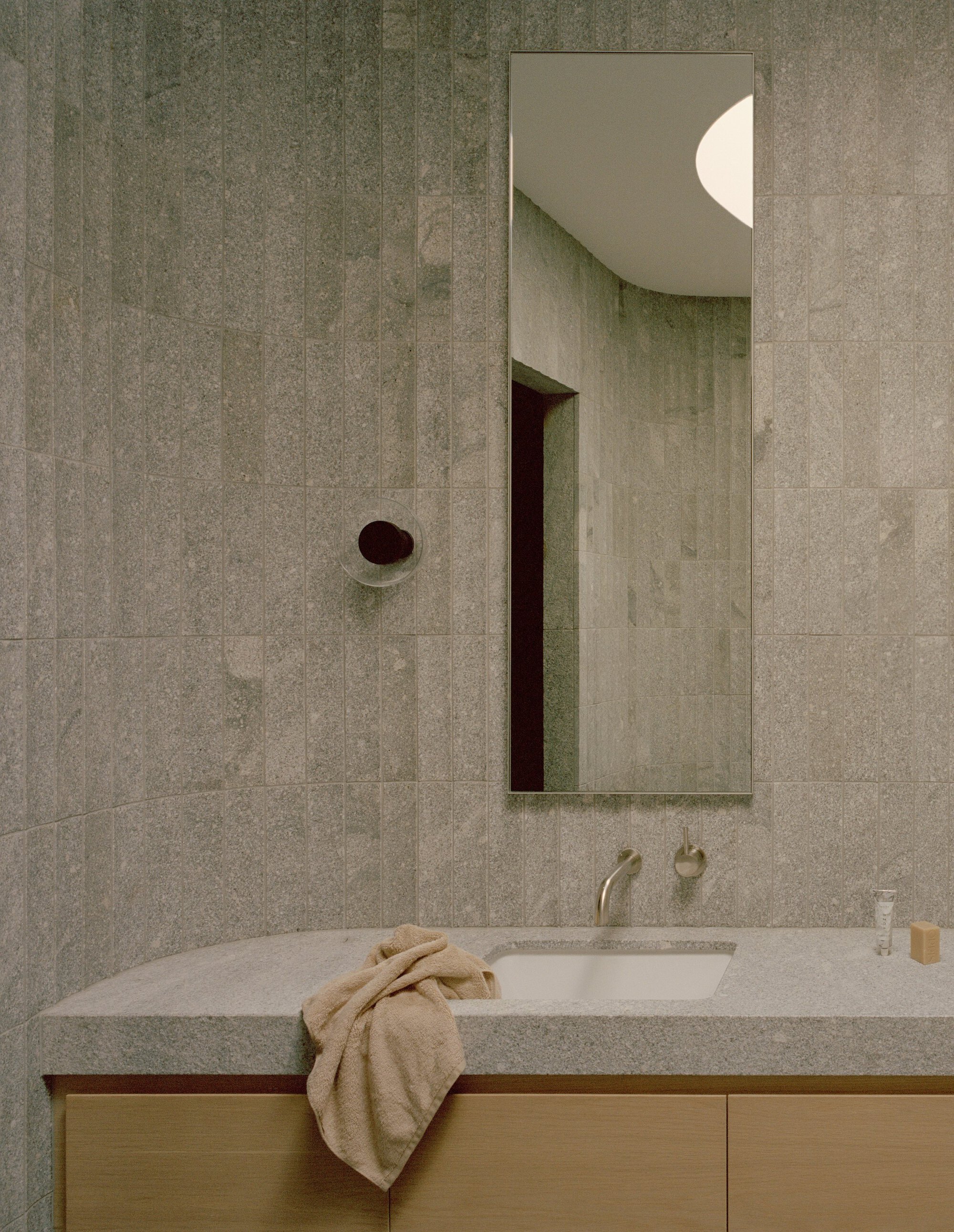
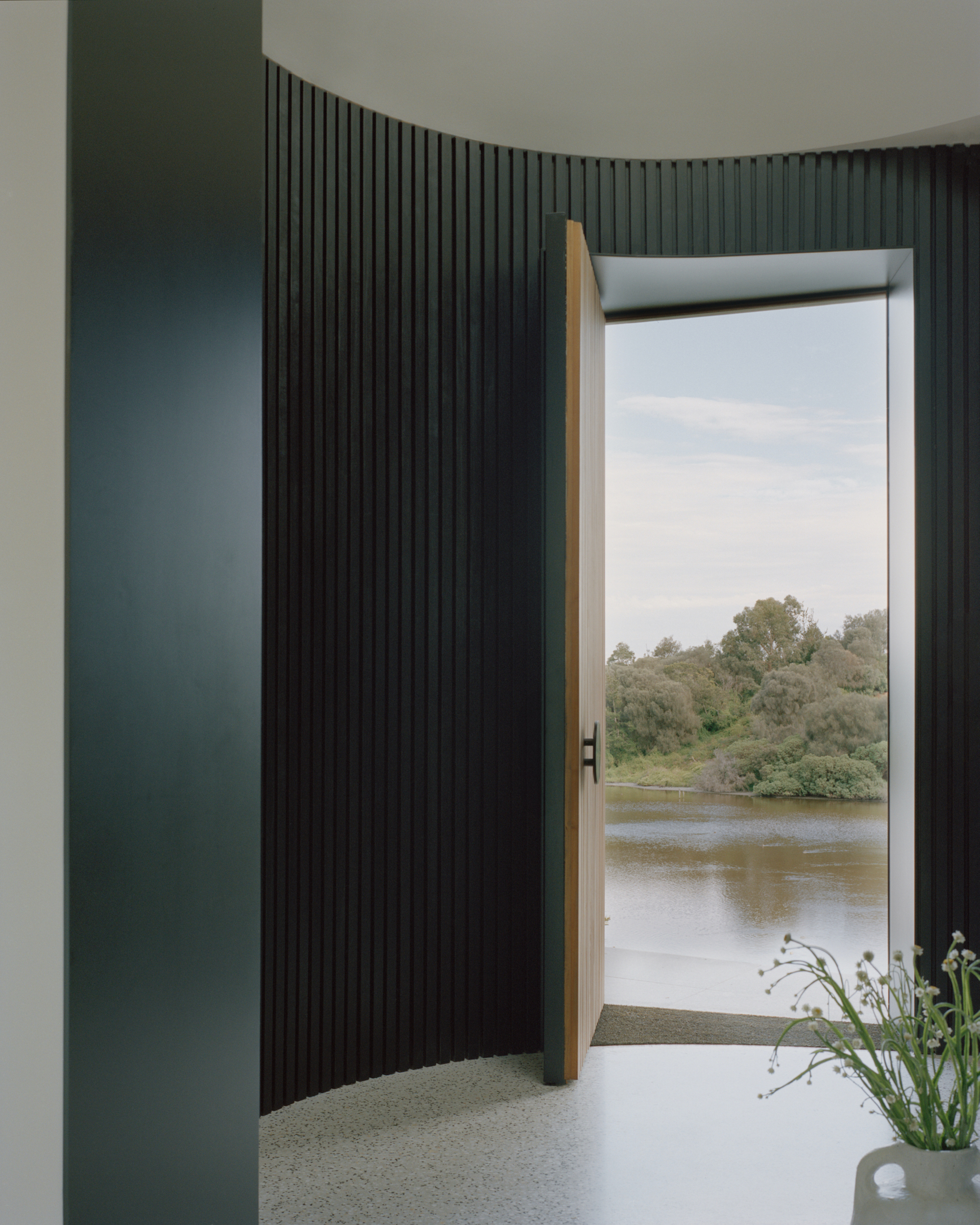
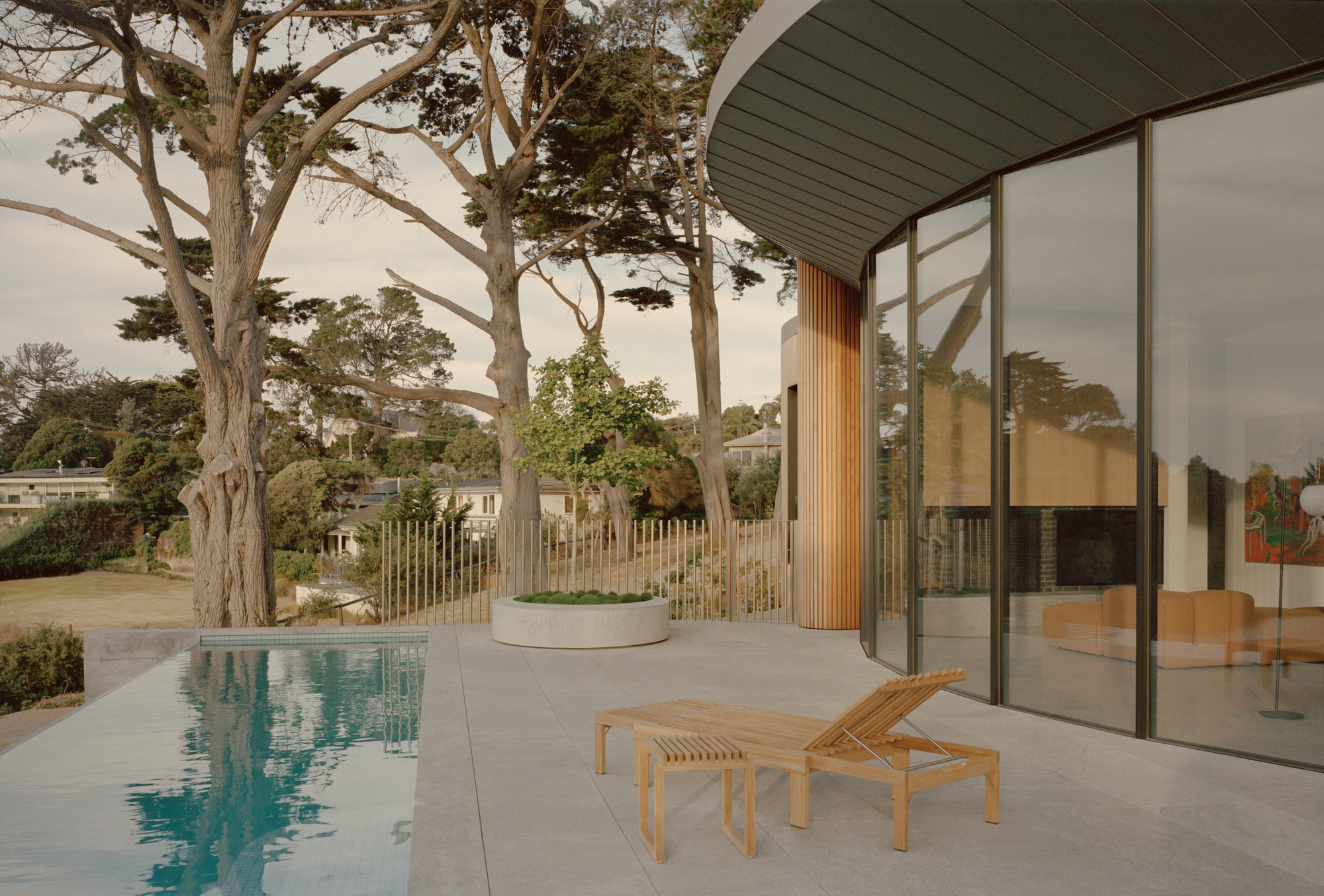
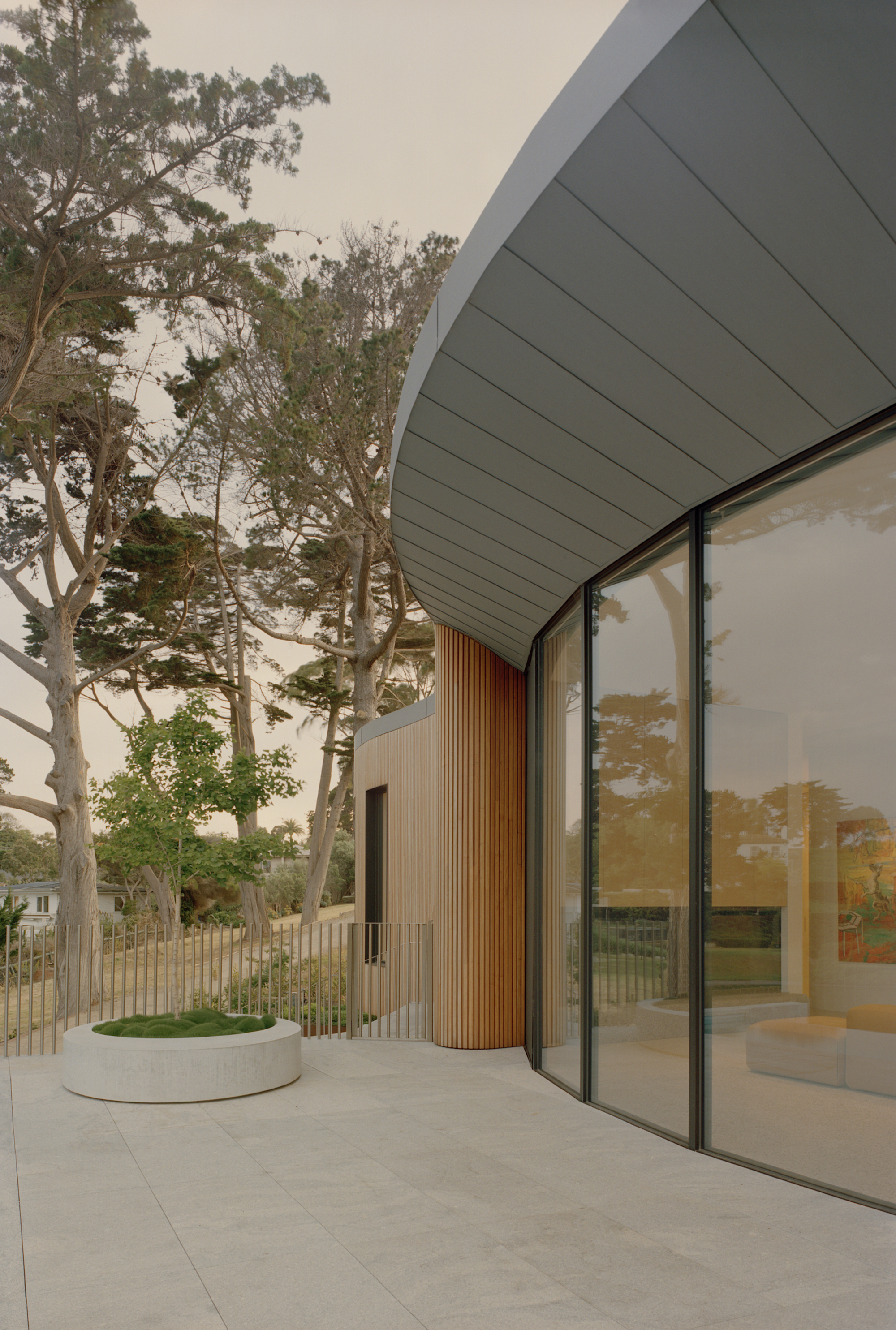
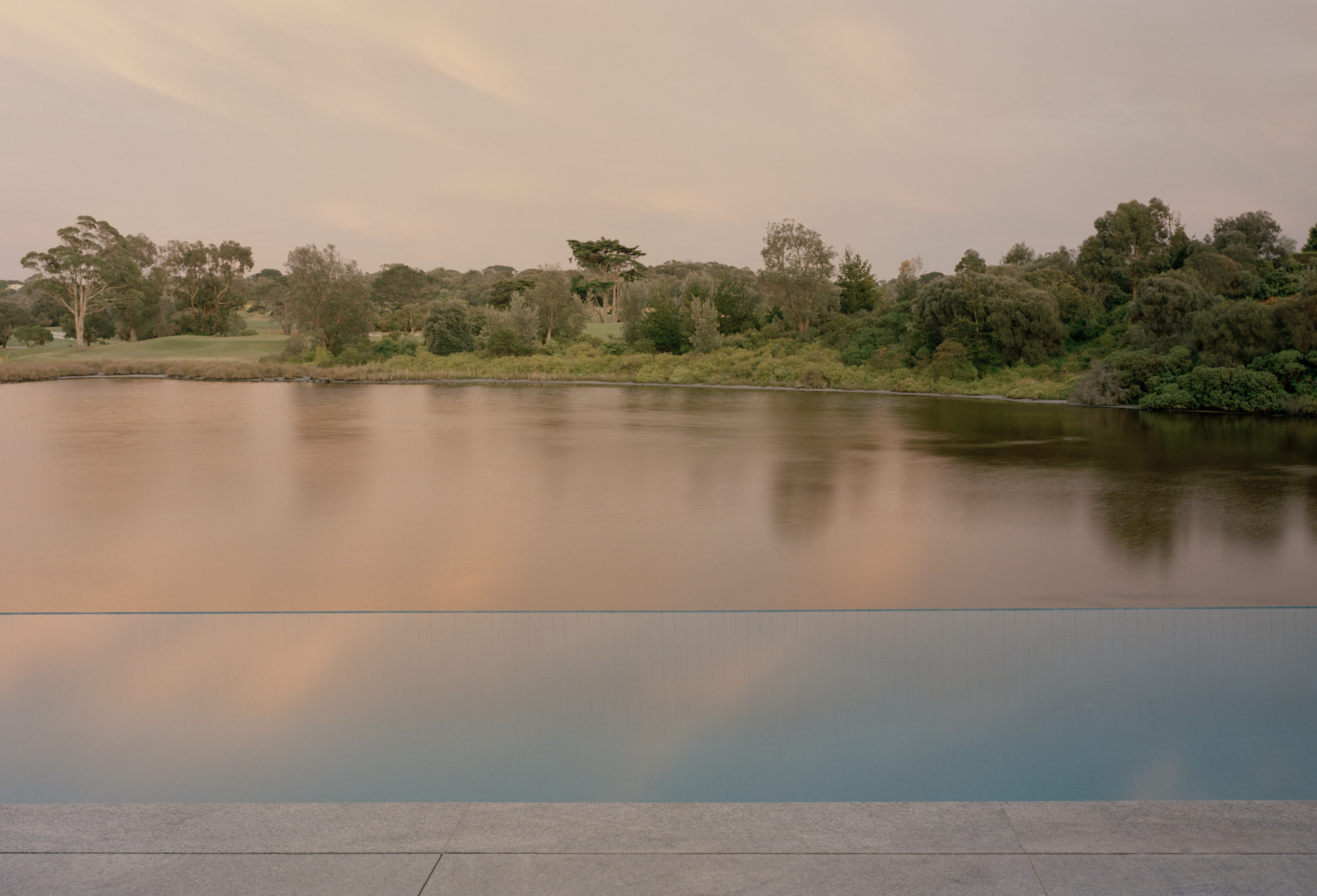
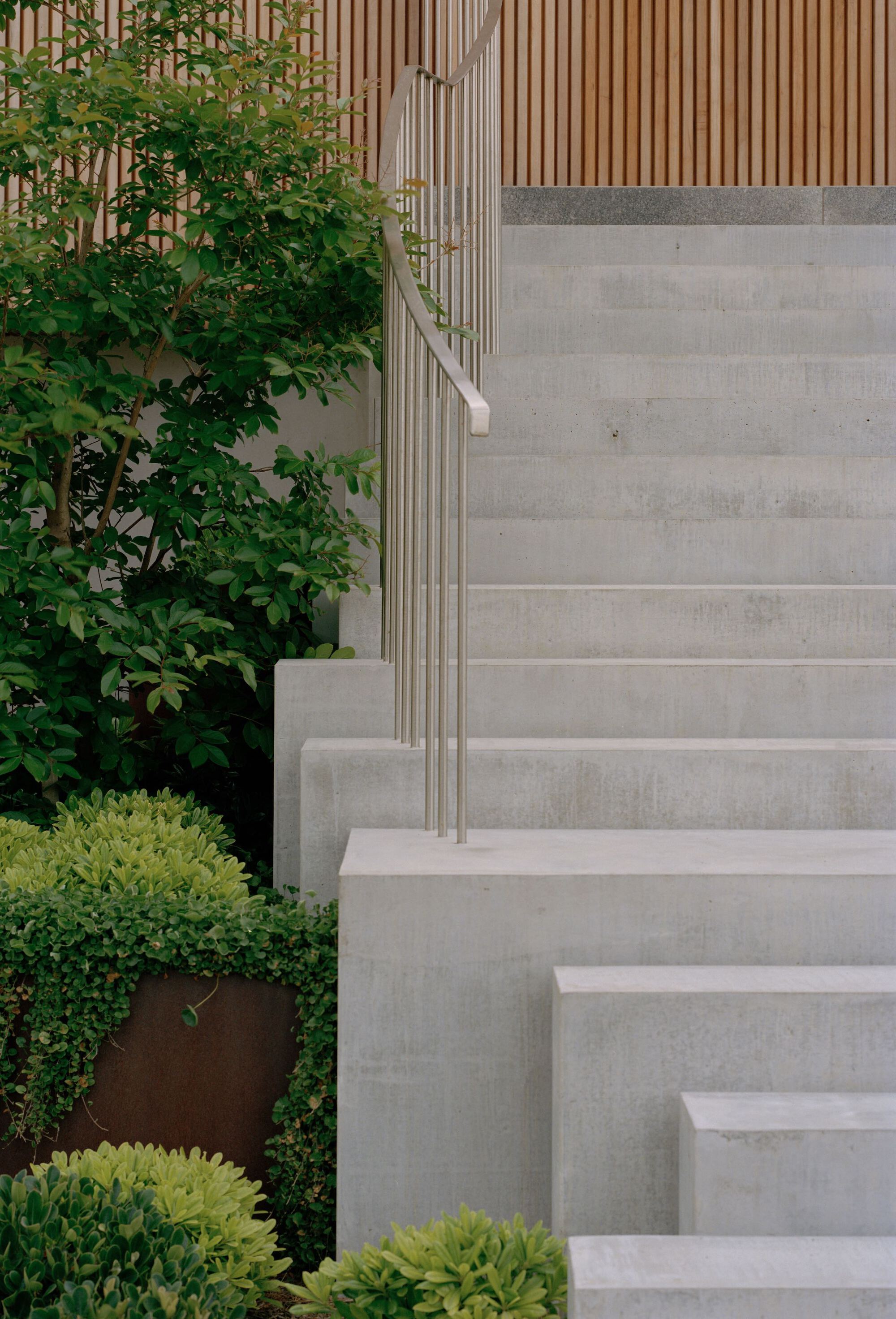
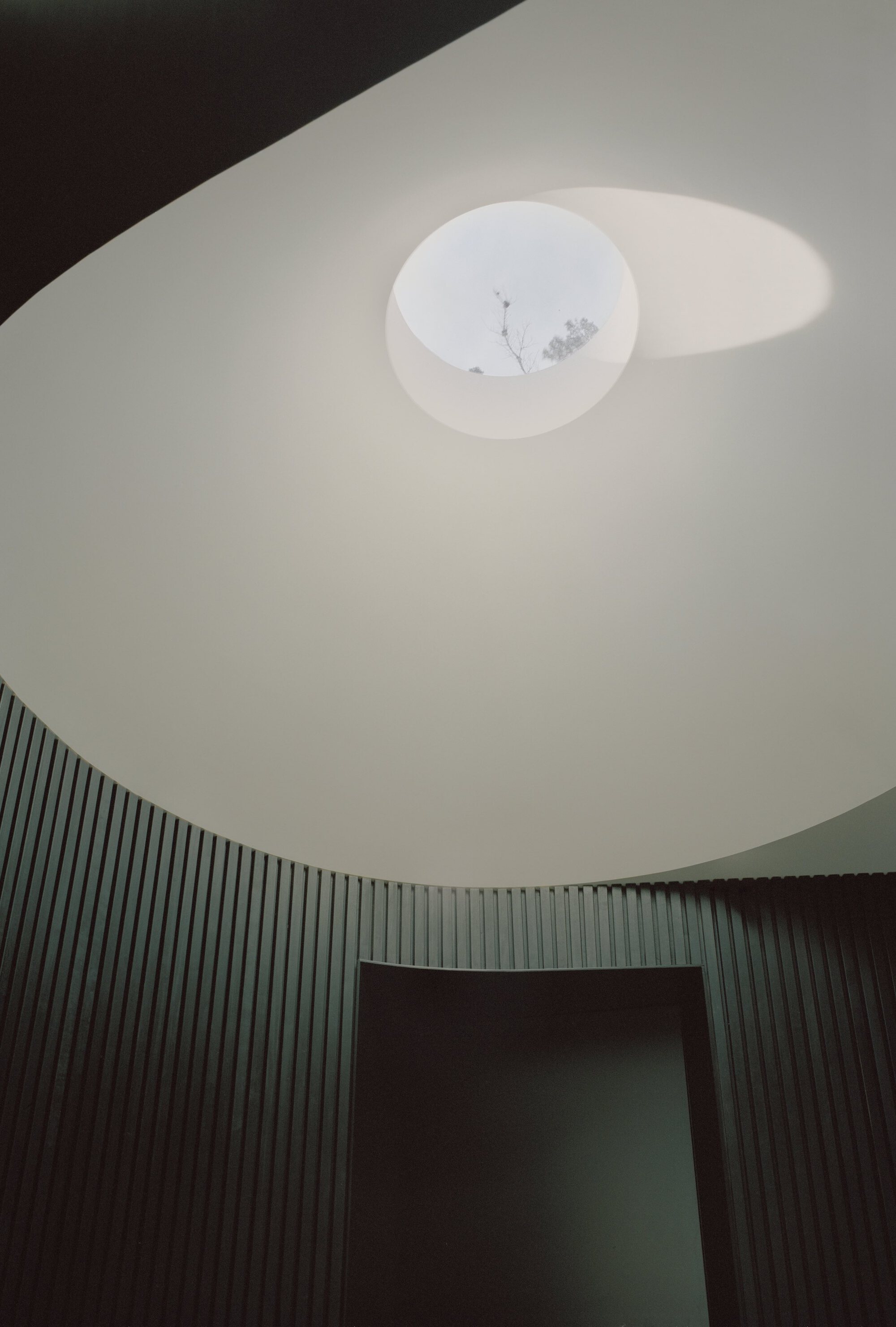
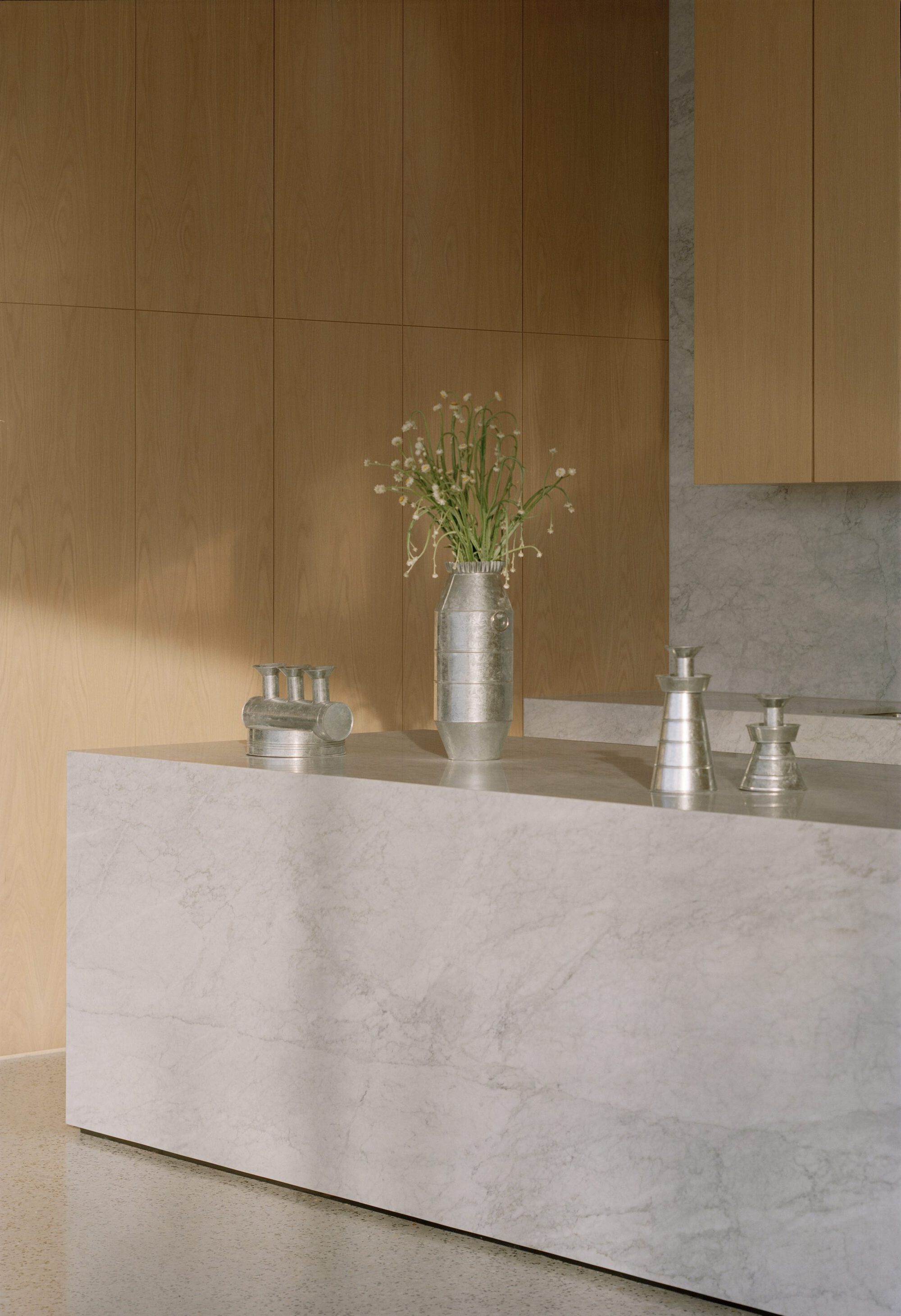
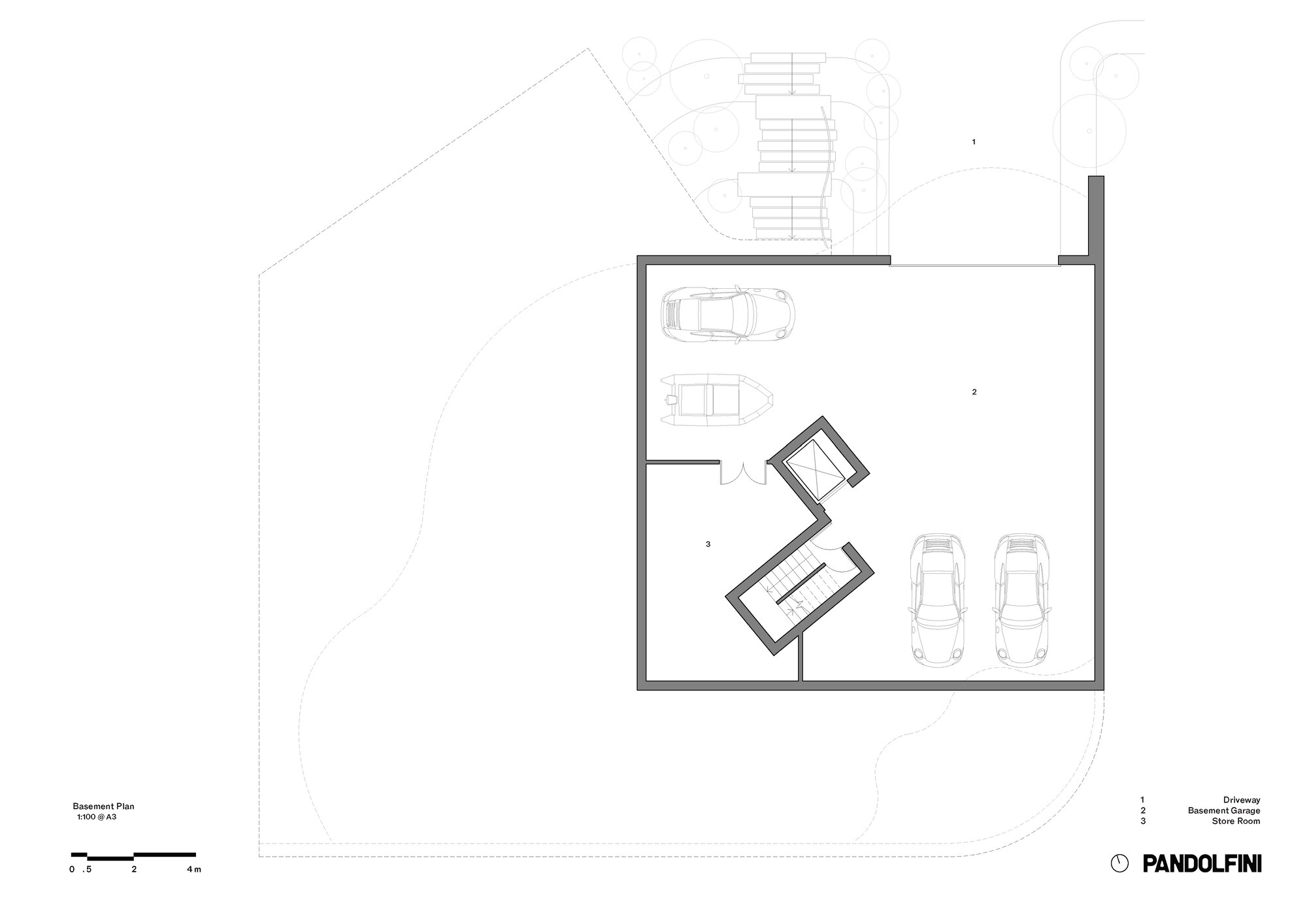
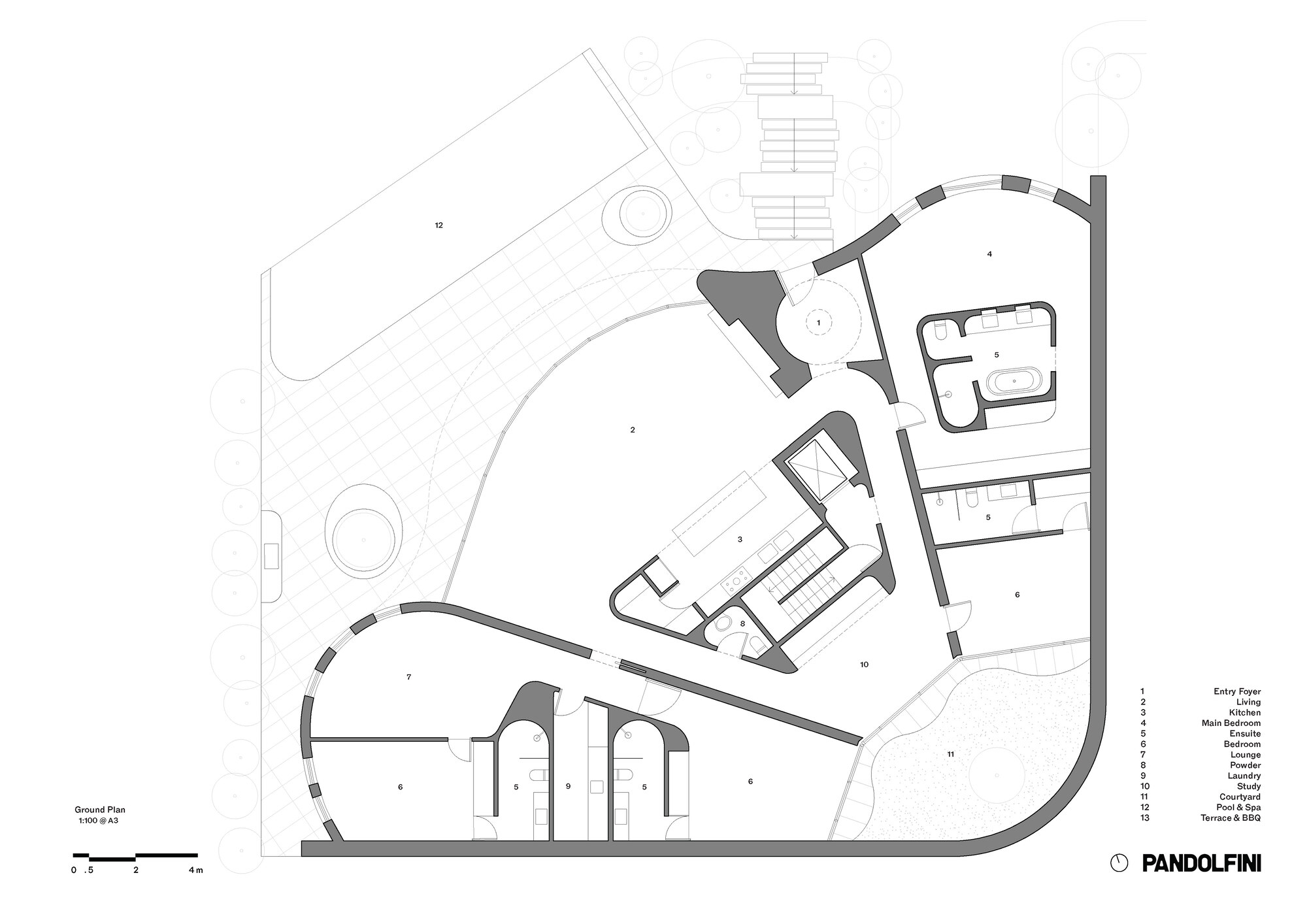
Point Nepean House #architecture Architects: Pandolfini Architects Year: 2024 Photographs: Tasha Tylee Country: Australia Carved into a steep undulating landscape on the shores of a man-made lake and overlooking Sorrento Golf Course, the Point Nepean House is an ambitious yet sensitive intervention to its environment. The bold eccentric form commands its presence, but its delicate timber skin, flowing parallel to the tranquil body of water is gracious. The home, with its extensive program, is a place that provides refuge and privacy, whilst simultaneously focusing on its surroundings.  Compositionally, the home consists of four fundamental elements; the sweeping perimeter wall, the clove-shaped form with its curvaceous timber-clad skin, the primary internal dividing walls, and a series of amenity pods within each zone. The monolithic perimeter wall cuts into the sloping site, a single gesture that encapsulates the organic form and provides a protective layer from its surrounding neighbors. Behind this unambiguous outer wall, the contrasting wavy timber-clad form unfolds upon arrival; its dynamic presence a reflection of the soft meandering edges of the adjoining lake. The timber-clad form, although ambitious in scale, sits harmoniously amongst the treescape, reflecting the warming tones of the mature trunks nearby. Internally, the clover-shaped floor plan is split into three zones by the straight primary walls. Contained within each zone, a series of irregular pods are arranged to confine the amenities of the home. The home allows inhabitants to pause and absorb serene moments internally and externally. To enhance the occupant's relationship with its surroundings, a series of windows puncture the timber-clad skin to create framed views. Pool barrier requirements were strategically navigated to provide undisturbed views over the infinity edge and beyond. The placement of the internal private garden provides the opportunity for all bedrooms and living spaces to focus on nature. Close coordination with Eckersley Garden Architecture to curate a landscape that was integrated with the home and its surrounding environment was vital. Subsequently, the extensive art collection allows inhabitants to decelerate and create tranquil moments inwards as they navigate the home. The notion of contradiction is present on arrival at the home. Upon ascending the grand staircase of staggered concrete blocks and absorbing the tonal skin of the timber-clad facade, the inhabitants enter through a small passage into a dark confined circular lobby, a vast difference from the moments prior. A glimpse of natural sunlight penetrates the space from the conical skylight above to create a sense of drama, before transitioning back to the light-filled living space. The meandering curves of the façade and associated glazing are a response to the orientation, strategically undulating to create a deep eave over the North and West facing windows. This 3.7m high expanse of glazing provides passive solar gain for the winter months, whilst the substantial eave minimizes the harsh summer sunlight. The internal courtyard provides natural light to the deep clove-shaped plan and excellent cross ventilation across the house. A reductive external material palette of concrete, timber cladding, and natural zinc has been used to accentuate the forms and provide hard-wearing materials which will age gracefully and require low maintenance.
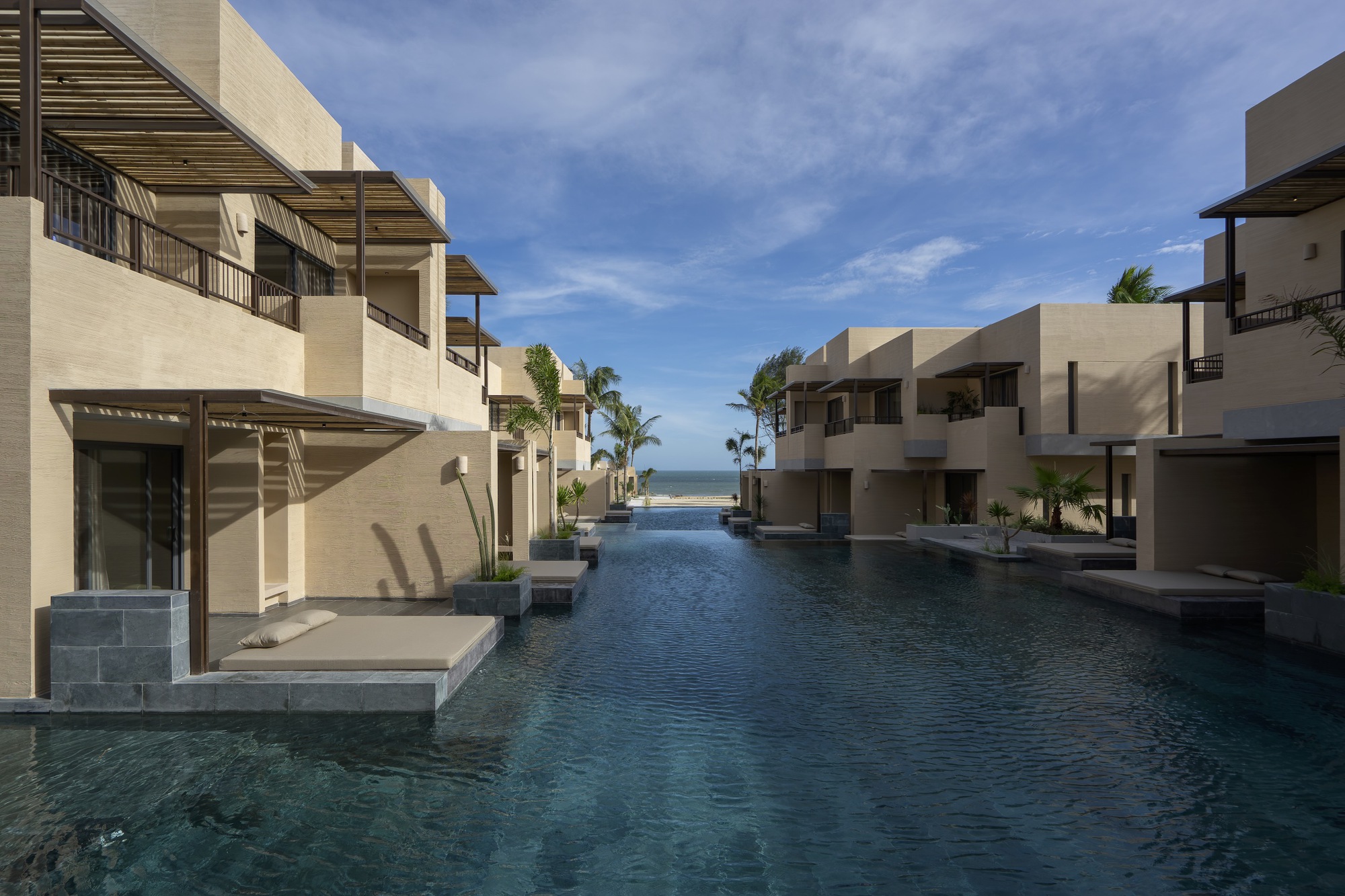
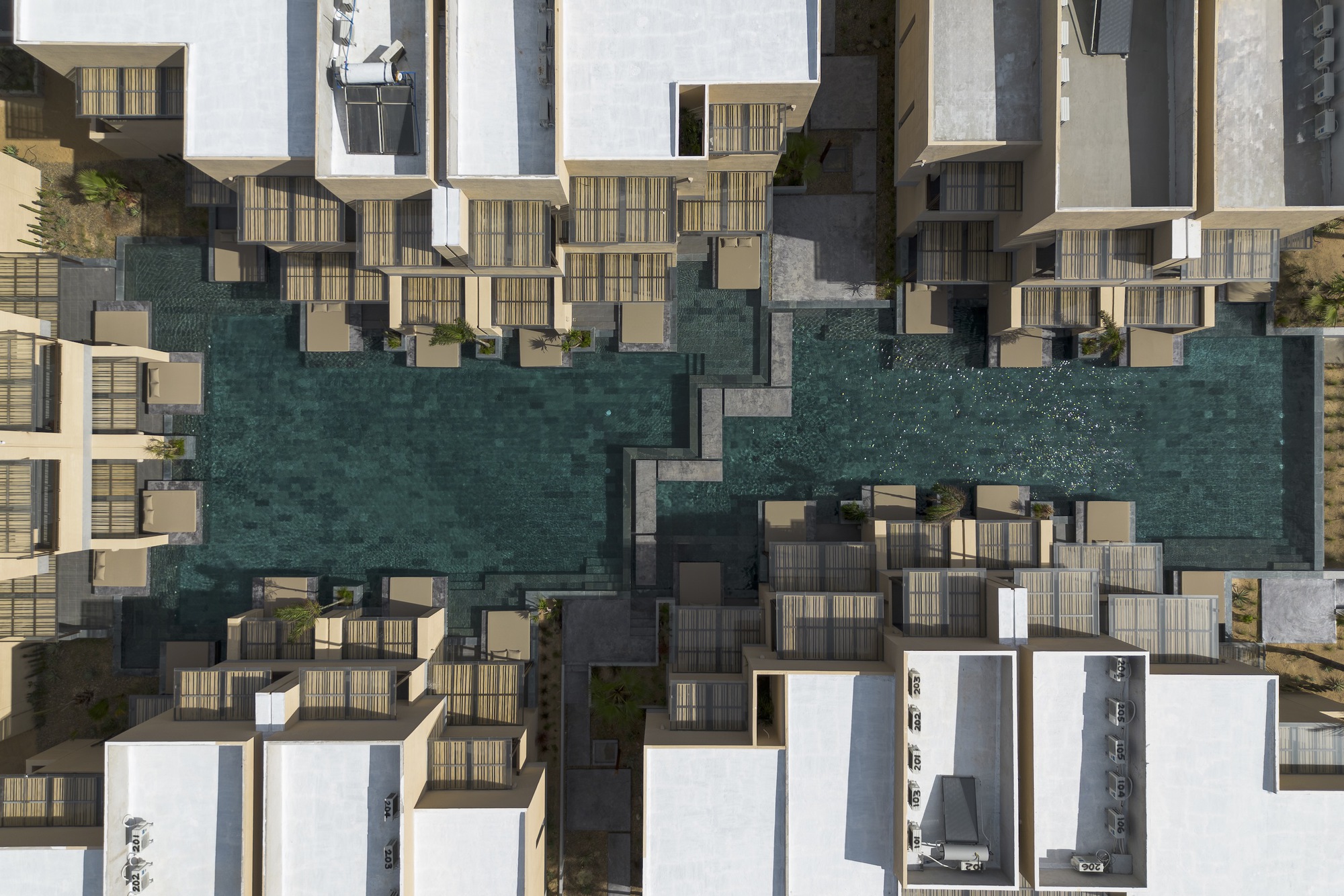
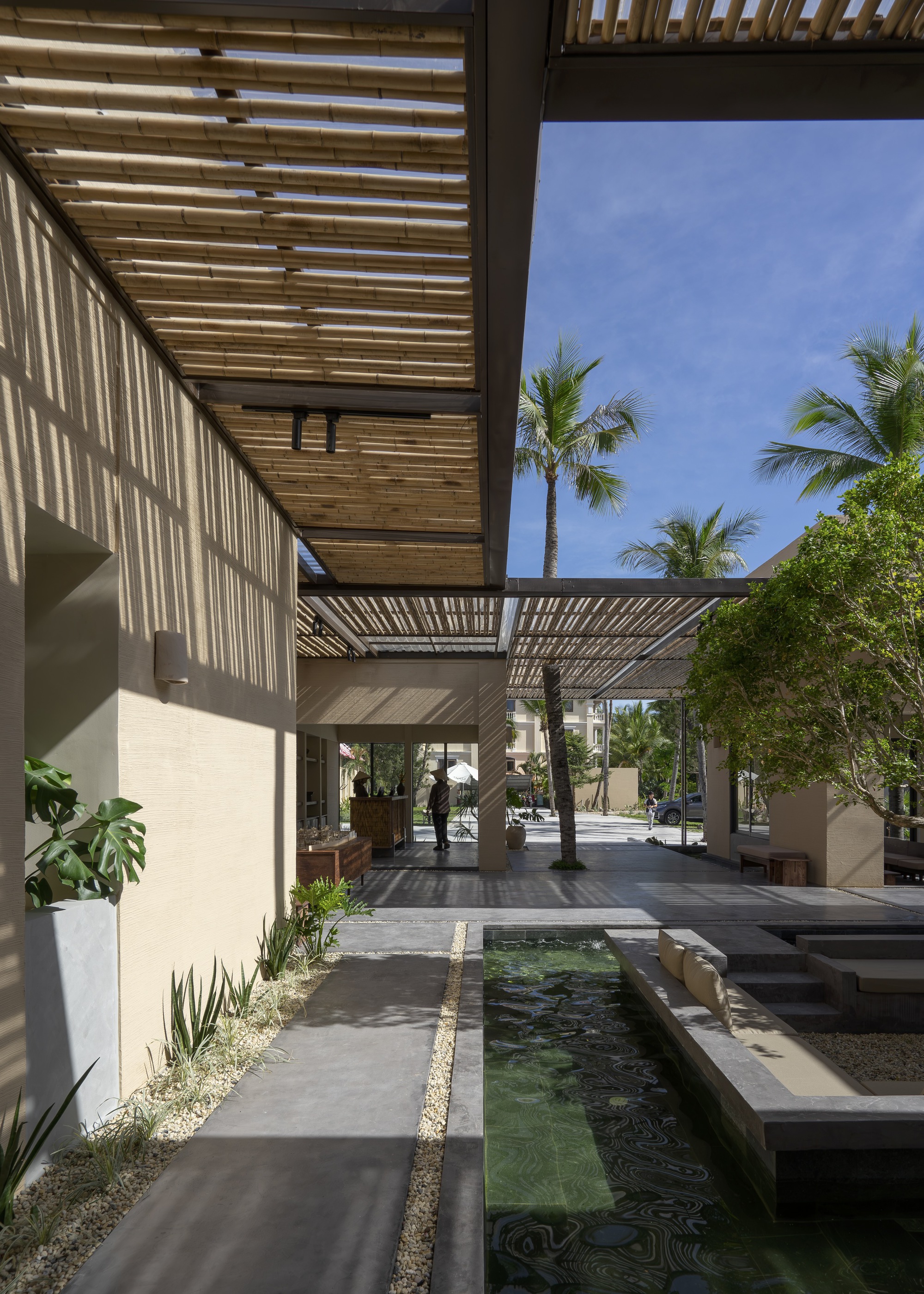
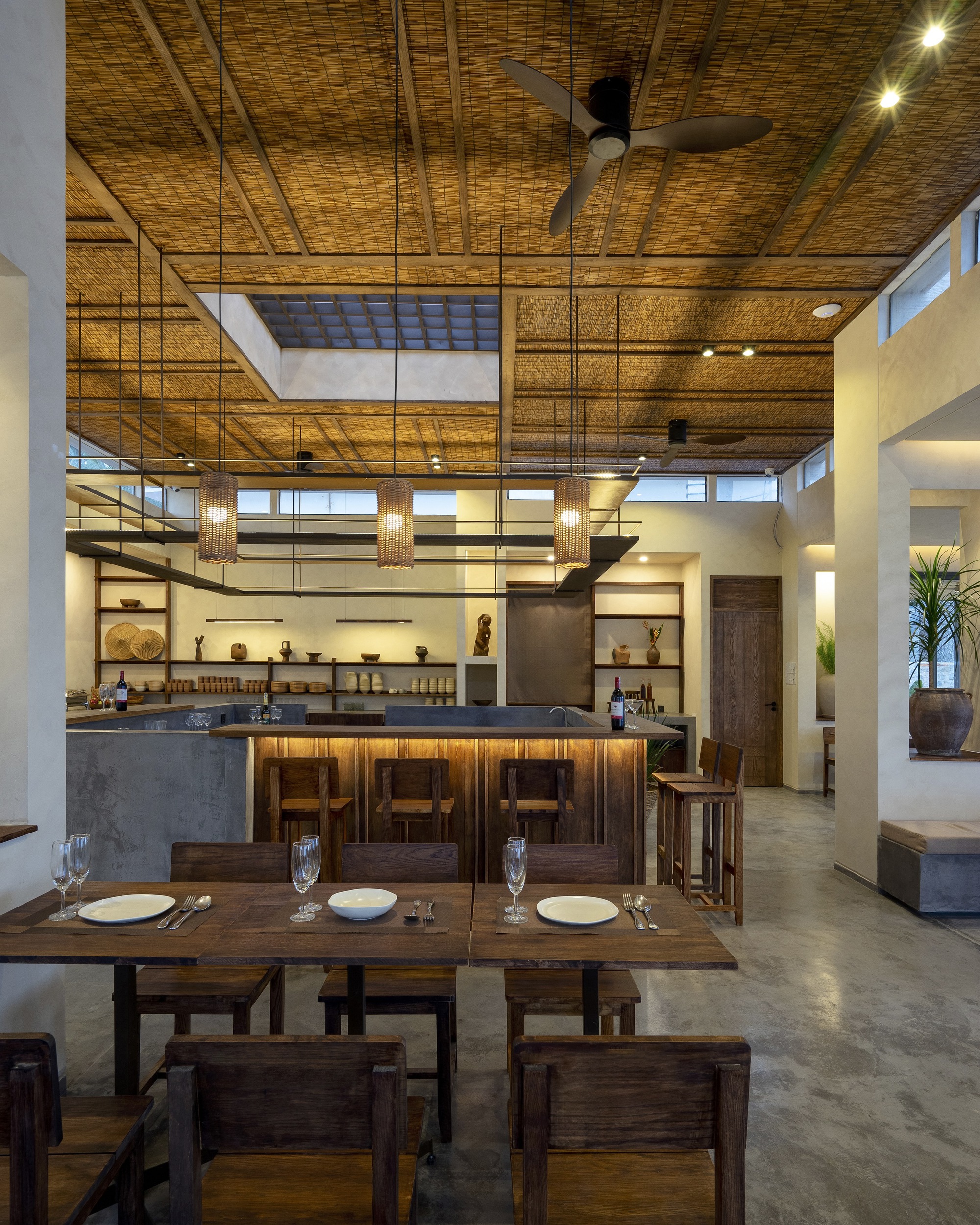
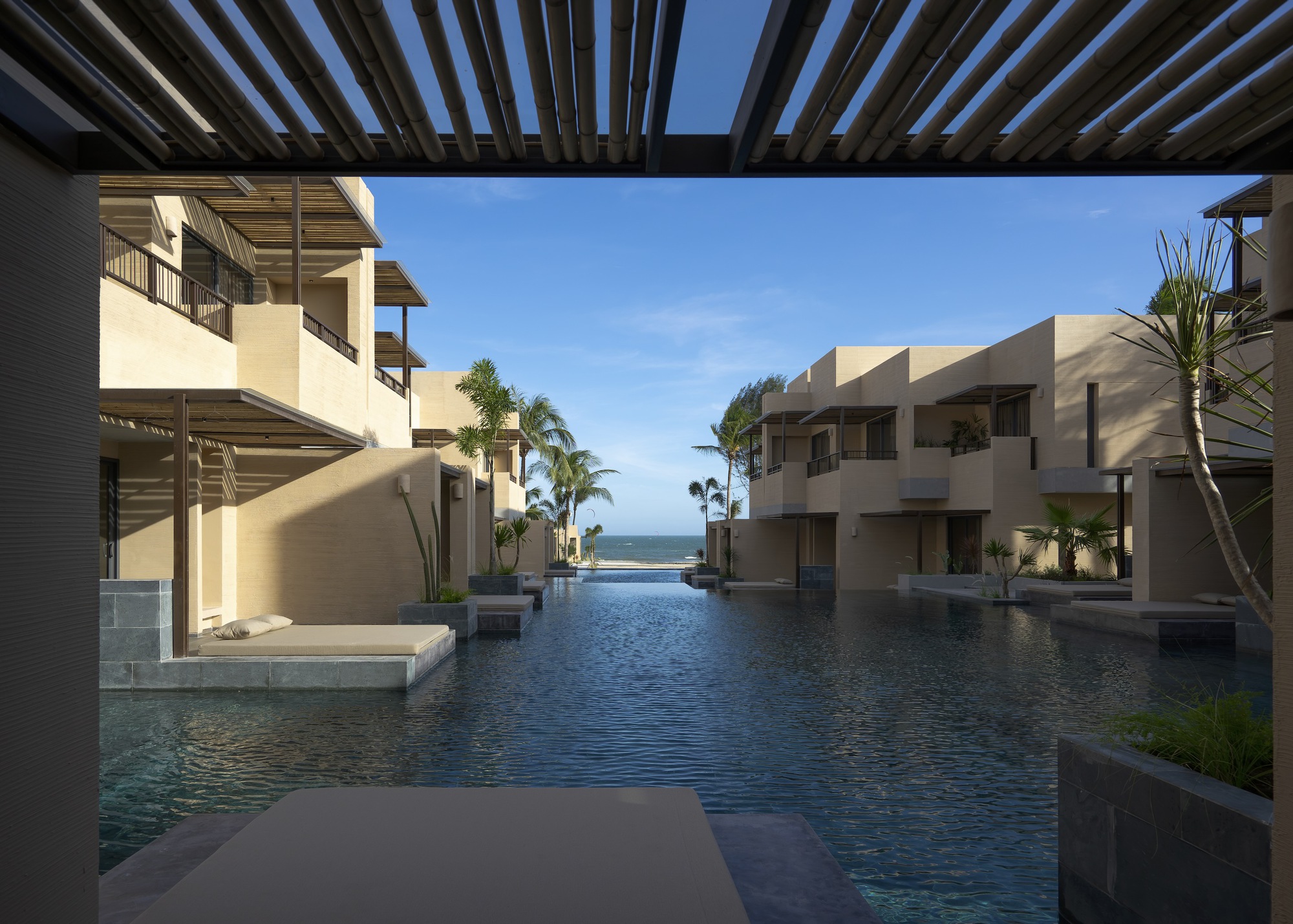
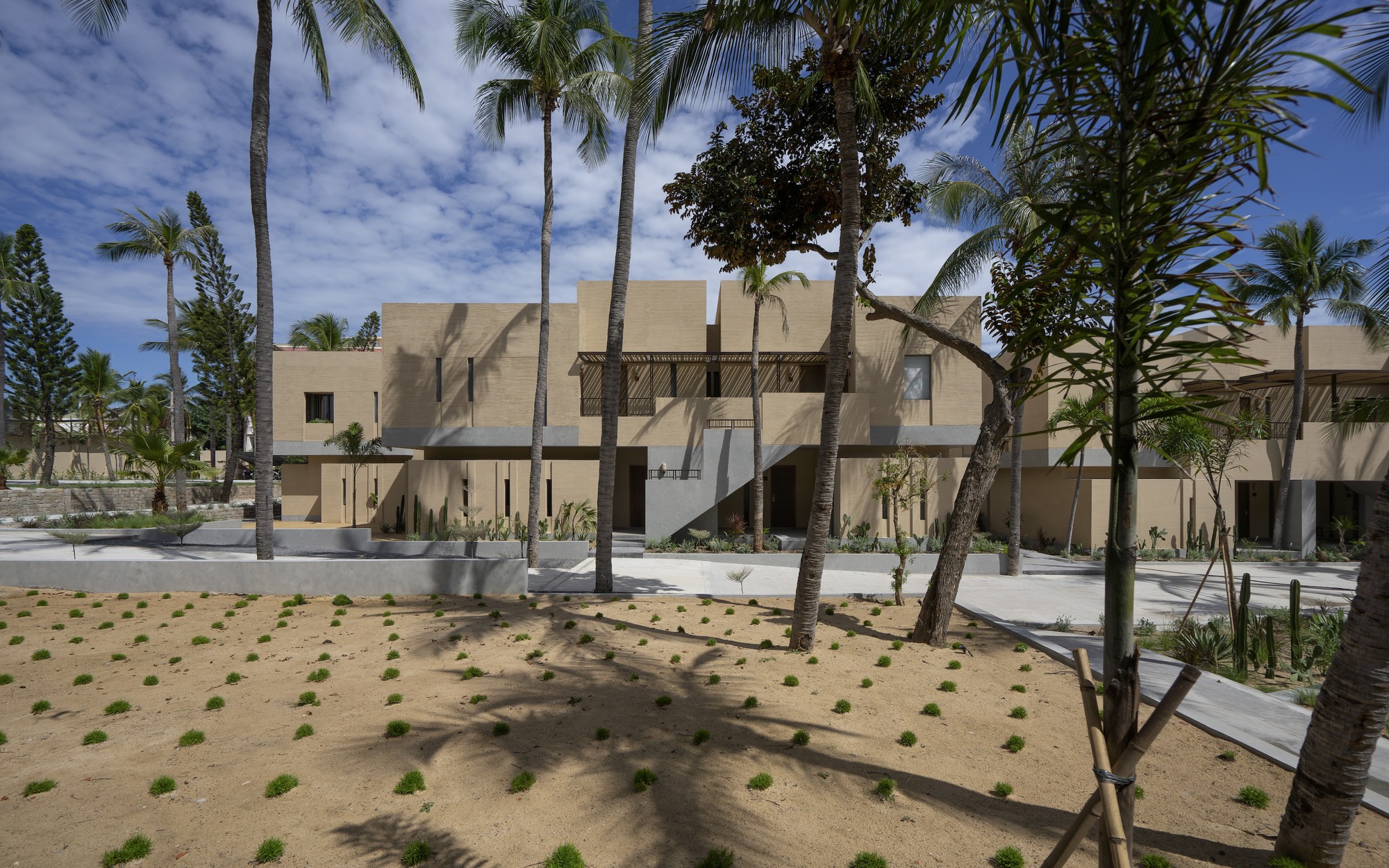
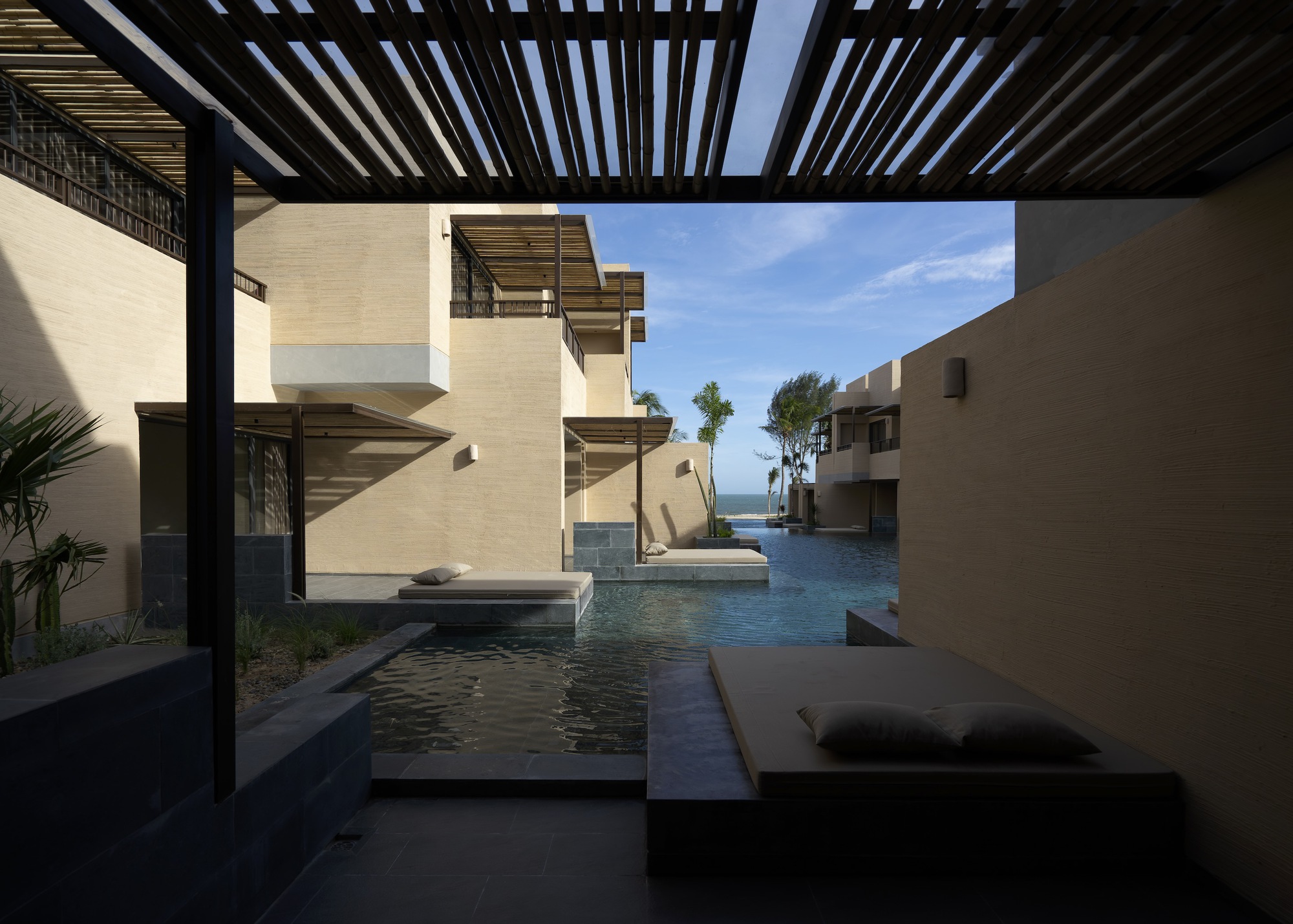
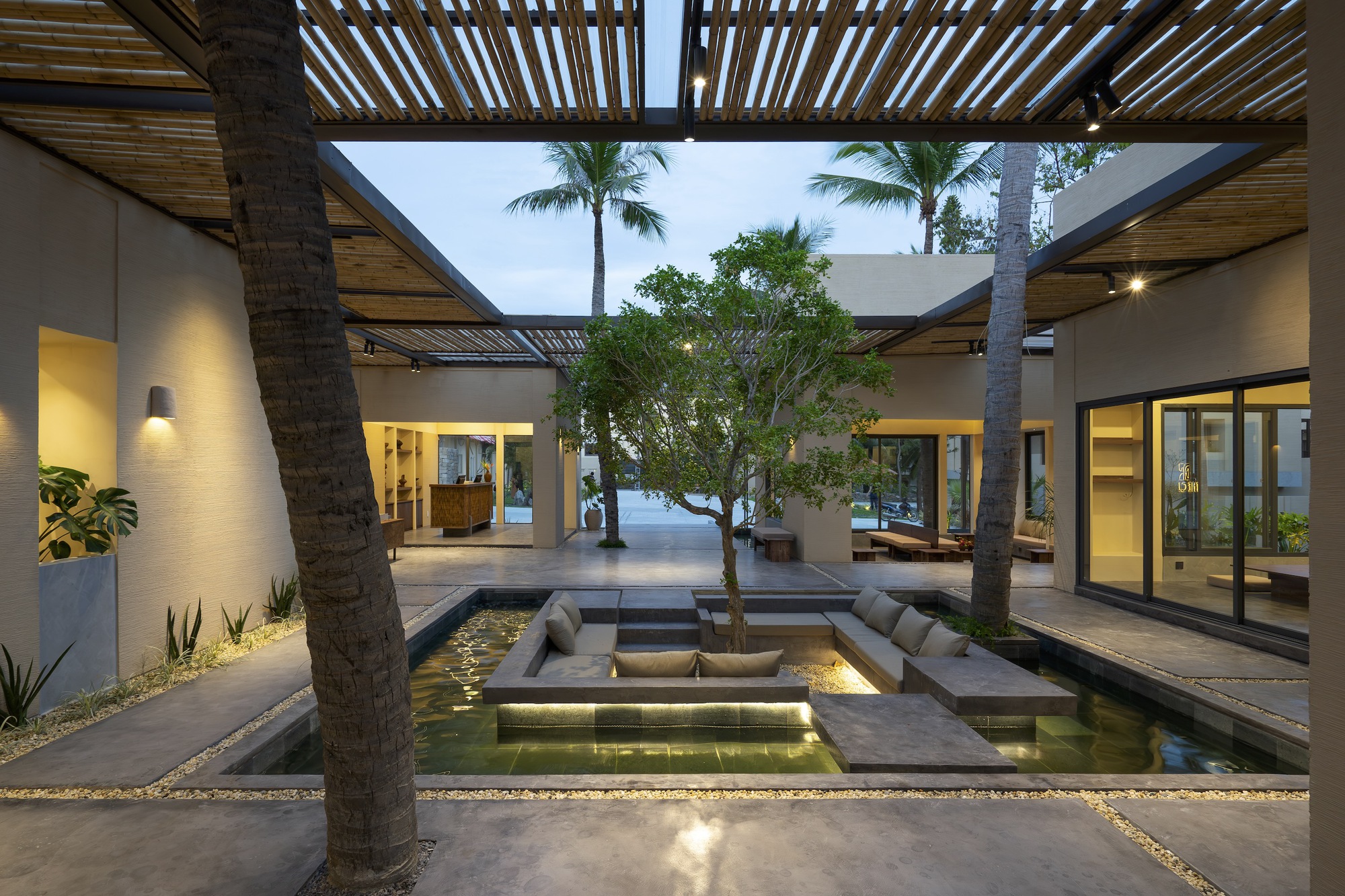
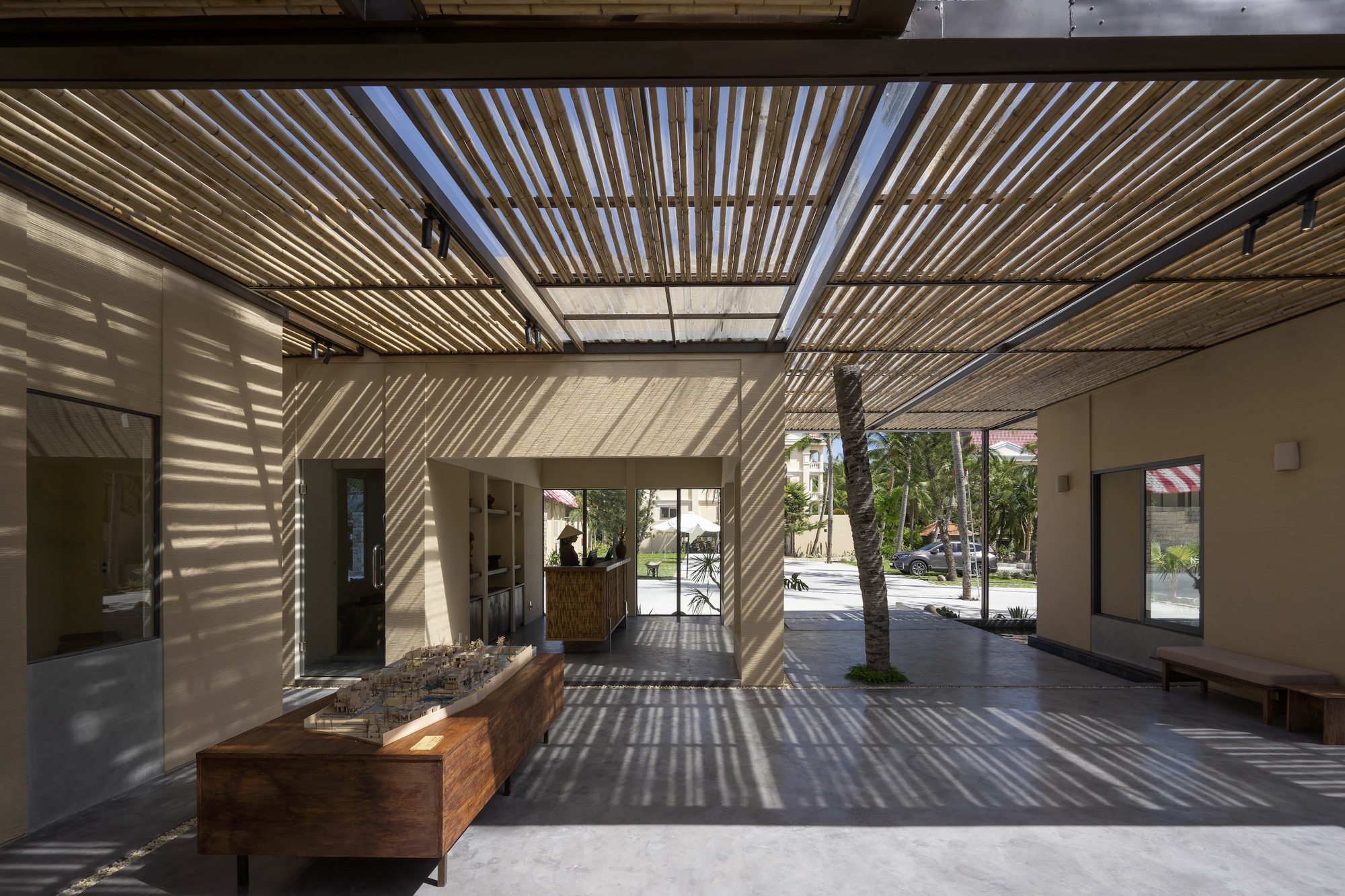
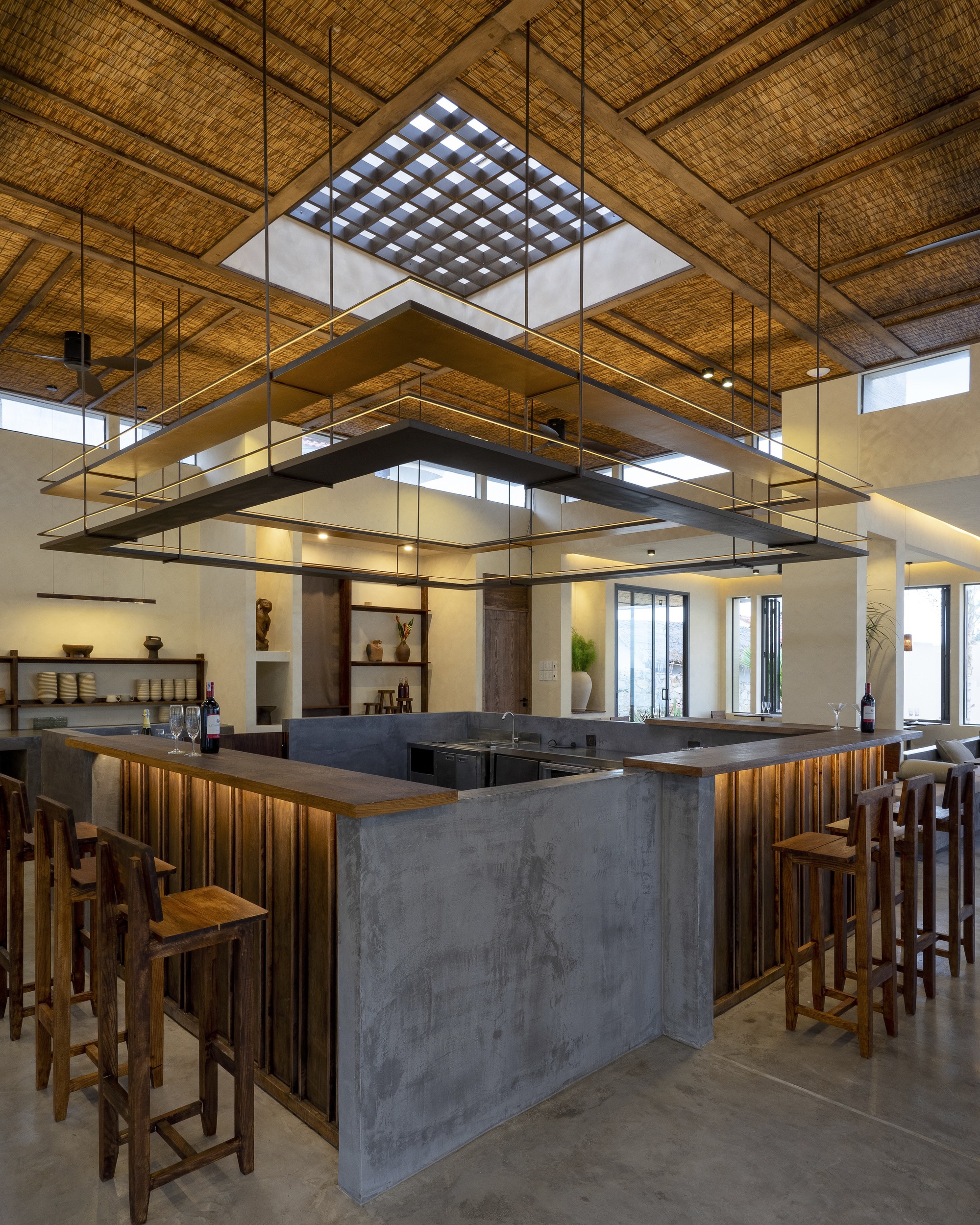
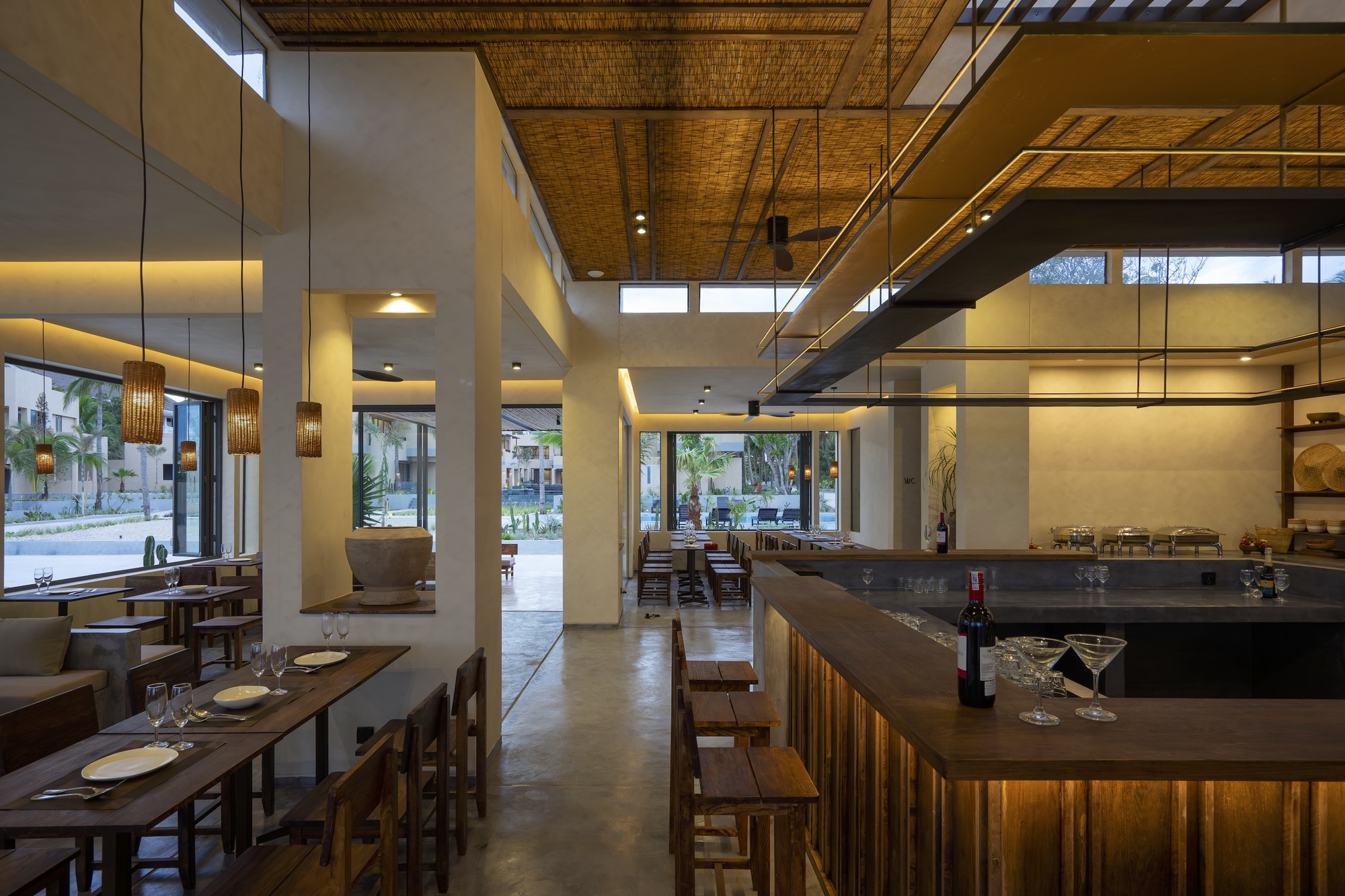
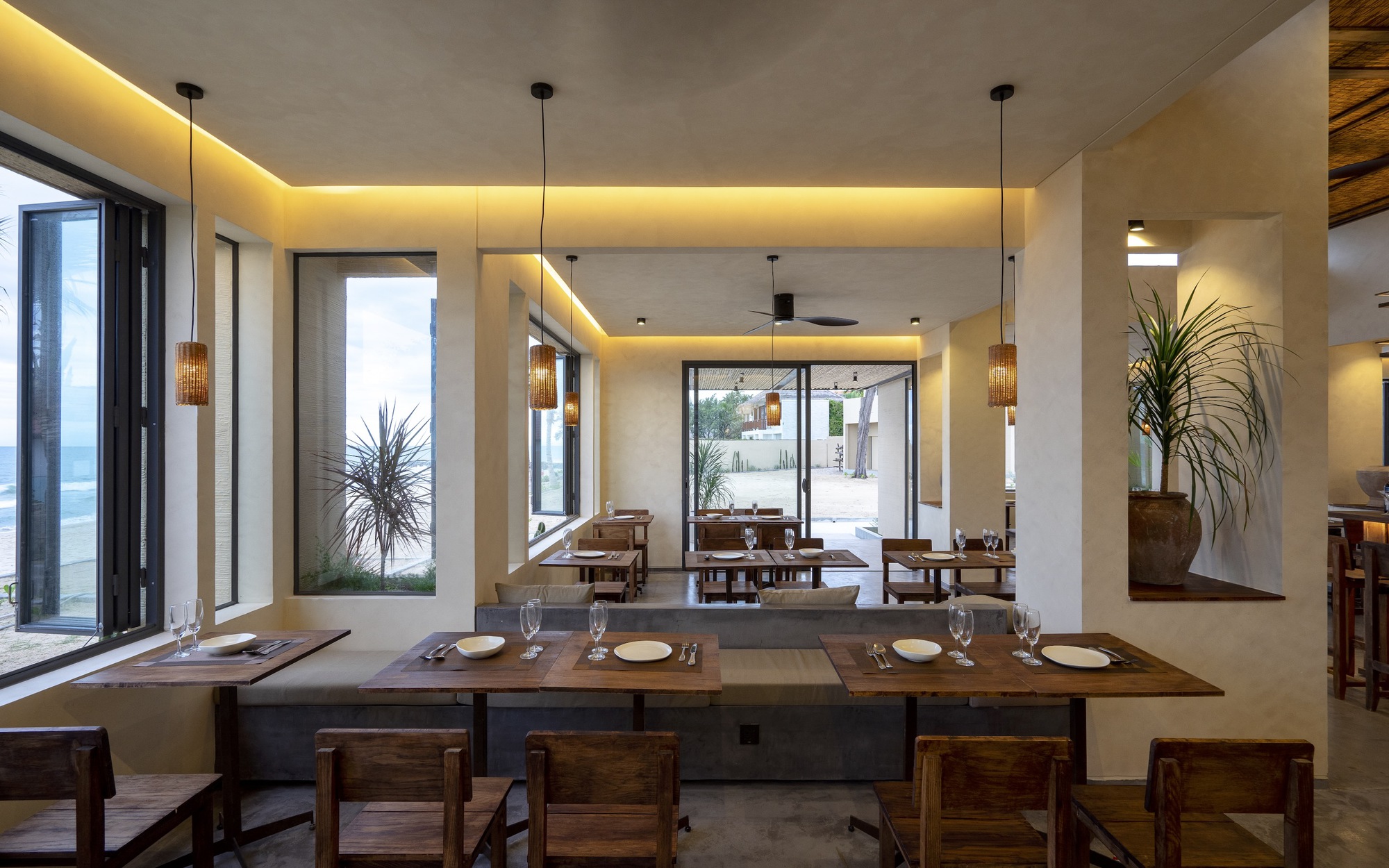
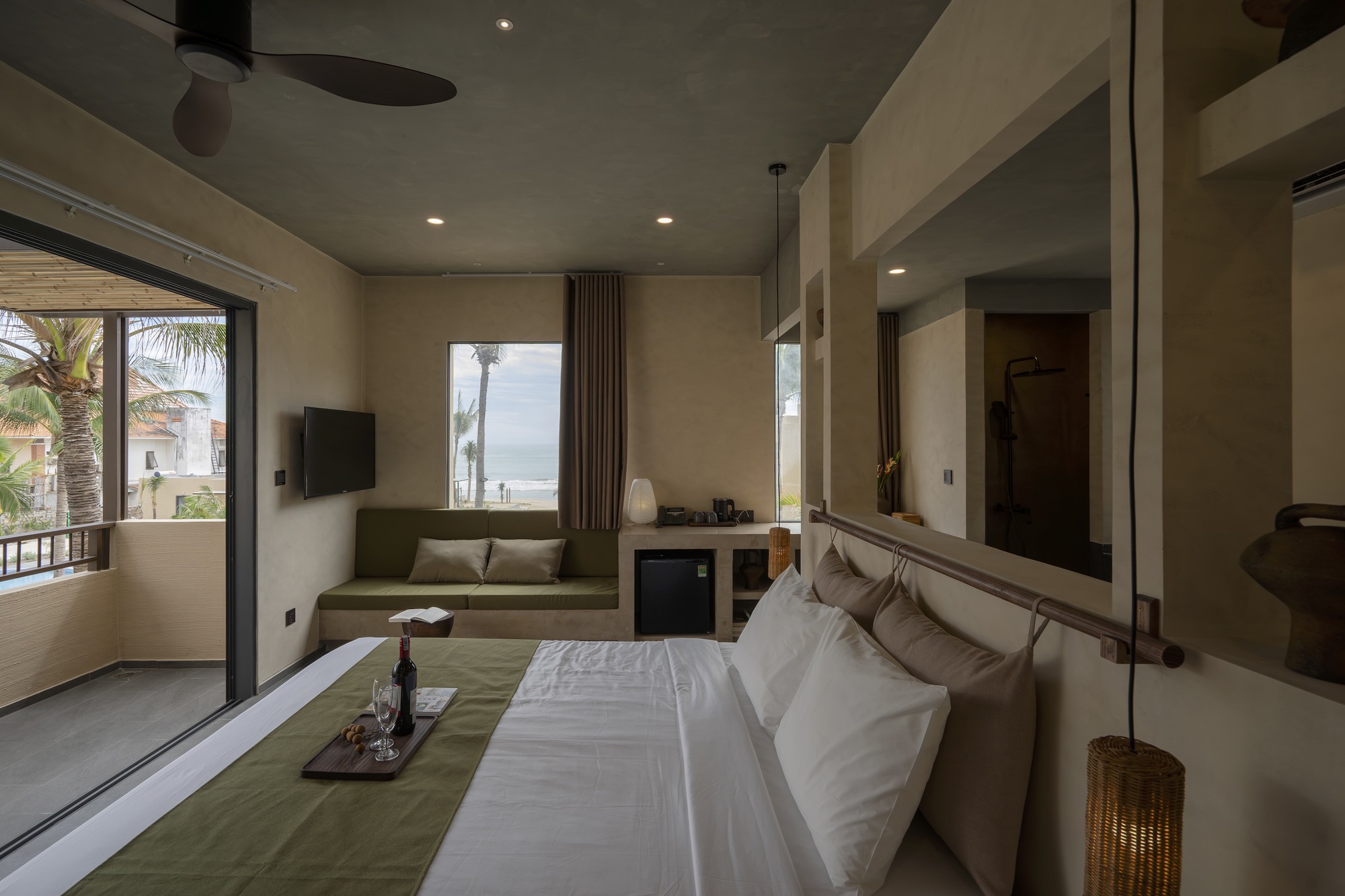
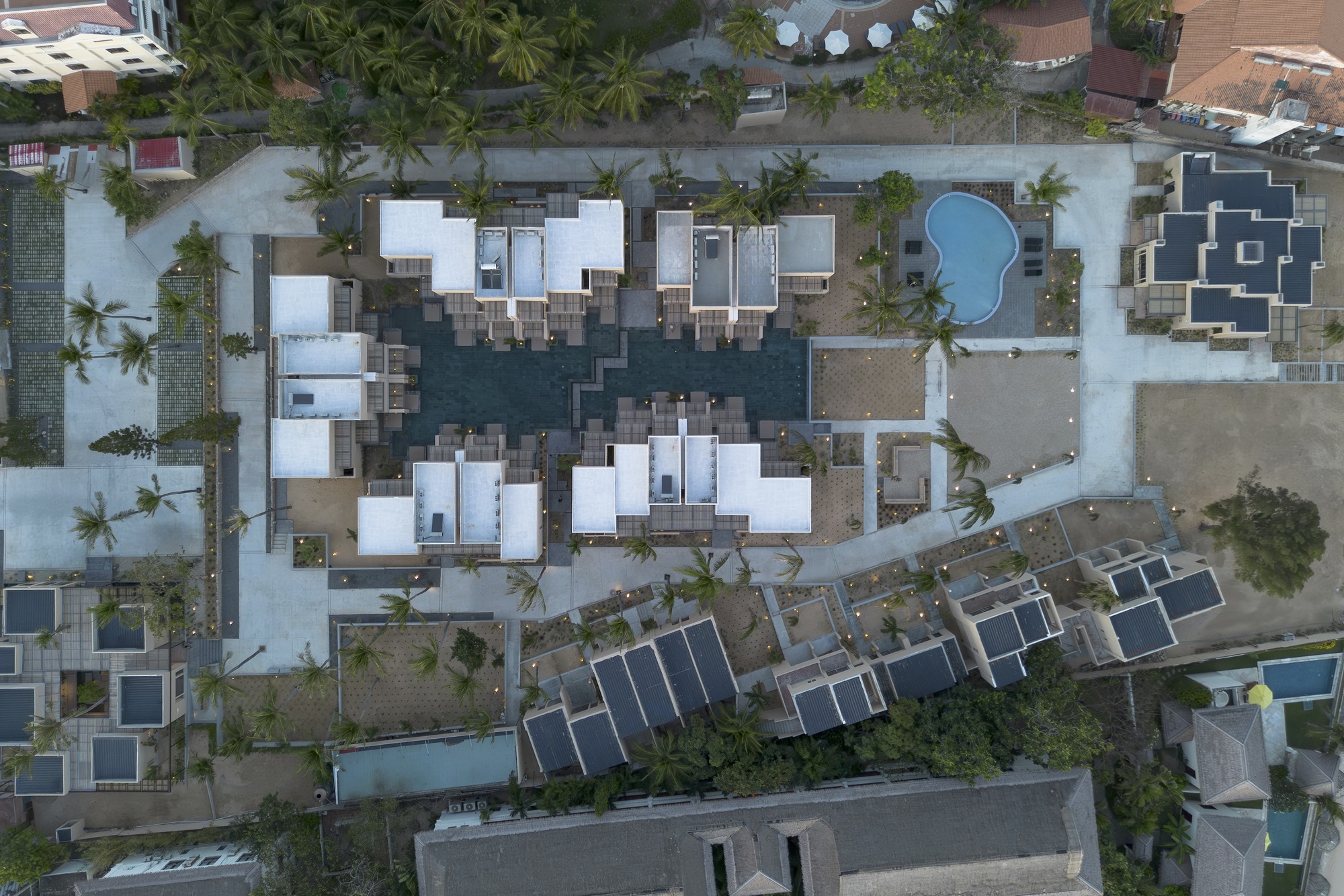
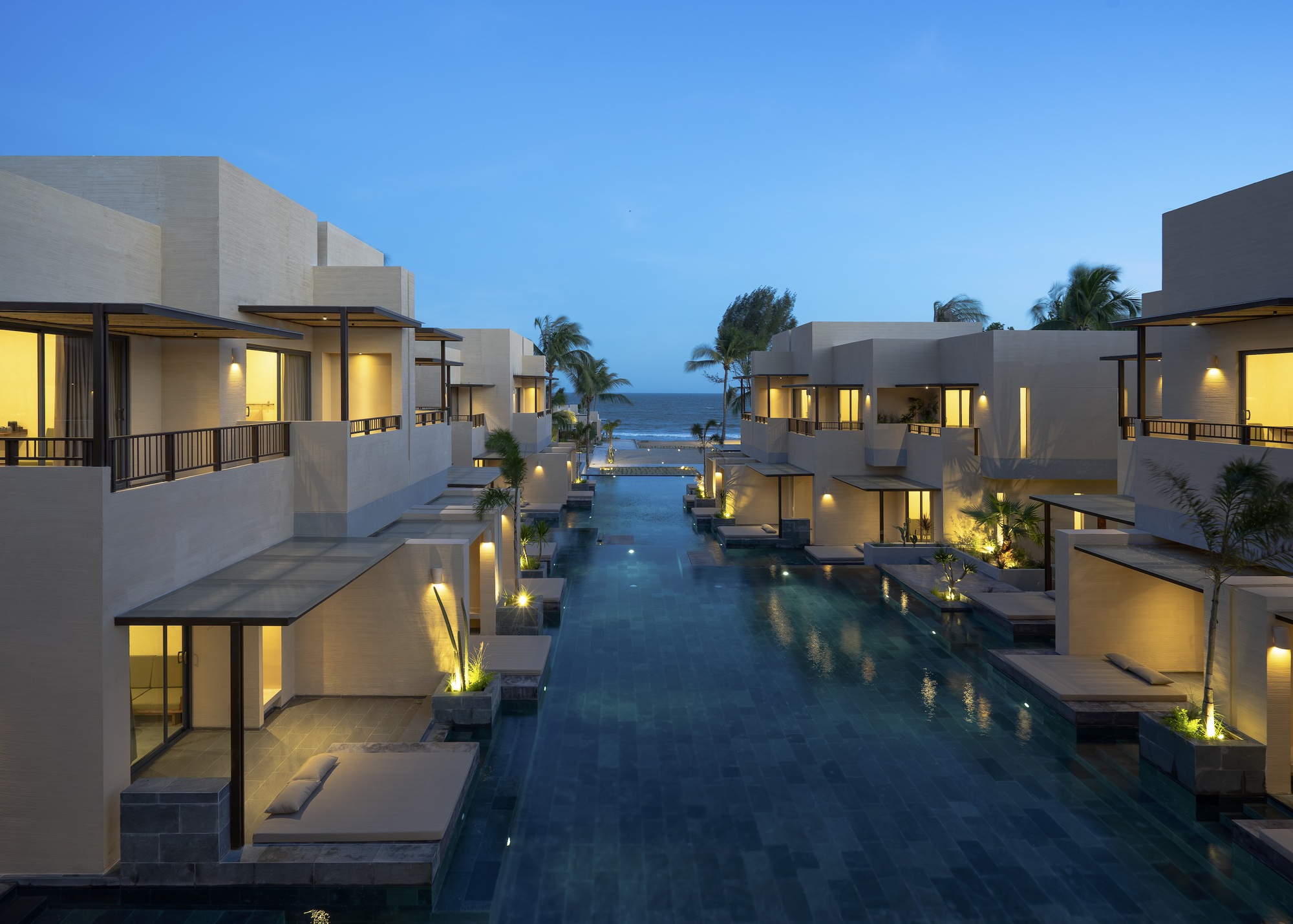
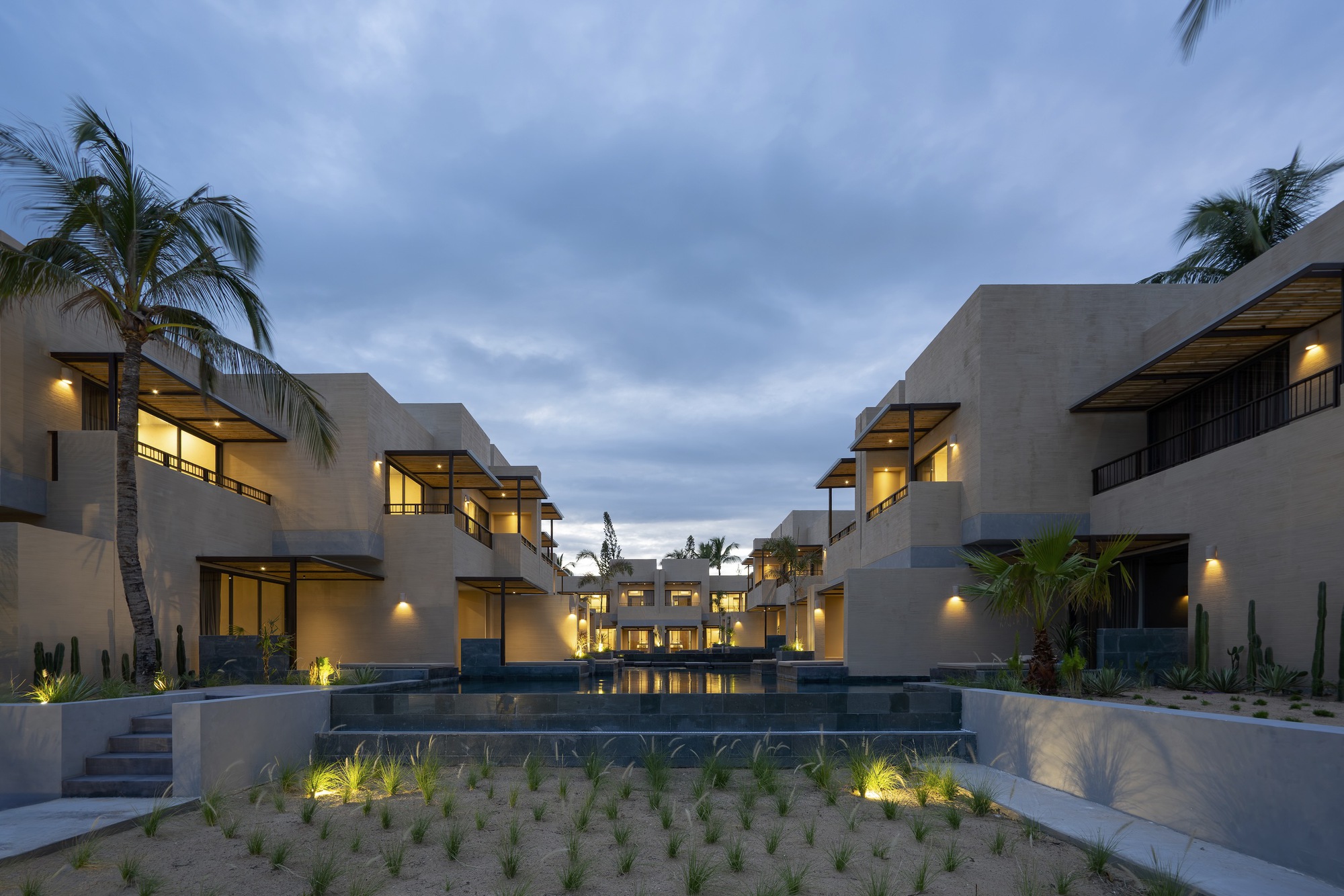
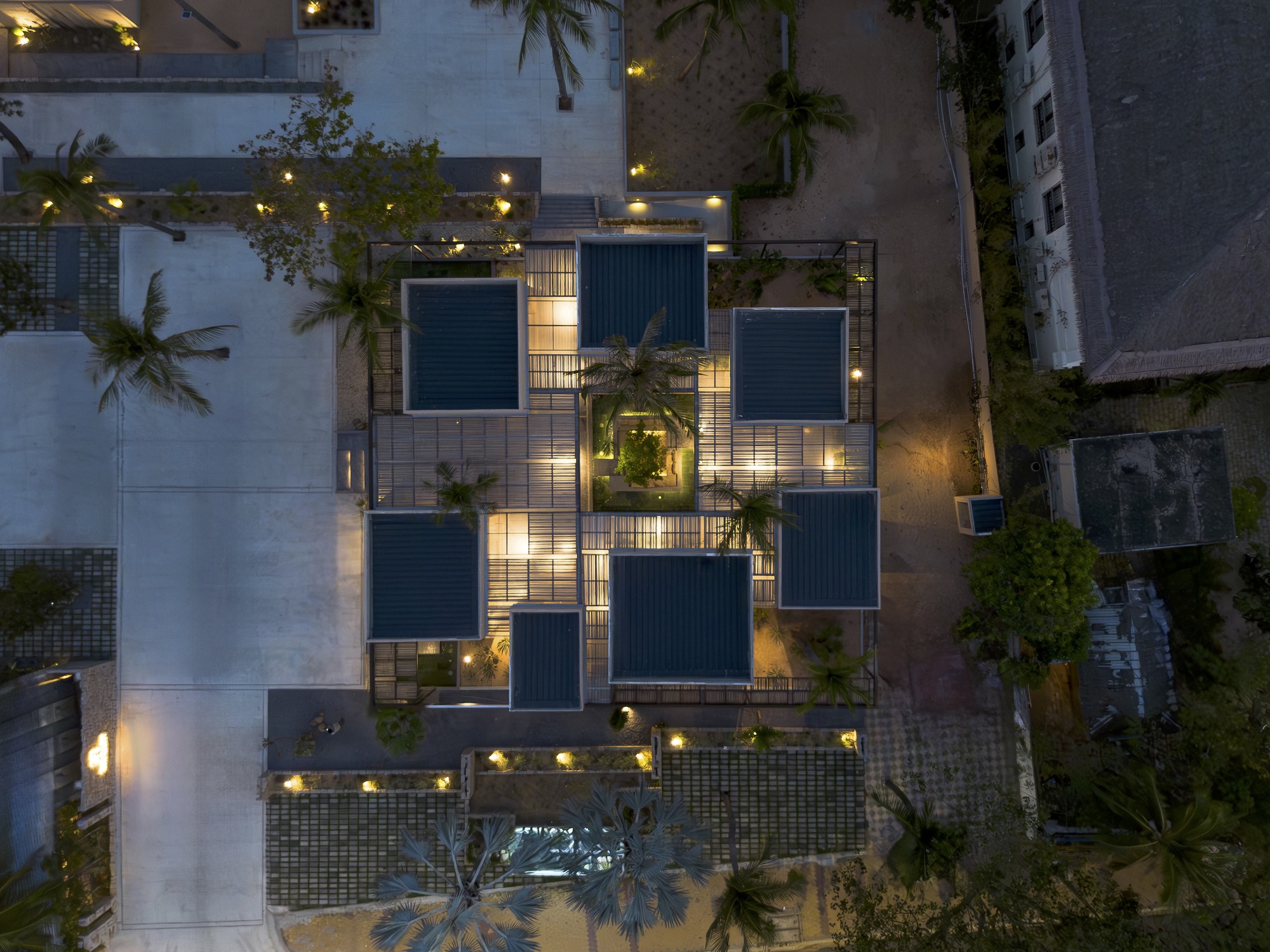
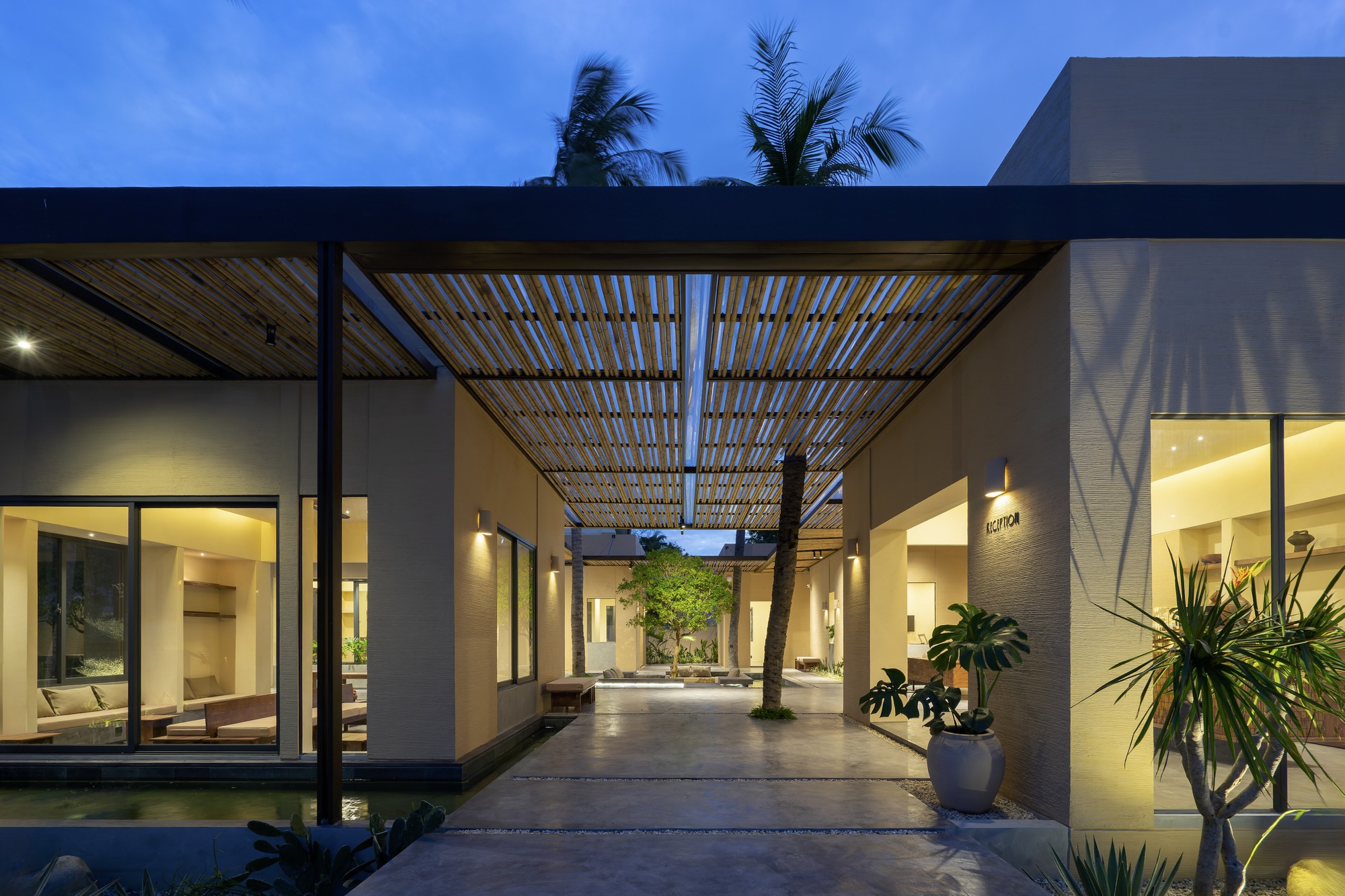
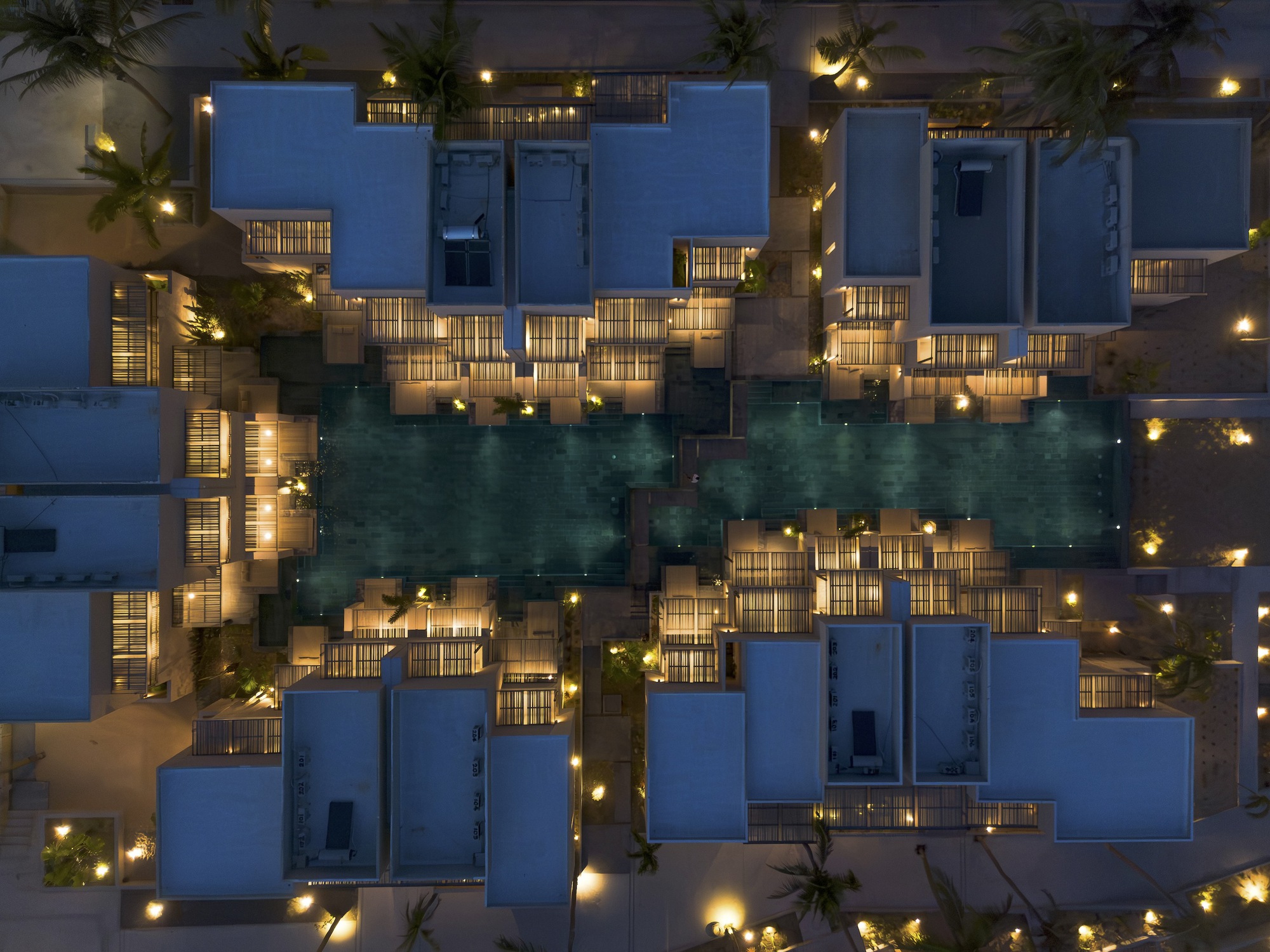
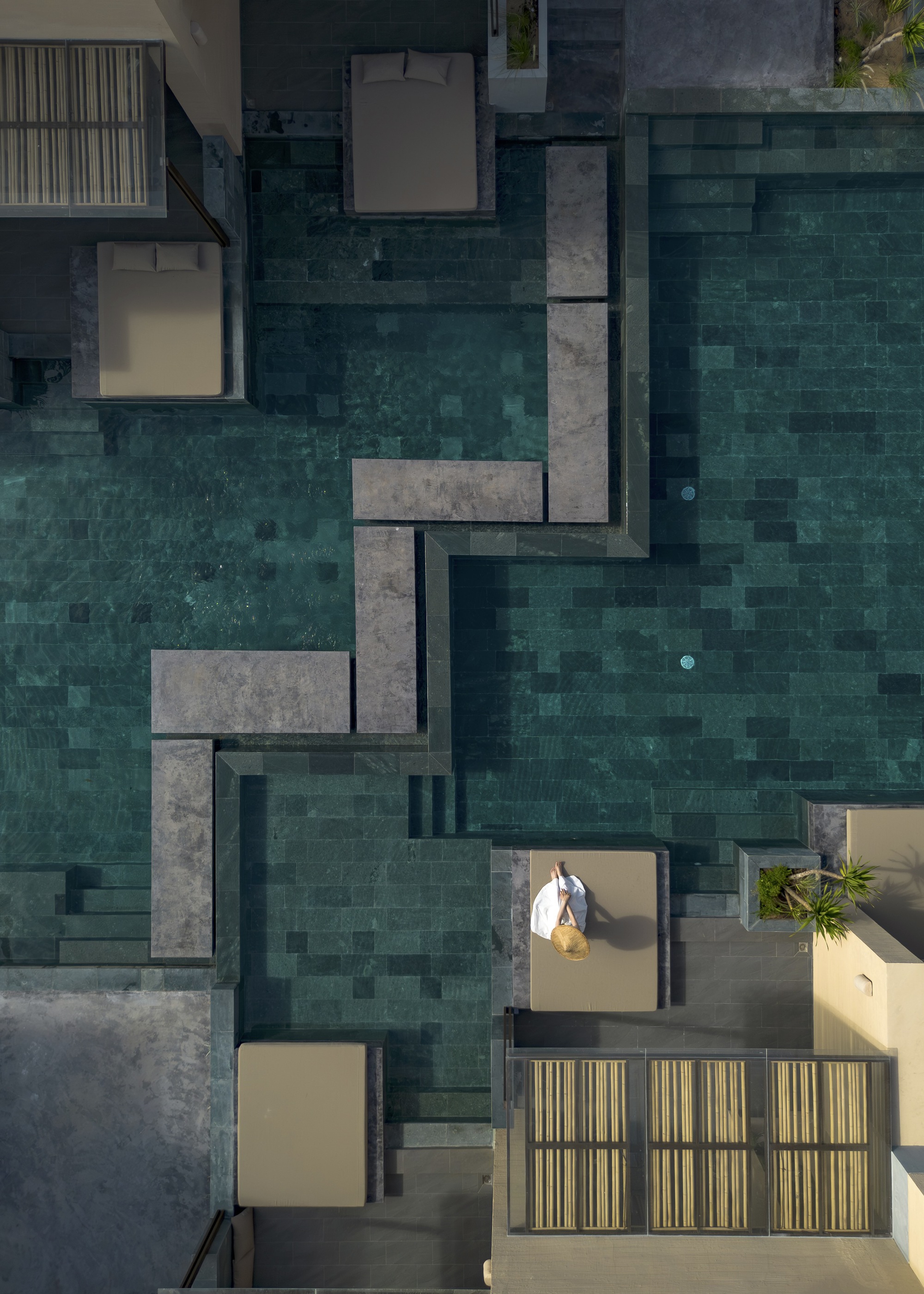
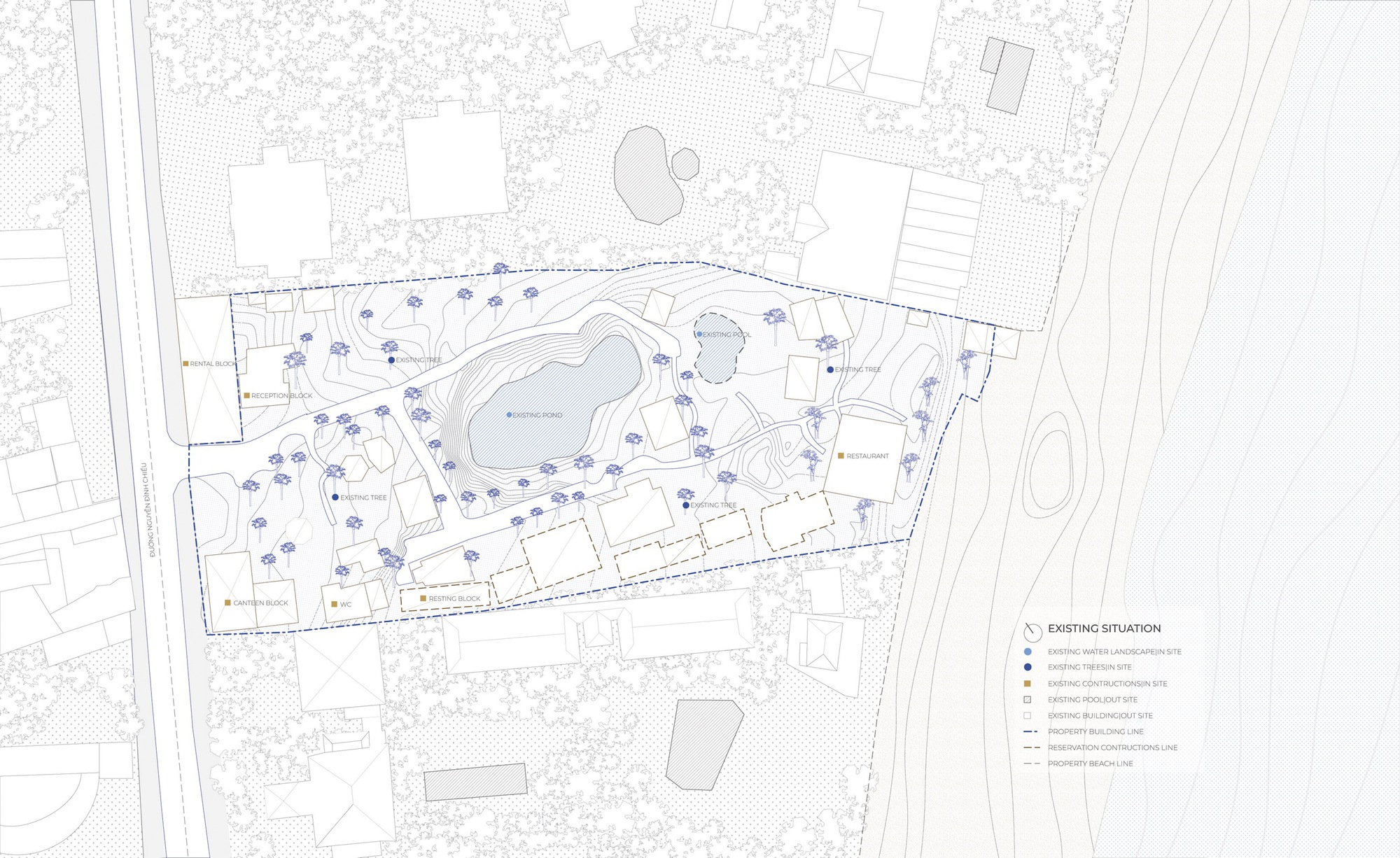
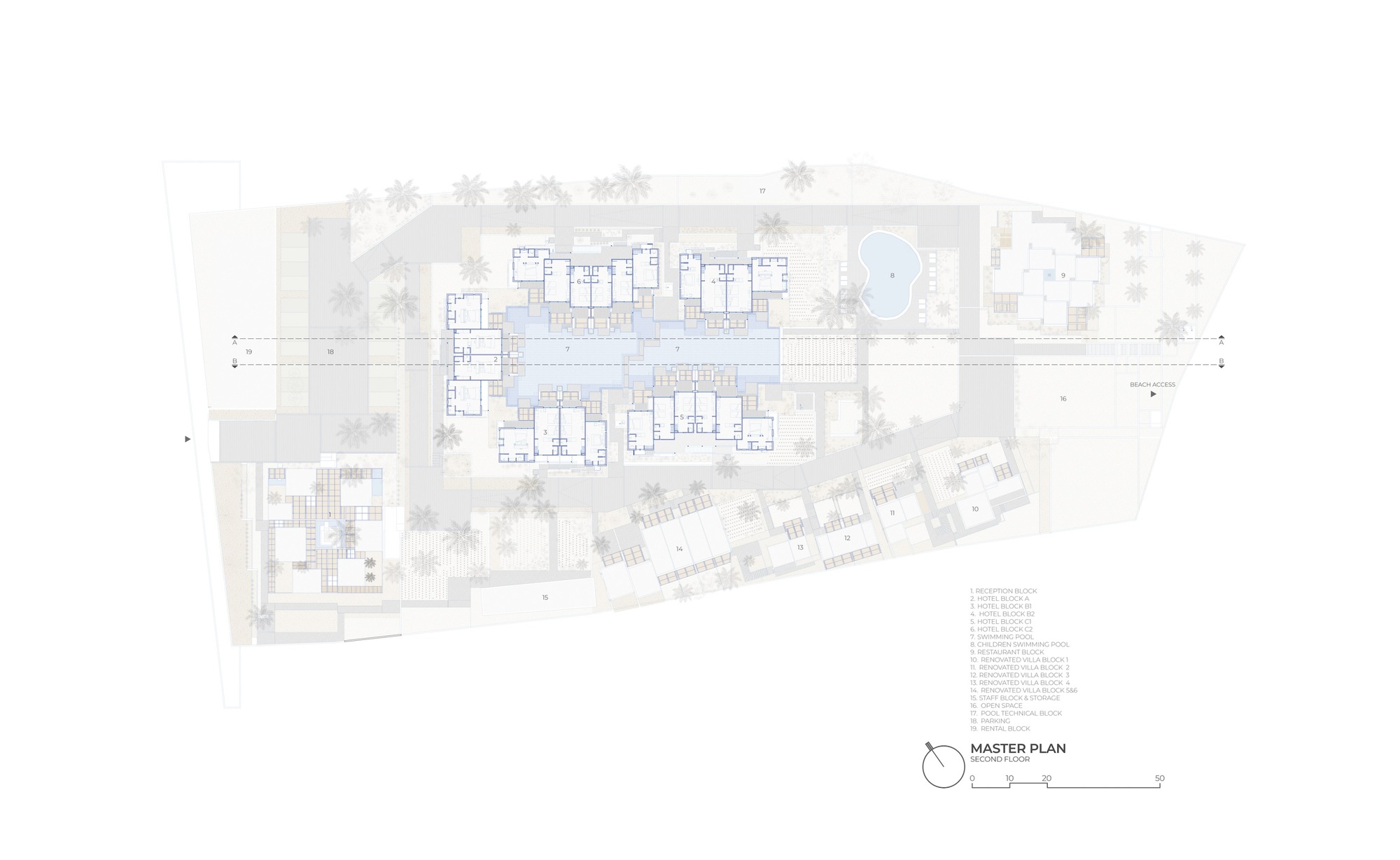
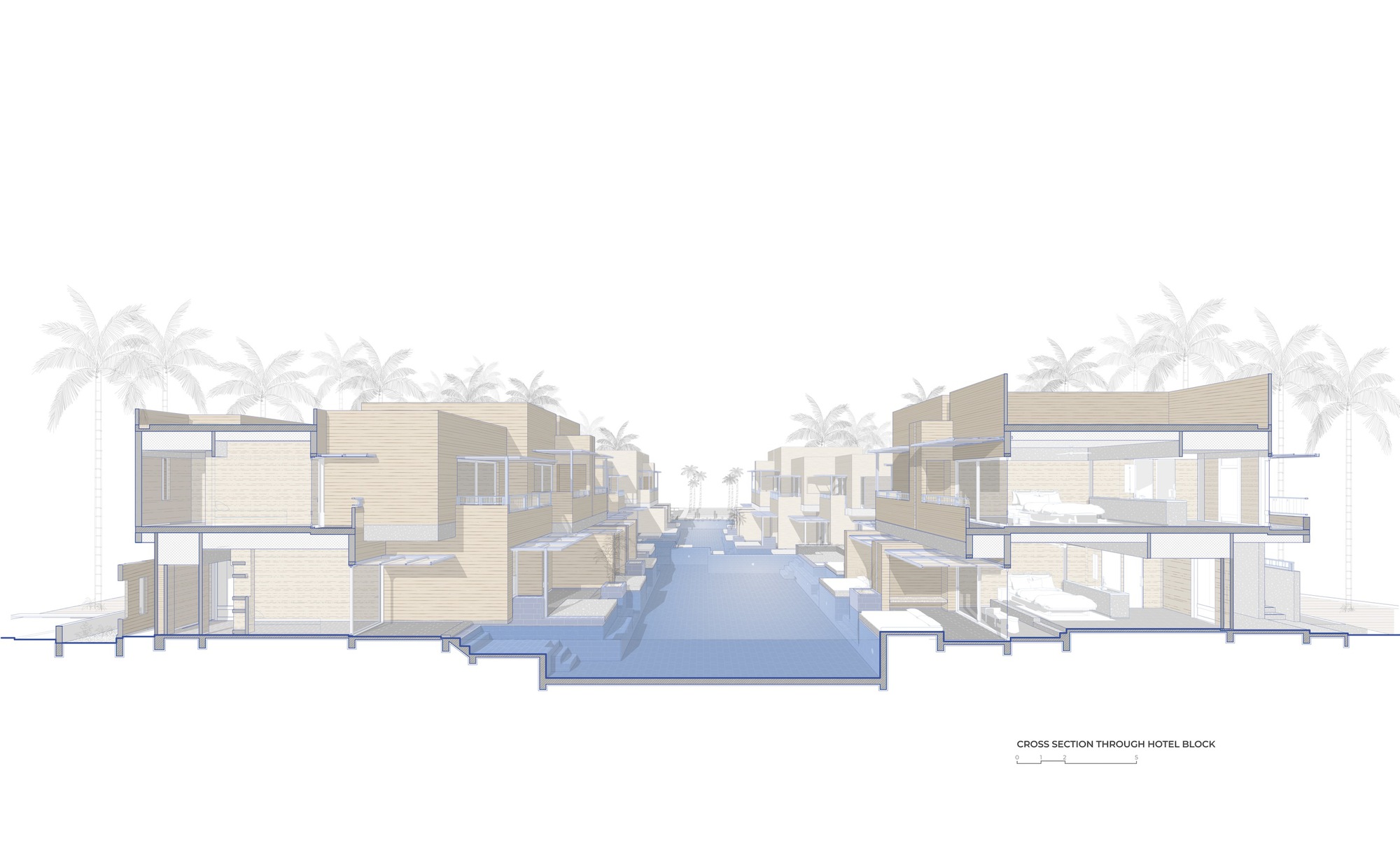
The Clay Mui Ne Resort #architecture Location: Vietnam Year: 2024 Located in Southeast Vietnam, Phan Thiet City is renowned for its beautiful beaches, white sand, and year-round warm sunshine. Situated ideally close to the city center, the construction land was initially an old resort built over 20 years ago on terrain sloping towards the sea. Recognizing the land's great potential, we decided to leverage its existing advantages and incorporate improvements to create a new, harmonious, and friendly resort. We considered using local materials and appropriate construction methods. The goal is to create a welcoming space that respects the site's existing values while leaving room for new ideas. The project is designed in harmony with the natural terrain by balancing excavation and landfilling, retaining most of the existing coconut trees. The main materials include easily recyclable resources such as stone, wood, steel, and unbaked bricks. To minimize the extraction of new resources, we reused some stones and wood from old structures. The row of villas along the boundary wall was also kept intact to be renovated into new villa clusters. Instead of constructing a large structure, we divided the buildings into smaller structures, creating the feeling of a small community cluster. The central swimming pool serves as a key landscape feature and a focal point for activities. The accommodation clusters are arranged around the pool, creating an open and communal space.
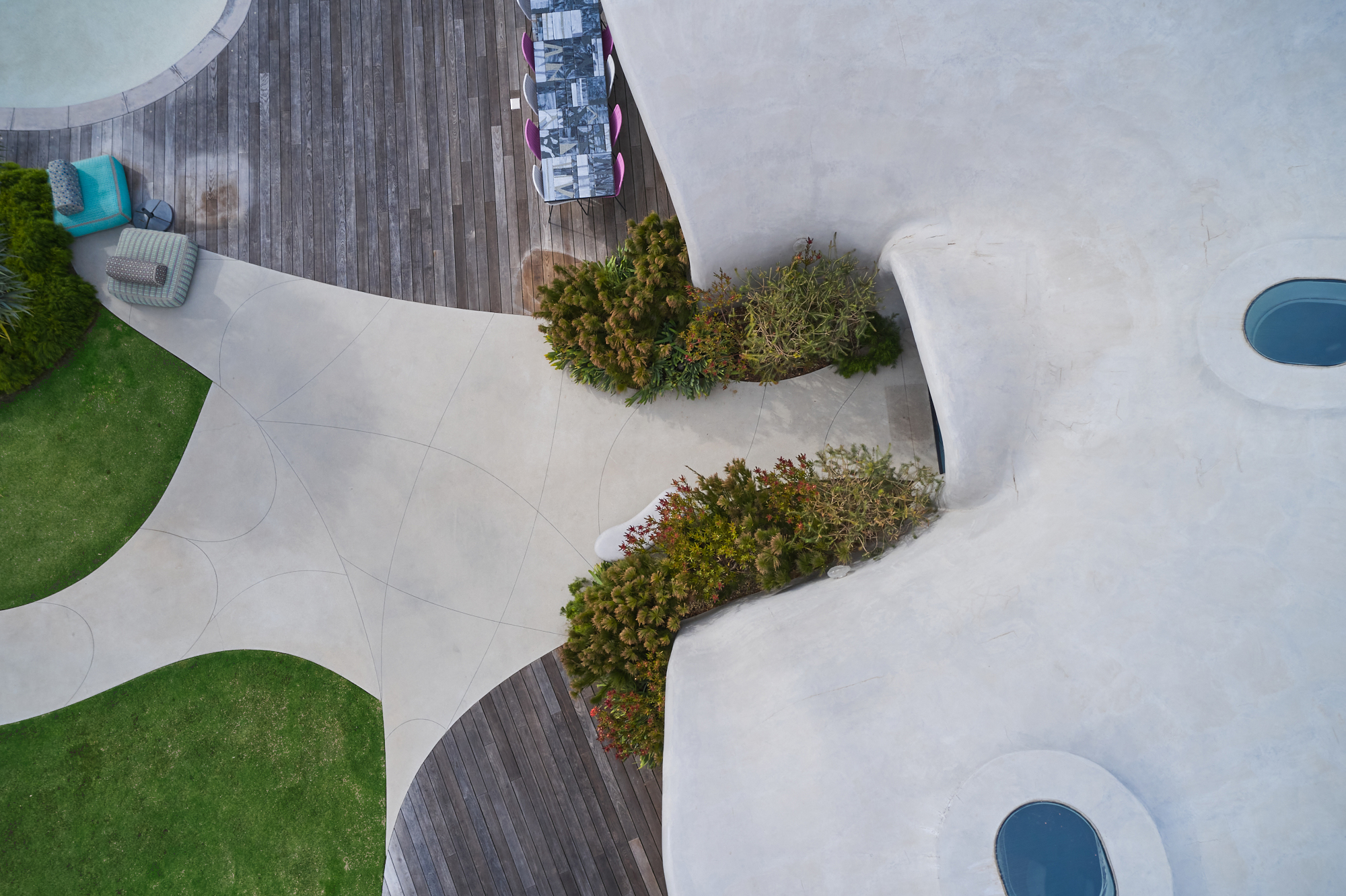
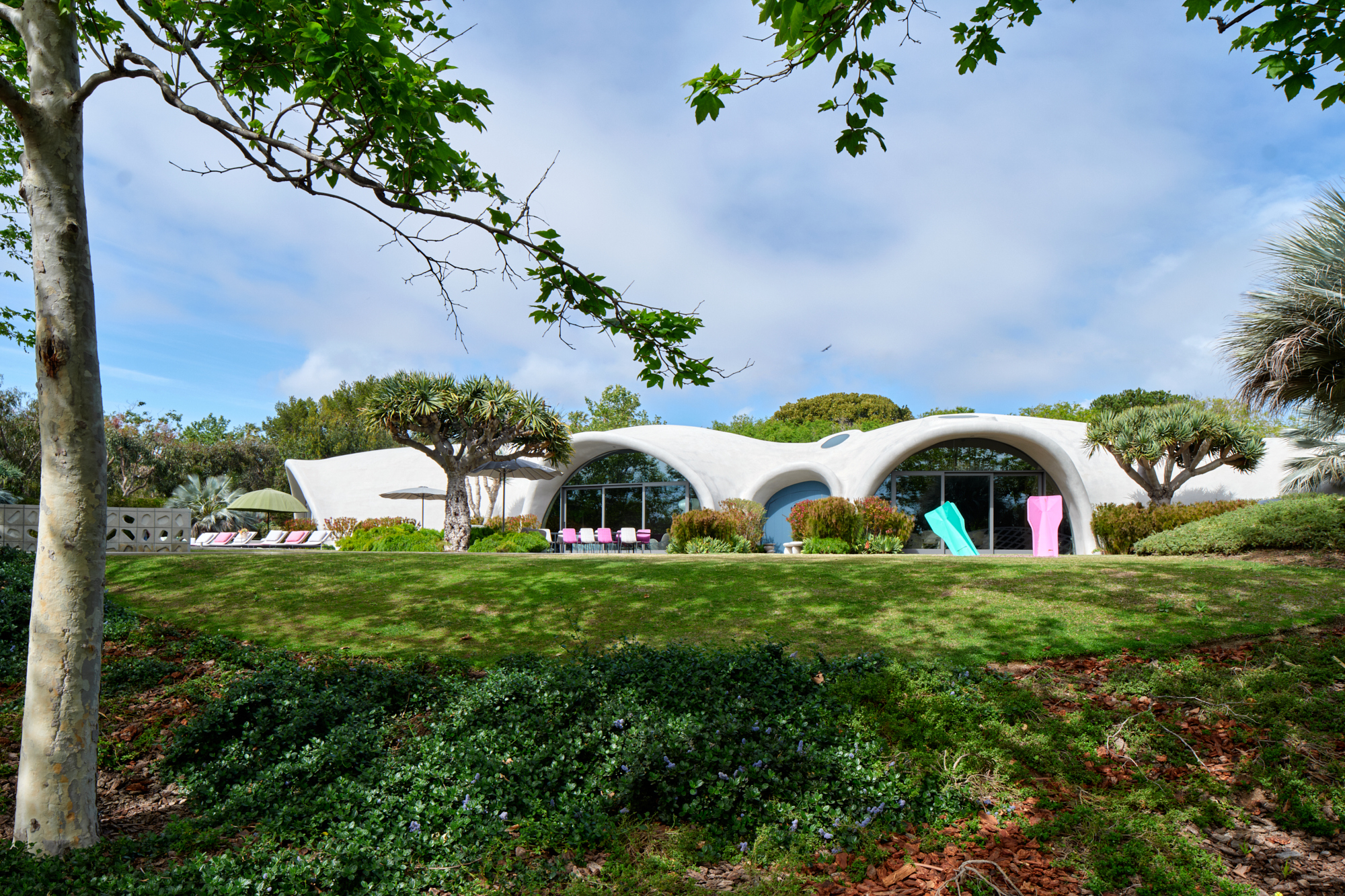
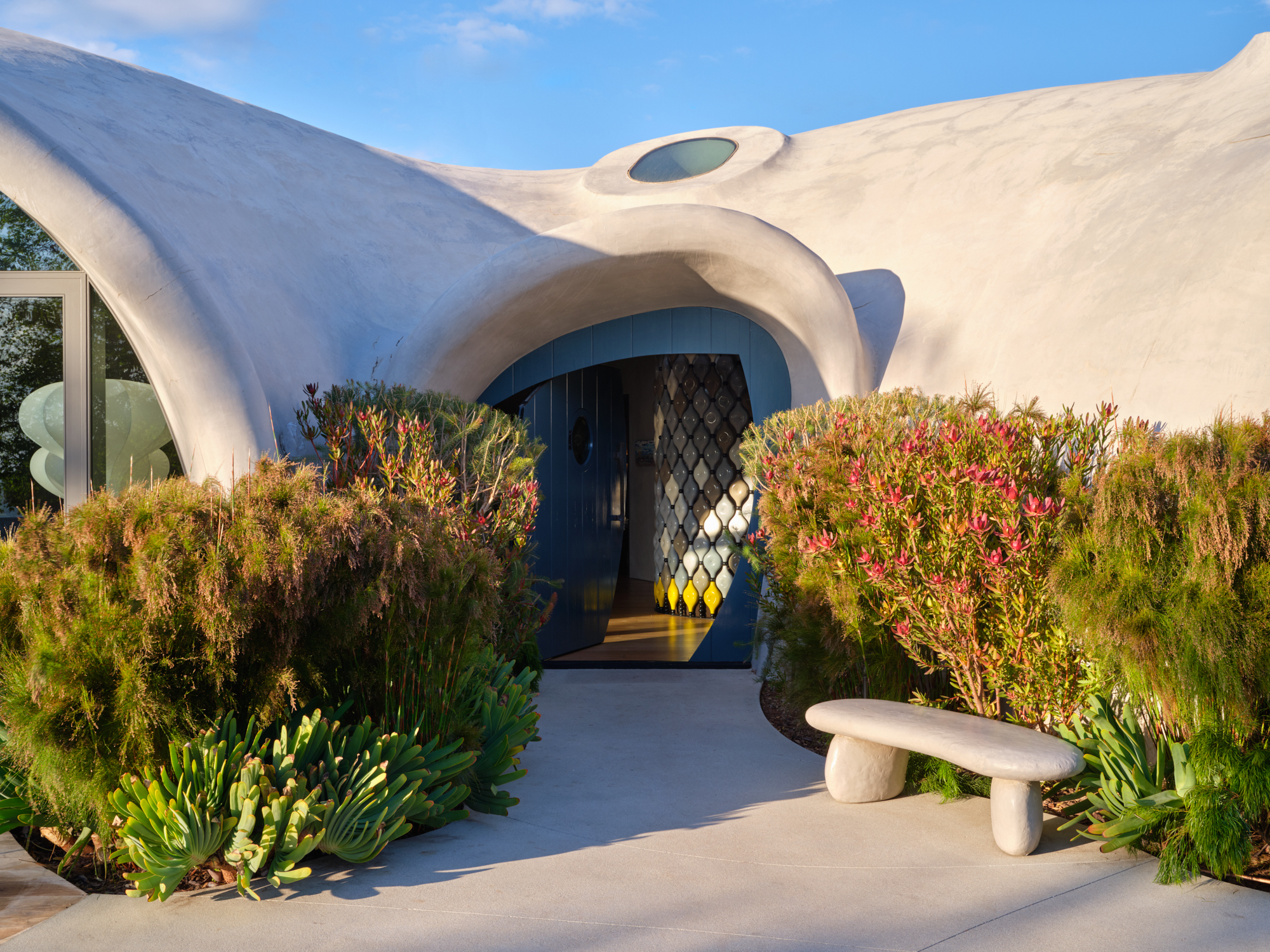
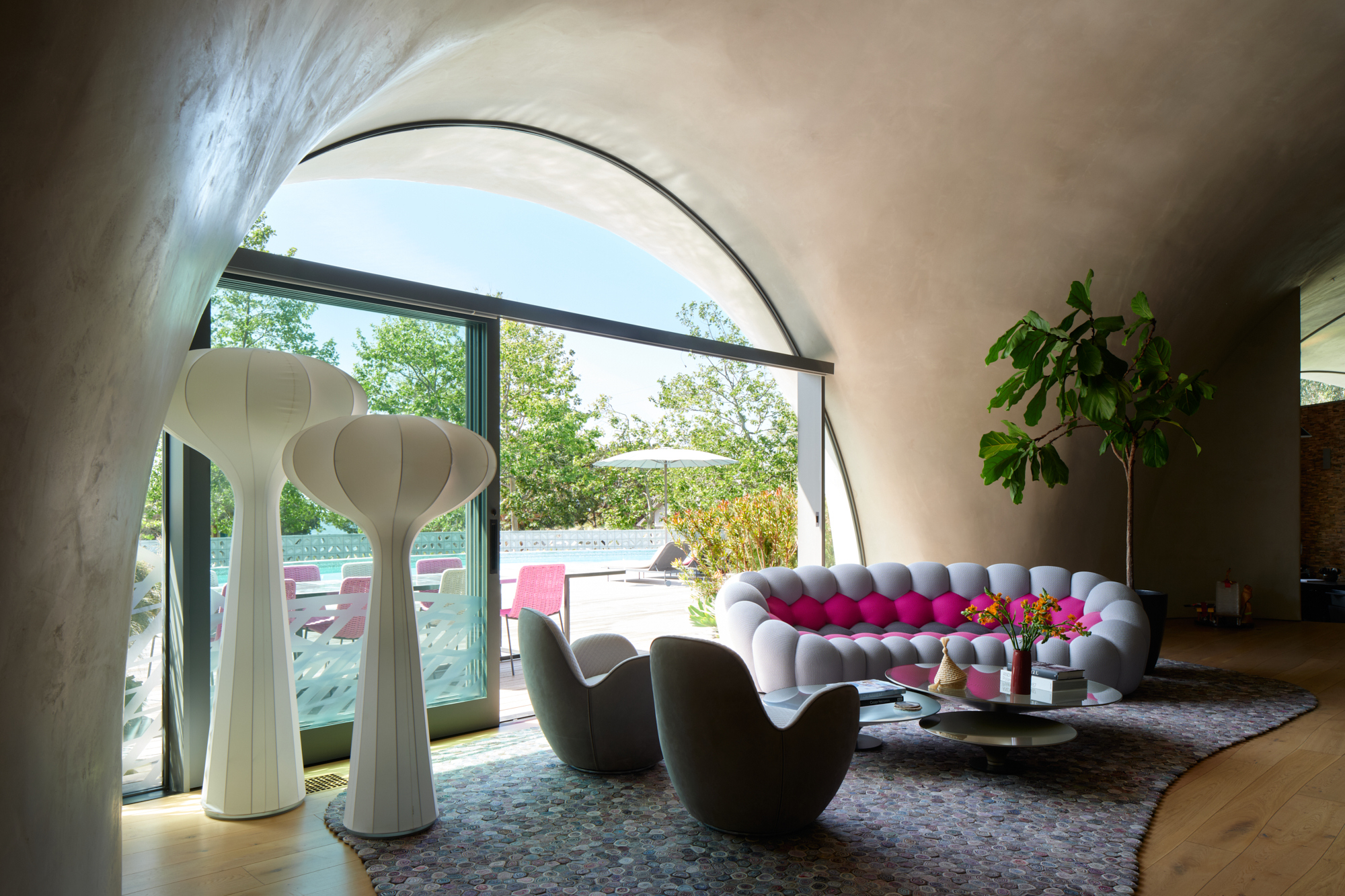
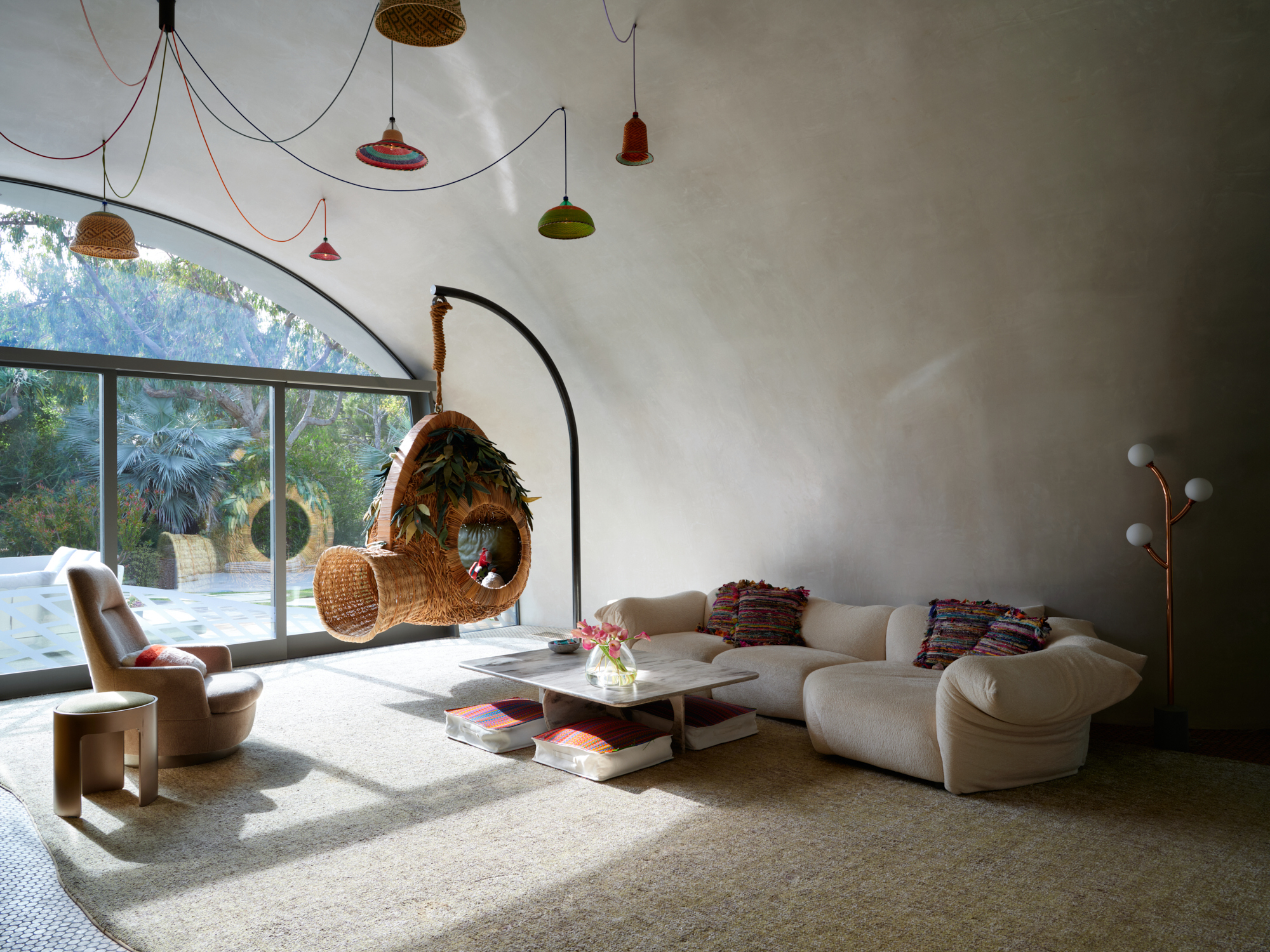
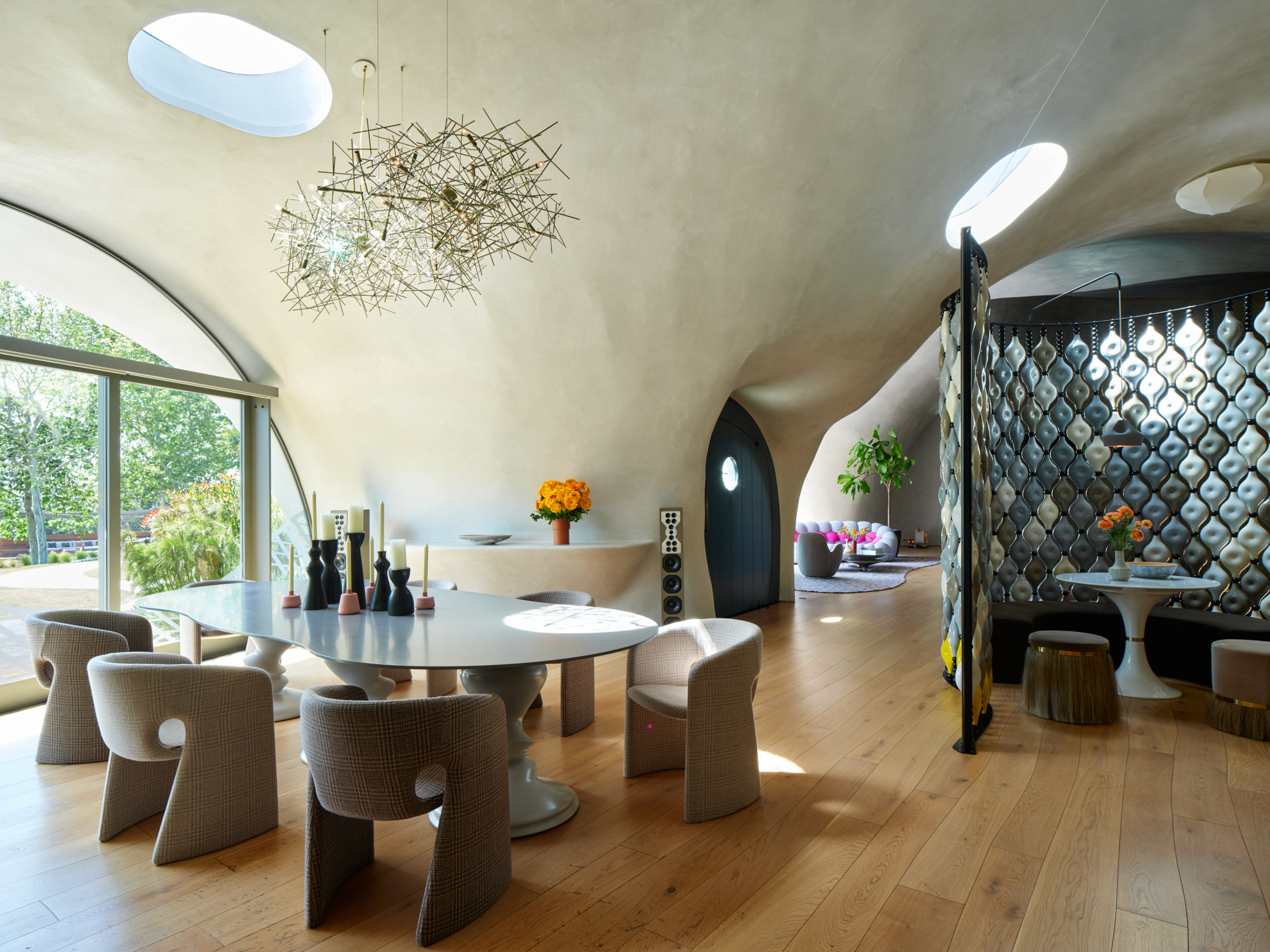
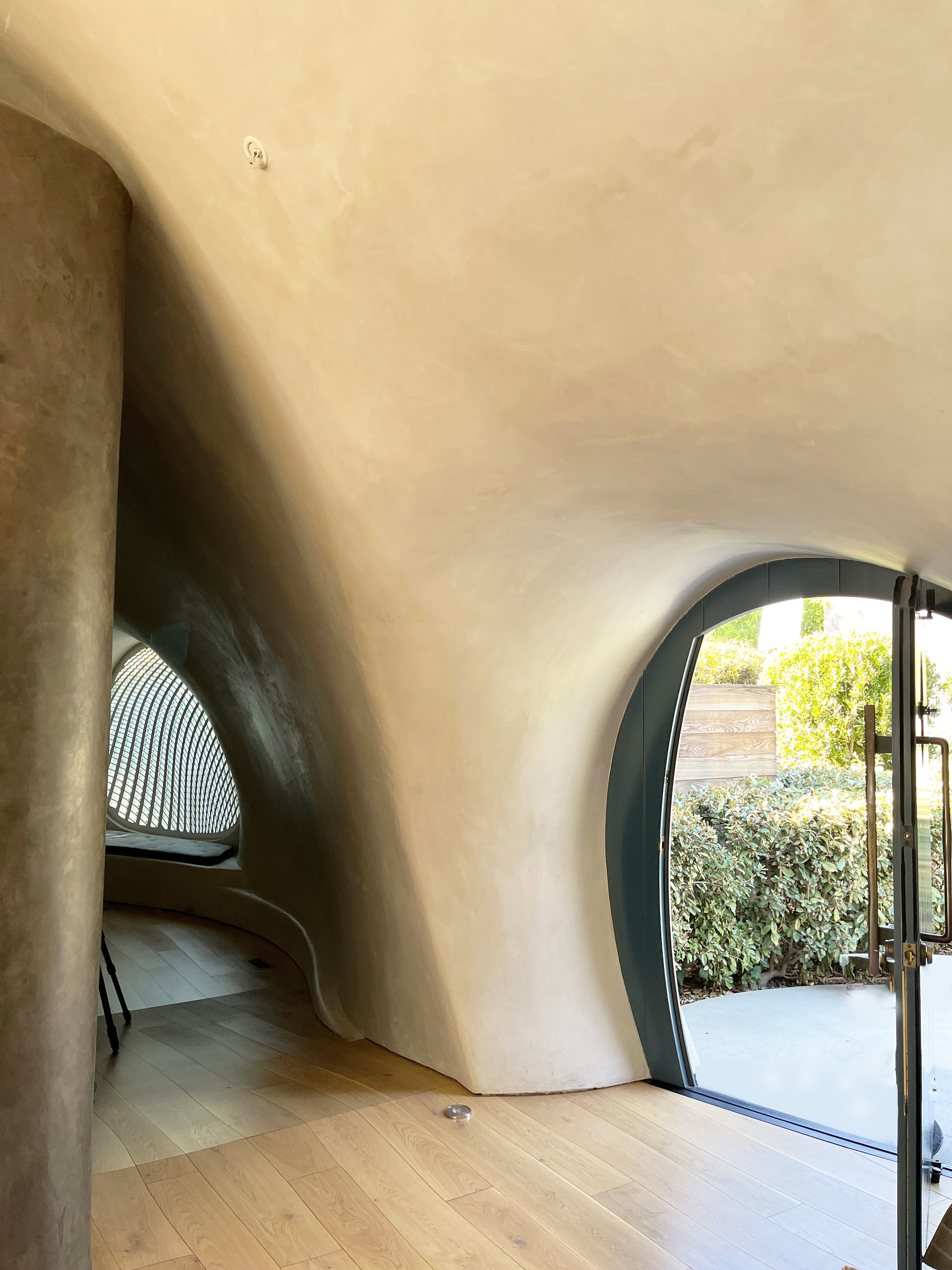
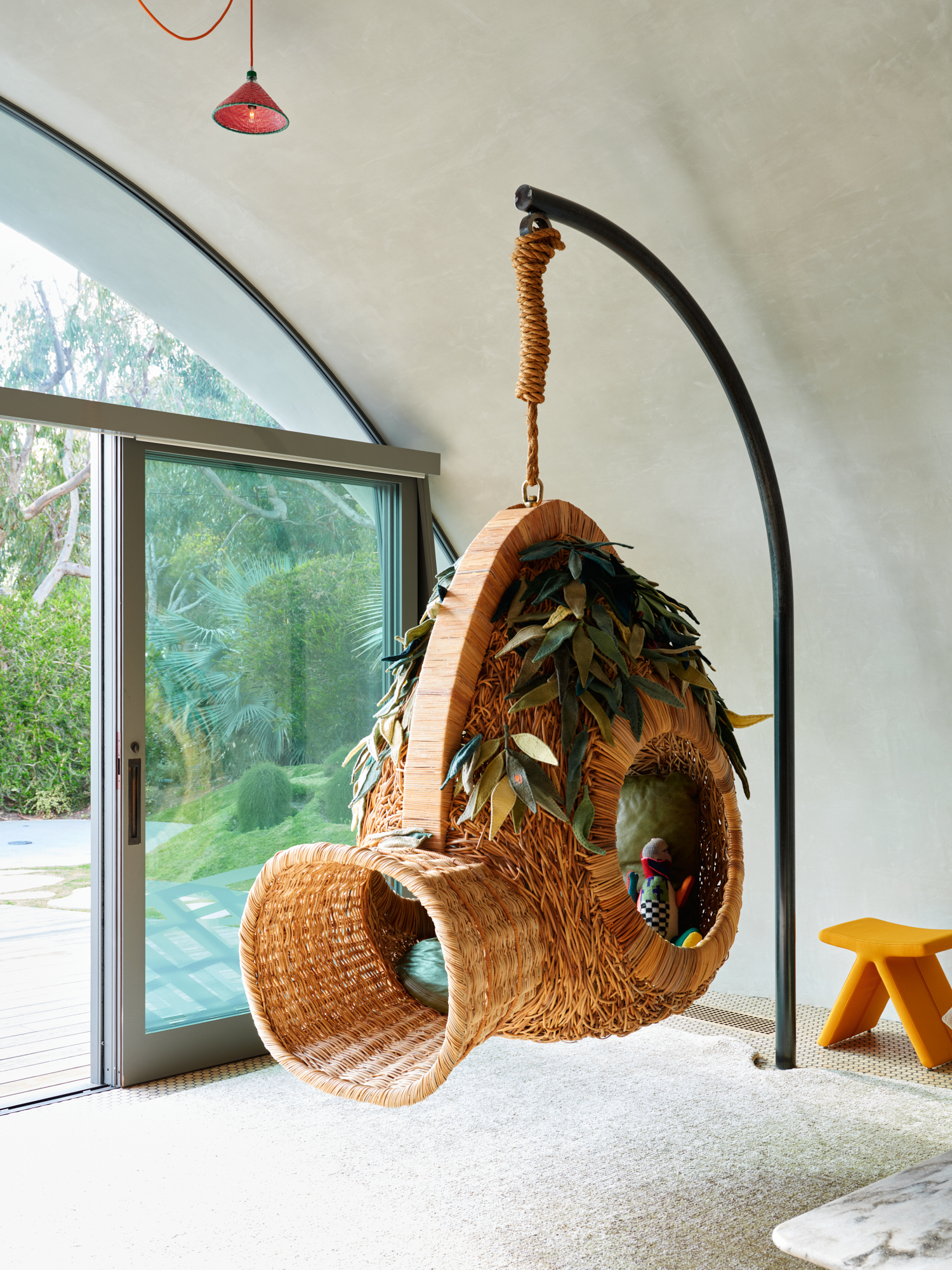
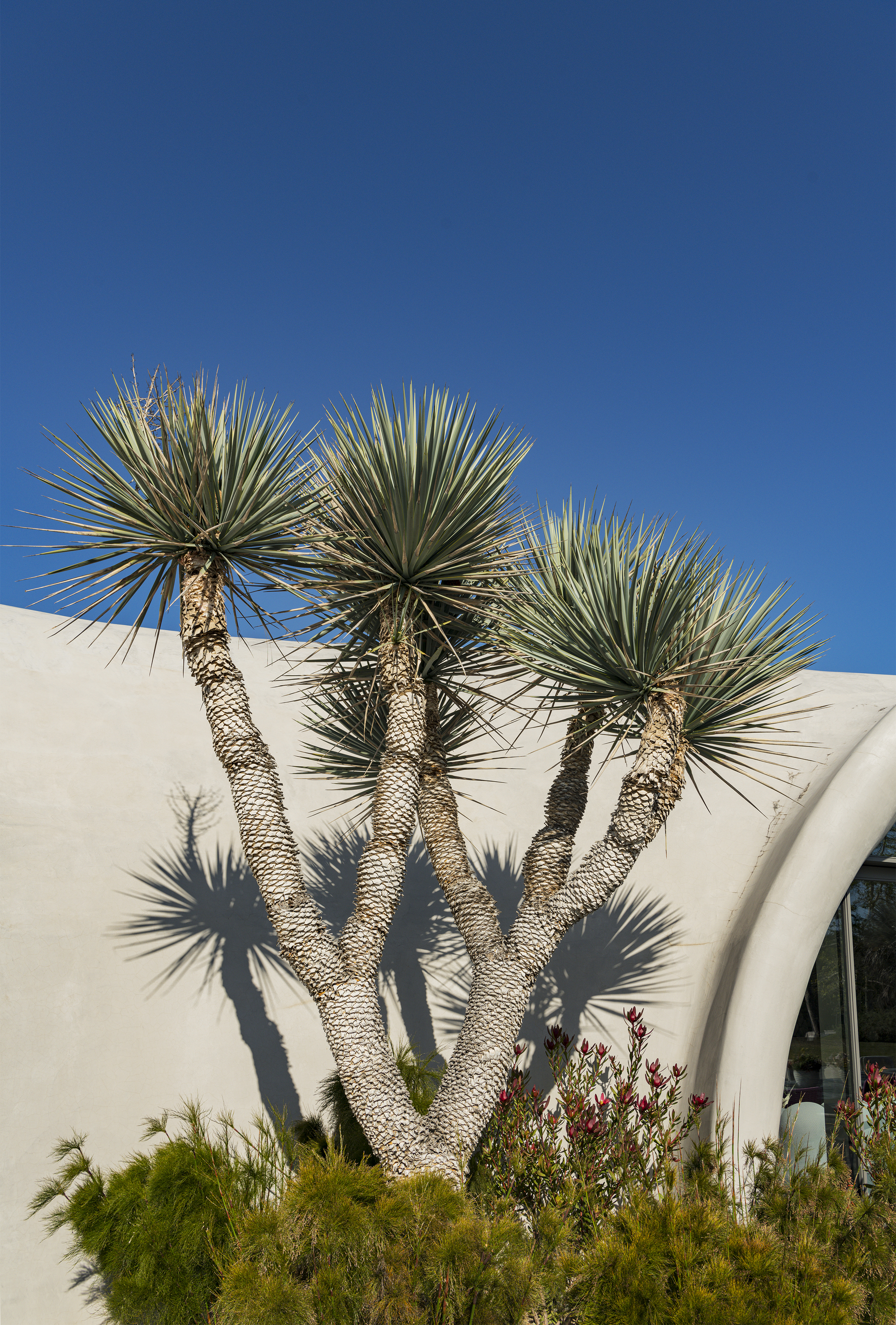
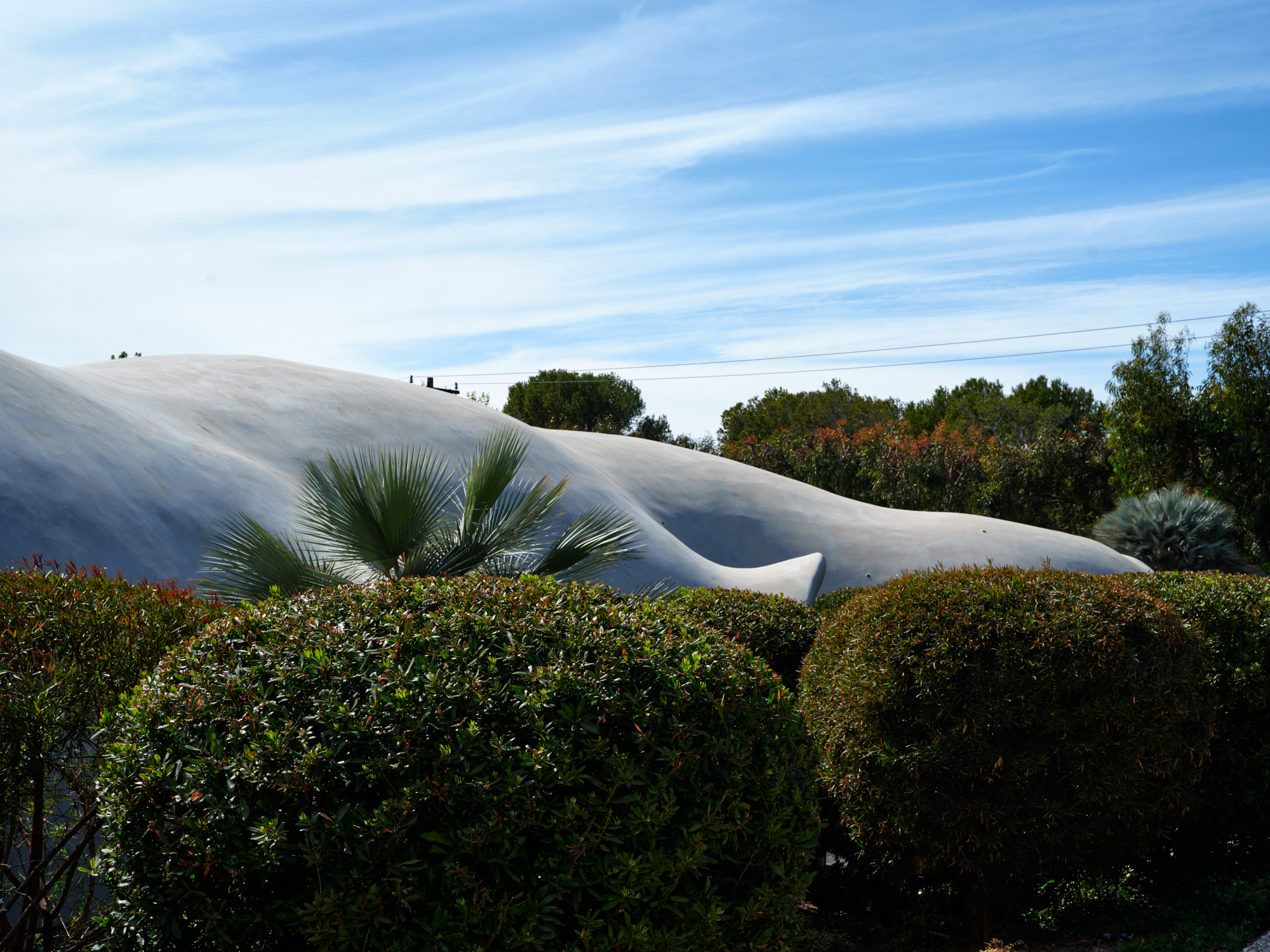
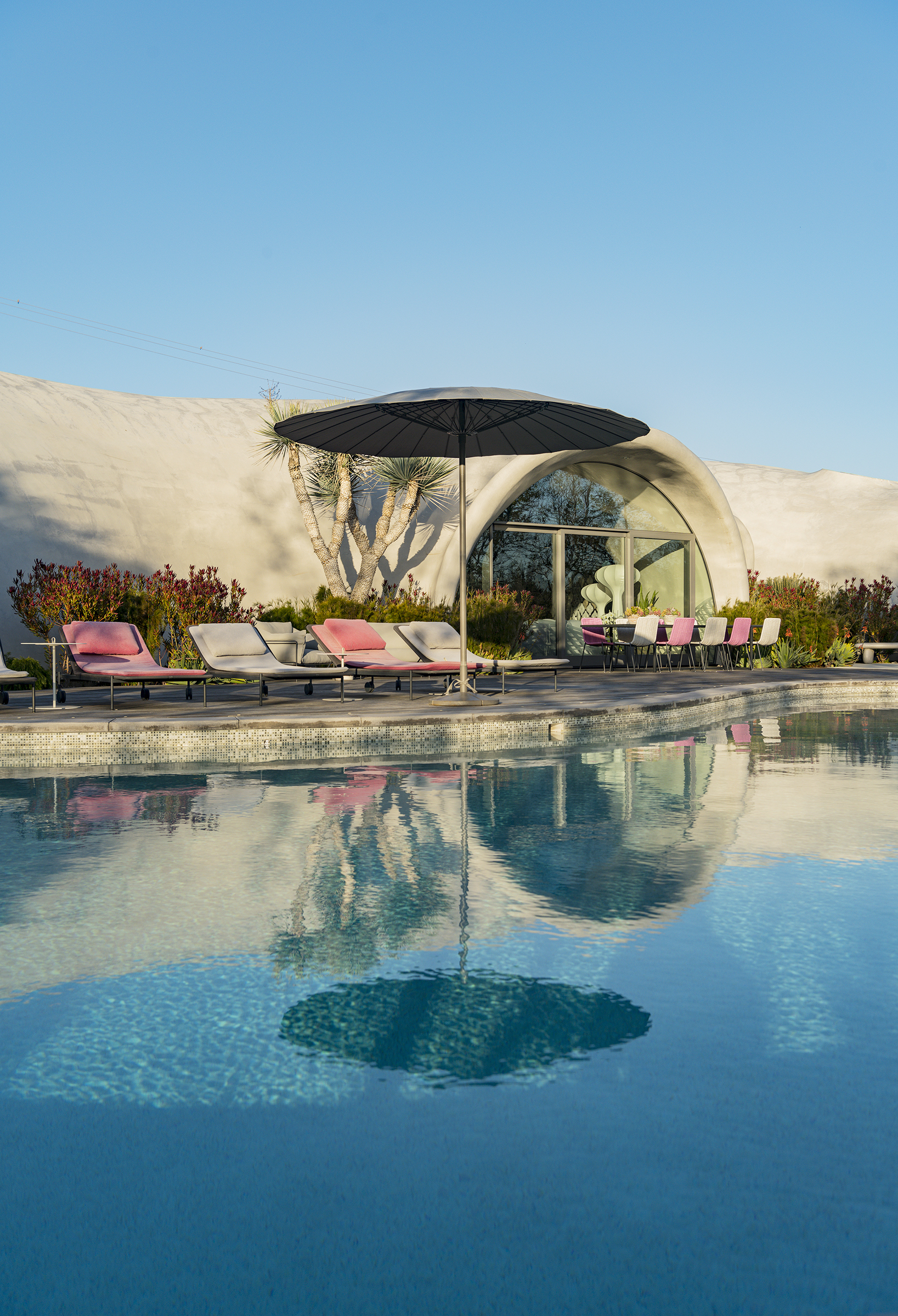
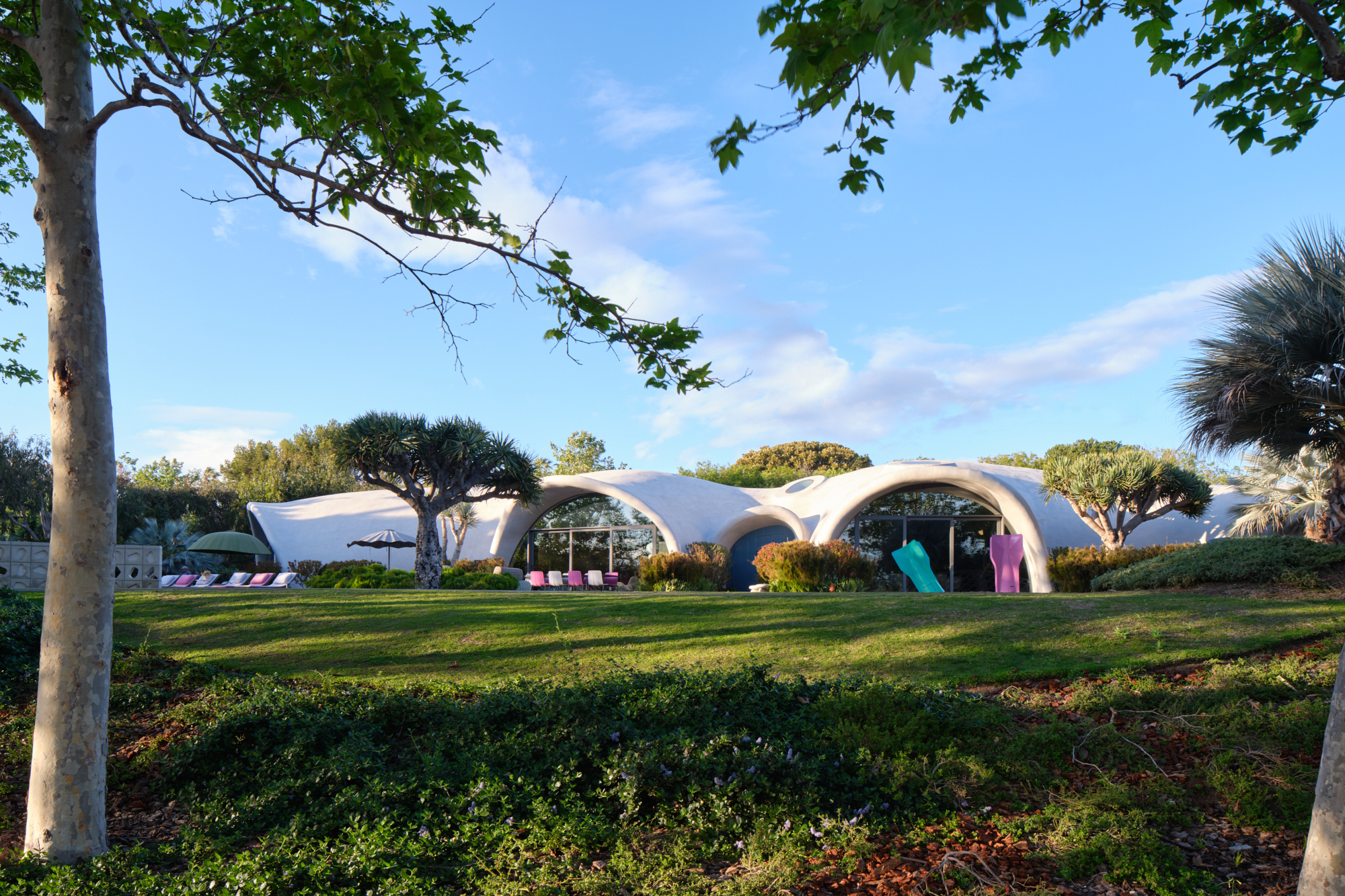
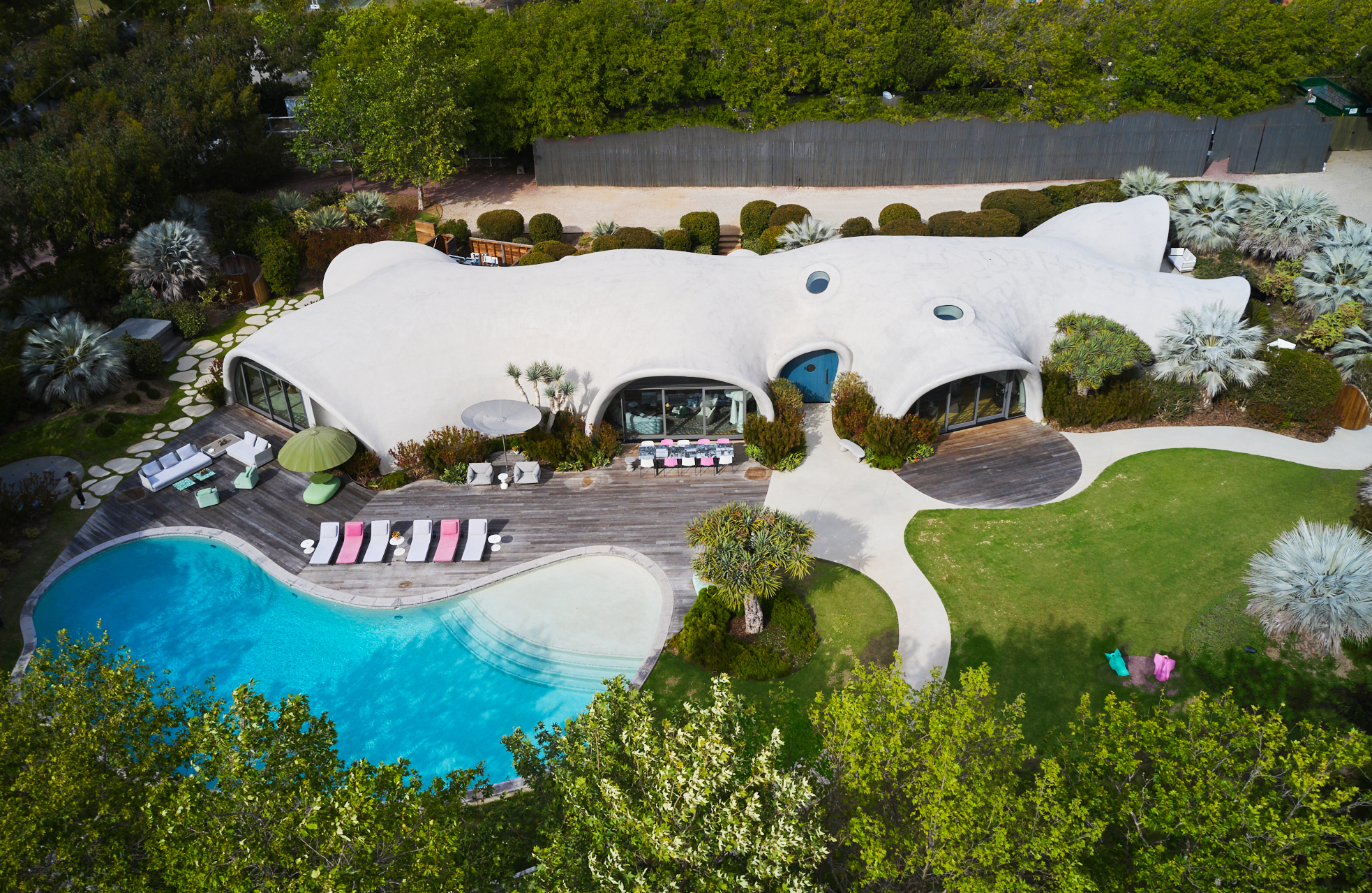
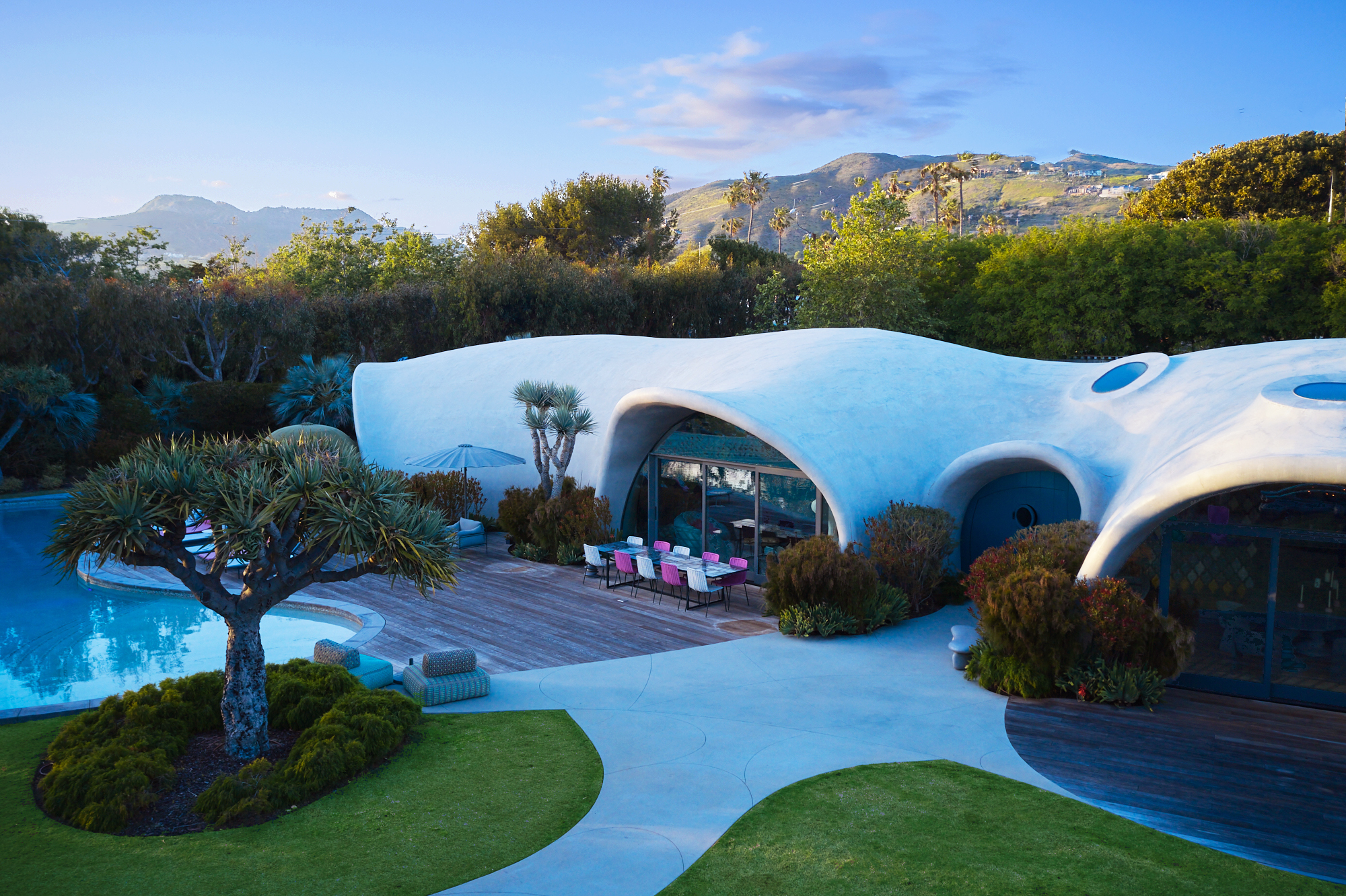
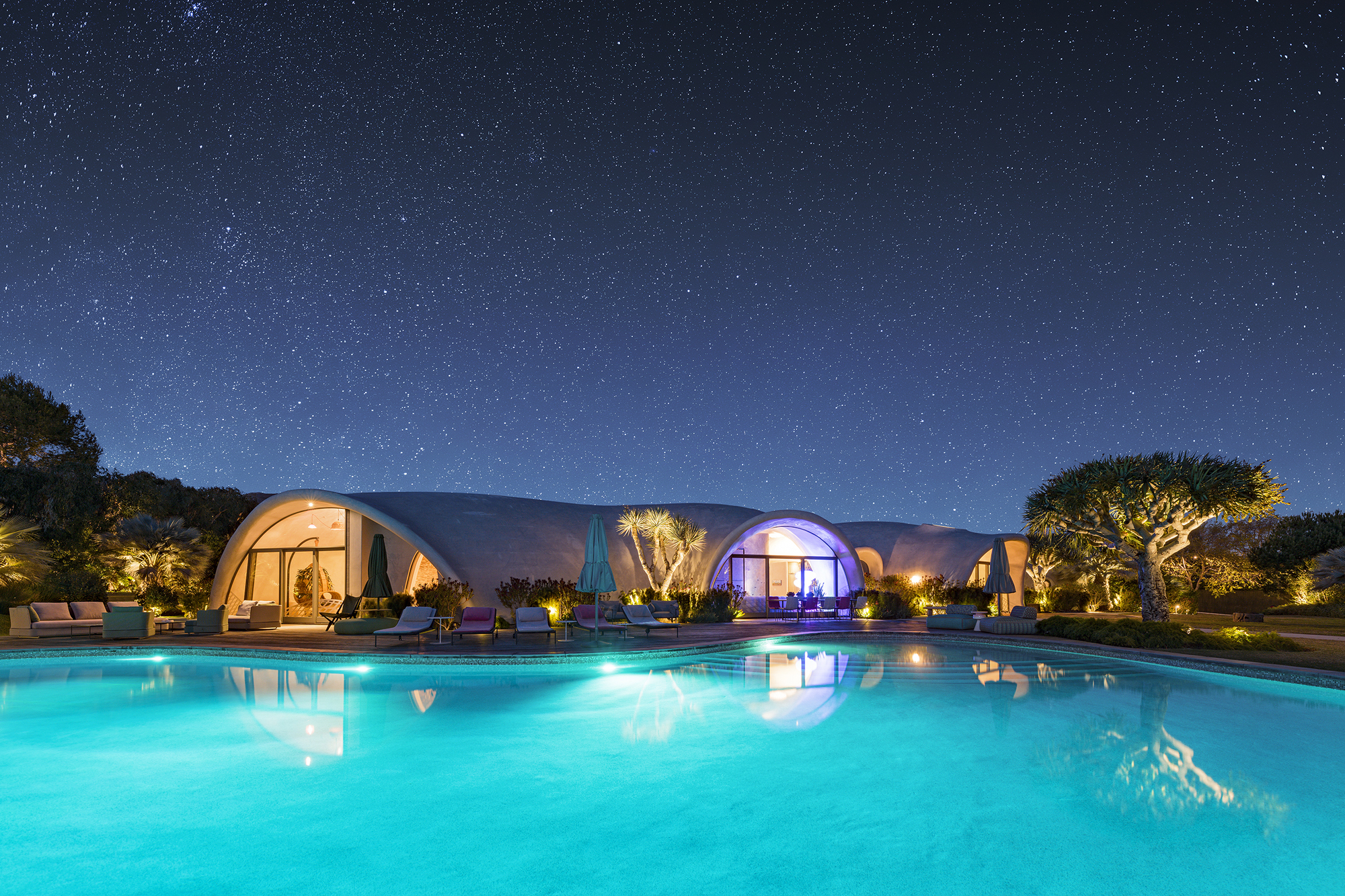
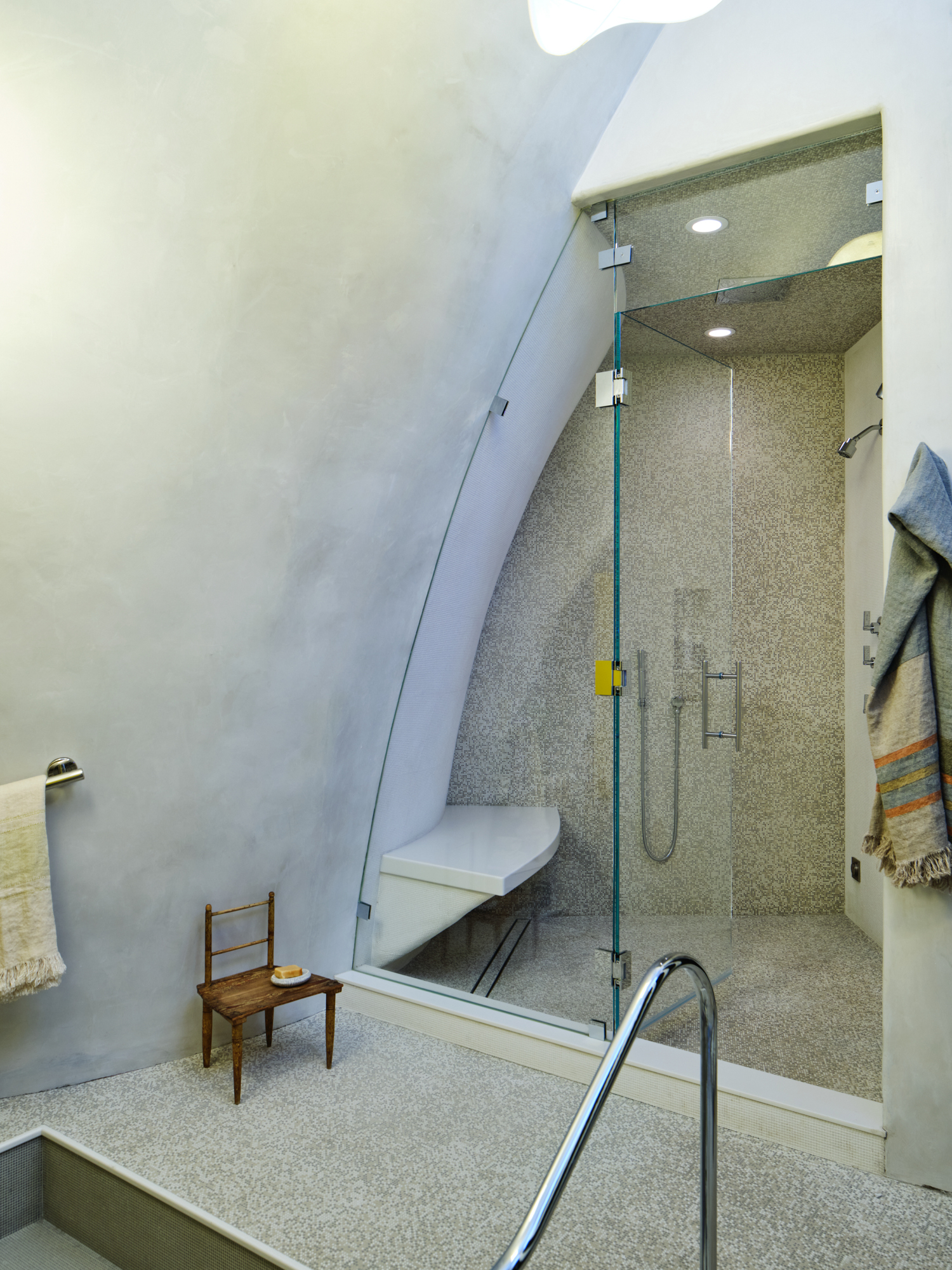
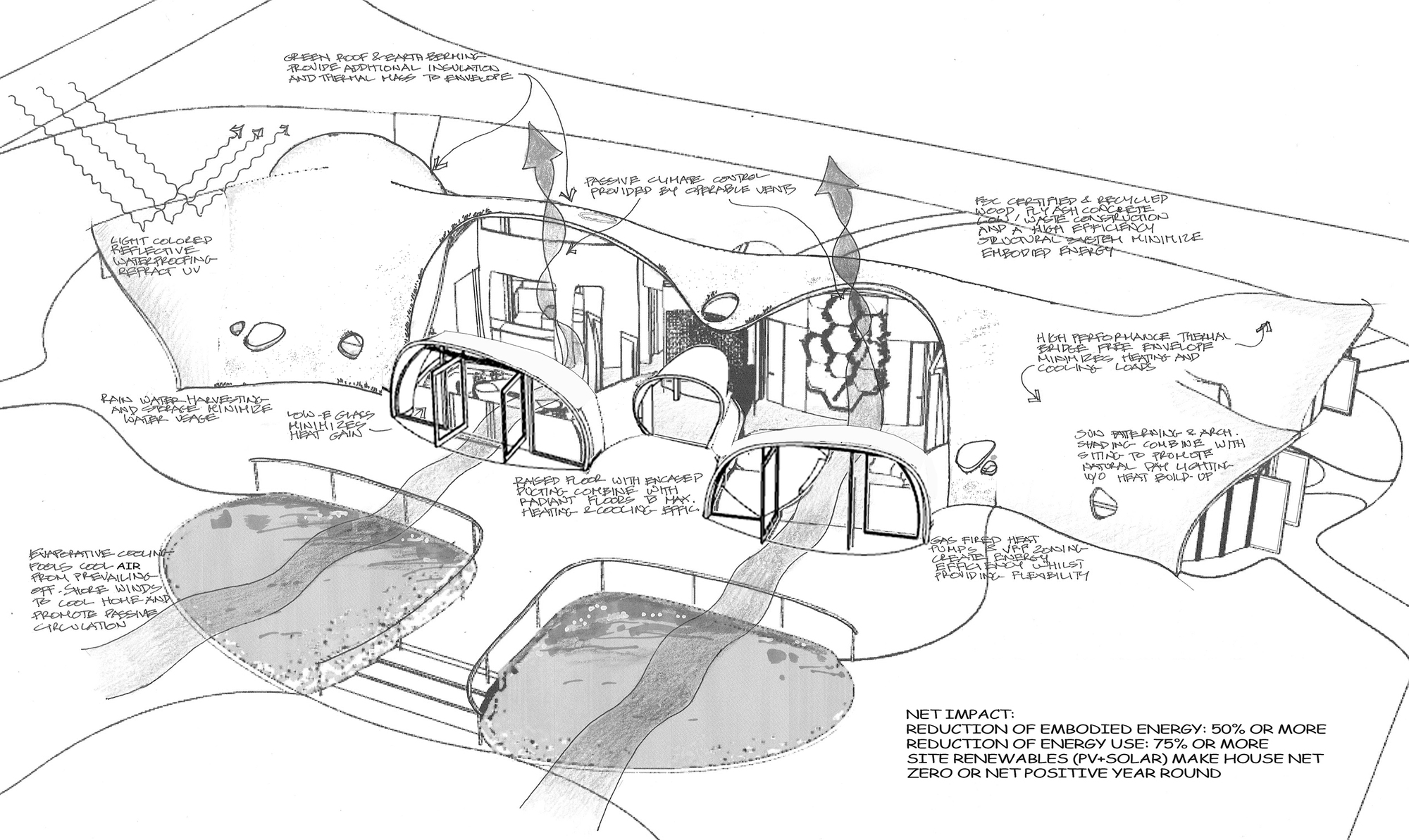
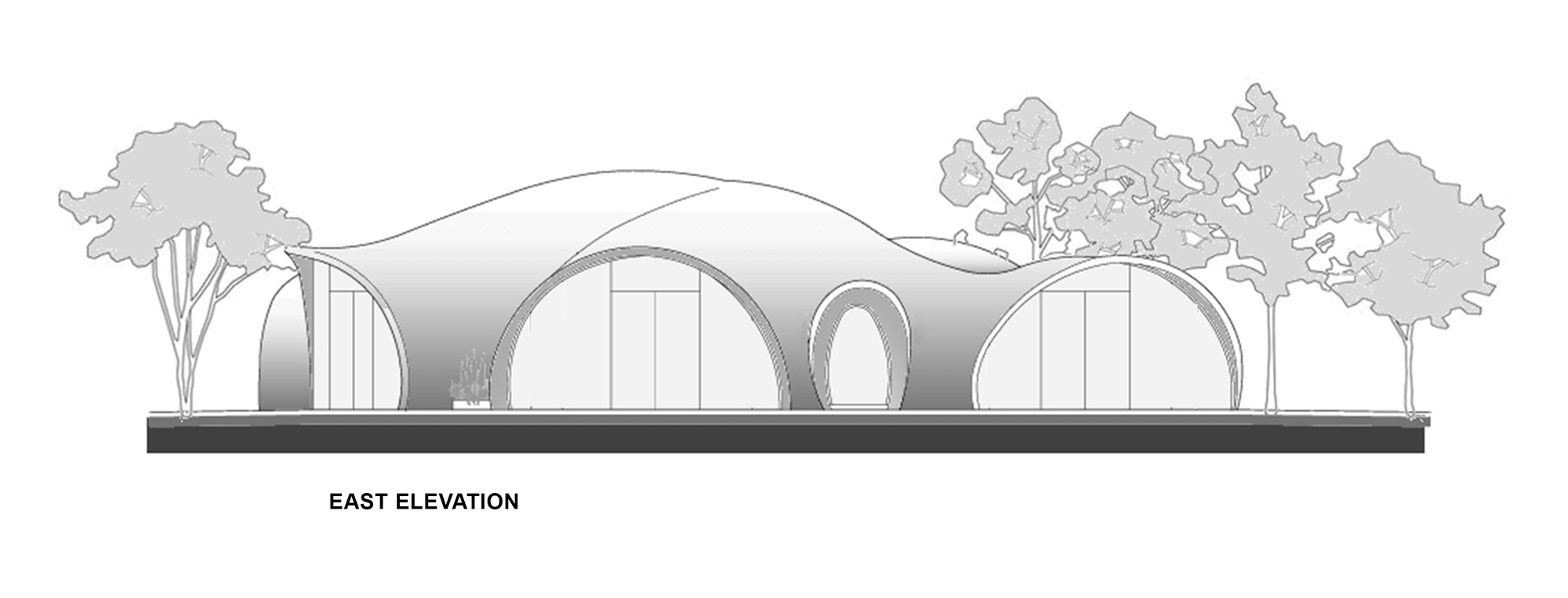
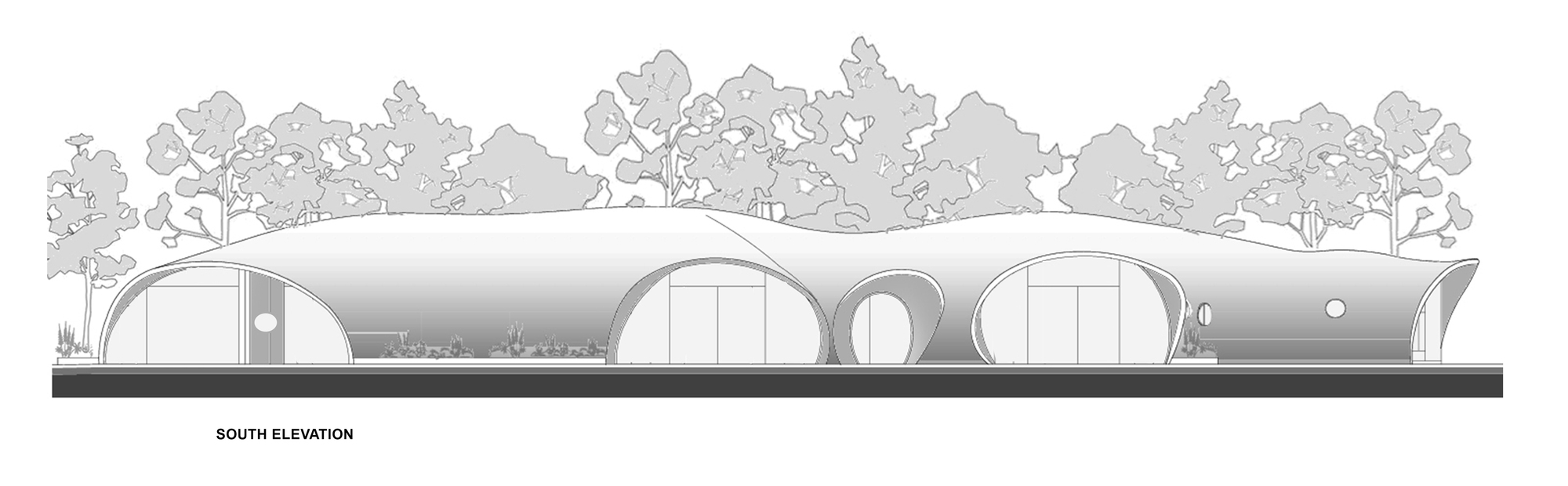
Shell Home #architecture Location: Malibu, United States Area: 6500 ft sq Year: 2022 Photographs: Roger Davies The Shell Home project in Malibu challenges us to reconsider how we design and build architecture. This project illustrates how natural principles may be used to guide design, improve performance and give shape to the envelope of a building. This ‘Form Finding Functionality’ leverages air pressure to design and build an asymmetrical thin shell structure quickly and practically. The resulting building is a sculpture for living. Architecturally expressive and highly resilient, it provides structural and environmental efficiency as well as adaptability within a uniquely flowing organic form. The construction industry has trailed other major industries with regard to productivity and technology. This has resulted in significant inefficiencies in some of the most basic aspects of construction including safety, speed, affordability and environmental impact. Given buildings account for 30% of the world’s energy consumption, is it not time to rethink how we build and design? Our alternative approach deploys a single reusable, preformed pneumatic formwork secured to a foundation and inflated to a specified air pressure. Steel reinforcement and concrete are added onto the inflated air form. Air pressure is maintained during construction and curing. Once the specified compressive strength is achieved, the formwork is deflated and ready for reuse. Less material and labor are required and construction waste and timelines are reduced, yet the resulting building envelope is more resilient, safer and greener than traditional construction. The building technology exemplified by this project has applications across scales, programs, and price points and articulates a new architectural and construction approach, synthesizing design, resiliency, and sustainability. The Shell Home literally and figuratively emerges from the landscape, providing endlessly flowing living spaces tied to views framed by generous organic openings. The project's sinusoidally silhouetted shell is as naturally elegant as it is safe. The building shell curves continuously to articulate sculptural environments and define comfortable, biomorphic spaces. The design approach is derived from natural forces. Air pressure is harnessed to build and design the project. The resulting form elevates both sensations and performance and brings us closer to a synergy with nature. The dual-curvature, monolithic building envelope is much safer and more resilient than traditional envelopes. It carries dead and live loads efficiently and transfers them elegantly along its entire perimeter to the foundation. The building shell is self-supporting, eliminating the need for columns or bearing walls and allowing total flexibility to design and evolve the interior. It is made up of low-carbon geopolymer concrete and contains less than half the embodied energy of a similarly sized traditional building. The building envelope is also thermal bridge-free and insulated to reduce energy use by as much as 65%. The Shell Home’s high-efficiency envelope, siting, landscape and water elements, natural ventilation, and day-lighting combine with other passive design elements and active systems to further reduce environmental impact.
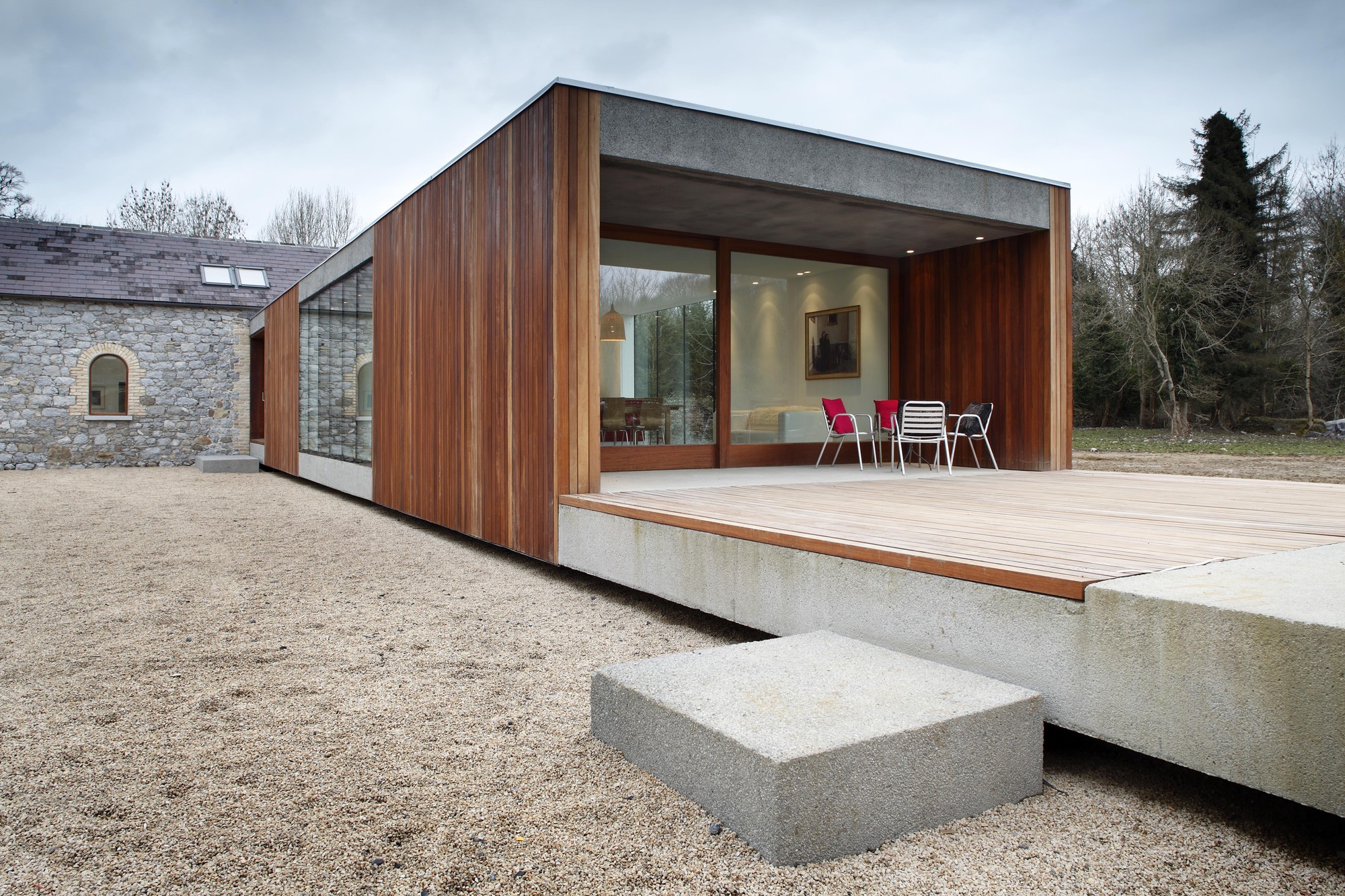
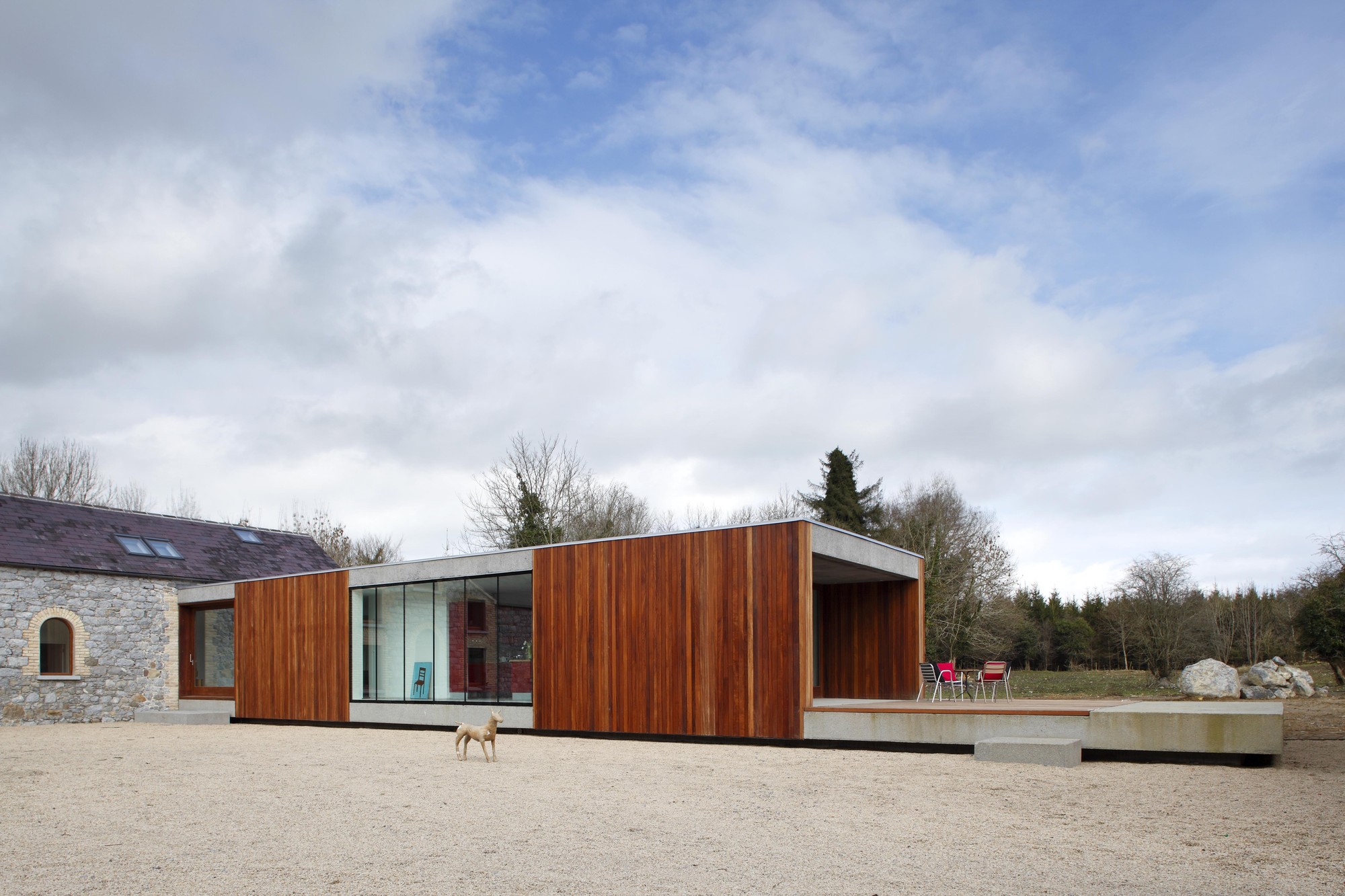
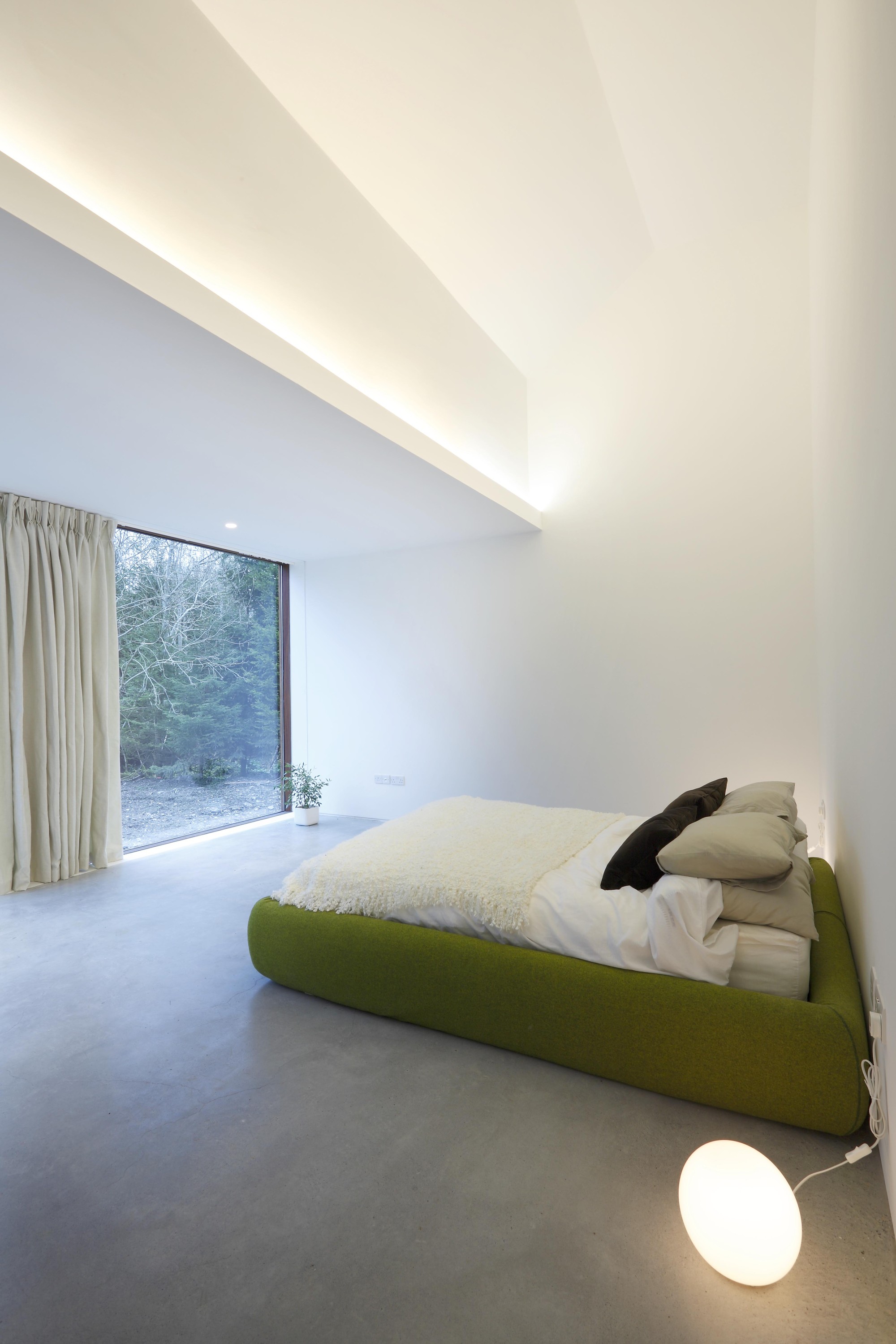
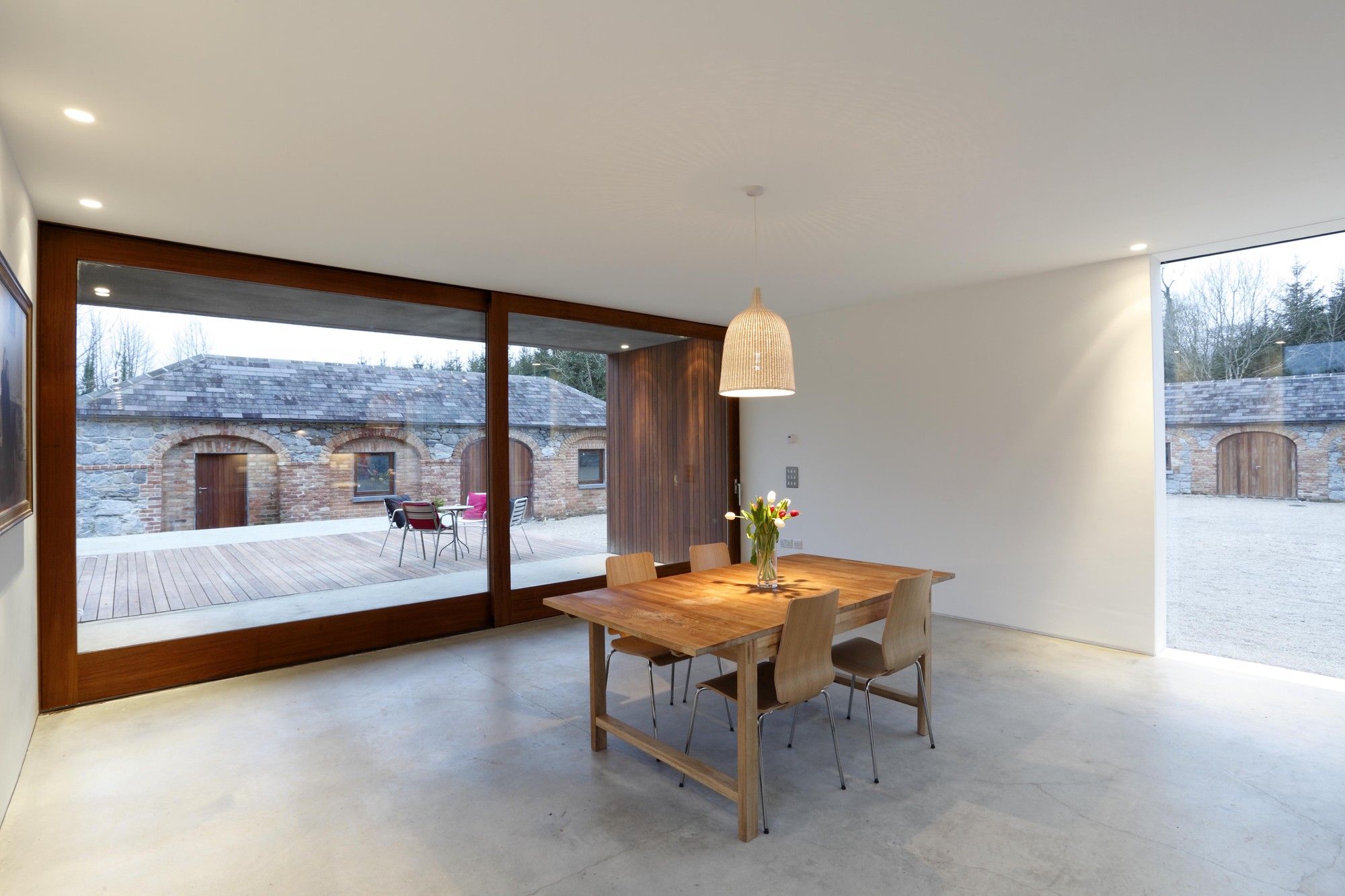
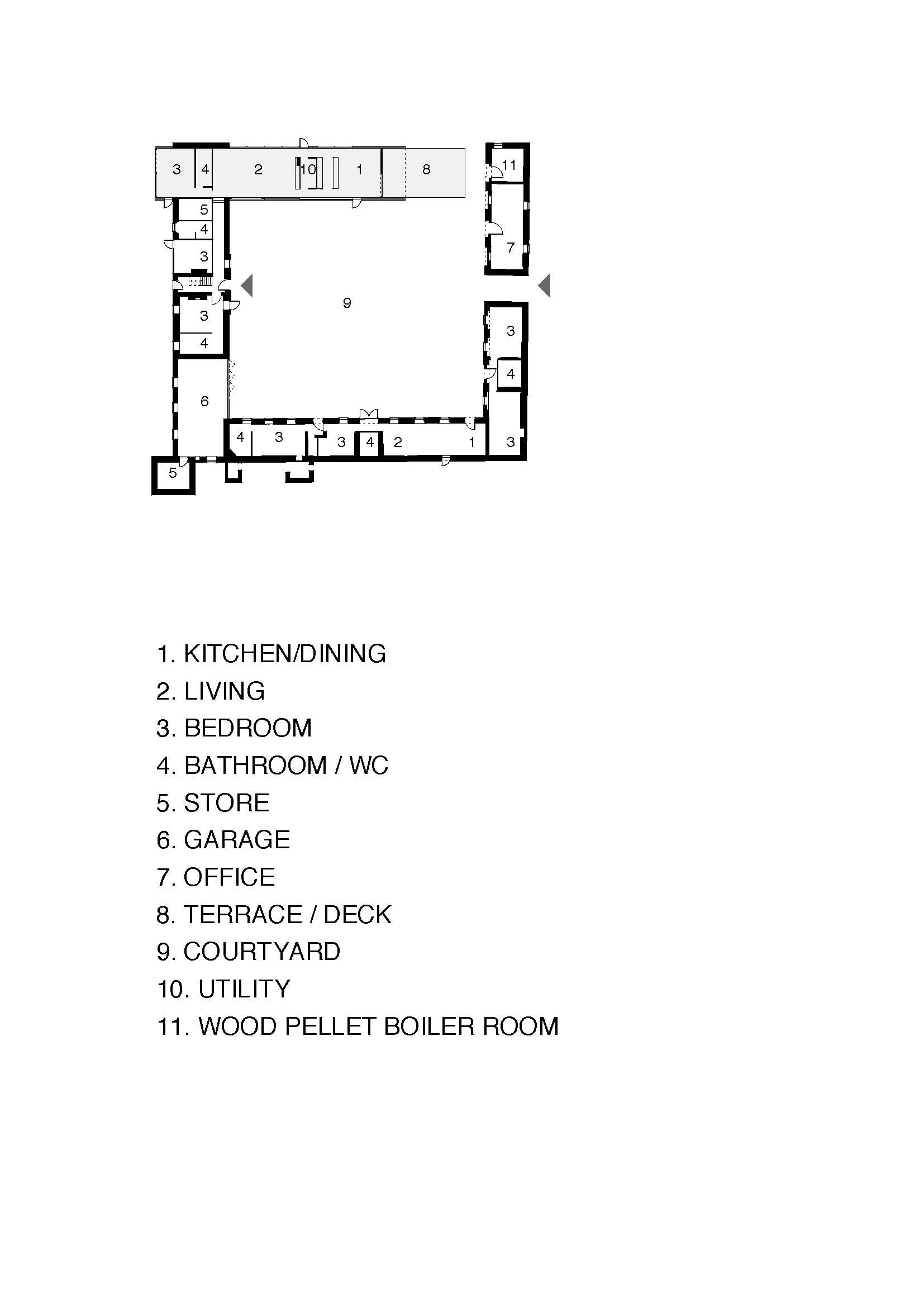
Interesting contrast between old and new. Not sure if I like it. Ballymahon #architecture Location: Dublin, Ireland Architects: ODOS architects Area: 450 sq m Year: 2009 This collection of 18th Century farm buildings sit central to woodlands outside Ballymahon, Co. Longford. The existing buildings originally formed three sides of a courtyard. An old crumbling stonewall completed this courtyard. A new single storey wing replaces the old wall and provides open plan living kitchen and dining accommodation. To the rear, en-suite master bedroom accommodation has been provided. The existing buildings have been restored to house varying accommodations, notably bedrooms, bathrooms, studio, garage & plantroom.  The introduction of this new wing is an attempt to complete the courtyard whilst allowing a visual transparency between the courtyard and the woodlands beyond. This is something, which is lacking in the existing collection of buildings. Large expanses of frameless glazing allow the user to engage with both the courtyard and the surrounding landscape. This is in stark contrast to the experience one feels when in the existing buildings. Their small aperatured interiors provide lowly lit spaces, which suggest secondary accommodation. Externally, the oiled cedar cladding attempts to connect this new wing to its wooded surroundings whilst offering warmth of material to the inner courtyard, something that is lacking in the existing collection of stone, brick and slate buildings. The use of highly aggregated sand blasted concrete tonally links this new wing to the existing collection of buildings.  The new wing has been raised off the ground to give it a float-like quality. This contrasts against the routed character of the existing buildings. This wing has been ‘skewered’ through the existing two storey farmhouse allowing the surrounding landscape to flood into the inner courtyard. The protruding section to the rear of the farmhouse, houses the master bedroom accommodation and forms an ‘eye’ to the surrounding woodland. The extended raised terrace off the dining area is an attempt to hold an edge to the courtyard. The mobile quality of this new wing, when viewed from the surrounding woodlands, suggests an ‘inhabited’ sliding door has been opened onto the surround woodlands.
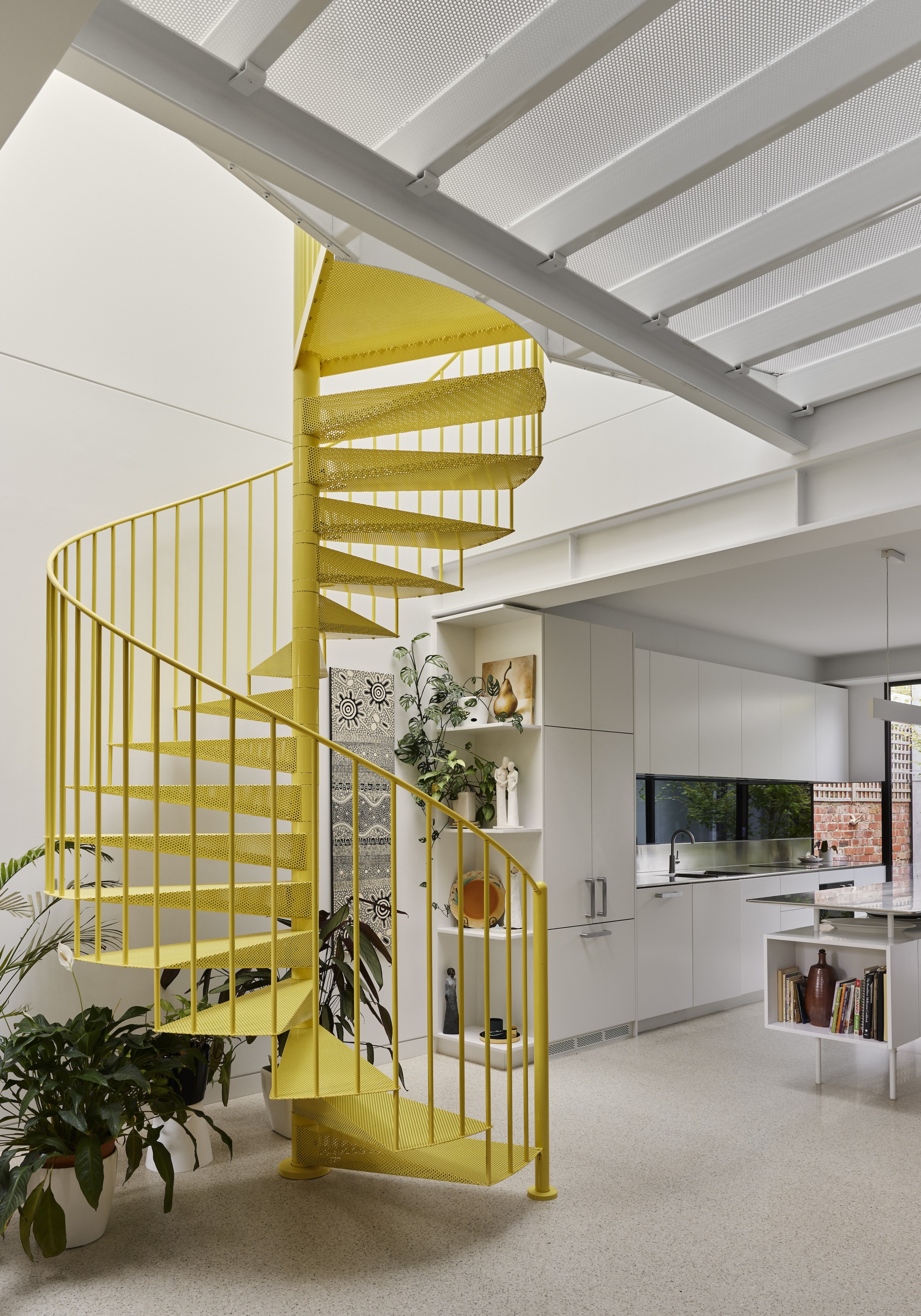
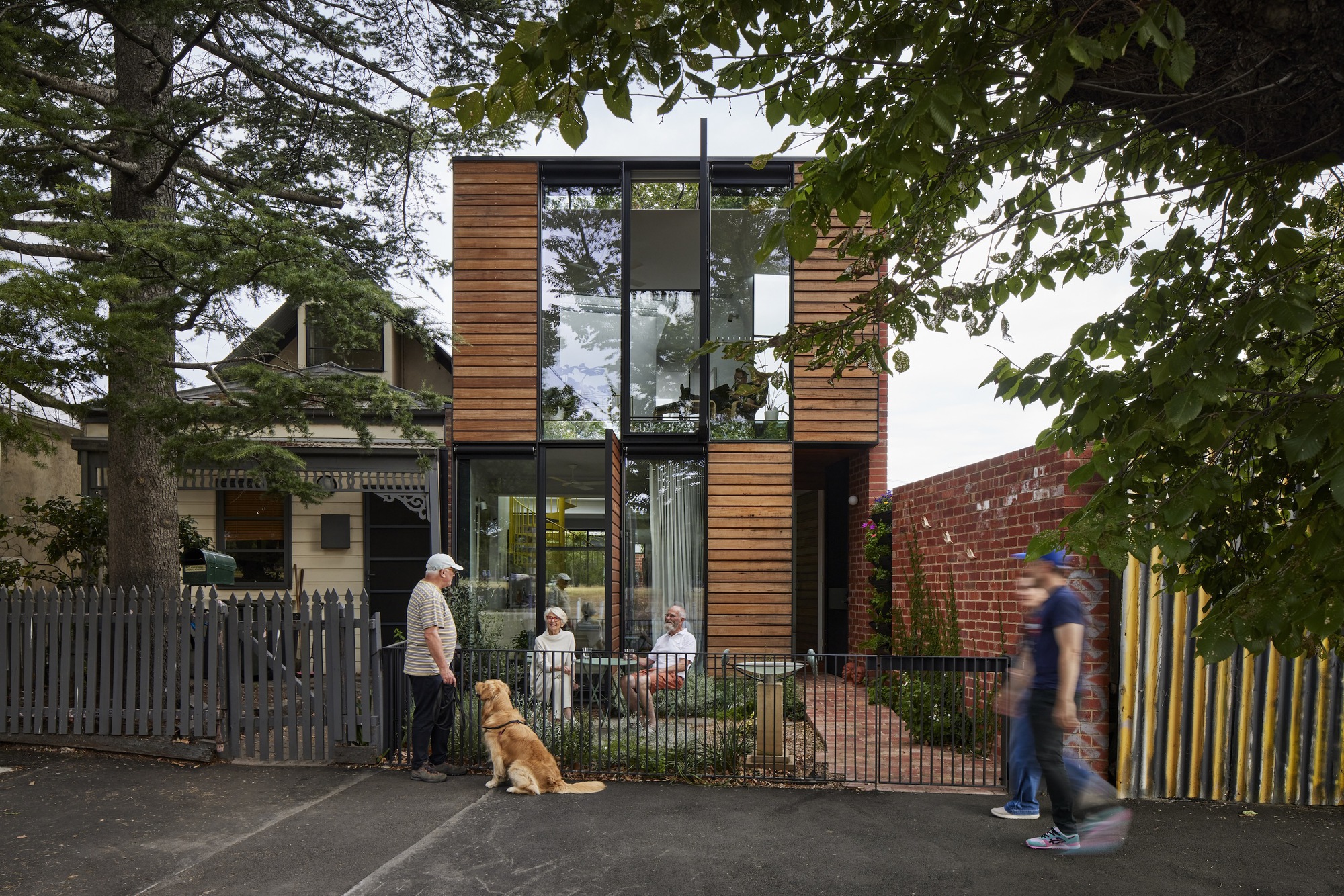
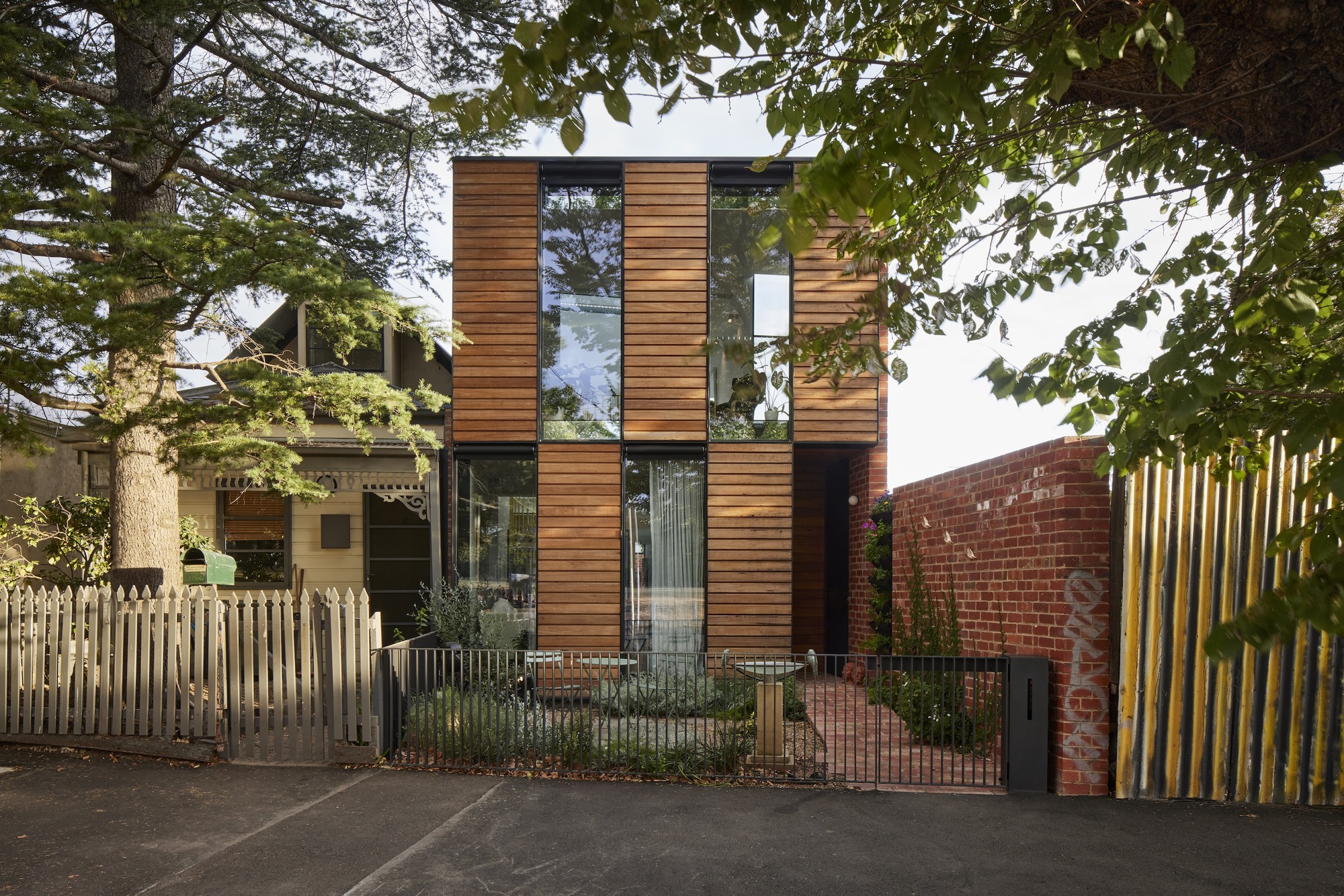
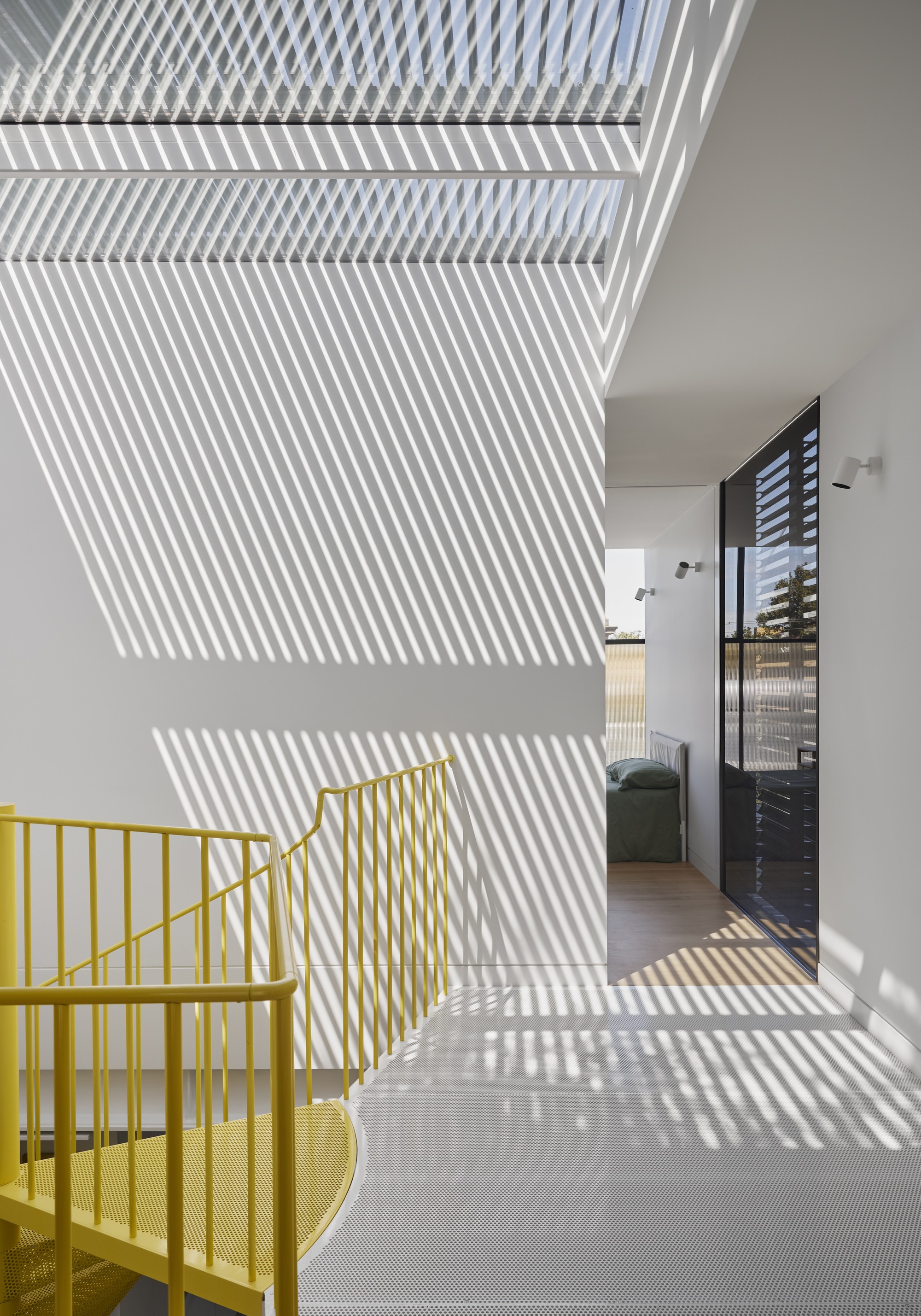
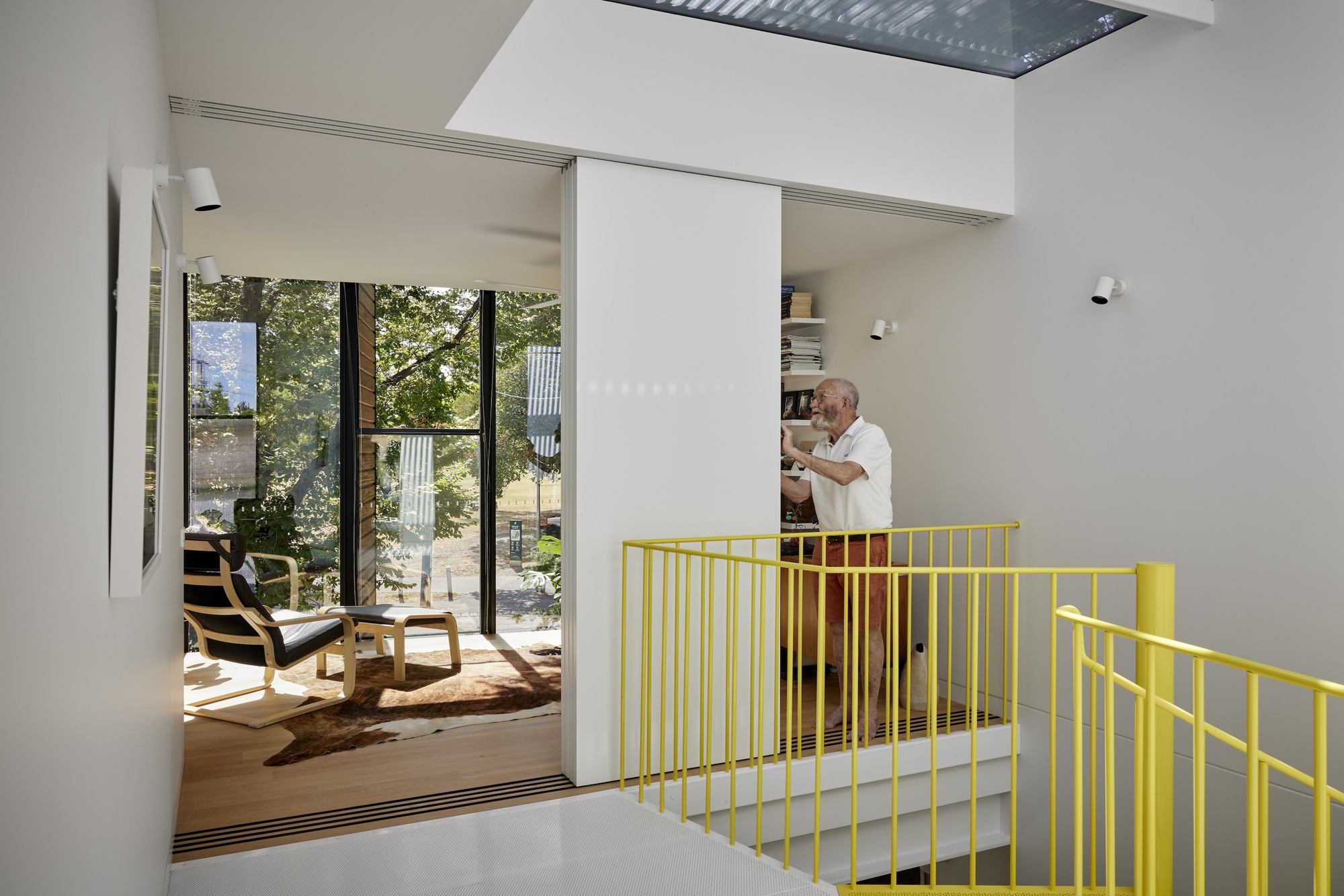
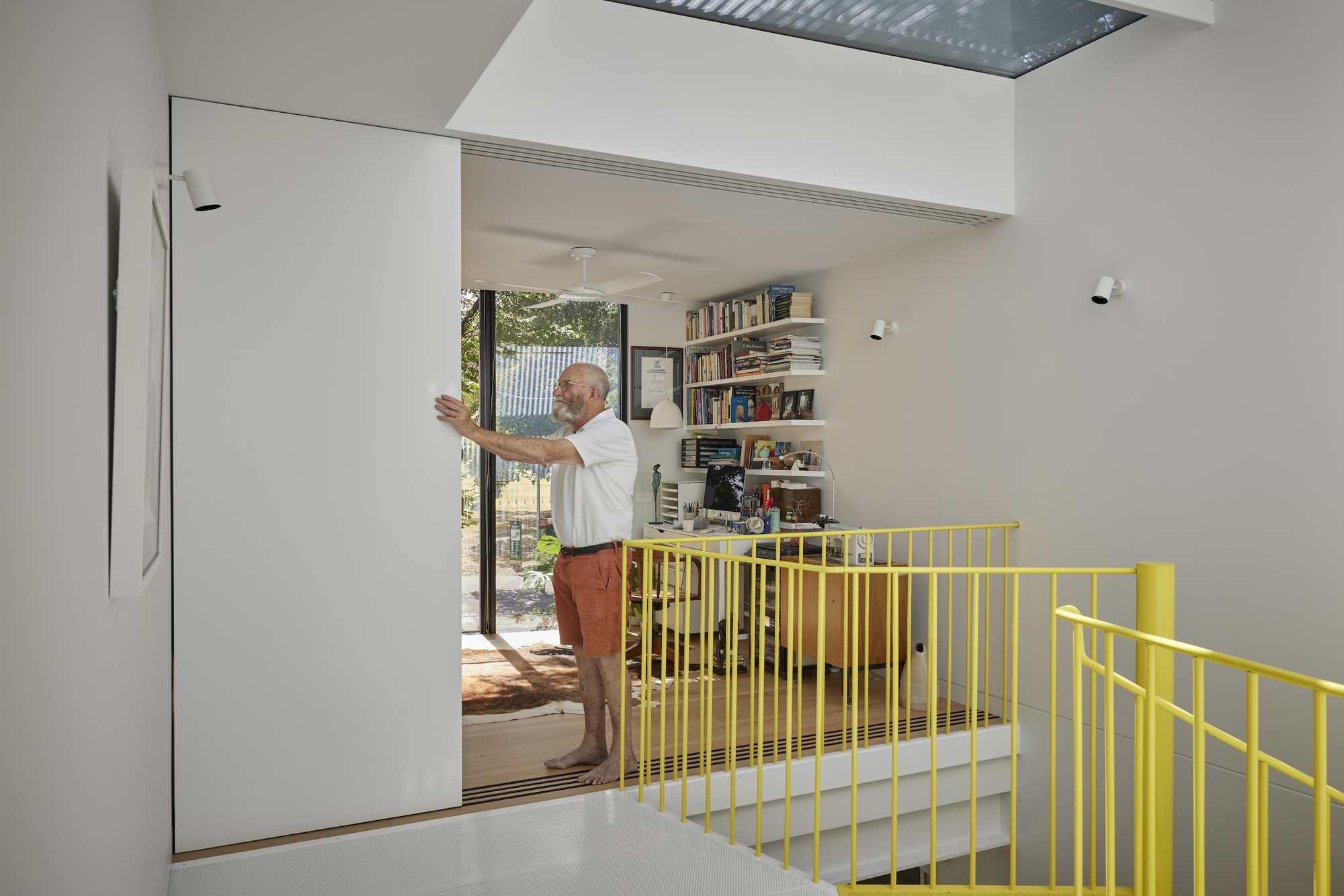
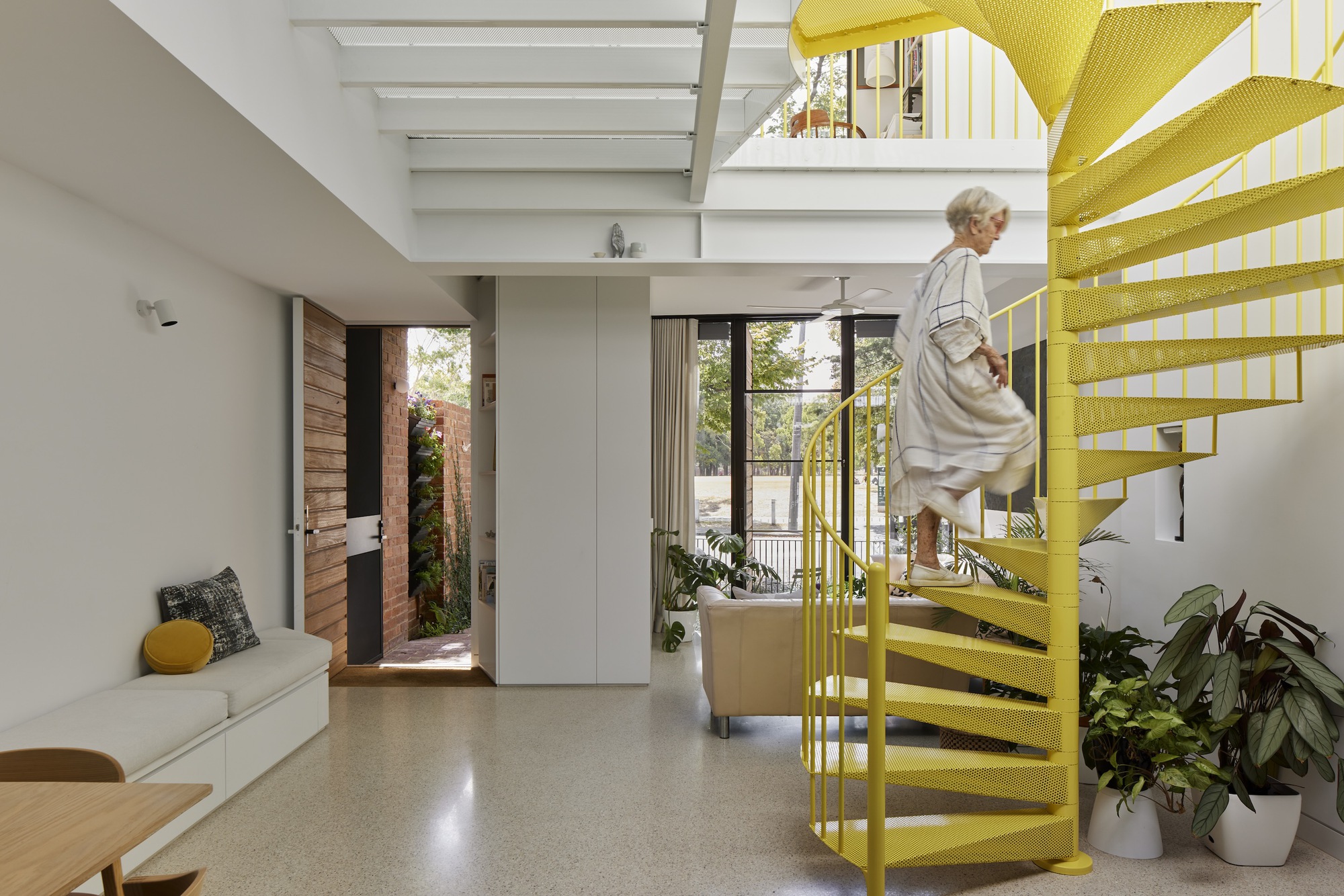
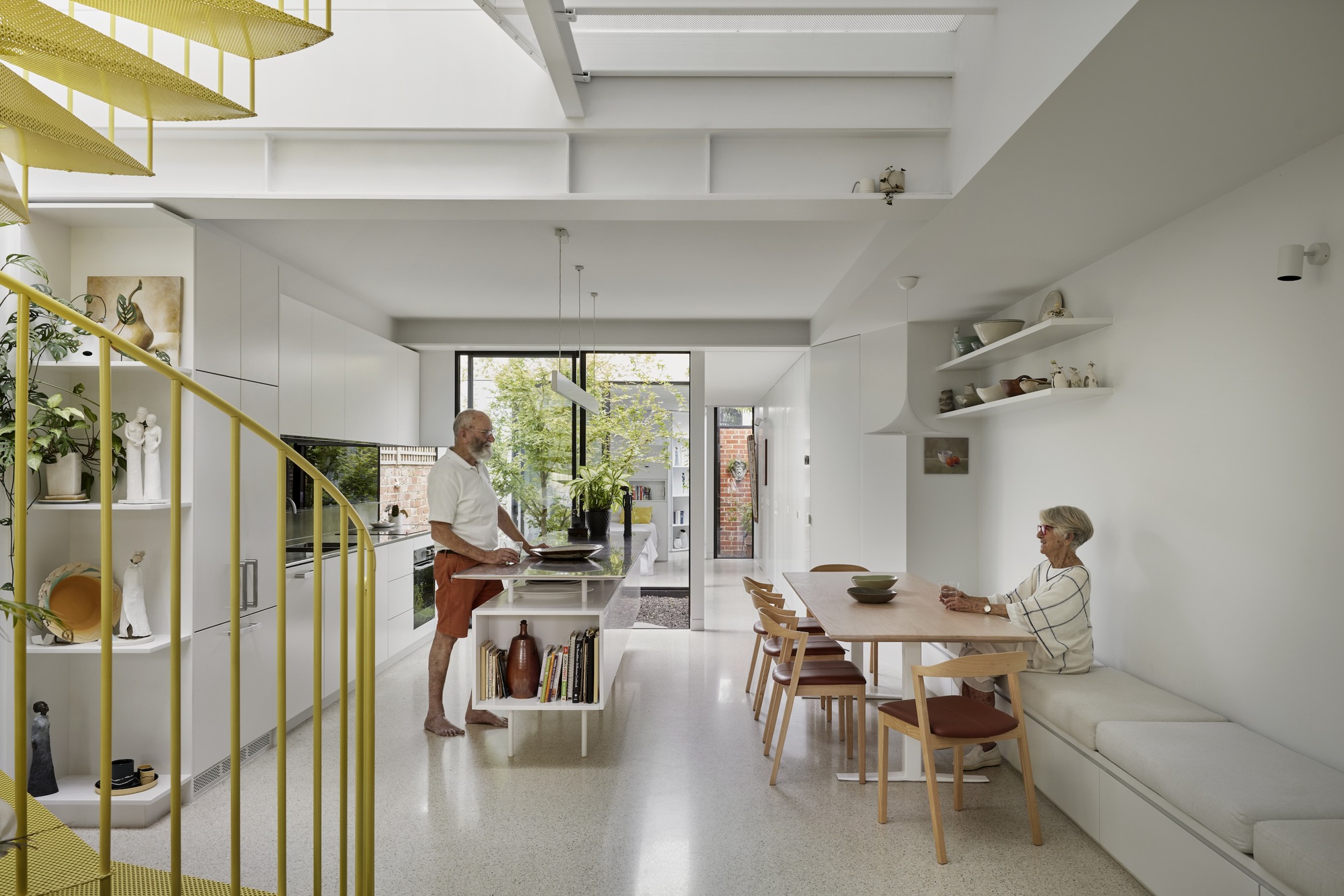
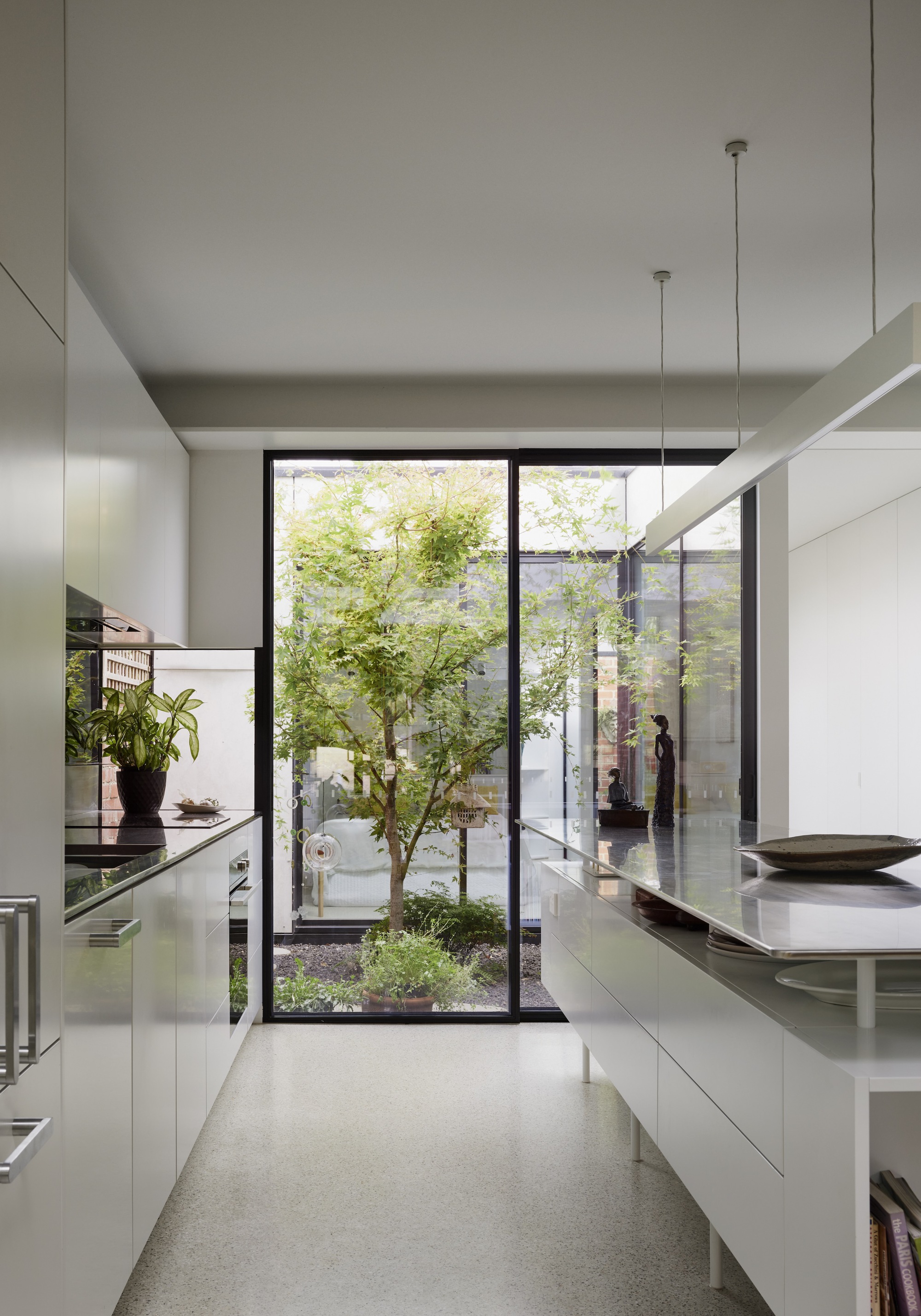
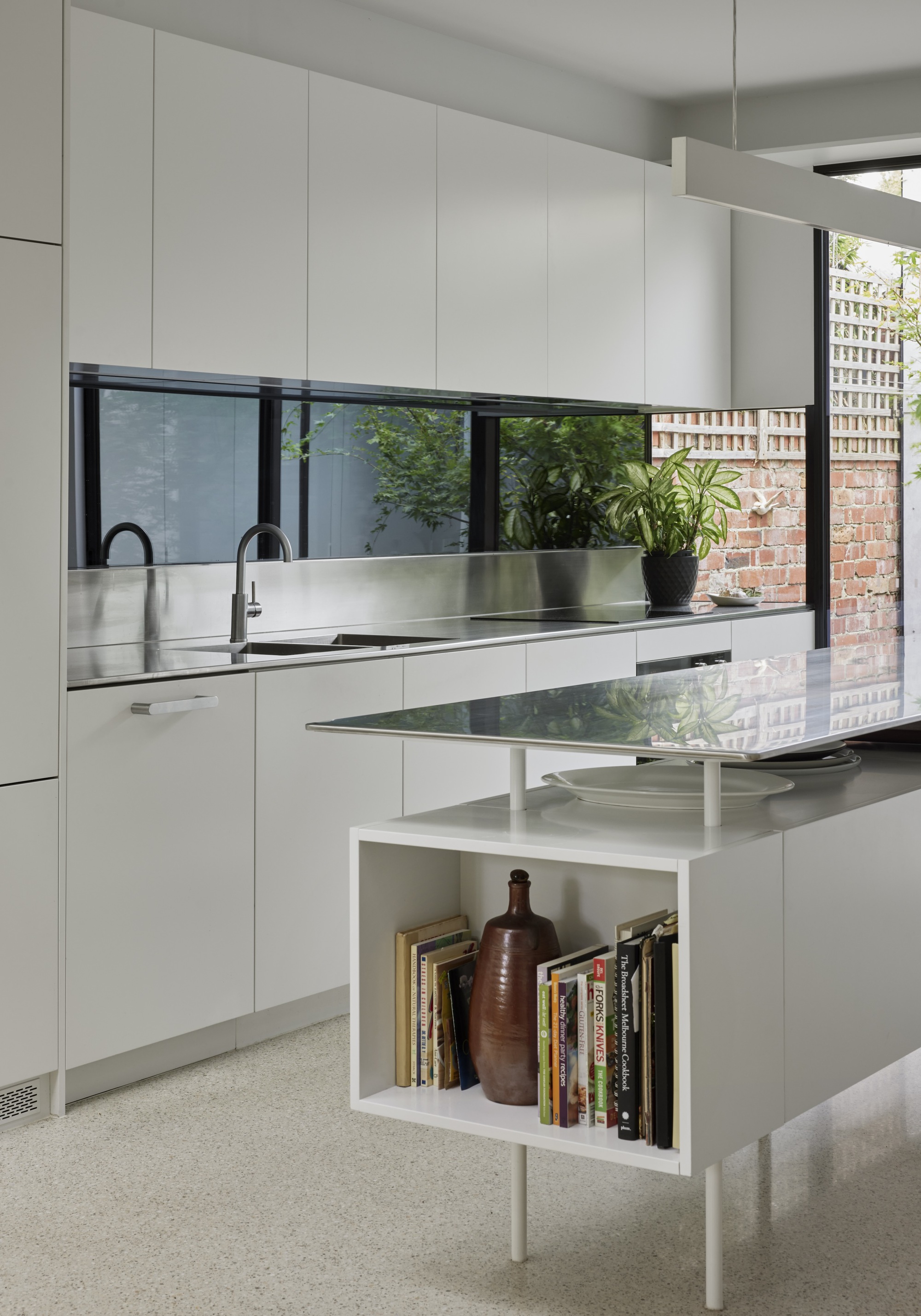
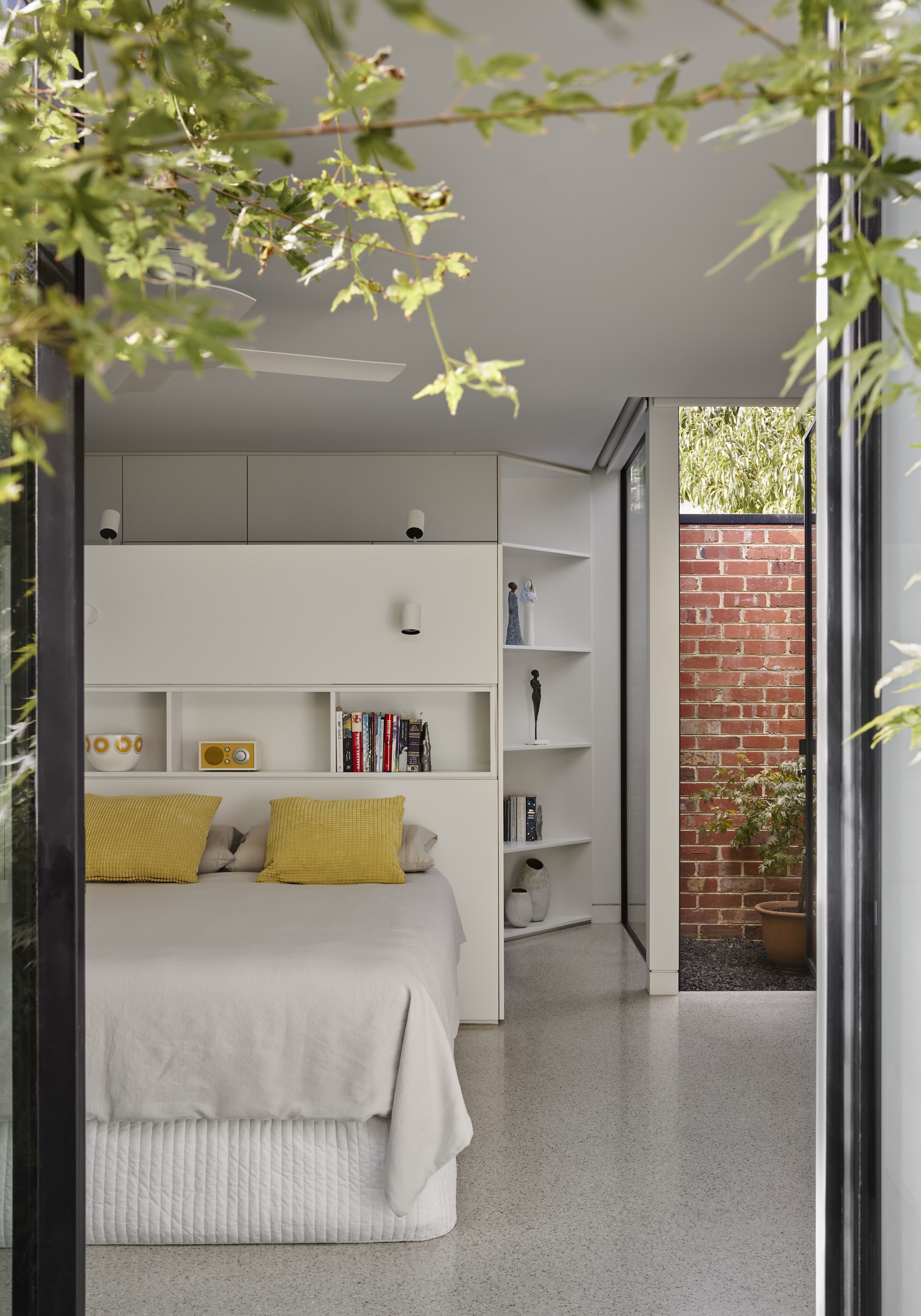
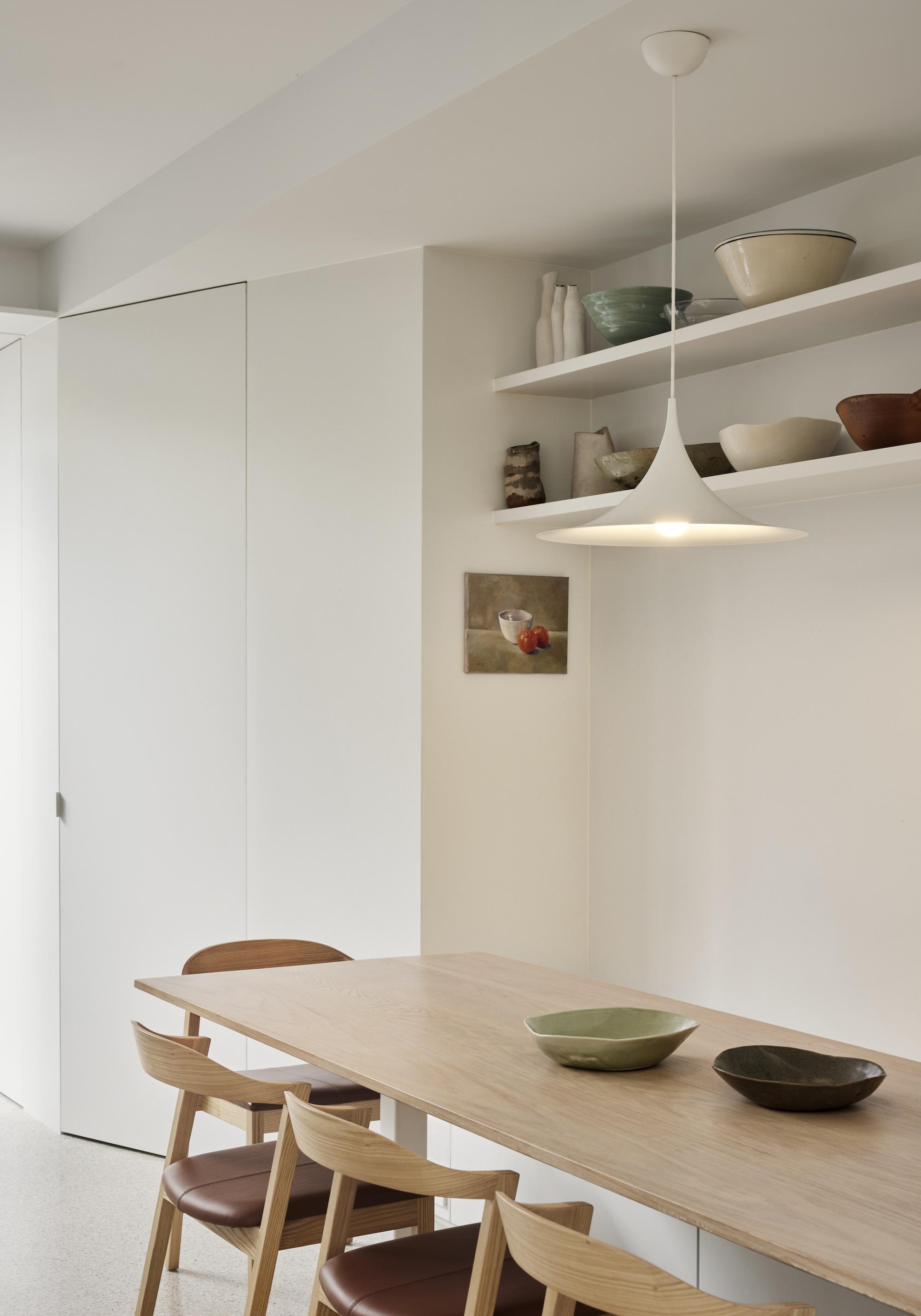
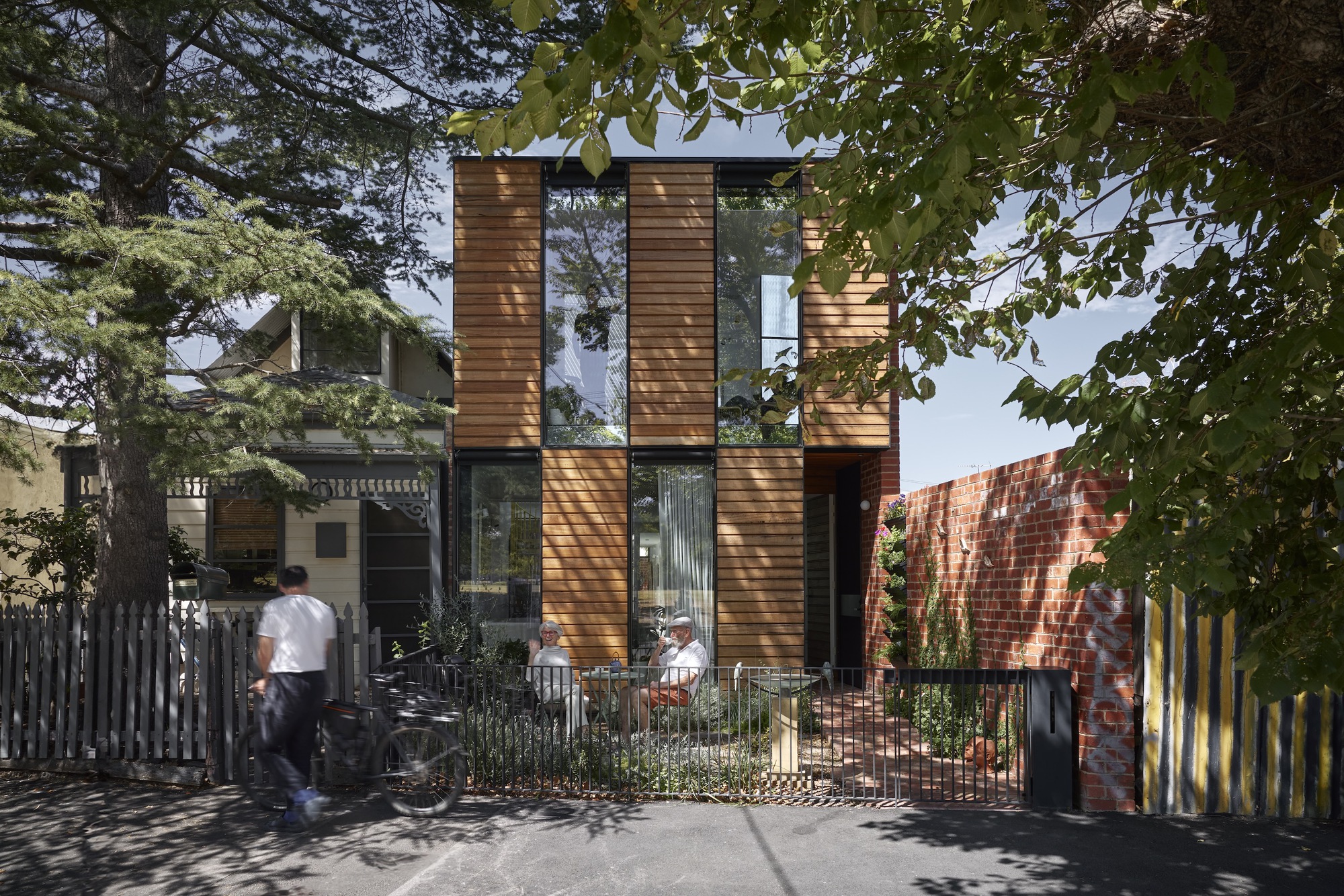
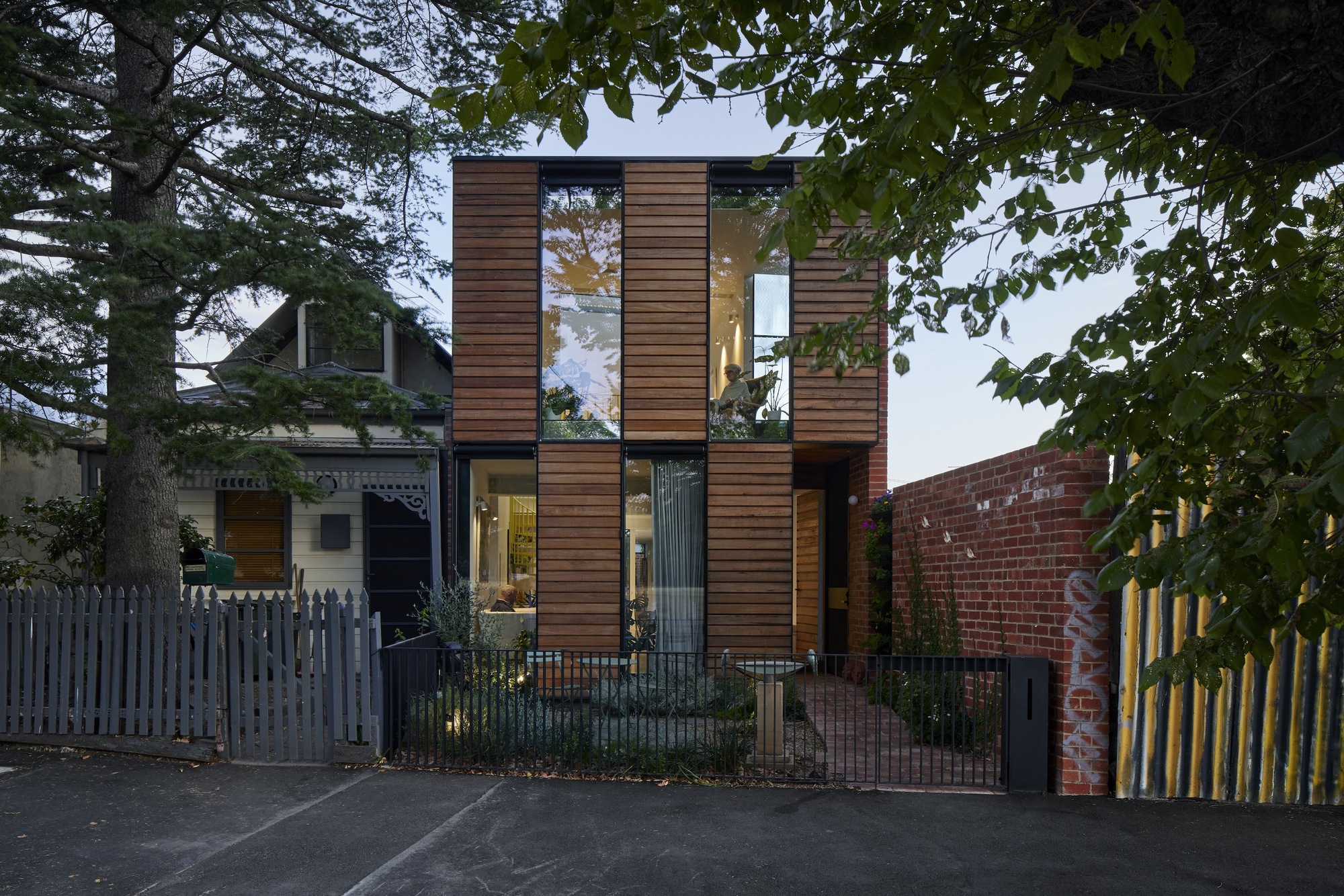
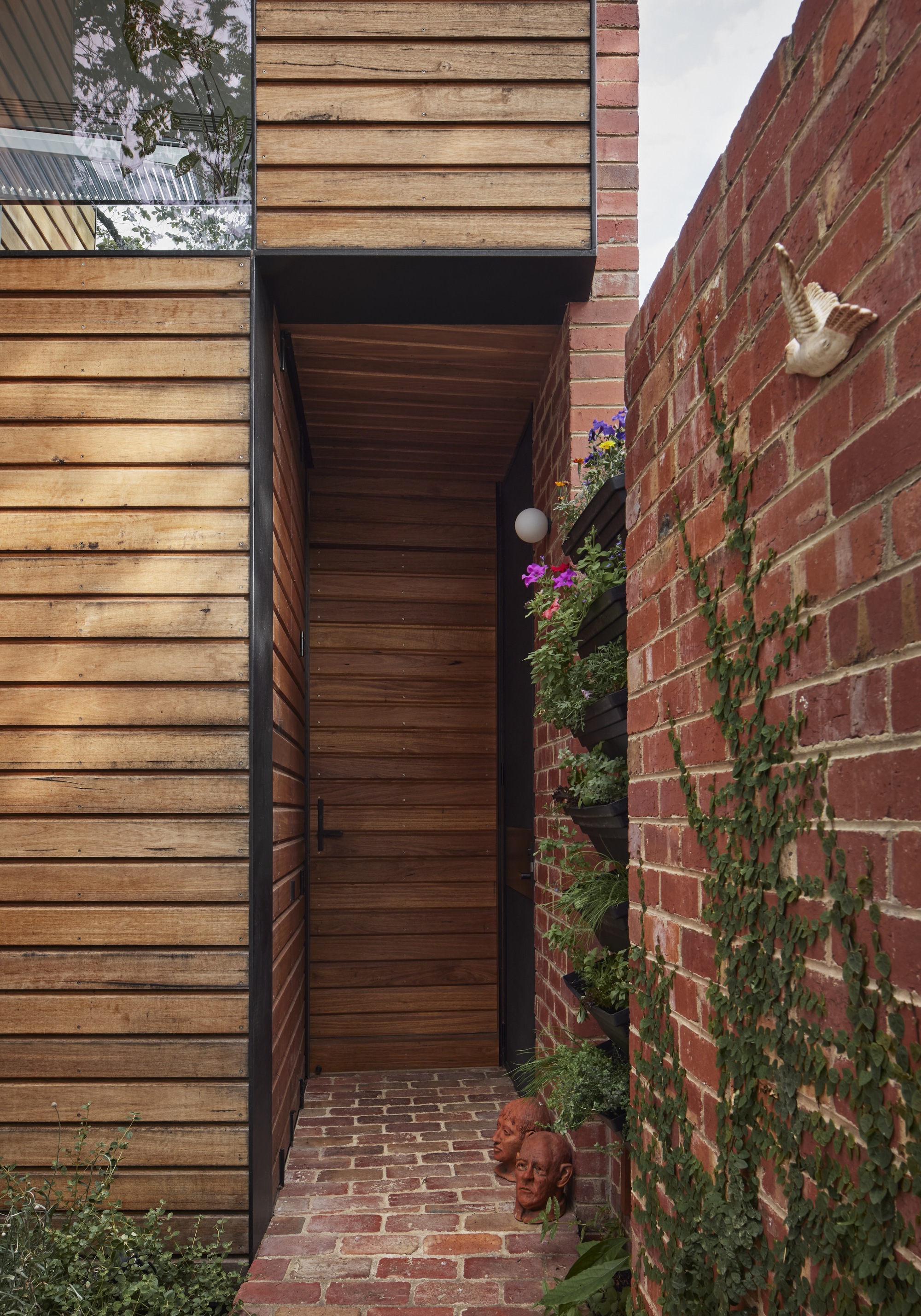
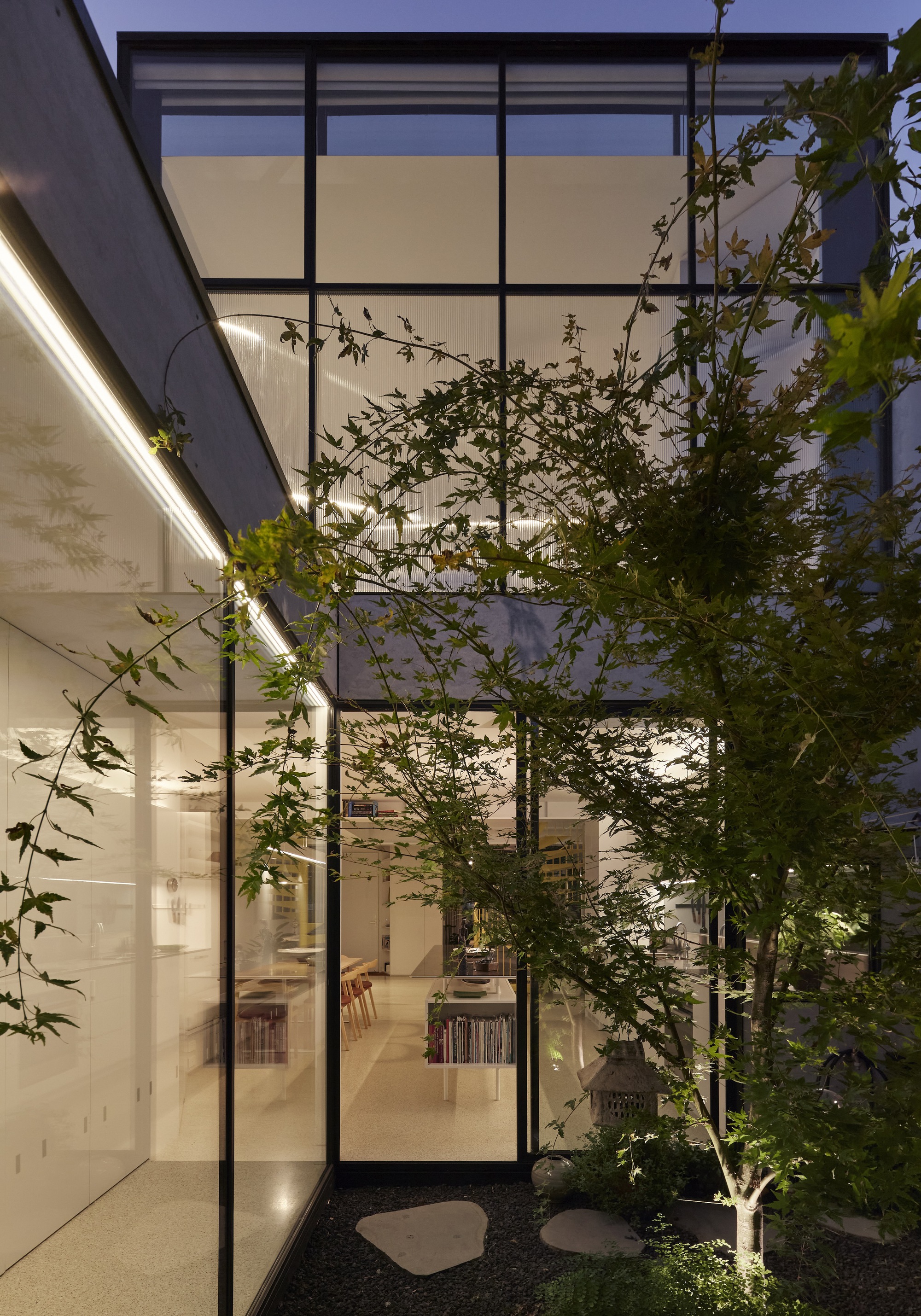
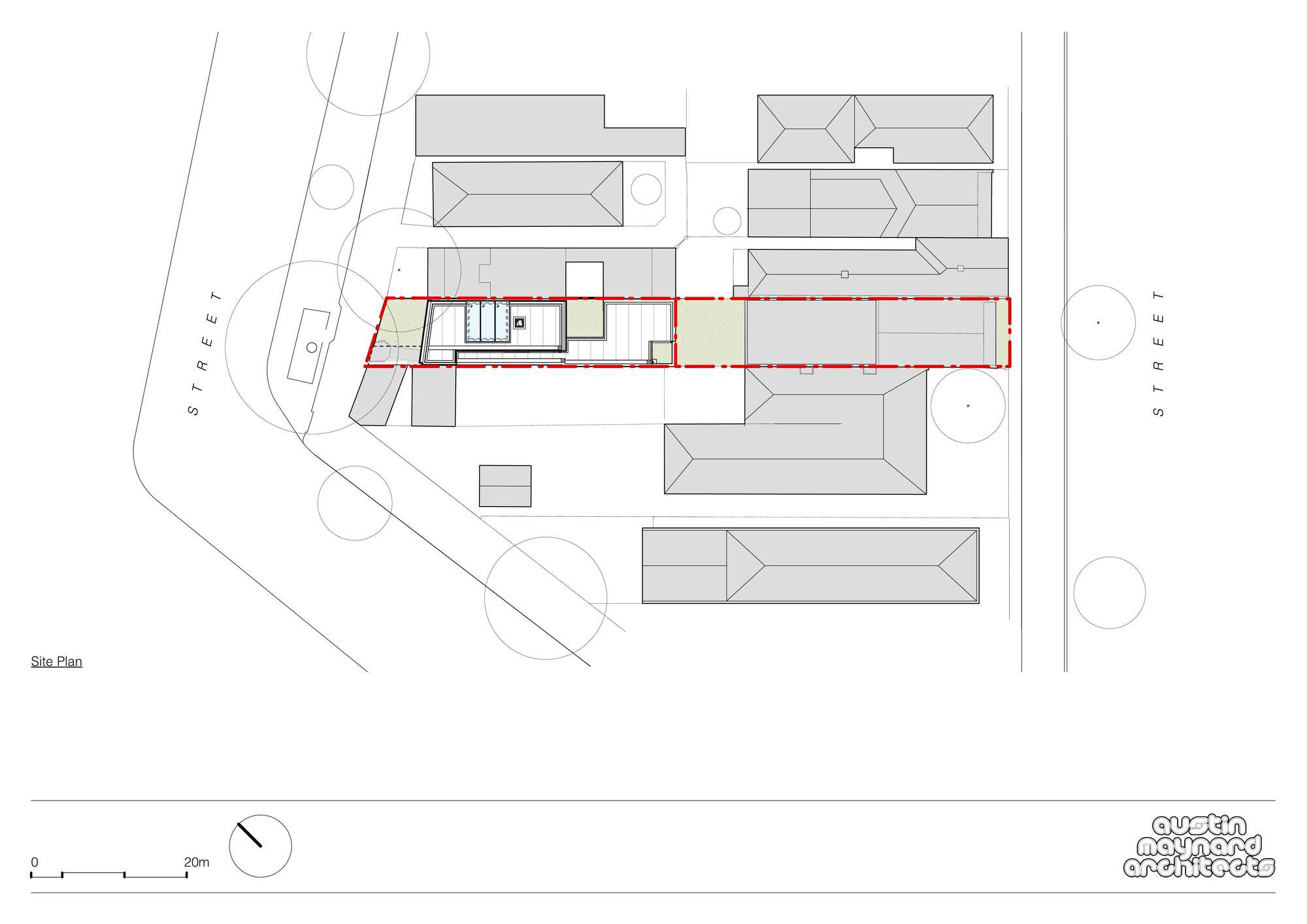
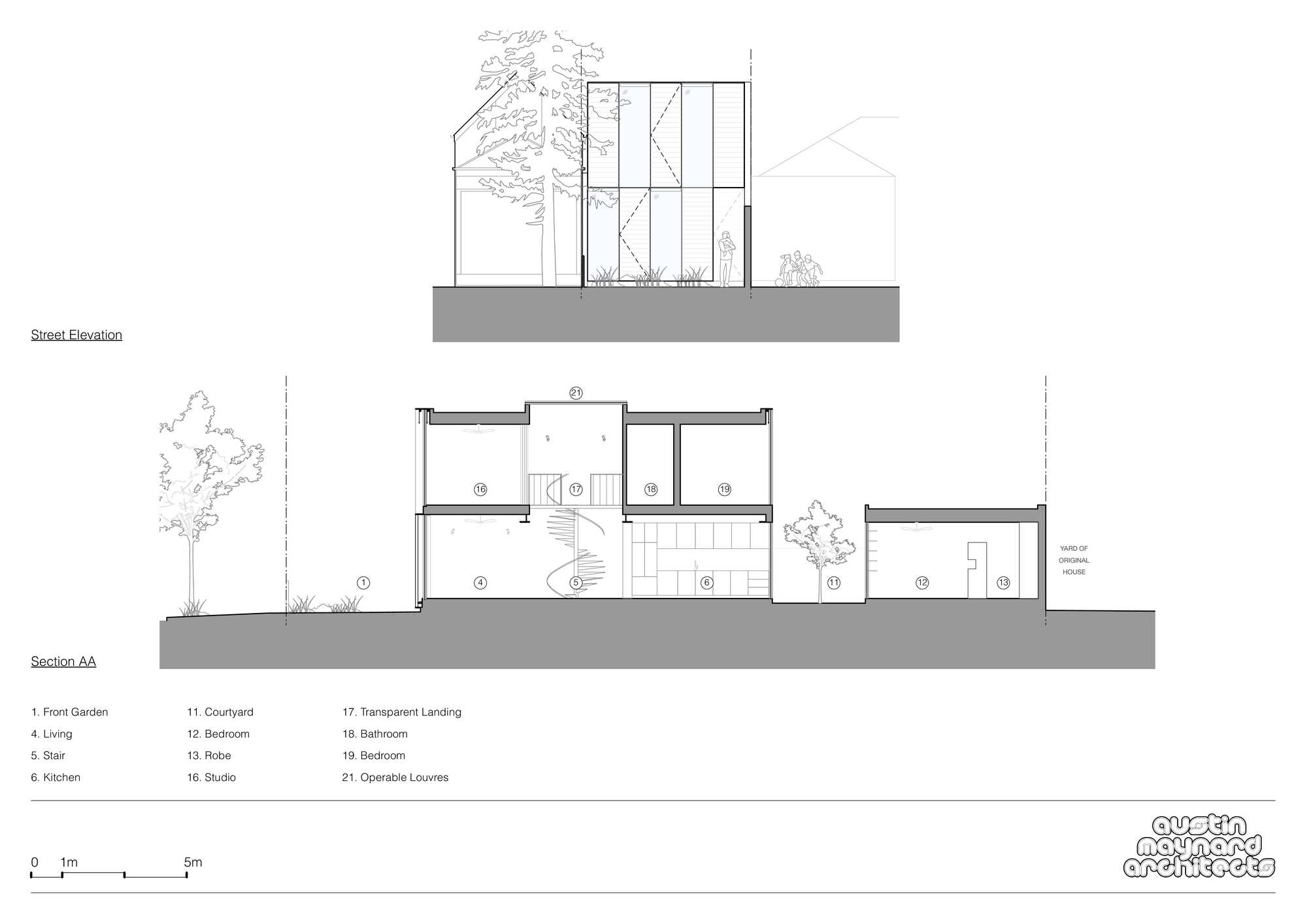
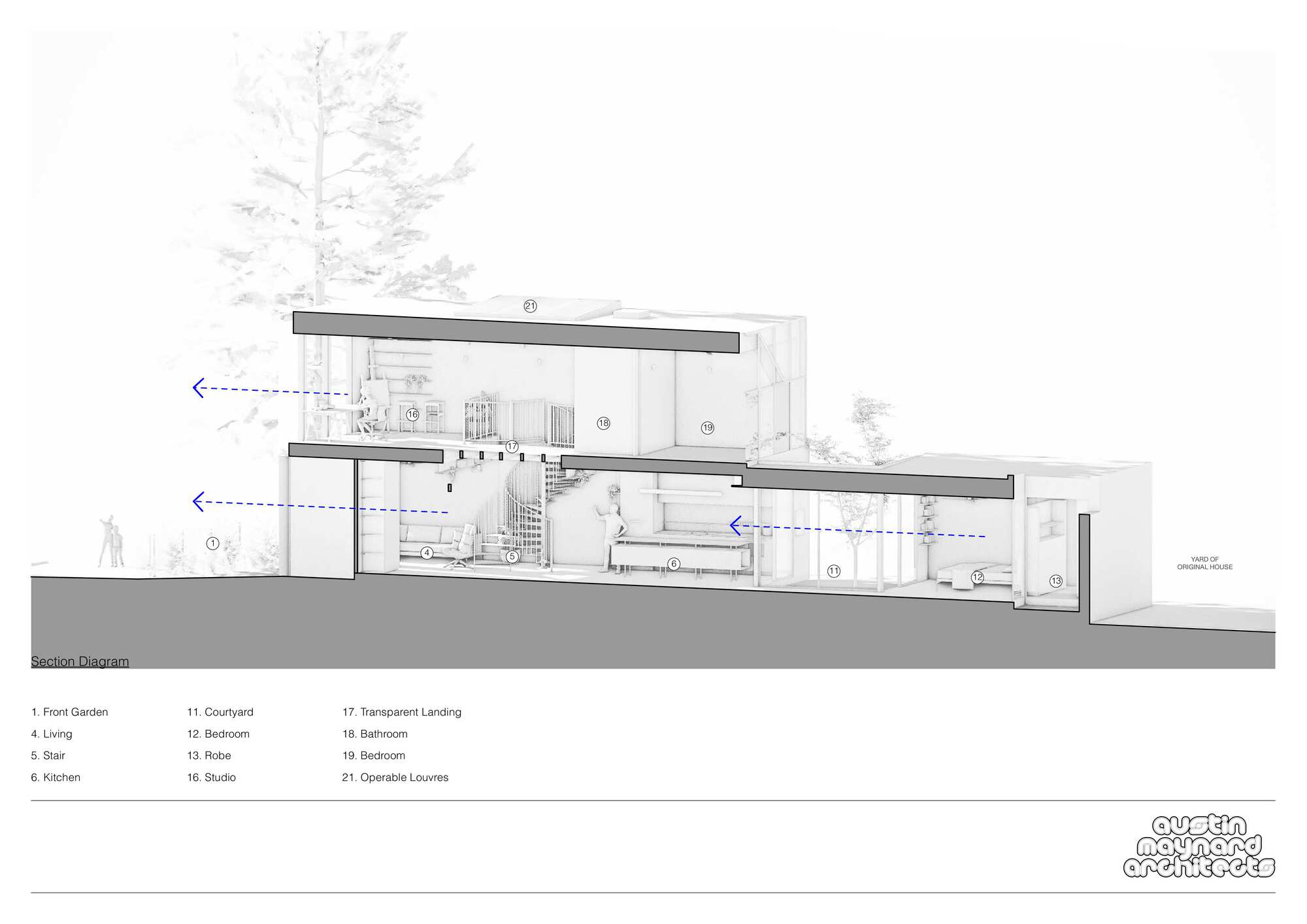
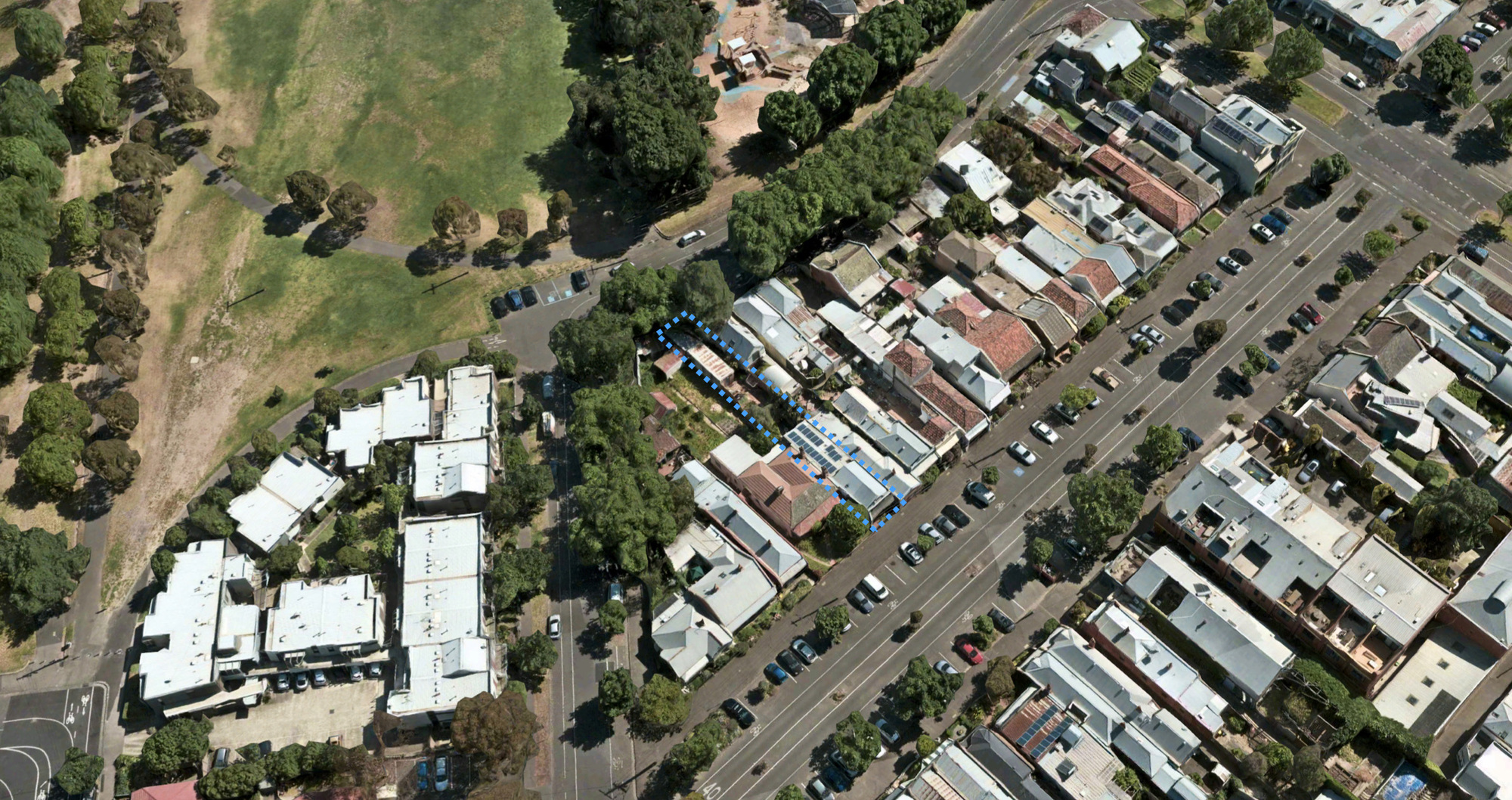
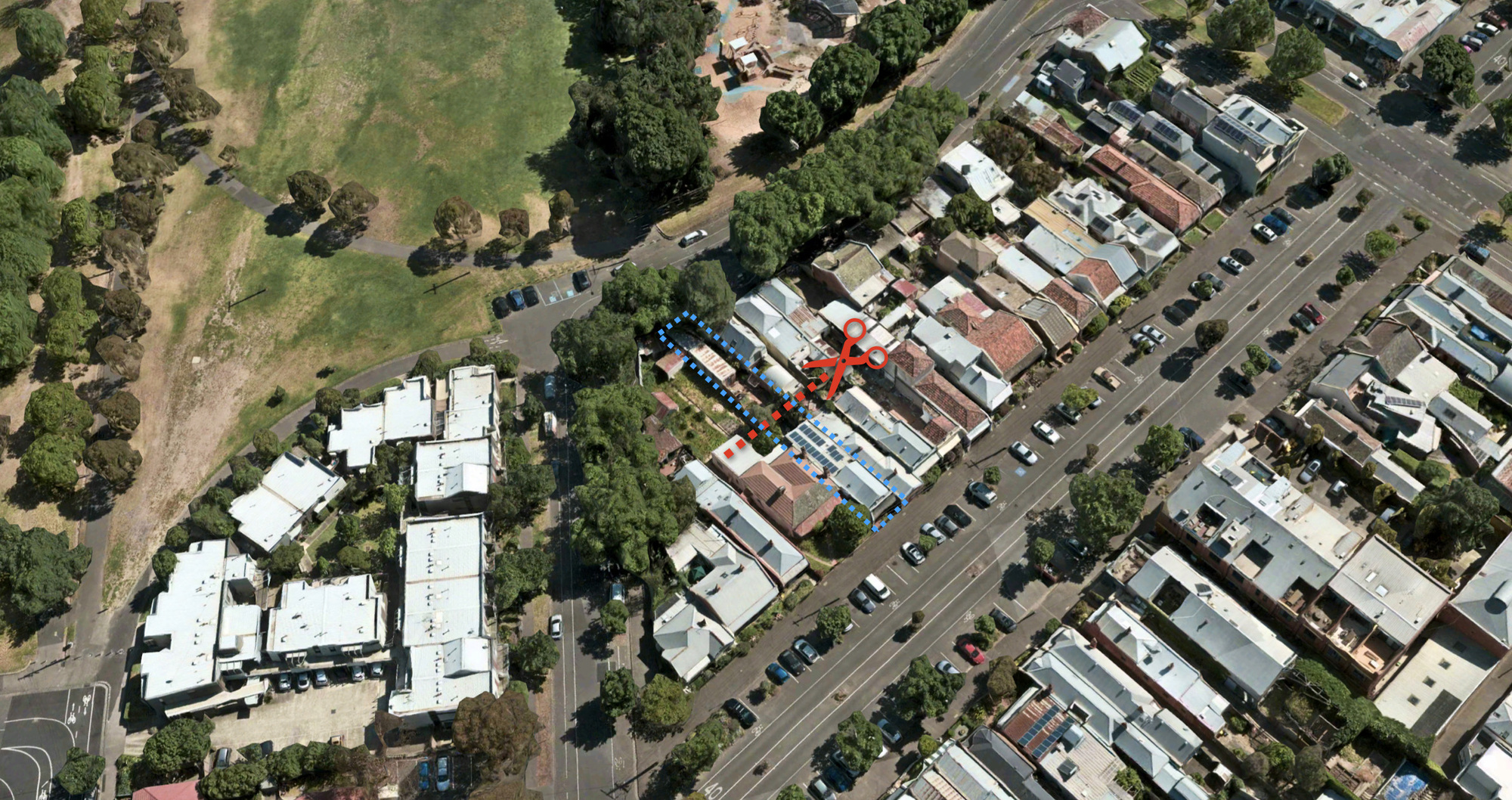
Parkside Home #architecture Architects: Austin Maynard Architects Area: 148 m² Year: 2024 Photographs: Tess Kelly City: Fitzroy North Country: Australia Parkside is an environmentally adaptable and deeply sustainable home intended for aging-in-place. This compact two-storey house realises the owner's longstanding retirement plan; to downsize into their own backyard. According to studies in the US, the financial benefits of creating a second dwelling on your land are only part of the incentive; as many older householders have strong attachments to their suburbs and communities and simply do not want to leave. In Australia, research shows the same is true here. Retirees and empty nesters are looking to alternative solutions in housing, in a bid to lead simpler lives, reduce costs and make a positive environmental impact by taking up less room. The owners of Parkside, Bryan and Marija, first purchased a single-fronted Victorian terrace in North Fitzroy, Melbourne almost twenty years ago. Drawn to the vibrant location, the 50-metre-deep block and the dual street access, they saw the potential for future subdivision. The plan was to release the original family home at the front of the site and make better sense of the northern orientation at the rear, opening views of the park that were previously blocked by a garage. Parkside is located on a significant and important heritage-protected street, just north of the city. Although directly responding to the housing shortage and the urgency to increase density within the inner-city suburbs, Parkside is the antithesis of a quick-fix solution. Parkside is a resilient and efficient home that increases connectivity and liveability while respecting the heritage and character of the area. Parkside's design emphasizes flexibility, light control and ventilation, achieved through a combination of operable panels, a central courtyard and strategically placed skylights and louvers. This confluence of strategies allows the owners complete control of their environment, their light, privacy and their connectivity. The front facade is divided into a series of full-height modules - fixed timber panels, fixed glass panels and operable panels; each identical in size and arranged in an alternating pattern. Behind the operable panels, there are windows that can be opened to allow ventilation throughout the house. The operable timber panels are adjustable, and operated on an automatic remote system, as are the full-height external window blinds, affording full control over sunlight and privacy. Embracing the notion of smaller, but better, Parkside embraces harder-working design elements. Playing with natural light and vertical space to provide single-level living, as well as a guest bedroom, bathroom and art studio on the first floor - accessed via a sculptural bright yellow spiral stair. A central courtyard invites sunlight, fresh air and greenery directly into the open-plan layout, while the park opposite serves as their garden - an abundance of grass, trees and flowers they have the fortune to use and look at, but don't have to maintain. "The first thing I do every morning is open up the shutters and blinds. I can't do anything until I've done that. I love the openness of the park, it's absolutely magic. It's like being in the countryside." Bryan, owner of Parkside.
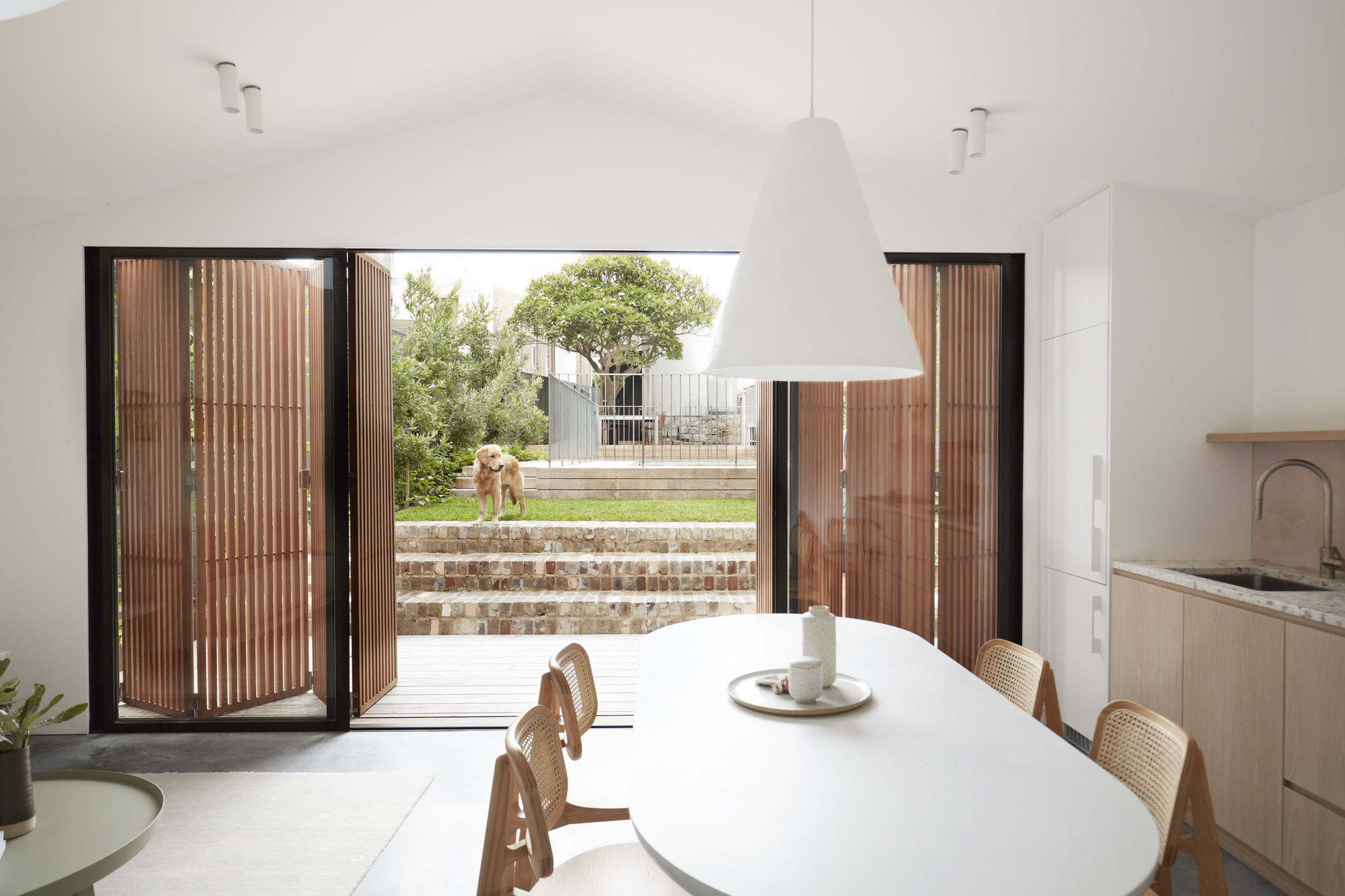
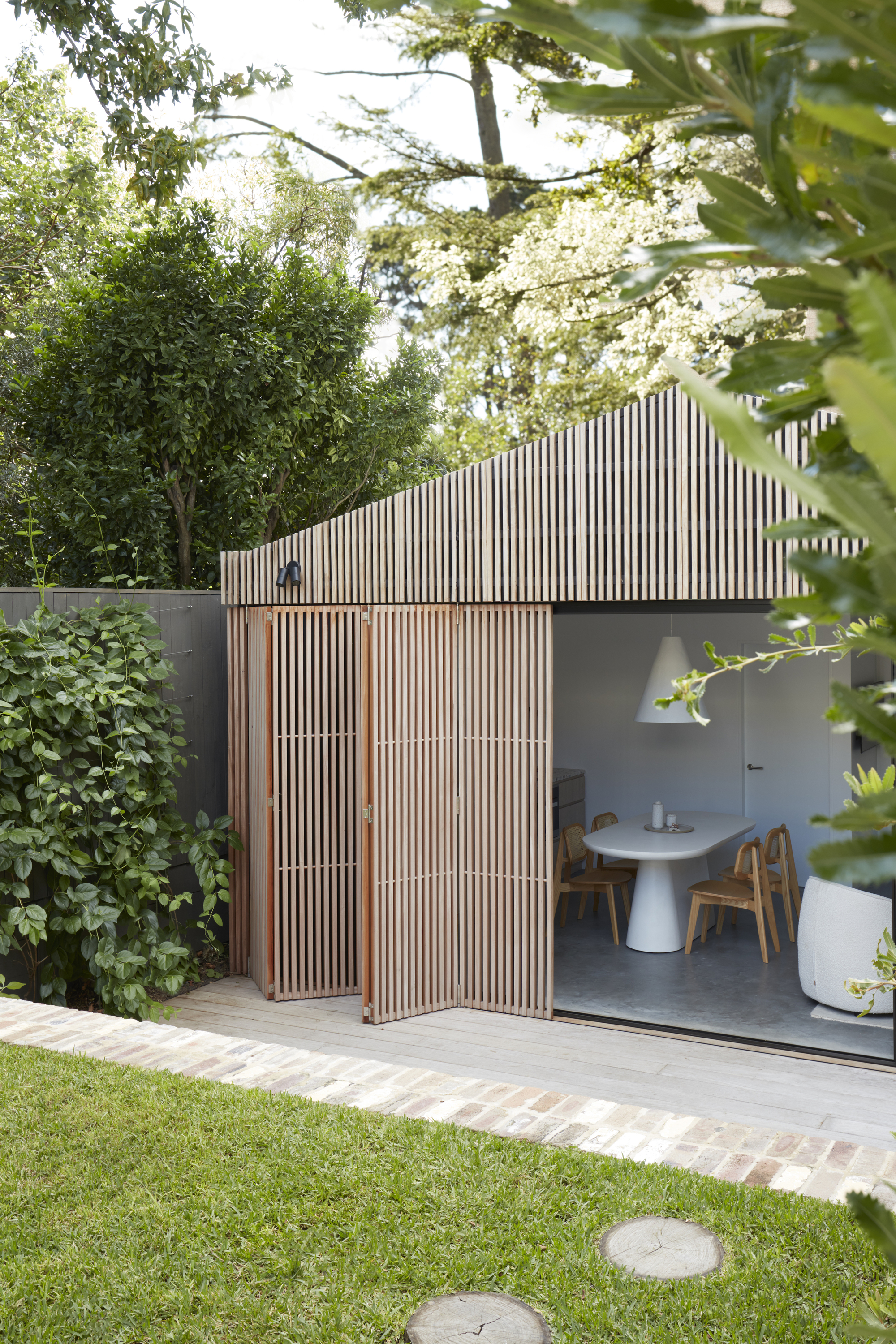
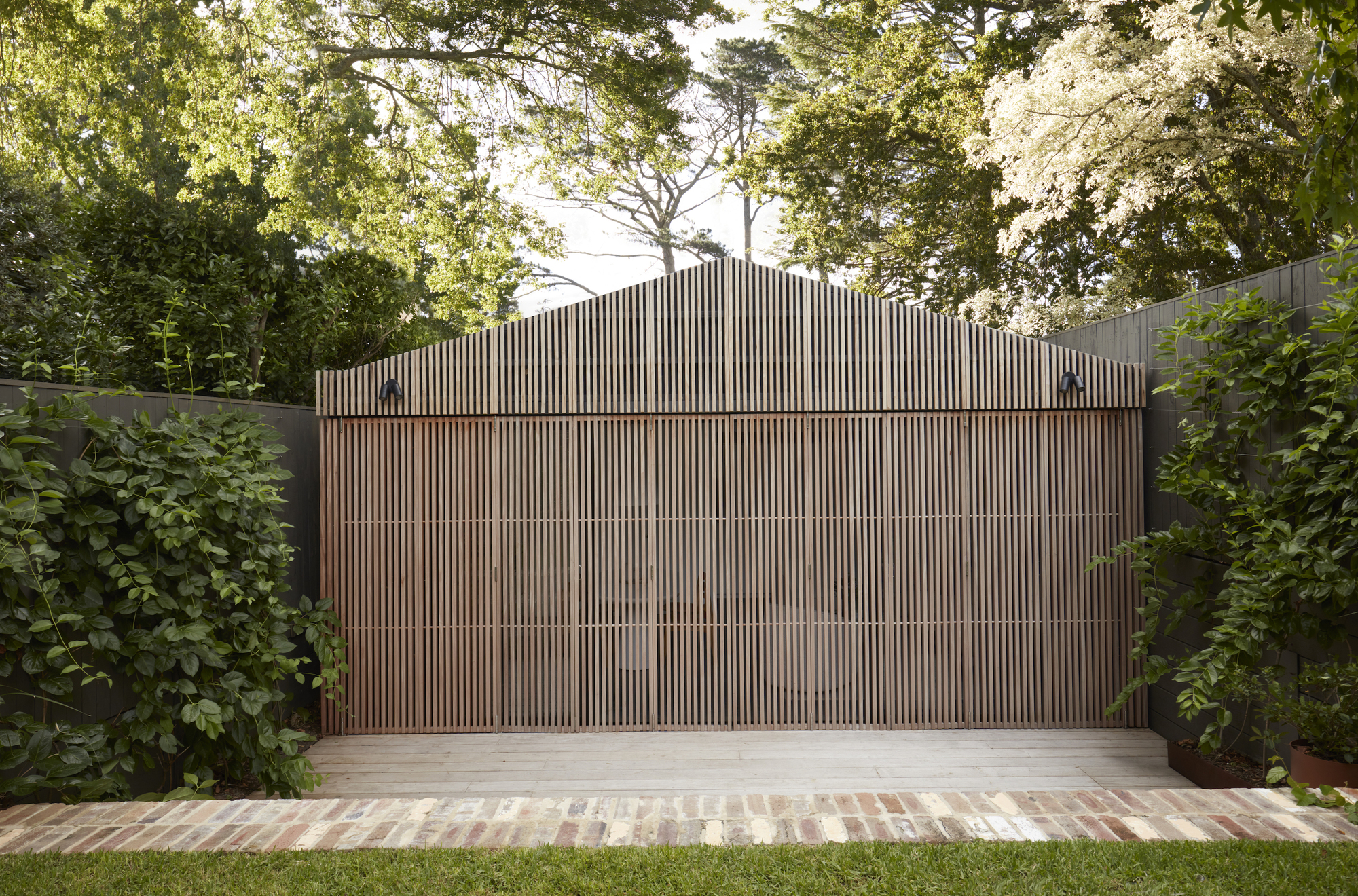
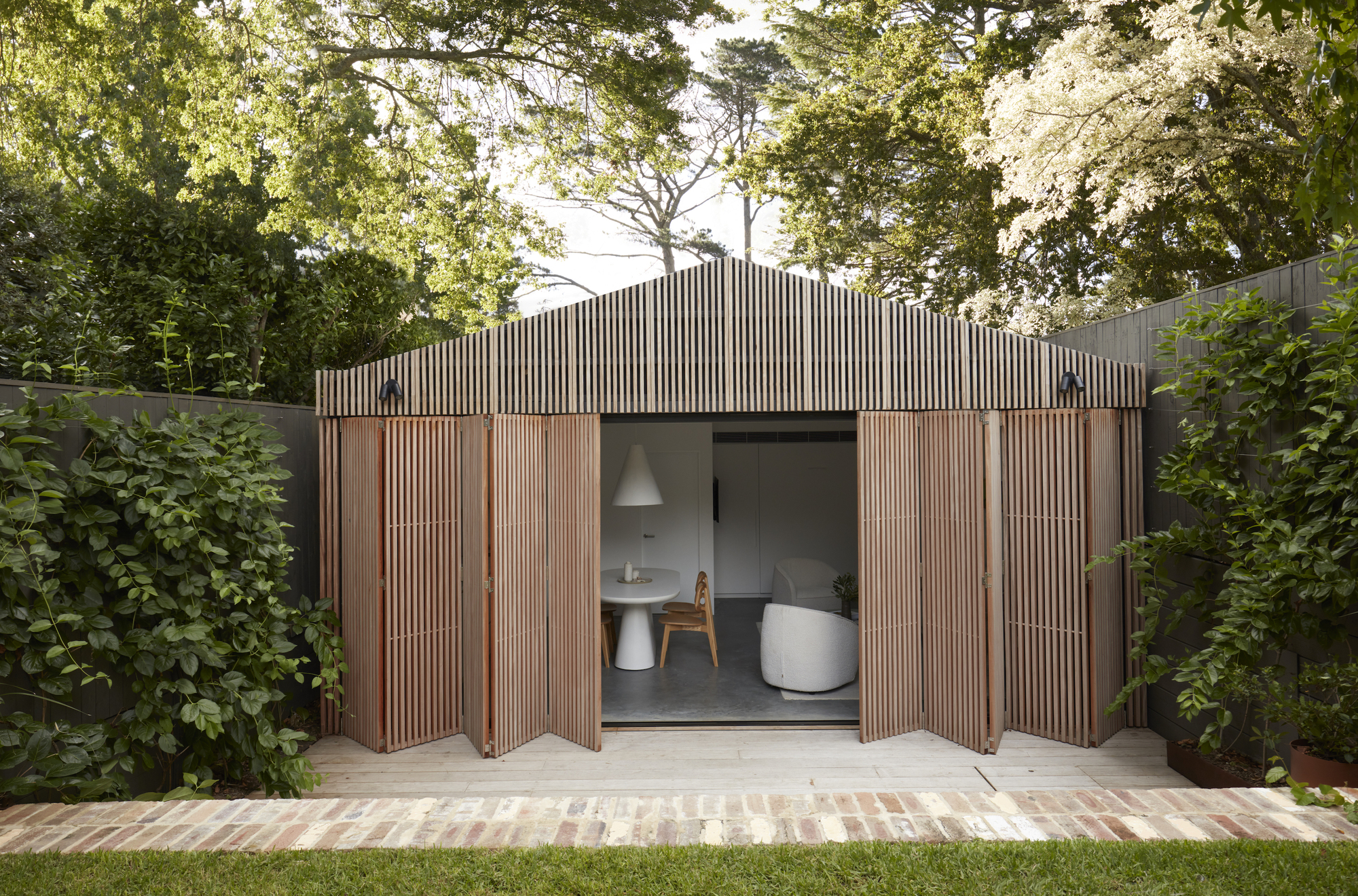
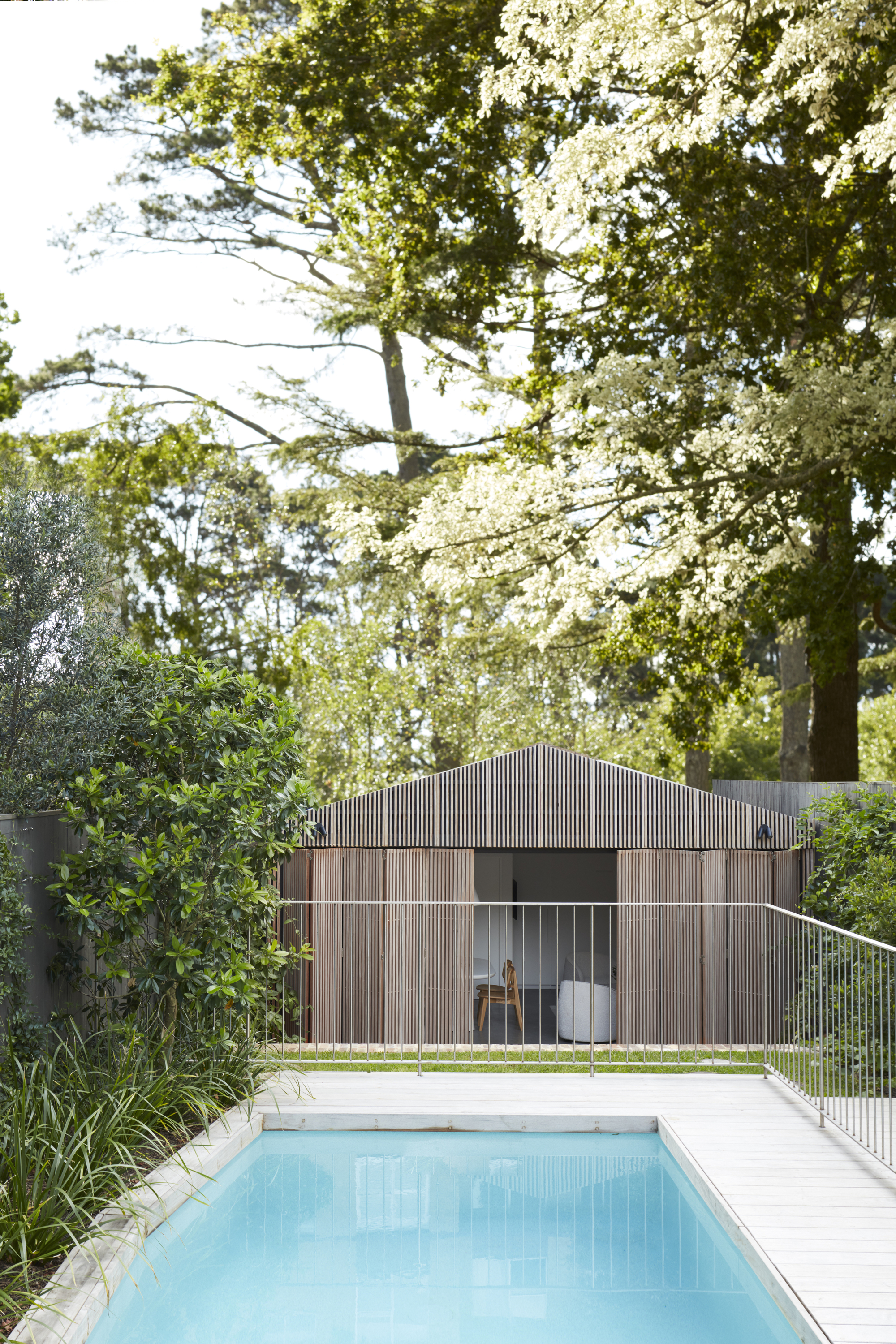
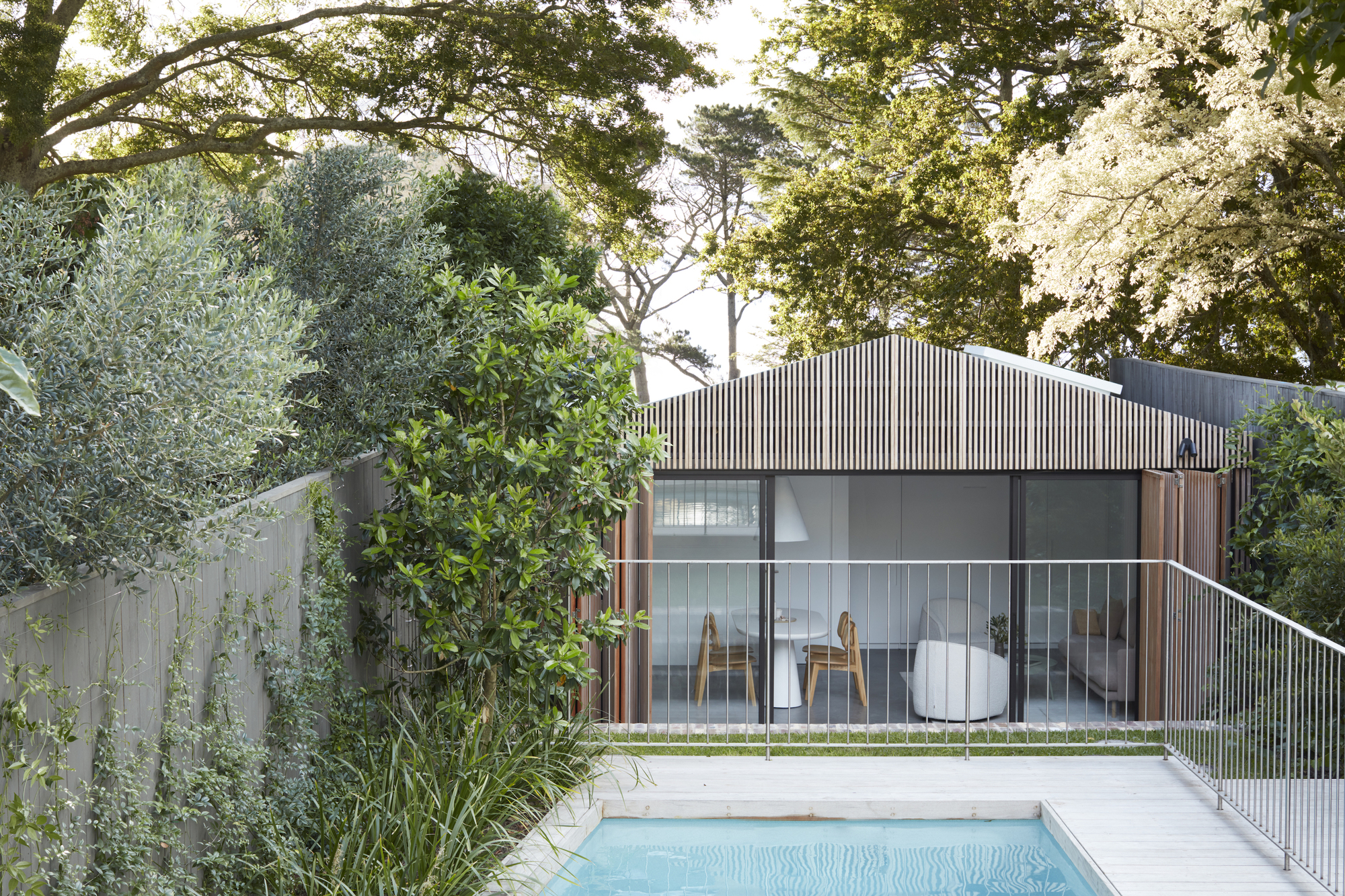
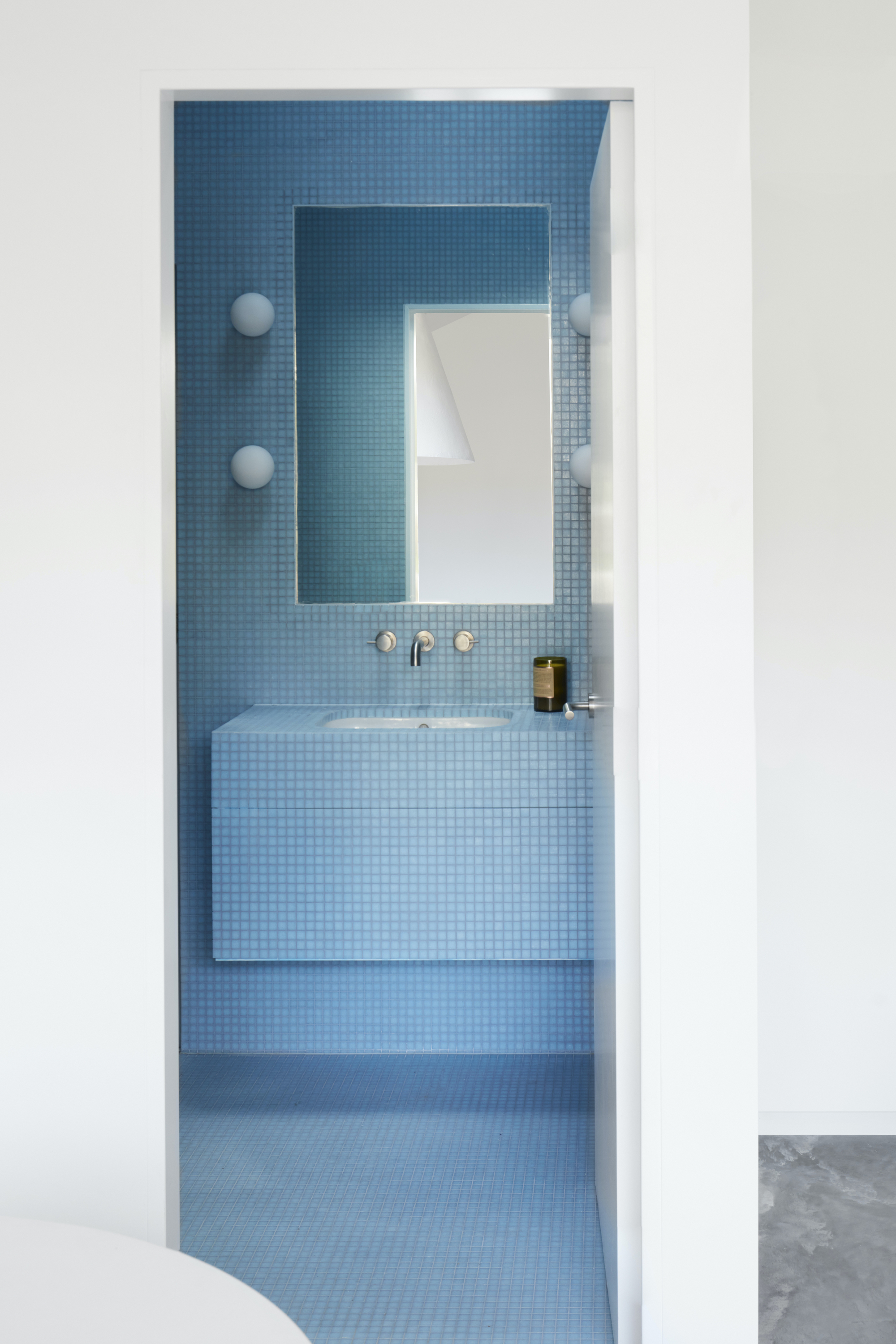
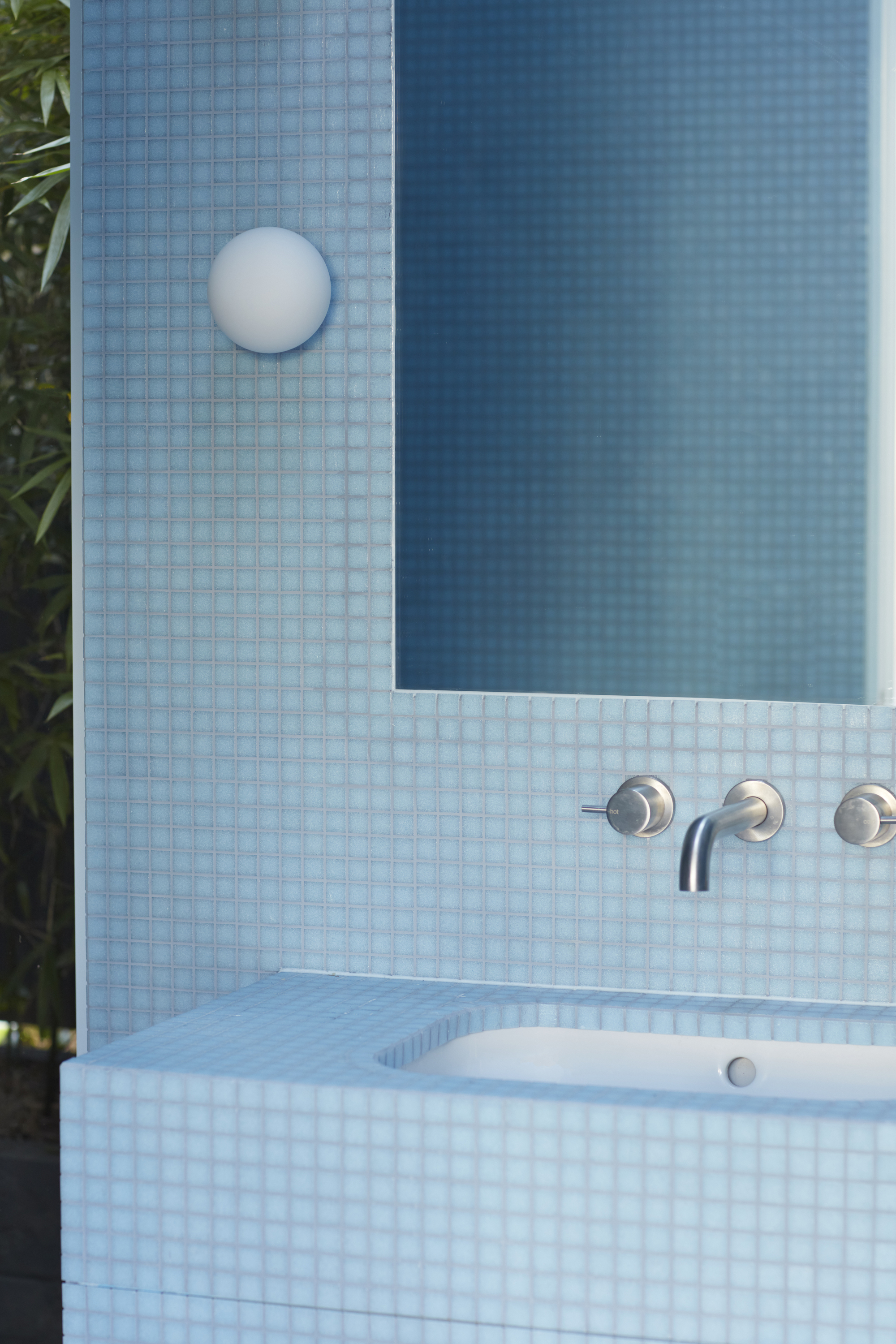
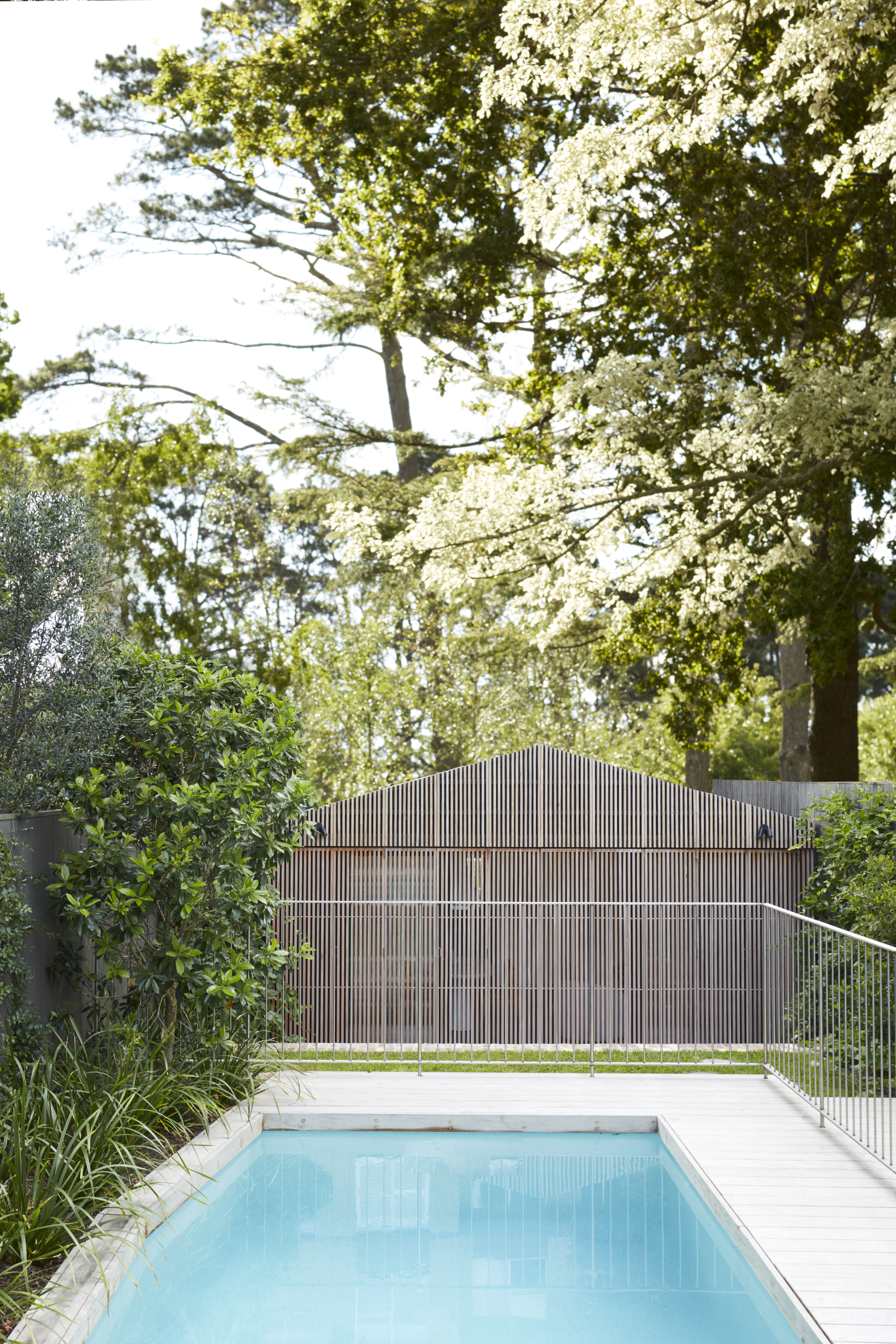
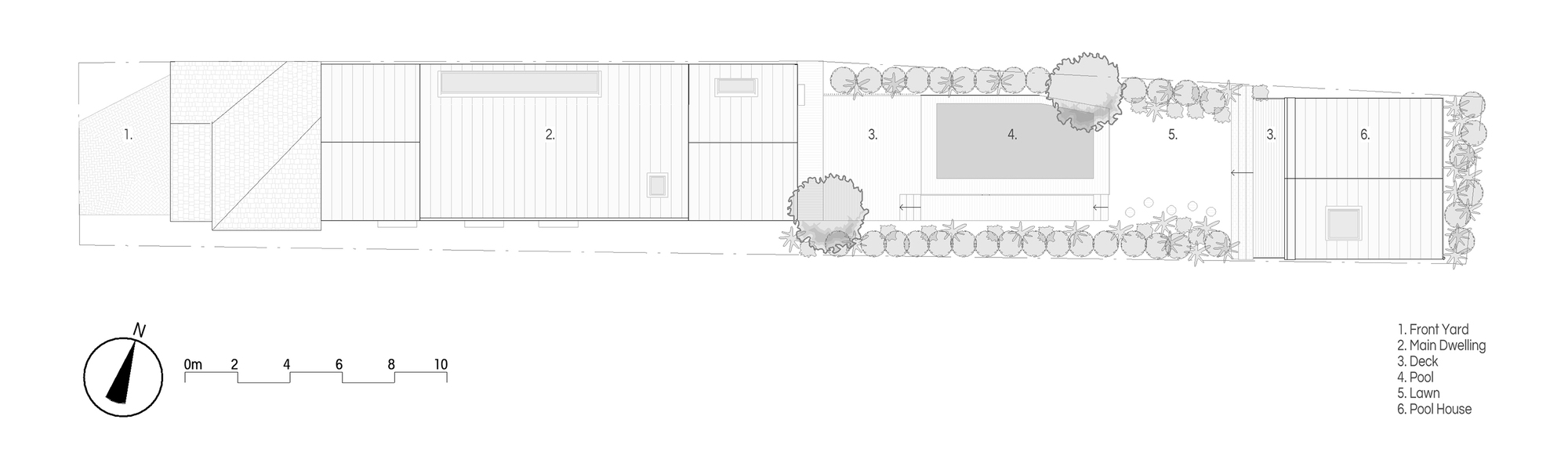
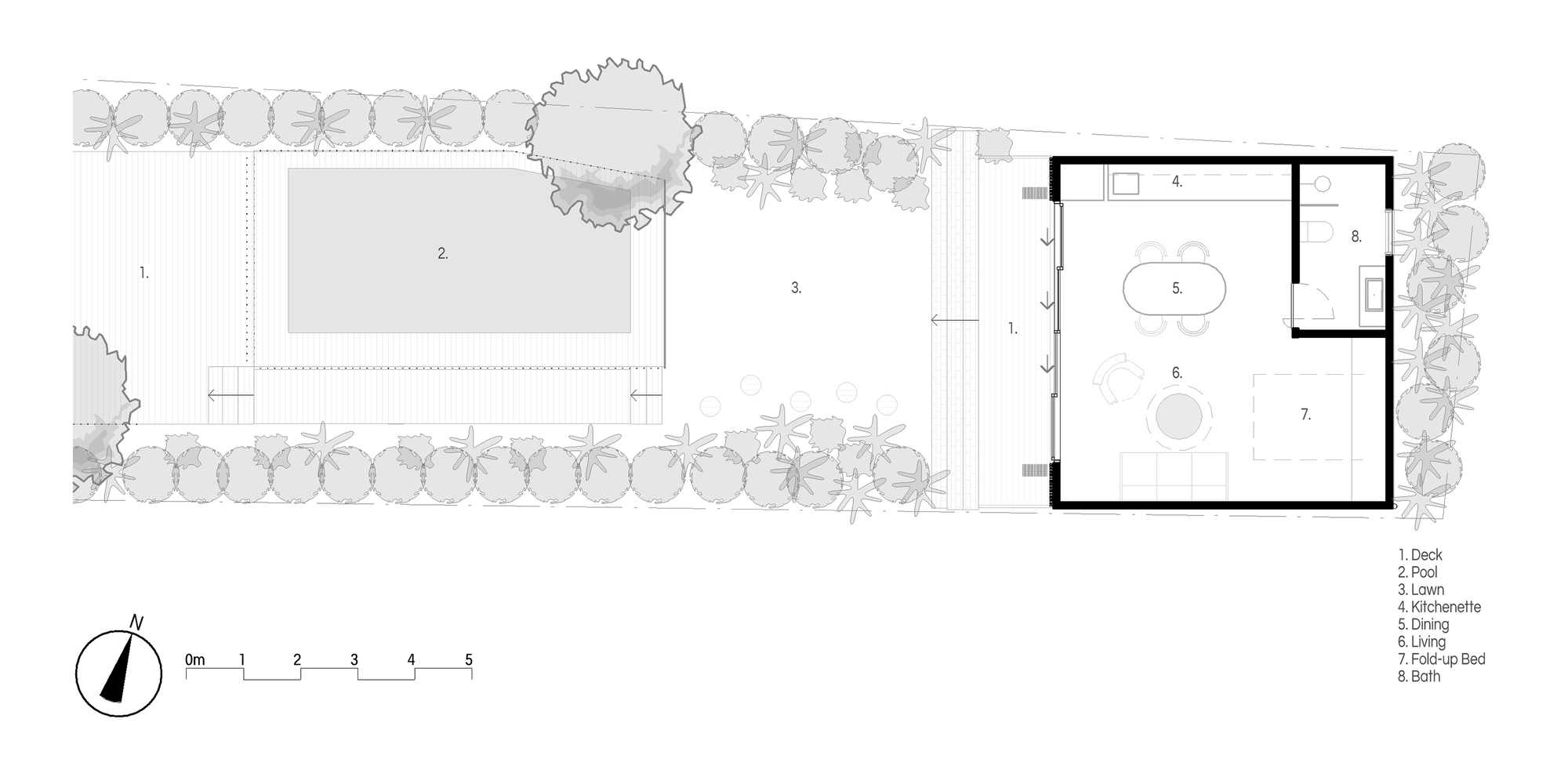
Pool House #architecture Architects: buck&simple Area: 37 m² Year: 2024 Photographs: Prue Ruscoe Country: Australia Located on the traditional lands of the Eora people, tucked behind a traditional semi, Pool House is a hidden backyard gem in the Eastern Suburbs. A statement in simple function, its robust natural materials make it a focal point for leisure and relaxation. Buck & Simple designed a structure that harmonizes with its suburban surroundings while providing a highly functional and aesthetically appealing outdoor living space. Natural elements such as wood and stone enhance its contextual relevance, creating a soothing atmosphere. Defined by a minimalist yet durable material palette, the pool house serves as a retreat for entertaining, relaxing, and gathering. It balances privacy with an open connection to the backyard and pool. As the first stage of a broader development, it functions as a secondary dwelling, catering to a shift-working family member while enhancing daily rituals through passive design, natural materials, and seamless indoor-outdoor integration. Guided by simplicity, material integrity, and a strong connection to place, Pool House fosters a calm, functional environment where form and purpose coexist. Passive design strategies maximize ventilation, natural light, and thermal performance, reducing reliance on mechanical systems. Time-tested construction techniques ensure durability, aligning with a budget-conscious, function-forward approach. Locally sourced and recycled materials age gracefully, minimizing environmental impact. The pavilion-like structure blurs indoor and outdoor boundaries, reinforcing a connection to nature. Through craftsmanship and material honesty, it maintains an enduring quality where raw materials tell a story of time and use. Every element is intentional, supporting mindful living through spatial clarity, sustainable choices, and timeless materials. Enhancing daily life as a tranquil retreat, Pool House strengthens the family's bond with nature and the pool. Expansive openings invite fresh air and natural light, ensuring year-round comfort. Durable, tactile materials promote ease of use and low maintenance, allowing the space to evolve over time. Designed for both solitude and social gatherings, it fosters relaxation, connection, and enjoyment. Carefully positioned to integrate with the pool and landscape, the structure extends outdoor living. Large sliding openings enhance airflow, while a restrained material palette echoes water, stone, and timber, ensuring harmony with its setting. Thoughtful orientation maximizes natural light and ventilation, providing shade, shelter, and an inviting atmosphere. Strategic decisions balance high-quality design with cost efficiency. Durable, low-maintenance materials, including Fijian mahogany cladding, ensure longevity. Challenges such as water and rock in the groundwork were resolved with careful planning, incorporating a stormwater retention system. Passive design principles, including solar orientation and a burnished floor, enhance energy efficiency while reducing costs. A streamlined structural approach optimized construction expenses without compromising design. These thoughtful decisions resulted in a refined, timeless space that enhances the family's lifestyle for years to come.
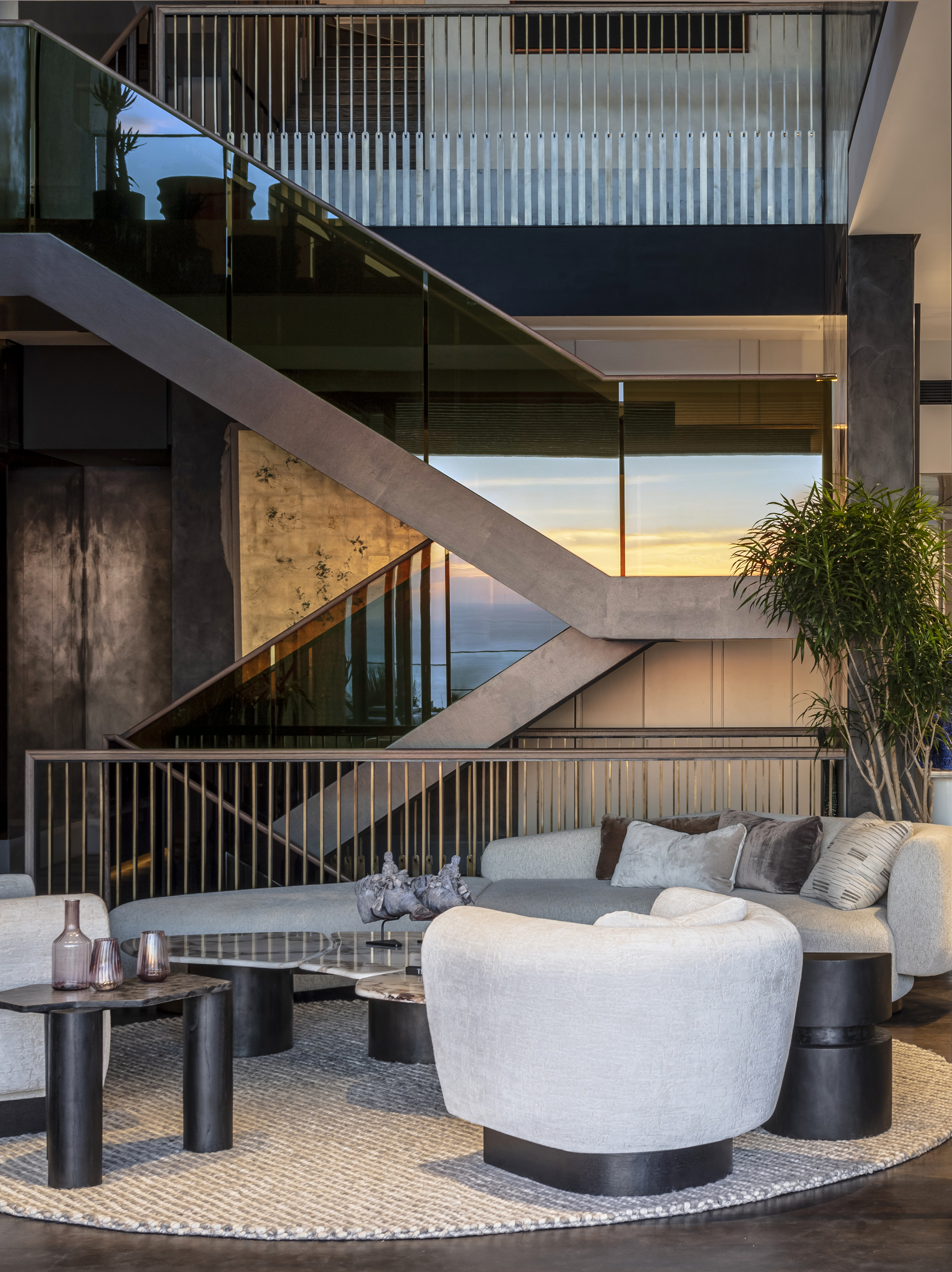
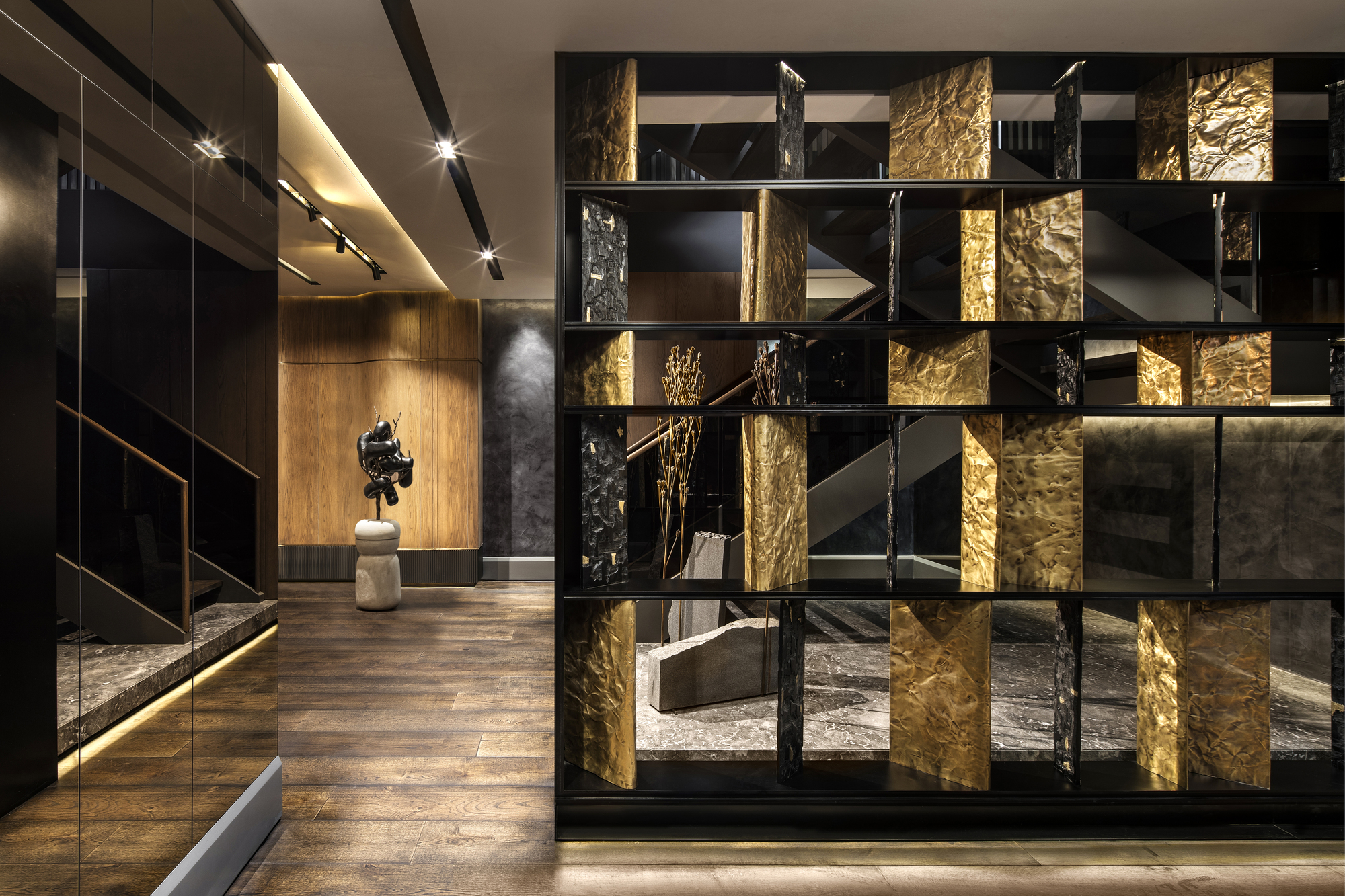
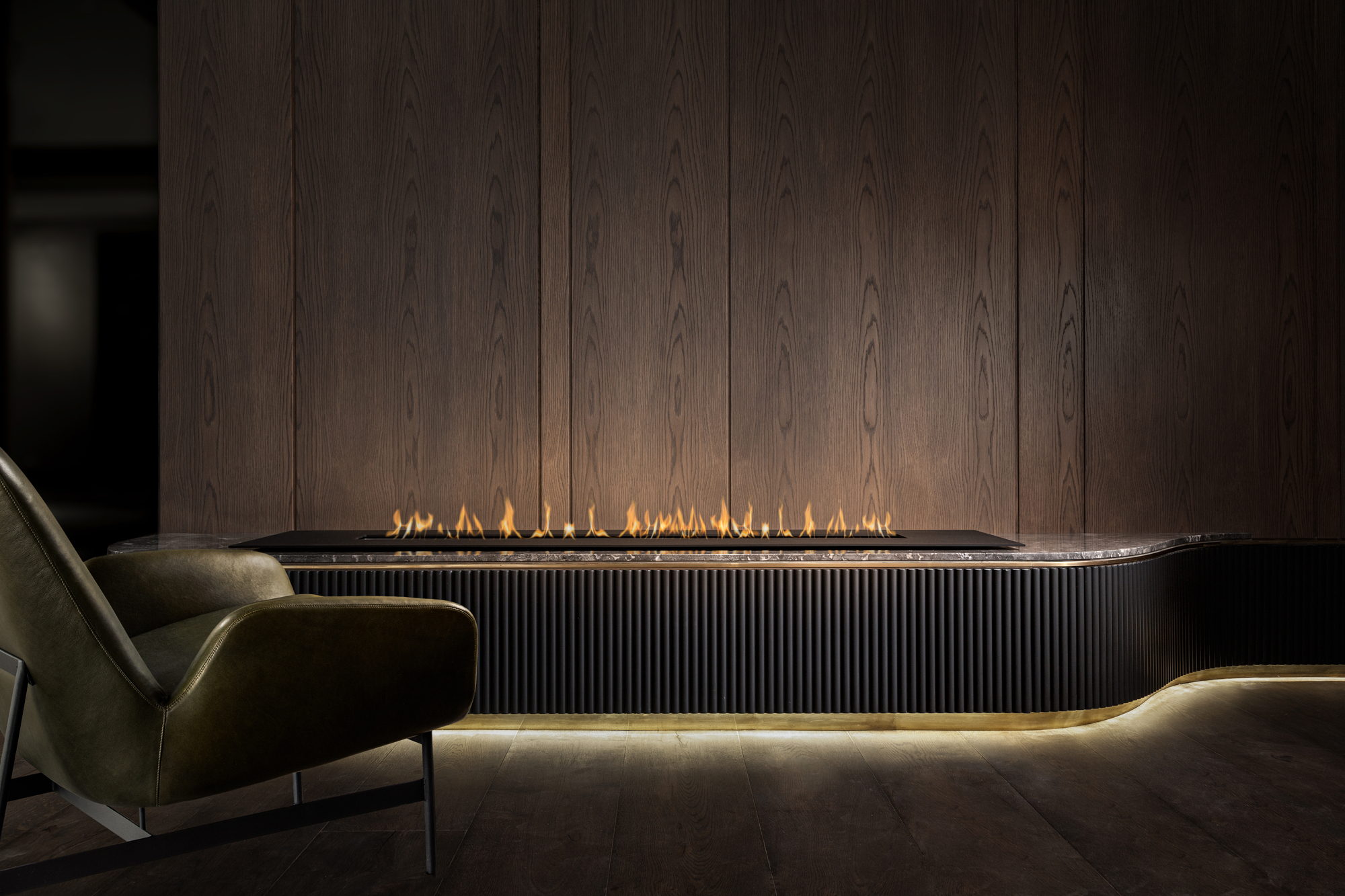
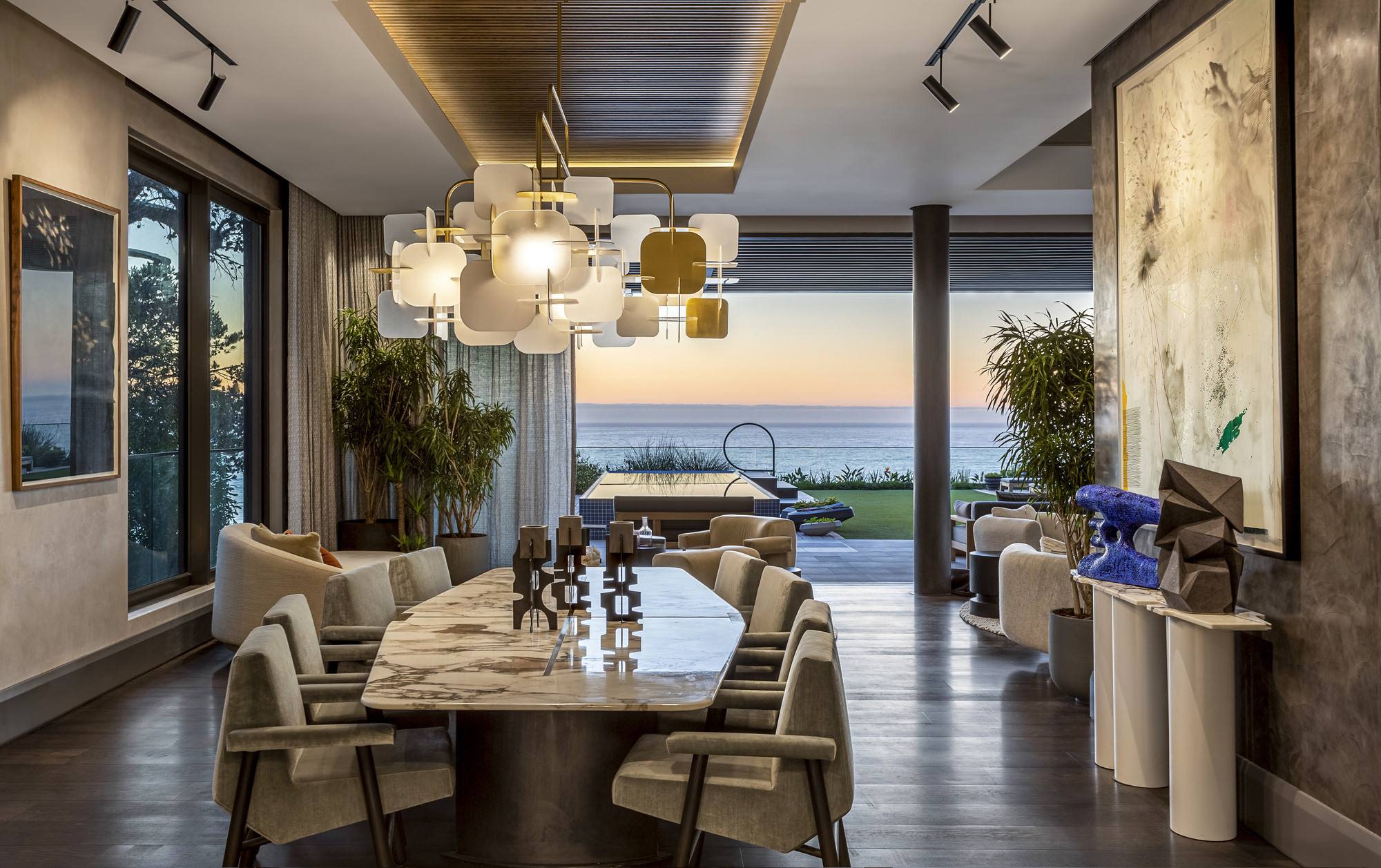
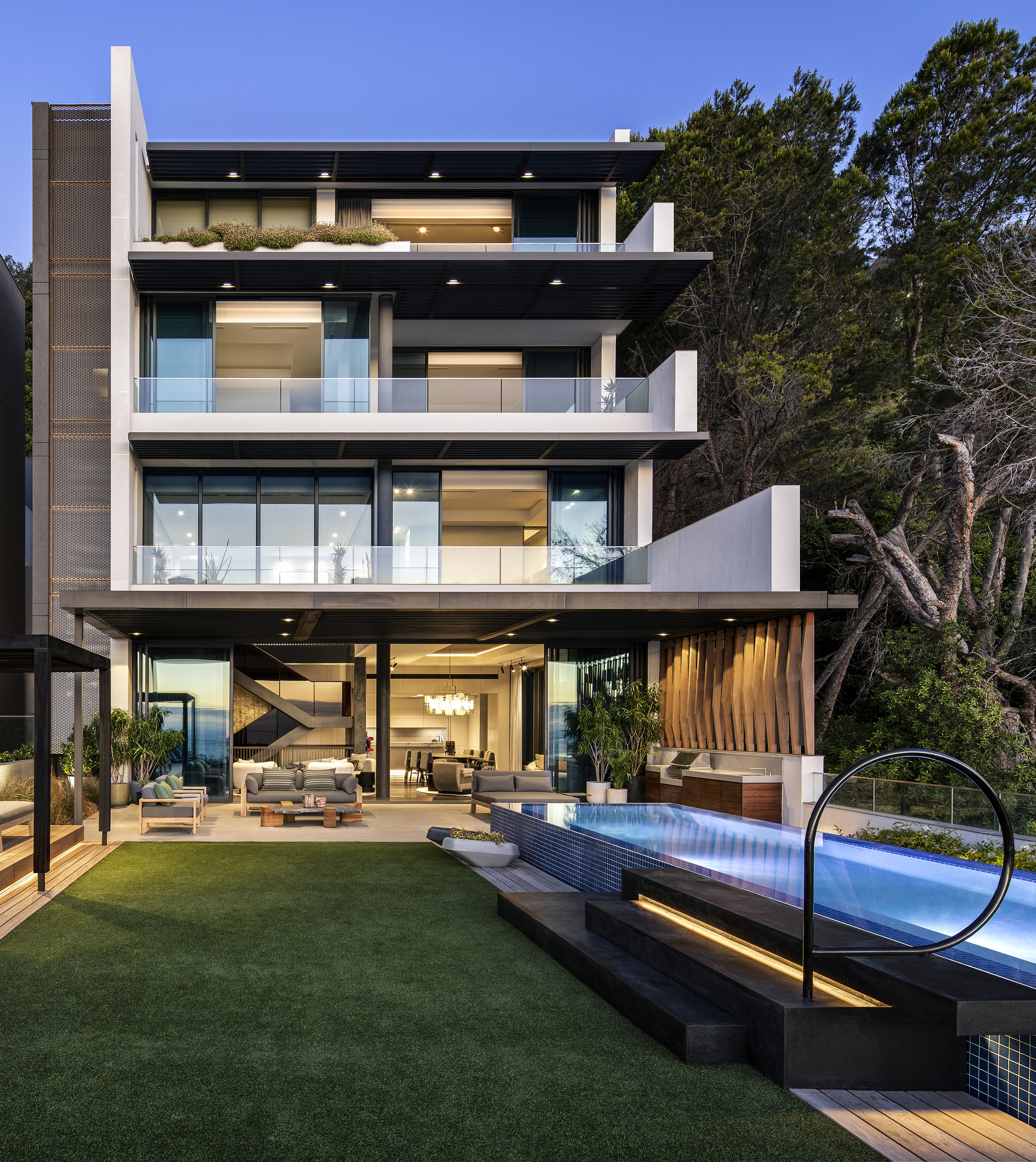
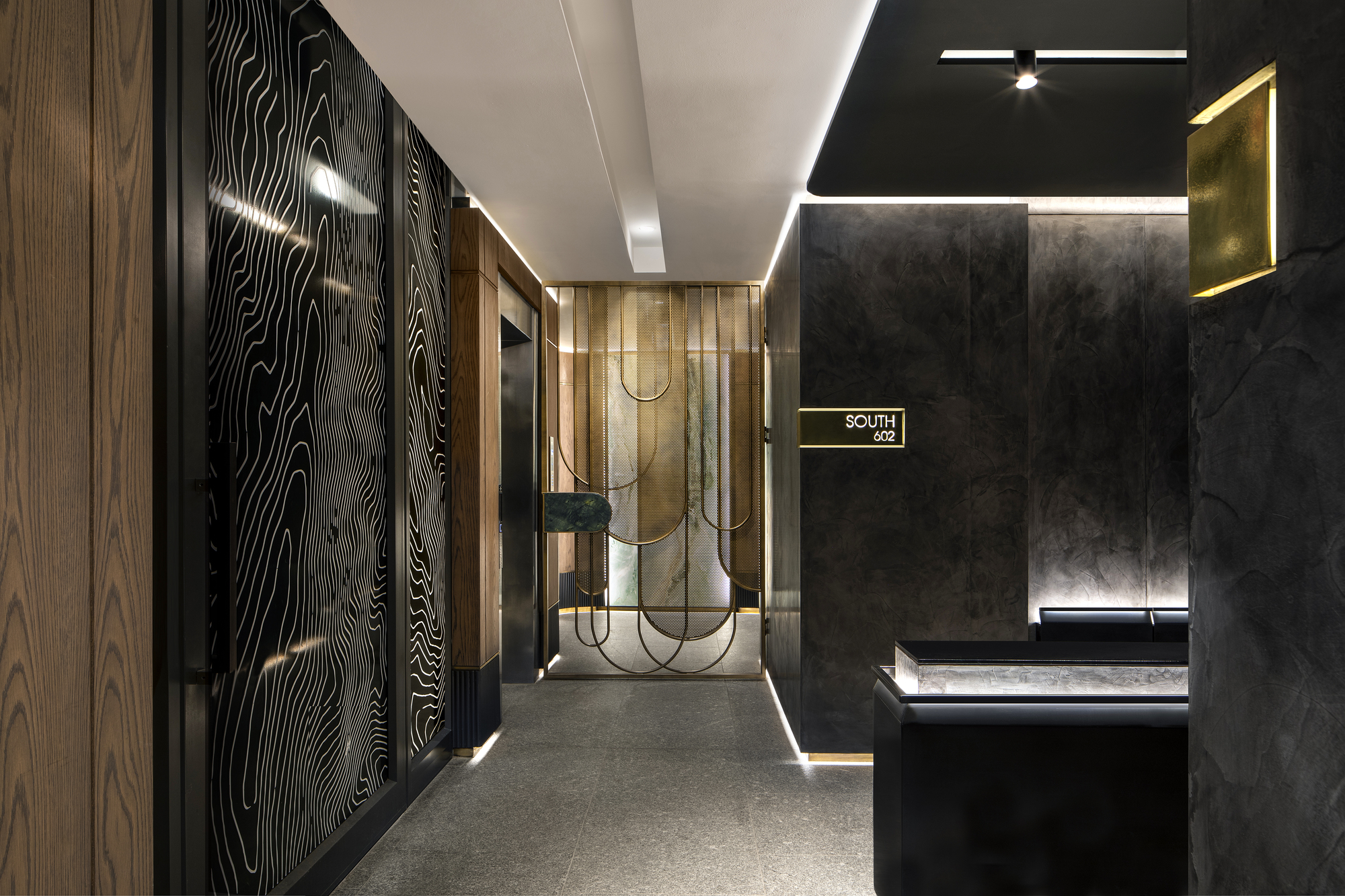
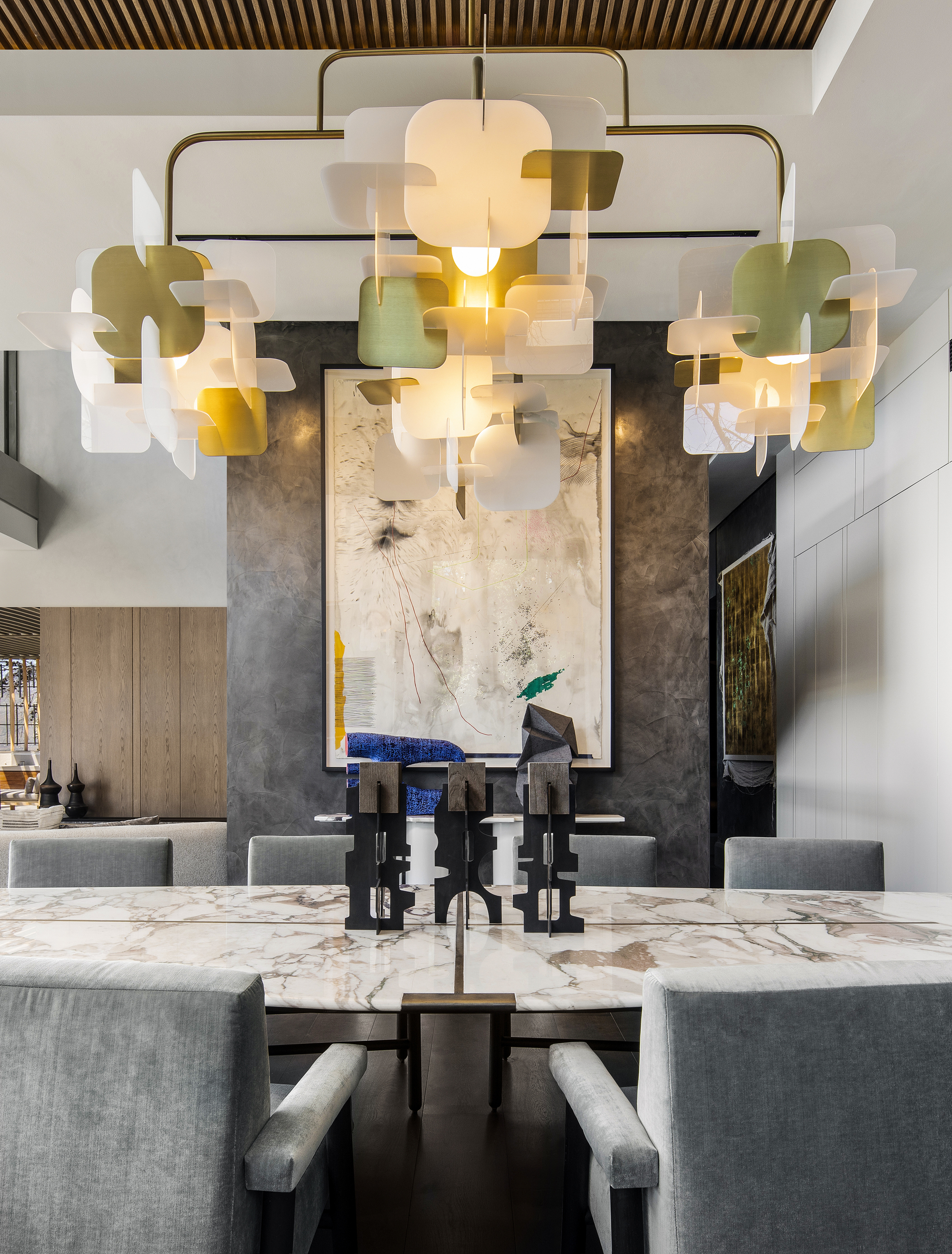
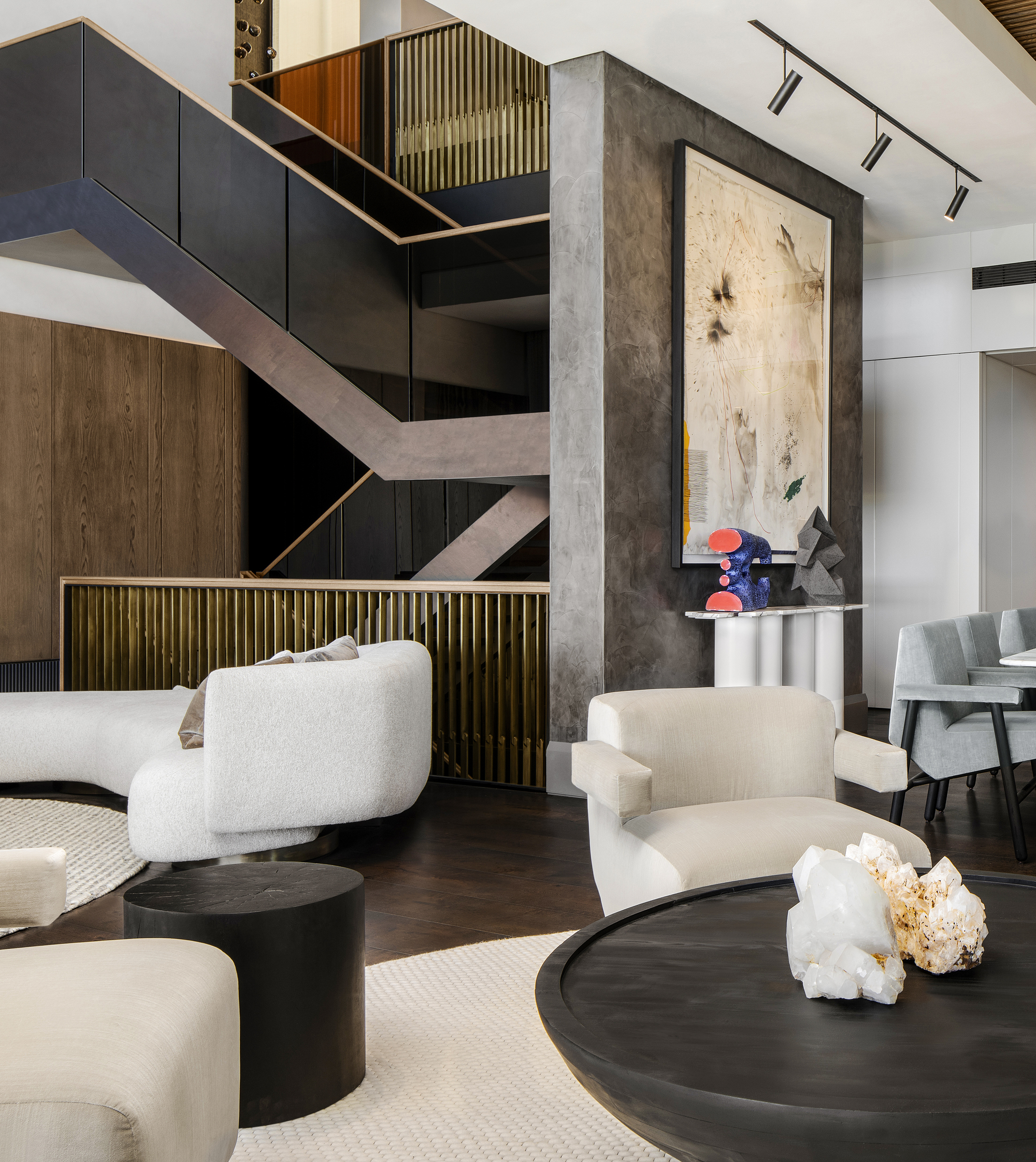
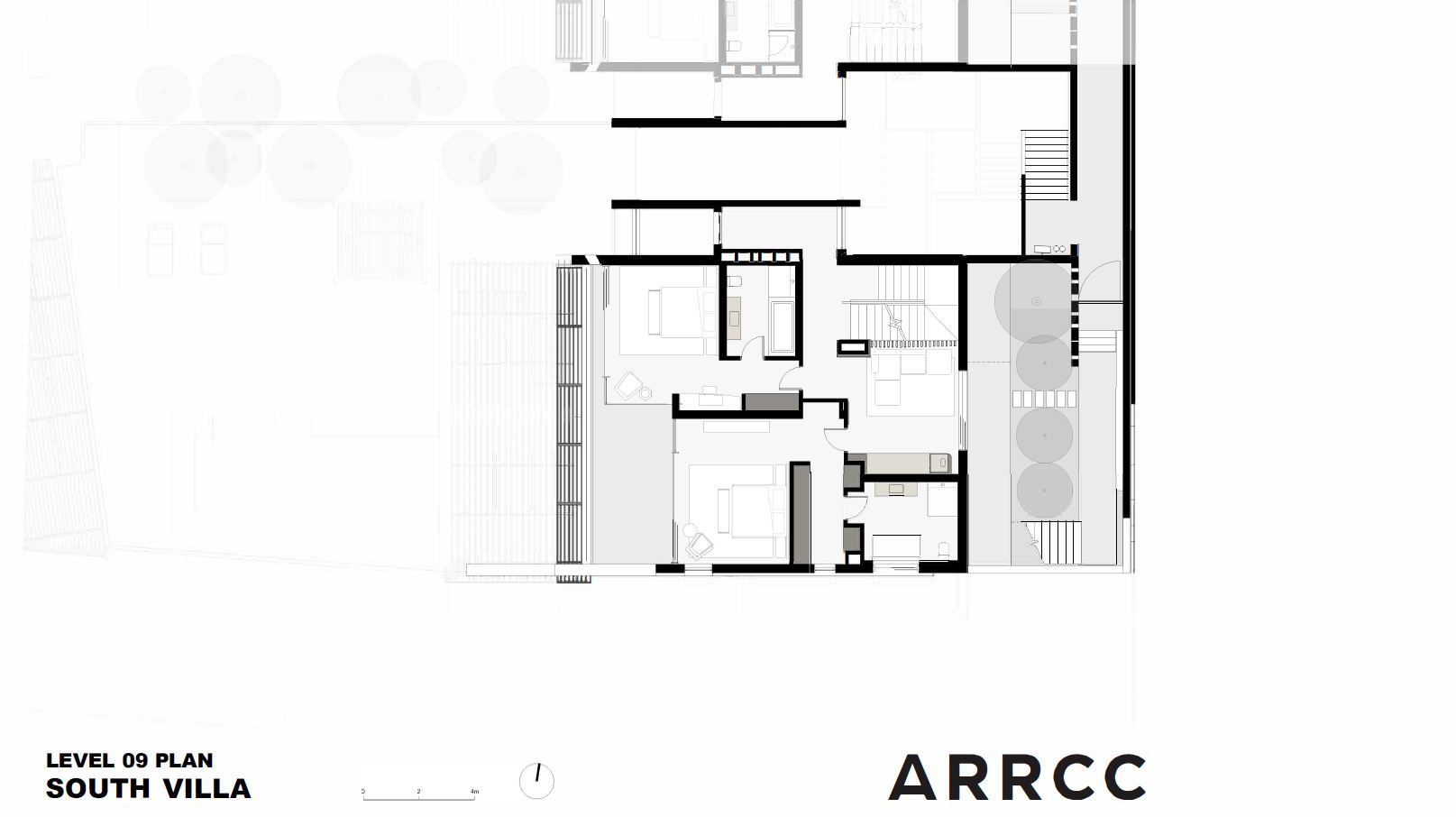
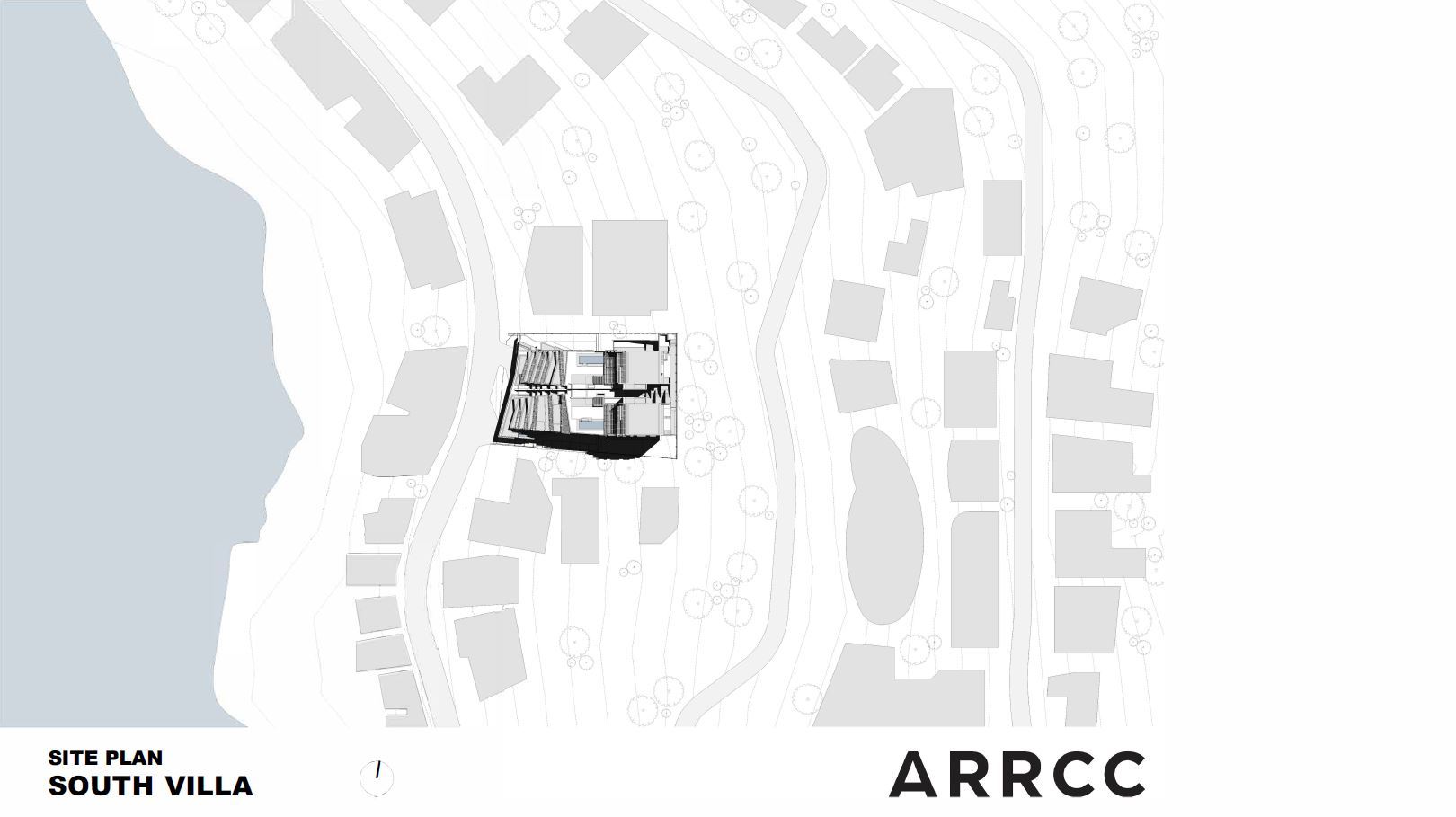
South Villa Penthouse #architecture Location: Cape Town, South Africa Architects: ARRCC Area: 200 sq m Year: 2019 Photographs: Adam Letch & Niel Vosloo South Villa is a five-story penthouse in the award-winning Clifton Terraces apartments on Victoria Road, Cape Town. Its elevated position on the iconic Lion's Head takes in extravagant ocean views and local landmarks such as Table Mountain and Clifton's pristine beaches. The building mimics the existing contours of the site, sensitively ensuring that the views from neighboring sites were unaffected or even improved. The interior décor and interior architecture, by ARRCC and OKHA, has stylistic connections to the style moderne movement of the Art Deco period of the 1920s and 30s. Each apartment effortlessly binds state-of-the-art technologies into the fabric of its functionality and existence with 24/7 security, services, and amenities that afford a lock-up-and-go lifestyle for summer or all-year-round living . Through the seamlessly integrated home automation system, almost any aspect of the villa can be remotely controlled and personalized, including the lift, pool and Wi-Fi. "What started out as a normal interior architecture brief quickly evolved into my passion project with a focus on coupling global design and South African art and craftsmanship," says the international client. The client felt it was a natural choice to work with ARRCC and OKHA on re-imagining South Villa's interior architecture and interior design respectively. “SAOTA, ARRCC and OKHA are each thought leaders in their own rights and as a group, their skills and strengths are even further compounded,” he adds. Entering Clifton Terraces via its stone-clad reception area, a private lift ascends six levels to the penthouse and opens to a hallway featuring a full panel of Fantasy marble before reaching the private lobby of the penthouse. Here, a provocative layering of oak and brass inlay accents, together with charcoal gray ribbed timber skirting converge in a backlit slab of Verde Fume Onice Onyx beneath a hadow skylight and LED-lit walls.  Exiting the lift into South Villa, a classic clad steel mesh door leads into a double volume living area that features warm bronze and glass installations such as the feature staircase. ARRCC director Jon Case says, “Classical wall detailing has been given new life with a contemporary color pallet introducing moody grays, deep blues and textured green finishes.” The living area in turn opens onto a 150 sqm terrace that boasts a raised rectangular heated pool that affords 360-degree, year-round views of Clifton and Table Mountain. ARRCC used a classic ribbed wall paneling in a rich dark green in the master bedroom which, together with wooden flooring, echo the Cape pines that frame the windows facing Camps Bay. The custom bed with multi-paneled headboard in Oak and French cane, broad, low armchair in rich green velvet and marble-topped timber side tables are all custom-made by OKHA. The en-suite master bathroom, where French cane bronze mirrors and oak are combined with wall-to-wall slabs of Bianco Carrara marble, provides a vibrant backdrop to the dramatic and moody master bedroom. SAOTA, ARRCC and OKHA have matched luxury with maturity and sophistication in a statement that enriches the conversation about the possibilities of contemporary design.
Nakano House #architecture Location: Tokyo, Japan Architects: Suzuko Yamada Area: 52 m²
 Year: 2024
 Photographs: Kei Sasaki, Naoki Takehisa
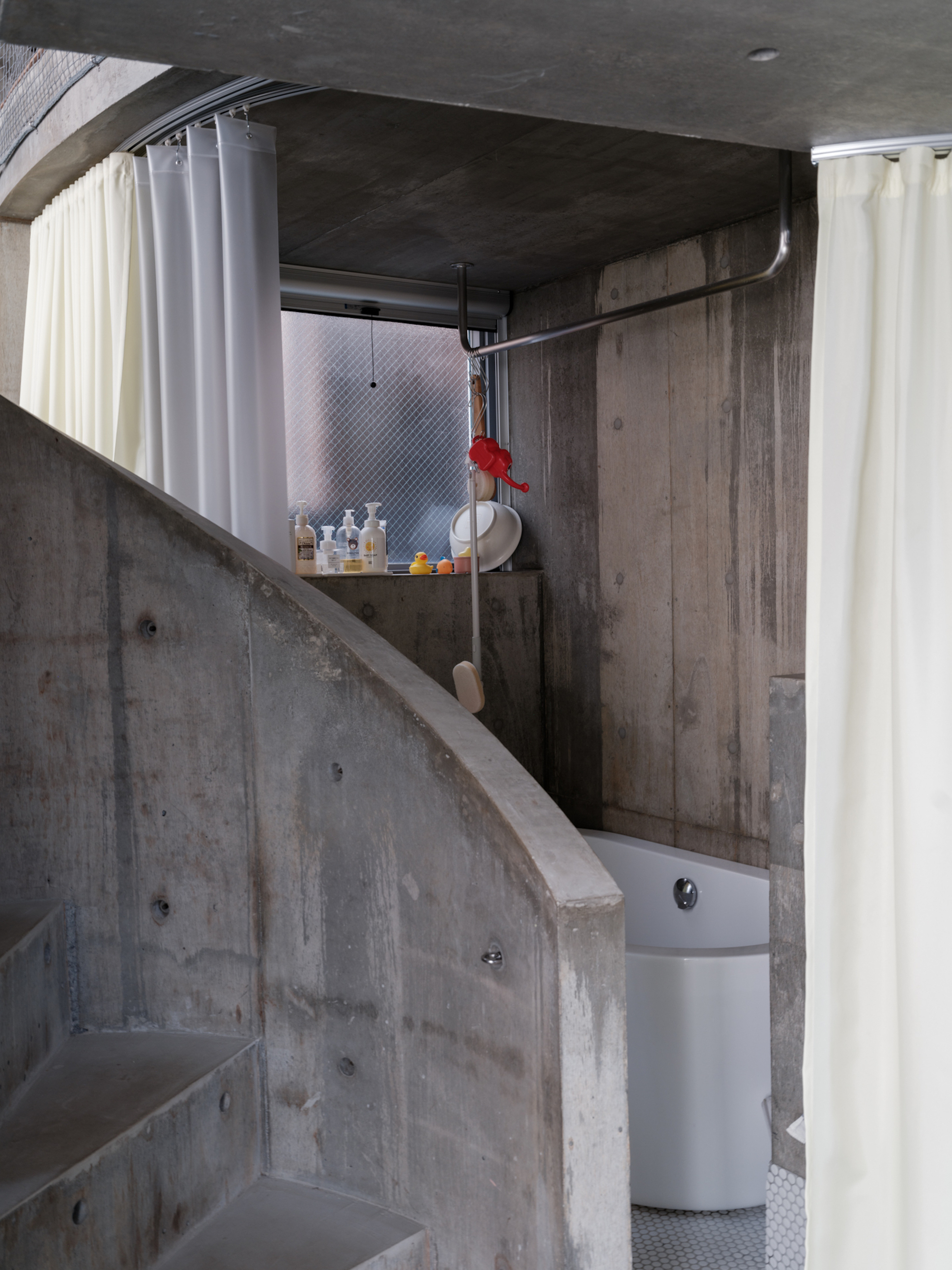
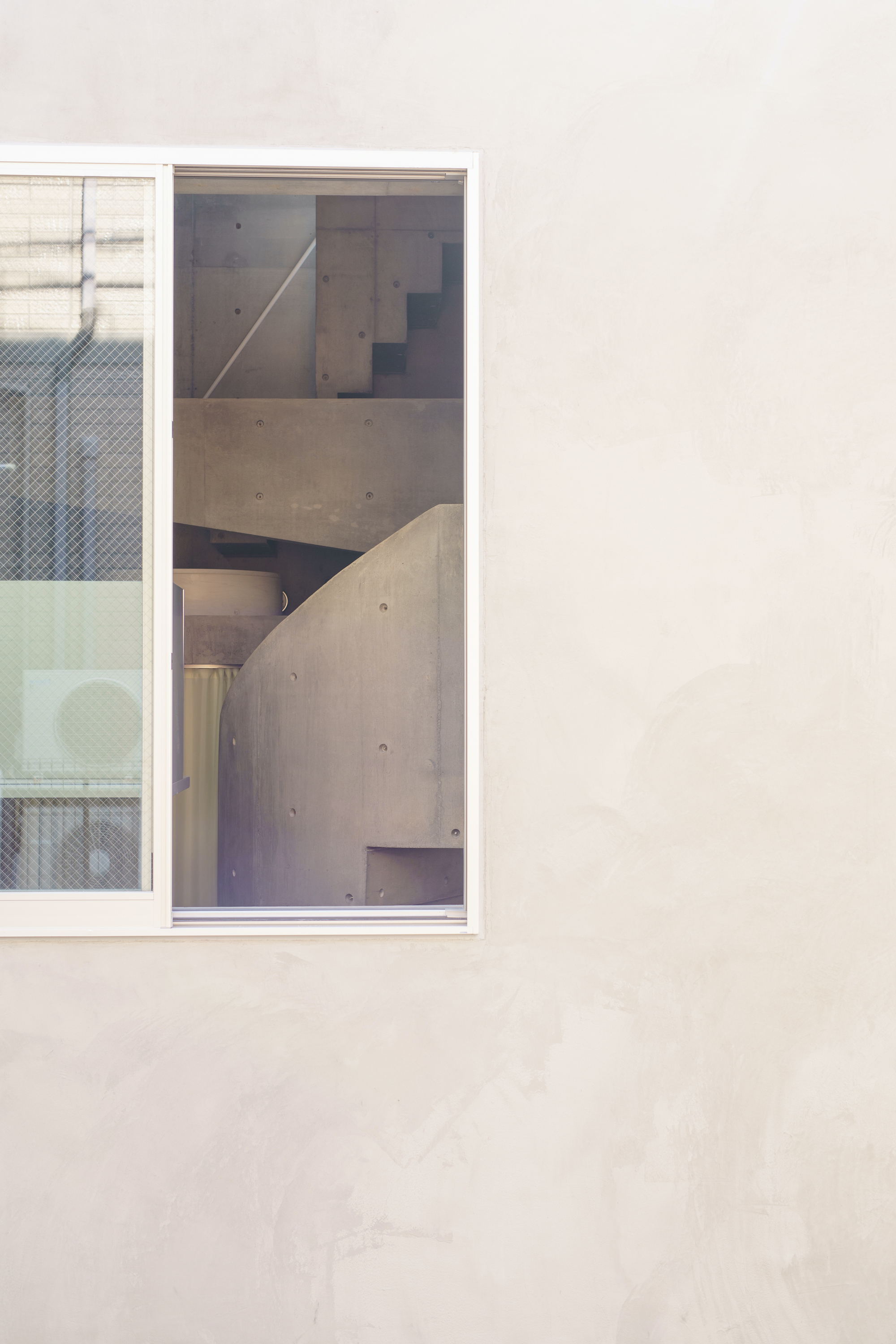
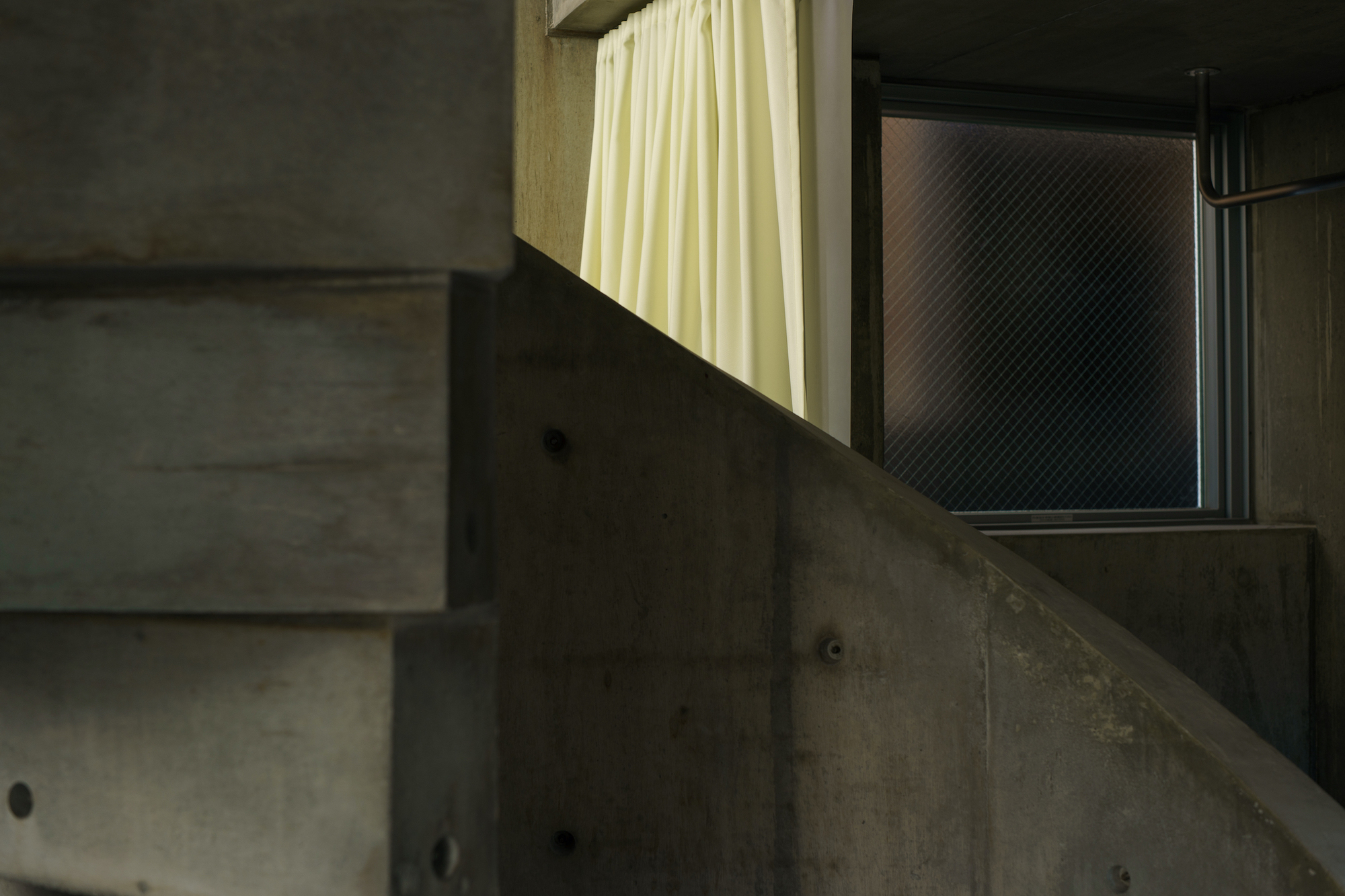
 Lead Architects: Suzuko Yamada A small house for a couple and their two cats. The site was a small lot in a dense residential neighborhood, past a bustling urban shopping street. The clients' request was simple: "As long as there was an outer shell for living and space for the cats to run around, the rest could come together over time." We began by creating an enclosed space over the full extent of the site. In the space measuring less than 26 square meters, we placed the necessary objects of living, such as a toilet, bath, and kitchen. With the addition of components that constitute the "outer shell" for living like two stairs, a cat walkway, handrails, and a bench, the space quickly filled up. From inside the house, it is impossible to have every object in view at once. These are massive in relation to the house itself; their scale is the same or sometimes even larger than the scale of the space. One sees only the blur of light and moist coolness on the rough surface of a concrete wall. It is unclear how far the wall continues or where it ends, appearing large and heavy. The house should belong to the inhabitant but seems to evade ownership, belonging to nobody, existing in place as if it were a mountain or the city itself. Life takes place between the outlines of the objects. Cooking and eating, bathing and doing laundry―everything fills in the string of voids with clusters of household items. The family of objects appears to have looked for and found their places within the structure, as if settled in response to its form. Amongst and between them, the two cats slink about and wind from an open window weaves through, as light from outside swallows everything together. Both life and nature are in tension with the architecture. They exist together and sometimes connect, but never blend. The architecture triggers life and life strengthens the architecture. The goal was to create that kind of relationship in this house.
Xi’an CCBD #architecture Architects: Heatherwick Studio Area: 155000 m² Year: 2024 Photographs: Yanqing Zhu, Luis Sacristan Murga City: Xi'An Country: China A new district designed by Heatherwick studio has opened in Xi'an, honouring the Chinese city's legacy of craftmanship and ceramics. The Xi'an Centre Culture Business District (CCBD) is located south of the city's historic centre between the ruins of the Temple of Heaven and the prominent Shaanxi TV tower. The district blends a retail podium with walkable streets, terraces and open plazas, offices, apartments, accommodation, green spaces, and a vertical park. Ceramics are at the heart of the 155,000m² neighbourhood, with crafted tiles cladding the facade, columns and curving beams, a nod to the ancient capital's famous Terracotta Army. The design team worked closely with local makers to produce more than 100,000 tiles with a unique glaze. Following over 2,000 experiments, including constructing 1:1 mock ups of the columns, the resulting facade brings interest and intricacy to the exterior of the buildings and invites visitors not just to look at but also touch the tiles. Thomas Heatherwick, founder and design director of Heatherwick studio, said: "Here in Xi'an, we were excited to create a commercial district which gave the city an extraordinary new piece of public space. Instead of simply making different buildings, and paving and planting the spaces between them, there was the opportunity to craft an unexpected three-dimensional urban landscape on many levels, where citizens of the city can promenade and meet each other. Pursuing our interest in people's human scale experience of places, we also had the chance to integrate many special constructional details, to help make the project as engaging as possible for people to walk around. The goal of the whole project was to find a joyful and contemporary way to respond to the history of Xi'an, and bring people together." The outdoor streets of the district converge at the central plaza where the Xi'an Tree, a vertical park, creates a natural gathering point. Visitors can ascend its 56 elevated 'petals', or terraces where a sequence of cascading gardens follows the biomes of the ancient Silk Route from the alpine tundra to the dry steppe. Standing over 57 meters high from the basement level the Tree offers views across the development with its varying levels of roofs, terraces and streets, as well as the city beyond. The district has been designed to offer visual complexity from three distances. At a city-scale, it appears as a new neighbourhood of the city with a distinctive skyline inspired by the roofs of the Chinese temples of Xi'an. At a street distance, the varying levels created by the interlocking frames and landscape terraces provide different vantage points of the central plaza as well as the city around it. Finally, at door-level, the design offers a sensory experience in its use of materials and nature, such as ceramic planters and soft-edged stones in the paving patterns. Mat Cash, partner and group leader at Heatherwick studio said: "Super large-scale developments are being built all over the world to satisfy rapidly urbanising populations. By their very nature they are often overbearing, singular and devoid of character – they do nothing for people they are meant to serve. As a counterpoint, we wanted to infuse our project in Xi'an with the spirit, variety, and texture that happens naturally in cities over time. The district pays homage to the city's tradition of making and its historic connection to ceramics. It is a place which invites you to reach out and touch it – with glazed lift buttons and door handles to hand-carved timber handrails and seats. We hope it will be a place that feels immediately a part of the city and where visitors to the neighbourhood will want to spend time in the decades to come." Xi'an CCBD's public spaces opened to visitors in December 2024.
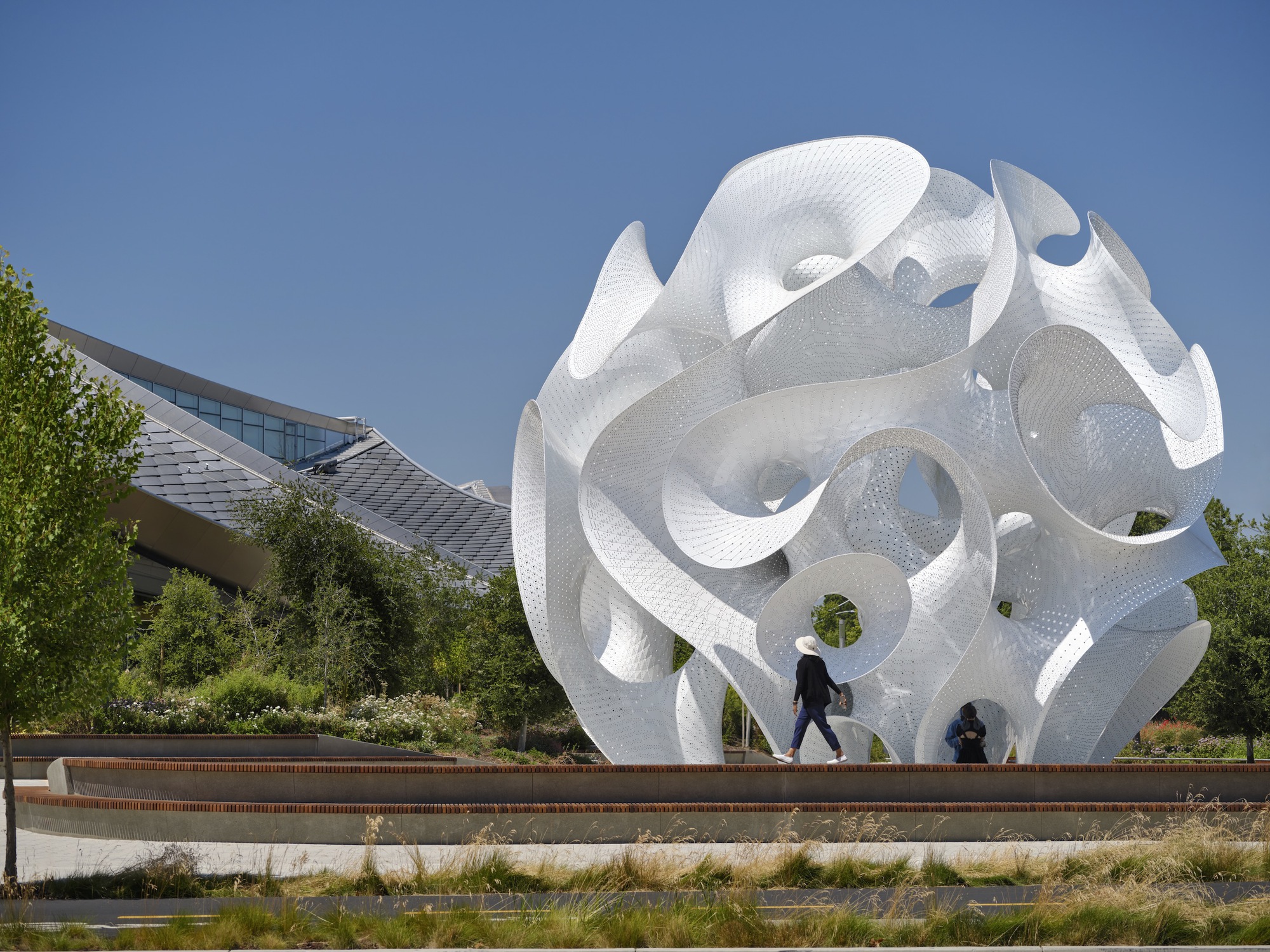
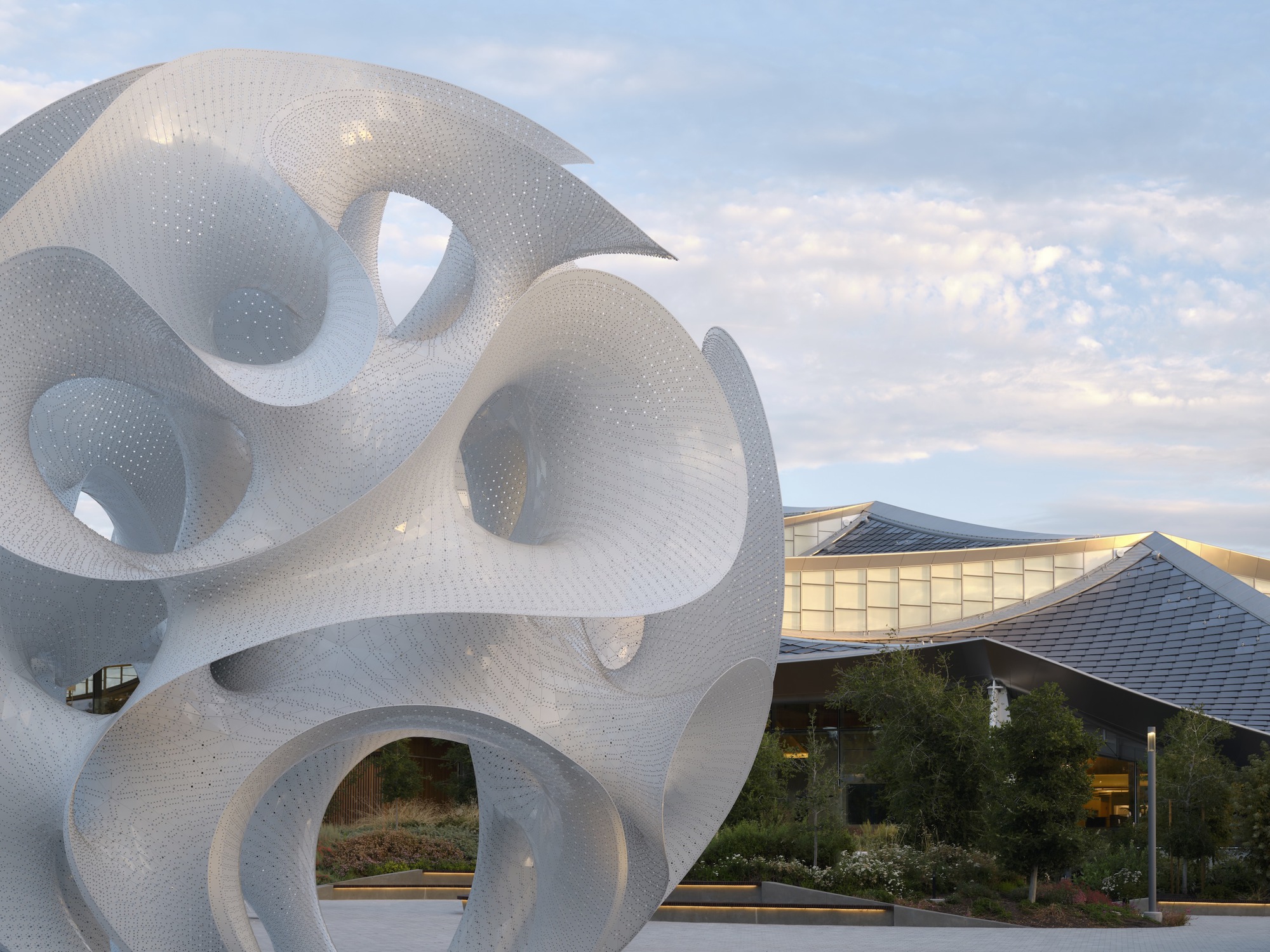
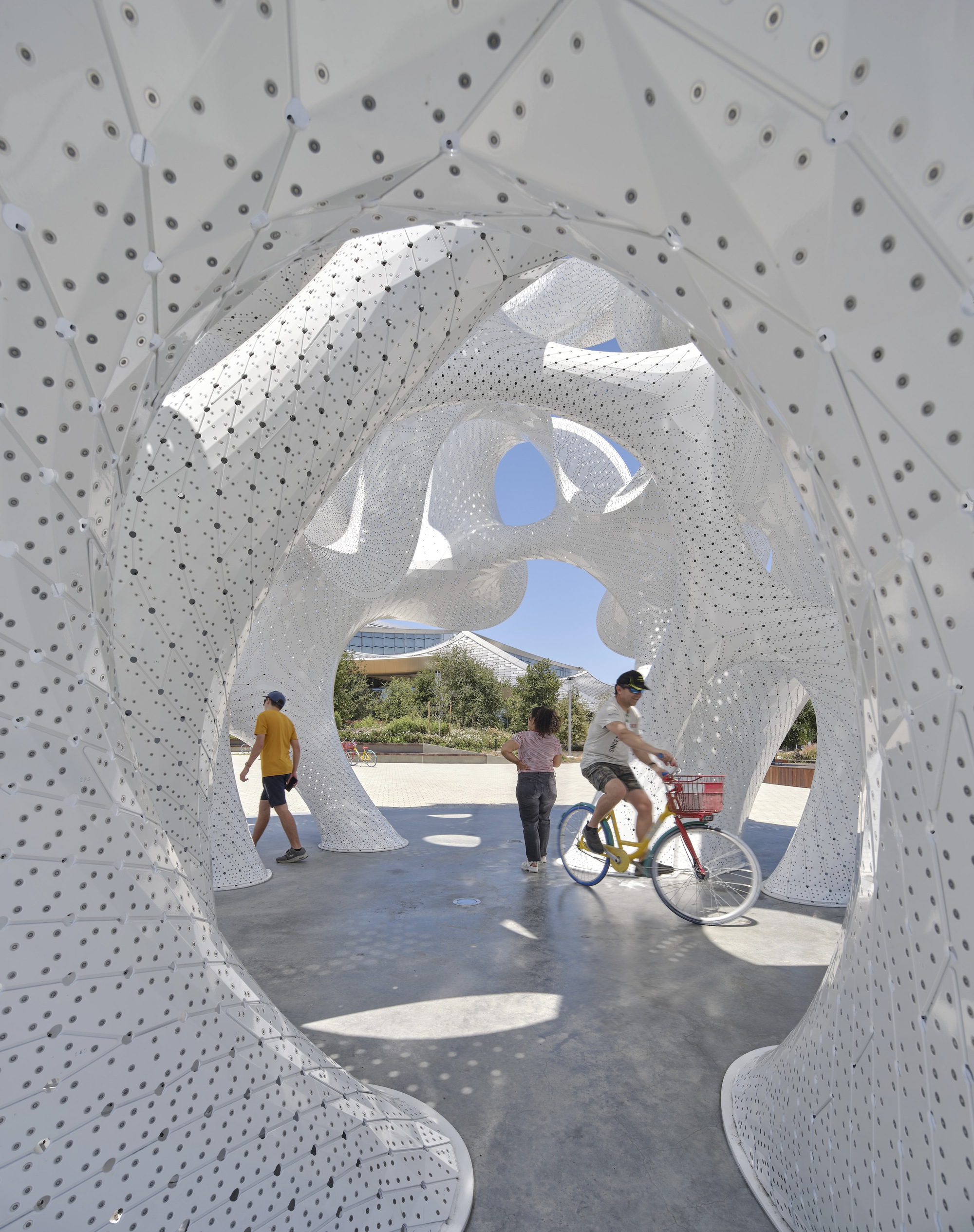
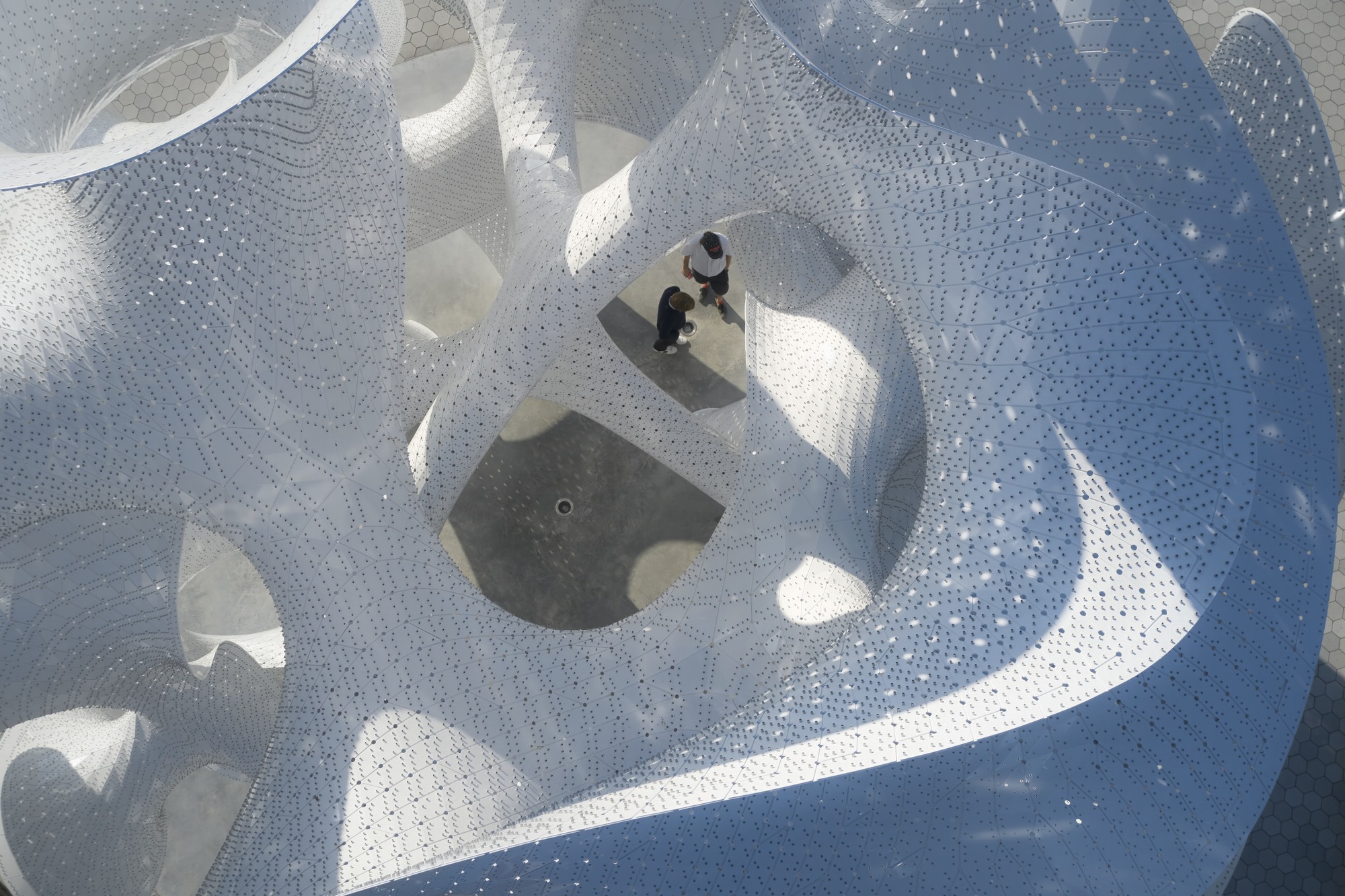
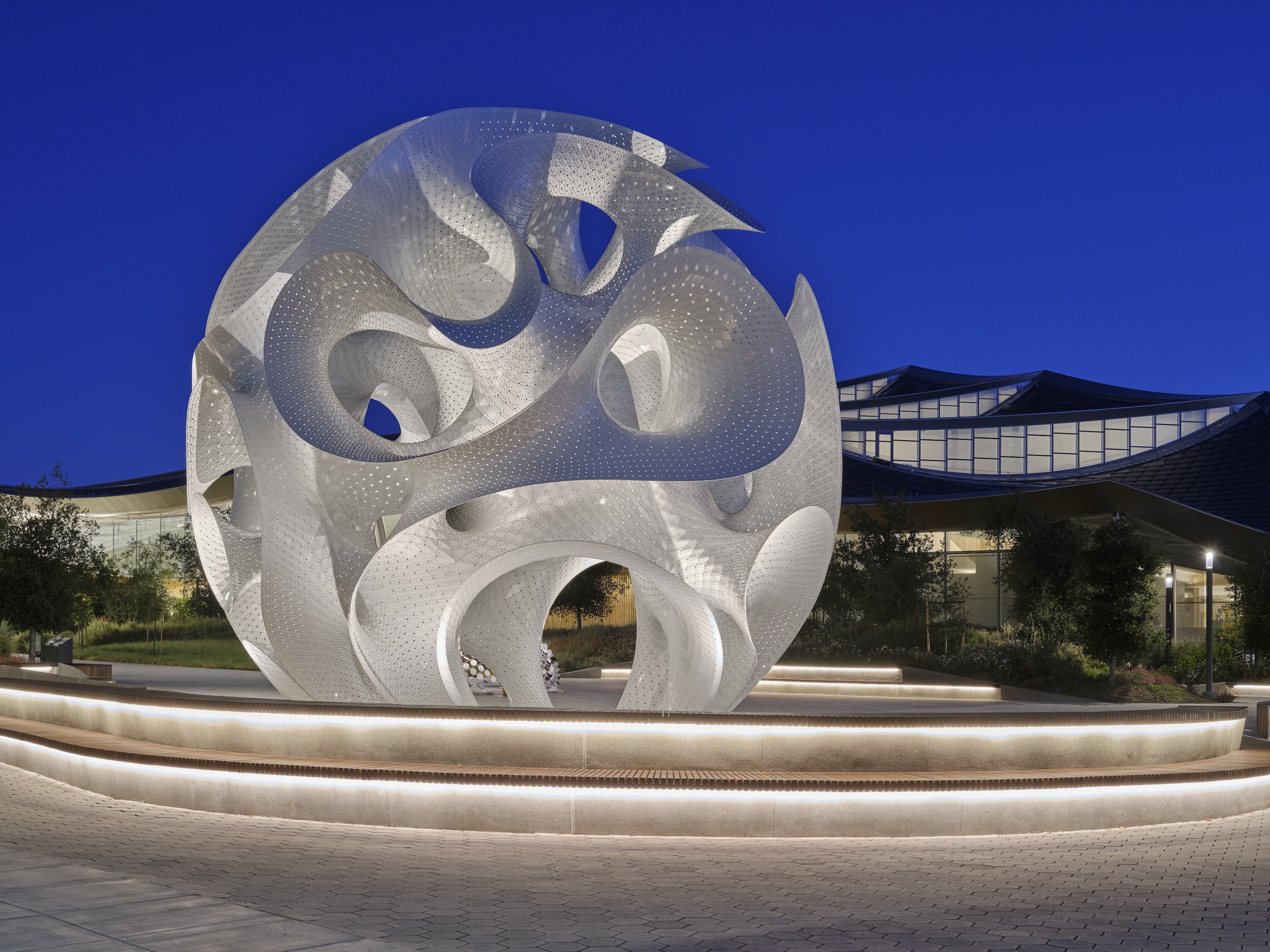
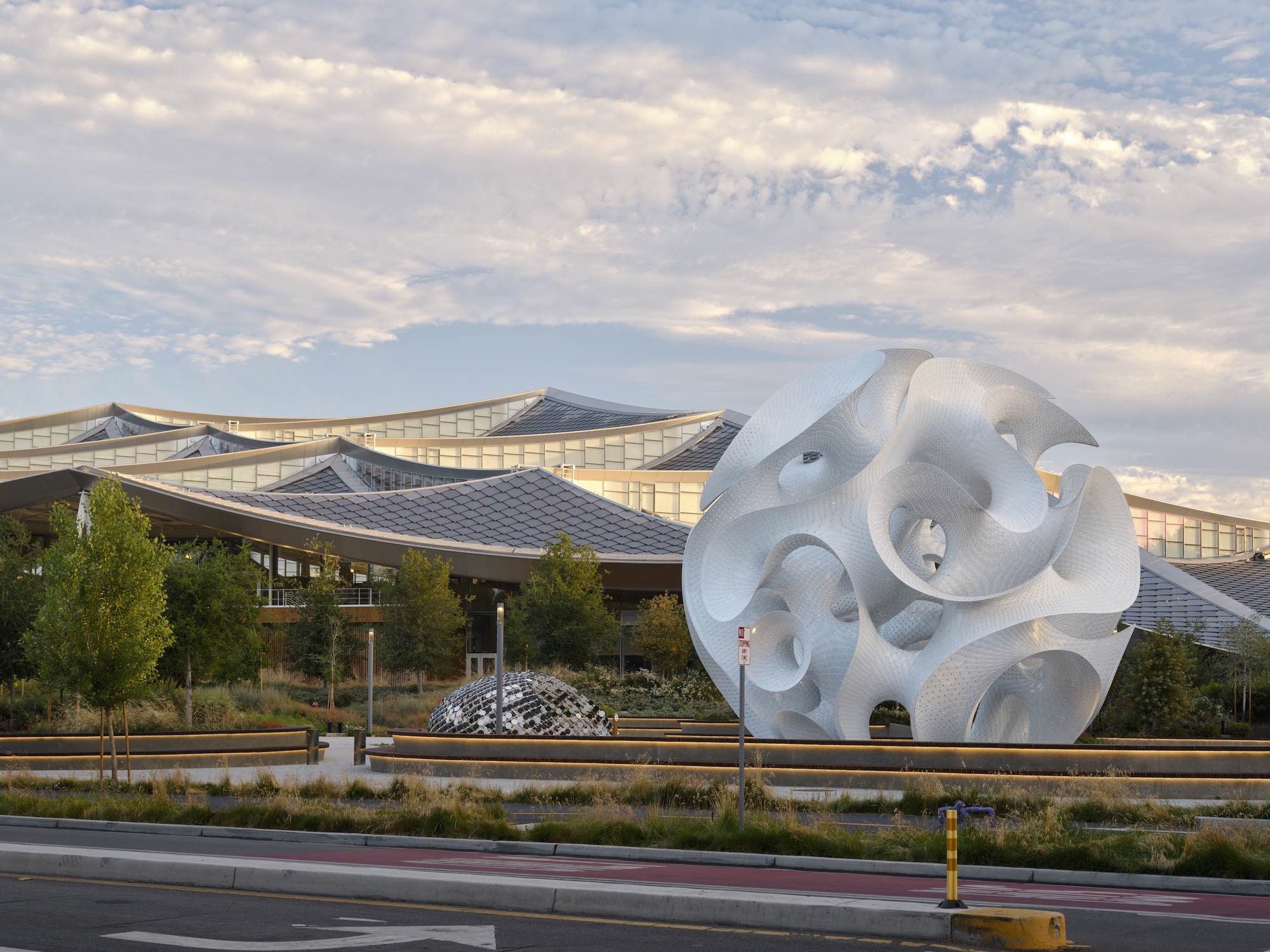
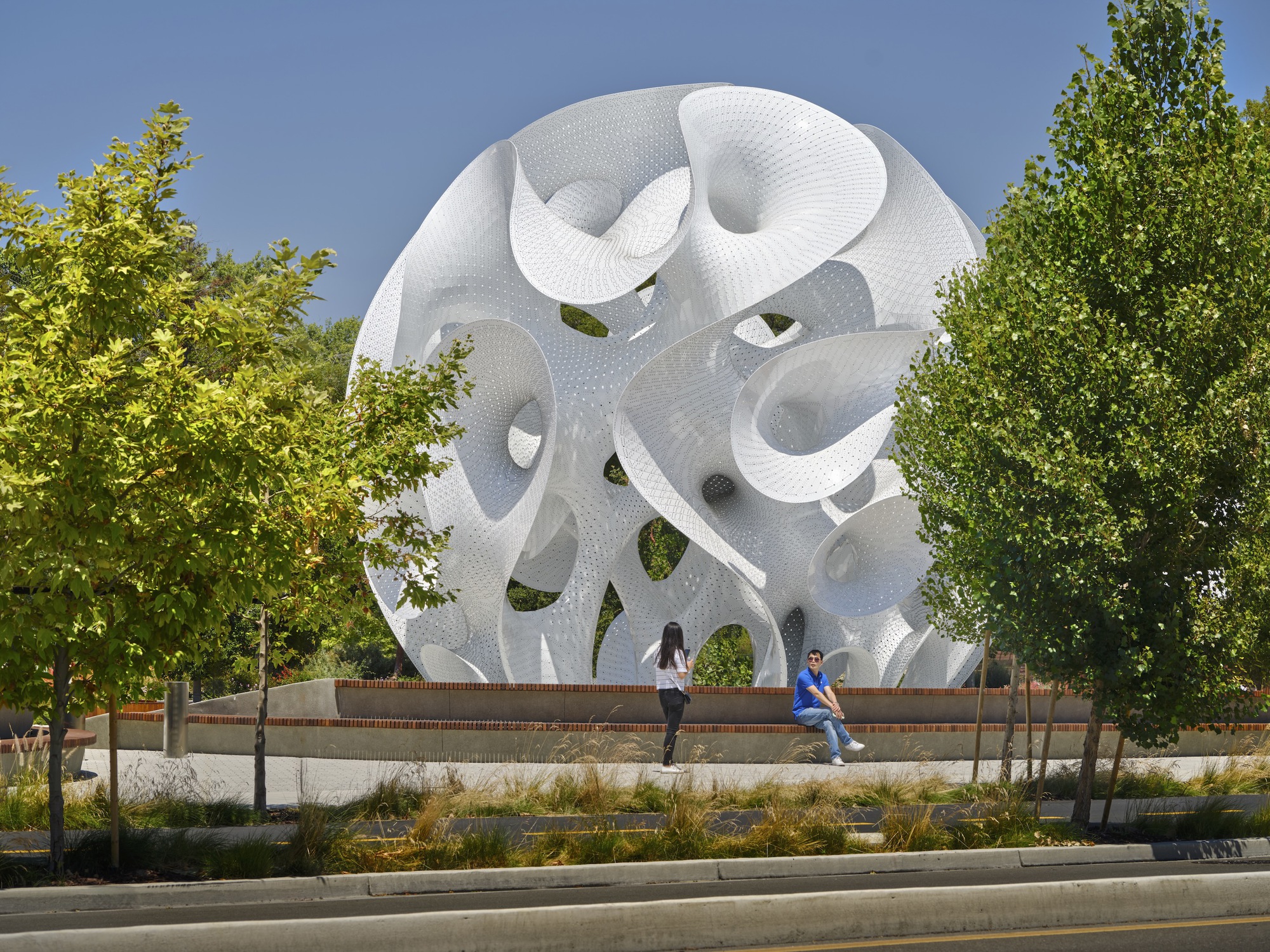
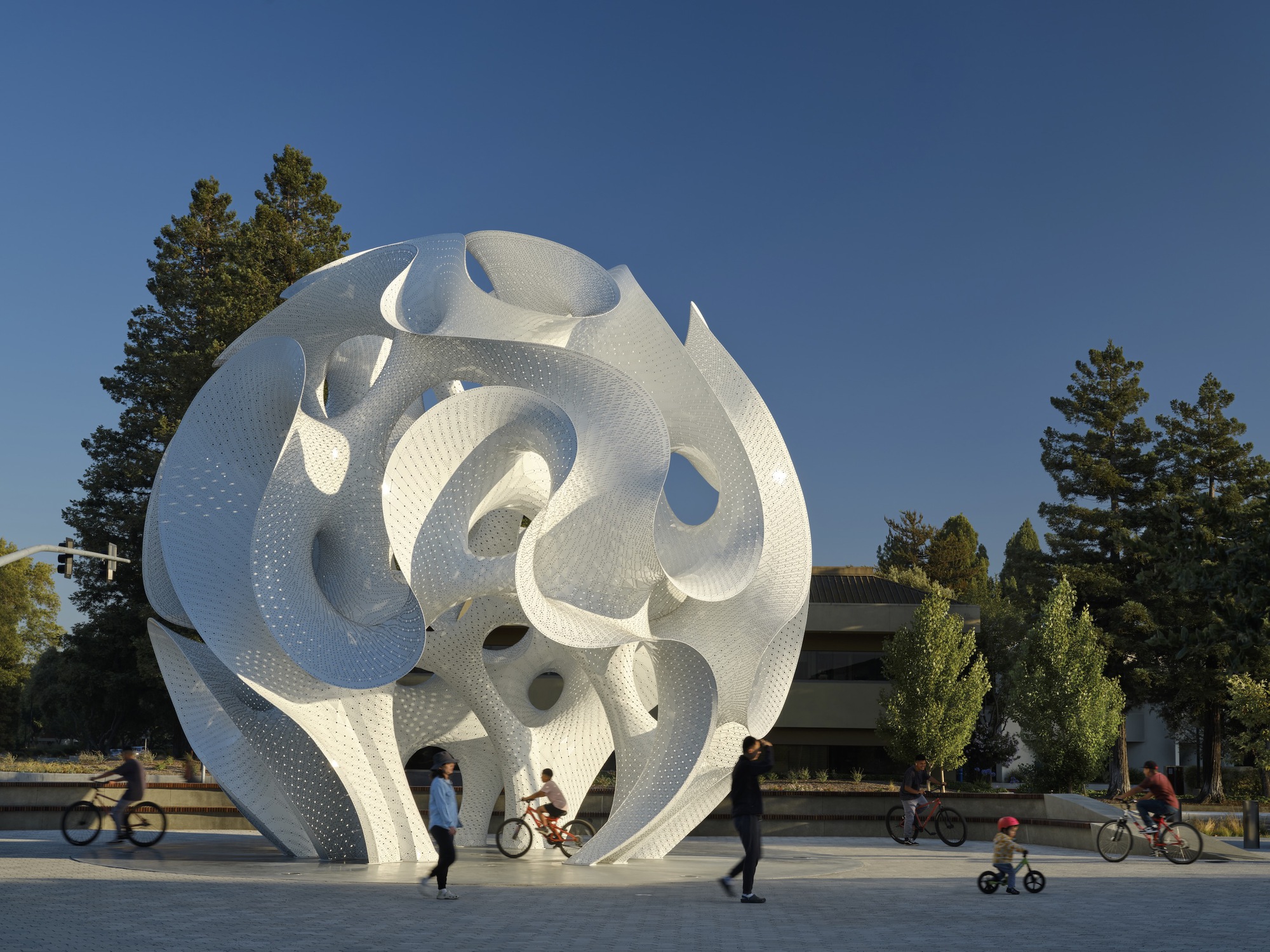
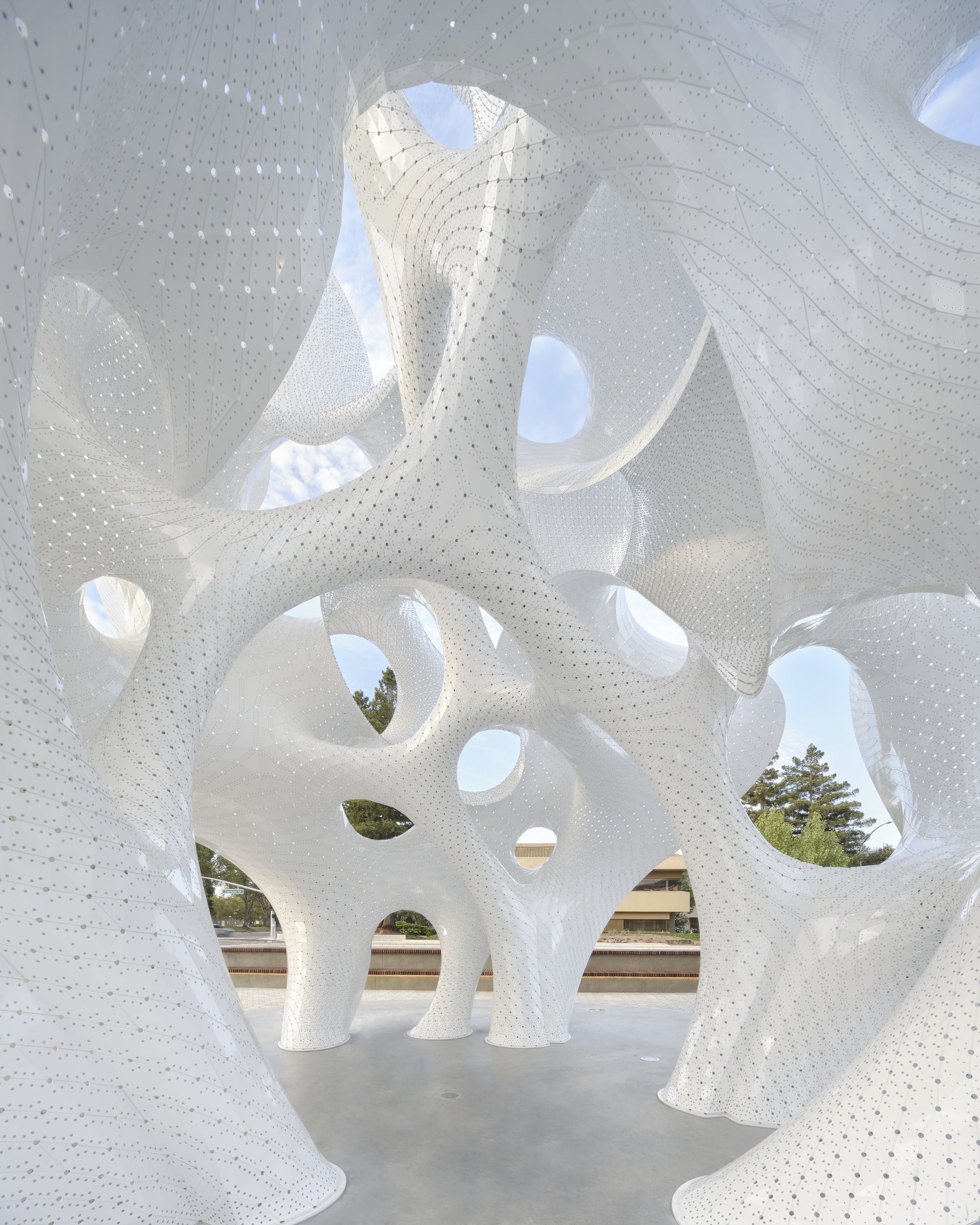
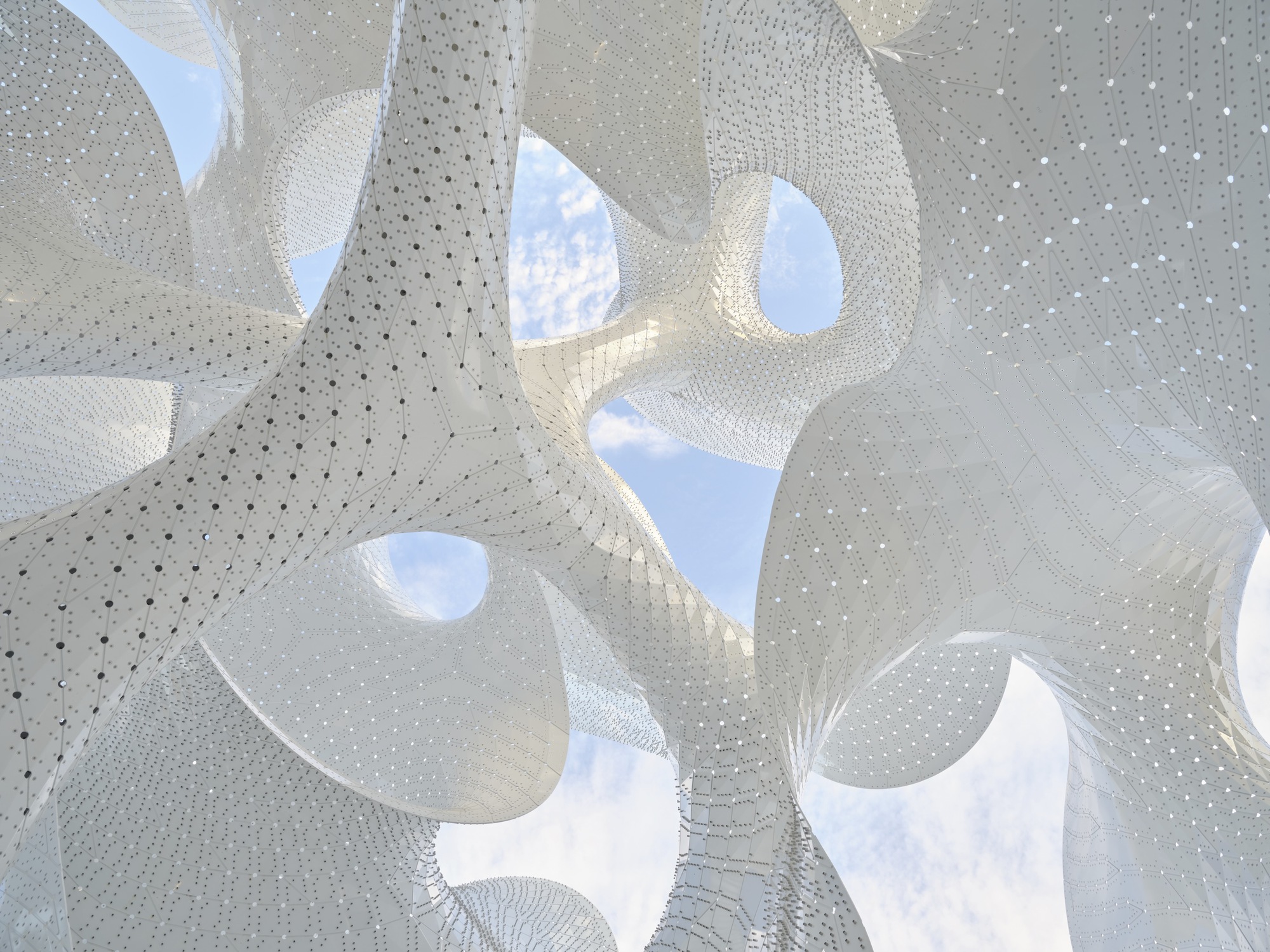
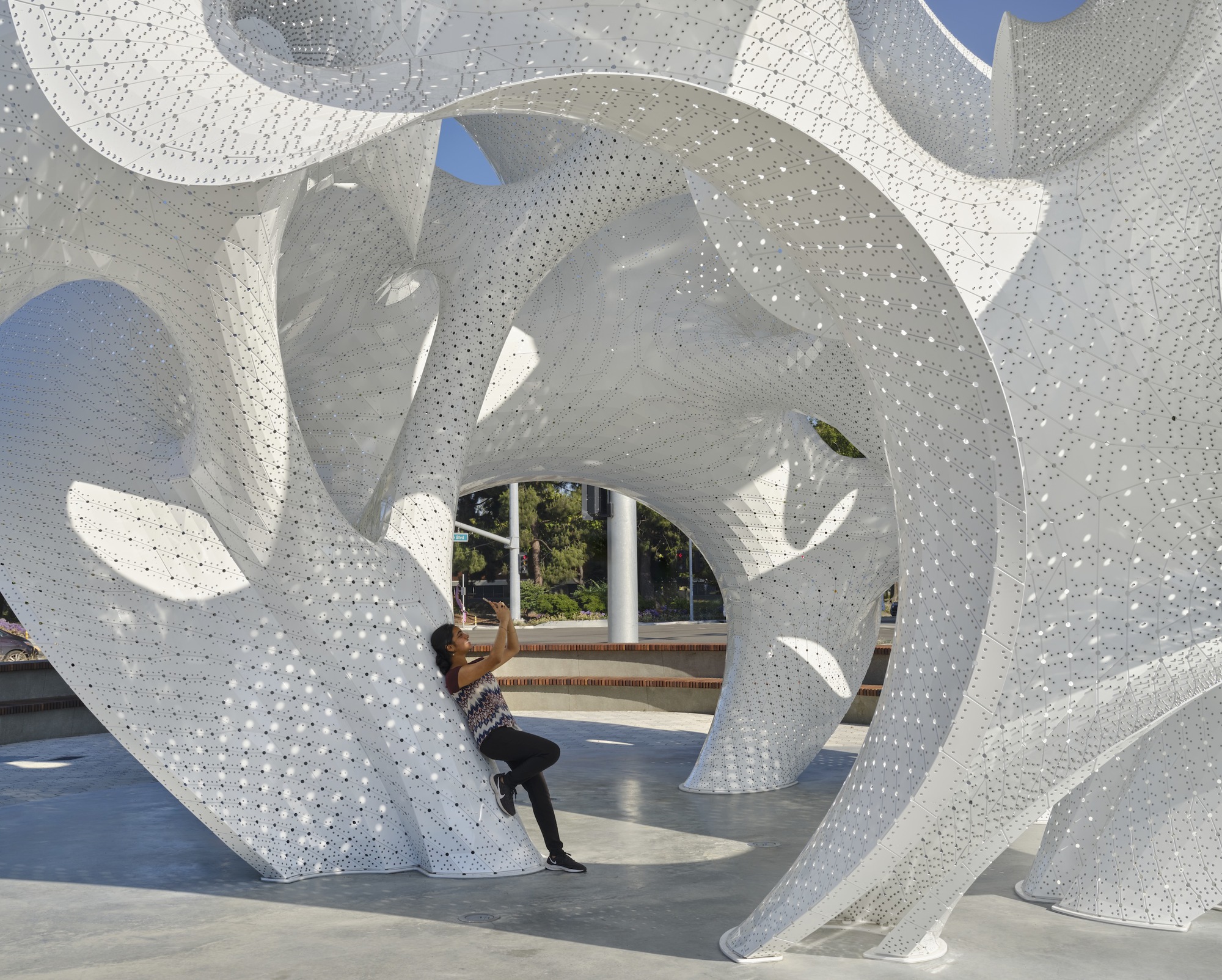
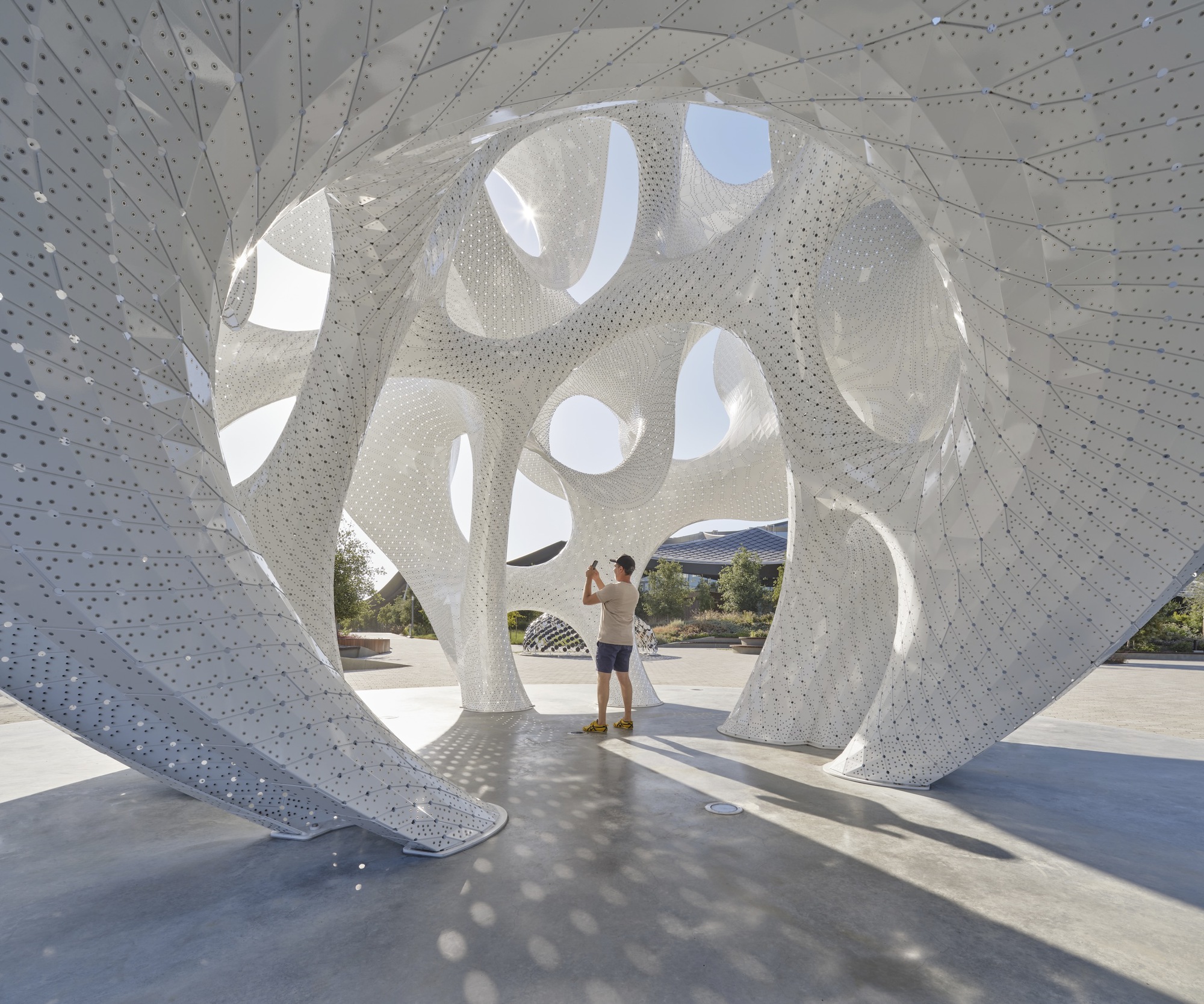
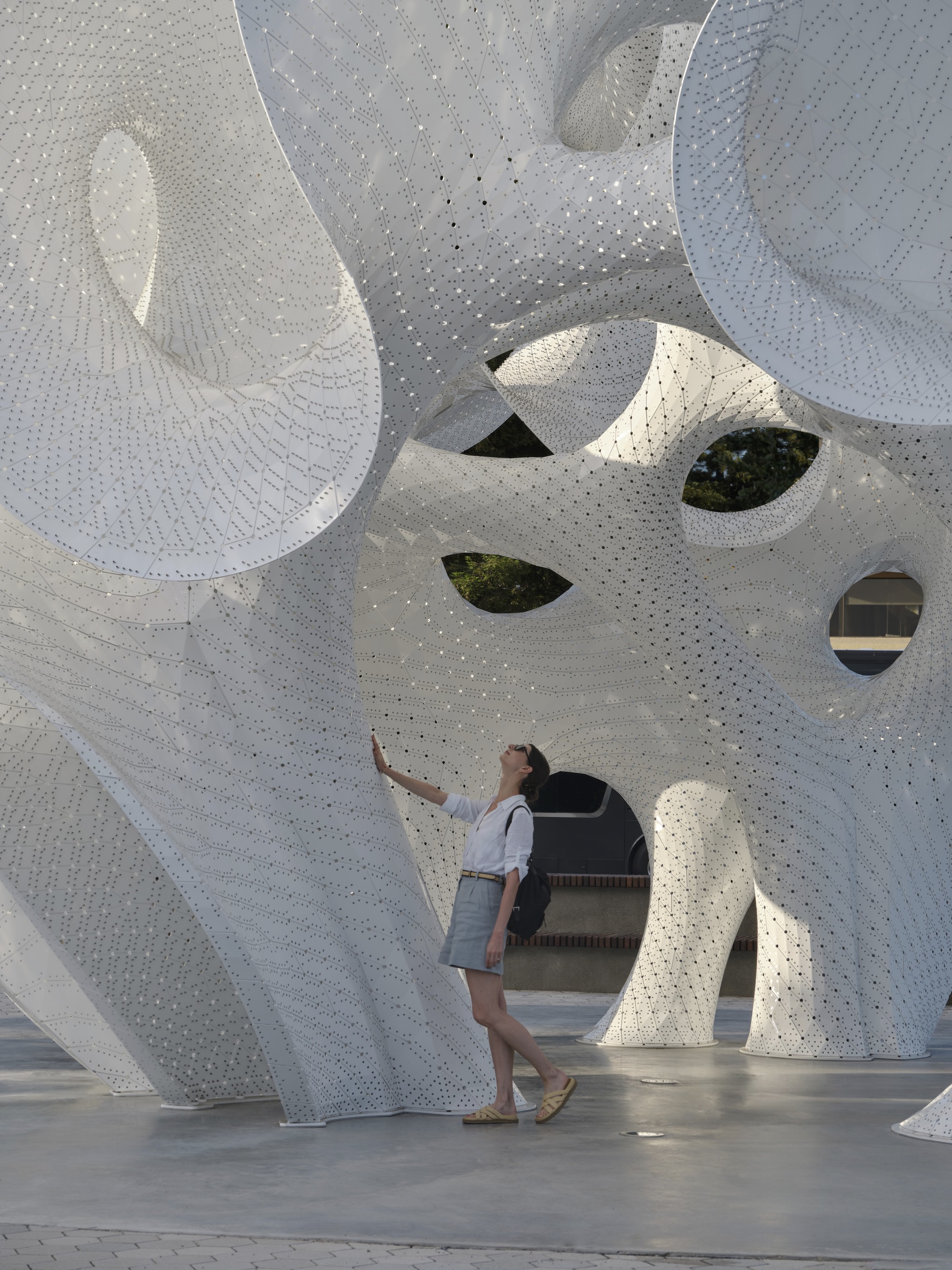
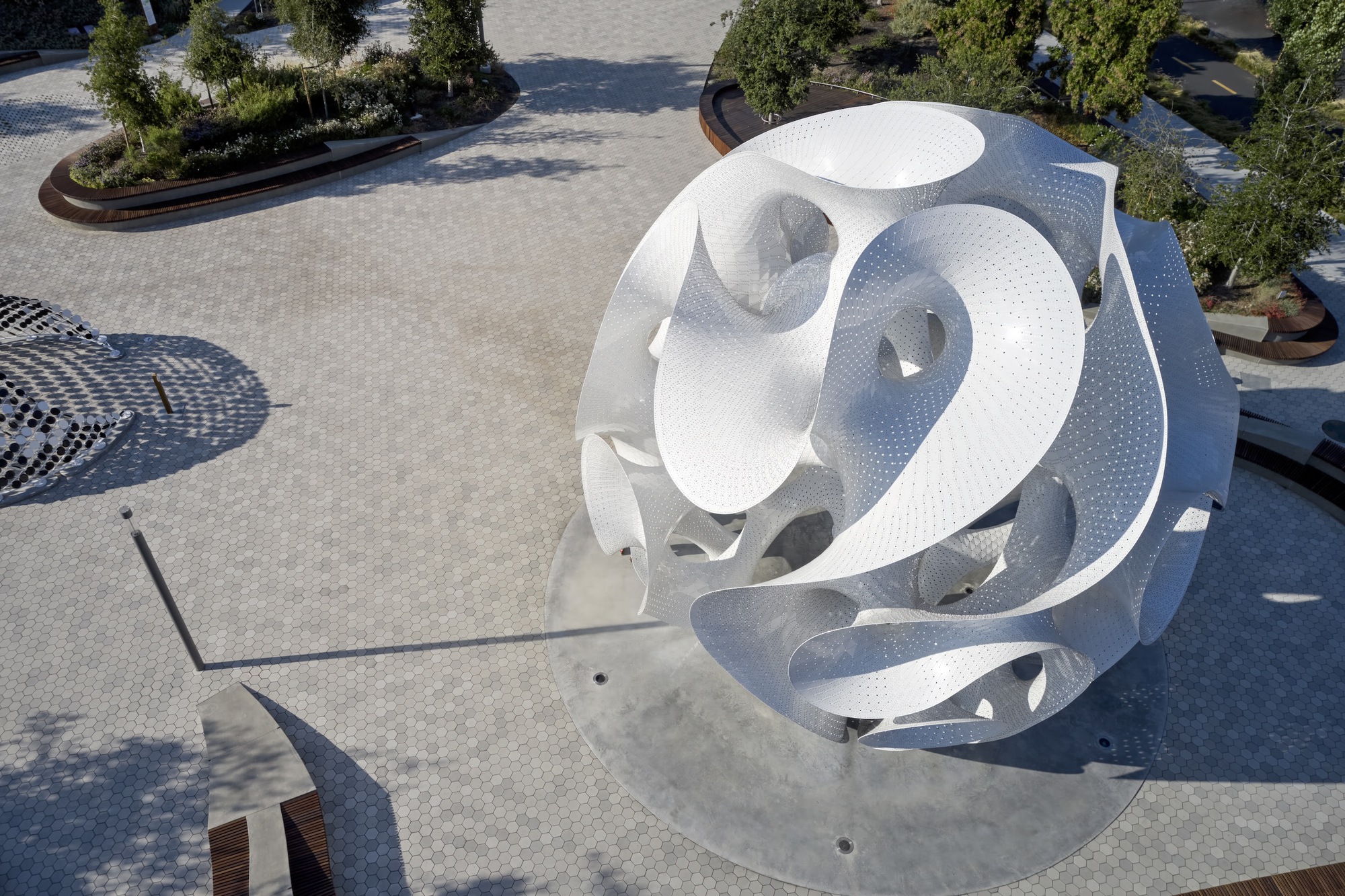
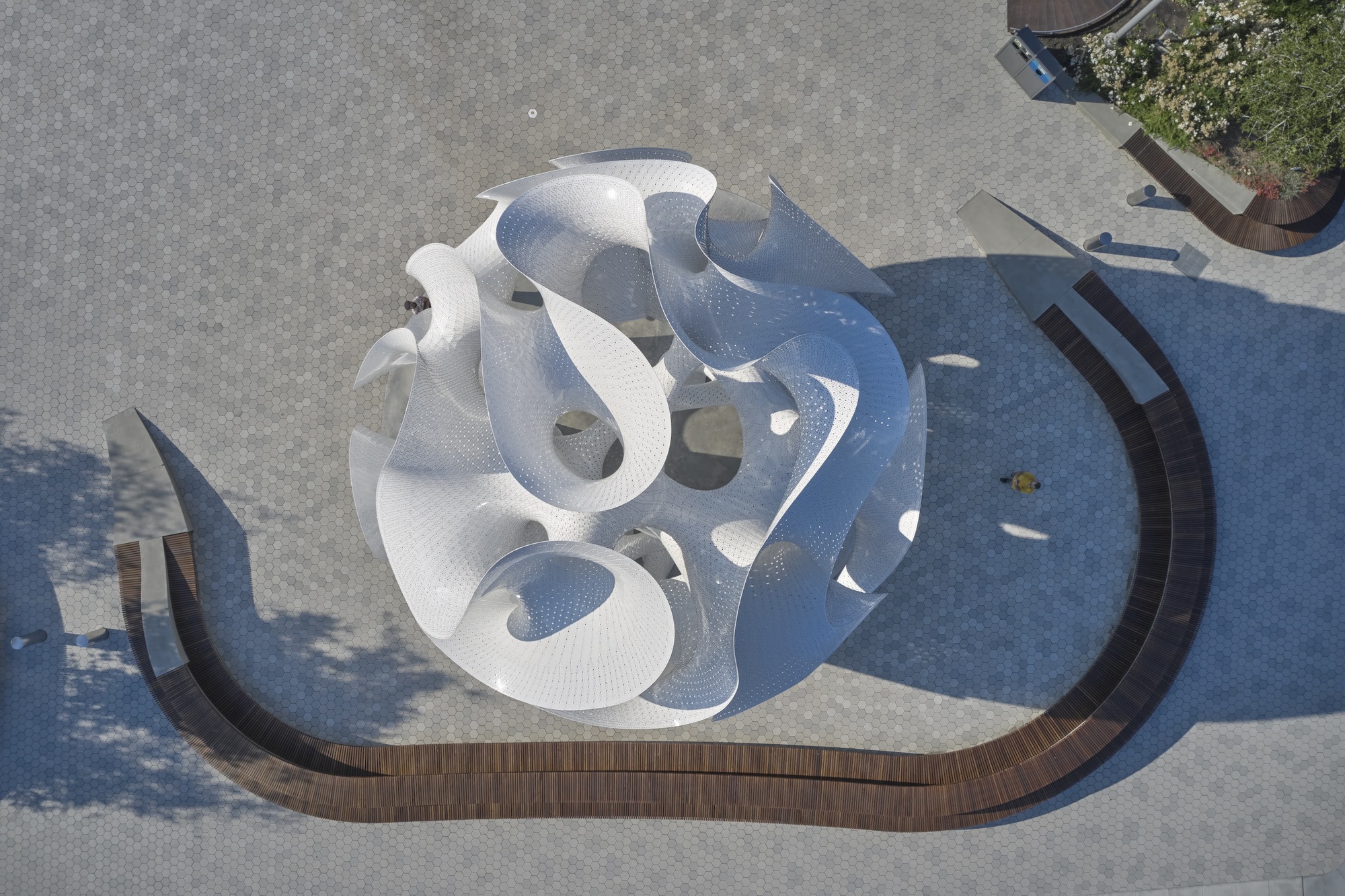
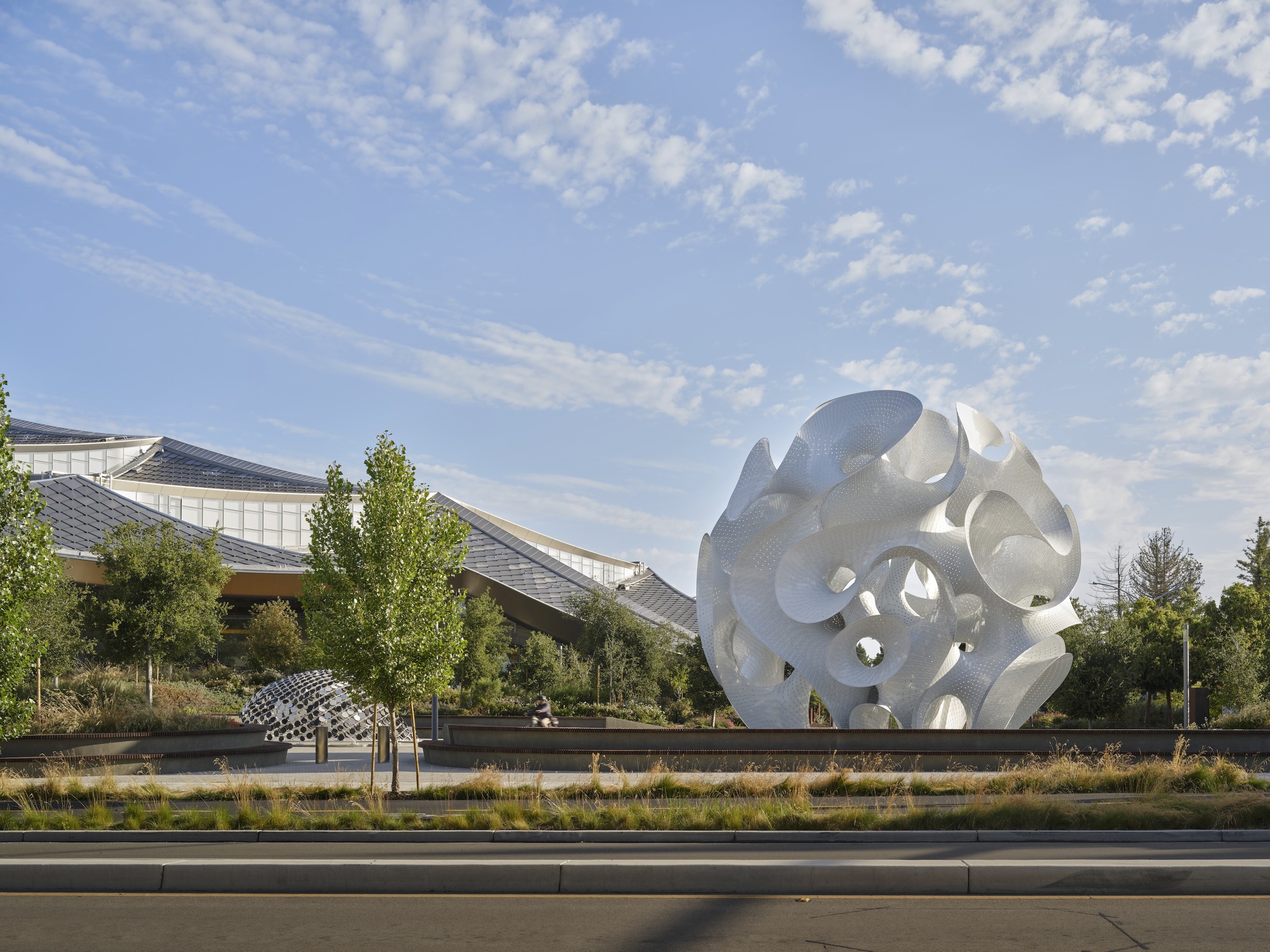
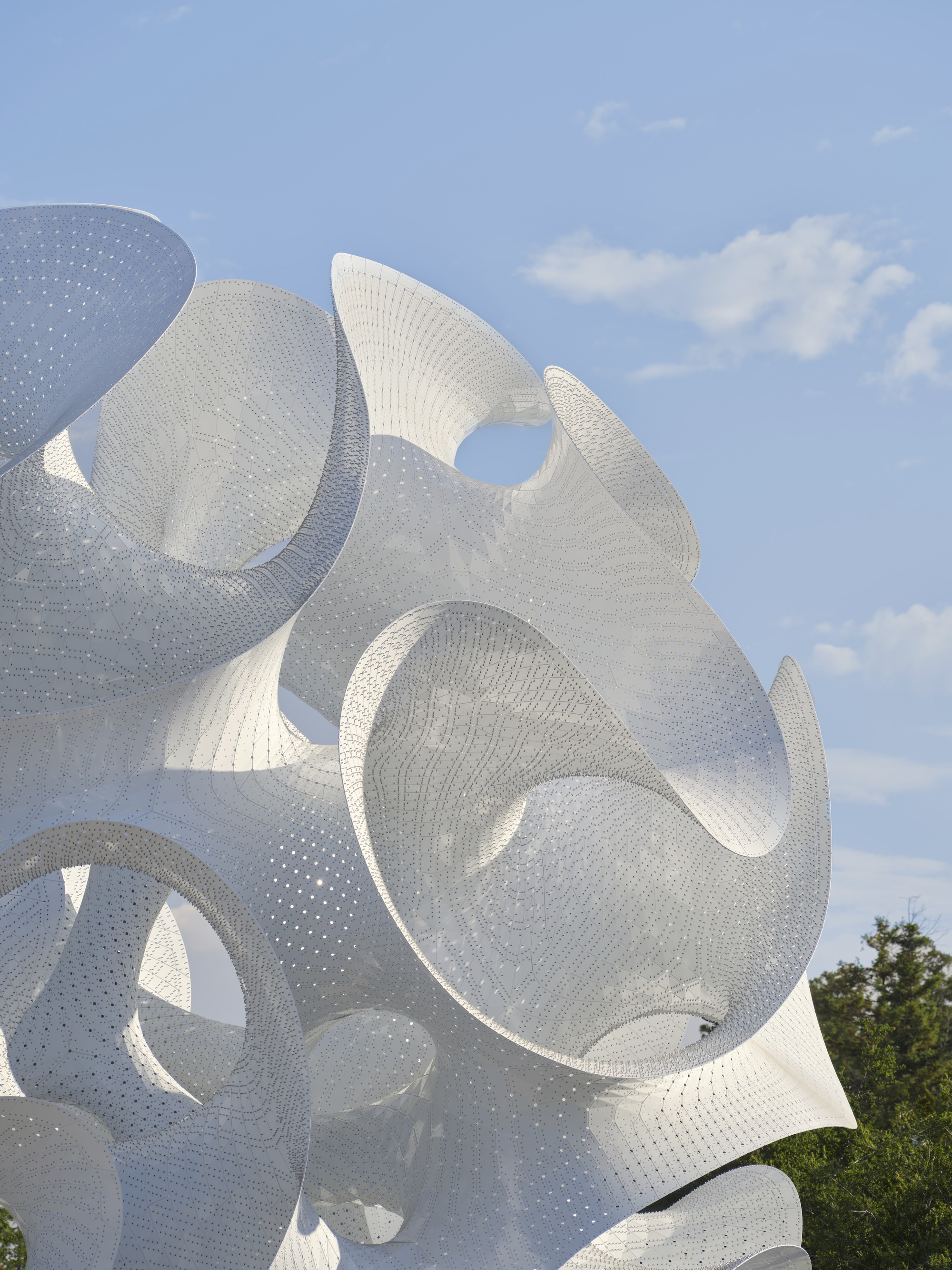
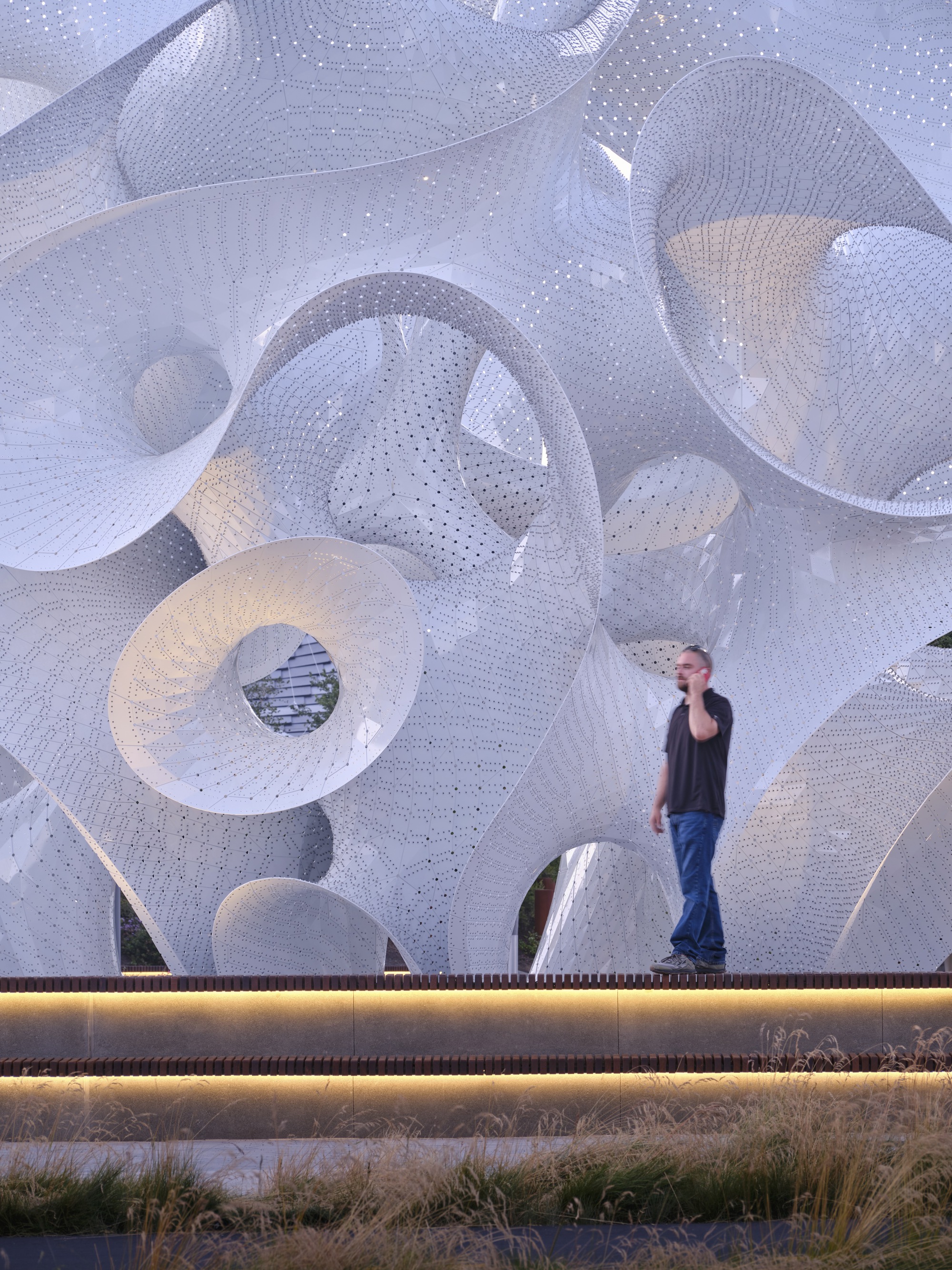
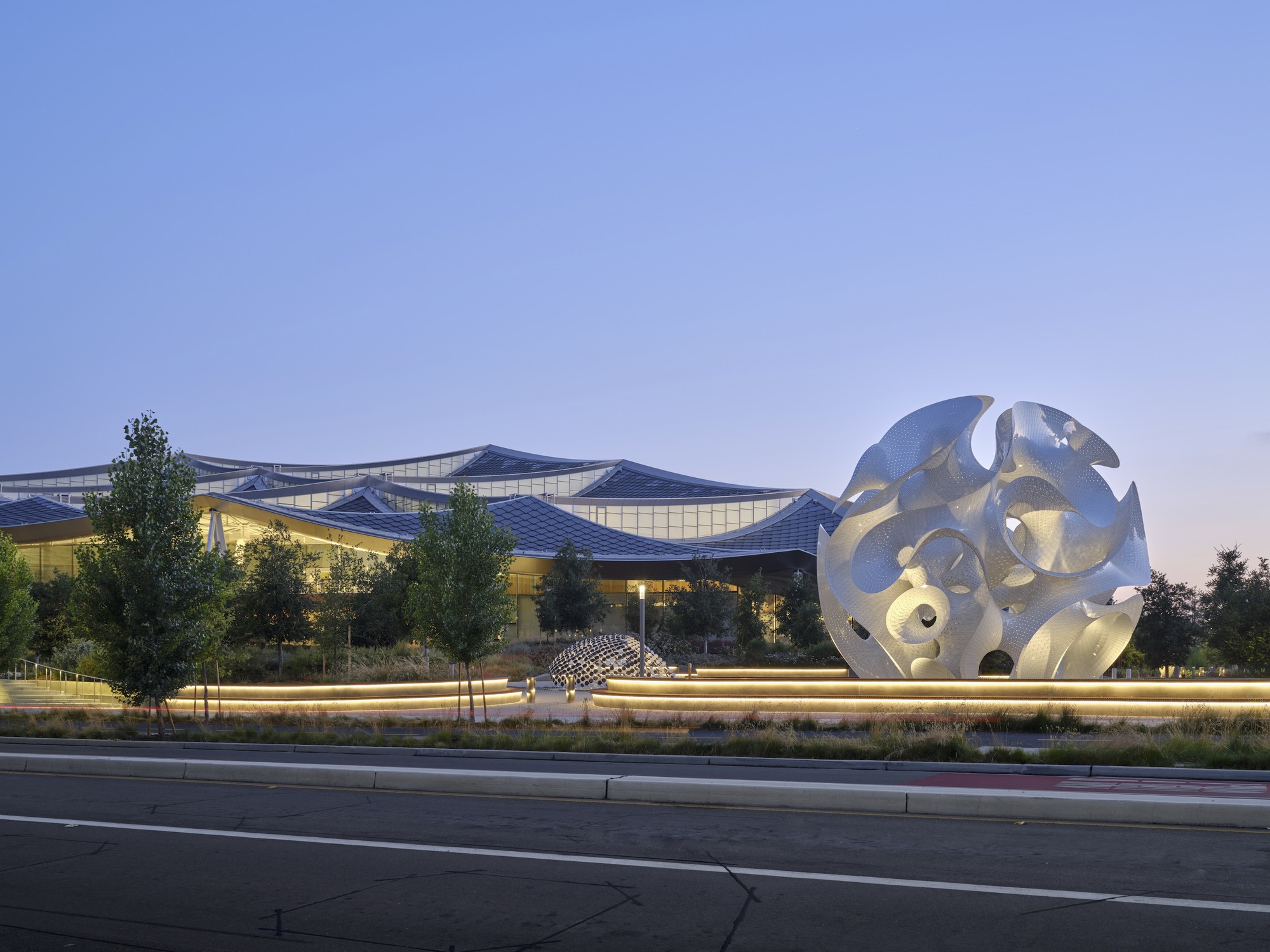
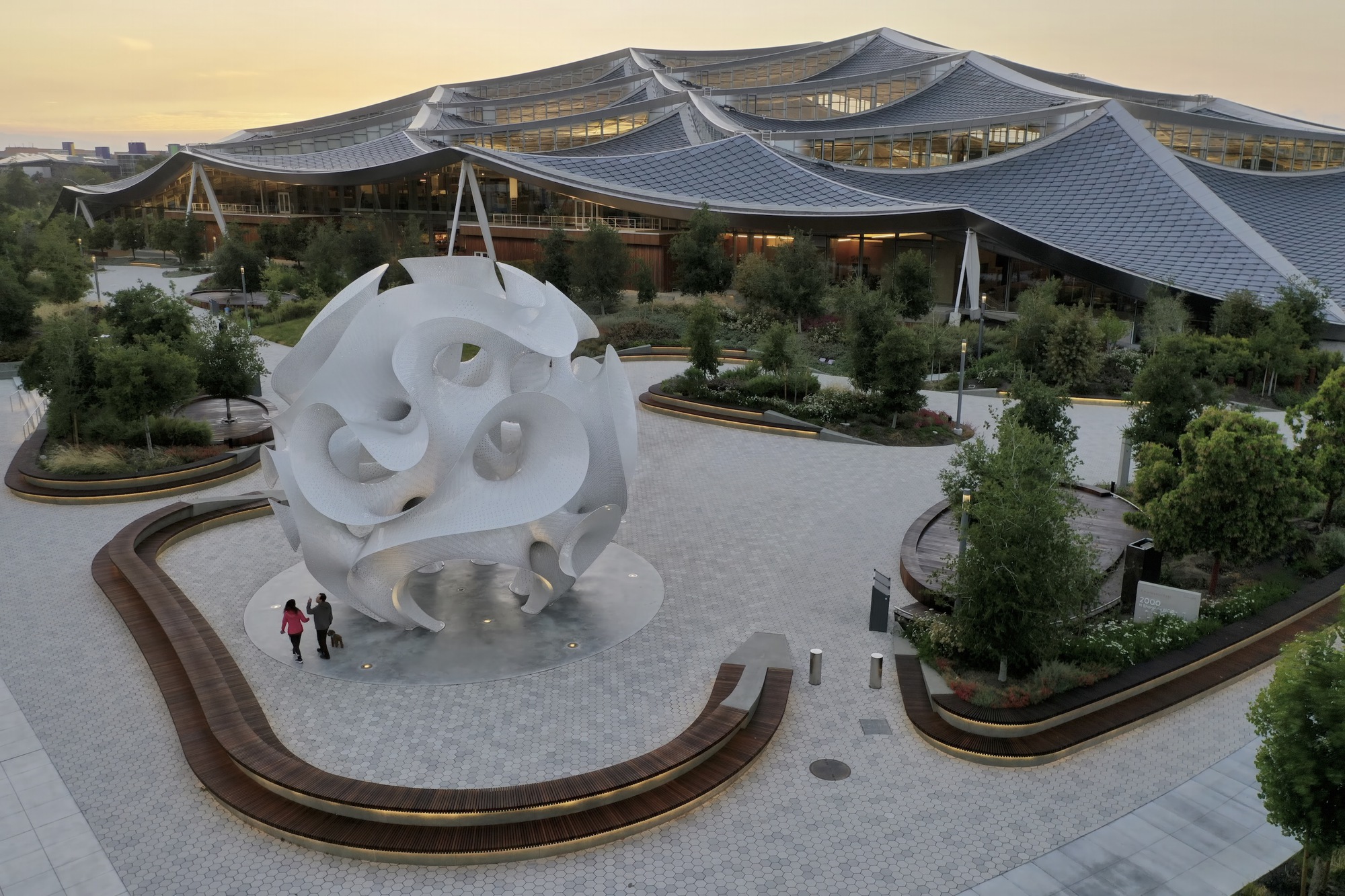
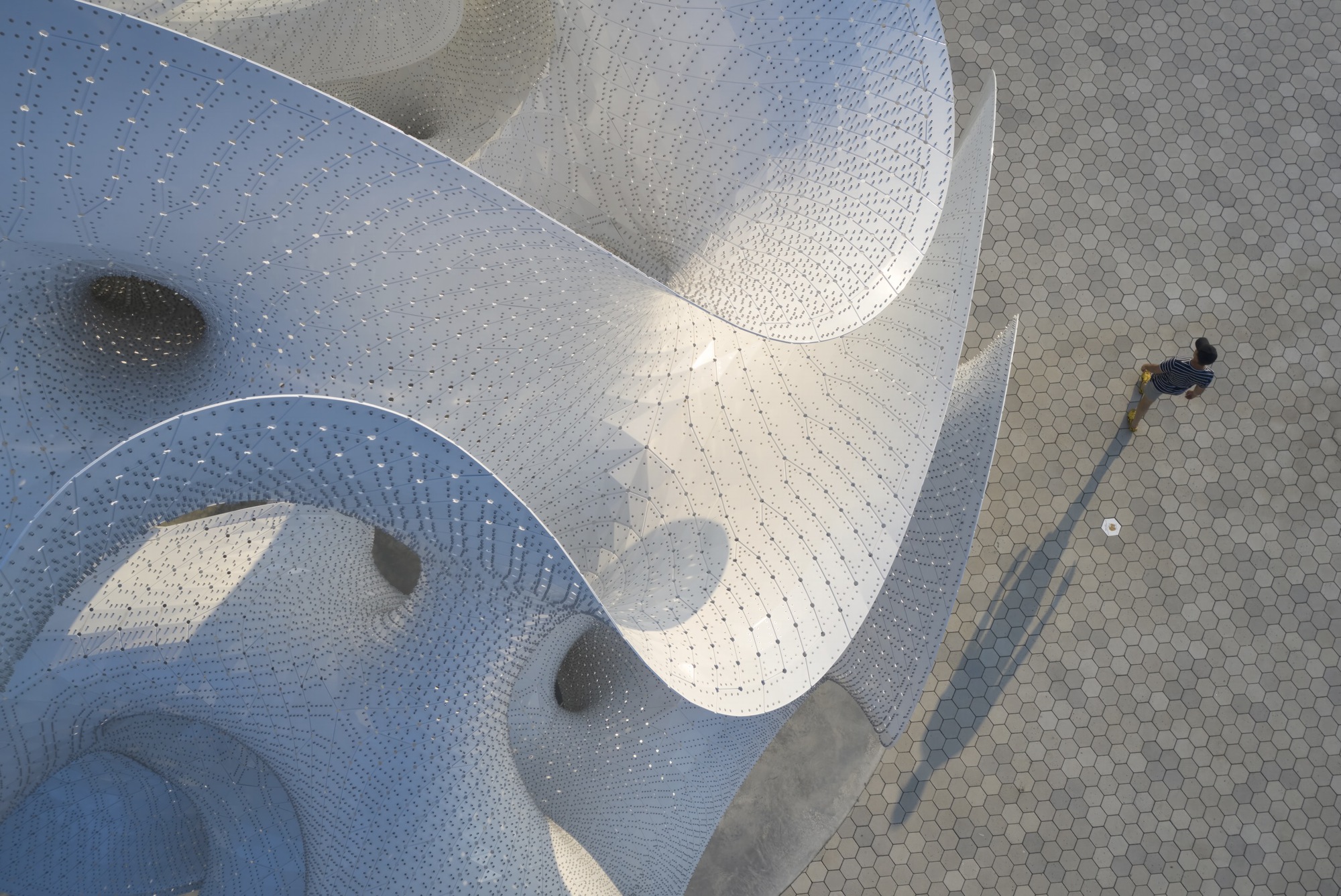
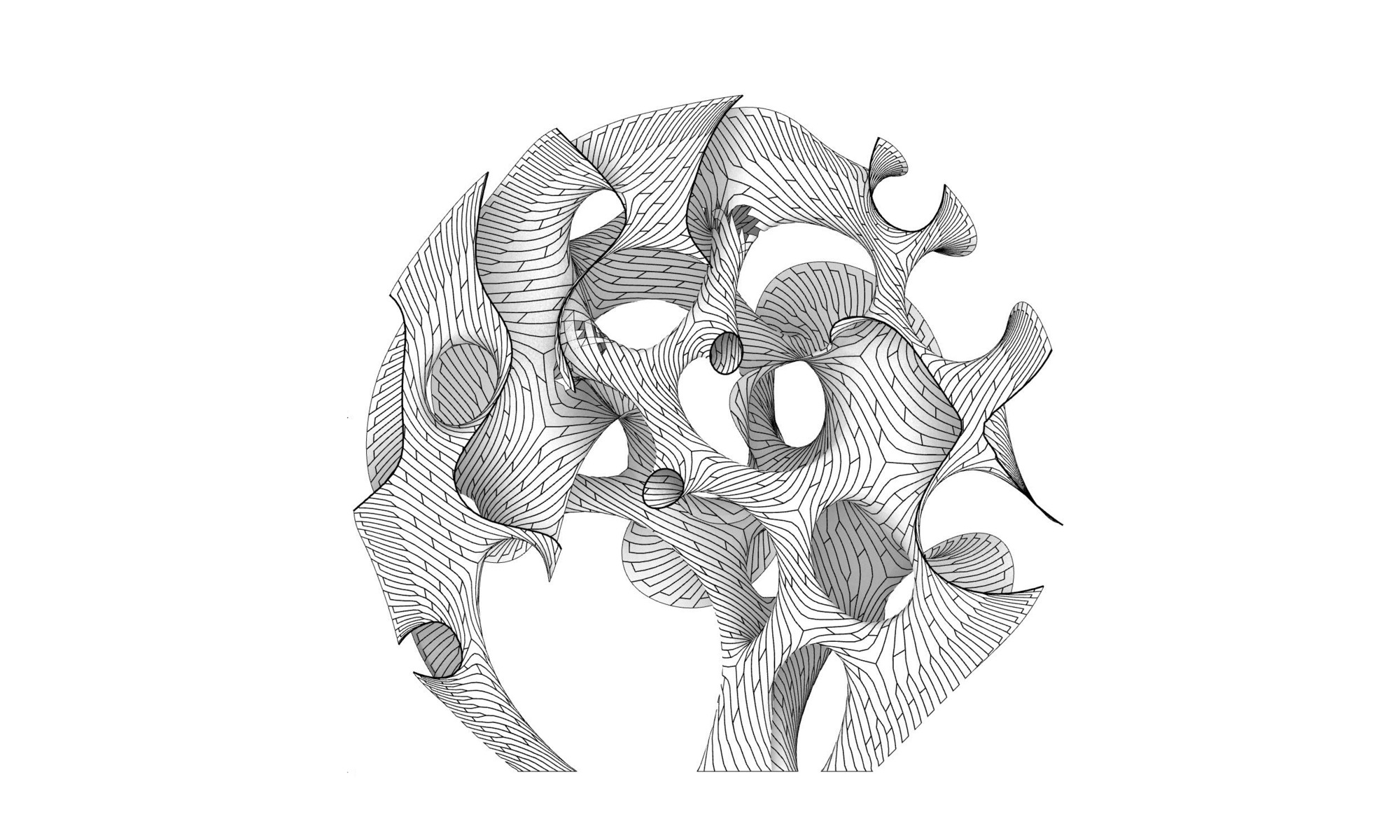
The Orb #architecture Architects: MARC FORNES / THEVERYMANY Year: 2025 Photographs: Doublespace Photography Commissioner: Google City: Mountain View Country: United States Commissioned by Google and designed by Marc Fornes/THEVERYMANY, The Orb is a monumental pavilion in Mountain View, California. This 10-meter-tall, 26-meter-wide, ultra-thin aluminium structure serves as the centrepiece of the public plaza at Google's Charleston East Campus. Its undulating, surreal form embodies the spirit of innovation and creativity central to the company's work culture. he Orb lies somewhere between a pavilion and an art installation. "For architects, we're too much of an artist; for artists, too much of an architect," says Marc Fornes. What is essential for his studio is that the object is both functional and capable of provoking emotion and sparking naive curiosity. While The Orb performs as a place for encounters and contemplation, its organic form provides visitors with a dreamlike experience. Edged yet edgeless, surfaces curve, branch, split, rejoin, and split again. This extreme curvature̶achieved through cutting-edge computational design̶enables the surfaces to be entirely self-supporting despite being just 3mm thick. Though apparently seamless, The Orb is crafted from 6,441 individual aluminium components, connected by over 217,000 rivets̶making it not just visually striking but sophisticatedly engineered. Even before anyone steps inside, the fluid surfaces of the pavilion interact with light, casting irregular shadows that seem to be constantly in flux. Made of perforated aluminium, these surfaces allow daylight to filter through them, creating a dappled effect on the ground evocative of a starred sky. By night, the entire volume transforms into a glowing sculpture, establishing a dynamic interplay of light and shadow that evolves over time. The Orb is an experiential landmark contributing to the campus' visual identity. It is an immersive, futuristic space for employees and visitors to gather, explore, and engage. And while the tools used by Marc Fornes/THEVERYMANY to create The Orb are complex, their goal is simple: to craft an experience that evokes joy̶the joy of wandering, the joy of marvelling.
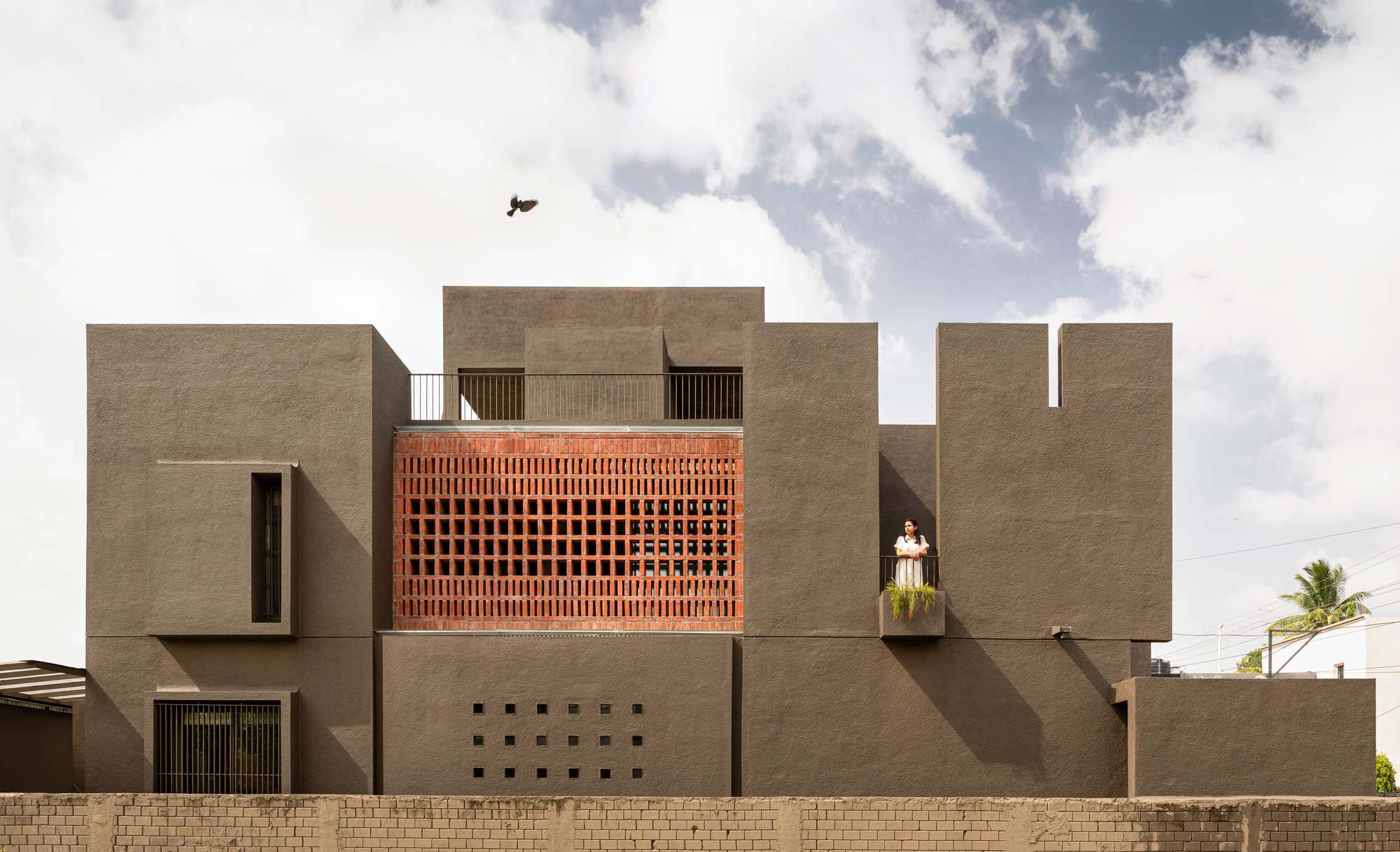
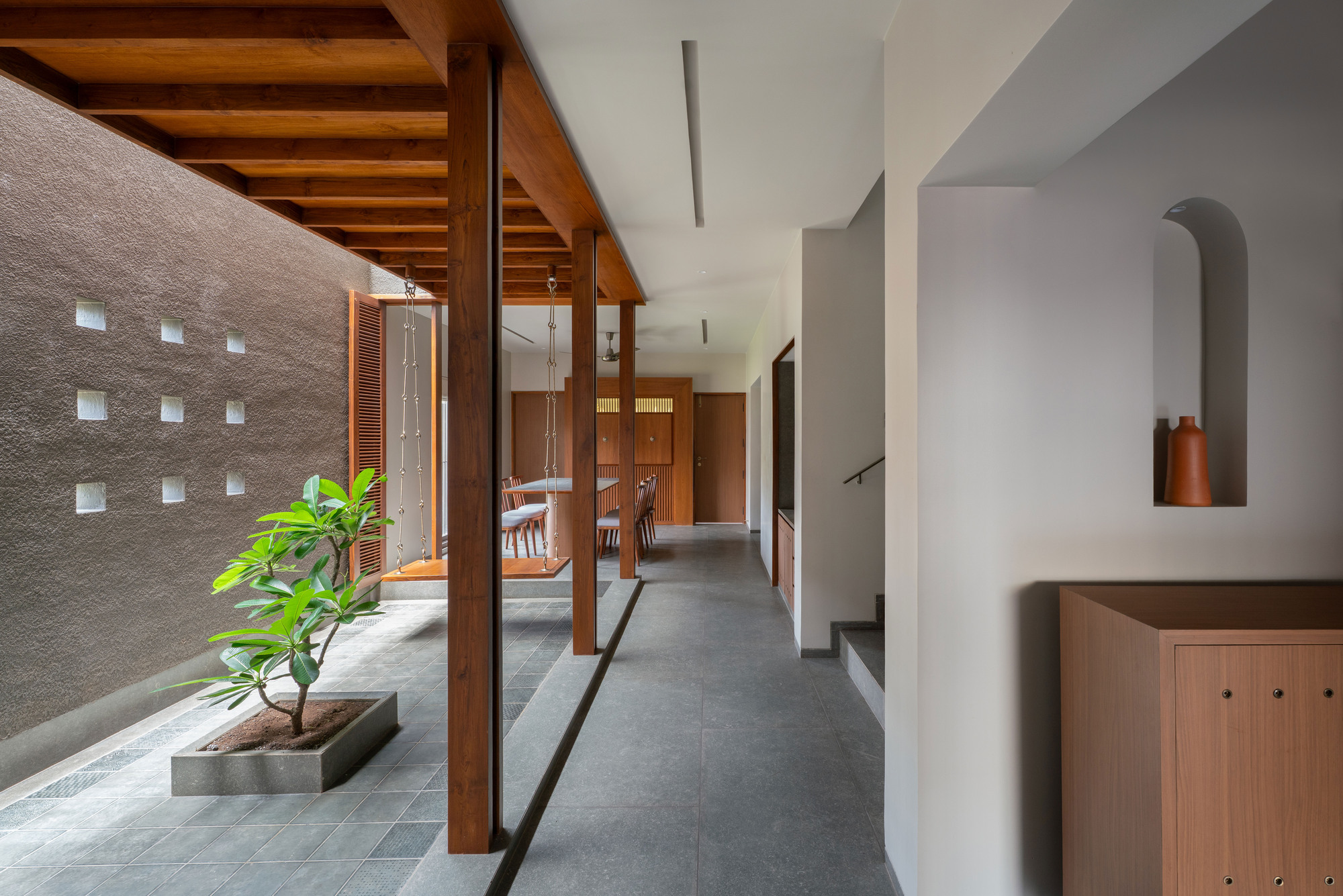
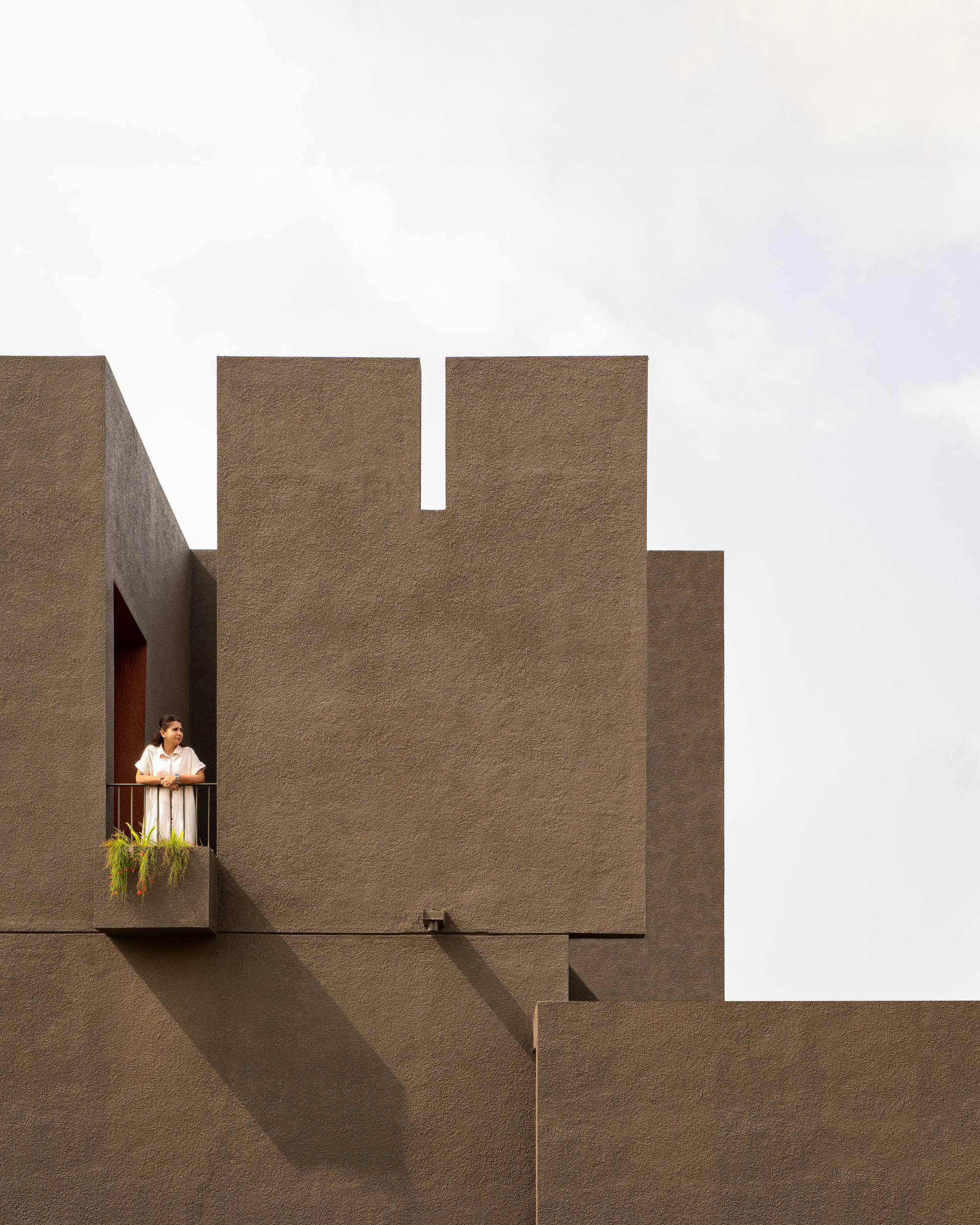
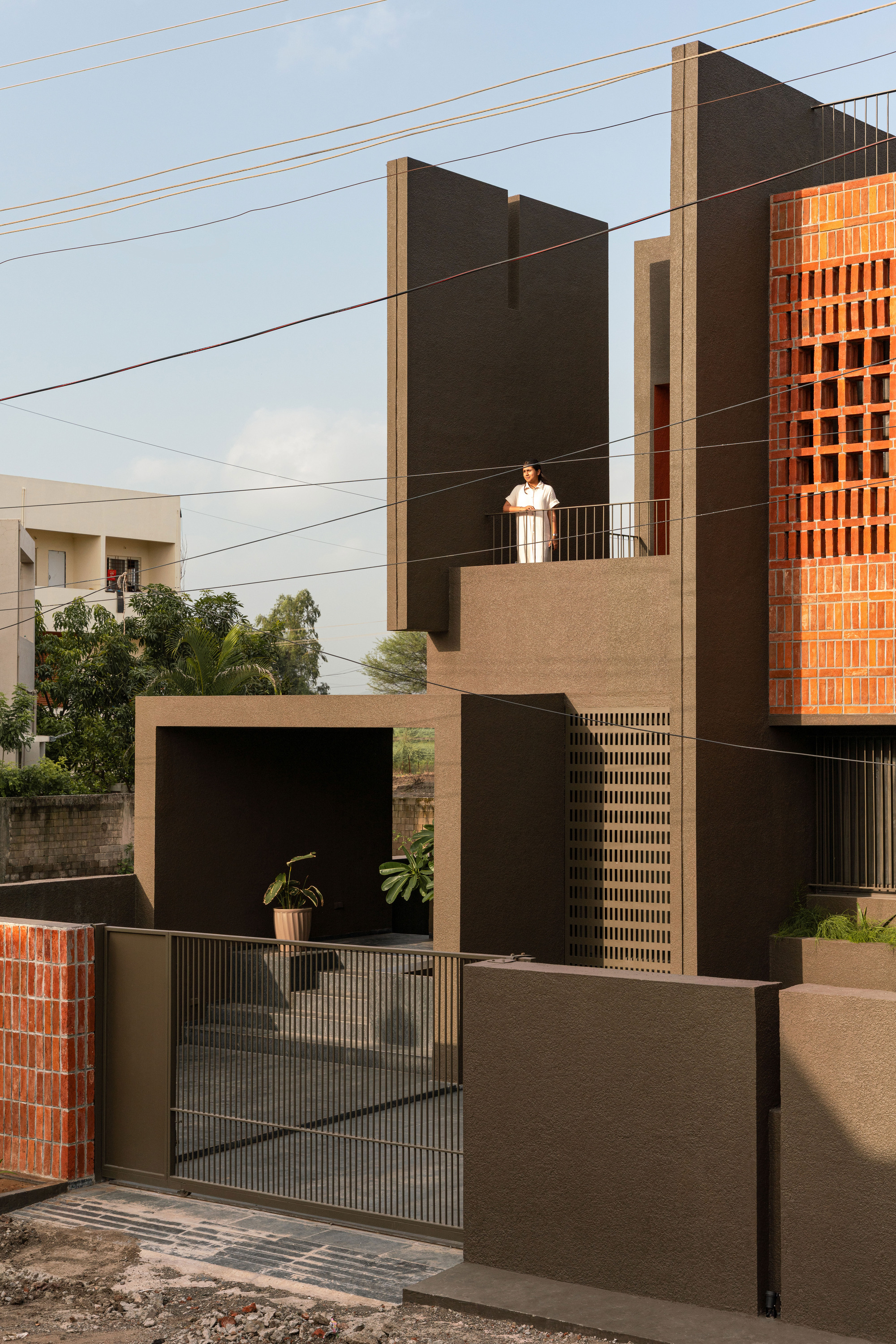
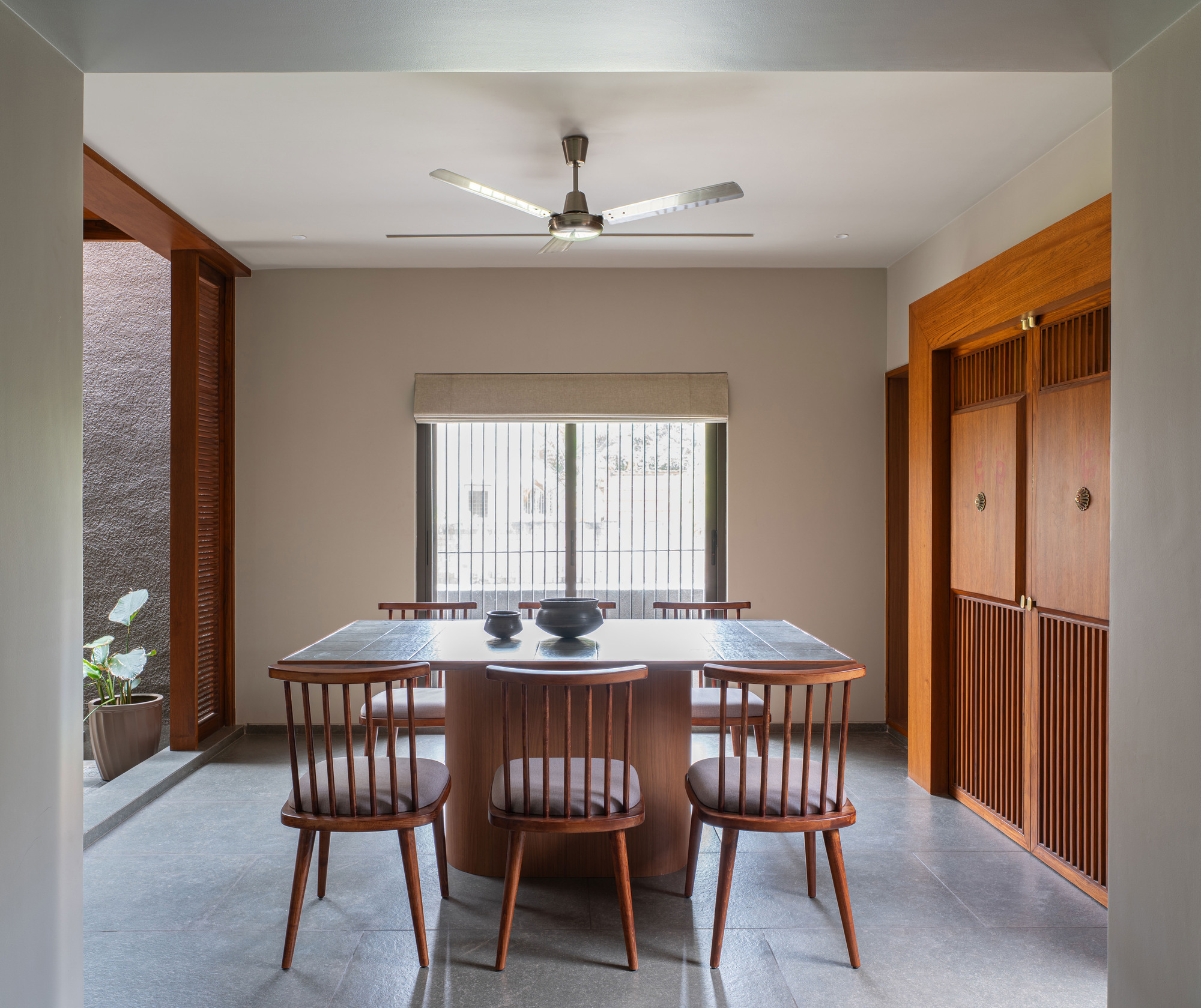
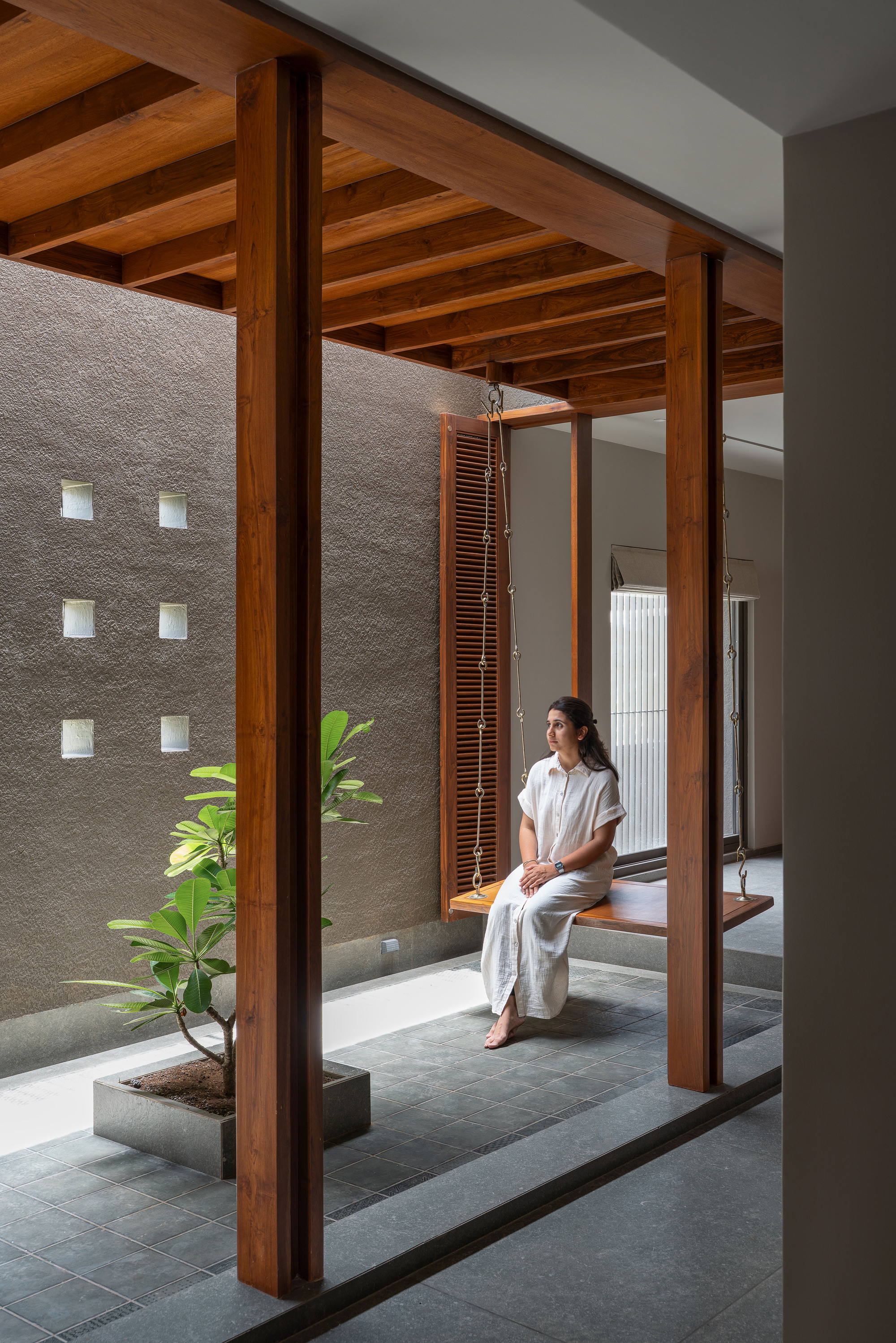
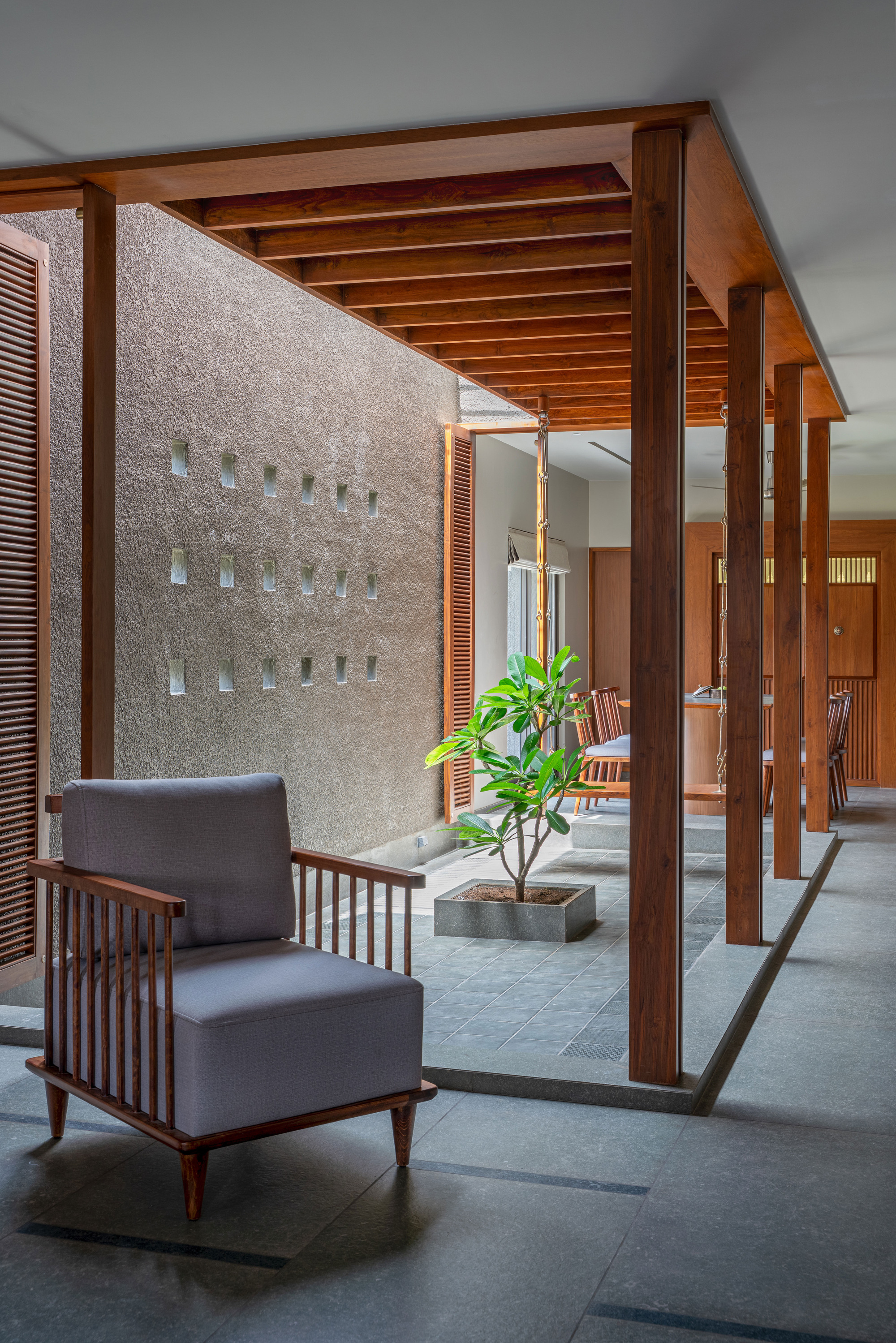
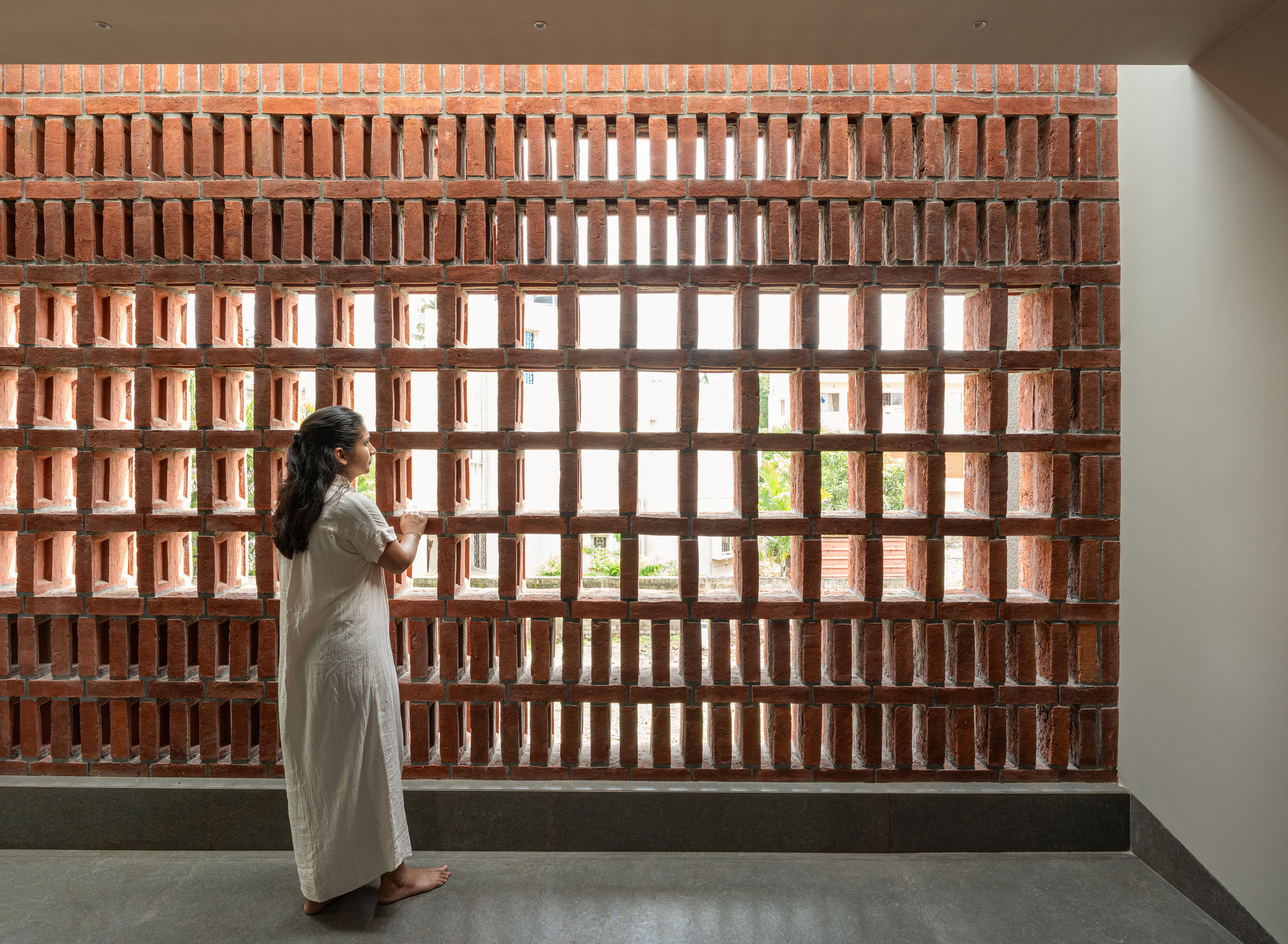
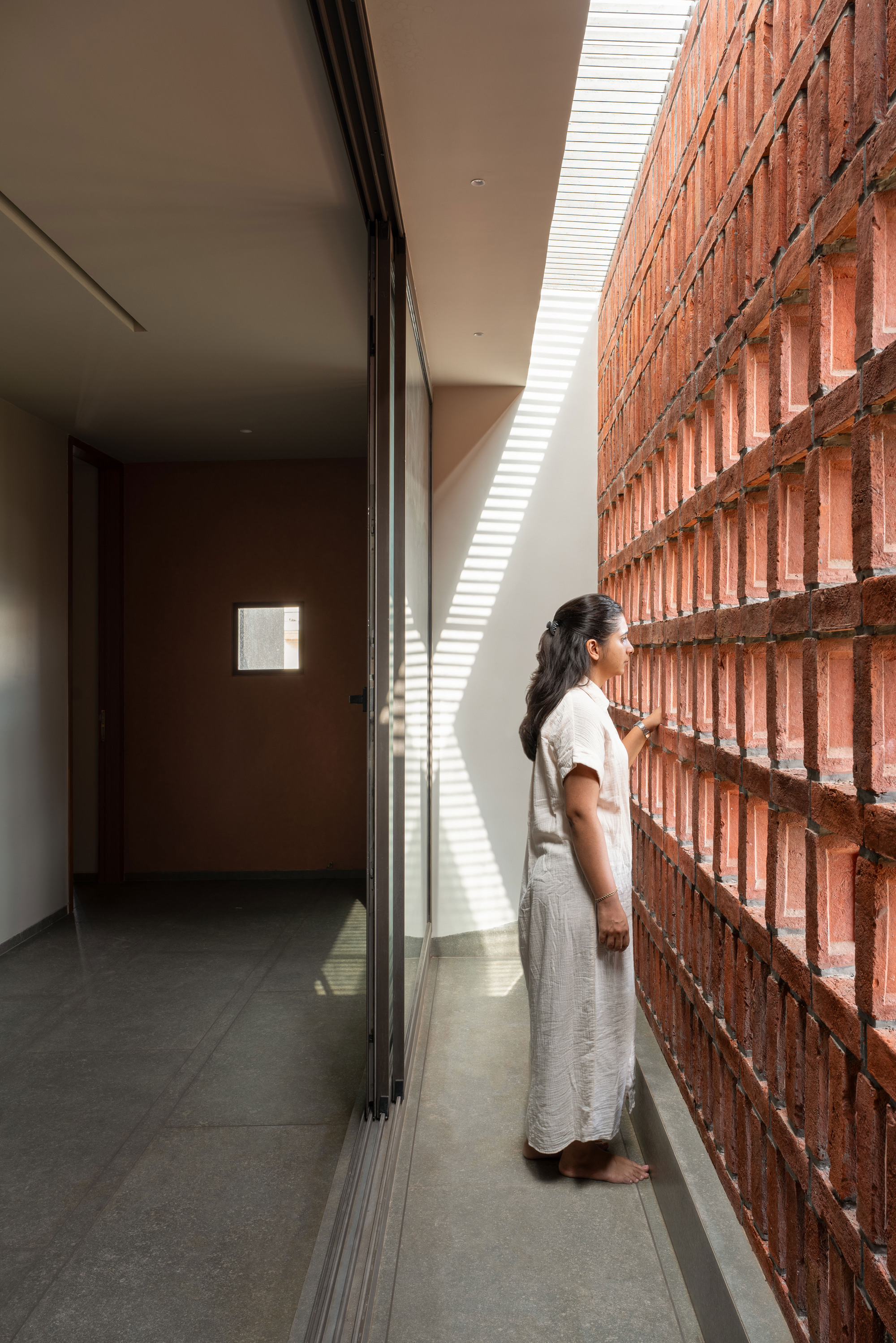
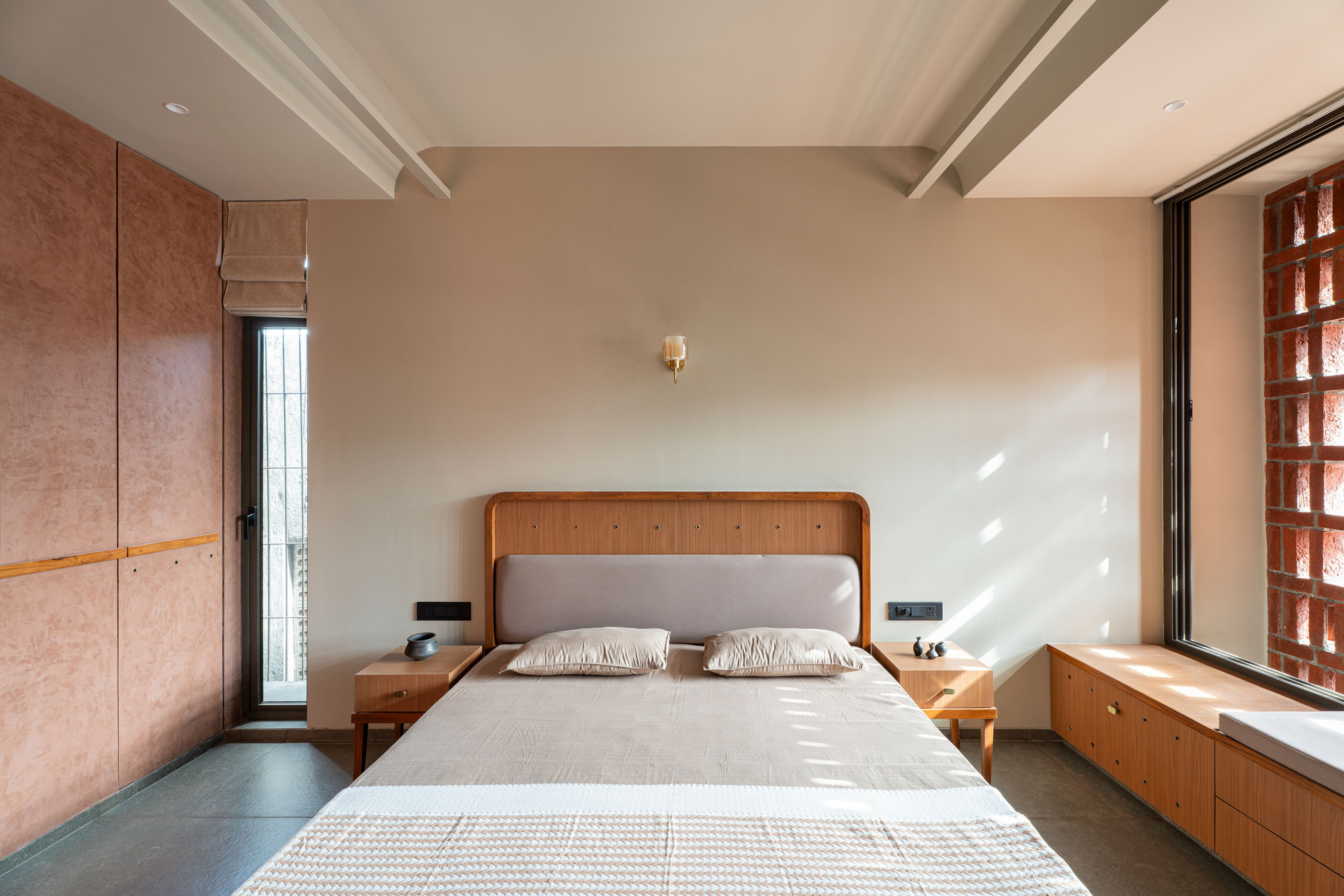
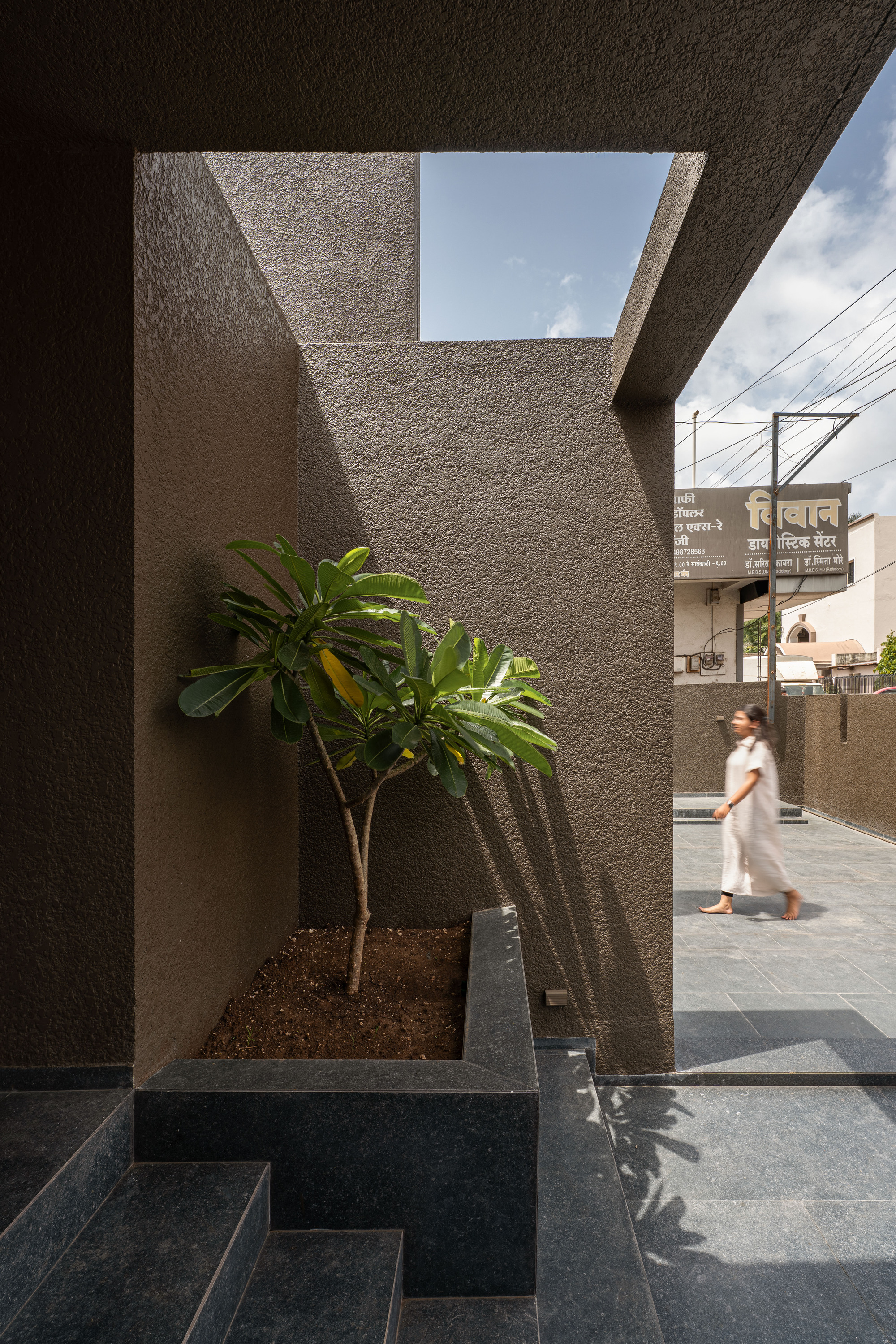
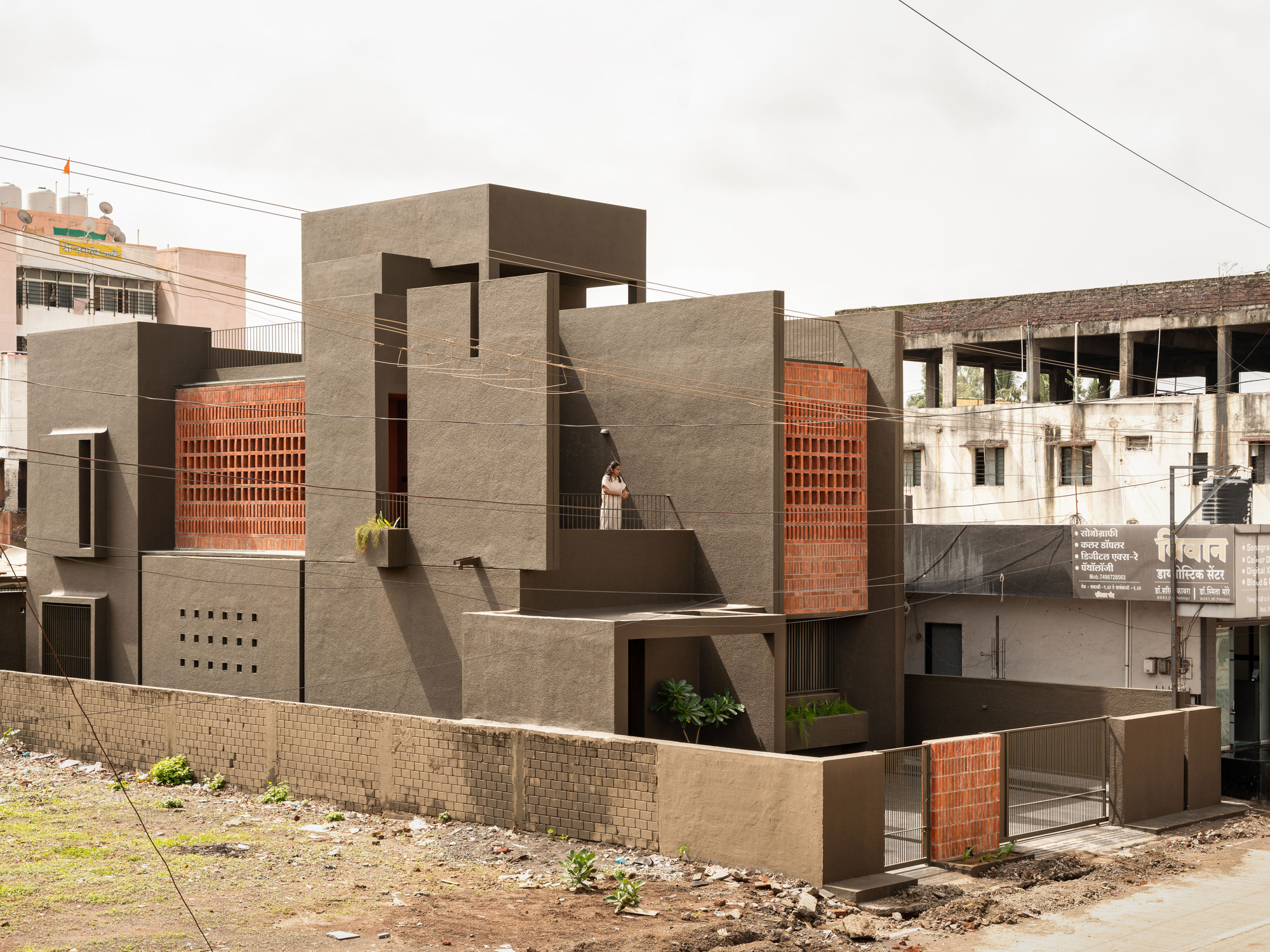
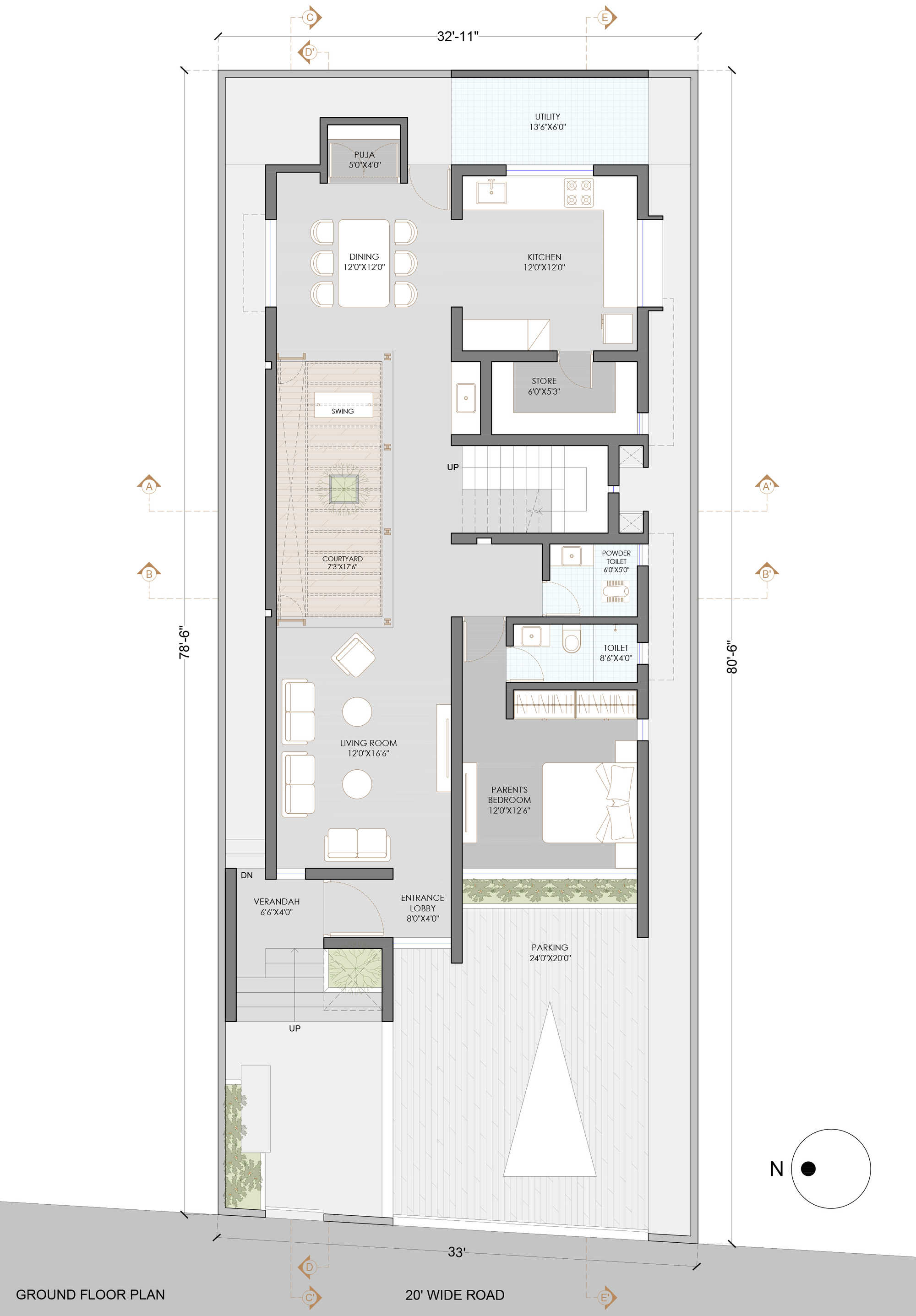
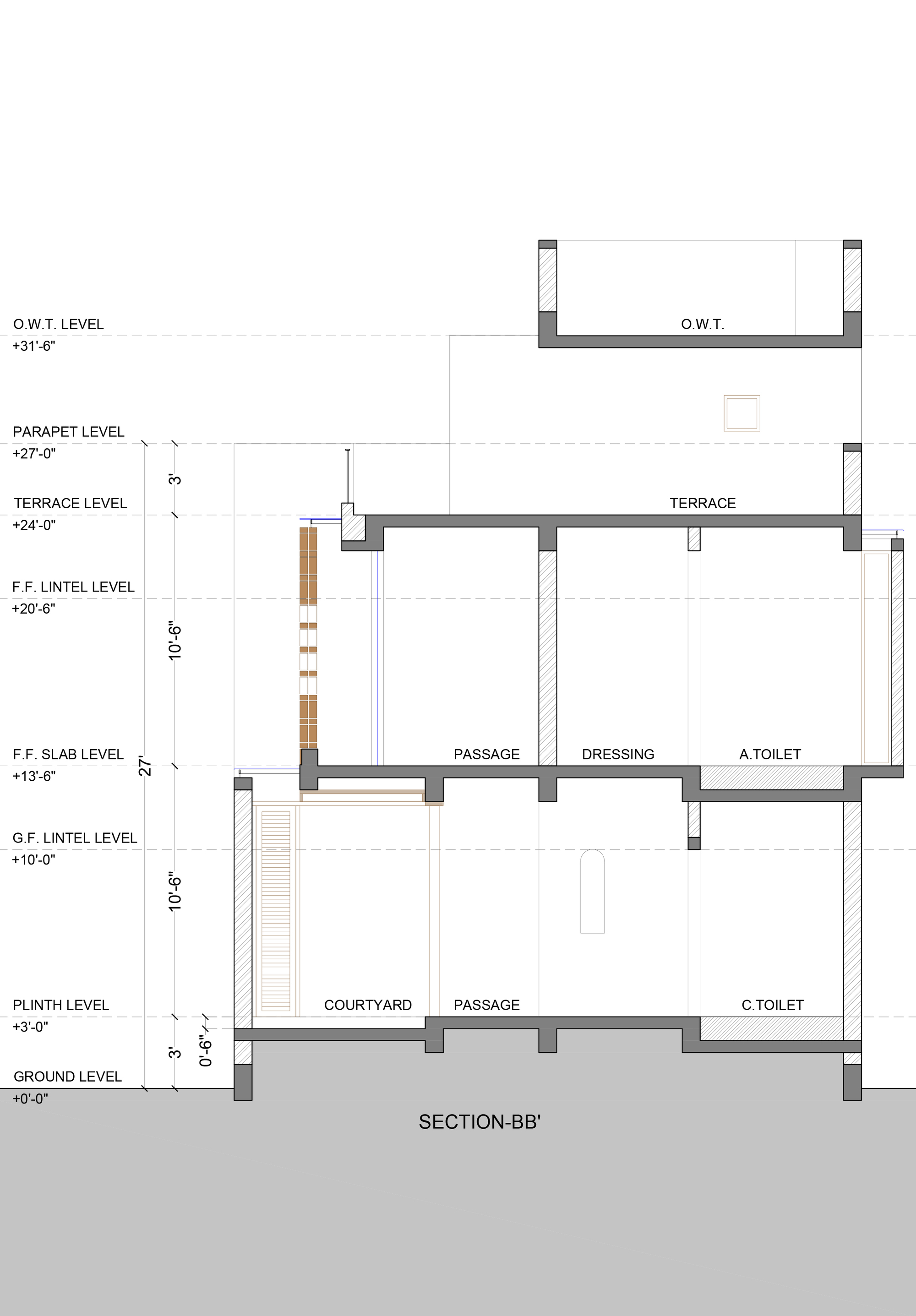
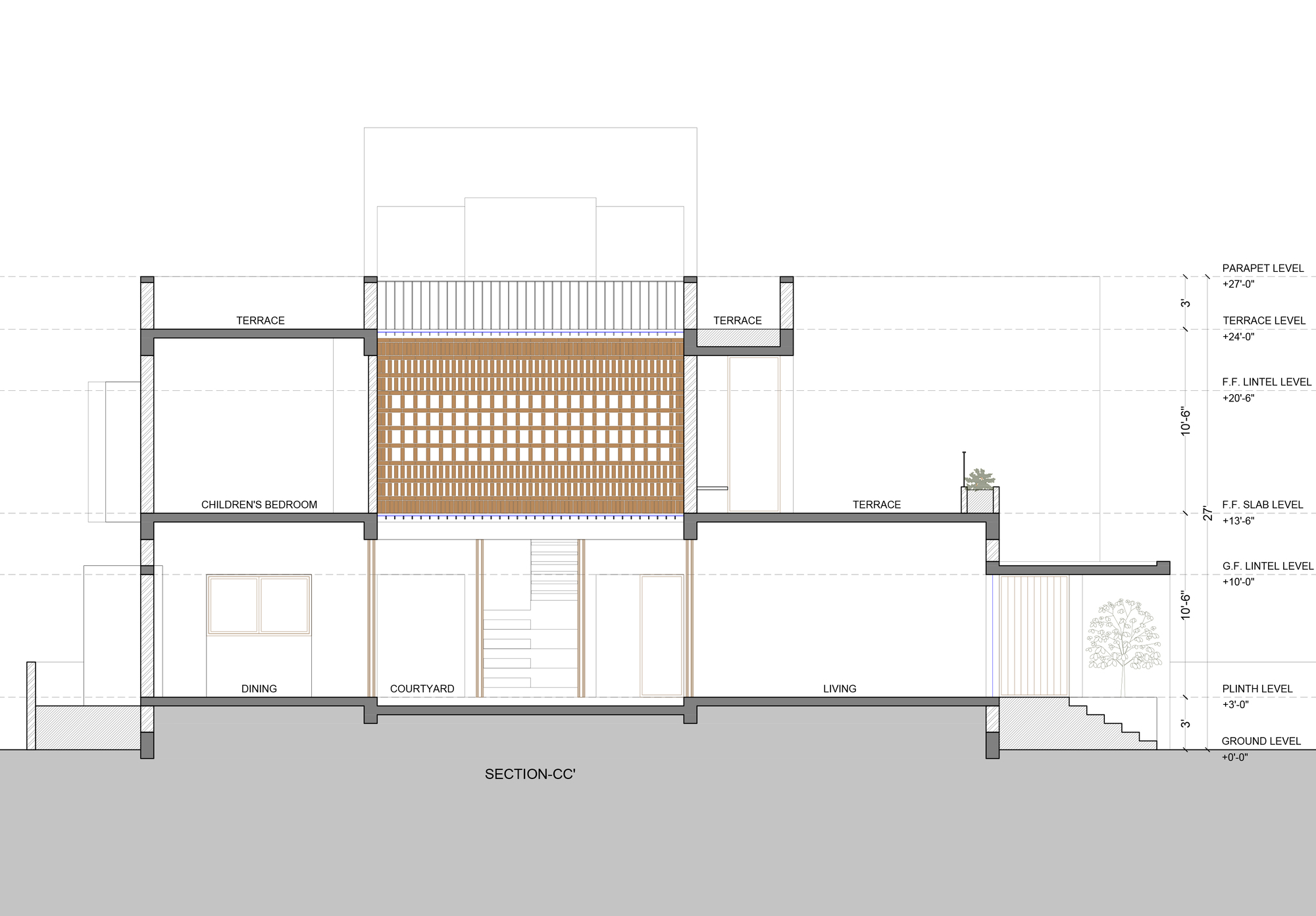
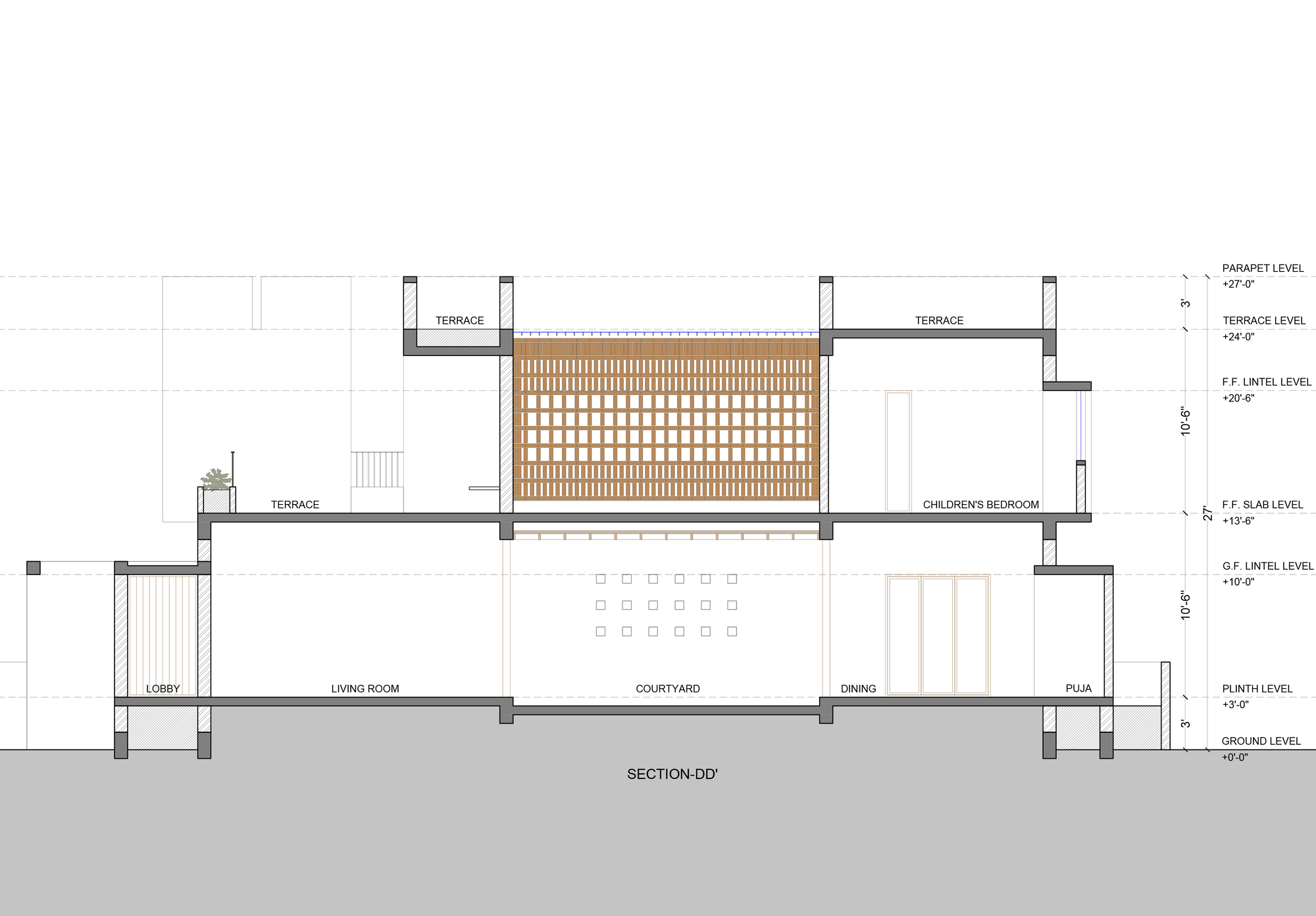
H-House #architecture Architects: Studio Nirbaadh Area: 2850 ft² Year: 2025 Lead Architects: Dhanesh Gandhi, Tanushree Oswal City: Koregaon Country: India Tucked into the dense urban fabric of Koregaon in Satara, the H-House is a 2850 sq.ft. residence crafted on a constrained 33' x 78' site. The linear proportions of the site drove the architectural response, culminating in a plan organized around three longitudinal lines that run parallel across the site. These lines not only define the spatial distribution but also lend the house its name and identity. The planning of the residence is intuitive and climatic. All habitable spaces are organized along the three axes, creating a seamless flow of movement and light across the narrow plot. The central line anchors the primary circulation, while the flanking lines define the structural and spatial zoning. A defining feature of the home is its long, linear courtyard placed along the northern edge, which acts as a breathing spine through the house. This semi-open court-intimately linked to the indoor spaces-fosters cross ventilation, natural light, and a sense of openness, effectively bringing nature deep into the heart of the home. It functions not only as a transitional buffer but also as a dynamic space for social interaction, morning light rituals, and passive cooling. Facing west, the front facade responds actively to the harsh sun and the microclimate. It features a custom-designed brick screen that performs as a double skin, filtering light, casting dynamic shadows, and significantly reducing solar gain. This intricate latticework, rooted in local materiality and craftsmanship, imparts an earthy character and visual porosity to the otherwise solid frontage. The facade vocabulary is composed of bold projections, flower beds, slit windows, and blank walls that work in unison to create a sense of privacy, insulation, and contextual sensitivity. These architectural gestures, layered across levels, are not merely aesthetic but deeply functional-integrated to modulate temperature, shield views, and enhance user comfort. The three linear planning elements rise as dominant vertical walls in elevation-intersected rhythmically by flower beds and brick punctures, echoing the 'H' form in silhouette. This creates a strong architectural identity that balances monolithic strength with articulated lightness. The exteriors and interiors maintain a minimalist and rustic language, harmonizing with the material palette of exposed brick, wood, and natural textures. The earthy tones continue inside, where open layouts and diffused lighting create a serene and grounded living environment. Spatial planning allows visual connections between all parts of the house, with the courtyard acting as a central focal point. Natural light plays a key role-filtered through jalis, reflected off walls, and dappled through planting-crafting changing ambiances throughout the day. The material palette remains honest and restrained-celebrating raw finishes, artisanal craft, and tactile warmth. The furniture and built-ins are kept minimal to allow spatial volumes to breathe and flow uninterrupted. H-House is a contemporary urban dwelling that embraces climatic intelligence, material honesty, and spatial clarity. It offers a grounded, contextual response to its dense surroundings while standing out as a poetic and sustainable statement in modern Indian residential architecture.
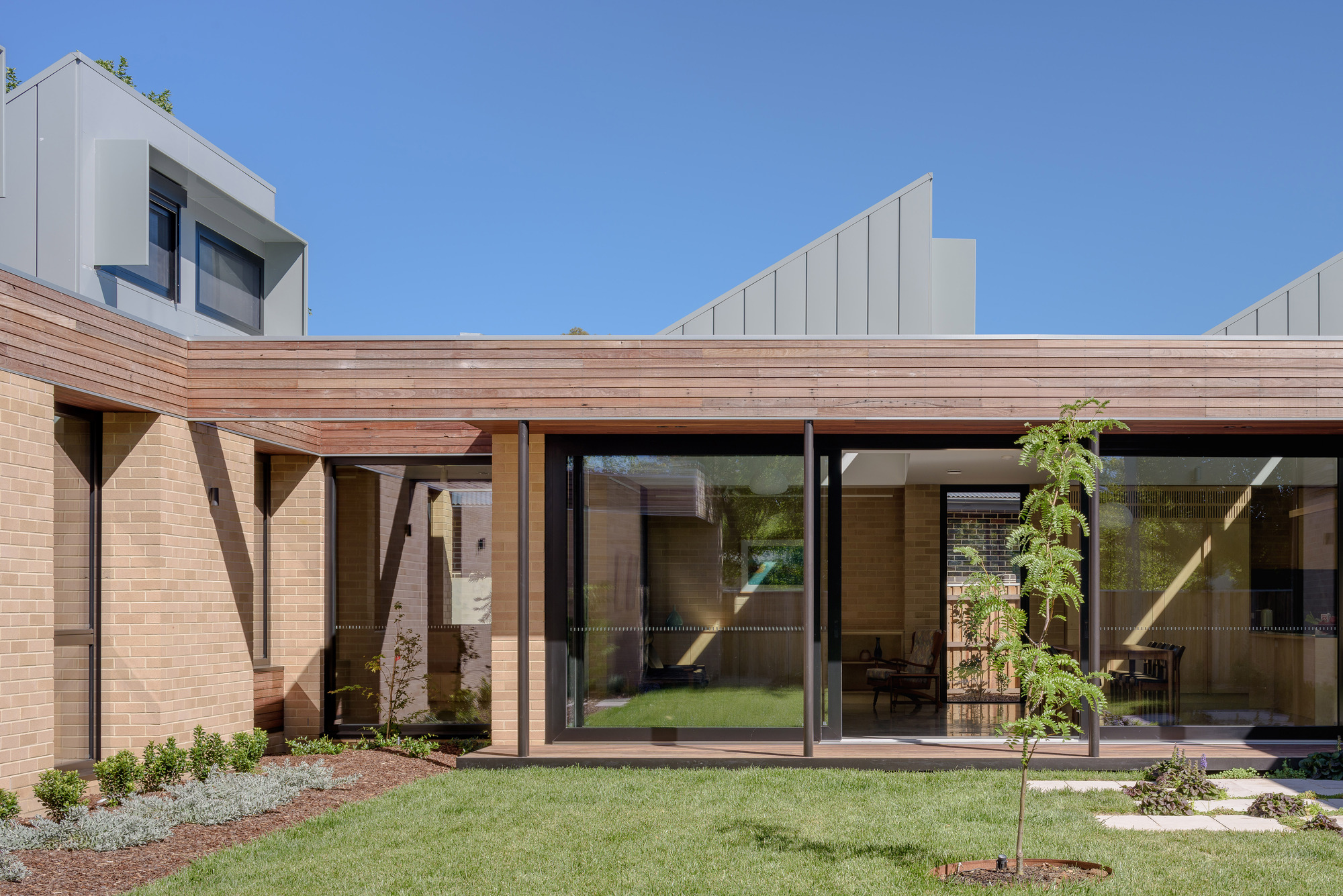
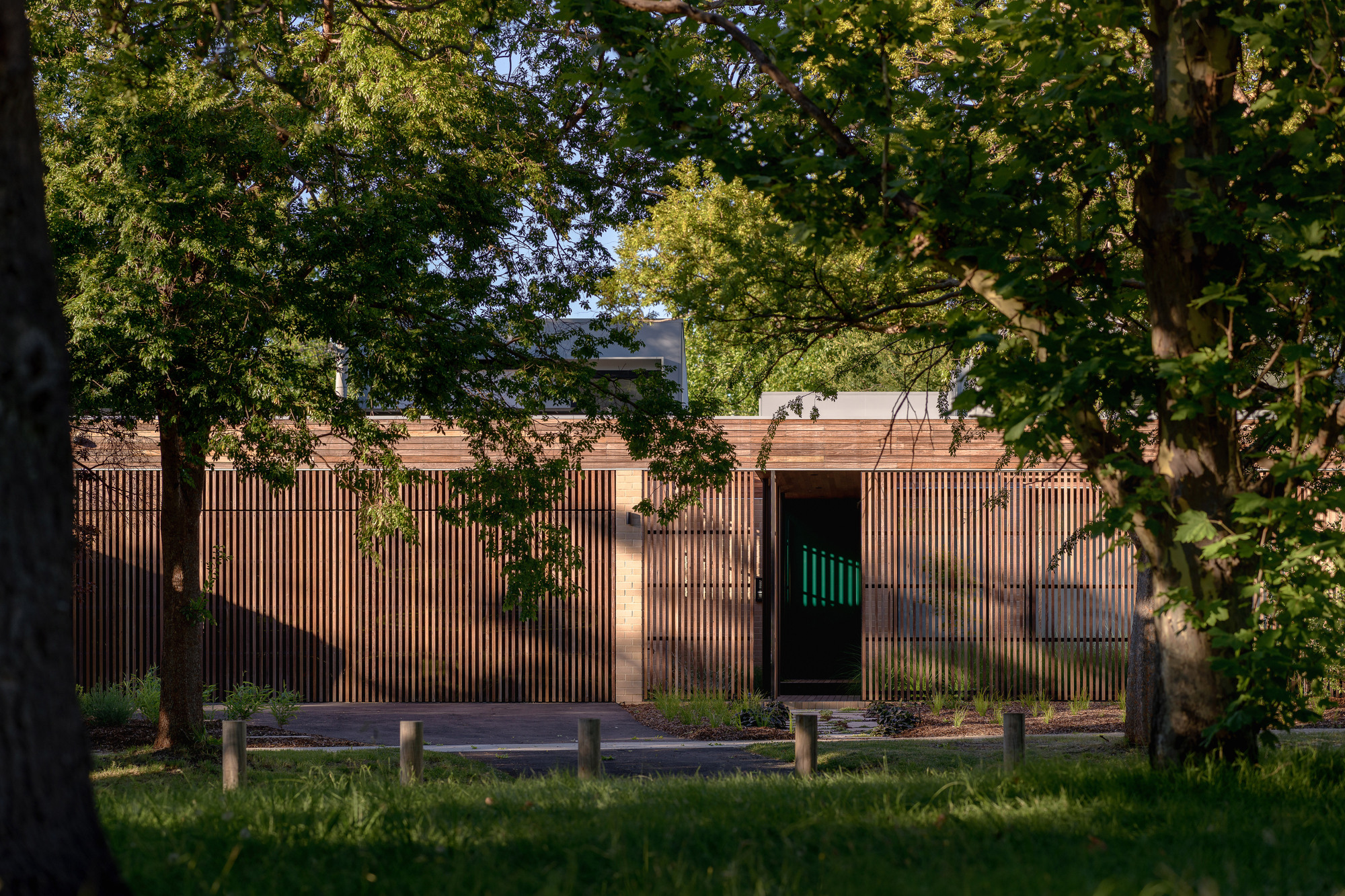
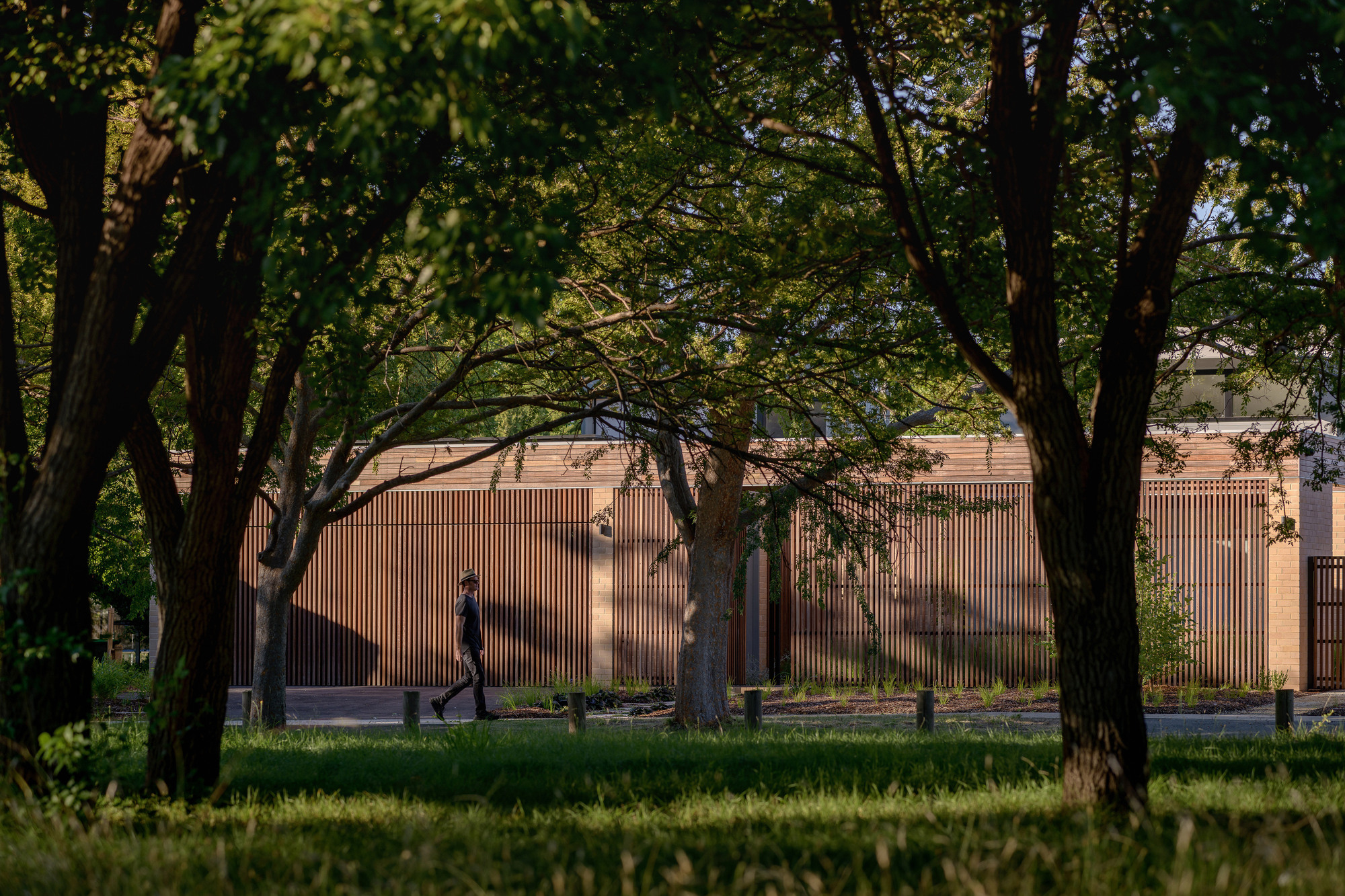
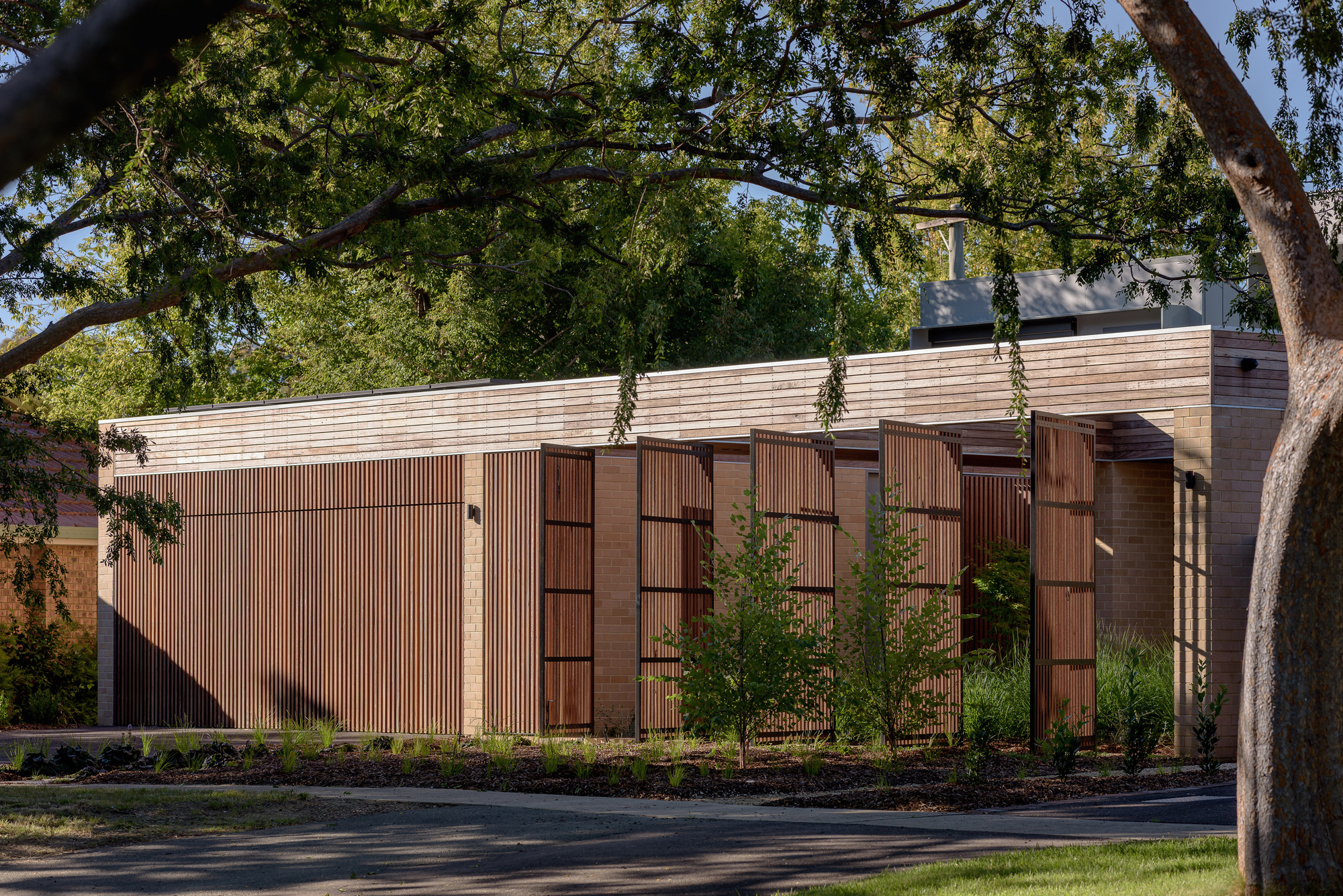
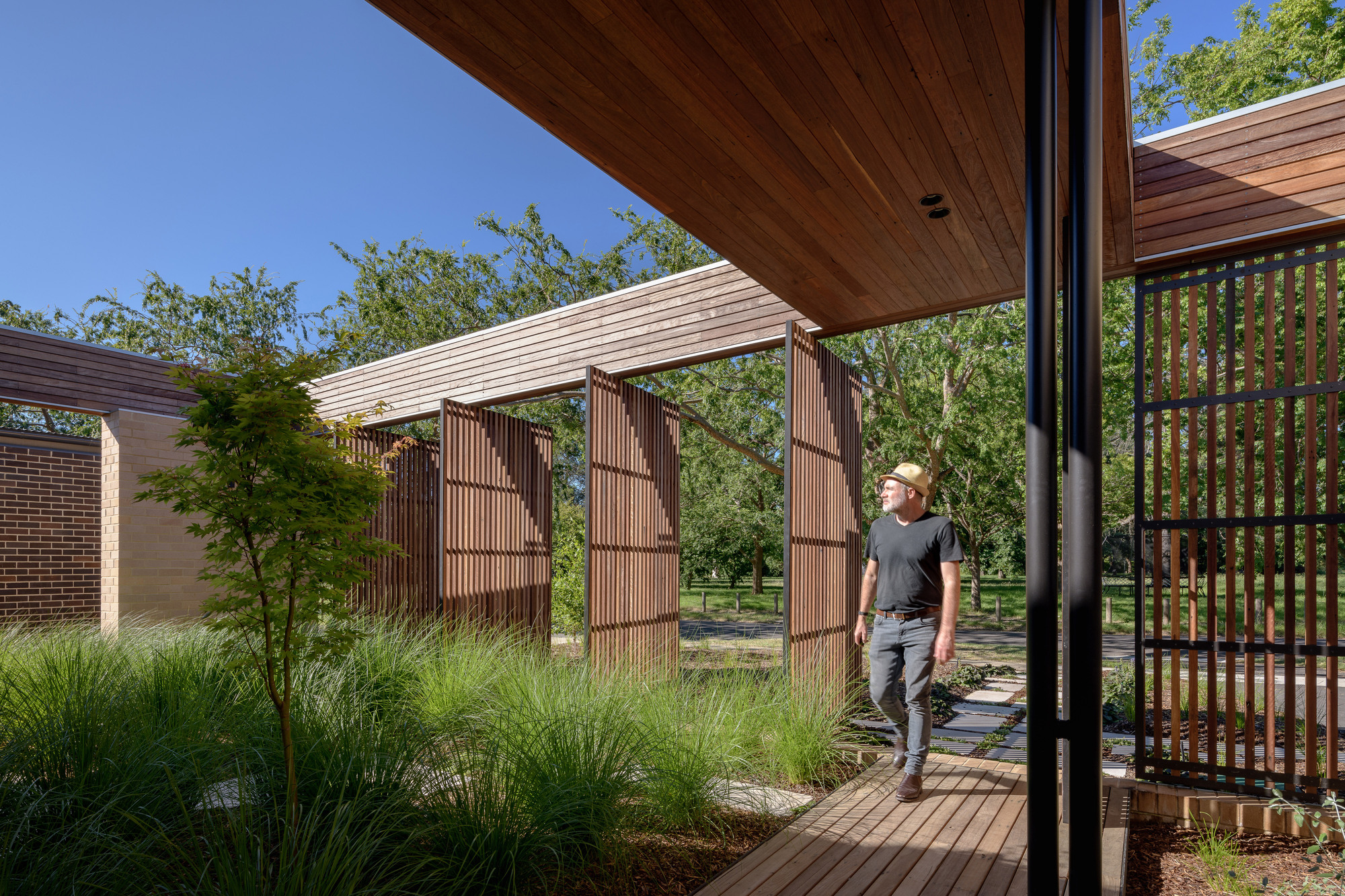
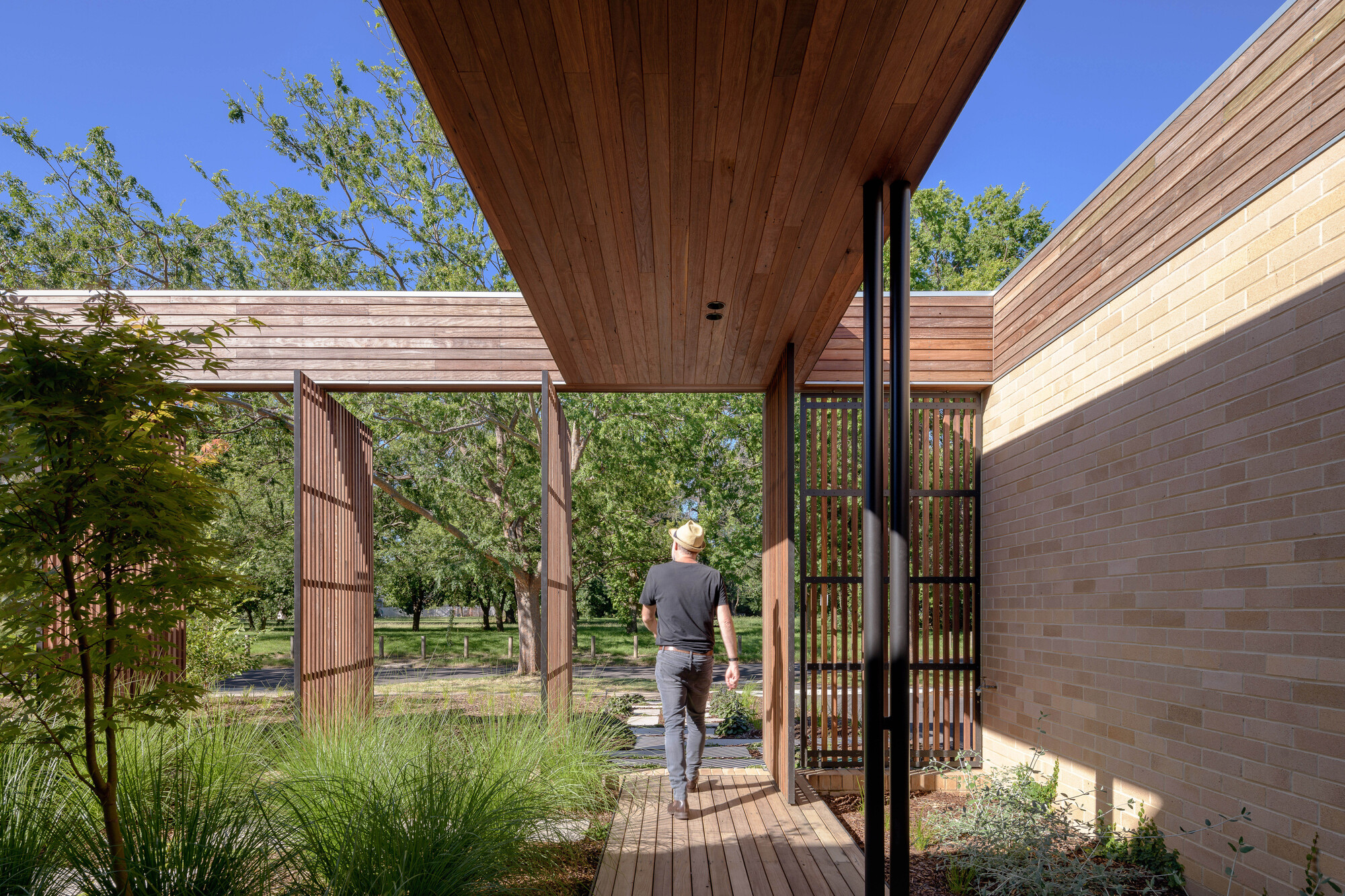
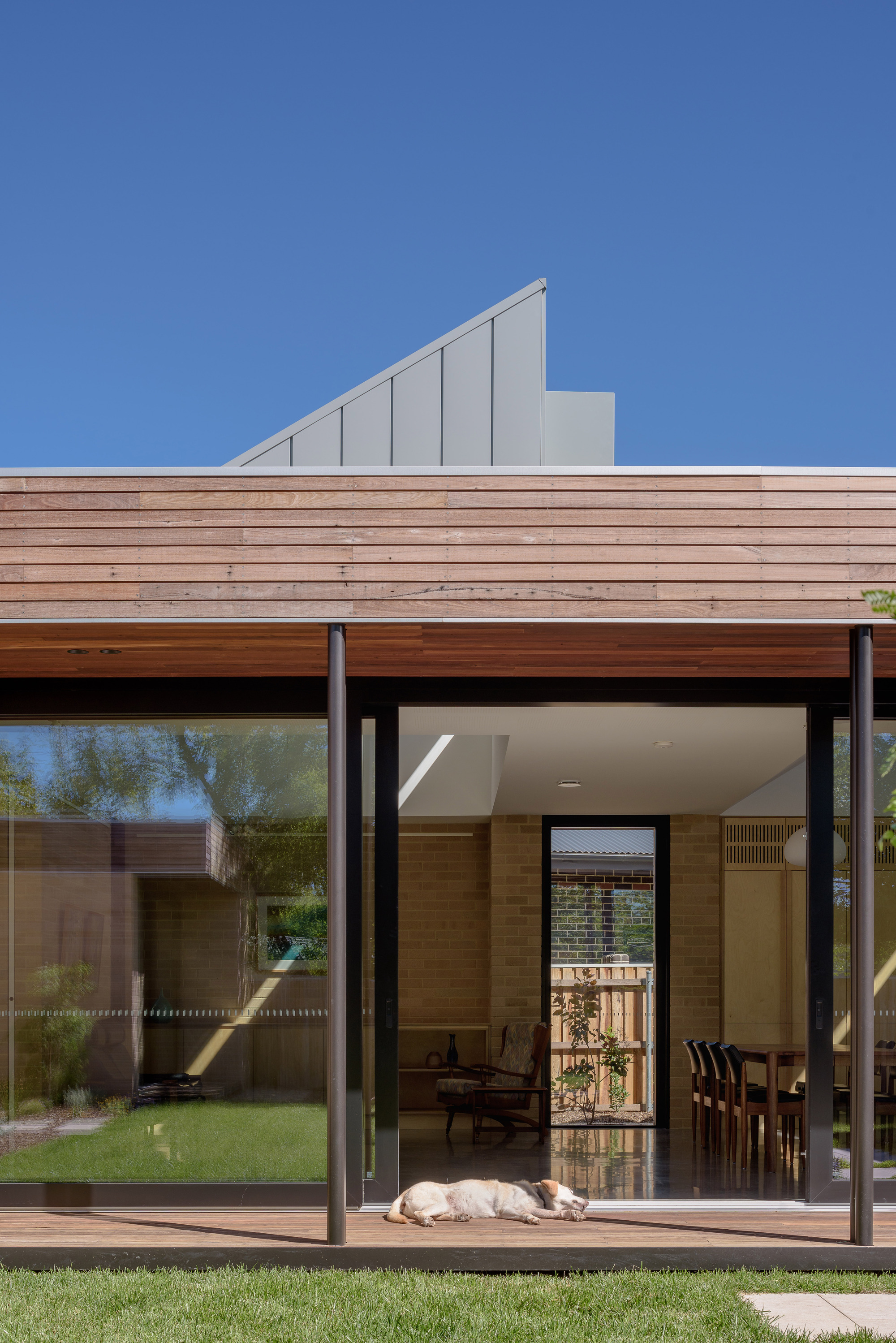
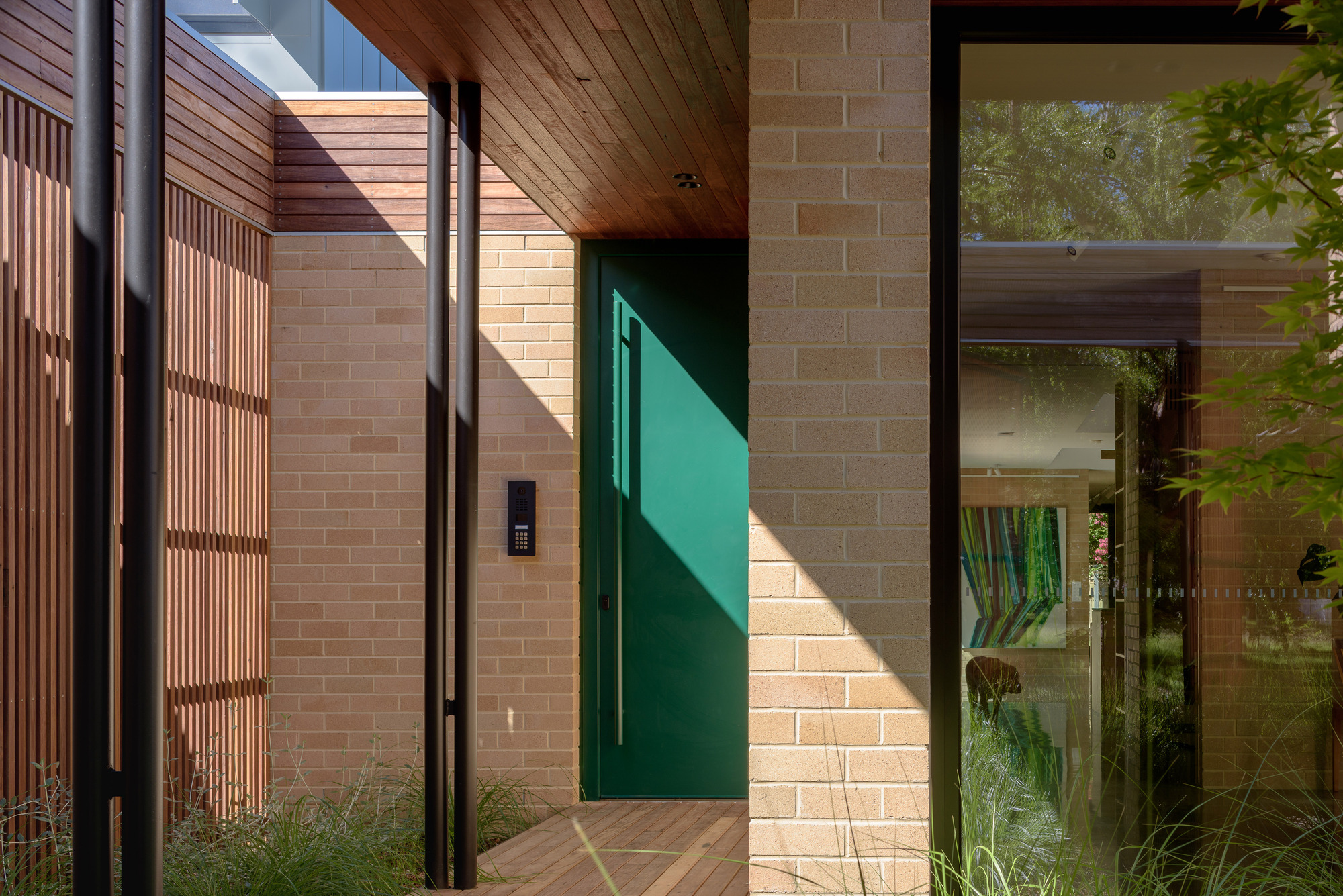
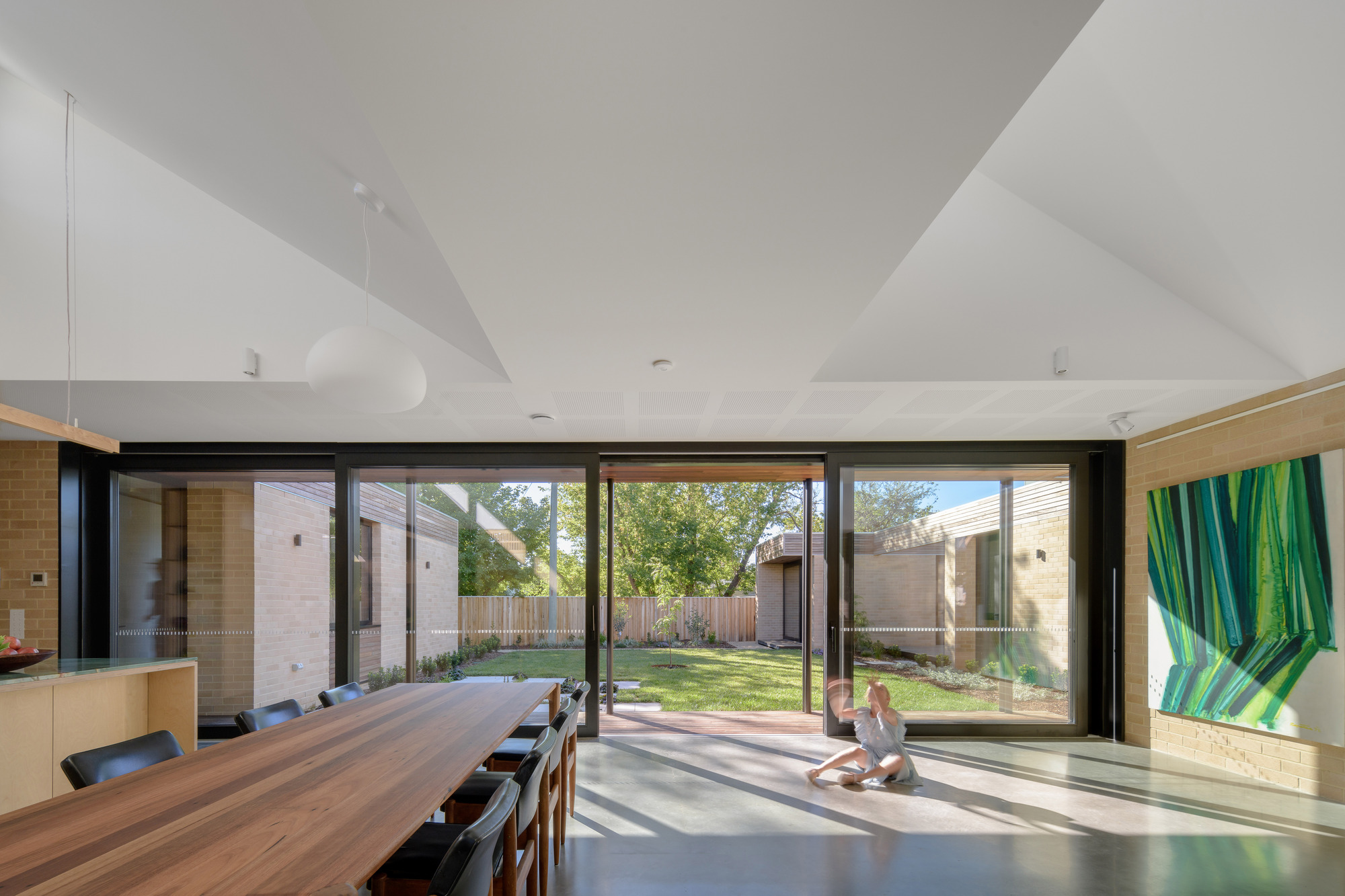
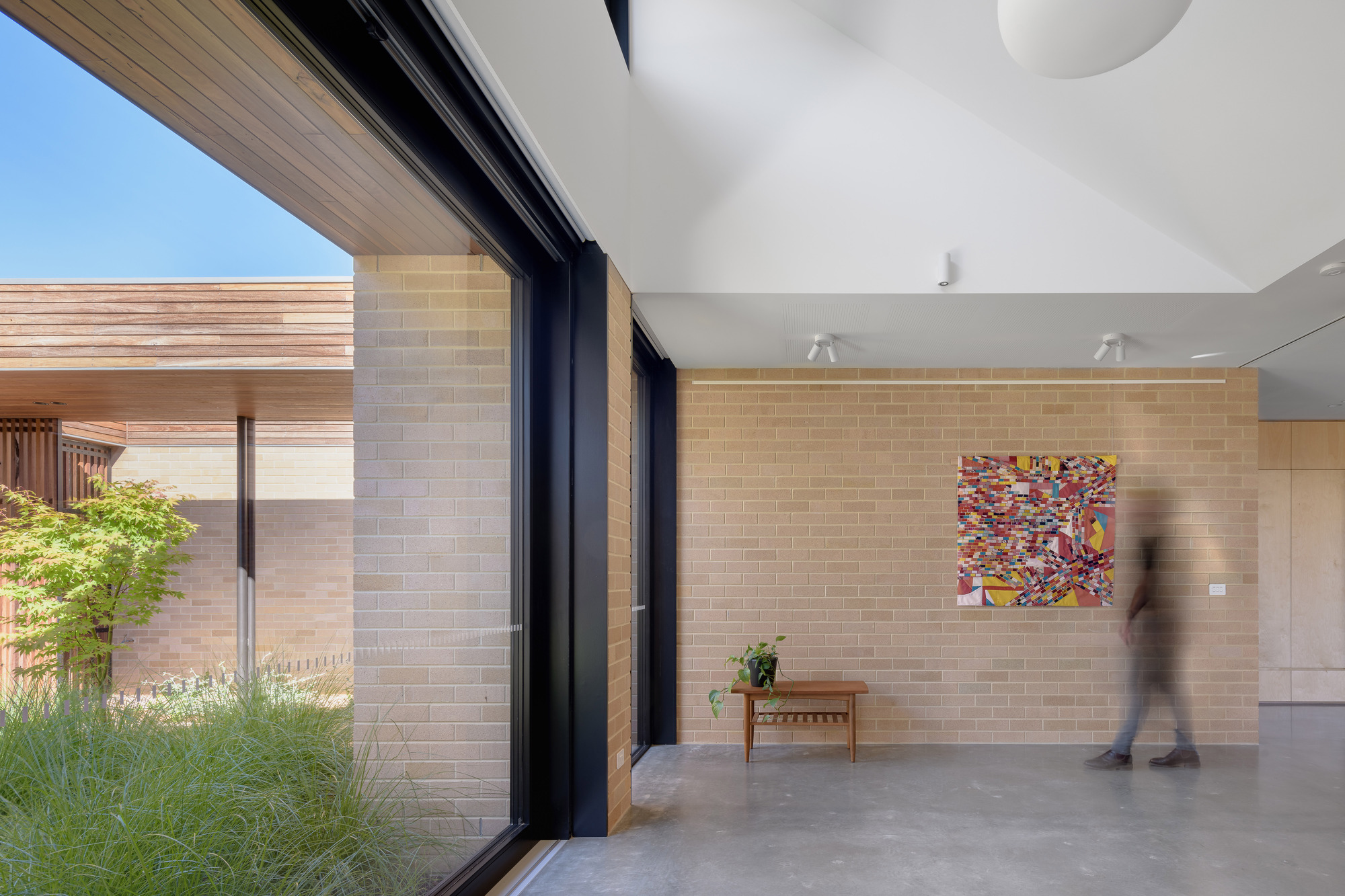
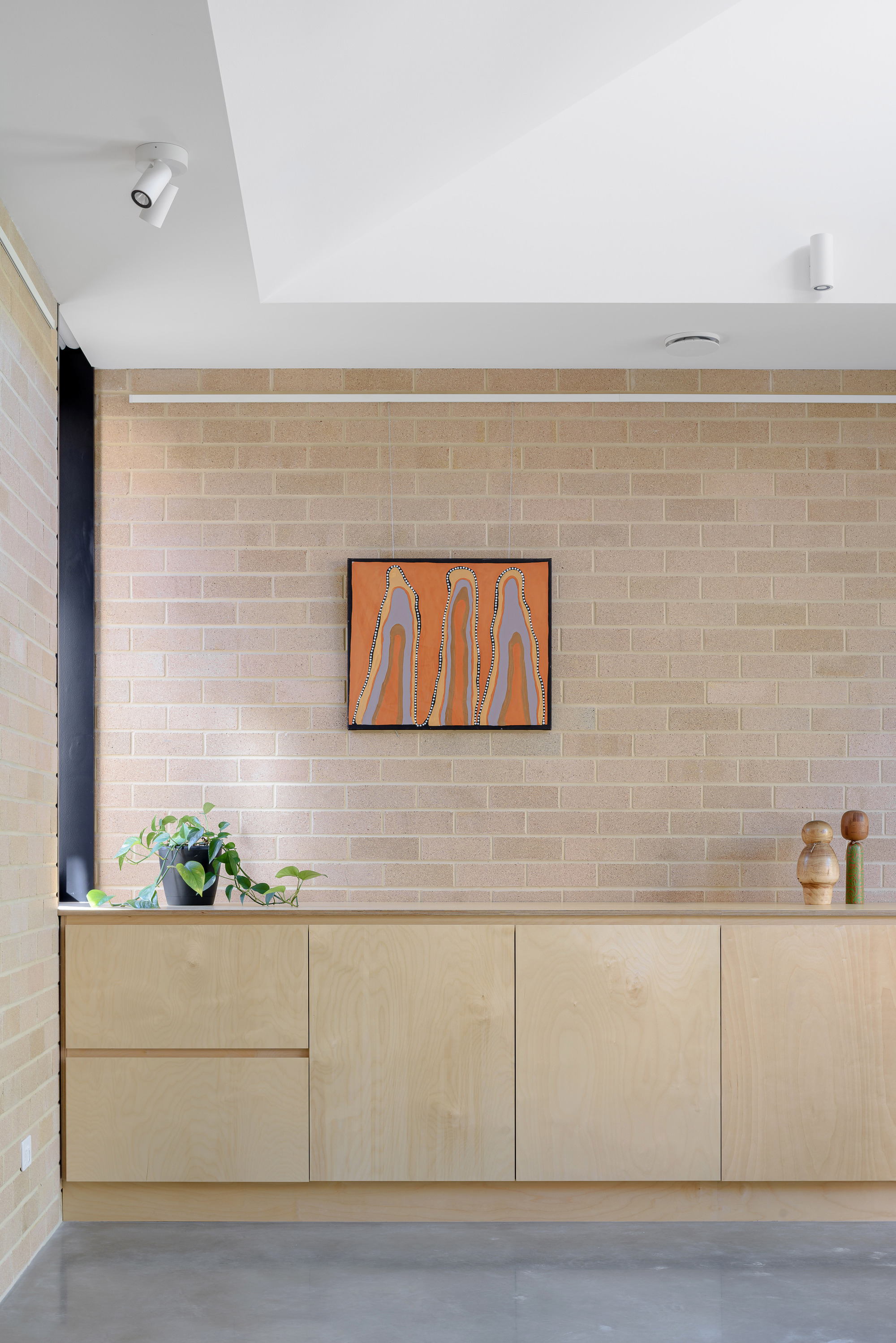
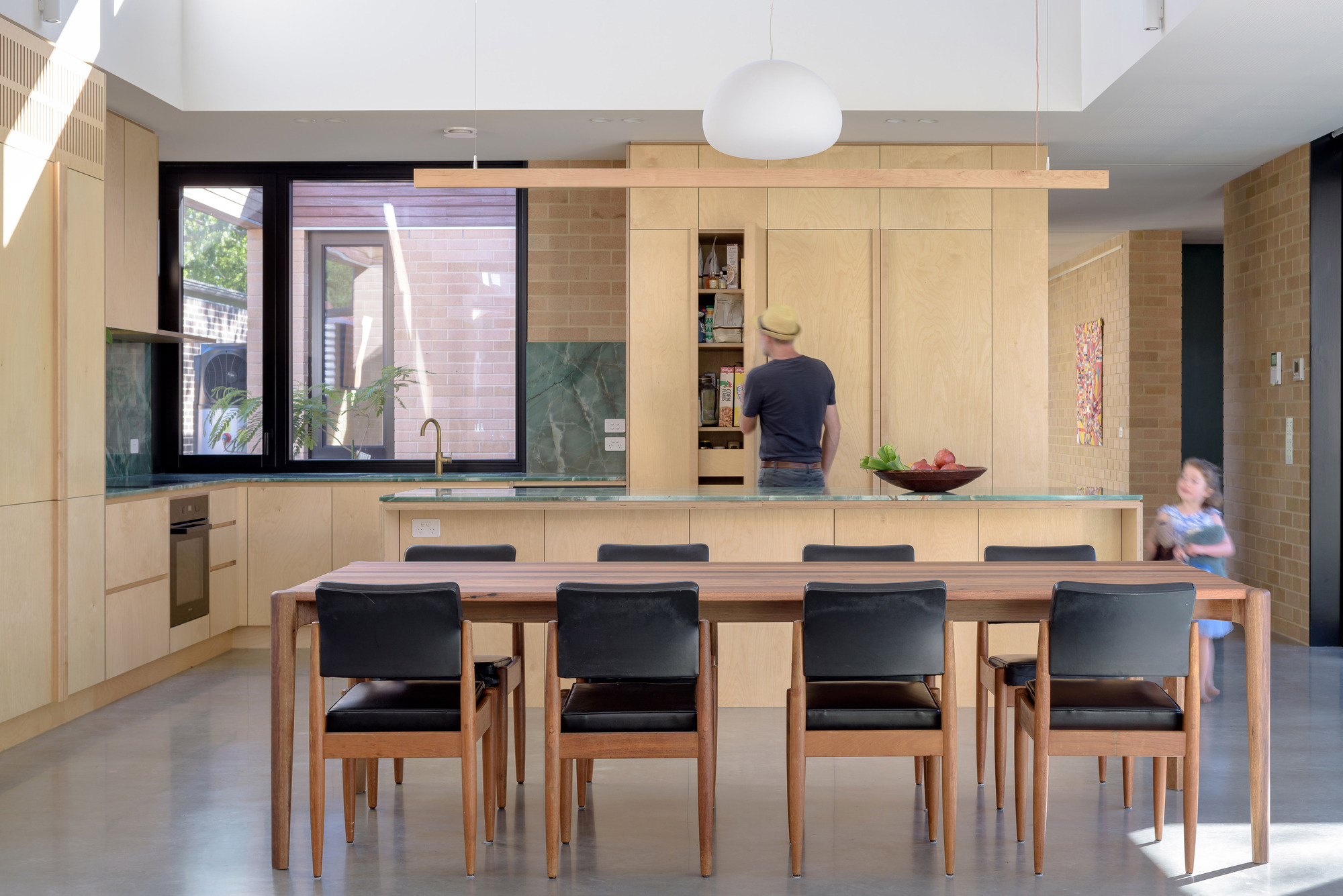
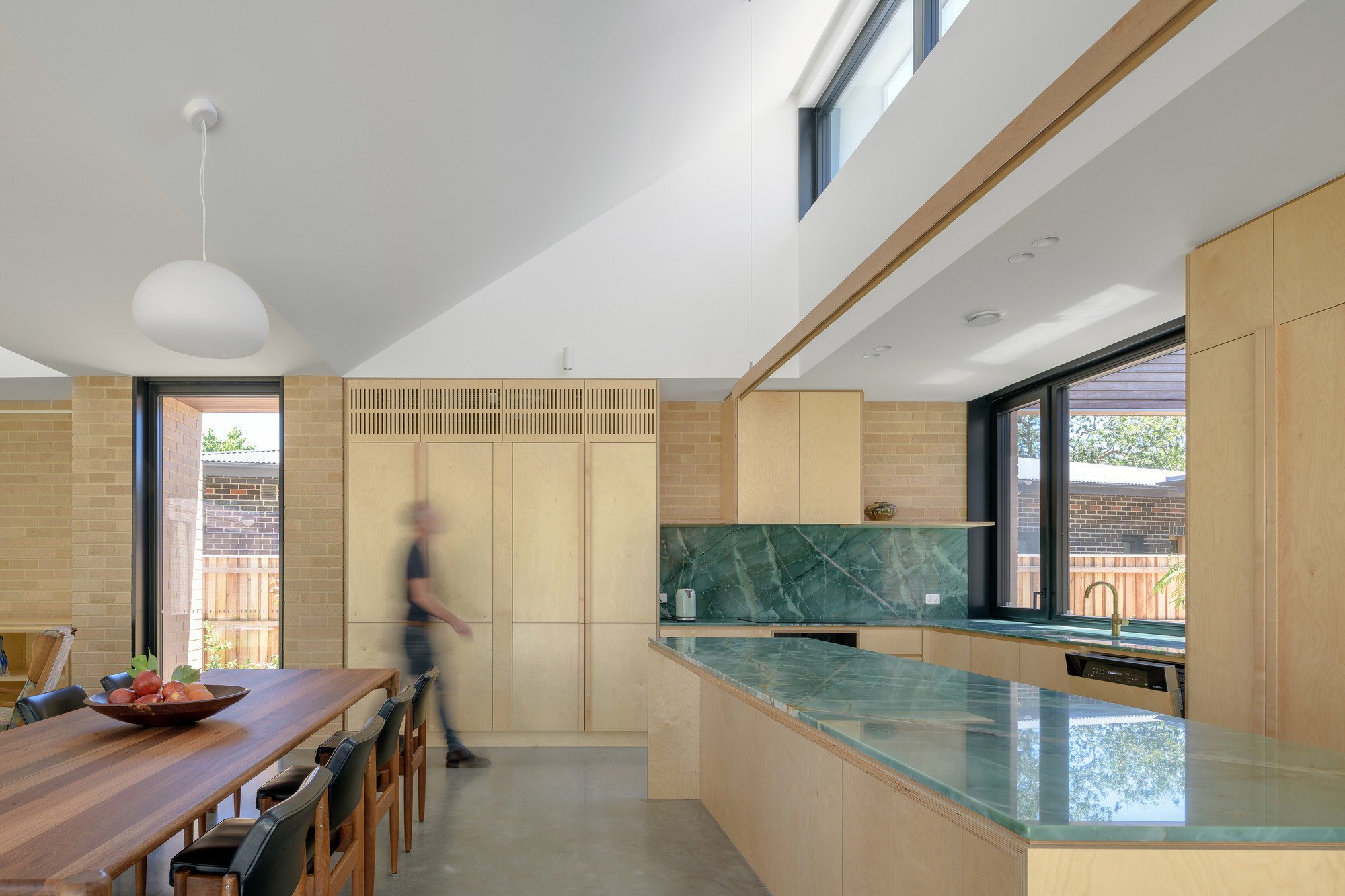
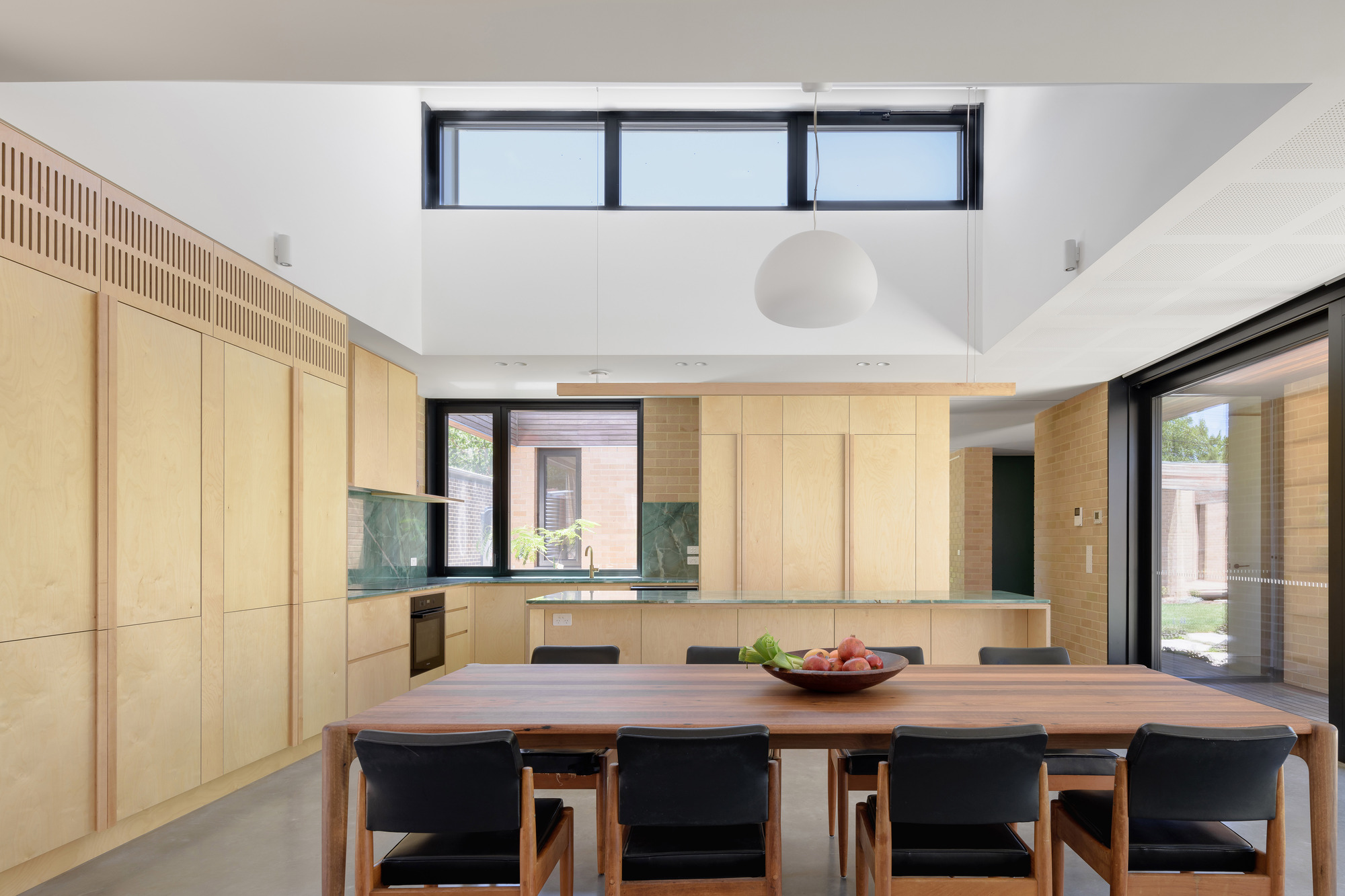
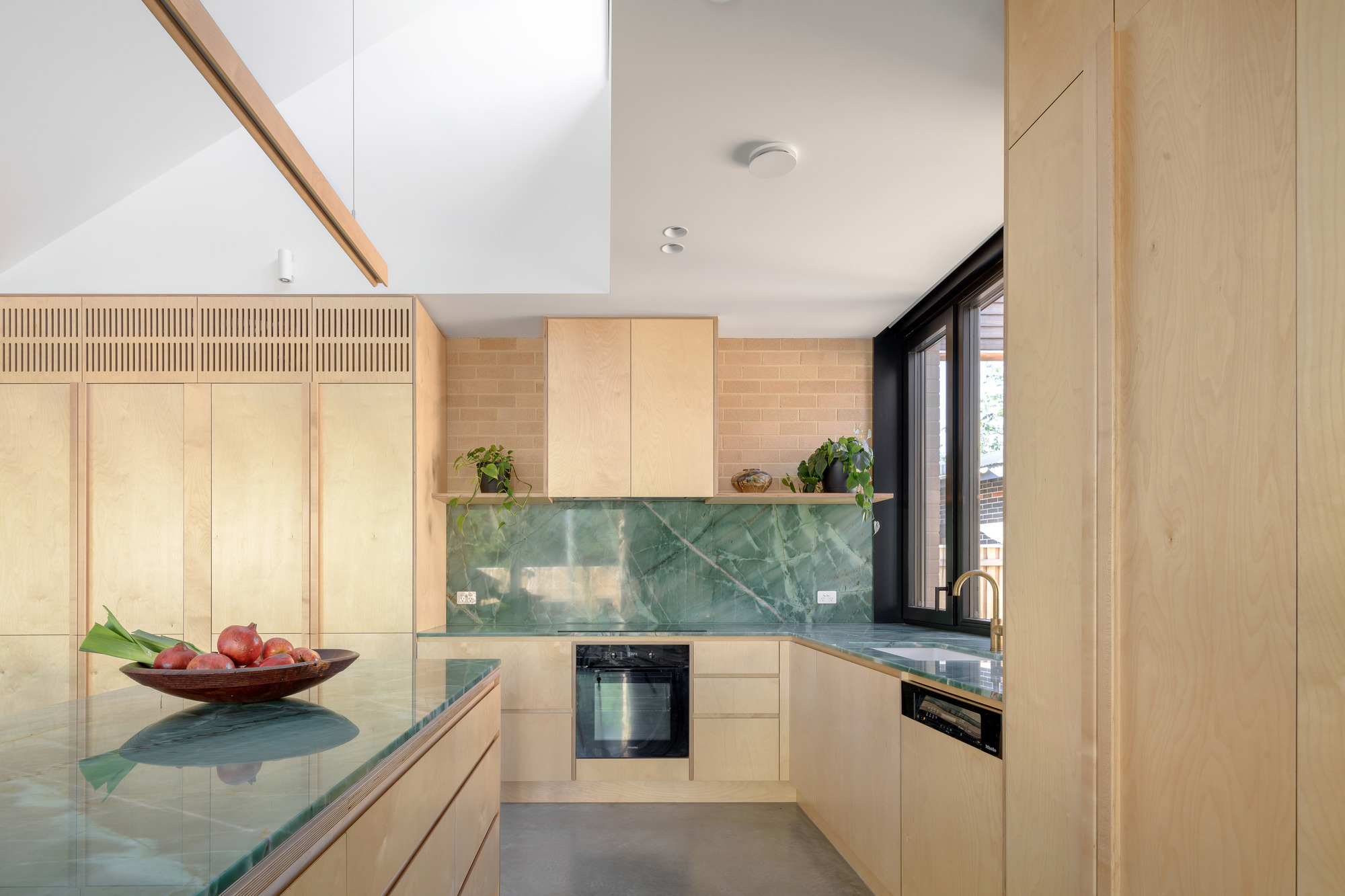
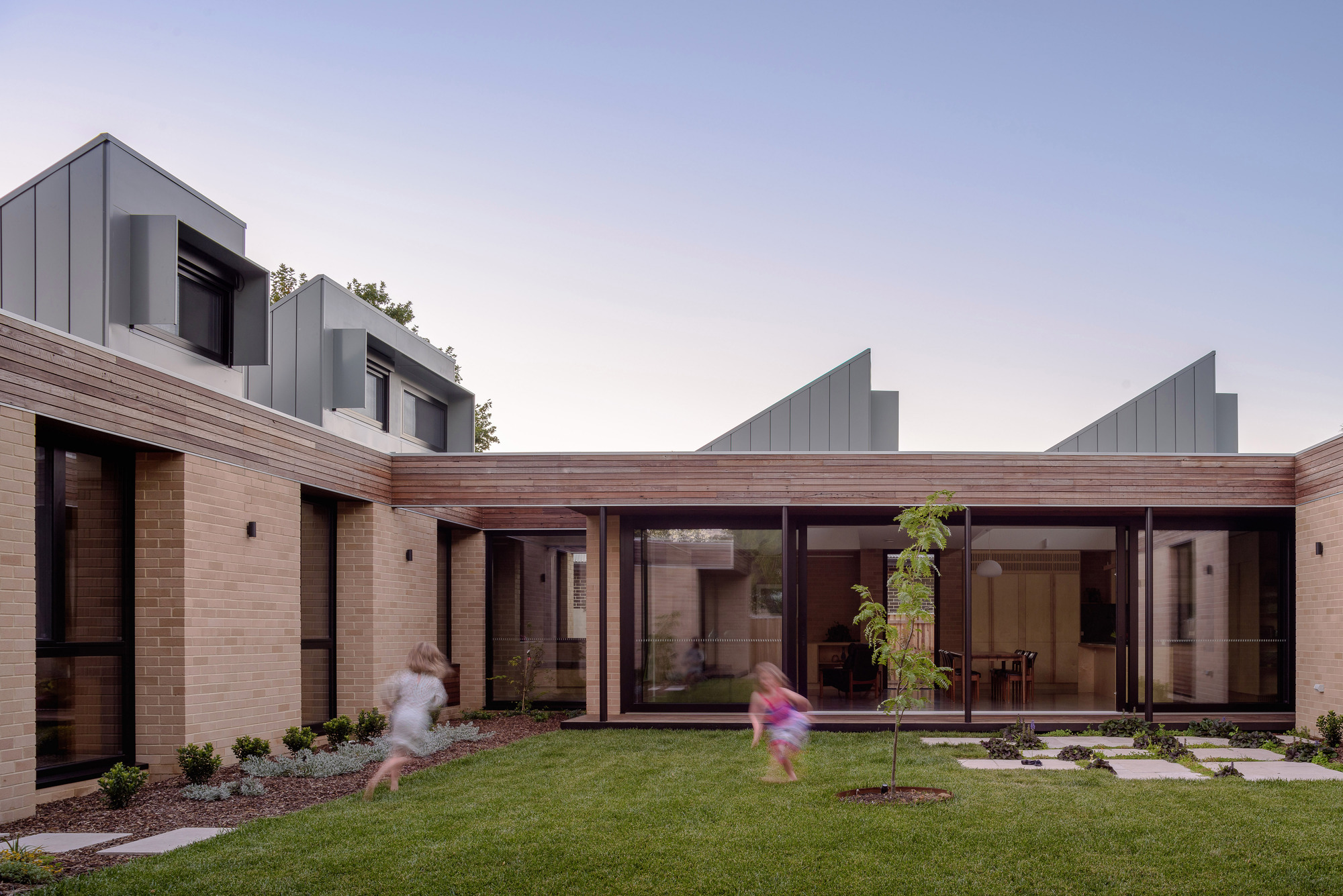
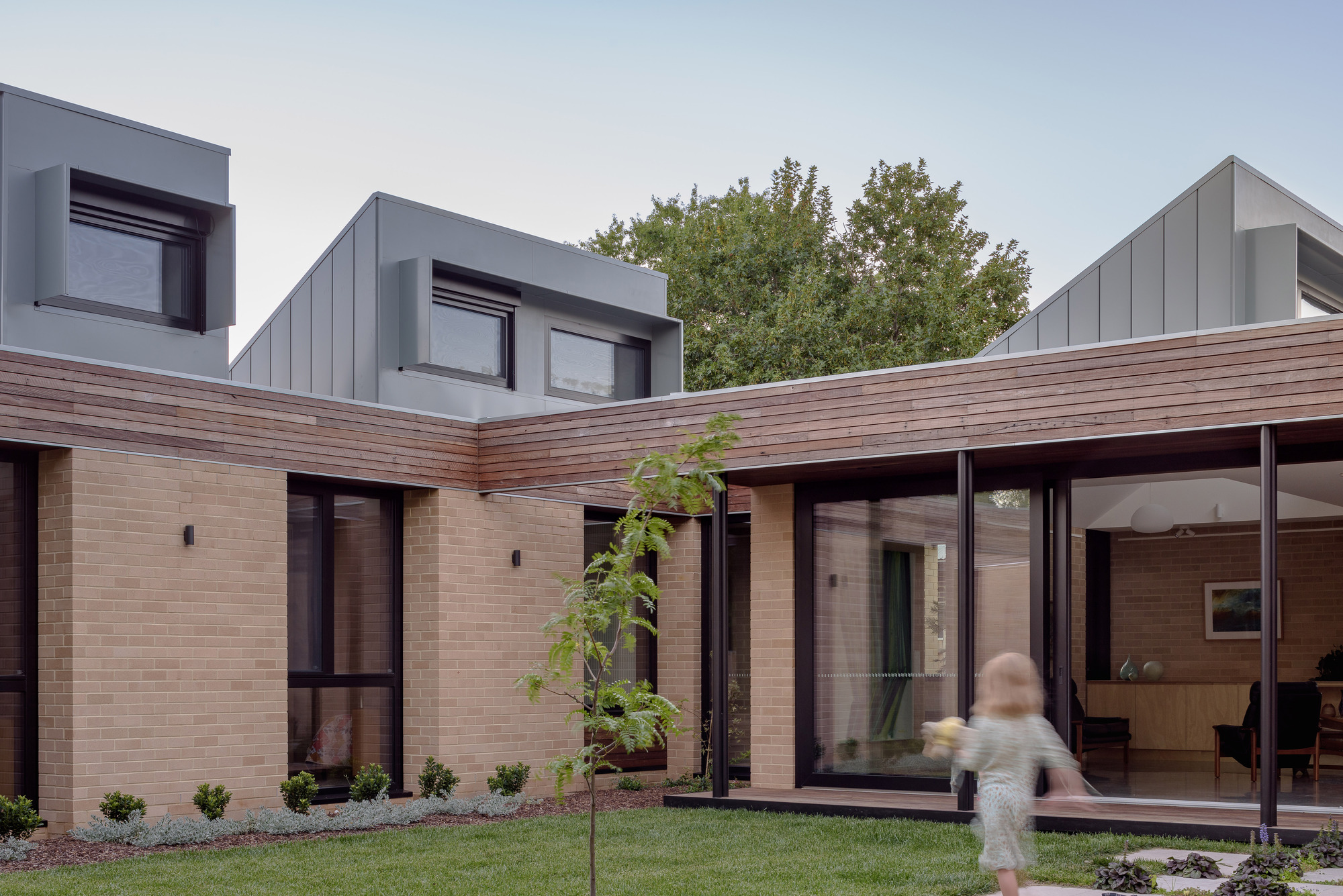
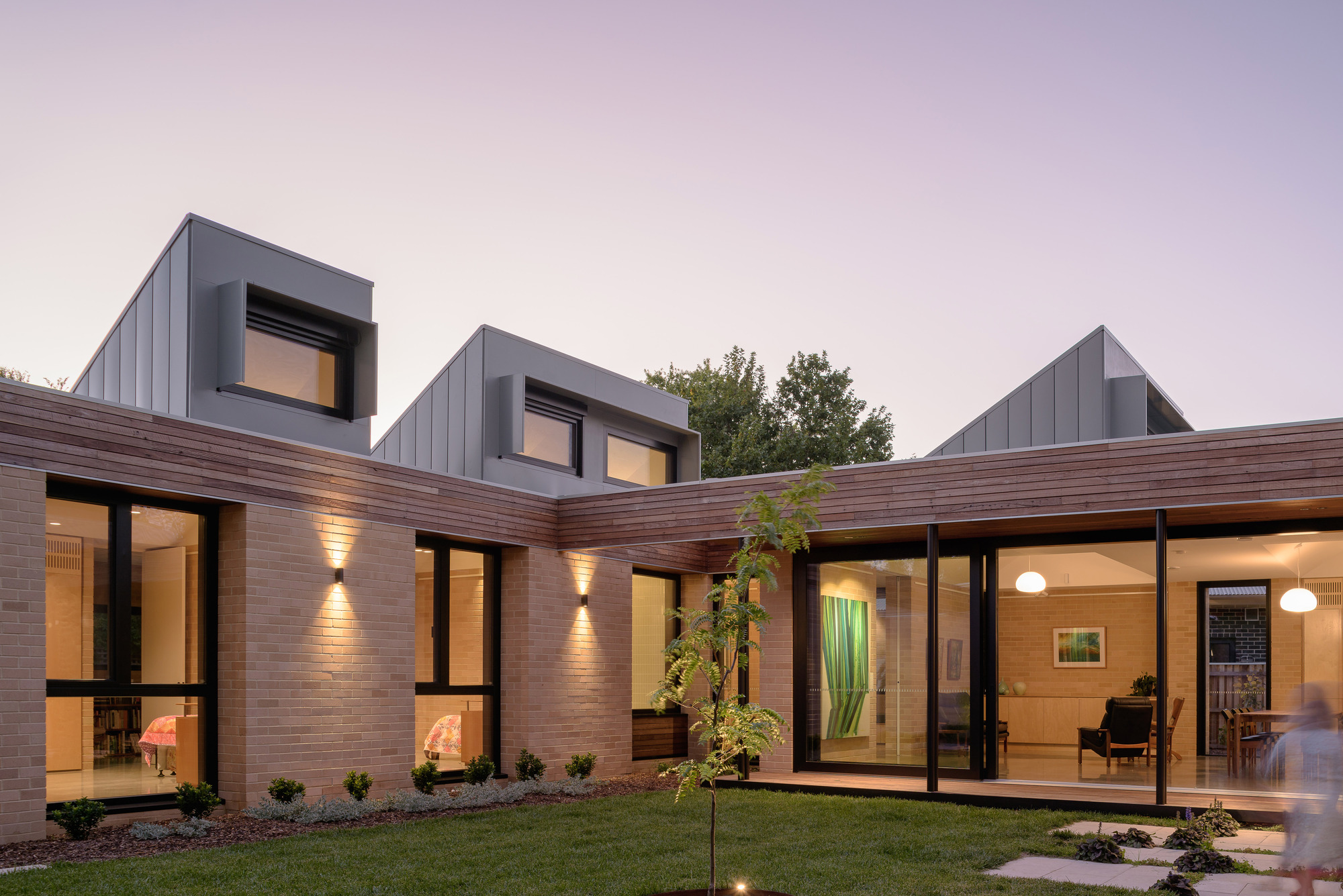
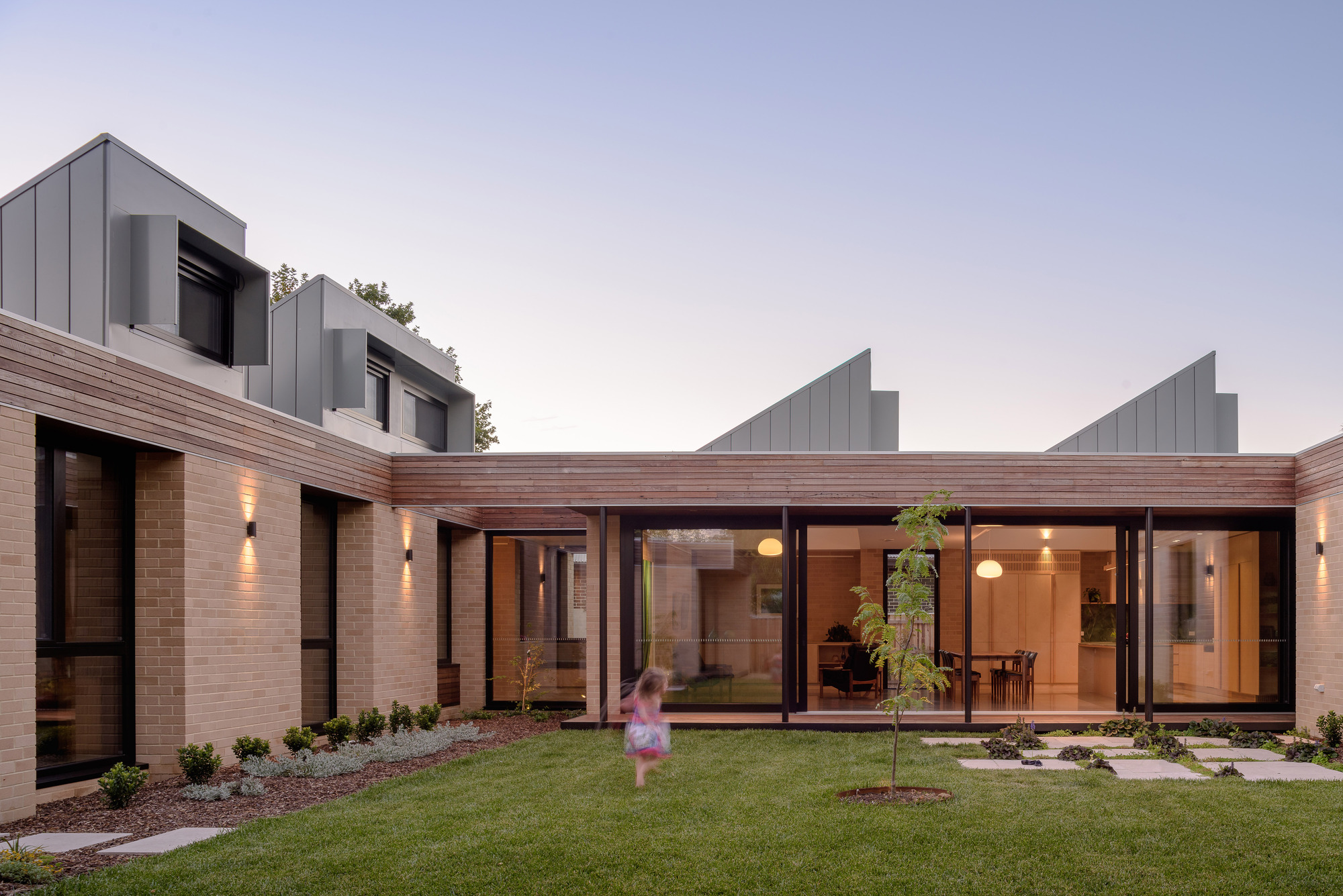
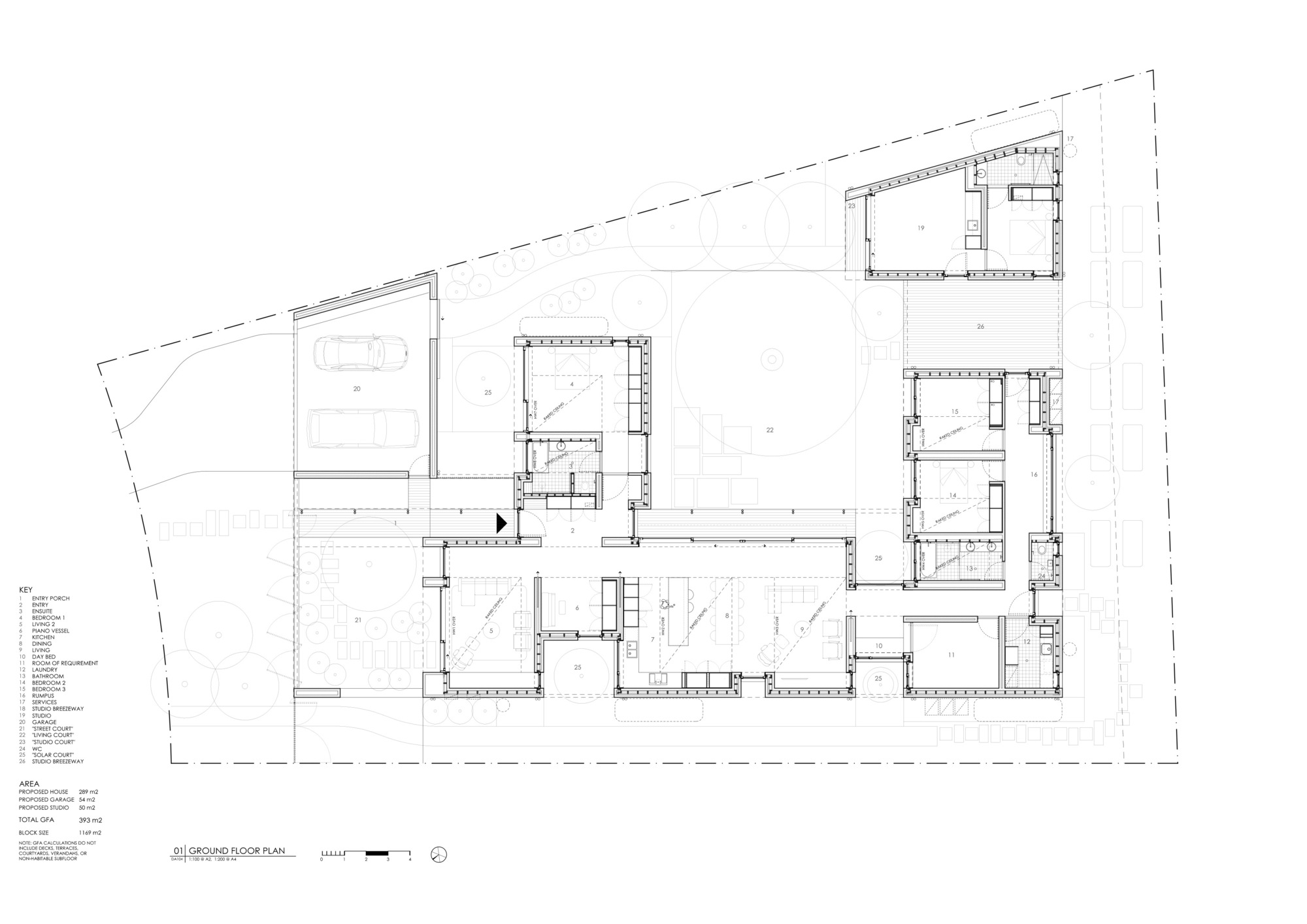
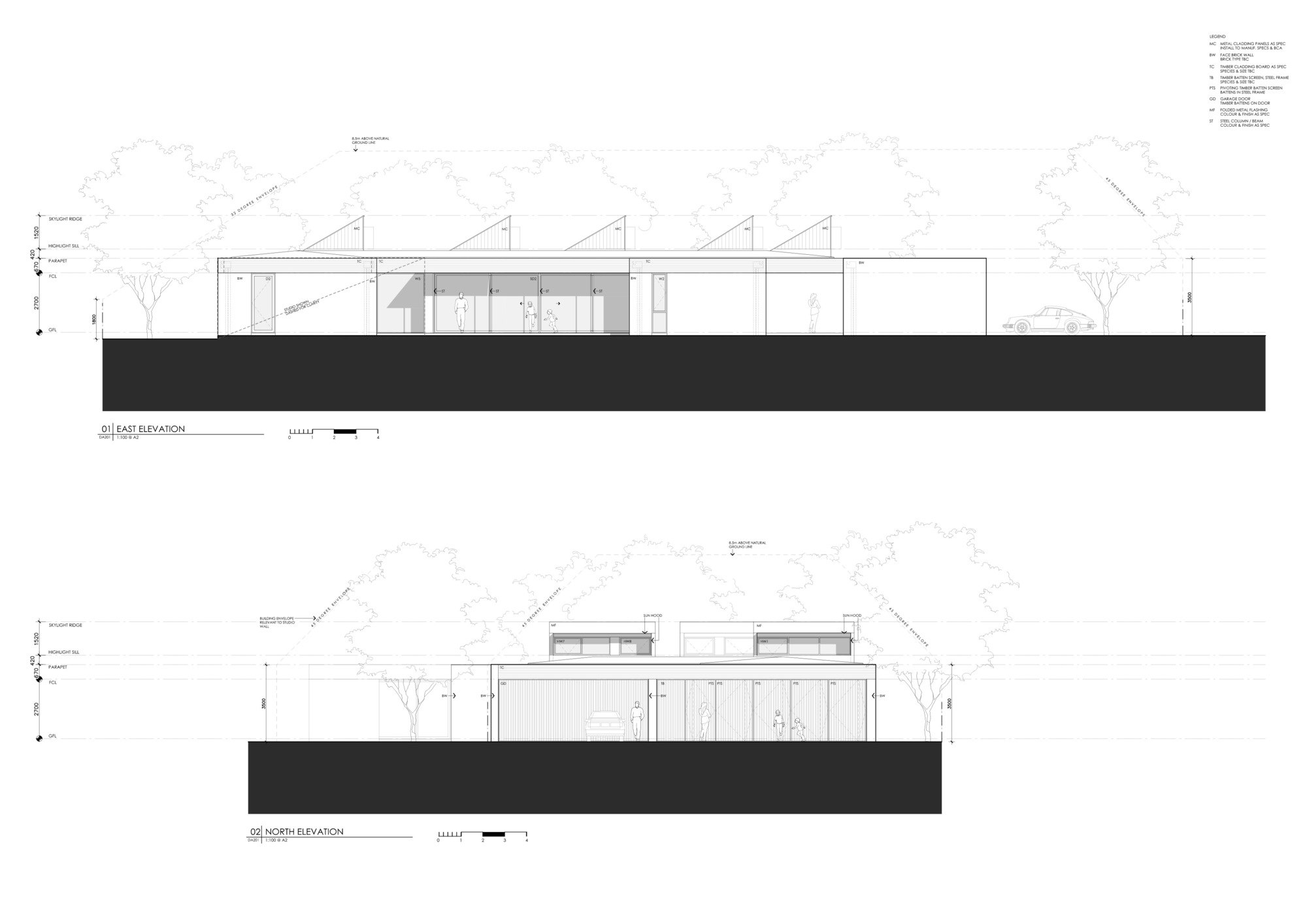
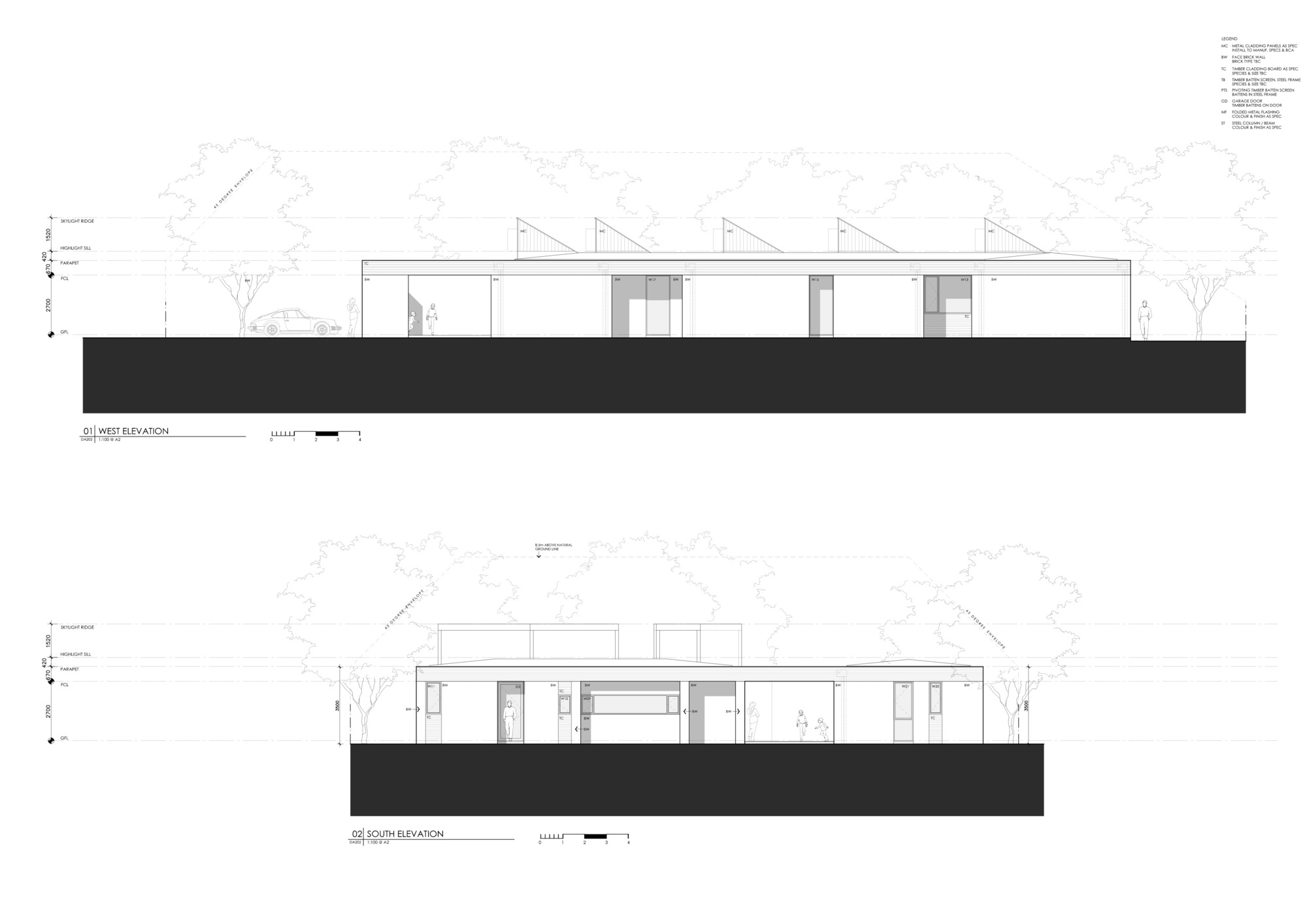
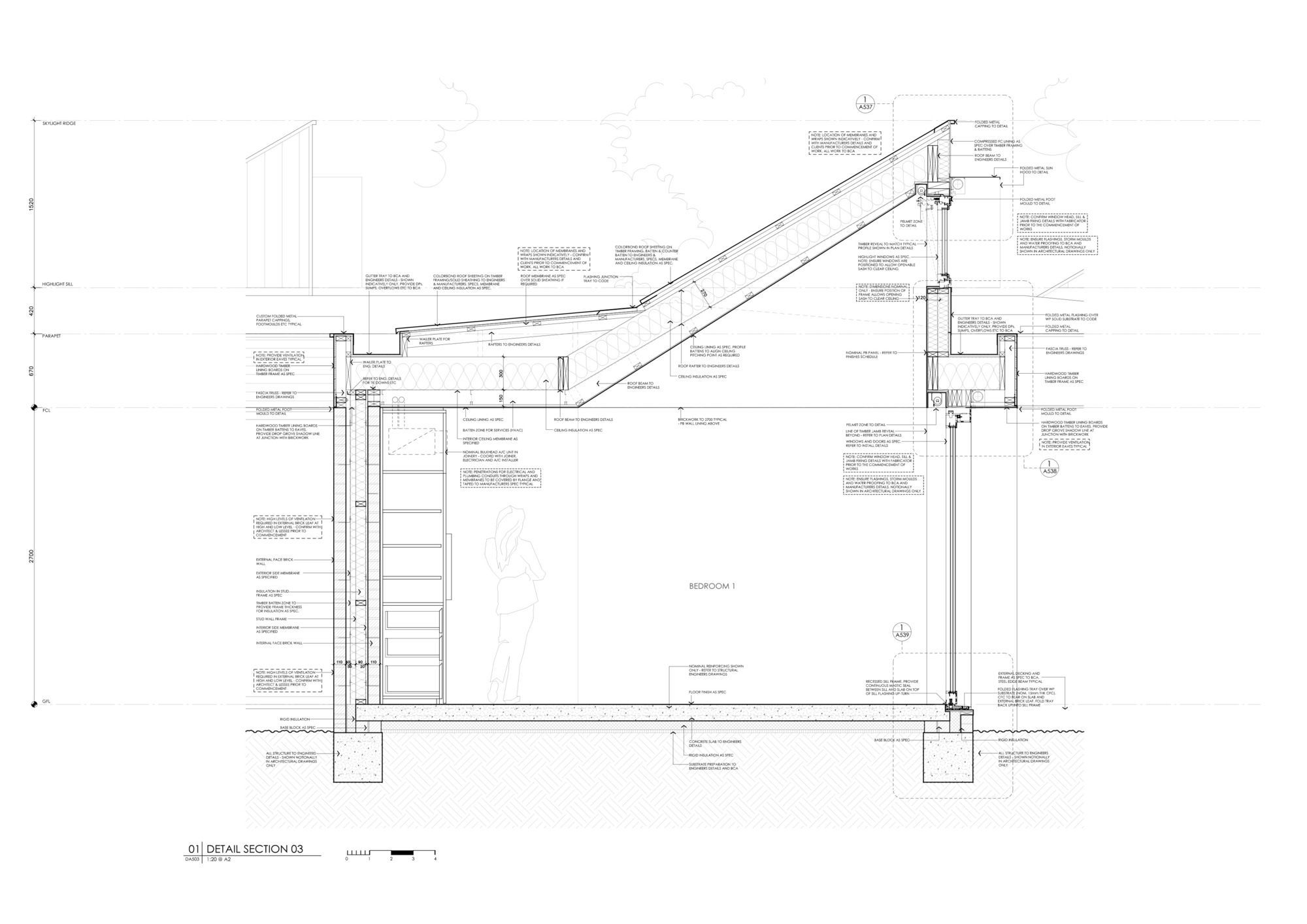
Hackett Gardens House #architecture Architects: Ben Walker Architects Area: 393 m² Year: 2024 Photographs: Ben Guthrie Country: Australia The project comprised the design of a new single-storey house in the northern Canberra suburb of Turner, close to the city centre and the University precinct. The building forms a "U" shaped plan with an internalised large central court. The internal planning wraps the central court with a parents' zone on the northern side, a living spine along the west, and a children's zone along the south. This layout provides the desired privacy from the public realm, but allows for open and generous views from living spaces into the central court. A second north-facing courtyard adjacent to the street is equipped with operable pivoting privacy screens to shield the courtyard from the street, but allow opening to views across the adjacent park when desired. A third court is located on the northern side of the main bedroom behind the garage pod – a deliberate planning decision to provide privacy. A separate studio forms the south-eastern corner of the  The interior spaces are defined by cream coloured brick walls rising to a consistent datum with white plastered ceilings above. The three main "wings" forming the plan are carefully defined through the use of a series of small indented solar courts at their junctions. These courts provide light and refuge between the wings, subtly demarcating the transition between zones and providing foreground views of the landscape. A series of saw-tooth roof elements contains highlight windows that provide northern sun to rooms that may otherwise be landlocked. The saw tooth assists in passive solar gain, provides views to the sky, and is positioned to relate to and define living spaces below. They provide delightful and generous internal volume. The interior finishes comprise a palette of dry pressed brick, honed concrete, white plaster, and Birch ply joinery. Wet area fixtures are natural brass. This simple palette espouses the personality and requests of the client and provides an uncluttered backdrop to their family life, furniture, and art collection. The exteriors are expressed as brick walls and recycled timber-clad parapet beams. The beams tie external spaces and solar courts to the house to bring a clarity of geometry to an otherwise articulated floor plan. Steel CHS columns at the front of the house lighten the architectural expression to the street and demarcate the main entry. The dry pressed bricks used on the project are sourced from a factory in northern NSW that is approximately 50km from the family farm that the client grew up on. This results in the bricks in the new house being manufactured from clay that has a connection to the family's farming history and a strong sense of memory of place. The house includes heavily insulated triple-layered walls. Ceilings and burnished concrete slab are heavily insulated, with both internal and external membranes providing excellent air tightness. Windows are composite frames with high-performance triple glazing. The PV system provides a substantial portion of household energy use, and a centralised HRV system balances internal temperatures, cleans air, and removes vapour.
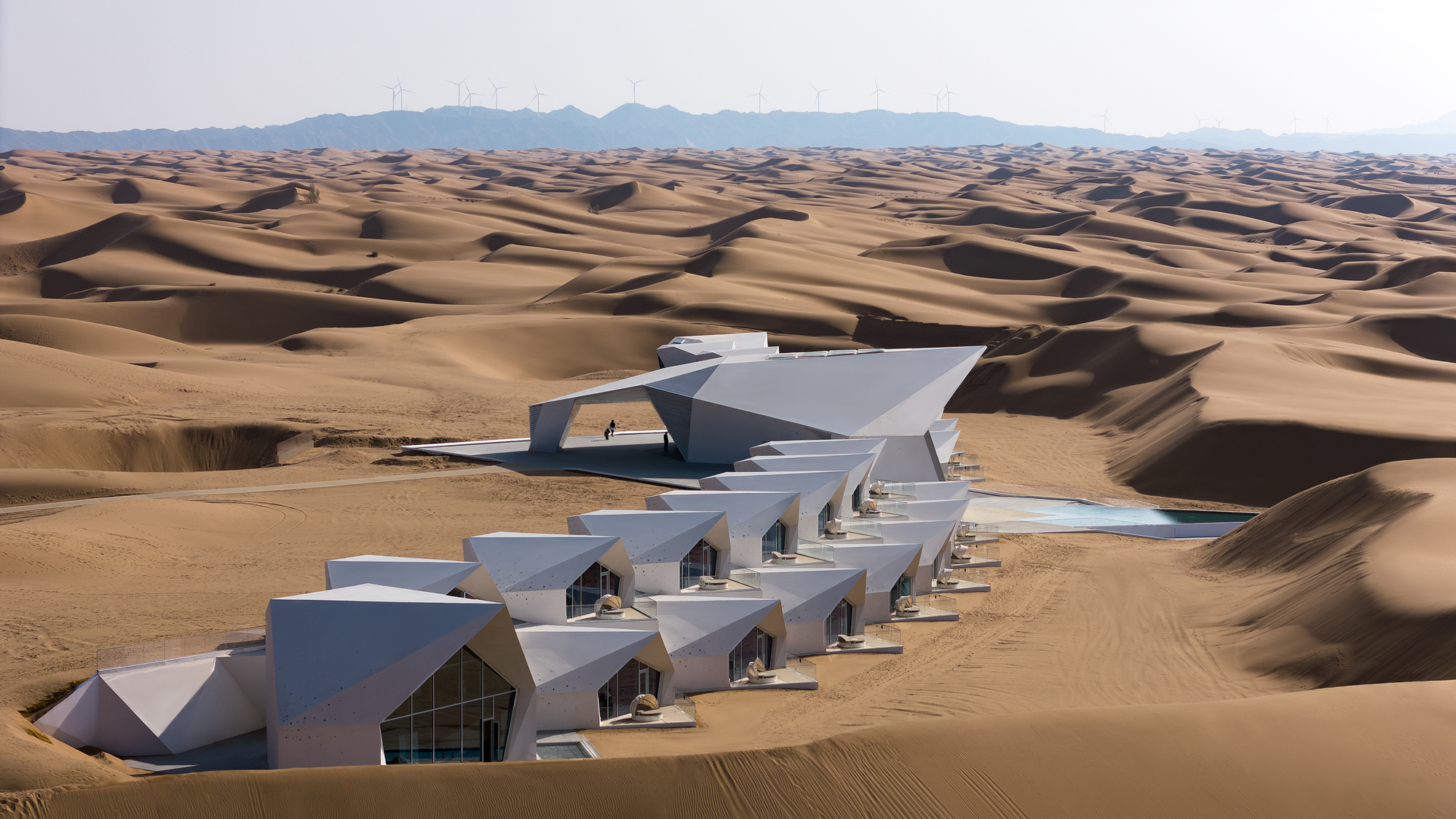
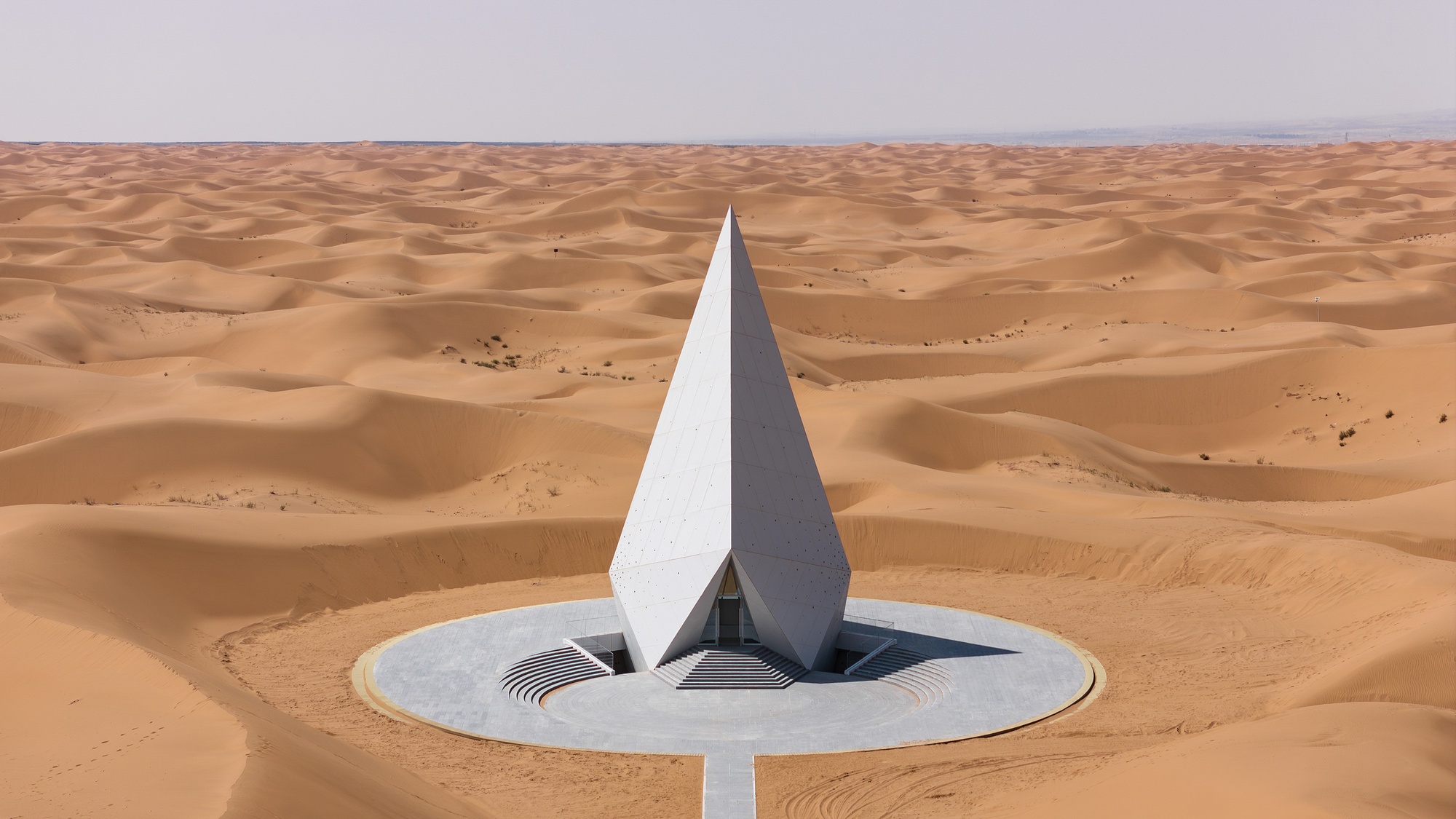
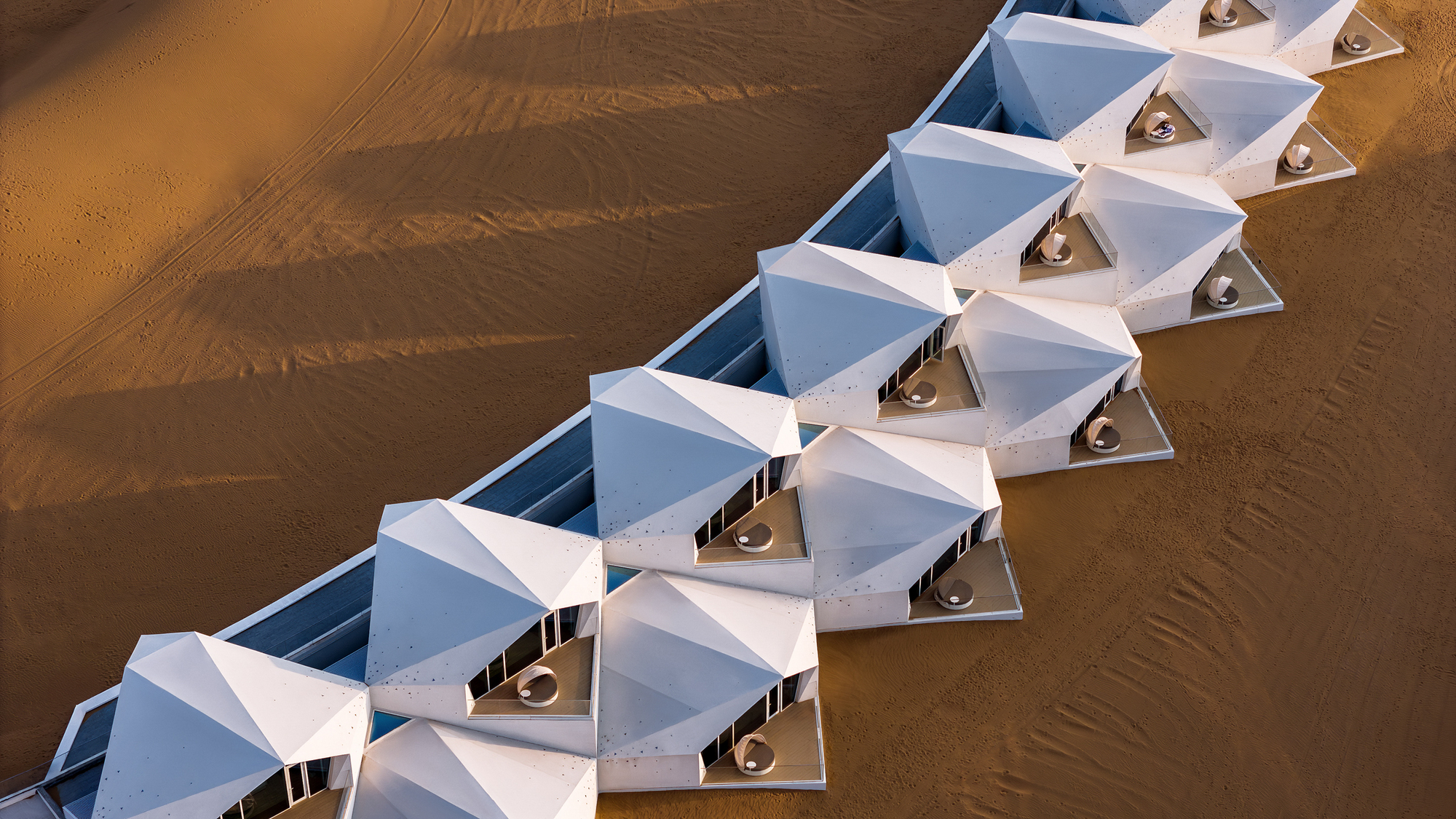
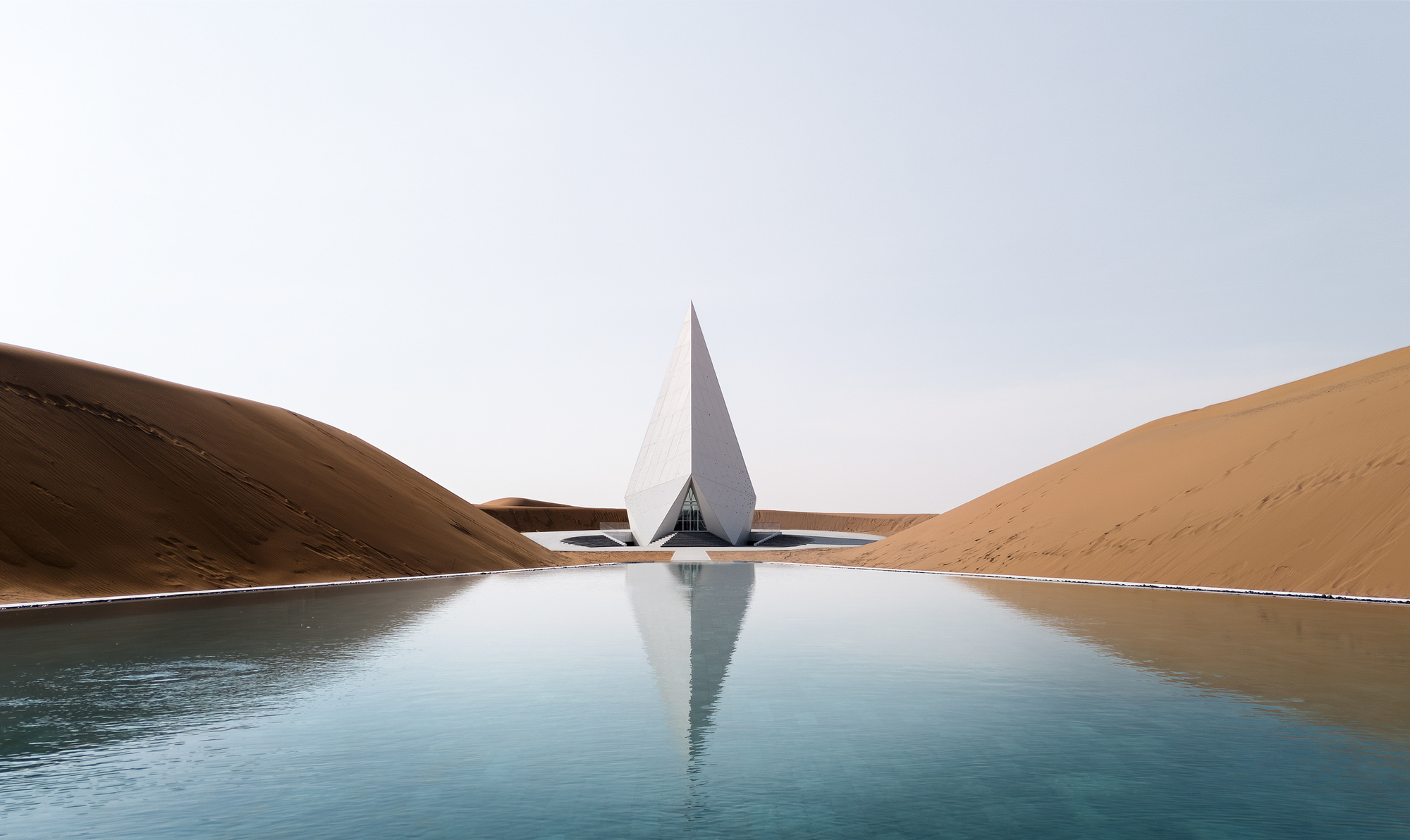
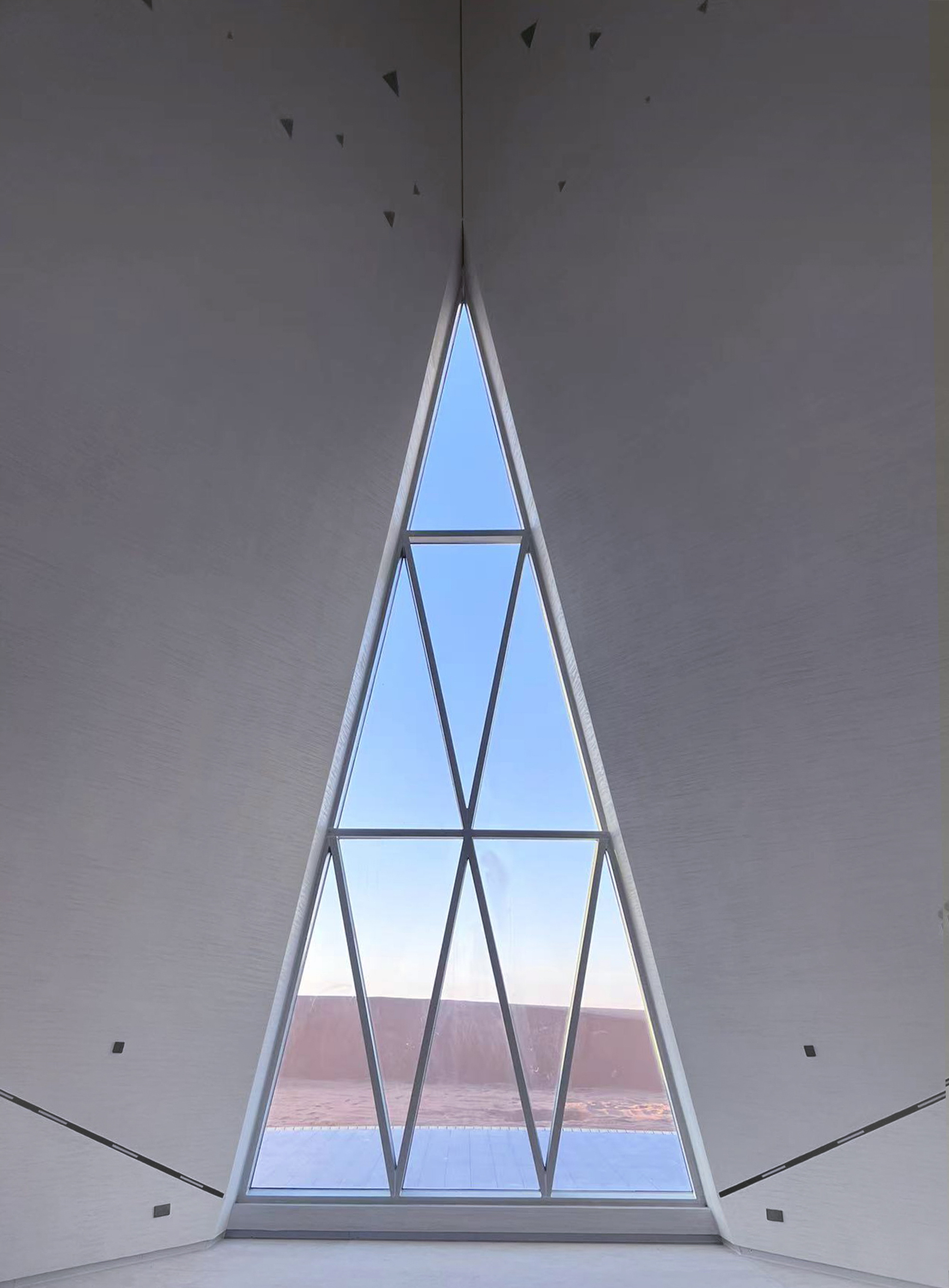
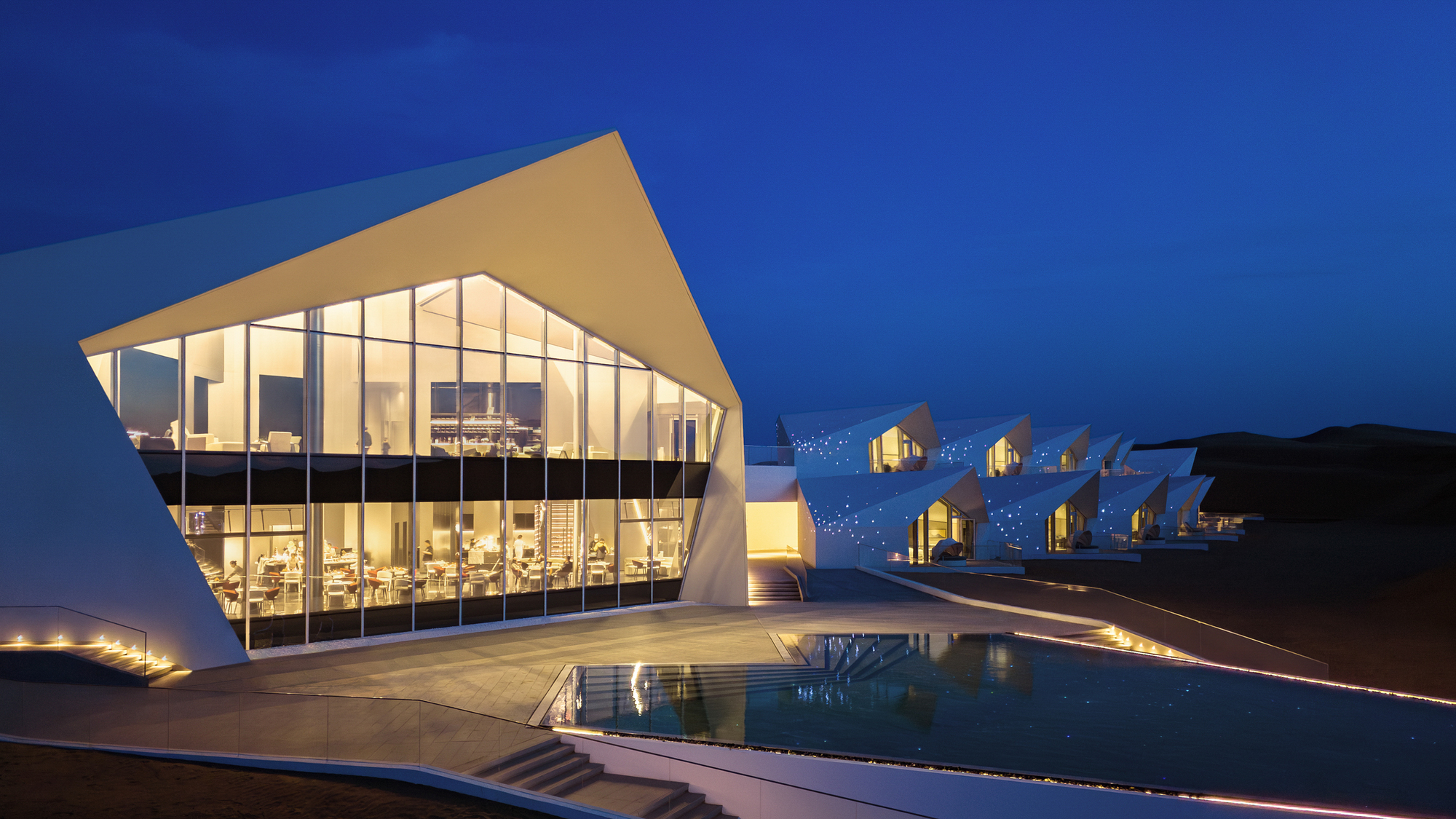
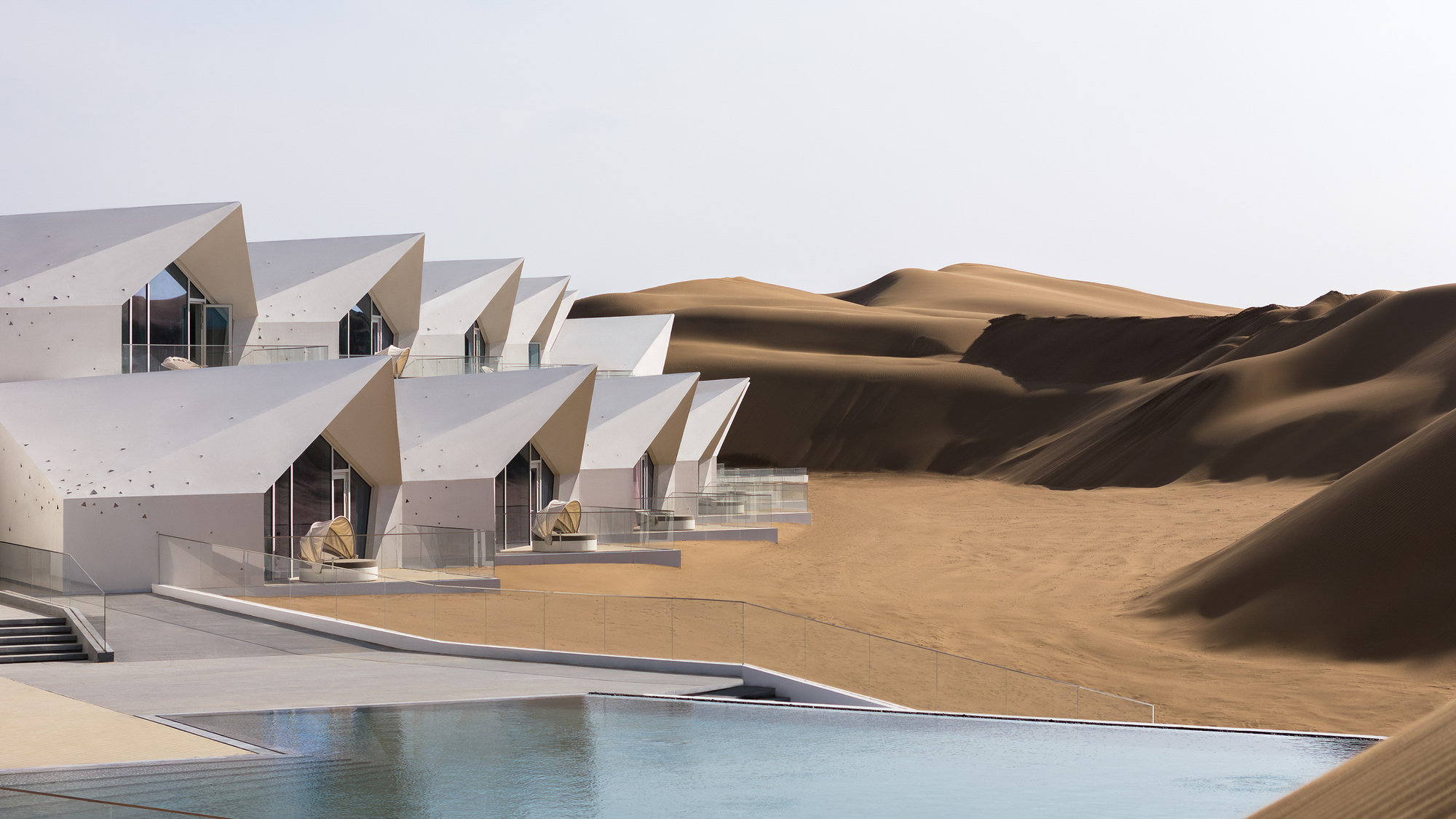
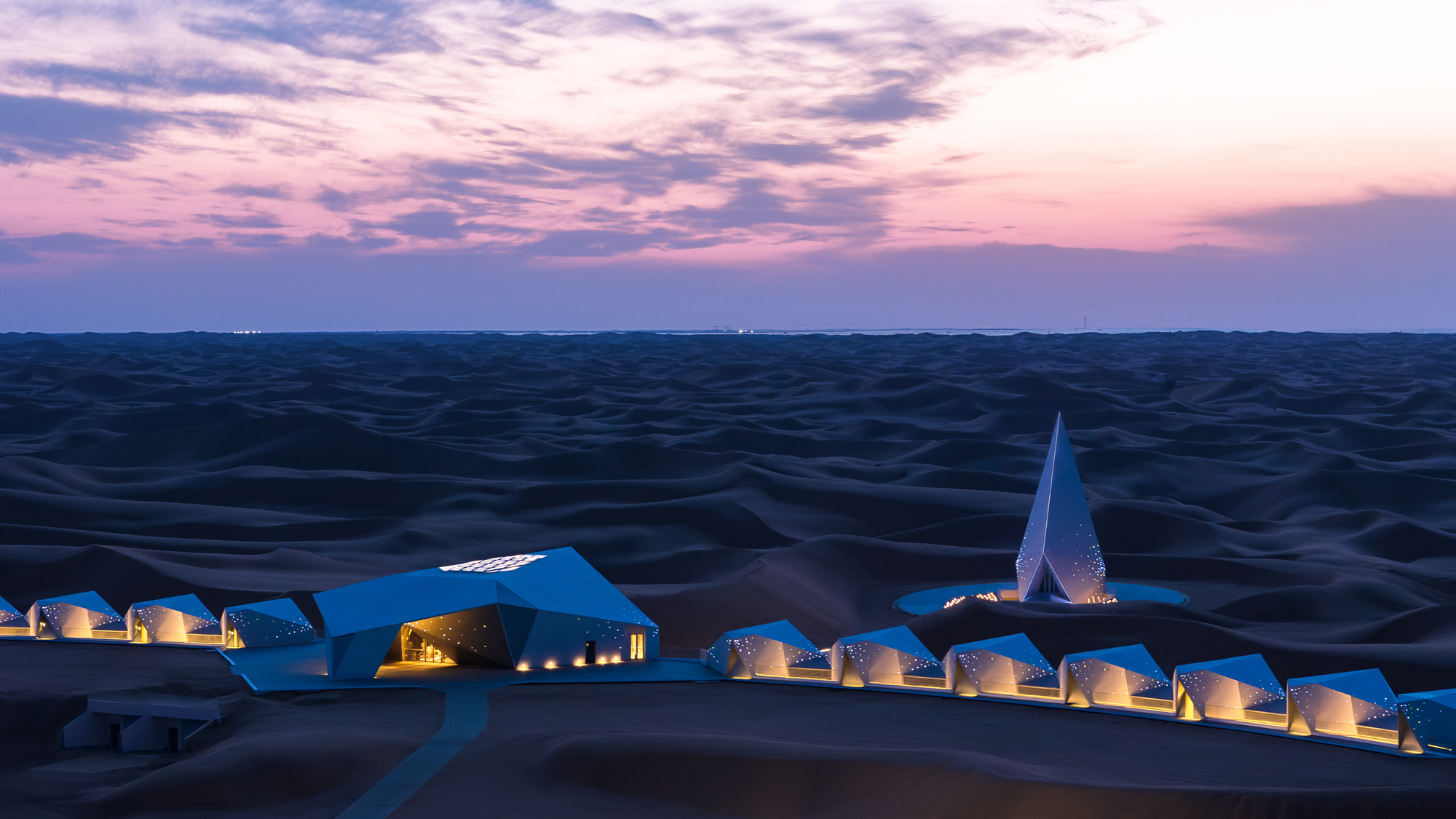
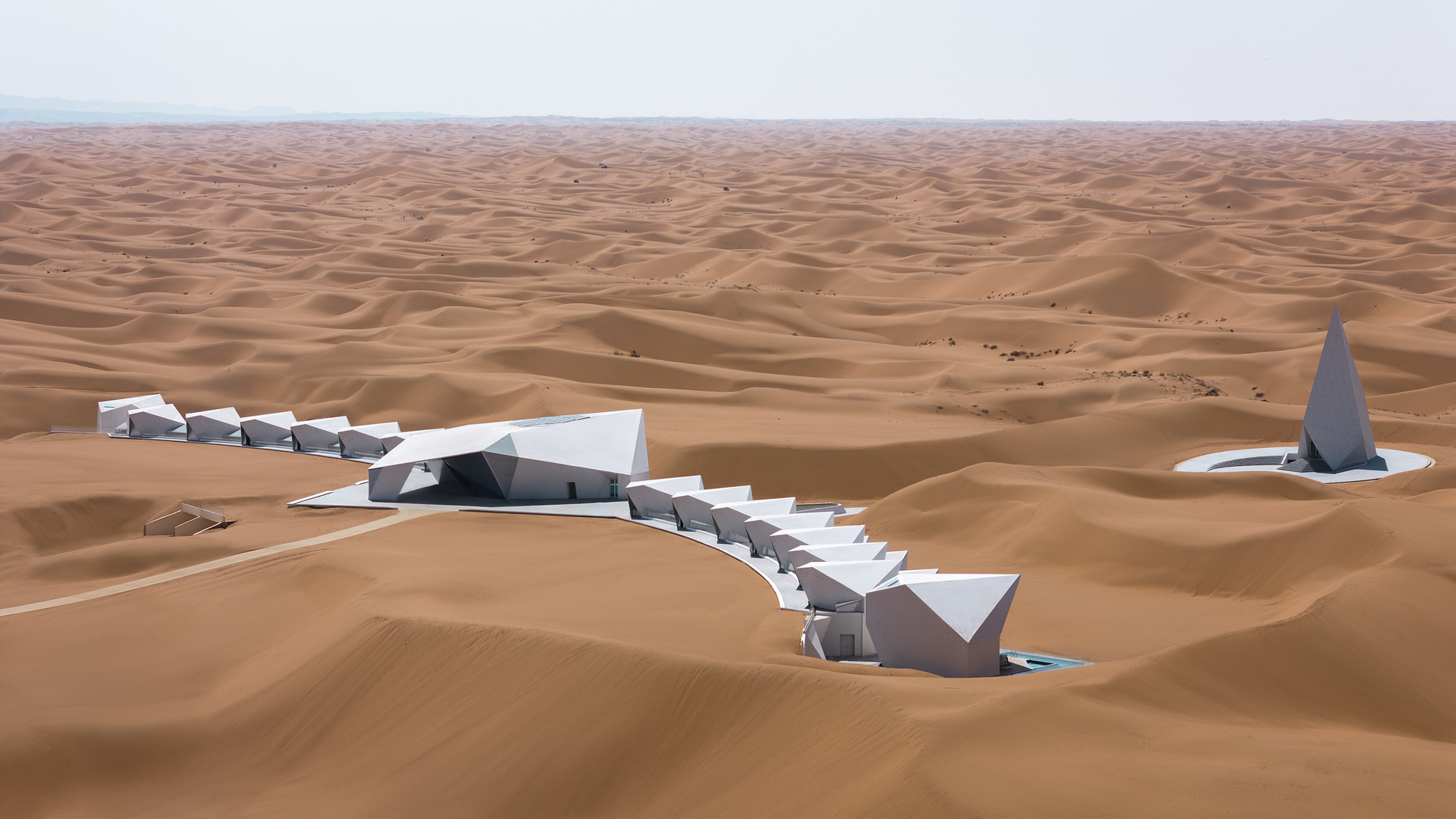
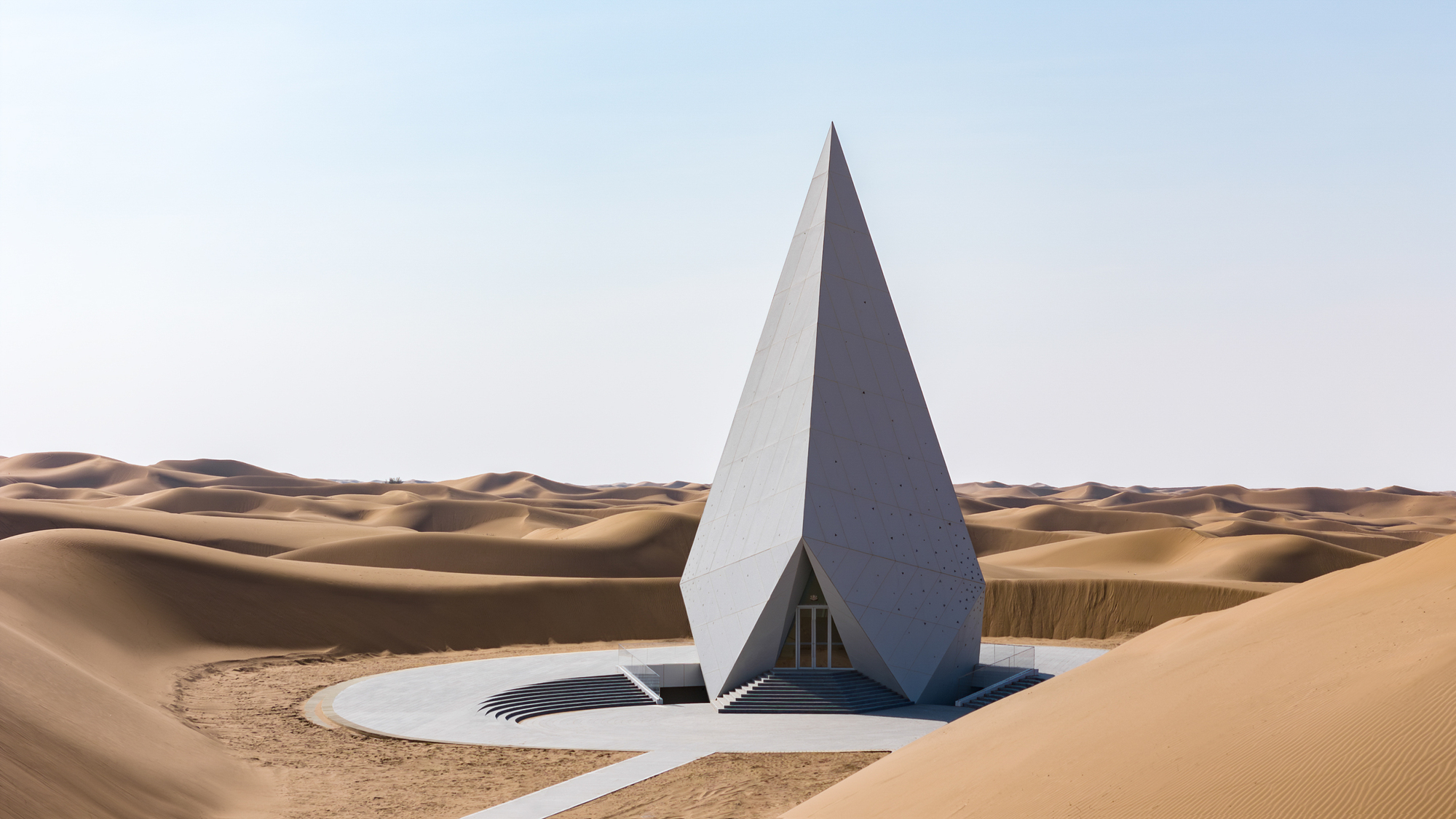
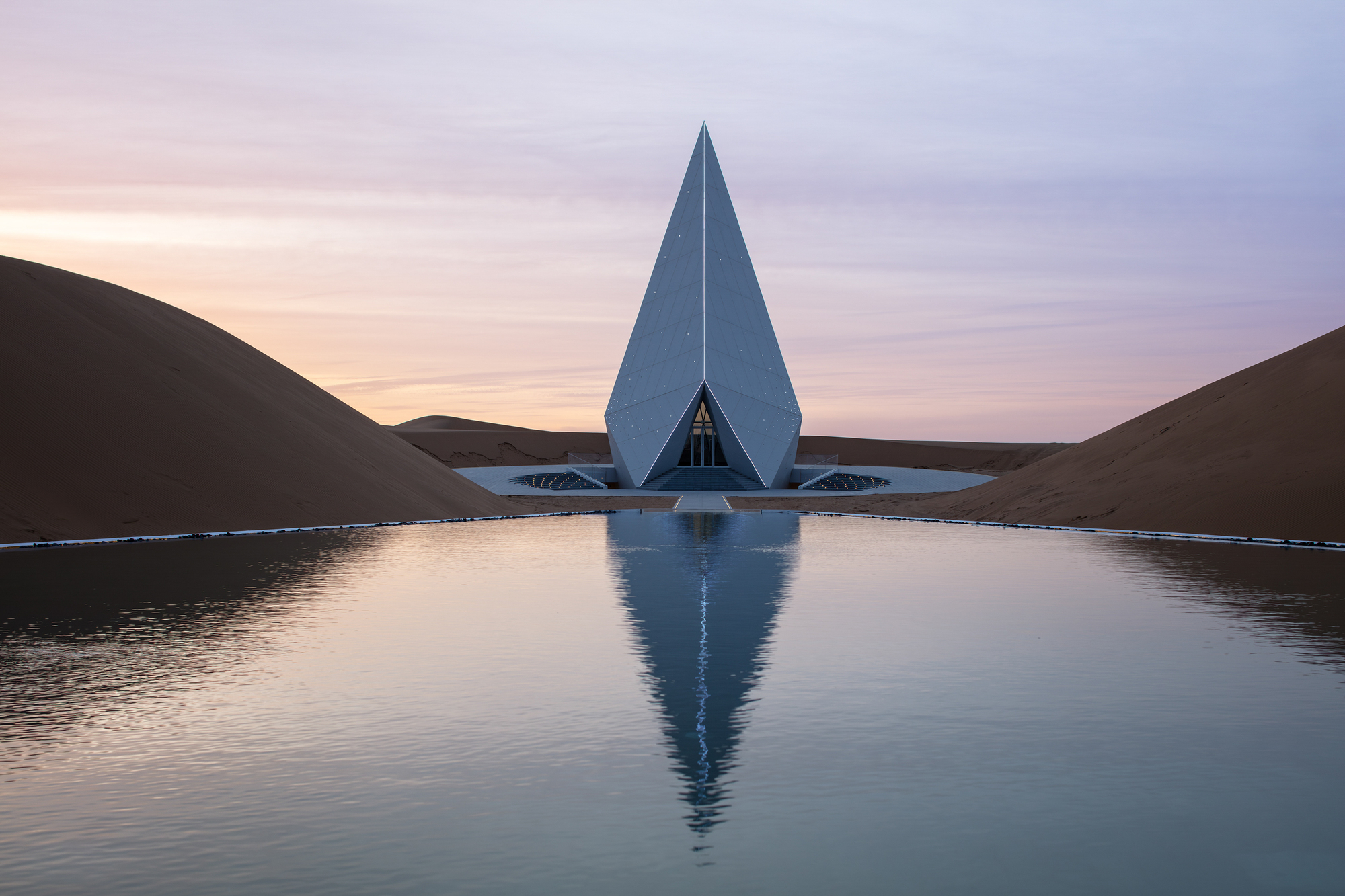
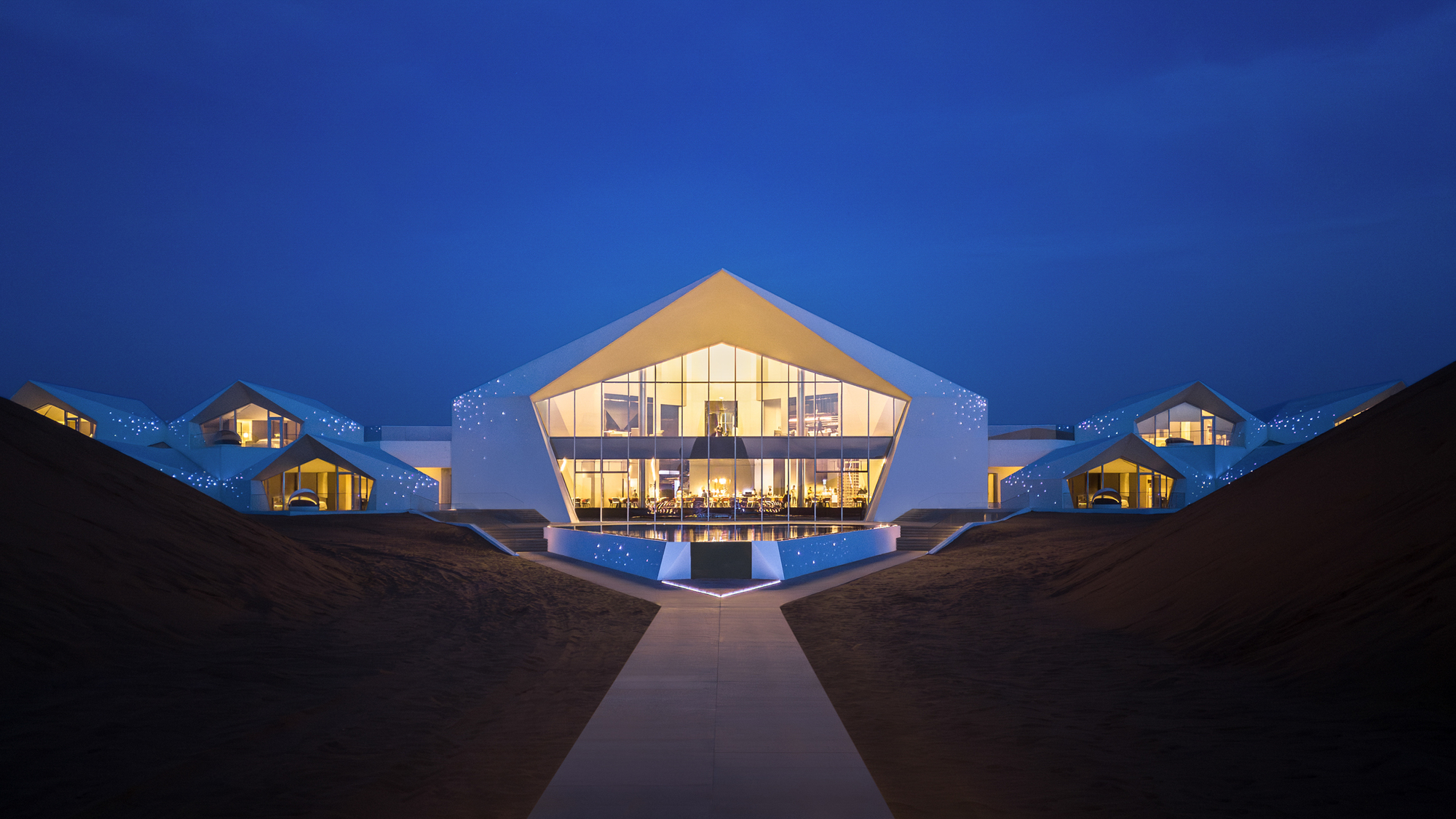
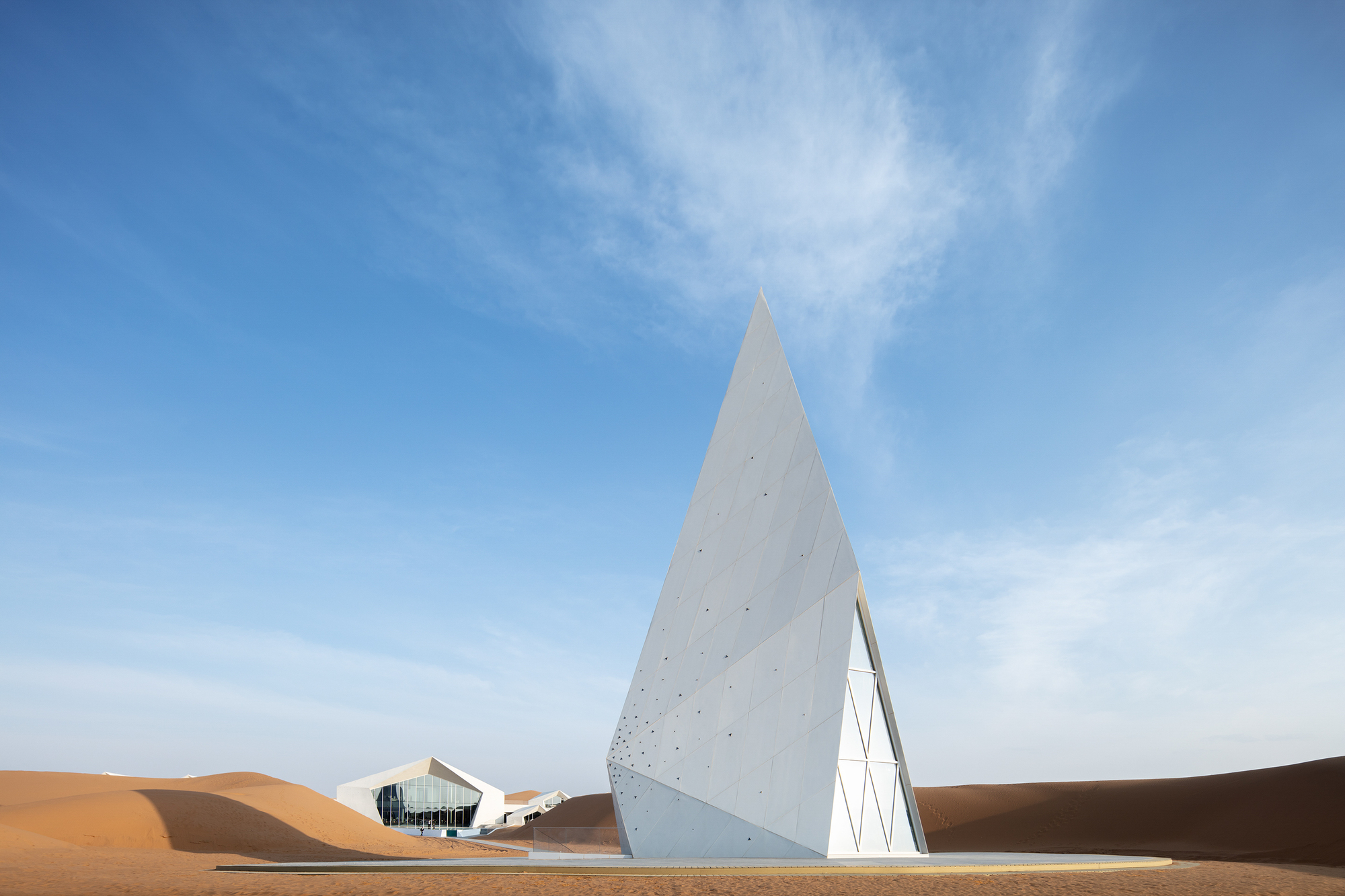
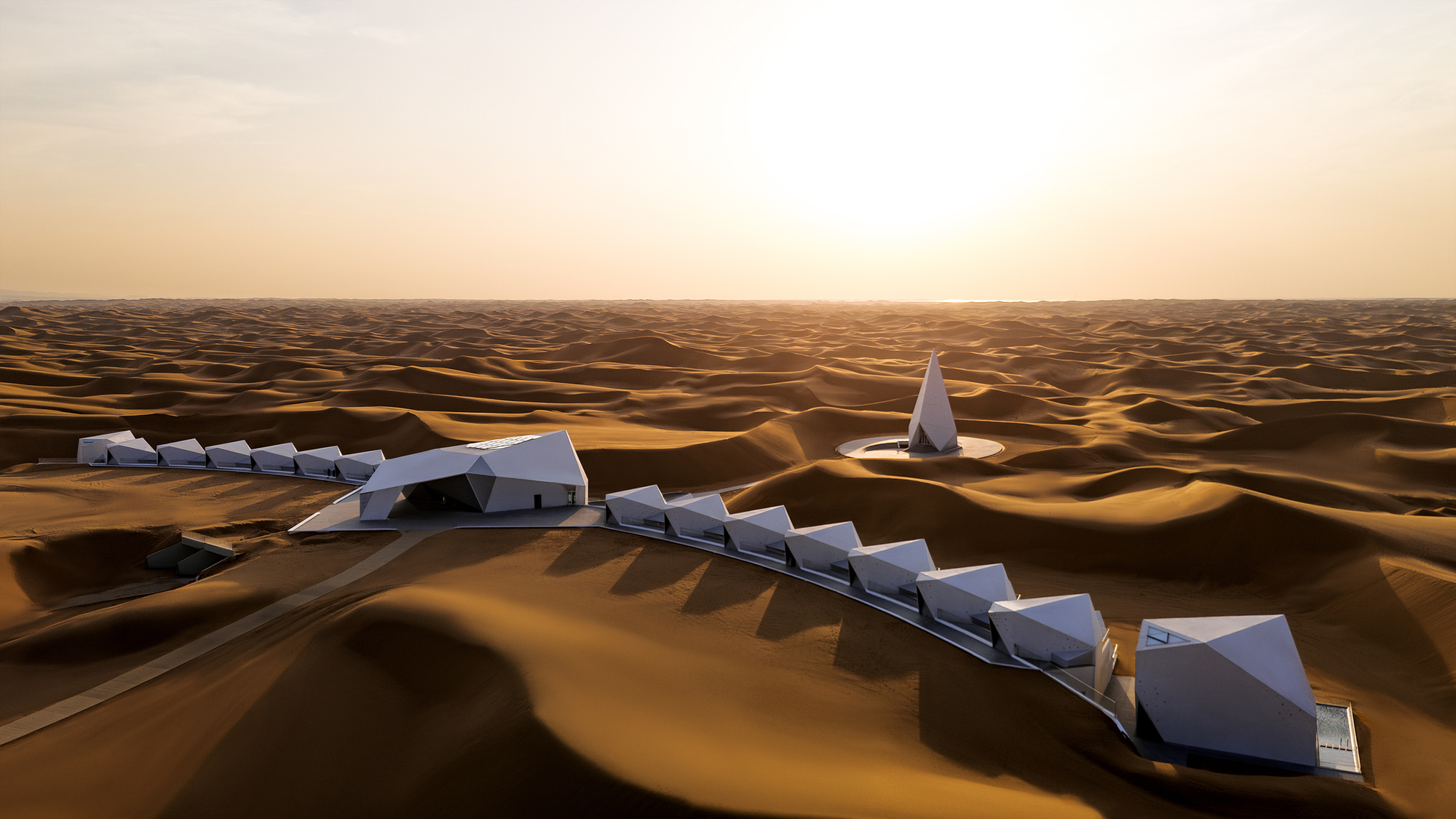
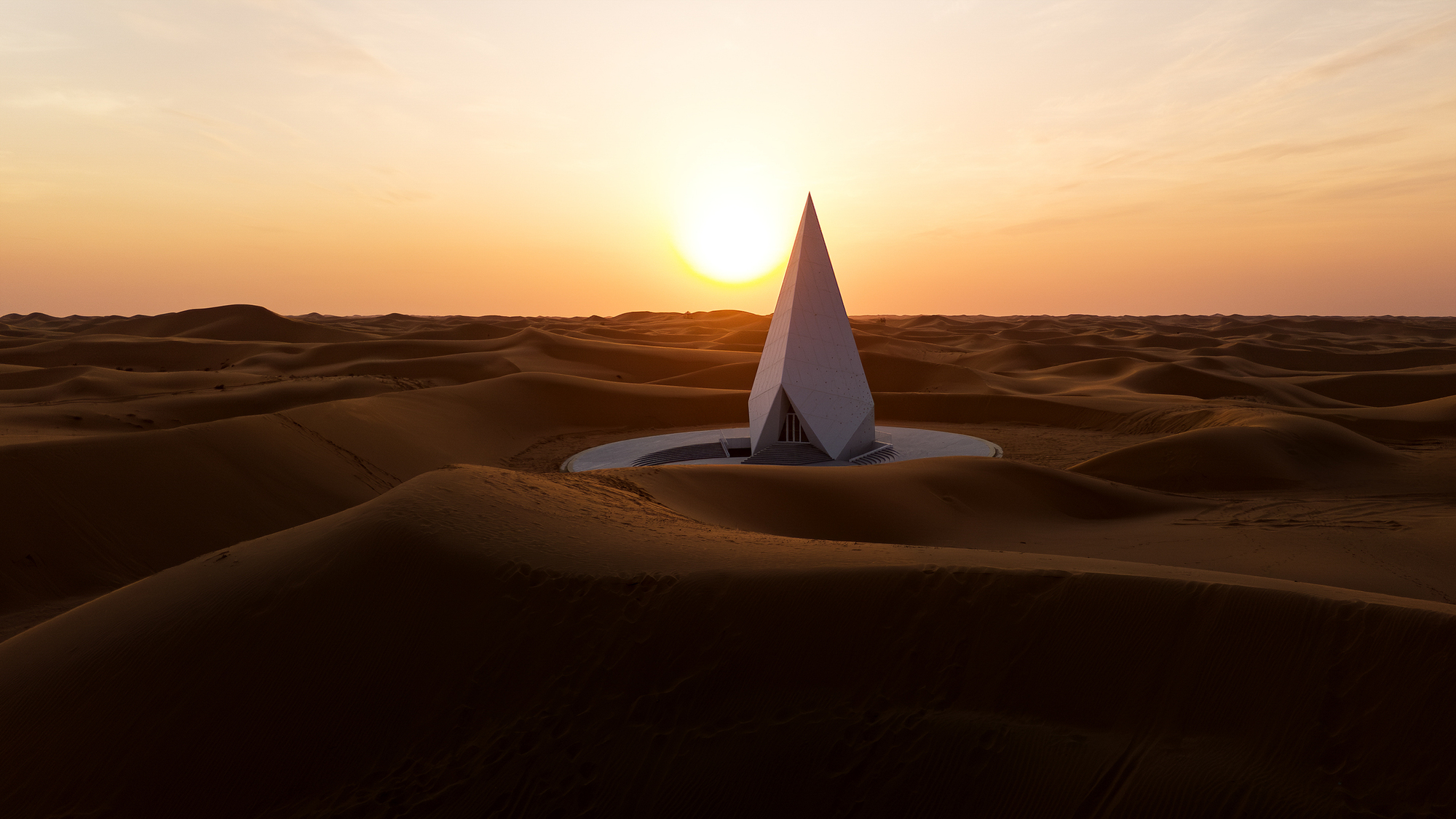
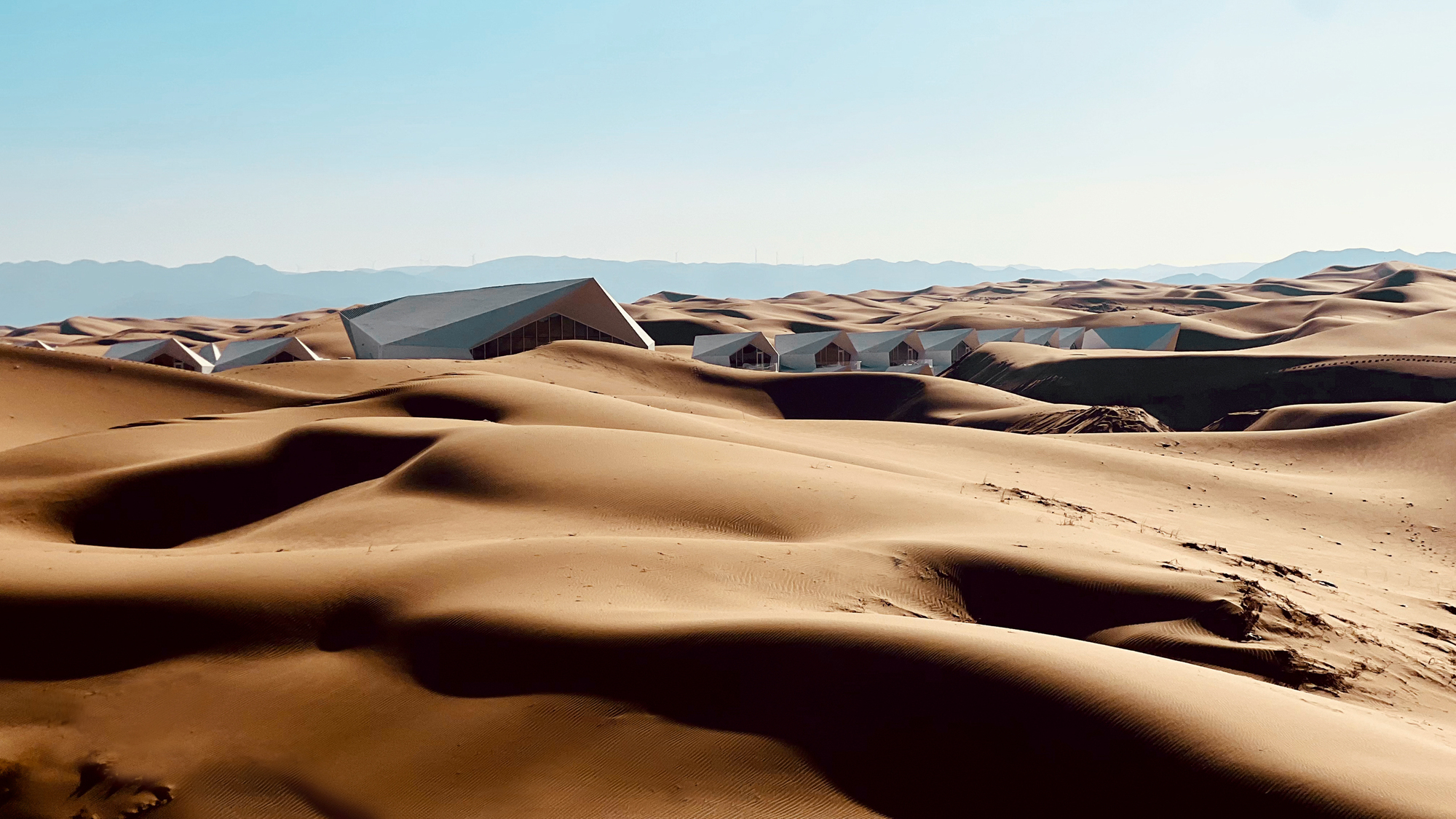
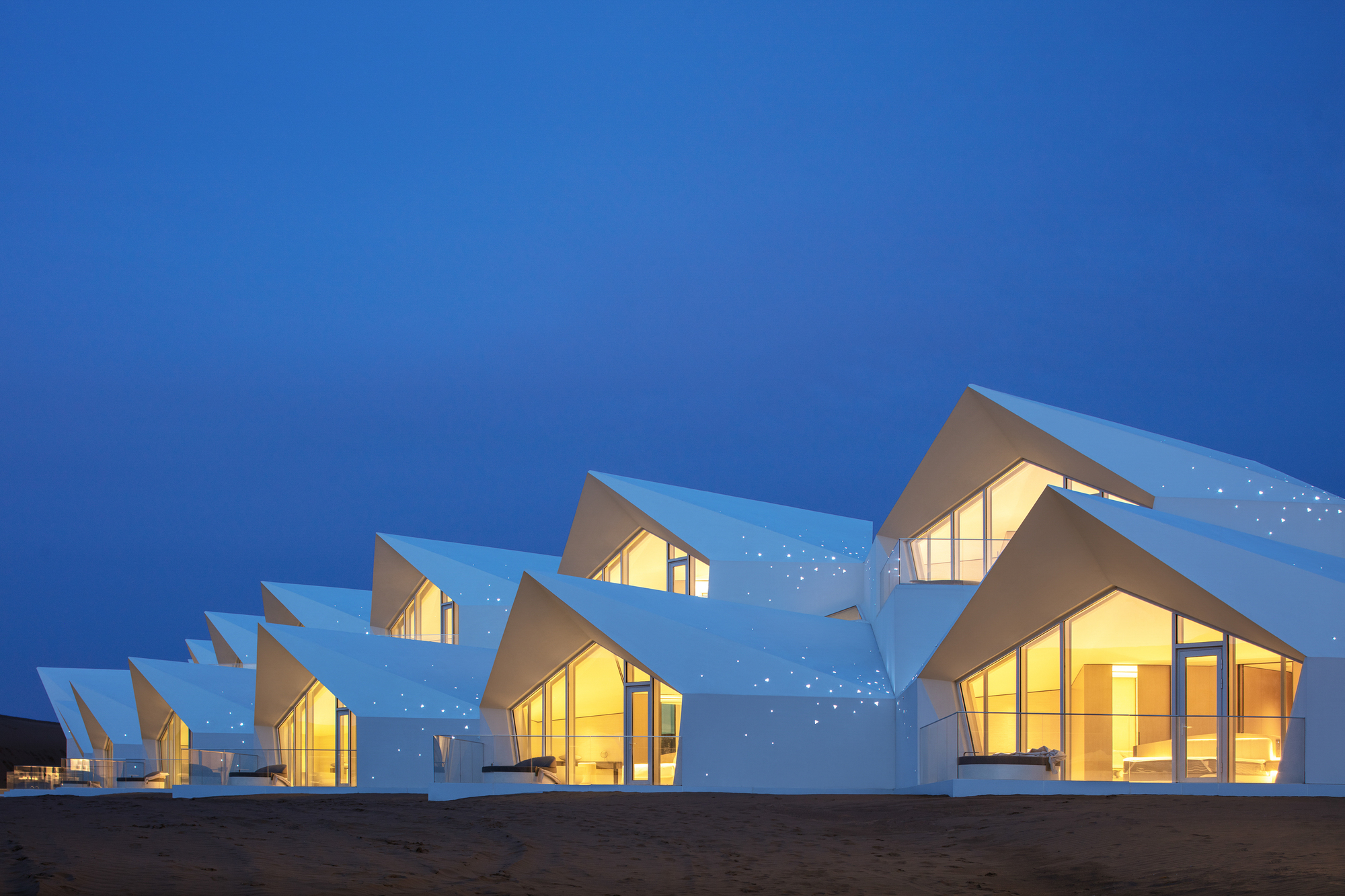
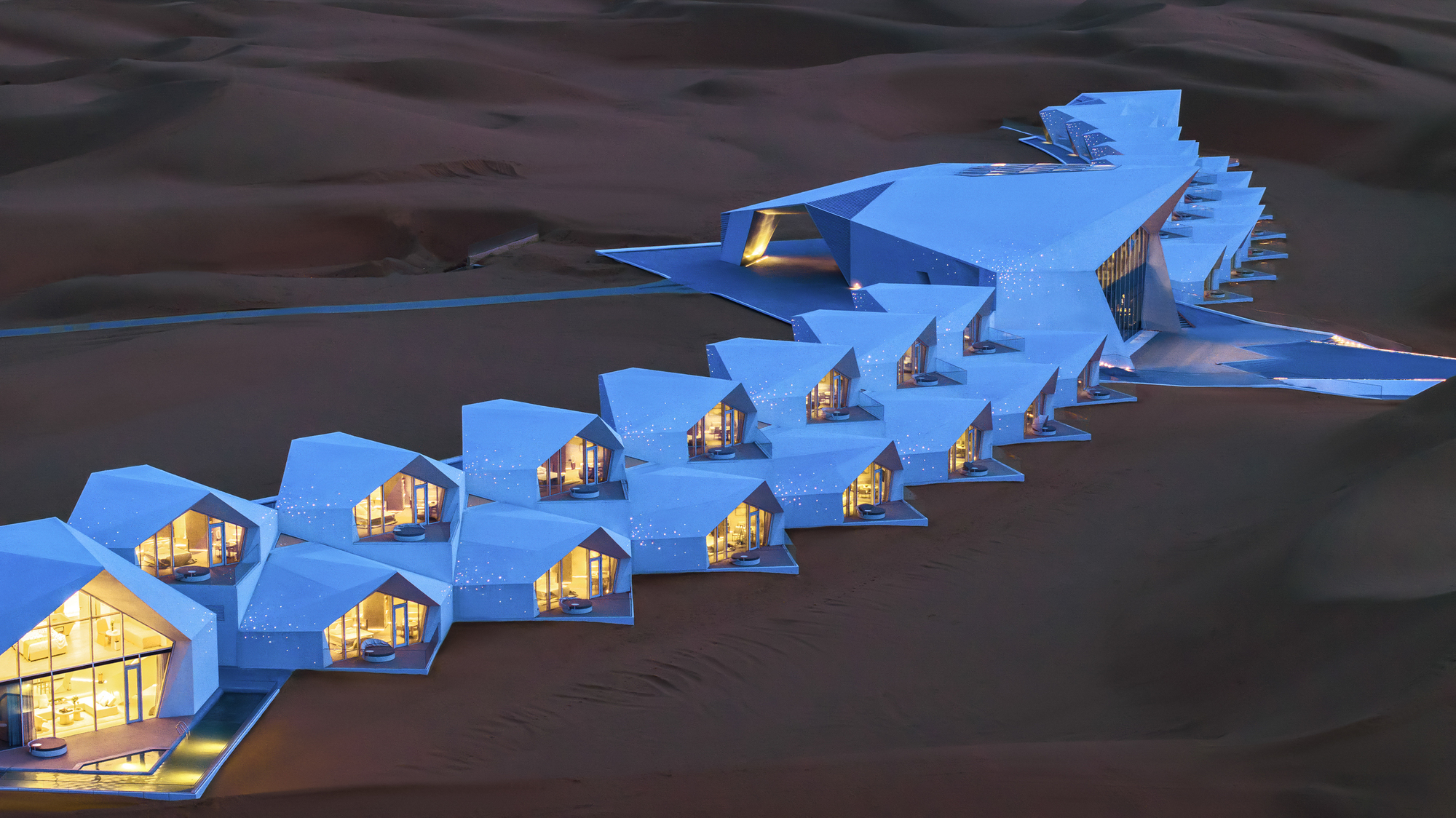
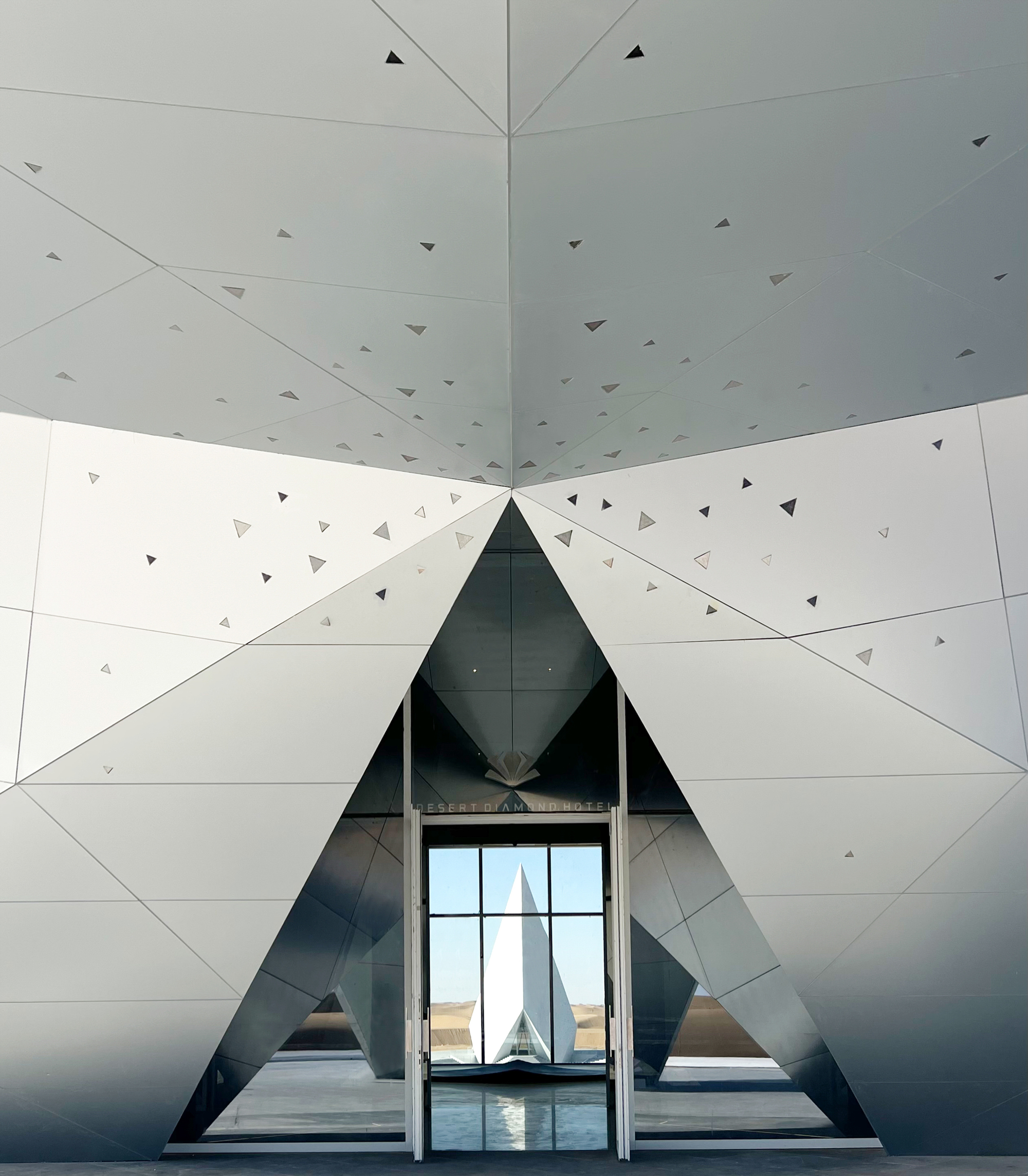
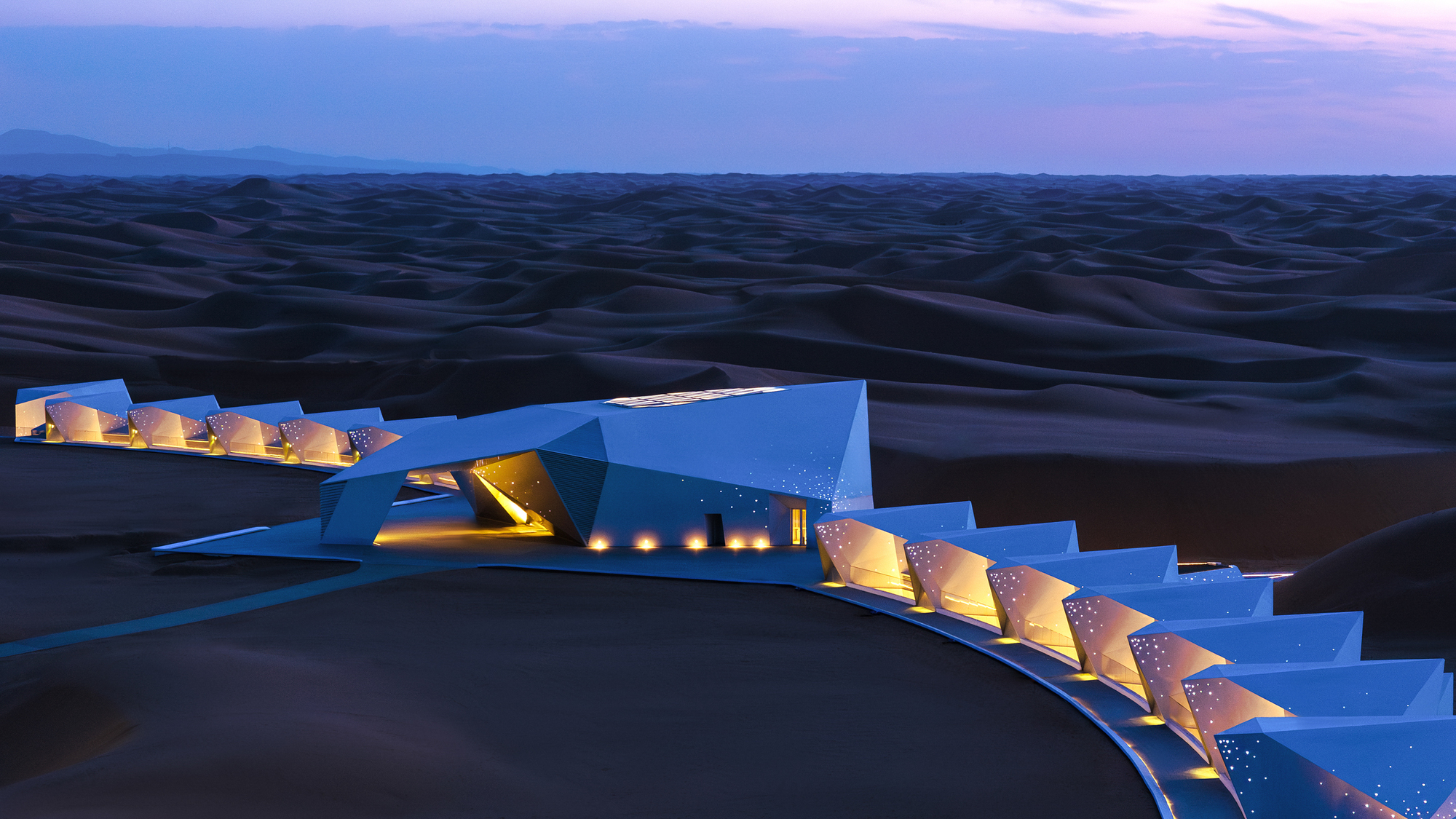
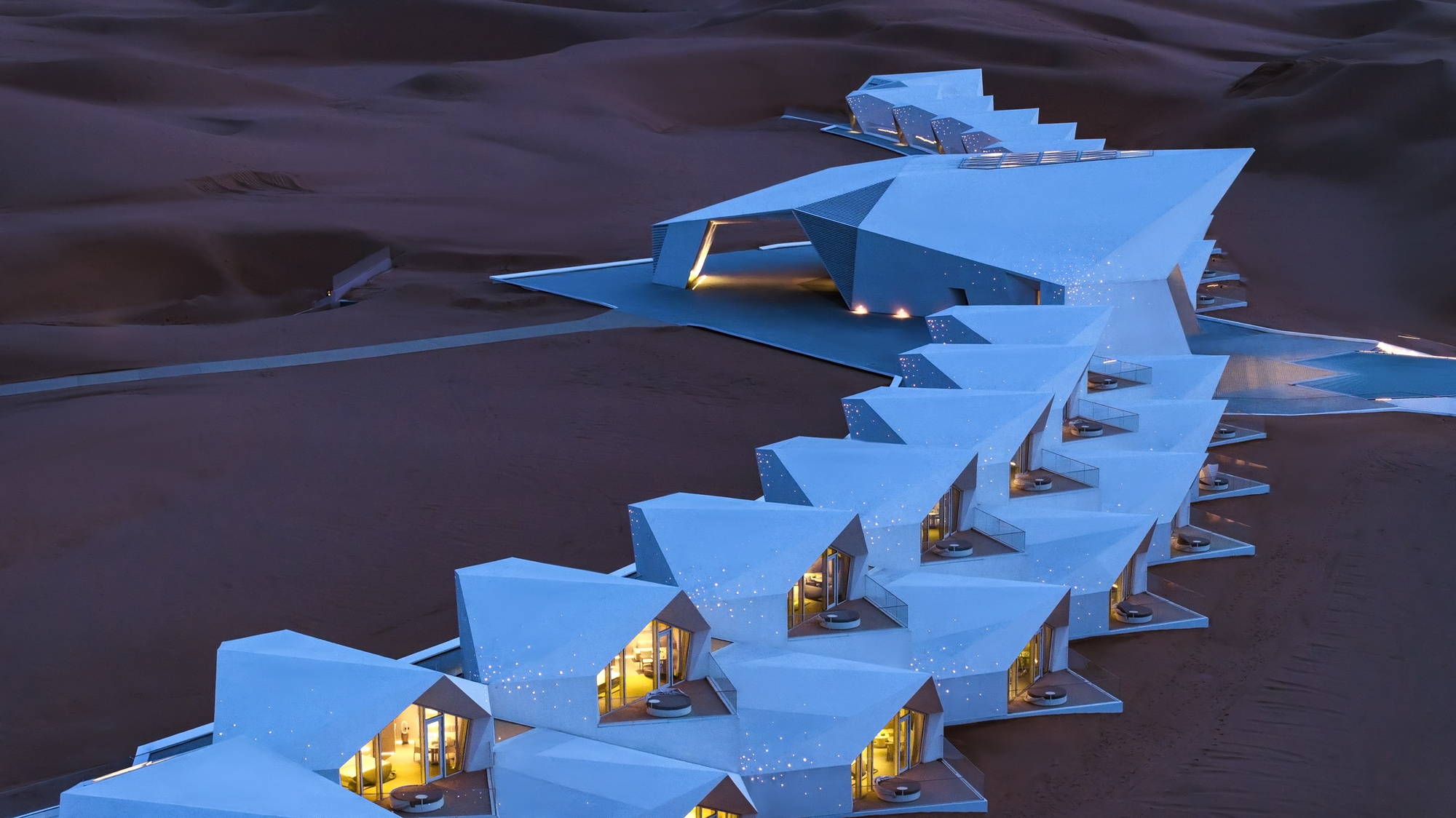
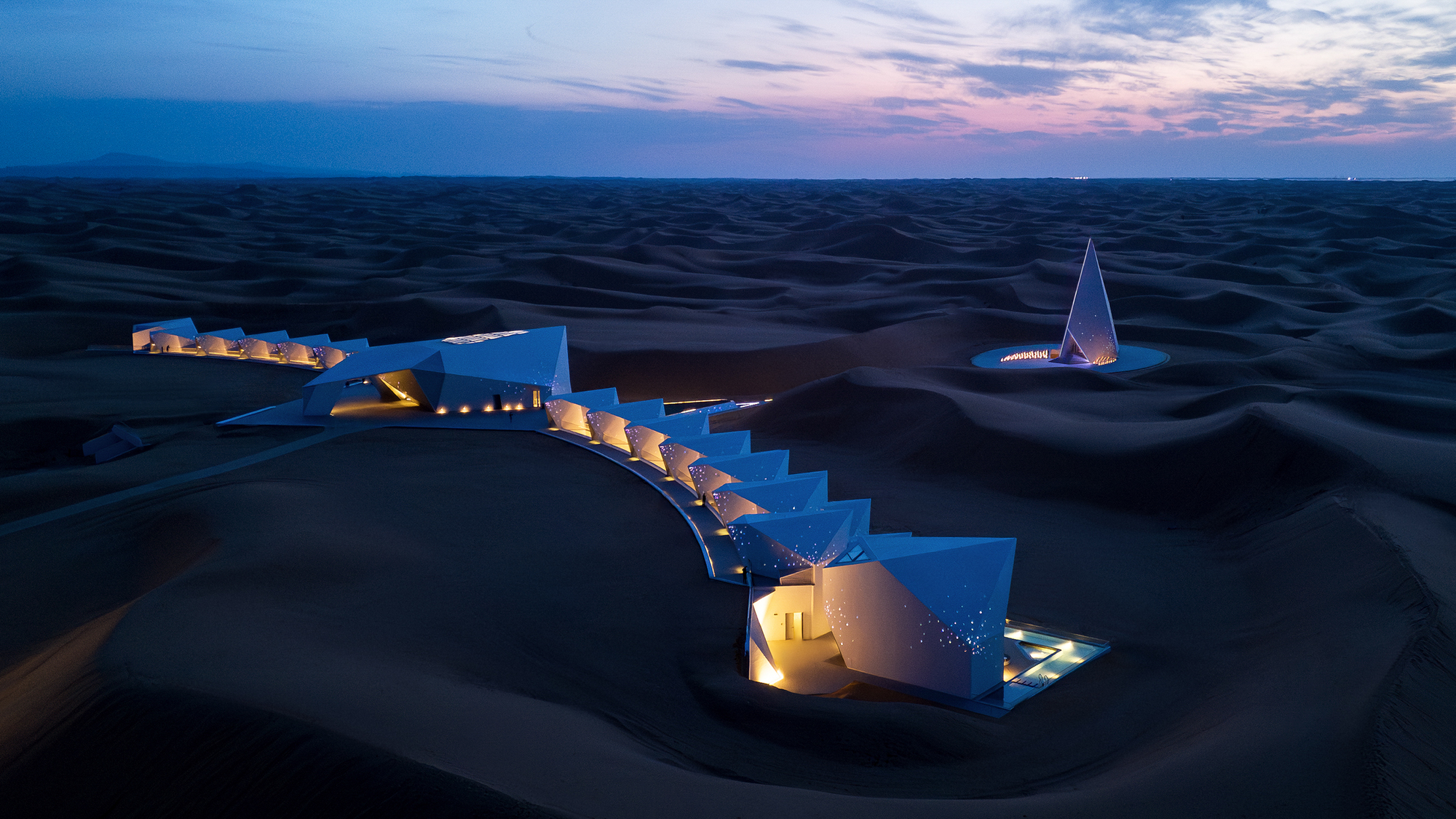
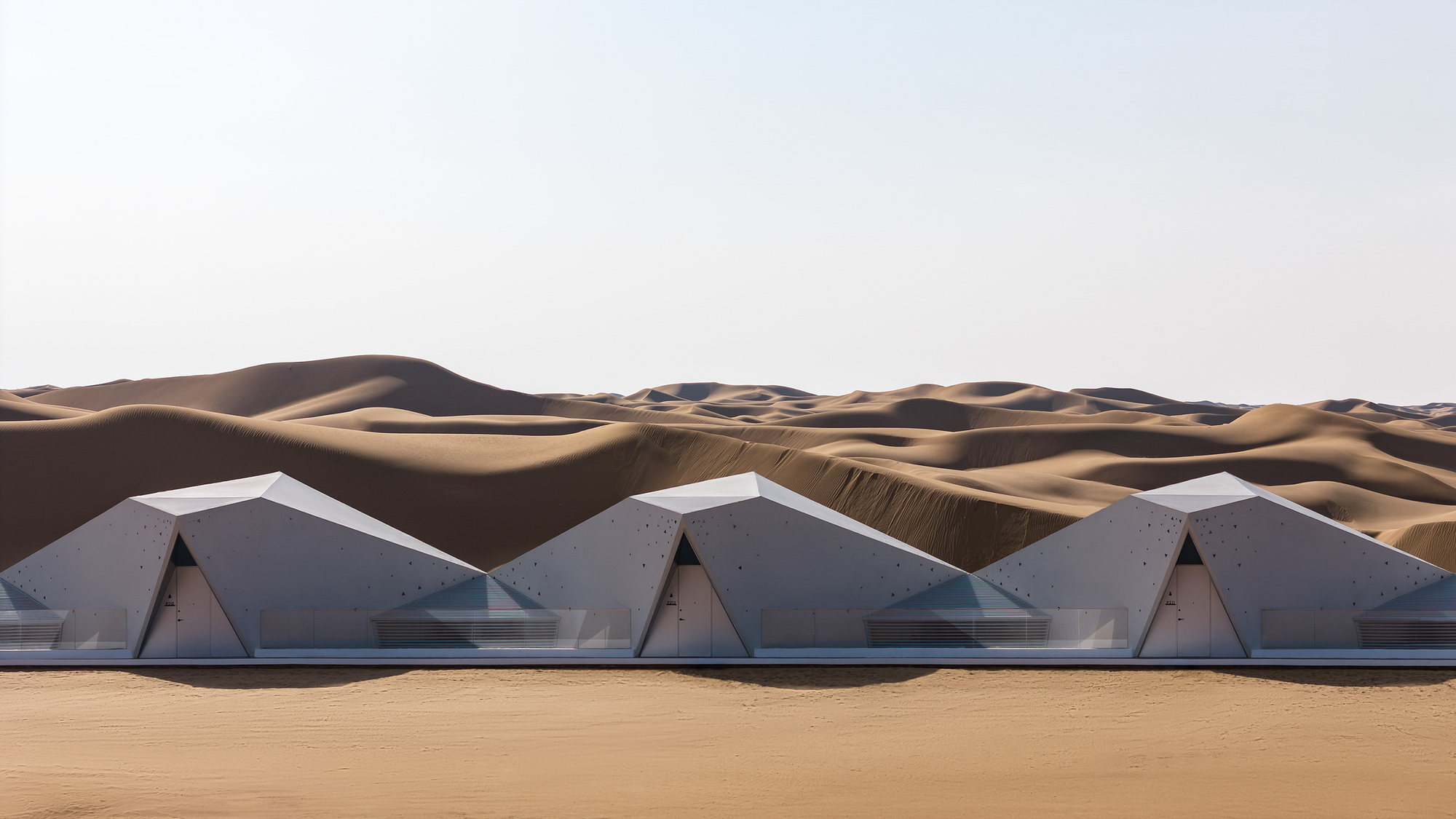
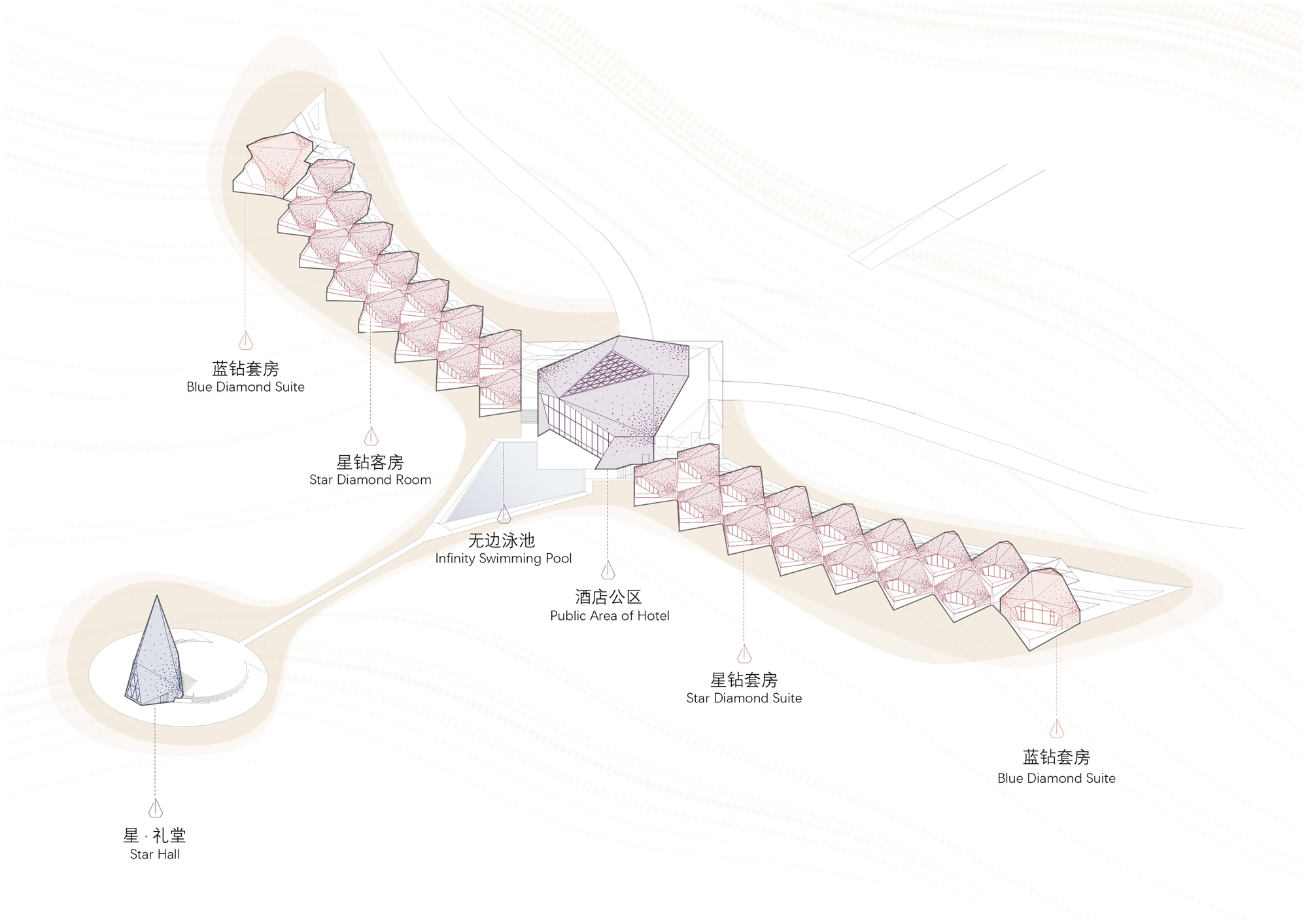
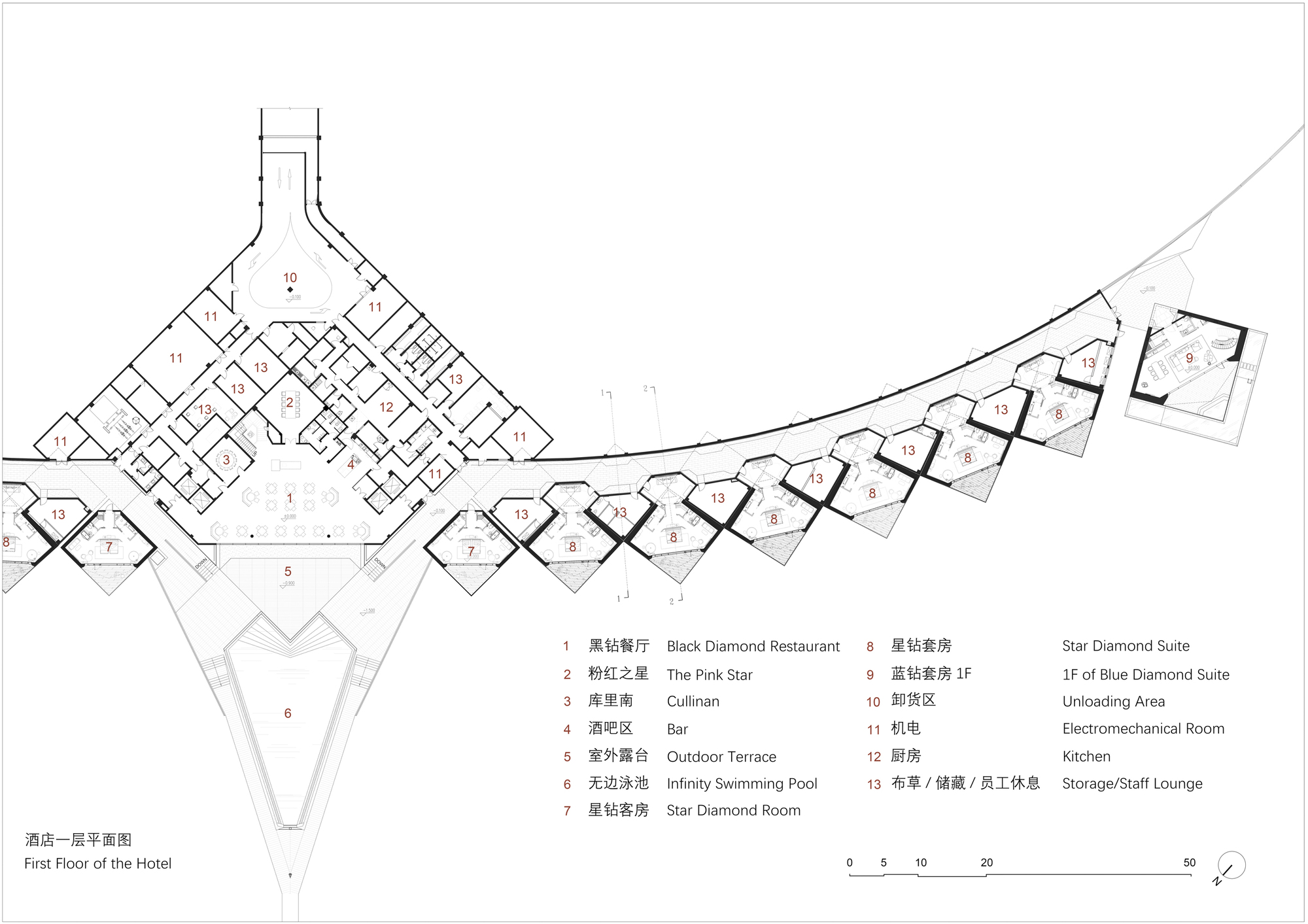
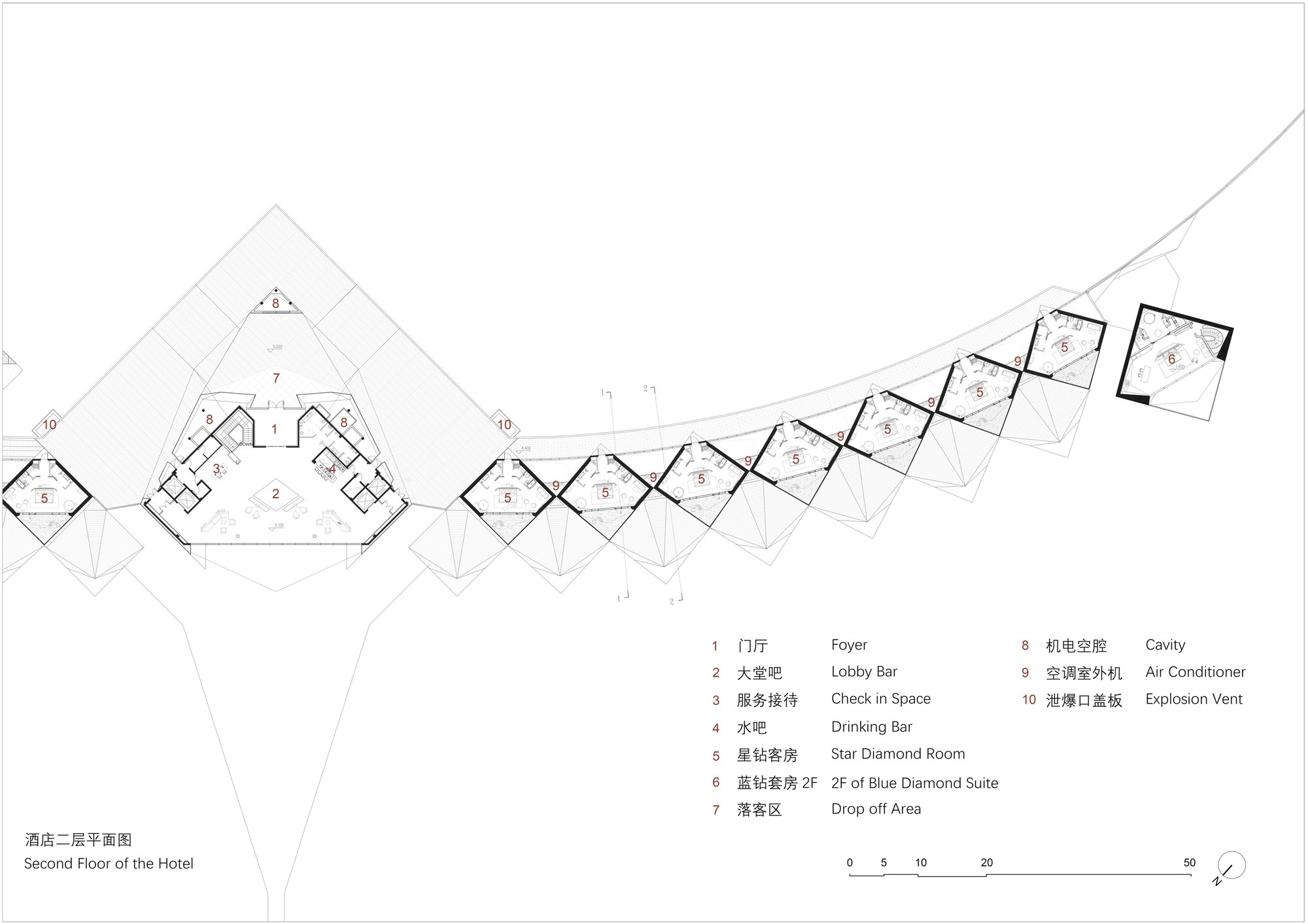
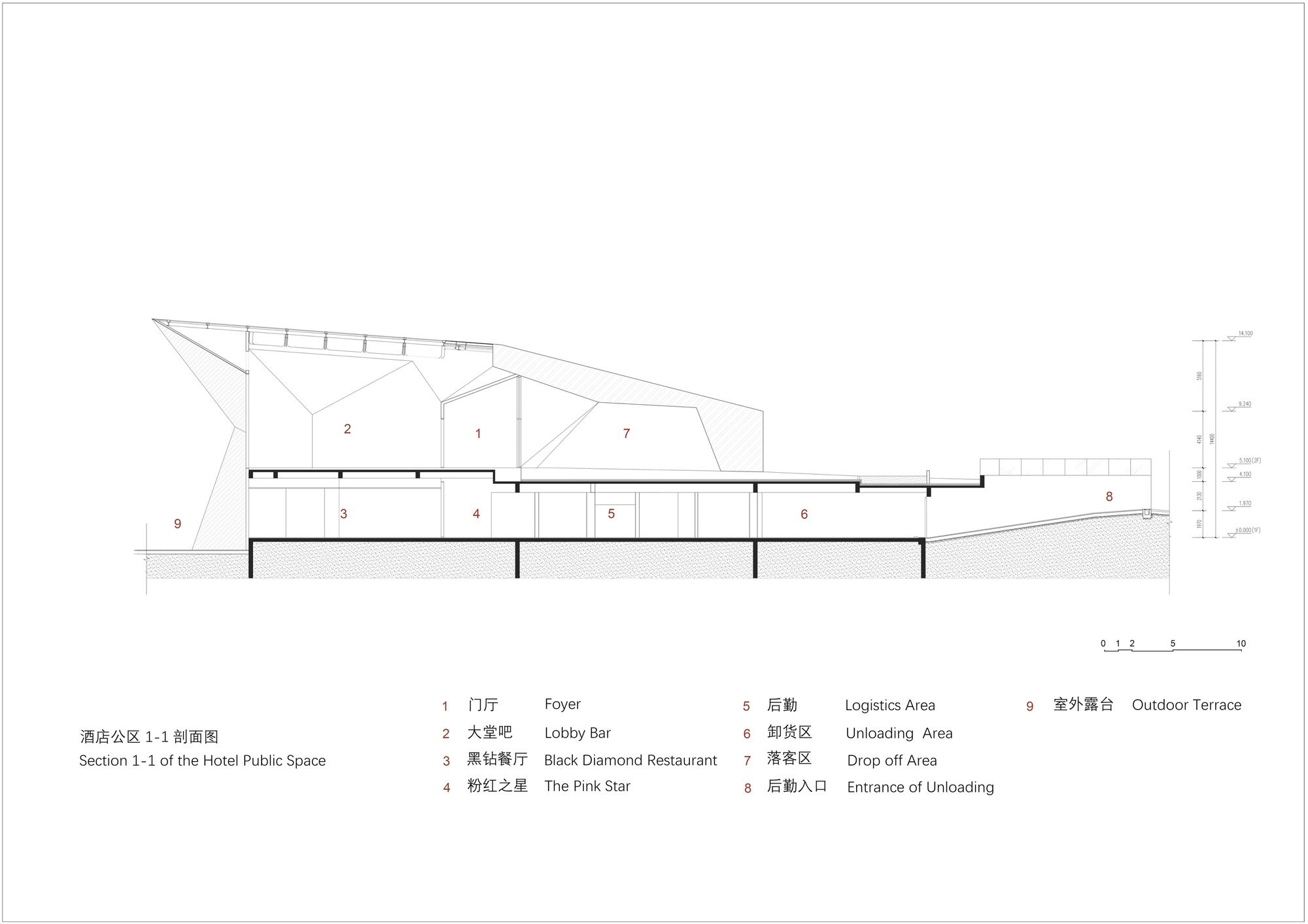
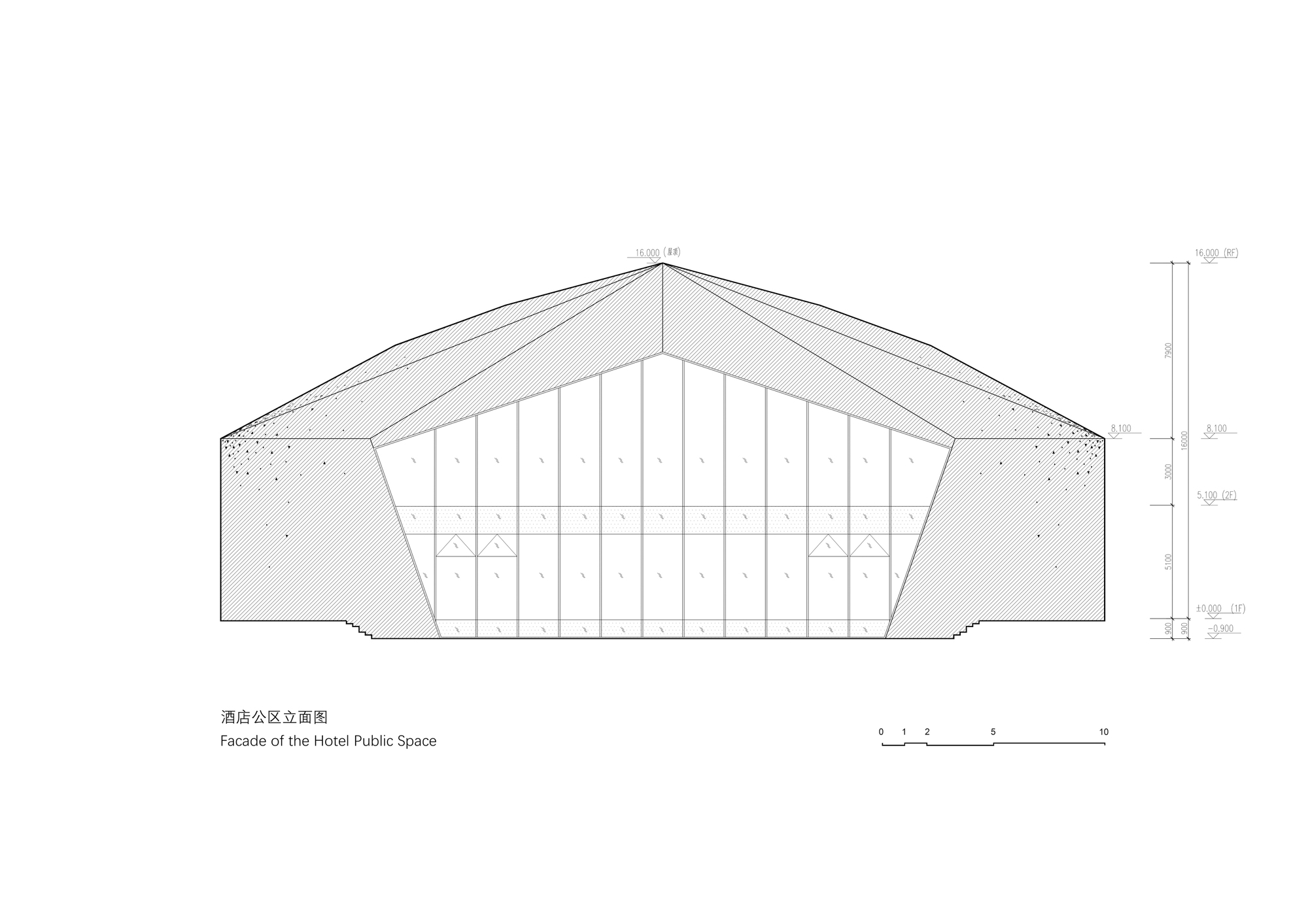
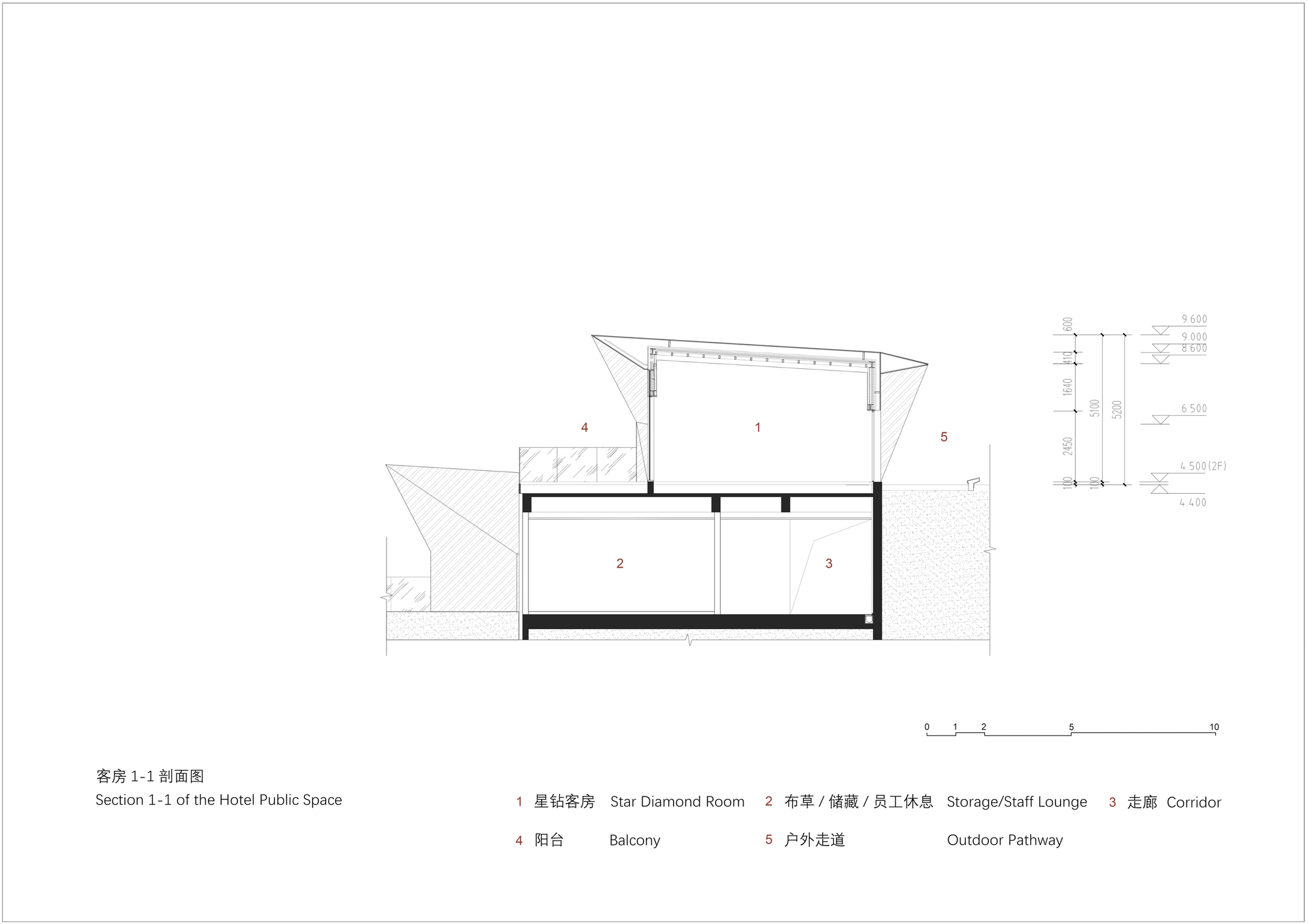
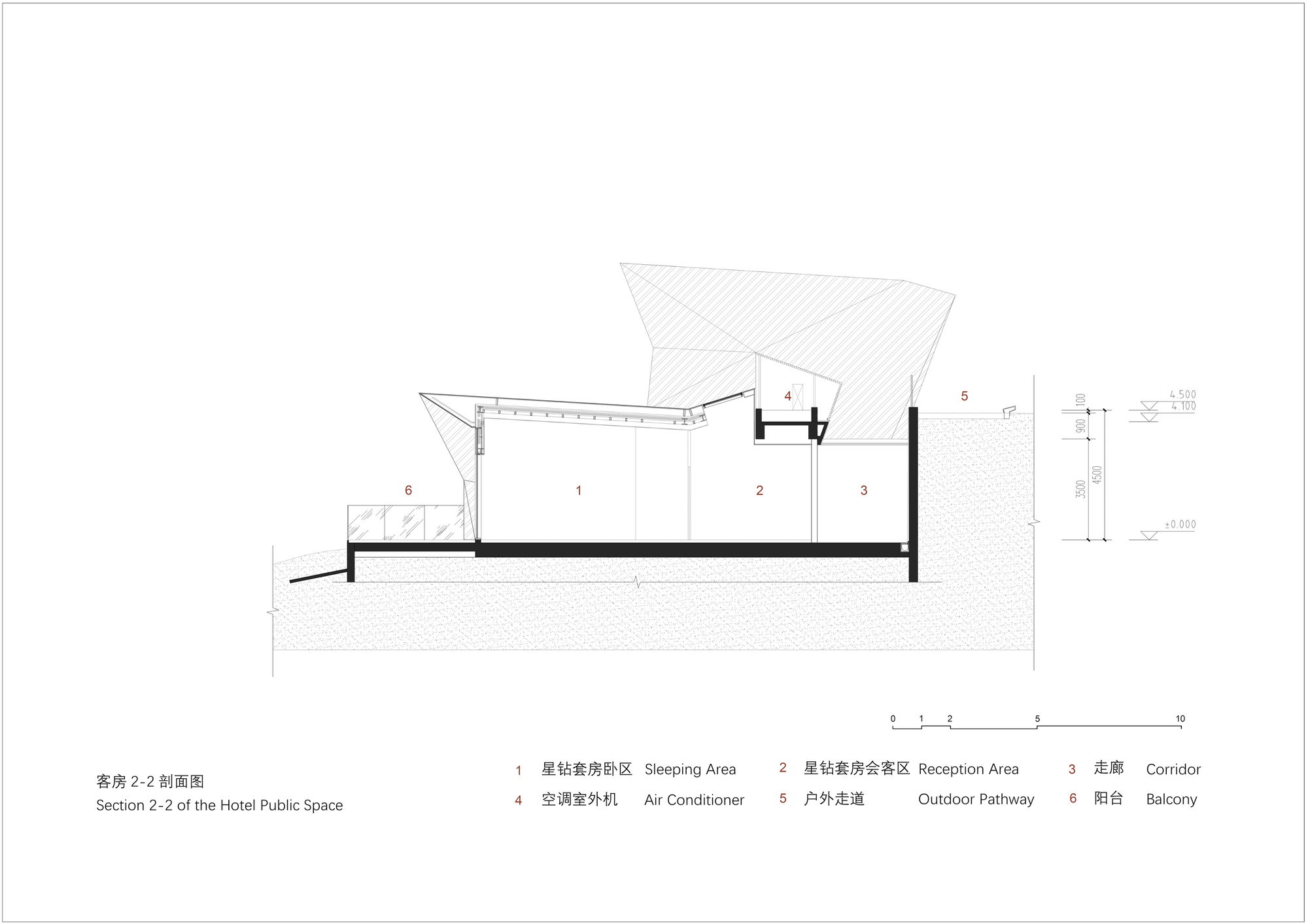
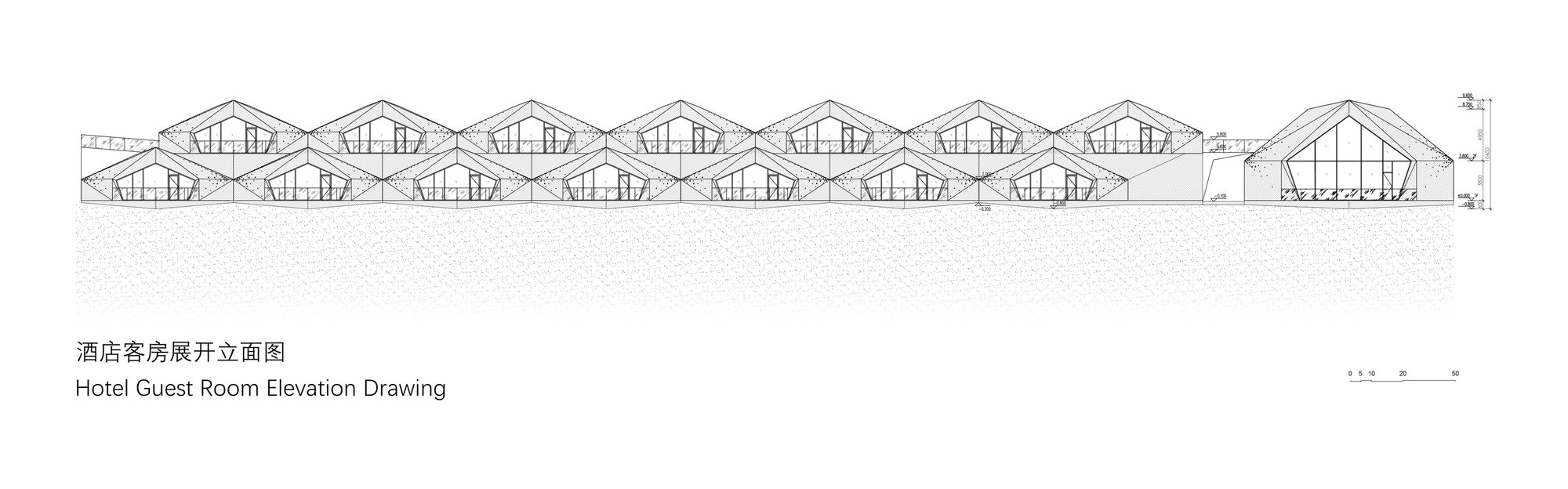
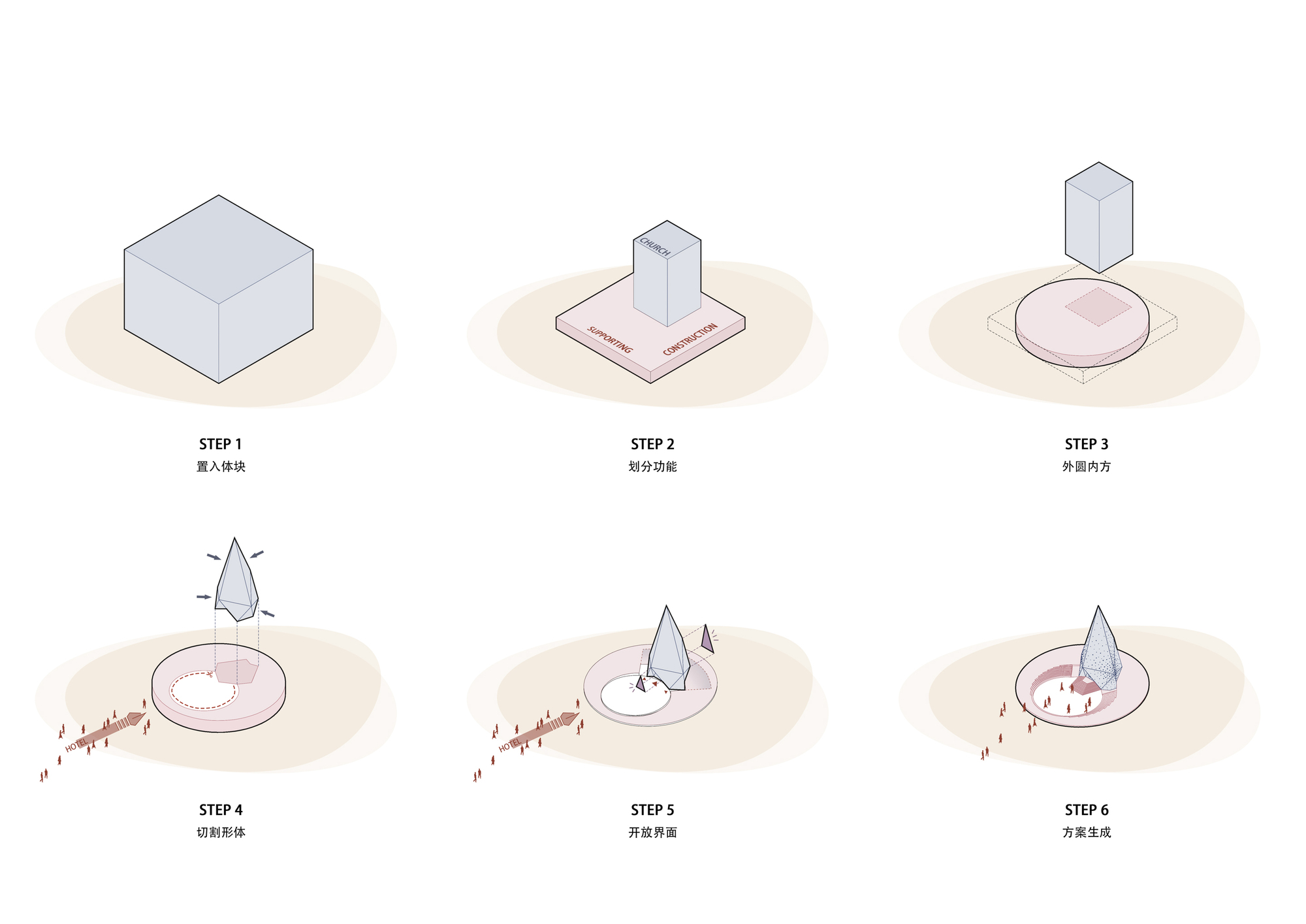
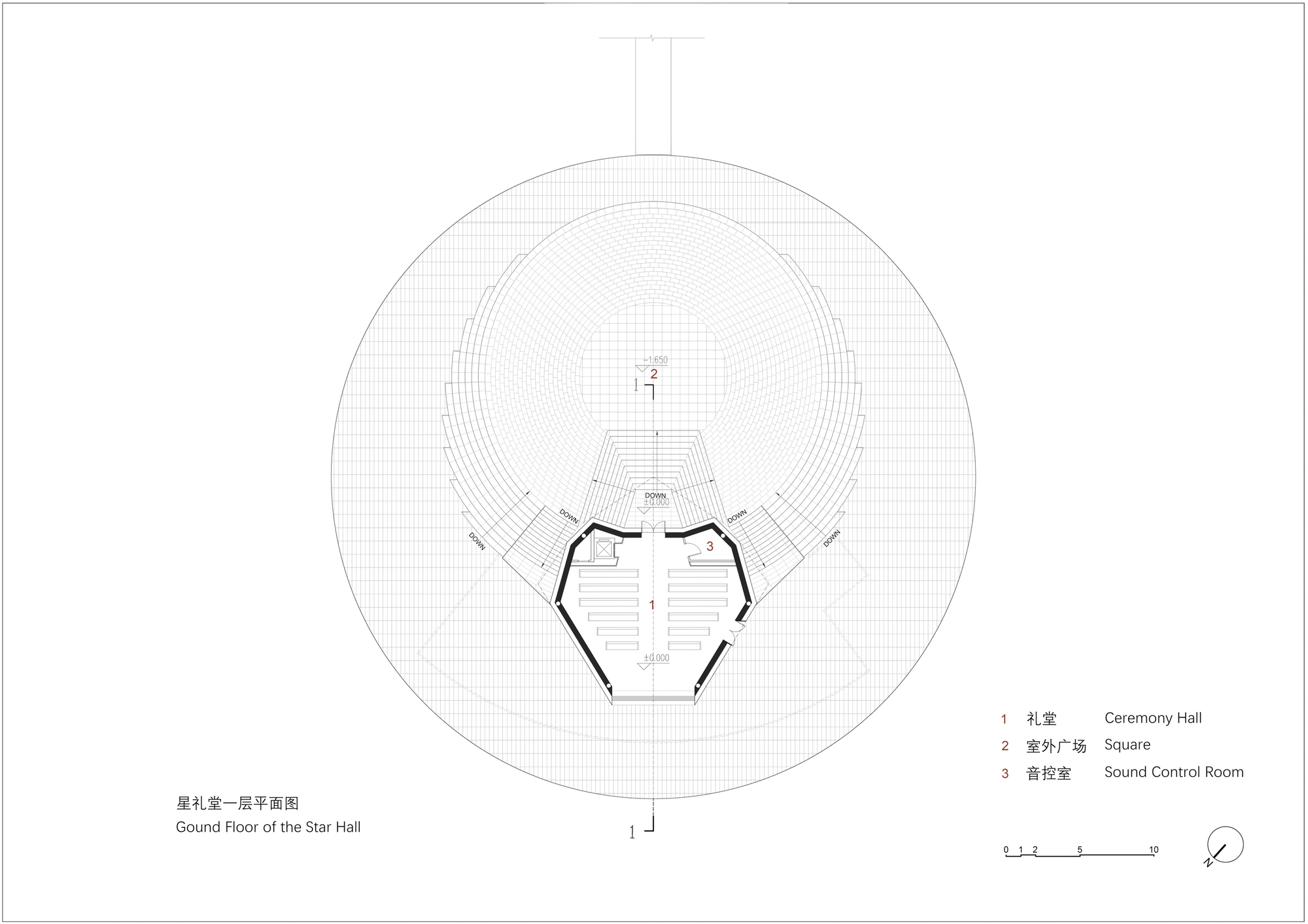
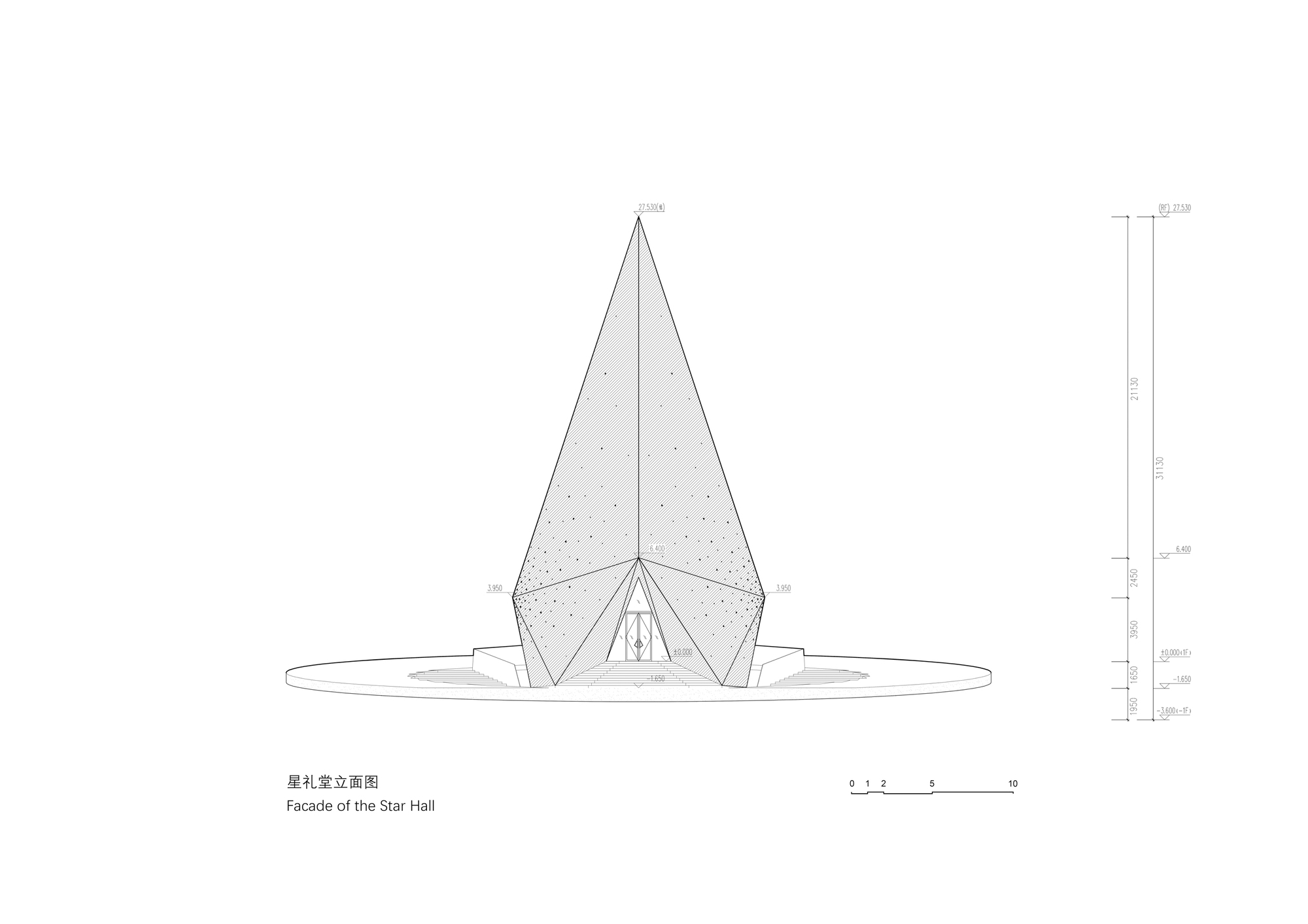
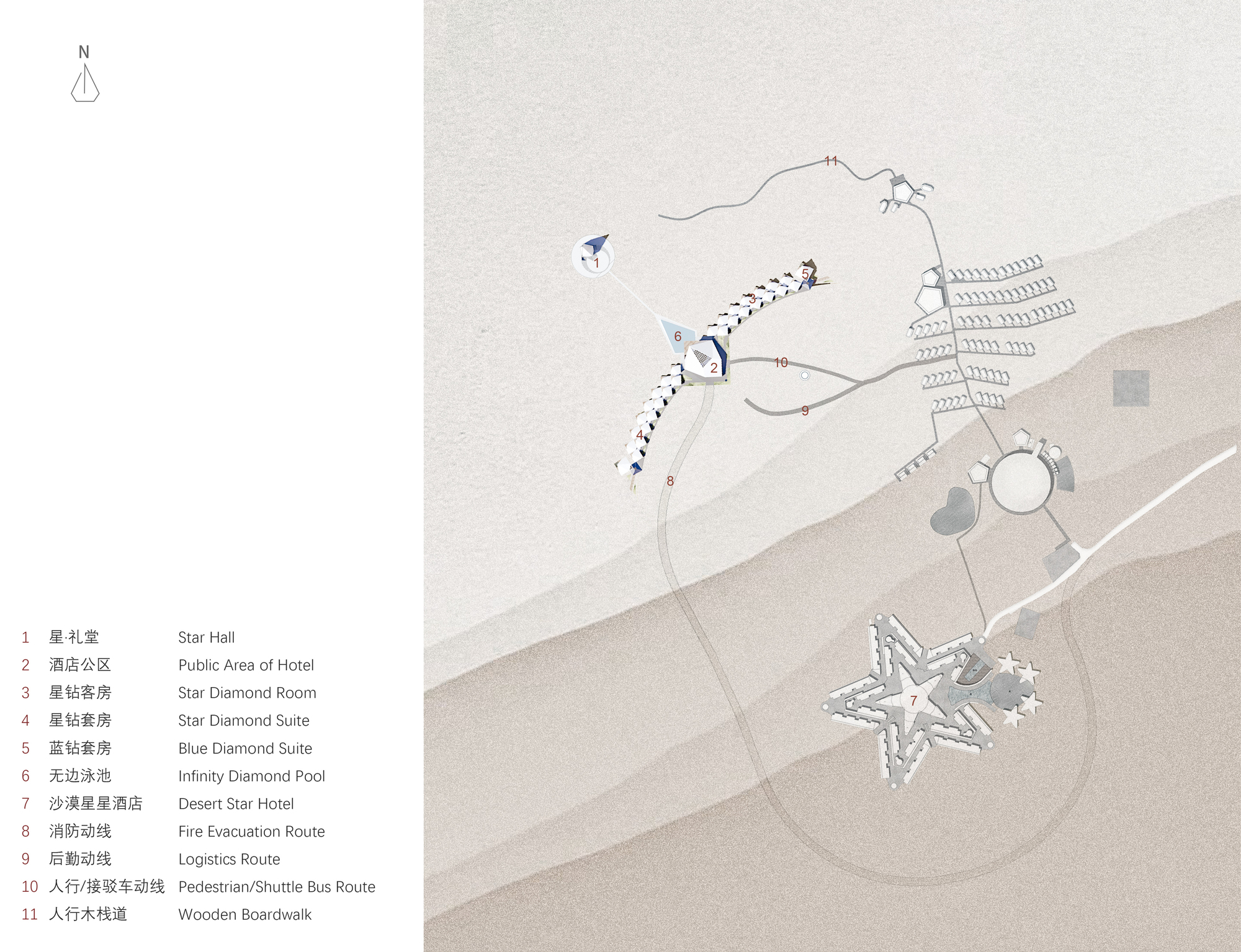
Dune vibes! ZhongWei Desert Diamond Hotel #architecture Location: Zhong Wei Shi, China Architects: SHUISHI
 Area: 6866 m²
 Year: 2024
 Photographs: Zhi Xia, Yuan Xie
 Lead Architect: Xie Yuan

 The project is located at Shapotou, Zhongwei, Ningxia, a national nature reserve as well as a national AAAAA-rated scenic area on the southeast brink of Tengger Desert. This is the place to discover the desert, the Yellow River, high mountains and oases, the scenery full of the grand northwestern miracles and the delicate southern elegance. Here you can traverse Tengger Desert on camels or surf the sand dunes in an all-terrain, and immerse in the poetic sight of "a lonely column of smoke rising upright in the vast desert, and the sun setting round towards where the long river flows".  The desert is a unique component of nature, where the enormous temperature difference day and night, the vehement ultraviolet radiation, the bitterly savage sandstorms and the extremely dry weather make it a not very livable place. Without modern technologies, human beings can hardly survive there. Naturally, to build a hotel in the desert is a highly challenging attempt, and we all show our ultimate respect from the very beginning. The desert landscape, however, serves also as a source of infinite inspiration to me, for it exhibits a series of seemingly contradictory but fusing aspects: vast and mysterious, romantic and cruel, desolate and passionate, quiet and capricious. We hope our architectural works will be of a serene quality, full of respect instead of humility, and firm instead of pertinacious in attitude. It simply stands there in peace, but you feel the power in it. It's is this power that brings you away from the hubbubs of daily life and brings you back into your inner cosmos, where you draw new energy and liberate your soul. Such architecture should bear a tinge of surrealism, with a bit of science fiction and a bit of romance. The inspiration. What we want to build is a pure, sturdy and eternal residence, like a diamond that shines with brilliance, stays robust and is crystal clear. In front of its purity, like in front of the boundless desert, people feel the "void", the nonexistence of constancy of everything, and the nonexistence of ego. The power of "void" has a gigantic potential; its sturdiness, like its Greek name "adamas", means invincible or unconquerable. Diamond is worked adamas, which is the hardest substance in the world, and represents firm belief and strong will; diamond can confront fire and iron and has a supernatural power. It symbolizes eternity.  After being cut, polished and placed in the light, the clear, pure diamond radiates splendid colors like a brilliant star in the night sky. Ningxia is the "home of stars", and Shapotou, particularly quiet at night, is the place to contemplate stars, a romantic event that has been there for thousands of years. When night falls, stars shine brightly in heaven. The Desert Star Hotel, the first phase of the project (Zones A, B & C), is China's first desert and star-themed resort hotel, and enjoys now super popularity on the internet. What we are talking about now is the second phase of the project, which will be a luxurious outdoor boutique resort hotel offering more vivid themes and original experiences for guests requiring more high-quality amenities and spiritual satisfaction. And through the concept of "diamond", a connection is established between the desert and the starry sky, and between man and nature. That's the starting point of our design work. 3 Architecture, the media between man and nature. The vast emptiness and tranquility of the desert are a sharp contrast to the hustle and bustle of the city. When we cast our eyes on a city and its buildings and spaces, our thoughts and judgment are more rational and humanistic, our attention is more on interpersonal relations, and we tend to discuss their public aspects. With the desert, this specific landscape of nature, however, we must respect it, because architecture here is more like a medium, which stresses the man-nature relationship and creates an experience to convert primitive nature into a place to connect human beings, establishing a deeper liaison between man and nature by manmade structures. This is a process that depends on intuition and sensibility. The farther away from the city, the nearer to the true ego, and the easier to release the deep energy in our hearts. Here, people are more liable to be satisfied on the spiritual plane, and they come here more often than not, not to seek leisure, but to experience the most primitive nature and the extreme extraordinaries. Such unique experiences are the opposite to their city life, but remain part of their pursuit of a complete life. We hope the architecture in the desert will bring out the potential energy of nature, and turn it into something that people can experience in person. We want to emphasize a special contrast and an in-depth experience to extend and complement city life. To show our respect to nature, we hide the architecture among sand dunes to avoid the howling gusts. When the rhythmic soft curves of the sand dunes meet the sharp geometric motifs of the sculptural architecture, a subtly dramatic effect is created as if an angular life nestles in the tender embrace of mother nature. Due to the converging irregular sections, the space loses its ordinary three-dimensional feature, and people in it feel a kind of hugging protection in the center of energy, listening to the voice of the heart.  Life is but a moment in the miraculous cosmos, only the cosmos of the soul is the eternity. The cold and the warm collide here, and so do the bright and the dark, the illusive and the real, in line with the seemingly contradictory but fusing charm of the desert: vast and mysterious, romantic and cruel, desolate and passionate, quiet and capricious. The architecture amplifies nature and gives the invisible light and wind a tangible form.
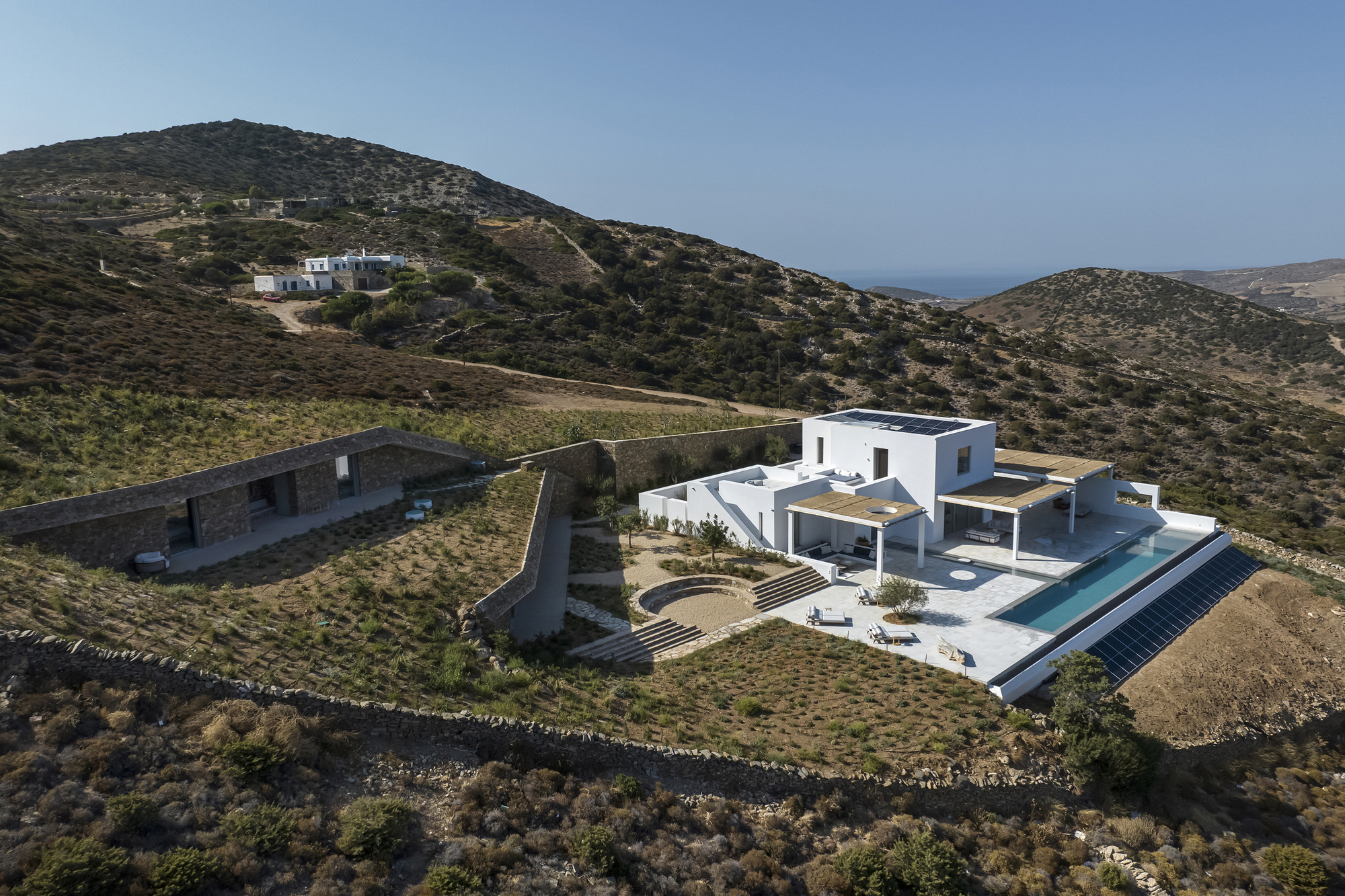
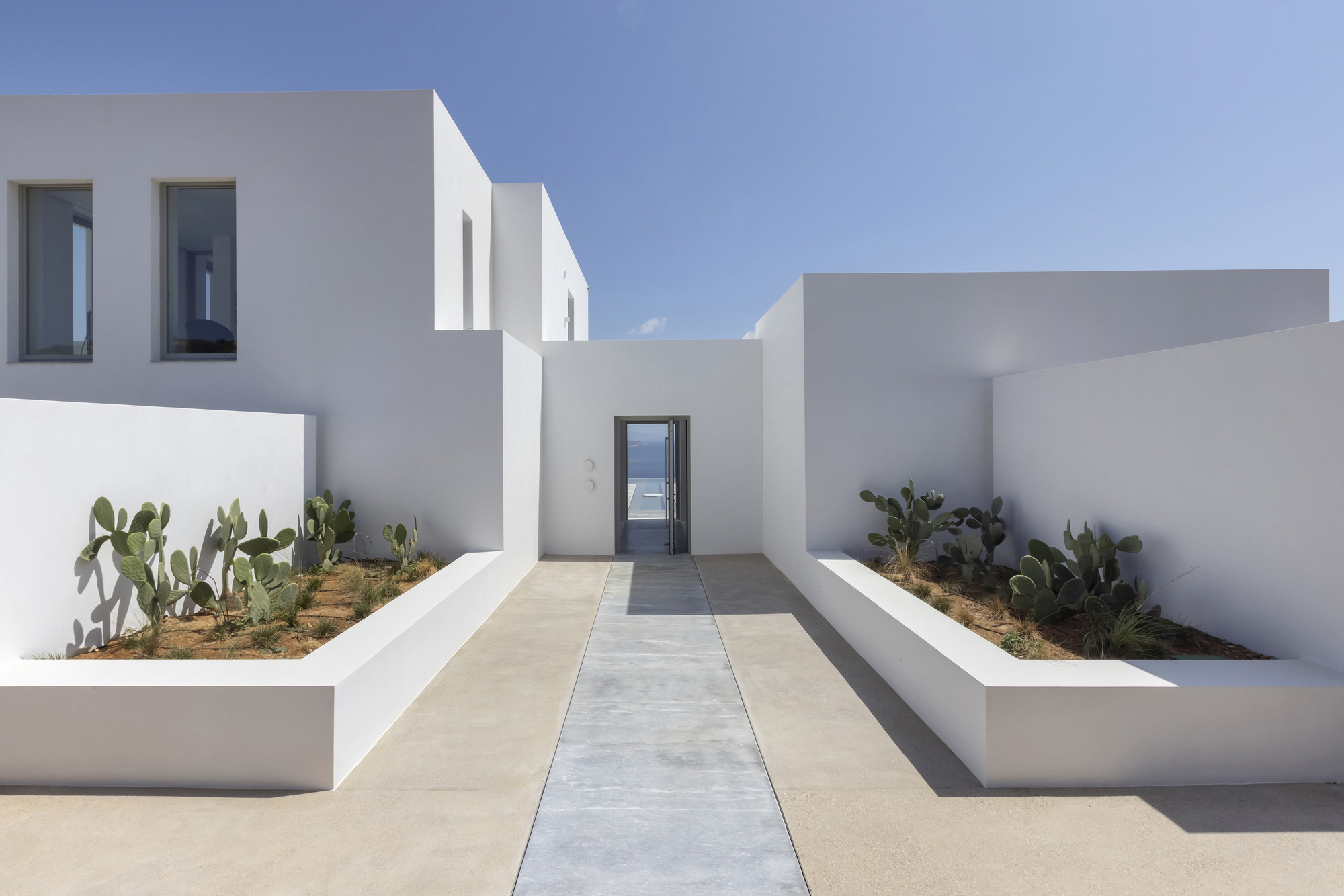
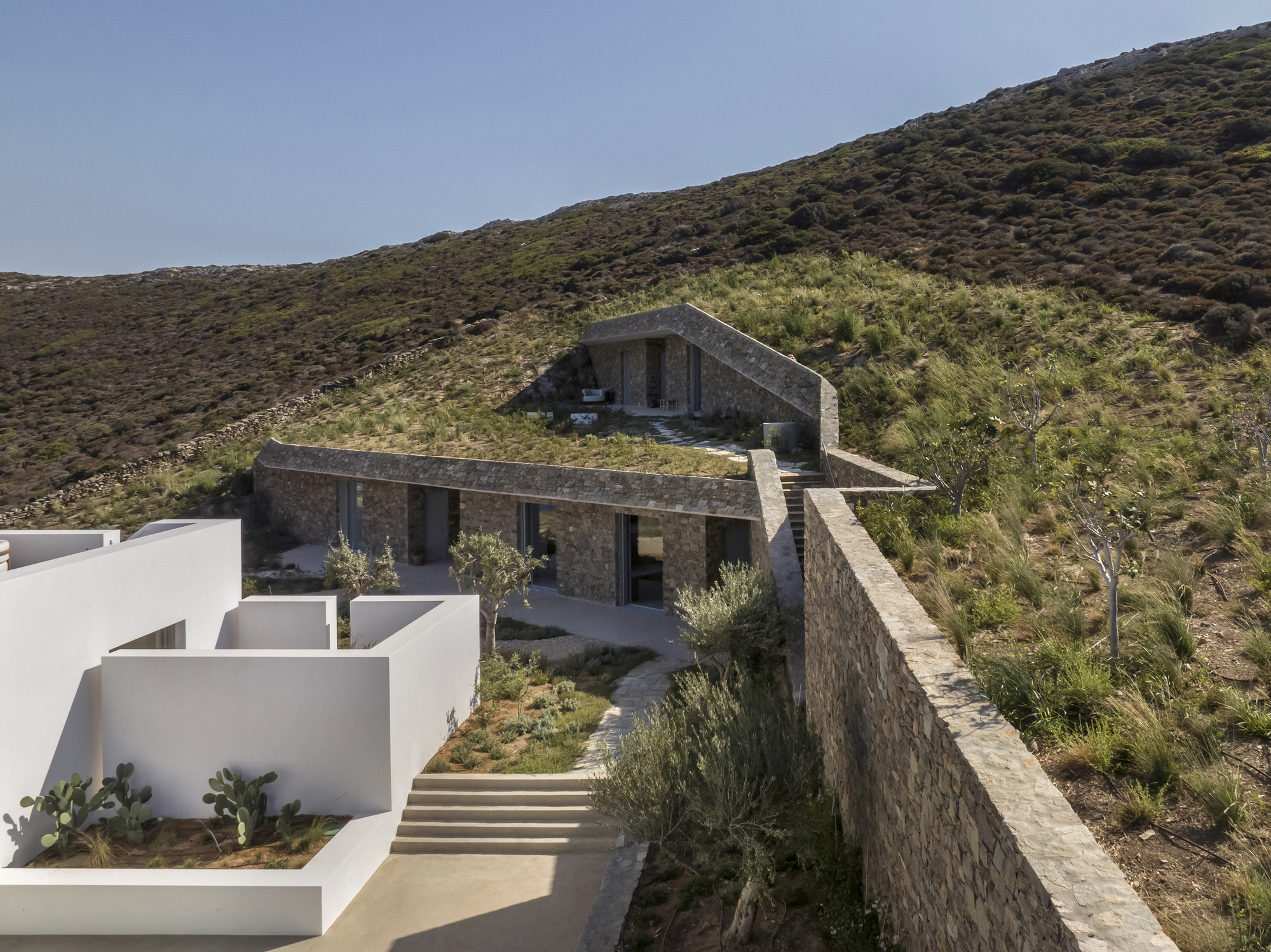
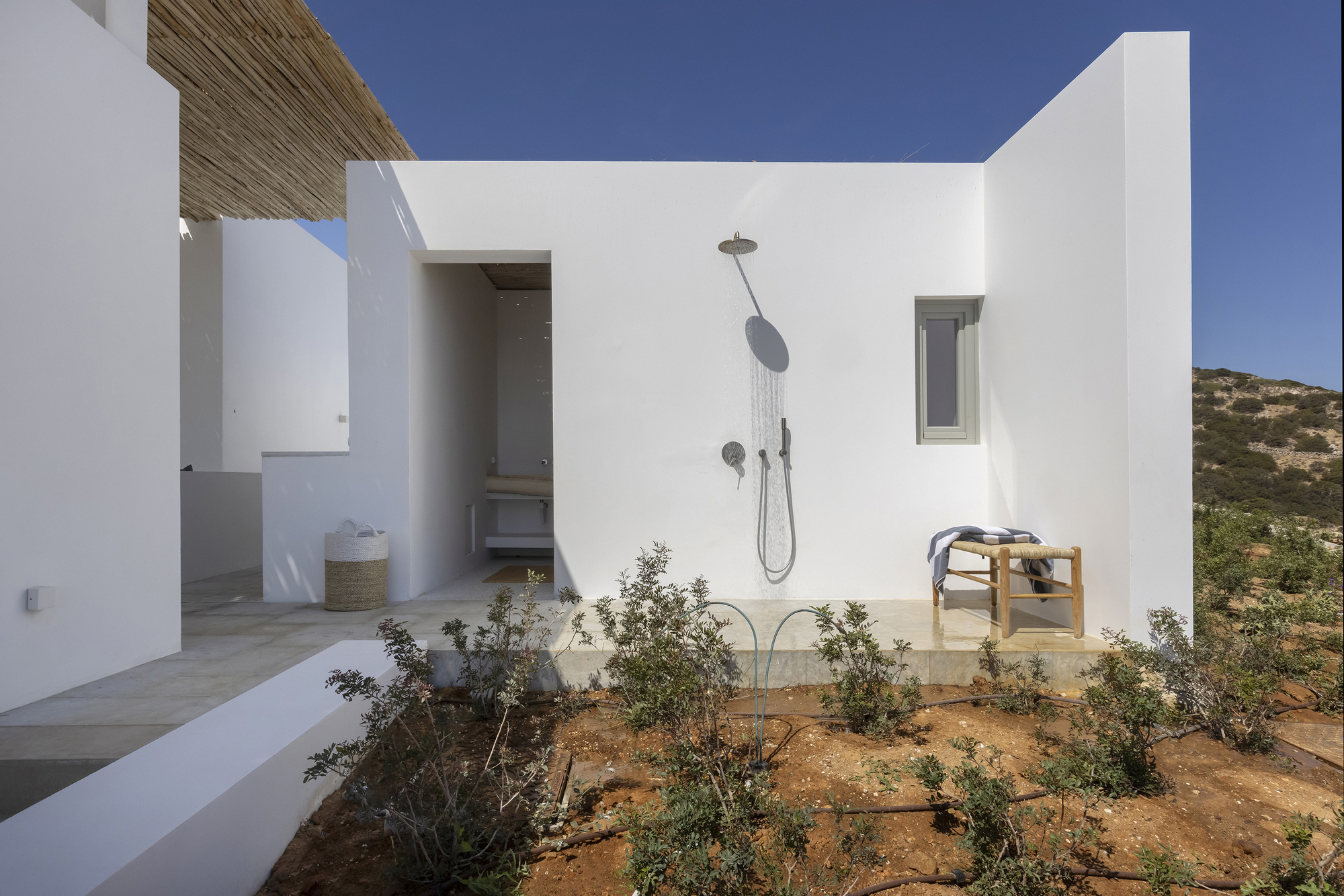
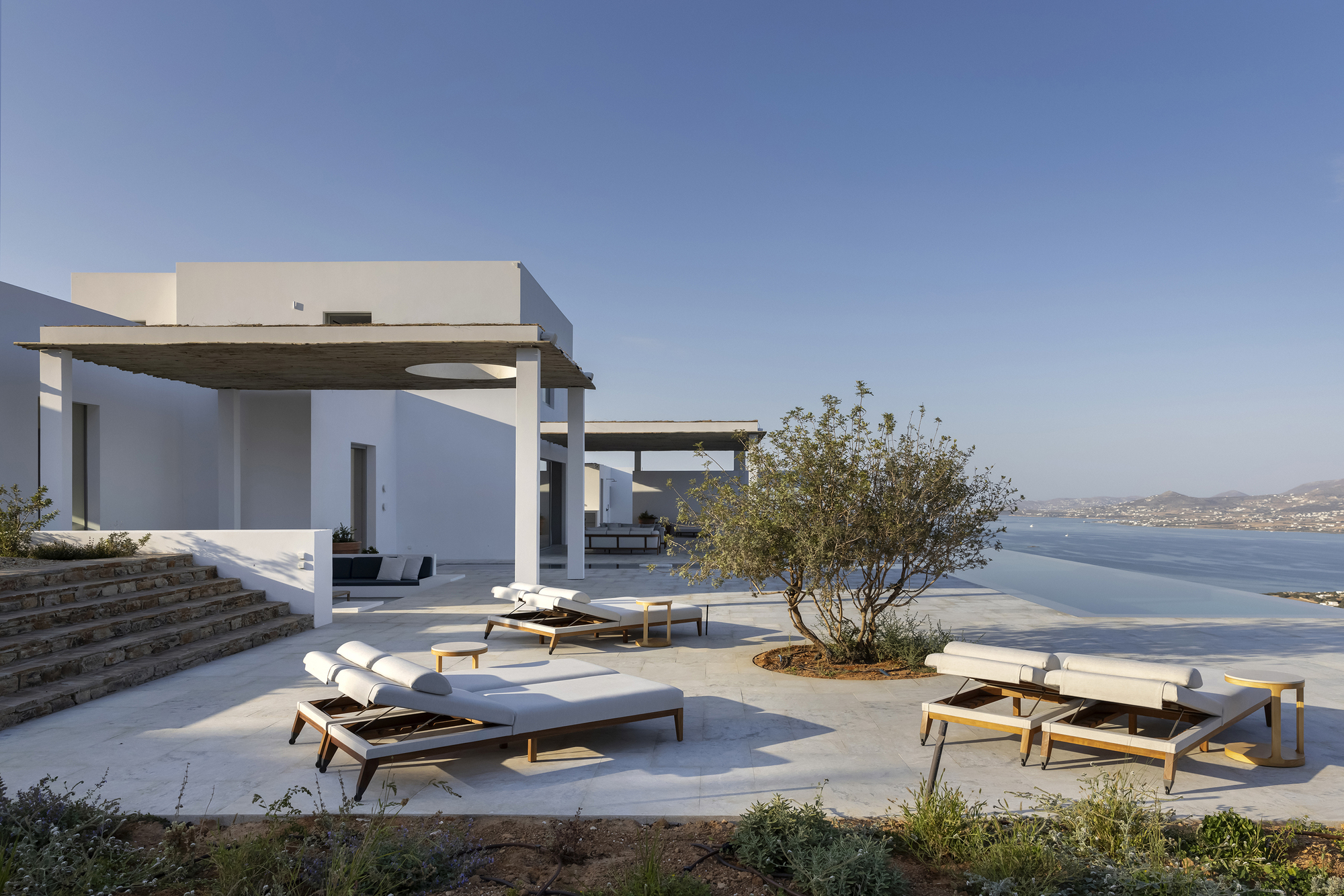
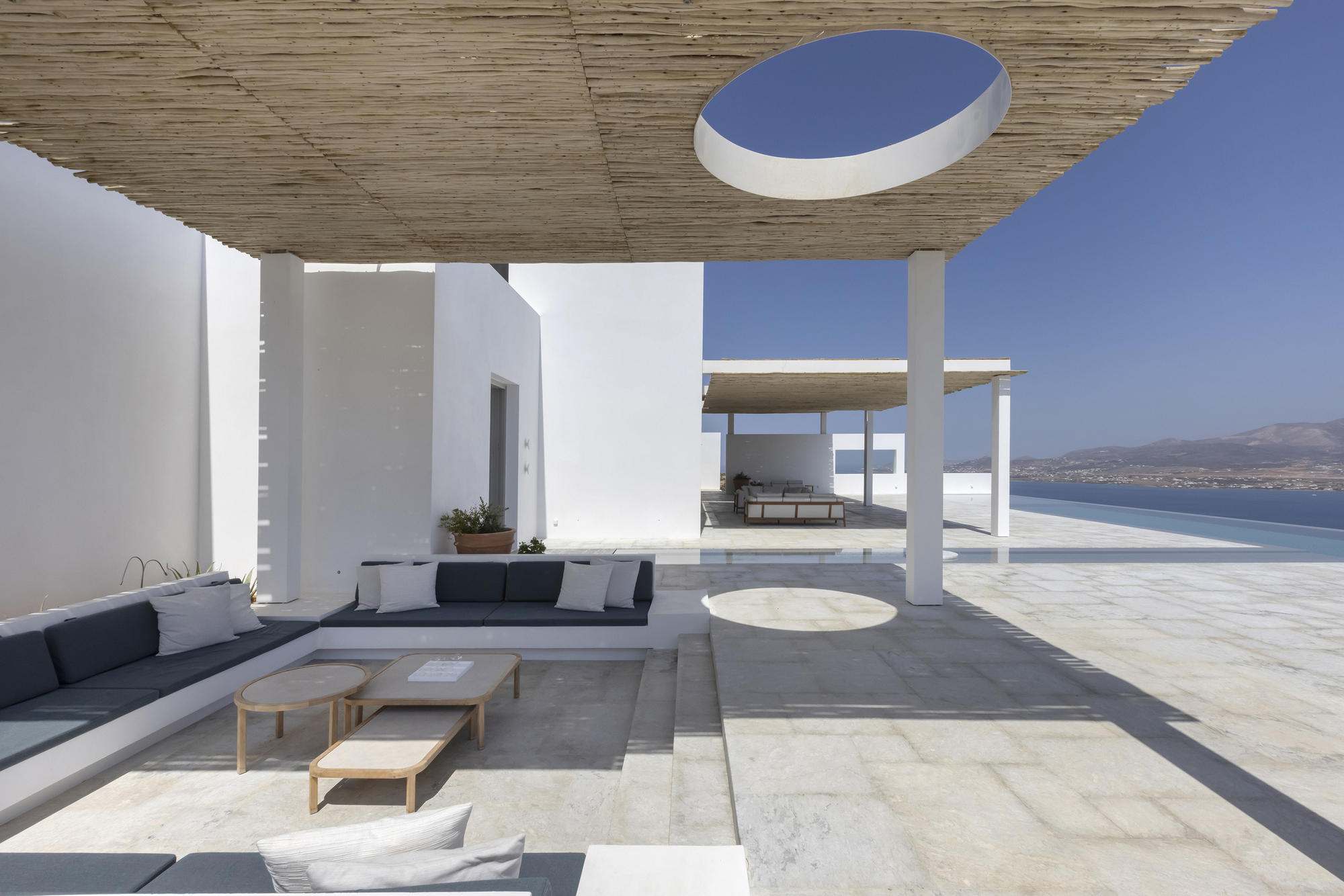
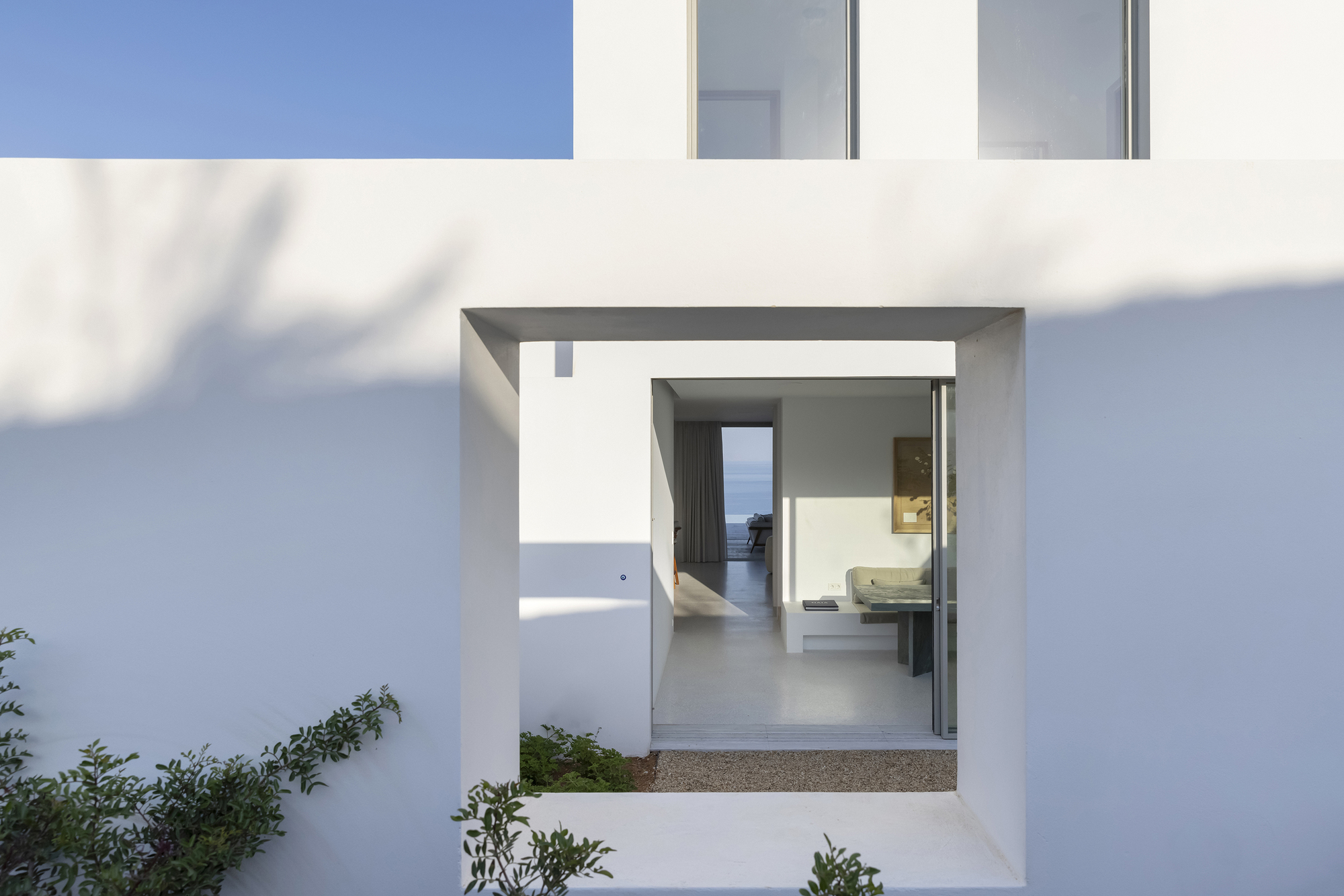
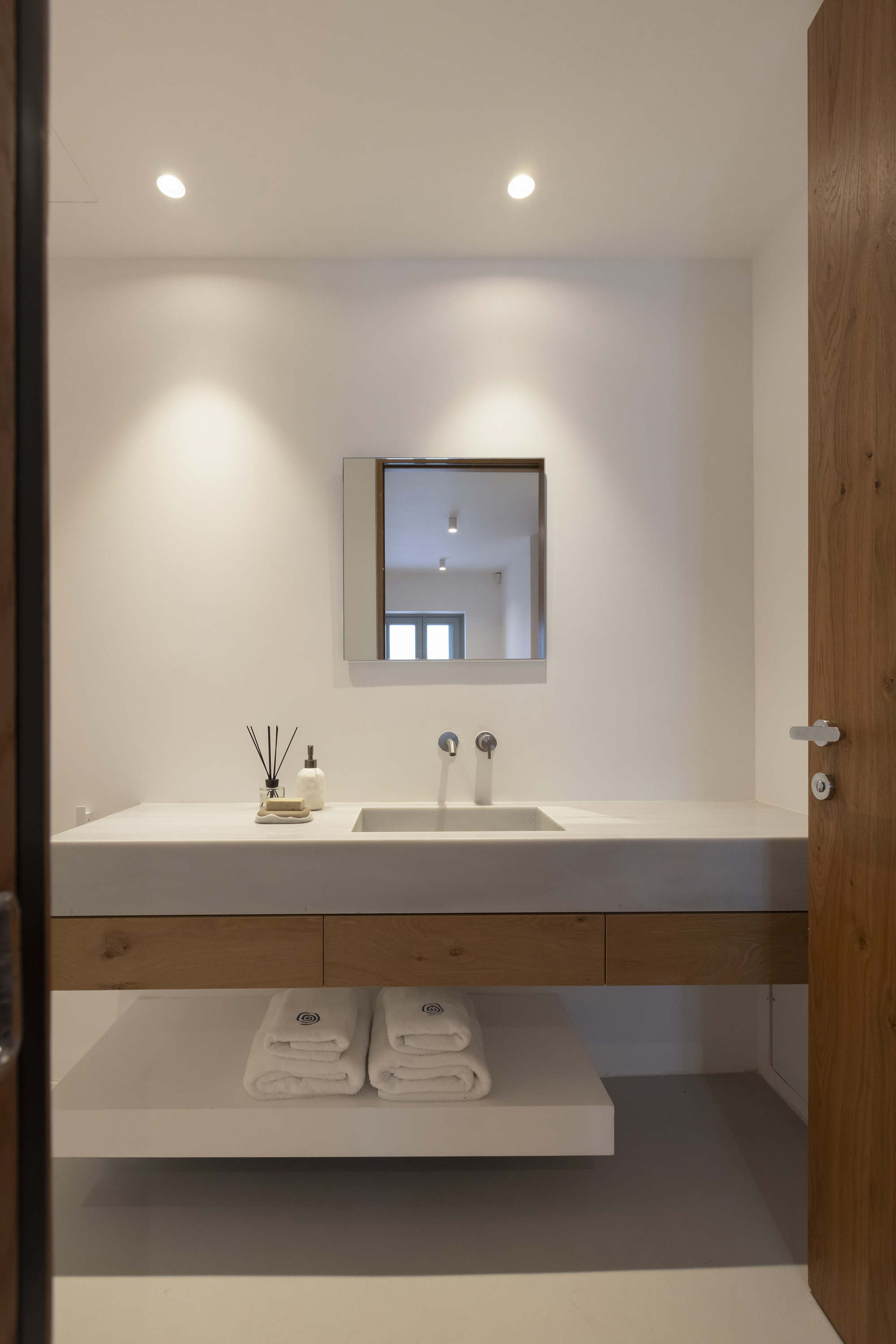
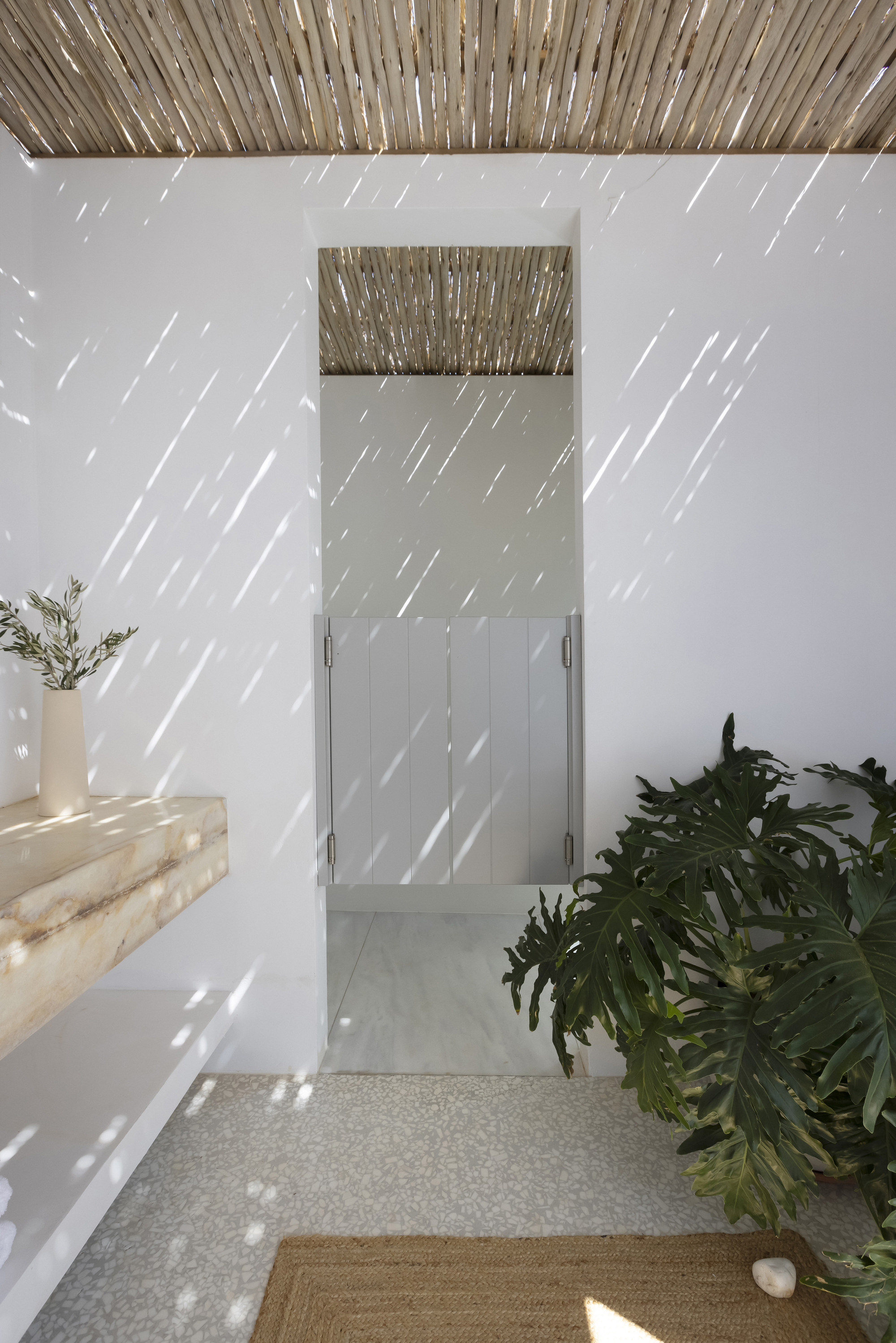
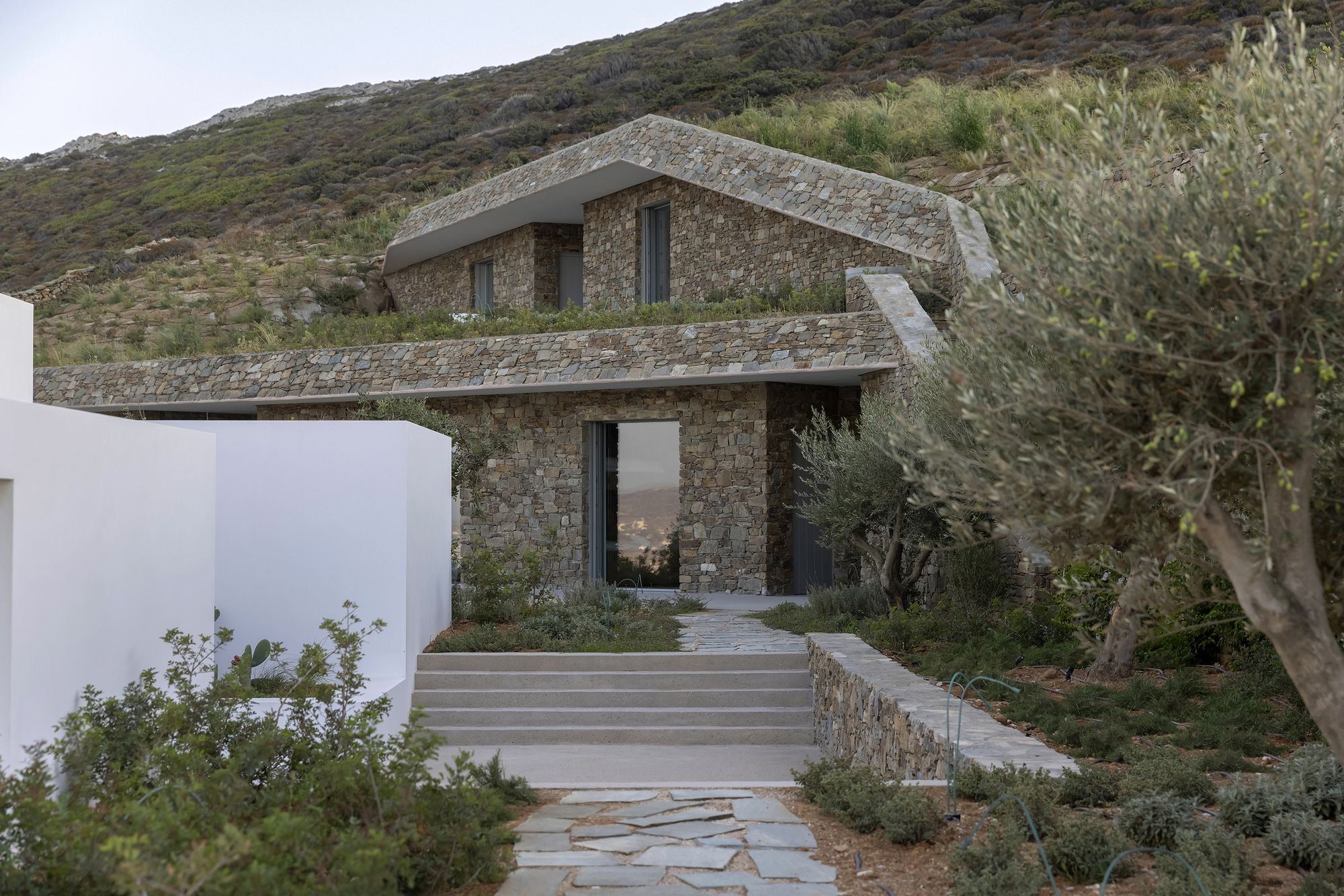
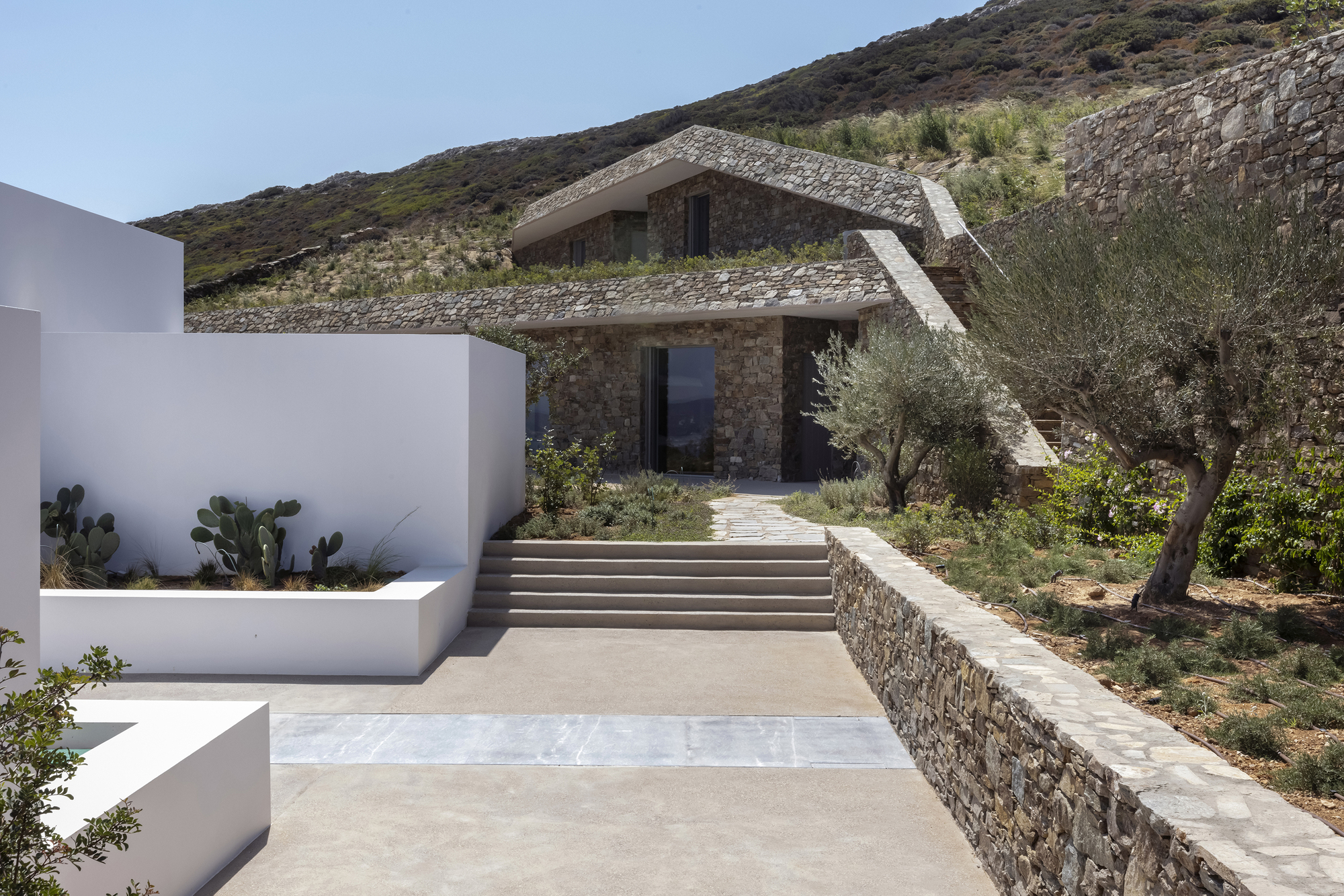
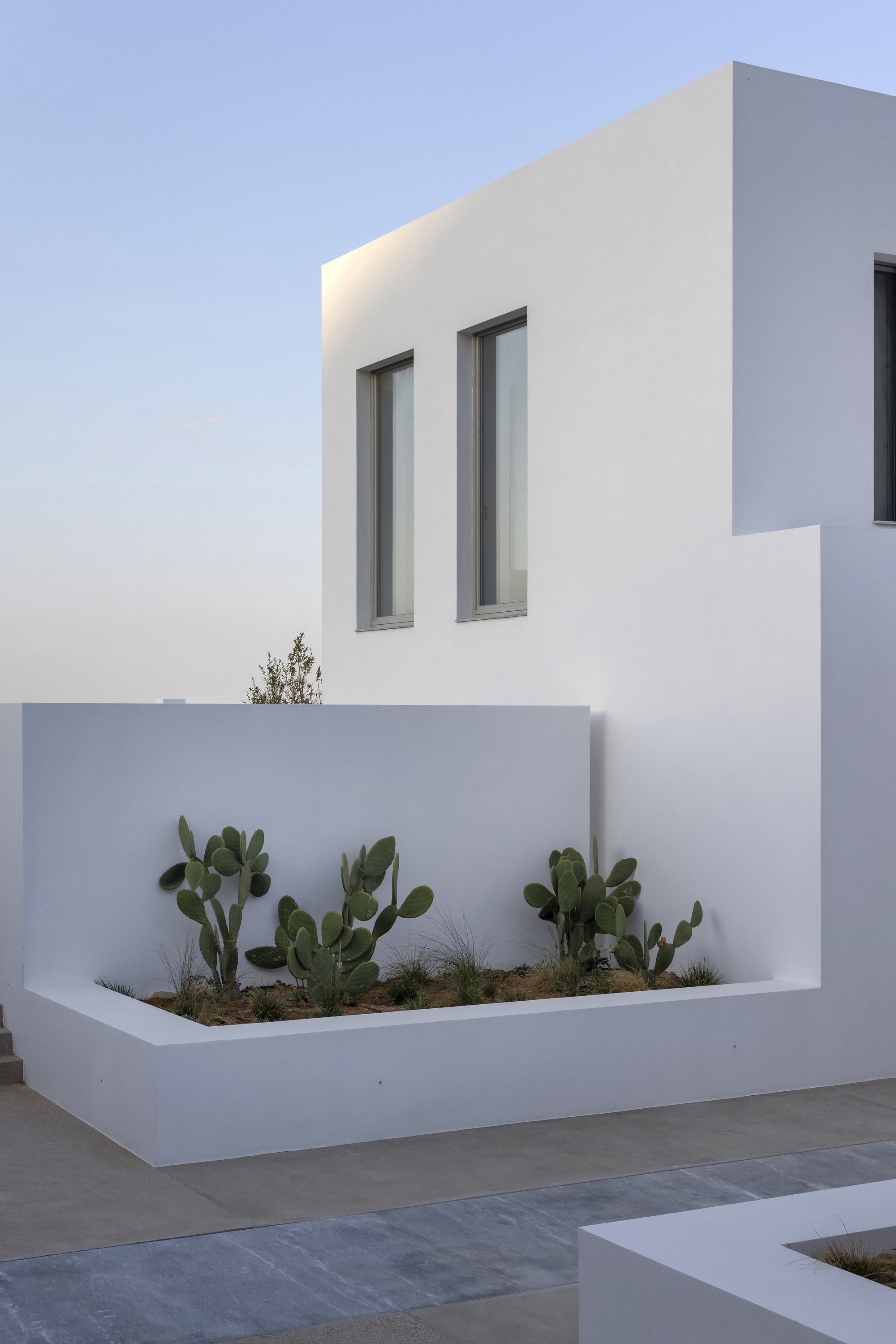
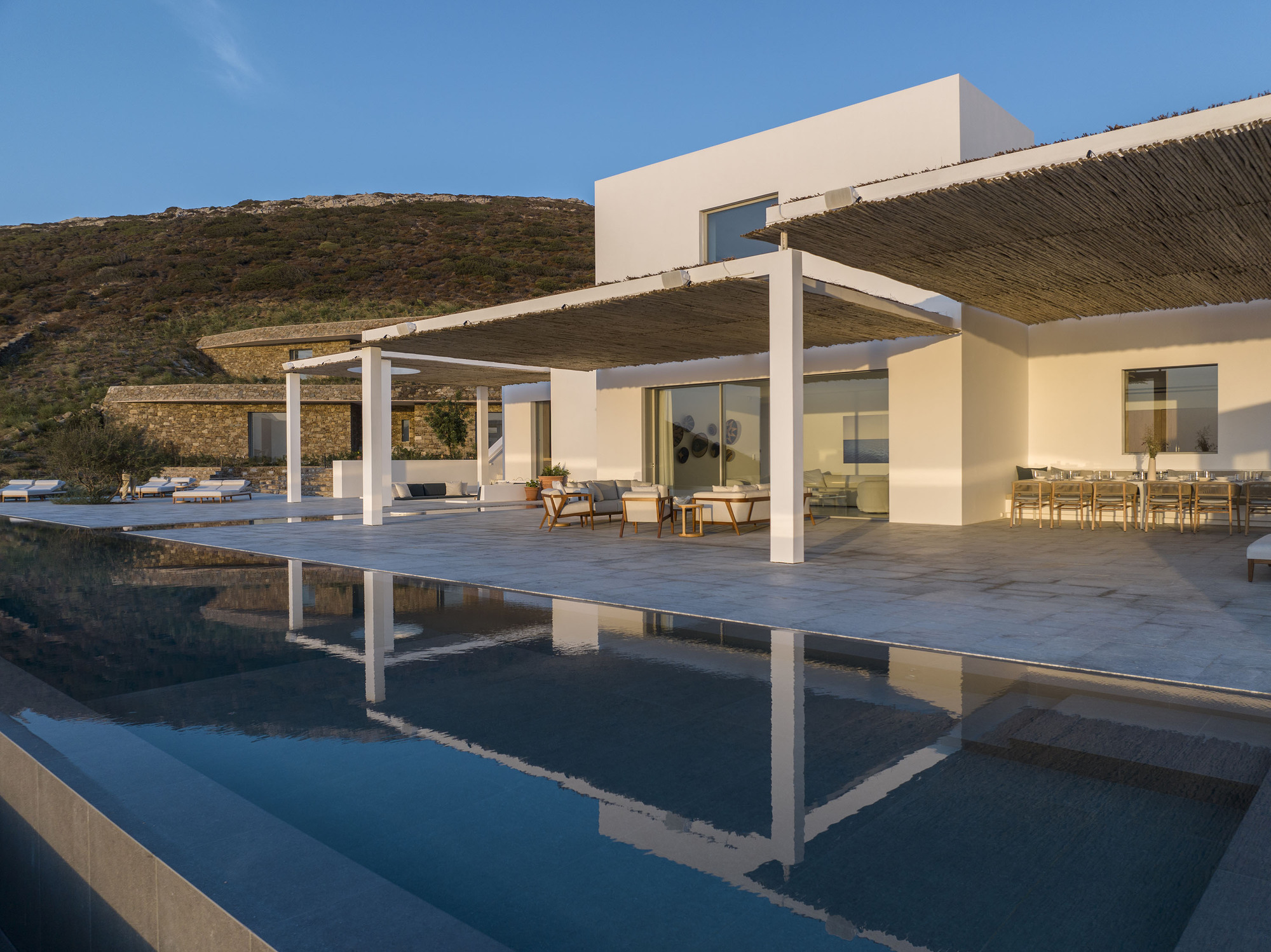
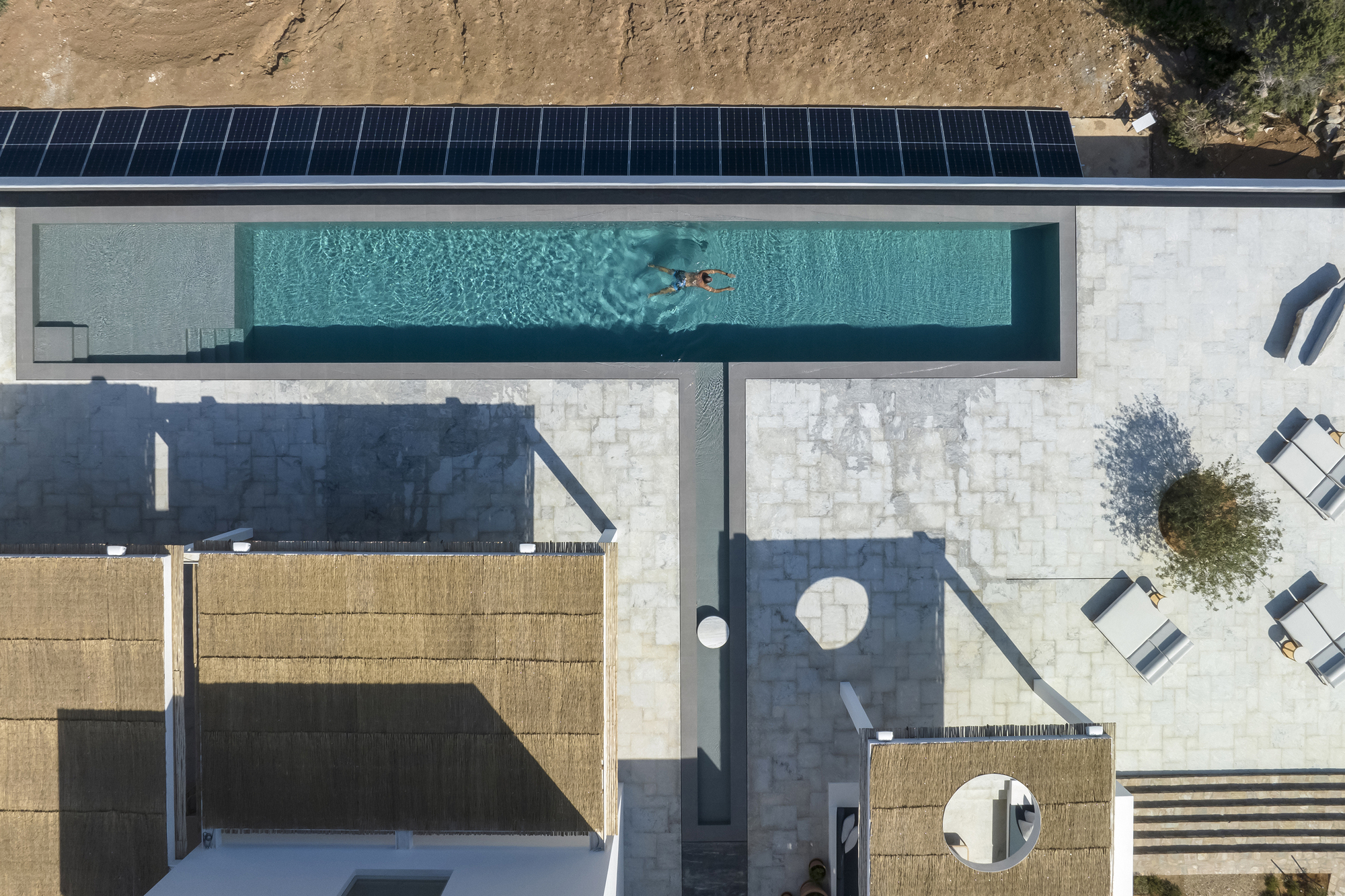
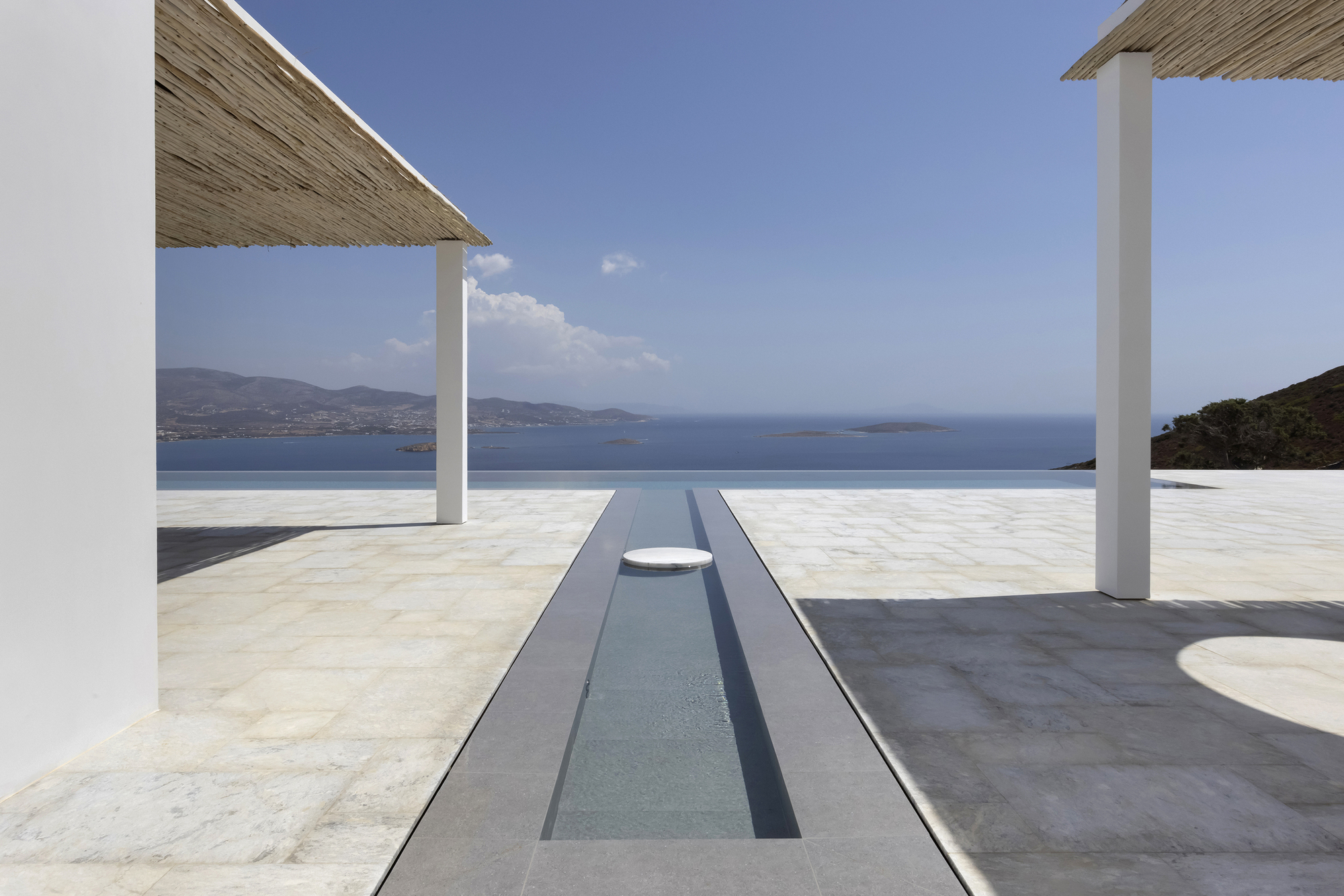
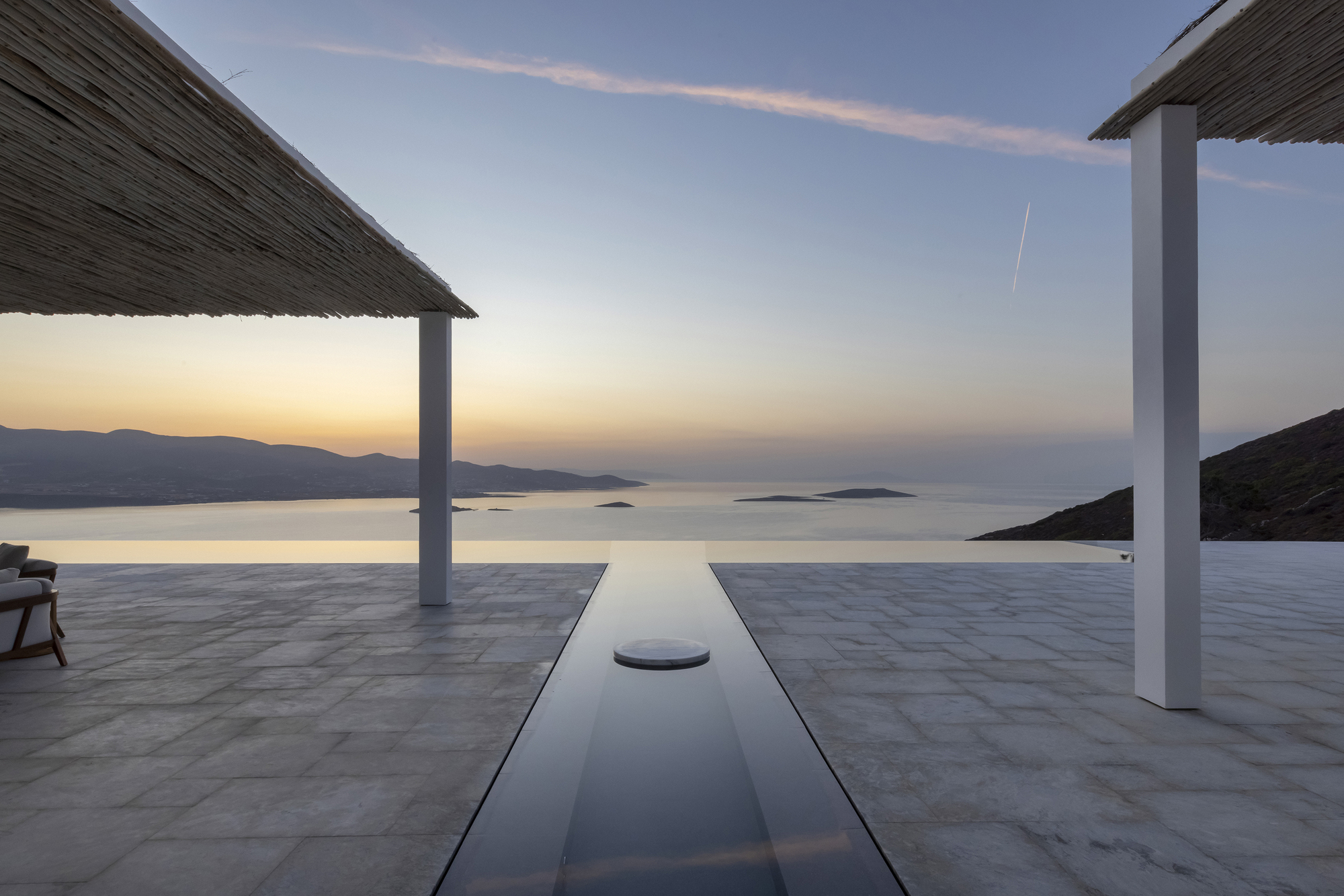
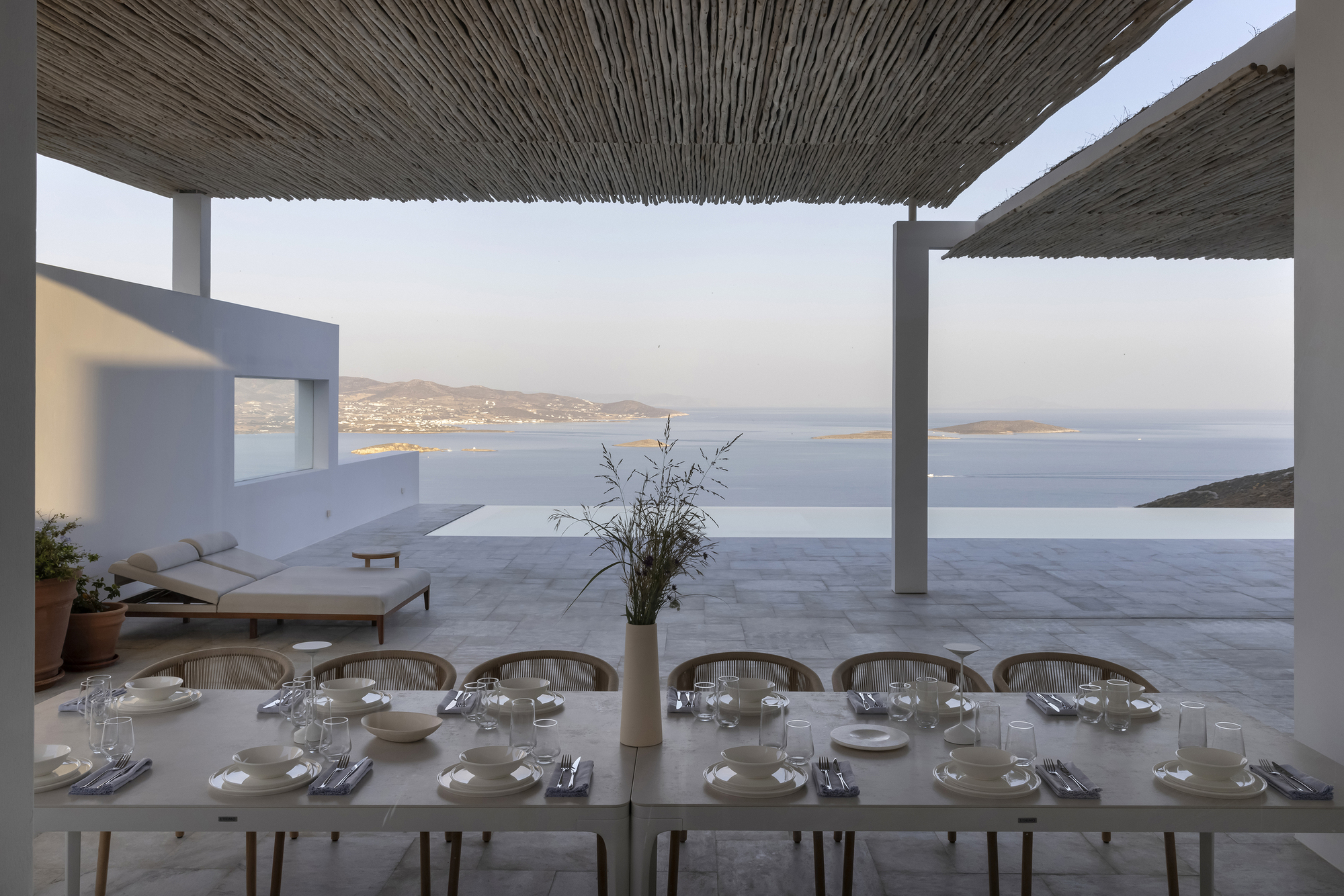
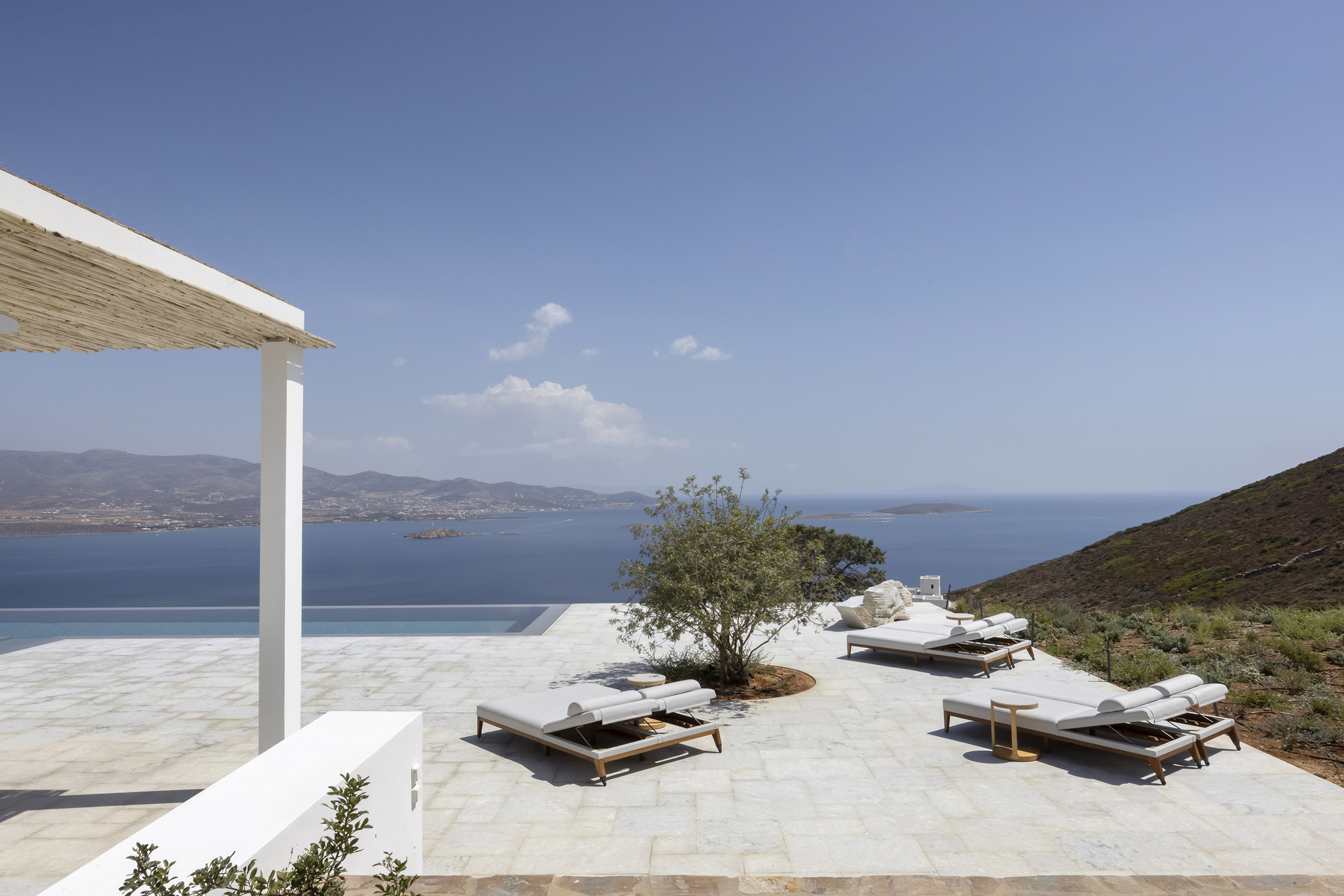
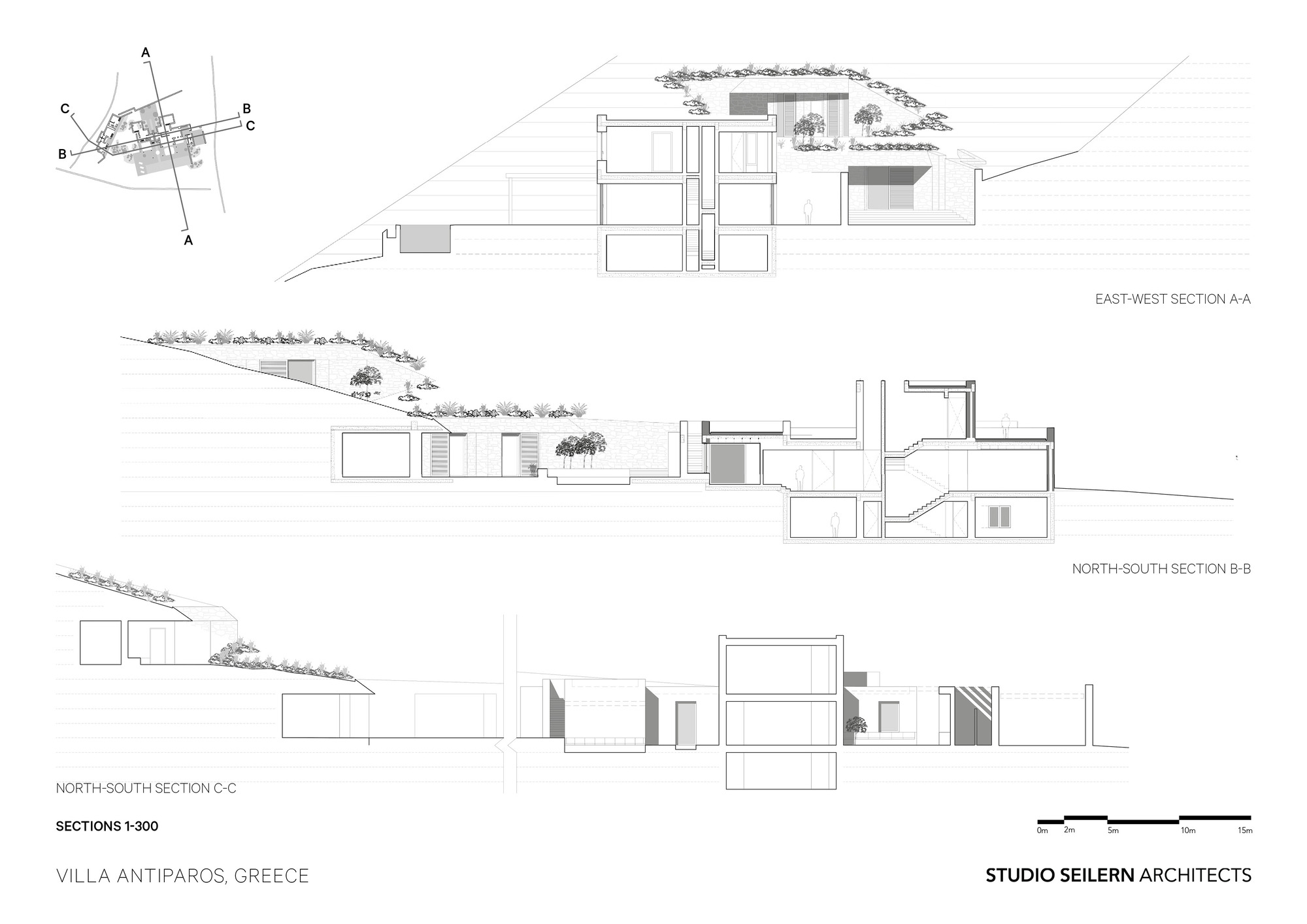
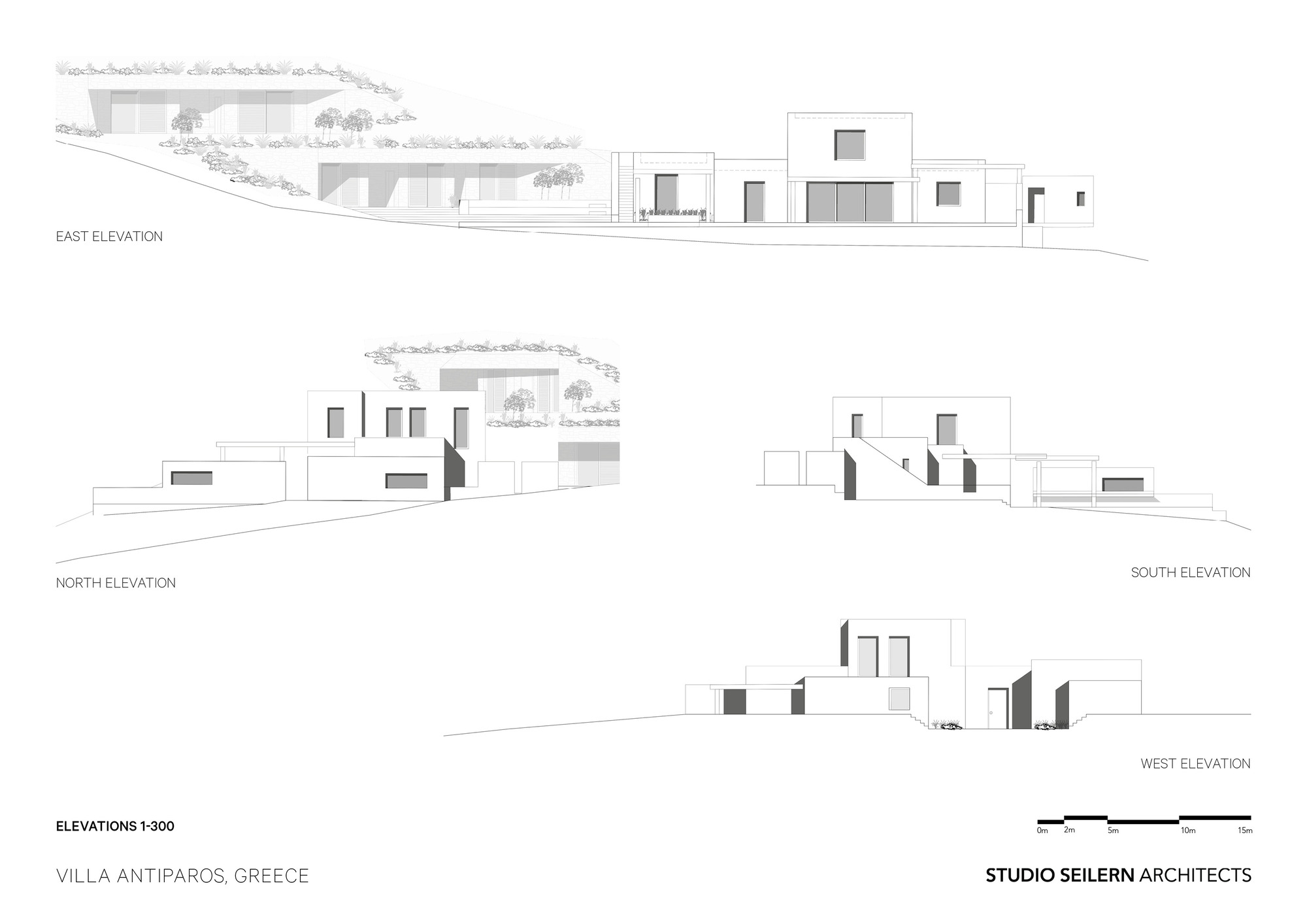
What a beautiful place with an insane view! Antiparos Village #architecture Architects: Studio Seilern Architects
 Area: 780 m²
 Year: 2024
 Photographs: Louisa Nikolaidou Location: Greece
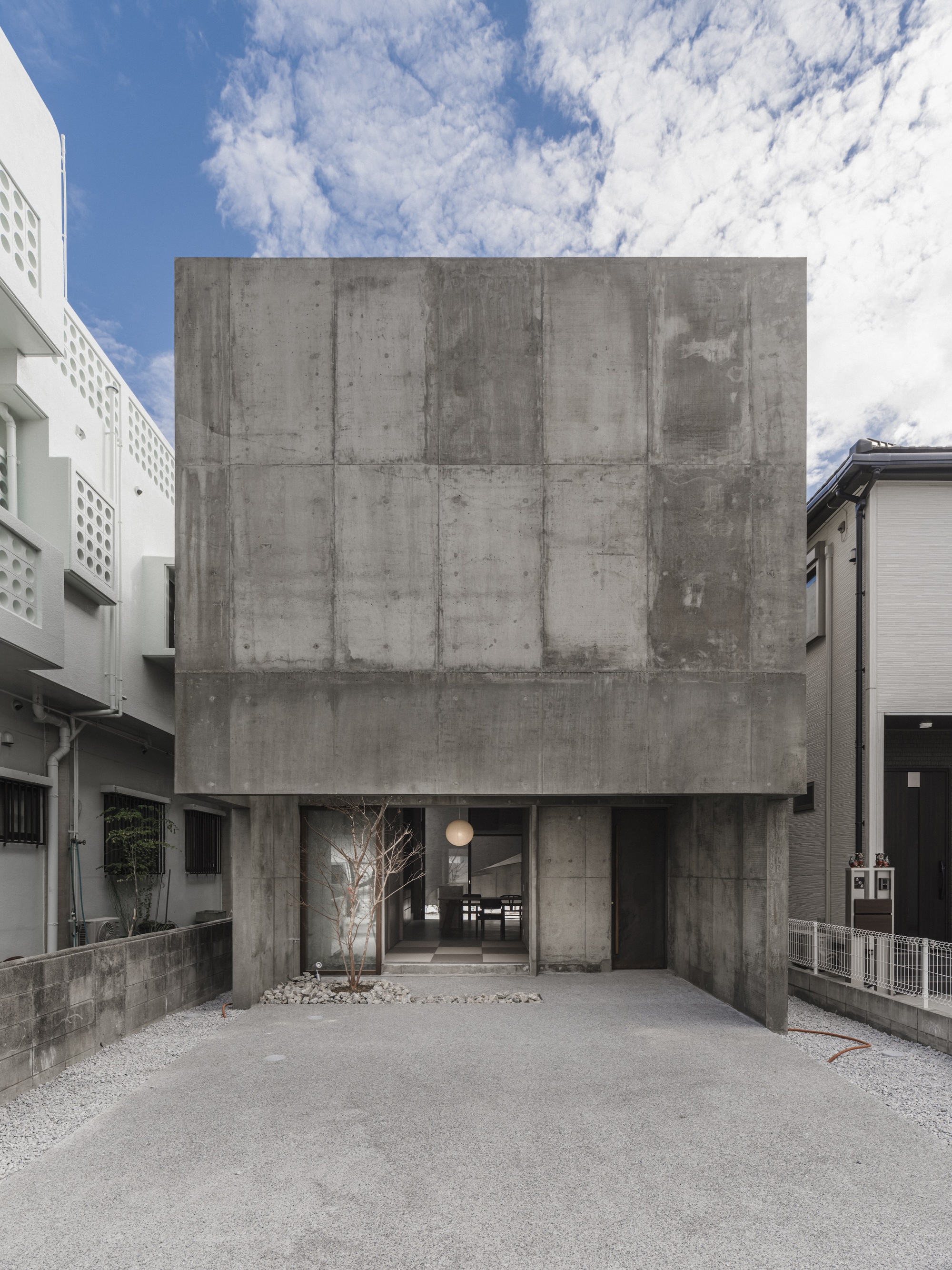
Would you live in this concrete box? #asknostr 
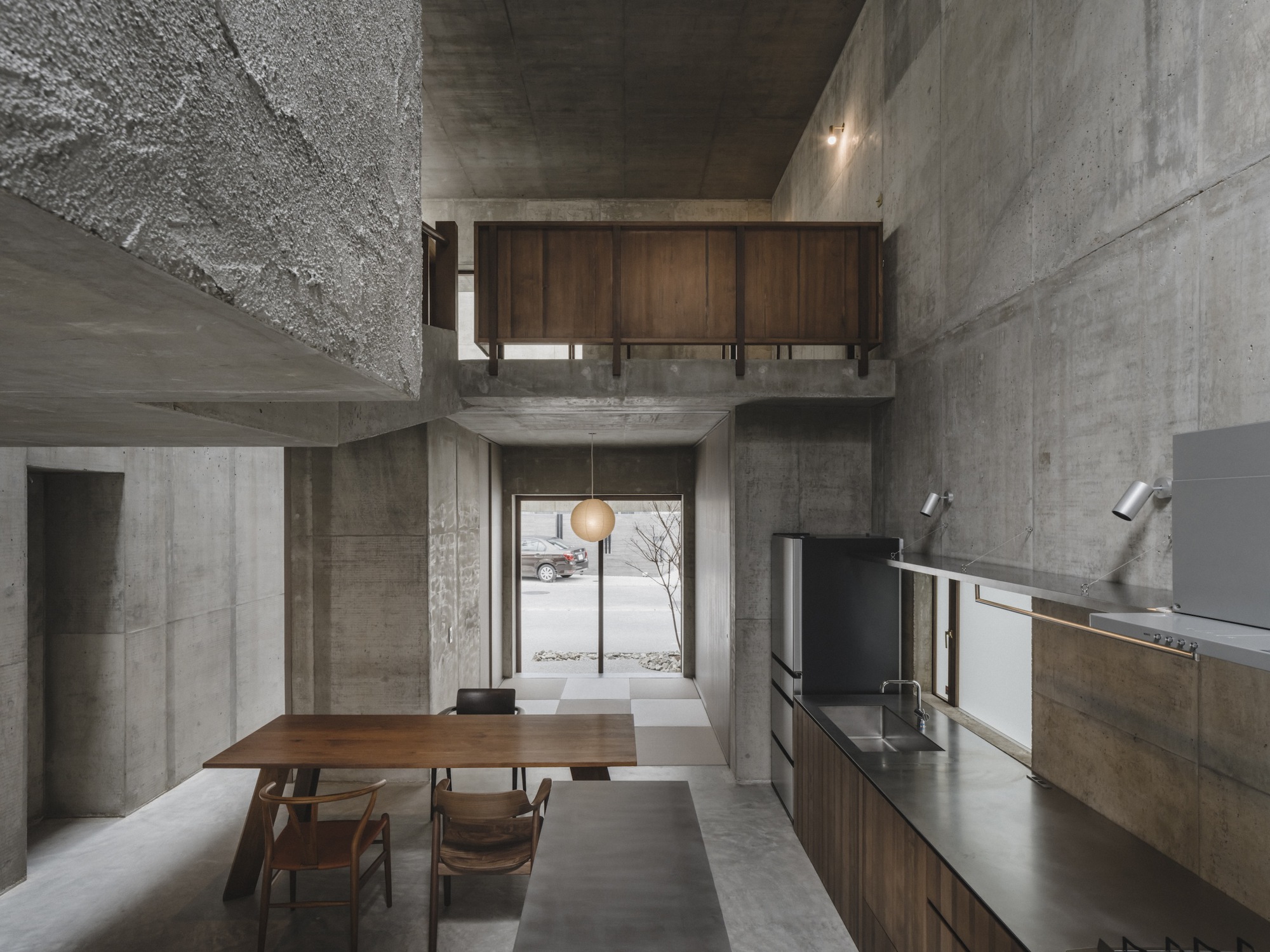
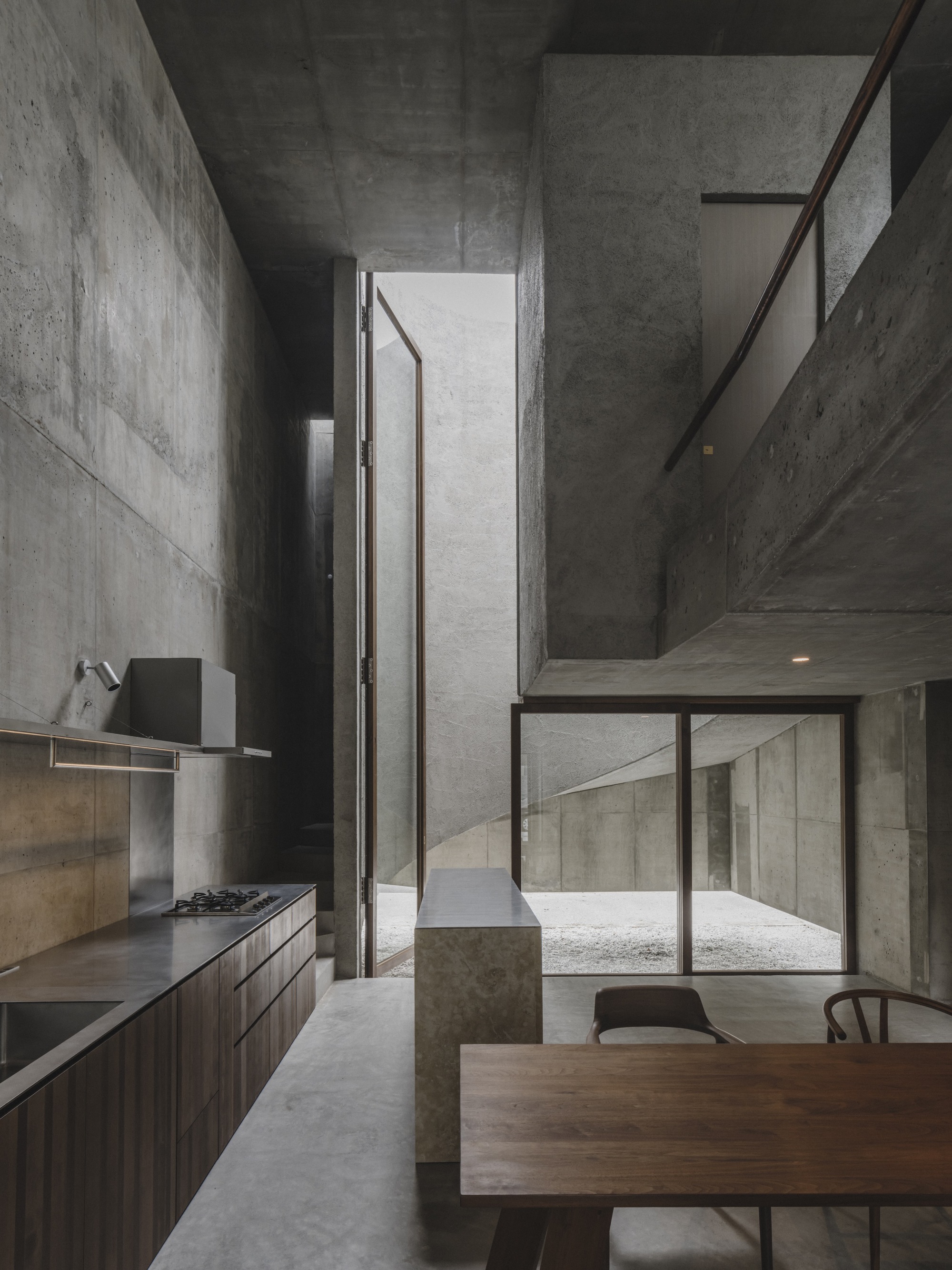
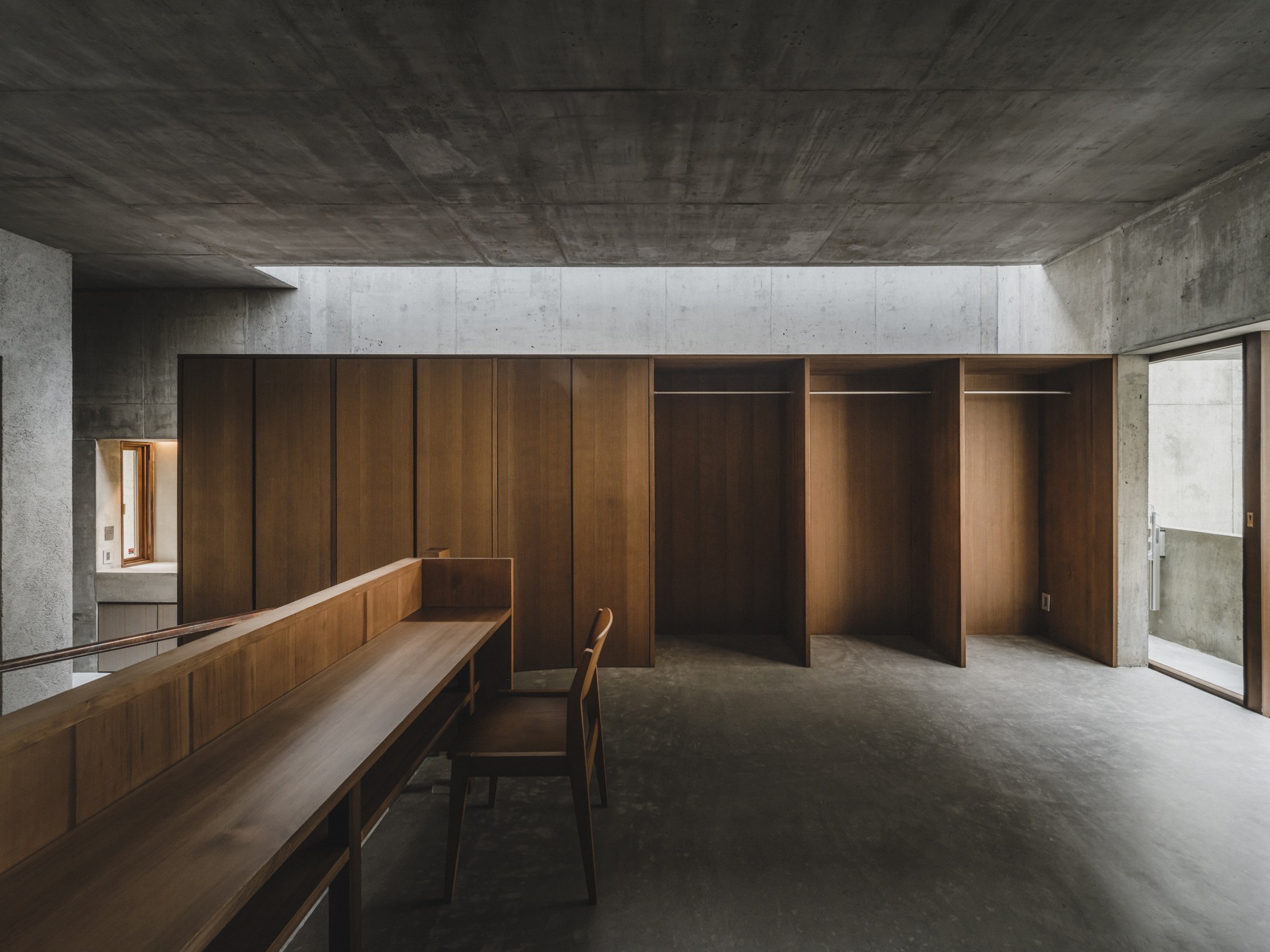
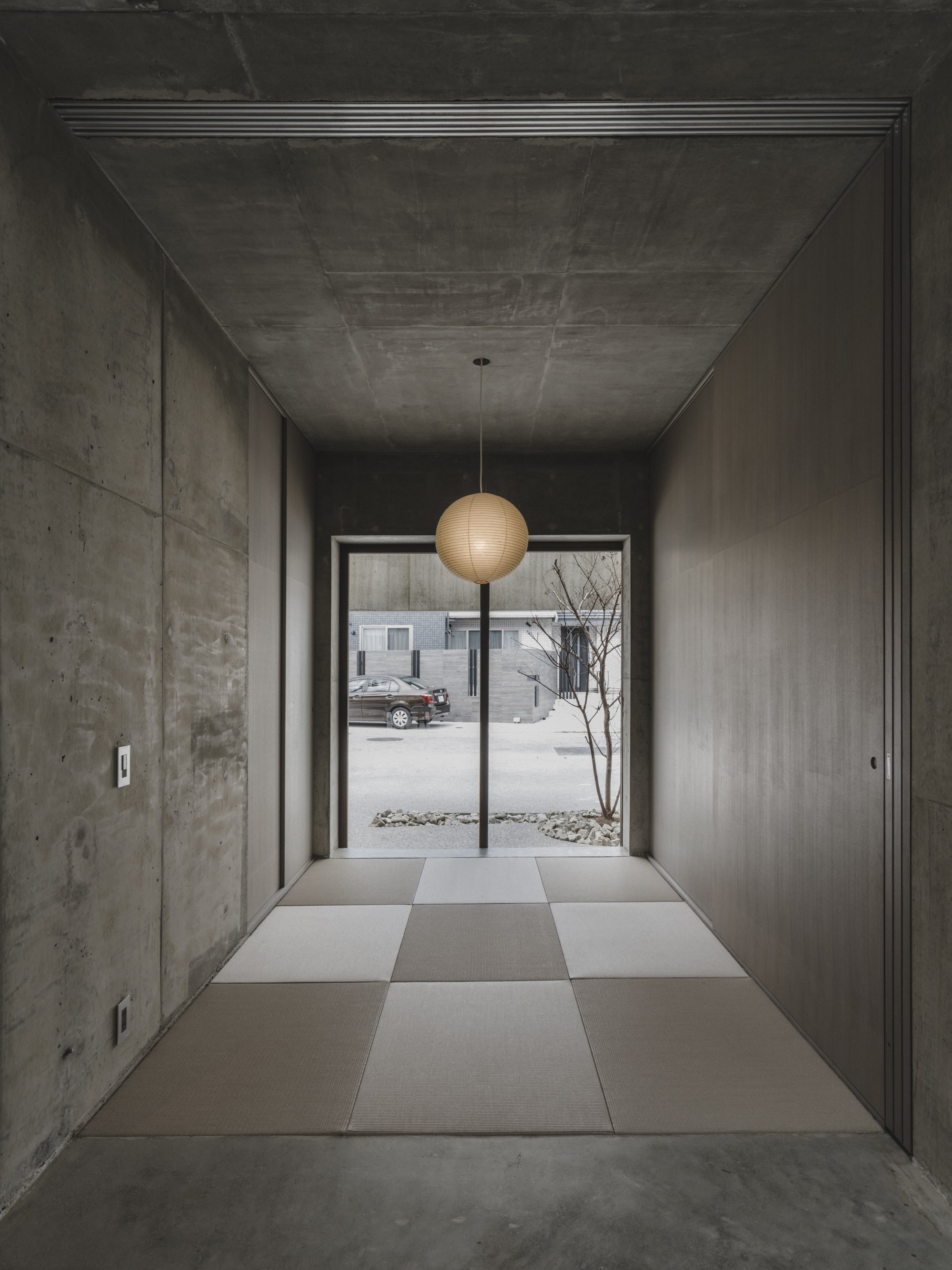
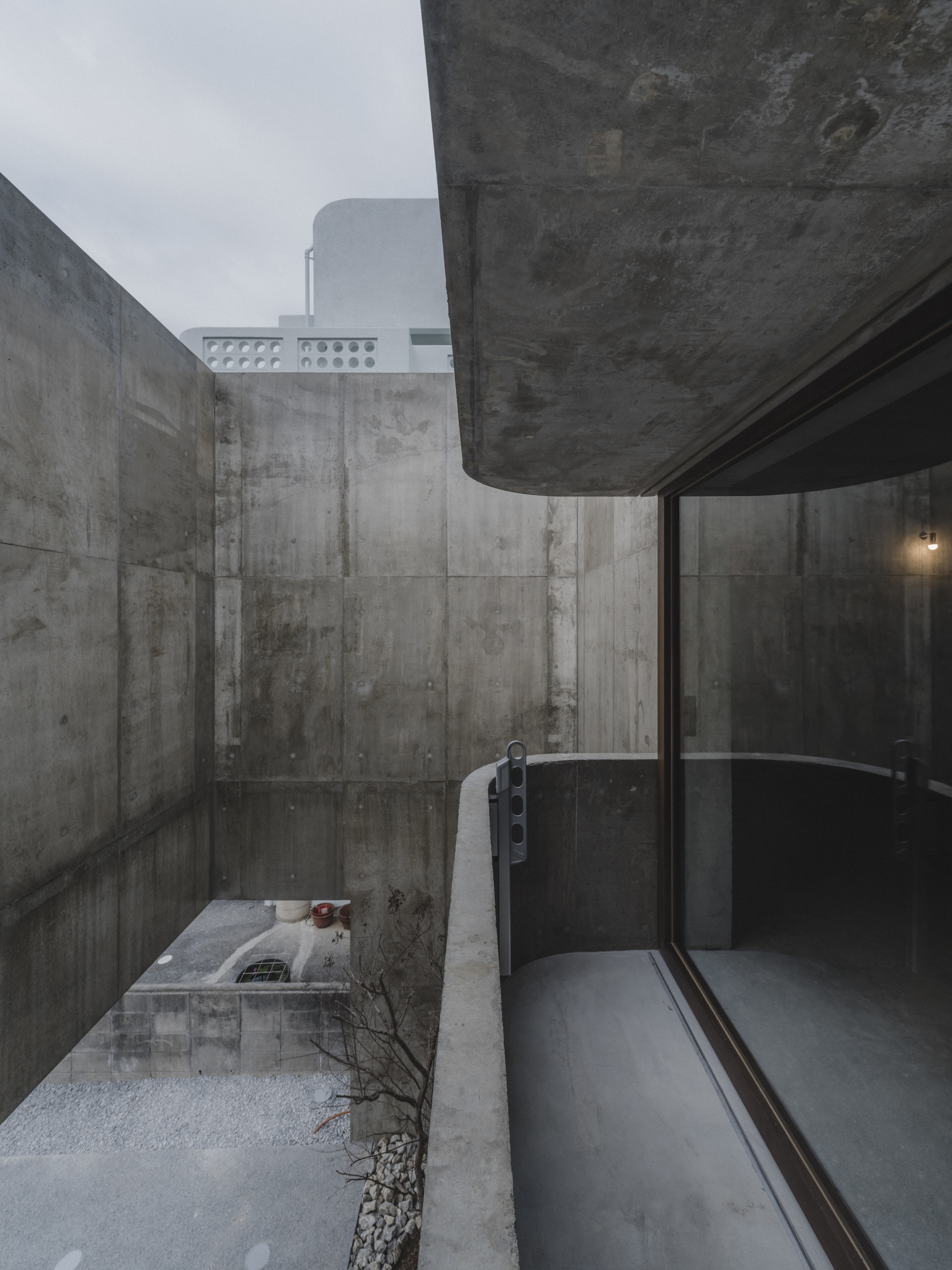
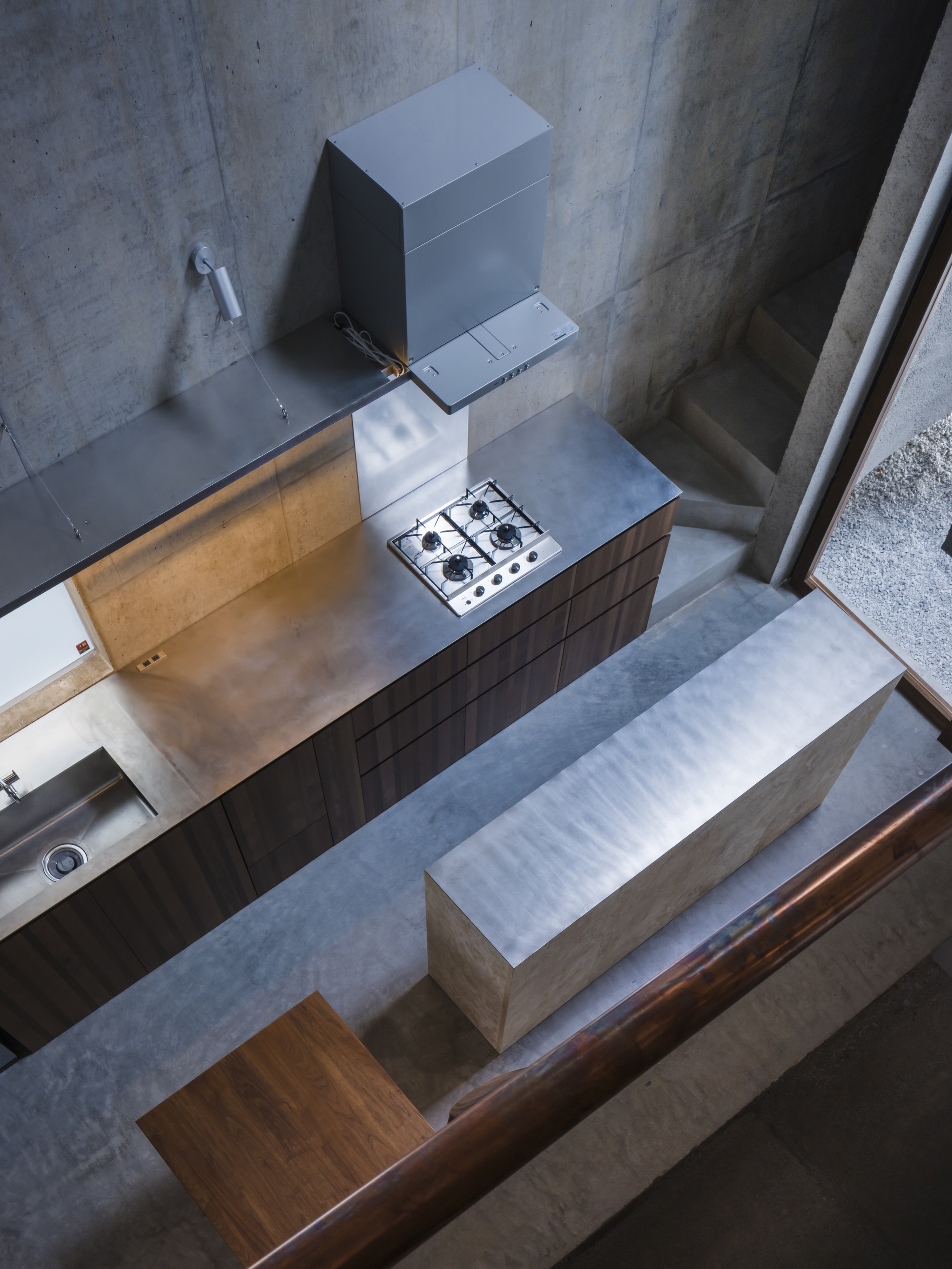
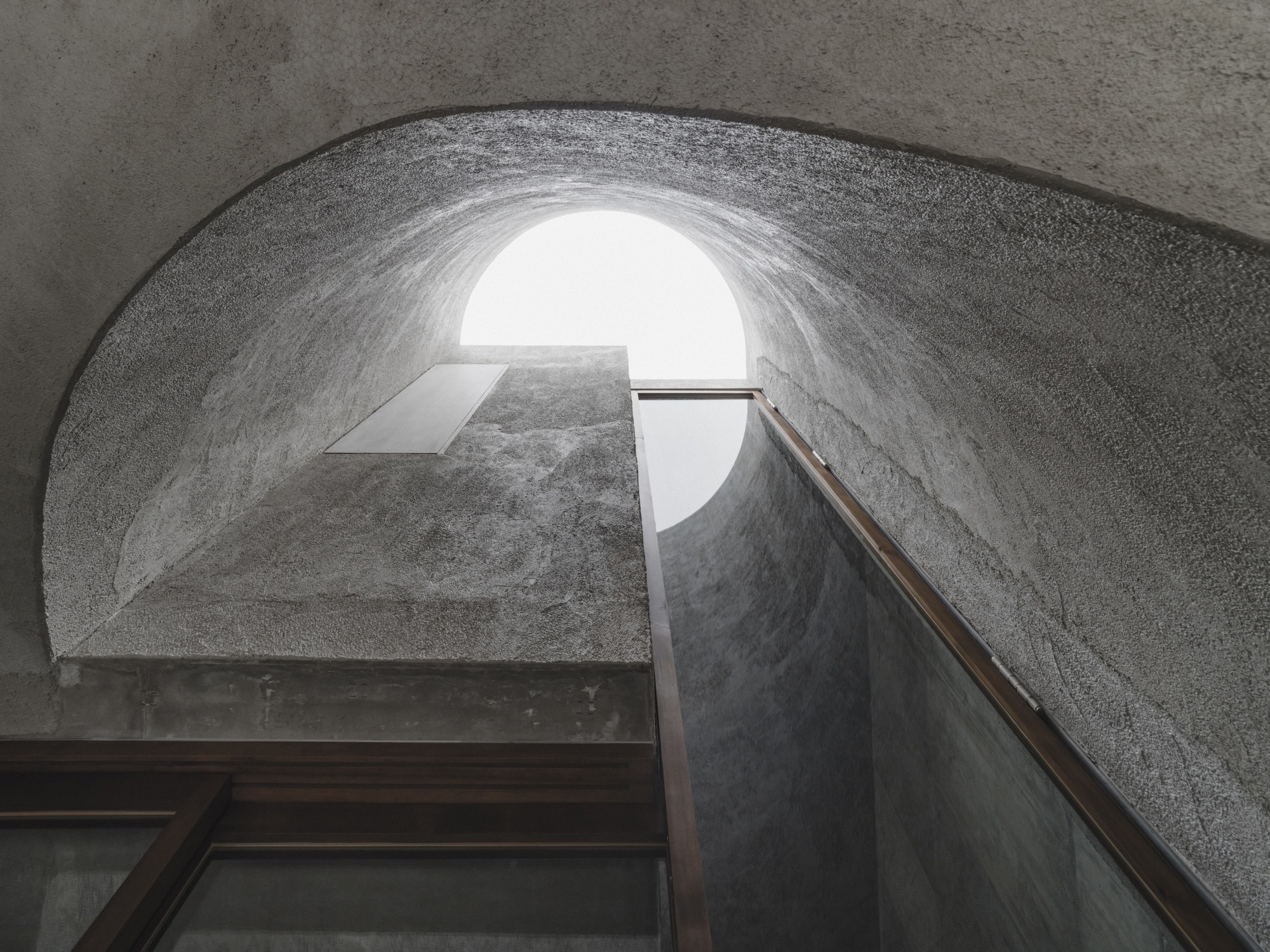
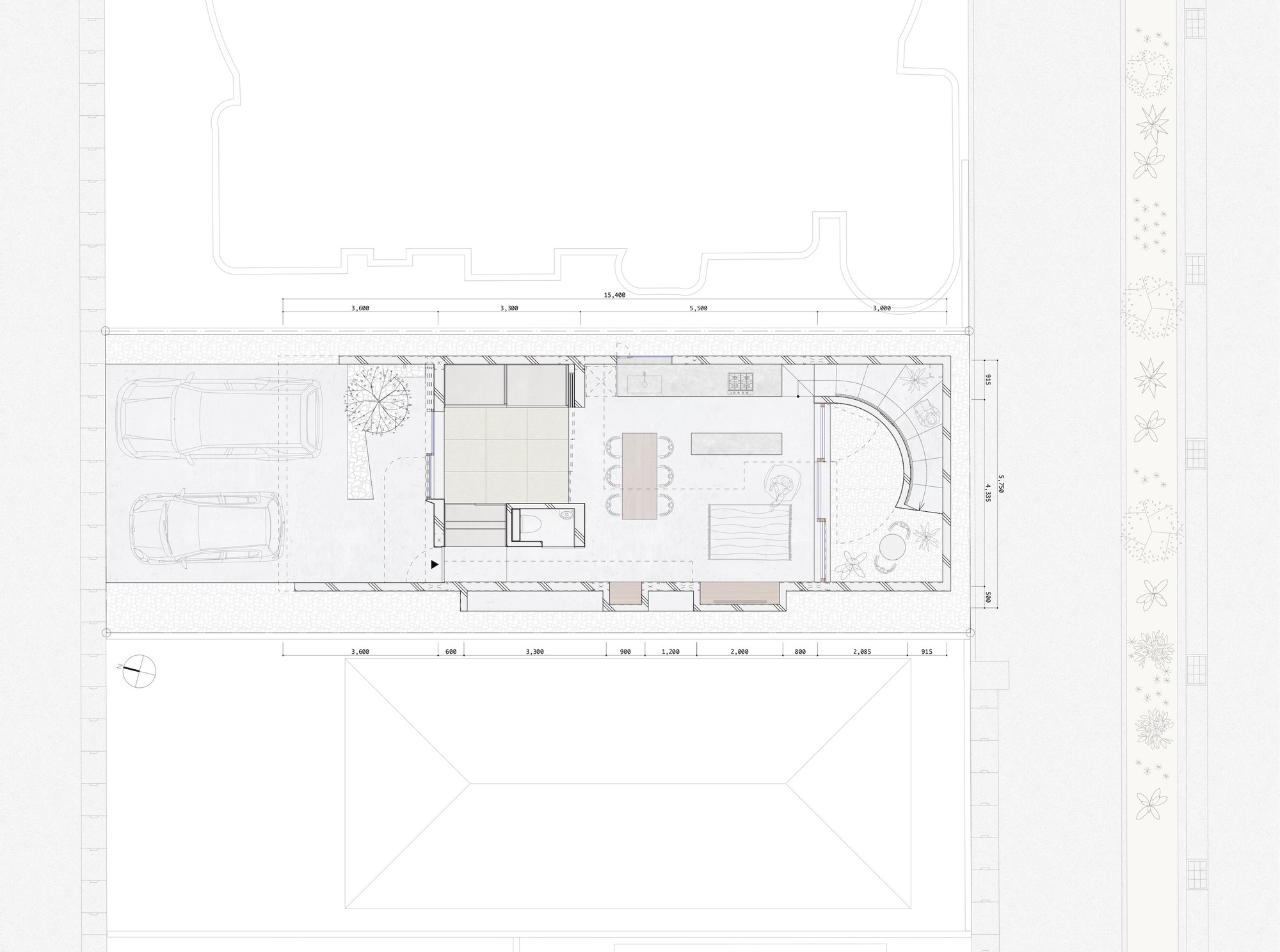
I mean… where are the windows? Begging for Myopia. House in Nishizaki #architecture Architects: Studio Cochi Architects Area: 91 m² Year: 2023 Photographs: Ooki Jingu Lead Architect: Toshiyuki Igarashi City: Okinawa Country: Japan The Nishizaki House is a residence for a family of three. The home is located on reclaimed land in a newly developed residential area south of Okinawa's main island. The surrounding area consists of a mix of residential areas, commercial facilities, industrial parks, schools, sports parks, fishing ports, and other structures of various uses and scales. North of the home, a residential area is zoned, while a commercial area stretches south across a large highway. As a result, the north side of the home is relatively quiet throughout the day, but the south can be noisy at times due to heavy traffic. East and west of the home are neighboring homes that are close in proximity. Developed areas in Okinawa are frequently densely built, and the number of vacant houses is increasing. While Okinawa has a unique and majestic natural environment, urban areas have this chaotic, lively landscape. In addition, typhoons occur throughout the year, and disasters must be prepared for. In such an environment, the challenge was to maintain distance from the city's chaos and to ensure a comfortable indoor environment. The client's primary request was for their own urban oasis. They wanted to live without a line of sight from the surrounding area and allow as much natural light and air flow as possible. The building has a rectangular design to match the site. Public rooms are situated on the first floor, where they are more connected to the surrounding area, and private rooms, such as bedrooms and bathrooms, are on the second floor. The courtyard and skylight are aligned with north-south to increase natural light and airflow. The northern courtyard, which faces into the residential area, functions as a buffer zone. It provides the residents with relief from the dense neighborhood while still allowing a gradual window to the outside. The connected living area and tatami room, which serves as a parlor, create a sense of spaciousness within the home (maximizes line of sight in the interior). In contrast, the southern courtyard provides a solid buffer zone between the town and the staircase room. The increased buffer enhances the peace of the courtyard and living room. The staircase is also intended to be a dimly lit room, so it is slightly roomier than a normal staircase to accommodate chairs and other items. By creating a strong and a weak buffer zone with the city and allowing space for natural light and airflow, we believe we have used multiple dimensions to accommodate the activities of daily life in relative peace while living in a densely populated residential area. In addition, most of the furniture and fittings were made in my own workshop—a proof of concept for expanding the possibilities of local craftsmanship and reducing dependency on imported materials.
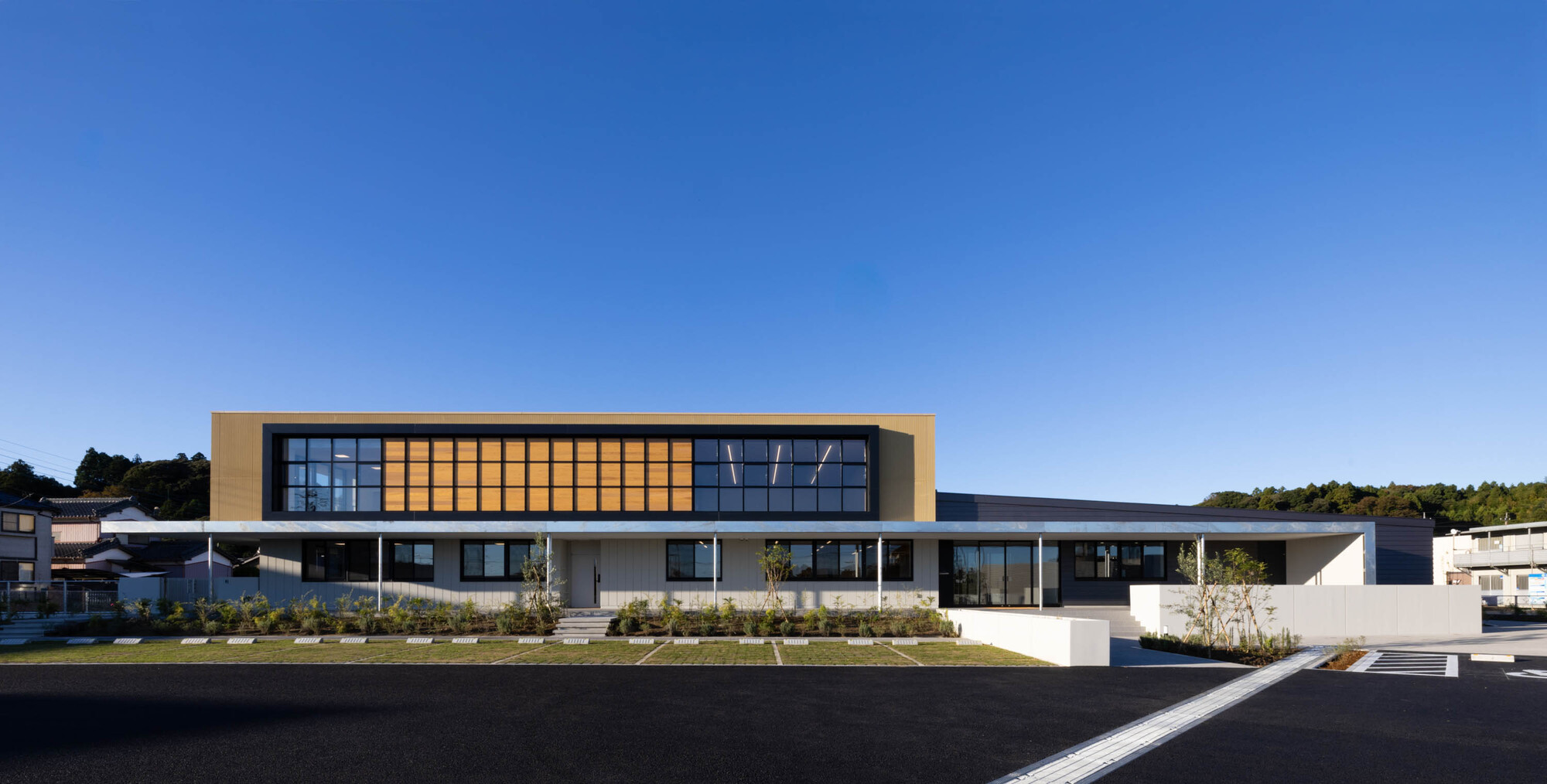
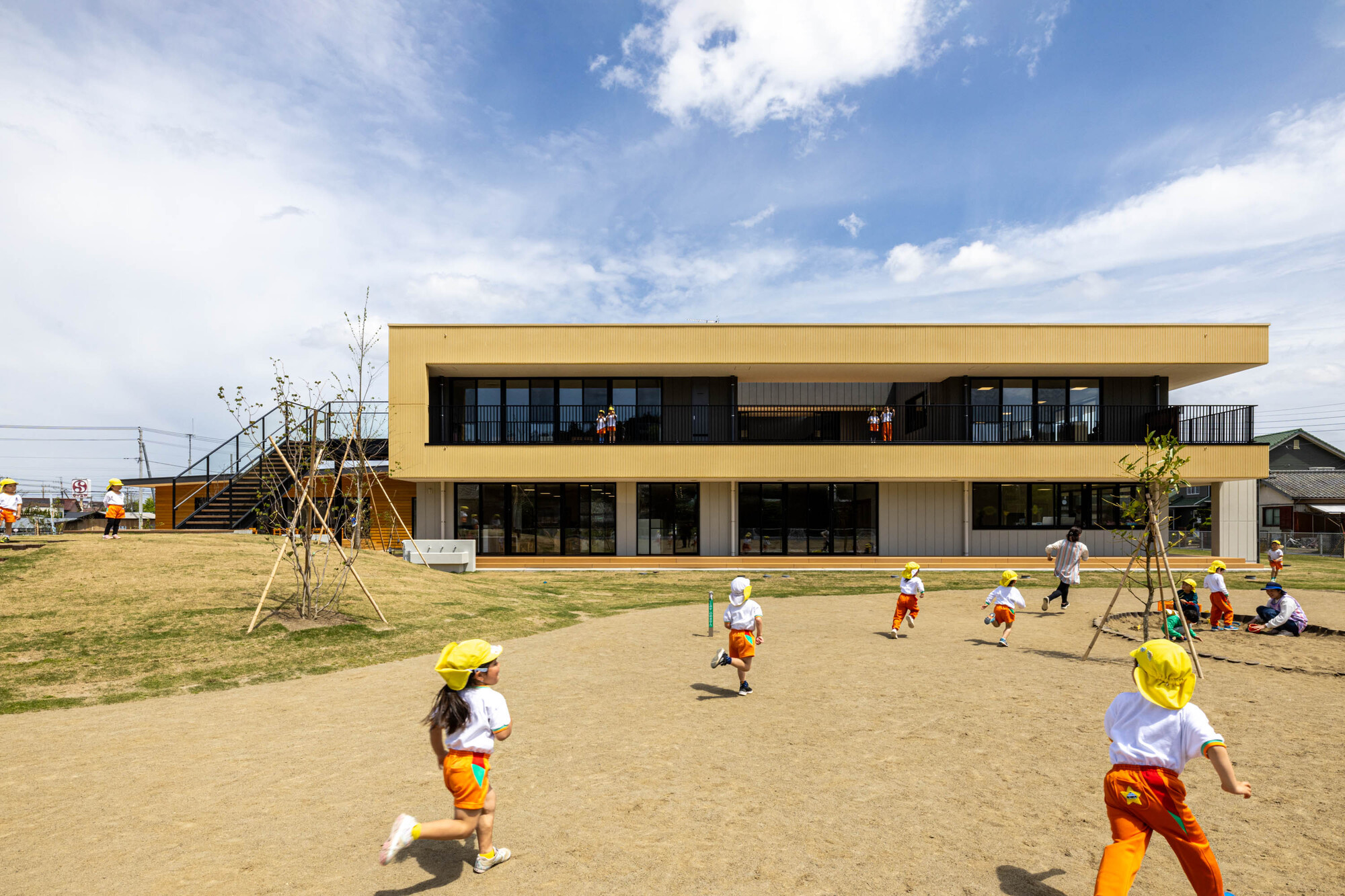
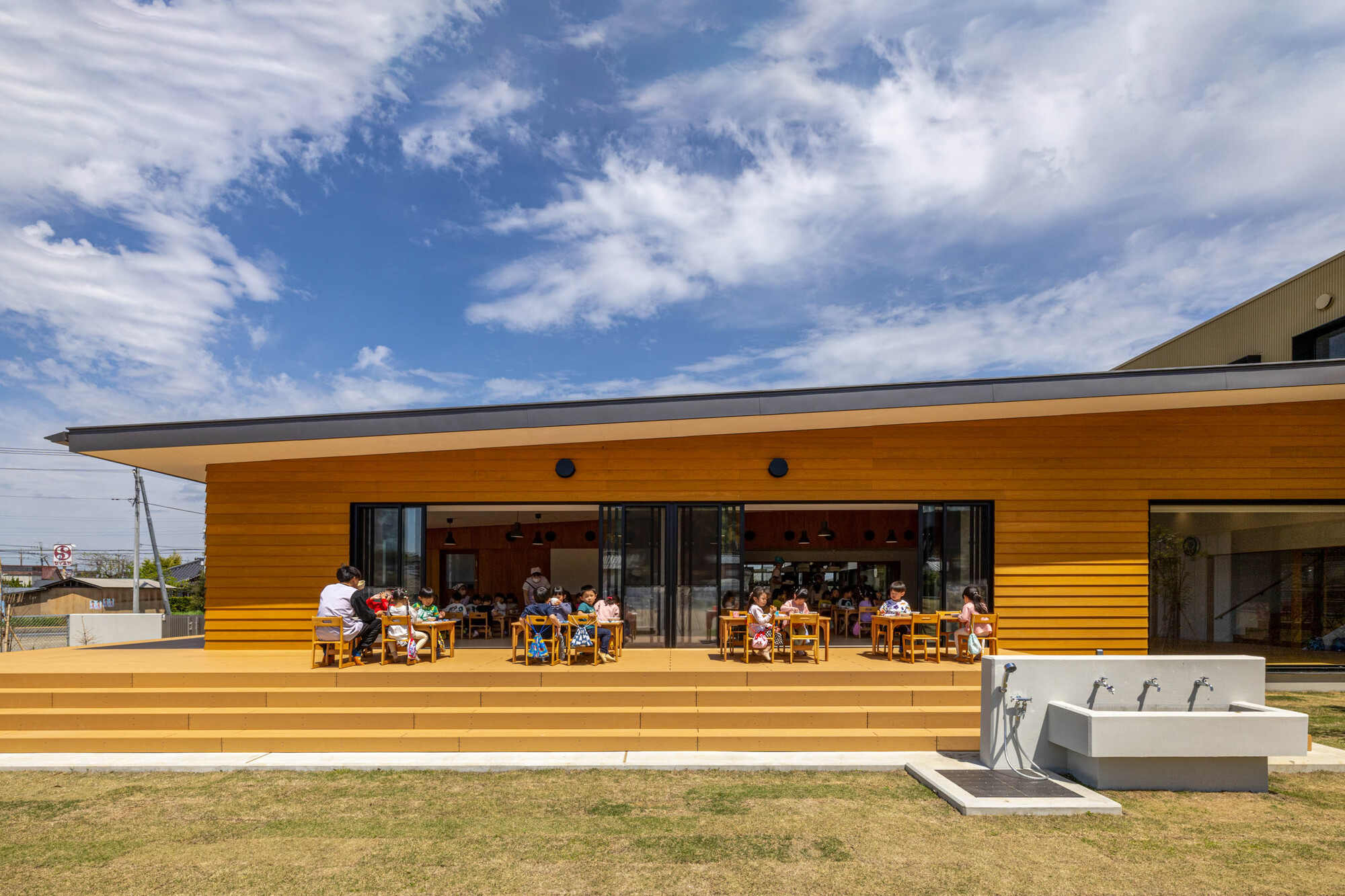
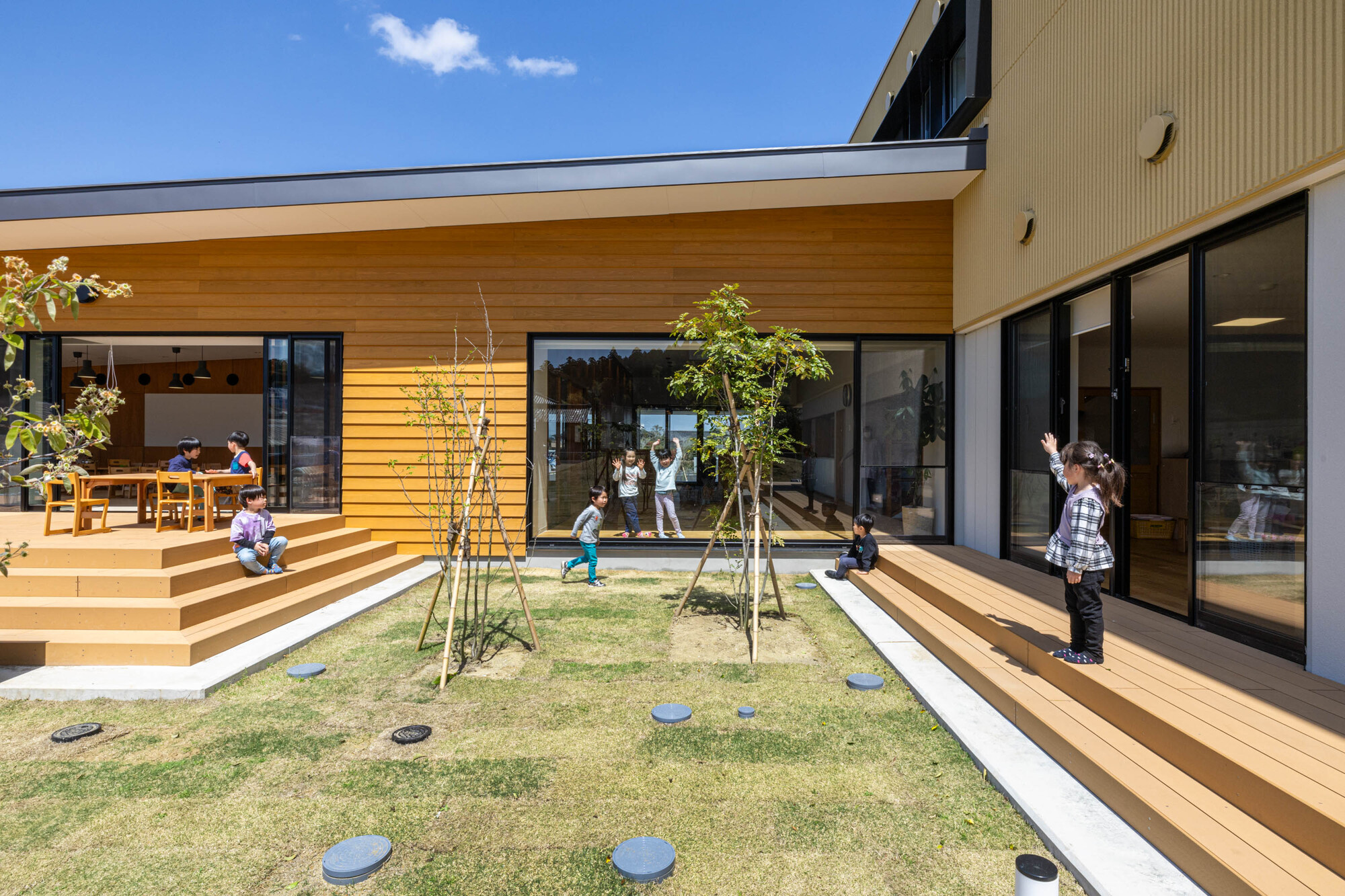
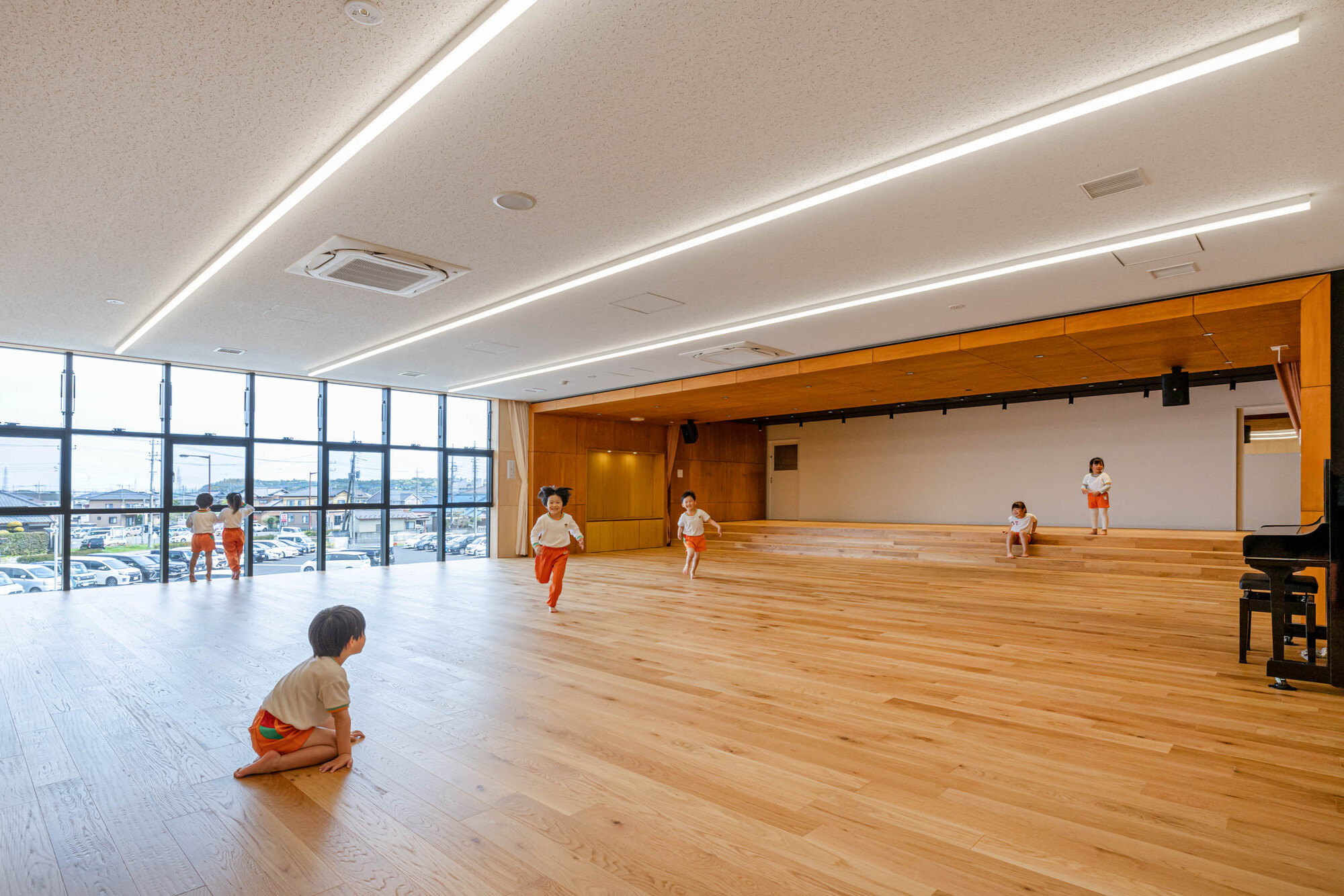
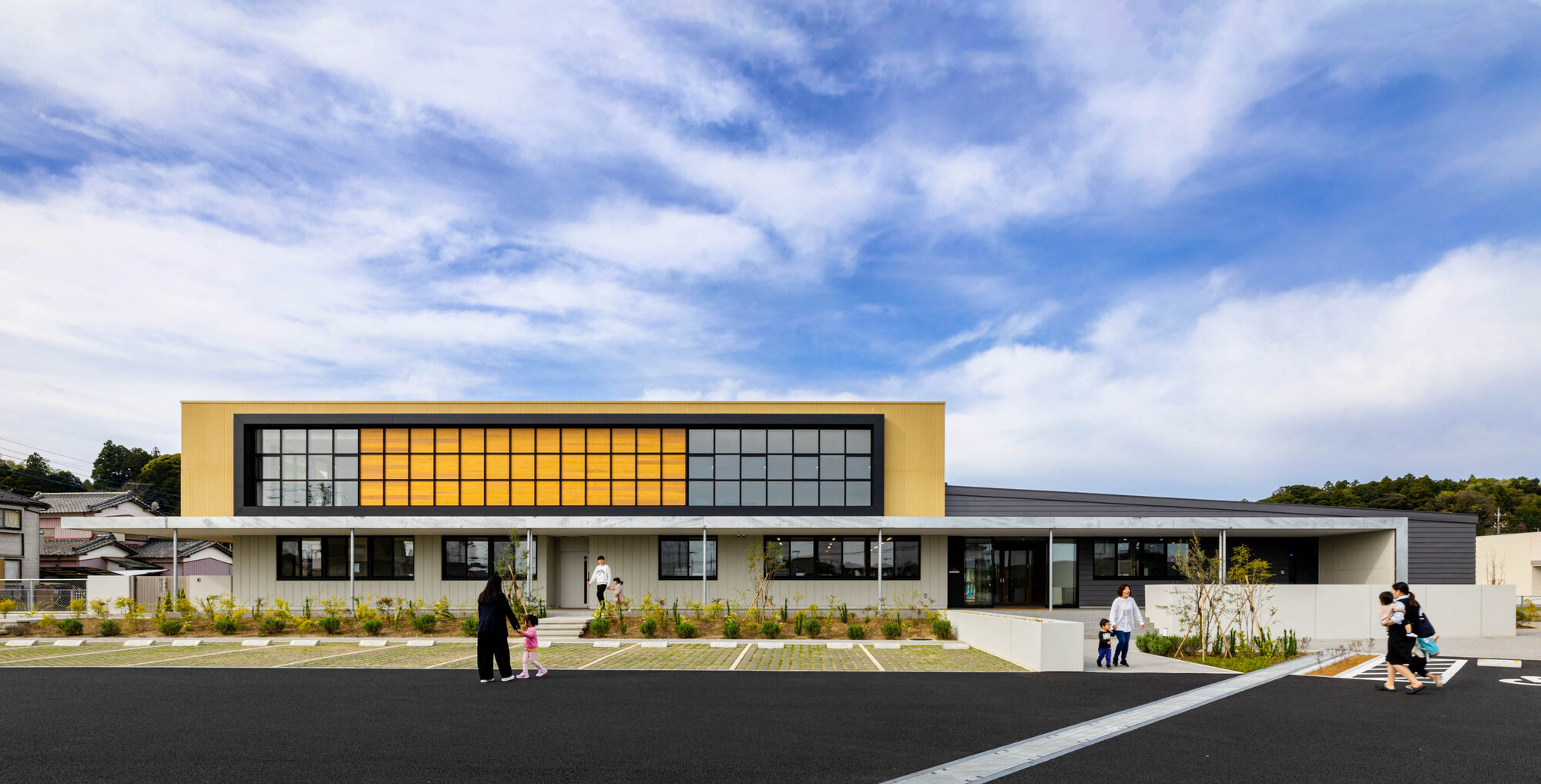
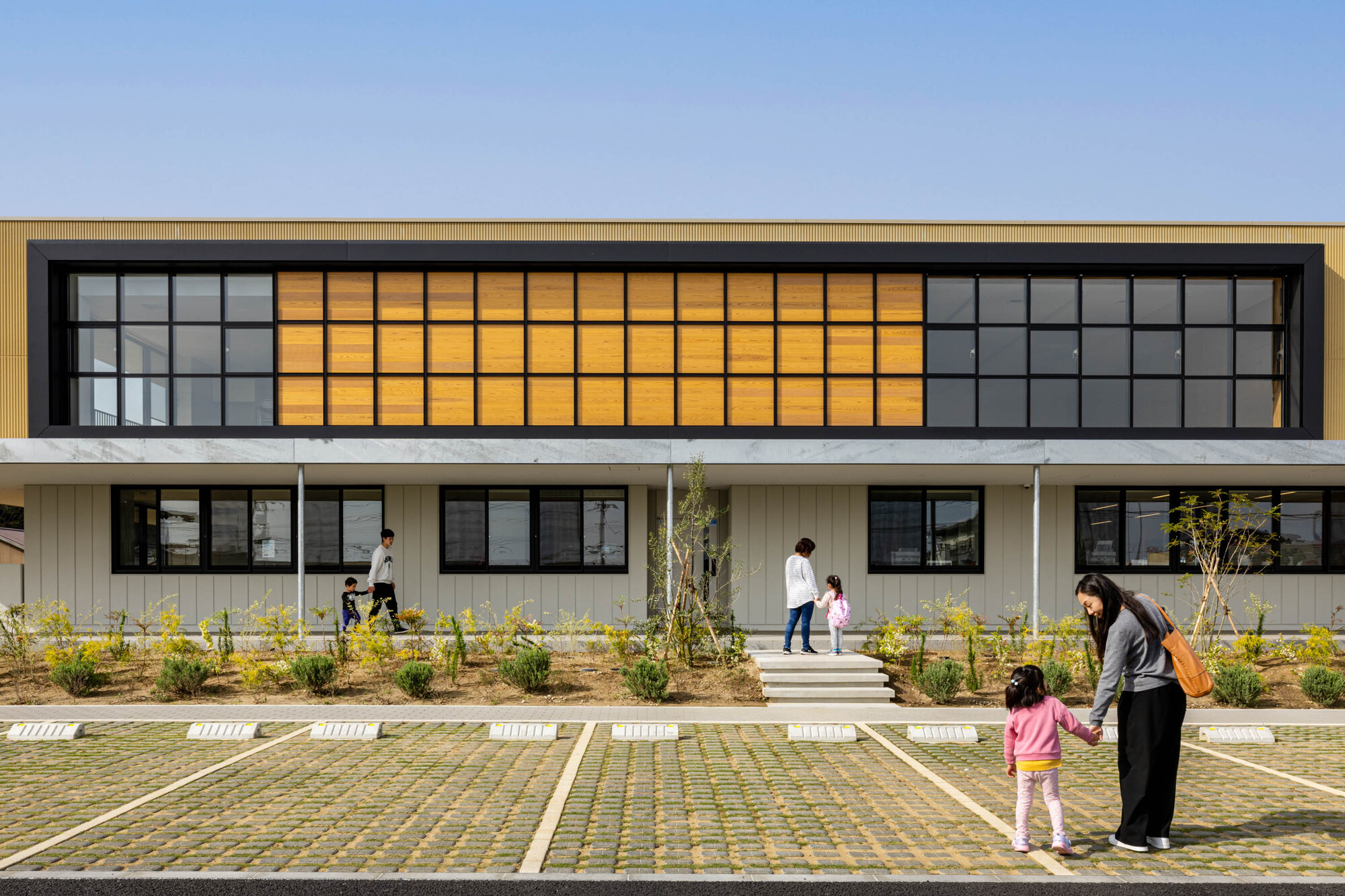
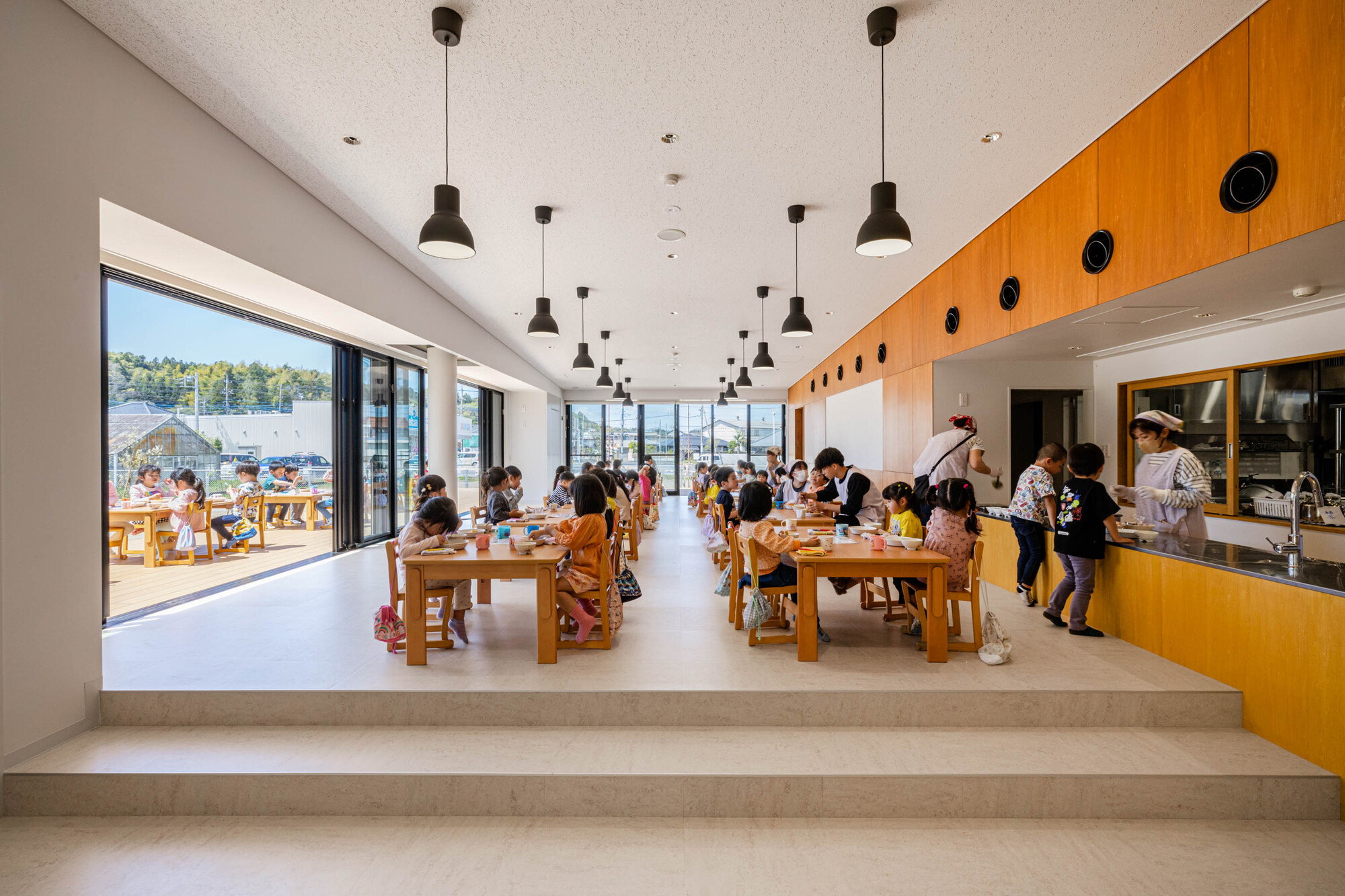
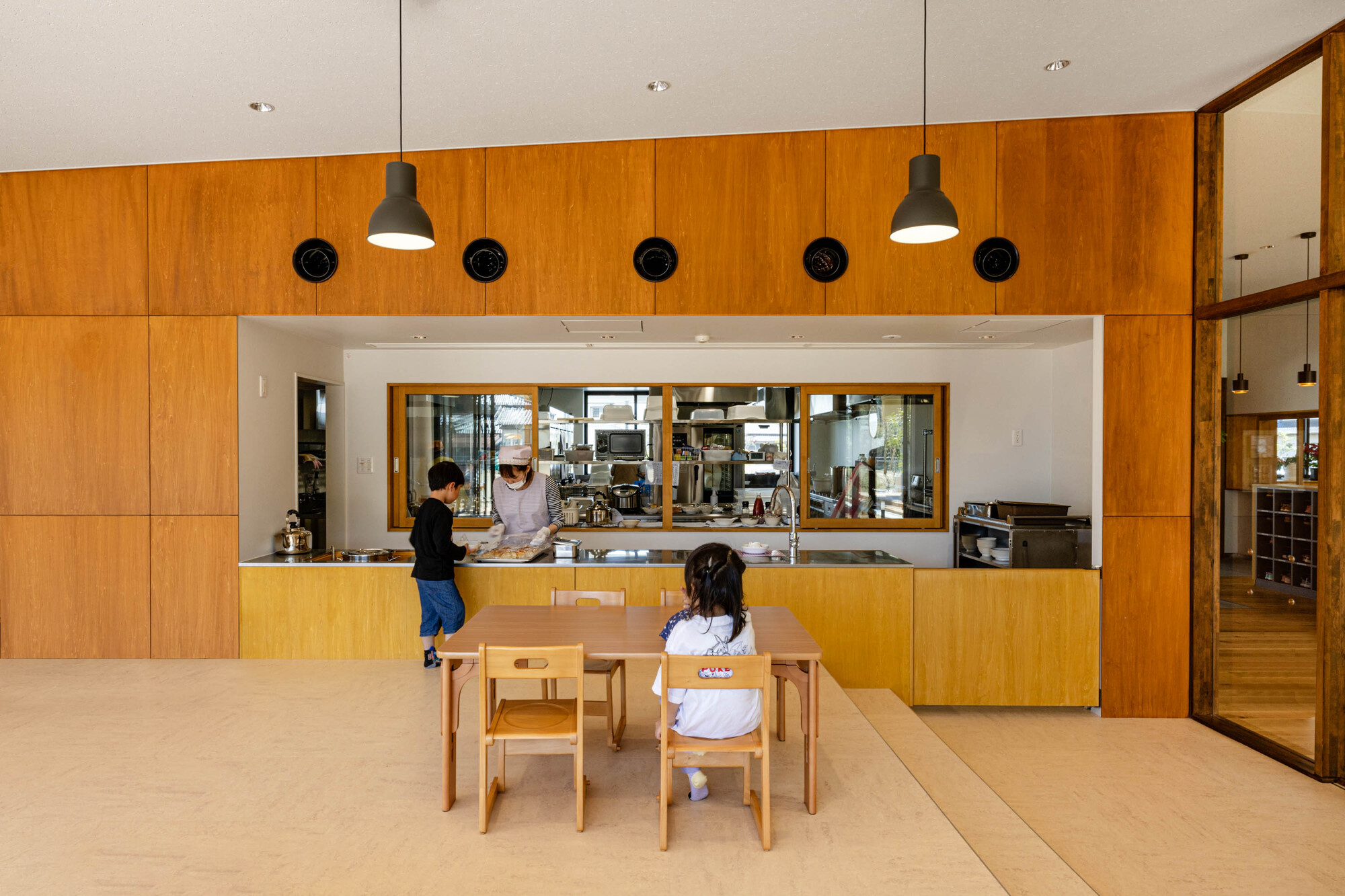
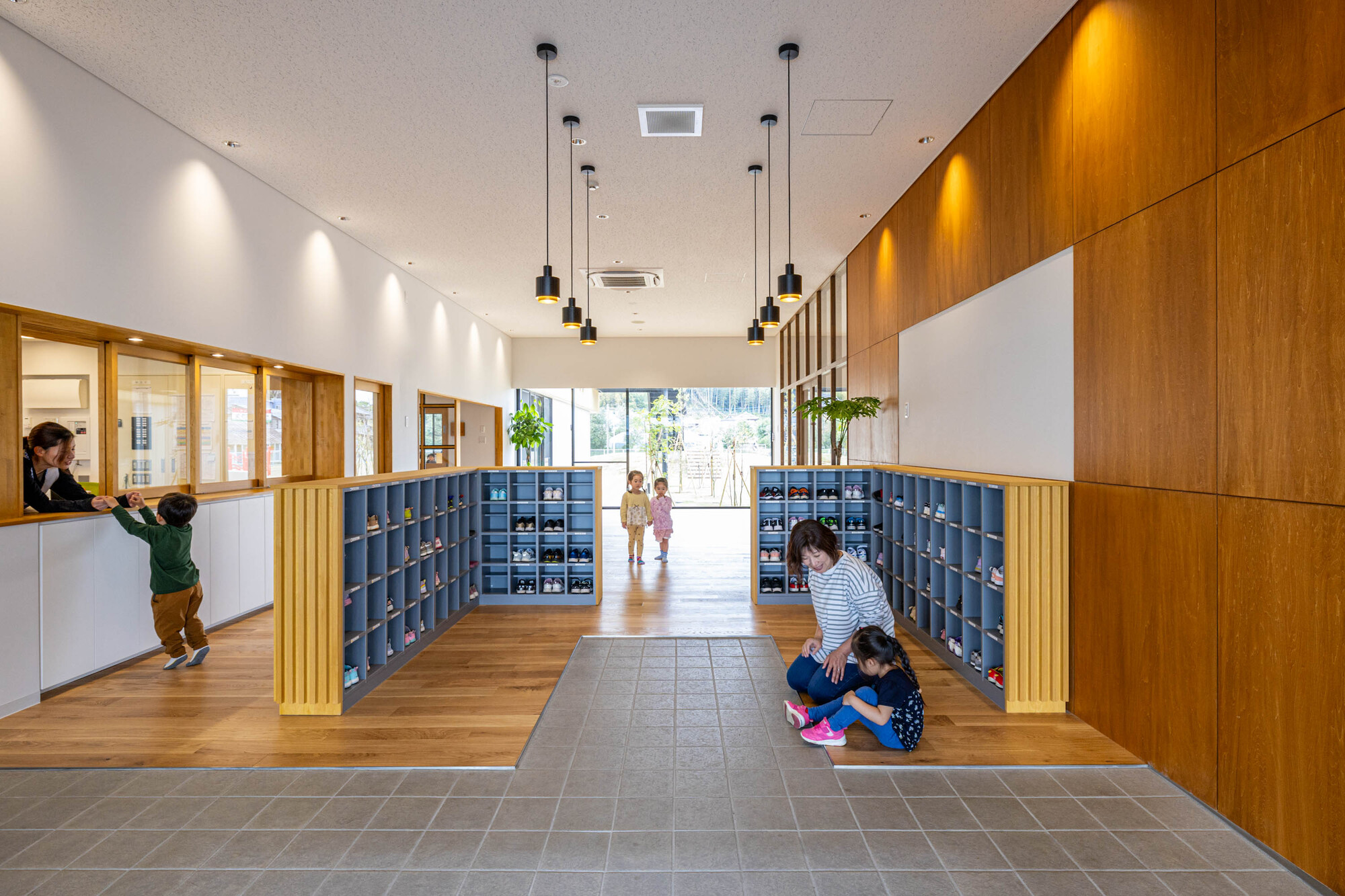
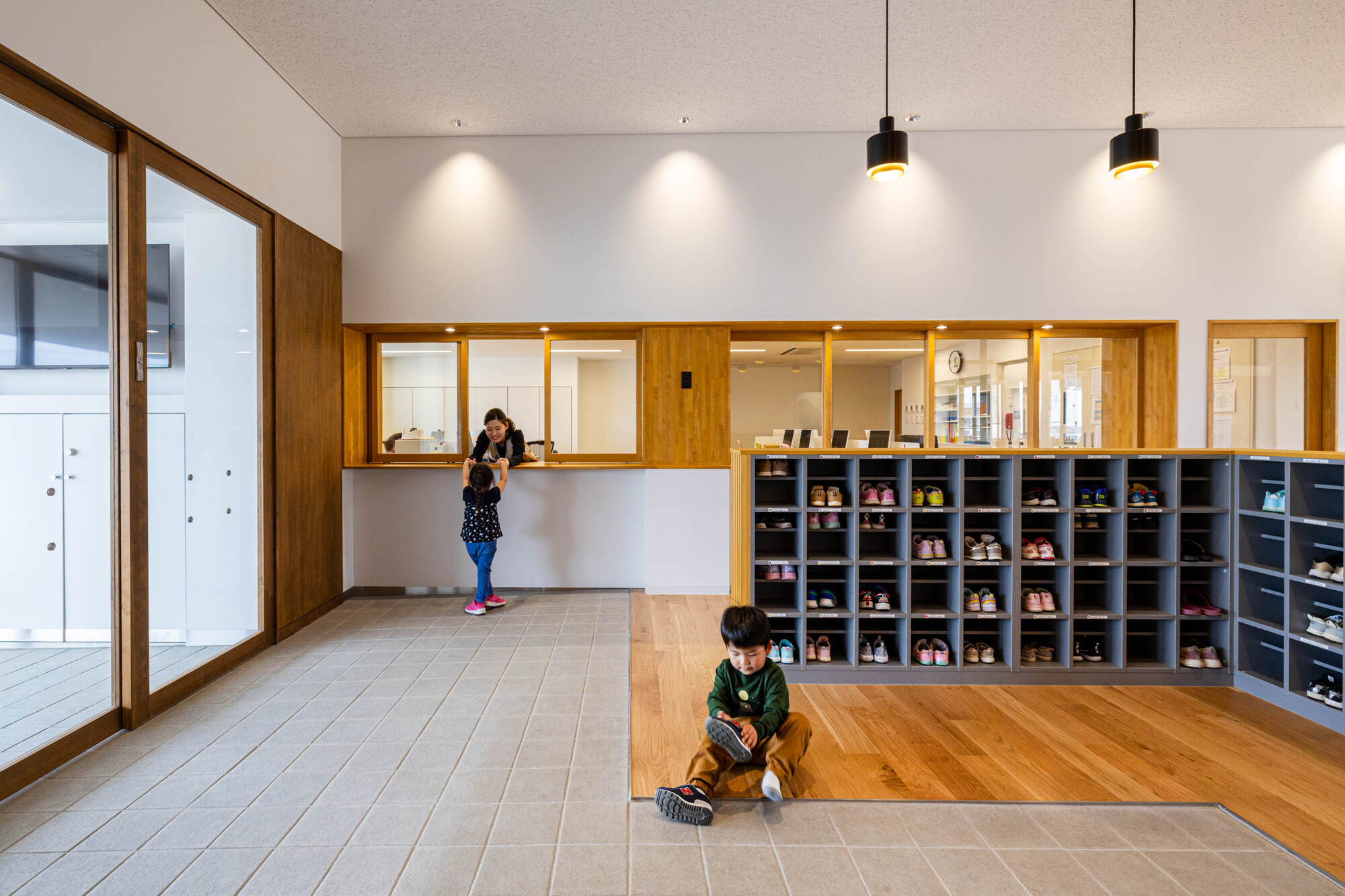
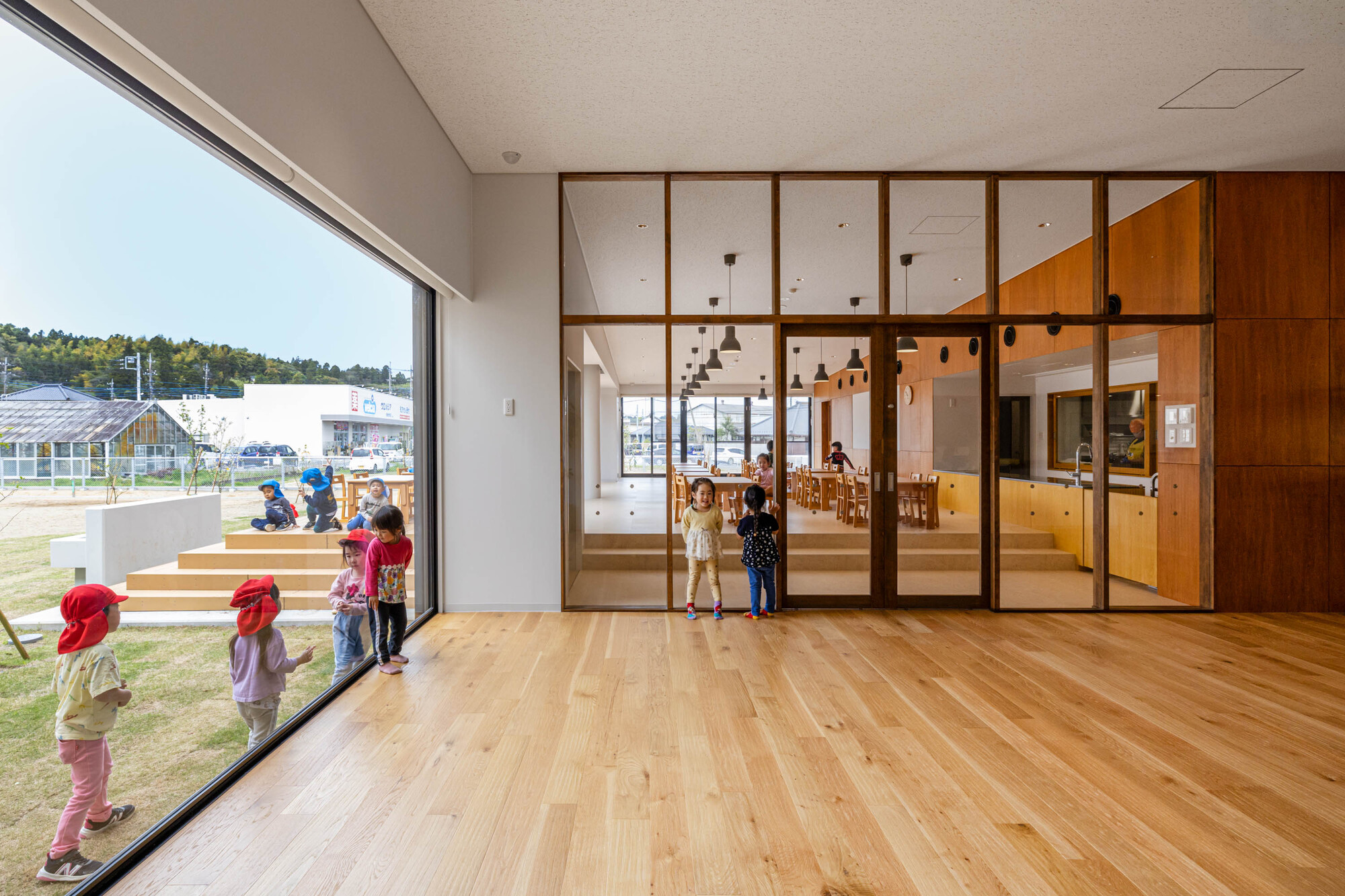
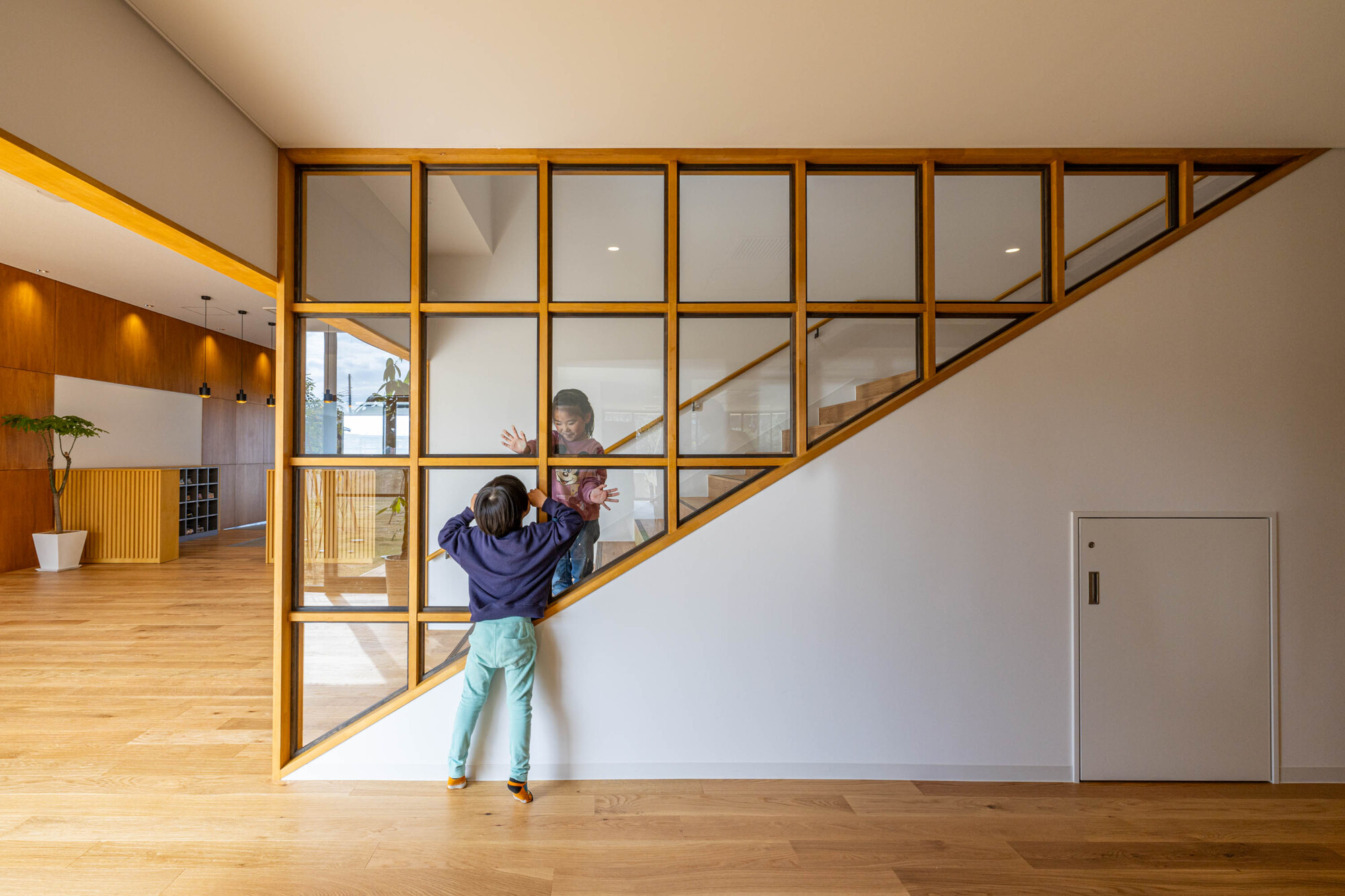
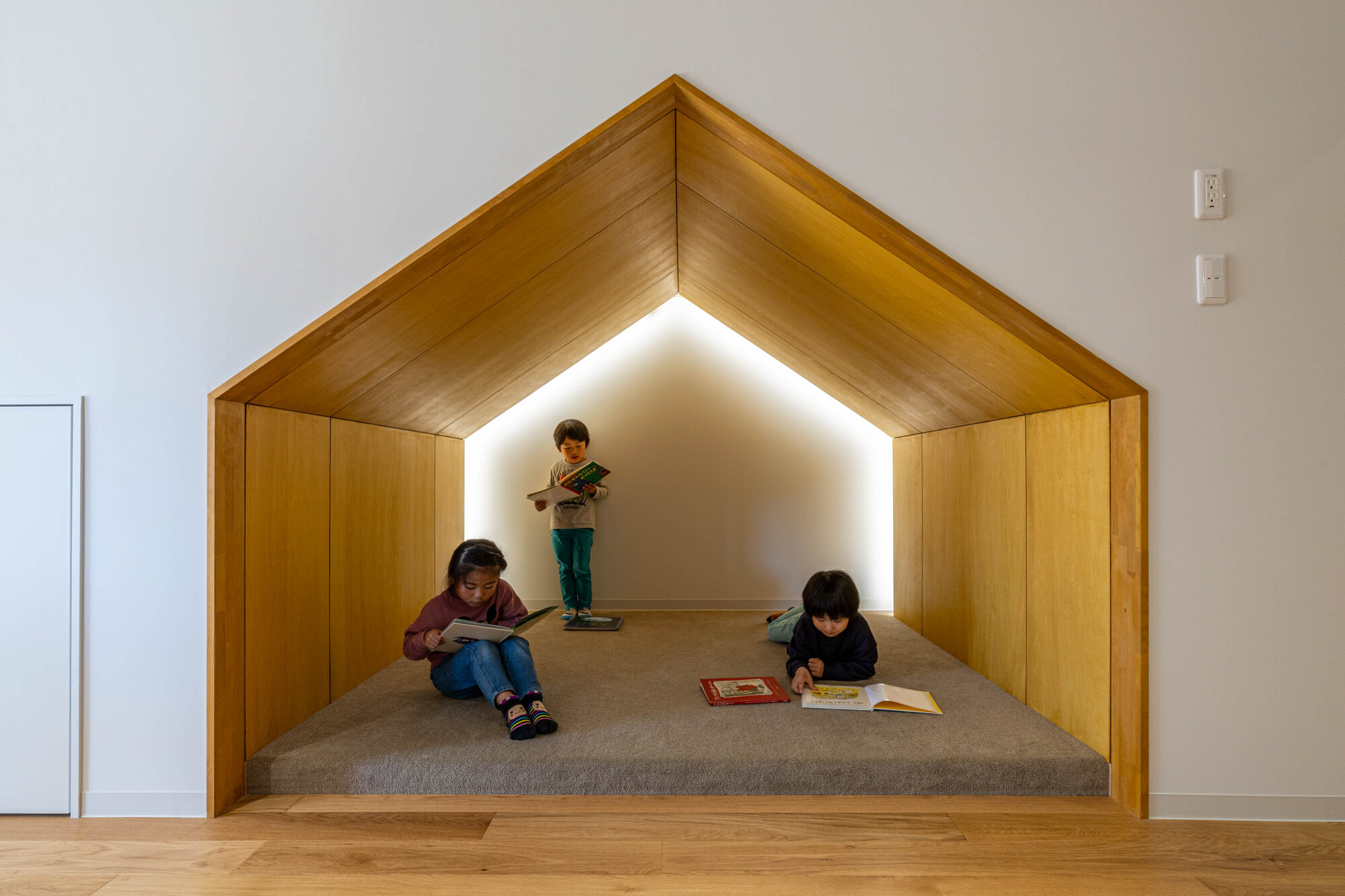
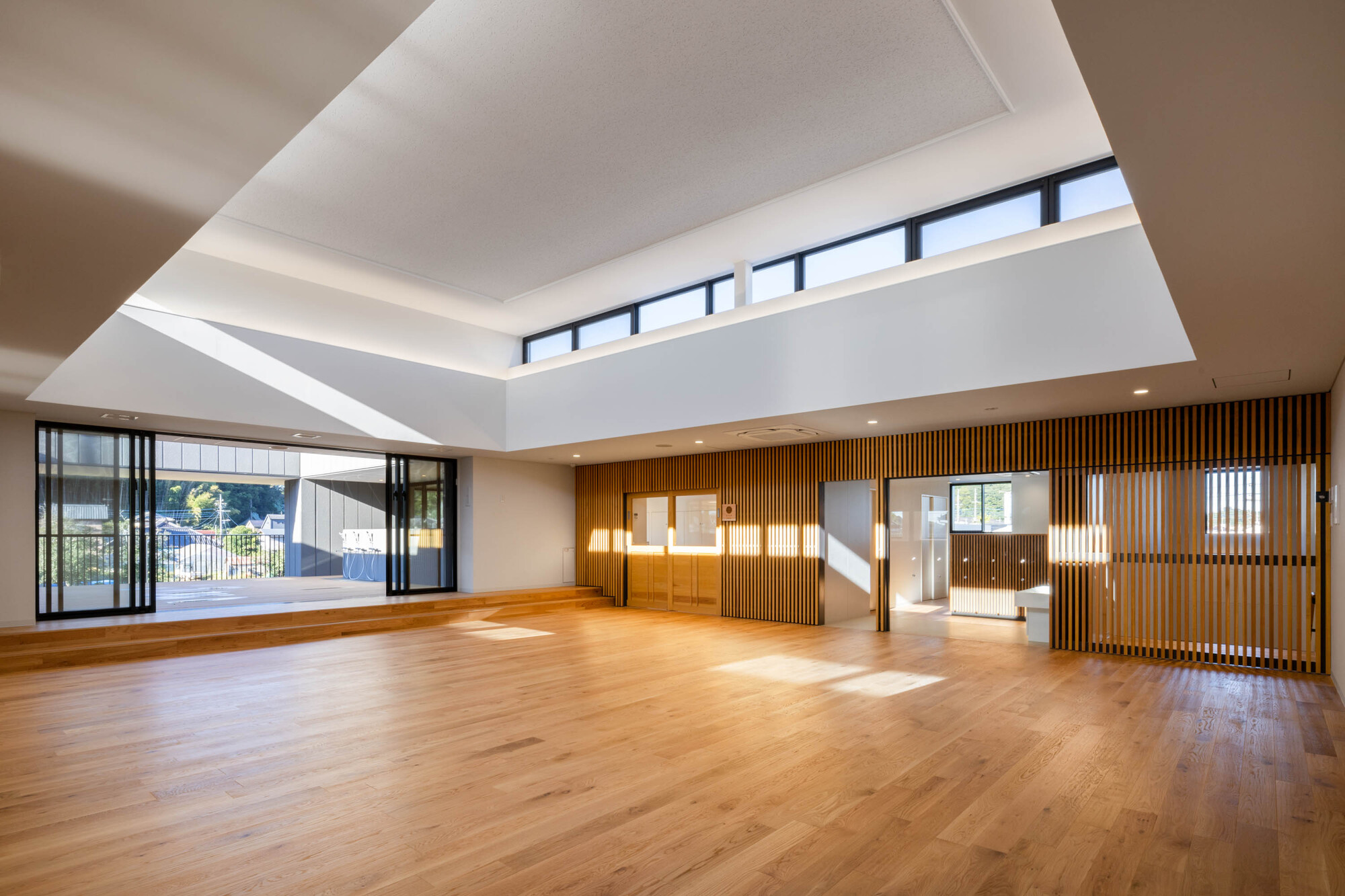
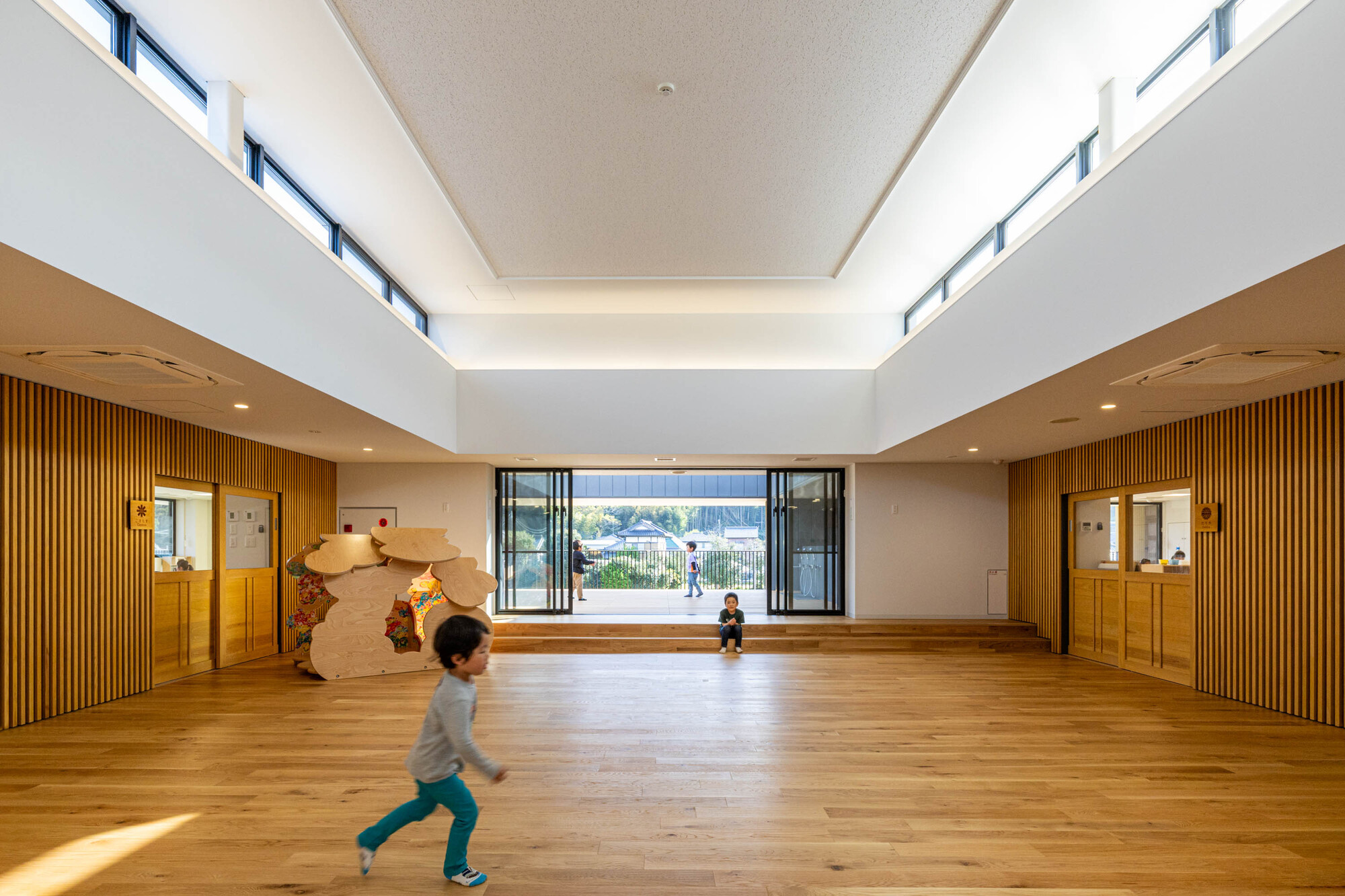
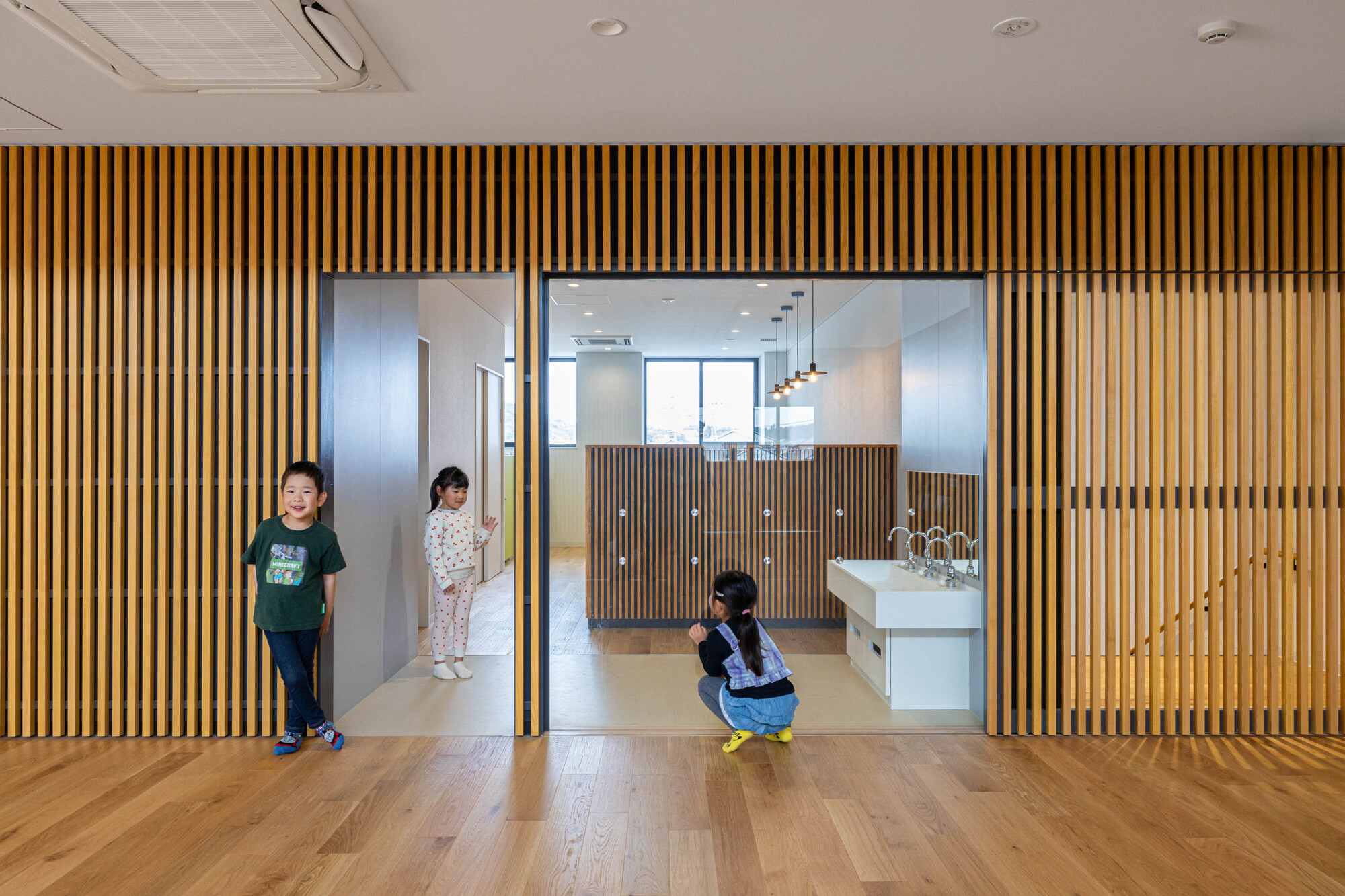
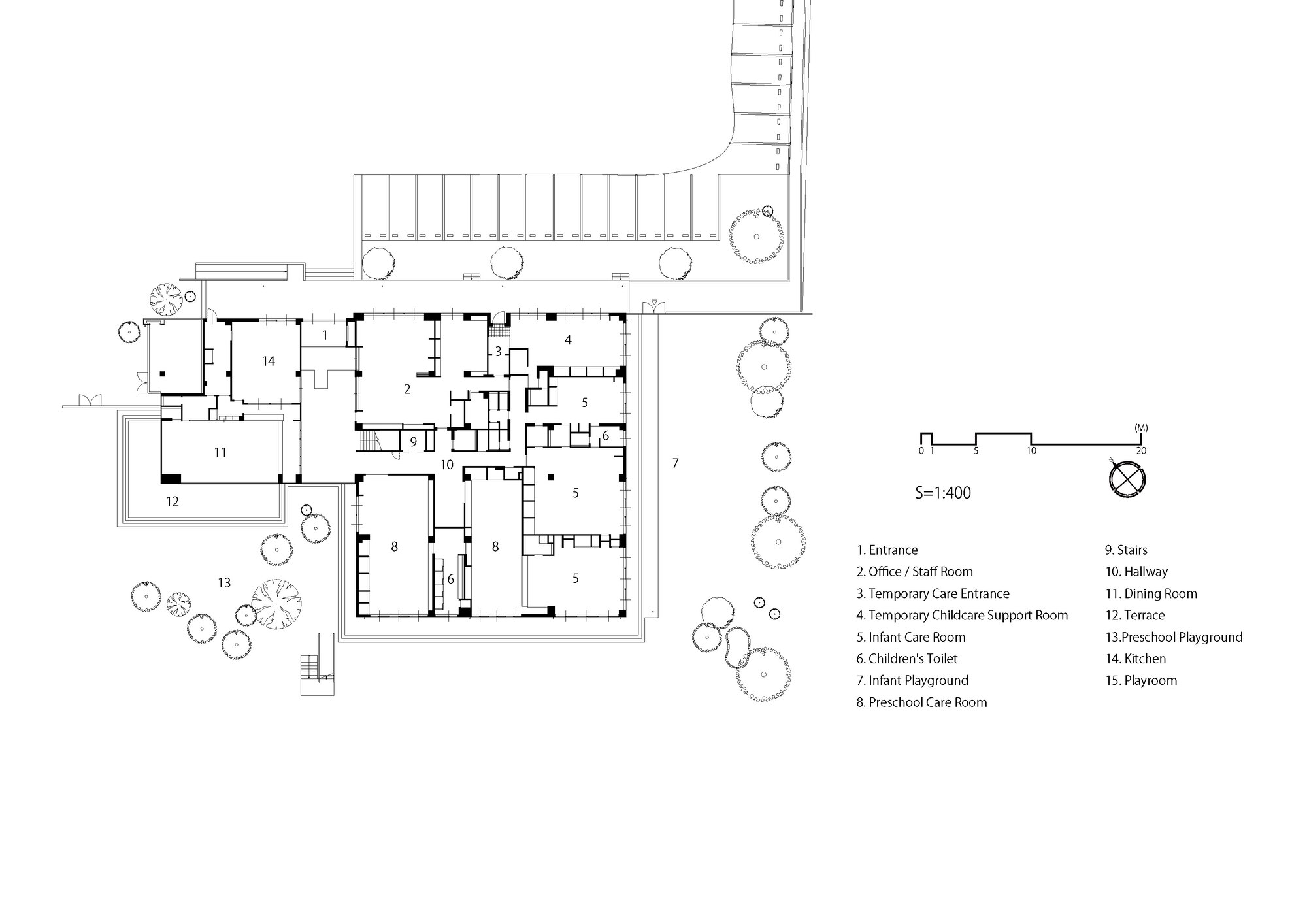
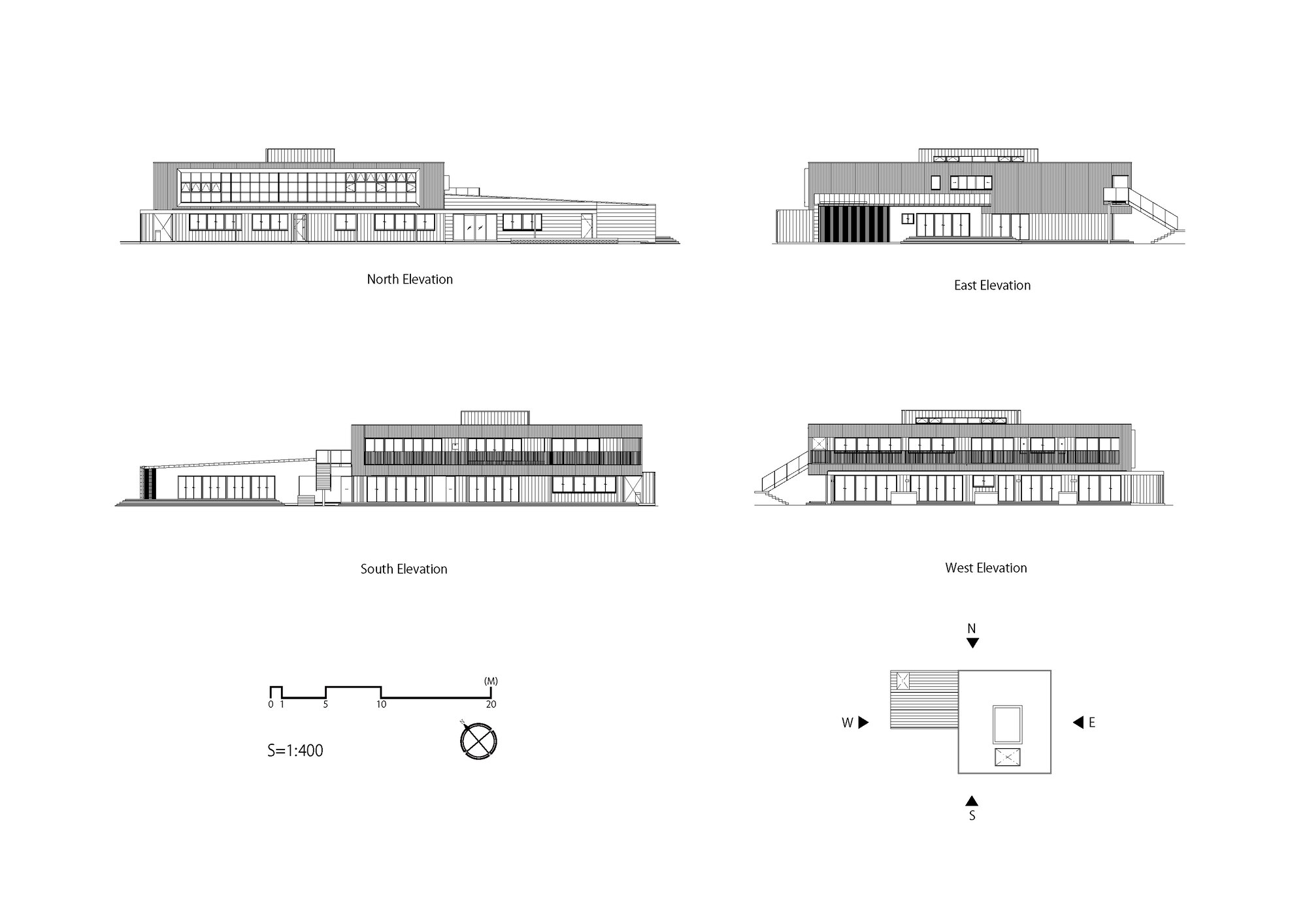
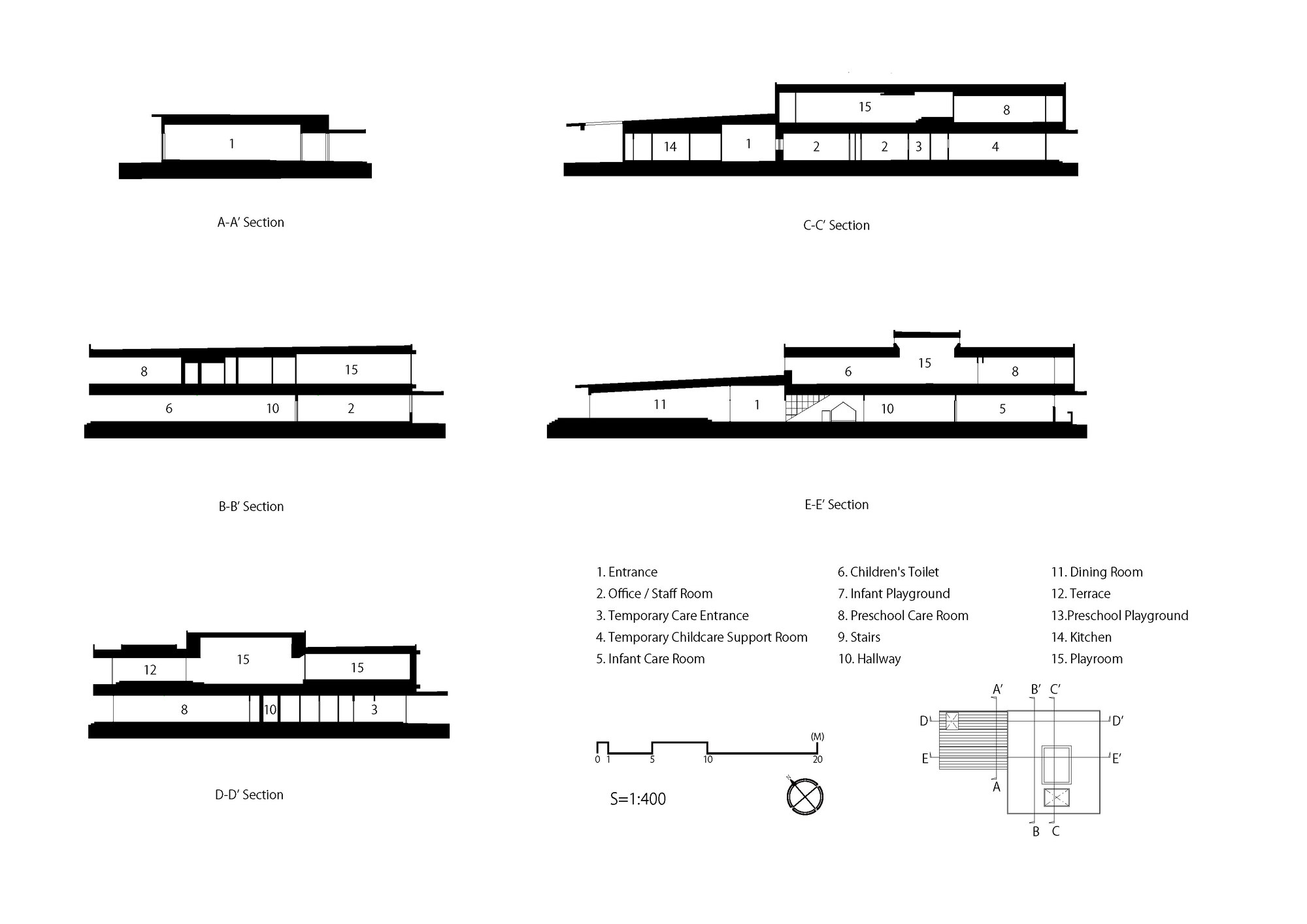
SG Kindergarten and Nursery #architecture Architects: HIBINOSEKKEI, Kids Design Labo, Youji no Shiro Area: 1125 m² Year: 2023 Photographs: Toshinari Soga ( studio BAUHAUS ) City: Katori Country: Japan The new SG Kindergarten and Nursery was constructed by the consolidation and privatization of four dilapidated public preschools in Katori City, Chiba Prefecture. The area has been known as a hub of cultural exchange that prospered due to the waterway transportation across the Tone River during the Edo period. The distinct building type, Machiya (traditional townhouse), and townscapes from that specific period have been carefully preserved and designated as a Preservation District for Groups of Historic Buildings. The SG Kindergarten and Nursery strives to be a place where children can learn about and appreciate the unique history from the past to the present day. Thanks to the uniqueness of their culture, which has been gradually formed by the interaction of different cultures and people, children can develop an attachment to the local community. The design of the kindergarten was inspired by their local architecture, Machiya. By reinterpreting traditional elements such as the wooden walls and latticework, one can sense history while enjoying a new understanding of the details. The goal is for children to spend their days in this environment, naturally becoming aware of and familiar with the local characteristics. Children gradually develop a sense of belonging to their hometown. The kindergarten also addresses various issues surrounding children's diet, such as unbalanced nutrient intake, inadequate breakfasts, and solitary dining. In this kindergarten, children can develop both mentally and physically through multifaceted nutritional education. Architecture supports such education. For instance, the dining room, adjacent to the main entrance, a kitchen, and a vegetable garden with a view incorporate food-related experiences in one's daily life. Children naturally learn the joy and importance of eating by observing the vegetables they grow and immersing themselves in the smells of food being prepared. This kindergarten equips children with a strong foundation for healthy dietary habits through which they grow up healthy both physically and mentally.
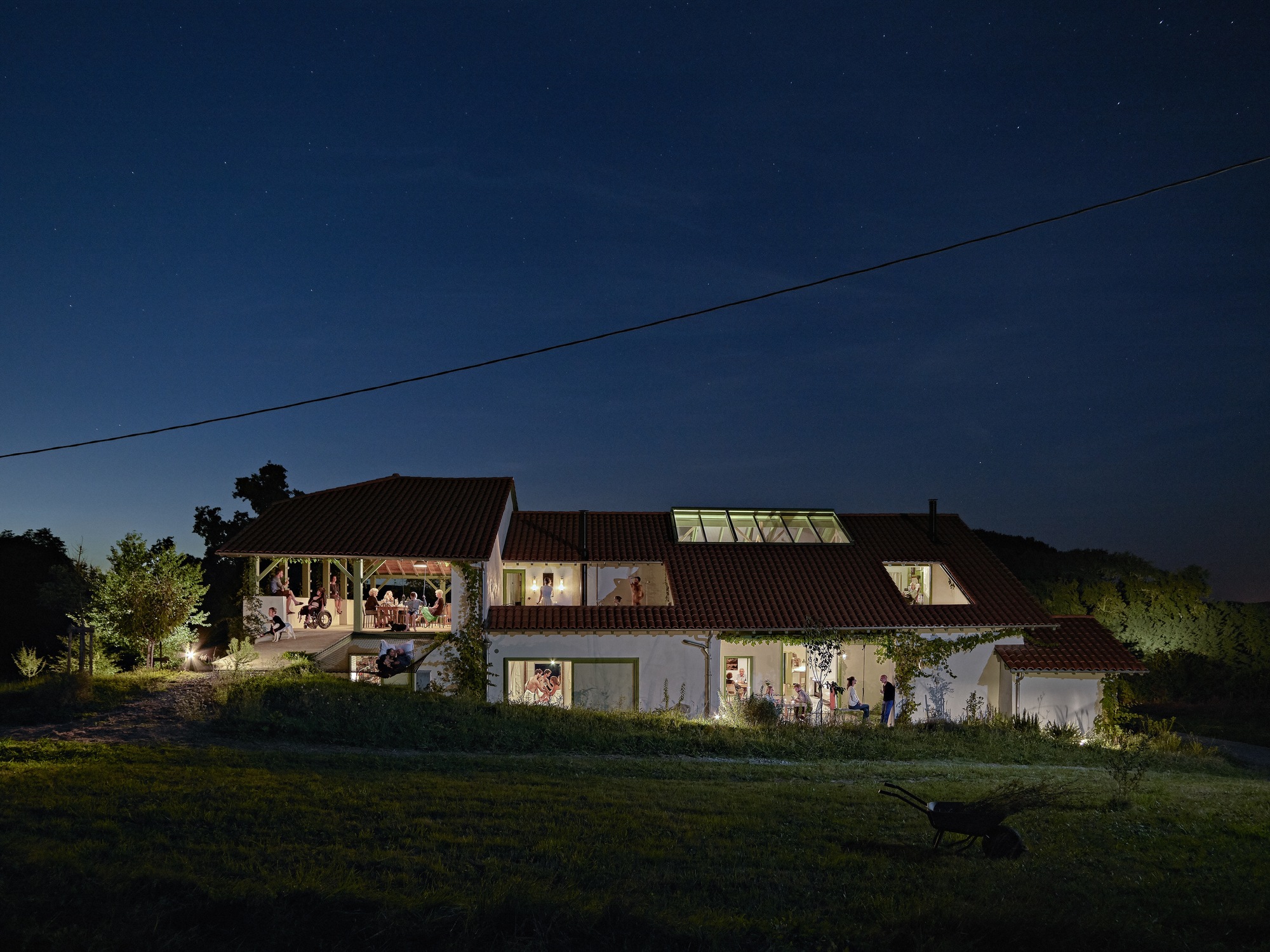
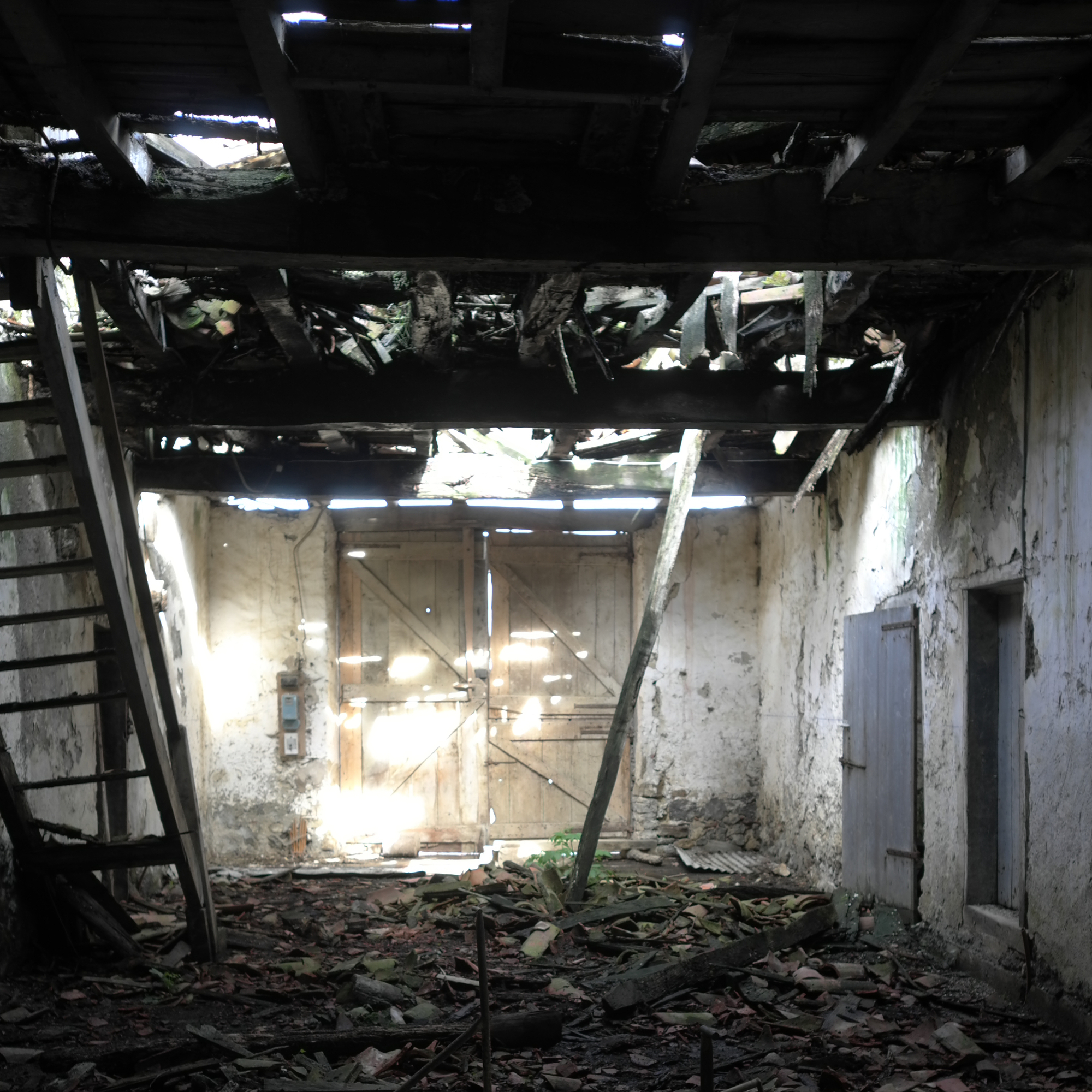
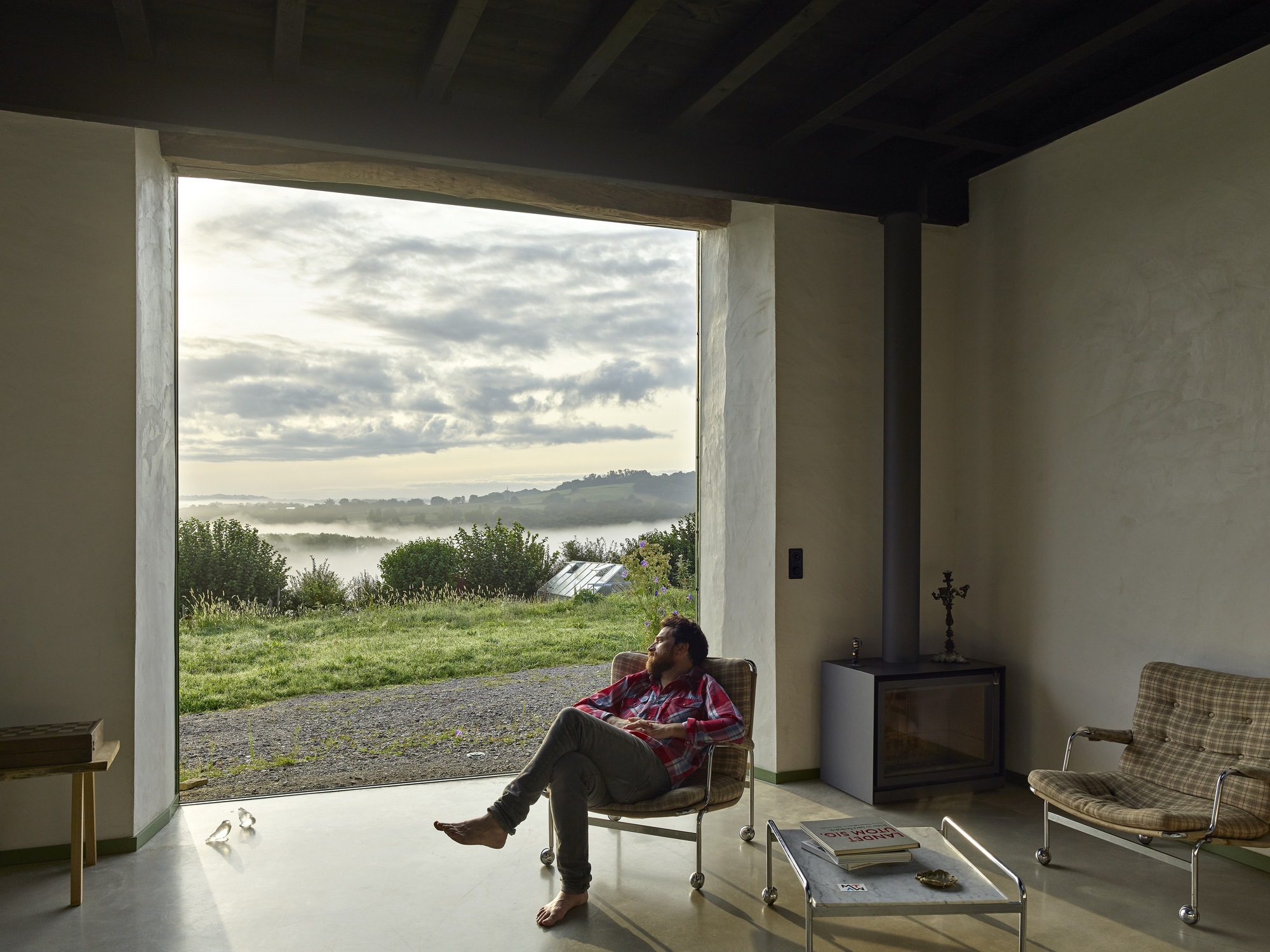
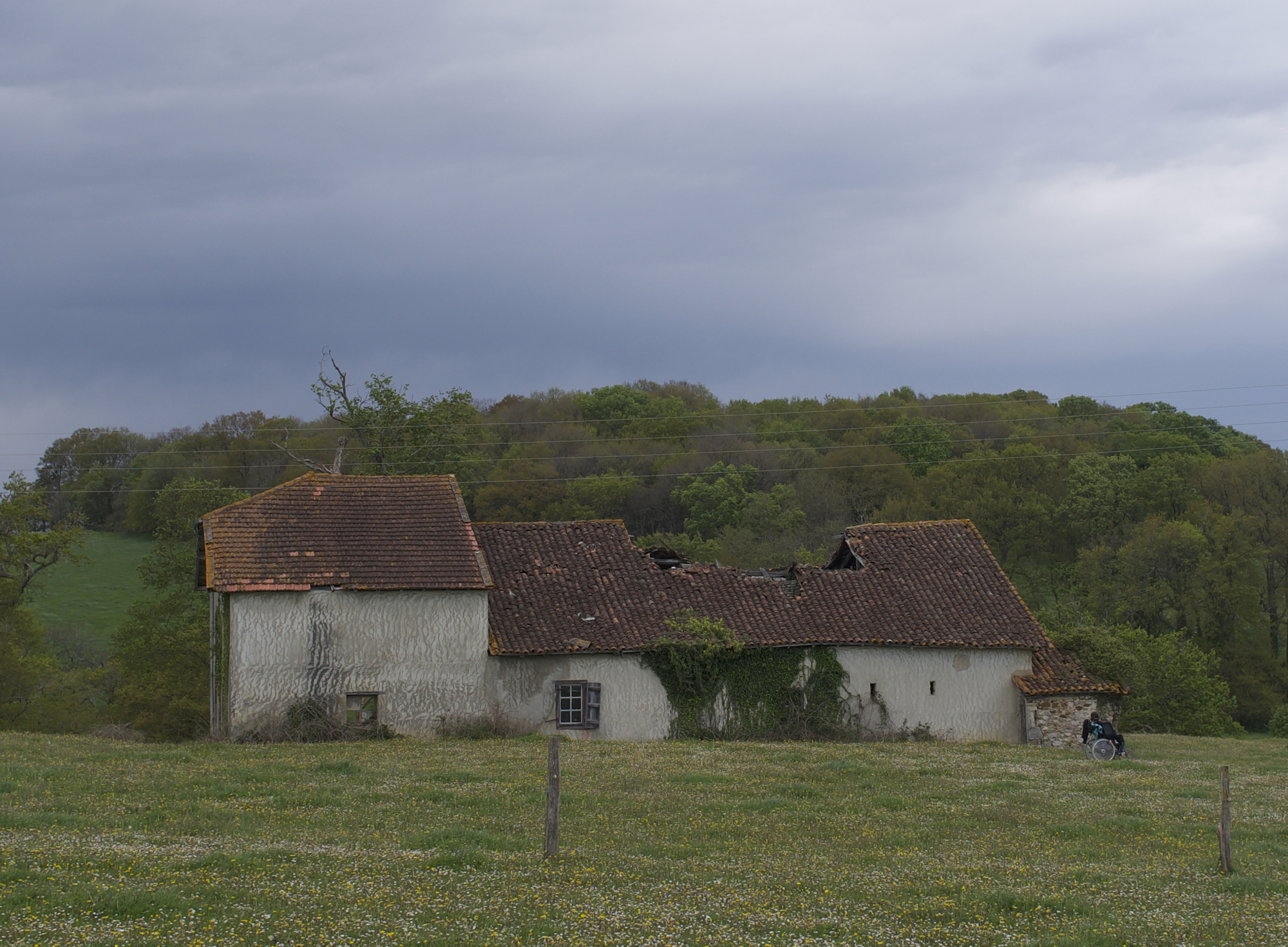
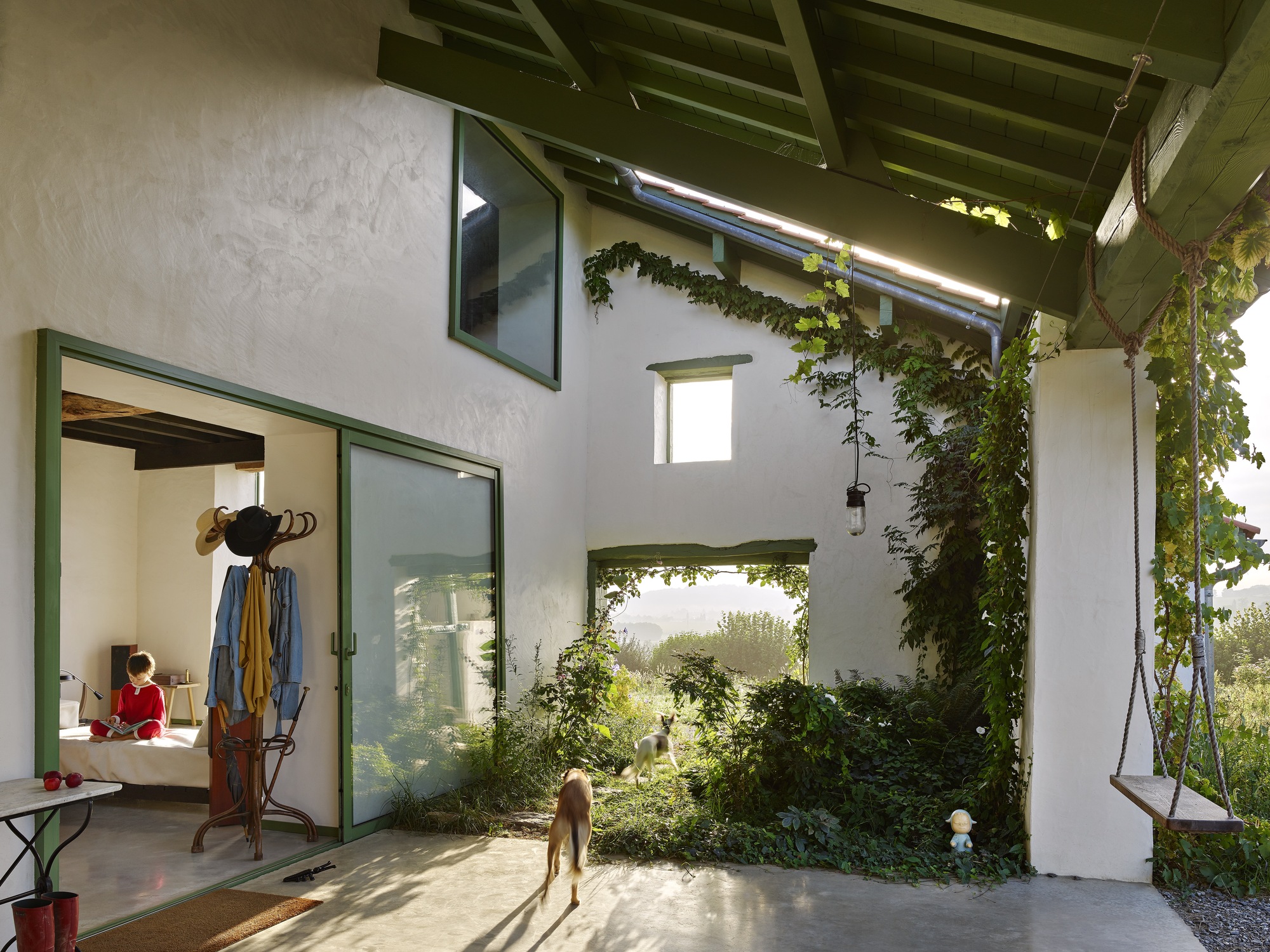
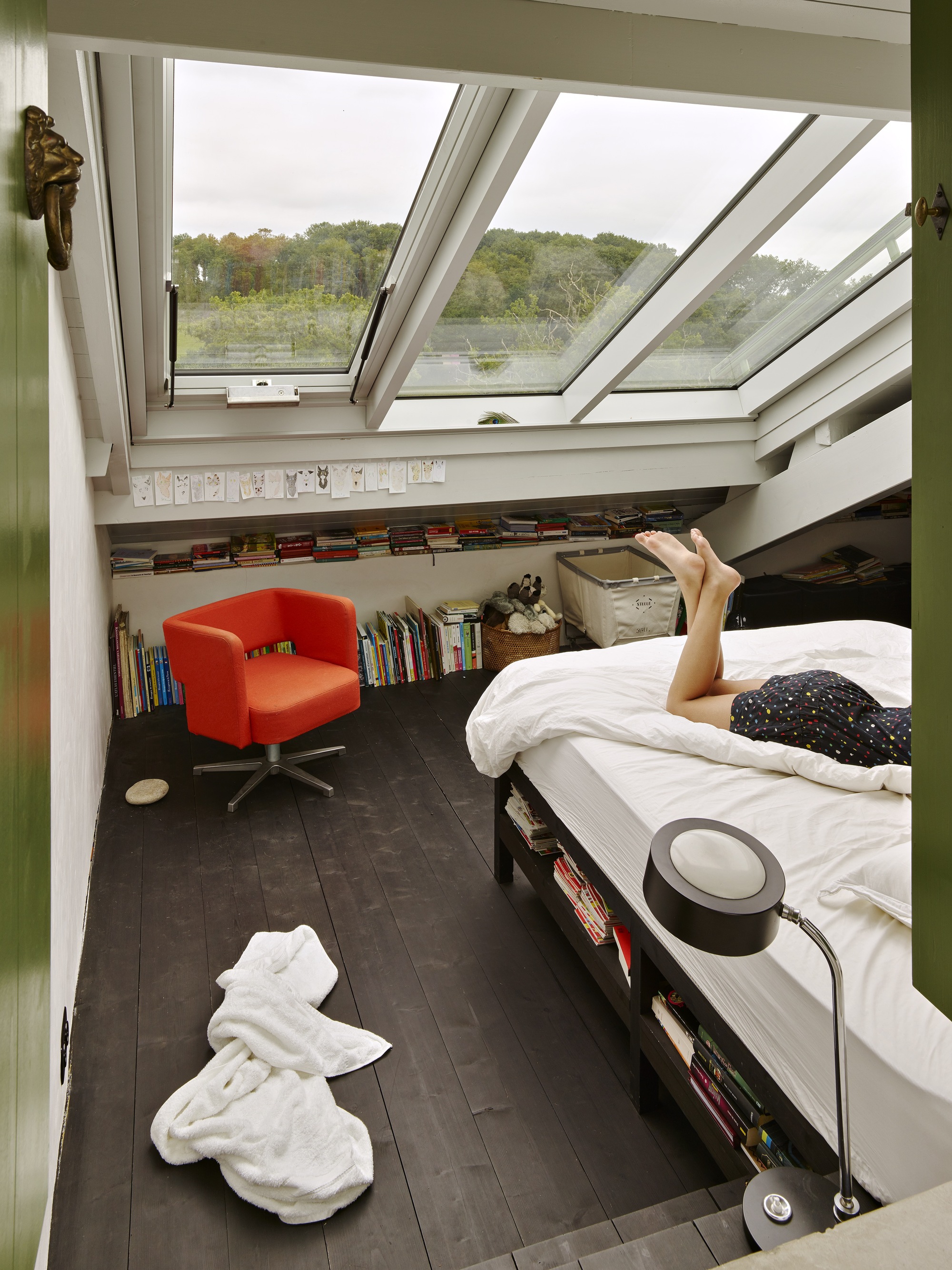
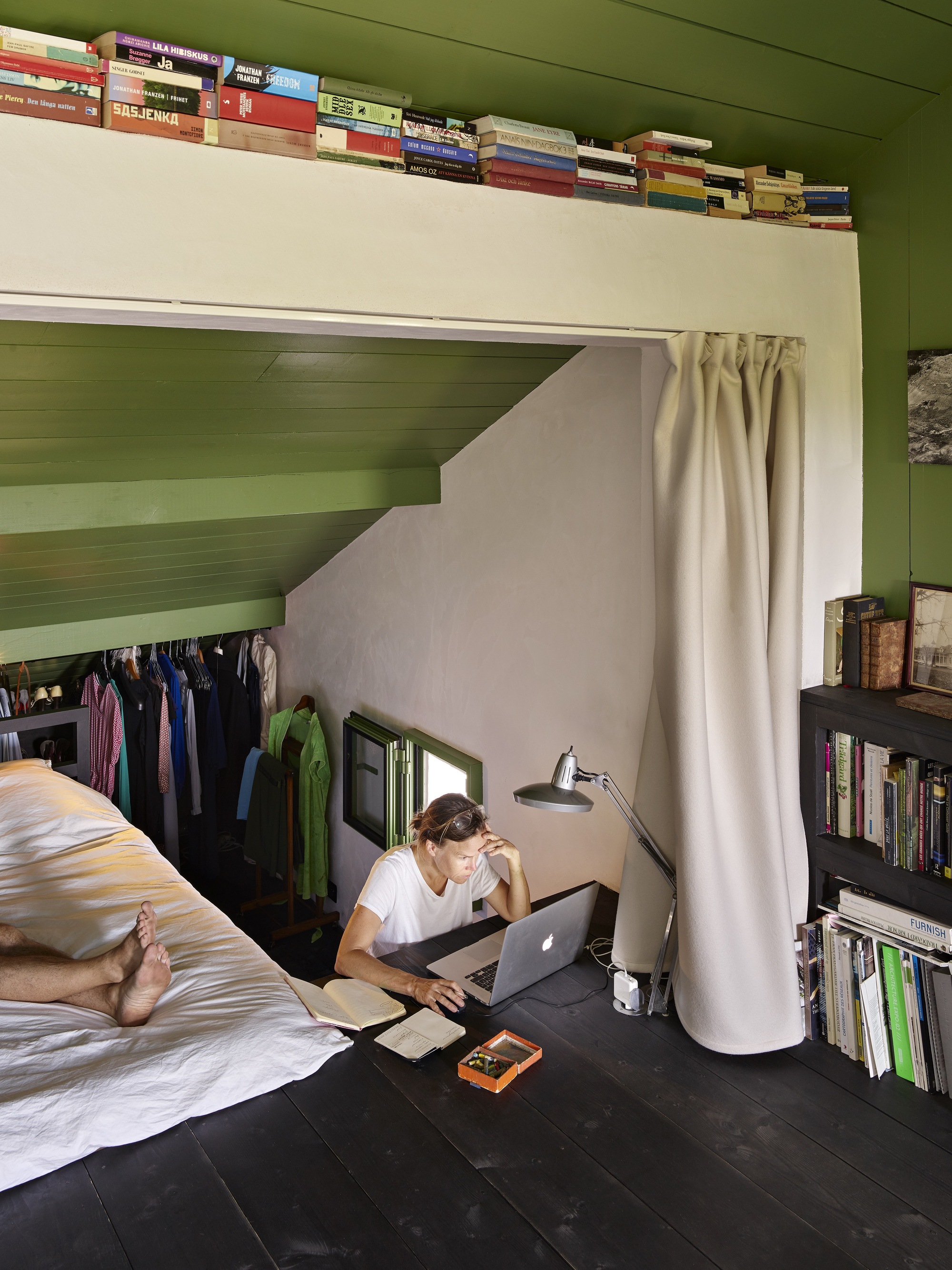
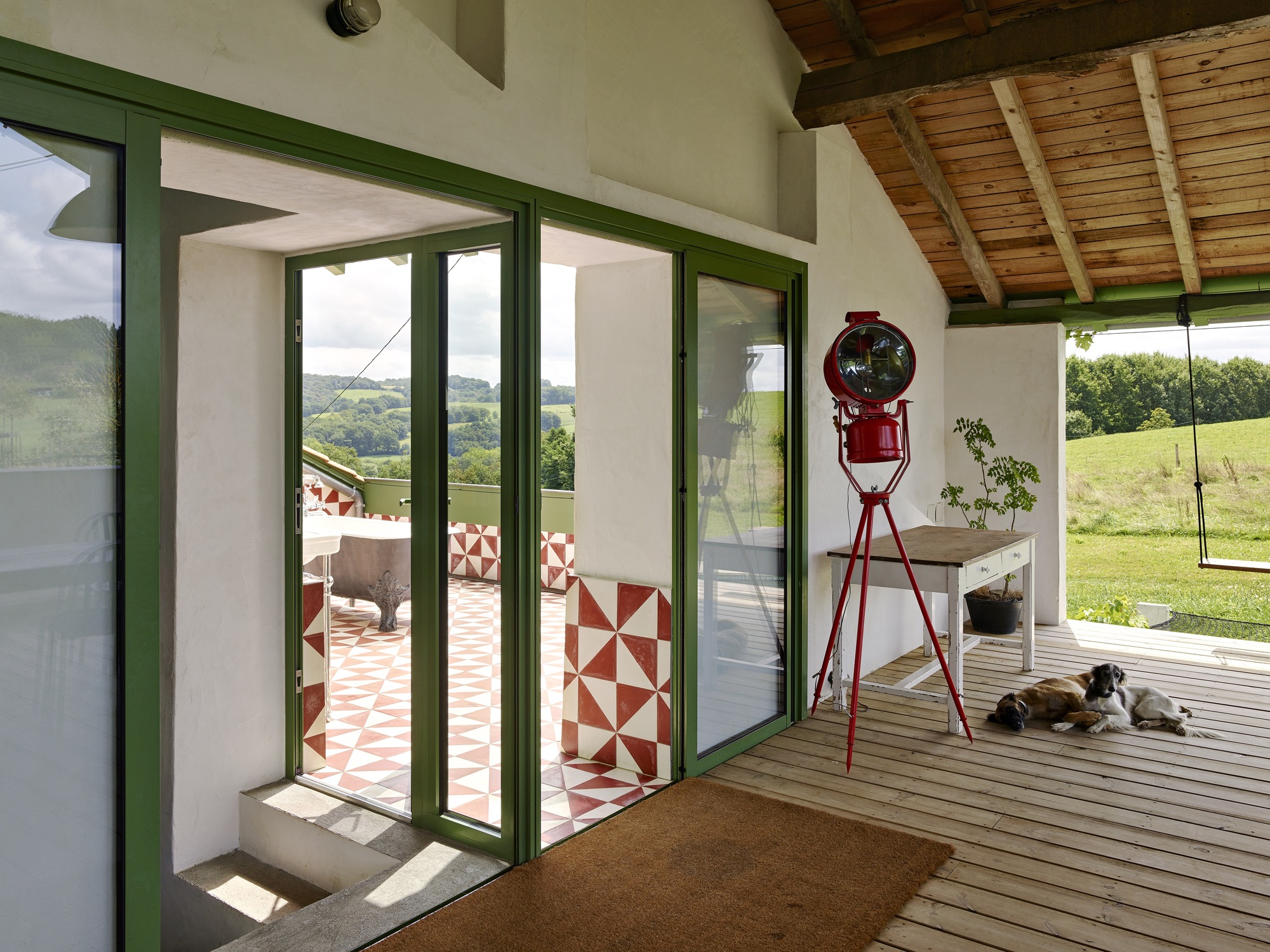
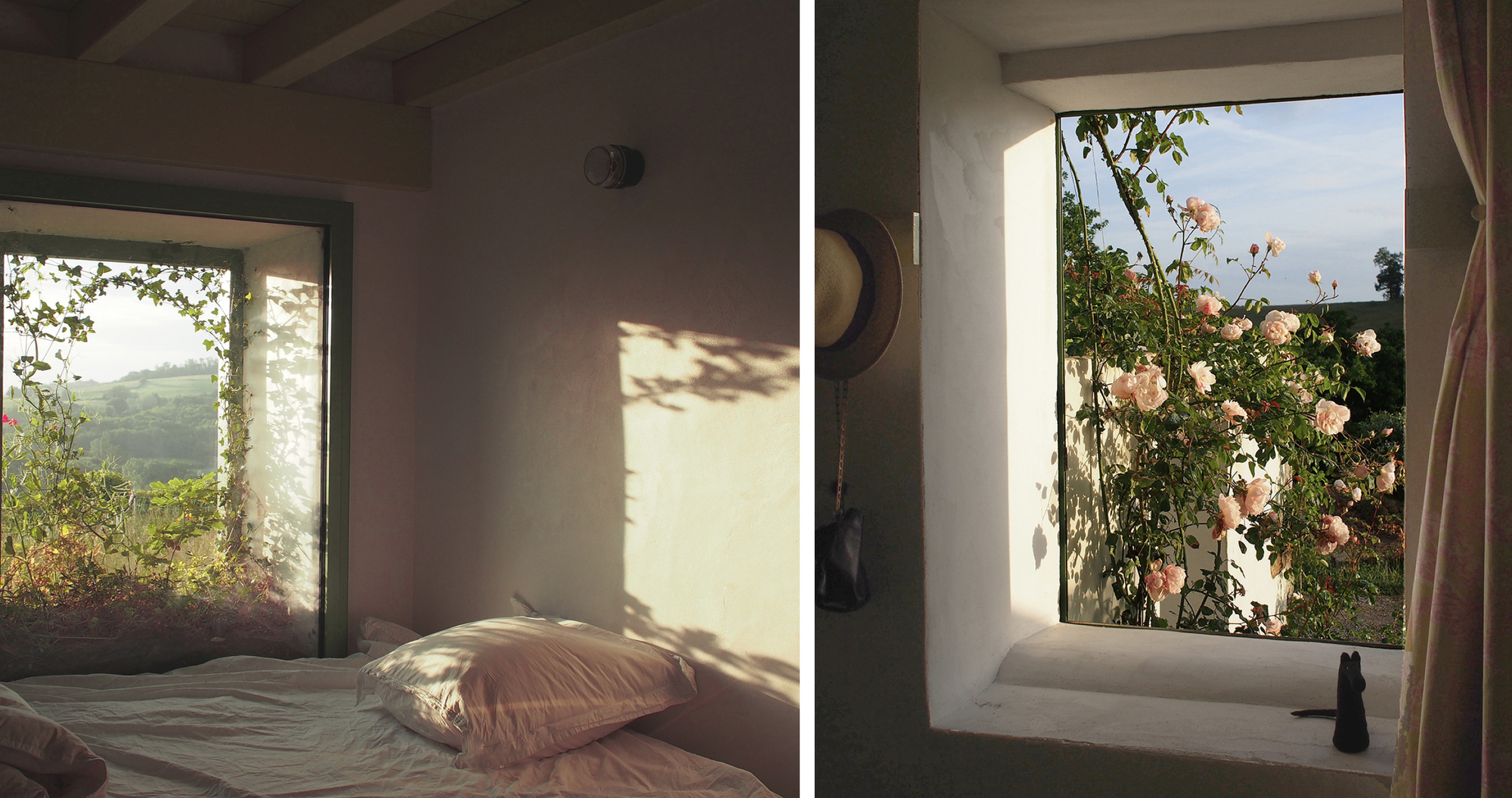
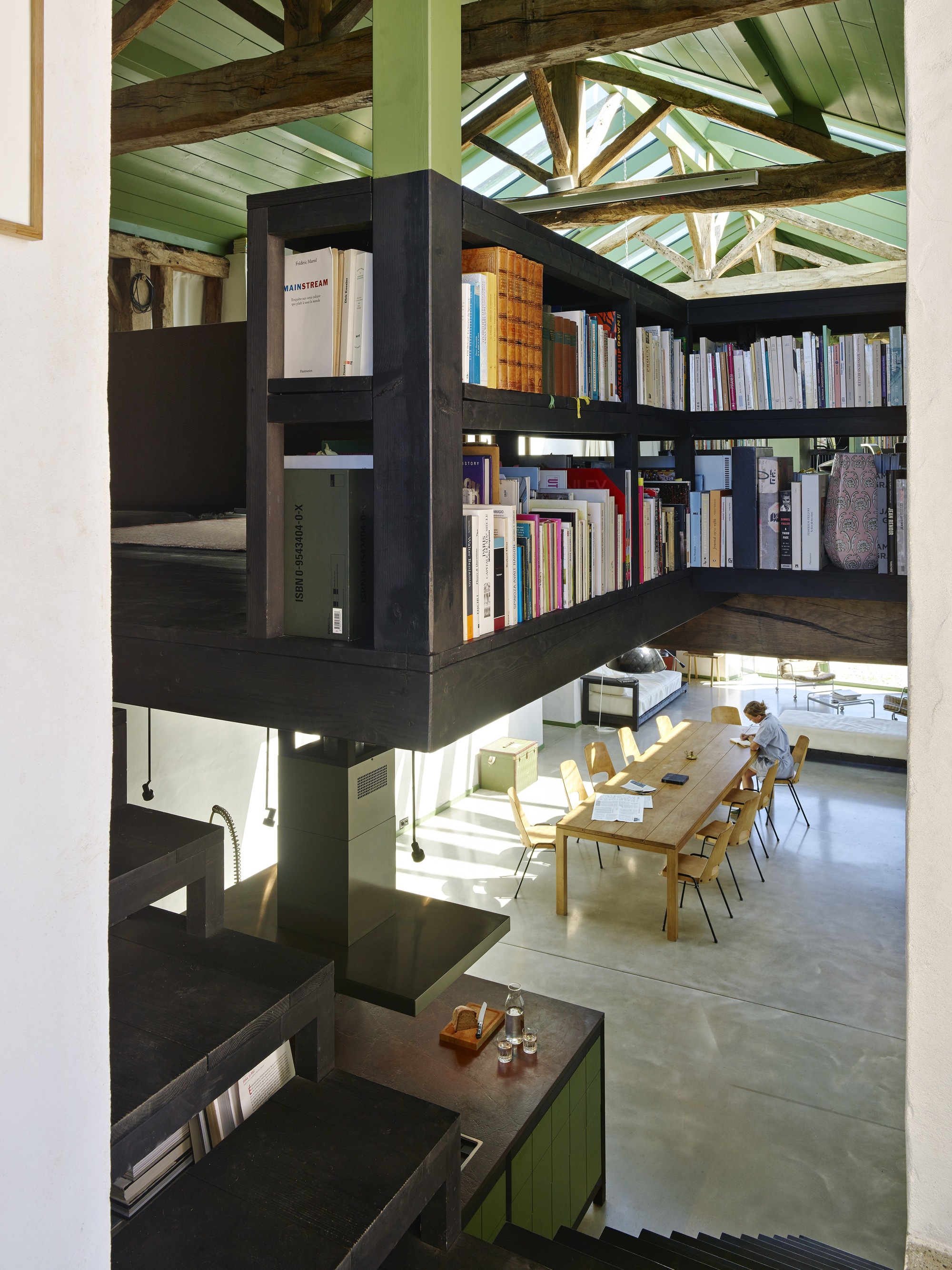
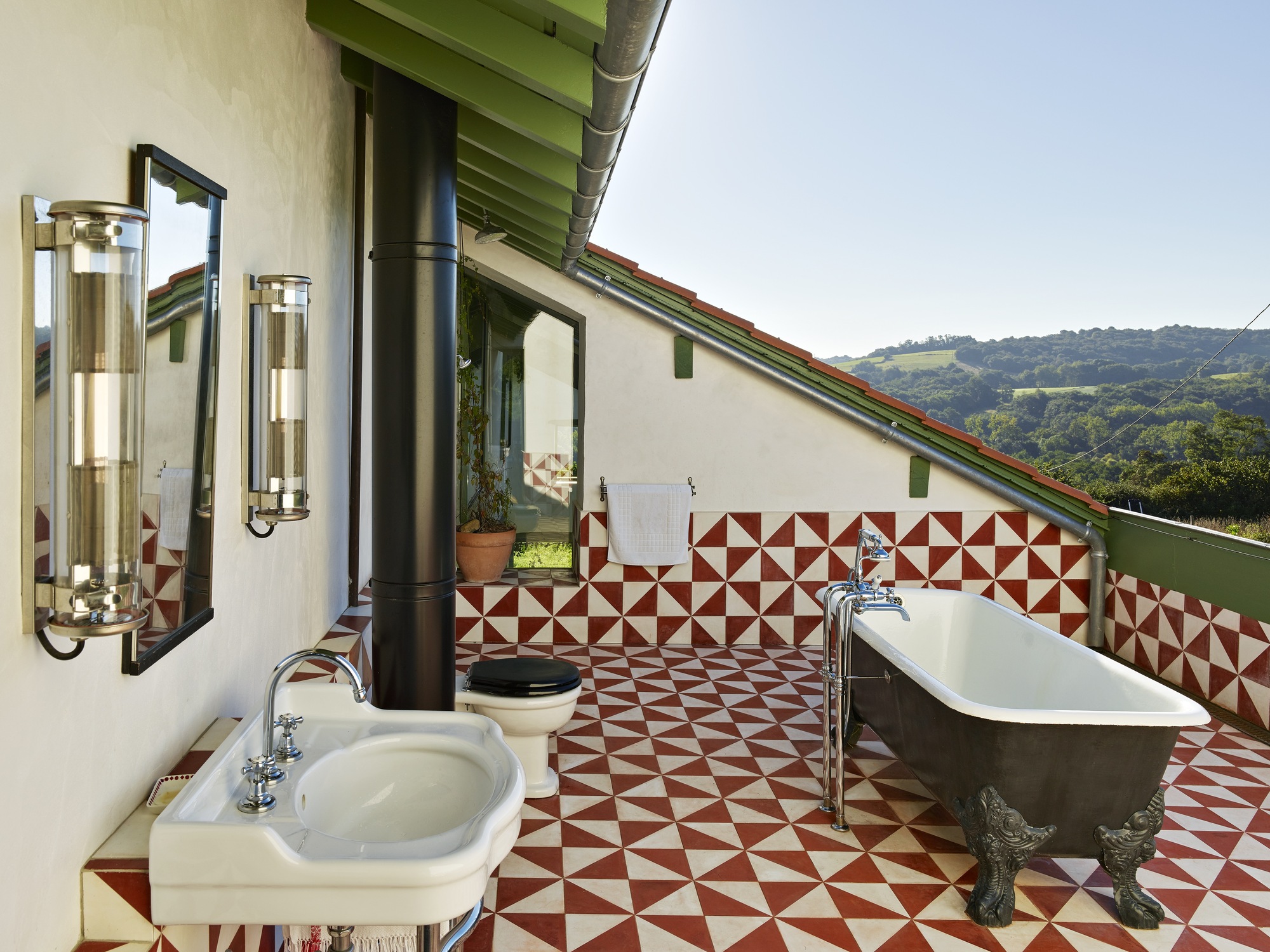
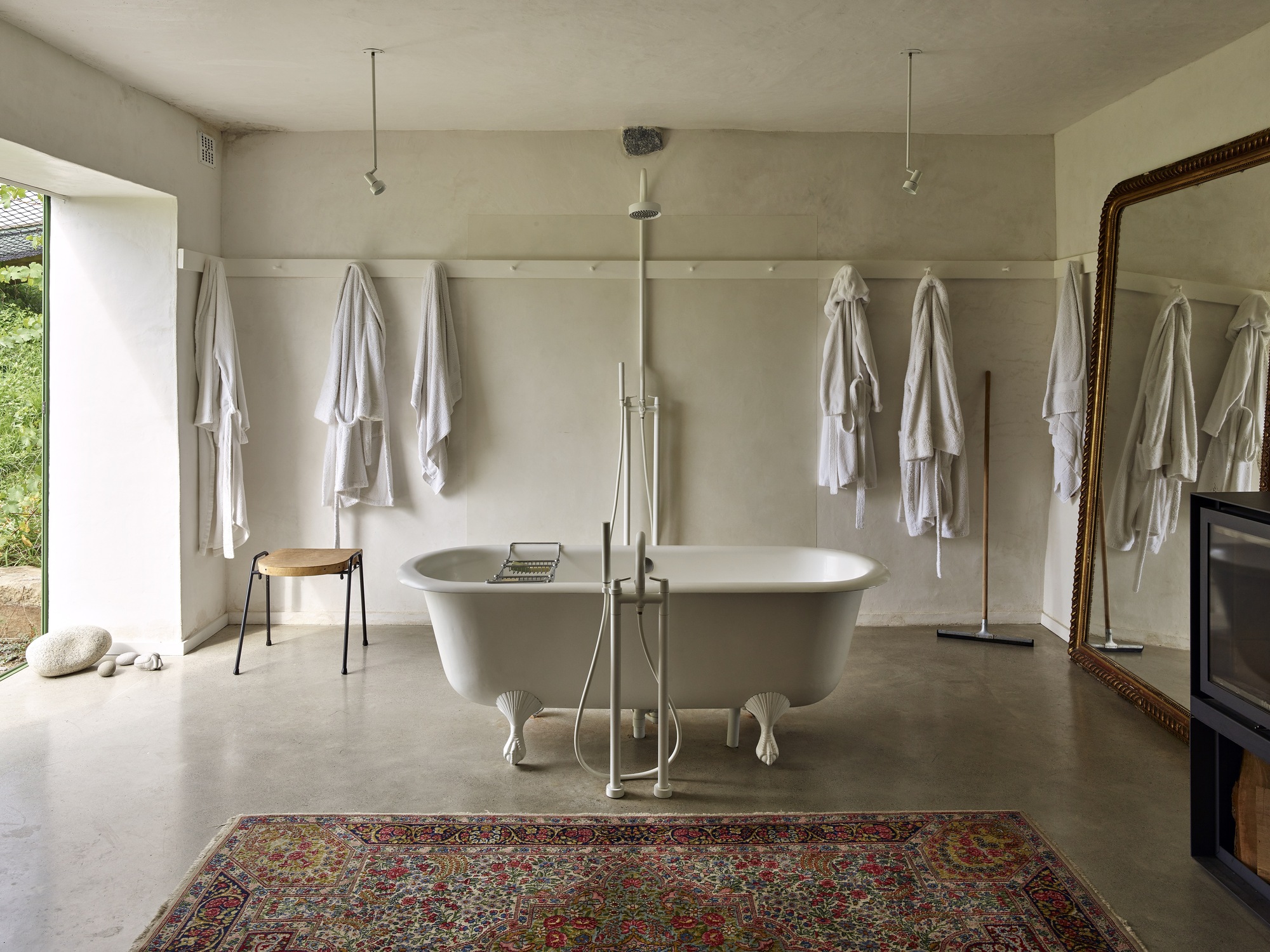
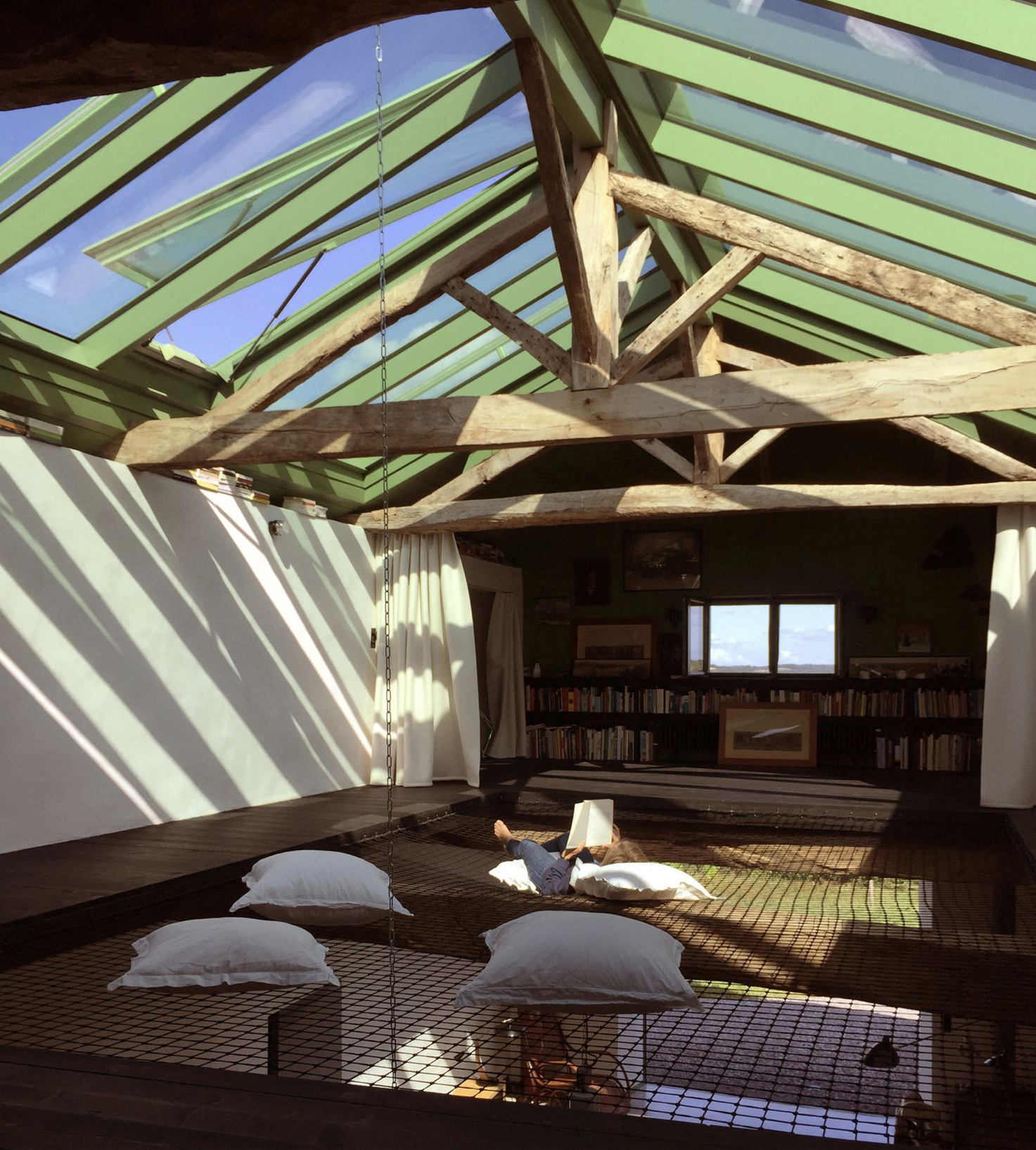
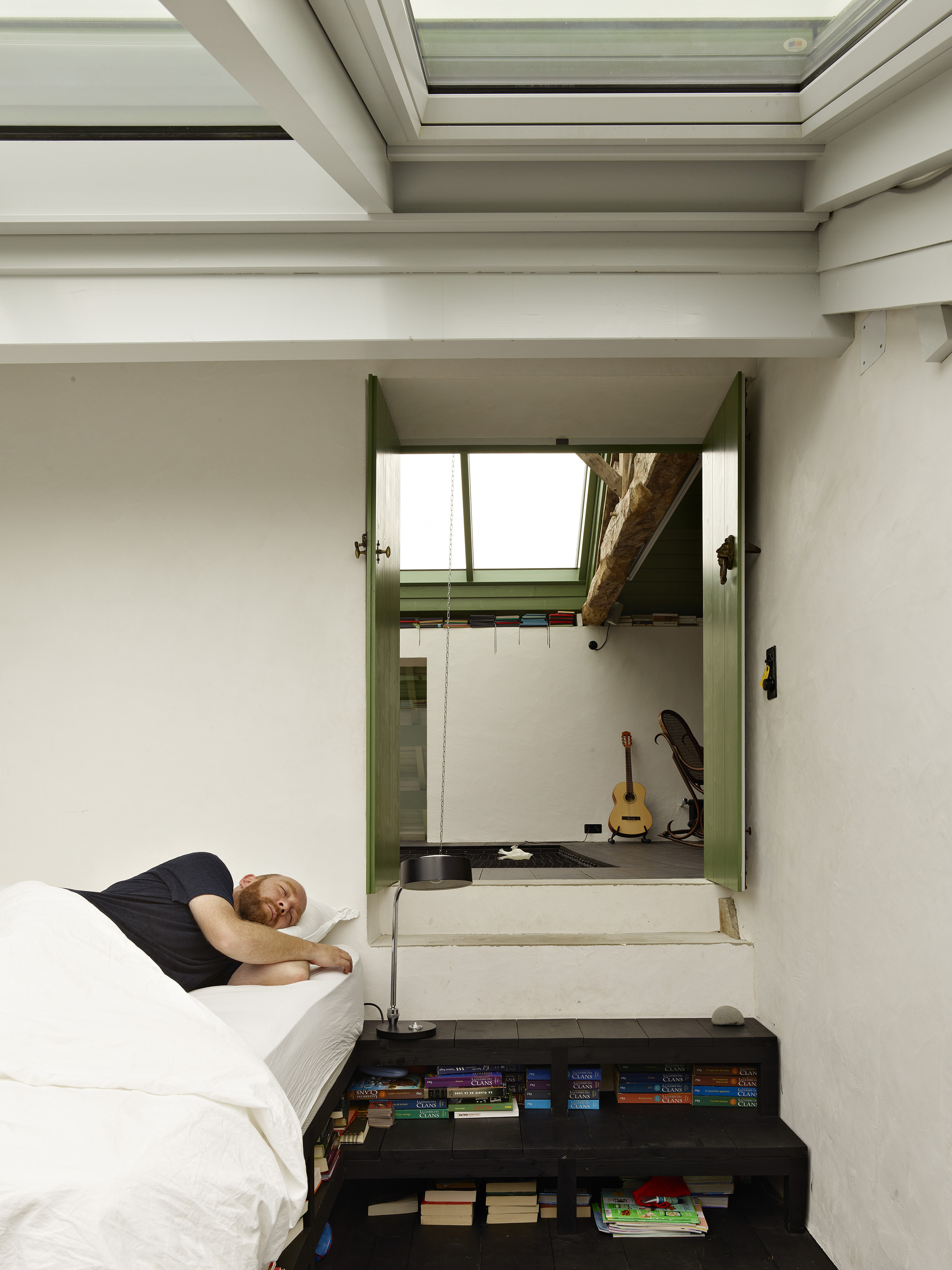
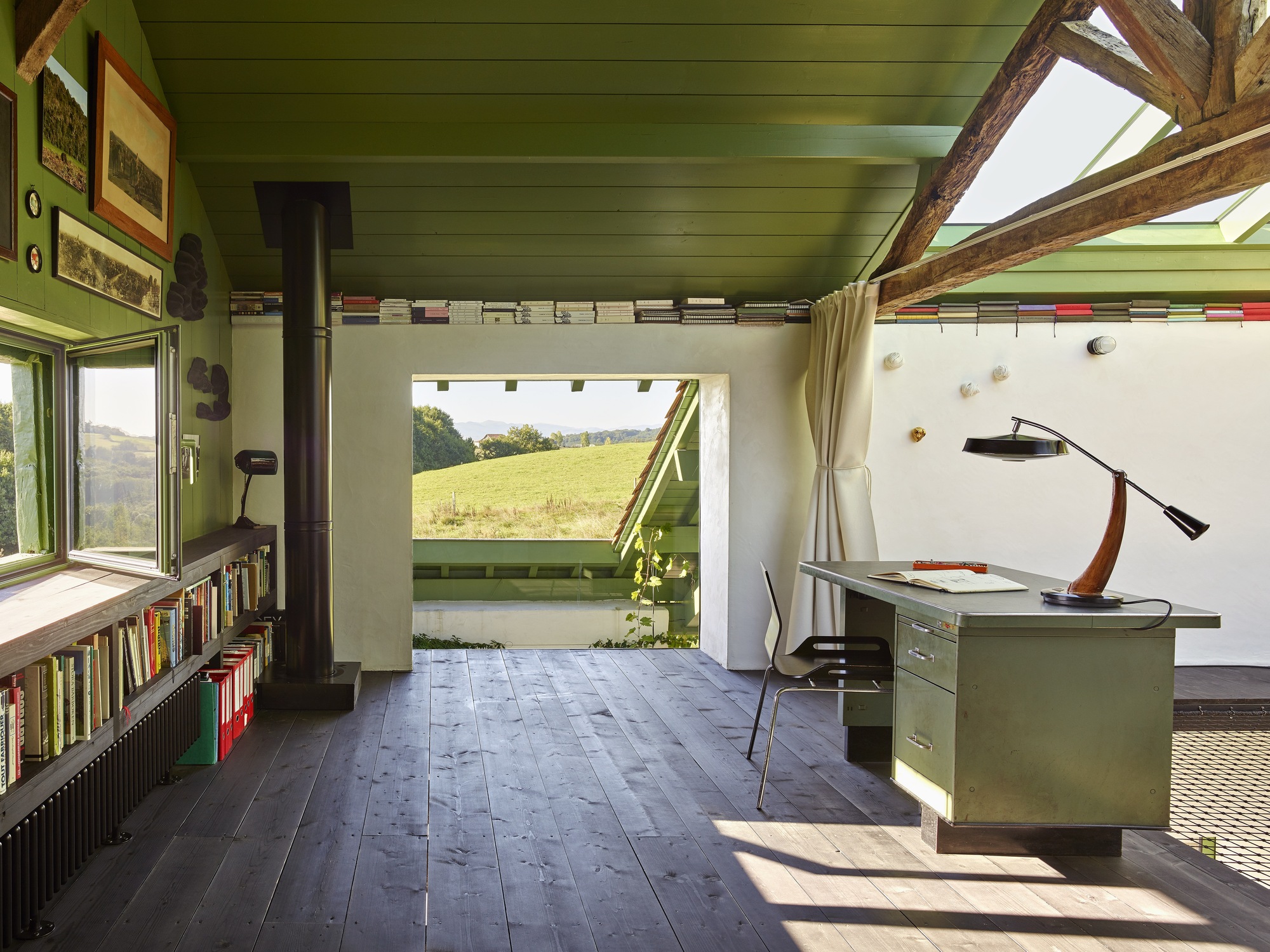
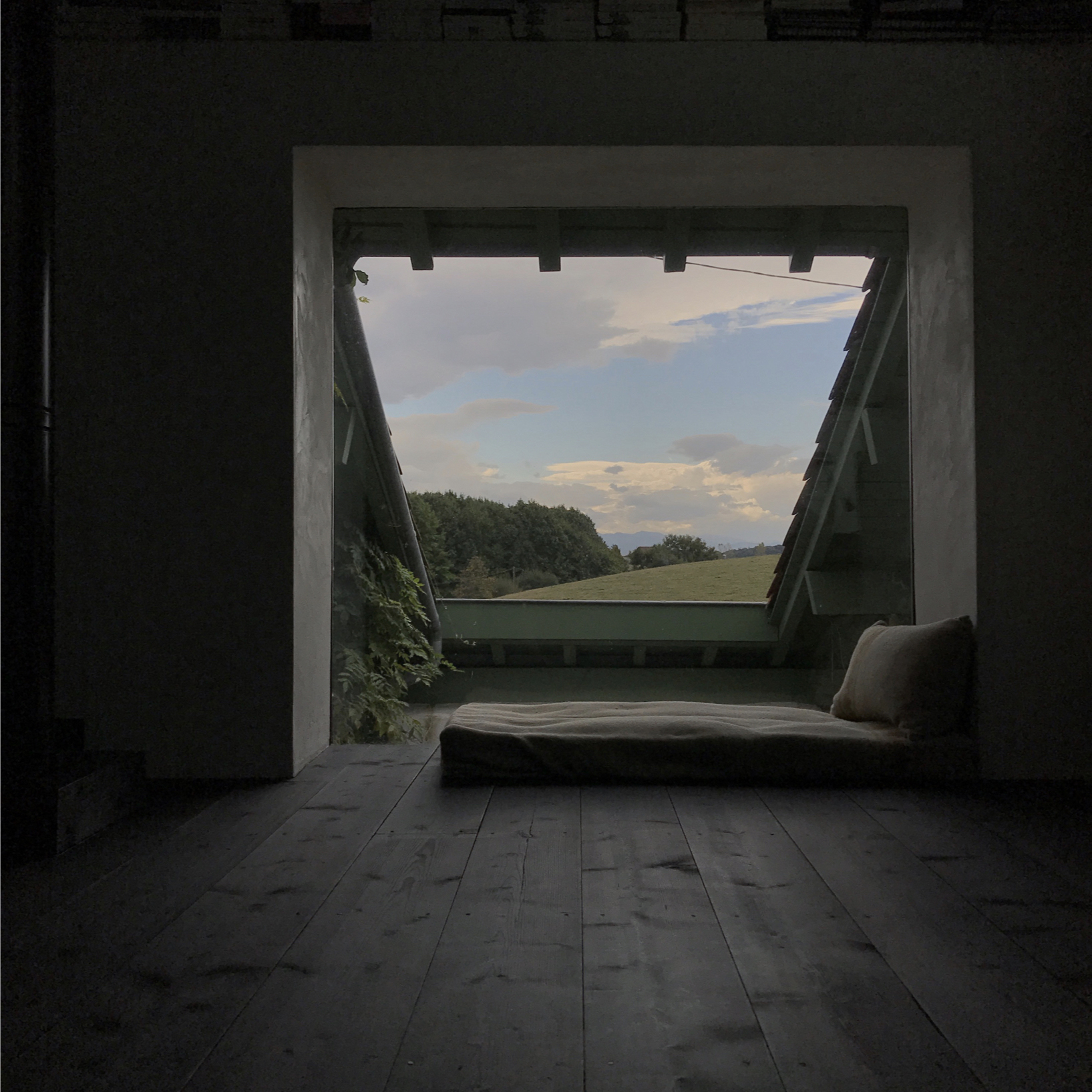
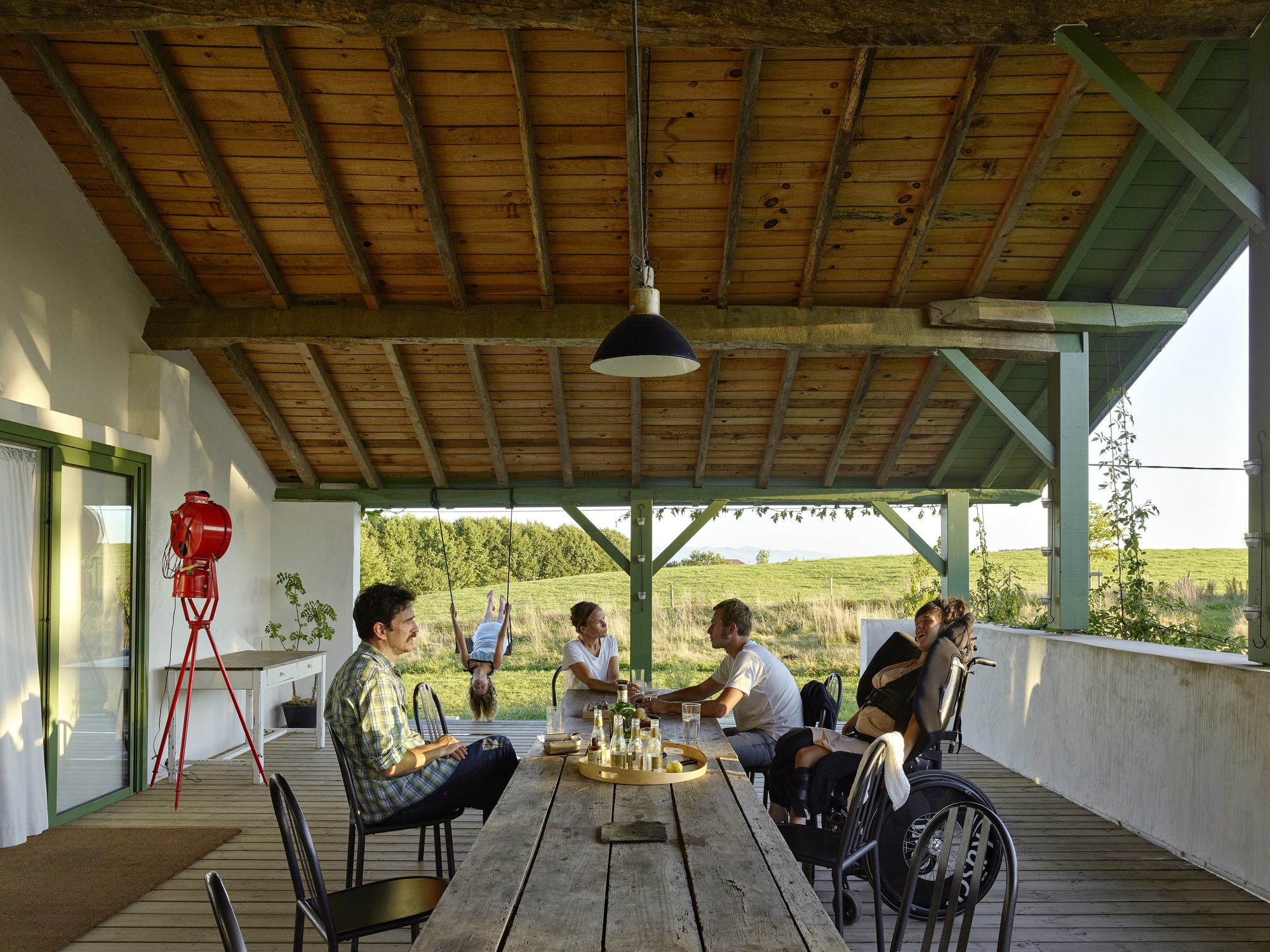
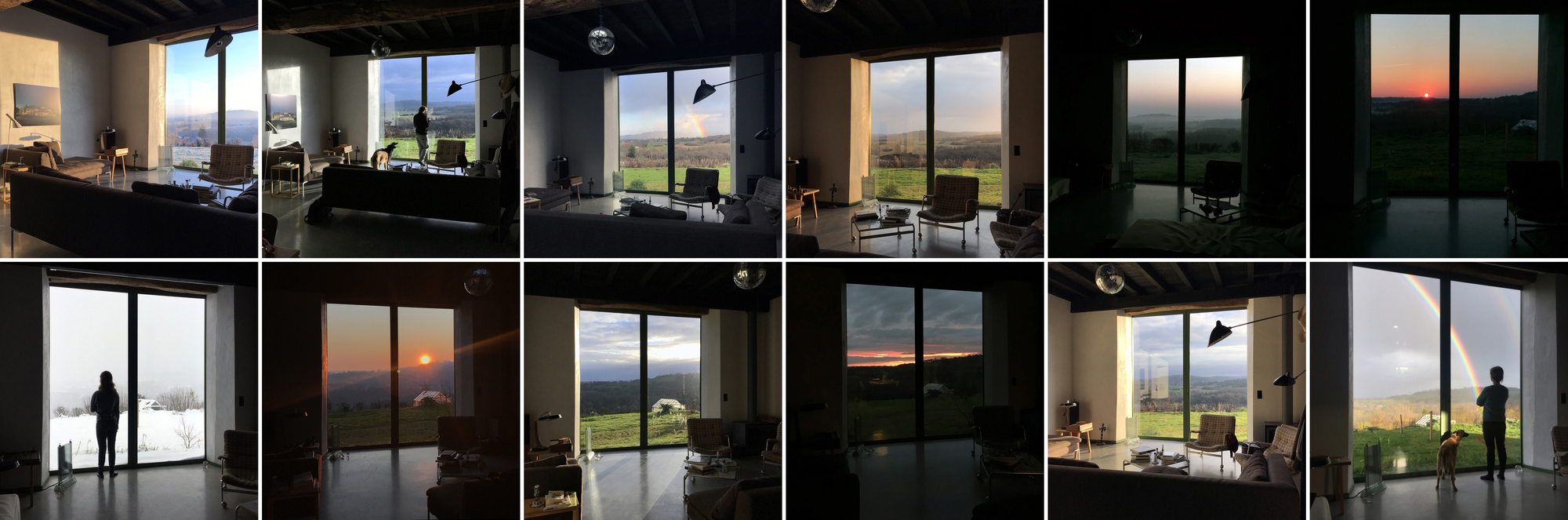
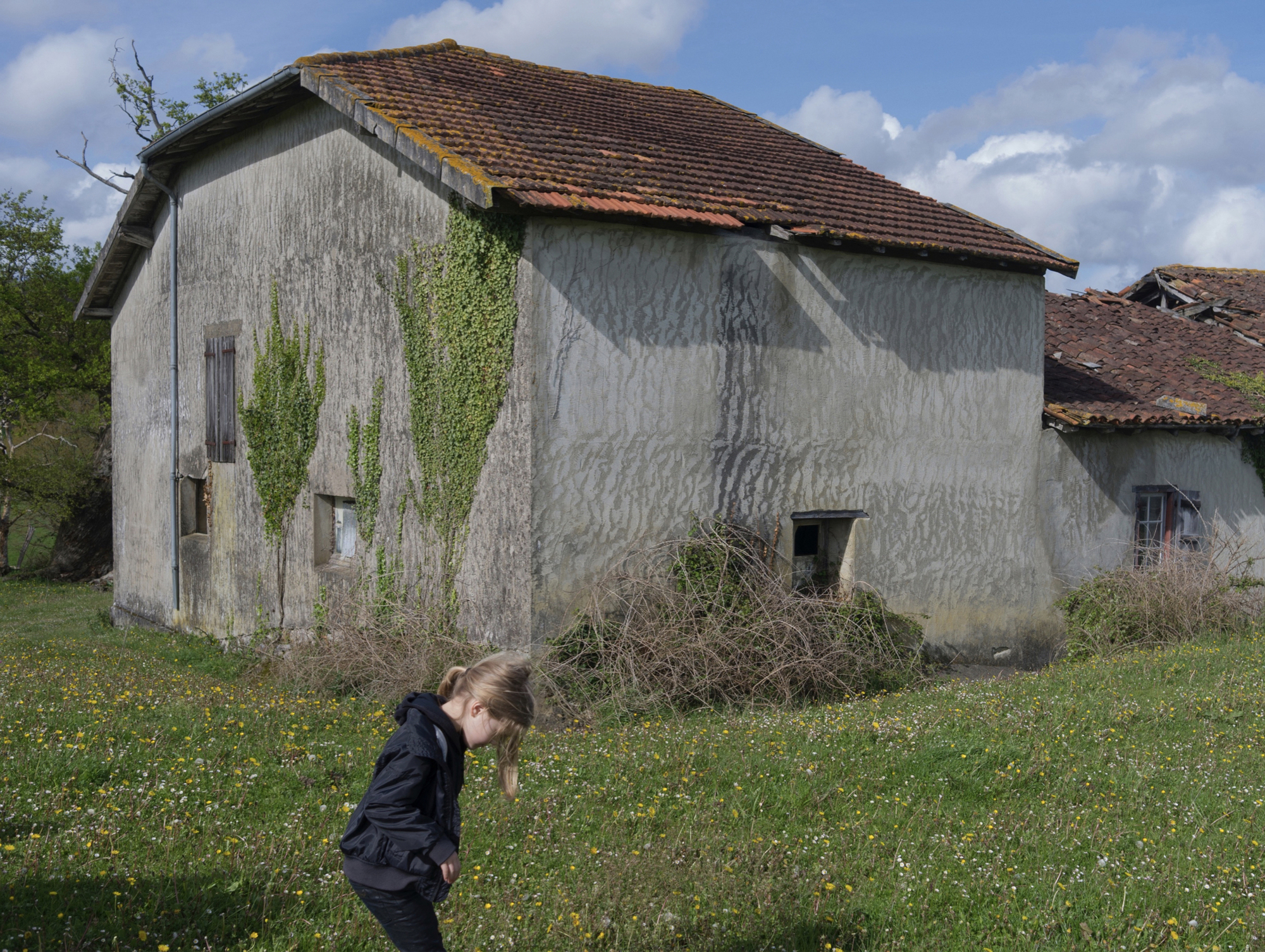
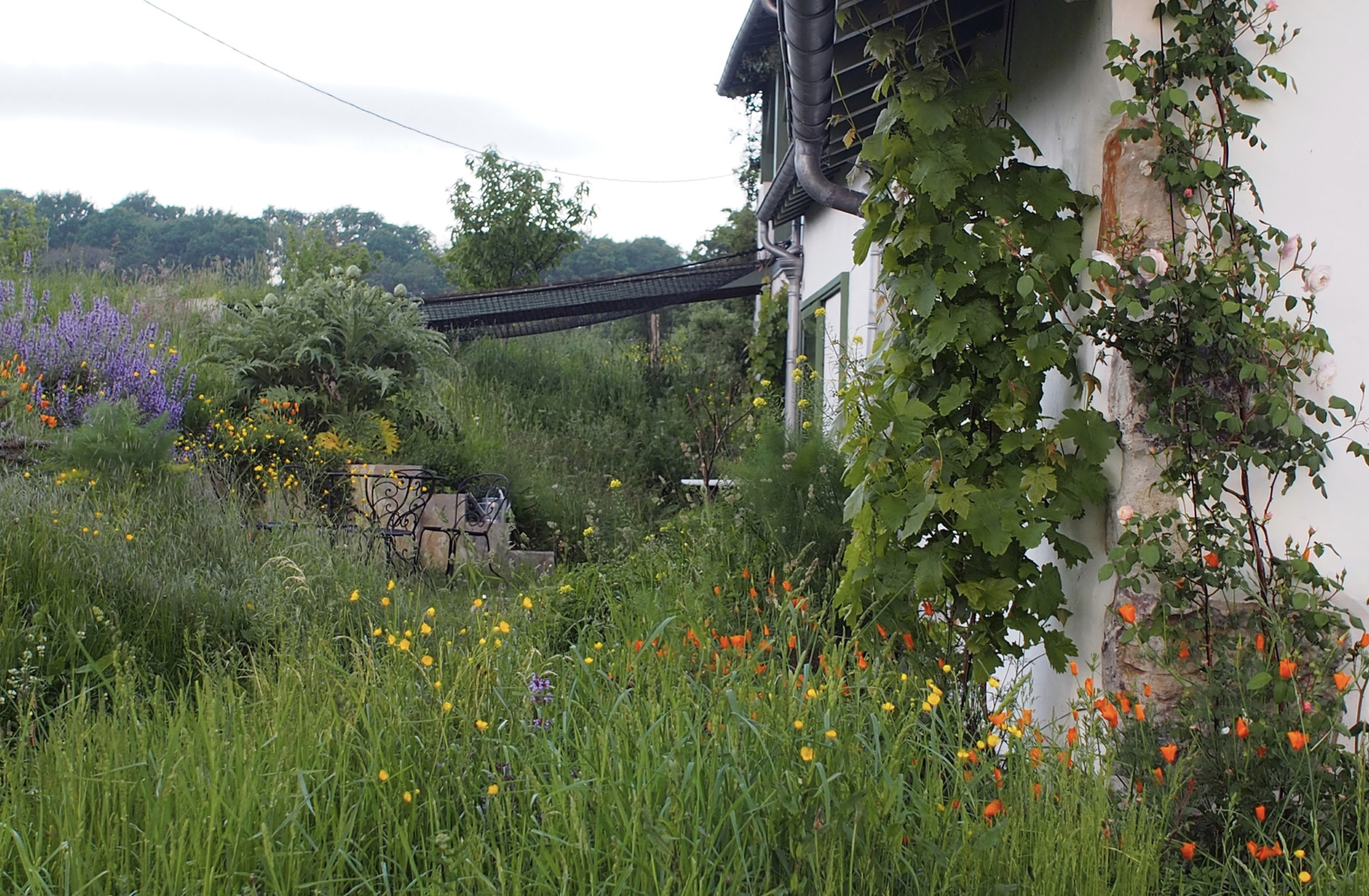
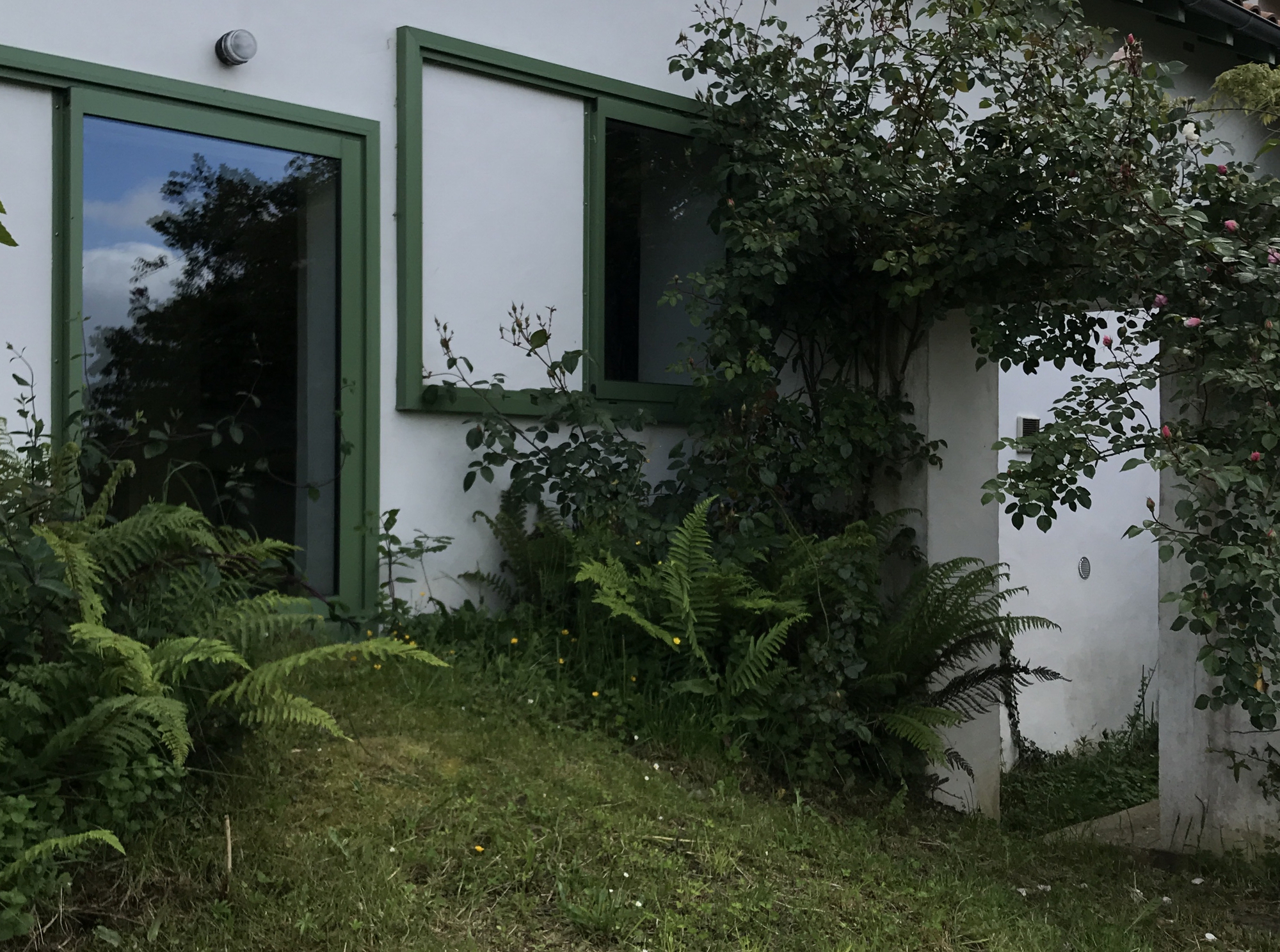
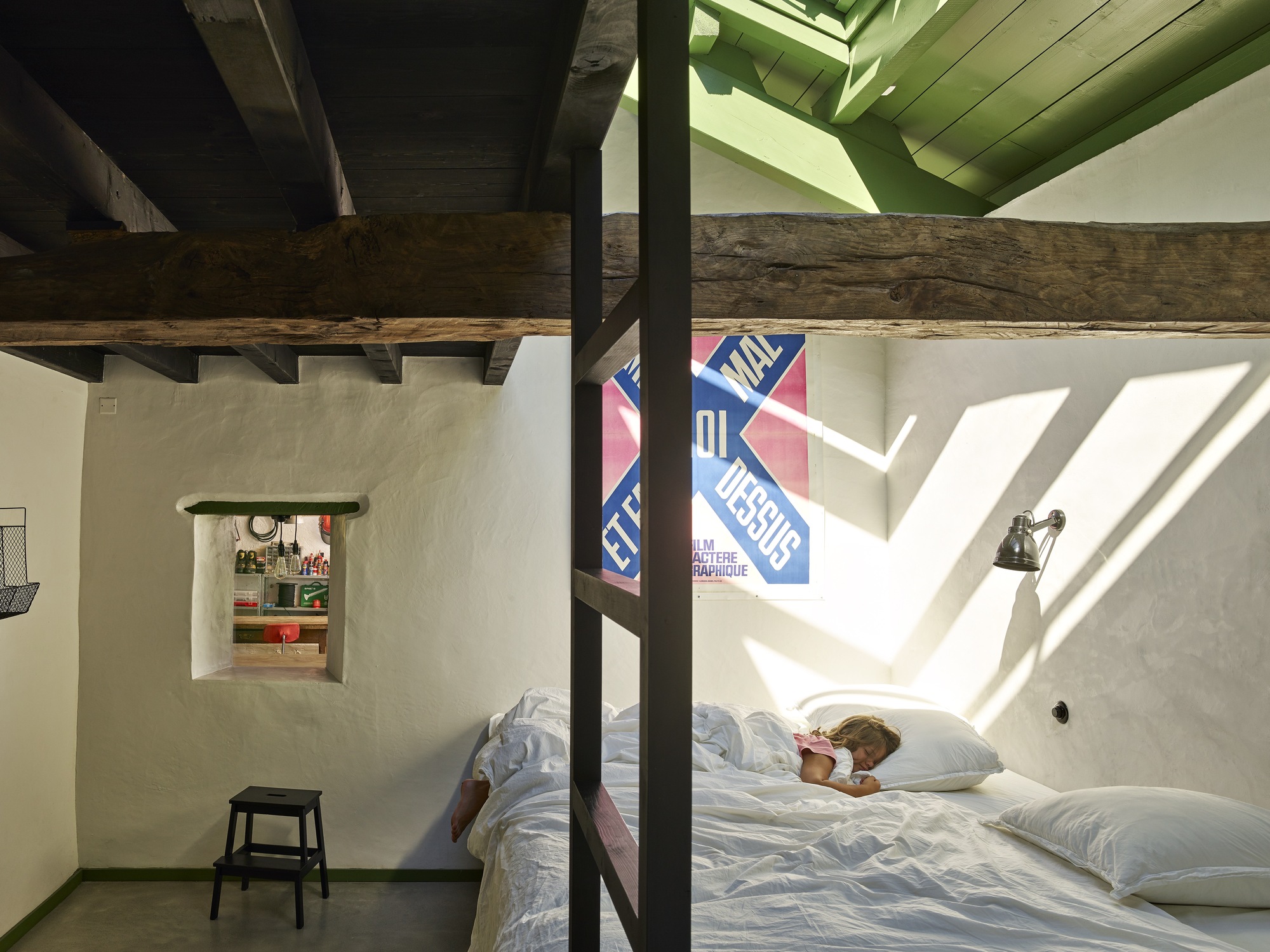
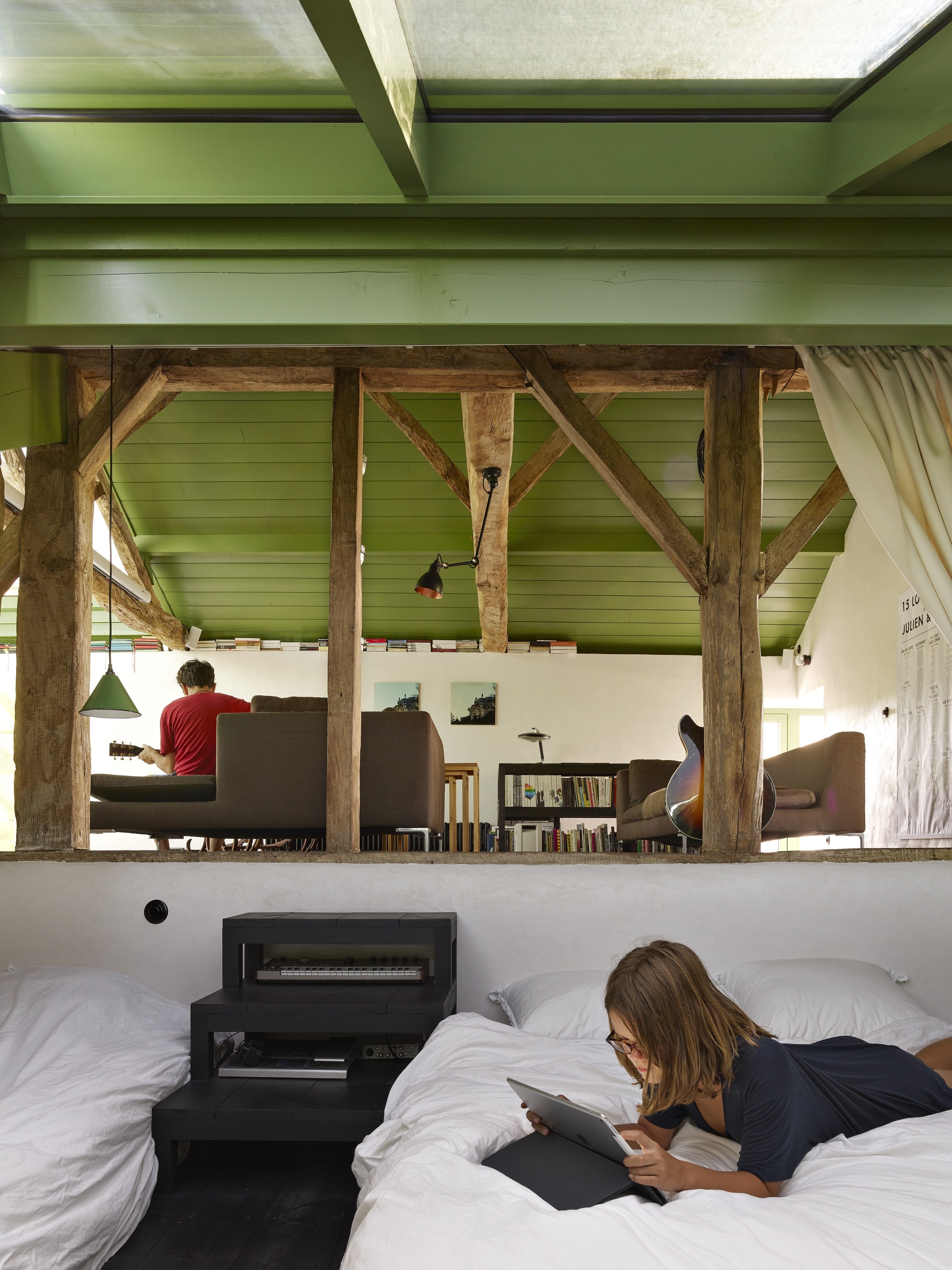
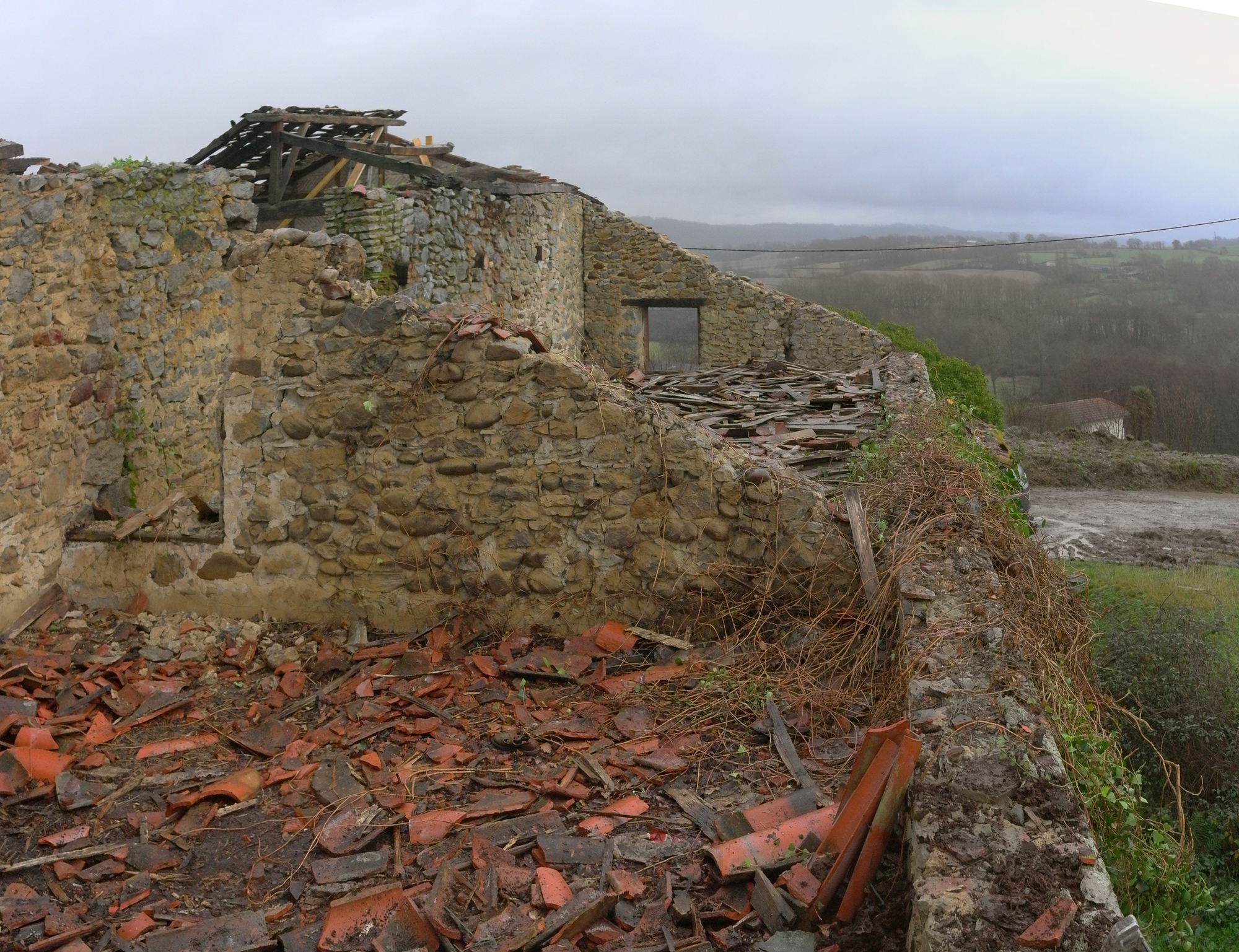
Hourré House #architecture Architects: Collectif Encore Area: 220 m² Year: 2015 Photographs: Charlotte Gastaut, Michel Bonvin Lead Architect: Anna Chavepayre City: Labastide-Villefranche Country: France We fell in love in Labastide Villefranche, on the outskirts of the french Basque country. With an old farm, a collapsing vernacular agricultural building.  From outside, the house looked like any farmhouse in the Basque Country, a massive yet unpretentious architecture. When we first opened its main door, we were expecting to come across the usual dark and damp central space called ”Ezkatz”. The roof had collapsed and pulled the upper floor with it, turning the house into a forest whose main room had become a clearing. ”Let’s not change a thing,” we thought. Manifesto for a living house. In many ways, Hourré epitomises our approach to space, landscape, ways of living, and sense of freedom. Moreover, it stresses the priority that we give to what is already there, what is free, and what is yet to come. Also, unlike a lot of ”one-trick poney” buildings that we see, it's a project that is generous with ideas! Changing one thing changes everything.  And so we kept the roof’s opening intact and turned the doors into sliding windows mounted on the facades so they disappear when opened. Unlike many architects who intend to recreate sunsets at each project they do, we believe that integrating it into our building is enough (and much cheaper). Doing so, the house changes constantly, through the hours, days, and seasons. Building for birds, flowers, and plants. There is this picture of a swallow inside the house that we always show when we do conferences. It is a pretty lousy picture. Birds are not easy to shoot. Maybe that’s the unfortunate reason why we talk much more about how windows look like instead of making a place for the birds so they can be part of the house. And the same goes for flowers as well as any other plants. What we want is free: Eco-Services.  In winter, the sun directly heats the 70 cm thick stone walls and an air/water heat pump heats up the floor. The walls then turn the house into a stove. The inertia of the uninsulated walls allows the house to fully breathe, silently since there’s no CMV system (some of us have forgotten that air flows naturally without any engine nor electricity). And in summer ? Well last June, as France recorded a 40° heatwave, the house visitors were asking whether there was any AC to get such a cool room temperature. That’s the magic of these thick stone walls that have not been insulated. Keeping the inertia intact and freshness all summer long.
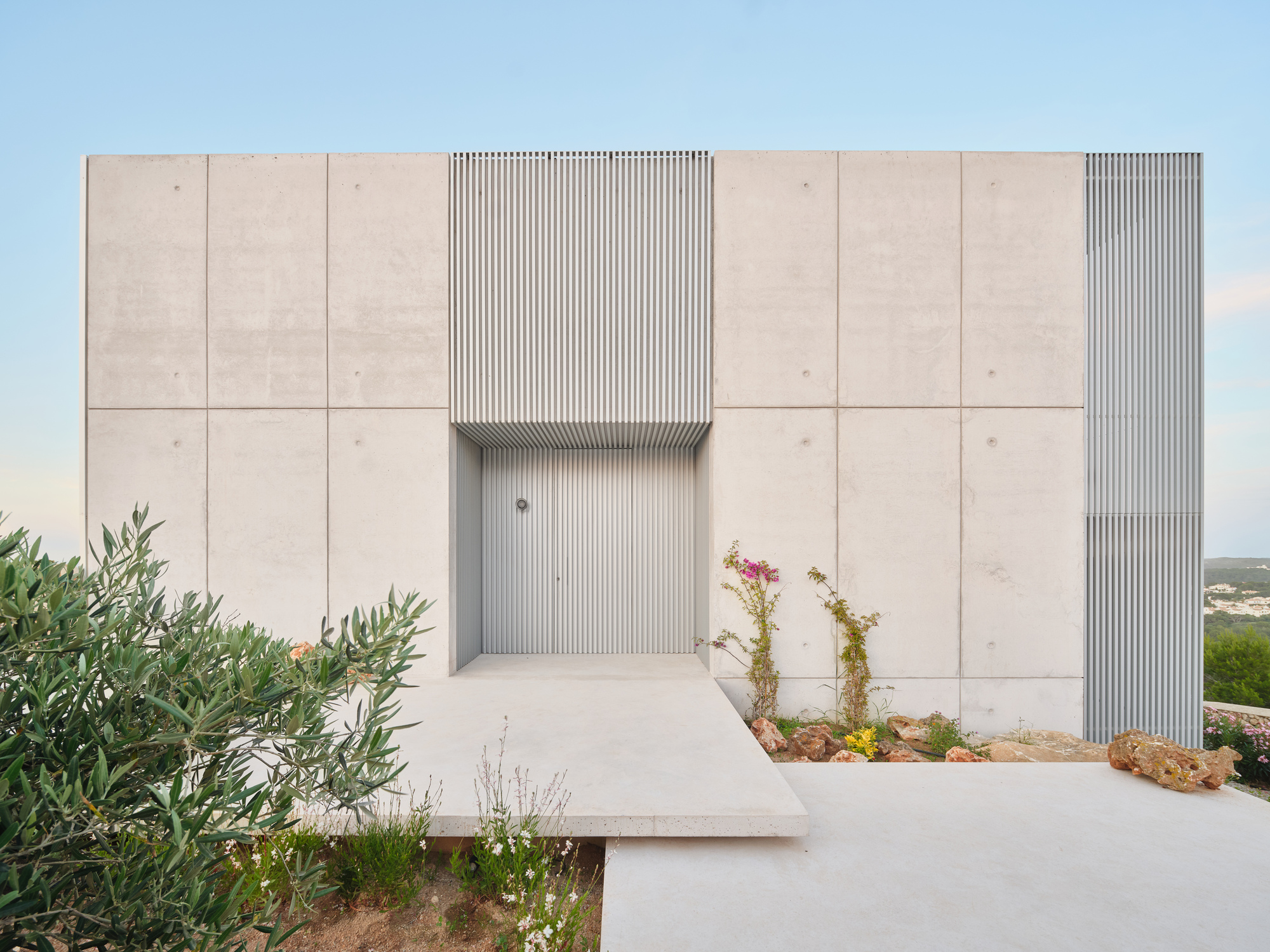
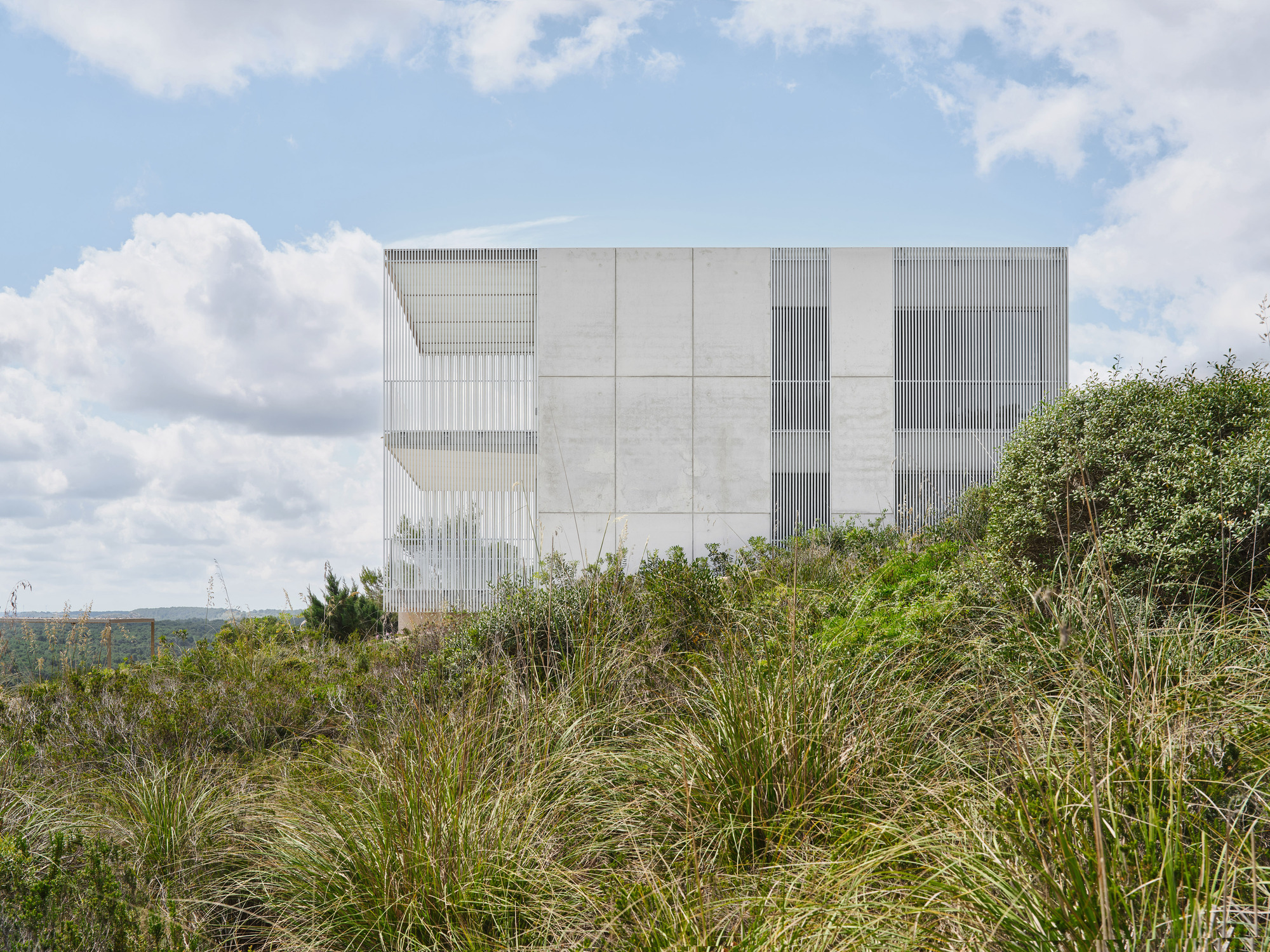
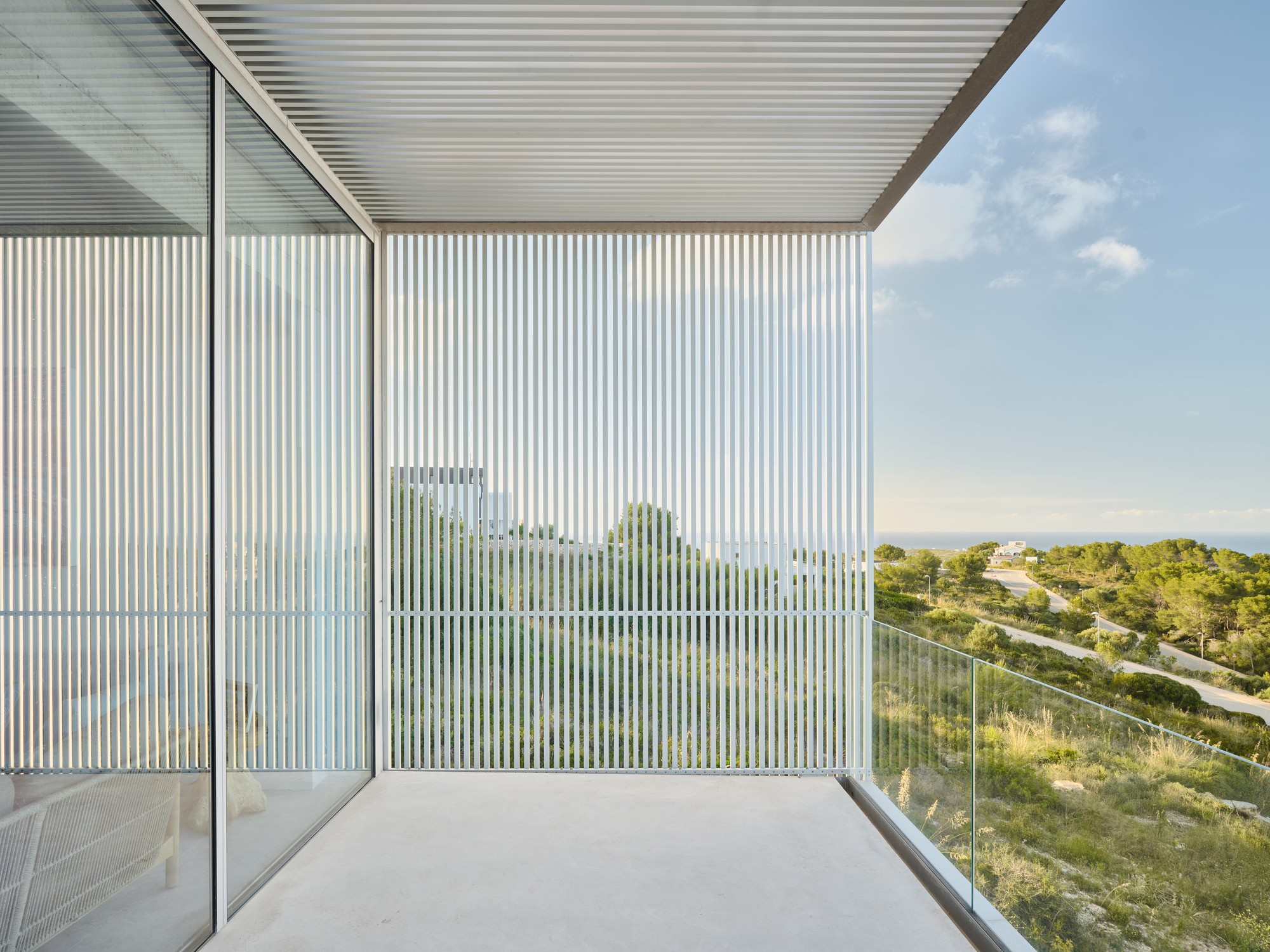
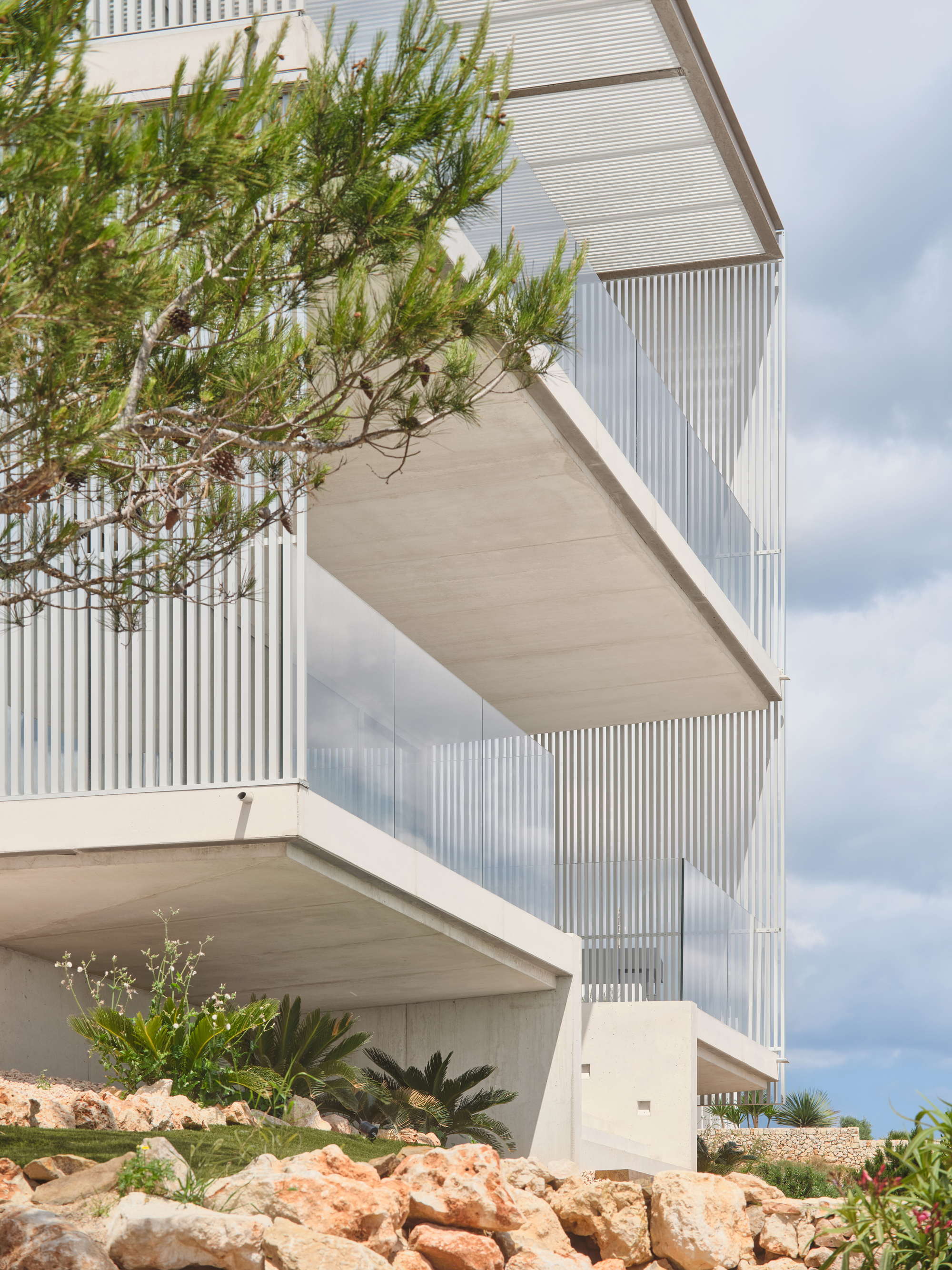
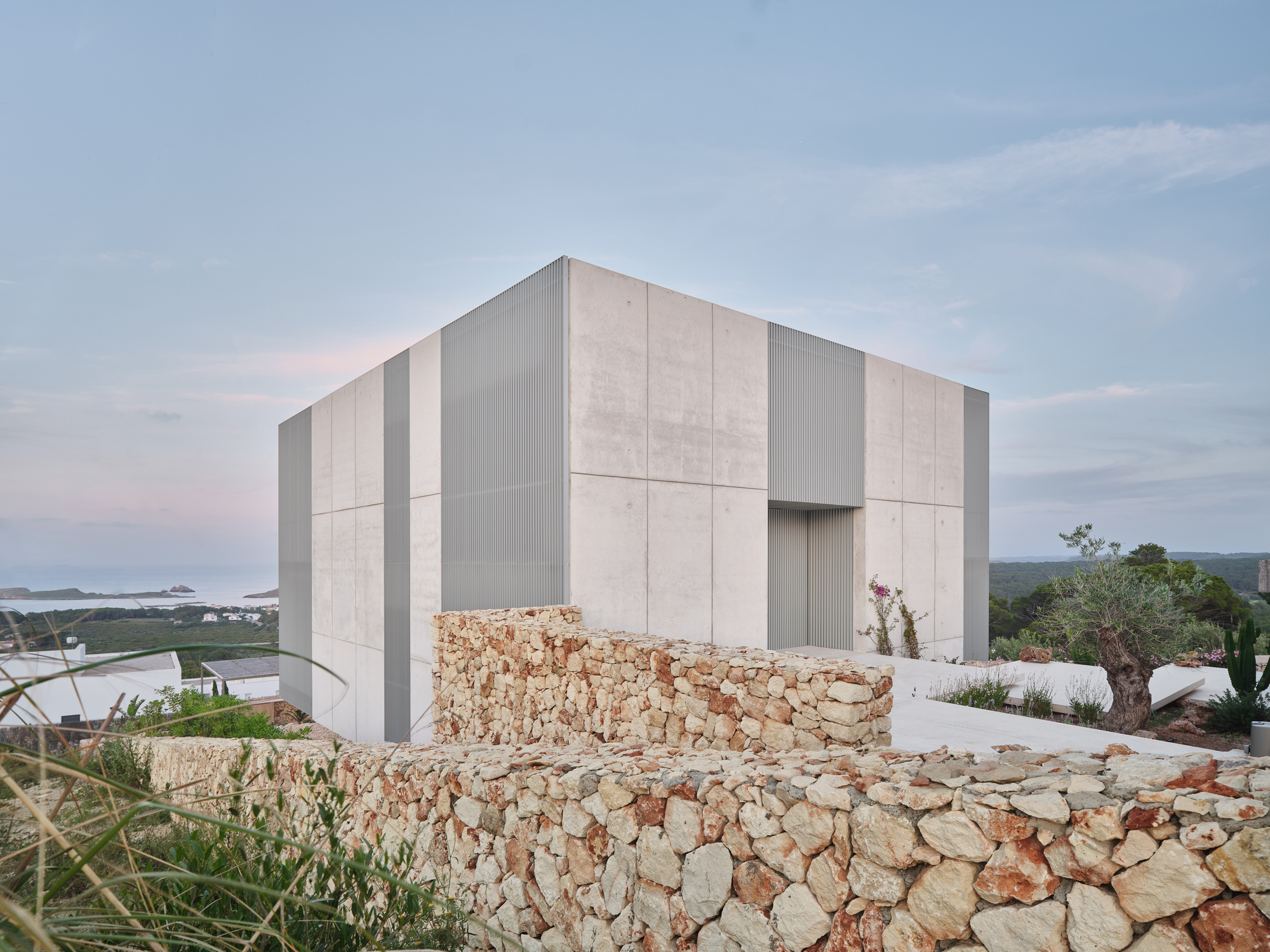
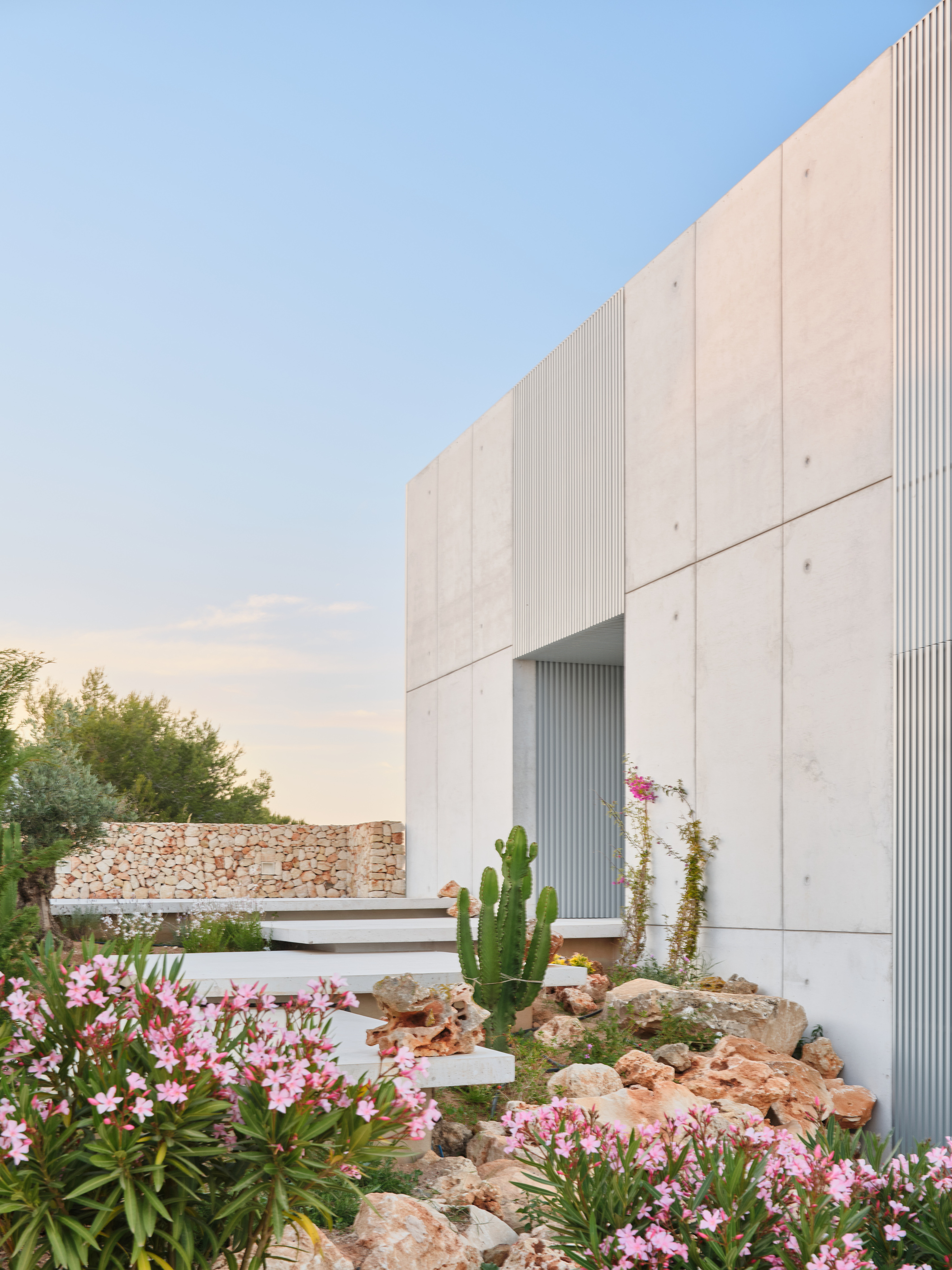
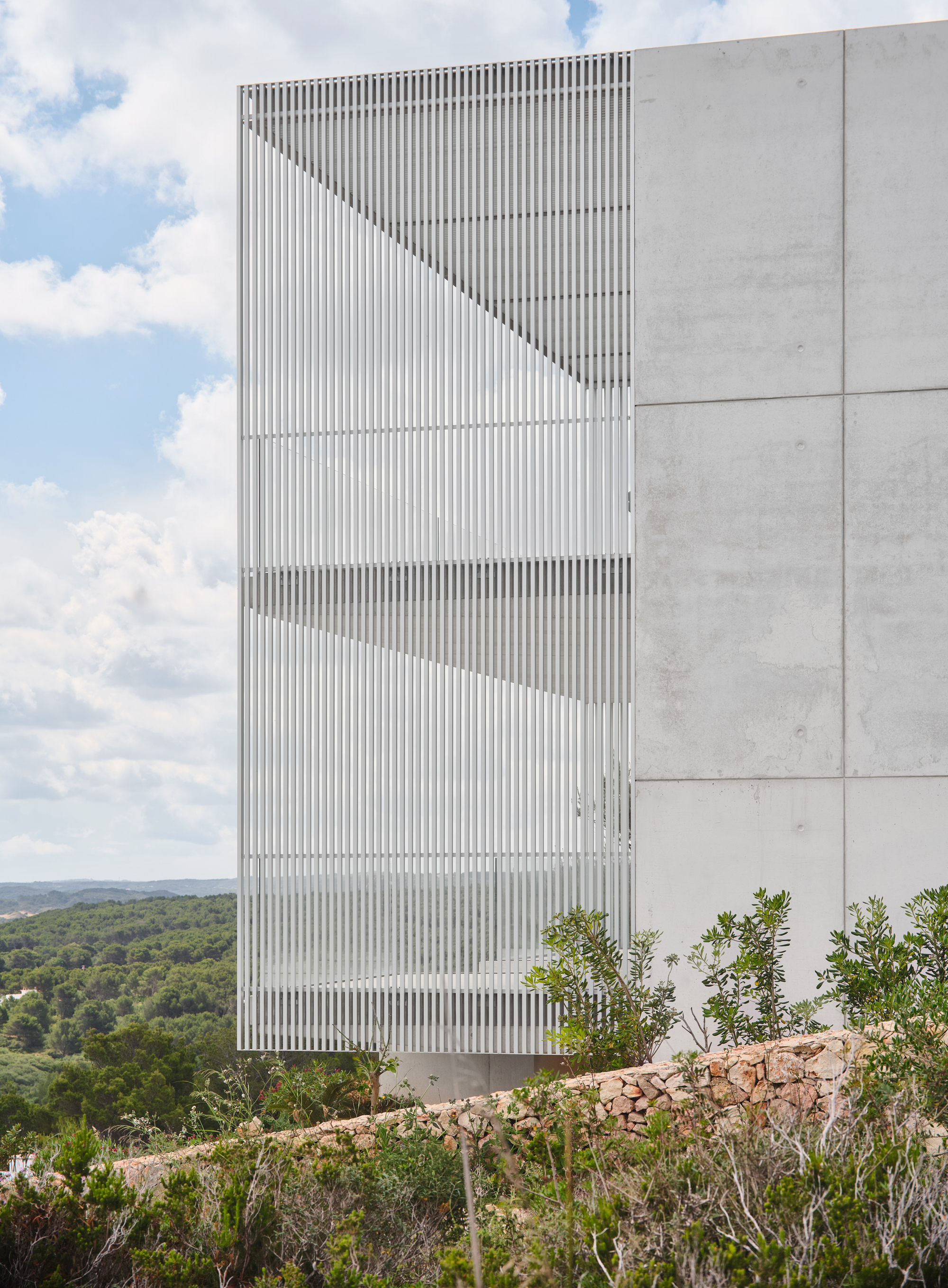
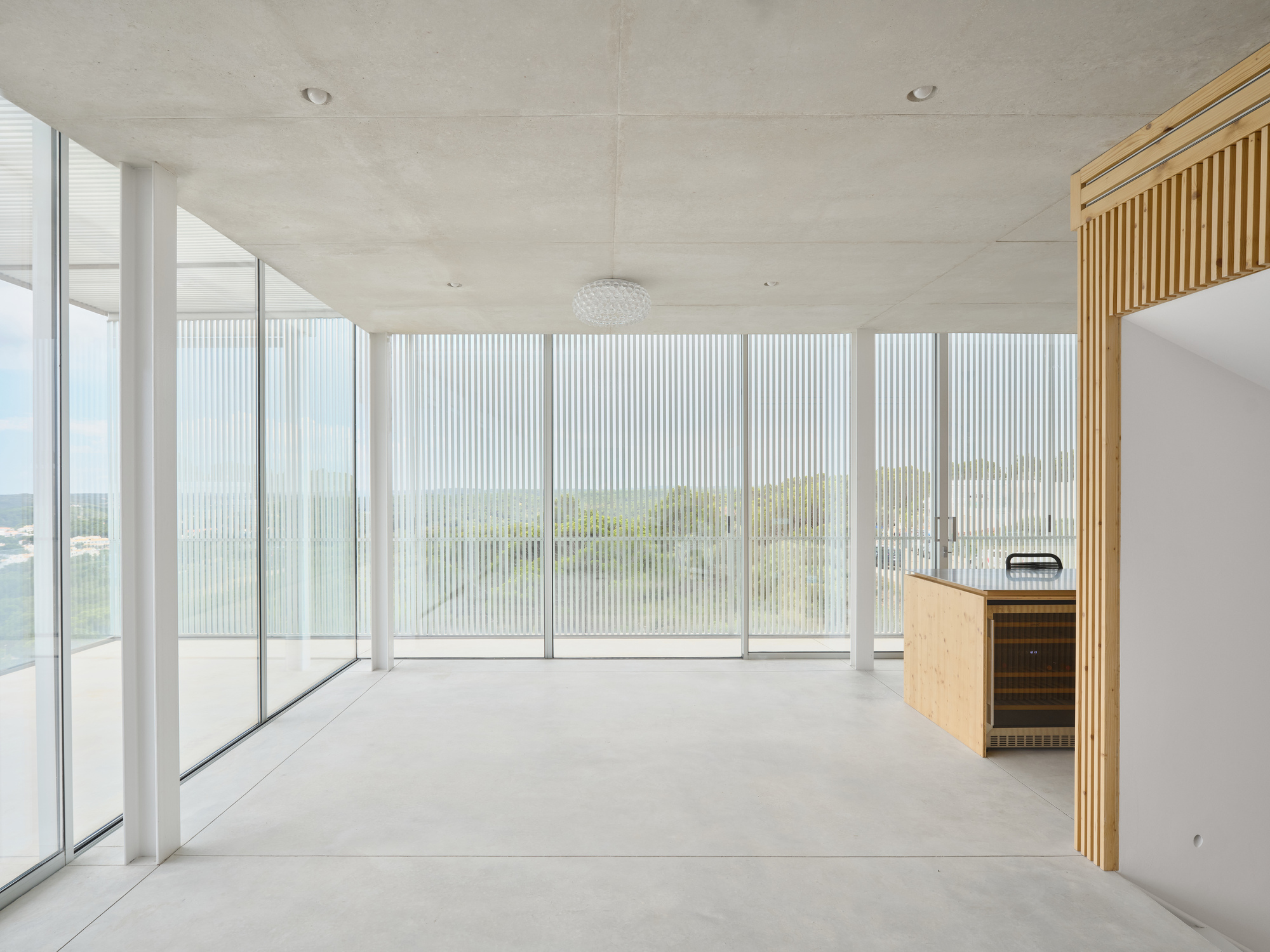
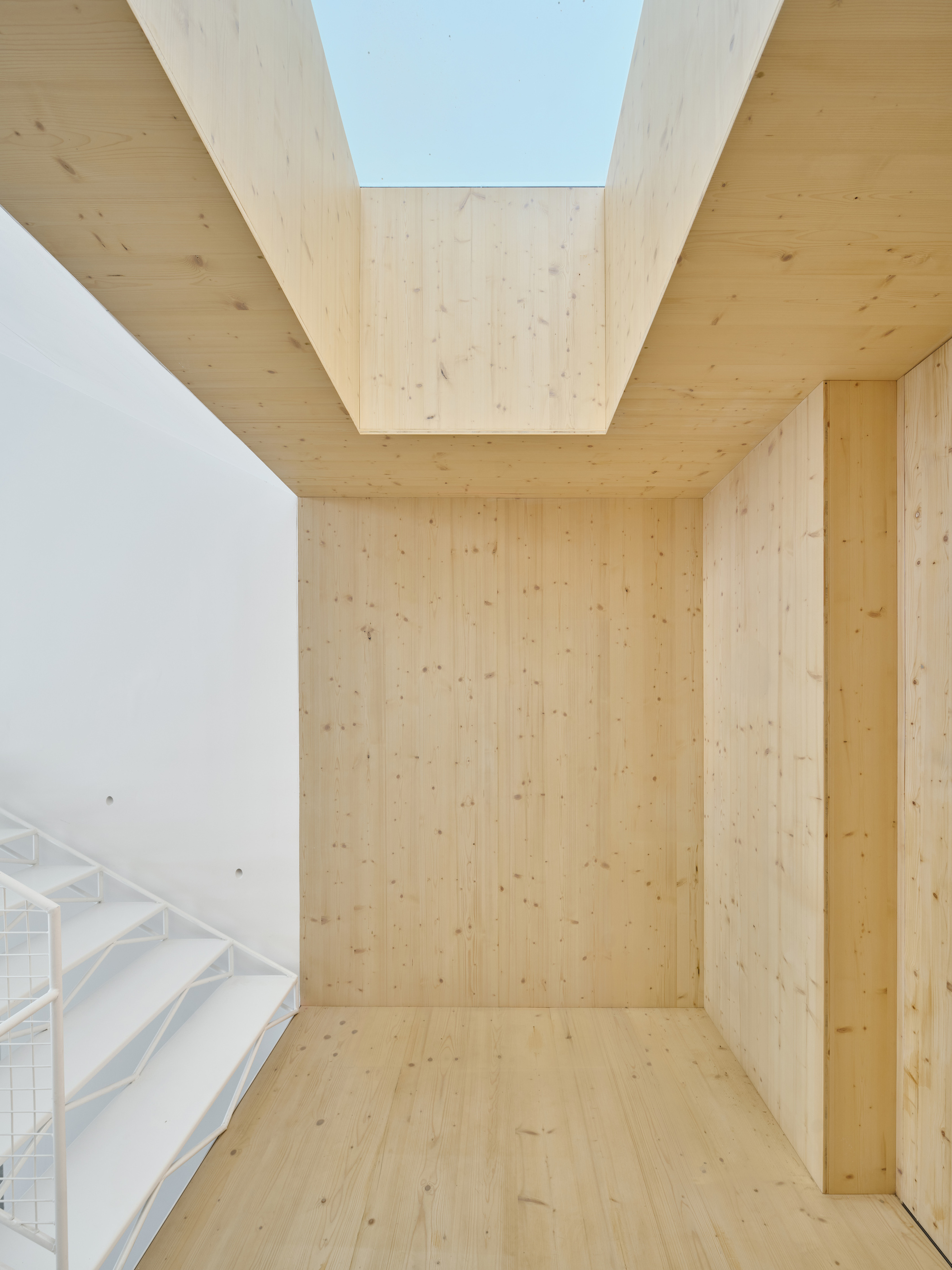
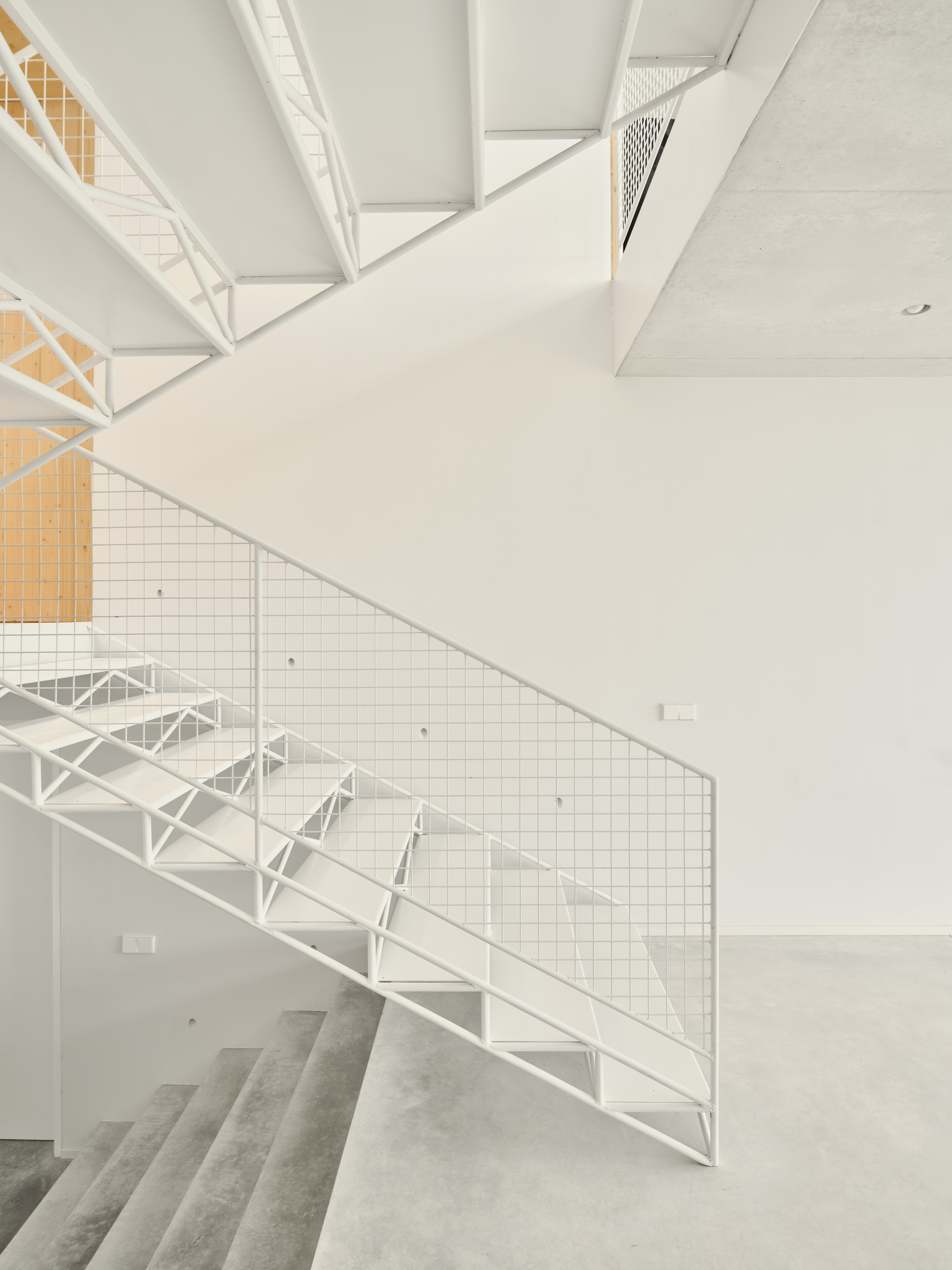
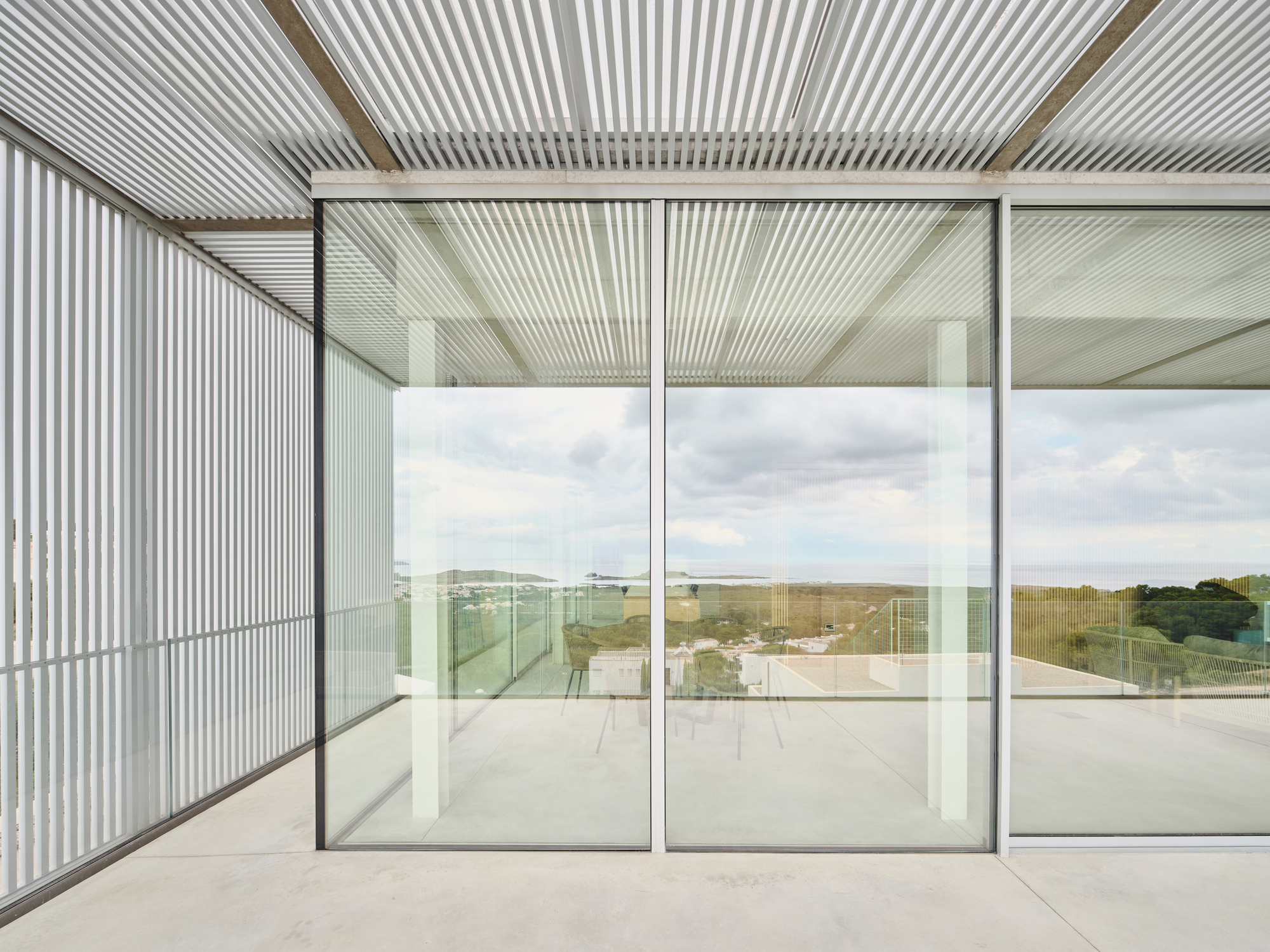
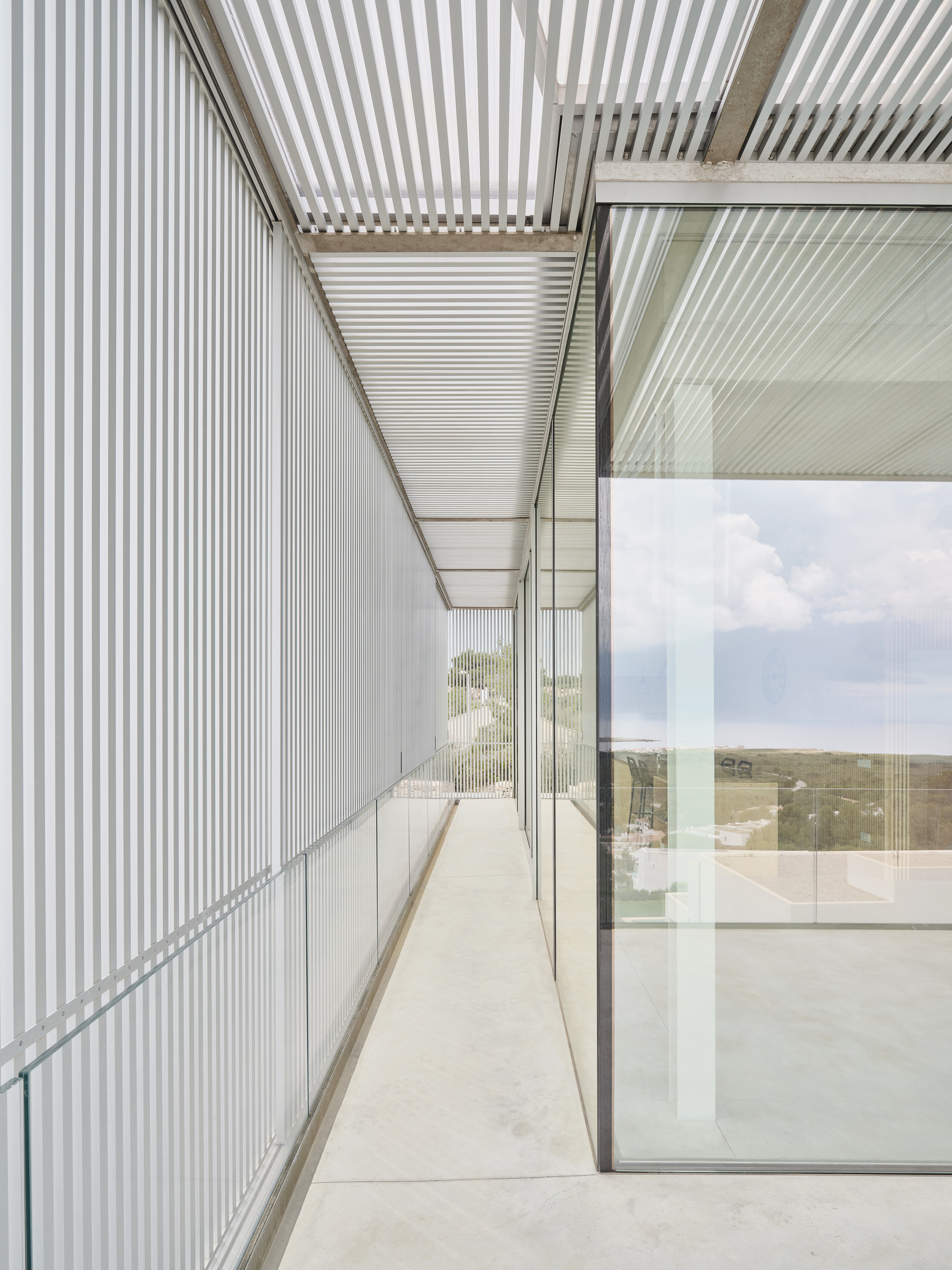
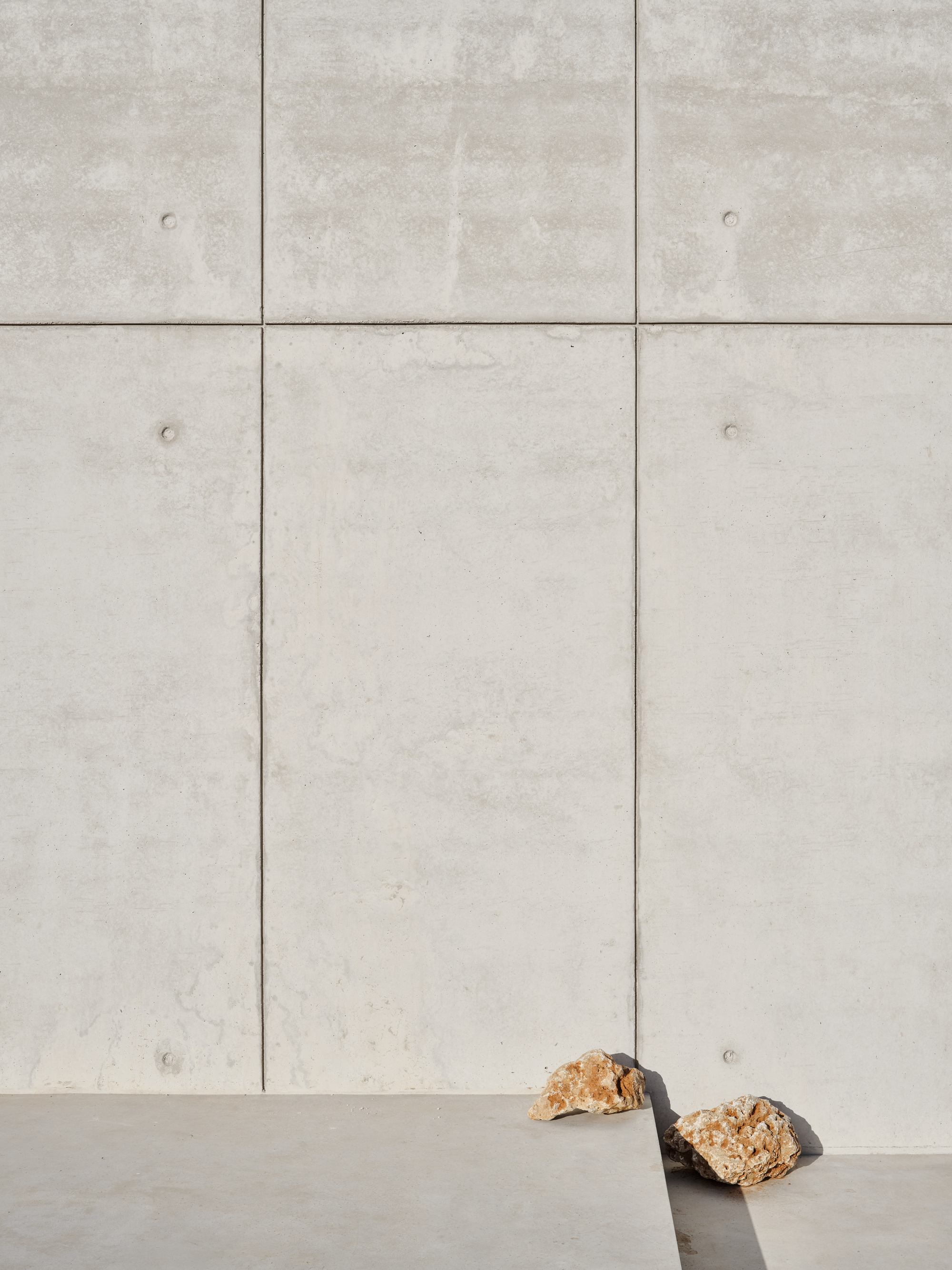
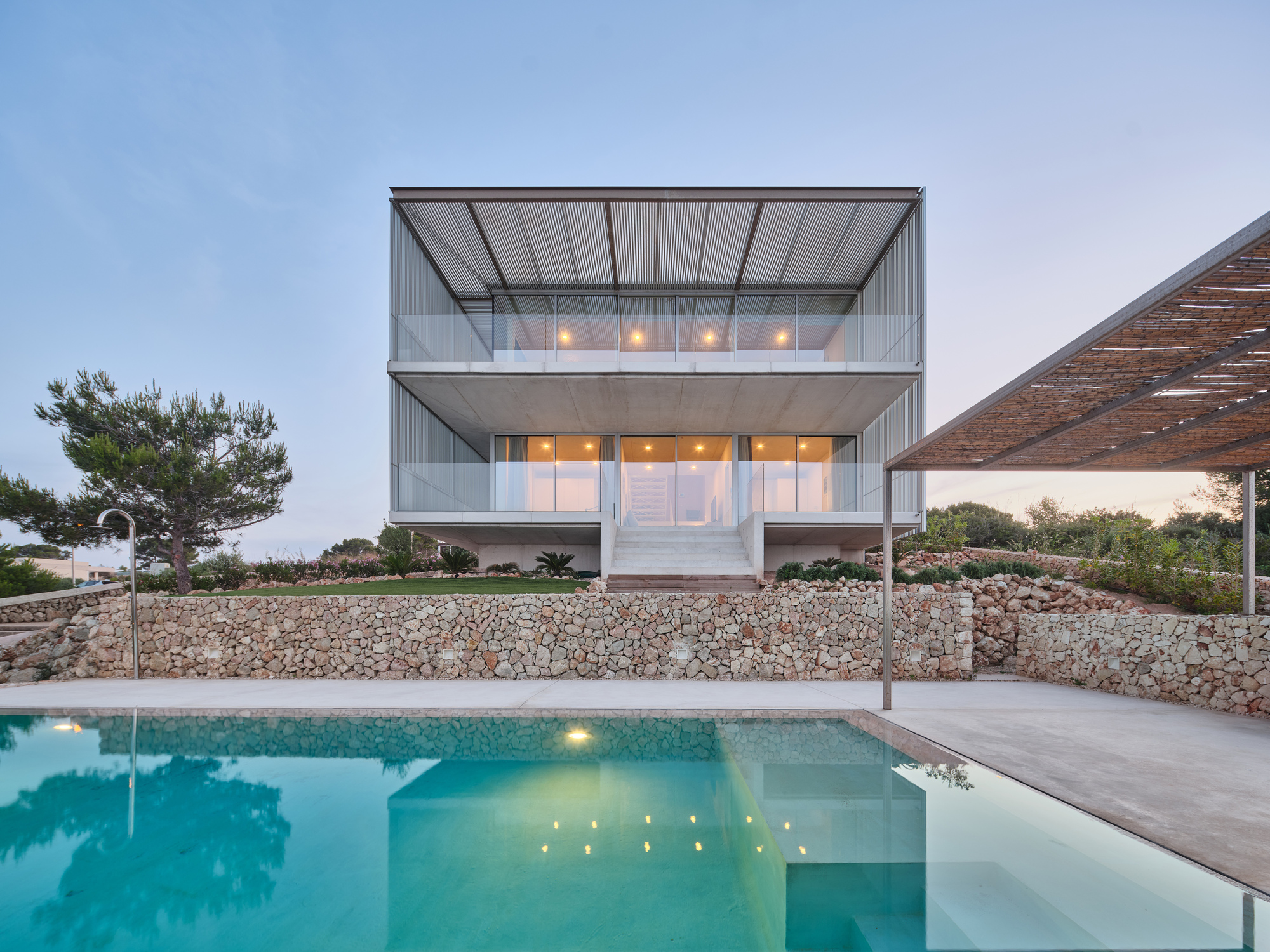
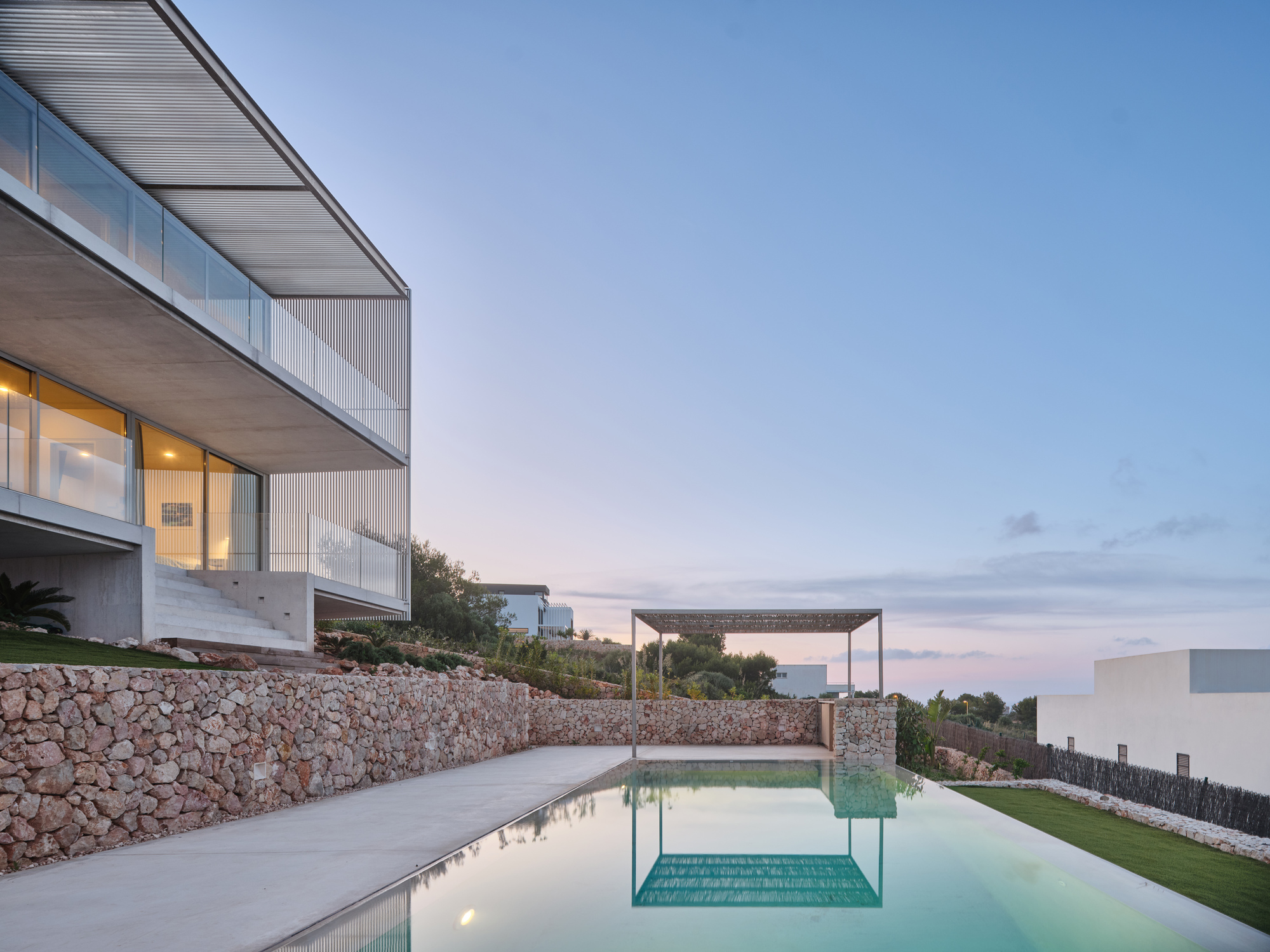
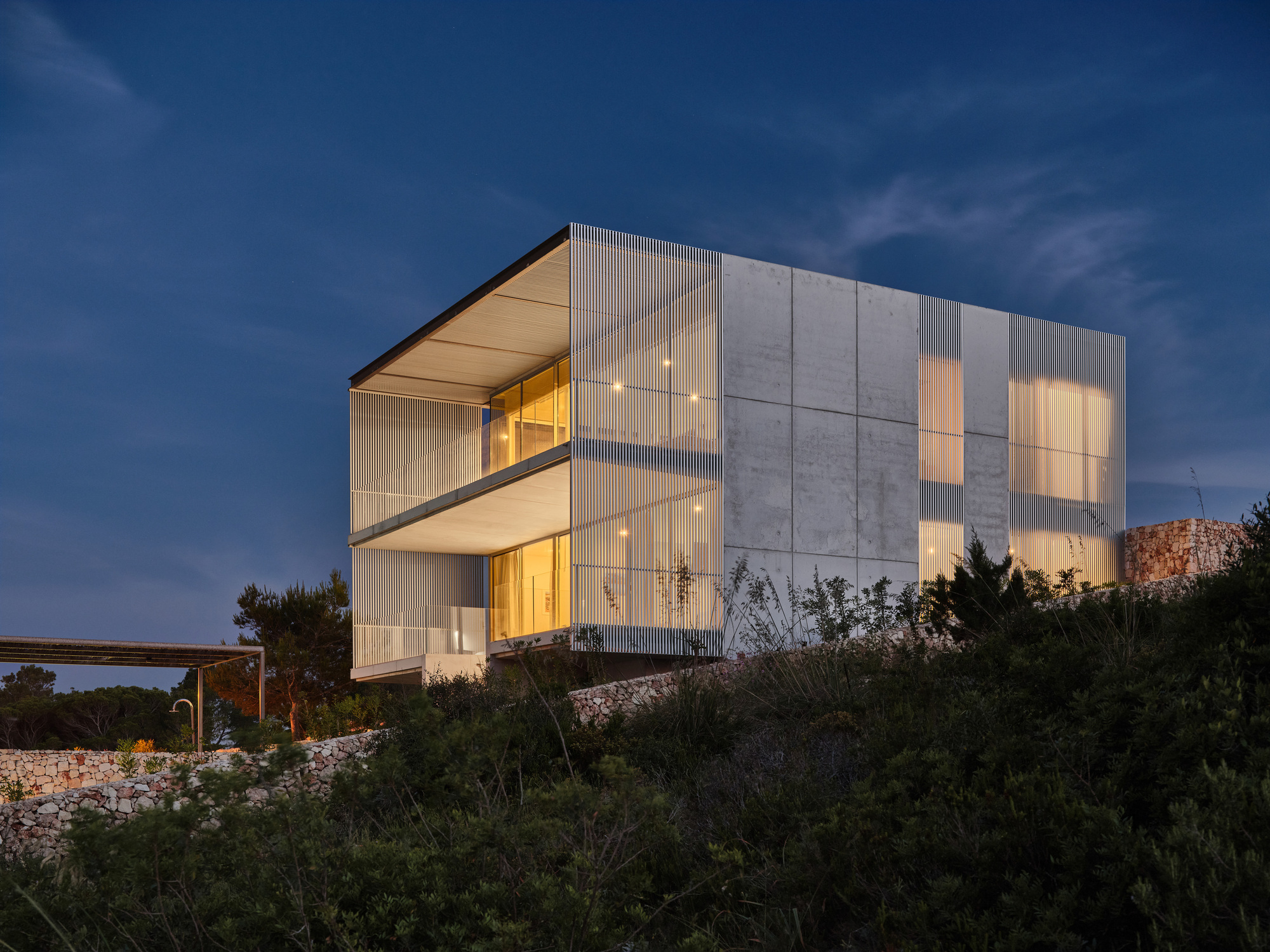
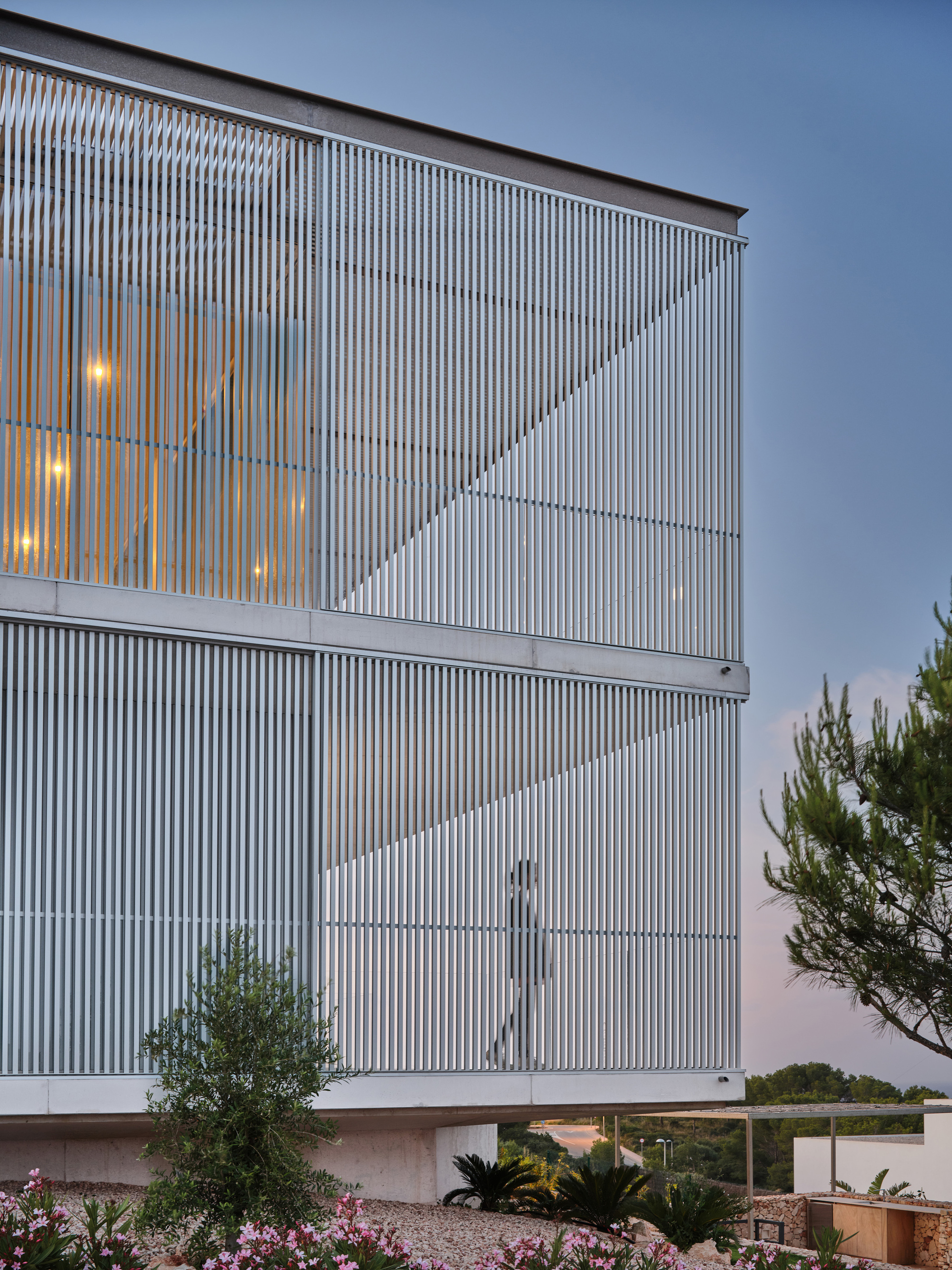
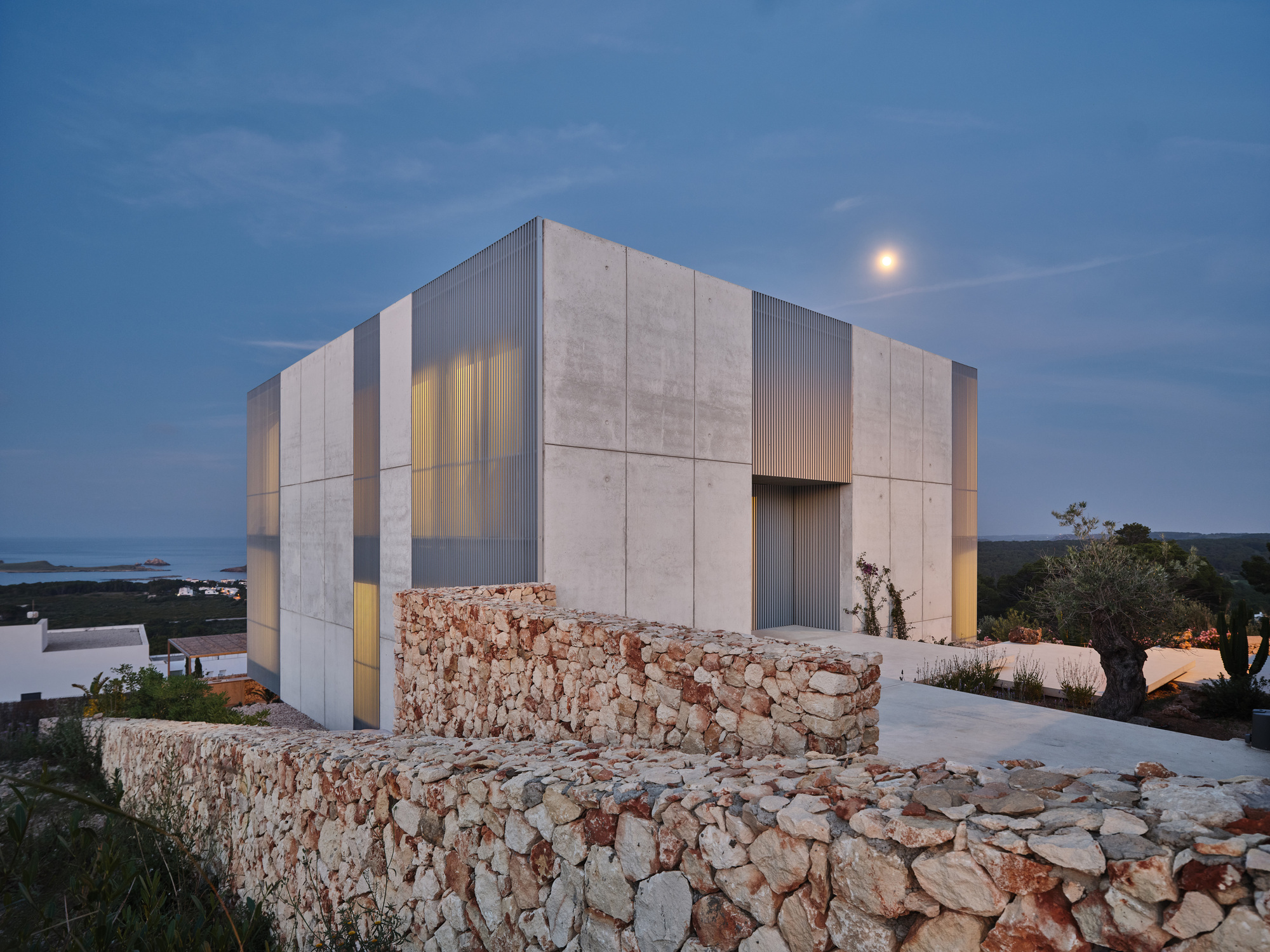
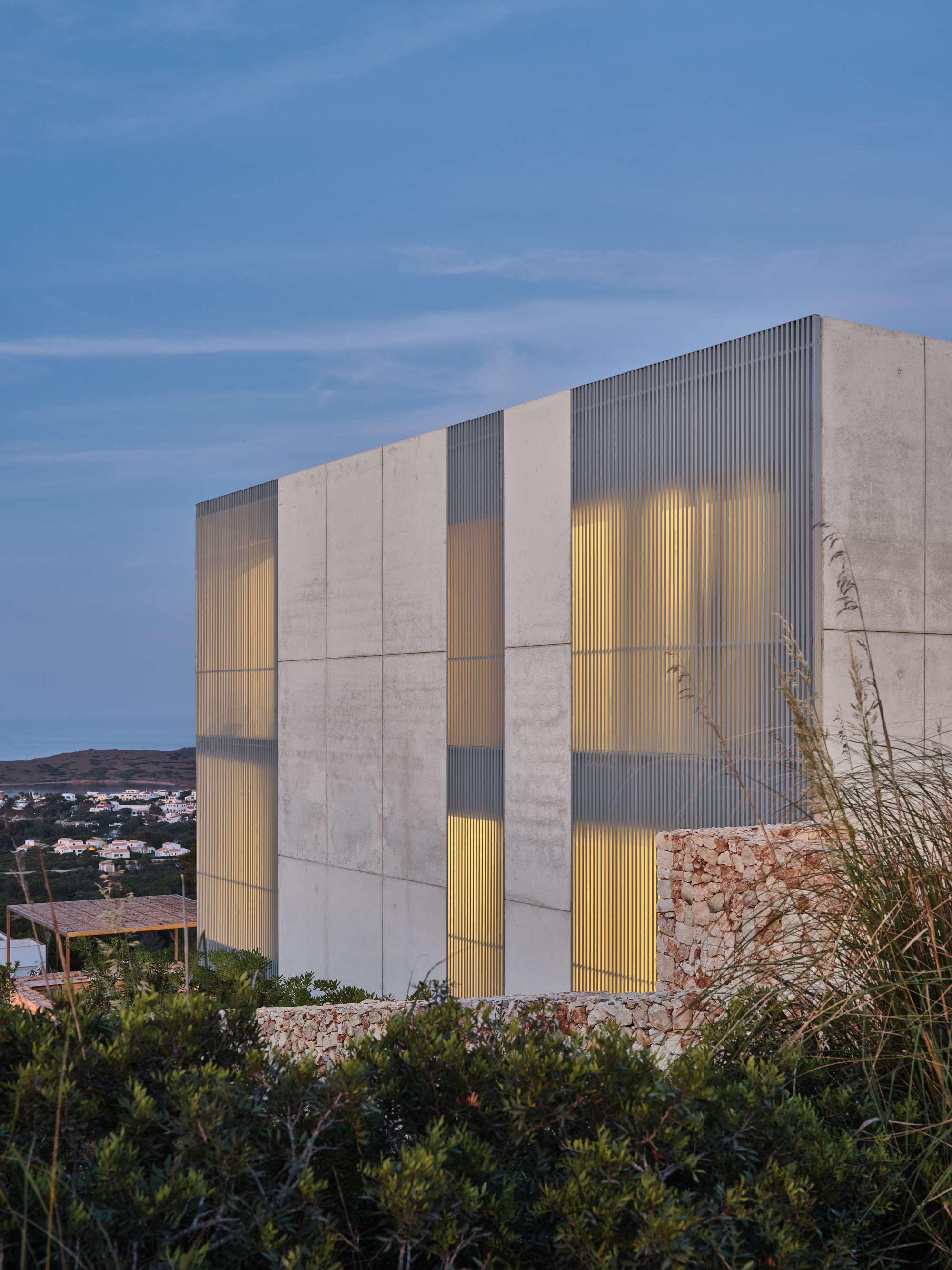
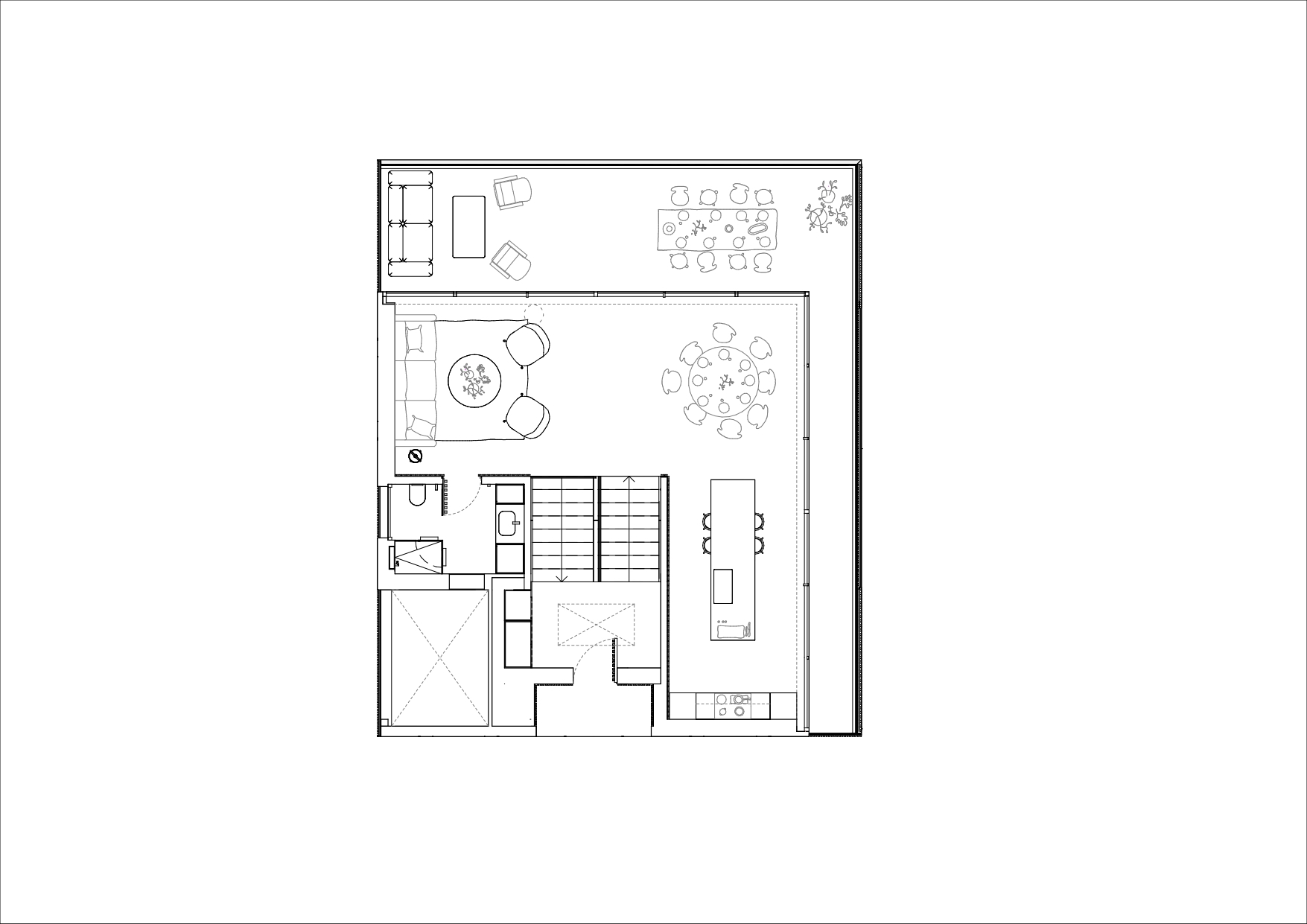
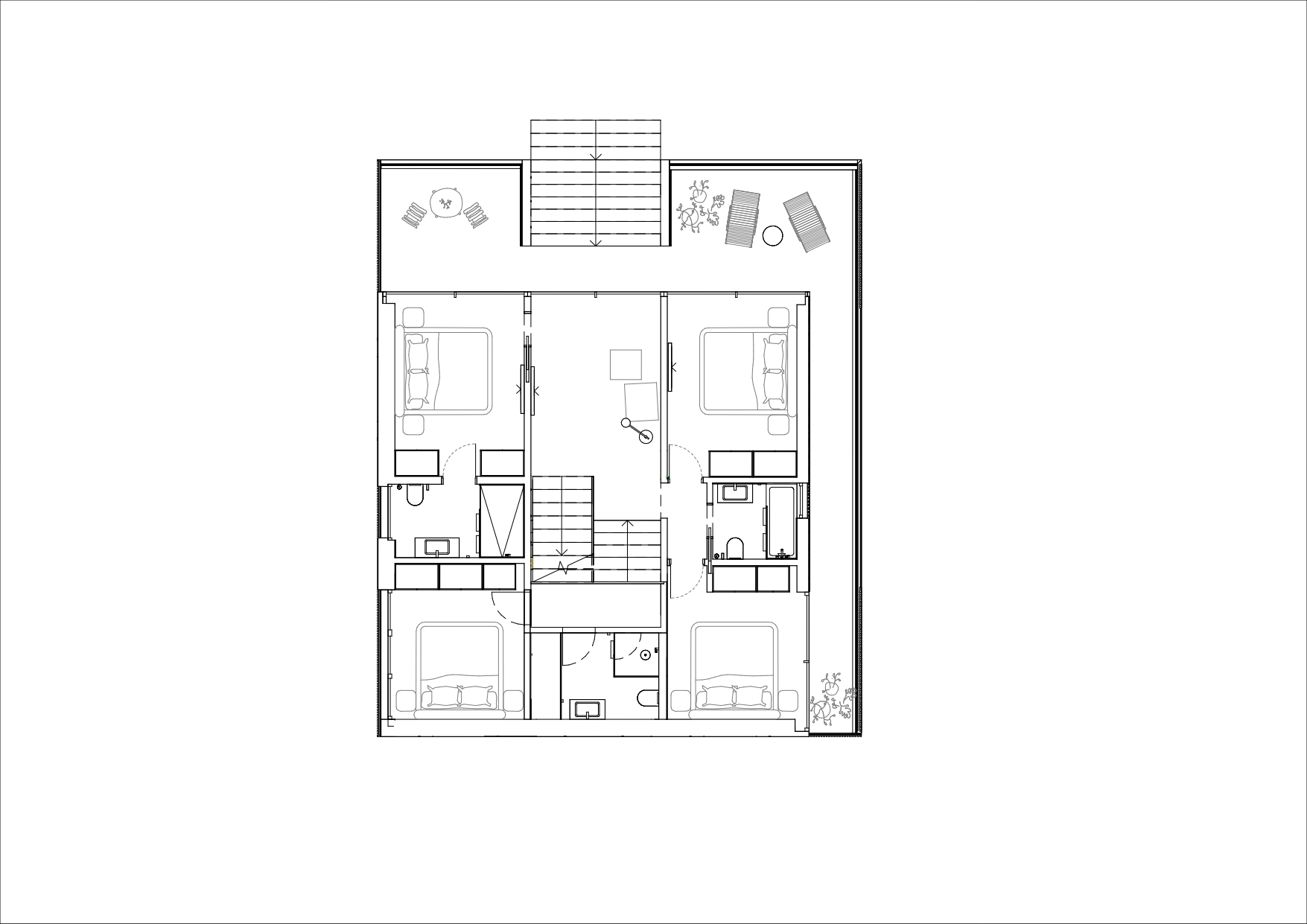
Steel House #architecture Architects: NOMO STUDIO Area: 250 m² Year: 2024 Photographs: Adrià Goula Lead Architects: Alicia Casals City: Menorca Country: Spain