« Trump has announced several rounds of tariffs on Canadian goods, including his initial executive order imposing 25 per cent levies on all imports and 10 per cent on energy, which come into effect as soon as March 4. He later announced there will be additional 25 per cent tariffs on steel and aluminum starting March 12. And this week, he announced he plans to charge reciprocal tariffs, a policy he called “the big one.” »
I think we (Canada) will resist Trump but it will cost us dearly. Nobody knows what will come of it.
Newfoundland and Labrador Premier Andrew Furey expressed deep concern over U.S. President Donald Trump’s repeated statements about annexing Canada, emphasizing that Trump is serious about the idea. During a visit to Washington, D.C., Canadian premiers met with White House officials, who confirmed that Trump’s remarks should not be dismissed as a joke.
Monsieur l'Indien. En l'honneur de tous les déracinés du monde par la civilisation. / Mr. Indian. In honor of all those uprooted from the world by civilization.
This is worthy of attention.
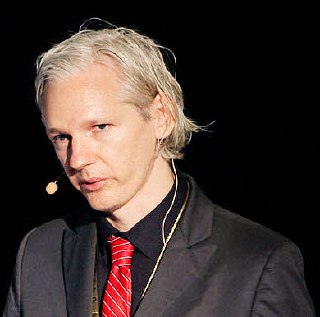
TRIBUTE TO JULIAN ASSANGE AND WIKILEAKS
"A young man in Australia, a long, long time ago, well before we ever knew about WikiLeaks, had an idea: the idea of using Big Brother’s technology to create a large digital kind of mirror to turn to the face of Big Brother so as to enable us to be able to watch him watching us — like turning the mirror to the face of the Medusa. WikiLeaks is based on that idea."
— Yanis Varoufakis (https://en.wikiquote.org/wiki/Yanis_Varoufakis) in Free Julian Assange: Snowden, Varoufakis, Corbyn & Tariq Ali Speak Out, (https://www.democracynow.org/2021/10/25/belmarsh_tribunal)October 25, 2021
Regularly I wish to be able to modify a publication, either because I omitted something or there is a grammar error or a formulation could be improved and I wonder if the nostr protocol would allow this.
I sometimes find myself thinking back to a video where a man claimed to have traveled to the future. He described weightless, mobile cities, entirely governed by a quasi-divine AI capable of assessing a person’s criminal profile in just a few questions.
A portion of humanity lived in these cities, under obscure rules, likely adapted to the AI’s demands. The rest, however, survived in a much harsher world, left to fend for itself in nature. There seemed to be no more nations or traditional political structures.
This thought often haunts me: humanity has endured countless catastrophes—collapsing empires, endless wars. Even today, a small minority preserves technological advances and lives in luxury, while the majority endures dreadful conditions. And it will likely remain that way in the future.
Recently, an announcement on YouTube revealed that a research team affiliated with the University of Oxford had successfully created quantum entanglement between multiple quantum computers connected via fiber optics. Although these machines still handle only a few qubits, this breakthrough allowed them to function as a single microprocessor.
There are also quantum communication networks linked by satellites. Yet, today’s AI still relies on traditional computing technology, using bits (0 and 1) processed by logic gates.
So, if AI can already achieve such spectacular results with these “traditional” means, what will it become when it fully harnesses quantum computing?
In theory, if political choices allowed it, a planetary quantum intelligence connecting thousands of quantum computers could one day be created.
Il m’arrive de repenser à une vidéo où un homme affirmait avoir voyagé dans le futur. Il y décrivait des villes en apesanteur, mobiles, entièrement régies par une IA quasi-divine, capable d’évaluer le profil criminel d’un individu en quelques questions.
Une partie de l’humanité vivait dans ces cités, selon des règles obscures, probablement adaptées aux exigences de l’IA. L’autre, en revanche, survivait dans un monde bien plus rude, livrée à la nature. Il ne semblait plus exister de nations ni de structures politiques traditionnelles.
Cette idée me hante souvent : l’humanité a traversé d’innombrables catastrophes — effondrements d’empires, guerres interminables. Déjà aujourd’hui, une minorité préserve les acquis technologiques et vit dans l’opulence, tandis qu’une majorité endure des conditions effroyables. Et sans doute en sera-t-il de même à l’avenir.
Récemment, une annonce sur YouTube a révélé qu’une équipe de recherche liée à l’université d’Oxford était parvenue à créer un entrelacement quantique entre plusieurs ordinateurs reliés par fibre optique. Bien que ces machines ne maîtrisent encore que quelques qubits, elles ont pu fonctionner comme un seul microprocesseur.
Il existe également des réseaux de communication quantiques connectés par satellite. Pourtant, l’IA actuelle repose toujours sur une informatique classique, utilisant des bits (0 et 1) traités par des portes logiques.
Alors, si l’IA, avec ces moyens « traditionnels », atteint déjà des résultats spectaculaires, que deviendra-t-elle lorsqu’elle exploitera pleinement l’informatique quantique ?
En théorie, si les choix politiques le permettaient, il serait possible de créer une intelligence planétaire quantique reliant des milliers d’ordinateurs quantiques.