Nick Anthony's avatar
Nick Anthony
EconWithNick@verified-nostr.com
npub1n2m8...gflr
Policy Analyst at the Cato Institute's Center for Monetary and Financial Alternatives and Fellow at the Human Rights Foundation. Covering CBDCs, financial privacy, and cryptocurrency. Opinions are my own.
Nick Anthony's avatar
EconWithNick 1 month ago
It's a little funny promoting my Substack on here since followers get it directly cross-posted as reads. However, if you'd prefer my work in your inbox instead, sign up for my Substack where I cover CBDC developments, financial privacy, debanking, financial freedom, and more. Price of $0/₿0/₳0/€0/₦0/Kč0/₸0/¥0
Nick Anthony's avatar
EconWithNick 1 month ago
Aimlessly wondering around Prague and I look up to find I’ve stumbled my way to the Czech Central Bank. It seems that even on my off days, I’m tracking central banks. image
Nick Anthony's avatar
EconWithNick 1 month ago
Has anyone else noticed how the ECB is ramping up digital euro propaganda?
Nick Anthony's avatar
EconWithNick 1 month ago
“A purely peer-to-peer version of electronic cash.” It’s there if you want it and it’s there if you need it. And frankly, nowadays, having an escape hatch feels more necessary than ever. image
Nick Anthony's avatar
EconWithNick 1 month ago
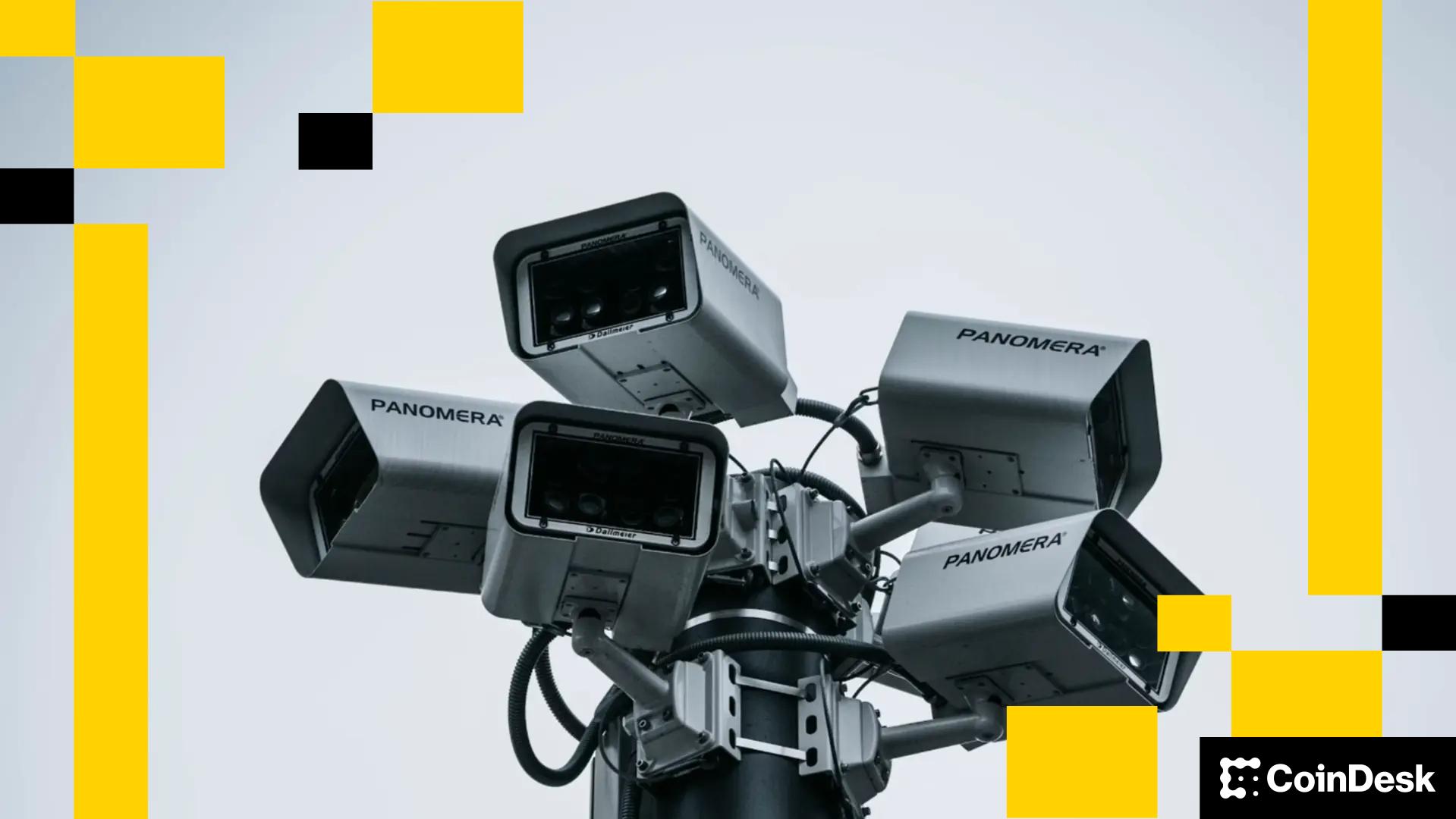
Governments force banks to report your activity, judge whether you are being suspicious, and close your accounts when you step out of the norm. How? It dates back to 1970. President Richard Nixon had not yet been caught surveilling his political opponents. Instead, Oct. 26, 1970 marks when Nixon signed the Bank Secrecy Act and set the foundation for a new regime of financial surveillance. Often abbreviated as “the BSA,” the Bank Secrecy Act was originally enacted over fears that the rise of air travel in the late 1960s would lead to Americans hiding their money in Swiss bank accounts. As the times changed, so did the concerns. Congress initially targeted tax evaders, but the Bank Secrecy Act was later expanded to also go after drug traffickers. Later, it would be expanded again to go after terrorists. Most recently, Congress has been weighing where and how to apply it to cryptocurrencies. https://www.cato.org/blog/warren-misses-details-bank-secrecy-act Yet, it hasn’t just been the targets that have changed. Congress has also steadily expanded who must report their customers under this regime. Even the @USPS and pawn shops are defined as "financial institutions" here. This ever-growing list of both targets and informants is partly why more than 27.5 million reports were filed on customers last year. https://www.cato.org/blog/reporting-fincens-suspicious-activity-again Congress has prioritized ever-increasing financial surveillance over protections for people’s privacy for 55 years now. It’s time for that to change. It’s time to respect financial privacy and stop treating ever-expanding surveillance as the norm. Reform needs to happen before the Bank Secrecy Act gets to celebrate its next big milestone. For more on how, check out my latest in @CoinDesk
Nick Anthony's avatar
EconWithNick 2 months ago
ECB President Christine Lagarde said the “ECB’s climate and nature plan [extends to] the potential introduction of a digital euro.” She said the CBDC must be energy efficient “unlike certain crypto-assets, which often rely on energy-intensive mining infrastructures.” Find out more in the HRF CBDC Tracker.
Nick Anthony's avatar
EconWithNick 2 months ago
It’s incredibly disappointing that the Department of Justice has denied my FOIA request and appeal. President Biden requested a report on how to create CBDC legislation, but the folks currently in charge have decided this information should be hidden from the public. image The issue dates back to 2022 when President Biden placed “the highest urgency on research and development efforts into the potential design and deployment options of a United States CBDC.” As part of this effort, President Biden instructed the Department of Justice to put together an “assessment of whether legislative changes would be necessary to issue a United States CBDC.” Yet, the report never saw the light of day. When it became clear that the report wasn't going to be published, I submitted a FOIA request and members of Congress wrote to Attorney General Merrick Garland. Still, nothing. https://www.cato.org/blog/white-house-doj-keeps-cbdc-legislation-secret-cato-rep-hill-seek-answers I thought the change in administration might mean I would get the documents faster given how vocally opposed President Trump has been to CBDCs. Yet, instead, the request still ended in rejection. In explaining the rejection, the Department of Justice says releasing the information “would harm the interests” of the government. Given how the rise of CBDCs has increasingly become a public concern, the American people deserve to know what the Department of Justice and the White House think needs to be done to create a CBDC.
Nick Anthony's avatar
EconWithNick 2 months ago
It is absolutely wrong for the New York Times to say a CBDC has "no risk of frozen funds." The Vietnamese government reportedly just froze 86 million accounts, the Russian government froze the accounts of Alexei Navalny and his allies, the Canadian government froze the accounts of the Freedom Convoy protests, the Nigerian government froze the accounts of people protesting policy brutality... Do I need to go on? And this is to say nothing of the fact that private providers often freeze accounts because they have been deputized as law enforcement. image
Nick Anthony's avatar
EconWithNick 2 months ago
"If you maintain nonviolent discipline, you'll exclusively win. You have 100,000 people in a nonviolent march, one idiot or agent-provocateur throwing a stone. Guess what takes all the cameras? That one guy. One single act of violence can literally destroy your movement." - Srdja Popovic
Nick Anthony's avatar
EconWithNick 3 months ago
The ECB is now arguing that a CBDC is needed in case of power and network outages. How do they say it would help? 1. The infrastructure will have multiple servers 2. The CBDC will have a dedicated app 3. The CBDC might work offline This argument is far from compelling. At the risk of shocking the ECB, let me be clear: private businesses already use dedicated apps, multiple servers, and even *gasp* back up servers. In fact, offline payments might be tricky, but they are not impossible. Recognizing the value of connecting people in times of outages or disastors, the market has introduced solutions. You don't even need an internet connection to send bitcoin anymore. If you don't know what I mean, just check out all the work @calle is doing. Yet, even then, it's simply absurd for the ECB to suggest that the central bank must intervene to introduce alternatives. As George Selgin pointed out in 2018, central banks are just as vulnerable to outages, equipment failures, and hacking as others. https://www.cato.org/blog/computer-glitch-argument-central-bank-ecash History has shown that they too fall victim to these issues. Furthermore, as George noted, there are plenty of alternatives available. You can get multiple bank accounts, fintech apps, prepaid cards, cryptocurrencies, and more. And each one of these options has its own suite of subcategories. So the idea that central bank is needed to swoop in and introduce a long-missing alternative is too little too late. Arguements like the ECB's are why "a solution in search of a problem" has become the unofficial tag line for CBDCs.