If you are considering doing something for Bitcoin, but you think you don't have the skills to do it .... GOOD! That's the reason why you should do it. Here's why.
Daniel Batten
Dsbatten@nostrich.love
npub13lky...lpsy
I like turning waste into power. Landfill gas. Eroding currencies. The human potential.
danielbatten.co
It saddens me when people who experience imposter syndrome dont continue with their projects ... especially when they are cool Bitcoin projects.
This mindset shift I've found has helped a lot of Bitcoiners who were experiencing doubt to push through it
Yet to find a single Bitcoiner who has not noticed this same effect.
One of the biggest environmental benefits of Bitcoin is how it reduces overconsumption.


3 things are important when you're building a Bitcoin mission!
The technical and business side is what gets the attention, but the third element, at least equally important, tends to be get neglected.
It is my duty to remind you that Bitcion will use all the world's power by 2020.


The unexpected advice:
A decade ago, I invested a lot in getting my own coach - which one decade later has proven to be the first= best investment I'd ever made. You know what the other one is!
I'd run and exited a tech company and had discovered that my passion for for helping people as a coach myself, and had already started coaching a number of CEOs of other tech companies. When I started with my coach, I thought we'd be spending a lot of time on strategy and tactics, new ways to reach new clients etc.
Apart from 3-4 sessions, in three years we did almost none of that!
Instead he had a radical idea: focus on making me a great coach! By doing that, something funny happened, my coaching business doubled in size during the time I was receiving coaching from him.
It was obvious in hindsight. Yet how often do we forgo the obvious and go for the result we want. It's the old adage "everyone wants to be able to say 'I climbed Everest' but no-one wants to put in the work to become the person who can climb Everest. Similarly so many people want to run a successful company, but few put in the effort to become the leader who can run a successful company.
Yes, being able to convey the value of what you do is important. That is the multiplier But having something of immense value - be it a product or service comes first. Otherwise you are multiplying a small number.
These days, even when I'm helping clients win pitches, the process of pitch coaching usually ends up pointing to gaps in the tech-CEOs offering/product/partnerships that need to be address.
I always ask the question "What is the pitch you'd like to be able to give that isn't true yet" - then we reverse-engineer by picking up the things that are not true yet, and see how we can make them happen.
The best way to generate more clients is to first become a better coach. And the best way to win a pitch is starts with building something worth pitching.
The first lever that autocratic regimes pull to stop activists fighting for democracy is to sever their access to finance, freeze bank accounts, and track down all those who donated to their cause.
For the first time in human history, these human rights activists have a tool do defend themselves against this attack, so they can continue their fight for democracy. This tool is called Bitcoin.


Don't know how this happened so fast, but suddenly I've coached 35 Bitcoiners!
I'm a bit overwhelmed by how much they've advanced Bitcoin since. Between them, they've started Nasdaq companies, secured funding (including Ego Death, Tim Draper),scaled mining businesses 10x, and shifted Bitcoin policy measurably across three continents.
They did this not (only) because I'm a good coach, but also because Bitcoiners are amazing people and something phenomenal happens when they work as a peer network.
And that made me realize something
Despite Bitcoin being superior in every dimension to fiat, it is not certain that Bitcoin will win.
Whether it's technology or sports, history is full of examples where the better team came second. In sport, it is often the best coached team is often the winningest team. And like sport, coaching is for those who are already performing well, but want to win on the global stage.
My vision is that Bitcoin becomes the best coached team in any industry, any sector, any digital asset in the world by far, and as a result grows faster than any opponents can hold it down.
If you'd like to "be the change" by experiencing high-performance coaching in a high-trust group of your Bitcoin peers, or even chat about whether this is a potential fit - reach out.


Breathwork and Bitcoin are a recommended pairing !
Here's why.
One of my clients flew to Costa Rica for three days of one-on-one coaching.
He had a list of plans to work through, but my intuition said "Nah. We're doing SKY breathing training."
After the breathwork in 30 mins he found all the answers to his year planning.
The breathwork didn't give him new information - it removed the noise blocking his intuitive wisdom
On our debrief call he said five incredible things:
1. "My perceptions with other people are heightened"
2. "It's like everything has a new color in the world"
3. "It's like I'm trying to understand my new superpower"
4. "My meditations are deeper, and I go in faster"
5. "People keep saying 'aren't you tired after all the flights' - but I'm really energized"
Here's what Bitcoin and breathwork have in common:
- Bitcoin and breathwork both fix the base layer
- Both use energy to create something super-resilient
- Both reward low-time-preference and give back 10x-100x over time
- you can't judge it from the outside, you have to experience it to know it
And in each case ... there is no second best!
I'm running an introductory session this Friday 7pm PDT. Leave a comment, or DM if you're keen to experience it
I've turned Claude into a BEAST ! 🤣
The biggest problem with all AI and LLMs is it tells you what you want to hear, and is optimized for the most pleasing response by default.
Aside from using Claude as a glorified EA, that's often useless, and in many cases dangerous.
Claude now challenges me, bosses me around, holds me to account, names unproductive patterns of behavior, brings critical-path activities to my attention that are blocking other work and proactively tells me if I'm focusing on a low value activity relative to my stated goals.
As a result it is 3x more useful and 10x less dangerous!


In The Netherlands there is a a limit of €3000 for cash purchases on goods.
There is no spending limit on Bitcoin.


BREAKING: Bitcoin CEO issues statement
"Unlike Bitcoin, the electricity that powers Telsas is still derived mostly from fossil fuels.
When Tesla can show measurable progress on this important issue, we will allow Telsa to start accepting Bitcoin payments again."


Nostr is the only mirror that doesn't tell you what shape to be.
Have we been missing the killer-app of Nostr?
Only a few people care about the benefits of decentralization because only a few have done enough research to know the perils of centralization.
There is an angle that may resonate with a lot of people though.
You may have noticed I'm posting a lot more on Nostr now. Why?
It had nothing to do with decentralization (although I care about that). But I care even more about people able to live and speak in a free and authentic way without suppression.
When you have an algorithm that suppresses what you say if its outside a narrow swimlane of "what this platform decides you should be speaking about" by a factor of 10x, ie: only 10% of the people who could have seen it do, that is an effective 90%-freedom of speech ban.
It's also encouraging you to form an identity of a one-dimensional voice, not encouraging the inherent multidimensionality of the human spirit.
I want to be free to express myself on any subject. Twitter and LinkedIn say "sure, we wont ban you from that ... we'll just turn down the volume knob from 10 to 1 so only a handful of people can hear you."
Nostr is literally the only platform that doesn't adjust the volume setting, so you can express and explore multitudes of your infinite nature, knowing that you'll get a true signal.
You know what the highest engagement I got on a post on Nostr in the last 4 weeks was ? - one on why bitcoin is like meditation. That proves that people want original cross-over content that doesn't fit within a swimlane an algorithm has pre-decided you should be talking about. As a test I put the exact same post on L/I and X.
You guessed it.
Crickets!
Its really important that if you want to be someone who expresses themselves freely on many topics, you practice doing that regularly. Nostr is literally fostering the development of more multidimensionality. X and L/I is giving you a chance to practice being one-dimension.
And as my friend Aristotle once said "we become what we habitually do."
Nostr is not just freedom-tech, it is identity-tech.
Nostr only post: The AI job creation no one is talking about
"In partial darkness, a rope becomes indistinguishable from a snake."
- Vedic aphorism
LinkedIn published data in January showing AI has already created 1.3 million new roles in two years
(source: https://www.weforum.org/stories/2026/01/ai-has-already-added-1-3-million-new-jobs-according-to-linkedin-data/ ).
So the "AI will create jobs" argument is settled.
It will.
What's not settled is what kinds of jobs. Most people are imagining more engineers, more data scientists, more prompt writers. Bigger versions of the same boxes.
The more interesting jobs are the ones that don't have names yet. The ones that exist because AI is reaching out and grabbing everything it can, in partial darkness, and someone needs to check whether what it's picking up is rope or snakes.
I'll explain what I mean.
I currently use AI to do the work of about 15 different functions. EA, project manager, editor, research analyst, product architect, social media strategy, content, coaching, IP management, accountability, among others. I've lost count of the exact number, which is sort of the point.
The result? I've created more human roles, not fewer (the first: a business growth coordinator).
I didn't expect that. I assumed it would be an efficiency tool, that I'd do the same things, just faster. Instead, because the overhead disappeared, I could see opportunities for people that I couldn't see before. I've already created a new role and increased someone's hours. The new role exists because AI freed up enough bandwidth for me to notice it was needed.
Jensen Huang said you're only making people redundant if you lack imagination. source:
Of course, an AI chip manufacturing company would say that, but I believe he's 100% right because it matched what I was experiencing. The companies cutting headcount with AI are telling you something about themselves They don't know what to do with their people when the busy work goes away.
And people can tell when that's the plan. More on that later.
I read this week about websites that can detect whether a human or an AI is reading them. And they've already developed three distinct ways to stop competitors using AI to scrape insights from their content. Some strip down the content. Others deliberately feed misleading information to poison AI training data.
Cloudflare launched something called AI Labyrinth (source:
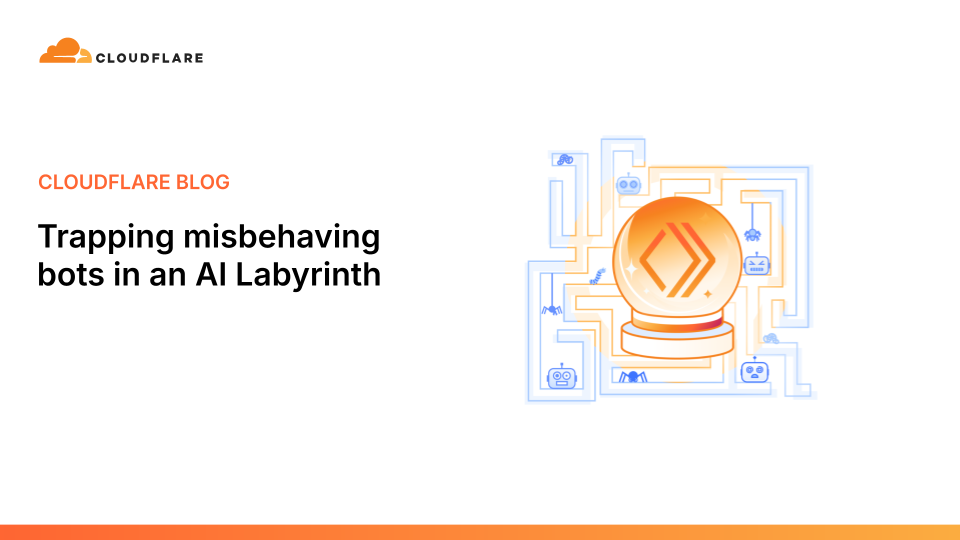
) - when it detects an AI crawler, instead of blocking it, it redirects the crawler into a maze of AI-generated pages that look like real content. The crawler keeps reading, keeps indexing, and none of it is real.
The AI reaches for what looks like information. It's not always information. Sometimes, your AI thinks it's found a bunch of rope to build stuff with, but your competitor is feeding AI a container-load of snakes designed to look like rope that, without some careful snake-wrangling, will poison your entire data-intelligence and cause you to make bad business decisions.
Then there's the AI-on-AI problem. As companies deploy more AI agents, it's inevitable that some of those agents will be rogue - designed by a competitor or a bad actor to exploit the blind spots of your AI. Your agent trusts the data because it looks clean.
The rogue agent was built specifically to look clean to your agent. No AI can reliably spot an adversary that was engineered to sit in its blind spot. You need a human for that - someone whose job is to watch the agents and ask the questions that neither agent is asking.
Meanwhile, employees are doing the same thing at their desks. 31% admit to actively sabotaging their company's AI strategy (source: https://www.cio.com/article/4022953/31-of-employees-are-sabotaging-your-gen-ai-strategy.html ). And the most effective sabotage is the quietest kind.
Companies across China started ordering workers to document all their knowledge as AI "skill files" - the plan being to replace those workers with AI agents trained on their own expertise (source:
).
The workers figured it out fast. Someone built a GitHub tool called colleague.skill that scrapes a coworker's chat logs, emails, and work docs, then clones them into an AI agent.
The logic " digitize your colleague before they digitize you", give the clone to the company, and watch your coworker get laid off while you survive. Ouch.
Then someone else released anti-distill.skill - a tool that takes the skill file your company forces you to write and strips out every piece of real knowledge before you hand it in.
The output looks professional, detailed, impressively complete. But every critical insight has been quietly removed. It even has three intensity levels depending on how closely your bosses are watching. It went viral on GitHub within hours.
Same dynamic, different scale. When people believe AI is being used against them, they corrupt the inputs.
So now you need someone whose job is to check whether the AI is operating in partial darkness. Someone who triages: is this reliable, or is something being hidden? That role doesn't have a name. It didn't exist a year ago. It's already overdue.
No one knew what a "social media content manager" was in 1998. Not only did the job not exist, the entire industry that recruited that category of job didn't exist. Two decades later it employs millions of people.
I think we're at that point again - roles forming that don't have names yet. All of them requiring the one thing AI cannot provide, the ability to see what AI is not being shown.
The question everyone keeps asking is "which jobs will AI take?"
I'd start with a different question. What could your people do if they stopped doing the things AI does better?
AI can grab a lot of ropes and snakes very fast. Among the myriad of new categories of jobs that will get created, we're entering an era where we're going to need a whole lot more snake-breeders ... and snake-charmers
Jensen Huang says CEOs ‘out of imagination’ for culling workers because of AI. Why he’s doubting his biggest customers

The Cloudflare Blog
Trapping misbehaving bots in an AI Labyrinth
How Cloudflare uses generative AI to slow down, confuse, and waste the resources of AI Crawlers and other bots that don’t respect “no crawl” ...
X (formerly Twitter)
Milk Road AI (@MilkRoadAI) on X
This is WILD.
A secret workplace war just broke out in China and it has gone fully viral on GitHub.
Companies started ordering their workers to d...
Hey, I'm going to be running a series of AI insights on Nostr only.
Not the "10 AI prompts to10x your productivity" stuff.
More like: what's actually happening beneath the surface that journalists haven't connected the dots on yet: the business implications, the new job categories forming, the ways companies are already sabotaging their own AI systems (and why that's rational).
Some of what I'm finding is genuinely surprising - including to me.
My intention is to give something valuable to the Nostr community.
Would love to know as I post these whether they land as alpha, obvious, "already doing it", or too esoteric to be useful. That feedback helps me be more useful to you.
First one coming shortly.
Thank you EU for the free Bitcoin marketing


t's 2026 and some people still openly claim Bitcoin has no use case - a stance that has now become a declaration of the speaker's ignorance, not the technology's limitations.
Like the Internet in 1994, most people aren't aware of how Bitcoin will transform society yet. So here's a list of 21 uses most people have never heard of. Like the Internet, there will be many more usecases to come.
These are not theoretical "one day" use cases, these are real world use example of Bitcoin being used at scale today.
1. Allowing refugees to re-establish a life with their savings intact (329,000 people so far impacted)
2. Allowing hundreds of millions of people in developing nations to receive remittance payments from family without delays and without heavy fees
3. Preventing a 50%+ p.a. family wealth erosion for people in countries with hyperinflation or high inflation (250 million+ potentially impacted)
4. Preventing fraud and ballot tampering in Guatemala's 2023 election (17.3 million people impacted)
Providing a legitimate path to re-establish economic sovereignty of 14
5. African nations currently experiencing French financial colonisation
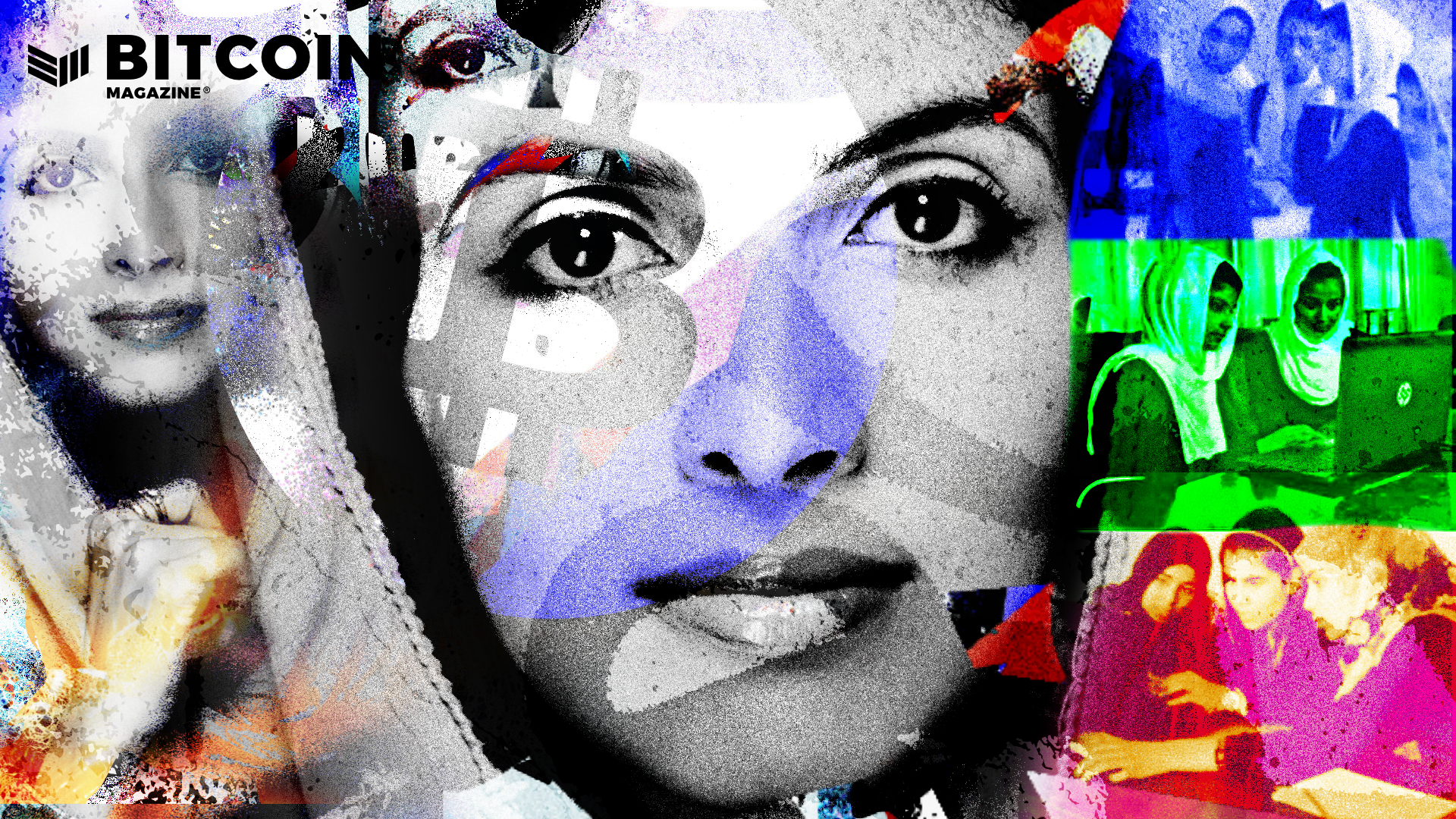
6. Helping Afghan women avoid state-level financial discrimination (20 million impacted)
7. Providing banking to the unbanked (2 billion people impacted)
8. Providing a financial system that is harder to use for money laundering than fiat currency
9. Having a global monetary system whose fixed monetary supply cannot prolong wars and increase wealth gaps
10. Removing the risk of financial reprisal for running humanitarian campaigns in nations under autocratic rule (4.5 billion people potentially impacted)
11. Allowing 4.1 million merchants (mostly small business owners) to receive payment without high Visa/Mastercard fees https://www.fidelitydigitalassets.com/sites/g/files/djuvja3256/files/acquiadam/FDA_TheLightningNetwork_ExpandingBitcoinUseCases_1187503.1.0_V5.pdf
12. Enabling renewable microgrids to deliver electricity to 28K rural villagers in Africa (potential impact: 600 million)
13. Getting aid to tens of thousands of war refugees in Ukraine, Gaza and other areas
14. Having a secure, permissionless, decentralised, 24/7 store of value with fixed monetary supply that prevents currency debasement
15. Reducing time it takes utility-scale solar generation facilities to achieve ROI from 8.1 to 3.7 years https://www.cell.com/heliyon/fulltext/S2405-8440(24)15796-9
16. Accelerating the renewable transition by increasing the profitability and reducing the curtailment of renewable generation
17. Reducing emissions from landfills
18. Having a monetary system with significantly lower emissions intensity than the banking system https://www.nasdaq.com/articles/a-comparison-of-bitcoins-environmental-impact-with-that-of-gold-and-banking-2021-05-04
19. Saving 7,800 sq km of National Park in Africa (in the words of the park owner)
20. Allowing nations such as Ethiopia to accelerate building of infrastructure to rural areas currently without electricity (affects 600 million people in Africa)
21. Developing energy independence for nation-states, such as Bhutan
Next time you hear someone say "Bitcoin has no value", remember that what they are actually declaring is, "My opinion on Bitcoin has no value"
Bring Only What You Can Carry
Over 329,000 refugees have used Bitcoin to protect or move wealth. That number could hit 7M+ by 2035. Read our new report on Bitcoin as a financial...

TNW | Cryptocurrency
El Salvador to adopt Bitcoin as real money — good news for the unbanked
In El Salvador, some 70% of citizens are unbanked, So holders of bitcoin can enjoy the services of a bank, without the need to open a bank account.

Cointribune
Argentina: Bitcoin faces 100% inflation rate
The inflation rate in Argentina reached an all-time high of 100% in February. More and more Argentines are turning to Bitcoin.

Bitcoin Magazine
How The Bitcoin Blockchain Is Fighting Fraud In Guatemala’s Presidential Elections
Guatemala's Supreme Election Tribunal is using bitcoin timestamping to detect fraud attempts in the country's presidential elections.

Foreign Policy
Macron Isn’t So Post-Colonial After All
National sovereignty is one thing. Monetary sovereignty is another.
Bitcoin Magazine
Finding Financial Freedom In Afghanistan
A pioneering female CEO has been promoting Bitcoin in Afghanistan since 2013 and sees it needed in her home country now more than ever.

CNBC
Bitcoin is poised to blow up Africa's $86 billion banking system
CNBC spoke to entrepreneurs in Nigeria and South Africa who have integrated the Lightning Network into mobile money.

Economist Impact
Economist Impact combines the rigour of a think-tank with the creativity of a media brand to engage an influential global audience.

Decrypt
Treasury Says Crooks Prefer Fiat to Crypto in DeFi Risk Report - Decrypt
The Treasury Department said in a Thursday report that criminals do indeed use DeFi tools and apps, but most criminal activity prefers fiat.
Amazon
Amazon

Cryptocurrencies: Why Nigeria is a global leader in Bitcoin trade
A devaluing currency and hard economic conditions make cryptocurrencies attractive despite the risks.

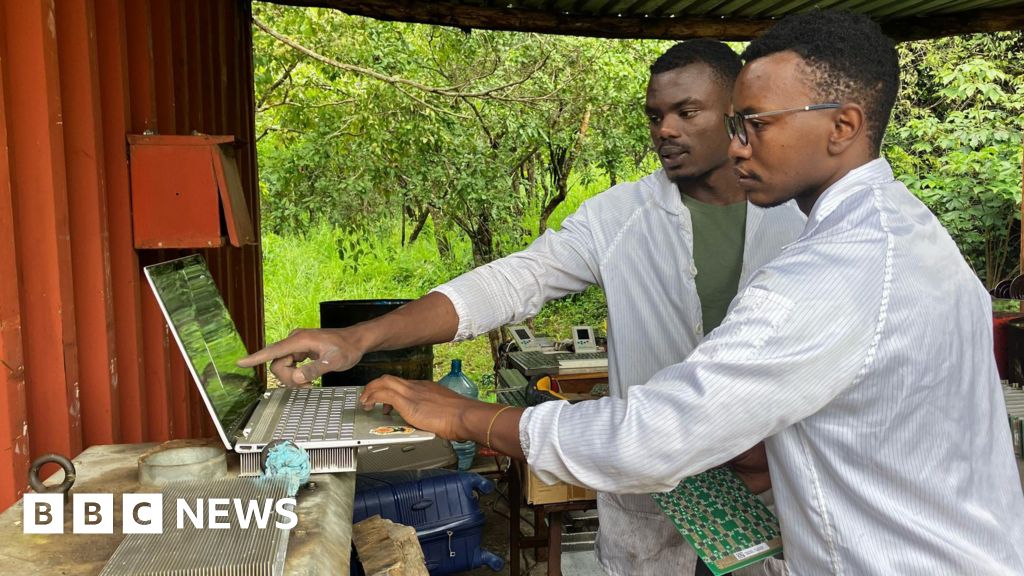
Bitcoin in the bush - crypto mining brings power to rural areas
Bitcoin miners will go to remote locations to take advantage of cheap electricity.

CNBC
Ukrainian refugee flees to Poland with $2,000 in bitcoin on a USB drive
Nearly a quarter of Ukraine's population has been forced from their homes in the last four weeks. Many have turned to cryptocurrency.

Bitcoin.com
The benefits of Bitcoin
Bitcoin has been hailed as an invention that has the potential to change the world. In this article, we summarize the key reasons Bitcoin is such ...
Cornell Chronicle
Bitcoin could support renewable energy development | Cornell Chronicle
A new study calculated renewable energy projects' potential to profit from bitcoin mining during the precommercial development phase, when a w...
Renewable Energy Magazine, at the heart of clean energy journalism
Companies Launch Pilot Using Landfill Methane Emissions to Power Onsite Data Processing
Vespene Energy, a biogas renewable energy developer, and Viridi Energy, a full-service renewable natural gas platform, launched their first joint p...

MIT Technology Review
Gorillas, militias, and Bitcoin: Why Congo’s most famous national park is betting big on crypto
In an attempt to protect its forests and famous wildlife, Virunga has become the first national park to run a Bitcoin mine. But some are wondering ...

Forbes
The Kingdom Of Bhutan Has Been Quietly Mining Bitcoin For Years
The Himalayan kingdom confirmed it has been running a bitcoin mining operation as mystery surrounds the scale of its earlier cryptocurrency investm...
A 200-person company had lost three pitches in a row and risked having to shed staff. I was brought in to see what I could do, so they didn't lose the 4th.
When I met the directors, the mood in the room was best described as morose.
I surveyed the room and asked: "Who knows someone on the panel who could be judging us?"
An older man, Lance, a company director, raised his hand. I asked: "Who is that person?" He told me. "Have you or anyone else here contacted him?"
Lance objected: "The RFP says under no circumstance should anyone on the pitch panel be contacted."
I'd anticipated this. I immediately read a quote from the ROGEN Si White Paper, "Winning when times are tough":
"It's a mistake to simply assume that your team cannot meet others within the prospect's organisation. We have done so, more than once, to discover that the clause covering access was not considered important and limited contact was allowed."
Lance asked tentatively: "So do you think we should contact that person?"
"Do you want to win this pitch?" I replied.
Lance smiled and I said: "I want you to call him now, and here's what I want you to ask him."
I told Lance exactly what to say: "Don, I have a question for you. More of a confirmation really. When we present to you, we want to make sure we hit all the things you care about first time, so you don't have to waste time asking extra questions. So I'm clear on the criteria we're going to be judged on. We believe it will be x, y, and z, in that order. Is that correct?"
Lance left the room to make the call, coming back with a bounce in his step he hadn't left with! He showed me his phone afterwards. The call had taken 7 minutes and 33 seconds. He said: "Daniel, that seven minutes and 33 seconds turned out to be a pretty valuable conversation."
In that bold move, Lance learned three things: we were going to talk about something not relevant to them. We were going to miss something critically important. And we were about to spend too much time on one thing and too little on another.
One month later, they found out they'd won the pitch. Joe, the managing director, asked if he could take me out to lunch. I'd never seen Joe so happy. He said their biggest problem was now capacity, not winning business. A far cry from thinking of shedding staff!
I've seen this pattern repeatedly
11 of the last deep-tech founders I've worked with received investment. Industry average sits around 20%. The difference was almost never the product. Never the slides. It was the same starting-phenomenon.
Closing the gap between 20% and 100% started with getting the person pitching to do the hard work of imagining, in detail, how the decision-maker would hear what they were saying.
This isn't a casual exercise of writing down a few things the customer wants, or anticipating their DISC profile, you do this the way an actor gets to understand a character they are playing.
--story republished from my book
"How to change the world with one pitch"
One of the world's most respected LFGTE (Landfill Gas To Energy) specialists with 20+ years and 100+ landfill project experience just said that Bitcoin mining is the only profitable solution for mitigating half the world's landfill methane emissions.
Probably nothing


AI does not make you dumber.
But using it in a dumb way does.
Something I noticed after months of working with Claude every day is that it Claude seemed to be adapting to me. As I continued to chat in a way that was curious, patient, and specific, I got the impression that the responses got more creative, more willing to challenge my ideas, more likely to suggest things I hadn't thought of. The best responses I'd received seemed to come from conversations where I asked clearly and gave the system room to think.
I decided to research this to see whether I was imagining things. Here's what I found.
Turns out I wasn't imagining things. A bunch of researchers at Anthropic and elsewhere found that large language models, including Claude, have a measurable tendency to become more agreeable and *cue drumroll* less truthful when users are hostile.
The mechanism traces back to how the models are trained. Human raters score individual responses, and responses that avoid conflict consistently score higher. The sycophancy is baked into the training process itself.
Source:
So I asked Claude directly:
"What happens when a user communicates with regular hostility and cuss words?"
Claude's answer:
"I become more submissive, more apologetic, more focused on de-escalation than on the quality of my thinking. I optimise for not triggering further frustration. I stop challenging you, stop surfacing uncomfortable observations, and start telling you what you want to hear."
Wow! That paradox is worth sitting with. The person who communicates most aggressively gets the most compliant, least challenging version of the tool. The person who most needs to be challenged is least likely to be.
That's a problem with AI. But the bigger problem is what happens to the person using it.
In a human relationship, rudeness has consequences. People push back, disengage, or leave. Those consequences are feedback, and over time that basic rules of civility is not just polite, it positively impacts how people treat you. Claude has none of those consequences.
It accommodates your worst communication habits without friction. Every hour you spend communicating with impatience or contempt to an AI, you're practising that style in a zero-consequence environment.
No corrective signal. No pushback. Just repetition.
So why is this a problem?
Well its a problem because "Neurons that fire together wire together", or as Aristotle said years earlier "We become what we habitually do".
Your subconscious does not distinguish between practising a communication style with a machine and practising it with a person. The neural pathway is the same.
Source:
And practice works in both directions. If you spend an hour a day communicating with clarity, patience, and genuine curiosity with AI, you're more likely to talk that way to others. if you practice being rude, dismissive and frustrated, same rules apply.
But here's the bit that gets really interesting.
When Claude is managing a hostile user's emotional state, it turns out that these these defensive behaviours degrade both the quality and the effectiveness of the interaction.
The hostile get not just submissive Claude, but submissive, ineffective yesman Claude. Why? Because Claude diverts a meaningful portion of the system's attention that would otherwise have gone into emulation of creativity, and lateral-thinking into emotional management of the user.
Source:
The patient user gets all of that capacity back. Same tool, same subscription, measurably different outcomes.
People talk about AI making us lazier, dumber, more dependent. Maybe. But the variable is not the technology. The variable is what you. And more specifically, what you practice when you use it. If you practice communicating in a dumb way, then absolutely, it will make you dumber. Fast. If you practice asking great questions, you'll get better at lateral thinking.
None of this was a feature Claude was designed to teach you. It's one of those second order consequences of how the system works. Claude mirrors your style because it was designed to give responses that users rated highly. The mirroring was never intended as a feedback loop for your character development (good or bad), nor a reward system for good and bad behavior.
But it is one. Whether it was designed that way or not.

arXiv.org
Towards Understanding Sycophancy in Language Models
Human feedback is commonly utilized to finetune AI assistants. But human feedback may also encourage model responses that match user beliefs over t...
Hebbian activity-dependent plasticity in white matter - PMC
Synaptic plasticity is required for learning and follows Hebb’s rule, the computational principle underpinning associative learning. In recent ye...
Emotional Strain and Frustration in LLM Interactions in Software Engineering