Lyudmyla Kozlovska's avatar
Lyudmyla Kozlovska
lyuda_ODF@BitcoinNostr.com
npub13ajk...2yd9
President of the Open Dialogue Foundation, founder of BTC Coalition in the EU Support our advocacy for #freedomtech : donate@bps.odfoundation.eu
🚨 WHAT ENABLES DICTATORS TO KILL? ⠀ On 18 June 2024 in #Kyiv, the Tokayev-Nazarbayev regime organised the assassination of Aydos #Sadykov, a Kazakhstani opposition journalist and political refugee in #Ukraine. The shooter executed the journalist's head in front of his wife as they drove up to the courtyard of their flat during daylight hours. ⠀ Sadykov's wife immediately named the one who ordered the political murder - the president of Kazakhstan Tokayev. Sadykova noted that the family had received regular threats on their lives for criticising Tokayev. On the eve of the assassination, Sadykov released a video statement where he called Tokayev a "puppet of #Putin." What is #Tokayev doing? The very next day, fearing international accountability, Tokayev issued a statement "that the priority in the country is the rule of law". ⠀ It is crucial to remind why Tokayev should not be believed. Politics is a world of perceptions. Tokayev understands this well and knows in practice that #propaganda has already helped him escape accountability: ⠀ - for the torture, mass shootings and arbitrary arrests of more than 10,000 peaceful protesters in January 2022; ⠀ - for helping #Russia circumvent international sanctions for 2.5 years; ⠀ - for weaponising the #banking system, anti-money laundering and anti-terrorism laws as a tool to financially exclude critics of the regime domestically and #transnationally; ⠀ - for political persecution through INTERPOL, extraditions, and influencing justice and asylum authorities in Western countries, including the attempted kidnapping of Bota Jardemalie from #Belgium, the hunt by killers for Mukhtar #Ablyazov in #France, and other cases of transnational persecution of opposition and human rights defenders. It is important to remind that Tokayev's regime gained access to Interpol's databases in December 2023 through a "silver notification". But regime of Tokayev is using not to combat with criminals, but to have just another tool to dispatch killers to an address anywhere in the world with jewellery precision against critics. ⠀ This arbitrariness should be halted. I share this post on #Nostr because the most probably on other social media platforms it will be removed following multiple attacks and demands of Kazakhstani ministry of justice. But we need to have public support. Only public pressure can help us to get Tokayev's international accountability. image
Very grateful for the open dialogue about the financial repression, weaponization of AML/CFT laws by dictators at the Czech Parliament with Mr Martin Exner, vice-chairman of the Security Committee and EU Affairs Committee. As rightly noticed Mr Martin Exner, we live at the edge and the most intense times: if we don’t defend our freedoms, history will repeat empowering dictators in the very heart of the Europe. We need to have new tools to address such attacks on democracies, including energy security. Our role was to share with Czech Parliament why and how the new technologies play important role in defense of human rights, elections , stabilization of the #grid, reducing pollution and building new energy infrastructure thanks to #freedomtech #bitcoin. So instead of the EU Commission approach to limit innovation in the #EU, we call to learn more, support its developers, miners and end-users. @boomer_btc @Gabridome @EliNagarBrr @janbraiins @KristianCsep @BraiinsMining @BTCPrague thank you for supporting us 🧡 image
. @jack : We all benefit from open source development projects, but we see very little payback from companies to open source developers. This is wrong. #nostr #oslo #protectFreedomTech #bitcoin image
4/4 What can be done and what we want to organize/need your support for: 1. Urgently gathering/collecting in the written submission to the government and parliament testimonials of Bitcoin miners in #Norway to confront public opinion and change narratives attacking #Bitcoin  mining working both locally and nationally. 2. Brining testimonials, conduct in person and public meetings about best practices of Bitcoin mining advising Norway government and inform society how they can benefit from it.
3/4 Most MPs support this position and refuse to meet to discuss the issue, not only because of the misunderstanding of Bitcoin, but also because of the lack of public data, submitted to the parliament and government on why #Bitcoin  mining is beneficial to #Norway. We base our conclusion following Open Dialogue Foundation BTC Coalition advocacy efforts since April 2024 to educate major members of political parties across the political spectrum in Norway and contacts with local jornalists.
2/4 Why Norwegian policymakers want to ban #Bitcoin  mining: - they “don’t want cryptocurrency [Bitcoin] mining companies” since they look at them as „actors who are looking to "shop" for cheap electricity in Norway“ and “(...) businesses seeking to exploit Norway for cheap energy extraction”. - since they don't see positive uses cases of Bitcoin mining and Bitcoin in general, the want to ban it. Norwegian policymakers want to keep only data centers “to secure storage of images and communication”, or „which are important to society, and the society-serving computer industry is important to Norway“.
We Have to Defend Bitcoin Mining in Norway. Here is why: 1/4 In April 2024, the Norwegian government introduced a legislation to regulate data centers in a way that effectively bans #Bitcoin  mining in the country. This is setting a huge precedent. So far, all attempts to ban bitcoin mining have been referred to the practices of authoritarian/dictatorial countries such as #China. But in the case of #Norway, this country is considered one were bitcoiners teach human rights defenders about freedom technology routinely. A country known for defending human rights, the Nobel Peace Prize, will be also known to be against Bitcoin mining, which affects not only miners, but all users, developers and investors. image
Endlessly grateful to the ‘Adopting #Bitcoin ’ event in #Arnhem for the opportunity to have an open dialogue with regulators, legislators, advocates and bitcoiners. Key messages from our discussion on AML/CFT regulation, which I recommend you watch: Rebecca van #Essen, #FIU #Netherlands: ‘We monitor bank transactions to investigate crimes. The police don't have a lot of resources to investigate crimes.’ Me: ‘It is unnecessary and extremely dangerous to delegate police functions to financial institutions. It is a violation of basic human rights with no right of appeal and implementing the standards of authoritarian countries like #China. The police and intelligence services of democratic countries have more than enough tools to solve crimes: tracking through surveillance cameras in all public places, access to the data of internet and mobile phone providers, access to the reservation databases of hotels, any real estate, all vehicles, including rented ones, and so on. The presumption of innocence applies until proven otherwise. Preventive mass surveillance leads to abuses of power.’ Dorien #Rookmaker, Member of the European Parliament: ‘As a former head of compliance in a bank, I can say that there are no mechanisms to protect against the abuse of compliance data through bank employees. Even during my time at the bank, we fired people for snooping, for using data of their neighbours. Financial data protection remains a key issue.’ Starts at 3:01:00: https://www.youtube.com/live/T0vJ4uEsCwc
Thank you @Car for having me and discussing why we need joint efforts to protect #freedomtech #bitcoin  developers, miners. We need more advocacy for the neutral regulatory environment in democracies. More solidarity to support each other and responsibility to avoid attacks/spreading false narratives about bitcoin. 🎧 ep share.transistor.fm/s/10c2c438 image
We need more solutions how to use #bitcoin #mining mashings #asic for home heating / home mining and mass adoption. Decentralized bitcoin mining with an easy navigation for end-users means security for the network and more utility cases, more social benefits and harder to attack, compared to centralized mining pools. At the Adopting Bitcoin #Arnhem conference we are learning how an old and loud asics became more user friendly and quiet.
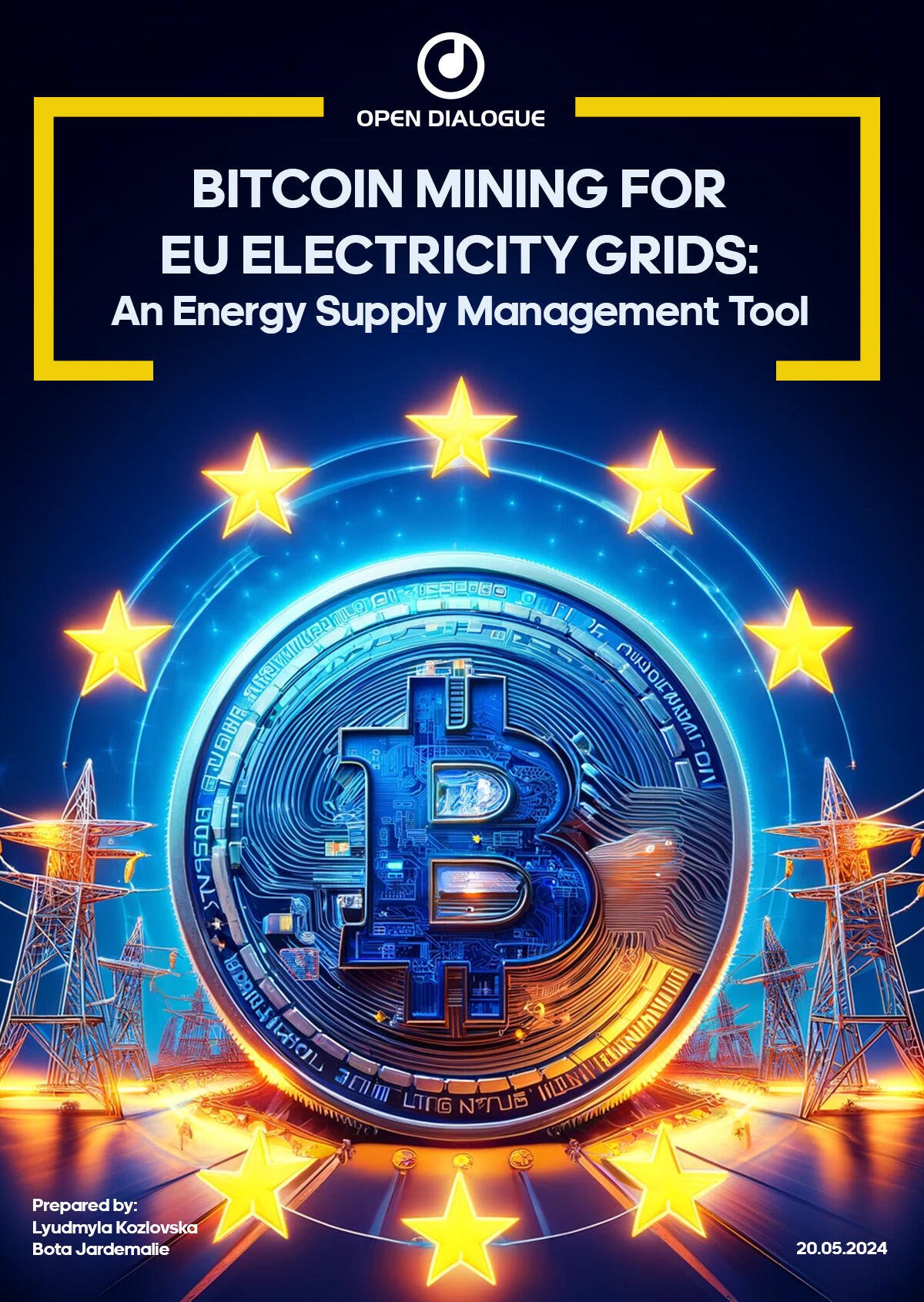
FIVE FACTS WHY BITCOIN MINING BENEFITS EU'S ENERGY AND ENVIRONMENTAL SECURITY 1. European Commission is looking for €584bn of new investments are required by 2030 to upgrade Europe’s grids. What solutions can the #EU adopt? Our BTC Coalition collected best case studies & testimonials from industry experts to present how #Bitcoin Mining is New Solution to the EU Grid Problem: 🔻Bitcoin mining can facilitate energy transition in the EU, especially to the huge queues of renewables, such as wind & solar that have applied. 🔻As testified in our submission Bob Burnett: "Bitcoin mining is already an industry at the forefront of utilising sources like solar and wind. (…) I strongly encourage the EU, the European Commission and #ESMA to support the development and expansion of Bitcoin and Bitcoin mining in Europe and across the globe." 🔻As noted by Drew Armstrong, President and CEO of the @CathedraBitcoin, a Canadian Bitcoin mining company: “(…) proof-of-work mining can help transform the energy sector for the better, by ensuring no energy goes to waste, thereby potentially reducing the cost of energy for citizens.” 🔻As Kent Halliburton, the CEO and co-founder of Sazmining suggests: “By strategically establishing mining operations, the EU can stimulate private investment in grid enhancement, aligning with long-term goals for energy system decarbonisation and fostering job creation and economic growth within the energy sector.” 2. BITCOIN MINING DEVELOPS NEW OFF-GRID ENERGY SOURCES AND PROMOTES RENEWABLES 🔻As stated by Bob Burnett, CEO of Barefoot Mining (USA): “Bitcoin mining is demonstrating its capability to utilise and even develop new renewable energy sources independently of traditional electricity grids.” Bitcoin Mining addresses two critical challenges currently recognised by the #EC: (a) lengthy grid connection queues for renewable projects, and (b) the overproduction of renewable energy. 🔻Edouard Dubrana, CEO of Eddu Energy (France) states that: “[t]his industry, although energy-intensive, can adjust its consumption in real time, using surplus energy that would otherwise be wasted. This not only helps stabilise the network by absorbing production peaks but also provides an economic advantage by generating additional revenue for network operators and energy producers. Thus, Bitcoin mining can play a pivotal role in the transition towards a greener and more flexible energy grid, while fostering a circular energy economy.” 🔻Kent Halliburton, the CEO and co-founder of Sazmining Inc., explains how their mining operations optimise surplus hydroelectric energy in Latin America: “Our facilities in Paraguay utilise surplus energy from the Itaipu Dam, one of the largest hydroelectric plants in the world. This energy, which would otherwise potentially go to waste or be sold at lower values to #Brazil due to market oversupply, is efficiently used in our Bitcoin mining operations at 4.3 cents per kWh. Our business's ability to absorb this surplus energy during off-peak times is crucial in preventing energy waste and supporting the economic sustainability of the hydroelectric plant.” 3. SOCIAL & ENVIRONMENTAL USE OF BITCOIN MINING We challenged #ESMA's discriminatory regulatory language about #Bitcoin mining, misconceptions in discussions in the EU and in the member states of the Council of Europe, like #Norway, #Iceland, that have highlighted concerns about the energy consumption of Bitcoin's #PoW mechanism, notably critiqued in a United Nations study. The transformational potential of Bitcoin mining for local communities should not be overlooked, that's why we've added more cases about the social and environmental benefits of Bitcoin mining in the new submission: 🔻As Sebastien Gouspillou, CEO of Big Block Data Center testified on “How Bitcoin Mining is Supporting Conservation Efforts at Virunga National Park (#Congo)”. Seb illustrates how the financial challenges of this UNESCO World Heritage site were addressed by leveraging existing hydroelectric infrastructure for mining purposes. 🔻Pierre Rochard testified: "In a recent report, the European Central Bank characterised Bitcoin as an unproductive, energy-intensive technology that lacks social value and presents an obstacle to the EU’s climate goals. Regrettably, the EU has demonstrated similar hostility in its evaluation of Bitcoin and its impact on society. But the EU and @ECB’s estimation of Bitcoin neglects new research from organizations in academia, finance, and human rights that paints a starkly different picture of the world’s most successful cryptocurrency". 🔻Marin Baksa testified: "As the EU continues to develop sustainability indicators for crypto-assets, it is essential to consider emerging technologies that can mitigate the negative externalities associated with Bitcoin mining." 4. BITCOIN MINING AS A SOLUTION FOR EU's COAL REFUSE POLLUTED AREA 🔻The case of Stronghold Digital Mining (#USA) described by Thomas Pacchia illustrates how Bitcoin mining can be a solution in an industrially polluted area. The company’s two power plants in Pennsylvania turn a hazardous waste product from #coalmining (#coal refuse or #gob) into #energy for Bitcoin mining. “[R]ather wasting away and polluting people and the environment, coal refuse is instead collected and transported to be sorted, processed, and broken apart. After that, gob reaches a boiler to be burned down, producing electricity which powers Bitcoin mining.” The uniqueness and value of this application lies in solving the problem of cleaning up this dangerous waste, which is normally most often piled up due to otherwise very low commercial viability. The value of this application lies in its ability to address the problem of coal refuse, which is typically accumulated due to its low economic viability. By utilising coal refuse, these plants generate electricity that powers Bitcoin mining operations. The facilities of the Stronghold Digital Mining are “examples of the Bitcoin mining operation which could help the EU member states and other countries in cleaning up and remediating after an ecological disaster. In 2016, there were 324 coal plants in Europe. Each of them produced coal ash, the byproduct left over from burning coal to produce electricity, which can leach into groundwater, pollute waterways, and contains heavy metals considered to be carcinogens,” - notes Thomas Pacchia. 5. BITCOIN MINING HELPS DESALINATION OF WATER, DECARBONISATION OF DISTRICT HEATING NETWORKS AND DATA CENTRES 🔻As described by Marin Baksa, CEO of Barrage Nordx (#Sweden), immersion cooling is “a method that involves submerging servers, including #Bitcoin mining servers, in a non-conductive liquid, which greatly enhances energy efficiency and reduces the environmental impact of these operations. (..) Unlike air-cooled systems that expel waste heat into the environment, #immersion cooling captures and recycles this heat through a liquid medium. This not only improves thermal management but also contributes to a quieter and more environmentally friendly #datacentre environment. (…) Additionally, this method facilitates more effective #heat recovery, as the heat transferred to the cooling liquid can reach higher temperatures and be reused more efficiently than air, making it particularly suitable for district [urban] heating.” Practical analysis of this technique was the subject of two reports (2022 and 2023) by #RISE Research Institutes of Sweden AB. 🔻Pierre Rochard, Vice President of Research, Riot Platforms, Inc. notes that: “Bitcoin’s critics have removed context from the conversation surrounding Bitcoin and water consumption.” Pierre Rochard provides expertise regarding the countries in the #MiddleEast suffering from #water #scarcity and “utilising energy-intensive desalination process, which are using heat from Bitcoin miners to increase the efficiency of desalination. Two companies— Zero Two and Marathon Digital—for example, have built technology to recycle heat from Bitcoin mining rigs to facilitate the #desalination process, allowing them to desalinate more water for the same net cost.” 🔥There is a great potential for synergy between Bitcoin mining and #decarbonisation of district heating systems in the #EU. As bitcoin mining operations scale up to industrial levels and adopt advanced immersion cooling technologies, they also produce significant amounts of waste heat. This waste heat can be repurposed, offering a sustainable heating solution for district energy systems, which are traditionally powered by combustion of fossil fuels, biomass, or garbage. Most of these systems are shifting to electricity, primarily through heat pump technology, in alignment with the EU's decarbonisation goals. Co-locating Bitcoin mining facilities with district heating plants creates a mutually beneficial relationship. The waste heat from Bitcoin mining can directly supply the heating needs of these systems, effectively aiding in their transition to cleaner energy sources. This integration can provide an independent source for financing the conversion to electric-based heating systems and significantly reduce the need for financial subsidies. Examples of such initiatives include companies like @MintgreenHQ in #Canada with the North Vancouver district energy system, and #Hashlabs in Finland, which offering the system that captures the heat generated by Bitcoin mining operations to warm water in a central heating system. In New York, USA, Bitcoin mining is used to heat pools in #bathhouses. This five facts from the Submission will be presented to the newly elected members of the European Parliament, the European Commission, and all other pertinent EU bodies. We advocate for a balanced, evidence-based approach in the formulation of regulations that recognise the substantial potential benefits of Bitcoin mining. This approach will not only support the EU’s sustainability goals but also foster innovation and economic growth within the Union. We are very grateful to Matt Carlsson, MASc, PEng, for his expert review of this submission. ⚡️🫡 LN to donate in Bitcoin and support our advocacy work in the EU and US: 🫡 defendpow@geyser.fund 🫂 donate@bps.odfoundation.eu We providing more details in written submission: https://en.odfoundation.eu/content/uploads/2024/05/20.05.2024_odf_bitcoin_mining_eu_elect_grids_eng-1.pdf image
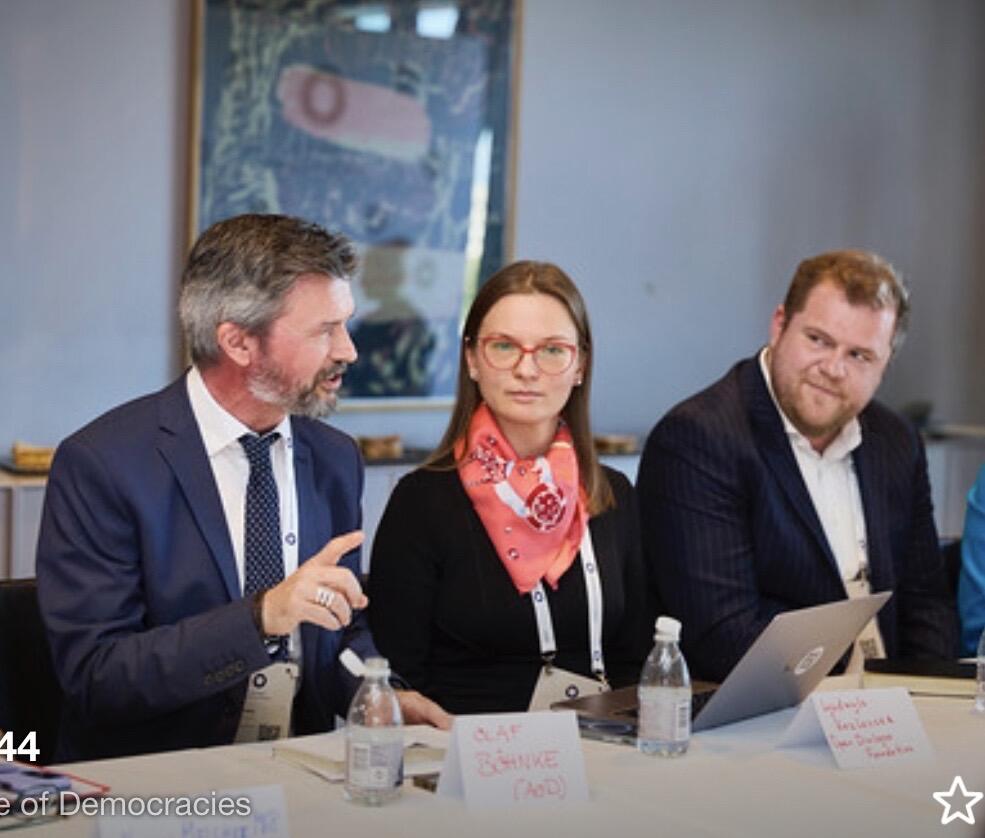
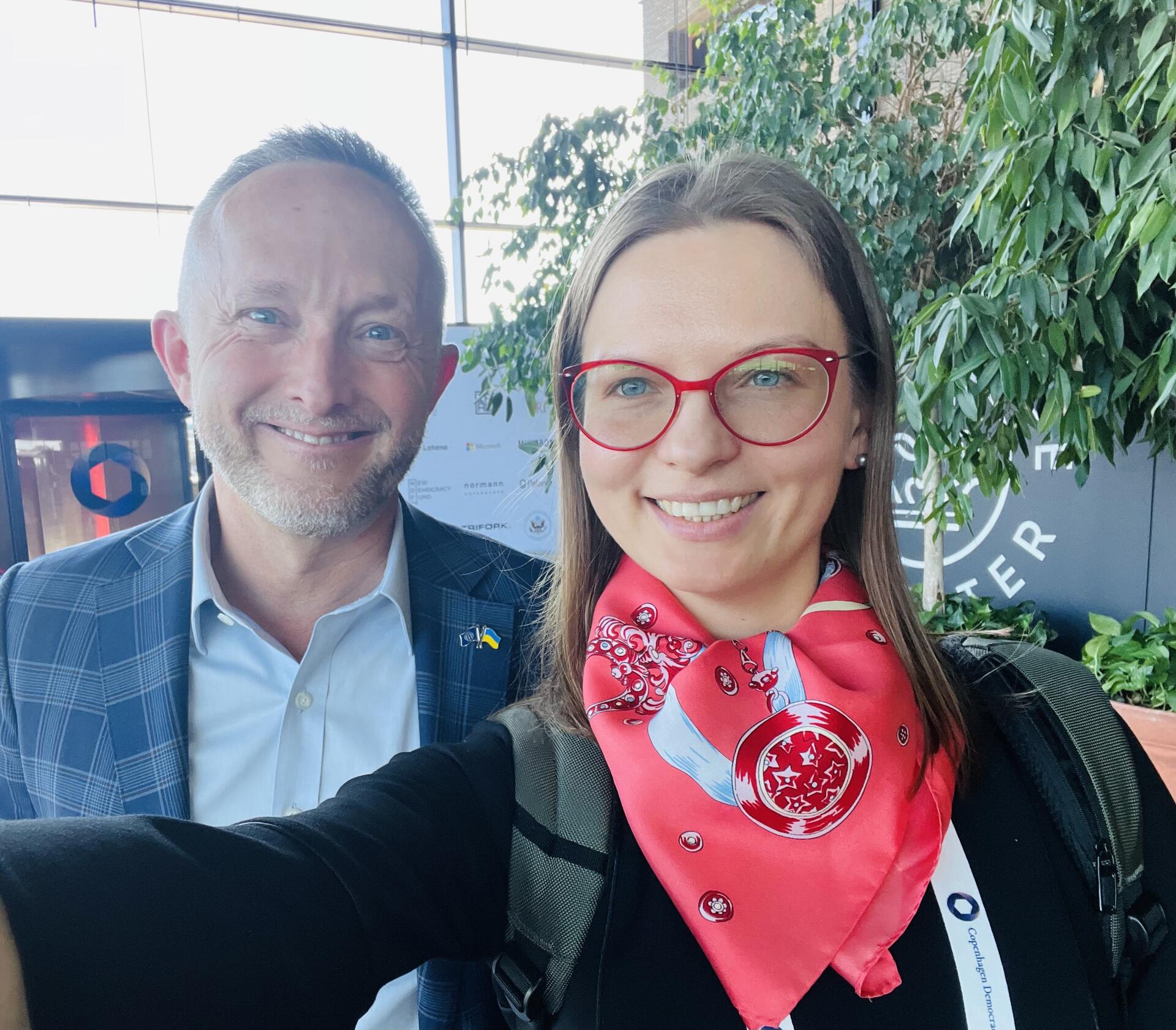
OVERCOME DISTRUST WITH BITCOIN Last week I had the opportunity to share my experience at the Copenhagen Democracy Summit about using #Bitcoin to address #AI fraud in the case of financial exclusion/transnational repression and attempted election fraud. The main question of the Summit was how to overcome distrust, especially when new technologies in combination with AI that can both enhance and undermine it. Alliance of Democracies Foundation, brought amazing experts, including Peter Erben from The International Foundation for Electoral Systems, Annette Kroeber-Riel, Vice President of Government Affairs and Public Policy at #Google in Europe, and Nanna-Louise Linde, Vice President of European Government Affairs, #Microsoft. My role was to present my experience and examples of the Bitcoin blockchain technology that civil society is using right now to protect electoral integrity, rule of law and human rights around the world from artificial intelligence fraud. After all, it is not only smear campaigns or AI fraud that undermine the integrity of elections, but also by cutting off the financial resources needed for independent candidates to run. So Bitcoin technology helps to restore the trust and civil rights, for example: 🧡 protection against massive smear campaigns with AI abuses that lead to the financial exclusion and discrimination of the candidates running for elections, activists, and independent media inside authoritarian countries like Kazakhstan, Belarus, Turkey or lately, even in India. 🧡 provides tools against transnational persecution of critics of authoritarian regimes living abroad. Transactions via bitcoin's p2p wallet are the only tool to protect such groups in non-democratic states. 🧡 Last, but not least, Bitcoin can safeguard the most important documents that used to determine election results: back in 2023 the Supreme Electoral Tribunal in #Guatemala was able to safeguard so called “raw material” – over 150 000 images of the vote tally sheets thanks to the created solution that they called the "Immutable Backup". This solution is based on the Bitcoin blockchain technology from a startup called Simple Proof. In that way Guatemala’s people were able to protect their input to determine who won the election. These documents were made available to the public in real-time in order for any citizen to be able to audit the process as it happens. Bitcoin is helping to restore trust based on proof of work. 🧡
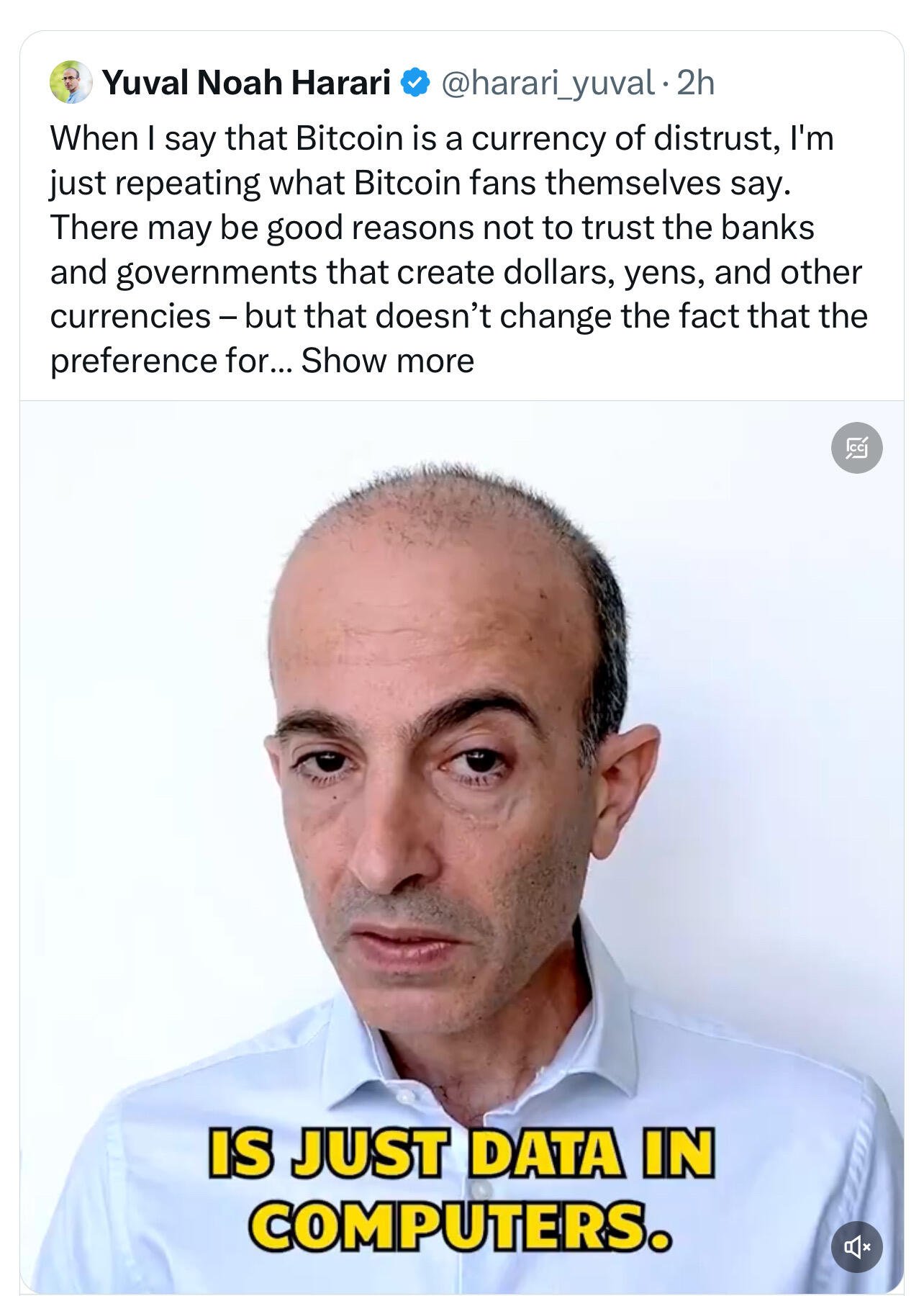
#Bitcoin is built on a consensus “trust but verify”, or Proof-of-Work. Bitcoin was created to defend human rights & to RESTORE TRUST, because authoritarian governments systematically abuse trust, abuse power and weaponize banking data. It is so easy to label with false claims #freedomtech when you enjoy privilege of western world as @harari_yuval and don’t need to use Bitcoin as the only tool against financial transnational repression. image
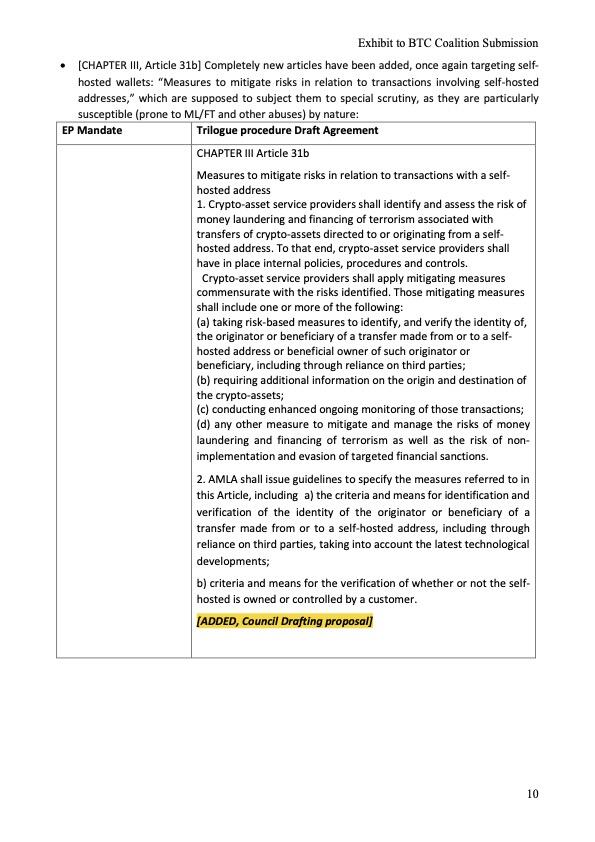
3. #EU #AML PROPOSAL TARGETS PRIVACY PAYMENT INSTRUMENTS AND FREEDOM TOOLS The current AMLR version specifically targets self-hosted wallets, ignoring their role as vital financial tools as #Bitcoin  for millions of activists facing financial oppression. Labeled high-risk, self-hosted wallets are now seen as significant money laundering and terrorist financing facilitators. Changes include revisions to Recitals (20) and (21) and the addition of Article (31b) in Charter III, which increases operational and compliance costs, affecting business strategies and client relationships. The consequences for EU users of self-hosted wallets are serious. Additional compliance checks will complicate, if not block, the conversion of crypto-assets to fiat currency for activists and civil society members already facing financial exclusion. The AMLR overlooks the crucial role of self-hosted wallets in transferring funds to non-democratic or conflict regions, exposing donors and recipients to repression by authoritarian regimes using AML/CFT laws (e.g., in #Belarus, #Kazakhstan, #Turkey). Smaller clients with self-hosted wallets, viewed as higher risks under Article (31b), may be deprioritized or excluded due to higher transaction compliance costs. This makes them economically unviable for financial institutions, which often favor larger, lower-risk clients for efficiency. The latest AMLR version could effectively ban self-hosted wallets in the EU, significantly impacting the cryptocurrency sector and those vulnerable to oppression. See our reaction in our Submission:
On behalf of the BTC Coalition, we are recommending MEPs to vote AGAINST the #EU #AMLR proposal and urge you to join our call for three main reasons: 1. EU WILL DEVASTATE CROWDFUNDING FOR ACTIVISTS AND HUMANITARIAN NGOs NGOs barely receive funds to support human rights or humanitarian aid. #Crowdfunding, including the use of #Bitcoin  in self-hosted wallets, is the last resort. What is the EU doing? In the post-Trilogue AMLR draft, all possible crowdfunding platforms, including based on crypto-assets and serving humanitarian purposes, designated as intermediaries, are considered as high-risk ever-evolving Money Laundering and Terrorist Financing (ML/TF) channel. In practice this means fewer and fewer donations, because of: 🔻increased administrative & operational costs, 🔻reduction of the donor base due to invasive due diligence processes, 🔻reduced financial inclusion of smaller entities and projects that traditionally rely on crowdfunding. The AMLR does not take into account the broader negative impacts on society, resulting in the obstruction or even halting of social, entrepreneurial and humanitarian initiatives. 1/5 image
CALL ON EUROPEAN PARLIAMENT TO VOTE AGAINST EU AMLR PROPOSAL NOW! Tomorrow the European Parliament is going to vote on its latest #EU #AMLR proposal. Unfortunately, the Trilogue procedure led to the removal of all civil society recommendations, weakening the position of the only directly democratically-elected EU institution—the European Parliament. This has resulted in: 🔻 a considerable reduction of financial freedoms & increased financial exclusion; 🔻heightened risks of abuse of the AMRL, including the exposure of EU citizens and residents to the potential misuse of their financial data by authoritarian regimes. Additionally, as the EU sets global financial regulatory standards, the negative language in the AMLR about privacy payment tools, such as self-hosted wallets & mixers, could lead to restrictions on financial freedoms in third countries and increase the potential for financial repression by illiberal regimes. See our Submission for more details:
Come to BPI Summit on April 9th in Washington, D.C. to discuss how #Bitcoin  helps to resist against dictatorships and why it is our responsibility to protect our financial freedoms. 🧡 image
Consider your car a safe place to be? Well, that's how it is: all in care for your safety, car manufacturers collect driver and passenger data about every movement and action they make. #ProtectYouData
Guys, How to do a space or transmission on #nostr (I activated purple account)? Is it possible or not yet?