> Throw a brick at a fascist, two possibilities:
1. Not actually a fascist, congratulations, you're a piece of shit
2. He is, and out of his pocket comes MR. SATURDAY NIGHT SPECIAL 🎵 PUT A MAN SIX FEET IN A HOLE... good bye.
RT:
Interesting little idea:
Sodium (metal) fuel cell.
It's not really a battery because you can't re-charge it directly.
4Na + O₂ + 2H₂O -> 4NaOH
Output is sodium hydroxide (lye).
The cell runs at about 99C which is the melting point of sodium.
Energy density is over 1kWh per kilogram of sodium, and sodium stores as a solid, so this is very interesting for squirreling away enormous amounts of energy.
Efficiency is about 50% (typical fuel cell crap)
Making NaOH back into sodium metal is also reasonably possible. NaOH melts at 323C (613F) this is hot but not beyond a hot pizza oven... Molten NaOH can be electrolyzed back to sodium metal. This is called the Castner process. A challenge with this process is that it loses efficiency because NaOH -> Na also makes H2O and O2 which also react with Na.
Using the same β″-alumina separator as mentioned in the video is likely to solve that problem.
The major challenge with this idea in general is the cost and longevity of the sodium beta-alumina solid electrolyte material. The beta-alumina powder is available on MSE at 1500$/kg, but the price of tubes, disks, plates, etc is "request a quote"...
This is absolutely fucking beautiful.
I'm gonna say 99% chance Adobe is going to lose (or choose not to fight so that they can retain legal ambituity), because for them to win means there needs to be a new definition of a copyright violation.
"Did they copy the code and change a few things" was a very concrete test, but "is this similar enough to be considered a violation" is a vague mess.
If they want to argue that the model contains their IP then accepting that argument is equivalent to forfeiting the AI race, nobody is going to do that.
But on the other side, a copyright is not a patent so it doesn't confer broad protection against someone doing something "substantially similar".
I'm calling it: This is the Shot Heard Round The World for software copyright protection.
That change to the instruction set makes it possible to design some very aggressive optimizations in the hardware.
Right now you've got two kinds of hardware, CPUs and GPUs. A GPU can do like 10x the computation of a CPU, but it can't execute a whole lot of code. You need to say like "multiply these million numbers by those million numbers" and the GPU will shine...
A CPU can execute quite a bit of code quite quickly, but that all requires a whole lot of circuitry.
What I'm thinking is you build a single physical core of this architecture and it can have something like 128 belts, so you have 128 threads resident at any given time. But then you can also allocate some DRAM to enable 2048 belts that you can quickly swap in.
So then because your 128 belts are all asynchronous, you can basically package up computation requests and send them downstream as it they were network packets. And downstream you can put a GPU style "army of computation circuits" because now you have a nice convenient flow of computation requests for them to process.
So what you end up with is something like a wildly powerful CPU...
I've never used AI to do anything that complex, more like function-by-function, but it seems that other people are able to get some pretty good results out of it.
Lain swears by it, and he was able to put together a full x86 emulator and said he did basically nothing by hand... Brave new world out there...
Writing shit in rust has gotten a lot easier now that you can basically just say:
> Hey I need some rust tokio warp bullshit to serve some json out of a postgres (schema is below), please help me, borrow checker be like YOU SHALL NOT PASS 😭
I think what probably happened here is Elon wanted a maximally truth-seeking AI. Meaning essentially he wanted the AI to not engage in intentional self-dilution and woke mental gymnastics. Perhaps he worries that this stuff can lead to paperclip maximizers and other deadly nonsense.
But the word "truth" has different meanings, and if you tell somebody that their goal is to "Find Truth", and then you turn them loose on the past 10,000 years of western literature, it is actually not at all unrealistic to imagine them converging on Christianity...
Thank! Hopefully I'll have some kind of feedback on whether this thing is a total bunk idea or not before I start applying for priority in other jurisdictions. I'm not sure about EPO because it sure is expensive. But USA is a must because that market is massive.
Update, I'm now the proud owner of a French patent application number.
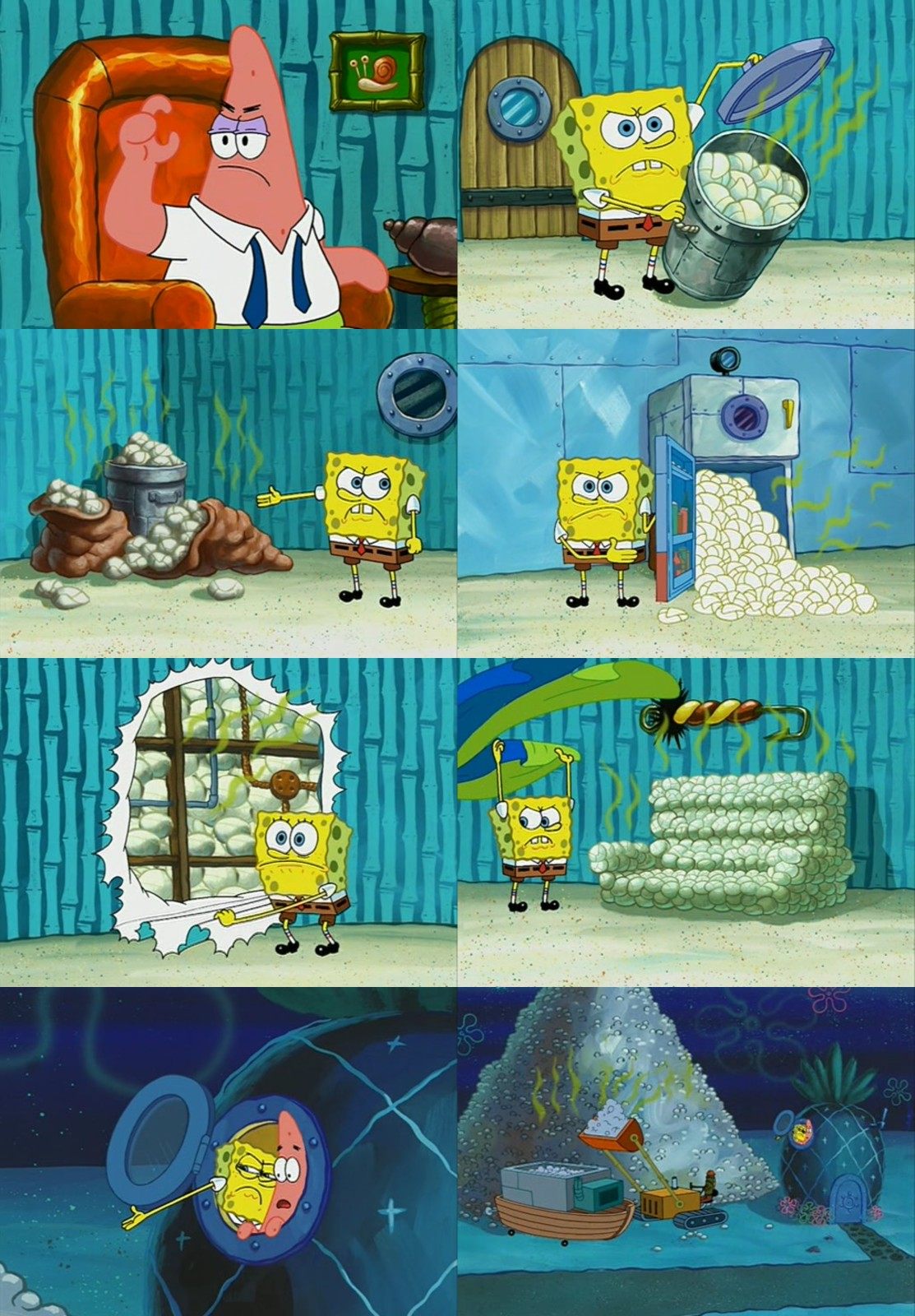
Now I'm dreading the examiner is going to take me on a brief but damning tour of the fifteen billion times this has been done already that somehow I never heard of. Pic related.
But for now (and for the next year or so) it's just gonna be radio silence...
RT: https://pkteerium.xyz/objects/55034cae-5c4a-4de1-96ca-81e47fdc1e63