
This wasn’t a bolt from the blue. The SNB flagged stablecoin risks in its July 2026 financial stability report, which pointed to two main dangers.
The first was disintermediation, the fancy word for money bypassing banks. The second was run risk, meaning a stablecoin backed by inadequate reserves could face a wave of redemptions it can’t meet.
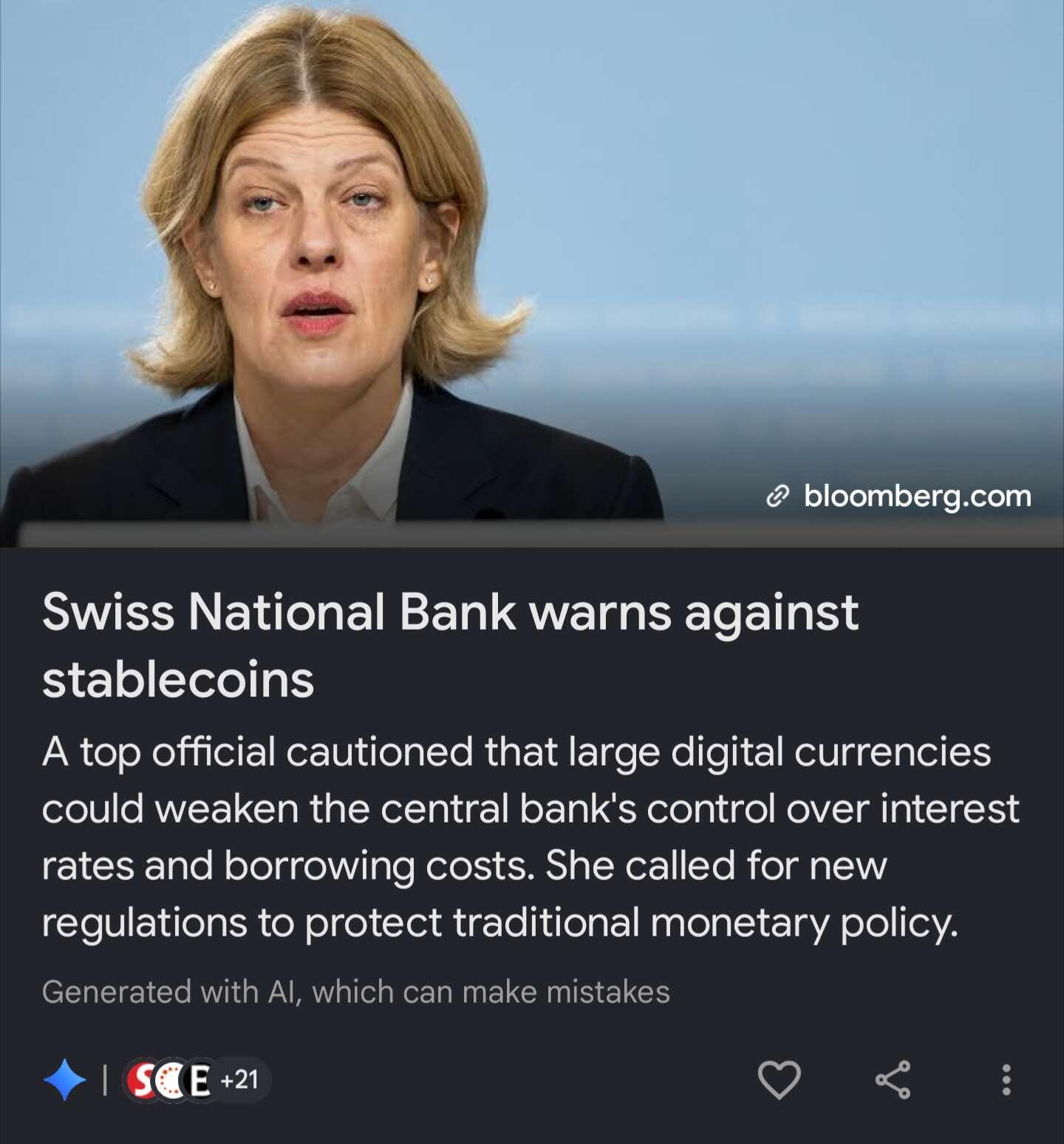 Tschudin’s central concern is something economists call monetary policy transmission. When a central bank changes its policy rate, it counts on that move rippling outward. Commercial banks adjust what they charge for loans and pay on deposits, and eventually households and businesses feel the change.
That chain runs through what’s known as the two-tier financial system. The central bank sits at the top and deals with commercial banks. Those banks, in turn, deal with everyone else.
Tschudin argued that stablecoins operate outside this structure. If deposits drift away from commercial banks and into stablecoins, the argument goes, the pipes the SNB uses to steer borrowing costs could get leakier.
The endgame, in Tschudin’s framing, is that the SNB’s influence over borrowing costs could be undermined.
She didn’t dismiss the technology outright, though. Tschudin acknowledged that stablecoins can modernize payments, including by offering lower costs for international transfers.
Tschudin’s central concern is something economists call monetary policy transmission. When a central bank changes its policy rate, it counts on that move rippling outward. Commercial banks adjust what they charge for loans and pay on deposits, and eventually households and businesses feel the change.
That chain runs through what’s known as the two-tier financial system. The central bank sits at the top and deals with commercial banks. Those banks, in turn, deal with everyone else.
Tschudin argued that stablecoins operate outside this structure. If deposits drift away from commercial banks and into stablecoins, the argument goes, the pipes the SNB uses to steer borrowing costs could get leakier.
The endgame, in Tschudin’s framing, is that the SNB’s influence over borrowing costs could be undermined.
She didn’t dismiss the technology outright, though. Tschudin acknowledged that stablecoins can modernize payments, including by offering lower costs for international transfers.