# Comprehensive Analysis
Title: Iran declares US radars suffered a ‘dark night’ of missile strikes — RT World News
URL:
RT International
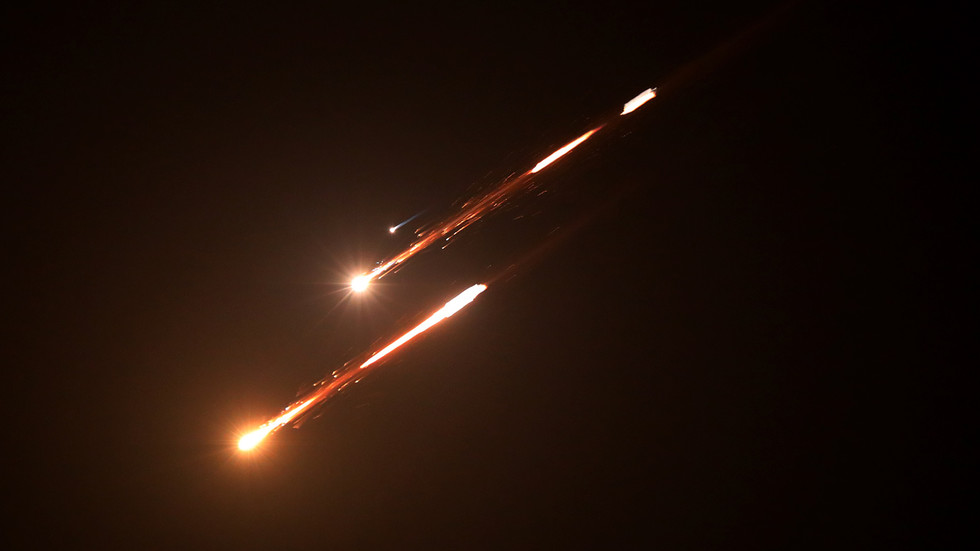
Iran claims US radars suffered a ‘dark night’ of strikes in Kuwait and Jordan
The IRGC says Iranian missile and drone strikes disabled US radar and air-defense systems in Kuwait and Jordan, clearing the way for heavier attacks
Collected: 2026-07-22 16:26:26 +0000
Analyzed: 2026-07-22 16:49:12 +0000
## Overall takeaway
Iran’s IRGC claims coordinated missile and drone strikes degraded U.S. radar, communications, and air-defense systems in Kuwait and hit bases in Jordan, but U.S. and Kuwaiti officials have not confirmed the reported damage.
## Conceptual model
- Tehran is signaling it can suppress air defenses before larger strikes.
- The claims target both physical damage and psychological deterrence.
- Unconfirmed battlefield narratives are part of the wider information war.
- Regional U.S. bases are being framed as a connected, vulnerable network.
## Next steps (optional)
- Compare Iranian claims with U.S., Kuwaiti, and satellite-confirmed reporting.
- Track whether later strikes show improved penetration or changed tactics.
## Short summary
Iran’s IRGC says its latest missile and drone attacks disabled US radar, communications, and air-defense systems in Kuwait and hit American bases in Jordan. Tehran framed the strikes as part of Nasr-2, claiming they weakened US defenses and opened the way for larger attacks, while the US and Kuwait have not confirmed the damage.
## Comprehensive summary
Iran’s Islamic Revolutionary Guard Corps (IRGC) said its latest missile and drone strikes disabled multiple US radar, communications, and air-defense systems in Kuwait, while also hitting American bases in Jordan. According to Tehran, the attacks were part of the Nasr-2 Operation and were aimed at weakening US defenses across the region. The IRGC claimed the strikes created a “dark night” for American radar and air-defense systems and opened the way for larger and more decisive attacks.
The Iranian military said the targeted sites included early warning and missile-defense radar, communications and satellite systems, a Patriot air-defense battery, and a hangar containing MQ-9 drones. It also reported that several unmanned aircraft were destroyed or badly damaged. Separately, Iran’s army claimed loitering drones struck three US bases in Kuwait, damaging troop facilities, helicopter parking areas, administrative buildings, and other support structures. The IRGC further said it destroyed a US missile-defense radar in Jordan and an F-15 fighter inside a shelter at an American base there.
Tehran framed the attacks as part of a broader effort to suppress enemy radar and air defenses before launching heavier missile and drone barrages. Iranian officials also repeated their warning that any US strike on Iran’s nuclear facilities would be treated as an expansion of the war. In that case, they said, American interests and the interests of Washington’s allies and supporters would become targets for retaliation.
The US and Kuwait have not confirmed the reported destruction of equipment, aircraft, or air-defense systems. Washington has acknowledged that four American service members were killed in recent Iranian attacks and related incidents in Jordan and Iraq. Meanwhile, US media reports cited by RT said the Pentagon may have withheld information about additional injuries and damage, including to helicopters. American officials also reportedly warned that Iranian missiles are becoming harder to stop because of their speed, maneuverability, and improved tactics.
Overall, the report presents Iran as escalating its campaign against US military positions across the Middle East in response to renewed American strikes. Tehran says the near-daily attacks will continue as long as the conflict remains active.
## Entities
- keyword: iran, irgc, systems, kuwait, missile, radar, defense, strikes, american, iranian
- location: US, Jordan, Kuwait, Tehran, Washington, Middle East, US-Israeli, Iraq, Jordan rt.com Iran, Iran
- organization: IRGC, Islamic Revolutionary Guard Corps, Wall Street Journal, Pentagon, Islamic Republic, New York Times
## Related content
1. Halperin: Don't Be Surprised If There Are Boots on the Ground This Weekend
Why: similarity 0.94
Summary: The document argues that the Iran conflict is entering a more dangerous and unpredictable phase, with the possibility of U.S. troops being deployed on the ground very soon. Mark Halperin, in conversation with Jonathan Swan, suggests that “boots on the ground” could appear by the weekend, reflecting the belief that Tehran may be pushing the conflict toward a larger confrontation. The piece presents the war as rapidly escalating beyond a limited exchange of strikes and into a broader regional crisis.
A major theme is that Iran is not just absorbing attacks but actively widening the war. The document describes Iranian strikes and drone activity across American-hosted bases in Bahrain, Kuwait, Qatar, and Jordan, along with earlier attacks on military facilities in Jordan. While many of these attacks are intercepted, the article argues that the real goal may be attrition: forcing the United States to use expensive missile defenses faster than they can be replaced. In this view, even failed attacks may serve Iran’s strategy by draining U.S. resources and weakening its long-term ability to defend itself and its allies.
The summary also emphasizes the internal pressures and decision-making challenges inside the U.S. government. Swan says there are only a small number of people shaping the response, and that some officials who should be trusted are not fully included in the process. He notes differences in temperament among key figures, particularly that Hegseth is portrayed as more hawkish, while others are described as more measured. The article suggests that the administration is weighing military realities, including limited supply of long-range munitions and the strain on U.S. stockpiles.
The document closes on a warning note: Iran appears willing to risk a larger war, and the earlier expectation of a short, two- to four-week conflict has not held. The piece leaves readers with the impression that the situation is escalating faster than policymakers can contain, and that the next stage could involve direct American involvement on the ground.
URL:
www.independentsentinel.com
Halperin: Don't Be Surprised If There Are Boots on the Ground This Weekend
Troops on the ground by this weekend? This seems to be what Tehran wants, and Mark Halperin thinks it might happen. At the same time, Iran is escal...
2. President Donald Trump: "Let Them Eat Cake", by Ron Unz - The Unz Review
Why: similarity 0.92
Summary: Ron Unz opens by reflecting on how many famous historical quotations are misattributed or invented, using the false “Let them eat cake” line to illustrate how Marie Antoinette’s reputation was shaped by propaganda rather than solid evidence. He suggests that the quote likely helped cement her image as a cruel, detached ruler, even though the historical record does not support it. From there, he turns to Donald Trump and argues that a similarly damaging sentence may now define Trump’s public image.
Unz places this argument in the context of Trump’s war with Iran and the economic strain it has caused in the United States. He points to rising gasoline prices, accelerating inflation, and widespread public anxiety over basic necessities, noting that Trump’s approval ratings on inflation have been especially poor. In that atmosphere, a reporter asked Trump whether Americans’ financial hardship affected his thinking about the war. Trump’s response — “Not even a little bit… I don’t think about Americans’ financial situation” — is presented as a devastatingly callous remark that recalls the Marie Antoinette legend. Unz argues that the clip has spread widely online and could become a major weapon in Democratic campaign advertising, symbolizing Trump’s indifference to ordinary Americans.
The essay then broadens into a critique of Trump’s broader behavior and image. Unz says Trump’s obsession with wealth and gold, once appealing to his MAGA base, now looks grotesque as voters feel economic pain. He points to several examples: the Trump-branded smartphone that was heavily marketed to supporters but delayed for months, suggesting contempt for loyal customers; the demolition of the White House East Wing to make room for a ballroom, which he views as an astonishing act of vanity; and the proposed ballroom’s soaring cost, which he says has escalated from private fundraising to a request for federal money. He also highlights the unveiling of a 22-foot golden statue of Trump at a Florida golf resort, comparing it to the Golden Calf and to the self-glorifying excesses of authoritarian leaders.
In the end, Unz portrays Trump as a figure whose arrogance, vanity, and self-importance increasingly resemble imperial excess rather than populist leadership. By invoking “President Caligula,” he suggests that Trump’s most defining legacy may not be policy but a pattern of megalomania that leaves him politically vulnerable and historically infamous.
URL:

The Unz Review
President Donald Trump:
3. Iran Warns US Of 'Infrastructure For Infrastructure' War, Will Control Hormuz As 'Unbreakable Red Line' | ZeroHedge
Why: similarity 0.92
Summary: The article describes a rapidly escalating confrontation between the United States and Iran, even as Tehran made a rare goodwill gesture by releasing American detainee Dena Karari. Although President Trump welcomed the release, the piece argues that the exchange has not stopped the broader military campaign. US airstrikes reportedly continued across Iran, while Iran and its allies responded with drone and missile attacks on American partners in the Gulf, including Kuwait, Bahrain, and Jordan.
A central theme of the article is the growing danger around the Strait of Hormuz. Iran is portrayed as treating control of the waterway as an “unbreakable red line,” while also claiming it has effectively asserted control over the transit route. In response, Trump warned that if Iran does not return to negotiations and give up its leverage over Hormuz, the US will expand its strikes to include civilian and energy infrastructure, such as bridges. Iran answered with its own threat of an “infrastructure for infrastructure” war, warning that it would destroy regional infrastructure if Washington targets Iranian facilities.
The article suggests that this exchange is already affecting global energy flows. Reuters is cited reporting that Iraq briefly halted oil loadings after a drone hit an oil tanker at its Basra terminal, though Iraqi officials later said operations were normal and that the target may have been elsewhere. The piece also notes that only 13 merchant ships passed through the Strait of Hormuz on Wednesday, showing how severely shipping has been disrupted. Most ships appear to be avoiding danger, and only one used the US-approved route along the Omani coast.
Iranian officials also accuse the United States of war crimes, saying heavy airstrikes forced a cancer hospital in southwestern Iran to evacuate 211 chemotherapy patients. The article presents this as part of a broader pattern of escalating retaliation and accusations on both sides. US forces reportedly struck more Iranian targets, disabled an oil tanker near the Strait, and Iran replied with attacks on US assets in the region.
Overall, the piece frames the conflict as a dangerous waiting game in which both sides are trying to outlast the other. It concludes that the main risk for Washington is not only military escalation, but also rising inflation and economic disruption if the conflict continues to threaten oil exports and global shipping.
URL:
https://www.zerohedge.com/geopolitical/iran-warns-us-infrastructure-infrastructure-war-will-control-hormuz-unbreakable-read
4. The US War Machine Underwhelms – part 2, by Hua Bin - The Unz Review
Why: similarity 0.92
Summary: 1. **The US military is struggling to maintain dominance against asymmetrical warfare.** Despite the "victory" narrative promoted by the US government, the document asserts that the American war machine is being overwhelmed by Iran’s low-cost, high-volume attacks. The US is suffering unprecedented losses of high-value assets and a rapid depletion of munitions, even in what is characterized as a "medium intensity" conflict.
2. **Iran has successfully neutralized US "force multipliers" through coordinated saturation attacks.** By using drone swarms and hypersonic missiles, Iran targeted critical nodes such as long-range early warning radars and THAAD air defense batteries. This "blinded" US forces and created gaps in defense, allowing Iranian forces to destroy essential assets like E-3 Sentry AWACS and KC-135 tankers, which in turn drastically reduced the sortie rates of US combat jets.
3. **Low-cost, innovative technology is defeating expensive, high-tech platforms.** A key finding is the success of the Iranian 358 missile—a low-cost "loitering" hybrid between a drone and a missile—which used passive infrared tracking to bypass the stealth capabilities of an F-35A. This demonstrates that inexpensive, subsonic, and "silent" weapons can impose a disproportionate cost exchange ratio, making the US's "boutique" military-industrial complex economically unsustainable in high-attrition warfare.
4. **The US suffers from a lack of "magazine depth" and industrial surge capacity.** Unlike China, which utilizes a "system-of-systems" doctrine supported by deep supply chains and civil-military fusion, the US relies on a profit-driven, just-in-time manufacturing model. This leaves the US unable to replenish high-cost, low-density weaponry quickly enough to counter mass-produced, low-cost threats like the Shahed-136.
5. **Strategic reach is being compromised by regional threats.** The threat of anti-ship missiles has forced US carrier strike groups, such as the USS Lincoln, to retreat significantly from the Persian Gulf. Because primary combat jets like the F-35C and F/A-18E/F lack the combat radius to strike deep into Iranian territory without air refueling—which is now compromised—US offensive capabilities are severely truncated.
6. **Actionable Insight: Military doctrine must shift from platform-centric to attrition-tolerant systems.** To remain competitive, the US must move away from relying solely on hyper-expensive, low-density platforms (like the F-35) and instead invest in high-tech, low-cost unmanned systems and AI-driven "systems-of-systems" that can withstand and match the industrial scale of adversaries like China.
URL:

The Unz Review
The US War Machine Underwhelms – part 2
5. Satellite data reveals Irans crushing blows to Israeli military bases
Why: similarity 0.92
Summary: • Satellite imagery analyzed by Oregon State University researchers reveals Iranian missiles struck five Israeli military facilities during last month's 12-day conflict, with six missiles hitting targets in northern, central, and southern occupied territories
• Strikes targeted an intelligence-gathering center and logistics base, with radar satellite data confirming blast damage consistent with missile impacts
• Israeli military has not acknowledged these strikes due to strict censorship laws that restrict publication of sensitive security information during conflicts
• While Israeli and US officials claimed 84% of Iranian missiles were intercepted, analysis shows increasing numbers of Iranian missiles successfully penetrated air defenses during the first eight days
• Analysts attribute defense penetration to factors including limited interceptor missile supplies, more sophisticated Iranian technology, or changes in attack strategy
• Iran employed coordinated drone and missile attacks to overwhelm defenses, using suicide drones to confuse systems even when intercepted, allowing more missiles to get through
• The conflict began June 13 when Israel launched aggression against Iran, assassinating commanders, nuclear scientists, and civilians
• Iran retaliated within 24 hours with missiles and drones under "True Promise III" operations
• US entered the conflict June 22, bombing three Iranian nuclear sites; Iran responded by striking Al Udeid Air Base in Qatar
• Israel unilaterally accepted a truce deal on June 24
URL:
https://www.presstv.ir/Detail/2025/07/05/750646/Iran-missiles-hit-five-Israel-military-facilities-12-day-war-report-radar-data-The-Telegraph
6. The US War Machine Underwhelms – part 1, by Hua Bin - The Unz Review
Why: similarity 0.92
Summary: 1. **Strategic Failure of the US Military**: The US has shifted its war goals from “regime change” in Iran to merely “keeping the Strait of Hormuz open,” which indicates a significant strategic defeat. The strait was previously open to all, highlighting the failure of the US military objectives.
2. **Cognitive Dissonance Among US Leadership**: The US ruling elite, including the Commander-in-Chief, promotes a narrative of unparalleled military success while battlefield realities tell a different story. This disconnect reveals a troubling level of denial regarding the war's actual outcomes.
3. **Civilian Casualties and Targeting Issues**: The US military operations have resulted in high civilian casualties, with significant strikes occurring in civilian areas, such as the tragic attack on a school that killed 175 individuals. This raises questions about the ethical implications and effectiveness of US military strategies.
4. **High-value Asset Losses**: The US has suffered significant losses of advanced military equipment—such as radar systems, fighter jets, and naval assets—due to Iranian counterattacks, which have utilized cheaper drones and missiles effectively against US technology.
5. **Underwhelming Military Performance**: Despite deploying its most advanced military assets and weaponry, the US has not achieved substantial degradation of Iranian military capabilities. Remarkably, Iran has maintained a resilient military posture and continues to conduct counterattacks, undermining the US narrative of military superiority.
6. **Misleading Claims by US Officials**: US military and political leaders have claimed that Iranian defenses were “obliterated,” yet evidence on the ground contradicts these assertions, showing continued effectiveness of Iranian missile and drone capabilities.
7. **Impact on US Military Doctrine**: The performance of the US military in this conflict highlights potential flaws in its operational doctrine. Observers note that lessons learned during this war could influence future conflicts, particularly regarding the over-reliance on high-tech solutions against less sophisticated foes.
8. **Concerns Regarding Future Conflicts**: The implications of the Iran conflict are being closely monitored by military analysts worldwide, especially in nations like China. The underperformance of the US military may embolden adversaries and reshape global military strategies.
9. **Call for Reevaluation of Military Strategy**: The stark contrast between the US military's advertised capabilities and its actual performance suggests a need for reevaluation of military strategy and investment in more effective, adaptable defense mechanisms.
10. **Broader Implications for US Foreign Policy**: This underwhelming military engagement may have long-term consequences for US foreign policy, weakening its credibility and deterrence posture on the global stage, while potentially inviting increased aggression from rivals.
These insights collectively reflect a critical assessment of the US military's capabilities and operational strategies, suggesting a need for significant reform and adaptation in light of recent failures.
URL:

The Unz Review
The US War Machine Underwhelms – part 1
7. Escalating from Suez to Waterloo - Saifedean
Why: similarity 0.92
Summary: 1. **Overview of the War**: The document discusses the ongoing war between the US-Israel alliance and Iran, criticizing the initial claims of a quick victory that have turned into a protracted conflict. It emphasizes the unpredictability of military outcomes and the significant setbacks faced by the US.
2. **Economic and Political Implications**: The author warns of a potential global economic crisis stemming from the US's military actions in the Middle East, suggesting that the US Empire may be on the brink of collapse. This situation could lead to a significant shift away from dollar dominance in international markets.
3. **Technological Disparities**: A key insight is the contrast between outdated military technologies and modern warfare strategies. The document highlights how Iran has leveraged affordable, advanced technologies like drones and hypersonic missiles to counteract US military might, leading to a historic shift in power dynamics.
4. **American Misconceptions**: The author notes a concerning disconnect between American public perception and the realities of the battlefield. There is a belief within the US that military dominance is assured, which has led to miscalculations in strategy and significant underestimations of Iran's resilience.
5. **Assessment of Military Goals**: The document evaluates the objectives set forth by both the US and Iran. It concludes that the US has failed to achieve most of its strategic goals while Iran has succeeded in many of its objectives, particularly in maintaining regime stability and controlling access to critical waterways.
6. **Iran's Resilience**: Despite suffering targeted attacks, the Iranian regime has remained intact and even strengthened its support among the populace. The document argues that outside aggression has unified the country rather than weakened it, challenging the notion that military action can easily lead to regime change.
7. **Impact of Drone Warfare**: The author highlights the effectiveness of Iranian drones, which are inexpensive to produce and difficult to target. This has allowed Iran to maintain a credible threat against US forces and regional allies, undermining American military strategies.
8. **Long-term Consequences**: The continued success of Iranian missile and drone capabilities poses a threat not only to US military operations but also to global energy stability, particularly through control of the Strait of Hormuz, vital for oil transport.
9. **Strategic Vulnerabilities**: The document points out that the longer the conflict persists, the more the US and its allies may deplete their defense capabilities. This situation raises concerns about the adequacy of American military resources in facing technologically adept opponents.
10. **Broader Military Implications**: Finally, the analysis suggests that if the US struggles against a relatively weaker nation like Iran, it may face even greater challenges in potential confrontations with more powerful adversaries, such as China, indicating a shift in global military balance.
In summary, the document underscores critical lessons in military strategy, the limits of conventional power, and the evolving nature of warfare in the modern age, urging readers to reconsider assumptions about military dominance and geopolitical stability.
URL:
Escalating from Suez to Waterloo
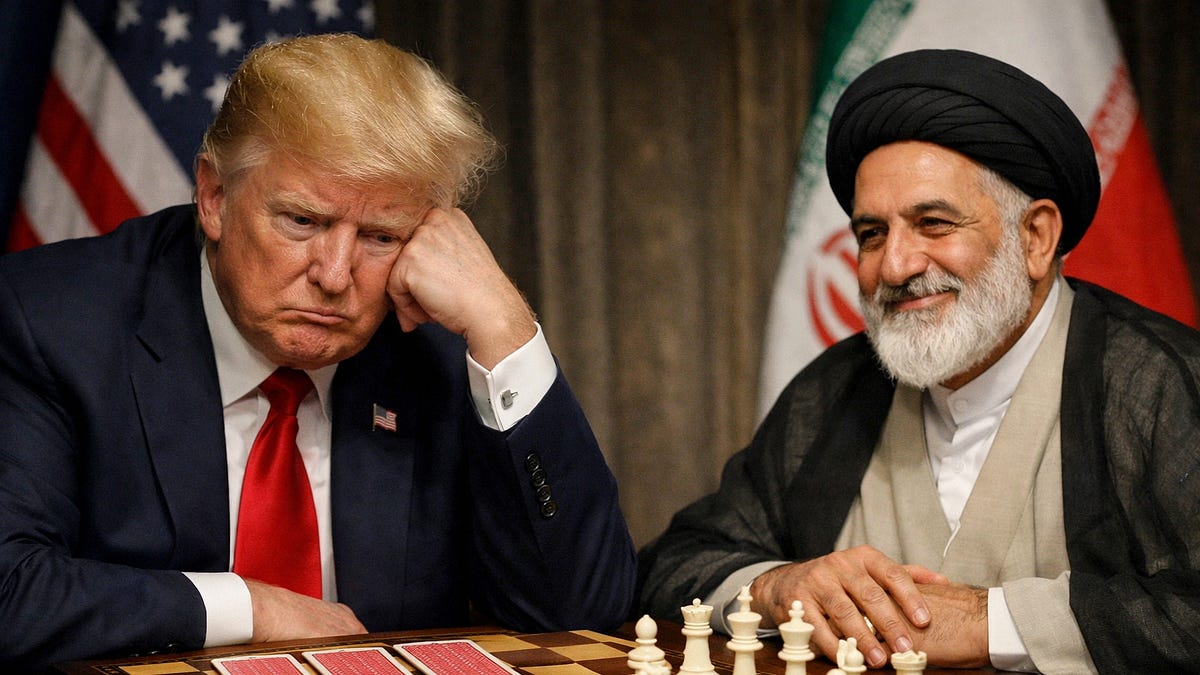
Trump’s Three-Card-Monte Takes on the Chess Grandmasters
## Pointed questions for discussion
- How much should observers weigh unconfirmed operational claims when assessing escalation risk?
- If Iran is testing U.S. regional air defenses, what does that suggest about its strategic goals?
- How could repeated drone and missile attacks reshape U.S. posture in the Gulf and Jordan?
## Sentiment
Score: -0.78
## Provider
OpenRouter / ~openai/gpt-mini-latest




 -
-  *... and 13 more links*
---
*Shared from Contexst on Jul 21, 2026 at 23:26*
*... and 13 more links*
---
*Shared from Contexst on Jul 21, 2026 at 23:26*

 Original Shitcoin