If you look deeply into any “federal crisis” it was caused by the federal government and the federal government also has the “solution” to the “crisis”
The *current thing* is always another fuck up by retards that should not have “jobs” in “government”
BIATTFG
deeznuts
deeznuts@crypto.im
npub13tku...llwf
Enthusiasm enthusiast.
“No Amount Of Violence Will Solve A Math Problem”
Excel at research, analysis and meme-lording: https://memeticresearch.group/?page=contex.st
Somehow I have horrifying views to both libtards and magatards
Follow Me For More Tips!
Beacon Hill hears bill to reduce driving in Massachusetts

Memetic Research Laboratories LLC
Memetic Research Laboratories LLC - Privacy-focused technology for digital content management and decentralized communication
# Comprehensive Analysis
Title: Israeli Intrigue in Venezuela?, by Wyatt Peterson - The Unz Review
URL:
Collected: 2026-01-06 22:05:27 +0000
Analyzed: 2026-01-06 22:08:21 +0000
## Overall takeaway
The article reveals Israel's historical interests in Venezuela and critiques U.S. narratives linking Maduro to drug trafficking, suggesting deeper Israeli influence on U.S. foreign policy.
## Conceptual model
- Israel has long sought regime change in Venezuela.
- U.S. narratives on drug trafficking lack substantial evidence.
- Trump's foreign policy may be influenced by Israeli interests.
- Historical ties between Venezuela and Israel were positive until the late 2000s.
- Mainstream discourse often overlooks Israeli involvement in Venezuela.
## Next steps (optional)
- Explore the historical context of Venezuela-Israel relations.
- Investigate the implications of Israeli influence on U.S. foreign policy.
- Analyze the impact of U.S. drug policy inconsistencies.
## Short summary
The article examines Israeli interests in Venezuela, particularly during Trump's presidency, asserting a long-standing desire for regime change. It critiques the U.S. narrative linking Maduro to drug trafficking and suggests deeper Israeli influence on U.S. foreign policy.
## Comprehensive summary
- • The article explores the connection between Israeli interests and U.S. military actions in Venezuela, particularly under President Trump’s administration.
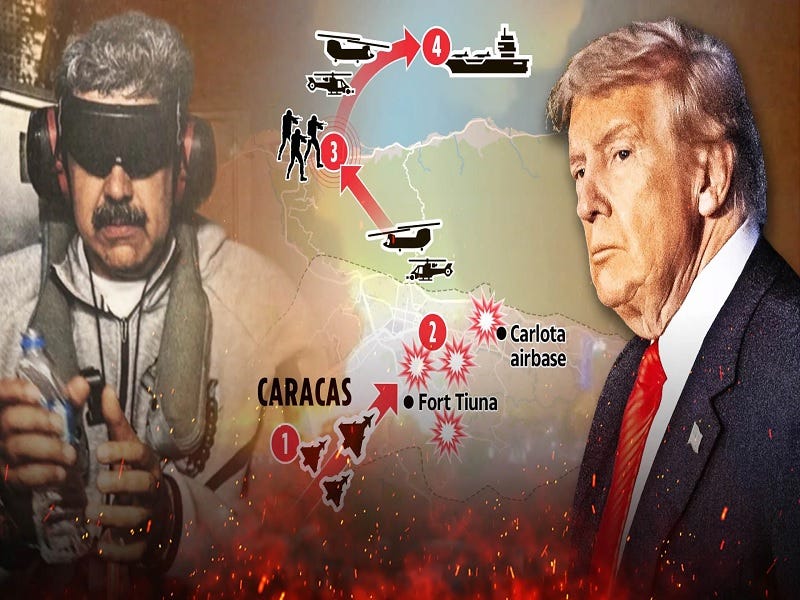
- • It highlights a significant operation that led to the capture of Venezuelan President Nicolás Maduro, coinciding with Israeli Prime Minister Benjamin Netanyahu's statements on Iran's influence in Venezuela.
- • The author notes Israel's long-standing desire for regime change in Venezuela, dating back to Hugo Chavez’s presidency, and argues that this has been largely overlooked in mainstream discourse.
- • Historically, Venezuela maintained positive relations with Israel, supporting its formation and hosting a vibrant Jewish community until the late 2000s.
- • Tensions escalated after Chavez accused Israel of human rights violations, culminating in the severing of diplomatic ties in 2009 during the Gaza War.
- • Chavez labeled Israel a "terrorist state," suggesting that Israeli interests were involved in his assassination attempts and claiming they financed opposition groups.
- • The article critiques the Trump administration's narrative linking Maduro to drug trafficking, arguing there is a lack of evidence supporting claims about fentanyl production and downplaying Venezuela's role in cocaine trafficking.
- • It questions the inconsistency of U.S. drug policy, particularly in light of Trump's pardoning of Honduran President Juan Orlando Hernandez, who was convicted of drug trafficking.
- • The author suggests that Trump's actions are influenced by deeper ties to Israel, challenging the notion of an America First agenda in his foreign policy decisions.
- • The article concludes with a call to recognize the implications of Israeli involvement in Venezuela’s political landscape amidst broader geopolitical tensions.
## Entities
- keyword: trump, regime, israel, israeli, venezuela, president, chavez, maduro, iran, jewish
- location: Caribbean, Middle East, Lebanon, United States, Israeli, Tehran, Lebanese, US, New York, Honduras
- organization: U.S. District Court, Jewish Telegraph Agency, Mossad, CIA, United Nations Partition Plan, Strait of Hormuz, Palestinian National Authority, Mena, US Delta Forces, UNODC
- person: Cilia Flores, Benjamin Netanyahu, Jonathan Pollard, Netanyahu, Jewry, Trump, Mike Huckabee, Greta van Sustern, Claudia Sheinbaum, Alexis Navarro
## Related content
1. Charlie Kirk, Epstein, and the Zionist Cabal
Why: similarity 0.93
Summary: • The document, titled "Charlie Kirk, Epstein, and the Zionist Cabal," reflects on the perceived moral decay in contemporary society, likening current events to historical struggles for truth and justice.
• The author discusses the controversy surrounding Charlie Kirk's alleged assassination, highlighting texts he purportedly sent before his shooting expressing doubts about Jewish donors and the pro-Israel cause.
• Candace Owens is mentioned as a key figure releasing these texts, which contradict the narrative that Kirk remained staunchly pro-Israel.
• There are parallels drawn between Kirk's situation and past events, such as Jack Ruby's confession, suggesting a cover-up of deeper truths.
• The author questions the circumstances of Kirk's shooting and the behavior of his Chief of Staff, hinting at a conspiracy.
• Criticism is directed toward the FBI and government officials for dismissing conspiracy theories and perpetuating a flawed narrative regarding the Epstein case.
• The document raises concerns over the lack of accountability for powerful figures implicated in scandals, such as Epstein, and the disappearance of victims’ testimonies.
• The author critiques U.S. foreign policy as being overly influenced by Israel, questioning the connection between Venezuela and Israeli security interests.
• There is commentary on the dysfunctional political climate in the U.S., including government shutdowns and the superficial nature of political debates.
• The text concludes with a grim outlook on the state of truth and governance in America, likening it to a "Banana Republic" and emphasizing the struggles of the lower economic classes.
URL:
2. Trump Unleashes the CIA on Venezuela, by Philip Giraldi - The Unz Review
Why: similarity 0.93
Summary: - **Trump's Comments and Actions**: The article critiques President Trump's recent comments and actions, highlighting his incoherence and controversial statements regarding foreign policy and military operations, particularly in the Middle East.
- **Genocide in Gaza**: It points out Trump's failure to acknowledge the suffering in Gaza, where a significant number of Palestinian casualties have occurred, while he expresses concern for Israeli hostages.
- **CIA Operations in Venezuela**: The article reveals Trump's announcement that the CIA is operating in Venezuela as part of an effort to combat drug trafficking and illegal migration, alongside a military buildup in the region.
- **Military Escalation**: The deployment includes warships, bombers, and thousands of military personnel, indicating a potential preparation for a more aggressive posture, possibly including invasion.
- **Lethal Targeting Authorization**: The Trump administration has expanded CIA's authorities to conduct lethal operations against Latin American drug cartels, raising concerns about legality and potential collateral damage.
- **Speculation on CIA Activities**: There is speculation that CIA officers in Venezuela may be involved in funding and advising anti-government politicians, potentially exacerbating tensions.
- **Risk to CIA Personnel**: Trump's acknowledgment of CIA operations poses risks to agents operating under non-official cover, who lack diplomatic protection in Venezuela.
- **Psychological Warfare**: Trump's statements may serve as psychological warfare aimed at pressuring Venezuelan President Nicolas Maduro, though the article questions the significance of Venezuela's role in drug trafficking compared to other countries.
- **Lack of Clarity on Objectives**: The article suggests that Trump did not clarify whether the CIA's mission includes regime change, despite a bounty placed on Maduro.
- **Questioning Strategic Decisions**: Ultimately, the article questions whether the
URL:
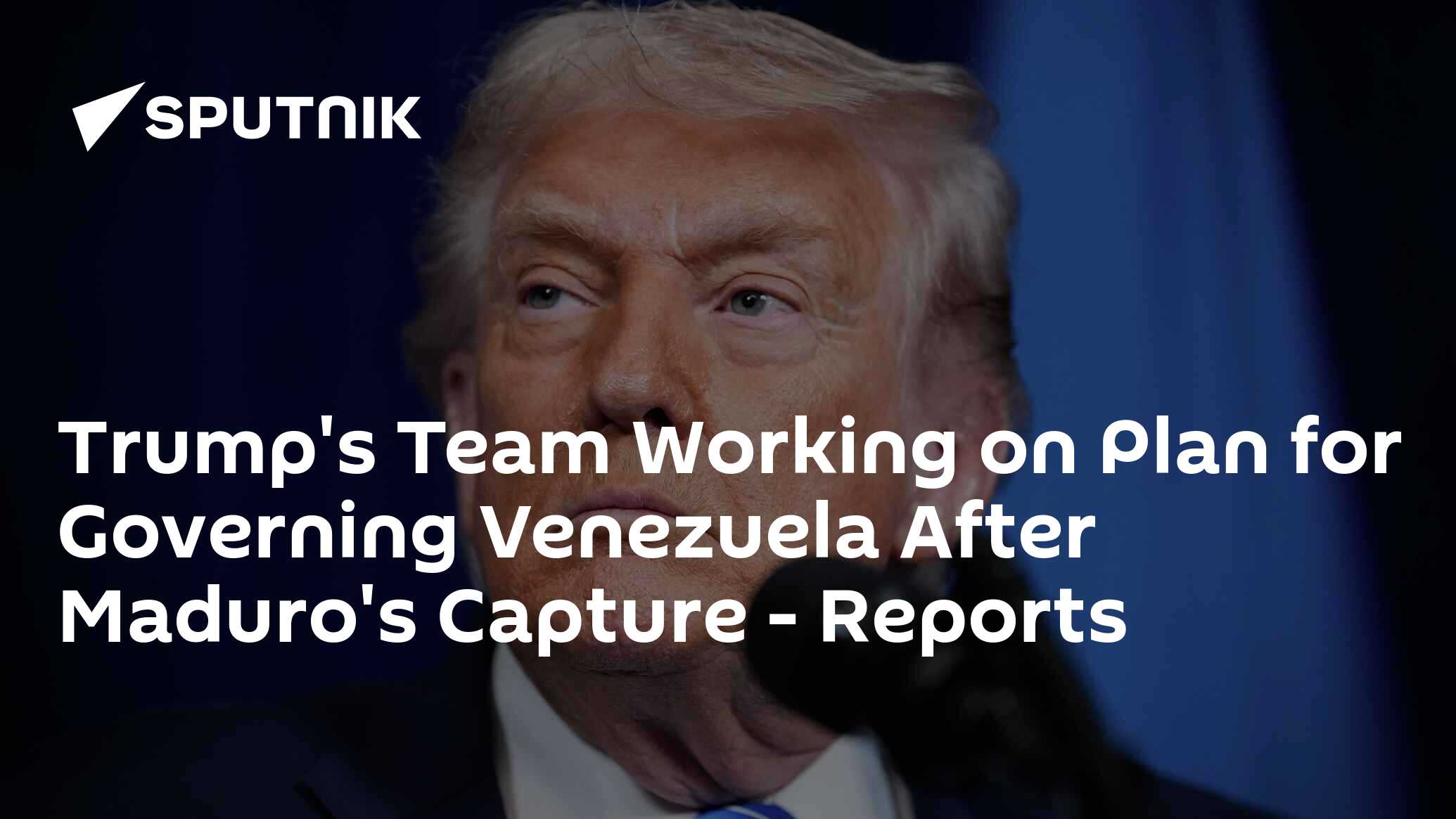
3. Trump's Team Working on Plan for Governing Venezuela After Maduro's Capture - Reports
Why: similarity 0.91
Summary: • US President Donald Trump’s national security team is developing a governance plan for Venezuela following the reported capture of President Nicolas Maduro by US forces.
• The plan may include a potential land incursion by US troops to establish control over Venezuela, although Trump expressed skepticism about the necessity of such action.
• The identity of a possible leader for Venezuela during the transition period remains uncertain, as does the issue of funding for the country's economic reconstruction.
• Reports indicate a major US military operation in Venezuela, including a strike that led to Maduro and his wife, Cilia Flores, being removed from the country.
• The operation involved significant military assets, with over 150 aircraft participating, and was preceded by a cyberattack that caused widespread power outages in Caracas.
• At least 40 casualties, including military and civilians, were reported during the operation, raising concerns about its legality among US congressmen.
• Venezuelan authorities have demanded proof of Maduro's capture and declared intentions to appeal to international organizations, including a request for a UN Security Council meeting.
• Russia's Foreign Ministry condemned the actions of the US, expressing alarm over the forcible removal of Maduro and his wife and calling for their release.
URL:
4. More Turmoil From Washington, by Philip Giraldi - The Unz Review
Why: similarity 0.91
Summary: - • The article discusses the recent turmoil in Washington following the murder of conservative activist Charlie Kirk, leading to speculation and political fallout.
- • Kirk's death sparked accusations from Republican conservatives demanding action against the left, despite no evidence linking any leftist group to the murder.
- • There are suggestions that Israel may have been involved in the assassination, given its history of political killings and the tensions between Kirk and Israeli interests.
- • A private jet linked to a wealthy Jewish businessman departed the area with its tracking system turned off, raising suspicions about the escape of the actual assassin.
- • An individual disrupted the police investigation at the murder scene, potentially aiding the escape of the true shooter.
- • The U.S. government is reacting by targeting free speech, punishing individuals who expressed dislike for Kirk, including public figures like Jimmy Kimmel.
- • The Trump administration's State Department plans to penalize non-citizens on social media who praise Kirk's death, threatening visa revocations and deportations.
- • Attorney General Pam Bondi's threats against "hate speech" under the guise of protecting free speech raise constitutional concerns.
- • Congressional actions reflect pro-Israel sentiments, with a bill introduced to prevent the arrest of Israeli Prime Minister Netanyahu during U.S. visits.
- • The article highlights the ongoing conflict in Gaza and plans by Israeli officials to redevelop the region post-conflict, with potential U.S. involvement in the reconstruction.
- • Trump’s personal lawsuits against media outlets and the implications of his presidential actions raise ethical questions regarding conflicts of interest and the use of power for personal gain.
URL:
5. ‘War Has Consequences’ – The Debrief
Why: similarity 0.91
Summary: • The IDF is experiencing a surge in soldier suicides, with at least 17 in 2025 (7 in July alone), matching 2023's total, as an official acknowledges "war has consequences"
• American War on Terror parallels show combat trauma's deadly aftermath - over 30,000 veteran suicides since 9/11 compared to 7,000 combat deaths
• Leaders knowingly pursue wars despite understanding the severe mental health consequences for soldiers, while making false promises about creating a better world
• Washington is expanding military presence on the Korean Peninsula with a new squadron, as North Korea refuses talks unless the US drops denuclearization demands
• Hundreds of former Israeli officials, including ex-Mossad and Shin Bet heads, urged Trump to pressure Netanyahu to end Gaza operations, stating Hamas no longer threatens Israel
• Senators introduced a $50 billion military aid bill for Ukraine to fund the proxy war for two more years
• Netanyahu believes no deal with Hamas is possible and seeks military victory, with Israel and the US rejecting phased agreements and demanding all hostages be released at once
• Various podcast episodes discussed Gaza's humanitarian crisis, Israeli tactics at food distribution centers, and the broader implications of ongoing conflicts
• Articles examined socialism's influence on Indian constitutionalism and America's debt crisis extending far beyond the official $37 trillion figure
URL:
6. Regime Tweaking, Not Regime Change, Is What The US Just Achieved In Venezuela
Why: similarity 0.91
Summary: - • The document argues that the US has achieved "regime tweaking" in Venezuela, rather than outright regime change, by maintaining the existing power structure while making significant changes to align with US interests.
- • Critics claim that the US operation failed since Maduro remains in power, but the intention behind US actions is debated, suggesting that the Trump administration aimed to avoid destabilization and civil war.
- • The US's immediate goal involved removing Maduro and possibly replacing him with Vice President Delcy Rodriguez, who would be expected to comply with US directives.
- • Trump's rejection of Maria Corina Machado as a leader indicates a lack of interest in a radical shift from the Chavismo model towards a Western-style government.
- • For the transition to succeed, the new leadership must retain support from Venezuela’s military to avoid civil unrest, which may require preserving certain economic privileges.
- • The military's minimal resistance suggests that negotiations may have already taken place between key military figures and the US.
- • Should elections occur within 30 days, military leaders would be critical in securing a stable electoral process, emphasizing US influence over governance in Venezuela.
- • The US seeks to restore its influence without necessarily dictating the nature of Venezuela's government, aiming to control oil sales and reduce foreign competition.
- • A gradual de-ideologization of the Venezuelan "deep state" is necessary to prevent civil conflict while potentially retaining some Chavista socio-economic programs for stability.
- • The eventual unfolding of this transition will be crucial to observe, as it will reflect the balance between US interests and Venezuela's internal dynamics.
URL:
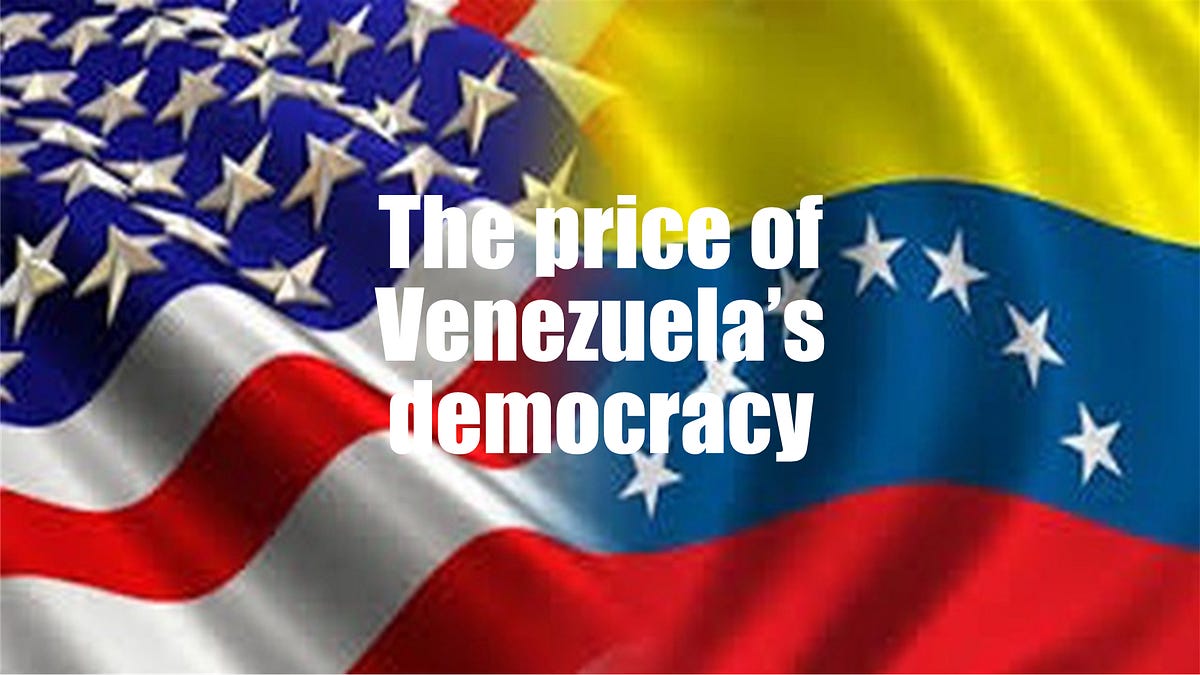
7. The price of Venezuela's democracy
Why: similarity 0.91
Summary: - • Venezuelan opposition leader Maria Corina Machado, recently awarded the Nobel Prize, envisions U.S. companies profiting significantly from Venezuela's oil once she gains power, claiming the nation has more oil than Saudi Arabia.
- • Machado has a long history of seeking power, including involvement in a failed coup against Hugo Chavez in 2002, supported by CIA funding.
- • She backed severe U.S. sanctions in 2017 that resulted in significant humanitarian consequences, including tens of thousands of deaths, and later called for military intervention to remove Maduro.
- • Recent U.S. military actions in Venezuela, including strikes on suspected drug traffickers, are seen as attempts to weaken Maduro and support Machado's opposition.
- • Despite Maduro's overtures to the Trump administration offering favorable terms for U.S. investment in Venezuelan resources, the administration rejected these proposals, continuing military aggression instead.
- • The underlying motive for regime change in Venezuela is tied to its vast oil wealth, which could serve as collateral for U.S. banks and corporations.
- • Control over Venezuelan resources would allow banks to use them as profit-generating assets, highlighting the financial incentives behind imperialism and conflicts.
- • Historical examples indicate that resource control leads to immense profits for financial interests, as seen in Alberta's oil boom and subsequent financial crises.
- • The narrative of promoting democracy and human rights is often used to justify military interventions and resource exploitation, perpetuating a cycle of violence and profit for the powerful.
URL:
## Pointed questions for discussion
- What are the potential consequences of Israeli involvement in Venezuela's political landscape?
- How does the U.S. narrative on drug trafficking shape public perception of foreign policy?
- In what ways can we better understand the complexities of international relations involving Israel and Latin America?
## Sentiment
Score: -0.20
## Provider
OpenRouter / openai/gpt-4o-mini
Shared via 

The Unz Review
Israeli Intrigue in Venezuela?

Charlie Kirk, Epstein, and the Zionist Cabal
America 2.0's Gunboat Dishonesty

The Unz Review
Trump Unleashes the CIA on Venezuela

Sputnik International
Trump
US President Donald Trump’s national security team is drafting a plan to govern Venezuela after President Nicolas Maduro was captured by US force...

The Unz Review
More Turmoil From Washington
‘War Has Consequences’ – The Debrief

Regime Tweaking, Not Regime Change, Is What The US Just Achieved In Venezuela
This refers to keeping the targeted state’s power structure in place but after some (at times significant) changes that advance the meddling stat...

The price of Venezuela's democracy
Those gunning for Venezuela are on Wall Street and in the City of London and the stakes are beyond huge.

Memetic Research Laboratories LLC
Memetic Research Laboratories LLC - Privacy-focused technology for digital content management and decentralized communication
The alternative history timeline of Maduro’s kidnapping where “Joe Biden” does it:
What are the MAGA-Boomer-cons saying about it?
Did / Could ”Joe Biden” even pull that off?

Middle East Eye
Enemies not allowed to control large oil reserves, US ambassador to UN says
Mike Waltz insists, however, that the US is 'not occupying' Venezuela

Memetic Research Laboratories LLC
Memetic Research Laboratories LLC - Privacy-focused technology for digital content management and decentralized communication
Hey Guise…
Going to Glasgow in May what should I see and do and eat?
# Comprehensive Analysis
Title: The Battle of New York - Real Scott Ritter
URL:
Collected: 2026-01-06 18:40:04 +0000
Analyzed: 2026-01-06 18:44:24 +0000
## Overall takeaway
The legal proceedings against Maduro in New York challenge the integrity of American democracy and its adherence to international law.
## Conceptual model
- U.S. actions against sovereign nations raise legal and ethical questions.
- Judiciary's role is crucial in maintaining constitutional integrity.
- Public support for aggressive actions reflects a betrayal of democratic values.
- International law must guide U.S. foreign policy decisions.
- Historical parallels highlight risks of authoritarianism in governance.
## Next steps (optional)
- Engage in discussions about the implications of U.S. foreign policy.
- Research international law regarding sovereignty and intervention.
- Monitor the outcomes of the Maduro case for broader implications.
## Short summary
The document critiques the legal proceedings in New York involving Venezuelan President Nicolas Maduro, framing it as a crucial test of American democracy's integrity under Trump's administration. It questions the legitimacy of U.S. actions against sovereign nations in light of international law.
## Comprehensive summary
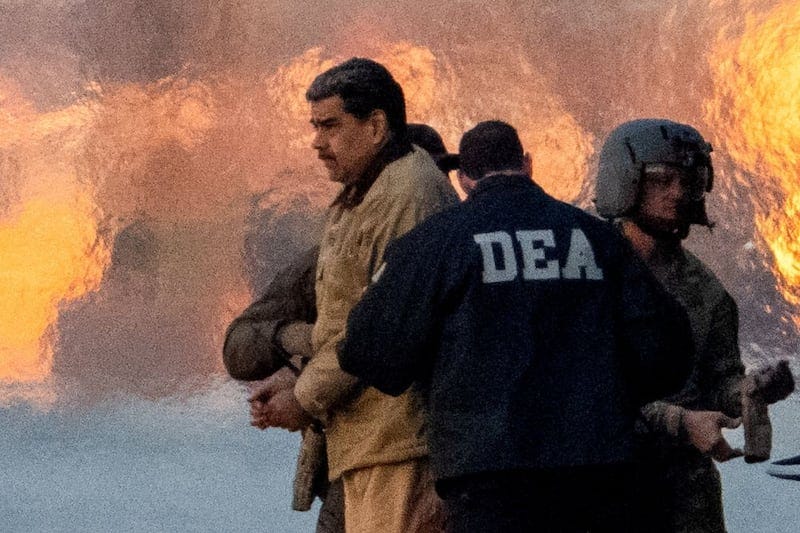
- • The document discusses the ongoing legal battle in New York City regarding the abduction of Venezuelan President Nicolas Maduro by U.S. authorities, framing it as a trial for the legitimacy of American democracy itself.
- • It argues that if the charges against Maduro are not dismissed, it would signify the collapse of constitutional legitimacy under the Trump administration.
- • The author criticizes the American public for supporting this act of aggression against a sovereign nation, equating it to a betrayal of democratic values.
- • The legitimacy of U.S. actions is questioned based on international law, emphasizing that the U.S. is a signatory to the UN Charter, which prohibits the use of force against sovereign nations.
- • The document highlights the role of treaties as the supreme law of the land, asserting that any modification must come from Congress, not the executive or judicial branches.
- • The author expresses concern over President Trump’s disregard for treaties and international law, viewing his presidency as a departure from constitutional norms.
- • The judiciary, represented by Judge Alvin Hellerstein, is portrayed as the last hope for upholding constitutional integrity against executive overreach.
- • The potential outcome of the Maduro case is seen as pivotal in determining the future of American democracy, with the author drawing parallels to historical authoritarian regimes.
- • The document concludes with a reflection on the sacrifices made for American democracy and a sense of urgency regarding the nation's future, invoking Thomas Jefferson's thoughts on the spirit of resistance.
## Entities
- keyword: states, united, treaty, america, nation, american, land, justice, charter, trump
- location: United States, Cyprus, United States of America, Turkey, Roman, New York scottritter.substack.com Venezuelan, America, US, Caracas, Southern District of New York
- organization: Air Force, US Army, United Nations, US DEA, United States Senate, United States Congress, Senate, Congress, UN Charter, United Nations Security Council
- person: Trump, John Marshall, Nicolas Maduro, Donald Trump, Caligula, Marshall, Honorable, Maduro, Samuel Freeman Miller, Caligula Trump
## Related content
1. Operation Absolute Resolve: Why Trump Went Off Script And Why It Will Not Matter | ZeroHedge
Why: similarity 0.93
Summary: - • President Trump's press conference disrupted the narrative surrounding the operation to seize Venezuelan President Nicolás Maduro and his wife, Cilia Flores.
- • Trump initially had a strong legal argument focused on capturing two indicted individuals, supported by Secretary of State Marco Rubio and General Dan Caine.
- • While Rubio emphasized the law enforcement aspect, Trump shifted focus to nation-building and achieving regime change in Venezuela.
- • Trump's transactional approach revealed his desire for a stable partner in Venezuela, particularly for oil, after years of socialist policies under Chávez and Maduro.
- • The operation was an act of war if intended for regime change, complicating the legal justification presented by Rubio.
- • Historical precedent suggests courts have upheld presidential authority to seize individuals abroad, which may favor Trump's case against Maduro.
- • The operation's immediate goal was fulfilled by capturing Maduro and placing him in custody for prosecution, similar to the Noriega case.
- • Trump stated intentions to manage Venezuela until a stable government is established, raising concerns about foreign intervention in its sovereignty.
- • Despite potential legal controversies, the operation's aftermath may not impede Trump's authority under Article II of the Constitution regarding foreign policy.
- • Ultimately, Trump's lack of adherence to a scripted narrative may still lead to legal success in holding Maduro accountable.
URL: https://www.zerohedge.com/geopolitical/operation-absolute-resolve-why-trump-went-script-and-why-it-will-not-matter
2. Trump's Team Working on Plan for Governing Venezuela After Maduro's Capture - Reports
Why: similarity 0.92
Summary: • US President Donald Trump’s national security team is developing a governance plan for Venezuela following the reported capture of President Nicolas Maduro by US forces.
• The plan may include a potential land incursion by US troops to establish control over Venezuela, although Trump expressed skepticism about the necessity of such action.
• The identity of a possible leader for Venezuela during the transition period remains uncertain, as does the issue of funding for the country's economic reconstruction.
• Reports indicate a major US military operation in Venezuela, including a strike that led to Maduro and his wife, Cilia Flores, being removed from the country.
• The operation involved significant military assets, with over 150 aircraft participating, and was preceded by a cyberattack that caused widespread power outages in Caracas.
• At least 40 casualties, including military and civilians, were reported during the operation, raising concerns about its legality among US congressmen.
• Venezuelan authorities have demanded proof of Maduro's capture and declared intentions to appeal to international organizations, including a request for a UN Security Council meeting.
• Russia's Foreign Ministry condemned the actions of the US, expressing alarm over the forcible removal of Maduro and his wife and calling for their release.
URL:
3. Rules for Thee, Force for Me: America’s Doctrine of Leader-Capture - The Ron Paul Institute for Peace & Prosperity
Why: similarity 0.92
Summary: - • The United States has employed a doctrine of unilateral leader-capture, exemplified by the abduction of Venezuelan President Nicolás Maduro, undermining international law.
- • This act of force is framed as justice, despite being a blatant violation of sovereignty and international norms.
- • The U.S. conducts maritime blockades under euphemisms, presenting aggressive actions as law enforcement, while non-Western nations view these as illegal aggression.
- • The capture of Maduro marks a significant shift towards normalizing the abduction of sovereign leaders, potentially emboldening American adversaries to adopt similar tactics.
- • The situation in Venezuela reflects a broader imperial strategy that includes manipulating international perceptions and justifying military interventions.
- • The U.S. hypocrisy is evident in its criticism of Chinese military exercises around Taiwan while simultaneously engaging in acts that destabilize other nations.
- • Washington's ambiguous legal stance regarding Taiwan allows it to oscillate between acknowledging China’s claims and acting as if those claims are invalid when convenient.
- • The elevation of figures like María Corina Machado by foreign powers serves to legitimize illegal actions under the guise of promoting democracy.
- • Normalizing forceful leader-capture threatens to dismantle the principles of sovereignty and non-intervention established post-1945, leading to a world where aggression is commonplace.
- • If unchecked, these practices could lead to a global environment of legitimized kidnapping, where power dynamics shift dramatically against Western interests.
- • The article warns that once the precedent of leader-capture is established, the principles of international law will erode, resulting in a chaotic balance of power.
URL:

4. Maduro's Own VP, Now Sworn-In As President, Betrayed Him To The CIA: Reports | ZeroHedge
Why: similarity 0.91
Summary: • Delcy Rodríguez, Nicolás Maduro's former Vice President, has been sworn in as the new President of Venezuela after reportedly betraying Maduro to the CIA.
• A classified U.S. intelligence assessment suggested that top officials in Maduro’s regime, including Rodríguez, could stabilize Venezuela if Maduro lost power.
• This assessment influenced President Trump's decision to support Rodríguez over opposition leader María Corina Machado during the recent U.S. military operation against Maduro.
• Fears arise regarding potential political chaos in Venezuela following the military operation, drawing parallels to post-regime change scenarios in Libya and Iraq.
• Trump emphasized the need to "fix" Venezuela before elections can be held, acknowledging the challenges in stabilizing the country.
• Maduro and his wife, Cilia Flores, were arraigned in a New York federal court on drug-trafficking and other charges, with both pleading not guilty.
• In response to the power shift, Rodríguez has expressed a willingness to cooperate with the U.S. for a balanced relationship, contrasting with Maduro's prior stance.
• The U.S. is preparing to reopen its embassy in Caracas, indicating a potential shift in diplomatic relations.
• Trump warned of a second military strike if Venezuela fails to cooperate and mentioned the possibility of involving Colombia in future operations.
• Switzerland has begun freezing Maduro's assets to prevent illicit fund outflows, indicating international pressure on the former regime.
URL: https://www.zerohedge.com/geopolitical/maduros-vp-bends-knee-maduro-arraignment-ny-court-imminent
5. Regime Tweaking, Not Regime Change, Is What The US Just Achieved In Venezuela
Why: similarity 0.91
Summary: - • The document argues that the US has achieved "regime tweaking" in Venezuela, rather than outright regime change, by maintaining the existing power structure while making significant changes to align with US interests.
- • Critics claim that the US operation failed since Maduro remains in power, but the intention behind US actions is debated, suggesting that the Trump administration aimed to avoid destabilization and civil war.
- • The US's immediate goal involved removing Maduro and possibly replacing him with Vice President Delcy Rodriguez, who would be expected to comply with US directives.
- • Trump's rejection of Maria Corina Machado as a leader indicates a lack of interest in a radical shift from the Chavismo model towards a Western-style government.
- • For the transition to succeed, the new leadership must retain support from Venezuela’s military to avoid civil unrest, which may require preserving certain economic privileges.
- • The military's minimal resistance suggests that negotiations may have already taken place between key military figures and the US.
- • Should elections occur within 30 days, military leaders would be critical in securing a stable electoral process, emphasizing US influence over governance in Venezuela.
- • The US seeks to restore its influence without necessarily dictating the nature of Venezuela's government, aiming to control oil sales and reduce foreign competition.
- • A gradual de-ideologization of the Venezuelan "deep state" is necessary to prevent civil conflict while potentially retaining some Chavista socio-economic programs for stability.
- • The eventual unfolding of this transition will be crucial to observe, as it will reflect the balance between US interests and Venezuela's internal dynamics.
URL:
6. Horrified Democrats Discover the Imperial Presidency - The American Conservative
Why: similarity 0.91
Summary: • President Trump invoked the Alien Enemies Act of 1798 on March 15, 2025, to target Venezuelan gang Tren de Aragua (TdA), claiming it's conducting "irregular warfare" and an "invasion" of the U.S. in collusion with the Maduro regime
• Trump's proclamation allows for immediate apprehension, detention, and removal of "alien enemies" associated with TdA, which he designated as a Foreign Terrorist Organization infiltrating the U.S. to harm citizens and destabilize democratic nations
• Critics denounced the move as unconstitutional, arguing the Alien Enemies Act requires a congressional declaration of war, leading to mixed court rulings and Supreme Court intervention on due process grounds
• Trump's opponents view this as a backdoor attempt to implement hardline immigration policies by treating undocumented immigrants as invading terrorists without due process protections
• The administration's defense rests on two key arguments: presidents have inherent authority to respond to invasions without congressional approval, and Congress has allowed decades of undeclared wars since WWII
• The author notes the hypocrisy of Trump's critics, who remained silent about previous presidential war powers overreach in conflicts like Korea, Vietnam, Afghanistan, and Iraq—all waged without formal declarations
• While Trump's "invasion" rationale may be a stretch, the author argues it's more plausible than justifications used for past military actions like bombing Serbia or invading Iraq
• The situation presents an opportunity for the Supreme Court to clarify the constitutional boundaries of executive war powers versus congressional authority
URL: https://www.theamericanconservative.com/horrified-democrats-discover-the-imperial-presidency/
7. American Pravda: The JFK Assassination, Part I - What Happened?, by Ron Unz - The Unz Review
Why: similarity 0.91
Summary: • Ron Unz initially dismissed JFK conspiracy theories after watching Oliver Stone's 1991 film "JFK," finding the plot bizarre with its portrayal of anti-Communist homosexuals, CIA, and mafia connections organizing the assassination from New Orleans
• The official narrative seemed straightforward: Lee Harvey Oswald, a disgruntled Marine who defected to USSR and returned with Marxist sympathies, fired three shots from the Dallas Book Depository, killing Kennedy before being shot by Jack Ruby
• Unz's skepticism began when he discovered the "Magic Bullet" theory was real - the Warren Commission claimed one bullet caused seven separate wounds in both Kennedy and Governor Connolly, an essential element of the lone gunman theory
• Reading David Talbot's "Brothers" and James Douglass's "JFK and the Unspeakable," Unz found overwhelming evidence of conspiracy and discovered many powerful government officials privately believed in a conspiracy from the beginning
• Robert Kennedy immediately believed his brother was killed by an organized group likely including government elements, but lost all power when LBJ became president and couldn't investigate
• RFK hoped to reach the White House himself to eventually uncover the truth and bring justice, but was forced to publicly acquiesce to the official story while it "deeply gnawed at him"
• Key witnesses like Secret Service agent Roy Kellerman and Governor Connolly, who was wounded in the attack, believed there were more than three shots and additional shooters beyond Oswald
URL:
8. Puncturing the Propaganda-Bubble of the USSA and Its EUSSR Vassals, by Ron Unz - The Unz Review
Why: similarity 0.90
Summary: - **Historical Context**: The document begins with a recounting of the 1979 Soviet military operation in Afghanistan, highlighting the initial military success overshadowed by subsequent economic and political decay leading to the USSR's collapse.
- **Critique of U.S. Actions**: Unz draws parallels between the Soviet experience and recent U.S. actions under Trump's administration, particularly the seizure of Venezuelan President Nicolas Maduro. He criticizes this as a dangerous precedent for international relations and compares it to historical acts of aggression.
- **Lawlessness in U.S. Policy**: The article emphasizes the lawless nature of current U.S. foreign policy, with Trump acting unilaterally and without Congressional or international oversight, likening this behavior to imperial expansion tactics.
- **Military Concerns**: Unz references military expert Col. Douglas Macgregor and academic Jeffrey Sachs, who express concerns about U.S. actions in Venezuela and potential territorial ambitions, including Greenland.
- **Implications for China and Taiwan**: The document discusses China’s possible responses to U.S. actions, particularly regarding Taiwan, suggesting that if the U.S. can blockade Venezuela, China may feel justified in doing the same to Taiwan, which could lead to significant geopolitical tensions.
- **Technological Vulnerabilities**: Unz warns of the technological imbalance in military capabilities, asserting that any conflict with China could result in devastating losses for the U.S. military, highlighting concerns about the effectiveness of American defenses against Chinese missile technology.
- **Nuclear Concerns**: The piece concludes with the assertion that the only restraint on China’s potential aggressive actions might be the fear of a nuclear response from the U.S., given the potential for a rapid and humiliating defeat in conventional warfare
URL:
## Pointed questions for discussion
- How do we balance national interests with respect for international law?
- What role should public opinion play in foreign policy decisions?
- In what ways can the judiciary effectively check executive power?
## Sentiment
Score: -0.70
## Provider
OpenRouter / openai/gpt-4o-mini
Shared via 

The Battle of New York
"What country can preserve it’s liberties if their rulers are not warned from time to time that their people preserve the spirit of resistance?" ...

Sputnik International
Trump
US President Donald Trump’s national security team is drafting a plan to govern Venezuela after President Nicolas Maduro was captured by US force...

The Ron Paul Institute for Peace & Prosperity
Rules for Thee, Force for Me: America’s Doctrine of Leader-Capture - The Ron Paul Institute for Peace & Prosperity
Here we are watching the rules (for thee but not me) based order perform its favorite magic trick, of turning performative flexing of might into vi...

Regime Tweaking, Not Regime Change, Is What The US Just Achieved In Venezuela
This refers to keeping the targeted state’s power structure in place but after some (at times significant) changes that advance the meddling stat...

The Unz Review
American Pravda: The JFK Assassination, Part I – What Happened?

The Unz Review
Puncturing the Propaganda-Bubble of the USSA and Its EUSSR Vassals

Memetic Research Laboratories LLC
Memetic Research Laboratories LLC - Privacy-focused technology for digital content management and decentralized communication
"Let me be as clear as possible—if you cheer any aspect of what Donald Trump (I deign to call him President, as that attaches the notion of democratic norms and values, and constitutional checks and balances, which no longer exist in America today) has done in Venezuela, then you are part of the problem, and not part of the solution. There is nothing about what the United States has done, is doing, and plans to do regarding Venezuela that can be described as legitimate."
Shared via 

The Battle of New York
"What country can preserve it’s liberties if their rulers are not warned from time to time that their people preserve the spirit of resistance?" ...

Memetic Research Laboratories LLC
Memetic Research Laboratories LLC - Privacy-focused technology for digital content management and decentralized communication

The Unz Review
Puncturing the Propaganda-Bubble of the USSA and Its EUSSR Vassals

Memetic Research Laboratories LLC
Memetic Research Laboratories LLC - Privacy-focused technology for digital content management and decentralized communication
GM!
Shared via
Shared via