# Comprehensive Analysis
Title: A Simulacrum of Language - by Rudy Havenstein
URL:

A Simulacrum of Language
The Inflation Mistake
Collected: 2025-10-23 15:48:39 +0000
Analyzed: 2025-10-23 15:51:22 +0000
## Overall takeaway
Central bankers are increasingly favoring gold as a hedge against inflation and economic instability, signaling systemic risks in the current market.
## Conceptual model
- Central banks prefer gold over U.S. dollars.
- Panic buying of gold reflects consumer fears.
- High-risk lending may repeat past financial crises.
- Inflation remains a persistent concern.
- Financial distress is rising among lower-income Americans.
## Next steps (optional)
- Monitor central bank gold purchases and market trends.
- Evaluate personal investment strategies in light of inflation.
- Discuss potential impacts of financial instability on local economies.
## Short summary
Rudy Havenstein discusses the growing preference for gold among central bankers as a response to inflation and economic instability, with reports of panic buying in various regions. Concerns over leveraged lending and potential financial crises echo sentiments from past economic downturns, highlighting systemic risks in the current market.
## Comprehensive summary
- **Central Banking Dynamics**: Central bankers are increasingly favoring gold over U.S. dollars, reflecting concerns over inflation and economic stability, as highlighted by Satyajit Das.
- **Market Sentiment**: Reports of panic buying of gold in Vietnam indicate a broader fear among consumers rather than mere speculation.
- **Inflation Insights**: Jim Bianco emphasizes that rising prices tend to remain high, warning against the "inflation mistake," which could have severe consequences.
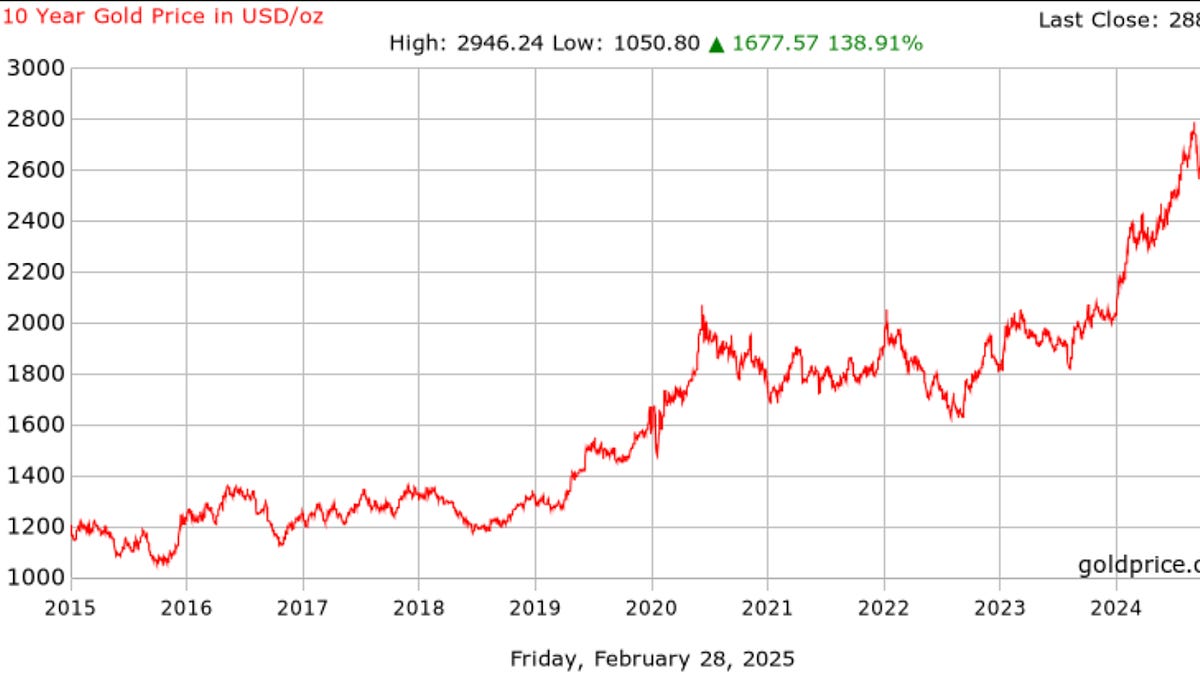
- **Gold Market Analysis**: Analysts observe that gold, while not cheap, appears more favorable compared to treasuries and the S&P 500.
- **Paxos Incident**: A significant error by Paxos resulted in the accidental minting of $300 trillion in PYUSD tokens, raising concerns over blockchain governance and stability.
- **Consumer Financial Stress**: Increasing car loan delinquencies and rising auto loan balances indicate financial distress among lower-income Americans, suggesting a broader economic issue.
- **Real Estate Risks**: The bankruptcy of a California real estate firm has led to loan issues for Zions Bancorp, highlighting vulnerabilities in commercial real estate lending.
- **Leveraged Loan Market**: Despite signs of weakness in the economy, demand for leveraged loans remains high, raising concerns about investor diligence and potential risks.
- **Historical Context**: Reflections on the financial crisis of 2008 reveal a cycle of high-risk lending, where new financial innovations might repeat past mistakes under similar high-risk conditions.
- **Credit Cycle Awareness**: Analysts warn that while financial structures evolve, core risks associated with high-risk lending persist, suggesting an impending reckoning in the credit market.
## Entities
- keyword: real, bubble, gold, think, credit, sheep, know, world, going, loans
- location: U.S., Willem, EU, Venezuela, Newport Beach, America, China, UK, Berlin Wall, Edmunds.com
- organization: CIA, WTO, Commerce, Bear Stearns High Yield, Credit Default Swaps, Rangers, PayPal, Cox Automotive, Citigroup, VantageScore
- person: Norm Macdonald, Bush, Obama, Vincent Daniel, John Kerry, Trump, Jeff Bezos, Howard Lutnick, Paxos, Maria Abramović
## Related content
1. The Imminent Restructuring of the Monetary System – Mark E. Jeftovic is The Bombthrower
Why: similarity 0.92
Summary: • The global financial system, built on leverage and fiat expansion since 1913, is unsustainably distorted through derivatives, credit expansion, and hidden leverage, requiring a painful but necessary restructuring
• Trump and Scott Bessent are signaling a multi-step transition to sound money backed by gold, commodities, and Bitcoin, avoiding an immediate collapse that would occur if they simply declared a gold-backed dollar overnight
• Foreign nations (China, Russia, BRICS) have stopped accumulating U.S. Treasuries while U.S. debt reaches 123% of GDP, making debt servicing mathematically unsustainable and forcing monetary restructuring
• Key transition signals include government gold accumulation since 2016-2018, LBMA/COMEX physical shortages, and gold's quiet revaluation without triggering panic
• Centralization of FICC trading by 2025-2026 will force a purge of leverage from the Treasury market, similar to how LIBOR's transition to SOFR caused 2023 bank failures
• Bitcoin serves as either a central bank liquidity tool or escape hatch for early movers, with institutional adoption already underway through BlackRock, Fidelity, and MicroStrategy
• An inevitable market collapse will lead to a new Bretton Woods 2.0 system featuring multi-reserve assets (gold, Bitcoin, commodities) instead of sole fiat reliance
• Key risks include the Fed/Treasury losing control of the unwind, foreign actors' positioning, and early market panic creating domino collapses
• The transition is already under
URL:
The Imminent Restructuring of the Monetary System – Mark E. Jeftovic is The Bombthrower
2. Get Ready For Trump’s Monetary Reset - by Matt Smith
Why: similarity 0.92
Summary: • Gold has surged 45% since 2024, with an unknown US buyer purchasing 2,000 metric tons (64 million ounces) since November 2024 - nearly 25% of the US government's supposed gold stockpile
• This buyer demands physical delivery, doesn't care about price or short-term profits, suggesting it's likely the US government (Fed or Treasury) acting on Trump's plan
• Trump's team is orchestrating a monetary reset to avoid economic collapse, surrounded by billionaires with a workable plan unlike previous administrations who merely exploited the system
• Gold is fleeing London for the US, with delivery delays extending from two days to two months as someone high in Wall Street and government executes Trump's economic policy
• A gold audit is being prepared to show other nations (China, Russia, BRICS) the true state of US solvency as they seek alternatives to the current US-led monetary order
• Trump plans to remonetize gold and "monetize everything" to restore US wealth through productivity, taking inspiration from an unlikely source (implied to be China)
• The plan aims to redraw US supply chains and fix massive debt/deficit problems that previous administrations considered unsolvable
• This represents the biggest monetary system change since Nixon severed the dollar from gold in 1971, potentially creating a "Golden Age" for prepared investors while degrading lifestyles of the unprepared
• The author frames this as a "Fourth Turning" moment where radical ideas get adopted rapidly, warning that Doug Casey's long-predicted "Greater Depression" and economic "Abyss" are finally
URL:
Get Ready For Trump’s Monetary Reset
A gold panic in London has Europe and the world wondering what’s next
3. June 2025 Newsletter: 3 Misconceptions About US Debt - Lyn Alden
Why: similarity 0.91
Summary: • **US fiscal deficits will remain large for the foreseeable future**, with the federal government consistently spending more than it receives in tax revenue, creating annual deficits that accumulate into total outstanding debt
• **"We owe it to ourselves" is misleading** - while some debt is held domestically, the $36 trillion federal debt translates to $277,000 per household, and holdings are unequally distributed between institutions, individuals, and foreign entities
• **Selective default has serious consequences** - defaulting on retirees, insurance companies, or banks would cause existential crises and protests, while defaulting on foreign entities ($9 trillion held) would damage US credibility and ability to attract future foreign investment
• **Foreign central banks are buying gold** in response to the US freezing $300 billion in Russian reserves in 2022, seeking assets protected from default and confiscation
• **China holds less than $800 billion in treasuries** (about 5 months of US deficit spending) and represents the highest selective default risk among foreign holders
• **Defaulting on the Fed's $4 trillion in treasuries would be problematic** as the Fed has assets and liabilities, pays interest on bank reserves, and is currently operating at a loss with hundreds of billions in unrealized losses
• **Currency devaluation is the more likely path** than outright default, as seen in the 1930s gold devaluation, 1970s decoupling from gold, and the 40% money supply increase in 2020-2021
URL:

Lyn Alden
June 2025 Newsletter: 3 Misconceptions About US Debt
June 18, 2025 This newsletter issue analyzes three common misconceptions about the US federal debt and deficits. The ongoing nature of the deficits...
4. (3) This complete divorce of incentives - by Rudy Havenstein
Why: similarity 0.91
Summary: Here is a summary of the document:
• **Core inflation remains elevated**: The Fed's Core CPI model at 2.8% YOY has been above their 2% target since April 2021, indicating persistent inflationary pressures.
• **European banking layoffs highlight excessive compensation**: European banks spent €1.13bn ($1.307bn) on severance for 2,100 "material risk takers," averaging $622,512 per person, revealing bloated compensation structures.
• **Private equity underperforms public markets**: State Street's private equity index returned only 7.08% in 2024 versus 25.02% for the S&P 500, marking the first year since 2000 that private markets underperformed across all measured time horizons.
• **Media ownership by private equity creates destructive incentives**: Private equity firms focus on pageview metrics rather than quality journalism, with owners believing wealth equals intelligence while lacking understanding of the businesses they acquire.
• **Leveraged buyouts create "complete divorce of incentives"**: Private equity firms saddle acquired companies with debt while extracting value through real estate sales and management fees, leading to 20% of PE-acquired companies entering bankruptcy within 10 years versus only 2% for other companies.
• **Data center boom risks creating overcapacity**: Goldman warns of potential long-term glut, drawing parallels to fiber optics companies 25 years ago that overbuilt infrastructure then went bankrupt.
• **Dollar devaluation concerns**: Rick Rule predicts the US dollar will lose 75% of its purchasing power
URL:

This complete divorce of incentives
The QE drug is wearing thin.
5. 2025: The Year Central Banks Finally Chose Gold Over U.S. Treasuries
Why: similarity 0.91
Summary: • Central banks have significantly increased gold purchases, acquiring over 1,000 tons annually for three consecutive years, compared to an average of 400-500 tons in the previous decade.
• For the first time since 1996, central banks now hold more gold than U.S. Treasuries as a percentage of their reserves, with gold making up about 28% and Treasuries around 24%.
• This trend has been gradual, starting around 2015, coinciding with the U.S. imposing sanctions on Russia, which prompted nations to reconsider holding dollar reserves.
• The weaponization of the dollar has led to a growing preference for gold, which cannot be seized or sanctioned.
• Central banks are accumulating gold as a long-term store of value and hedge against dollar debasement, making them less sensitive to gold price fluctuations.
• A recent survey indicated that 43% of central bankers plan to increase gold reserves in the next year, a rise from 29% the previous year.
• An overwhelming 95% of central bankers believe global official gold reserves will continue to rise, reflecting strong confidence in gold's value.
• This shift represents a long-term strategy by risk-averse financial managers to secure assets before potential crises.
URL:

2025: The Year Central Banks Finally Chose Gold Over U.S. Treasuries
Chart of the Week #69
6. Gold Is Saying The Fiat Currency Experiment Is Ending Globally; Rubino | ZeroHedge
Why: similarity 0.91
Summary: • Analyst John Rubino warns of a global currency crisis affecting all fiat currencies, not just the US dollar, euro, or yen.
• Most countries are grappling with unpayable debt, signaling that no fiat currency will survive long-term.
• The rising price of gold indicates a decline in the value of fiat currencies; gold is viewed as humanity's oldest form of money.
• Recent spikes in gold prices have surpassed both nominal and inflation-adjusted all-time highs, highlighting a significant financial shift.
• Rubino attributes the current crisis to the monetary system established in 1971, which encouraged excessive debt and spending.
• Governments are increasingly borrowing to meet obligations, exacerbating the devaluation of their currencies through more money printing, leading to a potential currency death spiral.
• Rubino advocates for investment in physical gold, silver, and mining stocks, predicting silver will outperform gold percentage-wise.
• He estimates that for gold to serve as a foundation for a new monetary system, its price would need to be around $20,000 per ounce, with potential for it to rise indefinitely if fiat currencies collapse.
• Rubino also notes that artificial intelligence has both inflationary and deflationary effects on the economy.
• The document references a detailed 49-minute interview with Rubino, conducted by Greg Hunter.
URL:
Gold Is Saying The Fiat Currency Experiment Is Ending Globally; Rubino | ZeroHedge
ZeroHedge - On a long enough timeline, the survival rate for everyone drops to zero
7. (2) Reverse Logan's Run - by Rudy Havenstein
Why: similarity 0.91
Summary: • The document discusses the potential for governments, particularly the U.S. and Belgium, to finance expenditures by revaluing gold reserves instead of increasing public debt or taxes.
• The U.S. government holds the largest gold reserves globally, which could be revalued from a statutory price of $42.22 per troy ounce to current market values around $3,300.
• Inflation rates, particularly in the housing market, have been significantly high, with existing home inflation averaging 13.4% annually since 2012.
• Aggregate household debt increased by $185 billion in Q2 2025, reaching $18.39 trillion, highlighting a significant rise since the pandemic.
• Delinquency rates for student loans and credit card payments, even among upper-income Americans, have surged, with 10.2% of student debt reported as significantly overdue.
• The author describes a "demographic dystopia," attributing rising living costs to government and Federal Reserve policies that harm younger demographics.
• Inflation is impacting luxury goods, with anecdotes illustrating high spending on items like fashion and premium smoothies, contrasting with broader economic struggles.
• The housing market faces challenges, evidenced by a significant drop in sales and increasing investor purchases, indicating a shift in market dynamics.
• Economic commentary suggests a looming financial reckoning, with concerns over rising deficits and a potential consensus for a new monetary order amidst ongoing fiscal issues.
• The document concludes with reflections on market manipulations through AI trading bots, raising regulatory concerns about the future of financial markets.
URL:

Reverse Logan's Run
There's something wrong with your baby
8. BlackRock & Fidelity In Collusion With the UK Government?
Why: similarity 0.91
Summary: • **Western economies are already in recession**: When government deficits are subtracted from GDP figures, private sector GDPs are actually shrinking across G7 nations, with the US private sector contracting by 1.4% last year
• **Major investment firms allegedly promoting UK government bonds**: BlackRock, Fidelity, and Schroders are reportedly calling UK gilts a "screaming buy" despite negative market sentiment, raising suspicions of potential collusion with the UK government facing funding problems
• **US economic deterioration masked by government spending**: Q1 2025 showed nominal GDP growth of only 3.25% annualized while budget deficits exceed 6%, indicating accelerating private sector contraction and actual real GDP decline of 0.5%
• **Banking sector retreating from private lending**: Banks have been redeploying balance sheets away from non-financial private sector lending since the 2008 Lehman crisis, particularly accelerating from Q1 2021
• **Trump's tariff policies threaten global recession**: Parallels drawn to the 1930 Smoot-Hawley Tariff Act suggest tariffs will negatively impact global business activity and deepen the existing recession
• **Government debt traps emerging**: Rising debt and interest costs combined with contracting tax revenues create unsustainable fiscal positions across G7 nations, with debt-to-GDP ratios set to soar
• **Currency risk driving bond yields higher**: Foreign holders of $40 trillion in dollar-denominated assets are increasingly concerned about currency devaluation, breaking the long-term downward tren
URL:

VON GREYERZ
BlackRock & Fidelity In Collusion With the UK Government?
As government deficits inflate GDP figures, private sector economies across the G7 are quietly contracting. Read more on the illusion of growth, lo...
## Pointed questions for discussion
- What are the long-term implications of central banks favoring gold?
- How can individuals protect their finances in an inflationary environment?
- What lessons can we learn from past financial crises to mitigate current risks?
## Sentiment
Score: -0.40
## Provider
OpenRouter / openai/gpt-4o-mini
Shared via

Memetic Research Laboratories LLC
Memetic Research Laboratories LLC - Privacy-focused technology for digital content management and decentralized communication

 WTAF
Shared via
WTAF
Shared via  Shared via
  Shared via
  Try Harder
Shared via
Try Harder
Shared via  Shared via
  Shared via
  Shared via
  Shared via
  Shared via
  Shared via
  Shared via
  Shared via