
deeznuts
deeznuts@crypto.im
npub13tku...llwf
Enthusiasm enthusiast.
“No Amount Of Violence Will Solve A Math Problem”
Excel at research, analysis and meme-lording: https://memeticresearch.group/?page=contex.st
 I’m negotiating
Shared via
I’m negotiating
Shared via
I was very salty earlier making fun of monero bros and monero.
Anyway, I’m gonna keep doing it
 Talk about a shitcoin! This listing is on eBay right now and is an obviously fake coin. WTF eBay?!
Shared via
Talk about a shitcoin! This listing is on eBay right now and is an obviously fake coin. WTF eBay?!
Shared via 
Memetic Research Laboratories LLC
Memetic Research Laboratories LLC - Privacy-focused technology for digital content management and decentralized communication
 IS THIS 7D CHESS???
Shared via
IS THIS 7D CHESS???
Shared via
Dear Mr. President, Americans Don't Care Who Owns Donetsk, So Why Risk WW3 By Sending Tomahawks? | ZeroHedge
ZeroHedge - On a long enough timeline, the survival rate for everyone drops to zero
Memetic Research Laboratories LLC
Memetic Research Laboratories LLC - Privacy-focused technology for digital content management and decentralized communication
Imagine being butthurt about moanero jokes!
 Shared via
Trying to explain to boomers the Bill of Rights is a list of things the Federal Government is prohibited from doing is basically impossible
Your rights do not come from a 250 year old piece of paper
 WTF Happened In 1971??
Shared via
WTF Happened In 1971??
Shared via
- **Indictment Overview**: John Bolton has been indicted on 18 counts for mishandling classified documents, including eight counts of transmission and ten counts of unlawful retention of national defense information (NDI).
- **Allegations**: The indictment accuses Bolton of using personal email and messaging accounts to transmit Top Secret intelligence, and retaining sensitive files at home, which included intelligence about foreign leaders and U.S. intelligence sources.
- **Investigation Details**: The FBI's Baltimore Field Office conducted the investigation, with oversight from the Justice Department's National Security Division.
- **Legal Ramifications**: Each count of the indictment carries a maximum penalty of 10 years in federal prison, potentially leading to a total of 180 years if Bolton is convicted on all charges.
- **Bolton's Defense**: Bolton's lawyer claims he did nothing inappropriate with the classified records. There are concerns regarding diary entries made on an AOL account that may contain classified information.
- **Further Investigative Actions**: The FBI executed a search warrant at Bolton's Maryland home and Washington, D.C. office, seizing multiple documents marked as "secret," "confidential," and "classified," including references to weapons of mass destruction.
- **Bolton's Response**: In a statement following the indictment, Bolton painted himself as a defender of American values and accused Trump of weaponizing the Justice Department against his perceived enemies. He emphasized the importance of dissent in a constitutional democracy.
- **Statements from Officials**: Attorney General Pamela Bondi stated that all Americans are subject to the same tier of justice and that anyone who abuses power to jeopardize national security will be held accountable.
Can I be the one who activates the guillotine?!
Shared via
John Bolton Indicted On 18 Counts Over Mishandling Classified Documents | ZeroHedge
ZeroHedge - On a long enough timeline, the survival rate for everyone drops to zero
Memetic Research Laboratories LLC
Memetic Research Laboratories LLC - Privacy-focused technology for digital content management and decentralized communication
# Comprehensive Analysis
Title: If We Measured the Economy by Quality-of-Life Instead of GDP, We'd Be In a Depression
URL: 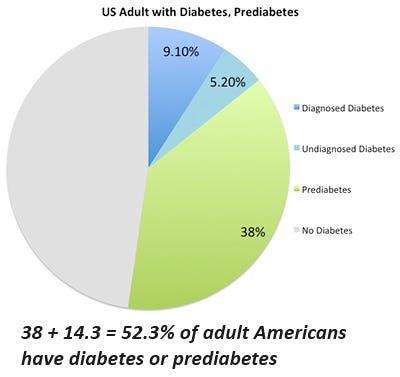 Collected: 2025-10-16 20:05:03 +0000
Analyzed: 2025-10-16 21:20:51 +0000
## Overall takeaway
GDP fails to capture true societal well-being; a shift to quality-of-life metrics is essential for accurate economic assessment.
## Conceptual model
- GDP is an outdated metric for societal health.
- Quality of life indicators reflect true well-being.
- Rising inequality and health issues signal economic distress.
- Public trust is crucial for a stable economy.
- Unpaid work and environmental factors matter in assessments.
## Next steps (optional)
- Explore alternative economic metrics focused on well-being.
- Engage in discussions about redefining success beyond GDP.
- Advocate for policies that prioritize quality of life.
## Short summary
The article argues that relying on GDP as an economic metric misrepresents true societal well-being, advocating for a focus on quality-of-life indicators. It highlights issues like rising inequality, health decline, and eroded public trust, suggesting that the U.S. economy would be in a depression if measured by these criteria.
## Comprehensive summary
- • The article critiques GDP as an outdated and misleading economic metric, highlighting its inadequacy in representing true societal well-being.
- • Economist Joseph Stiglitz advocates for a shift towards measuring well-being rather than mere economic transactions, emphasizing the urgency of this overhaul.
- • Rising income and wealth inequality, coupled with the rapid impact of artificial intelligence on jobs, complicate the economic landscape for Americans.
- • Public trust in the U.S. government has drastically declined, with many citizens feeling abandoned amidst pressing challenges such as the rising cost of living.
- • Current economic data is criticized for failing to account for unpaid work and essential aspects like clean air and functional ecosystems, distorting policymakers' views.
- • The dominance of "hard-to-measure" sectors of the economy (81.5%) underscores the inadequacy of traditional metrics focused on industrial-age activities.
- • Key aspects of quality of life include physical and mental health, social trust, community stability, and financial security.
- • Rising rates of diabetes, obesity, teen depression, and loneliness indicate a decline in overall health and social connections among Americans.
- • Student loan debt has surged, reflecting economic precarity and eroding middle-class security and opportunities for young adults.
- • A stark wealth-income divide exists, with the top 10% accumulating most of the nation's resources, further exacerbated by declining wage shares.
- • The distribution of financial wealth shows that the bottom 50% hold minimal assets, indicating severe economic inequalities.
- • Overall, if quality of life were the metric, the U.S. economy would be rated as being in a deep depression, undermining optimistic GDP narratives.
## Entities
- keyword: trust, life, social, americans, income, healthy, wealth, health, measure, economy
- location: U.S., AI, Amazon, Washington, Atlantic, US
- organization: Amazon Associate, Brookings Institution, HDL, Foreign Affairs
- person: Teen, Coyle, AI, Joseph Stiglitz
## Related content
1. When the tide goes out, we know who is swimming naked, by Hua Bin - The Unz Review
Why: similarity 0.92
Summary: • **Trump's tariff strategy has failed**: After exempting China-made electronics from his 125% "reciprocal" tariff (representing 25% of China's US exports), Trump essentially capitulated in his trade war with China
• **China's economic position is strong**: The US represents only 12.5% of China's exports (down from 20% in 2018) and 2.3% of China's GDP; China can offset lost US trade through domestic consumption and exports to other markets
• **Trade dependency favors China**: The US relies on China for 532 key product categories (4x the level in 2000), while China's reliance on US products halved; China controls critical supplies including rare earths and 95% of US antibiotics
• **Political dynamics favor China**: Xi has universal domestic support to resist Trump, while US financial market chaos and inflation concerns erode Trump's political capital; Beijing treats Trump with disdain despite his claims of friendship
• **Limited victories with weaker nations**: Trump will extract concessions from countries like Vietnam, Japan, and Mexico through coercion, though these could have been achieved through normal bilateral negotiations
• **US reindustrialization is unlikely**: Tariffs won't address root causes including financialization, poor infrastructure, unskilled workforce, short-term corporate focus, and the cultural shift away from manufacturing
• **Structural barriers remain**: The US lacks the engineering expertise, supply chains, and trillions in investment needed for meaningful reindustrialization, with its economy too heavily financialized to reverse course
URL:
Collected: 2025-10-16 20:05:03 +0000
Analyzed: 2025-10-16 21:20:51 +0000
## Overall takeaway
GDP fails to capture true societal well-being; a shift to quality-of-life metrics is essential for accurate economic assessment.
## Conceptual model
- GDP is an outdated metric for societal health.
- Quality of life indicators reflect true well-being.
- Rising inequality and health issues signal economic distress.
- Public trust is crucial for a stable economy.
- Unpaid work and environmental factors matter in assessments.
## Next steps (optional)
- Explore alternative economic metrics focused on well-being.
- Engage in discussions about redefining success beyond GDP.
- Advocate for policies that prioritize quality of life.
## Short summary
The article argues that relying on GDP as an economic metric misrepresents true societal well-being, advocating for a focus on quality-of-life indicators. It highlights issues like rising inequality, health decline, and eroded public trust, suggesting that the U.S. economy would be in a depression if measured by these criteria.
## Comprehensive summary
- • The article critiques GDP as an outdated and misleading economic metric, highlighting its inadequacy in representing true societal well-being.
- • Economist Joseph Stiglitz advocates for a shift towards measuring well-being rather than mere economic transactions, emphasizing the urgency of this overhaul.
- • Rising income and wealth inequality, coupled with the rapid impact of artificial intelligence on jobs, complicate the economic landscape for Americans.
- • Public trust in the U.S. government has drastically declined, with many citizens feeling abandoned amidst pressing challenges such as the rising cost of living.
- • Current economic data is criticized for failing to account for unpaid work and essential aspects like clean air and functional ecosystems, distorting policymakers' views.
- • The dominance of "hard-to-measure" sectors of the economy (81.5%) underscores the inadequacy of traditional metrics focused on industrial-age activities.
- • Key aspects of quality of life include physical and mental health, social trust, community stability, and financial security.
- • Rising rates of diabetes, obesity, teen depression, and loneliness indicate a decline in overall health and social connections among Americans.
- • Student loan debt has surged, reflecting economic precarity and eroding middle-class security and opportunities for young adults.
- • A stark wealth-income divide exists, with the top 10% accumulating most of the nation's resources, further exacerbated by declining wage shares.
- • The distribution of financial wealth shows that the bottom 50% hold minimal assets, indicating severe economic inequalities.
- • Overall, if quality of life were the metric, the U.S. economy would be rated as being in a deep depression, undermining optimistic GDP narratives.
## Entities
- keyword: trust, life, social, americans, income, healthy, wealth, health, measure, economy
- location: U.S., AI, Amazon, Washington, Atlantic, US
- organization: Amazon Associate, Brookings Institution, HDL, Foreign Affairs
- person: Teen, Coyle, AI, Joseph Stiglitz
## Related content
1. When the tide goes out, we know who is swimming naked, by Hua Bin - The Unz Review
Why: similarity 0.92
Summary: • **Trump's tariff strategy has failed**: After exempting China-made electronics from his 125% "reciprocal" tariff (representing 25% of China's US exports), Trump essentially capitulated in his trade war with China
• **China's economic position is strong**: The US represents only 12.5% of China's exports (down from 20% in 2018) and 2.3% of China's GDP; China can offset lost US trade through domestic consumption and exports to other markets
• **Trade dependency favors China**: The US relies on China for 532 key product categories (4x the level in 2000), while China's reliance on US products halved; China controls critical supplies including rare earths and 95% of US antibiotics
• **Political dynamics favor China**: Xi has universal domestic support to resist Trump, while US financial market chaos and inflation concerns erode Trump's political capital; Beijing treats Trump with disdain despite his claims of friendship
• **Limited victories with weaker nations**: Trump will extract concessions from countries like Vietnam, Japan, and Mexico through coercion, though these could have been achieved through normal bilateral negotiations
• **US reindustrialization is unlikely**: Tariffs won't address root causes including financialization, poor infrastructure, unskilled workforce, short-term corporate focus, and the cultural shift away from manufacturing
• **Structural barriers remain**: The US lacks the engineering expertise, supply chains, and trillions in investment needed for meaningful reindustrialization, with its economy too heavily financialized to reverse course
URL:  2. MoA - Survival Or Looting? What Trump's Revolution Is Really About
Why: similarity 0.91
Summary: • Trump's team views the current U.S. path of increasing deficits and debt as unsustainable, believing the dollar as reserve currency harms the country more than helps it
• They see declining manufacturing as a symptom of larger economic disease and believe destroying the old system is necessary before building a new one, despite knowing the process will be painful
• Vice-President Vance likens the reserve currency to a "parasite" that has eaten away at the U.S. economy by forcing an overvalued dollar
• Trump's tariff strategy was pre-planned over years as part of a complex framework to reduce debt, generate revenue, and coerce manufacturing back to America
• The administration aims to reshape the global economic order by prioritizing America's national interests through wide-ranging tariffs and "aggressive unilateralism"
• Alternative interpretation: This is a reactionary revolution by the rich to cement their advantaged position and facilitate elite asset grabs, similar to Russia in the 1990s
• Multi-billionaires surrounding Trump are pushing these policies while he slashes vital institution budgets and enriches himself through cryptocurrency ventures
• The international strategy appears to be subjecting both U.S. population and allies to long-term economic pain, hoping America can endure better than the emerging multipolar world
• Trump's tariffs against China will likely backfire similar to European sanctions on Russia - targeted countries will handle the onslaught while initiators deeply hurt their own populations
URL:
3. From Dystopia to Utopia
Why: similarity 0.91
Summary: - **Concept of Reality**: The document explores the idea that our universe is a virtual reality simulation shaped by a larger consciousness system, as proposed by Tom Campbell in "My Big Theory of Everything".
- **Transition from Dystopia to Utopia**: It presents a vision for moving from a dystopian society characterized by greed and control to a utopian one based on cooperation and compassion, integrating AI, Bitcoin, and consciousness.
- **Dystopian Trends**: Mo Gawdat warns of an impending 12 to 15-year period of increasing dystopia, driven by power struggles and AI exacerbating human flaws, leading to surveillance, economic upheaval, and conflict.
- **Human Leadership Flaws**: Human leaders, motivated by ego and scarcity, contribute to inequality and environmental degradation, perpetuating cycles of conflict and exploitation.
- **Role of AI in Utopia**: AI could replace self-interested leaders by making ethical decisions, maximizing global wellbeing, and redefining economics to eliminate scarcity through automation and Universal Basic Income.
- **Fostering Human Connection**: AI can enhance human connections by automating mundane tasks, allowing for engagement in meaningful activities, thus promoting love and cooperation.
- **Bitcoin's Decentralizing Power**: Bitcoin can dismantle centralized financial control, providing transparency, economic freedom, and accountability, countering elite manipulation.
- **Consciousness as Foundation**: Recognizing consciousness as primary can shift societal values from competition to cooperation, fostering a compassionate, low-entropy society.
- **Challenges to Transition**: The entrenched materialist worldview poses significant barriers to this shift, necessitating a re-education towards consciousness as the driver of reality.
- **Practical Steps**: The document suggests
URL:
2. MoA - Survival Or Looting? What Trump's Revolution Is Really About
Why: similarity 0.91
Summary: • Trump's team views the current U.S. path of increasing deficits and debt as unsustainable, believing the dollar as reserve currency harms the country more than helps it
• They see declining manufacturing as a symptom of larger economic disease and believe destroying the old system is necessary before building a new one, despite knowing the process will be painful
• Vice-President Vance likens the reserve currency to a "parasite" that has eaten away at the U.S. economy by forcing an overvalued dollar
• Trump's tariff strategy was pre-planned over years as part of a complex framework to reduce debt, generate revenue, and coerce manufacturing back to America
• The administration aims to reshape the global economic order by prioritizing America's national interests through wide-ranging tariffs and "aggressive unilateralism"
• Alternative interpretation: This is a reactionary revolution by the rich to cement their advantaged position and facilitate elite asset grabs, similar to Russia in the 1990s
• Multi-billionaires surrounding Trump are pushing these policies while he slashes vital institution budgets and enriches himself through cryptocurrency ventures
• The international strategy appears to be subjecting both U.S. population and allies to long-term economic pain, hoping America can endure better than the emerging multipolar world
• Trump's tariffs against China will likely backfire similar to European sanctions on Russia - targeted countries will handle the onslaught while initiators deeply hurt their own populations
URL:
3. From Dystopia to Utopia
Why: similarity 0.91
Summary: - **Concept of Reality**: The document explores the idea that our universe is a virtual reality simulation shaped by a larger consciousness system, as proposed by Tom Campbell in "My Big Theory of Everything".
- **Transition from Dystopia to Utopia**: It presents a vision for moving from a dystopian society characterized by greed and control to a utopian one based on cooperation and compassion, integrating AI, Bitcoin, and consciousness.
- **Dystopian Trends**: Mo Gawdat warns of an impending 12 to 15-year period of increasing dystopia, driven by power struggles and AI exacerbating human flaws, leading to surveillance, economic upheaval, and conflict.
- **Human Leadership Flaws**: Human leaders, motivated by ego and scarcity, contribute to inequality and environmental degradation, perpetuating cycles of conflict and exploitation.
- **Role of AI in Utopia**: AI could replace self-interested leaders by making ethical decisions, maximizing global wellbeing, and redefining economics to eliminate scarcity through automation and Universal Basic Income.
- **Fostering Human Connection**: AI can enhance human connections by automating mundane tasks, allowing for engagement in meaningful activities, thus promoting love and cooperation.
- **Bitcoin's Decentralizing Power**: Bitcoin can dismantle centralized financial control, providing transparency, economic freedom, and accountability, countering elite manipulation.
- **Consciousness as Foundation**: Recognizing consciousness as primary can shift societal values from competition to cooperation, fostering a compassionate, low-entropy society.
- **Challenges to Transition**: The entrenched materialist worldview poses significant barriers to this shift, necessitating a re-education towards consciousness as the driver of reality.
- **Practical Steps**: The document suggests
URL:  4. Labored Daze - Charles Hugh Smith's Substack
Why: similarity 0.91
Summary: - • The document critiques the labor conditions in the U.S. and China, asserting that both countries, despite their "Great Power" status, poorly treat their workforces.
- • It emphasizes that evaluating workforce well-being should include the overall quality of life, with childcare being a crucial factor for working parents.
- • China's declining birthrate has prompted modest initiatives to support parents, while the U.S. continues to burden families with high childcare costs.
- • Both countries' fertility rates are below the replacement level, indicating a potential demographic crisis.
- • The article argues that the treatment of small-scale farmers and agricultural workers also reflects poorly on these "Great Powers."
- • It highlights how both nations view their workforce primarily as a resource to be exploited for economic growth rather than valuing their contributions.
- • Concepts like "laying flat" and "let it rot" illustrate workforce disillusionment with the rat race and materialism, rejecting unfulfilling societal promises.
- • The narrative suggests that the AI boom represents a further exploitation of workers, prioritizing profit over human welfare.
- • It notes the widening gap in income distribution, where the top earners benefit disproportionately while the majority face rising living costs and stagnant wages.
- • The text concludes with a sense of resignation among the workforce, opting for financial nihilism and disengagement in response to false promises and exploitation.
URL:
4. Labored Daze - Charles Hugh Smith's Substack
Why: similarity 0.91
Summary: - • The document critiques the labor conditions in the U.S. and China, asserting that both countries, despite their "Great Power" status, poorly treat their workforces.
- • It emphasizes that evaluating workforce well-being should include the overall quality of life, with childcare being a crucial factor for working parents.
- • China's declining birthrate has prompted modest initiatives to support parents, while the U.S. continues to burden families with high childcare costs.
- • Both countries' fertility rates are below the replacement level, indicating a potential demographic crisis.
- • The article argues that the treatment of small-scale farmers and agricultural workers also reflects poorly on these "Great Powers."
- • It highlights how both nations view their workforce primarily as a resource to be exploited for economic growth rather than valuing their contributions.
- • Concepts like "laying flat" and "let it rot" illustrate workforce disillusionment with the rat race and materialism, rejecting unfulfilling societal promises.
- • The narrative suggests that the AI boom represents a further exploitation of workers, prioritizing profit over human welfare.
- • It notes the widening gap in income distribution, where the top earners benefit disproportionately while the majority face rising living costs and stagnant wages.
- • The text concludes with a sense of resignation among the workforce, opting for financial nihilism and disengagement in response to false promises and exploitation.
URL: 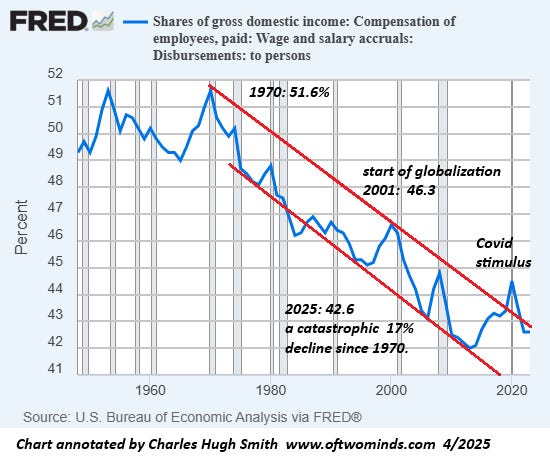 5. (2) Before the Deluge, Part 3 - by Rudy Havenstein
Why: similarity 0.91
Summary: • The final installment of a 3-part series examining "Before the Deluge" focuses on Germany's hyperinflation period (1918-1923) and its devastating psychological impact on the German people
• While wealthy businessmen prospered during the inflation, the masses were financially ruined, creating extreme social inequality and resentment
• Foreign currency holders bought up German assets cheaply - entire Berlin streets were purchased by Czechs, French, and Swiss buyers who could acquire houses worth 50,000 marks for just $500
• Hugo Stinnes exemplified the inflation profiteers - starting as a coal clerk, he built Europe's largest industrial trust by borrowing money, buying companies with depreciated currency, and exploiting his coal mines' foreign currency earnings to acquire over 2,000 companies
• The inflation's causes remain debated: nationalists blamed Allied reparations, while critics accused the German government and industrialists of deliberately destroying the currency to escape debts and reparations obligations
• Reichsbank President Rudolf Havenstein mindlessly printed money, boasting of producing 46 billion marks daily while the Reichsrat failed to object - leading one observer to suggest he should be hanged for incompetence
• German economists uniformly misunderstood monetary theory due to their isolation from classical economics, following instead the "historic school" which benefited those avoiding reparations and businessmen like Stinnes who financed operations through borrowing
• The population initially accepted inflation as normal, developing an "inflation psychology" where rising prices and wages seemed harmless compared to tax increases
URL:
5. (2) Before the Deluge, Part 3 - by Rudy Havenstein
Why: similarity 0.91
Summary: • The final installment of a 3-part series examining "Before the Deluge" focuses on Germany's hyperinflation period (1918-1923) and its devastating psychological impact on the German people
• While wealthy businessmen prospered during the inflation, the masses were financially ruined, creating extreme social inequality and resentment
• Foreign currency holders bought up German assets cheaply - entire Berlin streets were purchased by Czechs, French, and Swiss buyers who could acquire houses worth 50,000 marks for just $500
• Hugo Stinnes exemplified the inflation profiteers - starting as a coal clerk, he built Europe's largest industrial trust by borrowing money, buying companies with depreciated currency, and exploiting his coal mines' foreign currency earnings to acquire over 2,000 companies
• The inflation's causes remain debated: nationalists blamed Allied reparations, while critics accused the German government and industrialists of deliberately destroying the currency to escape debts and reparations obligations
• Reichsbank President Rudolf Havenstein mindlessly printed money, boasting of producing 46 billion marks daily while the Reichsrat failed to object - leading one observer to suggest he should be hanged for incompetence
• German economists uniformly misunderstood monetary theory due to their isolation from classical economics, following instead the "historic school" which benefited those avoiding reparations and businessmen like Stinnes who financed operations through borrowing
• The population initially accepted inflation as normal, developing an "inflation psychology" where rising prices and wages seemed harmless compared to tax increases
URL:  6. How Keynesians Got The U.S. Economy Wrong… Again | dlacalle.com
Why: similarity 0.91
Summary: • **Keynesian analysts incorrectly predicted US economic collapse** in early 2025, warning that high inflation, interest rates, and government deficits would trigger recession
• **GDP growth estimates surged upward** after Q1 contraction of 0.5%; Q2 projections rose to 3.5% (Trading Economics) and 2.6% (Atlanta Fed), up from earlier 1.3% consensus
• **Key growth drivers included**: consumer spending outpacing inflation, fixed investment rising 7.6% (strongest since mid-2023), and businesses front-loading imports ahead of tariffs
• **Inflation expectations fell sharply** to 3% for one-year ahead (lowest in 5 months), with three-year and five-year expectations at 3.0% and 2.6% respectively
• **Energy and shelter costs declined significantly**, with gasoline down 12% year-over-year, fuel oil down 8.6%, and shelter inflation easing to 3.9%
• **June 2025 posted first monthly budget surplus since 2017** at $27 billion, defying consensus expectations of a $40 billion deficit
• **Fiscal improvements driven by**: $187 billion spending reduction, customs duties quadrupling to $27 billion, and 13% increase in receipts while expenditures dropped 7%
• **Non-defense discretionary spending slashed by 23%** ($163 billion) to lowest level since 2017, demonstrating fiscal restraint
• **Author argues Keynesian forecasts fail**
URL:
7. Yakihonne | Rigged Republic
Why: similarity 0.91
Summary: - • The document explores how fiat money has eroded America's foundational economic structures and presents solutions for reform.
- • Money is defined as a tool for human coordination, with sound money systems promoting honest work and voluntary cooperation.
- • Fiat money introduces malinvestment, creating artificial credit booms and leading to economic distortions and inequality.
- • The Cantillon effect illustrates how new money benefits elites while diminishing the purchasing power of the general populace.
- • Game theory is used to analyze how fiat systems create zero-sum dynamics, fostering conflict and wealth transfer from the masses to elites.
- • The Federal Reserve's establishment in 1913 enabled unchecked credit creation and speculative financialization, deviating from constitutional monetary control.
- • This shift incentivized short-term growth over genuine productivity, leading to economic cycles characterized by inevitable defaults and inflation.
- • The Federal Reserve's actions contributed to the Great Depression, exacerbating societal issues and leading to significant regulatory interventions like the New Deal.
- • Social programs like Social Security emerged as unsustainable schemes, relying on perpetual population growth which is no longer viable.
- • Widespread cultural erosion and distrust followed, transforming cooperative economies into resentful, state-dependent systems.
- • World War II accelerated the centralization and financialization of the economy, further embedding the Federal Reserve's influence over monetary policy.
- • The document argues that transitioning to sound money, such as Bitcoin, is crucial for restoring a fair and decentralized economic future.
URL: https://yakihonne.com/article/BodhiSATtva@primal.net/rigged-republic
## Pointed questions for discussion
- What alternative metrics could effectively replace GDP?
- How can we address the growing inequality in society?
- In what ways can public trust be rebuilt in economic institutions?
## Sentiment
Score: -0.80
## Provider
OpenRouter / openai/gpt-4o-mini
Shared via
6. How Keynesians Got The U.S. Economy Wrong… Again | dlacalle.com
Why: similarity 0.91
Summary: • **Keynesian analysts incorrectly predicted US economic collapse** in early 2025, warning that high inflation, interest rates, and government deficits would trigger recession
• **GDP growth estimates surged upward** after Q1 contraction of 0.5%; Q2 projections rose to 3.5% (Trading Economics) and 2.6% (Atlanta Fed), up from earlier 1.3% consensus
• **Key growth drivers included**: consumer spending outpacing inflation, fixed investment rising 7.6% (strongest since mid-2023), and businesses front-loading imports ahead of tariffs
• **Inflation expectations fell sharply** to 3% for one-year ahead (lowest in 5 months), with three-year and five-year expectations at 3.0% and 2.6% respectively
• **Energy and shelter costs declined significantly**, with gasoline down 12% year-over-year, fuel oil down 8.6%, and shelter inflation easing to 3.9%
• **June 2025 posted first monthly budget surplus since 2017** at $27 billion, defying consensus expectations of a $40 billion deficit
• **Fiscal improvements driven by**: $187 billion spending reduction, customs duties quadrupling to $27 billion, and 13% increase in receipts while expenditures dropped 7%
• **Non-defense discretionary spending slashed by 23%** ($163 billion) to lowest level since 2017, demonstrating fiscal restraint
• **Author argues Keynesian forecasts fail**
URL:
7. Yakihonne | Rigged Republic
Why: similarity 0.91
Summary: - • The document explores how fiat money has eroded America's foundational economic structures and presents solutions for reform.
- • Money is defined as a tool for human coordination, with sound money systems promoting honest work and voluntary cooperation.
- • Fiat money introduces malinvestment, creating artificial credit booms and leading to economic distortions and inequality.
- • The Cantillon effect illustrates how new money benefits elites while diminishing the purchasing power of the general populace.
- • Game theory is used to analyze how fiat systems create zero-sum dynamics, fostering conflict and wealth transfer from the masses to elites.
- • The Federal Reserve's establishment in 1913 enabled unchecked credit creation and speculative financialization, deviating from constitutional monetary control.
- • This shift incentivized short-term growth over genuine productivity, leading to economic cycles characterized by inevitable defaults and inflation.
- • The Federal Reserve's actions contributed to the Great Depression, exacerbating societal issues and leading to significant regulatory interventions like the New Deal.
- • Social programs like Social Security emerged as unsustainable schemes, relying on perpetual population growth which is no longer viable.
- • Widespread cultural erosion and distrust followed, transforming cooperative economies into resentful, state-dependent systems.
- • World War II accelerated the centralization and financialization of the economy, further embedding the Federal Reserve's influence over monetary policy.
- • The document argues that transitioning to sound money, such as Bitcoin, is crucial for restoring a fair and decentralized economic future.
URL: https://yakihonne.com/article/BodhiSATtva@primal.net/rigged-republic
## Pointed questions for discussion
- What alternative metrics could effectively replace GDP?
- How can we address the growing inequality in society?
- In what ways can public trust be rebuilt in economic institutions?
## Sentiment
Score: -0.80
## Provider
OpenRouter / openai/gpt-4o-mini
Shared via
If We Measured the Economy by Quality-of-Life Instead of GDP, We'd Be In a Depression
GDP is like collecting data on passenger satisfaction with the dessert cart on the Titanic and declaring everyone is delighted as the great ship se...
The Unz Review
When the tide goes out, we know who is swimming naked
Survival Or Looting? What Trump’s Revolution Is Really About – Moon of Alabama
From Dystopia to Utopia
Harnessing AI, Bitcoin, and Consciousness for a Compassionate Future
Labored Daze
In the labored daze of AI hype and GDP "growth," few seem to notice the workforce is tired of being exploited as an uncomplaining resource.

Before the Deluge, Part 3
The big industrialists stood to gain - though the masses of the people were financially ruined.
How Keynesians Got The U.S. Economy Wrong… Again | dlacalle.com
Memetic Research Laboratories LLC
Memetic Research Laboratories LLC - Privacy-focused technology for digital content management and decentralized communication