
# Comprehensive Analysis
Title: Colombia accuses US of starting a ‘war’ — RT World News
URL: 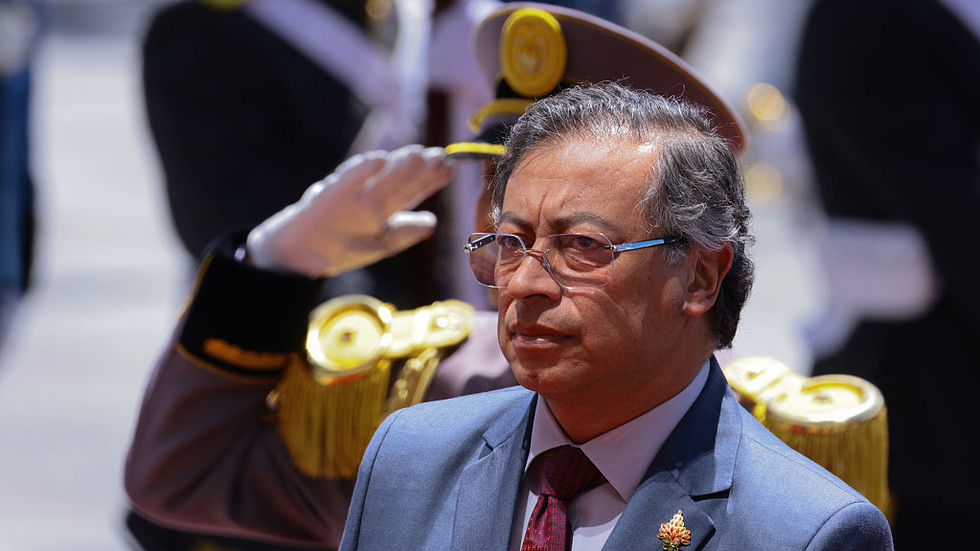 Collected: 2025-10-09 18:50:37 +0000
Analyzed: 2025-10-09 19:40:02 +0000
## Overall takeaway
Colombian President Petro's accusations against the US highlight tensions over anti-drug operations and regional control.
## Conceptual model
- Petro claims US actions are a disguised war.
- White House insists strikes target drug trafficking.
- Historical US-Colombia relations are evolving.
- Petro seeks regional cooperation with Venezuela.
- US strategy in Latin America is shifting.
## Next steps (optional)
- Monitor developments in US-Colombia relations.
- Explore implications for regional cooperation in Latin America.
- Assess the impact of US drug policy on local populations.
## Short summary
Colombian President Gustavo Petro accused the US of waging a disguised war against Colombia and Venezuela under the pretext of an anti-drug campaign. The White House refuted these claims as baseless, asserting the strikes were aimed at drug trafficking operations linked to President Nicolas Maduro.
## Comprehensive summary
- Colombian President Gustavo Petro accused the US of instigating a war in the Caribbean disguised as an anti-drug campaign.
- Petro claimed that recent US airstrikes off the coast of Venezuela resulted in the deaths of Colombian citizens and are not genuinely aimed at narcotics but rather at controlling regional resources.
- The White House dismissed Petro's allegations as “baseless,” asserting that the strikes were part of efforts to combat drug trafficking linked to Venezuelan President Nicolas Maduro.
- The US has reportedly sunk at least four boats alleged to be involved in narcotics smuggling, resulting in over 20 fatalities.
- Petro emphasized that the attacks represent aggression against all of Latin America, arguing, “There is no war against smuggling; there is a war for oil.”
- Historically, Colombia has been a close ally of the US, particularly through the Plan Colombia initiative which provided substantial aid and military support.
- The relationship has evolved since Petro took office in 2022, as he seeks to restore diplomatic ties with Venezuela and promote a more independent foreign policy focused on regional cooperation.
## Entities
- keyword: colombian, caribbean, wrote, venezuela, petro, campaign, colombia, narcotics, claimed, president
- location: Colombian, Caribbean, Caracas, Latin America, Colombia, Venezuela, US, Washington, South America
- organization: Reuters, Plan Colombia, White House
- person: Maduro, Gustavo Petro, Nicolas Maduro, Petro
## Related content
1. President Trump Should Return to an ‘America First’ Foreign Policy - The Ron Paul Institute for Peace & Prosperity
Why: similarity 0.91
Summary: - • The document argues that President Trump should revert to an "America First" foreign policy after four years of confrontational policies under President Biden.
- • Trump was elected with a promise to avoid new wars and withdraw from existing ones, but his approval ratings are slipping as he fails to fulfill these promises.
- • On the Ukraine conflict, Trump initially recognized it as "Joe Biden’s war" but has since engaged in the situation, undermining his own stance on non-involvement.
- • The author emphasizes that true disengagement would involve a complete withdrawal from conflicts, rather than trying to mediate while supporting one side.
- • Trump's foreign policy towards Israel and Gaza has not diverged from Biden’s, leading to increased dissatisfaction among Americans regarding U.S. financial and military support for Israel amid ongoing violence.
- • The piece criticizes Trump's return to an aggressive Latin America policy, particularly regarding Venezuela, warning against potential military confrontation and questioning the effectiveness of sanctions.
- • The author calls for Trump to end U.S. support for Israel and stop attempts to overthrow foreign leaders, arguing that such policies are not in America's interest.
- • A fundamental tenet of "America First" is to "just come home," emphasizing that disengagement from foreign conflicts is crucial for fulfilling Trump's original promises to the American people.
- • The document concludes with a call for Trump to shift his foreign policy approach and prioritize American interests over international entanglements.
URL:
Collected: 2025-10-09 18:50:37 +0000
Analyzed: 2025-10-09 19:40:02 +0000
## Overall takeaway
Colombian President Petro's accusations against the US highlight tensions over anti-drug operations and regional control.
## Conceptual model
- Petro claims US actions are a disguised war.
- White House insists strikes target drug trafficking.
- Historical US-Colombia relations are evolving.
- Petro seeks regional cooperation with Venezuela.
- US strategy in Latin America is shifting.
## Next steps (optional)
- Monitor developments in US-Colombia relations.
- Explore implications for regional cooperation in Latin America.
- Assess the impact of US drug policy on local populations.
## Short summary
Colombian President Gustavo Petro accused the US of waging a disguised war against Colombia and Venezuela under the pretext of an anti-drug campaign. The White House refuted these claims as baseless, asserting the strikes were aimed at drug trafficking operations linked to President Nicolas Maduro.
## Comprehensive summary
- Colombian President Gustavo Petro accused the US of instigating a war in the Caribbean disguised as an anti-drug campaign.
- Petro claimed that recent US airstrikes off the coast of Venezuela resulted in the deaths of Colombian citizens and are not genuinely aimed at narcotics but rather at controlling regional resources.
- The White House dismissed Petro's allegations as “baseless,” asserting that the strikes were part of efforts to combat drug trafficking linked to Venezuelan President Nicolas Maduro.
- The US has reportedly sunk at least four boats alleged to be involved in narcotics smuggling, resulting in over 20 fatalities.
- Petro emphasized that the attacks represent aggression against all of Latin America, arguing, “There is no war against smuggling; there is a war for oil.”
- Historically, Colombia has been a close ally of the US, particularly through the Plan Colombia initiative which provided substantial aid and military support.
- The relationship has evolved since Petro took office in 2022, as he seeks to restore diplomatic ties with Venezuela and promote a more independent foreign policy focused on regional cooperation.
## Entities
- keyword: colombian, caribbean, wrote, venezuela, petro, campaign, colombia, narcotics, claimed, president
- location: Colombian, Caribbean, Caracas, Latin America, Colombia, Venezuela, US, Washington, South America
- organization: Reuters, Plan Colombia, White House
- person: Maduro, Gustavo Petro, Nicolas Maduro, Petro
## Related content
1. President Trump Should Return to an ‘America First’ Foreign Policy - The Ron Paul Institute for Peace & Prosperity
Why: similarity 0.91
Summary: - • The document argues that President Trump should revert to an "America First" foreign policy after four years of confrontational policies under President Biden.
- • Trump was elected with a promise to avoid new wars and withdraw from existing ones, but his approval ratings are slipping as he fails to fulfill these promises.
- • On the Ukraine conflict, Trump initially recognized it as "Joe Biden’s war" but has since engaged in the situation, undermining his own stance on non-involvement.
- • The author emphasizes that true disengagement would involve a complete withdrawal from conflicts, rather than trying to mediate while supporting one side.
- • Trump's foreign policy towards Israel and Gaza has not diverged from Biden’s, leading to increased dissatisfaction among Americans regarding U.S. financial and military support for Israel amid ongoing violence.
- • The piece criticizes Trump's return to an aggressive Latin America policy, particularly regarding Venezuela, warning against potential military confrontation and questioning the effectiveness of sanctions.
- • The author calls for Trump to end U.S. support for Israel and stop attempts to overthrow foreign leaders, arguing that such policies are not in America's interest.
- • A fundamental tenet of "America First" is to "just come home," emphasizing that disengagement from foreign conflicts is crucial for fulfilling Trump's original promises to the American people.
- • The document concludes with a call for Trump to shift his foreign policy approach and prioritize American interests over international entanglements.
URL:  2. (2) Consumers are collapsing - by Rudy Havenstein
Why: similarity 0.90
Summary: • The document discusses the alarming trend of consumer collapse, particularly highlighting the discrepancy between the experiences of regular consumers and those portrayed in mainstream media like CNBC.
• It cites troubling statistics from major corporations, revealing that employees retiring at 65 only receive pension checks for an average of 17-18 months due to health issues stemming from work-related stress.
• In contrast, those who retire earlier, around age 55, typically enjoy much longer retirements, averaging over 25 years.
• The author expresses skepticism towards mainstream narratives, advocating for a deeper investigation into economic realities, which often contradict accepted views.
• A government shutdown has halted the release of economic data, raising concerns about the transparency and accuracy of economic reporting.
• Quotes from Nomi Prins emphasize the Federal Reserve's focus on Wall Street rather than individual citizens, pointing out that the growing national debt has not benefited the general populace.
• The document discusses the concept of inflation as a hidden tax imposed by the Federal Reserve, which disproportionately affects the public.
• Alex J. Pollock argues for Congressional oversight of the Fed, asserting that it should not operate independently from governmental accountability regarding monetary policy.
• The document touches on broader issues of surveillance and civil liberties, criticizing the political focus on certain domestic threats while ignoring larger systemic issues.
• It concludes with reflections on market dynamics, noting the peculiarities of private equity and the dangers of excessive leverage in trading, drawing parallels to past financial crises.
URL:
2. (2) Consumers are collapsing - by Rudy Havenstein
Why: similarity 0.90
Summary: • The document discusses the alarming trend of consumer collapse, particularly highlighting the discrepancy between the experiences of regular consumers and those portrayed in mainstream media like CNBC.
• It cites troubling statistics from major corporations, revealing that employees retiring at 65 only receive pension checks for an average of 17-18 months due to health issues stemming from work-related stress.
• In contrast, those who retire earlier, around age 55, typically enjoy much longer retirements, averaging over 25 years.
• The author expresses skepticism towards mainstream narratives, advocating for a deeper investigation into economic realities, which often contradict accepted views.
• A government shutdown has halted the release of economic data, raising concerns about the transparency and accuracy of economic reporting.
• Quotes from Nomi Prins emphasize the Federal Reserve's focus on Wall Street rather than individual citizens, pointing out that the growing national debt has not benefited the general populace.
• The document discusses the concept of inflation as a hidden tax imposed by the Federal Reserve, which disproportionately affects the public.
• Alex J. Pollock argues for Congressional oversight of the Fed, asserting that it should not operate independently from governmental accountability regarding monetary policy.
• The document touches on broader issues of surveillance and civil liberties, criticizing the political focus on certain domestic threats while ignoring larger systemic issues.
• It concludes with reflections on market dynamics, noting the peculiarities of private equity and the dangers of excessive leverage in trading, drawing parallels to past financial crises.
URL:  3. US War Department To Shift Focus From China To 'Threats' In Latin America | ZeroHedge
Why: similarity 0.89
Summary: - • The US War Department is proposing a strategic shift from focusing on China to addressing perceived threats in Latin America and the Caribbean.
- • This change is outlined in a draft of the latest National Defense Strategy, prioritizing domestic and regional missions over countering adversaries like Beijing and Moscow.
- • The shift coincides with Trump’s executive order to rename the Department of Defense to "War Department" to better reflect its mission.
- • This policy change may provoke backlash from both Republican and Democratic politicians who advocate for strong measures against China.
- • A source familiar with the draft indicated that this transition represents a significant change for the US and its allies, raising doubts about longstanding commitments.
- • Elbridge Colby, the War Department's policy chief, prepared the document, suggesting that the pivot toward the Western Hemisphere is already in progress.
- • The War Department has deployed National Guard troops to support police in major cities and established a militarized zone at the southern border with Mexico.
- • The policy shift could lead to the withdrawal of US troops from Europe and reductions in military aid to NATO allies, who now anticipate the departure of some of the 80,000 US troops stationed there.
- • The shift is set against the backdrop of escalating tensions with Venezuela, where Trump authorized military action against Venezuelan warplanes deemed threatening.
- • The US accuses Venezuela of being a source of drug trafficking, while Venezuelan President Maduro claims the US is attempting to destabilize his government.
URL:
4. CIA To Unleash 'Finely Tuned Machine' To Destroy Mexican Cartels | ZeroHedge
Why: similarity 0.89
Summary: • The CIA is establishing the Americas Counternarcotics Mission Center, combining counternarcotics and Western Hemisphere teams to create a "finely tuned machine" for dismantling Mexican drug cartels
• Deputy Director Michael Ellis (former Rumble general counsel) announced the agency will leverage 25+ years of expertise from targeting jihadist networks to disrupt cartels' international operations
• The Trump administration officially classified eight Latin American criminal groups as "foreign terrorist organizations," including Mexico's Sinaloa Cartel, Venezuela's Tren de Aragua, and El Salvador's MS-13
• The administration is considering drone strikes targeting Mexican cartels as part of a bold strategy to counter drug smuggling across the U.S. southern border, though no final decision has been made
• Ellis emphasized this is a "whole of government effort" but noted operations may remain covert due to their sensitive nature
• The CIA official described drug traffickers as "savvy, sophisticated" adversaries, with the agency looking "further upstream to identify those networks beyond our borders"
• Acting DEA Administrator Derek Maltz reported "historic, unprecedented action" in U.S.-Mexico drug enforcement collaboration during the early Trump administration months
• Mexico has deployed 10,000 troops to its northern border to inspect vehicles for fentanyl at crossing points as part of the collaborative effort
URL:
5. Venezuela’s Crypto Adoption Rises as Bolívar Crashes and Inflation Soars
Why: similarity 0.89
Summary: - **Rising Crypto Adoption**: Venezuelans are increasingly adopting cryptocurrencies as the bolívar loses over 70% of its value amid soaring inflation, reaching 229% in May 2023.
- **Utilization in Daily Life**: Both small family-run shops and large retailers now accept crypto payments, with platforms like Binance and Airtm facilitating this shift. Some businesses are even using stablecoins for employee salaries.
- **Global Ranking**: Venezuela ranks 13th globally for crypto adoption, reflecting a 110% increase in usage according to the Chainalysis 2024 Crypto Adoption Index.
- **Necessity for Crypto**: The crash of the bolívar has driven citizens to seek alternatives in crypto due to inflation, low wages, and banking complications.
- **Access Challenges**: US sanctions on Venezuela's financial sector create barriers for crypto use, as Binance restricts services for sanctioned individuals and banks. Connectivity issues further complicate access.
- **Government Inconsistencies**: Venezuela's government has a fluctuating stance on crypto, having launched the failed petro digital currency in 2018 and shutting down the main exchange regulator in 2023 due to corruption allegations.
- **Crypto Remittances**: In 2023, 9% of the $5.4 billion in remittances sent to Venezuela were in digital assets, showcasing a growing preference for crypto over traditional money transfer services like Western Union.
- **Geopolitical Tensions**: Rising military tensions between the US and Venezuela could impact the crypto landscape, as the US increases its military presence in the region while pursuing Venezuelan leaders.
URL:
3. US War Department To Shift Focus From China To 'Threats' In Latin America | ZeroHedge
Why: similarity 0.89
Summary: - • The US War Department is proposing a strategic shift from focusing on China to addressing perceived threats in Latin America and the Caribbean.
- • This change is outlined in a draft of the latest National Defense Strategy, prioritizing domestic and regional missions over countering adversaries like Beijing and Moscow.
- • The shift coincides with Trump’s executive order to rename the Department of Defense to "War Department" to better reflect its mission.
- • This policy change may provoke backlash from both Republican and Democratic politicians who advocate for strong measures against China.
- • A source familiar with the draft indicated that this transition represents a significant change for the US and its allies, raising doubts about longstanding commitments.
- • Elbridge Colby, the War Department's policy chief, prepared the document, suggesting that the pivot toward the Western Hemisphere is already in progress.
- • The War Department has deployed National Guard troops to support police in major cities and established a militarized zone at the southern border with Mexico.
- • The policy shift could lead to the withdrawal of US troops from Europe and reductions in military aid to NATO allies, who now anticipate the departure of some of the 80,000 US troops stationed there.
- • The shift is set against the backdrop of escalating tensions with Venezuela, where Trump authorized military action against Venezuelan warplanes deemed threatening.
- • The US accuses Venezuela of being a source of drug trafficking, while Venezuelan President Maduro claims the US is attempting to destabilize his government.
URL:
4. CIA To Unleash 'Finely Tuned Machine' To Destroy Mexican Cartels | ZeroHedge
Why: similarity 0.89
Summary: • The CIA is establishing the Americas Counternarcotics Mission Center, combining counternarcotics and Western Hemisphere teams to create a "finely tuned machine" for dismantling Mexican drug cartels
• Deputy Director Michael Ellis (former Rumble general counsel) announced the agency will leverage 25+ years of expertise from targeting jihadist networks to disrupt cartels' international operations
• The Trump administration officially classified eight Latin American criminal groups as "foreign terrorist organizations," including Mexico's Sinaloa Cartel, Venezuela's Tren de Aragua, and El Salvador's MS-13
• The administration is considering drone strikes targeting Mexican cartels as part of a bold strategy to counter drug smuggling across the U.S. southern border, though no final decision has been made
• Ellis emphasized this is a "whole of government effort" but noted operations may remain covert due to their sensitive nature
• The CIA official described drug traffickers as "savvy, sophisticated" adversaries, with the agency looking "further upstream to identify those networks beyond our borders"
• Acting DEA Administrator Derek Maltz reported "historic, unprecedented action" in U.S.-Mexico drug enforcement collaboration during the early Trump administration months
• Mexico has deployed 10,000 troops to its northern border to inspect vehicles for fentanyl at crossing points as part of the collaborative effort
URL:
5. Venezuela’s Crypto Adoption Rises as Bolívar Crashes and Inflation Soars
Why: similarity 0.89
Summary: - **Rising Crypto Adoption**: Venezuelans are increasingly adopting cryptocurrencies as the bolívar loses over 70% of its value amid soaring inflation, reaching 229% in May 2023.
- **Utilization in Daily Life**: Both small family-run shops and large retailers now accept crypto payments, with platforms like Binance and Airtm facilitating this shift. Some businesses are even using stablecoins for employee salaries.
- **Global Ranking**: Venezuela ranks 13th globally for crypto adoption, reflecting a 110% increase in usage according to the Chainalysis 2024 Crypto Adoption Index.
- **Necessity for Crypto**: The crash of the bolívar has driven citizens to seek alternatives in crypto due to inflation, low wages, and banking complications.
- **Access Challenges**: US sanctions on Venezuela's financial sector create barriers for crypto use, as Binance restricts services for sanctioned individuals and banks. Connectivity issues further complicate access.
- **Government Inconsistencies**: Venezuela's government has a fluctuating stance on crypto, having launched the failed petro digital currency in 2018 and shutting down the main exchange regulator in 2023 due to corruption allegations.
- **Crypto Remittances**: In 2023, 9% of the $5.4 billion in remittances sent to Venezuela were in digital assets, showcasing a growing preference for crypto over traditional money transfer services like Western Union.
- **Geopolitical Tensions**: Rising military tensions between the US and Venezuela could impact the crypto landscape, as the US increases its military presence in the region while pursuing Venezuelan leaders.
URL:  6. Horrified Democrats Discover the Imperial Presidency - The American Conservative
Why: similarity 0.89
Summary: • President Trump invoked the Alien Enemies Act of 1798 on March 15, 2025, to target Venezuelan gang Tren de Aragua (TdA), claiming it's conducting "irregular warfare" and an "invasion" of the U.S. in collusion with the Maduro regime
• Trump's proclamation allows for immediate apprehension, detention, and removal of "alien enemies" associated with TdA, which he designated as a Foreign Terrorist Organization infiltrating the U.S. to harm citizens and destabilize democratic nations
• Critics denounced the move as unconstitutional, arguing the Alien Enemies Act requires a congressional declaration of war, leading to mixed court rulings and Supreme Court intervention on due process grounds
• Trump's opponents view this as a backdoor attempt to implement hardline immigration policies by treating undocumented immigrants as invading terrorists without due process protections
• The administration's defense rests on two key arguments: presidents have inherent authority to respond to invasions without congressional approval, and Congress has allowed decades of undeclared wars since WWII
• The author notes the hypocrisy of Trump's critics, who remained silent about previous presidential war powers overreach in conflicts like Korea, Vietnam, Afghanistan, and Iraq—all waged without formal declarations
• While Trump's "invasion" rationale may be a stretch, the author argues it's more plausible than justifications used for past military actions like bombing Serbia or invading Iraq
• The situation presents an opportunity for the Supreme Court to clarify the constitutional boundaries of executive war powers versus congressional authority
URL: https://www.theamericanconservative.com/horrified-democrats-discover-the-imperial-presidency/
7. Jackson Hole Blah Blah Blah - by Rudy Havenstein
Why: similarity 0.89
Summary: - • The Jackson Hole Symposium is again a topic of scrutiny due to multiple scandals involving key figures such as Jerome Powell and Lisa Cook, who face investigations for serious allegations including lying to Congress.
- • The event is criticized as a private gathering disconnected from the realities of everyday people, highlighting the disparity between attendees and the general public struggling with financial issues.
- • The author expresses disdain for the excessive speculation about what influential speakers might say, deeming the discussions largely unproductive.
- • The document references previous posts and topics, including speculations around potential Fed Chair candidates and mentions of various financial strategies and trends.
- • Observations on the current market include a mixed outlook for US economic growth and inflation concerns, stemming from government policies, tariffs, and labor market constraints.
- • Analysts suggest that while economic growth may be stronger than expected, inflation pressures and data collection issues could misrepresent the actual economic landscape.
- • The author comments on the financial industry's approach to risk, highlighting misguided strategies and the importance of wealth preservation through innovative investments rather than traditional asset speculation.
- • The discussion touches on unrealized losses in financial institutions and emphasizes the dangers of financial repression and fiscal dominance, which have persisted for decades.
- • The document concludes with a critical view of government bonds as a significant risk, labeling them the "fattest of all fat tails."
URL:
6. Horrified Democrats Discover the Imperial Presidency - The American Conservative
Why: similarity 0.89
Summary: • President Trump invoked the Alien Enemies Act of 1798 on March 15, 2025, to target Venezuelan gang Tren de Aragua (TdA), claiming it's conducting "irregular warfare" and an "invasion" of the U.S. in collusion with the Maduro regime
• Trump's proclamation allows for immediate apprehension, detention, and removal of "alien enemies" associated with TdA, which he designated as a Foreign Terrorist Organization infiltrating the U.S. to harm citizens and destabilize democratic nations
• Critics denounced the move as unconstitutional, arguing the Alien Enemies Act requires a congressional declaration of war, leading to mixed court rulings and Supreme Court intervention on due process grounds
• Trump's opponents view this as a backdoor attempt to implement hardline immigration policies by treating undocumented immigrants as invading terrorists without due process protections
• The administration's defense rests on two key arguments: presidents have inherent authority to respond to invasions without congressional approval, and Congress has allowed decades of undeclared wars since WWII
• The author notes the hypocrisy of Trump's critics, who remained silent about previous presidential war powers overreach in conflicts like Korea, Vietnam, Afghanistan, and Iraq—all waged without formal declarations
• While Trump's "invasion" rationale may be a stretch, the author argues it's more plausible than justifications used for past military actions like bombing Serbia or invading Iraq
• The situation presents an opportunity for the Supreme Court to clarify the constitutional boundaries of executive war powers versus congressional authority
URL: https://www.theamericanconservative.com/horrified-democrats-discover-the-imperial-presidency/
7. Jackson Hole Blah Blah Blah - by Rudy Havenstein
Why: similarity 0.89
Summary: - • The Jackson Hole Symposium is again a topic of scrutiny due to multiple scandals involving key figures such as Jerome Powell and Lisa Cook, who face investigations for serious allegations including lying to Congress.
- • The event is criticized as a private gathering disconnected from the realities of everyday people, highlighting the disparity between attendees and the general public struggling with financial issues.
- • The author expresses disdain for the excessive speculation about what influential speakers might say, deeming the discussions largely unproductive.
- • The document references previous posts and topics, including speculations around potential Fed Chair candidates and mentions of various financial strategies and trends.
- • Observations on the current market include a mixed outlook for US economic growth and inflation concerns, stemming from government policies, tariffs, and labor market constraints.
- • Analysts suggest that while economic growth may be stronger than expected, inflation pressures and data collection issues could misrepresent the actual economic landscape.
- • The author comments on the financial industry's approach to risk, highlighting misguided strategies and the importance of wealth preservation through innovative investments rather than traditional asset speculation.
- • The discussion touches on unrealized losses in financial institutions and emphasizes the dangers of financial repression and fiscal dominance, which have persisted for decades.
- • The document concludes with a critical view of government bonds as a significant risk, labeling them the "fattest of all fat tails."
URL: 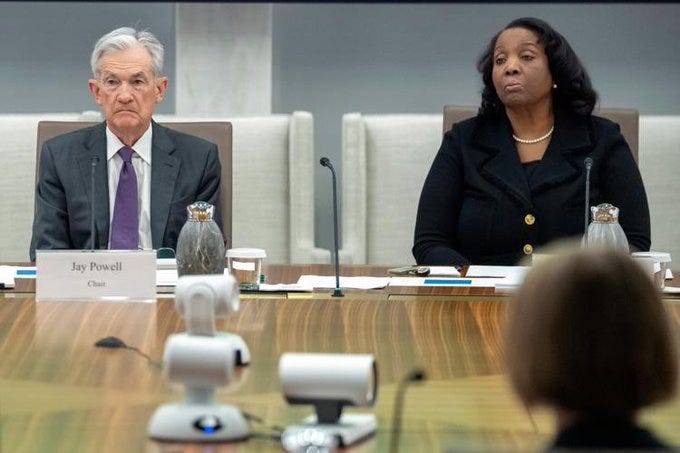 8. (3) The Devil's Legions - by E.M. Burlingame
Why: similarity 0.88
Summary: • **Cold War origins of illicit networks**: During 1947-1991, Five Eyes (FVEY) and European intelligence agencies supported non-state actors in Africa, Asia, and Middle East as proxies against Soviet influence, including funding the Mujahideen in Afghanistan and various anti-communist factions worldwide
• **Post-Cold War transformation**: After 1991, these proxy groups evolved into self-funding illicit operators engaged in drug trafficking, terrorism, and organized crime, while maintaining Western intelligence backing for destabilization purposes
• **"Devil's Legions" network**: A global Western-backed illicit network generating over $1.5 trillion annually through drug trafficking ($320-500 billion), human trafficking ($150 billion), terrorism, and misappropriated aid, serving as unaccountable intelligence and military assets for "Financialists"
• **"Spider's Web" financial system**: The City of London's offshore financial centers (Cayman Islands, British Virgin Islands) launder and park these illicit funds, with estimates of $21-32 trillion (potentially 3-5 times larger) in private wealth hidden offshore
• **Ongoing Western intelligence role**: Historical precedents like CIA involvement with Contras' drug trade and patterns from Church Committee findings suggest continued FVEY orchestration and tolerance of these networks' activities
• **Strategic purpose**: These networks function as self-funding, non-state military and intelligence forces used against any state actors opposing Financialist interests, with communism historically serving as the justification for their creation
URL:
8. (3) The Devil's Legions - by E.M. Burlingame
Why: similarity 0.88
Summary: • **Cold War origins of illicit networks**: During 1947-1991, Five Eyes (FVEY) and European intelligence agencies supported non-state actors in Africa, Asia, and Middle East as proxies against Soviet influence, including funding the Mujahideen in Afghanistan and various anti-communist factions worldwide
• **Post-Cold War transformation**: After 1991, these proxy groups evolved into self-funding illicit operators engaged in drug trafficking, terrorism, and organized crime, while maintaining Western intelligence backing for destabilization purposes
• **"Devil's Legions" network**: A global Western-backed illicit network generating over $1.5 trillion annually through drug trafficking ($320-500 billion), human trafficking ($150 billion), terrorism, and misappropriated aid, serving as unaccountable intelligence and military assets for "Financialists"
• **"Spider's Web" financial system**: The City of London's offshore financial centers (Cayman Islands, British Virgin Islands) launder and park these illicit funds, with estimates of $21-32 trillion (potentially 3-5 times larger) in private wealth hidden offshore
• **Ongoing Western intelligence role**: Historical precedents like CIA involvement with Contras' drug trade and patterns from Church Committee findings suggest continued FVEY orchestration and tolerance of these networks' activities
• **Strategic purpose**: These networks function as self-funding, non-state military and intelligence forces used against any state actors opposing Financialist interests, with communism historically serving as the justification for their creation
URL:  ## Pointed questions for discussion
- How do Petro's claims reflect broader geopolitical tensions in Latin America?
- What are the potential consequences of the US's shifting focus in the region?
- In what ways can Colombia and Venezuela collaborate for mutual benefit despite tensions?
## Provider
OpenRouter / openai/gpt-4o-mini
Shared via
## Pointed questions for discussion
- How do Petro's claims reflect broader geopolitical tensions in Latin America?
- What are the potential consequences of the US's shifting focus in the region?
- In what ways can Colombia and Venezuela collaborate for mutual benefit despite tensions?
## Provider
OpenRouter / openai/gpt-4o-mini
Shared via 
RT International
Colombia accuses US of starting a ‘war’
American strikes off Venezuela, which have killed Colombian citizens, are not about drugs, according to President Gustavo Petro
The Ron Paul Institute for Peace & Prosperity
President Trump Should Return to an ‘America First’ Foreign Policy - The Ron Paul Institute for Peace & Prosperity
After four years of unnecessarily confrontational foreign policy under President Biden, Americans elected Donald Trump in part for his promise to p...
Consumers are collapsing
Not the ones on CNBC though, yet.
US War Department To Shift Focus From China To 'Threats' In Latin America | ZeroHedge
ZeroHedge - On a long enough timeline, the survival rate for everyone drops to zero
CIA To Unleash 'Finely Tuned Machine' To Destroy Mexican Cartels | ZeroHedge
ZeroHedge - On a long enough timeline, the survival rate for everyone drops to zero
Cointelegraph
Venezuela’s Crypto Adoption Rises as Bolívar Crashes and Inflation Soars
Venezuelans increasingly use crypto for payments and savings as inflation hits 229% and the bolívar plunges, making digital assets a key lifeline.
Jackson Hole Blah Blah Blah
The fattest of all fat tails
The Devil's Legions
From Cold War Proxies to Vast Unaccountable Power
Memetic Research Laboratories LLC
Memetic Research Laboratories LLC - Privacy-focused technology for digital content management and decentralized communication
 Shared via
  Shared via
  Shared via
  Shared via
  Shared via