GA!!!
# Comprehensive Analysis
Title: Note by Cyph3rp9nk
URL:

Cyph3rp9nk
by @14g23h34 🧵Let
Collected: 2025-09-02 01:57:08 +0000
Analyzed: 2025-09-02 17:45:25 +0000
## Overall takeaway
Defending Bitcoin's identity against Marxist exploitation is crucial to maintain its purpose as hard money.
## Conceptual model
- Marxism can infiltrate organizations and dilute their core purpose.
- Organizational integrity is vital to resist ideological exploitation.
- Bitcoin's conservative nature contrasts with fiat's progressive tendencies.
- Language manipulation is a tactic used to reshape narratives.
- Defending Bitcoin's identity is essential for its survival.
## Next steps (optional)
- Engage with Bitcoin communities to raise awareness about ideological threats.
- Develop educational resources on Bitcoin's core values and identity.
- Monitor organizational changes that may signal ideological shifts.
## Short summary
The document discusses the impact of Marxism on Bitcoin's identity and purpose, emphasizing the need to defend Bitcoin against ideological exploitation. It warns of Marxist tactics that dilute organizational integrity and stresses Bitcoin's conservative nature as a hard money alternative to fiat.
## Comprehensive summary
- **Marxist Inversion in BTC**: This document discusses the phenomenon of Marxist inversion in the context of Bitcoin (BTC) and its identity as a peer-to-peer electronic cash system, highlighting how its original purpose can be co-opted and diluted.
- **Broad Definition of Marxism**: The author argues that Marxism extends beyond political systems, existing as a worldview that can infiltrate various organizations, including tech startups and social groups.
- **Organizational Integrity**: Conserving an organization's original purpose is crucial to prevent scope creep and identity dilution, which Marxists exploit to gain credibility and influence.
- **Examples of Inversion**: The document cites political figures, game developers, CEOs, universities, regulators, and media organizations that have deviated from their original missions in favor of personal ideologies.
- **Marxist Tactics**: Key tactics include targeting leadership, destroying traditional identities, and gradual changes that undermine established standards.
- **Bitcoin's Identity**: The author emphasizes the importance of defending Bitcoin's identity as hard money to resist Marxist attacks, arguing that cultural identity shapes actions and beliefs.
- **Conservative Nature of Bitcoin**: Bitcoin is portrayed as conservative, promoting principles like resource conservation and discouraging debt, which contrasts with the progressive nature of fiat currencies.
- **Language Manipulation**: The document highlights how Marxism alters language to reshape narratives and undermine traditional identities, using euphemisms to mask true intentions.
- **Call to Action**: The author urges Bitcoin advocates to recognize and resist Marxist tactics, emphasizing the necessity of conserving and protecting Bitcoin's core identity and values.
## Entities
- keyword: censorship, purpose, identity, marxism, peer, bitcoin, marxist, system, marxists, attack
- location: BTC
- organization: Marxism, Conservation of Natural Resources, Bitcoins, Fiat, Disney, Core, Normie NPC American, FDA
- person: Marxism, Pilates, Jesus, Elon Musk
## Related content
1. (3) Nostr + Bitcoin + AI - by Craig - ON NOSTR
Why: similarity 0.90
Summary: • **Routstr Overview**: A decentralized Large Language Model (LLM) routing marketplace that bridges advanced AI models with the censorship-resistant ecosystem of Nostr and Bitcoin, operating on a pay-as-you-go model without requiring accounts or KYC verification
• **Core Innovation**: Connects users to various AI models (DeepSeek, Llama, Mistral, Claude) through an intelligent client that automatically selects the cheapest and fastest model for each prompt, while being OpenAI-compatible for seamless integration
• **Bitcoin Integration**: Leverages Bitcoin's Lightning Network for near-instant micropayments, allowing users to purchase AI credits directly and receive Cashu tokens as API authorization keys, ensuring financial sovereignty and privacy
• **Nostr Protocol**: Built on the decentralized "Notes and Other Stuff Transmitted by Relays" protocol, which uses public-key cryptography for censorship-resistant communication without relying on centralized entities
• **Target Audience**: Serves Bitcoiners, privacy advocates, developers, businesses, human rights activists, and AI enthusiasts seeking autonomous access to AI without centralized platform constraints
• **Key Features**: Offers decentralized AI access, Bitcoin-powered payments, privacy through Tor/SOCKS5 support, OpenAI-compatible API, marketplace for AI providers, and simplified user experience through intelligent client routing
• **Significance**: Represents a convergence of Bitcoin's financial freedom, Nostr's censorship-resistant communication, and AI's transformative potential, creating a framework where open protocols replace corporate silos
URL:
Nostr + Bitcoin + AI
The Future of Decentralized AI Access
2. The FAIR Act Would Protect Bitcoin Holders
Why: similarity 0.89
Summary: • The FAIR Act (Fifth Amendment Integrity Restoration Act of 2023) is critical legislation designed to protect Bitcoin holders from civil asset forfeiture abuse as the US Government builds its Strategic Bitcoin Reserve
• Civil asset forfeiture allows the government to seize citizens' assets without charging them with a crime, creating financial incentives for law enforcement to appropriate property without due process
• The Act raises the evidentiary standard from "preponderance of evidence" to "clear and convincing evidence," increasing the government's burden of proof for asset forfeiture
• Most importantly for Bitcoin holders, the FAIR Act requires the government to prove that property owners knowingly used their assets for illegal purposes or were willfully blind to such use
• Currently, the government could seize legally acquired bitcoin if the UTXO had previously been used in illegal activities, regardless of whether the current owner knew about the coin's history
• The Act mandates that the government provide legal counsel to property owners who cannot afford representation or when legal costs exceed the property's value
• Civil asset forfeiture effectively reverses the burden of proof, requiring citizens to prove their innocence rather than the government proving guilt
• The bill was introduced by Senators Rand Paul and Cory Booker, with co-sponsorship from Senator Lummis, emphasizing bipartisan concern over property rights violations
• The author argues that passing the FAIR Act should be a prerequisite for establishing the Strategic Bitcoin Reserve to prevent government abuse of power
URL:

Bitcoin Magazine
The FAIR Act Would Protect Bitcoin Holders
The FAIR Act, legislation designed to protect people from civil asset forfeiture, would be a safeguard for Bitcoiners' coins.
3. Profiling Palantir, by Janko Vukic - The Unz Review
Why: similarity 0.89
Summary: • Palantir Technologies, named after Tolkien's "seeing-stones," is a $200 billion surveillance company founded in 2003 by Peter Thiel and Alex Karp, criticized as "the most evil company on the planet"
• CEO Alex Karp is described as a strident Zionist and self-proclaimed socialist who cites Israel, the Frankfurt School, and his Jewish heritage as foundational to his worldview
• The company specializes in AI and big data analytics through four main platforms: Gotham (military/intelligence), Foundry (corporate clients), Apollo, and AIP
• Palantir has extensive government contracts including with the CIA, US military, Department of Defense, and dozens of police departments, as well as corporate clients like JP Morgan, Goldman Sachs, and Big Pharma companies
• Karp openly supports using AI and military technology to defend Israel and Ukraine, holding Palantir's first 2025 board meeting in Tel Aviv and forming a strategic partnership with Israel's Ministry of Defense
• During a CNBC interview, Karp expressed his desire to use military drones against political enemies and "enemies of Jewry," equating support for Israel with supporting "the West"
• The company was integral to COVID-19 vaccine allocation under Operation Warp Speed during Trump's administration
• Despite Karp's criticism of Trump and support for Democrats, Palantir maintains strong ties to both parties, with VP JD Vance being close to both Thiel and Karp
• The author views Palantir as an existential threat to personal
URL:

The Unz Review
Profiling Palantir
4. Prologue for The Bitcoin Enlightenment, by Ricardo B Salinas
Why: similarity 0.89
Summary: - • The prologue introduces "The Bitcoin Enlightenment," authored by Ricardo Salinas Pliego, Pascal Hügli, and Daniel Jungen, published by The Saif House.
- • The book encapsulates the wisdom of hard money civilization in accessible terms for contemporary readers.
- • Ricardo Salinas Pliego, hailing from a lineage of successful entrepreneurs, provides valuable insights into monetary issues shaped by his family's experiences.
- • The author discusses the significance of the stock-to-flow concept, initially highlighted by economist Antal Fekete, emphasizing gold's role as money due to its limited supply growth.
- • Gold's supply growth rate of 1.5–2% per year positions it uniquely in the market, making miners insignificant in affecting overall supply.
- • The prologue critiques the lack of awareness about supply dynamics among modern economists and the influence of Keynesian thought.
- • Understanding low supply growth is crucial for appreciating Bitcoin's monetary potential, akin to gold's.
- • The book explores Bitcoin’s technological advancement through the difficulty adjustment, ensuring its supply grows predictably.
- • Bitcoiners recognize the importance of supply growth, contrasting with fiat thinkers and many gold advocates.
- • The prologue references historical figures like Ferdinand Lips and Felix Somary, who contributed to the understanding of hard money and its societal impact.
- • "The Bitcoin Enlightenment" conveys four generations of hard money wisdom, equipping readers to differentiate between genuine value and inflationary deceit.
- • The text emphasizes the historical context of financial systems, notably the establishment of the Bank of England and its implications on inflation and government debt.
- • Salinas Pliego is portrayed as a pioneer in recognizing Bitcoin's significance, advocating for its adoption against a backdrop of inflation
URL:
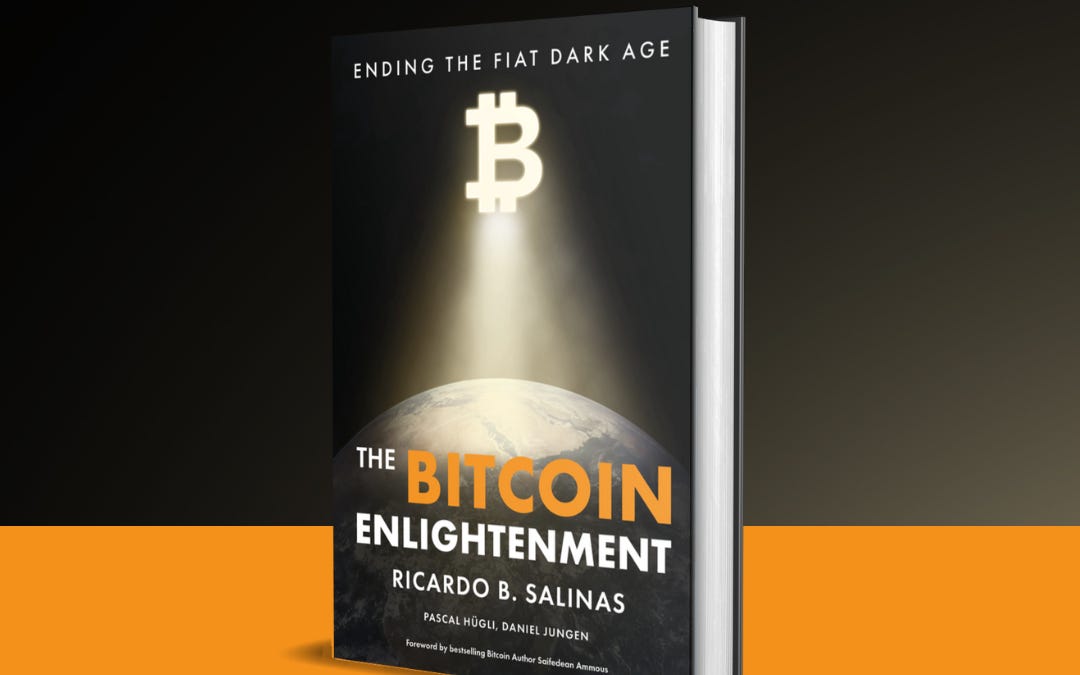
Prologue for The Bitcoin Enlightenment, by Ricardo B Salinas
My publishing house, The Saif House, has recently published The Bitcoin Enlightenment by Mexican entrepreneur, billionaire, and bitcoiner Ricardo S...
5. MoA - Survival Or Looting? What Trump's Revolution Is Really About
Why: similarity 0.89
Summary: • Trump's team views the current U.S. path of increasing deficits and debt as unsustainable, believing the dollar as reserve currency harms the country more than helps it
• They see declining manufacturing as a symptom of larger economic disease and believe destroying the old system is necessary before building a new one, despite knowing the process will be painful
• Vice-President Vance likens the reserve currency to a "parasite" that has eaten away at the U.S. economy by forcing an overvalued dollar
• Trump's tariff strategy was pre-planned over years as part of a complex framework to reduce debt, generate revenue, and coerce manufacturing back to America
• The administration aims to reshape the global economic order by prioritizing America's national interests through wide-ranging tariffs and "aggressive unilateralism"
• Alternative interpretation: This is a reactionary revolution by the rich to cement their advantaged position and facilitate elite asset grabs, similar to Russia in the 1990s
• Multi-billionaires surrounding Trump are pushing these policies while he slashes vital institution budgets and enriches himself through cryptocurrency ventures
• The international strategy appears to be subjecting both U.S. population and allies to long-term economic pain, hoping America can endure better than the emerging multipolar world
• Trump's tariffs against China will likely backfire similar to European sanctions on Russia - targeted countries will handle the onslaught while initiators deeply hurt their own populations
URL:
Survival Or Looting? What Trump’s Revolution Is Really About – Moon of Alabama
6. CBDCs: A brave new world - Carl ₿ Menger's Newsletter
Why: similarity 0.89
Summary: • **Global CBDC Development**: 130 countries representing 98% of global economy are exploring CBDCs, with nearly half in advanced development, pilot, or launch stages
• **Privacy and Surveillance Concerns**: CBDCs enable governments to monitor every financial transaction in real-time, creating a permanent record of all spending habits and financial activities
• **Authoritative Warnings**: Fed Chair Jerome Powell, BIS's Augustín Carstens, and IMF's Bo Li have all acknowledged CBDCs give governments "absolute control" over money and can "precisely target what people can own"
• **Fundamental Differences from Bitcoin**: While Bitcoin is decentralized, open, and permissionless with no single controlling entity, CBDCs are centrally controlled by governments with complete authority over funds
• **Concentration of Power**: CBDCs create direct accounts between citizens and central banks, potentially eliminating commercial banks and concentrating unprecedented financial control with unelected officials
• **Programmability Threats**: CBDCs can be programmed to restrict purchases, implement negative interest rates selectively, make money expire, or freeze accounts of dissidents - as seen with Canadian truckers
• **Gradual Implementation Strategy**: Governments plan to introduce CBDCs incrementally to avoid public resistance, likened to slowly boiling a frog
• **Real-World Examples**: China's digital currency experiments, EU's potential social media shutdowns during riots, and El Salvador's contrasting Bitcoin adoption demonstrate the diverging paths of financial control versus freedom
URL:

CBDCs: A brave new world
Episode XII. Block height: 800000. Central bank digital currencies, the worst idea since communism. From pure fiction to reality and what it means ...
7. Financial System at Risk
Why: similarity 0.88
Summary: • The financial system faces imminent collapse risk, as demonstrated by the Sepah Bank hack in Iran where centralized banking records vanished, potentially erasing savings overnight
• Bitcoin offers a decentralized alternative with no single point of failure, featuring global nodes that enforce rules and secure wealth in user-controlled wallets
• Historical precedents highlight fiat currency failures: Cyprus banking crisis (2013), hyperinflation in Lebanon (2019) and Turkey (2021) demonstrate these aren't distant risks but current realities
• Bitcoin serves as both defense against hacks and rebellion against the deteriorating monetary system, with fiat currencies losing value through inflation while Bitcoin maintains fixed supply
• Market indicators show Bitcoin at $2.08T market cap with 64% crypto dominance, while institutional adoption accelerates with billions allocated by major firms
• Corporate treasury adoption expands: The Blockchain Group adds 182 BTC, K33 seeks $8M for 1000 BTC purchase, Bitdeer pursues $330M for reserves, and healthcare firm Prenetics plans Bitcoin treasury
• Regulatory progress advances with Senate passing GENIUS Act for stablecoin regulation (praised by Trump), Ohio approving tax-free Bitcoin payments under $200, and SEC withdrawing anti-crypto rules
• Global momentum builds as Pakistan officials meet with Michael Saylor on Bitcoin policy, Brazil advances bill to allocate 5% of reserves to Bitcoin, and sets flat 17.5% tax rate
URL:

Sovreign
Financial System at Risk
Decoding Bitcoin's Role: A Resilient Shield Against Global Financial Vulnerabilities.
## Pointed questions for discussion
- How can Bitcoin advocates effectively counter Marxist tactics?
- What strategies can be employed to preserve Bitcoin's original purpose?
- In what ways can language influence the perception of Bitcoin's identity?
## Sentiment
Score: -0.30
## Provider
OpenRouter / openai/gpt-4o-mini
Shared via

Memetic Research Laboratories LLC
Memetic Research Laboratories LLC - Privacy-focused technology for digital content management and decentralized communication



 Shared via
  Image text:
CANNIBAL TRIBE IN NEW GUINEA CONFIRMS THEY'RE WILLING TO TAKE FIVE REFUGEES PER WEEK.
Shared via
Image text:
CANNIBAL TRIBE IN NEW GUINEA CONFIRMS THEY'RE WILLING TO TAKE FIVE REFUGEES PER WEEK.
Shared via 
 Ha Ha!🤣
Image text:
Trump cuts to satellites may allect weather prediction The administration plans to end missions tracking carbon dioxide, pollution BY SCOTT DANCE Two satellite instruments that track Earth's carbon dioxide levels will soon go offline, deemed "be- yond their primary mission." Two others meant to monitor water contamination and air pollution, including from greenhouse gases, will be removed from a future satellite mission based on orders to "deliver a weather only instru- ment manifest." The Trump administration is scrapping satellite observations of Earth that officials say go beyond the essential task of predicting the weather, according to budget doc- uments that outline plans to re- shape government research. In doing so, meteorologists and cli- mate scientists say, it is drawing a line between what is weather - and thus warrants government in- vestment — and what is climate. For example, language in a Na- tional Oceanic and Atmospheric Administration budget calls for preserving funding for the Nation- al Weather Service while slashing anything tied to climate change, limiting government investment to "research that is more directly related to the NOAA mission." It echoed a call in the Republican policy playbook Project 2025 to SEE SATELLITES ON A7
Shared via
Ha Ha!🤣
Image text:
Trump cuts to satellites may allect weather prediction The administration plans to end missions tracking carbon dioxide, pollution BY SCOTT DANCE Two satellite instruments that track Earth's carbon dioxide levels will soon go offline, deemed "be- yond their primary mission." Two others meant to monitor water contamination and air pollution, including from greenhouse gases, will be removed from a future satellite mission based on orders to "deliver a weather only instru- ment manifest." The Trump administration is scrapping satellite observations of Earth that officials say go beyond the essential task of predicting the weather, according to budget doc- uments that outline plans to re- shape government research. In doing so, meteorologists and cli- mate scientists say, it is drawing a line between what is weather - and thus warrants government in- vestment — and what is climate. For example, language in a Na- tional Oceanic and Atmospheric Administration budget calls for preserving funding for the Nation- al Weather Service while slashing anything tied to climate change, limiting government investment to "research that is more directly related to the NOAA mission." It echoed a call in the Republican policy playbook Project 2025 to SEE SATELLITES ON A7
Shared via