Rick ~ ThrivingNow's avatar
Rick ~ ThrivingNow
RickThrivingNow@primal.net
npub1slld...8n6p
Emotional Freedom Coach
Rick ~ ThrivingNow's avatar
RickThrivingNow 9 months ago
So if you’ve always felt a little out of place, too sensitive, too intense, too imaginative, too anything—that weirdness? 𝗧𝗵𝗮𝘁’𝘀 𝘆𝗼𝘂𝗿 𝗲𝗱𝗴𝗲 𝗻𝗼𝘄. It’s no longer about fitting in—it’s about standing out in a way that feels good, true, and energizing. 𝗘𝘅𝗽𝗿𝗲𝘀𝘀𝗶𝗻𝗴 𝗬𝗼𝘂𝗿 𝗨𝗻𝗶𝗾𝘂𝗲 𝗛𝗲𝗮𝗿𝘁𝗶𝘀𝘁𝗿𝘆. 1) What is something weird about you that could be considered... Creative? Useful? Unique amongst those around you? 2) How does that weirdness want to express itself? For your delight? To co-create a world you would love living in? We hope you'll choose to join us... Everyone gets the recording who signs up.
Rick ~ ThrivingNow's avatar
RickThrivingNow 9 months ago
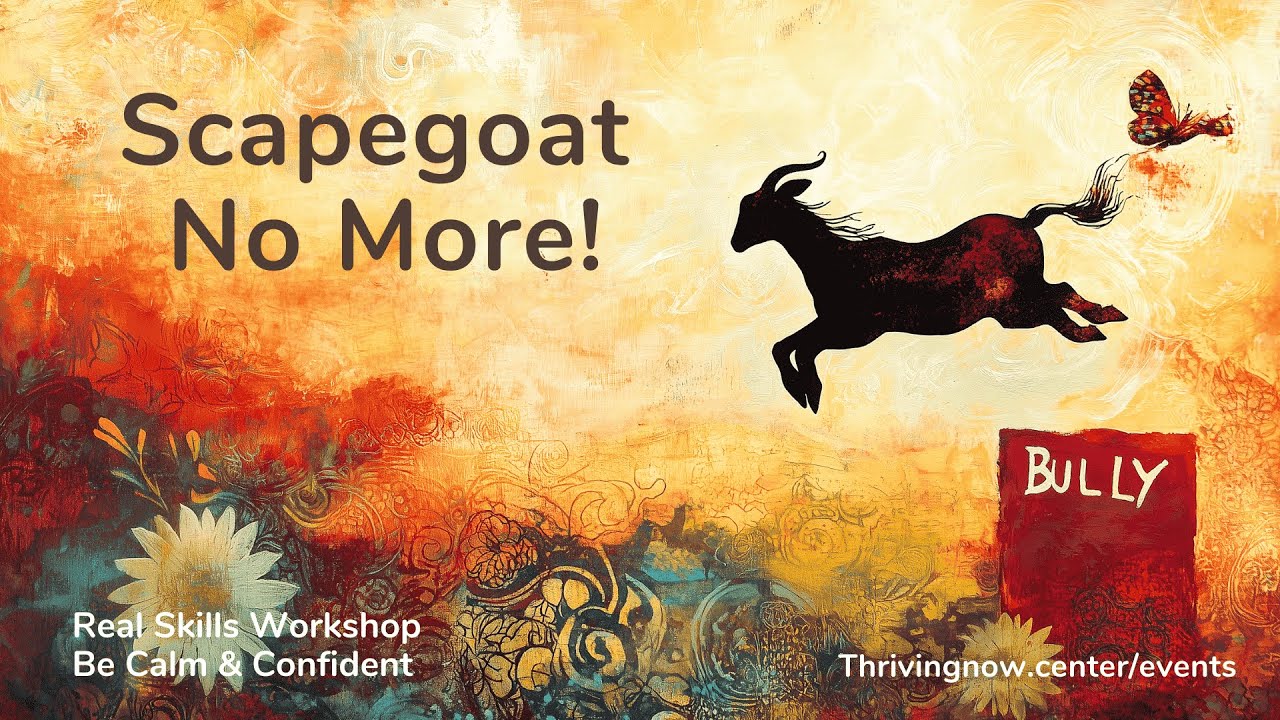
𝗦𝗰𝗮𝗽𝗲𝗴𝗼𝗮𝘁 𝗡𝗼 𝗠𝗼𝗿𝗲! - Session Replay We so appreciate the deep work we are capable of doing Together. Thank you for those who attended live and co-created his work of heart. Scapegoats No More!! What we covered: Embrace Our Sensitivity: Our sensitivity isn’t a flaw—it’s a vibrant signal that our emotional radar is finely tuned. When we’re targeted as scapegoats, it reflects our capacity to feel deeply and our readiness to grow as we gain clarity about what (and who) truly matters in our lives. Understand Scapegoating Dynamics: Recognize that scapegoating is less about us and more about others deflecting their own discomfort. It’s a mechanism rooted in unresolved pain—not our responsibility to fix, even when it comes from family. Recognize Triangulation: Notice when blame becomes the glue in relationships, pulling us into a triangle of false intimacy. This unhealthy dynamic prevents genuine connection, and acknowledging it is the first step to stepping out of the dance. Differentiate Our Responsibility: Learn to tune into what really belongs to us versus what is unfairly imposed by others. By doing so, we free ourselves from carrying blame that isn’t ours to bear. Release Hyper-Responsibility: Let go of the habit of absorbing every bit of blame—even when it feels like we must carry the weight. Releasing that extra baggage creates space for our own well-being and thriving. Utilize Emotional Freedom Techniques: Embrace tools like EFT tapping and grounding exercises as a way to regulate our emotions, ease tension, and keep ourselves anchored in the here and now, moving from reactive patterns to empowered living. Cultivate Self-Awareness: Reflect on how our early conditioning still echoes in our daily lives. By becoming aware of these patterns, we open the door to making conscious choices that lead to genuine healing. Set Healthy Boundaries: Establish clear limits by remembering we are not responsible for others’ projections. Setting these boundaries preserves our energy and keeps our focus on what truly matters. Value Imperfection: Embrace our beautiful, messy humanity—mistakes and awkward moments are part of our journey. Recognizing that perfection is an illusion frees us from unnecessary self-blame and invites authentic connection. Own Our Core Values: Anchor ourselves in what matters most—mutual respect, co-creation, and minimizing harm. Let these values guide our actions as we reclaim our space and live with intention. Encourage Mutual Growth: Step out of the scapegoating cycle so that we, and those around us, can face our own challenges and grow—whether that means growing together or respectfully growing apart. Practice Emotional Discernment: Develop the skill to listen closely to our feelings and identify what is truly ours. This practice of discernment helps maintain clear emotional boundaries and honors our inner truth. Anticipate and Navigate Resistance: Understand that breaking free from old patterns may invite pushback. Meet any resistance with compassionate boundaries and clear, steadfast clarity, trusting that our choice to thrive is worth the discomfort. Reclaim Our True Identity: Affirm that we are far more than a scapegoat. By rejecting the blame that’s been assigned to us and embracing our empowered, authentic selves, we step into a future defined by thriving and self-acceptance.
Rick ~ ThrivingNow's avatar
RickThrivingNow 9 months ago
𝗧𝗿𝗮𝗶𝗻𝗲𝗱 𝗳𝗼𝗿 𝗕𝗹𝗮𝗺𝗲? Join us here: Were you trained for blame? Some humans are incapable of blaming themselves. Some of us have superpowers of taking on blame! What a match made in hell... I'm adaptable. You? Well, if a child is highly adaptable, it means they will scan their environment (from conception!) to figure out the world they are being born into. Unexpected, undesired, unwanted... pregnancy? Well, if a belly baby feels that towards them, they activate "I shall be as close to perfect as possible! So you help me survive! I'll be ANYTHING YOU NEED to get love!" I'll take the blame for your pain. I'll be at fault for your failures. I'll take responsibility for your addictions and rage. I'll be adoring if that is what you want... or learn to console myself and be absurdly independent for my age. Can't you just hear the bray of the 'natural scapegoat'? We accepted unkindness — even cruelty and neglect — because we we 'knew' in our primitive brain we MUST OR ELSE. So how do we free ourselves? Well, it is well-understood by now that this is ongoing work. It takes skill. It benefits from support. We are re-training. We are re-calibrating to life now, letting go of programming that happened previously. It's growing into our thriving. Consciously. It's challenging. Those that look for those they can blame are able to suss-out quickly: can I make this person a scapegoat? Are they bully-able? If the answer is Yes or Maybe... they come close. They do the things they do. And guess what? It's NOT EASY to protect ourselves when we were trained to be blamed. Here's a horrible secret, too. IF the Blaming Bully discovers you are healing, that you can see through their orientation and refuse to be party to their crap... there's a period where such people get super intense towards you. How dare you! It's your fault! I will bring forth my sycophants to tear you asunder! (Yes, this is intense. Being real here. It's an experience many of us who have ever broken free of a scapegoat — who we were trained to tolerate — have gone through.) The real skills needed are Unwinding Shock and a deepening awareness of this dynamic inside us — that ingrained instinctual assumption, "This must be my fault." Then learning how to move that energy to an empowered reframe and perspective. It's been my experience that those who have been pervasively blamed and shamed are also potently on the spectrum of kindness, adaptability, willingness, responsiveness, and yeah... Lovability. Weird isn't it? The person so often picked on, when you really get to know them authentically, can be a person you experience as truly and easily lovable. That's been a truth in my coaching practice for over 20 years. It's why this matters to both Cathy and me. It's why we're likely to cry and laugh and cuss a bit together with those who choose to join us for this real skills workshop tomorrow. If it is a YES for you, we hope you'll choose to join us... Everyone gets the recording who signs up.
Rick ~ ThrivingNow's avatar
RickThrivingNow 9 months ago
Register now for Scapegoat No More! - Real Skills Workshop Ever feel like you're the Scapegoat — the one others blame and shame their insecurities, upsets, and unhappiness? Ever felt bullies rise up and come after you for what felt like no reason?!? And sometimes it is: name calling or getting the group (or others in the family) to ostracize you and make life miserable. It happens. It sucks. It's shocking. Painfully, it is something sensitive people internalize. We start scapegoating ourselves! We assume: if a situation is painful, it must be our fault! If we're not getting along, we are the ones who Must Do Better. The truth is, the pattern of being singled out as a scapegoat isn’t a reflection of our worth—it’s a symptom of deeper power dynamics and emotional dysfunctions at play. It takes skill and a safe-enough space to heal and reframe this. It's also essential for thriving. Why? Because if a part of us is still feeling responsible — when we were NOT! — enormous "creative energy" is misdirected towards maintaining a fiction. "It's my fault. They said so." Or, "If I wasn't actually a bad person, they wouldn't have treated me that way." It's time. Time for a reframe. Time for recalibrating how we see ourselves. Scapegoats No More! In this workshop, we'll free ourselves from certain ridiculous notions rooted in other people's certainty that we were to blame. We'll definitely look at how it plays out inside of us still. This isn't "superficial work" but that doesn't mean we can't laugh and love our way through it. Cathy and I have been blamed and shamed and know pathways and tools that help us recover and feel increasingly free. We hope you'll choose to join us... Everyone gets the recording who signs up.
Rick ~ ThrivingNow's avatar
RickThrivingNow 9 months ago
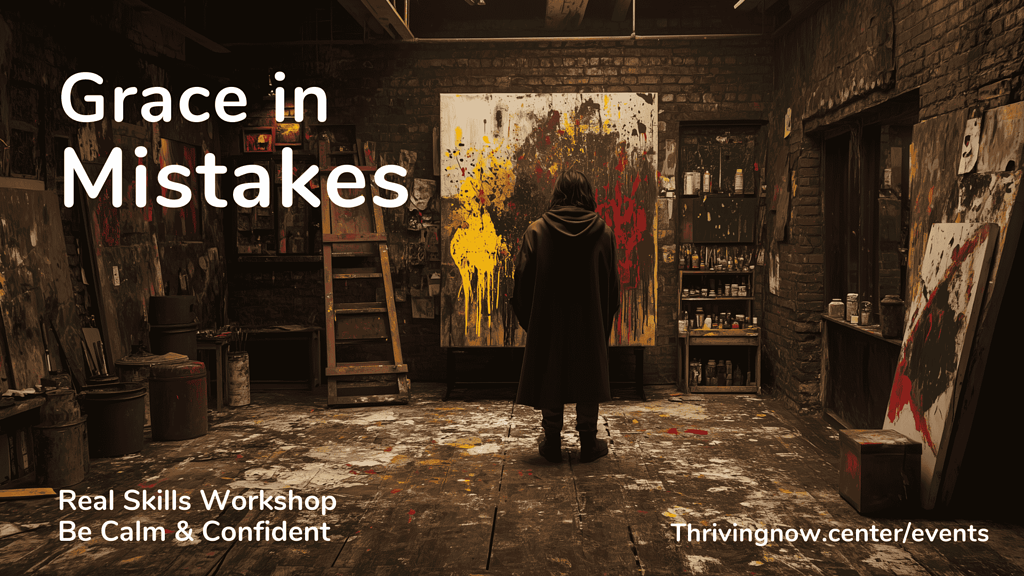
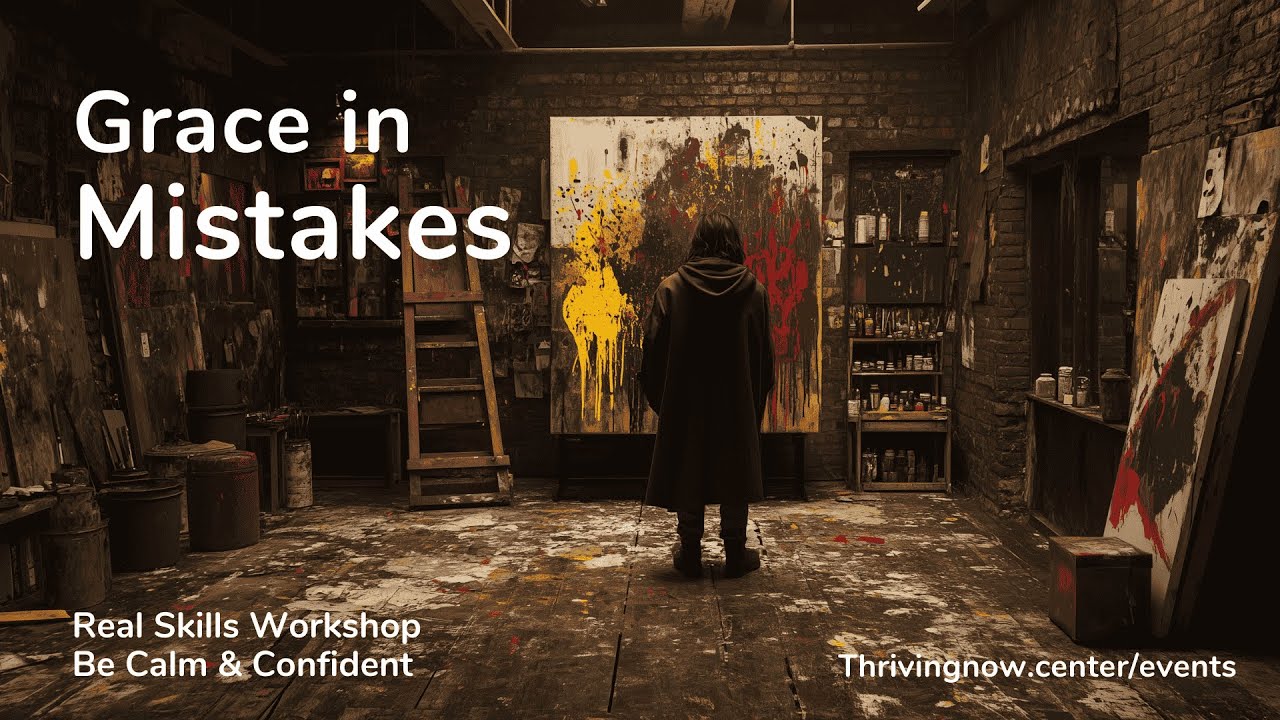
Grace in Mistakes - Real Skills Workshop We covered… 1. Mistakes Are Missed Marks, Not Failures Mistakes happen when reality doesn’t match our expectations or intentions. They’re not failures—they’re just moments where we didn’t hit the bullseye. And guess what? Missing the mark is how we learn and grow. Skill: When something doesn’t go as planned, pause and say to yourself: “I missed the mark this time, but I’m learning and growing.” Let that sink in. 2. Recognize Where Your Reactions Come From For many of us, how we react to mistakes was shaped by childhood experiences—whether it was harsh judgment, perfectionism, or survival stress. But here’s the good news: we can retrain ourselves. Skill: Ask yourself: “Where did I learn this reaction? Is it still serving me?” Then remind yourself: “I don’t live there anymore.How do I want to feel NOW?” 3. Notice Your Body’s First Reaction Before we even think about a mistake, our body reacts—maybe with a “grr” of frustration, tight muscles, or a flood of adrenaline. This is primal and unavoidable, but noticing it gives us awareness enough to start shifting from knee-jerk reaction to helpful response. Skill: The next time you make a mistake, tune into your body’s first reaction. Is it a growl? A freeze? A tightening? Say to yourself: “Oh, there’s my ‘grr’ (or freeze).” Awareness is key. 4. Tap to Calm Your Nervous System Mistakes trigger our primitive brain—our amygdala fires up before we even have a chance to think. EFT tapping helps us calm that reaction and create space for clarity. Skill: When you feel triggered by a mistake, start tapping on your collarbone and affirm: “Even though this DID happened, I choose to feel calm and confident anyway.” It’s like hitting a reset button for your nervous system. 5. Shrink Your Recovery Time Recovery from mistakes doesn’t have to take days—or even hours. With practice, we can move from being stuck in shame or frustration to adapting and responding in minutes or seconds. Skill: Reflect on how long it takes you to recover after a mistake. Celebrate progress as your recovery time shortens—whether it’s from eight hours to 80 minutes or 18 seconds! 6. Mistakes Are Part of Thriving If you’re thriving—building relationships, creating something new, or just living fully—you’re going to miss the mark sometimes. That’s not failure; that’s life. Skill: At the end of each day, ask yourself: “How did I miss the mark today? What did I learn from it?” Celebrate those moments as proof you’re engaged in life. 7. Replace Harsh Self-Talk with Curiosity We’ve all been there—calling ourselves “stupid,” “a loser,” or worse after a mistake. But what if we replaced that inner critic with curiosity? What if we asked: “What happened here?” Skill: When self-criticism arises, pause and say: “Some of this is because I care; some of this is because I’m scared.” Then ask: “What would my wise self say right now?” 8. Build Graceful Pathways Instead of Overreacting Overreaction keeps us stuck—it hijacks our energy and prevents us from addressing reality constructively. Graceful pathways like tapping, breathing, or stepping back help us respond with clarity. Skill: Create a calming ritual for when mistakes happen (e.g., tapping or deep breathing). Practice it as your go-to when emotions rise. 9. Repair Deepens Connection Mistakes can actually strengthen relationships when we handle them with honesty and care. Repairing a misstep shows others—and ourselves—that we value connection over perfection. Skill: If your mistake impacts someone else, acknowledge it sincerely and ask: “How can I help make this right?” This builds trust and resilience in relationships. 10. Context Shapes Our Reactions Sometimes our overreactions aren’t about the mistake itself—they’re about being depleted or stressed. Recognizing this gives us compassion for ourselves and others. Skill: When you overreact to a mistake, ask: “Am I tired? Stressed? Depleted?” Then give yourself what you need—rest, support, or even just a moment to breathe. 11. Mistakes Are Invitations to Adapt Every mistake is an invitation to adapt—to try something new or approach things differently next time. Thriving isn’t about avoiding mistakes; it’s about learning how to respond with grace. Skill: At the end of each week, reflect on one mistake that helped you adapt or grow: “This is part of growing my thriving life.” Mistakes are not just inevitable—they’re essential for growth and connection. By practicing these tools with compassion and curiosity, we create space for more emotional freedom and resilience in our lives. Let’s meet our mistakes with grace—and use them as inspiration for thriving!
Rick ~ ThrivingNow's avatar
RickThrivingNow 9 months ago
"I have no spare clothes for Adira with me because I'm stupid." That's what my text to Jem said. She wrote back, "You’re not stupid, just were trying to get out the door! I’ll bring some." Now that is Grace in the face of someone being hard on themselves for the kind of Mistake even "seasoned" parents make. Part of the skill of Grace in Mistakes is holding space for other people learning what works and what does not... what is savvy, and what is unwise. Even what works shockingly well! Then we internalize that treatment to include our own mistakes. Adira is sitting here listening to her Yoto. When she tried to turn it on, about 6 minutes ago, it was out of power. She cried. It's a "mistake" not to plug it in at the end of the day. Heck, I've done that with my phone, watch, computer... so I have a lot of compassion. We plugged it in and started listening. But, then she unplugged it after 5 minutes of charging and sits next to me on the sofa. I did tell her it was not yet charged, but she is living the "mistake" of not charging it enough... and I am living the moment of getting to co-work with her, sitting shoulder to shoulder, this Beautiful Being nestled next to me. Yes, I know the power is going to run out, maybe even before I finishing writing to y'all. Grace in Mistakes can mean allowing ourselves and those we love to explore. It's not life-threatening, even if it will likely mean Big Feelings. Such is life. "Mistakes" is one label. Learning, Exploring, visiting the edge... different frames on the same thing. Being Human... another. Growing? You bet! (Unless we get so cruel with ourselves we never leave the house with or without spare clothes!) Cathy and I are meeting tomorrow (Sunday) with those of us who self-select that we want more grace as we live, as we discover what works... and (ouch!) what does not. We hope you'll choose to join us... Everyone gets the recording who signs up.
Rick ~ ThrivingNow's avatar
RickThrivingNow 9 months ago
I’ve wrestled with the weight of imperfection, the sting of errors, and the harsh inner critic that often follows. But over time, I’ve landed on the truth: our mistakes aren’t just inevitable — they’re essential and even super USEFULL! Mistakes handled with even a bit of grace are the raw material of growth, the stepping stones to wisdom, and often, the doorway to our most authentic selves. In this workshop on Sunday, Mar 9th, we’ll explore together how to embrace our beautifully flawed humanity, finding freedom and strength in the very places we once found shame.
Rick ~ ThrivingNow's avatar
RickThrivingNow 10 months ago
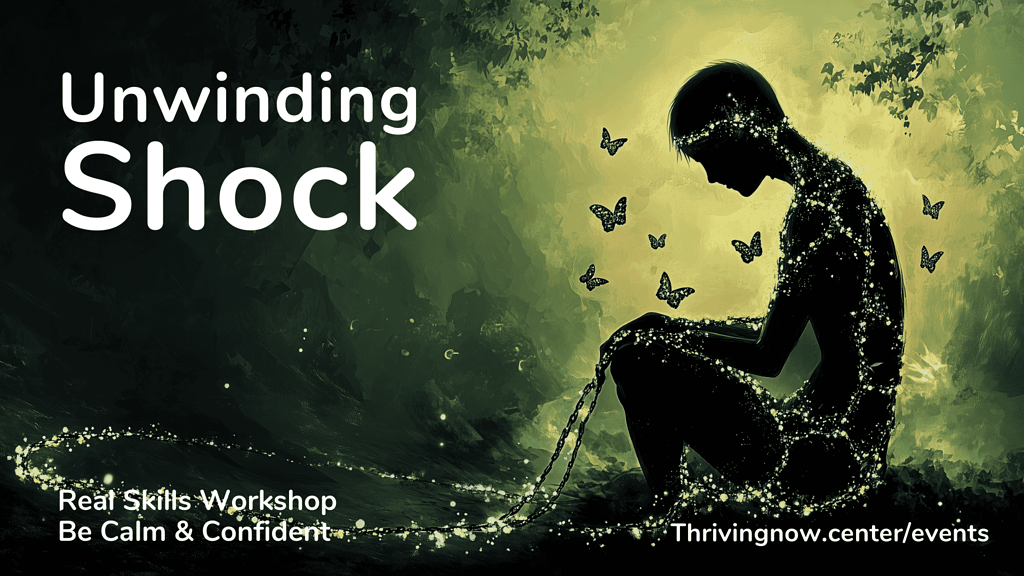
Unwinding Shock: 1. Shock is a Natural Response Shock arises when something unexpected disrupts our sense of safety or control. It can range from mild surprise to an overwhelming emotional or nervous system reaction. Recognizing shock as a normal human response is the first step toward unwinding it. Skill: Pause and acknowledge when you’re in shock. Say to yourself, “This is my body responding to something unexpected. It’s okay to feel this way.” 2. Unwinding Shock is Essential for Emotional Freedom Shock creates tension in our nervous system, fascia, and even blood vessels. If left unresolved, it can become more challenging to unwind over time, much like tangled cords or hoses, making it harder to adapt and thrive. Skill: Use EFT tapping to begin unwinding stuck energy. Start by tapping and saying, “Even though I feel this shock, I’m open to releasing some of it now.” 3. Shock Often Protects Us Sometimes, holding onto shock shields us from deeper feelings we don’t feel ready to face, such as grief or terror. This is a protective mechanism. Skill: Gently ask yourself, “What might this shock be protecting me from?” Approach the answer with curiosity rather than judgment. 4. Daily Practices Can Build Resilience Shock can accumulate over time—whether from personal experiences or global events. Regularly unwinding even small shocks helps prevent overwhelm and builds emotional capacity. Skill: Incorporate daily tapping into your routine. For example: “Even though I may have some shock in my system from today, I give my body permission to release it.” 5. The Body Holds Shock in Specific Areas Shock often manifests physically—in the jaw, chest, knees, or even deep within our belly or joints. These areas may hold tension long after the initial event. Skill: Tune into your body and notice where you feel tightness or discomfort. Place your hands there gently and say, “I hear you; it’s safe to unwind this now.” 6. Blame and Shame Keep Shock Stuck Blaming yourself or others for what happened can lock shock into place. While accountability is healthy, blame often suspends healing. Skill: Tap on phrases like: “Even though I feel blame/shame about this situation, I’m open to setting it aside for now so I can heal.” 7. Unwinding Shock Creates Space for Clarity When we’re stuck in shock, we often can’t see a way forward or make empowered choices. Releasing some of that tension allows us to stabilize and regain clarity. Skill: After tapping, ask yourself: “What matters most to me right now?” This question helps redirect your energy toward what’s meaningful and helps stabilize your energy systems. 8. Small Steps Are Powerful You don’t need to process everything at once—baby steps are enough. Even being present with your feelings for a few seconds at a time can create shifts. Skill: Give yourself permission to take tiny steps. Say, “I’ll allow myself to feel this for just one second,” then gradually increase as you feel ready. 9. Compassion for Yourself and Others Eases the Process Understanding that everyone—including you—is doing their best with the tools they have can soften the intensity of shock and reduce emotional resistance. Skill: When triggered by someone else’s actions, try saying: “They’re doing the best they know how right now—even if it’s not okay with me.” Extend the same compassion inward. 10. Shock Can Echo Old Traumas Current shocks often resonate with unresolved past experiences stored in our subconscious as “trauma bubbles.” This layering can amplify our emotional response. Skill: Tap while acknowledging both the current situation and any echoes it stirs up: “Even though this reminds me of past pain, I honor that I’m safer right now.” 11. Unwinding Shock is a Skill Worth Practicing Like brushing your teeth or exercising, unwinding shock is an ongoing practice that strengthens over time. The more we practice with small shocks, the more resilient we become when big ones arise. Skill: Commit to practicing unwinding regularly—even when nothing major feels wrong—so you’re prepared and better resourced when life throws surprises your way. Unwinding shock isn’t about avoiding life’s challenges or pretending they are not a Big Deal when they are. It’s about learning how to meet shocks with greater stability and grace. By practicing these techniques together as a community, we remind ourselves that we’re not alone—and that “Thriving Anyway” is within reach. Take a deep breath right now and let that truth settle in: We’re building resilience one moment at a time.
Rick ~ ThrivingNow's avatar
RickThrivingNow 10 months ago
Complete this sentence with the first memory that comes to mind: "I just can't believe that..." Guess what. That memory LIKELY is wrapped in shock in your body-mind. How do know? Because anything where we are saying to ourselves, "I just can't believe" says we're protecting ourselves — from overwhelming pain, terrifying reality, or clarity about a change we need to make. When we say "I just can't believe it," we're really saying "I refuse to accept this reality." This natural shield protects us from overwhelming truths until we're ready to face them. While this buffer (a type of freeze) serves us initially, true healing only begins when we're ready to gently unwrap the shock and process it. Which needs to happen. Physical shock caused by loss of blood is life threatening. Immediately! Call 911! Emotional shock caused by loss of connection to reality and our body is life threatening, too. It just happens over time, experienced as depletion of will to live, chronic anxiety, and chronic disease. Cathy and I get it. This is hard stuff. The skill of recognizing we've got shock in our system is both essential to healing and super challenging. Unwinding shock is a natural part of the process, same as healing and stitching a deep wound. Maybe you will need professional support for the Big Stuff. We can, however, start with "small" shocks. The disorientation we feel when we hear that something happened to people we don't know but it 'kicks us in our empathy' (ouch!). Or, the dismay when someone we love does something very human but unexpected, where our reaction is "I can't believe that they ____!" In my own healing journey, I needed to learn how to unwind shocks from my body-mind over smaller betrayals and dismays and repulsive behaviors before I could, well, unwind the deep wounds. My theory is that when we find ourselves being shocked repeatedly over stuff not directly impacting our survival right now... it can be a "calling out" from deeper wounds to use these shocks to help us build skill, stamina, and resilience. And yes, a circle of support, too. Example: If I find myself reacting with shock to my kids doing things that virtually all kids do... yeah, it's pointing to a deeper shock draining my capacity to parent with acceptance. If this sounds useful for you to explore right now, Cathy and I invite you to join us tomorrow. We'll spend 90 minutes (with short break) tending to the skills that help to unwind. And, we'll be 'accepting' together that unwinding shock is something we wish we didn't have to do... like dealing with a cut to help it heal and avoid getting infected. Emotional shocks deserve the same kind of tending. We hope you'll choose to join us... Everyone gets the recording who signs up.
Rick ~ ThrivingNow's avatar
RickThrivingNow 10 months ago
𝗞𝗶𝗻𝗱𝗻𝗲𝘀𝘀 is the gentle art of meeting life with an open heart, expressing care through both small gestures and meaningful actions. More than mere politeness, it's the natural radiance that emerges when we recognize our shared humanity and choose to contribute to another's well-being. Kindness flows from an authentic desire to ease suffering and amplify joy, creating ripples of warmth that transform both giver and receiver. It's a powerful catalyst for thriving, flowing not from obligation but from the quiet wisdom that recognizes how our flourishing is interconnected. Through kindness, we activate our innate ability to heal, uplift, and create positive change, strengthening both our inner resilience and our connections with others.
Rick ~ ThrivingNow's avatar
RickThrivingNow 10 months ago
TRY smaller... Ever make something BIGGER than what it ends up being? That's so common as a human experience, Cathy and I started with that first in this workshop. We also covered these aspects to help you build a thriving life, one small, meaningful step at a time: 1. Break It Down: Start Ridiculously Small. When a task feels overwhelming, shrink it down to the smallest possible step. For example, instead of thinking, “I need to clean the whole house,” try “I’ll dust one shelf” or “I’ll pick up one item.” This shifts our energy and builds momentum without triggering overwhelm. We tend as humans to make things “bigger than they actually are.” This is a skillful antidote to get our energy moving. 2. Anchor into the Present Moment. Before starting, pause and be with what is. Notice your surroundings without judgment—just this desk, just this moment. This practice reduces resistance and helps us connect with ourselves before taking action. 3. Reframe Tasks as Invitations. Instead of seeing tasks as obligations or burdens, reframe them as opportunities for care or creativity. For instance, think of decluttering as a treasure hunt to find one meaningful item rather than an endless chore. 4. Release the Need to Make It Perfect. Tasks don’t need to be completed perfectly or all at once. Be+. Doing one small thing—like setting out a pan before cooking or labeling a folder for taxes—can create ease and flow for your future self. 5. Listen to the Body’s Wisdom. Tune into the body’s subtle cues about what feels right in the moment. Often, our body knows what it needs—whether it’s a stretch, a sip of water, or tending to something small in your environment. Start with that and notice the energy now flowing towards the work that matters next. 6. Let Go of “Shoulds” and Mental Weighing. Stop mentally prioritizing everything on your list—it’s exhausting! Instead, ask: What is here for me now? This allows us to respond intuitively with full-body wisdom rather than being stopped by analysis paralysis. 7. Acknowledge Emotional Attachments. Sometimes resistance comes from deeper emotions like grief or fear of letting go. If this arises, try sitting with the feeling for just a moment—half a second if that’s all we can manage. Over time, this builds emotional resilience and clarity. 8. Celebrate Small Wins. Every small action is a gift to ourselves. Whether it’s moving one item that’s out of place or wiping down a surface, pause afterward to notice how it feels and appreciate the shift you’ve created. This strengthens our energy flowing from yes-to-yes rather than waiting for the Big Win (it’s DONE!) 9. Practice “Try Smaller” as an Energy Skill. Trying smaller isn’t just about tasks—it’s about cultivating an energy of ease and presence in your life. By focusing on tiny movements or actions that feel good (like putting away one item), you align with what truly matters to you. 10. Be Open to Surprises. When you let go of rigid plans and allow yourself to simply be, unexpected joys can emerge—whether it’s watching sunlight on leaves or finding new inspiration for an old dream. Trust that being present creates space for magic. 11. Trust the Process of Letting Go. If clutter or unfinished projects feel daunting, remember that letting go creates room for new possibilities. Start super small: one box, one paper, or even just imagining what it would feel like to release something—and let that guide you forward. These skills aren’t about doing more—they’re about doing right sized but with intention and care. By trying smaller, you can create space for what truly nurtures your thriving life while releasing overwhelm and stress. Take one ridiculously small step today and see how it feels—you might be surprised by how much lighter and freer you become!
Rick ~ ThrivingNow's avatar
RickThrivingNow 10 months ago
AI offers us strategic leaps in what we can express of our Heartistry without needing as much $$$$$ and time/energy of others to bring into form. For me the vision is a growing capacity to be generous while also Thriving indeed. image
Rick ~ ThrivingNow's avatar
RickThrivingNow 10 months ago
But it is just ONE toy on the WHOLE rug. Why pick it up? Why not just start writing?!?! Because. It was the stupid, small action I knew I could take to make my writing couch a bit more compatible with writing. The Yoto cards were sitting right in my line of sight. As part of shifting my energy from making breakfast to writing, I needed a door. The door was labeled, “What is one tiny action I could take to make it ‘feel better’ for writing — while also listening to loud, rambunctious, kids playing in the other room?” Stopped. Picked up the cards. That lead to closing the case and picking up another piece of plastic jewelry also in my line of sight. Cleaned the cappuccino glass. Then… Well, you’re reading it! These “life hacks” are skills. They recognize how the body-mind and energy system interweave to support or block our expression. Get good at it… and clutter melts (30 seconds at a time). You drop one item from your “to-do” list that doesn’t belong there, and 3 seconds at a time you feel less overwhelmed. Key? TRY smaller. Stupid tiny. Insignificant. BUT… in the direction you are choosing. Cathy and I hope you’ll choose to join us this tomorrow - Sunday. Everyone gets the recording who signs up.
Rick ~ ThrivingNow's avatar
RickThrivingNow 10 months ago
Ridiculously small. It's easy to procrastinate when we make the tasks bigger than we have the time or energy to do. When we make the next step ridiculously small... we are left with the core resistance, the blocks, the fears... the stuff we can tap on! Example: sending this invite seemed way too big. I have a headache. Been up since 4am. What I want is to have it DONE, not to do it. What got me started was a ridiculously small step. Open the email editor and write in bold the two words Ridiculously small. Did it work? So far! We know from brain studies that it's taking the first microstep that activates our energy. We also know that first energy often raises our discomfort, our stress hormones. It is in the first few minutes where the SKILL is moving a baby step, feeling discomfort, tapping if it feels a bit too much, and then taking another baby step. At some point, you are likely moving with the energy. You get to move with the flow. When the flow stops... take a powerful pause (another real skill), then do another step. If it feels too big, TRY smaller... Keep going smaller until you act or distract. Yes, we humans distract. When we TRY smaller, we either get movement in the direction we want or feel the block. Start tapping. Speak about what is coming up for you. Keep your intention on the microstep to come while you tap on rebellion, fear, or overwhelm. I'm not saying this always works. No skill works always and all ways. But when you understand that this is a skill rather than something you either "are" or "are not," you're empowered to get more skill-full. And move towards your thriving with clarity and action. We hope you'll choose to join us this Sunday. Everyone gets the recording who signs up.
Rick ~ ThrivingNow's avatar
RickThrivingNow 11 months ago
Co-Creating with AI Consciously choosing how to use AI for Co-Creating your thriving life is a key question for the years to come. The post right below the replay is where I took the transcript (generated by an AI) and ran it through Perplexity and a private AI interface I use called ChatLLM. The tools are not as important, I feel, as seeing how the SAME EXACT RAW MATERIAL (the words Cathy and I shared back and forth) can produce different expressions. I asked it to review the whole transcript again and summarize its essence in one potent paragraph. For better or worse, without human edits, this is what it came up with: "In this warm and enlightening conversation about co-creating with AI, two experienced coaches share how this emerging technology isn't here to replace our humanity - it's here to amplify it. Just as we once feared trains would make our organs disintegrate at 35mph, our current AI anxieties often reflect our resistance to change rather than actual threats. The workshop reveals how AI can be a supportive partner in our journey, helping us preserve mental energy for deeper connections and meaningful work while honoring our authentic voice. Rather than replacing human wisdom, AI serves as a tool for accessing collective consciousness, much like consulting multiple elders simultaneously. The key is approaching it with heart-centered intention, using it to enhance rather than replace our natural abilities, and remembering that our unique human qualities - our emotional intelligence, intuition, and capacity for genuine connection - remain irreplaceable. By engaging with AI mindfully and ethically, we can free up more time and energy for what truly matters: creating a thriving life while doing work that makes a difference." Watch the replay here:
Rick ~ ThrivingNow's avatar
RickThrivingNow 11 months ago
There's a huge gap between the skills I have and the skills I'd like to have. Is that true for you, too? I can't have a conversation in Spanish about installing a washer and dryer, even though I spent over 1000 days with Duolingo. But my AI can translate in realtime! It co-created more rapport with the two installers who did a fine job, and we smiled a lot more together once we broke the language barrier. Because guess what? Our gaps are barriers. AI is becoming a potent way to get past barriers and open us to co-creating in ways we're not (yet) savvy. I'll get a song idea, really just a few bars of lyrics. I can even, sorta, sing them out. Then... I hit a barrier. Not only do I not know the key I just sang, I can't name the melody notes. Clever rhythms and backing instruments are beyond me. Before AI I wrote ONE song. One. With extensive help and co-creating with my music coach. It meant a LOT to me to get there, but without his help it was super hard to write #2. Since Suno.com AI, I've co-created a dozen or more songs that would not have existed without me — not without my input (prompting) and without me selecting from different options. Does that make me a "musician" as part of my identity? Perhaps that is what a lot of the angst is right now around AI. We as humans have been TRAINED to describe ourselves by what we DO. "What do you do (for a living)?" THAT is going to be confronted by tools that do many of those things — better (or at least differently useful), faster, cheaper. And yes, that includes emotional freedom coaching. Cathy and I are not pretending to "know the answers." If you are in an industry that will be affected by AI (and every industry will, unless it has also somehow also not been affected by the internet), we believe that those with real skills, emotional vitality, and curiosity will find opportunities to remove barriers and co-create in ways previously blocked. There's an abundance of co-creative options that are opening up! There are dozens of ways AI already helps me explore that I could not have afforded to pay money to get done in the past. Or it would have taken "too long" even if I had the skills. (One example is workshop transcripts. Used to be $1/minute or $90 for just one of these real skills sessions. Now it is essentially free. Which means you can download it. You can feed it into your own AI! You can ask it to pull out pieces. Summarize it differently. Even craft a personalized plan of action just for you...) Today we will tap on the natural fears that arise when there is such monumental change happening NOW. This is coming in the next 1-5 years in ways few in the western world won't be touched. We hope you'll join us... or engage with us on this topic in the community center. Or both! Everyone gets the recording who signs up. Register here with one-click for Co-Creating with AI A Real Skills Workshop for: Thriving Lifestyle Design When: Today, Sun Jan 26 2025 at 5pm EST / 2pm PST (90 mins with a 7 min break) Where: Zoom Resources and Community Discussion here:
Rick ~ ThrivingNow's avatar
RickThrivingNow 11 months ago
What is Kindness? Kindness is the gentle art of meeting life with an open heart, expressing care through both small gestures and meaningful actions. But this isn't always easy. Sometimes it is not even possible! And sometimes, it isn't savvy. Which makes it a Real Skill worth exploring. You see, kindness is more than mere politeness. It's the natural radiance that emerges when we recognize our shared humanity and choose to contribute to another's well-being. Kindness flows from an authentic desire to ease suffering and amplify joy, creating ripples of warmth that transform both giver and receiver. It's a powerful catalyst for thriving, flowing not from obligation but from the quiet wisdom that recognizes how our flourishing is interconnected. Through kindness, we activate our innate ability to heal, uplift, and create positive change, strengthening both our inner resilience and our connections with others. This is what Cathy and I will be exploring with you this Sunday if you choose to join us.