Big Show And Politics: The Circus Maximus in Rome
It is probably the most notorious sports venue of all time: the Circus Maximus in Rome. In Hollywood's legendary film Ben Hur, the center of Roman entertainment comes to life once again when Jehuda Ben Hur takes revenge on his antagonist during the legendary chariot race.
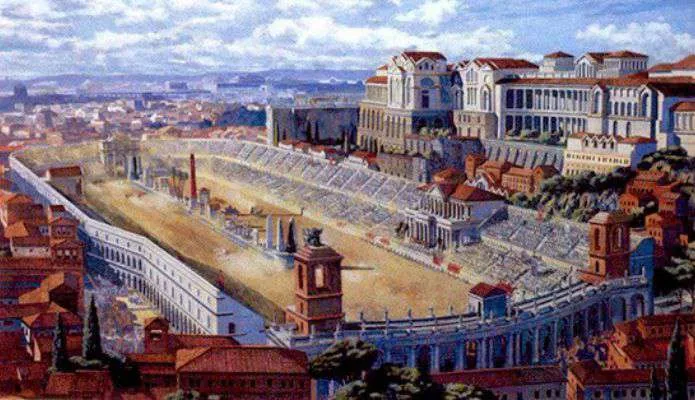
The Roman entertainment industry, and one can speak of it calmly in view of the gigantic festivals organized by the Roman Caesars and provincial governors, seems vulgar and brutal from our perspective. Those were different times, even the brutal gladiator fights were cultural heritage, inherited from the funeral ceremonies of the Etruscan nobility and thus socially accepted. In the Circus Maximus, which at its peak attracted a quarter of a million spectators, the Roman entertainment industry reached its undoubted peak in an otherwise very varied and diverse program, which included everything from Greek classical tragedy to Roman vulgar comedies, chariot races, naval battles and gladiator fights. And the Roman holiday calendar, which easily stretched over 100 days a year, offered the organizers of these games plenty of opportunities to do business.
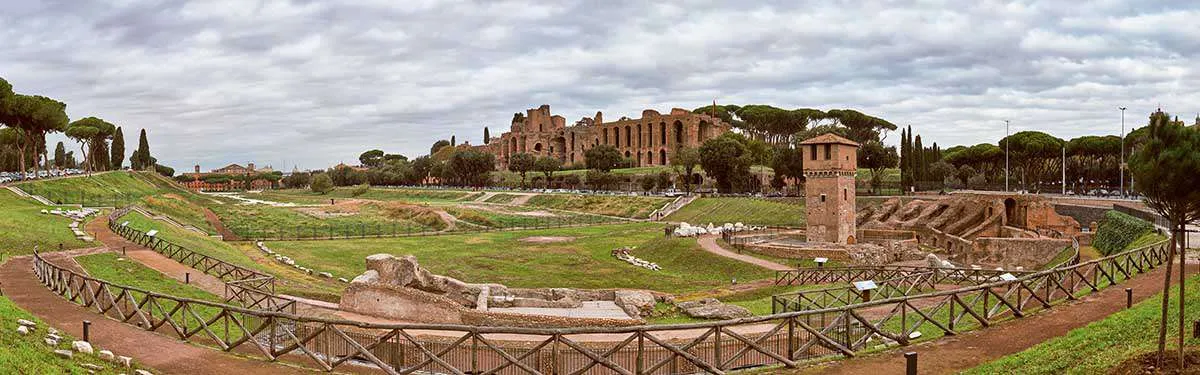
The Circus Maximus stands as one of the most iconic landmarks of ancient Rome, a testament to the grandeur and spectacle that defined Roman culture. As the largest stadium ever constructed in the Roman Empire, its history spans centuries, reflecting the evolution of Rome from a republic to an empire, and even its decline.
Origins and Early History
The Circus Maximus, located in the valley between the Aventine and Palatine Hills, traces its origins to the early days of Rome, traditionally dated to around 700 BCE. According to Roman legend, the site was used during the reign of Romulus, Rome’s mythical founder, for communal gatherings and rudimentary contests. However, its formal development as a racetrack began during the reign of King Tarquin the Elder in the 6th century BCE. Tarquin is credited with constructing the first wooden structures to accommodate spectators, laying the groundwork for what would become a monumental arena.
Initially, the Circus Maximus was a simple, open space with temporary wooden seating. It was during the Roman Republic (509–27 BCE) that the circus began to take on a more permanent form. The track was elongated, and stone seating was introduced, reflecting Rome’s growing wealth and engineering prowess. By the 2nd century BCE, the Circus Maximus had become the city’s primary venue for chariot racing, a sport that captivated Romans across social classes.
Development Under the Empire
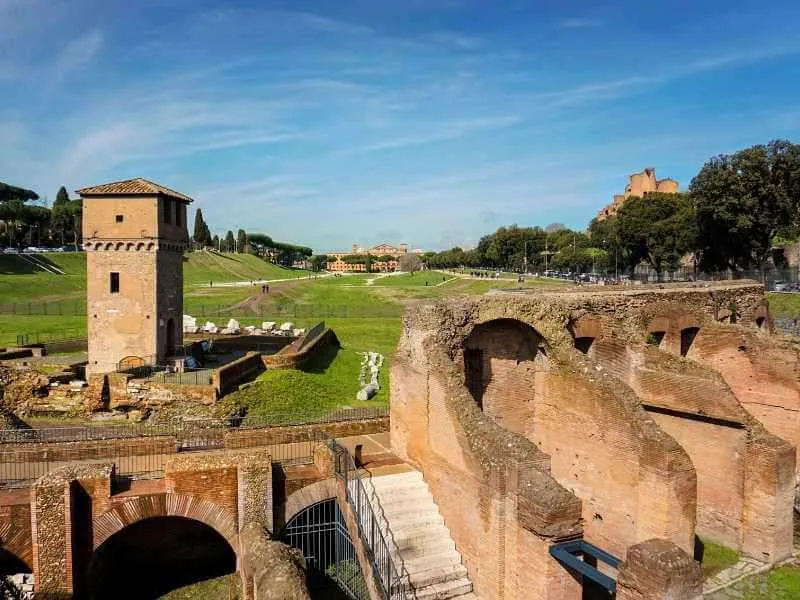
The Circus Maximus reached its zenith during the Roman Empire (27 BCE–476 CE), particularly under the reigns of Julius Caesar, Augustus, and later emperors like Trajan and Nero. Julius Caesar expanded the circus in the 1st century BCE, increasing its capacity and adding more permanent structures. By the time of Augustus, Rome’s first emperor, the circus could seat approximately 150,000 spectators, though some later estimates suggest it could hold up to 250,000 people at its peak under Trajan in the 2nd century CE.
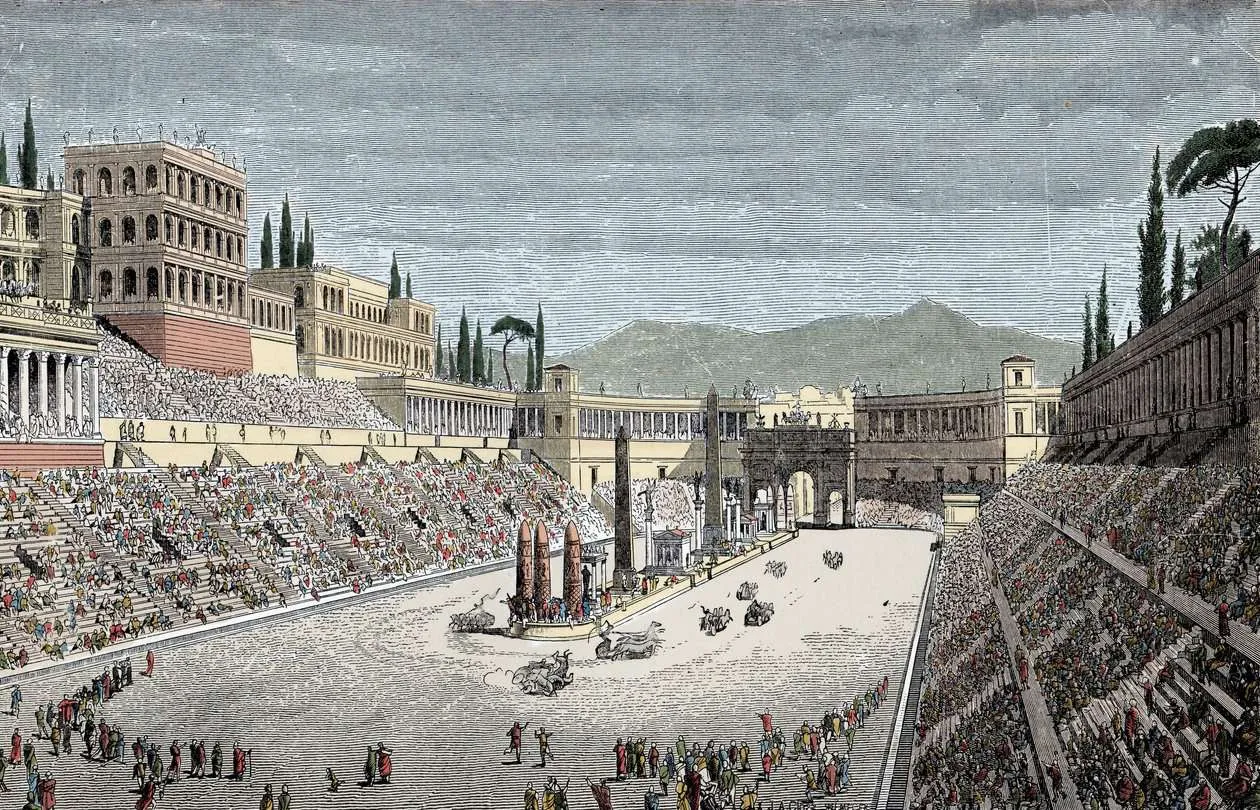
The layout of the Circus Maximus was both functional and symbolic. Measuring approximately 621 meters in length and 118 meters in width, the rectangular arena featured a long central barrier called the spina, adorned with obelisks, statues, and lap counters. The spina divided the track into two lanes, allowing for thrilling chariot races where teams of horses—often driven by skilled charioteers representing different factions (the Reds, Blues, Greens, and Whites)—competed for glory. The seating was arranged in tiers, with the emperor’s box, known as the pulvinar, offering a prime vantage point for Rome’s elite.
Key Facts and Features
Several notable facts highlight the Circus Maximus’s scale and significance. First, its sheer size made it unparalleled in the ancient world—larger than any modern stadium today. The track itself could accommodate 12 chariots racing simultaneously, and races often consisted of seven laps, totaling around 5 kilometers. The races were perilous, with frequent crashes and injuries adding to their allure for spectators.
Another key feature was the integration of religious and political symbolism. The Circus Maximus was closely tied to Roman religion, with events often dedicated to gods like Jupiter or Mars. Triumphal processions, known as pompa circensis, would parade through the circus before races, blending spectacle with devotion. Politically, the circus served as a tool for emperors to win public favor—distributing free food or staging lavish games to appease the masses.
The site also evolved over time. After a devastating fire in 64 CE during Nero’s reign, the circus was rebuilt with even greater splendor. Trajan later added more seating and decorative elements, including two Egyptian obelisks that were placed on the spina. One of these, the Obelisk of Theodosius, now stands in the Piazza del Popolo in modern Rome.
Highlights and Cultural Impact
The Circus Maximus was more than just a venue for entertainment; it was a cultural and social hub. One of its most famous highlights was its role in the Ludi Romani (Roman Games), an annual festival that featured chariot races as the main event. These games drew massive crowds and could last for days, showcasing Rome’s organizational might and the skill of its charioteers, who often became celebrities akin to modern sports stars.
Another highlight was the diversity of events hosted in the circus. While chariot racing was the primary draw, the arena also staged mock battles, athletic contests, and even public executions. During the reign of Caligula, the circus reportedly hosted exotic animal hunts, though such events were more commonly associated with the Colosseum after its construction in 80 CE.
The Circu also played a role in some of Rome’s most dramatic historical moments. For instance, during the Great Fire of Rome in 64 CE, Nero allegedly used the circus as a vantage point to watch the city burn—an image immortalized (though likely exaggerated) in later accounts. The circus remained a focal point of Roman life even into the early Christian era, with races continuing until the 6th century CE under Byzantine rule.
Decline and Modern Legacy
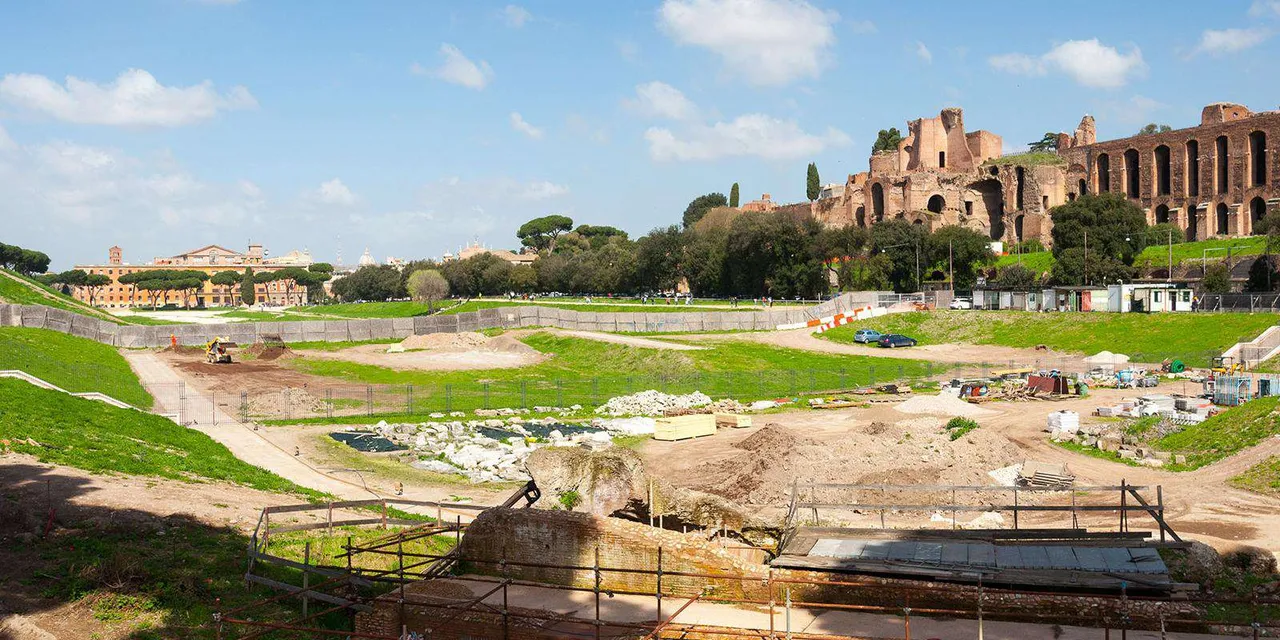
The decline of the Circus began with the fall of the Western Roman Empire in 476 CE. As Rome’s population dwindled and resources became scarce, the circus fell into disrepair. By the Middle Ages, the site was largely abandoned, its marble and stone scavenged for other construction projects. Over time, the once-magnificent arena was buried under layers of sediment, transforming into a field used for agriculture and later as a site for medieval festivals.
Today, the Circus Maximus exists as an open park in the heart of Rome, with few visible remnants of its ancient glory. Archaeological excavations have uncovered parts of the original track and seating, and a small museum at the site offers insights into its past. Modern visitors can walk along the outline of the ancient racetrack, imagining the roar of the crowds and the thunder of hooves that once filled the air.
The legacy of the Circus Maximus endures in popular culture and historical study. It inspired later racetracks and stadiums across the world, and its name has become synonymous with spectacle and competition. Films like Ben-Hur (1959) have immortalized the thrill of chariot racing, drawing directly from the circus’s storied history.
Video of the race in 'Ben Hur':
404 Page Not Found
404 Page not found.
The Circus Maximus stands as a powerful symbol of ancient Rome’s ambition, ingenuity, and its special kind of cultural interpretation of 'entertainment'. From its humble origins in the days of the kings to its peak as the largest stadium of the Roman Empire, it encapsulated the spirit of a civilization that valued both entertainment and grandeur. While little remains of its physical structure today, its historical and cultural impact continues to resonate. For anyone seeking to understand the pulse of ancient Roman life, the Circus Maximus offers a window into a world where sport, politics, and religion converged in a cacophony of excitement and awe. Give it a visit.
#history #rome #circusmaximus #europe #nostr #nostrlearn #plebchain #culture #sport
 This is the nightmare scenario that hardly any of these fiat knights and mentally rotten politicians can intellectually grasp.
Enjoy the day, buy Bitcoin!
#germany #eu #ukraine #bitcoin #nostr #bonds
This is the nightmare scenario that hardly any of these fiat knights and mentally rotten politicians can intellectually grasp.
Enjoy the day, buy Bitcoin!
#germany #eu #ukraine #bitcoin #nostr #bonds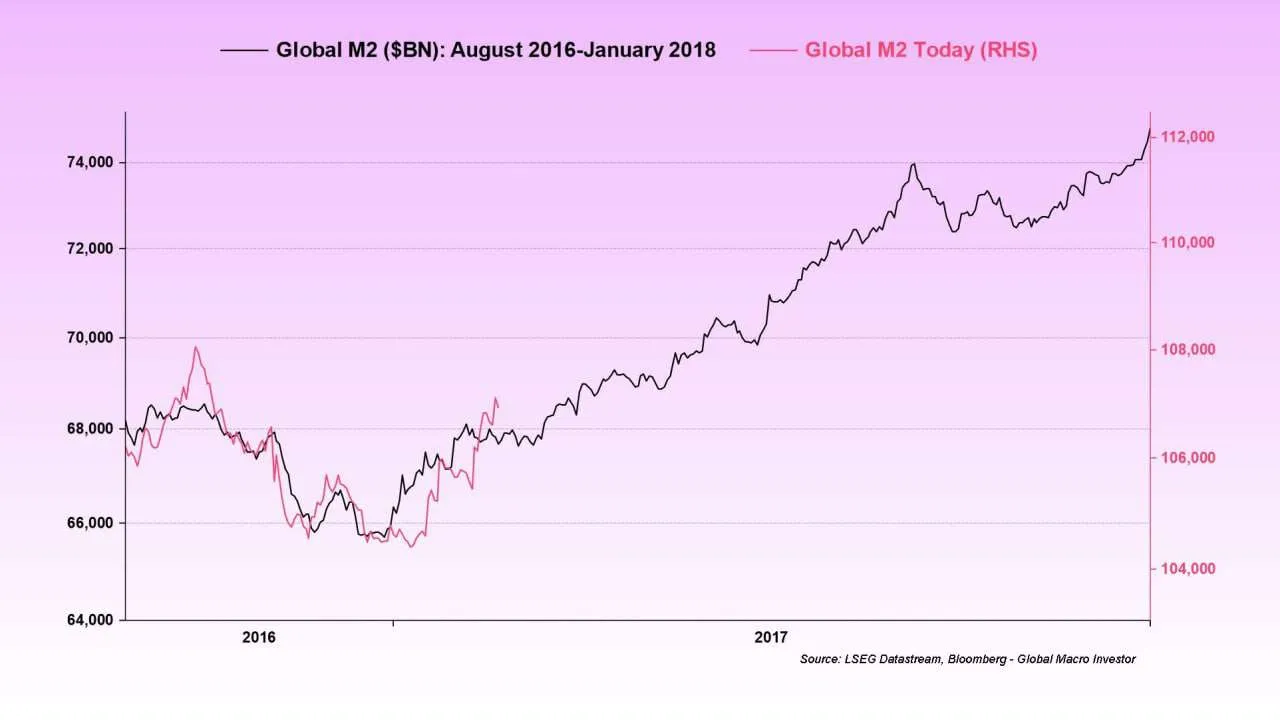 In addition, on a geopolitical level, the Americans are engaging in massive on-sharing of capital, which could encourage pro investors and private investors who are more interested in Bitcoin to turn to BTC again. Money, it is fair to say at this point without sounding cynical, is simply better off in the hands of Americans than Europeans.
#bitcoin #btc #m2 #nostr
In addition, on a geopolitical level, the Americans are engaging in massive on-sharing of capital, which could encourage pro investors and private investors who are more interested in Bitcoin to turn to BTC again. Money, it is fair to say at this point without sounding cynical, is simply better off in the hands of Americans than Europeans.
#bitcoin #btc #m2 #nostr The non-manufacturing Purchasing Managers’ Index (PMI) climbed to 53.5, up from January’s 52.8, signaling expansion above the critical 50 threshold. Economists surveyed by industry analysts had pegged the figure slightly lower at 52.9, making this a welcome surprise. Key sub-indices painted a vibrant picture: new orders jumped to 52.2 from 51.3, employment ticked up to 53.9 from 52.3, while production dipped marginally to 54.4 from 54.5. Notably, the prices sub-index soared to 62.6 from 60.4, hinting at brewing inflationary pressures.
Meanwhile, the U.S. industrial sector kicked off the year with a bang. The Commerce Department reported a robust 1.7% month-over-month rise in factory orders for January—the sharpest increase since July last year, aligning with economists’ expectations. December’s numbers were also revised upward, showing a milder decline of 0.6% compared to the initially reported 0.9%. Durable goods orders, a bellwether for long-term investment, rose 3.2% per a revised estimate, edging past the preliminary 3.1% gain. Excluding transportation, however, orders for durable goods held steady, indicating a mixed but broadly positive trend.
This wave of upbeat data signals a strengthening business cycle, with macro indicators trending upward. Adding to the momentum, the U.S. dollar has softened against major currencies, while the credit cycle appears to be gaining steam. For risk assets and Bitcoin, this is good news.
#USA #Economy #ServiceSector #IndustrialOrders #Bitcoin #RiskAssets #MacroTrends #Nostr
The non-manufacturing Purchasing Managers’ Index (PMI) climbed to 53.5, up from January’s 52.8, signaling expansion above the critical 50 threshold. Economists surveyed by industry analysts had pegged the figure slightly lower at 52.9, making this a welcome surprise. Key sub-indices painted a vibrant picture: new orders jumped to 52.2 from 51.3, employment ticked up to 53.9 from 52.3, while production dipped marginally to 54.4 from 54.5. Notably, the prices sub-index soared to 62.6 from 60.4, hinting at brewing inflationary pressures.
Meanwhile, the U.S. industrial sector kicked off the year with a bang. The Commerce Department reported a robust 1.7% month-over-month rise in factory orders for January—the sharpest increase since July last year, aligning with economists’ expectations. December’s numbers were also revised upward, showing a milder decline of 0.6% compared to the initially reported 0.9%. Durable goods orders, a bellwether for long-term investment, rose 3.2% per a revised estimate, edging past the preliminary 3.1% gain. Excluding transportation, however, orders for durable goods held steady, indicating a mixed but broadly positive trend.
This wave of upbeat data signals a strengthening business cycle, with macro indicators trending upward. Adding to the momentum, the U.S. dollar has softened against major currencies, while the credit cycle appears to be gaining steam. For risk assets and Bitcoin, this is good news.
#USA #Economy #ServiceSector #IndustrialOrders #Bitcoin #RiskAssets #MacroTrends #Nostr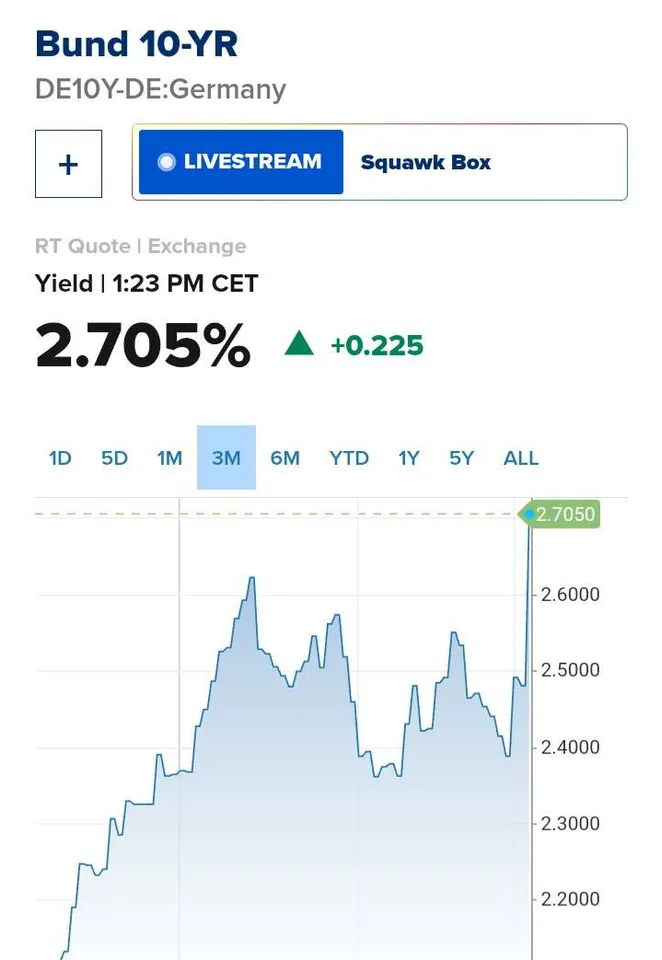 #europe #eu #usa #trump #bitcoin #news #nostr #economy #euro #ecb
 Since the lockdown policy, the eurozone economy has been in recession only surviving through massive expansion of the state sector and credit-financed artificial demand for dubious projects such as the green transformation. And the sad attempt by German politicians to declare the planned 500 billion euros in new debt for the defense budget as a so-called special fund in order to deceive the public about the state of the state's finances is nothing but a ridiculous camouflage. We know from the history of economies that countries with a government debt ratio of over 80% can no longer escape the debt trap without default! The eurozone has long since crossed this demarcation line. Under the new Chancellor Friedrich Merz, Germany, which in the past has been fiscally very conservative, at least in comparison to its European partners, is now also falling into the well visible debt trap. At least for those of us who still have one or two functioning brain cells, this debt trap cannot be overlooked. But politicians are known to be a special breed of people with the experience and learning horizon of fruit flies.
 Especially in fiat economies, war has always been the scapegoat in the past to keep the debt printer running hot. It is the fatal failure of science that throughout the 20th century and to this day it has not succeeded in exposing the Keynesian delusion of the feasible global control of complex economies for what it is: a pseudo-scientific childish belief that played into the hands of socialists and central planners.
 This pseudo-academic religion, this offset of crude macroeconomic theories, gives politicians precisely the tools they need to centralize political power and influence the individual economy. The media sector is also to blame for this debacle, as Keynesianism has never had to face real criticism in the public sphere. It seems to have been almost forgotten that the centralization of decision-making processes, to the exclusion of decentralized pricing, is the decisive criterion for the failure of complex systems.
 The current debates of the European Union's top politicians, which revolve exclusively around the way in which debt is accelerated and no longer around the consolidation of public finances, also shows wonderfully that the players within this stabilized argumentative matrix are no longer able to change their perspective. In short: Europe is largely incapable of reform and is intellectually blocking itself!
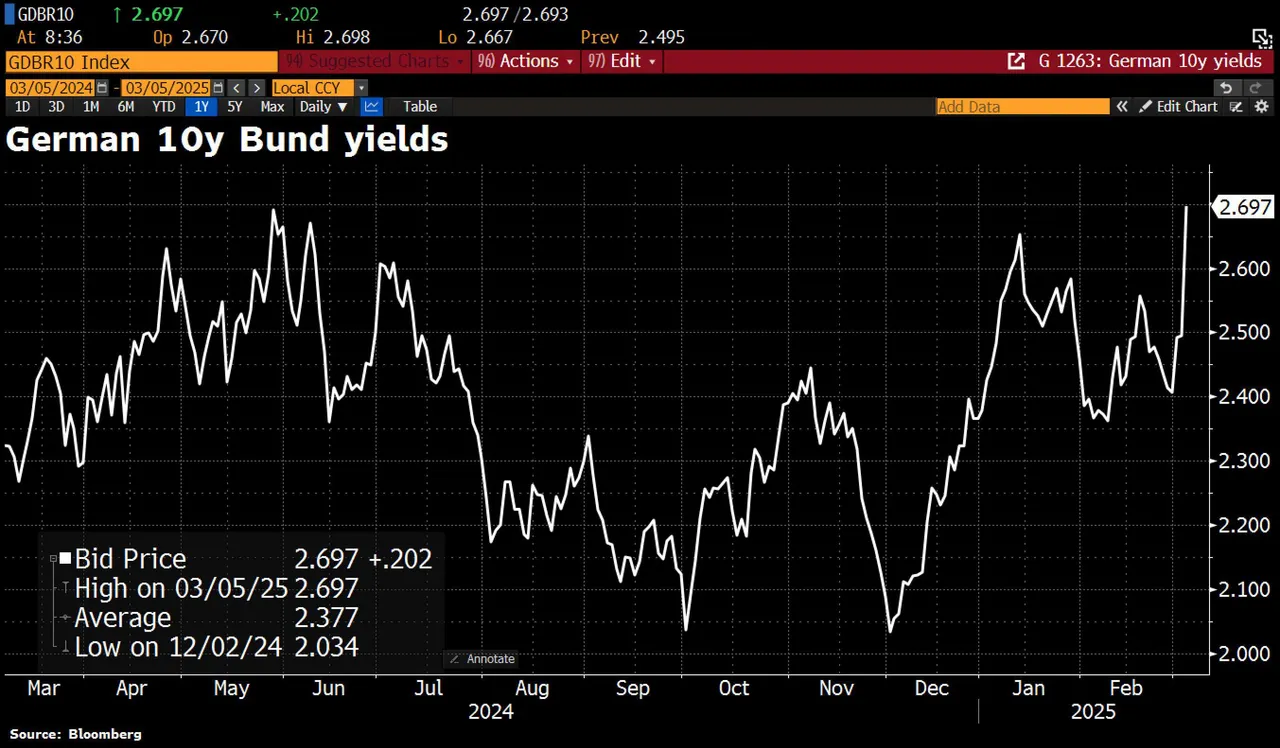 And the market's reaction is not long in coming: interest rates on German government bonds are already rising while inflation rates in Europe are picking up speed again, which will probably soon prompt the powerful central planners at the European Central Bank to introduce some form of yield curve control so as not to abandon the ailing public finances of the eurozone countries which is likely to pose a massive threat to the already ailing euro. Against the backdrop of the severity of the fiscal crisis, all the talk about a moderate interest rate run in the eurozone is completely self-evident. Credit must be made cheaper again in the eurozone in order to prevent the collapse of the zombie economy that has been systematically bred since the days of the last financial crisis and on which many millions of jobs depend, the social foundations of the old continent the last argumentative bastion of the central planners in Brussels and the European capitals.
The Eurozone debt crisis is entering the next round, the attempt to further escalate the war in Ukraine is being morally charged by Russia's panic in the media and over half a billion Europeans are facing an economic fiasco. And we haven't even talked about what will happen if tax revenues implode and Europe's golden calf, the various social insurance schemes, collapse underfunded. At a certain point, we enter the endgame of the Fiatponzi.
#eu #europe #ukraine #russia #debtcrisis #news #geopolitics #bitcoin #nostr #grownostr #fiatponzi
And the market's reaction is not long in coming: interest rates on German government bonds are already rising while inflation rates in Europe are picking up speed again, which will probably soon prompt the powerful central planners at the European Central Bank to introduce some form of yield curve control so as not to abandon the ailing public finances of the eurozone countries which is likely to pose a massive threat to the already ailing euro. Against the backdrop of the severity of the fiscal crisis, all the talk about a moderate interest rate run in the eurozone is completely self-evident. Credit must be made cheaper again in the eurozone in order to prevent the collapse of the zombie economy that has been systematically bred since the days of the last financial crisis and on which many millions of jobs depend, the social foundations of the old continent the last argumentative bastion of the central planners in Brussels and the European capitals.
The Eurozone debt crisis is entering the next round, the attempt to further escalate the war in Ukraine is being morally charged by Russia's panic in the media and over half a billion Europeans are facing an economic fiasco. And we haven't even talked about what will happen if tax revenues implode and Europe's golden calf, the various social insurance schemes, collapse underfunded. At a certain point, we enter the endgame of the Fiatponzi.
#eu #europe #ukraine #russia #debtcrisis #news #geopolitics #bitcoin #nostr #grownostr #fiatponzi #socialism #freedom #bitcoin #nostr #plebchain #eu #wef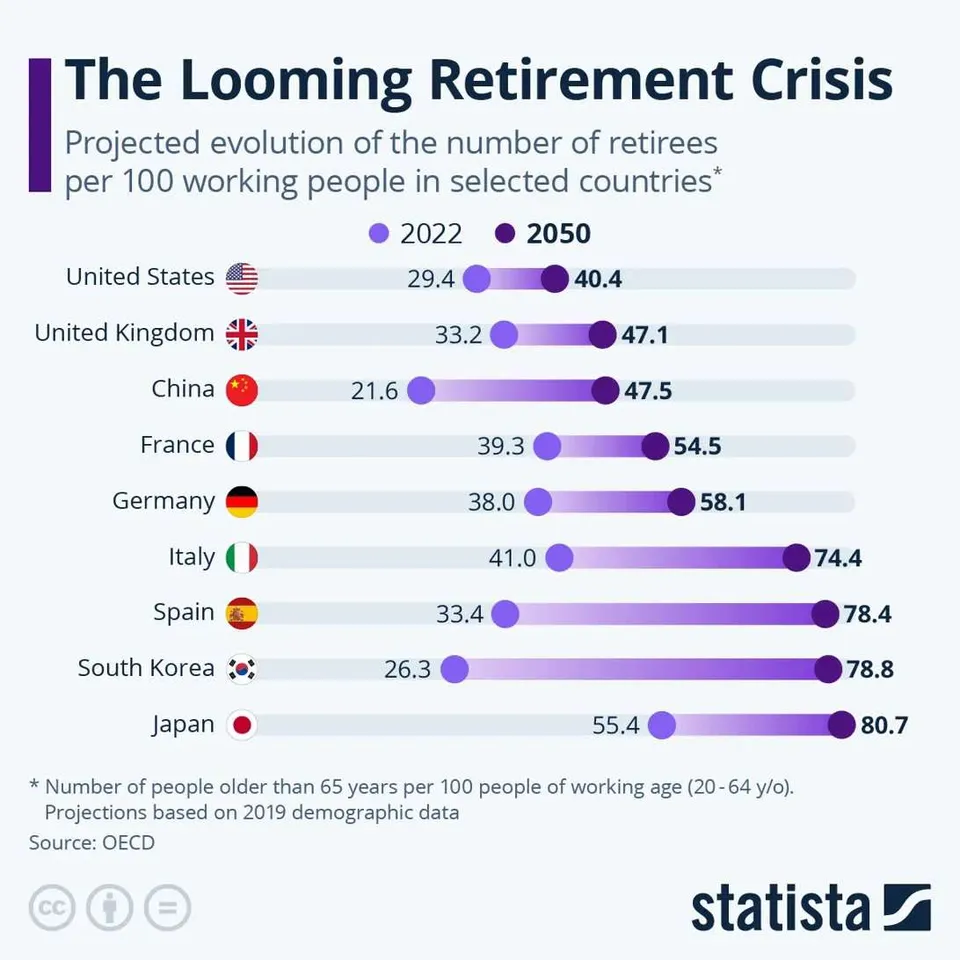
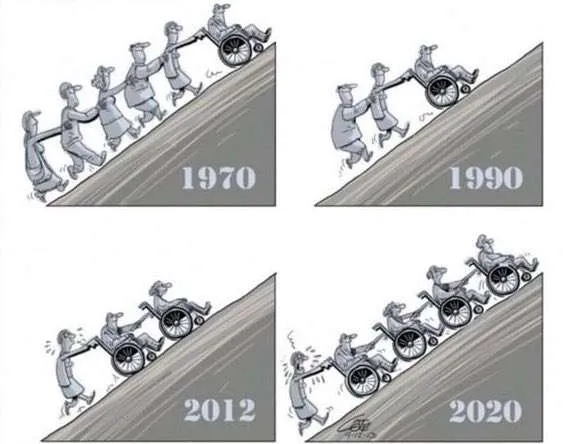
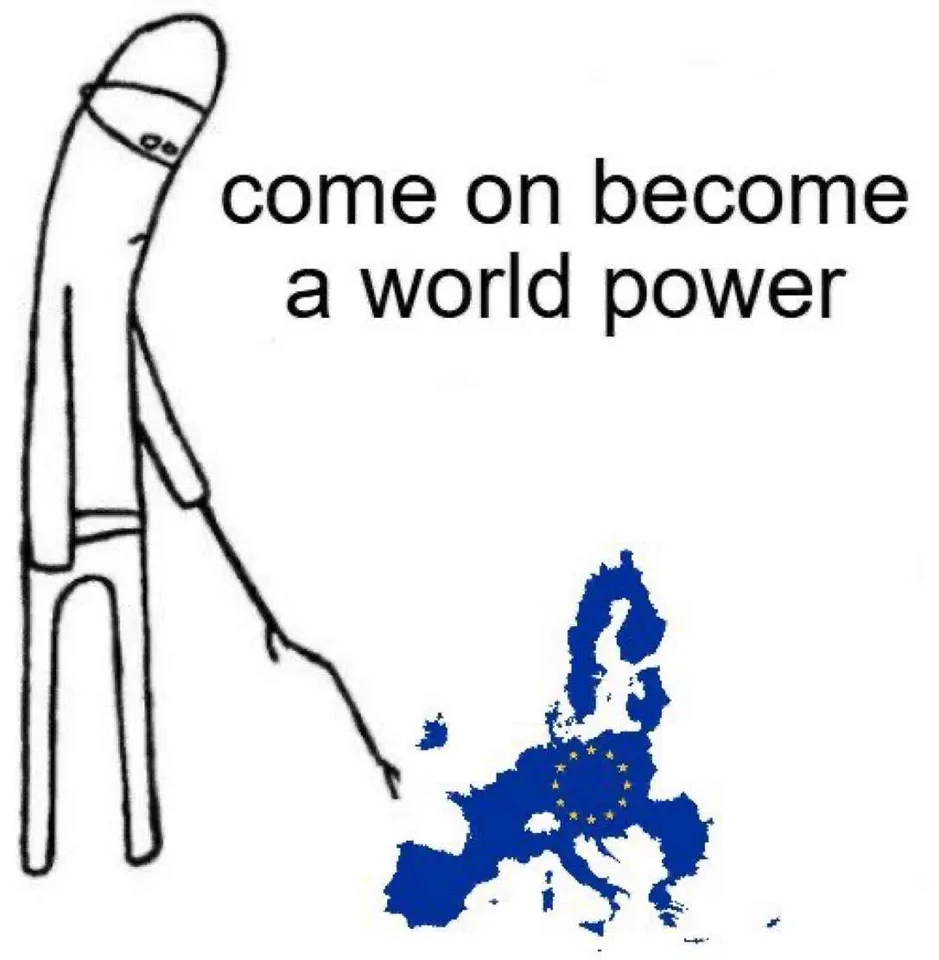 Political competence must be returned from bureaucracy-ridden Brussels to the regions, a right of secession for these regions must be anchored in the community that exerts pressure on any form of centralization of power, europe must de-bureaucratize itself and deregulate markets, there must be a common migration pact that puts an end to the immigration misery and the resulting domestic political catastrophe situation.
Europe must become so fiscally attractive in terms of tax law that the bright minds come and not the failed, dubious existences that an entrepreneurial spirit emerges and a new corporate culture can grow, Europe must recommit itself to the family as the foundation of society and cut its socialist golden calf, the paralyzing welfare state, to the extreme. It must overcome its propaganda education of left-wing radical rainbow Stalinism and find its way back to meritocratic values and individual performance orientation.
It sounds like a Herculean task, and it is. But precisely these processes will one day be contained, when more and more people realize that the careless and infantile abandonment of personal responsibility into the hands of functionaries and rent seekers is once again giving birth to the very political and social processes that have already turned the 20th century into a century of catastrophes. It is precisely the wonderful fruit of meritocratic bourgeois society that leads to the prevention of power-centeredness and the control of those who attack it.
#eu #wef #socialism #ukraine #usa #libertarian #culture #europe #bitcoin #nostr #freedom
Political competence must be returned from bureaucracy-ridden Brussels to the regions, a right of secession for these regions must be anchored in the community that exerts pressure on any form of centralization of power, europe must de-bureaucratize itself and deregulate markets, there must be a common migration pact that puts an end to the immigration misery and the resulting domestic political catastrophe situation.
Europe must become so fiscally attractive in terms of tax law that the bright minds come and not the failed, dubious existences that an entrepreneurial spirit emerges and a new corporate culture can grow, Europe must recommit itself to the family as the foundation of society and cut its socialist golden calf, the paralyzing welfare state, to the extreme. It must overcome its propaganda education of left-wing radical rainbow Stalinism and find its way back to meritocratic values and individual performance orientation.
It sounds like a Herculean task, and it is. But precisely these processes will one day be contained, when more and more people realize that the careless and infantile abandonment of personal responsibility into the hands of functionaries and rent seekers is once again giving birth to the very political and social processes that have already turned the 20th century into a century of catastrophes. It is precisely the wonderful fruit of meritocratic bourgeois society that leads to the prevention of power-centeredness and the control of those who attack it.
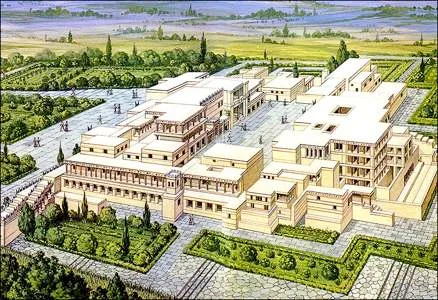
#eu #wef #socialism #ukraine #usa #libertarian #culture #europe #bitcoin #nostr #freedom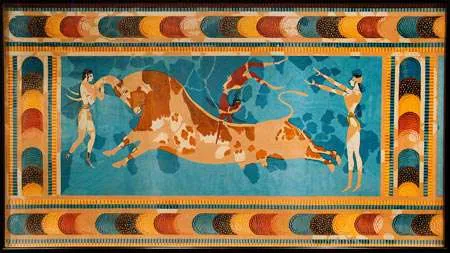 Anyone visiting the Greek island of Crete today, the large elongated island that closes off the Aegean Sea to the south, cannot avoid a visit to the temple complex of Knossos. Knossos was the center of the culture we have come to know as the Minoan, the first high civilization in Europe. It is a spectacular palace culture that became the focus of European excavators over 100 years ago and where the archaeologist Arthur Evans left his fingerprints for all to see. His attempts to reconstruct the ancient palace, largely inspired by Greek myths and tales, have met with a divided response from aesthetes - have they destroyed and distorted more than would have been permitted from an archaeological and scientific point of view? Or do they help us to form a picture of what once flourished over three and a half thousand years ago? This may be in the eye of the beholder, but what has been preserved and possibly not falsified is astonishing.
Let us first take a brief look at the chronology of the Minoan civilization.
Anyone visiting the Greek island of Crete today, the large elongated island that closes off the Aegean Sea to the south, cannot avoid a visit to the temple complex of Knossos. Knossos was the center of the culture we have come to know as the Minoan, the first high civilization in Europe. It is a spectacular palace culture that became the focus of European excavators over 100 years ago and where the archaeologist Arthur Evans left his fingerprints for all to see. His attempts to reconstruct the ancient palace, largely inspired by Greek myths and tales, have met with a divided response from aesthetes - have they destroyed and distorted more than would have been permitted from an archaeological and scientific point of view? Or do they help us to form a picture of what once flourished over three and a half thousand years ago? This may be in the eye of the beholder, but what has been preserved and possibly not falsified is astonishing.
Let us first take a brief look at the chronology of the Minoan civilization.
 The Minoan civilization, flourishing roughly between 3000 and 1100 BCE, left behind a legacy that’s as much about beauty as it is about mystery. To really understand their art, we need to walk through its phases—the Prepalatial, Protopalatial, Neopalatial, and Postpalatial periods—and feel the emotions woven into every brushstroke.
Let’s start with the early days, the Prepalatial period (around 3000–2000 BCE). Back then, Minoan art was still finding its feet. Think simple pottery with swirling patterns or small figurines carved from stone or clay. It’s raw, unpolished, but there’s a quiet energy in it—a sense of people experimenting, reaching for something bigger. The emotional tone here feels tentative, like a whisper of curiosity about the world they lived in. You can almost picture a potter by lamplight, tracing spirals that mimic the waves crashing nearby.
The Minoan civilization, flourishing roughly between 3000 and 1100 BCE, left behind a legacy that’s as much about beauty as it is about mystery. To really understand their art, we need to walk through its phases—the Prepalatial, Protopalatial, Neopalatial, and Postpalatial periods—and feel the emotions woven into every brushstroke.
Let’s start with the early days, the Prepalatial period (around 3000–2000 BCE). Back then, Minoan art was still finding its feet. Think simple pottery with swirling patterns or small figurines carved from stone or clay. It’s raw, unpolished, but there’s a quiet energy in it—a sense of people experimenting, reaching for something bigger. The emotional tone here feels tentative, like a whisper of curiosity about the world they lived in. You can almost picture a potter by lamplight, tracing spirals that mimic the waves crashing nearby.
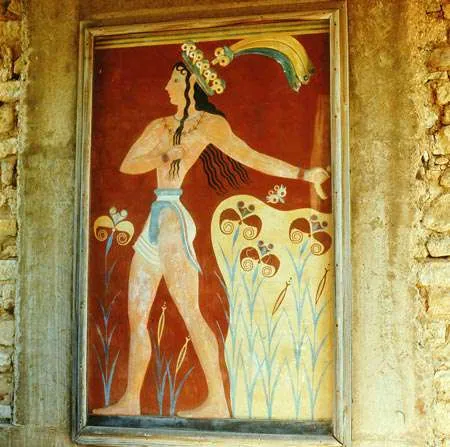 Then comes the Protopalatial period (2000–1700 BCE), when things start to shift. The first palaces pop up—Knossos, Phaistos, Malia—and with them, the art gets bolder. Frescoes begin to appear, though they’re still basic compared to what’s coming. We’re talking geometric designs, simple plant motifs, a splash of red or black on plaster. It’s functional, sure, but there’s a growing confidence, a pride in these new spaces they’re building. The emotion? It’s like the hum of a community waking up, buzzing with possibility.
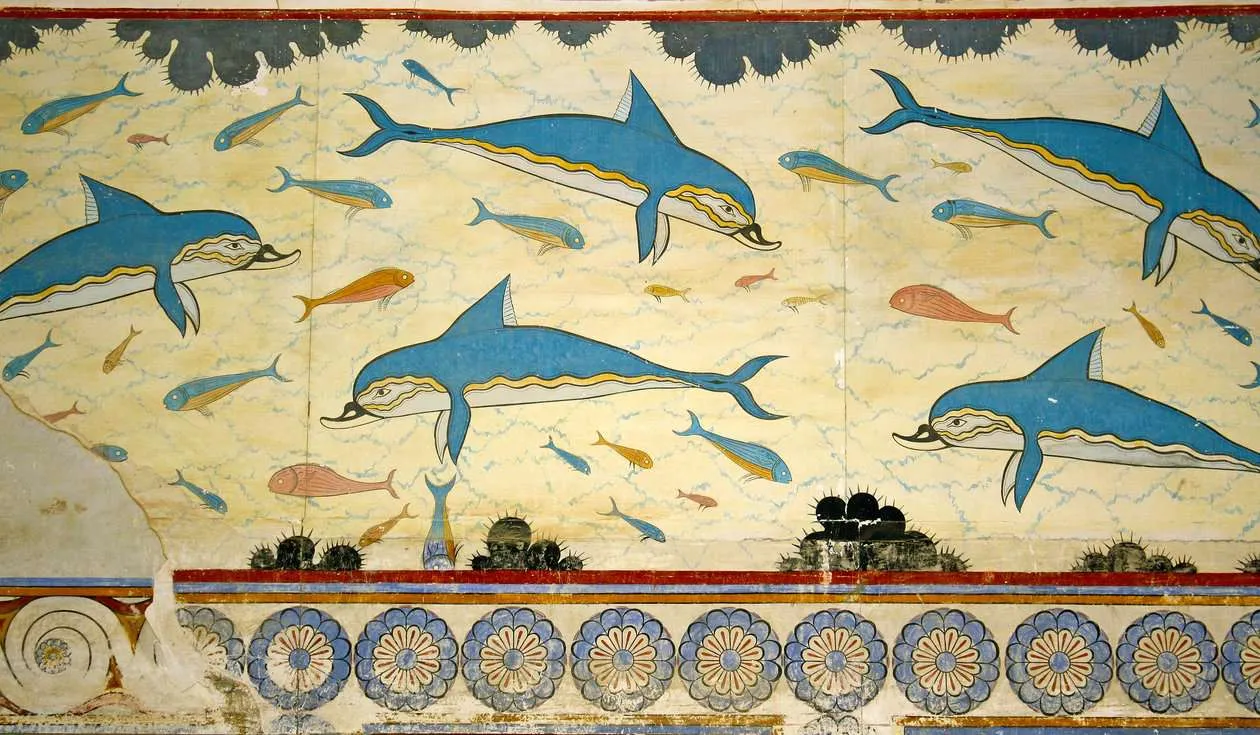 Now, the Neopalatial period (1700–1450 BCE)—this is where the Minoans hit their stride, and honestly, it’s breathtaking. The frescoes from this era, like the ones at Knossos or Santorini’s Akrotiri, are bursting with life. Picture the “Bull-Leaping Fresco”: young acrobats flipping over a charging bull, their bodies twisting mid-air, all framed in vivid reds, blues, and yellows. Or the “Saffron Gatherers,” women delicately picking flowers, their faces soft and focused. There’s no stiffness here—just fluid lines and a love for movement. The colors alone—those bright, earthy tones—radiate joy, a celebration of nature and human vitality. It feels like a kind of awe looking at them, like the Minoans wanted to bottle up every fleeting moment of happiness and share it with us. The figures aren’t posed like statues; they’re caught mid-step, mid-laugh, mid-dance. There’s a playfulness, a reverence for the sea and the land—dolphins leaping through waves, lilies curling up walls. It’s like the Minoans were saying, “Look at this beautiful world we’re part of.” Even in scenes that might hint at ritual—like the “Grandstand Fresco” with its crowds—there’s a warmth, a sense of togetherness. It’s not cold or distant; it’s intimate.
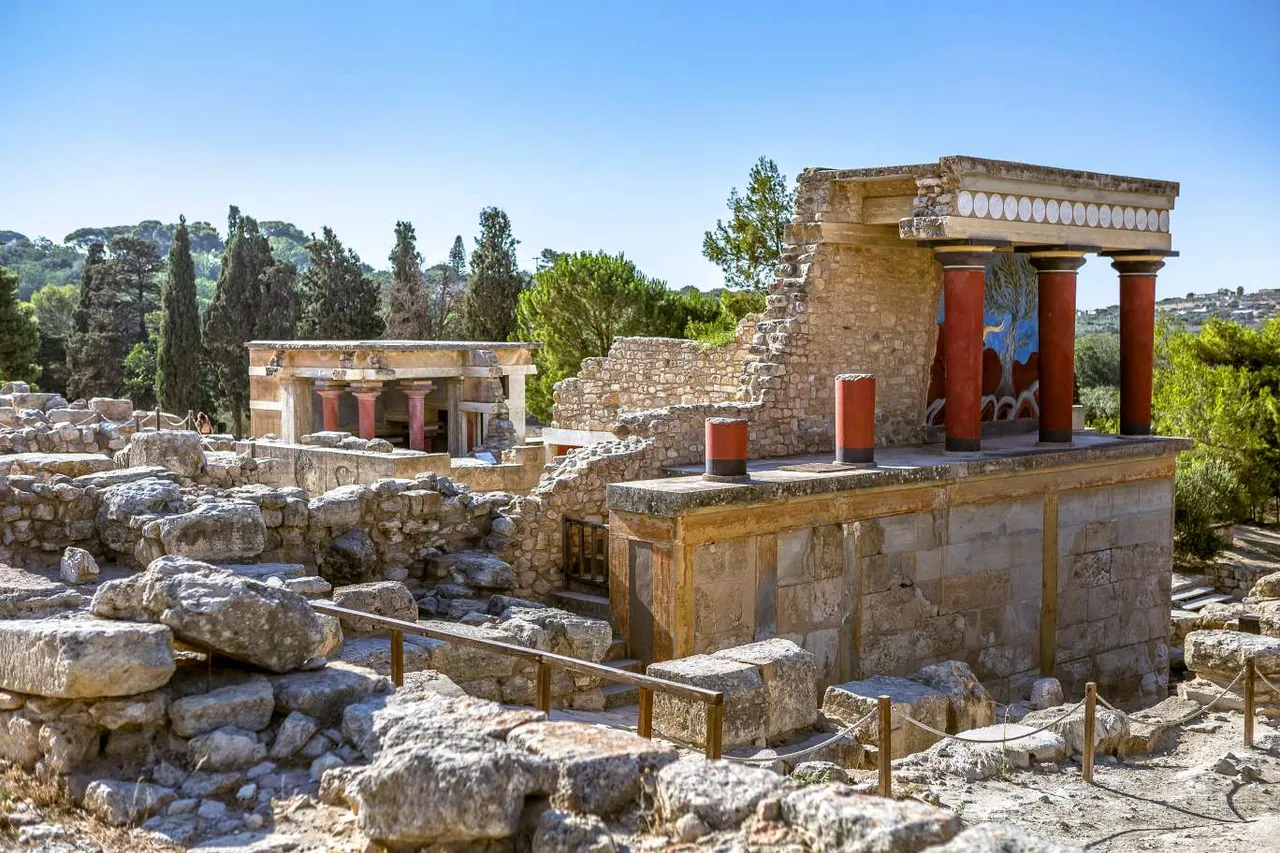 Then comes the Postpalatial period (1450–1100 BCE), and the mood shifts. After volcanic eruptions and Mycenaean influence creep in, the art feels different—darker, more restrained. The warlike spirit of mainland Greece takes hold - war chariots appear, martial motifs now set the psychopolitical tone during the period of the operation, which now also dominates state-led art. The frescoes thin out, and what’s left has a tighter, more linear style. The “Throne Room” at Knossos, with its griffins and muted tones, still has beauty, but there’s a weight to it, a quiet resilience. The emotion here feels reflective, maybe even a little melancholic—like a people holding onto their identity amidst change.
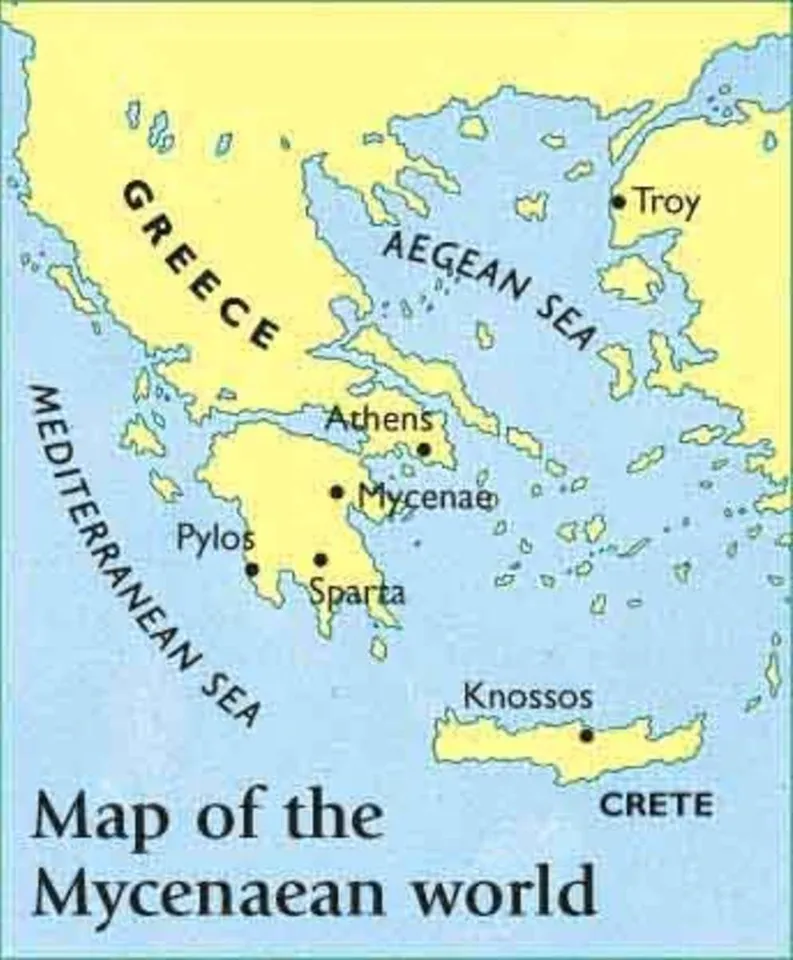 Minoan art shows us a mirror of our journey through time. From humble beginnings to a dazzling peak, then a gentle fade, it’s a story told in color and form. The frescoes especially—they’re not just decoration. They’re a heartbeat, pulsing with joy, wonder, and, later, a softer kind of strength. Standing in front of them (or even imagining them), makes one feel connected to those ancient hands that painted them, like they’re still speaking to us across the centuries, saying, “This is who we really were.”
#history #greece #crete #knossos #minoan #nostr #nostrlearn #plebchain #bitcoin #europe
Minoan art shows us a mirror of our journey through time. From humble beginnings to a dazzling peak, then a gentle fade, it’s a story told in color and form. The frescoes especially—they’re not just decoration. They’re a heartbeat, pulsing with joy, wonder, and, later, a softer kind of strength. Standing in front of them (or even imagining them), makes one feel connected to those ancient hands that painted them, like they’re still speaking to us across the centuries, saying, “This is who we really were.”
#history #greece #crete #knossos #minoan #nostr #nostrlearn #plebchain #bitcoin #europe