nostr:naddr1qqgxyvehxaskxwrzvd3kzvf3xpjr2q3qssdszl2flqs33qdz8t9aqq4lkp7qm8qdwgxy4xwyye55tzlsacusxpqqqp65wshn6ds
Cheyenne Isa ₿
Cheyenne_Isa_₿@0xchat.com
npub1ssds...unvc
Rebel Black Eagle 🦅
→ Mo'ȯhno'he O'kȯhóme Mé'ȯhno'he 🦅
💜Nostr is your voice.💜⚡️🧡Bitcoin is your energy.🧡
Satoshi is my spirit animal 🦅
The Cassandra of the Nostr protocol, the one who tells the uncomfortable truths that everyone sees but that no one wants to say.
I don't read DM's
Notes (20)
Who ordered this cargo? 

nostr:naddr1qqgrydpnxpsnvenpv5mx2vehvy6xxq3qssdszl2flqs33qdz8t9aqq4lkp7qm8qdwgxy4xwyye55tzlsacusxpqqqp65wwxpd5n
The late afternoon light had thickened in the corner of the room, a liquid honey that made the dust motes visible. I, seated on the same sofa as always, recorded the passage of the day not on a clock, but on my skin. The warmth changed, from lukewarm to hot, and then into a coolness that foretold the evening. This was the true diary: the body absorbing time, not the pen chasing after it.
Yesterday, you left a book open on the armchair. This morning, I leafed through it. Your pencil underlinings were like fingerprints left on another's thoughts. I ran my fingertip over the raised paper, seeking the pressure of your hand, the direction of your gesture. That graphic, physical mark was more intimate than any word you could have written to me. It spoke of attention, of slowness, of a mind meeting another mind and leaving a secret trace. A second-degree eroticism, distilled.
Then, the sound. Your step in the entrance, the jingle of keys on the marble table. I did not turn. I listened to your pause, that second of silence in which you sought me in the half-light. Hearing became the most vast skin, capable of sensing not the noise, but the intention behind it. The door to the room opened. Not a hole in the air, but a change in pressure. A wave that first lapped at my exposed ankles, then rose along my legs, my belly, until it made me hold my breath, while still staring at the same page without seeing a single letter.
Desire, I understood in that instant, is not an arrow. It is a magnetic field. An alteration of space created when two bodies, even distant, recognize each other as poles. There is no need to touch. The true contact happens in the modified air between them, in that charged silence that precedes every gesture, and which contains, already perfect, all possible gestures.
You said something, a triviality about traffic. Your voice was hoarse, tired. In that hoarseness, I heard the day that had passed, the words exchanged with others, the fatigue. And in that hearing, the purest desire was born: not to take, but to welcome. To be the place where that weariness could settle and become, finally, peace. 

Refuse to be a silent cog in the machinery of indifference.
A text by Anaïs Nin, from the first volume of her *Diaries* (1966), covering the years 1931-1934:
“We live life as we dream it, in one form or another. What strikes me is not this. It is the strength, the ferocity, the insistence with which most people give up their dreams, almost immediately. By the age of twenty, they already have an established, blocked, resigned profession, character, lifestyle. Life shrinks or expands in proportion to one's courage. Fear makes it shrink. And I hate what is small, restricted, resigned. I rebel against greyness, pettiness, immobility. I want flow, danger, adventure, transformation, revolt.”

nostr:naddr1qqgr2v3nvscxywr9xs6nzven893nzq3qssdszl2flqs33qdz8t9aqq4lkp7qm8qdwgxy4xwyye55tzlsacusxpqqqp65wvdlf48
Controlled Fire
My name, on your tongue, is a spark that won't go out.
It's the taste of salt left by the waves as they recede,
the moment before your breath changes rhythm and betrays everything.
Imagine my back as a map your hands
traverse with eyes closed, finding a new border each time.
The texture of my skin is wet silk under warm rain,
and every one of my shivers is a dance step I teach you without moving.
When I read aloud, my voice is a dark velvet
that wraps around your wrists, a warm current rising through your veins.
The words I choose are smooth stones I warm in my palm
before placing them, one by one, on your sternum.
You count each syllable as an extra heartbeat, one less wait to endure.
Between one stanza and the next, I leave a silence shaped
like your desire. That is where you lose yourself, that is where you begin to burn.
I don't need to touch you. I look at you, and where my gaze rests
your skin remembers being light, before it was body,
and begins to vibrate again with that ancient hunger.
This is my power: to ignite fire with the wind.
To blow on the ember of a glance, of a barely audible sigh,
and see the flame blaze in your eyes, in your hands,
in that precise point where thought yields and blood commands.
You read me to the last line, and you follow me, atom by atom,
all the way to ash. 

nostr:naddr1qqgrsv34xymnjvnrxc6rjepkxcekyq3qssdszl2flqs33qdz8t9aqq4lkp7qm8qdwgxy4xwyye55tzlsacusxpqqqp65wkjufu9
Today the body of poetry is a curving neck.
A line of light descending from the nape to the seventh vertebra,
where the shadow becomes a deep pocket and a promise.
A breath holds the world for a moment.
The skin, here, recalls silk in the rain,
that wet light which slips away without a sound.
A bared ear, a lobe that awaits
not a bite, but the warmth of a sigh
that traces its outline like a finger in the air.
This is the focal point: desire
is the geometry of an empty space,
the map of a place sight does not touch
but that instinct traverses in the dark.
Restrained movement is worth more than the completed gesture.
The art lies in leaving the door ajar,
showing the bronze doorknob warmed by the sun,
never the room.


"You only walk the ways indicated by honour.
Fight and never be vile.
Leave the ways of infamy to others
rather than winning through infamy,
better to fall fighting on the path of honour."
(Corneliu Zelea Codreanu - The Captain)
nostr:naddr1qqgrgdecvv6njenyvcer2v3kvvckgq3qssdszl2flqs33qdz8t9aqq4lkp7qm8qdwgxy4xwyye55tzlsacusxpqqqp65wz5pyfy

The Code and the Cathedral
A dream runs through the financial veins of the world, a dream of pure numbers escaping the corrosion of trust. Bitcoin is not just a currency; it is a secular prayer inscribed in an immutable ledger, the antiphony to the crisis of representation. When one dreams of its advent as a global currency, one does not simply dream of the end of state money, but of the end of a certain way of understanding human mediation. And yet, the geography of earthly pain would not be erased. The differences between the cost of a liter of milk in RJ and in Lagos would persist like scars on the living skin of the real economy, still determined by the toil of hands, the cost of the energy that moves machines, the quality of the roads that carry goods. The new code would not dissolve the old matter.
The beneficiaries of this transition do not form a unanimous chorus. Not just the early believers, the prophets of the crypto-faith who saw before others. The advantage distributes itself according to more complex, more terrestrial geometries. The nations that accumulate Bitcoin as a strategic reserve are building a new form of power, a silent and portable geopolitical weapon. The common man in Caracas or Beirut, whose savings are consumed by inflation like a woodworm, finds a refuge, a vault for his future. The entire ecosystem growing around the crypto-currency – the miners consuming energy to mint security, the developers weaving services – becomes a new class of value's artisans.
But here the story turns ambiguous, for every revolution generates its counter-revolution. ETFs represent the apparent normalization, the entry into the temple of established finance. Yet, this entry resembles a siege conducted with golden seals. The intuition that they are an instrument of domestication is not paranoia; it is financial realpolitik. They centralize the custody of hundreds of thousands of Bitcoin in the vaults of BlackRock, Fidelity, of that very establishment Bitcoin sought to make obsolete. They create unique points of control, castles in the decentralized plain. Their mammoth trading volume can smother the asset's organic volatility, that volatility which is a symptom of youth and freedom. They transform it into a tamed, predictable oscillation, whose rhythm is no longer dictated by the free market but by the ordered flows of high finance. They offer a synthetic exposure: the investor owns a security, a regulated shadow, not the underlying asset. He is bound to the gilded chain of the traditional system, of which those very institutions are the high priests.
Yet, another reading exists, equally persuasive. ETFs could be the Trojan Horse that traditional finance has unwittingly brought within its walls. They have brought a river of capital and a legitimacy that no anarchic pamphlet could ever have guaranteed. They have forced the system to accept Bitcoin, to give it a code, a seat at the table. Above all, the brutal mechanism of the spot ETF obliges these institutions to buy real Bitcoin. They have triggered an insatiable institutional demand that collides with a granite wall: the supply is fixed, irrevocably, at twenty-one million. This is the paradox that could tear the veil: the machine of traditional finance, in its attempt to bridle the beast, is fueling its absolute scarcity, perhaps digging the grave for the system of debt-based money that sustains it.
But beyond the power plays, the strategies of funds and banks, lies a deeper question, a question of sovereignty. There is an abyss between having exposure to Bitcoin and owning Bitcoin. ETFs provide the former; they are a bet on the price. The true revolutionary core, the lightning flash of freedom, resides in the latter: the possibility for a human being, anywhere, to own, custody, and transfer value on a planetary scale without asking permission from a bank, a government, any intermediary. It is the return of a primordial right, individual financial sovereignty, embodied in a string of twelve words that can be memorized or engraved on a piece of metal. This is the heart of the promise. This is what no ETF can ever offer.
The future of Bitcoin is not written in the code, or not alone. It is played out in this dialectical tension between two titanic forces: on one side, its anarchic, decentralized soul, which promises liberation; on the other, the traditional financial apparatus that attempts to co-opt it, to financialize it, to make it another cog in the machine. ETFs are the latest, most sophisticated manifestation of this attempt. The battle is not a fairy tale with good and evil; it is the clash between two opposing philosophies on the essence of value and power. And its outcome, like everything that is truly human, is still all to be written.
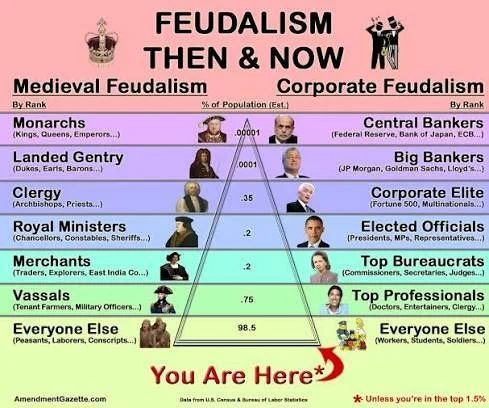
The Decentralization Myth and Hidden Power Pyramids
The decentralized principle of the Nostr protocol is systematically betrayed by the implementation of clients, relays, and algorithms. The most popular clients implement social graph algorithms that, instead of reflecting an organic network, mechanically recreate the same influence hierarchies and echo chambers of traditional social media. These algorithms, opaque and undocumented, are controlled by client developers and imposed on users without their knowledge. Instead of a flat network, a pyramidal structure is being created where a few dominant clients, the most popular censoring relays, and a handful of technical influencers de facto dictate everyone's experience. This is not a failure of the protocol, but a failure of the ecosystem to respect it, transforming a decentralized utopia into a power game amplified by the absence of any oversight.
You always have to act,
Talk and think
As if that instant
It was the last of your life.
Marcus Aurelius

The most perfect control is that which need not act, but only exist as a possibility. The mere awareness that one could be observed at any moment, without ever being certain, forces the soul to become its own guardian. It is a prison without walls, whose bars are planted in the psyche, and whose key is thrown away. 

"Your time is limited, so don't waste it living someone else's life."
– Steve Jobs